Walk Tsukimizaka, the Main Hall and Golden Hall. Compare ordinary tickets with the 2026 combined special-opening ticket, plan the museum, Sutra Repository, former shelter, Noh stage and lunch, and check weekday and weekend evening buses. Includes shorter family routes and Motsuji.
- Region & Focus
- Hiraizumi and Ichinoseki
- Reading Scope
- 38 min read · 23 chapters · 4 Q&As
- Official Verification
- 22 official sources checkedUpdated 22 November 2026
- Key Topics
- ItinerariesRail travelSeasons
Chapter Route Map (tap any stop)
- Give the temple half a day before planning the rest of Hiraizumi
- Mark the foot of the hill, Main Hall and Golden Hall separately
- Change at Ichinoseki for the local train, then finish the journey from Hiraizumi
- Runrun links sights at weekends: understand the loop direction
- Use ordinary buses on weekdays and choose illumination returns by day
- Climb Tsukimizaka slowly and save energy for the descent
- The East Lookout and Benkeido: look beyond the hill after climbing
- At the Main Hall, worship before continuing to the Golden Hall
- After the Main Hall, follow a theme through the smaller halls
- The ordinary ticket covers four sites: choose by school stage
- The 2026 special opening: combined and separate ticket costs
- Give Sankozo time for Buddhist images and treasures
- Inside the Golden Hall: gold leaf, mother-of-pearl and Buddhist images
- The Sutra Repository and former shelter: two forms of preservation on one ticket
- Add Hakusan Shrine’s Noh stage after the Golden Hall
- Choose one: goshuin, matcha or a practice session
- Lunch uphill or below determines whether you climb twice
- Look along the autumn route; Autumn Galaxy has separate event dates
- From 4 November, work backwards from earlier exhibition closing
- Shorter routes for children and older relatives start with the approach
- Rain, snow and summer change your stopping places and pace
- Chusonji and Motsuji in a day: climb first, then walk beside the pond
- Calculate tickets for every companion and add the buses you will take
- Quick Q&A
At Chusonji, the uphill walk starts after you leave the bus. Give Tsukimizaka, the Main Hall and Golden Hall a full stretch of walking time. The ordinary ticket also includes Sankozo Museum, the Sutra Repository and former protective building. On a first visit, allow two to three hours for the main route, then choose the Noh stage, tea or Motsuji in the afternoon. For the Autumn Galaxy illuminations, finish the paid displays first and choose your return according to the day: ordinary evening bus services differ between weekdays and weekends.
Give the temple half a day before planning the rest of Hiraizumi
For a first visit to Chusonji, treat the entrance at the foot of the hill, Tsukimizaka, the Main Hall, Sankozo, Golden Hall, Sutra Repository and former protective building as one complete walk. The temple generally suggests around one to two hours. Allow two to three if reading displays, collecting a goshuin temple stamp or sitting down for tea. Add lunch and station transfers separately. To see every small hall, make Chusonji the day’s focus and add only one garden in the afternoon. If you must choose one part, prioritise paid admission to the Golden Hall and Sankozo, then fit the Main Hall and approach to your walking ability. If your companions mainly want a cedar-forest walk and worship at the Main Hall, keep to the main approach and its surroundings; the cost and route will differ.
Motsuji and Chusonji make two substantial stops for a day in Hiraizumi. Chusonji’s route follows hillsides, Buddhist halls and craftsmanship; Motsuji follows a pond through a Pure Land garden. To compare Ichinoseki station-area accommodation, Hiraizumi hot-spring stays, hotel transfers and meal conditions, see the Hiraizumi and Ichinoseki accommodation-base guide.
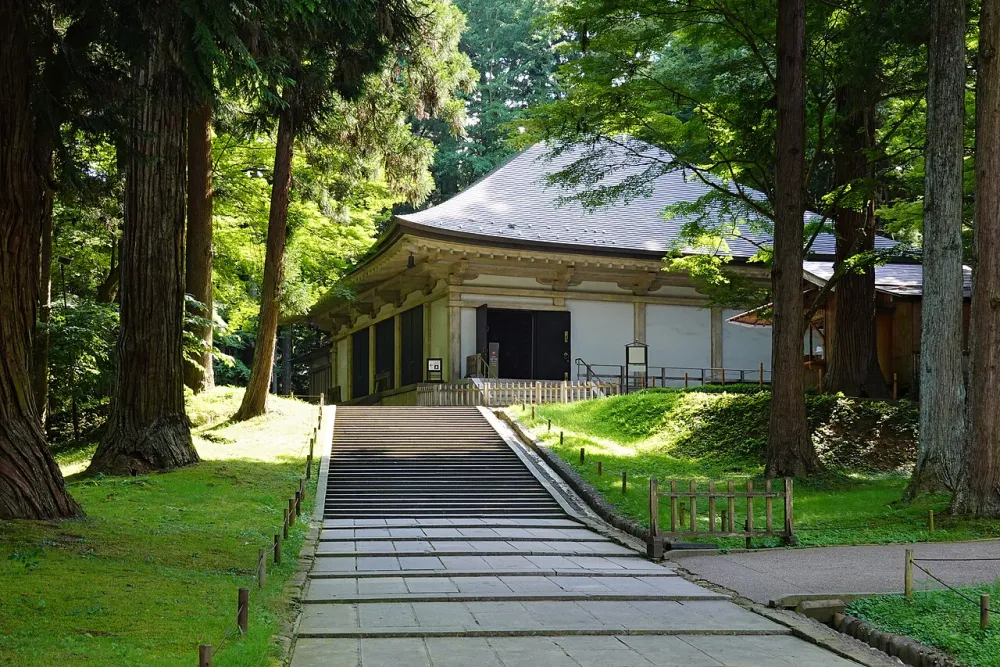
Walk Tsukimizaka, the Main Hall and Golden Hall. Compare ordinary tickets with the 2026 combined special-opening ticket, plan the museum, Sutra Repository, former shelter, Noh stage and lunch, and check weekday and weekend evening buses. Includes shorter family routes and Motsuji.
Mark the foot of the hill, Main Hall and Golden Hall separately
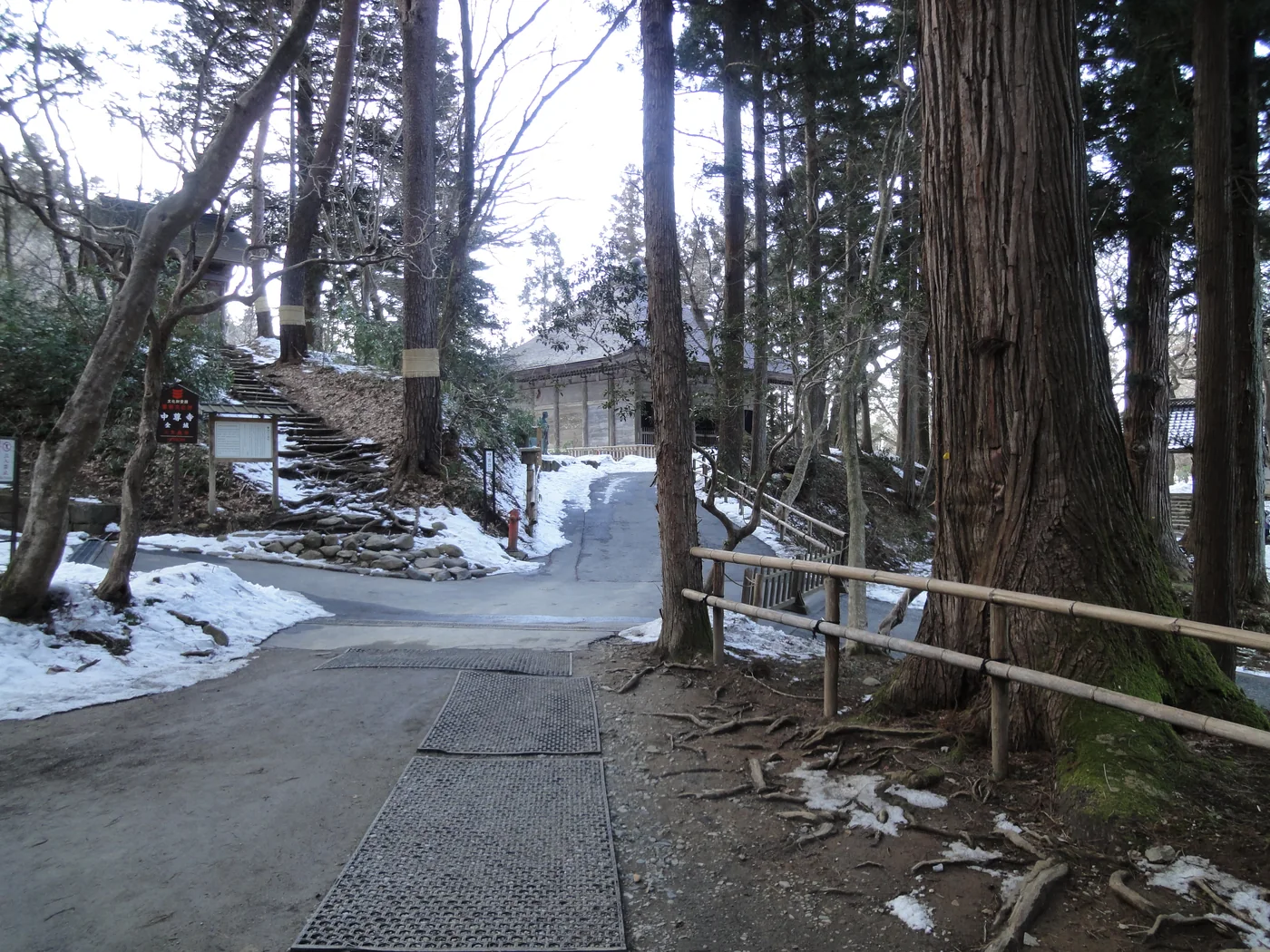
Save the Tsukimizaka entrance, Main Hall and Golden Hall separately on your map. The Chusonji bus stop serves the foot of the hill; the paid Golden Hall is within the hillside precinct. Treating a general Chusonji map pin as a place reached immediately after alighting can omit the whole uphill walk. The official precinct map marks these places and subtemples separately and is useful saved offline before departure.
The route first climbs towards the Main Hall, then follows the main approach to Sankozo and the Golden Hall. Continuing north reaches Hakusan Shrine and the Noh stage. Check which side of your walking route any tearoom or restaurant occupies before adding it.
Use phone navigation for the entrance and surrounding roads, then follow temple signs and the paths open that day. If the family splits up, agree to meet outside a named building at a set time. “Wait at the Chusonji entrance” could mean the foot of the hill, the Main Hall entrance or Golden Hall ticket area, causing an extra walk.
Change at Ichinoseki for the local train, then finish the journey from Hiraizumi
From the Shinkansen, find Ichinoseki Station and change to the JR Tohoku Main Line for Hiraizumi Station. The train takes around ten minutes; connecting services, platform walks and waiting determine the real time needed. Search using Ichinoseki’s Japanese station spelling, select a train that actually stops there, then fit in your Hiraizumi half-day.
From Sendai or Morioka, use Ichinoseki as the interchange. For a day return from further away, check how much useful visiting time remains before the train home. From Hiraizumi Station, you still need transport to the foot of the hill and time for the climb. If reaching the local line only in the afternoon, protect the paid displays’ closing time first. Calculate whether a long-distance pass pays off from your actual whole-trip sectors, using the Japan rail pass comparison if helpful.
If returning to accommodation in Ichinoseki, leave large cases there. The temple FAQ says there are no coin lockers in the precinct and directs visitors to Hiraizumi Station’s lockers. If already at the hill with luggage, Hiraizumi Rest House’s office also offers storage. Its official website lists ¥500 per item; keep valuables with you. Ask the collection deadline when depositing luggage, then plan the climb and return.
Runrun links sights at weekends: understand the loop direction
In 2026, Hiraizumi’s Runrun loop bus operates on Saturdays, Sundays and public holidays from 11 April to 29 November, plus daily from 13 to 16 August. Iwateken Kotsu’s current timetable lists the first Hiraizumi Station departure at 10:15 and Chusonji at 10:25. To start viewing displays at 08:30, use an ordinary bus, walk or book a vehicle. Waiting for the first loop loses the early morning.
The loop goes from Hiraizumi Station to Motsuji, then Chusonji, before returning to the station. Chusonji–Motsuji therefore goes back via the station and into the next loop. Choose the temple order according to your energy: climb in the morning and reach the garden by ordinary bus or on foot in the afternoon, or walk from the station to Motsuji first and take the loop onwards to Chusonji. Mark boarding and alighting stops before estimating transport time.
A single costs ¥200 for adults and ¥100 for children; the adult day pass is ¥550. Transport IC cards are accepted. Two adult rides cost ¥400, so compare the day pass only from three rides. If walking one sector, remove that fare before calculating.
Tickets are sold on the bus, at Hiraizumi Rest House and at Monzen Chokubai Ayame in Motsuji’s car park. The ordinary Ichinoseki–Hiraizumi route charges separately; the Runrun day pass is valid only on the loop.
Use ordinary buses on weekdays and choose illumination returns by day
When the loop is not operating, find the Ichinoseki–Hiraizumi route through Iwateken Kotsu’s Ichinoseki and Hiraizumi route page. The currently linked PDF is marked with a 1 October 2025 fare revision and separates buses towards Sehara and Ichinoseki. A red filled circle means no service on Saturdays, Sundays or public holidays. The entire marked service column runs only on weekdays.
The current Ichinoseki–Hiraizumi timetable gives the final weekday bus towards Ichinoseki at Chusonji at 18:04, Hiraizumi Station at 18:08 and Ichinoseki Station at 18:33. That column has the circle. The last usable Saturday, Sunday and public-holiday bus is at Chusonji at 16:14, Hiraizumi Station at 16:18 and Ichinoseki Station at 16:43. At weekends, Runrun also calls at Chusonji at 16:25, still before the illuminations finish.
To see Autumn Galaxy on a weekday and take the 18:04 ordinary bus, stop photographing early enough to descend at your own pace and wait at the stop below. Staying until 18:30 needs another transfer arrangement. For weekends and public holidays, book a vehicle for the illumination visit. When timetables change, reopen the latest version from the operator’s route page. Check the travel date and circle symbols before booking an inflexible dinner or Shinkansen.
Climb Tsukimizaka slowly and save energy for the descent
Tsukimizaka is Chusonji’s main approach. The temple occupies an east–west hill around 130 metres above sea level. Its description calls the first section steeper, with the path becoming more level near the East Lookout. Old cedars provide shade, but the ground calls for extra care in damp, cold weather. Climb at a sustainable pace. Step out of the way before photographing the cedars, then continue.
If you rarely walk hills, make the Main Hall your first rest and reassessment point. If the climb already feels difficult, some companions can shorten their visit while others continue to the Golden Hall. Turning back at the Main Hall leaves out the paid displays beyond and suits a walk focused on cedars and the Main Hall. If the Golden Hall is your priority, choose a closer approach before setting off and save energy for its exhibition area.
Descending takes time too. Sore knees, wet soles after rain or evening lighting may make it slower than the climb. Do not complete the final stretch by rushing for a bus. Allow for descent and waiting first, then fit tea and photography before that. If unwell, rest nearby, ask companions for help and ask the temple about available paths and approaches.
The East Lookout and Benkeido: look beyond the hill after climbing
The East Lookout above Tsukimizaka looks towards the Kitakami River, Koromo River and Mount Tabashine. It shifts your view from cedars to Hiraizumi’s terrain. Rivers, plain and hills give the temple’s position a concrete setting. Fit your stop to the space available for people to pass, and stand securely before taking out your phone. Companions can also adjust clothing and catch their breath here.
Nearby Benkeido was built in 1827 with Shogun Jizo as its principal deity, originally under the name Atagodo. After wooden figures of Yoshitsune and Benkei were installed, it became known as Benkeido from the Meiji period. Its coffered ceiling depicts more than 60 kinds of flowers and plants. For historical figures’ stories, stop here on the climb, then compare Heian-period Buddhist statues and temple treasures at Sankozo later.
At the Main Hall, worship before continuing to the Golden Hall
The Main Hall is the centre of daily services across Chusonji. The present building was rebuilt in 1909, with Shakyamuni as its principal Buddha. The Golden Hall centres on Amida Buddha; the images and functions differ. Follow the current route to worship at the Main Hall. During services, remain quiet and leave entrances and seating for the ceremony.
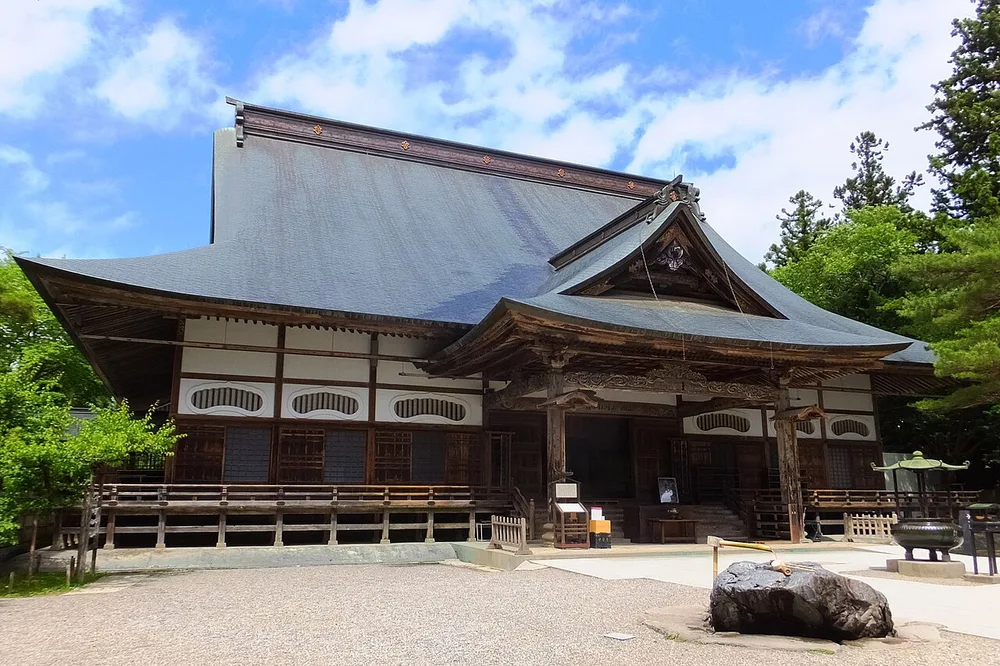
The temple explains that the “undying Dharma lights” beside the principal Buddha came from Enryakuji on Mount Hiei. Look at the arrangement of the Buddha and lanterns on either side. Compared with the richly decorated Golden Hall later, this is more directly a place of continuing religious practice. Follow entrance notices for photography and access, put away rain gear before entering and keep passages clean.
After the Main Hall, follow a theme through the smaller halls
Near the Main Hall, you can see Fudodo, then continue along the approach towards Dainichido. For an interest in Buddhist images, add Mine Yakushido. Each has its own principal deity and history. Worship outside, read introductions and look at the buildings without turning every stop into a lengthy guided visit.
A useful approach is to connect the hillside halls with the museum’s treasures. Mine Yakushido’s original large Yakushi Buddha now stands in Sankozo. Learning the hall name first and seeing the statue later connects the outdoor walk with the objects indoors. Children unfamiliar with Buddhist images can start with poses and faces. Use fewer terms and leave more viewing time. The official map also lists smaller halls such as Amidado. For the main visit, follow the principal approach to Sankozo and the Golden Hall. For a deeper route, see skipped smaller halls on the return, completing the paid displays first and making the remaining time easier to judge.
The ordinary ticket covers four sites: choose by school stage
Chusonji’s ordinary admission ticket covers Sankozo, the Golden Hall, Sutra Repository and former protective building. Individual tickets cost ¥1,000 for adults, ¥700 for upper-secondary pupils, ¥500 for lower-secondary pupils and ¥300 for primary-school pupils. The temple’s ticket page prices by school stage. List each family member’s category before adding goshuin, refreshments and transport.
Groups of 30 or more receive a 10% discount. Disability certificate holders receive half-price admission on showing the certificate at the ticket office. For overseas documents or different school systems, contact the temple beforehand with the document name, age and education stage to ask which ticket applies.
The 2026 special opening: combined and separate ticket costs
The special opening of normally concealed Buddhist images, marking 900 years since the dedication, runs from 17 July to 15 November 2026 in Sankozo’s special-image room, a separate museum building. Adult special-opening-only tickets cost ¥700 and ordinary tickets ¥1,000, totalling ¥1,700 separately. A combined ticket bought in one purchase covers both for ¥1,600. Adults planning both save ¥100 with the combined ticket.
Combined tickets cost ¥900 for upper-secondary, ¥700 for lower-secondary and ¥500 for primary-school pupils. The special-opening-only ticket is ¥300 for each pupil stage. Compared with ordinary admission, the combined ticket adds ¥600 for adults and ¥200 for each of the three pupil stages. This comparison applies only during this special opening. Choose the standalone ticket for only the concealed images, or ordinary or combined admission to see the Golden Hall and Sankozo. The special-opening-only ticket does not admit you to the Golden Hall or Sankozo’s ordinary displays.
For a limited goshuin, the special-opening page lists a commemorative stamp at ¥1,000, issued at the venue on a separate pre-written sheet.
Give Sankozo time for Buddhist images and treasures
Sankozo holds more than 3,000 cultural properties. Its displays show Buddhist images, sutras and objects left from the former temple complex. Visit the museum before the Golden Hall and carry those craft details into the building. Give both enough viewing time before closing. For a slower museum visit, omit some smaller halls along the path.
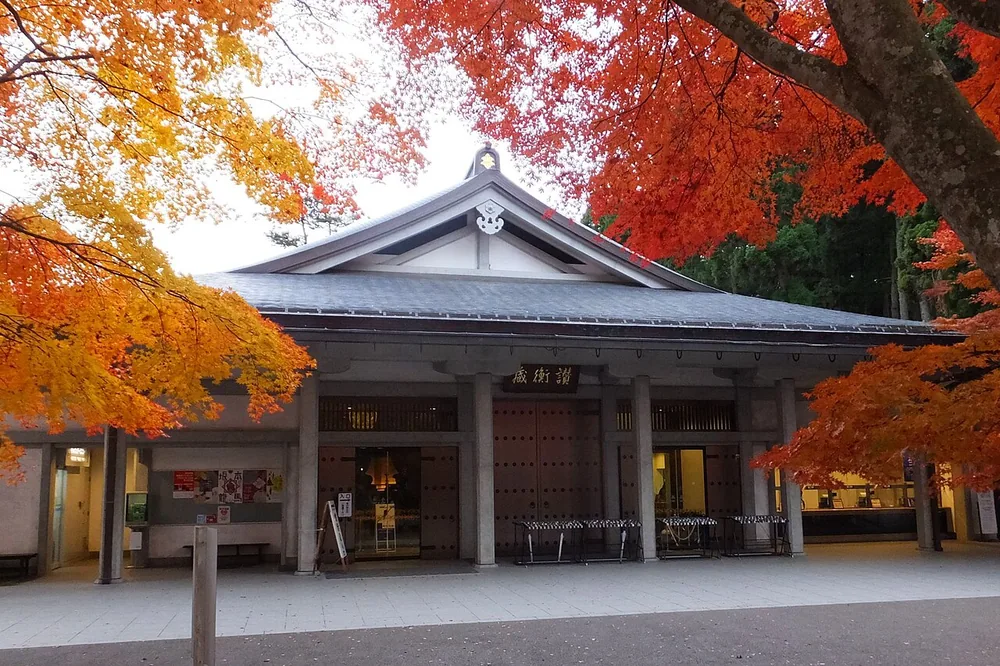
The large joroku Buddhas reward attention to their size and faces. The guide explains that joroku originally refers to a standing Buddha’s bodily measure; seated figures have a different height. Do not read the term as meaning every seated statue before you is one jo and six shaku tall. With children, compare the three seated figures first, then use labels to find their original halls rather than memorising titles.
From 19 October to 15 November 2026, Sankozo also hosts the autumn exhibition “The Sutra Repository and the Beauty of Gold and Silver Lettering Sutras”. It covers reconstructed copies of the repository’s coloured decoration and Chusonji sutras. Looking at paper, lettering colours and decoration indoors before seeing the repository outside helps explain why the timber sutra store merits a stop alongside the Golden Hall.
Inside the Golden Hall: gold leaf, mother-of-pearl and Buddhist images
Fujiwara no Kiyohira raised the Golden Hall in 1124. It preserves architecture from Chusonji’s founding period and expresses Amida Buddha’s Pure Land. Gold leaf inside and out is the most striking feature. Look next at great green turban shell inlay, metalwork and lacquer. The four decorated pillars and altar platforms are key craft details. The shell’s pale lustre, openwork metal fittings and lacquer with sprinkled decoration show different materials brought together in one hall.
Find Amida in the centre, then the attendant bodhisattvas, rows of Jizo and guardian heavenly kings in front. You need not identify every image quickly; understanding the main Buddha and surrounding layers reaches the design’s core. If craft interests your companions more, look at how pillars, platforms and details meet. Different viewing aims can end in a meeting at the exit. The altar platforms hold remains associated with four generations of the Oshu Fujiwara, giving the hall a funerary role too. View with respect for the dead, keep voices low and move in order. Leave photography for outdoor areas where it is allowed. The modern protective building and the Golden Hall inside are separate layers: the building seen above the stone steps shelters the historic structure.
The Sutra Repository and former shelter: two forms of preservation on one ticket
The Sutra Repository originally stored scriptures. Hiraizumi Town’s cultural heritage page says it was established at roughly the same time as the Golden Hall and later rebuilt, retaining some early timbers. Look at the wood, eaves and storage function, then recall the sutras in Sankozo. When an object moves from its original building into a museum for preservation, both places help explain it.
The former protective building sheltered the Golden Hall for many years and moved to its present position during the major Showa-period restoration. The temple says a simple cover existed around 50 years after the Golden Hall was built, followed by several extensions and alterations. Recent investigations suggest the surviving former shelter dates to the Muromachi period. After a new shelter took over, the old one became a preserved object itself. Seeing the Golden Hall, repository and former shelter lets you compare building conservation within the same forest.
Add Hakusan Shrine’s Noh stage after the Golden Hall
If you want to continue, extend to Hakusan Shrine’s Noh stage. The Nohgaku Performers’ Association says the present stage was rebuilt in 1853, with a bridge passage and dressing room. Look beyond the front stage to the side passage used by performers, and view it as a space still capable of hosting performances.
Hakusan Shrine is one of the precinct’s guardian shrines. Among old cedars, its Noh stage shows a different timber structure from the Golden Hall. This extension is worthwhile for architecture or performing arts. For only the main visit, turn back after the Golden Hall area and save the additional walk. Before adding the stage, check you still have enough time to descend.
The 2026 Autumn Fujiwara Festival runs from 1 to 3 November. On 3 November, Chusonji’s Noh theatre lists unaccompanied chanting at 11:00, shimai dance at 12:00 and the abridged Noh “Hidehira” at 13:00, among other programmes. Separate events take place at the Main Hall and in front of the Golden Hall.
For the 13:00 performance, finish temple visits in the morning and eat lunch early. Make the stage the afternoon’s main activity rather than scheduling another temple at the same time.
Choose one: goshuin, matcha or a practice session
The temple FAQ lists year-round goshuin counters at the Main Hall, Sankozo and Golden Hall, with more at subtemples. A goshuin records a temple visit. Worship before the principal image first, then follow the counter procedure. To keep the single most meaningful stamp of this trip, choose a hall you have fully visited, rather than letting repeated queues drive the day.
For a seated break, consider tea at Shojuan. The temple experience page lists matcha and a Japanese sweet at ¥1,000, with chair seating. Services or events may close it. Put tea after the paid displays rather than drinking first and chasing their closing time. If it is closed, descend along your route for food.
The same page offers seated meditation and sutra copying at Koshoin, each with a ¥1,000 donation per person, arranged through the application desk. Reserve the date and activity beforehand and treat it as a separate time commitment. With a practice session booked, omit several smaller halls or the afternoon’s other temple to preserve full participation time.
Lunch uphill or below determines whether you climb twice
If climbing in the morning and continuing around the Golden Hall in the afternoon, Kanzantei is a possible hillside lunch stop. The temple lists Hiraizumi wild yam, mountain-vegetable soba, udon, sweets and coffee. Keeping lunch within the same climb suits a slower exploration of the rear precinct. Choose from the actual menu and supplies that day; ask about ingredients and preparation if anyone has allergies.
For Motsuji in the afternoon, lunch at Hiraizumi Rest House below the hill lets you continue directly afterwards. Its ground-floor Food Court Mon has mochi dishes, noodles and rice bowls. Choose by appetite and taste; the Benkei Chikara Mochi range offers a local option. The building also sells loop day passes, so combine ticket buying, food and luggage collection in one descent.
When waiting uphill for illumination, separate normal lunch, afternoon tea and dinner. Have a snack and water before the 16:30 start and have dinner at your arranged venue below the hill or at your accommodation. The official information mentions local café stalls at night; treat them as an extra option.
Look along the autumn route; Autumn Galaxy has separate event dates
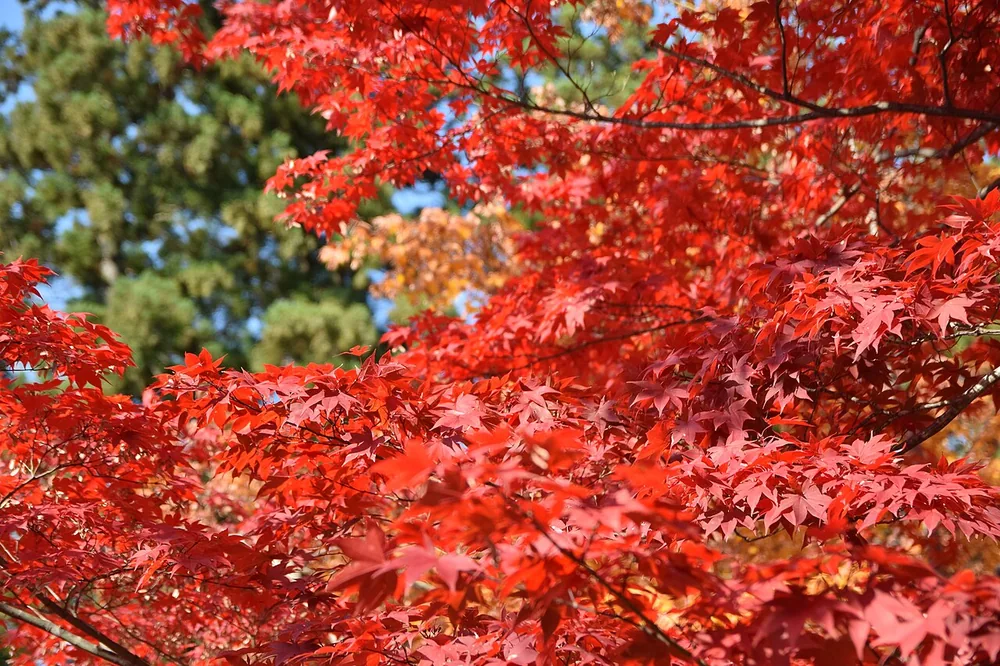
The approach from Dainichido to the Golden Hall and the area around the Sutra Repository are key autumn sections. The temple’s seasonal guide lists iroha and mountain maples, while Tsukimizaka contrasts old cedars with changing leaves. Stop along the daytime route rather than retracing it for a single photographic spot. Even if colour differs from expectations, the original route still gives you the Golden Hall and treasures, so foliage is not the day’s only content.
Autumn Galaxy 2026 runs from 24 October to 8 November, 16:30–18:30, with lights starting around 16:30. The Chrysanthemum Festival runs from 20 October to 15 November, a different period; the Autumn Fujiwara Festival is also on 1–3 November. The current year’s autumn events page lists venues and times. Choose the event before deciding on a morning or afternoon climb. For Autumn Galaxy, the least tiring plan is usually one afternoon ascent: finish indoor displays, rest within the precinct, then see the lights and descend. Visiting in the morning, returning below and climbing Tsukimizaka again at night increases walking. For children and older relatives, choose a single ascent or shorten illumination time so your arranged return remains manageable.
A short film recommended on the temple’s home page introduces the illuminated approach and precinct scenery. See this section for the 2026 event dates and visiting hours.
From 4 November, work backwards from earlier exhibition closing
Ordinary Chusonji visiting hours are 08:30–17:00 from 1 March to 3 November and 08:30–16:30 from 4 November to the end of February. Ticket sales end ten minutes before closing. The temple FAQ says entering in those final ten minutes may leave time only for the Golden Hall, without Sankozo. Thus 16:50 or 16:20 is the final sales boundary; a full visit should begin earlier.
Autumn Galaxy crosses this change. From 24 October to 3 November, finish displays and join the lights from 16:30. From 4 to 8 November, indoor displays close at 16:30, after which you move to the lit approach. Allow for the Golden Hall and Sankozo first, then tea and waiting for evening views, so you can see the main contents of your ticket fully.
Shorter routes for children and older relatives start with the approach
Drivers can compare Car Parks 1 and 2 with Sakanoue. The temple lists Car Park 1 at around 850 metres from the Main Hall and Car Park 2 at around 700 metres, both ¥400 for ordinary cars. Sakanoue Car Park is around 240 metres from the Main Hall and costs ¥500 for ordinary cars. If someone cannot manage a long climb, study the closer parking and actual path first, then choose the visit length rather than turning the whole family back at Tsukimizaka.
Car Parks 1 and 2 open 08:30–17:00 from March to November and 08:30–16:30 from December to February. Car Park 2 has irregular closures from December to March. Follow event and parking staff guidance for evening foliage visits. Wheelchair users should tell the temple about drop-off needs, steps and toilets together. Ask Iwateken Kotsu’s Ichinoseki office about bus ramps; the loop operator states that vehicle substitutions are possible.
With small children, keep the Main Hall, Golden Hall and one seated break, omitting distant extensions. If taking turns to view displays, meet outside a clearly named building rather than leaving a pushchair and children waiting in a narrow passage. If hills are unmanageable that day, Motsuji lists gentler garden routes and accessible facilities. Focus on the garden and move Chusonji to another day with a suitable approach.
Rain, snow and summer change your stopping places and pace
In rain, complete the main paid visits first and shorten subtemple and lookout extensions. Put wet umbrellas away before entering, slow down and rest where entrances remain clear. Fallen leaves and damp ground affect the descent. Add return time before deciding whether to eat uphill. If rain or restrictions shorten the route, make the Golden Hall, Sankozo and Main Hall the day’s main visits.
Winter brings earlier exhibition closing and an out-of-season loop bus, so use the ordinary route timetable. With snow or ice, choose a short route and ask the temple about paths that day. If unfamiliar with snowy driving, use trains and a pre-booked final transfer. Hiraizumi Tourist Association lists bicycle hire as closed in rain and winter; these conditions make cycling an unsuitable default substitute for the climb.
In summer, add Chusonji’s lotus flowers if desired. The seasonal page gives around mid-July to mid-August, with the pond below a side path between the Golden Hall and Sankozo. This is an extension off the main route. Allow time for the side-path return and carry water. With older relatives, complete the principal visit first, then let those with enough energy add the pond and agree on one meeting place.
Chusonji and Motsuji in a day: climb first, then walk beside the pond
For a daytime visit, give Chusonji two to three morning hours along Tsukimizaka, the Main Hall, Sankozo and Golden Hall, then go to Motsuji after lunch. Motsuji’s FAQ gives 30–40 minutes for a slow garden visit; allow 60–90 minutes for photography, reading and seated rests. Fit these blocks between your actual trains, with waiting and temple-to-temple travel added separately.
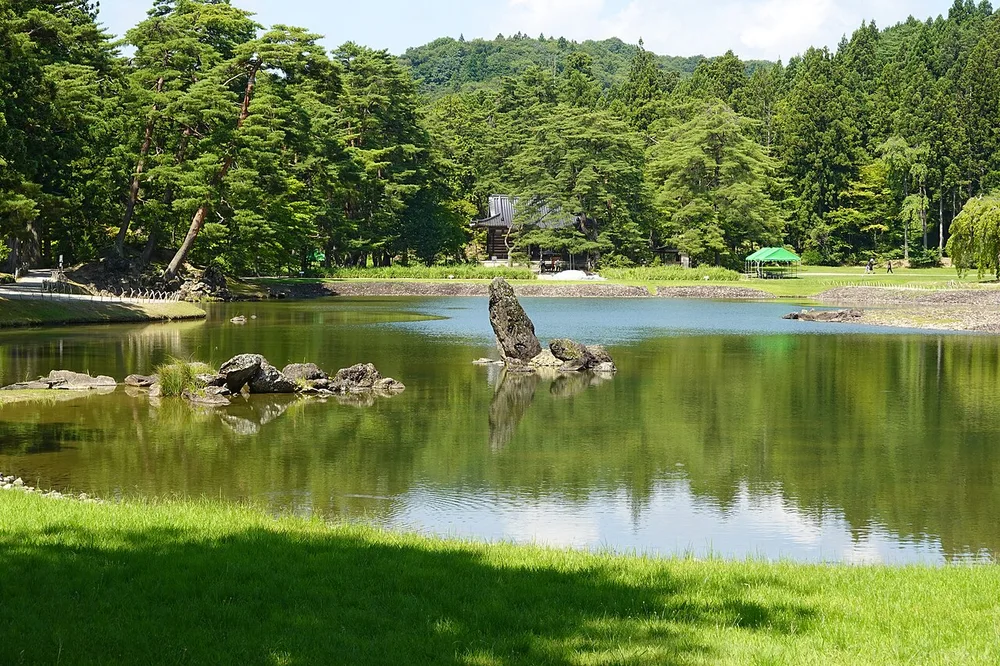
Motsuji lists around 25 minutes’ walk from Chusonji’s approach entrance and around seven to ten minutes from Hiraizumi Station. The 25-minute starting point is below the hill, so finish Chusonji’s descent first. After lunch uphill, add the descent before starting the temple-to-temple calculation. Alternatively, take an ordinary bus towards Ichinoseki to Hiraizumi Station, then walk around seven to ten minutes. The loop follows its stop sequence; compare actual waiting with walking before choosing.
Motsuji individual admission is ¥700 for adults, ¥400 for upper-secondary pupils and ¥200 for primary and lower-secondary pupils. Hours are 08:30–17:00, shortened to 08:30–16:30 from 5 November to 4 March. Its earlier winter closing starts on 5 November, one day after Chusonji’s. For early November, write both temples’ closing times into the plan, then work backwards from your Hiraizumi train to allow walking and luggage collection.
Calculate tickets for every companion and add the buses you will take
An adult pays ¥1,000 for Chusonji’s ordinary areas. Add ¥700 for Motsuji for a two-temple total of ¥1,700. On a loop operating day, two Runrun rides add ¥400, totalling ¥2,100. For three rides with the ¥550 adult day pass, the total is ¥2,250. These totals cover ordinary admission at both temples and the specified loop transport. List long-distance trains, food and other activities separately, and remove a temple ticket if visiting only one.
For two adults and one primary-school child, ordinary admission at both temples totals ¥1,700×2 + ¥500 = ¥3,900. Two loop rides per person cost ¥800 for both adults together and ¥200 for the child, making admission and loop transport ¥4,900. Including the special concealed-image opening adds ¥600 per adult and ¥200 for the child, another ¥1,400 for this family. Keeping school stages explicit makes recalculation straightforward.
Choose tea, a goshuin or seated meditation for your own budget, then allow for lunch. For a taxi after the illuminations, give the operator the date, passenger count, collection point and time, and include the confirmed arrangement in your trip cost.
A few useful answers
How long should I allow for my first visit to Chusonji?
Allow two to three hours to see the main sights and have a good look at the exhibits. Follow Tsukimizaka uphill past the main hall to Sankonzo and Konjikido. Set aside extra time for lunch and travel to and from Hiraizumi station.
How much is a standard ticket for Konjikido at Chusonji?
A standard ticket costs ¥1,000 for adults, ¥700 for upper secondary pupils, ¥500 for lower secondary pupils and ¥300 for primary pupils. It includes Konjikido, Sankonzo, Kyozo and the hall that formerly sheltered Konjikido.
What time does Konjikido at Chusonji open, and when do ticket sales close?
The ticketed sites open at 8.30 am. They close at 5 pm from 1 March to 3 November and at 4.30 pm from 4 November to the end of February. Ticket sales end 10 minutes before closing, so arrive earlier if you want to visit both Konjikido and Sankonzo.
How long is the walk from Chusonji to Motsuji?
The walk from the Tsukimizaka entrance at the foot of the hill to Motsuji takes about 25 minutes. If you’re starting at Konjikido, allow extra time to come down the temple path to the entrance.
Official information and references
Sources used in this guide.
- Chusonji: visiting hours and tickets
- Chusonji: visiting, luggage and goshuin FAQ
- Chusonji: precinct map and halls
- Chusonji: seasons and temple treasures
- Chusonji: Golden Hall craftsmanship
- Chusonji: history
- Chusonji: meditation, sutra copying, goshuin and tea
- Chusonji: autumn 2026 events
- Chusonji: 2026 special opening of concealed Buddhist images
- Chusonji: access and car parks
- Iwateken Kotsu: 2026 Runrun timetable
- Iwateken Kotsu: current Ichinoseki–Hiraizumi route page
- Iwateken Kotsu: Ichinoseki–Hiraizumi route PDF
- Hiraizumi Tourist Association: travel times
- Hiraizumi Tourist Association: bicycles and local transport
- Hiraizumi Town: cultural-property buildings
- Nohgaku Performers’ Association: Hakusan Shrine Noh stage, Hiraizumi
- Motsuji: hours, admission and access
- Motsuji: walking times and accessibility FAQ
- Chusonji: film recommended on the home page
- Hiraizumi Rest House: food, storage and facilities
- Chusonji: official guided-tour starting point and route