Walk Tsukimizaka, the main hall and Konjikido. Compare ordinary and 2026 special-exhibition tickets, plan Sankonzo, Kyozo, the old shelter, Noh stage and lunch, and check weekday versus weekend evening buses, shorter family routes and Motsuji.
- Region & Focus
- Hiraizumi and Ichinoseki
- Reading Scope
- 38 min read · 23 chapters · 4 Q&As
- Official Verification
- 22 official sources checkedUpdated November 22, 2026
- Key Topics
- ItinerariesRail travelSeasons
Chapter Route Map (tap any stop)
- Give the temple half a day before connecting the rest of Hiraizumi
- Mark the foot of the hill, main hall and Konjikido separately
- Change at Ichinoseki for Hiraizumi, then arrange the final leg
- Runrun: a weekend sightseeing loop with a specific direction
- Use the ordinary route on weekdays, and choose illumination returns by day
- Climb Tsukimizaka slowly and save energy for the descent
- Higashi Monomidai and Benkeido: look beyond the forest after the climb
- Worship at the main hall before continuing to Konjikido
- After the main hall, choose an interest to connect the smaller halls
- The ordinary ticket covers four places, with rates by school level
- The 2026 hidden-image opening: combined versus separate tickets
- Give Sankonzo time for sculpture and treasures
- Inside Konjikido: gold leaf, shell inlay and the Buddhist arrangement
- Kyozo and the old shelter: two approaches to preservation on one ticket
- Add Hakusan Shrine's Noh stage after Konjikido
- Choose goshuin, tea or a practice experience and leave time for it
- Lunch on the hill or below determines whether you climb again
- Choose autumn-leaf sections, then check illumination dates separately
- Closing moves earlier on November 4: work backward from the exhibits
- Shorter routes for children and older relatives begin with the approach
- Rain, snow and summer change where you stop and how you walk
- One day with Chusonji and Motsuji: climb first, then walk beside the pond
- Calculate admission for every companion, then add only the buses you will take
- Quick Q&A
At Chusonji, the climb begins after you get off the bus. Allow a continuous walk through Tsukimizaka, the main hall and Konjikido. The ordinary ticket also includes Sankonzo, Kyozo and the old shelter. On a first visit, reserve two to three hours for the main route, then decide whether to add the Noh stage, tea or Motsuji in the afternoon. For the Autumn Leaves Galaxy illumination, finish the paid exhibits first and choose your return by day of the week: ordinary evening bus services differ on weekdays and weekends.
Give the temple half a day before connecting the rest of Hiraizumi
For a first Chusonji visit, treat the foot-of-hill entrance, Tsukimizaka, main hall, Sankonzo, Konjikido, Kyozo and old shelter as one complete walk. The temple suggests about one to two hours for a general visit. Allow two to three if you want to read displays, collect a goshuin seal or sit down for tea. Add lunch and station transport separately. To see every small hall, make Chusonji the day's focus and add only one garden in the afternoon. If you must choose one part, prioritize paid admission to Konjikido and Sankonzo, then add the main hall and approach as energy allows. For companions interested in the cedar walk and main-hall worship, a shorter route around the main approach and hall has different costs and walking needs.
Chusonji and Motsuji provide plenty for one Hiraizumi day. The former combines hillside halls and craftsmanship; the latter follows a pond through a Pure Land garden. To compare Ichinoseki station-area stays with Hiraizumi hot-spring accommodation, hotel transfers and meal conditions, see the Hiraizumi and Ichinoseki accommodation guide.
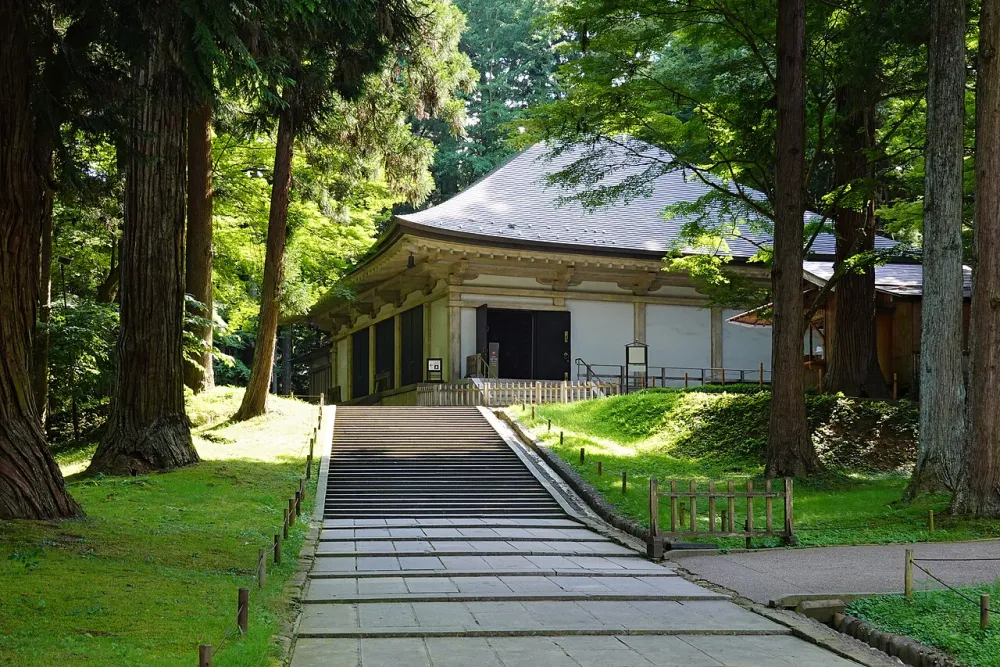
Walk Tsukimizaka, the main hall and Konjikido. Compare ordinary and 2026 special-exhibition tickets, plan Sankonzo, Kyozo, the old shelter, Noh stage and lunch, and check weekday versus weekend evening buses, shorter family routes and Motsuji.
Mark the foot of the hill, main hall and Konjikido separately
Save the Tsukimizaka entrance, main hall and Konjikido on your map. Chusonji bus stop serves the transport area below the hill, while paid Konjikido admission is farther inside the grounds. Treating the temple's map pin as an entrance immediately beside the bus can omit the whole climb. The official grounds map marks these places and subsidiary temples separately and is useful to save offline.
The route first climbs to the main-hall area, then follows the main approach toward Sankonzo and Konjikido. Hakusan Shrine and the Noh stage lie farther north. If adding a tea room or restaurant, check which side of your walking route it occupies.
Use phone navigation for the lower entrance and surrounding roads. Inside, follow temple signs and routes open that day. If family members split up, name a building and a meeting time. “Wait at the Chusonji entrance” could mean the hill entrance, main-hall doorway or Konjikido ticket area, causing extra walking.
Change at Ichinoseki for Hiraizumi, then arrange the final leg
From the Shinkansen, use Ichinoseki Station, then change to the JR Tohoku Main Line for Hiraizumi Station. The short ride takes about ten minutes, but train intervals, platform walking and waiting determine the itinerary. Search with the Japanese station name “一ノ関,” choose a service that actually stops there, then fit in your Hiraizumi half-day.
From Sendai or Morioka, Ichinoseki works as the transfer point. For a same-day return from farther away, check how much usable temple time remains between trains. Hiraizumi still requires transport to the hill and a climb. If boarding the local line only in the afternoon, protect the paid exhibits' closing time first. Calculate rail-pass value from the actual legs of your whole trip using the Japan rail-pass comparison.
If sleeping in Ichinoseki again, leave large luggage at the accommodation. The temple FAQ explicitly says there are no coin lockers within the grounds and points to Hiraizumi Station lockers. If already at the foot of the hill with luggage, the Hiraizumi Rest House office also offers storage. Its official site lists ¥500 per item; keep valuables with you. Ask the collection deadline when leaving bags, then plan the climb and return.
Runrun: a weekend sightseeing loop with a specific direction
In 2026, Hiraizumi's Runrun loop bus operates Saturdays, Sundays and national holidays from April 11 through November 29, plus daily August 13–16. Iwateken Kotsu's current timetable lists the first Hiraizumi Station departure at 10:15 and Chusonji at 10:25. To start exhibits at 8:30, use an ordinary route bus, walk or arrange a vehicle. Waiting at the station for the first loop loses the early morning.
The loop goes from Hiraizumi Station to Motsuji, then Chusonji, before returning to the station. From Chusonji to Motsuji, it first passes back through the station and into the next circuit. Choose the temple order by walking capacity: climb first in the morning and reach the garden by ordinary bus or on foot after lunch, or walk from the station to Motsuji first and take the loop onward to Chusonji. Mark your boarding and alighting stops to see the actual transport time.
A single ride is ¥200 for adults and ¥100 for children. The adult one-day pass is ¥550. Transport IC cards are accepted. Two adult rides cost ¥400; compare the day pass from three rides onward. If walking one leg, remove that fare before calculating.
Tickets are sold on board, at Hiraizumi Rest House and at Monzen Chokubai Ayame in Motsuji's parking lot. The ordinary Ichinoseki–Hiraizumi route charges separately. Runrun's day pass is valid only on the loop bus.
Use the ordinary route on weekdays, and choose illumination returns by day
When the loop is not running, find the Ichinoseki–Hiraizumi line through Iwateken Kotsu's Ichinoseki and Hiraizumi route page. The currently linked PDF is marked with the October 1, 2025 fare revision and separates the Sehara and Ichinoseki directions. A red ● means no service on Saturdays, Sundays or national holidays. A whole column with ● runs only on weekdays.
The current Ichinoseki–Hiraizumi timetable gives the last weekday service toward Ichinoseki as Chusonji 18:04, Hiraizumi Station 18:08 and Ichinoseki Station 18:33. That column has ●. On Saturdays, Sundays and holidays, the last available ordinary service is Chusonji 16:14, Hiraizumi Station 16:18 and Ichinoseki Station 16:43. A weekend loop bus also calls at Chusonji at 16:25, still before the illumination ends.
For the weekday 18:04 bus after Autumn Leaves Galaxy, put your camera away early on the hill and allow enough downhill time for your own pace before waiting at the lower stop. Staying until 18:30 requires a separate transfer. For weekend and national-holiday illumination visits, arrange a reserved vehicle from the outset. When timetables change, reopen the newest version through the operator's route page. Check your date and ● marks before booking an inflexible dinner or Shinkansen.
Climb Tsukimizaka slowly and save energy for the descent
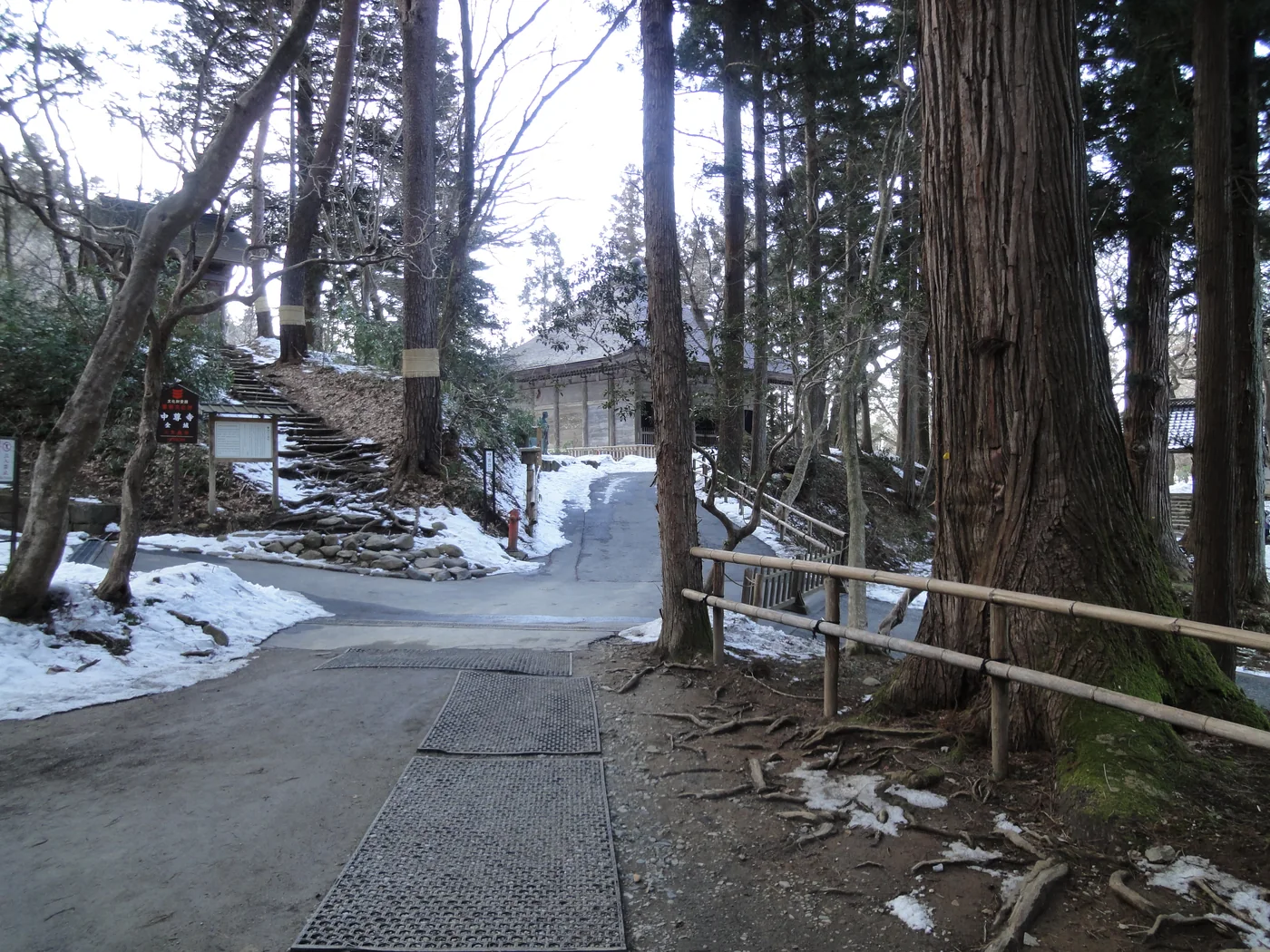
Tsukimizaka is Chusonji's main approach. The temple occupies an east–west hill about 130 meters above sea level. It describes the first part as steep, becoming flatter near Higashi Monomidai. Old cedars provide shade, while wet, cold ground calls for care. Climb at a sustainable pace. Stop clear of other walkers for cedar photographs, then continue uphill.
If you seldom walk slopes, use the main hall as the first place to rest and reassess. If already struggling, some companions can switch to a shorter visit while others continue to Konjikido. Turning back at the main hall omits the paid exhibits beyond and suits a cedar-and-main-hall walk. If Konjikido is the priority, choose a closer approach before departure and save energy for the exhibition area.
Descending also takes time, especially with sore knees, wet soles after rain or evening lighting. It may be slower than the ascent. Avoid rushing the final stretch for a bus. Reserve downhill and waiting time first, then fit tea and photographs before it. If unwell, rest nearby, ask companions for help and ask the temple about available routes and approaches.
Higashi Monomidai and Benkeido: look beyond the forest after the climb
Higashi Monomidai, above Tsukimizaka, looks toward the Kitakami and Koromo rivers and Mount Tabashine. This stop shifts your view from the cedars to Hiraizumi's terrain. Rivers, plain and hills give the temple's location a physical setting. Stop as space and pedestrian flow permit, stand securely before taking out a phone, and use the pause to adjust clothing and breathing.
Nearby Benkeido was built in 1827 with Shogun Jizo as its principal image and was originally called Atagodo. After wooden images of Yoshitsune and Benkei were installed, it became known as Benkeido from the Meiji period. More than 60 kinds of flowers and plants decorate its coffered ceiling. For a route including historical figures, stop here on the climb, then compare Heian-period Buddhist images and treasures farther along at Sankonzo.
Worship at the main hall before continuing to Konjikido
The main hall is the center of Chusonji's daily services. The current building was rebuilt in 1909 and has Shaka Nyorai as its principal image. Konjikido centers on Amida Nyorai, giving the two halls different images and functions. Worship via the designated route. During a service, keep quiet and leave entrances and seating for the ceremony.
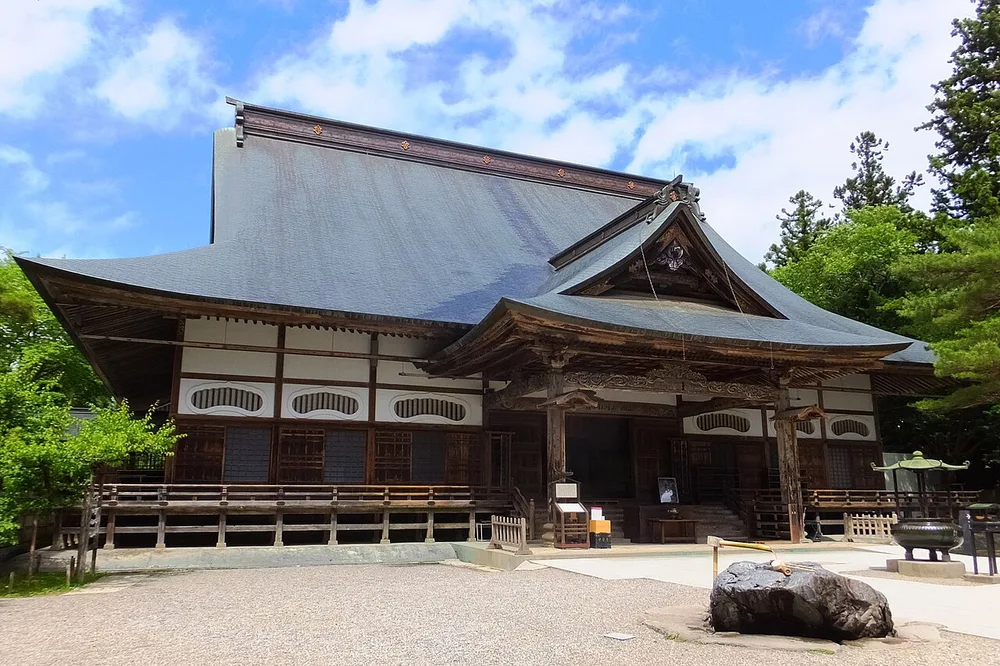
The temple says the main image is flanked by the eternal flame brought from Enryakuji on Mount Hiei. Observe the arrangement of the image and lamps. Compared with the elaborate craftsmanship at Konjikido later, this is more directly a continuously active place of worship. Follow signs for photography and permitted areas, and put away rainwear before entering to keep the passage clean.
After the main hall, choose an interest to connect the smaller halls
Near the main hall, visit Fudodo, then follow the approach toward Dainichido. For Buddhist sculpture, include Mine Yakushido. Each hall has its own principal image and history. A brief worship stop, introductory text and view of the building are enough; each need not become a long guided explanation.
A useful connection is between the outdoor halls and the treasure museum. The large Yakushi Nyorai formerly at Mine Yakushido is now in Sankonzo. Knowing the hall's name before seeing its image connects the outdoor walk with the indoor objects. Children unfamiliar with Buddhist images can begin with posture and faces. Use fewer terms and allow more looking time. The grounds map also lists smaller halls such as Amidado. For the main visit, simply follow the principal approach to Sankonzo and Konjikido. For greater depth, revisit skipped halls on the return, after completing the paid exhibits and seeing how much time remains.
The ordinary ticket covers four places, with rates by school level
Chusonji's ordinary admission covers Sankonzo, Konjikido, Kyozo and the old shelter. Individual rates are ¥1,000 for adults, ¥700 for senior high students, ¥500 for junior high students and ¥300 for elementary school children. The temple ticket page uses school levels. List each family member's category before adding goshuin, tea and transport.
Groups of 30 or more receive 10% off. Disability certificate holders can receive half-price admission by showing the certificate at the ticket counter. If using overseas documents or a different school system, send the temple the document name, age and school level before travel to ask which category applies.
The 2026 hidden-image opening: combined versus separate tickets
The normally hidden Buddhist images are on display for the 900th anniversary from July 17 through November 15, 2026, in Sankonzo's special room in a separate treasure-museum building. Adult special-only admission is ¥700 and ordinary admission ¥1,000, totaling ¥1,700 separately. A combined ticket bought together for both costs ¥1,600. Adults planning both save ¥100 with it.
Combined tickets cost ¥900 for senior high students, ¥700 for junior high students and ¥500 for elementary school children. Special-only student admission is ¥300 at each school level. Compared with ordinary admission, the combined ticket adds ¥600 for adults and ¥200 for each student level. This comparison applies only during this special opening. Buy special-only admission if that is your sole visit; choose ordinary or combined admission for Konjikido and Sankonzo. The special-only ticket does not admit you to Konjikido or Sankonzo's ordinary exhibits.
For a commemorative goshuin, the special-opening page lists ¥1,000, issued at the exhibition venue as a prewritten paper sheet.
Give Sankonzo time for sculpture and treasures
Sankonzo houses more than 3,000 cultural properties, with displays of Buddhist images, scriptures and objects from the former temple complex. See the treasure museum before Konjikido and carry those craft details into the building. Reserve enough viewing time before both close. To linger in the museum, reduce the smaller roadside halls.
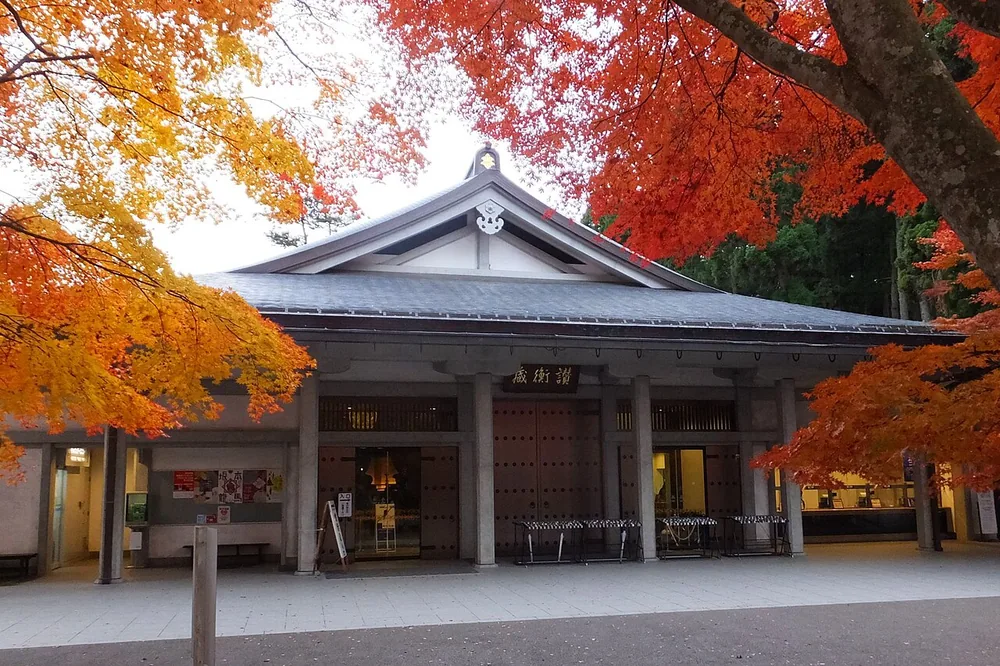
Take time over the large Buddhist images' scale and faces. The guide explains that joroku originally describes a standing Buddha's dimensions; seated images have a different height. The name does not mean every seated image before you is one jo and six shaku tall. With children, compare the three Buddhas' seated postures, then use the labels to find their original halls, rather than memorizing each full title.
From October 19 through November 15, 2026, Sankonzo also hosts the autumn exhibition on Kyozo and the beauty of gold-and-silver-lettered sutras. It includes reconstructed copies of Kyozo's colored decoration and material on Chusonji sutras. Seeing paper, lettering colors and decoration indoors before visiting Kyozo outside helps explain why the wooden scripture repository deserves a stop alongside Konjikido.
Inside Konjikido: gold leaf, shell inlay and the Buddhist arrangement
Fujiwara no Kiyohira raised Konjikido in 1124. It preserves architecture from Chusonji's founding period and expresses Amida Nyorai's Pure Land. Gold leaf inside and out is the most striking feature. Next look for turban-shell inlay, metalwork and lacquer. The four decorated columns and Buddhist altar platforms are key craft details. White shell sheen, pierced metal fittings and maki-e lacquer show different materials combined in one hall.
Find the central Amida Nyorai first, then the bodhisattvas beside it, rows of Jizo and guardian kings in front. You need not identify every image quickly. Understanding the main image and surrounding layers reveals the core arrangement. For craft interests, examine how columns, platforms and details join. Companions can observe separately and meet at the exit. The altar platforms hold remains associated with four generations of the Oshu Fujiwara, giving the hall a funerary role too. Keep your voice low and move in order out of respect for the deceased. Save photographs for permitted outdoor areas. The modern protective building and Konjikido inside are separate layers. The structure seen above the entrance steps is the shelter protecting the old hall.
Kyozo and the old shelter: two approaches to preservation on one ticket
Kyozo was built to store scriptures. Hiraizumi Town's heritage page says it was founded around the same time as Konjikido and later rebuilt, retaining some early structural materials. Look at the wood, eaves and scripture-storage function, then recall the sutras in Sankonzo. When an object moves from its original building into museum care, both places help explain it.
The old shelter protected Konjikido for many years and moved to its present location during the major Showa-period restoration. The temple says a simple cover was already in place about 50 years after Konjikido's construction, followed by repeated additions and alterations. Recent investigation dates the surviving old shelter to the Muromachi period. After the new protective building took over, the old shelter itself became a preservation subject. Konjikido, Kyozo and the old shelter show different forms of architectural conservation within the same forest.
Add Hakusan Shrine's Noh stage after Konjikido
To continue walking, extend to Hakusan Shrine's Noh stage. The Nohgaku Performers' Association says the surviving stage was rebuilt in 1853 and has a bridgeway and dressing rooms. Look beyond its front to the side bridgeway used by performers, and see it as a space still capable of performance.
Hakusan Shrine is one of the grounds' guardian shrines. Among old cedars, its stage offers timber construction different from Konjikido. It is a worthwhile addition for architecture or performing-arts interests. For the main temple visit only, turn back after the Konjikido area and save the extra walk and return. Check that enough time remains to descend before adding the stage.
The 2026 Autumn Fujiwara Festival is November 1–3. On November 3, Chusonji's Noh theater schedules unaccompanied chanting at 11:00, shimai dance at 12:00 and a shortened Noh performance of Hidehira at 13:00, among other programs. The main hall and Konjikido forecourt have separate events.
For the 13:00 performance, complete worship in the morning, eat lunch early and make the stage your main afternoon plan. Avoid scheduling another temple in the same time slot.
Choose goshuin, tea or a practice experience and leave time for it
The temple FAQ lists year-round goshuin reception at the main hall, Sankonzo and Konjikido, with more counters at subsidiary temples. A goshuin records worship. Visit the principal image first, then follow the counter's procedure. To keep one meaningful seal, choose a hall you have fully visited instead of letting repeated queues control the day.
For a seated rest, consider tea at Shojuan. The temple experience page lists matcha and a Japanese sweet for ¥1,000, with chairs available. It may close for temple services or events. Tea after the paid exhibits works better than tea first followed by a rush before closing. If closed that day, follow the original route downhill for food.
The same page offers seated meditation and sutra copying at Koshoin, each with a ¥1,000 offering per person, arranged through the application counter. Book the date and content first and treat it as a separate activity. Remove several small halls or the other afternoon temple to preserve enough time for actual participation.
Lunch on the hill or below determines whether you climb again
If climbing in the morning and continuing around Konjikido in the afternoon, Kanzantei is an on-site meal option. The temple lists Hiraizumi wild yam, mountain-vegetable soba, udon, sweets and coffee. Keeping lunch within the same ascent suits a slow visit to the farther grounds. Choose from the actual menu and day's supply. Ask about ingredients and preparation if anyone has allergies.
For Motsuji in the afternoon, lunch at Hiraizumi Rest House below the hill connects directly to onward transport. The ground-floor Food Court Mon serves mochi dishes, noodles and rice bowls for different appetites. Look at the Benkei Chikaramochi range for local food. The facility also sells loop-bus day passes, so combine tickets, lunch and luggage collection on the same descent.
While waiting uphill for the illumination, separate normal lunch, afternoon tea and dinner. Eat a snack and drink water before the 16:30 event start. Keep dinner to your arranged plan below the hill or at your accommodation. The official notice mentions local cafes selling at night; treat them as an optional addition.
Choose autumn-leaf sections, then check illumination dates separately
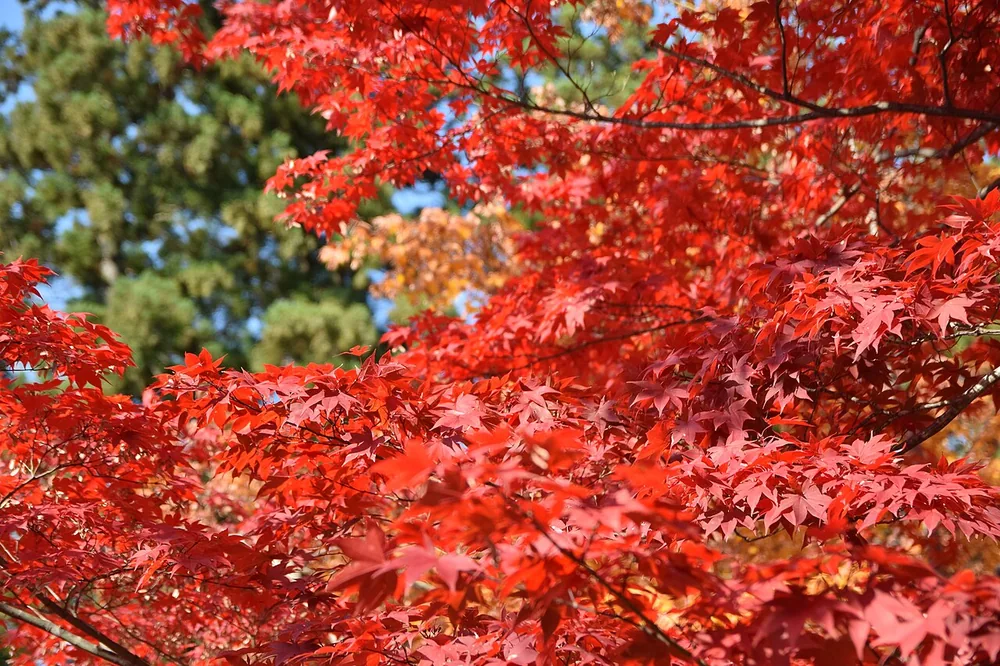
The approach from Dainichido toward Konjikido and the Kyozo area deserve particular attention in autumn. The temple's seasonal guide lists Japanese maples, while Tsukimizaka contrasts old cedars with changing leaves. Stop along your normal daytime route instead of doubling back for one photograph. Even if leaf progress varies, the same worship route still covers Konjikido and the treasures, keeping autumn color from becoming the day's only purpose.
The 2026 Autumn Leaves Galaxy runs October 24–November 8, 16:30–18:30, with lighting starting around 16:30. The Chrysanthemum Festival runs October 20–November 15, and the Autumn Fujiwara Festival November 1–3. The current autumn events page lists each venue and time. Choose the event you want before deciding on a morning or afternoon ascent. For the illumination, an afternoon ascent is usually easiest on the legs: finish indoor exhibits, rest within the grounds, see the lighting and descend. Visiting in the morning, returning below and climbing Tsukimizaka again at night adds walking. With older relatives or children, prefer one ascent or shorten the illumination stop so the return stays within your arranged time.
This short film recommended on the temple's homepage introduces illuminated approaches and scenery within the grounds. See this section for 2026 event dates and visiting hours.
Closing moves earlier on November 4: work backward from the exhibits
Ordinary Chusonji visiting hours are 8:30–17:00 from March 1 through November 3 and 8:30–16:30 from November 4 through the end of February. Ticket sales end ten minutes before closing. The FAQ says arrival in the last ten minutes may allow only Konjikido, with no further Sankonzo visit. Therefore 16:50 or 16:20 is the final ticket-sales boundary. Start a complete visit earlier.
Autumn Leaves Galaxy spans this change. From October 24 through November 3, finish the exhibits and continue to the 16:30 lighting. From November 4–8, indoor exhibits close at 16:30 before you move to the illuminated approach. Allocate Konjikido and Sankonzo first, then tea and waiting for the night view, so you can see the main places included on your ticket fully.
Shorter routes for children and older relatives begin with the approach
Drivers can compare the first, second and Sakanoue parking lots. The temple gives about 850 meters from the first to the main hall and 700 from the second, each ¥400 for an ordinary car. Sakanoue Parking Lot is about 240 meters from the main hall and costs ¥500. For companions unable to manage a long climb, examine the closer parking and actual route first, then set the visit length, instead of making the whole family turn back at Tsukimizaka.
The first and second lots open 8:30–17:00 from March through November and 8:30–16:30 from December through February. The second has irregular closures from December through March. During illumination events, follow event and parking guidance. Tell the temple your drop-off, step and toilet needs together if using a wheelchair. For a bus ramp, ask Iwateken Kotsu's Ichinoseki office. The loop-bus operator explicitly notes that dispatching may require a different vehicle.
With young children, retain the main hall, Konjikido and one seated break, removing farther extensions. If family members take turns in the exhibits, meet outside a clearly named building so a stroller and children do not wait in a narrow passage. If the slope is too much that day, Motsuji officially lists a gentler garden route and accessible facilities. Shift the day's focus to the garden and visit Chusonji another day with a suitable approach.
Rain, snow and summer change where you stop and how you walk
In rain, complete the main paid visit first and shorten subsidiary-hall and viewpoint extensions. Put away wet umbrellas before entering buildings, slow down and rest clear of entrances. Wet leaves and ground affect the descent. Allow more return time before deciding on an uphill meal. If rain or local restrictions shorten the route, make Konjikido, Sankonzo and the main hall the day's main visits.
Winter exhibits close earlier and the loop bus is out of season, so use ordinary-route information. In snow or ice, choose a short route and ask the temple about the day's passages. If unfamiliar with snow driving, use trains and a reserved final transfer. Hiraizumi Tourism Association says rental bicycles close in rain and winter. Do not assume a bicycle can replace the uphill walk in those conditions.
In summer, add Chusonji's lotuses if desired. The seasonal page gives roughly mid-July to mid-August, with the pond below the path between Konjikido and Sankonzo. This is an extra beyond the main route. Allow water and time for the path there and back. With older relatives, finish the principal visit first, let those with enough energy add the walk and agree on one meeting point.
One day with Chusonji and Motsuji: climb first, then walk beside the pond
For a daytime trip, give Chusonji two to three morning hours along Tsukimizaka, the main hall, Sankonzo and Konjikido, then go to Motsuji after lunch. Motsuji's FAQ gives 30–40 minutes for a slow garden visit. Allow 60–90 for photographs, interpretation and seated rests. Fit these blocks between your selected trains, adding waiting and movement between temples separately.
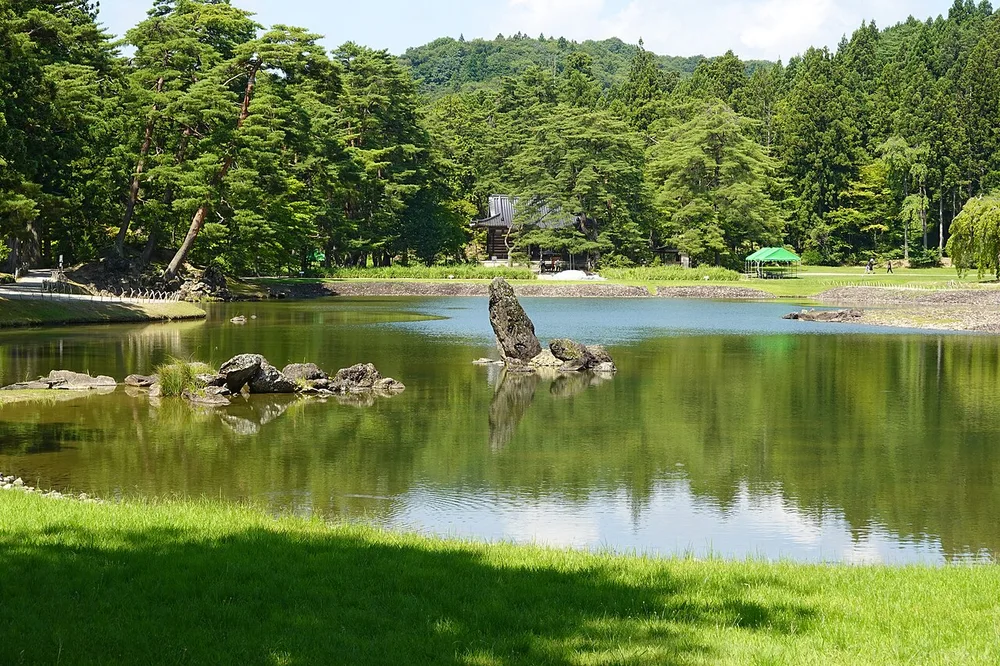
Motsuji gives about 25 minutes on foot from Chusonji's approach entrance to Motsuji and seven to ten minutes from Hiraizumi Station. The 25-minute walk starts below the hill, after the temple descent. Lunch uphill also requires descending before that inter-temple time begins. Alternatively, take an ordinary bus toward Ichinoseki to Hiraizumi Station, then walk seven to ten minutes to Motsuji. The loop bus follows its circuit; compare its actual wait and walking before choosing.
Motsuji's individual admission is ¥700 for adults, ¥400 for senior high students and ¥200 for elementary and junior high students. Hours are 8:30–17:00, changing to 8:30–16:30 from November 5 through March 4. Its earlier winter closing begins one day later than Chusonji's. In early November, write both closing times into the plan, then work backward from your train at Hiraizumi to allow walking and luggage collection.
Calculate admission for every companion, then add only the buses you will take
For one adult, Chusonji's ordinary ticket is ¥1,000. Adding Motsuji at ¥700 makes ¥1,700. On a loop-bus operating day, two Runrun rides add ¥400 for ¥2,100 total. For three rides, the ¥550 adult day pass brings the total to ¥2,250. These totals cover the two ordinary temple tickets and specified loop-bus travel. List long-distance trains, food and other activities separately. Remove the other temple's admission if visiting only one.
For two adults and one elementary school child, ordinary admission to both temples is ¥1,700 × 2 + ¥500 = ¥3,900. Two loop rides per person cost ¥800 for the two adults combined and ¥200 for the child, making ¥4,900 for admission and loop transport. To include the hidden-image opening, add ¥600 for each adult and ¥200 for the child: another ¥1,400 for this family. Specifying school levels makes recalculation straightforward.
Choose tea, a goshuin or seated meditation as an individual budget item, and allow lunch. If the illumination requires a taxi, tell the operator the date, group size, pickup point and time. Once arranged, include it in the whole-trip cost.
A few useful answers
How much time should I plan for my first visit to Chusonji?
Plan on two to three hours to see the main temple sites and take your time with the exhibits. Walk up Tsukimizaka, past the main hall and on to Sankonzo and Konjikido. Allow extra time for lunch and travel to and from Hiraizumi Station.
How much is a standard ticket to Konjikido at Chusonji?
A standard ticket costs ¥1,000 for adults, ¥700 for high school students, ¥500 for middle school students, and ¥300 for elementary school students. It covers Konjikido, Sankonzo, Kyozo, and the old hall that once sheltered Konjikido.
What are the opening hours and ticket cutoff for Konjikido at Chusonji?
The ticketed sites open at 8:30 a.m. They close at 5 p.m. from March 1 to November 3 and at 4:30 p.m. from November 4 through the end of February. Ticket sales end 10 minutes before closing, so go earlier to see both Konjikido and Sankonzo.
How long does it take to walk from Chusonji to Motsuji?
It’s about a 25-minute walk from the Tsukimizaka entrance at the foot of the hill to Motsuji. If you’re starting at Konjikido, allow extra time to follow the temple path downhill to that entrance.
Official information and references
Sources used in this guide.
- Chusonji: visiting hours and tickets
- Chusonji: worship, luggage and goshuin FAQ
- Chusonji: grounds map and halls
- Chusonji: seasonal and treasure highlights
- Chusonji: Konjikido craftsmanship
- Chusonji: history
- Chusonji: meditation, sutra copying, goshuin and tea
- Chusonji: autumn 2026 events
- Chusonji: 2026 hidden-image opening
- Chusonji: access and parking
- Iwateken Kotsu: 2026 Runrun timetable
- Iwateken Kotsu: current Ichinoseki–Hiraizumi route page
- Iwateken Kotsu: Ichinoseki–Hiraizumi timetable PDF
- Hiraizumi Tourism Association: travel times
- Hiraizumi Tourism Association: bicycles and local transport
- Hiraizumi Town: cultural-property buildings
- Nohgaku Performers' Association: Hiraizumi and Hakusan Shrine Noh stage
- Motsuji: hours, fares and access
- Motsuji: walking times and accessibility FAQ
- Chusonji: homepage recommended film
- Hiraizumi Rest House: food, luggage storage and facilities
- Chusonji: official guide starting point and routes