Chichibu Night Festival 2026 runs on 2 December (Yomiya) and 3 December (Taisai). Fireworks times, float viewing without grandstand tickets, Dango-zaka restrictions, and last trains on Seibu and Chichibu Railways.
- Region & Focus
- Chichibu
- Reading Scope
- 25 min read · 13 chapters · 8 Q&As
- Official Verification
- 29 official sources checkedUpdated 22 November 2026
- Key Topics
- SeasonsWinterRail travel
Chapter Route Map (tap any stop)
- Which Day Is Worth Travelling from Tokyo For
- Save Three Station Names First: Shrine and Otabisho Use Different Routes
- 2 December (Yomiya): Start at Atago Shrine to See a Float Become a Stage
- 3 December Daytime: Follow All Six Floats Around Chichibu Shrine
- From the Shinko Gyoretsu to Dango-zaka: Where to Stand Without Paid Seats
- Where to Watch the Fireworks and Still Catch Your Train
- Seibu Railway Back to Ikebukuro: Why 22:24 and 23:04 Go to Different Termini
- Chichibu Railway Departures: Check Times from Chichibu Station
- Single Tickets for a Day Trip, Rail Passes Only If Visiting Nagatoro Next Day
- Matsuri no Yu at the Station: Bathing Hours, Indoor Fireworks Seats, and Overnight Plans
- Staying Overnight: Match Your Hotel to Your Final Stop
- How to Adapt for Rain, Young Children, or Driving
- 4 December After the Festival: Half a Day in Nagatoro or Central Chichibu
- Quick Q&A
In 2026, the Chichibu Night Festival holds its Yomiya (Eve Festival) on Wednesday 2 December and its Taisai (Main Festival) on Thursday 3 December, with fireworks on both nights. If this is your first trip from Tokyo and you want to see the floats without a late return, the Eve Festival is the most relaxed choice. On 3 December, the evening fireworks overlap with the uphill float haul at Dango-zaka, where official paid spectator seating has already sold out. On a day trip, watch the floats during the day, position yourself near Seibu-Chichibu Station for the evening fireworks, and catch the 22:24 direct Limited Express back to Ikebukuro.
Which Day Is Worth Travelling from Tokyo For
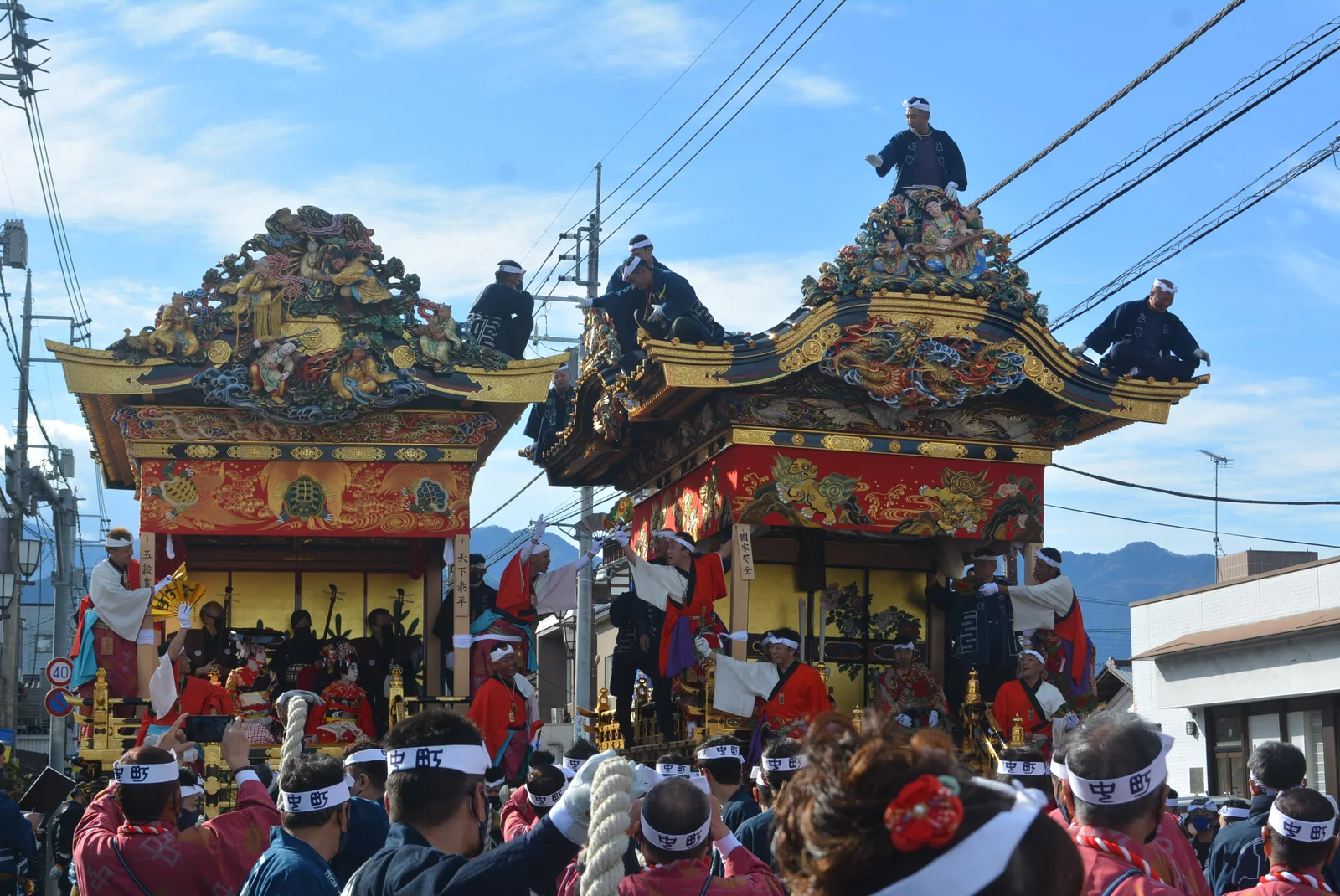
The Chichibu Night Festival is the annual grand festival of Chichibu Shrine in Saitama Prefecture. On 2 December (Yomiya), four yatai floats from Miyaji, Kamimachi, Nakamachi, and Honmachi take to the streets. On 3 December (Taisai), two kasaboko umbrella floats from Nakachika and Shimogo join them, bringing all six floats through town before they gather at the Otabisho sacred resting site at night. Most day-trippers pick one day based on what they want to see: choose 2 December for close-up float decorations and street performances, or 3 December to catch the kasaboko floats, the Shinko Gyoretsu sacred procession, and the main fireworks display in a single visit.
The length of each fireworks display also shapes your journey home. On 2 December, roughly 500 shells are launched from 19:00 to 20:00, so if you only want the evening atmosphere you can time a late train arrival around 19:00. On 3 December, around 4,000 shells run from 19:30 to 21:55, ending with the "Golden Waterfall" finale listed at 21:50 on the city programme. If you plan to stay until the end, pick a viewing spot near the station you will depart from. Overnight visitors should prioritise booking 3 December, as that is the only night when the floats climb to the Otabisho and return late into the night.
Religious ritual and street theatre come together across these two days. In 2016, Chichibu's "Yatai Float Procession and Kagura" was inscribed on the UNESCO Intangible Cultural Heritage list as part of Japan's "Yama, Hoko, Yatai, float festivals". For first-time visitors, walking to the shrine to watch the floats pay tribute to the deities and then turn onto the main streets offers a far richer grasp of the festival than staking out a single fireworks spot from mid-afternoon.
| Date | Daytime | Main Evening Options |
|---|---|---|
| Wed 2 Dec (Yomiya) | Four yatai floats; Atago Shrine kabuki 12:00–14:00 | 19:00–20:00 fireworks (~500 shells), or lit yatai floats along main streets |
| Thu 3 Dec (Taisai) | Six floats; Chichibu Shrine kabuki 12:30–14:30 | Shinko Gyoretsu procession, Dango-zaka slope haul, or 19:30–21:55 fireworks (~4,000 shells) |
Chichibu Night Festival 2026 runs on 2 December (Yomiya) and 3 December (Taisai). Fireworks times, float viewing without grandstand tickets, Dango-zaka restrictions, and last trains on Seibu and Chichibu Railways.
Save Three Station Names First: Shrine and Otabisho Use Different Routes
If you are taking the Seibu Railway from Ikebukuro, search for "Seibu-Chichibu Station" on ticket machines and map apps. The Matsuri no Yu hot spring complex sits right outside the station, and Chichibu Shrine is normally a 15-minute walk away. During the day, you can walk via Ohanabatake Station towards Banbamachi. At night, however, police and stewards clear space wherever floats cross the railway level crossings, so daytime shortcuts may be closed off. If you are taking a Seibu Limited Express back, stay on the Route 140 side for your final viewing spot so you do not have to cross the procession route again before boarding.
Visitors arriving on the Chichibu Railway from Kumagaya, Yorii, or Nagatoro should alight at "Chichibu Station" for the shrine and the Chichibu Festival Museum (Chichibu Matsuri Kaikan). The shrine lists the walk at three minutes, and the museum sits on the same side of the tracks. If members of your group are coming from different rail lines, arrange to meet outside the museum entrance during the day. Before the Main Festival evening begins, agree on an easy-to-spot landmark outside the station to reunite at if separated, avoiding crowded ticket-gate queues.
Ohanabatake Station, also on the Chichibu Railway, sits right beside Seibu-Chichibu Station, Dango-zaka slope, and the level crossing. For the evening of 3 December, search maps for "Otabisho" or "Oyama" as well. Otabisho is the sacred plaza at the top of Dango-zaka where the floats gather and the deities temporarily rest. Chichibu City Hall, the Otabisho, and Ohanabatake Station appear close together on a map, yet each has separate crowd-control lanes on the night. Check the city's traffic map and follow stewards' directions rather than trusting a phone navigation app's shortest route into a closed junction.
Fireworks crowds outside Seibu-Chichibu Station and northbound queues for the Chichibu Railway disperse in opposite directions. If some people in your party want to wait for floats at the shrine while others head back early to Nagatoro, save the right station names and platform directions during the afternoon. Once a float reaches an intersection, you may be able to see each other across the road yet still have to wait until the procession passes before crossing.
2 December (Yomiya): Start at Atago Shrine to See a Float Become a Stage
The easiest midday highlight to catch is the Miyaji Yatai Kabuki from 12:00 to 14:00. On 2 December, it takes place at Atago Shrine in front of the Miyaji yatai storehouse; use the Atago Shrine pin on the city notice when walking from Seibu-Chichibu Station. On 3 December, the performance moves to Chichibu Shrine. Arrive early for the opening, then fit lunch and other street processions around it. Watching the float stop and extend its fold-out stage in daylight lets you see exactly how the proscenium attaches to the chassis. The Miyaji district performs both days, so catching Wednesday's show frees up the same afternoon window on Thursday for daytime float processions.
The Eve Festival is ideal for watching yatai floats cross paths in town. According to the city's Q&A, the four yatai typically roll out between roughly 09:00 and 11:00. On the official route map, each coloured line tracks one float, and a horizontal segment marks where it pauses. Stars mark "hiki-odori", traditional dances accompanied by shamisen played right on the float stage. The 2 December chart lists performance points for Nakamachi, Honmachi, and Kamimachi in the table on the left, so you can pick a junction and wait for a dance. 2 December Procession Map
When two yatai meet, they pause and exchange drum calls in a salute called "surechigai". If you spot two floats converging on the same street, find an open kerbside pocket and wait a few minutes. In the afternoon, focusing on the plaza outside Chichibu Shrine, the main boulevard, or following a single float's route works much better than chasing all four. Families travelling with young children or older relatives can handle toilet breaks and dinner during this interval, leaving only the walk back to the station after the evening fireworks.
Open on both days, the Chichibu Silk Market runs along Kaitsugisho-dori and Kuromon-dori from 11:00 to 19:00 on 2 December and until 20:00 on 3 December. City records note that the festival's origins are tied to historic silk fairs once held at the shrine, and today's market stalls line those two Banbamachi streets about a 10-minute walk from Seibu-Chichibu Station. Browse the market in the afternoon: on 2 December, the stalls pack up just as the fireworks begin. Day-trippers can eat near the station beforehand, stay for the 19:00 fireworks, and catch the extra direct Limited Express departing at 20:45 to reach Ikebukuro at 22:17.
3 December Daytime: Follow All Six Floats Around Chichibu Shrine
On the Main Festival day, the procession schedule is split into two maps: daytime (06:00 to 16:00) and night-time (16:00 to 05:00 the following morning). To see floats on the move, start around the shrine and main streets after 08:00 or 09:00. Although the chart begins at 06:00, each float leaves its storehouse, parades through its neighbourhood, and visits the shrine at a different hour. Whenever you see a float preparing to turn down a side street, pause at the corner—the turning manoeuvre itself is one of the best daytime spectacles.
Because the floats ride on four fixed wheels, turning a corner requires coordinated teamwork. In its Q&A, the city calls this manoeuvre "giri-mawashi": pullers lift the chassis using long wooden levers and pivot it on a central fulcrum, while the Kamimachi yatai uses a mechanical jack device called a "kirin". Listen for the drumming shifting to the brisk, small-drum "tama-ire" beat and watch how the crew repositions around the wheels. At night you mostly spot lanterns from afar; daylight lets you study the woodcarvings, tell the floats apart, and see where the crew applies force.
From 12:30 to 14:30, Miyaji Yatai Kabuki plays at Chichibu Shrine. On the timetable, green hollow boxes along the coloured lines mark kabuki performances, whereas solid short bars against the Chichibu Shrine row show when each float arrives for shrine worship. Even though both happen at the shrine, a staged play and a district's formal salute occupy different spots, so adjust where you stand accordingly. Since the shrine sits next to the Chichibu Festival Museum, you can easily pair them together. After spending half the afternoon around the shrine, fireworks-goers can grab an early meal by the station or wait at the shrine for the Shinko Gyoretsu around 18:00. Because the four yatai and two kasaboko take separate routes between programme segments, there is no need to hold one kerbside spot from afternoon until night.
From the Shinko Gyoretsu to Dango-zaka: Where to Stand Without Paid Seats
Around 18:00 on 3 December, the Shinko Gyoretsu sacred procession sets off from Chichibu Shrine. On the night-time map, a light-blue line traces the procession while six other lines follow the individual floats. Start by tracking how that light-blue line leaves point K ("Chichibu Shrine"), then check which floats pass along the stretch of street where you plan to wait. City-listed night viewing areas include Chichibu Shrine, outside Chichibu Station on the Chichibu Railway, Honmachi-dori, Nakamachi-dori, and Shonin-dori.
Near Chichibu Brand Hall on Honmachi-dori, the procession passes quietly along a stretch known as "Suwa-watari". Chichibu Shrine explains that floats lower their drumbeats when passing near Suwa Shrine, and the Honmachi yatai halts while local children recite a traditional request for passage. If you want to witness this ritual, scout the spot in daylight, wait inside a permitted viewing zone as the float nears, and keep the roadway clear for the pullers.
Dango-zaka is the steep incline running from the Ohanabatake Station level crossing up towards the Otabisho. Floats begin the uphill haul in sequence from around 20:00, overlapping with the fireworks. Because the slope is narrow and heavily cordoned off, the city explicitly warns that spectators without reserved seating will struggle to see the climb from beside the hill. Paid yatai grandstand seats sold by the Chichibu Tourist Association sold out in November. Without a ticket, watching from Honmachi-dori, Nakamachi-dori, or Shonin-dori in the early evening lets you see the pullers, ropes, and glowing lanterns up close without fighting against downhill crowds once the fireworks start.
On the official procession map, A marks the Otabisho, B marks Dango-zaka, and C marks the Ohanabatake level crossing. Matching those letters to street intersections clarifies whether you are waiting for a float to start the climb, enter the plaza, or head back down. After 22:00, four yatai perform dedicatory dances at the Otabisho while all six floats remain parked until they descend around midnight and return to their home districts in the small hours. 3 December Night-time Procession Map If you want to see the late-night descent, staying in central Chichibu with late access to your accommodation is far more practical than booking a dinner-inclusive ryokan out in Nagatoro.
Where to Watch the Fireworks and Still Catch Your Train
Both nights' fireworks launch from Hitsujiyama Park, which is closed to the public during restricted hours. For 2026, general viewing areas include the Chichibu City Hall car park, the plaza outside Seibu-Chichibu Station, and Route 140 between the Seibu-Chichibu Station traffic lights and the Uenomachi intersection. Searching for Hitsujiyama Park on a phone map will steer you towards the exclusion zone, so set your destination to City Hall or the station instead. On 3 December, the City Hall car park doubles as a pedestrian viewing zone, meaning drivers must use designated temporary car parks elsewhere.
The area in front of Seibu-Chichibu Station suits anyone booked onto the 22:24 Limited Express, as you have only 29 minutes after the finale to reach the ticket barriers and queue. Viewing near City Hall connects smoothly with an afternoon spent around Chichibu Shrine. If you want both the full display and a train back to Ikebukuro, stake out your spot on the station side by early evening. Follow stewards whenever they clear walkways, and never stand inside road-closure zones marked for vehicles on the traffic map to take photos.
On 3 December, the fireworks programme starts at 19:30 with large 30 cm shakudama bursts, competition shells, and rapid-fire barrages, building up to the "Golden Waterfall" finale from 21:50. If you only need a half-hour taste, watch the opening and move towards the station ahead of your ticketed departure. To stay for the finale, watching from outside Seibu-Chichibu Station gives you the cleanest transfer for late trains to Ikebukuro. Connecting trains back to Tokyo via Yorii or Kumagaya depart before the show ends, forcing an early exit. Spots offering both floats and fireworks in one frame require a clear sightline to the parade route and Hitsujiyama Park—an angle the city notes is scarce. In high winds or dense crowds, shoot handheld and keep tripods packed away to preserve walking space. Drones are strictly prohibited throughout the festival area.
Seibu Railway Back to Ikebukuro: Why 22:24 and 23:04 Go to Different Termini
From Ikebukuro, the Laview Limited Express reaches Seibu-Chichibu in roughly 80 minutes, with all seats reserved. When transferring from JR or Tokyo Metro, follow signs for the "Seibu Ikebukuro Line" and head to the ground-floor "Limited Express Platform" (Tokkyu Noriba) near the East Exit (Central), where both the ticket counter and boarding gates sit on ground level. For regular Express trains, check the platform boards for Tokorozawa and Hanno. Following the March 2026 fare revision, the adult one-way basic fare is ¥800 plus a ¥900 Limited Express surcharge, making ¥1,700 one-way or ¥3,400 return by Limited Express. You can tap a Suica or PASMO card for the basic fare, while the Limited Express seat must be bought separately—via Seibu's official Smooz booking site or at station counters. Boarding without a Limited Express ticket adds a ¥200 on-board surcharge and risks standing if all seats are sold out, so lock in your date, departure station, and train times first.
Limited Express tickets went on sale at 07:00 JST on 2 November for 2 December travel and at 07:00 JST on 3 November for 3 December travel. On the opening day at station counters, purchases for 3 December were capped at eight tickets per person per transaction. On 2 December, Seibu extends the "Musashi 58" service—which normally starts at Hanno—to depart directly from Seibu-Chichibu. On 3 December, outbound trains from Ikebukuro run roughly every 30 minutes from 11:00 onwards. Note that the 11:30 departure from Ikebukuro only reaches Seibu-Chichibu at 12:47, so take an earlier train if you want the start of the 12:30 kabuki.
On Seibu's special 3 December timetable, the 21:54 Limited Express arrives at Ikebukuro at 23:16, handy if you skip the final minutes of the fireworks. A direct Rapid Express at 22:02 requires no Limited Express ticket and reaches Ikebukuro at 23:48, though it leaves just seven minutes after the scheduled finale for those who exit early. The 22:24 Limited Express is the last direct train all the way to Ikebukuro, arriving at 23:44. Later departures—the 23:04 Limited Express and 23:14 Local—both terminate at Tokorozawa. When reading the timetable, always check both the destination ("Ikisaki") and the Ikebukuro arrival column; a late train still running from Seibu-Chichibu does not guarantee a ride back into central Tokyo.
If the 22:24 Limited Express sells out, you can travel outbound by Express via Hanno and return on regular commuter trains. Buying outbound and return tickets separately is smart if you plan to stay until the 21:55 finale—secure the return leg first. On the full Main Festival night timetable, a 22:15 Local train from Seibu-Chichibu reaches Hanno at 23:02, connecting to a 23:08 Semi-Express that arrives in Ikebukuro at 00:03. That leaves just six minutes to change at Hanno and 20 minutes from the end of the fireworks to depart Seibu-Chichibu. If anyone in your group walks slowly or needs another transfer at Ikebukuro, take an earlier departure instead.
Where you stay in Tokyo also dictates your cut-off. Near Ikebukuro, arriving at 23:44 still leaves an easy walk back to your hotel. If you are staying in Ueno, Asakusa, Shinjuku, or further afield, run a late-night route search specifically for 3 December and be ready to board an earlier Seibu train—sacrificing the final minutes of fireworks to keep your cross-town connection intact. On the outbound trip via regular trains, if you change at Hanno to arrive sooner, wait on the platform clearly marked for Seibu-Chichibu rather than boarding the first train that pulls in to turn around.
| Departs Seibu-Chichibu | Service & Route | Arrival |
|---|---|---|
| 21:54 | Direct Limited Express (seat reservation required) | Ikebukuro 23:16 |
| 22:02 | Direct Rapid Express | Ikebukuro 23:48 |
| 22:15 | Local to Hanno, change to 23:08 Semi-Express | Ikebukuro 00:03 |
| 22:24 | Direct Limited Express (seat reservation required) | Ikebukuro 23:44 |
| 23:04 | Limited Express (terminates at Tokorozawa) | Tokorozawa 00:07 |
Chichibu Railway Departures: Check Times from Chichibu Station
Travellers staying in Nagatoro, transferring at Yorii to the Tobu Tojo Line, or connecting to JR trains at Kumagaya need the 3 December special timetable published by Chichibu Railway on 17 November. Because the festival floats stand taller than the overhead power lines at the Ohanabatake level crossing, crews temporarily disconnect those wires, suspending rail traffic between Chichibu and Kagemori from roughly 19:30 to 22:30. Trains from the north still terminate at Chichibu Station, while southern services start and end at Kagemori. Heading towards Kumagaya, the final train you can board at Ohanabatake Station is at 19:21; later northbound departures leave from Chichibu Station. Even if you see a train stop at Ohanabatake during the festival evening, some services are set-down only.
To return to Nagatoro on 3 December, the special timetable lists a 22:54 departure from Chichibu Station (arriving 23:12) and a final train at 23:15 (arriving 23:35). If you are staying overnight in Nagatoro, confirm your ryokan's latest check-in or curfew time in advance. The walk to Chichibu Station after the fireworks follows a different path from the Seibu-Chichibu queues, so walk from Chichibu Shrine to Chichibu Station once in daylight to fix the entrance in your head before heading back from City Hall or Honmachi in the dark.
Two sample late connections back to Tokyo also run via Chichibu Station. The 21:53 departure reaches Yorii at 22:30, connecting to a 22:42 Tobu Tojo Line train for Ogawamachi, where a 23:04 Semi-Express arrives in Ikebukuro at 00:23. Staying on that same 21:53 train all the way to Kumagaya (23:04) connects with the 23:11 JR Takasaki Line, reaching Ueno at 00:14. For the Joetsu or Hokuriku Shinkansen via Kumagaya, the official timetable pairs the 21:07 Chichibu departure (arriving Kumagaya 22:14) with the 22:30 Asama 632. All of these options require leaving the fireworks before the finale, and you should verify onward local connections past Yorii or Kumagaya to your specific Tokyo neighbourhood.
Southbound towards Kagemori after the fireworks, trains leave Chichibu Station at 22:37 for Kagemori and 22:52 for Mitsumineguchi. During the rail suspension between 20:00 and 21:30, a free shuttle bus runs every 25 to 35 minutes from the Chichibu City Library car park to Kagemori Sports Ground, dropping off outside Kagemori Station. If you are staying to the south, do not confuse the northbound 23:15 last train with southbound departures. Note that Chichibu Railway runs no extra festival trains on 2 December; the special timetable applies only to 3 December.
Single Tickets for a Day Trip, Rail Passes Only If Visiting Nagatoro Next Day
For a same-day return from Ikebukuro staying near Seibu-Chichibu Station, simply tap an IC card for the ¥1,600 return basic fare and buy any Limited Express seat separately. The "Chichibu Manyu Pass" (¥2,380 for adults from Ikebukuro) only pays off if you ride local Seibu trains over two days and plan to use the onsen: it covers one return trip to Koma, two consecutive days of unlimited rides between Koma and Seibu-Chichibu, plus one voucher from six choices (Matsuri no Yu admission, dining or shopping credit, or designated local buses). If you pick the hot spring voucher, plan a realistic slot to bathe so you do not miss key festival events just to redeem it.
If you arrive in Chichibu on 3 December and spend 4 December in Nagatoro before returning to Ikebukuro, consider the "Chichibu Free Pass" (¥2,540 for adults from Ikebukuro). It covers unlimited two-day travel between Ashigakubo and Seibu-Chichibu plus the Chichibu Railway between Nogami/Nagatoro and Mitsumineguchi. At just ¥160 more than the Manyu Pass, your choice comes down to whether you need the discount voucher or Chichibu Railway coverage. Remember that a two-day pass used on 2 and 3 December expires before a 4 December return, requiring a separate ticket home—or buy a single ticket inbound on 2 December and start your pass on 3 December. Limited Express surcharges are extra on both passes.
Matsuri no Yu at the Station: Bathing Hours, Indoor Fireworks Seats, and Overnight Plans
On both festival days, the hot spring bathing zone at Matsuri no Yu opens from 10:00 to 23:00 (last entry 22:30) at weekend/holiday rates: ¥1,380 for adults and ¥800 for children. No temporary re-entry is permitted on 3 December. If you are attending the Eve Festival with older relatives, an afternoon soak breaks up the day cleanly before dinner and the 19:00 fireworks. On the Main Festival day, if you hold tickets for the 22:24 Limited Express, bathe the day before or set aside a full afternoon window; walking over from the fireworks at 21:55 leaves almost no time before your train departs.
On 3 December, indoor fireworks box seats ("masu-seki") can be booked from 20:00 to 22:00 (after the display starts outside at 19:30). Each box costs ¥12,000 for up to six guests, fitted with four recliners and two floor cushions, with standard onsen admission charged separately per person. This suits groups who feel the cold and are happy watching the second half from 20:00. Remember to factor in the walk from the building to the Seibu-Chichibu ticket gates at 22:00, and note that box seats are sold independently from Dango-zaka spectator tickets.
Overnight stays at Matsuri no Yu use reserved recliner seats in the onsen zone, capped at 59 seats per night. On 2 December, the Rest Area costs ¥6,000 per person and the Premium Lounge ¥8,000; on 3 December, they rise to ¥8,000 and ¥10,000 respectively, including admission, towels, and loungewear. Bookings opened by telephone only at 10:00 JST on 4 November. Although the Premium Lounge opens at 20:00 and the Rest Area at 23:00, both require check-in by 22:30 with no exit and re-entry permitted. Anyone wanting to see the floats descend after midnight needs a regular hotel room, whereas recliner guests can watch the evening fireworks and head straight inside to rest. Cancellation fees are 50% the day before and 100% on the day.
Staying Overnight: Match Your Hotel to Your Final Stop
Hotels near Seibu-Chichibu Station let you drop bags early and rest without relying on Chichibu Railway connections. Hotel Route-Inn Seibu-Chichibu Ekimae is around a three-minute walk from Seibu-Chichibu Station, with check-in from 15:00, making it ideal if you take a Seibu train back to Tokyo next morning. If your priority is Chichibu Shrine, the Festival Museum, and taking Chichibu Station to Nagatoro next day, Hotel Route-Inn Grand Chichibu sits roughly six minutes on foot from Chichibu Station and features a hot spring bath. Because their names are similar, enter the full hotel name into map apps—especially if companions are returning separately.
General public bookings for 3 December 2026 at both Route-Inn hotels opened at noon JST on 3 August via their official website. Route-Inn Grand Chichibu listed festival-night rates at ¥25,500 for a single room and ¥50,000 for a twin room, with cancellation penalties starting 30 days prior (30%), rising to 50% at 14 days, 80% the day before, and 100% on the day or for no-shows. If you want to watch the post-midnight descent, weigh those room rates and walkable late-night access against the cost and logistics of returning to Tokyo. Staying in Nagatoro suits visitors who wrap up after the evening fireworks—just check dinner times and night-entrance rules first. For room types and further central options, see the Chichibu Night Festival Accommodation and Town Guide.
How to Adapt for Rain, Young Children, or Driving
If dusk brings heavy rain, swap standing outdoors for two hours of fireworks with a visit to the Chichibu Festival Museum. Opening at 09:00 on both days, it stays open until 20:00 on 2 December (last entry 19:30) and 21:00 on 3 December (last entry 20:30), costing ¥500 for general admission and ¥250 for primary and junior high school pupils. Exhibits and video projections recreate the kasaboko and yatai rituals, letting you study floats you only glimpsed in the street. Afterwards, hotel guests can step out to a nearby viewing spot if the rain eases, while day-trippers can head straight for their train—checking Chichibu City's same-day notices for any weather-related schedule changes.
Standing still for hours in December gets colder than walking, so pack a windproof coat, gloves, warm socks, and sturdy footwear. With young children, step back towards the outer edges as soon as crowds begin blocking their view, keeping an unobstructed exit route to the station. In rain, wear a poncho rather than holding up an umbrella that blocks sightlines and ties up your hands in tight crowds. Save separate offline screenshots of the procession map and your return train timetable; Chichibu Railway warns of mobile network congestion on festival nights, and older travellers benefit from having the Japanese station name and departure time written down as well.
City-run temporary parking differs across the two days. On 2 December, Miyaji Sports Ground is free from 09:00 to 21:00 with no overnight parking allowed. On 3 December, lots P1 to P8 charge ¥1,000 per standard car—even for quick drop-offs—and all close at 24:00 despite varying opening hours. For example, lot P7 uses the grounds of Chichibu Daini Junior High School, yet vehicles must enter from the Kamimachi yatai storehouse side at Kamimachi 3-13; navigating by the school name alone leads to a locked main gate. Drivers planning to stay past midnight for the float descent must not park overnight in these lots. Town-centre closures push cars to the perimeter, so pick a drop-off and meeting point on the same side of the cordon to avoid extra road crossings.
For local buses, follow Seibu Kanko Bus's festival notices. From 1 December until normal service resumes on 4 December, buses serving Seibu-Chichibu Station use the depot opposite the station while the station roundabout is closed, and the Uenomachi stop shifts roughly 100 metres towards Sakagori with several routes detoured or turned back early. If your hotel provides a shuttle bus, match its pick-up point to the same-day traffic map in daylight—or drop luggage early and have one person check in ahead of the evening crowds.
4 December After the Festival: Half a Day in Nagatoro or Central Chichibu
Visitors attending both nights normally arrive on 2 December, stay two nights, and depart on 4 December; those focusing purely on the Main Festival arrive on 3 December and return on 4 December. In Nagatoro, the Iwadatami river rocks are a three-minute walk from Chichibu Railway's Nagatoro Station, making for an unhurried morning riverside stroll and lunch even after sleeping in. Travellers holding a Seibu pass can return to the Seibu Line to head back to Tokyo, or buy a separate ticket onward from Yorii or Kumagaya if travelling beyond the pass boundary.
Staying in central Chichibu also fills a relaxed half-day. Walk from Chichibu Station to Chichibu Shrine's main hall, where daylight reveals the carved "Chained Dragon" and "Child-rearing Tiger" attributed to master sculptor Hidari Jingoro. Stroll back down Banbamachi without the previous night's crowds, stop near the station for soba noodles or Chichibu's signature miso potato, and catch an afternoon Seibu train back to Tokyo without rushing after a late night.
A few useful answers
When is the 2026 Chichibu Night Festival?
Wednesday 2 December 2026 is the Yomiya (Eve Festival) and Thursday 3 December 2026 is the Taisai (Main Festival). Fireworks run from 19:00 to 20:00 on 2 December and from 19:30 to 21:55 on 3 December.
Where can I watch the floats without Dango-zaka spectator seats?
During the day on 3 December, you can see the kasaboko and yatai floats around Chichibu Shrine and along the main streets. In the evening, head to open viewing areas along Honmachi-dori, Nakamachi-dori, or Shonin-dori. Dango-zaka slope is narrow, and the city has announced that official paid spectator seats are sold out.
Where is the best place to watch the fireworks for getting back to Ikebukuro?
The area in front of Seibu-Chichibu Station is the easiest spot. On 3 December, the last direct Limited Express to Ikebukuro departs at 22:24 and arrives at 23:44. The later 23:04 Limited Express terminates at Tokorozawa.
Do I have to buy a Limited Express ticket from Tokyo to Chichibu?
No. You can take a Seibu Express from Ikebukuro to Hanno and change to a regular train; the adult basic fare is ¥800 each way. The direct Laview Limited Express is all-reserved and requires an additional ¥900 Limited Express ticket.
Which station should I use to return to Nagatoro after the fireworks on 3 December?
Use Chichibu Station on the Chichibu Railway. The special timetable lists trains to Nagatoro at 22:54 and 23:15. At Ohanabatake Station, the last northbound train you can board towards Kumagaya on that evening is at 19:21.
Can I stay at Matsuri no Yu if I want to watch the floats descend after midnight?
Matsuri no Yu in front of Seibu-Chichibu Station offers overnight recliner plans, with final check-in at 22:30 and no re-entry once inside. If you want to watch the floats descend the slope after midnight, book a hotel in the town centre that allows late return.
How late is the Chichibu Festival Museum open if it rains?
On 2 December 2026 it stays open until 20:00 (last entry 19:30), and on 3 December until 21:00 (last entry 20:30). Admission is ¥500 for adults and ¥250 for primary and junior high school pupils.
If I attend both 2 and 3 December, can I still use a two-day pass on 4 December?
The pass is valid for two consecutive days, so using it on 2 and 3 December means buying a separate ticket for your return on 4 December. If you only attend on 3 December and visit Nagatoro on 4 December, the Chichibu Free Pass covers the free-ride section on the Chichibu Railway.
Official information and references
Sources used in this guide.
- Chichibu City | 2026 Night Festival Schedule, Traffic Maps, Fireworks, Processions, and Spectator Seating
- Chichibu Tourist Association | 2026 Two-Day Festival Schedule and Fireworks Viewing Zones
- Chichibu City | Chichibu Silk Market History, Locations, and 2026 Market Details
- Chichibu City | Night Festival Q&A, Viewing Sections, and Float Traditions
- Chichibu City Newsletter | 2026 Fireworks Programme and Traffic Control Map
- Chichibu Shrine | Chichibu Night Festival and Shinko-sai Sacred Procession
- Chichibu Shrine | Access Information
- Chichibu Shrine | Main Hall Woodcarvings and Goshuin Stamps
- UNESCO | Decision on Yama, Hoko, Yatai, Float Festivals in Japan
- Seibu Railway | 2026 Night Festival Extra Limited Express Trains and Seat Sales
- Seibu Railway | 3 December 2026 Special Timetable
- Seibu Railway | Laview Limited Express Fares and Ticketing
- Seibu Railway | Extra Limited Express Schedule for 2 December 2026 Yomiya
- Seibu Railway | Ikebukuro Station Layout and Limited Express Platform Guide
- Seibu Railway | 2026 Basic Fare Revision Notice
- Seibu Railway | Chichibu Manyu Pass Fares and Coverage Area
- Seibu Railway | Chichibu Free Pass Fares and Coverage Area
- Chichibu Railway | 2026 Night Festival Extra Trains and Overhead Wire Disconnection at Level Crossing
- Chichibu Railway | 3 December All-Line Special Timetable and Last Connecting Trains
- Seibu Railway | 2026 Chichibu Free Pass Fare Schedule
- Seibu Kanko Bus | 2026 Night Festival Temporary Bus Stops, Detours, and Suspended Sections
- Matsuri no Yu | 2026 Chichibu Night Festival Special Operating Hours
- Matsuri no Yu | Night Festival Reserved Recliner Seats and Fireworks Box Seats
- Matsuri no Yu | Onsen Zone Opening Hours and Admission Fees
- Hotel Route-Inn Grand Chichibu | Access and 2026 Night Festival Accommodation Notice
- Hotel Route-Inn Seibu-Chichibu Ekimae | Hotel Access and Check-in Details
- Chichibu Festival Museum | 2026 Night Festival Opening Hours
- Chichibu Festival Museum | Access and Admission Fees
- Chichibu Railway | Nagatoro Iwadatami Access and Winter Sightseeing