Chichibu Night Festival 2026 runs Dec 2 (Yoimiya) and Dec 3 (Taisai). Fireworks times, ticket-free float viewing, Dangozaka crowd control, and late trains to Tokyo.
- Region & Focus
- Chichibu
- Reading Scope
- 25 min read · 13 chapters · 8 Q&As
- Official Verification
- 29 official sources checkedUpdated November 22, 2026
- Key Topics
- SeasonsWinterRail travel
Chapter Route Map (tap any stop)
- Which Day Is Worth the Trip From Tokyo
- Save Three Station Names and Split Routes for the Shrine vs. Otabisho
- December 2 (Yoimiya): Watch a Yatai Become a Kabuki Stage at Atago Shrine
- December 3 Daytime: Seeing All Six Floats Around Chichibu Shrine
- From the Sacred Procession to Dangozaka: Where to Watch Without Grandstand Tickets
- Where to Watch Fireworks Both Nights and Still Catch Your Train
- Seibu Railway Back to Ikebukuro: Why 22:24 and 23:04 Go to Different Termini
- Chichibu Railway Dispersal: Departure Times Depend on Chichibu Station
- Buy Single Fares for a Day Trip; Compare Passes Only If Visiting Nagatoro Next Day
- Matsuri no Yu Outside the Station: Bathing, Indoor Fireworks Box Seats, and Overnight Loungers
- Staying Overnight: Match Your Hotel to Your Final Stop
- Adjusting for Rain, Kids, or Driving
- December 4 After the Festival: Half a Day in Nagatoro or Downtown Chichibu
- Quick Q&A
In 2026, the Chichibu Night Festival holds its Yoimiya eve festival on Wednesday, December 2, and its Taisai main festival on Thursday, December 3. Both nights feature fireworks. First-time visitors coming from Tokyo who want to see the floats and head back earlier will find Yoimiya the most relaxed option. On the evening of December 3, the fireworks overlap with the uphill float pulls at Dangozaka, where official paid grandstand seats are already sold out. For a day trip on the main festival day, focus on the floats during the day, move toward Seibu-Chichibu Station for the evening fireworks, and catch the 22:24 direct Limited Express back to Ikebukuro.
Which Day Is Worth the Trip From Tokyo
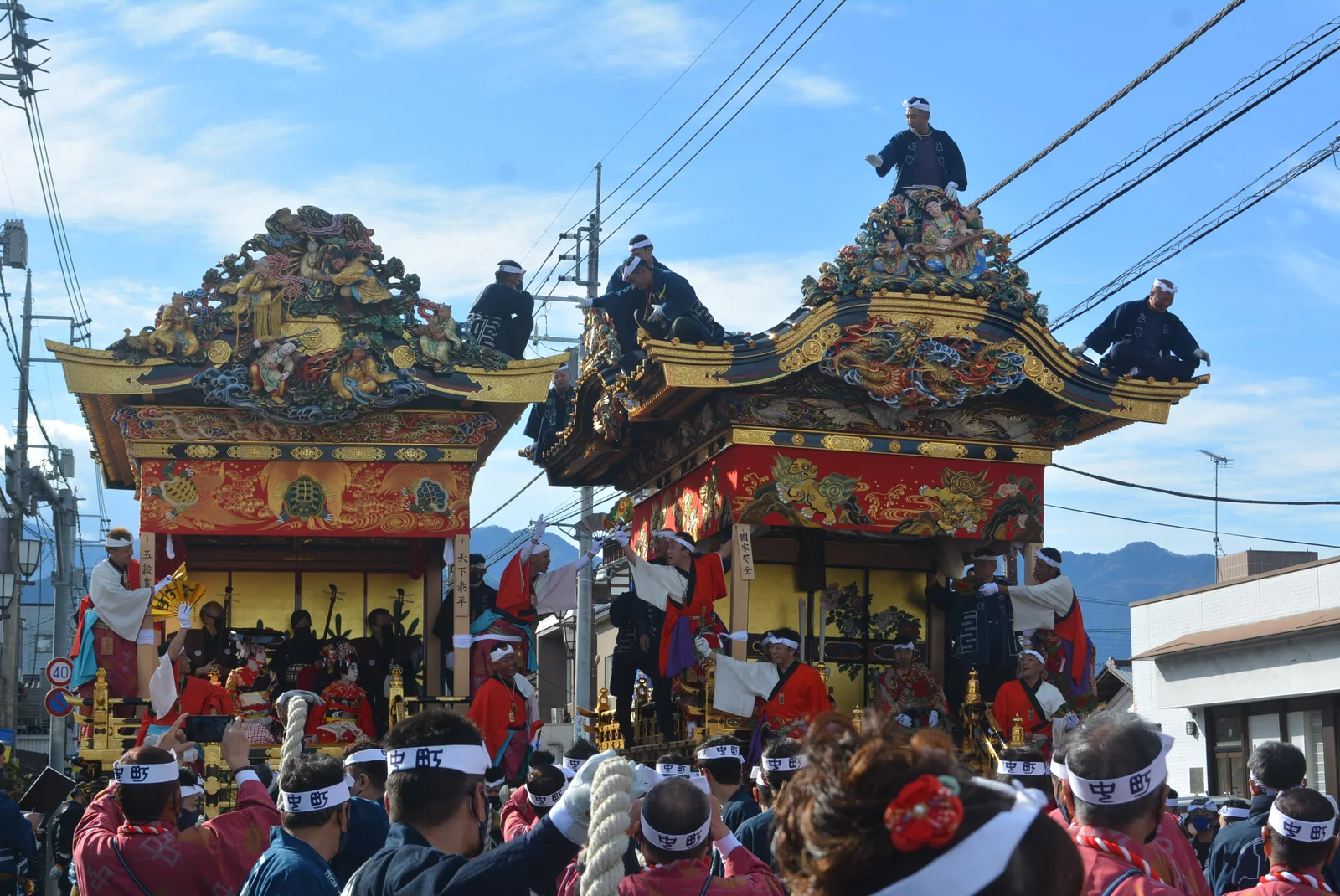
The Chichibu Night Festival is the annual grand festival of Chichibu Shrine in Saitama Prefecture. On Yoimiya (December 2), four yatai floats—Miyaji, Kamimachi, Nakamachi, and Motomachi—parade through town. On December 3, the Nakachika and Shimogo kasaboko floats join them, bringing all six floats through the streets before gathering at the Otabisho sacred site at night. Most day-trippers pick one day based on what they want to see. Come on December 2 for float craftsmanship and daytime street performances, or choose December 3 to see the kasaboko floats, the Shinko Gyoretsu sacred procession, and the main fireworks show in a single day.
Fireworks schedules also shape your return trip. December 2 features roughly 500 shells from 19:00 to 20:00, so if you only want the evening atmosphere, you can time your arrival for the 19:00 start. On December 3, around 4,000 shells launch between 19:30 and 21:55, closing with the Golden Falls finale listed at 21:50 on the city schedule. If you plan to stay until the end, pick your evening viewing spot based on which station you need for your train home. Overnight visitors should prioritize December 3, the only night when the floats climb into the Otabisho and return late into the night.
Religious ritual and street theater come together across both days. Chichibu's yatai festival and kagura dances were inscribed on UNESCO's Intangible Cultural Heritage list in 2016 as part of Japan's Yama, Hoko, Yatai float festivals. For first-time visitors, walking to the shrine to watch the floats bow before the deity and turn into the downtown streets reveals far more of the festival than staking out a fireworks spot from early afternoon.
| Date | Daytime Highlights | Main Evening Options |
|---|---|---|
| Wed, Dec 2 (Yoimiya) | Four yatai floats; Atago Shrine kabuki 12:00-14:00 | Approx. 500 fireworks 19:00-20:00, or lit yatai along the main streets |
| Thu, Dec 3 (Taisai) | Six floats; Chichibu Shrine kabuki 12:30-14:30 | Shinko Gyoretsu procession, Dangozaka hill pull, or approx. 4,000 fireworks 19:30-21:55 |
Chichibu Night Festival 2026 runs Dec 2 (Yoimiya) and Dec 3 (Taisai). Fireworks times, ticket-free float viewing, Dangozaka crowd control, and late trains to Tokyo.
Save Three Station Names and Split Routes for the Shrine vs. Otabisho
If you take Seibu Railway from Ikebukuro, search for Seibu-Chichibu Station for tickets and maps. Matsuri no Yu sits right outside the station, and the walk to Chichibu Shrine normally takes about 15 minutes. During the day, you can walk from the station past Ohanabatake Station toward Banbamachi. At night, police and festival staff clear space at railroad crossings as floats roll across the tracks, so daytime shortcuts may be detoured. If you are catching a Seibu Limited Express home, watch the final stretch from the Route 140 side so you do not have to cross the parade route right before entering the station.
Travelers arriving on the Chichibu Railway from Kumagaya, Yorii, or Nagatoro should get off at Chichibu Station for quick access to the shrine and the Chichibu Festival Museum. Chichibu Shrine lists the walk at about 3 minutes, with the museum on the same side. If friends are arriving on different train lines, meet at the museum entrance during the day. Before the main evening crowds build, agree on an unmistakable outdoor landmark away from station queuing lanes in case you get separated.
Ohanabatake Station is also on the Chichibu Railway and sits close to Seibu-Chichibu Station, Dangozaka slope, and the main rail crossing. On the night of December 3, people looking for floats often search maps for Otabisho or Oyama, the elevated ground atop Dangozaka where the floats gather and the shrine deities rest temporarily. City Hall, the Otabisho, and Ohanabatake Station appear close together on a map, yet each has separate crowd-control entry and exit lanes at night. Check the city traffic map and follow on-site marshals instead of letting a phone map route you straight into a closed intersection.
After the fireworks, crowds around Seibu-Chichibu Station and northbound Chichibu Railway passengers disperse in different directions. If part of your group wants to wait for floats at the shrine while others head back early toward Nagatoro, save the exact station names and platform directions during the day. Once a float reaches an intersection, you may be able to see each other across the parade route yet still have to wait until staff reopen the crossing.
December 2 (Yoimiya): Watch a Yatai Become a Kabuki Stage at Atago Shrine
The easiest midday event to plan around is the Miyaji yatai kabuki performance from 12:00 to 14:00. On December 2, it takes place in front of Atago Shrine and the Miyaji float storehouse; check the city's Atago Shrine map pin when walking from Seibu-Chichibu Station. On December 3, the stage moves to Chichibu Shrine. Arrive at the stage first if you want to catch the opening, then plan lunch and afternoon float-spotting around it. Once the yatai stops, crew members attach an extension stage, giving you a clear daylight look at how the platform connects to the float body. Miyaji neighborhood handles the performance on both days, so catching Wednesday's show frees up the same midday window on Thursday for daytime parades.
Yoimiya is ideal for watching yatai floats pass one another in town. The city's Q&A notes that the four yatai typically set out between 09:00 and 11:00. Each colored line on the official route map tracks one float; where a line runs horizontally, the float pauses at that spot. Stars on the map mark hiki-odori, traditional dances accompanied by shamisen performed on the float's stage during stops. The December 2 map lists Nakamachi, Motomachi, and Kamimachi performance spots in a table on the left, making it easy to pick an intersection and wait for a dance (December 2 Parade Map).
When two yatai meet on the street, they halt and exchange drum salutes—a ritual the city calls surechigai. If you spot two floats converging on the same block, wait along an open roadside area for a few minutes. In the afternoon, focusing on Chichibu Shrine, one main street, or a single float's loop works far better than trying to chase all four. Families with kids or older relatives should handle restroom breaks and an early dinner during this window, leaving only the walk back to the station after the fireworks.
The Chichibu Silk Market runs both days along Kaitsugisho-dori and Kuromon-dori, from 11:00 to 19:00 on December 2 and until 20:00 on December 3. According to the city of Chichibu, the festival's roots are tied to a historic silk fair once held at the shrine; today's market stretches across two streets in Banbamachi, roughly a 10-minute walk from Seibu-Chichibu Station on a normal day. Stroll the stalls in the afternoon—on December 2, the market closes right as the fireworks begin. Day-trippers can eat near the station, stay for the 19:00 fireworks, and catch the extra 20:45 direct Limited Express arriving at Ikebukuro at 22:17.
December 3 Daytime: Seeing All Six Floats Around Chichibu Shrine
The main festival schedule splits into two route maps: daytime from 06:00 to 16:00, and night from 16:00 to 05:00 the next morning. To see floats actively on the move, head toward the shrine and main streets after 08:00 or 09:00. Although the chart begins at 06:00, each float leaves its storehouse, patrols its neighborhood, and visits the shrine at a different hour. When you see a float lining up to turn onto a cross street, linger at the corner—turning the float is one of the best daytime spectacles.
Because the floats roll on four fixed wheels, every corner turn requires manual muscle. The city Q&A refers to this maneuver as girimawashi, in which pullers lever the float upward on long wooden beams and pivot it on a fulcrum; the Kamimachi yatai uses a mechanical jack device called a kirin. Listen for the drumming to shift into the rapid small-drum tamaire beat, then watch how the crew coordinates around the axles. At night you mostly see lanterns from afar, so daytime offers the light you need to identify individual floats, admire the wood carvings, and watch the turn crews work.
From 12:30 to 14:30, Miyaji yatai kabuki plays at Chichibu Shrine. On the timetable, green hollow boxes along the colored lines mark kabuki shows, while solid color bars in the Chichibu Shrine row indicate when each float pays its formal shrine visit. Even though both take place in front of the shrine, one sets up a theater stage while the other brings neighborhood teams to bow before the sanctuary, so adjust where you stand accordingly. Since the Chichibu Festival Museum sits right next to the shrine, you can pair them smoothly. After spending half the afternoon around the shrine, fireworks-focused visitors can head toward the station to eat, or wait at the shrine for the Shinko Gyoretsu procession around 18:00. Between transitions, the four yatai and two kasaboko travel separately, so there is no need to hold one spot from afternoon until night.
From the Sacred Procession to Dangozaka: Where to Watch Without Grandstand Tickets
Around 18:00 on December 3, the Shinko Gyoretsu sacred procession departs from Chichibu Shrine. On the night route map, a light-blue line traces the procession while six separate colored lines track the floats. If you want to see the ritual procession, follow the light-blue line out from point K (Chichibu Shrine), then check which floats pass through your street block once it enters town. Official night viewing areas listed by the city include Chichibu Shrine, the plaza outside Chichibu Station, Motomachi-dori, Nakamachi-dori, and Shonin-dori.
Near the Chichibu Brand-kan on Motomachi-dori, the floats pass through a stretch quietly in a custom known as Suwa-watari. Chichibu Shrine notes that floats lower their drumbeats near Suwa Shrine, and the Motomachi yatai stops while local children recite a formal request for passage. To see this etiquette up close, scout the street during the day and wait in a permitted roadside viewing zone as the procession nears, keeping the roadway clear for floats and pullers.
Dangozaka hill runs from the railroad crossing beside Ohanabatake Station up toward the Otabisho. Floats are hauled up the slope sequentially starting in the 20:00 hour, directly overlapping with the fireworks. Because the incline is narrow and tightly controlled, the city warns that visitors without grandstand tickets can rarely see the uphill pull from beside the hill. Chichibu Tourism Association's paid yatai grandstand seats were already announced as sold out in November. Without tickets, pick Motomachi, Nakamachi, or Shonin-dori in the early evening to watch the pullers, ropes, and glowing lanterns approach along flat streets—and avoid pushing against uphill-to-downhill crowds once the fireworks begin.
On the official night parade map, A marks the Otabisho, B marks Dangozaka, and C marks the Ohanabatake crossing. Match those letters to a street map so you know whether you are waiting for floats entering the slope, arriving at the Otabisho, or rolling back down. After 22:00, four yatai perform dedicatory dances at the Otabisho while all six floats stay parked before descending around midnight and returning to their home districts in the early morning hours (December 3 Night Parade Map). To stay for that late stretch, a downtown hotel with late check-in or after-hours entry is far more practical than a dinner-inclusive ryokan in Nagatoro.
Where to Watch Fireworks Both Nights and Still Catch Your Train
Fireworks launch from Hitsujiyama Park on both nights, and the launch site itself has restricted entry hours. For 2026, recommended viewing spots include the Chichibu City Hall parking lot and the area in front of Seibu-Chichibu Station; the tourism association also lists Route 140 from the Seibu-Chichibu Station traffic signal to the Uenomachi intersection. Searching Hitsujiyama Park in a phone maps app can point you toward closed launch zones, so navigate to City Hall or the station instead. On December 3, the City Hall parking lot serves as a fireworks viewing area, so drivers must use designated temporary lots.
Watching from outside Seibu-Chichibu Station makes the most sense if you booked the 22:24 Limited Express, since you only have 29 minutes after the finale to reach the ticket gates and queue. Viewing from City Hall connects more smoothly with daytime stops around Chichibu Shrine. Either way, if you plan to watch the full show and return to Ikebukuro the same night, position yourself toward your departure station before dusk. When marshals clear pedestrian lanes, move with the flow, and never treat car-closure zones on the traffic map as standing photo spots.
December 3's program starts at 19:30 with rapid-fire large shells, competition fireworks, and synchronized salvos before the Golden Falls finale begins at 21:50. If you only want 30 minutes of fireworks, catch the opening and head toward the station ahead of your train time. To watch through the finale, Seibu-Chichibu Station offers the cleanest connection to late Ikebukuro trains; scheduled connections to Tokyo via Yorii or Kumagaya depart before the show ends, forcing an early exit. Framing floats and fireworks in one shot requires a clear sightline to both a parade street and Hitsujiyama Park, and the city cautions that such spots are scarce. In tight crowds or gusty wind, shoot handheld and keep tripods packed away to preserve walking space. Drones are prohibited across the festival grounds.
Seibu Railway Back to Ikebukuro: Why 22:24 and 23:04 Go to Different Termini
The Laview Limited Express from Ikebukuro to Seibu-Chichibu takes about 80 minutes and is all-reserved seating. When transferring from JR or Tokyo Metro, follow station signs for the Seibu Ikebukuro Line and look for the 1F Limited Express boarding gate (Tokkyu Noriba); entering from Ikebukuro's East (Central) side puts both the Limited Express ticket counter and gate on the ground floor. Regular express trains board from platforms signed for Tokorozawa and Hanno. Following Seibu's March 2026 fare revision, the one-way adult base fare is ¥800 plus a ¥900 Limited Express surcharge, totaling ¥1,700 one way or ¥3,400 round-trip. You can tap Suica or PASMO for the base fare, while reserved Limited Express seats must be purchased separately—either on Seibu's official Smooz website or at Limited Express ticket machines and counters (boarding without a Limited Express ticket adds ¥200 on top of seat availability constraints on an all-reserved train). Once you hold tickets, double-check the travel date, departure station, and direction.
Limited Express tickets for December 2 go on sale November 2 at 07:00 JST, and tickets for December 3 open November 3 at 07:00 JST. On the November 3 opening day, Seibu Limited Express ticket counters limit purchases to eight December 3 Limited Express tickets per person per transaction. For December 2, Seibu extends Musashi 58—normally starting at Hanno—to originate from Seibu-Chichibu. On December 3, outbound trains from Ikebukuro to Seibu-Chichibu step up to roughly every 30 minutes from the 11:00 hour onward. Afternoon arrivals still reach town in time for fireworks, though if you want the 12:30 yatai kabuki, note that the 11:30 Limited Express from Ikebukuro does not reach Seibu-Chichibu until 12:47—book an earlier train.
On Seibu's official December 3 special timetable, the 21:54 Limited Express reaches Ikebukuro at 23:16 for those willing to skip the fireworks finale. A 22:02 direct Rapid Express requires no Limited Express ticket and arrives at Ikebukuro at 23:48, leaving just 7 minutes after the scheduled end of fireworks—best for people who leave the viewing area slightly early. The 22:24 train is the last direct Limited Express to Ikebukuro, arriving at 23:44. After that, the 23:04 Limited Express terminates at Tokorozawa, and the 23:14 local train also stops at Tokorozawa. When reading the timetable, always check both the destination column and the Ikebukuro arrival column after the Seibu-Chichibu departure time—do not assume any late Seibu departure goes all the way into central Tokyo.
If the 22:24 reserved seats sell out, you can take a regular express from Ikebukuro to Hanno and transfer to Seibu-Chichibu on the way in, then ride regular trains home. Booking outbound and return legs separately helps lock in the return seat first if you plan to stay for the 21:55 finale. On the December 3 festival-night full timetable, the 22:15 local train from Seibu-Chichibu reaches Hanno at 23:02, connecting to a 23:08 Semi-Express that arrives at Ikebukuro at 00:03. That gives you only 6 minutes to transfer in Hanno and 20 minutes from the end of fireworks to board in Chichibu, so slower walkers or travelers with another Tokyo transfer ahead should leave one train earlier.
Where you stay in Tokyo also affects your cutoff time. If your hotel is near Ikebukuro, arriving at 23:44 leaves an easy walk or short cab ride. If you are staying in Ueno, Asakusa, Shinjuku, or farther out, check late-night December 3 connections on your phone in advance and consider taking an earlier Seibu train—trading a few minutes of fireworks for reliable cross-city transfers. On the outbound trip using regular trains, if you change at Hanno to get an early start, make sure you wait on the platform signed for Seibu-Chichibu rather than boarding a turnaround train heading the wrong way.
| Dep. Seibu-Chichibu | Service & Transfer | Arrival |
|---|---|---|
| 21:54 | Direct Limited Express (reserved seat required) | Ikebukuro 23:16 |
| 22:02 | Direct Rapid Express | Ikebukuro 23:48 |
| 22:15 | Local to Hanno, transfer to 23:08 Semi-Express | Ikebukuro 00:03 |
| 22:24 | Direct Limited Express (reserved seat required) | Ikebukuro 23:44 |
| 23:04 | Limited Express (terminates at Tokorozawa) | Tokorozawa 00:07 |
Chichibu Railway Dispersal: Departure Times Depend on Chichibu Station
Visitors staying in Nagatoro, transferring to the Tobu Tojo Line at Yorii, or connecting to JR trains at Kumagaya should use the December 3 special timetable published by Chichibu Railway on November 17. Because festival floats are taller than the overhead catenary wires at the crossing near Ohanabatake Station, the railway temporarily disconnects that wire section. From roughly 19:30 to 22:30 on December 3, service is suspended between Chichibu Station and Kagemori Station. Northbound trains still operate from Chichibu Station, while some southbound trains originate or terminate at Kagemori. Heading toward Kumagaya, the last train you can board at Ohanabatake Station is 19:21; later departures leave from Chichibu Station. Even if you see a train stop at Ohanabatake earlier in the evening, some are drop-off-only services.
Back toward Nagatoro, the special timetable lists departures from Chichibu Station at 22:54 (arriving Nagatoro 23:12) and a final train at 23:15 (arriving Nagatoro 23:35). If you are overnighting in Nagatoro, confirm your hotel's latest check-in or late-entry policy ahead of time. Walking to Chichibu Station after the fireworks follows a different path than the Seibu-Chichibu Station queues. Walking from Chichibu Shrine to Chichibu Station once during daylight helps you spot the entrance easily after dark from City Hall or Motomachi.
The timetable also shows two Tokyo connections via Chichibu Railway that night, though both require leaving the fireworks early. A 21:53 departure from Chichibu Station reaches Yorii at 22:30, connecting to a 22:42 Tobu Tojo Line train toward Ogawamachi and a 23:04 Semi-Express into Ikebukuro at 00:23. Staying on that same 21:53 Chichibu Railway train reaches Kumagaya at 23:04, linking to a 23:11 JR Takasaki Line train arriving at Ueno at 00:14. For the Joetsu or Hokuriku Shinkansen from Kumagaya to Tokyo, the official timetable lists the 21:07 train from Chichibu Station (arriving Kumagaya 22:14) to catch the 22:30 Asama 632. Make sure any late connection into central Tokyo still matches a train to your hotel neighborhood.
Going south toward Kagemori after the fireworks, trains depart Chichibu Station at 22:37 for Kagemori and 22:52 for Mitsumineguchi. During the temporary suspension window, a free shuttle bus also runs between the Chichibu City Library parking lot and Kagemori Sports Ground roughly every 25 to 35 minutes from 20:00 to 21:30, with drop-off outside Kagemori Station. If you are staying south of town, do not confuse the 23:15 northbound last train for a southbound departure. Chichibu Railway runs no special festival trains on December 2; the temporary timetable applies only to December 3.
Buy Single Fares for a Day Trip; Compare Passes Only If Visiting Nagatoro Next Day
For a round-trip from Ikebukuro focused on the festival near Seibu-Chichibu Station, tapping a transit IC card keeps things simple at ¥1,600 round-trip in base fare, with Limited Express seats bought separately. The Chichibu Manyu Kippu (¥2,380 for adults from Ikebukuro) only makes financial sense if you plan to soak at the onsen or ride Seibu trains across two days: it includes one round-trip to Koma, two consecutive days of unlimited rides between Koma and Seibu-Chichibu, and one six-choice voucher redeemable for Matsuri no Yu admission, dining or shop discounts, or local bus rides within designated zones. If you want the onsen voucher, check when you will actually use the bath so you do not miss festival highlights just to redeem it.
If you arrive in Chichibu on December 3 and spend December 4 in Nagatoro before heading back to Ikebukuro, compare the Chichibu Free Kippu (¥2,540 for adults from Ikebukuro). It covers unlimited two-day rides on Seibu's Ashigakubo to Seibu-Chichibu section plus the Chichibu Railway between Nogami, Nagatoro, and Mitsumineguchi. The two passes differ by just ¥160, with the Manyu pass adding the voucher and the Free pass adding Chichibu Railway coverage. Note that both passes are valid for two consecutive calendar days—so if you activate one on December 2 and 3, your December 4 return requires a separate ticket. Travelers attending both festival days can pay regular single fares on December 2, then calculate whether a two-day pass pays off for December 3 and 4. Neither pass includes Limited Express surcharges.
Matsuri no Yu Outside the Station: Bathing, Indoor Fireworks Box Seats, and Overnight Loungers
On both festival days, the hot spring area at Matsuri no Yu operates from 10:00 to 23:00 (last entry 22:30) at weekend/holiday admission rates of ¥1,380 for adults and ¥800 for children. On December 3, re-entry is not permitted once inside. If you are visiting Yoimiya with older family members, an afternoon soak breaks up the day nicely and leaves time for dinner before the fireworks. On December 3, anyone booked on the 22:24 Limited Express should soak the day before or set aside an afternoon block—waiting until the fireworks end at 21:55 to queue for entry leaves almost no buffer for catching the train to Ikebukuro.
On December 3, Matsuri no Yu sells indoor fireworks box seats (masu-seki) valid from 20:00 to 22:00, though the outdoor fireworks begin at 19:30. Each box costs ¥12,000 for up to six people and includes four reclining chairs and two floor cushions, with facility admission paid separately per person. This suits groups who dislike the cold and are happy watching the second half of the show from 20:00 onward. Even though Matsuri no Yu sits directly in front of Seibu-Chichibu Station, allow time to walk from the 22:00 box end to the train ticket gates. These indoor boxes are sold separately from the Dangozaka outdoor grandstand seats.
For an overnight stay inside the bathhouse, Matsuri no Yu offers 59 reserved lounge recliners per night. On December 2, the general rest area is ¥6,000 per person and the Premium Lounge is ¥8,000; on December 3, prices are ¥8,000 and ¥10,000 respectively, including facility admission, towels, and loungewear. Reservations opened by phone only starting November 4 at 10:00 JST. The Premium Lounge opens at 20:00 and the general rest area at 23:00, but guests on both plans must check in by 22:30 and cannot step back out afterward. Anyone planning to stay past midnight for the downhill float pulls needs a hotel room with late entry, whereas recliner guests can finish watching the downtown fireworks and head straight inside the station-front bathhouse to rest. Cancellations incur a 50% fee the day before and 100% on the day.
Staying Overnight: Match Your Hotel to Your Final Stop
Staying near Seibu-Chichibu Station lets you drop bags before dusk and get back to your room without relying on Chichibu Railway. Hotel Route-Inn Seibu-Chichibu Ekimae is about a 3-minute walk from Seibu-Chichibu Station with check-in from 15:00, making it practical if you return to Tokyo via Seibu the next morning. If you want to prioritize Chichibu Shrine and the festival museum before heading to Nagatoro on the Chichibu Railway, Hotel Route-Inn Grand Chichibu sits roughly 6 minutes from Chichibu Station and features a hot-spring public bath. Because the two hotel names are nearly identical, use the full property name when mapping your walk back, especially if your group splits up.
Both Route-Inn properties opened general website bookings for December 3, 2026 on August 3 at 12:00 JST. Route-Inn Grand Chichibu listed festival-night rates of ¥25,500 for a single room and ¥50,000 for a twin room, with festival cancellation fees of 30% from 30 days prior, 50% from 14 days prior, 80% the day before, and 100% on the day of stay or for no-shows. If your group wants to stay past midnight for the float descent, first confirm you can walk back to your room, then weigh that room rate against the cost and logistics of returning to Tokyo. Staying in Nagatoro works best if you wrap up after the daytime floats and evening fireworks, keeping an eye on ryokan dinner times and night-entry rules. For room types and additional neighborhoods, see the Chichibu Night Festival Hotels & Neighborhood Guide.
Adjusting for Rain, Kids, or Driving
If cold rain hits after dark, swap two hours of outdoor fireworks for the Chichibu Festival Museum. On December 2, 2026, it stays open until 20:00 (last entry 19:30), and on December 3 until 21:00 (last entry 20:30), opening at 09:00 both days. Admission is ¥500 for adults and ¥250 for elementary and junior high students. Exhibits and video projections recreate the kasaboko and yatai rituals, letting you inspect floats you only glimpsed through street crowds earlier. If the rain eases afterward, overnight guests can step back out to a nearby viewing street, while day-trippers can head straight to the station; check official Chichibu city announcements that day for any weather adjustments to the parade schedule.
Standing still outdoors for hours feels much colder than walking, so pack a windproof jacket, gloves, and warm socks and shoes. With young children, step back toward the outer edge of crowds as soon as sightlines begin closing in, keeping a clear path toward your exit station. Rain ponchos keep your hands free and avoid raising umbrellas that block people behind you in dense crowds. Save separate offline screenshots of the parade map and train timetable on your phone, as Chichibu Railway warns that mobile networks can congest on festival night. If traveling with older relatives, jot down your departure station's Japanese name and train times on paper as well.
City-run temporary parking follows different rules on each day. On December 2, Miyaji Sports Ground is free from 09:00 to 21:00, with no overnight parking into December 3. On December 3, passenger cars at lots P1 through P8 pay ¥1,000 per entry—even for passenger drop-offs—and all city-designated lots close at 24:00 (opening hours vary by lot). For example, December 3 lot P7 uses the Chichibu Daini Junior High School grounds, but vehicles enter from the Kamimachi yatai storehouse side at Kamimachi 3-13 rather than the school's main gate, which is closed to festival parking. Drivers staying past midnight for the float descent cannot leave cars overnight in these lots. Because downtown road closures push traffic to the perimeter, if one person drops passengers off and another parks, pick a meeting point on the same side of the closure zone to avoid extra street crossings.
Local bus riders should check Seibu Kanko Bus's festival advisories. From December 1 until normal service resumes on December 4, buses at Seibu-Chichibu Station load and unload at the station-front bus depot garage instead of the usual station rotary. The Uenomachi bus stop shifts roughly 100 meters toward Sakagori, and several routes detour or turn back mid-route. If your ryokan provides a shuttle or relies on local buses, match their pickup point against that day's traffic map before leaving Tokyo, and consider forwarding heavy bags or having one traveler check in early.
December 4 After the Festival: Half a Day in Nagatoro or Downtown Chichibu
To see both festival nights and rest along the way, arrive on December 2, stay the nights of December 2 and 3, and depart on December 4; for the main festival alone, a one-night December 3-4 trip covers it. Nagatoro's Iwadatami rock formations lie a 3-minute walk from Nagatoro Station on the Chichibu Railway, making an easy morning walk and lunch stop before heading back even if you sleep in. Holders of a valid two-day Seibu pass can return to the Seibu line to ride back to Tokyo, while trips continuing via Yorii or Kumagaya only require paying the fare outside the pass zone.
Downtown Chichibu also fills a relaxed half-day nicely. Walk from Chichibu Station to Chichibu Shrine to inspect the main sanctuary in clear daylight, when it is easier to spot the Chained Dragon (Tsunagi no Ryu) and Child-Rearing Tiger (Kosodate no Tora) carvings attributed to master sculptor Hidari Jingoro. Stroll Banbamachi again without the float crowds, stop near the station for soba or local miso potatoes, and step onto a Seibu train back to Ikebukuro. If you were out late the night before, aim for an early-afternoon train home rather than rushing out to distant sights in the morning.
A few useful answers
What are the dates for the 2026 Chichibu Night Festival?
Yoimiya (eve festival) is Wednesday, December 2, 2026, and Taisai (main festival) is Thursday, December 3. Fireworks run from 19:00 to 20:00 on December 2, and from 19:30 to 21:55 on December 3.
Where can I see the floats without Dangozaka grandstand tickets?
During the day on December 3, watch the kasaboko and yatai floats around Chichibu Shrine and along the main streets. In the evening, use open street-level viewing areas along Motomachi-dori, Nakamachi-dori, or Shonin-dori. Dangozaka slope is narrow, and the city announced that official paid grandstand seats are sold out.
Where is the best spot to watch fireworks for an easy trip back to Ikebukuro?
Watch near Seibu-Chichibu Station. On December 3, the 22:24 direct Limited Express reaches Ikebukuro at 23:44. Note that the 23:04 Limited Express terminates at Tokorozawa.
Do I need to buy a Limited Express ticket from Tokyo to Chichibu?
No. You can ride a regular Express from Ikebukuro to Hanno and transfer to local trains for ¥800 adult base fare each way. The direct Laview Limited Express is all-reserved and requires an additional ¥900 Limited Express surcharge.
Which station do I use to return to Nagatoro after the December 3 fireworks?
Go to Chichibu Station on the Chichibu Railway. The special timetable lists trains to Nagatoro at 22:54 and 23:15. That night, the last train you can board toward Kumagaya from Ohanabatake Station is 19:21.
Can I stay at Matsuri no Yu if I want to watch the floats descend after midnight?
Matsuri no Yu offers overnight lounge recliners outside Seibu-Chichibu Station, but check-in closes at 22:30 and re-entry is not allowed. To watch the post-midnight descent, book a downtown hotel that allows late return.
How late is the Chichibu Festival Museum open if it rains?
On December 2, 2026, it stays open until 20:00 (last entry 19:30), and on December 3 until 21:00 (last entry 20:30). Admission is ¥500 for adults and ¥250 for elementary and junior high students.
If I attend both December 2 and 3, can a two-day rail pass cover my return on December 4?
No. Both passes are valid for two consecutive calendar days, so using one on December 2 and 3 means you must buy a separate ticket for December 4. If you only attend on December 3 and visit Nagatoro on December 4, the Chichibu Free Kippu covers both days including the Chichibu Railway free zone.
Official information and references
Sources used in this guide.
- Chichibu City | 2026 Night Festival Schedule, Traffic Maps, Fireworks, Parades & Grandstand Seats
- Chichibu Tourism Association | 2026 Night Festival Two-Day Schedule & Fireworks Viewing Areas
- Chichibu City | History, Location & 2026 Guide to the Chichibu Silk Market
- Chichibu City | Night Festival Q&A, Viewing Routes & Float Traditions
- Chichibu City Newsletter | 2026 Fireworks Program & Traffic Control Map
- Chichibu Shrine | Chichibu Night Festival & Shinko-sai Procession
- Chichibu Shrine | Access Information
- Chichibu Shrine | Main Sanctuary Wood Carvings & Goshuin Stamps
- UNESCO | Yama, Hoko, Yatai Float Festivals in Japan Inscription Decision
- Seibu Railway | 2026 Night Festival Extra Limited Express Trains & Ticket Sales
- Seibu Railway | Special Timetable for December 3, 2026
- Seibu Railway | Laview Limited Express Fares & Ticketing
- Seibu Railway | Extra Limited Express Timetable for December 2, 2026 (Yoimiya)
- Seibu Railway | Ikebukuro Station Map & Limited Express Boarding Gates
- Seibu Railway | 2026 Regular Fare Revision Notice
- Seibu Railway | Chichibu Manyu Kippu Pass Fares & Coverage
- Seibu Railway | Chichibu Free Kippu Pass Fares & Coverage
- Chichibu Railway | 2026 Night Festival Extra Trains & Crossing Wire Removal
- Chichibu Railway | December 3 All-Line Special Timetable & Last Train Transfers
- Seibu Railway | 2026 Chichibu Free Pass Fare Table
- Seibu Kanko Bus | 2026 Night Festival Temporary Stops, Detours & Suspensions
- Matsuri no Yu | 2026 Chichibu Night Festival Special Operating Hours
- Matsuri no Yu | Night Festival Reserved Recliners & Fireworks Box Seats
- Matsuri no Yu | Onsen Hours & Admission Fees
- Hotel Route-Inn Grand Chichibu | Access & 2026 Night Festival Stay Notice
- Hotel Route-Inn Seibu-Chichibu Ekimae | Hotel Access & Check-In Information
- Chichibu Festival Museum | 2026 Night Festival Operating Hours
- Chichibu Festival Museum | Access & Admission Fees
- Chichibu Railway | Nagatoro Iwadatami Access & Winter Sightseeing