Walk from Yufuin Station across Shirataki Bridge and down Yunotsubo Street to Lake Kinrin, with half-day routes, overnight tips for morning mist, 2026 temporary station updates, Yufuin no Mori and highway bus info, luggage storage, and lakeside day-use onsen.
- Region & Focus
- Yufuin
- Reading Scope
- 16 min read · 10 chapters · 5 Q&As
- Official Verification
- 39 official sources checkedUpdated November 22, 2026
- Key Topics
- ItinerariesNeighborhoodsHot springs
Chapter Route Map (tap any stop)
- Walking from the Station to Lake Kinrin via Shirataki Bridge
- Temporary Station Building, Ticket Pickup, and Luggage Handling
- Overnighting for Morning Mist: Lakeside vs. Basin Views
- How to Browse Yunotsubo Street and Pick Your Return Route
- Three Ways to Pace It: Late Afternoon, Half-Day, or Overnight
- Bussan-ji Temple, Unagihime Shrine, and Sightseeing Rides
- Saving a Rainy Afternoon for the Stained Glass Museum
- Day-Use Onsen: Lakeside or Near the Station
- Fukuoka to Yufuin by JR or Highway Bus, and Onward to Beppu
- Where to Stay, Driving and Parking, and Next-Day Departures
- Quick Q&A
For a first visit to Yufuin, walk straight down Yufumi-dori from the station, cross Shirataki Bridge onto Yunotsubo Street, and continue to Lake Kinrin. The Japan National Tourism Organization puts the one-way walk from the station to the lake at about 25 minutes, making half a day enough for day-trippers to browse shops, have lunch, and stroll along the shore. To catch the autumn and winter morning mist, stay overnight and visit the lake before breakfast. Through late 2026, JR passengers enter and exit via a temporary station building while the platform footbath is closed for renovations, so head to a lakeside day-use bathhouse instead if you want to soak.
Walking from the Station to Lake Kinrin via Shirataki Bridge
JR labels the station "Yufuin," while the street address uses a different spelling in Japanese ("Yufuin-cho"). Yufu City's Onsen Reader traces the distinction back to 1955, when Yufuin-cho merged with Yunohira-mura. Today, the basin around the station and Lake Kinrin is usually written as Yufuin, while wider references covering Yunohira and Tsukahara often use the merged town name. When searching in Japanese navigation apps, enter "Yufuin-eki" for the train station and "Yufuin Ekimae Bus Center" for highway buses from Fukuoka. If your ryokan is in Yunohira or Tsukahara, you still have a separate transfer from the station area, so factor that leg into your luggage and dinner timing.
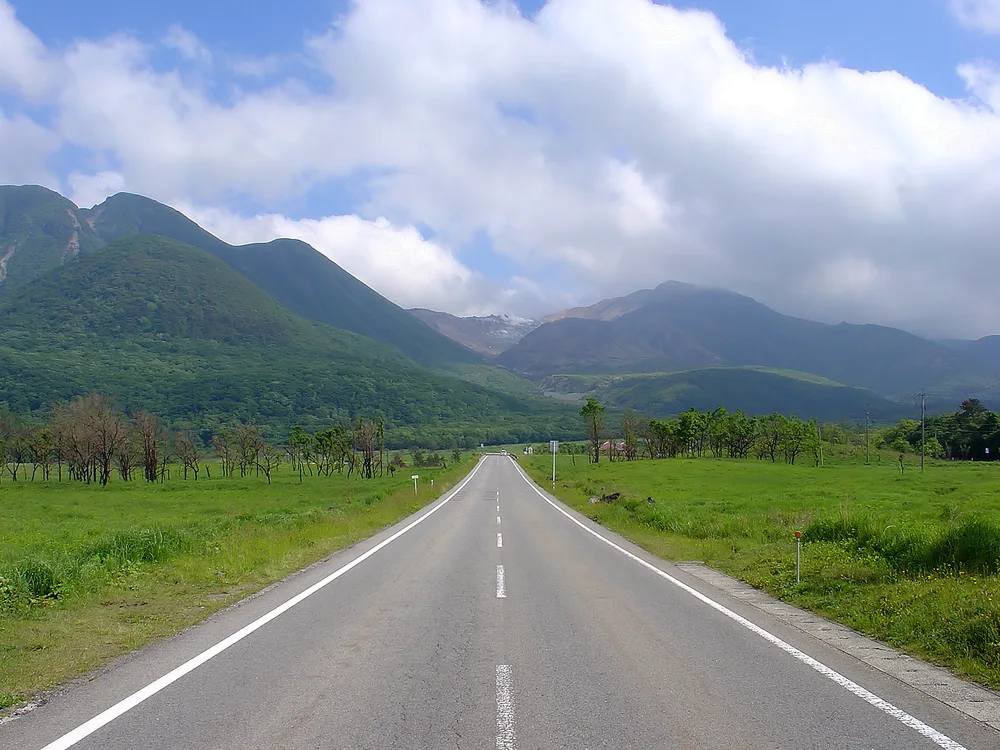
Leaving the station, follow the main avenue, Yufumi-dori, straight ahead—on clear days, Mount Yufu rises directly in front of you. Shirataki Bridge serves as your main landmark, feeding into Yunotsubo Street (Yunotsubo-kaido), an 800-meter stretch lined with sweet shops and souvenir stores. If you want to head straight for Lake Kinrin, follow signs for "Yunotsubo-kaido" and "Lake Kinrin," then open your map at the water's edge to locate Tenso Shrine. You can always double back to shops that catch your eye on the return leg—especially if you arrive late in the day, reaching the lake first makes it much easier to pace your trip back.
Twenty-five minutes is the baseline one-way walk from the station to the lake. Walking the same route back puts you at nearly an hour on foot alone, before stopping for snacks, waiting for a table, or wandering along the shoreline. A two-hour window covers a look at the lake plus one quick treat, while three to four hours lets you fit in a sit-down lunch. Travelers arriving from Beppu use the exact same station-front starting point and can begin walking right off the bus without catching a local shuttle.
Stick to the main streets on the way out to get your bearings, and save the riverside paths and side lanes for the return walk. Paper walking maps are available at the tourist information desk next to the station, and digital versions are posted on the Yufu City Tourism Bureau's brochure download page. One map focuses on the town streets, while the other zooms out to the wider basin—use the town map for shops and the lake, and add the basin map if you are heading toward Bussan-ji Temple or Unagihime Shrine.
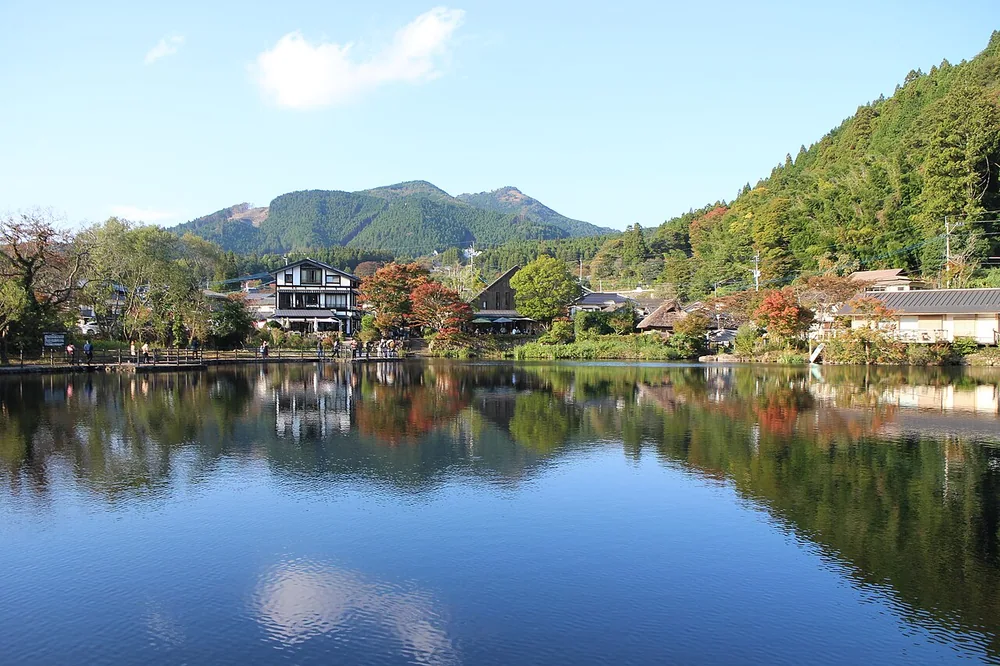
Walk from Yufuin Station across Shirataki Bridge and down Yunotsubo Street to Lake Kinrin, with half-day routes, overnight tips for morning mist, 2026 temporary station updates, Yufuin no Mori and highway bus info, luggage storage, and lakeside day-use onsen.
Temporary Station Building, Ticket Pickup, and Luggage Handling
Since March 26, 2026, JR Yufuin Station has operated out of a temporary building between the old depot and the Yufu City Tourist Information Center (TIC) while the original station undergoes renovation. The ticket counter runs from 7:00 AM to 6:00 PM, handling ticket sales, boarding, and exits as usual, with restrooms on site; JR plans to complete the project in winter FY2026. The platform footbath closed on March 14, and the in-station gallery that doubled as a waiting room is also temporarily shut. Tickets booked online via JR Kyushu can be picked up at the designated station machines between 5:20 AM and 11:00 PM. SUGOCA and other IC cards do not work at Yufuin Station, so buy your paper ticket before boarding local trains.
The TIC—designed by architect Shigeru Ban—stands right beside the station and opens daily from 9:00 AM to 5:30 PM, closing on New Year's Day. The ground floor houses the tourist counter and the Yufuin Chikki luggage service, while a gentle ramp leads to the second-floor travel library and an observation terrace facing Mount Yufu. On rainy days, you can watch the train platforms indoors through the floor-to-ceiling glass. If you are returning from the lake to catch an evening bus, keep the 5:30 PM closing time in mind and head straight to the bus center printed on your ticket for late departures.
For same-day luggage storage, the TIC offers both coin lockers (¥600 large, ¥500 small) and staffed counter storage. At the counter, bags 60 cm or taller cost ¥800, medium bags under 60 cm cost ¥600, and small packs cost ¥500. Both lockers and the counter operate from 9:00 AM to 5:00 PM—do not confuse the TIC's 5:30 PM closing time with the 5:00 PM luggage pickup cutoff. Rolling a large suitcase all the way to the lake and back wastes energy, so drop your bags at whichever end of town you depart from.
Overnight guests who want to explore hands-free upon arrival can forward bags to their lodging. Yufuin Chikki accepts drop-offs from 9:00 AM to 3:00 PM and delivers to participating accommodations by around 4:00 PM. Base rates are ¥1,000 for bags 60 cm to under 80 cm and ¥1,200 for 80 cm or larger, with an extra weight surcharge starting at 20 kg. On checkout day, participating hotels accept bags between 9:00 AM and 11:30 AM, provided you drop them off at least two hours before your intended pickup time. Station pickup starts at 11:30 AM and is cash-only, so bring your own bags if you are catching an early morning train or bus; check the November 2026 hotel list linked on the official page to confirm coverage.
Overnighting for Morning Mist: Lakeside vs. Basin Views
Lake Kinrin's morning mist appears best on chilly autumn and winter mornings. According to Yufu City, both freshwater springs and hot spring water flow into the lake, sending white mist rising off the surface at dawn in winter. Standing on the shore gives you close-up wisps drifting across the water, while viewing the whole basin shrouded in fog requires elevation. Sagiri-dai (Sagiri Observatory), featured by the Yufu City Tourism Bureau, sits along the Kyushu Trans-Island Highway on the mountainside with dedicated parking. If you are staying in town and want surface mist, walk to the lake around sunrise; if you are driving in good weather and road conditions and want a basin-wide panorama, save Sagiri-dai for your drive out of town. Walkers on a day trip can still catch clear views of Mount Yufu from the station front and the riverbanks.
Because mist shifts with temperature and wind, there is no guaranteed showtime. If photography is a priority, walk the route from your ryokan to the lake the afternoon before so you can head straight to the water in the dark the next morning. Conditions change minute by minute, so check the wind direction and reflections from the public paths first. When the fog is thick, nearshore trees and waterfowl anchor the frame; when the water turns glassy and the peaks clear, leave open water for reflections. For the lakeside torii gate, walk around to the Tenso Shrine side for a better angle, yielding on narrow sections and keeping clear of private doorways and driveways along the residential lanes.
If your ryokan includes dinner and breakfast, anchor your morning walk around the breakfast window. Guests staying near the lake can stroll over for 10 minutes and return in time to eat, then revisit any missed shops afterward. From the station side, the official one-way walk is about 25 minutes, so budget well over an hour for the round trip and time by the water. If someone in your group prefers to sleep in, set a meeting time at the ryokan the night before so early risers can slip out to the lake while everyone sits down together for breakfast.
Lakeside CAFE LA RUCHE is a sit-down breakfast option overlooking the water, opening at 9:00 AM with breakfast served until 10:30 AM; seating is walk-in only and the cafe closes on Wednesdays. On Thursdays the cafe stays open without bread service, still offering baked goods and scones. In autumn and winter, catch the mist outside first and step in once it opens, or eat at your ryokan instead. If you arrive at 11:31 AM on Yufuin no Mori No. 1 from Hakata, it works nicely as a post-walk coffee stop after having lunch in town.
In summer, start your lakeside walk early, browse the streets before noon, and move indoors after lunch. In spring, the Yufu City Tourism Bureau recommends walking downstream from the bridge for cherry blossoms and rapeseed flowers before looping back to Yunotsubo Street. In autumn, a daytime visit is enough if you only want foliage and reflections. On frosty winter mornings, stick to flat shoreline stretches with room to stop and turn back early—how long you linger by the lake matters more than completing the full loop if you want to make breakfast unhurried.
How to Browse Yunotsubo Street and Pick Your Return Route
If you plan to shop for souvenirs or snacks, walk straight through Yunotsubo Street to Lake Kinrin first and leave purchases for the way back. When reserving chilled pastries, ask about pickup windows and collect them on your return toward the station so you are not carrying bags around the lake or keeping sweets out of the fridge too long. If you prefer lunch right after arriving, pick a restaurant in the first half of the walk, then continue in the same direction to keep your lakeside schedule predictable. Save the cluster of shops closest to the station for after you collect your luggage before boarding.
Shops along Yunotsubo Street keep varying hours and closed days. If you reach the lake early, you can browse storefronts systematically on the return leg. If you arrive from Fukuoka in the afternoon with a specific shop in mind, check its closing time first. Traveling with kids or older relatives, sitting down for one proper meal usually beats splitting up to wait in multiple street-food lines along the narrow strip. On busy holiday weekends, move along to another nearby dining room if your first choice has a long wait.
For sit-down dining before crossing Shirataki Bridge, Yufuin Sanshoro on the station side serves lunch from 11:00 AM to 2:00 PM on a walk-in basis (closed Tuesdays and Wednesdays), known for its Awase-bako meal boxes with assorted seasonal dishes. If you would rather walk to the lake first, Yunotake-an on the grounds of Kamenoi Bessou opens at 11:00 AM for mountain vegetables and local chicken dishes, and sits right on the way to Bussan-ji Temple afterward. The main shopping strip lies between the two, so choose based on your arrival time and whether your group is up for another 30-minute walk before eating.
Side alleys branching off the main street lead down to the upper reaches of the Oita River. The riverside paths offer a quieter route back to Shirataki Bridge and open mountain views—a completely different feel from walking past storefronts. If a lane leads into unmarked farm paths or private driveways, step back onto public roads. On Yufu City's walking map, the main corridor is labeled "Yunotsubo-kaido / Takemoto-dori," while the path along the Shirataki River is marked "Shiratakigawa-dori / Nanohana-zutsumi." If your group splits up, pick a clear meeting point with standing room near Shirataki Bridge or back at the TIC rather than trying to coordinate intersections in the crowd.
Both the shopping street and residential alleys carry local vehicle traffic. Yufu City asks visitors not to walk abreast blocking the lanes or step into private yards and fields. The area around Yunotsubo Street is also a strict no-littering and no-street-smoking zone, with shared public bins labeled "Otagaibako." Eat takeout snacks in areas designated by the shop or carry them until you find seating. With a stroller, pull over to a wider shoulder when checking your map, folding umbrellas, or sorting coins so pedestrians behind you can pass.
Three Ways to Pace It: Late Afternoon, Half-Day, or Overnight
If you arrive in the afternoon with two hours before departure, walk straight to Lake Kinrin, spend 20 to 30 minutes at the water, and pick one snack on the walk back along Yunotsubo Street. Factor in bag drop-off and pickup time before dividing up the rest of your minutes. In heavy rain, shorten your time at the lake and use the same main route both ways. With just over an hour to spare, stroll past Shirataki Bridge into the first stretch of shops for a bite and turn back—also remembering to build in a few minutes at the end to locate the right boarding spot for reserved train seats.
A classic half-day itinerary pairs Yufuin no Mori No. 1 and No. 6. Under JR Kyushu's March 14, 2026 timetable revision, No. 1 departs Hakata at 9:17 AM and arrives in Yufuin at 11:31 AM, while No. 6 departs Yufuin at 5:17 PM and reaches Hakata at 7:27 PM. Locking in both trains leaves the afternoon for shopping, the lake, and either a day-use onsen or a museum. If only Yufuin no Mori No. 4 (departing 3:56 PM) fits your schedule, you have just over four hours—skip long restaurant queues or save the extra stop for another trip. On certain dates, Limited Express Yufu covers the No. 4 slot on the same schedule, which works identically for planning your return.
If you arrive before noon and have an evening departure, carve out time away from the main street in the afternoon. Visit Lake Kinrin first, have lunch, then add either Bussan-ji Temple or Unagihime Shrine before heading back to the station or your hotel. Bussan-ji connects naturally from the lakeside, letting you loop back via quieter streets afterward if you have time left. For indoor culture, pair the Stained Glass Museum and the shrine on the same side of town before deciding whether to rejoin the busy shopping street.
Staying overnight splits the walk into before check-in and after breakfast, taking the pressure off an afternoon arrival. If your lodging is near the lake, send your luggage ahead, browse the main street on your way to check in, and take a slow return stroll to the station after the morning mist. If you are staying near the station, cover more ground on day one to see the lake or shrine in daylight, then pick a morning walk before breakfast based on the weather. When onsen access is included in your stay, leave time to change before ryokan dinner—only day-trippers need to detour specifically for public bathhouses.
Bussan-ji Temple, Unagihime Shrine, and Sightseeing Rides
Beyond Tenso Shrine at the lake, walkers can continue toward Bussan-ji Temple. Yufu City Tourism Bureau's 2026 backstreet guide pairs it with Unagihime Shrine in one route, though both stops take time on foot. Bussan-ji features a thatched-roof main gate and lists visiting hours of 8:00 AM to 5:00 PM, connected via the "Tsue no Komichi" lane shown on official maps. You can treat the temple gate as a turnaround point from the lake and follow the riverside back toward the main street. Unagihime Shrine sits on the south side of town—described by the tourism bureau as the local guardian shrine, with ponds and tall trees—making it a quieter post-lunch detour when the main strip gets crowded.
The sightseeing horse-drawn carriage (Kanko Tsuji Basha) departs from the station area on an approximately one-hour loop past Bussan-ji Temple and Unagihime Shrine. Fares are ¥2,500 for junior high school students and older, and ¥1,800 for children age 4 through elementary school; children under 4 ride free on an adult's lap or require a child ticket for their own seat. The TIC accepts in-person and phone reservations from 9:00 AM on the day of travel, prioritizing walk-up guests in line at opening. If you arrive near noon on the first sightseeing train, ask at the desk about remaining slots and fall back to walking if sold out. Regular winter closure runs January 1 to March 1, and departures may also cancel due to rain, strong wind, icy roads, or horse condition.
The sightseeing electric vehicle nolc loops past Kozen-in Temple and Unagihime Shrine in about 50 minutes, starting and ending at the station. For 2026, it runs April through November on Mondays, Fridays through Sundays, and public holidays, departing at 10:30 AM, 11:30 AM, and 1:30 PM; fares are ¥1,800 for junior high and older and ¥1,300 for elementary school and younger. Same-day bookings open at 9:00 AM at the TIC, and service suspends in winter from December through March. If someone in your group has limited walking stamina, decide which short stretch you want to walk and ride through the countryside for the rest—just note that neither fixed sightseeing route stops at Lake Kinrin's torii gate, so plan your lakeside visit separately.
Saving a Rainy Afternoon for the Stained Glass Museum
Located in Kawakami, the Yufuin Stained Glass Museum fits nicely after a lakeside walk or on days when you want less time outdoors. It comprises two buildings: St. Robert's Church, which displays stained glass by natural daylight, and Neil's House, which showcases European pieces from different regions under interior lighting. Neil's House works in any overcast rain, while St. Robert's Church is best visited earlier on winter days while natural light holds. Check the museum's ticket page for private wedding closures, during which only Neil's House remains open.
The museum opens from 9:00 AM to 5:00 PM with last entry at 4:30 PM; admission is ¥1,000 for high school students and older and ¥500 for elementary and junior high students, and photography is prohibited inside. On November 13, 2026, the museum announced it plans to open daily through November and December. Stained-glass crafting workshops accept participants until 3:00 PM and require a same-day admission ticket first. If you want to try the workshop, make the museum your first stop after lunch and adjust lakeside and shopping time around it; otherwise, check wedding blackout times against your train departure before heading over.
With young children or shifting rain showers, loop back to the TIC to check train times, grab maps, or switch to indoor stops near the station. The TIC offers paid stroller rentals reservable via Babycal and free wheelchairs on a walk-in basis. Note that boarding Yufuin no Mori involves steps at the carriage doors and JR lists interior aisle width at 550 mm, so coordinate with station staff ahead of time if traveling with a wheelchair. When puddles, frost, or gusty rain sweep the lakeside paths, skip the side lanes and stick to warm indoor seating.
Day-Use Onsen: Lakeside or Near the Station
To soak right after visiting the lake, walk over to nearby Oyado Nurukawa Onsen. The tourism bureau lists day-use hours from 8:00 AM to 7:00 PM (last entry at 6:00 PM), closed Tuesdays and the second Wednesday of each month. Under revised pricing effective October 1, 2026, the gender-separated public baths cost ¥800 for junior high and older and ¥400 for children ages 2 through elementary school. Private family baths are billed per 60 minutes at ¥2,200 for two in an indoor bath or ¥2,800 for two in an open-air bath, plus ¥800 per additional adult and no extra charge for children. Factor in check-in, changing, and the walk back to the station if you book a private bath.
If you prefer to soak right before boarding, Otomaru Onsen-kan near the station saves you an extra walk. This local communal bathhouse offers indoor pools from 6:30 AM to 10:00 PM, closing on the third Thursday of each month. As of January 2026, the Yufu City Tourism Bureau lists admission at ¥300 for both adults and children, paid into the offering box in front of the Yakushi Nyorai statue inside. Pull out small coins, a wet-towel pouch, and a change of clothes before storing large luggage at the station; if you are short on time, pick one bathhouse only and leave a few minutes to repack before entering the platform.
Private family baths work best for families with young kids, couples wanting to soak together, or older travelers who need a hand. If you only want a foot soak while the station footbath is closed for renovation, stop by Hinoshin in front of the station, which the tourism bureau lists as offering a free footbath if you bring your own towel. Wear slip-on shoes and pair it with souvenir shopping by the station—unless it is raining and you are rushing for a train, in which case heading straight to the waiting area is more practical.
Fukuoka to Yufuin by JR or Highway Bus, and Onward to Beppu
From Hakata, book JR Kyushu's all-reserved limited express Yufuin no Mori. Seats typically go on sale at 10:00 AM JST one month before the travel date. JR lists the standard adult reserved-seat fare (base fare plus limited express surcharge) between Hakata and Yufuin at ¥6,130, with reserved-seat fees varying by date, while the online-only Kyushu Net Kippu runs ¥5,600 for adults. Operating calendars are published through February 2027, with March 2027 onward scheduled for release in mid-January 2027. The calendar flags dates when Limited Express Yufu replaces Yufuin no Mori on the same schedule, changing the train name shown on booking screens.
When direct express times do not work, an alternate rail route loops via Oita. Valid from July 1, 2026 through March 31, 2027, JR Kyushu's "Kocchi demo Ikeru yo! Yufuin Kippu" costs ¥4,300 for a one-way adult reserved seat, traveling from Hakata via Kokura to Oita before transferring to a local Kyudai Main Line train to Yufuin. The reserved limited express portion covers Hakata to Oita, followed by unreserved local seating. Allow buffer time for the Oita transfer and only pick this route if connections align cleanly—stretching travel time solely to save on fare can eat straight into your lunch or lakeside hours.
If you are staying in Tenjin, departing from Hakata Bus Terminal, or heading straight from Fukuoka Airport International Terminal, take the reserved-seat Yufuin-go highway bus terminating at Yufuin Ekimae Bus Center. Nishitetsu lists a standard adult one-way fare from Fukuoka to Yufuin at ¥3,250, or ¥2,880 with the WEB Hayawari 7 advance discount for specific departures and seats paid online by credit card within three days of booking and at least eight days before departure. Seats open at 8:00 AM JST on the same calendar date one month prior. Nishitetsu puts the standard Tenjin-to-Yufuin run at about 2 hours 25 minutes, so build in highway traffic cushion if connecting off an inbound flight.
Between Beppu and Yufuin, take Kamenoi Bus Route 36 from JR Beppu Station West Exit Stop 1 via Kijima to Yufuin Ekimae Bus Center. Kamenoi's Yufurin sightseeing rapid bus has been suspended across its entire route since October 17, 2026; visitors staying in Kannawa are advised to transfer at Beppu Station West Exit for Route 36. If you are leaving Yufuin for dinner at a Beppu ryokan, schedule the Yufuin-to-Beppu bus leg first and then check whether you need a second transfer from Beppu Station to your hotel. For ideas on splitting nights and meals between both towns, see our guide to where to stay and eat in Yufuin and Beppu.
For an earlier morning start from Beppu, a seasonal direct express bus runs from October 1, 2026 through March 31, 2027, departing Beppu Station East Exit Stop 5 at 9:30 AM straight to Yufuin Ekimae Bus Center. Fares are ¥1,100 for adults and ¥550 for children, payable by cash, transit IC cards, or SUNQ Pass; tap-to-pay credit cards are not accepted on this temporary service. If it fills up, walk through the station to the West Exit for regular Route 36, keeping in mind that weekday and holiday timetables differ.
For mountain views along the way, Kamenoi's open-top double-decker bus Yunokaze operates between Beppu and Yufuin through December 13, 2026, taking about 65 minutes past the foot of Mount Yufu and Sagiri-dai. Boarding in Beppu is at East Exit Stop 4; adult one-way fare is ¥2,200, or ¥2,000 when booked and paid online through the designated site. Service suspends all day on December 3 for scheduled inspection, and from December 14, 2026 through March 19, 2027 the bus shifts to a Beppu sightseeing loop—so rely on Route 36, the morning direct bus, or JR trains between the two towns during winter.
Where to Stay, Driving and Parking, and Next-Day Departures
If photographing morning mist is your goal, measure your walk back to the hotel from Lake Kinrin. On the lake's edge, Kamenoi Bessou sets room hours from 3:00 PM to 11:00 AM the next day, with breakfast served between 8:00 AM and 10:00 AM. Early risers can walk the lake at dawn, continue strolling nearby streets after breakfast, and still pack up comfortably before checkout. Staying outside the basin is also workable, provided you account for driving in for the mist, returning for breakfast, and checking out on schedule.
If you have an early departure the next day, distance to the temporary JR station or bus center matters more. Yufuin Iyotomi in Kawaminami lists a seven-minute walk from the station and bus center, a 10:00 AM checkout, and no regular station shuttle. Guests choose a breakfast slot at check-in—7:30 AM, 8:00 AM, 8:30 AM, or 9:00 AM—meaning anyone catching a train just after 9:00 AM can eat at 7:30 AM, walk straight to the station, and put Lake Kinrin on arrival day instead.
Drivers staying overnight should confirm arrival-day parking hours with their ryokan in advance. For day-trippers, Yufu City Tourism Bureau's listings for both Lake Kinrin and Yunotsubo Street point to nearby paid parking lots. For a half-day visit, park once on the side of town where you plan to spend most of your time and explore the shops and lake on foot. Narrow town-center streets make driving from shop to shop slow once you factor in yielding to pedestrians and re-parking; if you plan to drive up to Sagiri-dai on your way out, keep the town walk and the mountain drive as two separate segments.
When driving up to Sagiri-dai for photos, check road visibility as well as lighting. If fog gets thick enough to make mountain driving uncomfortable, leave the car in town and walk down Yufumi-dori toward the bridge to see how much of the peaks is visible. At the lake, shoot reflections from wider spots along the public walkway and step around bends before turning back so walkers behind you are never blocked.
A few useful answers
How long does it take to walk from Yufuin Station to Lake Kinrin on a first visit?
According to the Japan National Tourism Organization, the walk takes about 25 minutes. Exit the station onto Yufumi-dori, then cross Shirataki Bridge onto Yunotsubo Street. Factoring in browsing shops, lingering by the water, and walking back, half a day gives you a comfortable pace.
When is the best season to see the morning mist at Lake Kinrin?
Chilly autumn and winter mornings are best. Plan to visit the lake before breakfast; during the day, the appeal shifts to reflections of the surrounding mountains and lakeside buildings. Under the 2026 timetable, Yufuin no Mori No. 1 arrives at 11:31 AM, so staying overnight is the practical way to catch the morning mist.
Is the Yufuin Station footbath still open at the end of 2026?
No. The JR platform footbath is closed during the station renovation, and trains operate through a temporary station building between the old depot and the TIC. For a foot soak, head to the free footbath at Hinoshin in front of the station and bring your own towel.
Can I use a hot spring near Lake Kinrin without staying overnight?
Yes. Oyado Nurukawa Onsen is close to the lake. Under rates updated on October 1, 2026, the gender-separated public baths cost ¥800 for adults, and private family baths billed by time slot are available if you want to soak together.
Is there luggage storage at Yufuin Station?
Yes. Yufuin Chikki inside the TIC next to the station offers staffed luggage storage from 9:00 AM to 5:00 PM. Bags 60 cm or taller cost ¥800. Delivery to participating ryokan is a separate service, with drop-offs accepted until 3:00 PM.
Official information and references
Sources used in this guide.
- Japan National Tourism Organization | Lake Kinrin and Walking Time from Yufuin Station
- Yufu City | Lake Kinrin
- Yufu City | Onsen Reader and Yufuin Place Names
- Yufu City Tourism Bureau | Yunotsubo Street
- Yufu City Tourism Bureau | Yufuin Walking Map and Day-Use Onsen Guide
- Yufu City Tourism Bureau | 2026 Temporary Station Building and Footbath Closure
- JR Kyushu | Yufuin Station Ticketing and IC Card Information
- Yufu City Tourism Bureau | Tourist Information Center and Rental Services
- Yufu City Tourism Bureau | Yufuin Chikki Luggage Storage and Delivery
- Yufu City Tourism Bureau | Sagiri-dai Observatory
- Yufu City Tourism Bureau | Yufuin Through the Four Seasons
- CAFE LA RUCHE | Breakfast Hours and Open Days
- Yufu City | Yunotsubo Street Walking Etiquette and Otagaibako Bins
- Yufu City Tourism Bureau | Bussan-ji Temple, Unagihime Shrine, and Backstreet Walks
- Yufu City Tourism Bureau | Around Bussan-ji Temple and Lake Kinrin
- Yufu City Tourism Bureau | Bussan-ji Temple Visiting Hours
- Kamenoi Bessou | Yunotake-an Restaurant
- Yufu City Tourism Bureau | Sightseeing Horse-Drawn Carriage
- Yufu City Tourism Bureau | 2026 nolc Sightseeing Electric Vehicle
- Yufuin Stained Glass Museum | Admission, Workshops, and Wedding Closures
- Yufuin Stained Glass Museum | Monthly Opening Calendar
- Oyado Nurukawa Onsen | October 2026 Day-Use Onsen Rate Update
- Yufu City Tourism Bureau | Oyado Nurukawa Onsen Bathing Hours
- Yufu City Tourism Bureau | Otomaru Onsen-kan
- Yufu City Tourism Bureau | Hinoshin Footbath
- JR Kyushu | Yufuin no Mori Timetable, Operating Calendar, and Fares
- JR Kyushu | Reserved Seat Ticket Release Schedule
- JR Kyushu | One-Way Discount Ticket to Yufuin via Oita
- Nishitetsu Bus | Highway Bus Between Fukuoka, Fukuoka Airport, and Yufuin
- Kamenoi Bus | Beppu Station West Exit and Yufuin Bus Center Stops
- Kamenoi Bus | Route 36 Weekday and Holiday Timetables
- Kamenoi Bus | Suspension of Yufurin Sightseeing Rapid Bus
- Kamenoi Bus | Beppu-Yufuin Seasonal Direct Express Bus
- Kamenoi Bus | Open-Top Bus Beppu-Yufuin Route
- Kamenoi Bus | Open-Top Bus December 3 Suspension Notice
- Kamenoi Bus | Open-Top Bus Winter Switch to Beppu Loop Route
- Kamenoi Bessou | Room Hours and Meal Times
- Yufuin Iyotomi | Check-in, Meal Slots, and Shuttle Policy
- Yufuin Iyotomi | Walking Time from Yufuin Station