Take the Toyamako Line to Higashi-Iwase, explore the Baba shipping family’s long passage and hall, then visit a rice-storehouse restaurant, Masuizumi tasting bar and GAKU ceramics by appointment. Return along Iwase Canal. Includes 2026 weekday and holiday trams, Mori Residence closure and business hours.
- Region & Focus
- Toyama
- Reading Scope
- 25 min read · 18 chapters · 4 Q&As
- Official Verification
- 23 official sources checkedUpdated November 8, 2026
- Key Topics
- NeighborhoodsItinerariesRail travel
Chapter Route Map (tap any stop)
- How long to stay: a full day for architecture and craft
- Board at Toyama Station toward Iwasehama; leave at Higashi-Iwase
- Find Omachi Street, port and canal, then walk north
- Shipowners and agents: why the house needed a long passage
- Baba’s facade: rebuilding after fire, lattice and house scale
- A 30-meter toriniwa passage and a 33-mat oi hall
- The river once lay behind the house
- Mori is closed: reserve interior time for Baba
- Lunch at Kobo Brew Pub in an old rice storehouse
- MUROYA: earlier lunch hours, closed Sundays and Mondays
- Masuizumi: brewery shopping and Saseki tasting are separate
- GAKU ceramics: read craft through cup rims and plate surfaces
- Why breweries, restaurants and artists share the old street
- Otsukaya’s triangular dorayaki in the northern street
- Toyama Port Observation Tower: 107 steps to place town and port
- Finish along Iwase Canal, close to the tram
- Fit the walk to the clock and change one stop for closures
- Iwasehama to Toyama: save weekday and holiday returns
- Quick Q&A
Give Iwase a full day. Take a tram from Toyama Station to Higashi-Iwase, see how the Baba shipping family arranged living space and cargo movement, eat in an old rice storehouse, then choose sake tasting or a ceramics appointment on Omachi Street before returning along the canal to Iwasehama. Much of this walk lies behind the facades: a long passage, large hall, warehouses converted for dining and a ceramics studio centered on production. Mori Residence is closed for seismic reinforcement, so make Baba the main townhouse interior. Reserving time for lunch and craft gives a better understanding of the port town than a quick walk through its streets.
How long to stay: a full day for architecture and craft
With half a day, choose Baba Residence, Omachi Street and one place to eat or drink. For sake, ceramics and the waterfront at a slower pace, stay from morning into afternoon. Use a departure from Toyama around 09:30 and return sometime after 16:00 as a framework, with a separate lunch period and any confirmed ceramics appointment as an afternoon anchor.
The old streets are compact, but their activities keep different hours: Baba follows museum hours, restaurants serve at their own times, and ceramic artists arrange visits. Choose your main interest first and connect the neighboring streets around it. If craft is the purpose, contact GAKU ceramics first. For an easy walk, Baba and lunch in a former rice storehouse provide the day’s core.
Save the Japanese station names Higashi-Iwase (東岩瀬) and Iwasehama (岩瀬浜), along with business names, in your map. The district lies at the port north of central Toyama and is accessible by city tram from Toyama Station. After a night in Toyama, leave directly from the station. If your wider trip starts or ends in Tokyo or Kansai, read the Hokuriku Arch Pass and Tsuruga transfer guide for intercity tickets, and keep this day for Iwase.
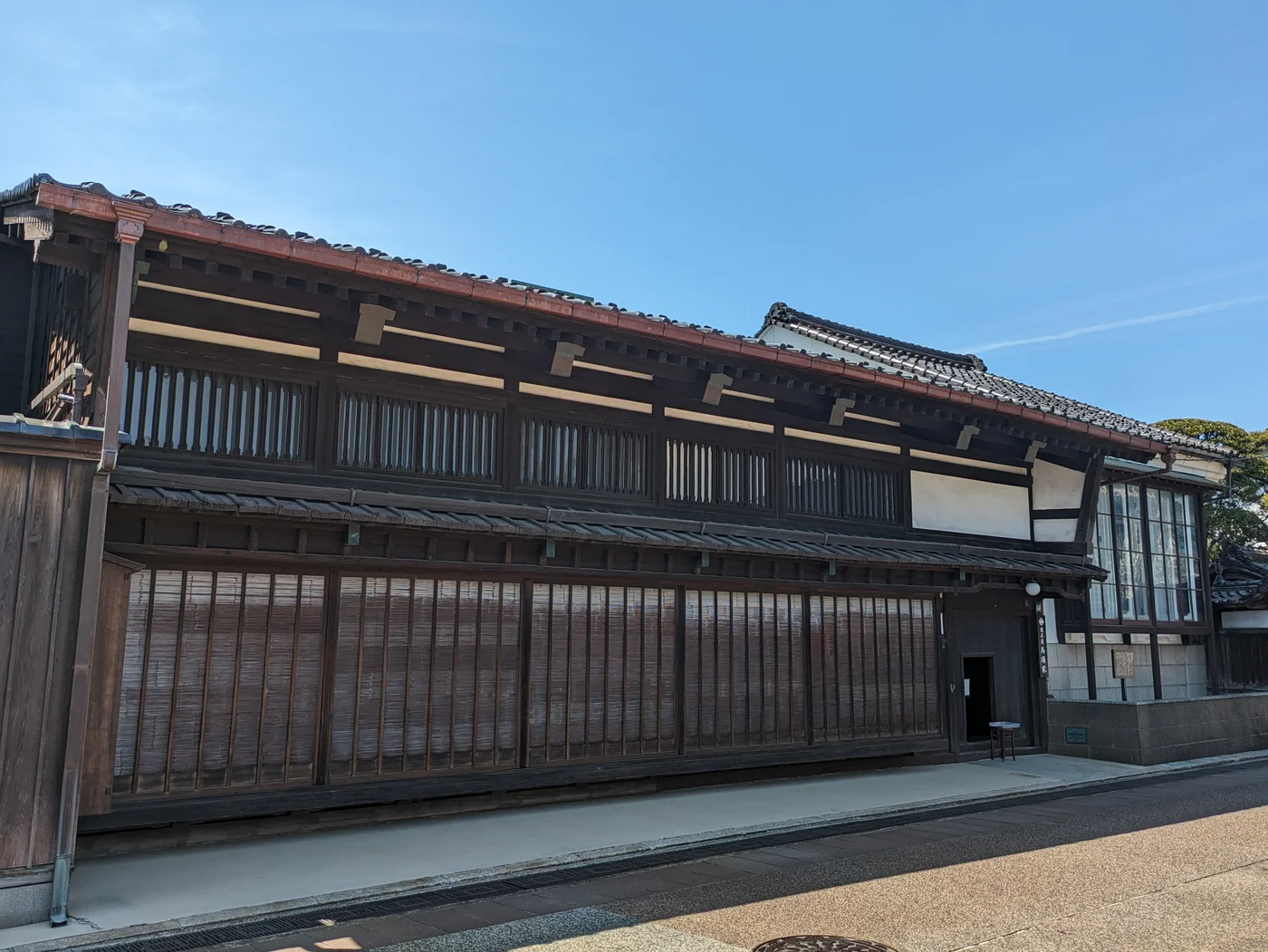
Take the Toyamako Line to Higashi-Iwase, explore the Baba shipping family’s long passage and hall, then visit a rice-storehouse restaurant, Masuizumi tasting bar and GAKU ceramics by appointment. Return along Iwase Canal. Includes 2026 weekday and holiday trams, Mori Residence closure and business hours.
Board at Toyama Station toward Iwasehama; leave at Higashi-Iwase
Toyama Chihō Railway’s timetable revised March 14, 2026 separates Iwasehama-bound and Toyama Station-bound services, each with weekday and holiday versions. Outbound, use Toyama Station C15 toward Iwasehama C39. For this south-to-north walk, get off earlier at Higashi-Iwase C37. Through trams on the Toyamako Line take you there directly from Toyama Station.
The 09:30 departure from Toyama reaches Higashi-Iwase at 09:51 in both weekday and holiday tables, continuing to Iwasehama at 09:54. Stay to the terminus if you want a map at Iwase Canal Hall first; Higashi-Iwase is more convenient for Baba’s morning interpretation. The city gives about ten minutes on foot from Higashi-Iwase to Baba, leaving street-walking time after the 09:51 arrival.
Current city tram flat fares paid in cash or a nationwide transport IC card are ¥240 per adult ride and ¥120 per child. Two rides between Toyama Station and Iwase total ¥480 for an adult. Local Ecomyca and Passca cards have a separate ¥220 fare. You need not obtain a card for this return trip; bring existing accepted IC or cash.
After arriving at Higashi-Iwase at 09:51, follow your map toward Omachi and Shinkawa. For a later start, read the Toyama Station row on the same Iwasehama-bound table and trace the column down to Higashi-Iwase. If that stop’s cell is blank, choose a service with an actual arrival time. Save both departure and arrival cells to avoid taking another origin’s departure as Toyama’s.
Find Omachi Street, port and canal, then walk north
Canal Hall’s March 2026 walking map places Higashi-Iwase near the old district’s southern end and Iwasehama to the north by Canal Hall. Enter from Higashi-Iwase, head north along Omachi Street past Baba and Mori, continue to Otsukaya, Saseki and Toyama Port Observation Tower, then return along Iwase Canal to Iwasehama. Using different stations joins the district into one walk.
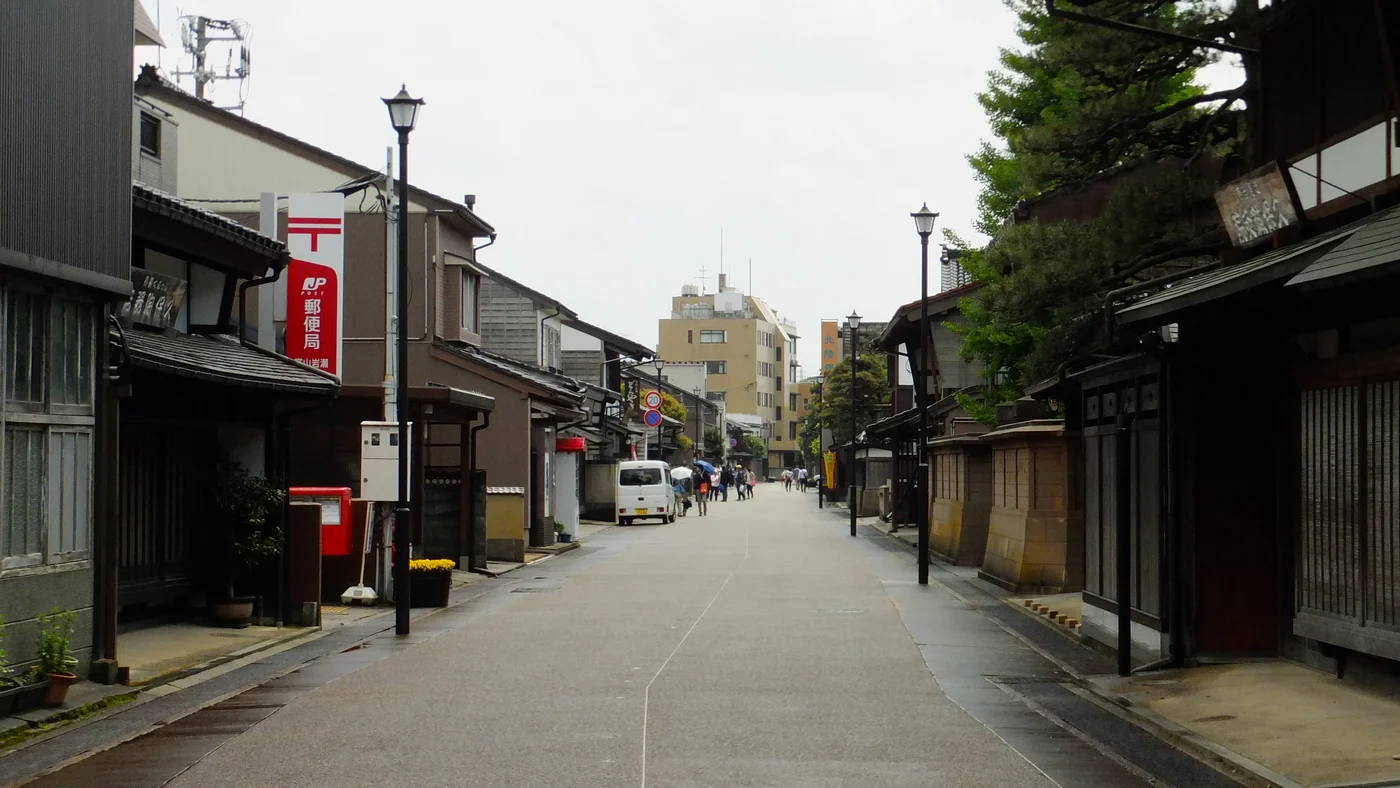
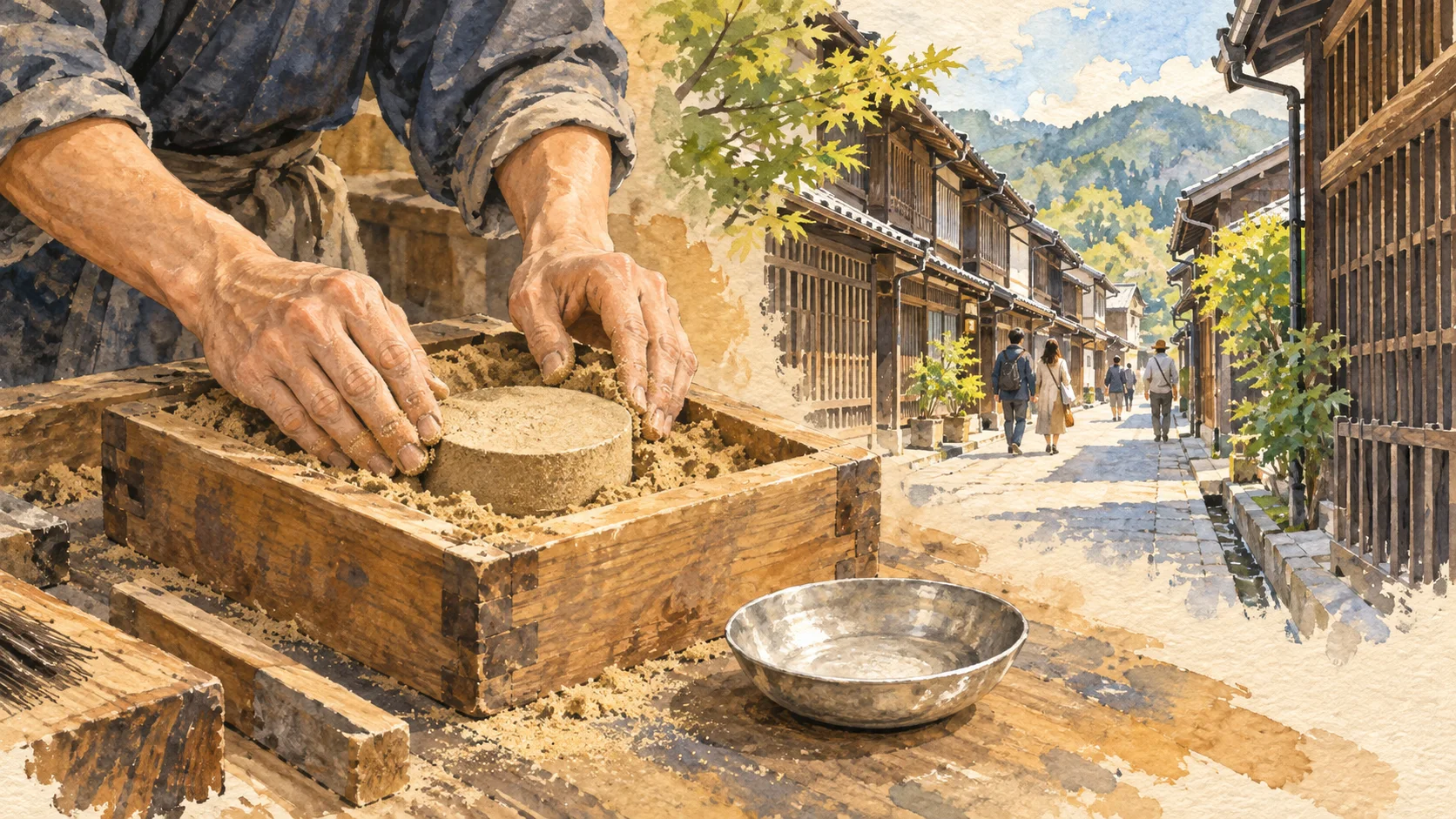
Omachi Street formed part of the old Hokuriku road, with earthen storehouses, shipping agents’ premises and reused buildings. The facades are the first layer. House depth, rear warehouses and water explain how they worked. Understand one home at Baba first, then compare a warehouse converted to dining.
Toyama Port, Iwase Canal and Fugan Canal occupy different places on the map. The tower faces the port; Canal Hall stands beside Iwase Canal and has a Fugan Suijo Line landing. A boat from Kansui Park north of Toyama Station is another way to arrive. This walk uses trams both ways, with hall and water at the end without another long journey.
Mark Baba, lunch and any booked studio on the map, leaving the intervening streets for facades and snacks. MUROYA near Masuda Sake Brewery is farther south, so lunch can come earlier. Kobo in Baba’s rice storehouse follows the house visit. Both options only require reordering within the district.
The Japan Seaology Promotion Organization’s Toyama Bay 60-Second Theater introduces Iwase streets, Kitamaebune ships and reused earthen storehouses.
Shipowners and agents: why the house needed a long passage
The Baba family were both Kitamaebune shipowners and shipping agents. The city education board’s residence guide explains that agents arranged ships, gathered cargo and handled cargo trading in port. Baba also owned several Kitamaebune vessels and traded. Read residence, business and freight together to understand the deep working space behind the entrance.
Kitamaebune traded along their routes, linking owners’ earnings to cargo, ports and markets. Canal Hall’s map introduces this history through ports of call and shipowner settlements. The surviving merchant homes and stores were commercial bases ashore. Beyond facade width, notice the distance from front door to rear and the location of warehouses within the property.
Baba ranked first among Iwase’s five great families and among Hokuriku’s five major Kitamaebune shipowners. City material dates the family’s activity to the late Edo period; the buildings now seen relate to rebuilding after Iwase’s 1873 fire. Earlier shipping business, Meiji architecture and modern life naturally overlap within the same house.
Begin with the passage running from street to rear, then turn to the hall beside it. Cargo movement and seated business occupied different places. This sequence keeps materials and decoration from being the only focus. Building dimensions, room divisions and the former waterway all reveal how the merchant business operated.
Baba’s facade: rebuilding after fire, lattice and house scale
Baba Residence is at 107-2 Higashi-Iwasemachi, open 09:00–17:00 with entry ending at 16:30, closed December 28–January 4. Individual adult admission is ¥100; high-school students and younger enter free. Interpretation is generally available 10:30–12:00 and 14:00–15:00. Aim to begin around 10:30 to hear it. Groups of 20 or more must contact the residence in advance at 076-456-7815.
The city says it was rebuilt after the 1873 fire using some older materials, and registered as a national Tangible Cultural Property in August 2016. It thus preserves both material reuse and post-fire rebuilding. From across the street, compare roof, upper openings and ground-floor entrance, then approach the lattice to distinguish the house’s overall scale from its facade components.
The guide calls the front lattice sumushiko, likening it to a bamboo blind. Canal Hall’s map uses facade drawings to distinguish Higashi-Iwase shipping-agent houses, traditional townhouses and fire-resistant earthen storehouses, marking openings, walls and roofs. Locate Baba’s lattice first, then use the drawing at the next building to compare specific differences.
The facade is only the street-facing side. The listed building group also includes four storehouses, a western gate and western wall; the main house served both life and business. Focus a general visit on the public main house, passage, hall and exhibits, then use plans and historical maps to understand the whole property. Its depth becomes clearer than from the street alone.
A 30-meter toriniwa passage and a 33-mat oi hall
The toriniwa runs through Baba Residence for about 30 meters according to the city guide. The oi hall measures 33 tatami mats. Passage depth and hall area are two readily felt scales. Look down the passage toward the rear, then back at rooms arranged beside it to understand the merchant-home layout.
The passage remains at ground level, while adjacent rooms have raised floors and tatami. Interior images in the city guide show timber framing, room boundaries and the continuous circulation strip. On site, use floor levels to distinguish movement from seated living, then look up at beams and columns spanning them. Width and depth become more than a general impression of a large house.
The 33-mat measurement counts tatami; keeping that unit makes the on-site explanation easy to compare. Look around the room’s edges at columns, partitions and connections, then consider how business, receiving guests and daily life required divisions. Architecture enthusiasts can give this hall more time, examining the space before reading each explanation.
The residence also uses photographs to introduce the oi and mise, the garden-side veranda and new reception room. Move from the hall to the veranda for light and garden, then back toward the business front, comparing spaces facing garden, street and passage. A visit can follow these differences in orientation.
If interpretation is available, ask where cargo entered, where the passage led and which rooms served business. These questions return to the building itself. Walk the front section again afterward to notice doors and turns missed initially. Without interpretation, read the property and former waterway plans, then follow those directions through the public areas.
The river once lay behind the house
The Baba guide says the space beyond the western gate is now a road, but faced the Jinzu River during the height of Kitamaebune trade, making it easy to load boats or move cargo into stores. This explains the long passage: reading from street through main house to rear eventually reaches a former waterfront, beyond a garden.
The booklet places the current district beside a Higashi-Iwase topographic map surveyed in 1910 and issued in 1911. Find the house and compare lines and water to its west to understand the former riverbank and present road. Exhibits also cover Iwase and family history. Back on Omachi Street, you can recognize an invisible former cargo direction.
The family business changed with shipping technology. The city guide records a move from Kitamaebune to steamships in the mid-Meiji period and participation in bank establishment. It lists the steamship Hokuriku Maru as purchased by Baba Steamship Company in 1903. Read vessel types with business changes to carry the house’s story into modern commerce.
Exhibits about Baba Haru connect shipping wealth to Toyama education. She funded the establishment of the former Toyama High School, and the family donated the Hearn Library containing Lafcadio Hearn’s former books. These records show assets moving from shipping into schools and culture. Reserve exhibit-reading time as well as architecture so the house offers more than scale and ornament.
Mori is closed: reserve interior time for Baba
Mori Residence stands next door at 108 Higashi-Iwasemachi. The city’s current notice says it is closed until seismic reinforcement following the 2024 Noto Peninsula earthquake is complete, with reopening expected in fiscal 2027 or later. Baba’s page also states that joint Mori–Baba tickets are suspended. Plan this day with Baba-only admission.
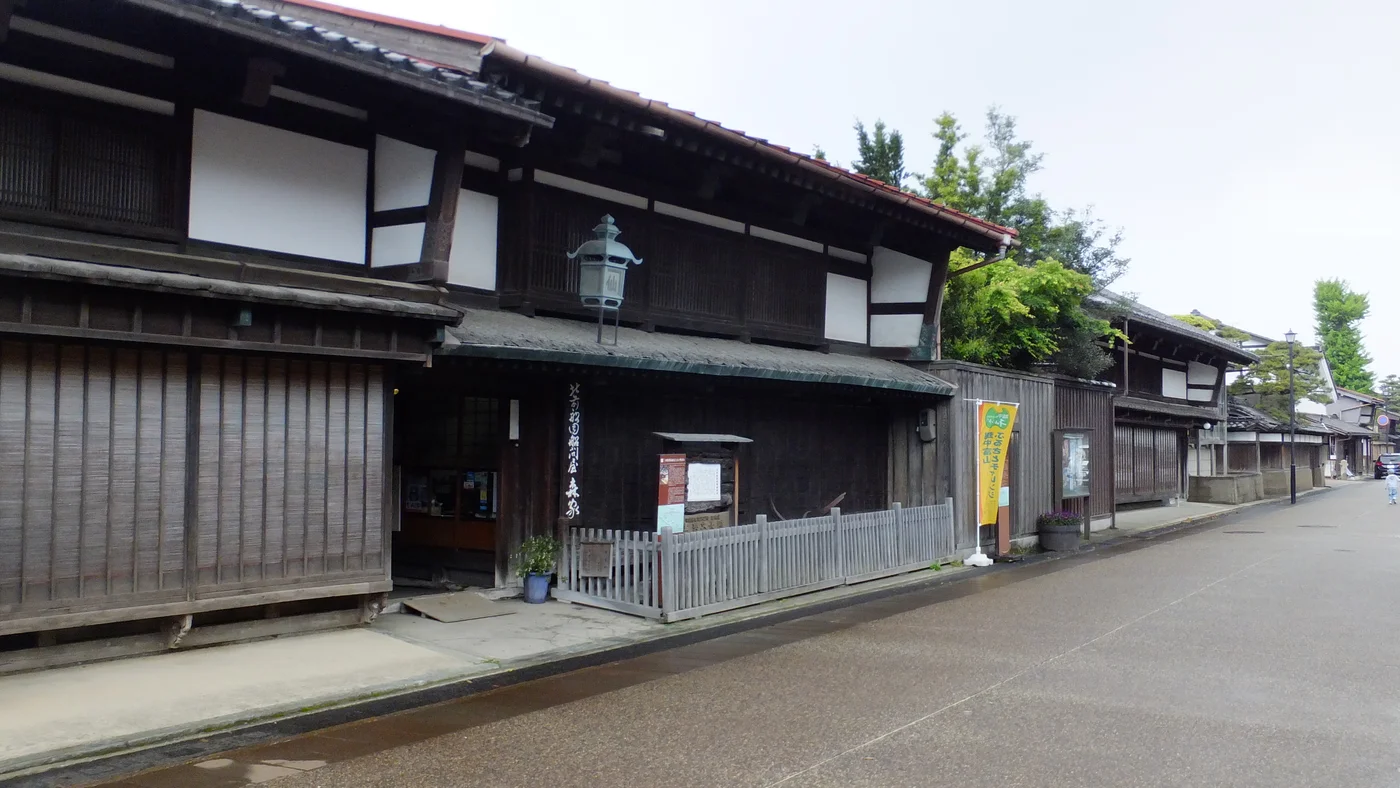
Built around 1878, Mori continues Toyama’s townhouse structure from the Edo period and became a national Important Cultural Property in 1994. The city lists a timber main house, partly two-story, and two two-story earthen storehouses to north and south. Compare this grouping with Baba’s combined residential-commercial house and storage buildings to see how local shipping agents assembled their premises.
View Mori’s position and street-facing building from the public road, leaving fenced work areas to construction. Concentrate interior time at Baba, then continue to the rice-storehouse dining space for another use of historic houses and stores. For a future visit specifically to Mori’s interior, choose dates from the city’s reopening notice.
Lunch at Kobo Brew Pub in an old rice storehouse
After Baba, eat at Kobo Brew Pub. It reuses the former Baba rice storehouse at the same 107-2 Higashi-Iwasemachi address. The guest area has wooden tables and brewing equipment behind glass. Moving from living hall to former rice storage offers comparisons of framing, height and present furniture.
A Czech-born brewer makes craft beer here. The city’s official introduction lists about ten regular taps, including beers using Toyama fruit and sake lees. Drinkers can choose a four-beer tasting selection; for a meal, plan around food such as sausages. Nonalcoholic drinks are available. Lunch combines warehouse reuse with active brewing.
The current city listing gives 11:00–18:00, last food orders at 17:00 and drinks at 17:30, with closures over New Year. Eat between 11:30 and 13:00, then continue to craft or sake without searching for lunch mid-visit. View the glass-separated brewing area from the guest seats, leaving equipment spaces for staff.
MUROYA: earlier lunch hours, closed Sundays and Mondays
To eat first and then walk north, choose MUROYA beside Masuda Sake Brewery. The cafe serves lunches and sweets using Toyama ingredients, including Masuizumi sake-lees desserts. The city also explains its employment training for people with disabilities, with participants and staff sharing reception, plating and other work.
Hours are 11:00–15:00, last orders 14:00, closed Sundays and Mondays, cash payment. Put lunch before Baba or immediately after the morning visit rather than returning after ceramics. On Sunday, use Kobo instead; Tuesday–Saturday, choose the order according to whether you want to sit down or see the main house first.
Choose Kobo for the rice storehouse and brewing equipment, or MUROYA for an earlier lunch in the southern district with sake-lees sweets. Both reconnect to Omachi Street. If you have alcohol-related dietary restrictions, ask directly about sake lees and alcoholic ingredients in desserts and select accordingly.
Masuizumi: brewery shopping and Saseki tasting are separate
Masuizumi producer Masuda Sake Brewery is at 269 Higashi-Iwasemachi. The prefectural tourism page lists 08:30–17:00, closed Saturdays, Sundays and national holidays, and explicitly says brewery interiors are not open for tours. For tasting, go to Saseki on Omachi Street, about five minutes away according to the official introduction. Decide whether you want shopping or tasting before finding the entrance.
Saseki at 93 Iwase-Omachi is Masuda’s standing sake-tasting bar, with about 100 varieties. In a converted shipping-agent building, guests select bottles from refrigerators and pay by their chosen per-glass or timed method. Place it after lunch to connect labels, vessels and the brewery in one walk.
The current city introduction lists three methods. For per-glass tasting, first buy a ¥250 wooden masu cup, then pay ¥200–600 a glass, recorded on a slip and settled at the end. Timed options are ¥1,500 for 15 minutes, about eight glasses maximum, or ¥3,000 for 30 minutes, about 15 maximum. Per-glass ordering gives more control for reading labels and drinking slowly. Timed glass counts are stated limits; choose a small selection you want to compare.
Saseki opens 10:00–18:00, last reception 17:15, closed Tuesdays except national holidays. With friends, agree on a departure time before choosing sake. Nondrinkers can browse nearby and meet later instead of everyone waiting through one tasting. Visit the tower before drinking if you want its daytime view; this also fits the route.
Arrange drinking within a day that requires no further driving, and return by tram. For bottles to take to your accommodation, ask about storage and packaging and carry them only later in the day. If unsure of taste, try individual glasses before deciding on a purchase. Tasting and buying have separate purposes and can have separate budgets.
GAKU ceramics: read craft through cup rims and plate surfaces
Gaku Shakunaga’s GAKU ceramics is at 146 Higashi-Iwasemachi. His official biography records graduation from Tokyo University of the Arts’ sculpture department in 2002 and independent work from 2006 in Iwase’s Mori storehouse group. His core work is now commissioned tableware and ceramic objects for restaurants, companies and individuals. Approach the pieces through both sculptural form and table use.
On his site, the artist writes that he often cooks, hosts and drinks, so when making cups he considers users’ pleasure and surprise. Chefs and private customers request commissions, exchanging ideas before completion. This account suggests asking how rim, shape and serving method are decided together, beyond surface color.
The site’s Nomi-sugiru Hai cup series, deep-black works and Nenrin series provide specific starting points. Compare rim thickness, weight in hand and inner and outer contours, then consider plate surfaces with food on them. The site includes restaurant and sake-merchant impressions of thin cups, black works and Nenrin. Start with one form, then ask how it supports drinking or serving.
For an everyday cup, ask about capacity, rim, stability on the table and cleaning. For a plate, think of dishes you cook, cupboard size and space for food. With a strongly shaped work, decide whether it will be used or displayed, then ask the artist about care. This gives a clearer choice than pursuing only a series name.
Contact the studio before viewing work. The official Gallery contact page lists 076-456-7598 and a contact form. State which work interests you and your available times, then arrange lunch and return travel around the confirmed appointment.
If no appointment is available, begin with the official shop’s categories and introduction and use the afternoon for Baba exhibits, facades and water. For a hands-on making experience, give another day to Nousaku and Kanayamachi in Takaoka according to your preferred material. This Iwase stop focuses on the artist and objects, with timing set by the visit arrangement.
Why breweries, restaurants and artists share the old street
The concentration of businesses and studios in old buildings has a history. In doors TOYAMA’s interview with Ryuichiro Masuda, published by the prefectural tourism service, he describes buying and restoring buildings in his hometown for restaurants and artists. An early project converted a timber shop into a soba restaurant for Niuan, which needed a new location. He later invited artists; glass artist Taizo Yasuda and ceramic artist Gaku Shakunaga gradually established bases here.
This process keeps changing the old buildings’ uses. Main houses once handled living and business, with storehouses holding cargo. Some stores now house brewing and dining, while other old buildings support making, display or sales. Read the business name at the door, then look at openings and depth to see different work within similar historic forms.
Food and ceramics also have practical collaborations. GAKU’s site includes chefs discussing commissioned plates, including CAVE YUNOKI’s account of ordering tableware from Shakunaga since opening in 2009. Ask what a work was designed to hold and how it fits its user to connect that collaboration to the table.
Ichibamachi TV introduces Toyama food and craft through L’évo’s collaboration between cuisine and tableware; GAKU ceramics links to the program on its site.
Otsukaya’s triangular dorayaki in the northern street
Otsukaya, founded in 1933, stands at 152 Iwase-Omachi. The city’s triangular dorayaki introduction describes thin wrappers made with Toyama eggs around chunky Hokkaido red-bean filling, folded into triangles inspired by Japan Sea waves. The wrapping distinguishes it from the usual two round pancakes around filling. Its shape is a direct product clue.
Hours are 08:30–17:30 Tuesday–Saturday and 08:30–16:00 Sunday, closed Mondays except national holidays. Walking north from Baba, place it between lunch and the port. On Sunday, buy before the tower rather than returning after 16:00. The city also lists sales at Canal Hall, which you can check at the end.
The product introduction gives about four days as a shelf-life reference. For accommodation or gifts, follow the actual package’s expiry and storage instructions. To eat the same day, finish it in an appropriate place indicated by the shop before continuing.
Toyama Port Observation Tower: 107 steps to place town and port
The tower borrows the form of the local Kotohira Shrine’s night lantern, with 107 spiral steps and viewing space about 20 meters above ground. City information lists free entry, 09:00–16:30 hours and no regular closed day, with stairs as the only access. Visit before drinking. Companions unable to climb can stay by the port at ground level and agree on a meeting point.
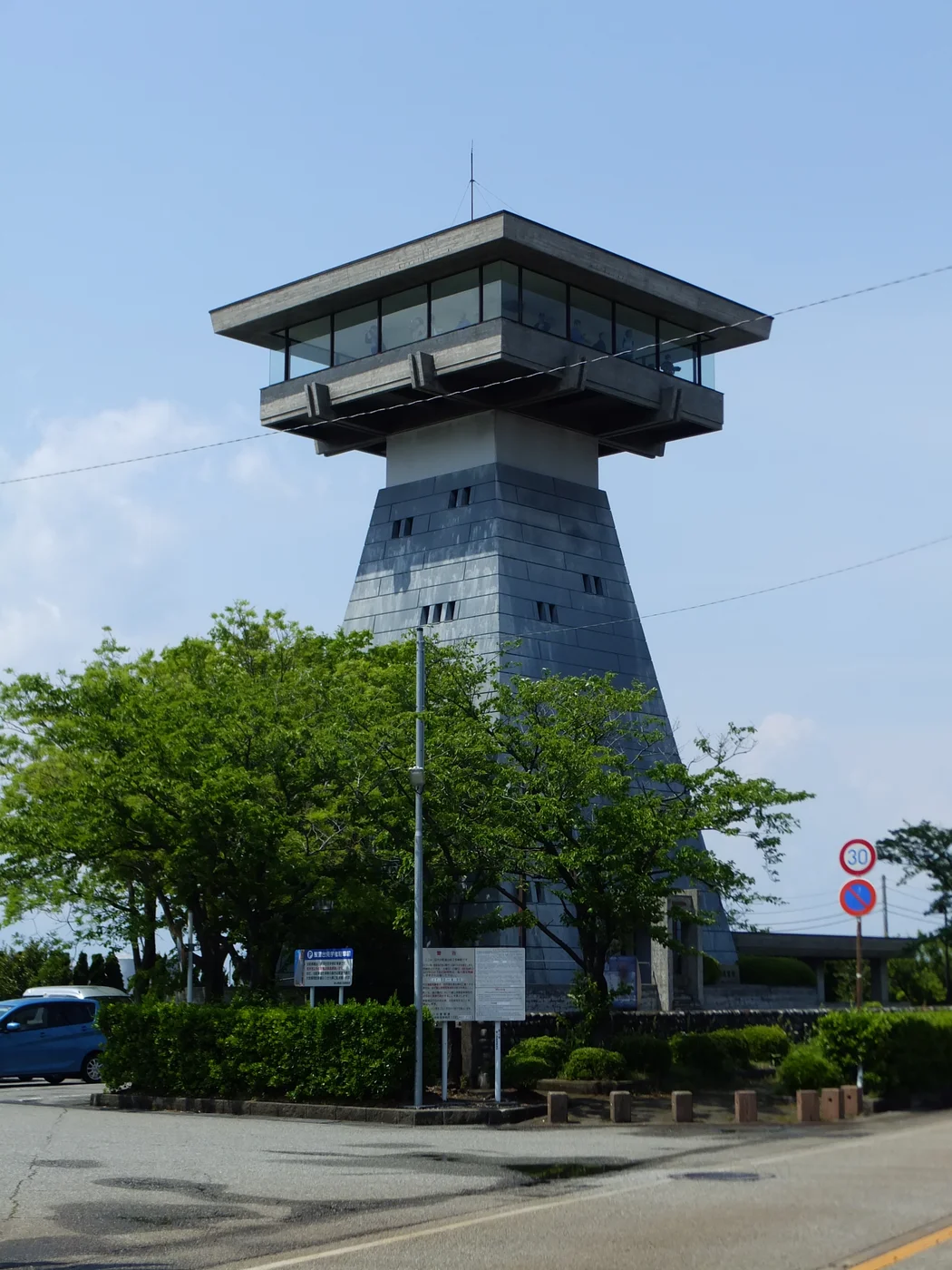
Above, you can see Toyama Port and Iwase, with distant views toward the Tateyama range and Noto Peninsula in clear weather. For this walk, first find the townhouse street you used and its relation to the water. Baba’s homes, cargo and riverbank become a wider spatial relationship; the port becomes more than scenery beside the old street.
The tower closes at 16:30. If you have an afternoon ceramics appointment, work backward from it to place the climb. Reorder Otsukaya, tower and Saseki as needed: stairs first, then sitting or standing drinks, finally Canal Hall and the tram. If you prefer only the waterfront, omit the tower and rest at a street business.
Finish along Iwase Canal, close to the tram
From the old street’s northern end, head toward Canal Hall and Iwase Canal. The hall’s access page gives a one-to-two-minute walk from Iwasehama Station. It has dining, souvenirs and a Fugan Suijo Line landing. For a short final waterside walk, use the hall as your turning point and station landmark. The tram home is close by.
Canal Hall’s walking map indexes homes, workshops, restaurants and tram stops. Before returning, trace your day’s order to place Baba’s interior passage, rice-storehouse lunch and port water in their locations. Buy any final souvenirs at the hall and carry them to Iwasehama, avoiding another return through the old street.
To replace one direction with the Fugan Suijo Line, follow the hall’s access page to the operator’s timetable, choose an operating date and bookable sailing, then adjust the day. The hall gives about an hour for the canal cruise from Kansui Park to Iwase, making it an activity in its own right. With a fixed craft appointment or evening train, the tram return is easier to fit around those windows.
Fit the walk to the clock and change one stop for closures
A full day can start with the 09:30 Toyama departure and 09:51 Higashi-Iwase arrival. Walk the southern area to Baba for interpretation around 10:30, choose Kobo or MUROYA for lunch, then attend a confirmed GAKU viewing. Continue to Otsukaya, the tower and Saseki, finishing at Canal Hall and Iwasehama. If the ceramics appointment falls elsewhere, exchange the street-walking periods around lunch.
On Tuesday, Saseki closes unless it is a national holiday; use the tasting time for Baba exhibits or craft. On Sunday, MUROYA closes, so choose Kobo and buy Otsukaya sweets before 16:00. On Monday, look for triangular dorayaki at Canal Hall’s sales point; Otsukaya’s main shop opens Mondays only on national holidays. All these adjustments stay within the same district route.
For a noon arrival, eat, then choose Baba and the streets, plus either the tower or Saseki. With a booked ceramics visit, make it and Baba the afternoon core. Visitors interested in port architecture who do not drink can focus on residence exhibits, lattice facades, rice storehouse and water, each with different subjects.
In heavier rain, place Baba, lunch and booked ceramics close together, using streets only to connect stops. Save the tower and water for suitable weather. If you want to sit after Baba, eat first; street views remain along the return. The house and objects need time, so there is no need for another distant excursion that day.
Iwasehama to Toyama: save weekday and holiday returns
Under the timetable revised March 14, 2026, weekday departures from Iwasehama at 15:46 and 16:16 reach Toyama Station at 16:13 and 16:48. On holidays, the 15:46 arrives at 16:14 and the 16:16 at 16:48. These suit a return after lunch, streets and an afternoon stop. Choose your service when you arrive in Iwase.
If you finish in the southern district, return from Higashi-Iwase. The 15:46 Iwasehama service stops there at 15:48; the 16:16 stops at 16:18, in both weekday and holiday tables. From Canal Hall, Iwasehama is direct. If you finish near Baba, GAKU or MUROYA, Higashi-Iwase saves the northward walk.
Leave an interval between the tram’s Toyama arrival and a Shinkansen or dinner booking. The example reaches Toyama at 16:13 on weekdays or 16:14 on holidays, or 16:48 on the later service. Add luggage collection and long-distance transfer after getting off the tram. At Iwasehama, confirm the Toyama Station direction and date version, then finish the port-town walk on your chosen service.
A few useful answers
Which stop should I use from Toyama Station to Iwase?
For townhouses and Baba, get off at Higashi-Iwase C37, about ten minutes on foot from Baba. For a walking map or canal-first route, stay to Iwasehama C39, one to two minutes from Canal Hall.
Can I visit Mori Residence now?
Mori is closed for seismic reinforcement following the 2024 Noto Peninsula earthquake. The city expects reopening in fiscal 2027 or later. Baba remains open, at ¥100 for adults and free for high-school students and younger. Joint Mori–Baba tickets are suspended.
Can I tour the Masuizumi brewery or walk into a studio?
Masuda Sake Brewery does not open for brewery tours. Use Saseki for tasting. Contact GAKU ceramics in advance to view work at 076-456-7598, then put the confirmed time into your itinerary.
Is Iwase suitable if I do not drink?
Yes. Baba, townhouse facades, Toyama Port Observation Tower and the canal can form a visit independently. Kobo Brew Pub has nonalcoholic drinks with lunch; MUROYA is another option Tuesday–Saturday. Ceramics enthusiasts can book GAKU ceramics.
Official information and references
Sources used in this guide.
- Toyama City: Baba Residence hours, admission and interpretation
- Toyama Board of Education: former Baba Residence guide (April 2021)
- Toyama City: Mori Residence seismic closure and architecture
- Toyama Chihō Railway: city tram fares
- Toyama Chihō Railway: city tram and Toyamako Line timetable, March 14, 2026
- Toyama Chihō Railway: weekday Toyama Station to Iwasehama
- Toyama Chihō Railway: weekday Iwasehama to Toyama Station
- Toyama Chihō Railway: holiday Toyama Station to Iwasehama
- Toyama Chihō Railway: holiday Iwasehama to Toyama Station
- Official Toyama City Tourism: Masuda Sake Brewery Saseki
- Official Toyama City Tourism: Kobo Brew Pub
- Official Toyama City Tourism: Iwase streets and walking information
- Official Toyama City Tourism: Toyama Port Observation Tower
- Official Toyama Prefecture Tourism: Masuda Sake Brewery
- GAKU ceramics official shop: brand and works
- GAKU ceramics: artist’s account and users
- GAKU ceramics: Gallery and advance contact
- GAKU ceramics: Gaku Shakunaga biography and work
- Iwase Canal Hall: access and canal cruise links
- Iwase Canal Hall: March 2026 walking map
- Toyama doors TOYAMA: Ryuichiro Masuda on brewing, old buildings and artist bases
- Official Toyama City Tourism: Otsukaya triangular dorayaki
- Official Toyama City Tourism: MUROYA