Plan two half-days around Romon Gate’s zodiac tour, Motoyu, Shinkan, the city library and shrine, then choose daytime Mifuneyama or autumn illuminations. Compare Syunkeiya, Kyotoya and Century Hotel for beds, meals, transfers and cancellation terms.
- Region & Focus
- KyushuAttractions
- Reading Scope
- 40 min read · 15 chapters · 5 Q&As
- Official Verification
- 25 official sources checkedUpdated October 27, 2026
- Key Topics
- ItinerariesHot springsKyushu
Chapter Route Map (tap any stop)
- Divide Takeo into three areas: Romon, the library and shrine, and Mifuneyama
- Store bags first and distinguish the north exit walk from south exit buses
- Stay for Romon's morning zodiac tour and choose the right Motoyu ticket
- Motoyu is an operating bath; Shinkan is a free historic bathhouse exhibition
- Private bath capacity: Karo for two adults, Tonosama for five
- Give the library reading time, then choose the children's library or coffee
- Takeo Shrine and the great camphor: worship first, then decide on the woodland walk
- Dinner-and-breakfast route: afternoon bathing, then Romon and the library
- Visit the garden by day for clearer paths and an easier dinner
- Autumn-lights overnight: check in and settle dinner before the evening visit
- Syunkeiya: two beds, ryokan meals and station pickup in one stay
- Takeo Century Hotel: no dinner on site, with evenings arranged separately
- Kyotoya: compare the station walk and exact bed arrangement
- Cancellation and date changes: the inns start charging on different days
- A lighter plan for older adults and families: remove one area and keep a full rest
- Quick Q&A
An overnight stay in Takeo offers more than avoiding a train back to Fukuoka after the autumn illuminations. Visit Romon Gate and the free Shinkan in the afternoon, choose one bath and have dinner at your inn. After breakfast, go upstairs at Romon to see the zodiac carvings, then give the library or Takeo Shrine half a day. This leaves time for the old hot-spring streets, a public reading space and a wooded shrine approach. For Mifuneyama Rakuen, choose daytime scenery or evening lights first, then fit it around dinner and transport.
Divide Takeo into three areas: Romon, the library and shrine, and Mifuneyama
For a first visit, stay one night in the hot-spring district. Put Romon Gate, Shinkan and one bath on the first afternoon, then Romon's upper floor, the library and Takeo Shrine on the second morning. Choose either day or night at Mifuneyama Rakuen. If dinner at your inn has a set time, protect it first and decide whether the garden should move to tomorrow. This suits train arrivals from Fukuoka or Nagasaki who want fewer hotel changes and time to use their accommodation.
Takeo-Onsen Station is the transport starting point for all three areas. Romon lies in the hot-spring district north of the station; the tourism association gives about 15 minutes from the north exit. The library is in a residential and commercial area on the other side, with a stated 15-minute walk from the station. The shrine gives about 25 minutes or 2 km from the station. These are separate station-to-destination estimates, not a few minutes between each sight. Complete one area before moving on instead of going from Romon to station lunch, out to the shrine and back for a bath. Mifuneyama Rakuen needs separate transport. JR Kyushu Bus serves its stop from the station, but slopes, steps and time inside remain after arrival. Ask older companions how long they can walk continuously and whether they can manage stairs before choosing the garden or a shorter town route. With half a day, prioritize Romon, Shinkan and Motoyu, optionally adding the library. Taxis need not turn the day into a chase through every landmark.
| Stay type | Priority | What to cut |
|---|---|---|
| Town half-day | Shinkan + Motoyu, or library + shrine | No evening garden |
| Dinner-and-breakfast stay | Hot-spring district day one; tour + library/shrine day two | Garden by day or omit it |
| Autumn-lights overnight | Check in first; return to Takeo after lights; morning tour | Choose a compatible dinner plan |
| Short route for older adults | One area + a rest; vehicle between areas | Tree path and garden slopes depend on stamina |
Starting at Takeo-Onsen Station, this introduces Romon Gate, Takeo City Library and the Children’s Library as an overview of places to visit in town.
Plan two half-days around Romon Gate’s zodiac tour, Motoyu, Shinkan, the city library and shrine, then choose daytime Mifuneyama or autumn illuminations. Compare Syunkeiya, Kyotoya and Century Hotel for beds, meals, transfers and cancellation terms.
Store bags first and distinguish the north exit walk from south exit buses
From Hakata, take a JR conventional-line limited express to Takeo-Onsen; from Nagasaki, take the Nishi Kyushu Shinkansen. Choose the train and seat class for your date first, then arrange pickup or walking. From Hakata, simply get off at Takeo; a shinkansen connection matters only if continuing toward Nagasaki. For an evening garden visit from Fukuoka with a same-night return, see the Fukuoka side-trip garden transport guide. Stay overnight to use an inn dinner, the morning Romon tour and a library half-day.
Leave large bags at accommodation that accepts pre-check-in storage, or find available station storage, before walking. Kyotoya lists about eight minutes on foot from Takeo-Onsen Station; Syunkeiya gives about 15 minutes and can arrange station pickup. With heavy bags, rain or boarding assistance needs, arrange a pickup or taxi for this leg. Pre-check-in storage, collection time and bag count are separate from room access. Arrange them when booking.
Regular JR Kyushu Bus Ureshino Line services use the south exit. Walk from the north exit for Romon, but find the south-exit Ureshino Line stop for the garden. Save the return station exit and your inn's Japanese name when you first arrive, so they are easier to recognize at night.
If this is an international arrival day, landing does not mean you are ready to leave Hakata. Immigration, bags, airport-to-Hakata travel and train waits consume the afternoon. Late arrivals should choose room-only or put dinner and breakfast on a second night. If flying out of Fukuoka the next morning, stay in Fukuoka city instead of squeezing Takeo breakfast, checkout and long-distance travel before airport check-in.
Stay for Romon's morning zodiac tour and choose the right Motoyu ticket
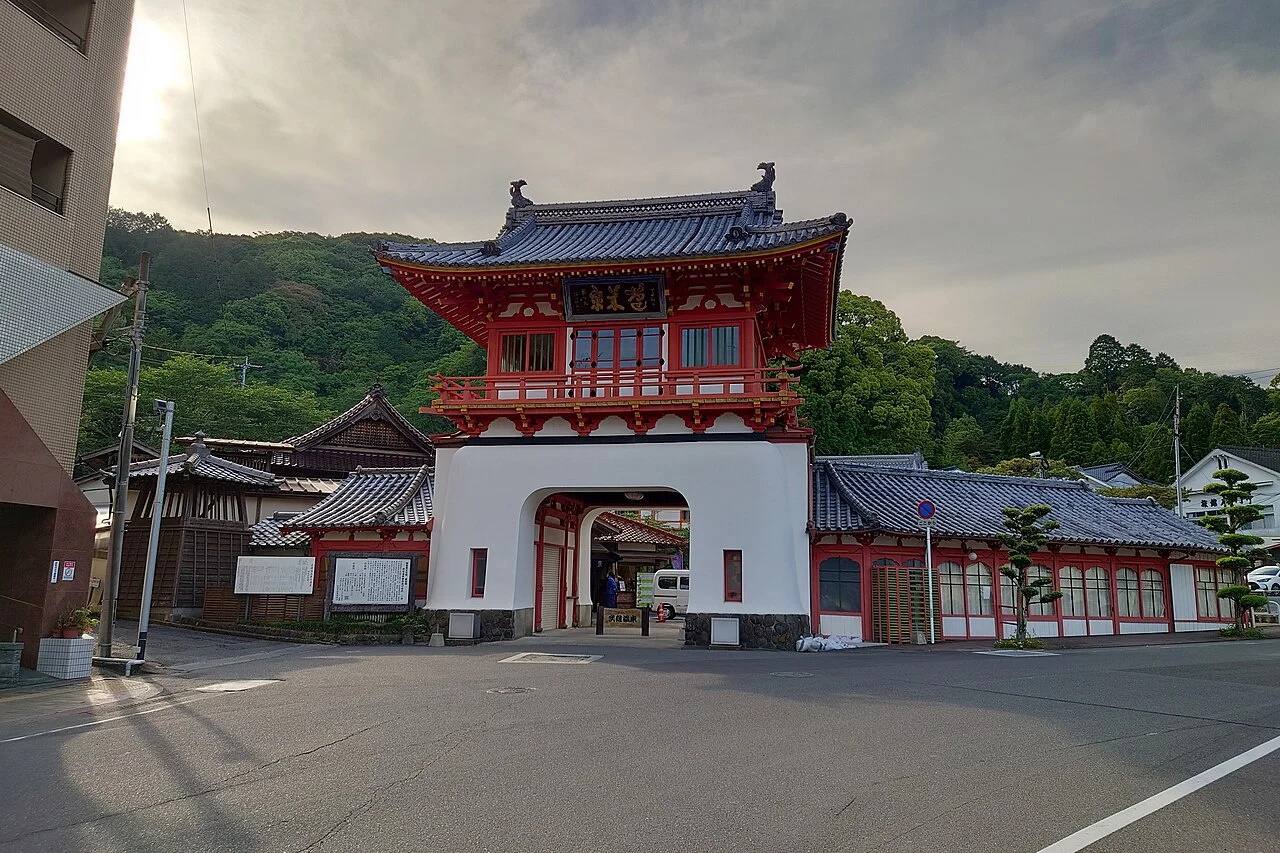
The vermilion gate was designed by Kingo Tatsuno and completed in 1915. Viewing it outside, walking through it and seeing the zodiac carvings upstairs are separate visits. Put the exterior and Shinkan in the afternoon; the upper-floor tour is in the morning. An overnight stay makes this easier than traveling far to meet morning reception. Leave the passage clear when photographing, and move aside afterward rather than gathering a whole group beneath the gate and blocking bathers.
The tourism association's current notice extends zodiac visits through March 31, 2027. Tours run daily except Tuesdays, 09:00–10:00, with reception until 09:30 and about 20 minutes for the experience. Rat, rabbit, horse and rooster carvings occupy the four ceiling corners upstairs, an interesting counterpart to the other eight zodiac animals in Tokyo Station's dome. This is a specific guided time slot. Standing beneath the gate in the afternoon cannot replace the morning-only upstairs visit.
The standard cultural-property contribution is ¥500 for adults and ¥250 for children, including a Motoyu bath ticket. Guests who stayed at local accommodation the previous night pay ¥400 adult or ¥150 child for the next day's tour, without a bath ticket. Two adults wanting both tour and Motoyu pay ¥1,000 with standard tickets; guest tickets plus two ¥500 bath tickets total ¥1,800. The guest ticket is cheaper only if you want the tour without bathing. Specify which ticket you need.
If your second day is Tuesday, omit the upstairs tour and keep the exterior, Shinkan and bathing. Do not shift an entire trip for a discount. For a post-breakfast tour, work back from the 09:30 reception cutoff through the walk and breakfast finish. Syunkeiya serves breakfast 07:00–08:30; eating early leaves walking time. If you must pack afterward, ask about storage before and after checkout before leaving for the tour.
Motoyu is an operating bath; Shinkan is a free historic bathhouse exhibition
Behind Romon, Motoyu is a working communal bath. The tourism association's building description dates it to 1876 and highlights high ceilings and spacious pools. Choose it to experience an old bathhouse. Official information visible on October 27, 2026 gives 06:30–23:45, last reception 23:00, adults ¥500 and ages three through elementary school ¥250, with body wash and conditioning shampoo. Bring a drying towel and spare clothes, and allow hair drying, dressing and the next walk before entering.
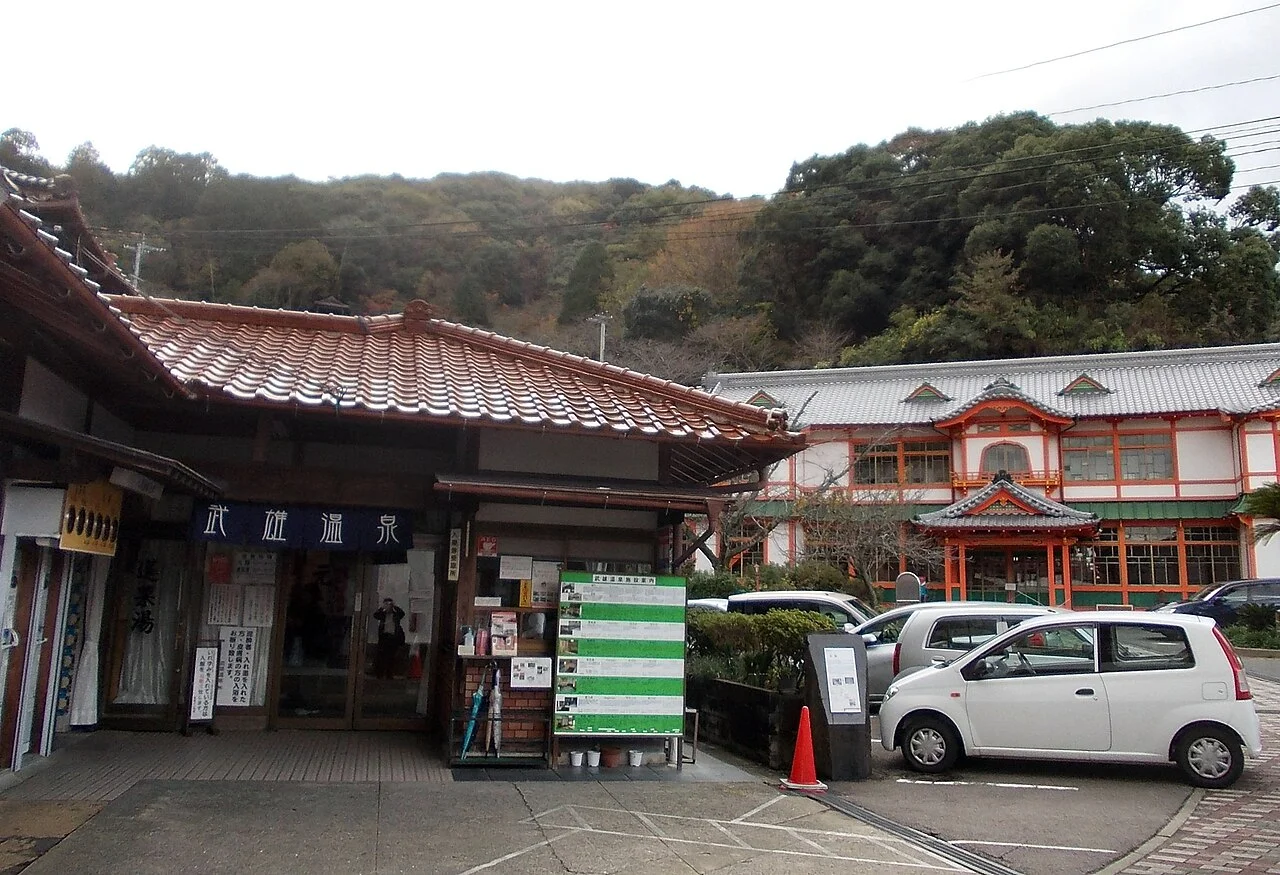
Motoyu explicitly refuses guests with tattoos, intoxicated guests and those breaching etiquette. Travelers with tattoos should choose another facility that explicitly accepts them; a cover sticker does not itself grant entry. Put phones away, wash before entering and keep towels out of the water. Companions who do not want communal bathing can visit Shinkan or choose a private bath and meet outside. Nobody needs to force themselves to bathe for the same ticket. Takeo Onsen Shinkan preserves historic baths and displays tiles and ceramic panels. The tourism association lists free entry 09:00–18:00, open daily. It suits non-bathers or a building visit before bathing. A shorter afternoon of Romon's exterior, Shinkan and Motoyu combines architecture and hot springs in one area. Despite “new building” in the name, the focus is the restored Taisho-period bathhouse, not another bath-ticket counter.
You might allow 30–45 minutes for Shinkan and 60–90 for Motoyu. These are planning allowances, including changing and rest. Add time for detailed displays, or prioritize reception deadlines if arriving late. If your inn has baths, decide on Motoyu after tomorrow's tour instead. Two baths in one afternoon need not leave you rushing to dinner.
Private bath capacity: Karo for two adults, Tonosama for five
For a separate space together, compare Karo-no-Yu and Tonosama-no-Yu near Romon. Both charge per room per hour, not by individual Motoyu tickets. Official hours are 10:00–23:00, reception ending 22:00, with no reservations and admission in arrival order. If a private pool is essential, come during the day so waiting can trade places with another activity, rather than leaving it until just before the last train.
Karo-no-Yu accommodates two adults, has a 4.5-tatami rest room and costs ¥3,000 per room per hour on weekdays or ¥3,500 on weekends and holidays.
Tonosama-no-Yu accommodates five adults, with 4.5- and 3-tatami rest rooms. It costs ¥3,800 weekdays or ¥4,300 weekends and holidays. Its marble pool connects with its history as the lord's private bath. Two adults needing privacy can start with Karo; three to five should look at Tonosama rather than trying to fit into a smaller-capacity room on arrival.
For two adults, weekday Karo costs ¥3,000, or ¥2,000 more than two Motoyu tickets totaling ¥1,000. The extra buys private space and indoor rest, not another compulsory sight. Families with infants should explain ages and numbers at 0954-23-2001, then follow on-site reception arrangements. For wheelchair transfers, bath chairs or step-free access, ask about the entire route from entrance through changing room to poolside.
If waiting would threaten dinner, use your inn's available facilities and move the private bath to tomorrow or drop it. Sagi-no-Yu is another communal choice, with an outdoor pool and sauna, costing adults ¥740 and ages three through elementary school ¥370. Its tourism-association page lists the same tattoo and intoxication exclusions as Motoyu. Compare equipment and rules together before paying for an unsuitable space.
Give the library reading time, then choose the children's library or coffee
Takeo City Library is at Takeo 5304-1, Takeo-cho, open daily 09:00–21:00, subject to disaster or emergency notices. Its access page gives 15 minutes on foot or about five by taxi from Takeo-Onsen Station. It can fit a late afternoon, but reading, shelves and architecture deserve time while you have energy. A five-minute photo stop misses much of what makes a public library comfortable.
The main building has reading areas, books and goods for sale, and a cafe. The tourism association describes about 250,000 books and tall shelves. Choose a subject and a quiet seat; browse separately if companions want to shop. People still work and study here. Speak softly and avoid long photo poses in front of shelves. Follow current signs and staff directions for photography and avoid photographing readers. With children, replace some main-library time with the neighboring Takeo Children's Library. Official descriptions include a shoes-off reading area, secret-room-like spaces and an outdoor lawn. The second-floor Kyushu Pancake Cafe is a snack option. If children settle into picture books, let the itinerary stop here rather than requiring the shrine tree and entire garden too. Follow separate rules for cafe dining and public-library reading.
The library is a useful rain alternative: take a vehicle to the entrance, read and rest, then walk to the shrine if rain eases. Outdoor travel still separates it from Romon. Store bags or change wet clothes at your inn first. Drivers should use the library's published parking locations. Its site warns that weekend afternoons fill more easily; consider available nearby public parking rather than losing the reading period searching for the nearest space.
Takeo Shrine and the great camphor: worship first, then decide on the woodland walk
Takeo Shrine stands at Mifuneyama's eastern foot, at Takeo 5327. Pair it with the library for half a day, then ride back to the station or inn. The shrine website estimates about 25 minutes or 2 km from the station. After a long Romon walk, a taxi between areas can save energy for the grounds you want to see. “Town sights” can still mean substantial cumulative walking. Start with the stone Hizen torii, then the worship hall. The tourism association describes the torii's distinctive curved lintel; the shrine also holds documents from the mid-Heian through late Muromachi periods. Give ceremonies and weddings room. Companions wanting rest can wait at an agreed place outside the entrance instead of joining another woodland section.
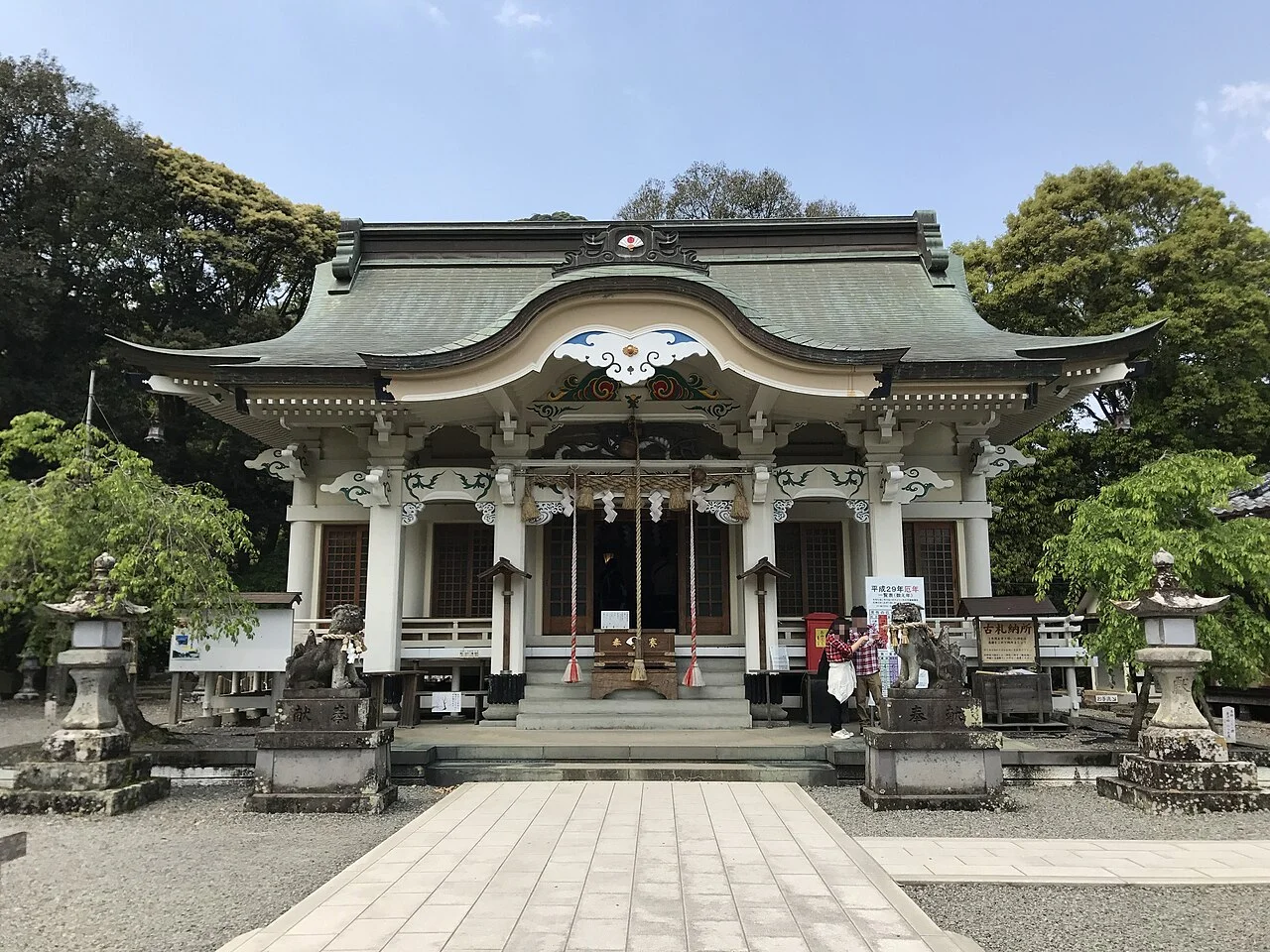
The great camphor behind the shrine is a sacred tree, officially estimated at over 3,000 years old. Follow the open approach and stay outside protection barriers. The tourism association's notice says the restricted area has expanded to help the tree recover and prevent falling-branch accidents. Do not enter the hollow, cross barriers near roots or send children under the tree for scale in photos. The hollow's dimensions describe the tree; they do not make it an open visitor space today.
Stop at the worship hall if the ground is slippery, light is fading or companions are tired. Visit the woodland tree section in daylight to see the ground and protection notices. For evening lights, follow that year's event notice and open areas; summer illumination photos do not establish year-round night visits. A library open until 21:00 does not give the nearby sacred tree the same evening hours.
Dinner-and-breakfast route: afternoon bathing, then Romon and the library
This plan makes the overnight stay central. It suits car-free travelers, older companions and first-time ryokan guests. Aim to reach Takeo around midday, store bags and eat lunch. Visit Romon's exterior and Shinkan, then choose Motoyu or your inn's baths. Check in after 15:00 as your room becomes available. Leave time before dinner for rest, changing and finding your way around the inn, rather than boarding a bus to Mifuneyama then.
Syunkeiya offers two-bed rooms and station pickup, useful for taking luggage straight to accommodation. Kyotoya is walkable from the station, with meals selected from available plans. For a separate dinner, also compare Takeo Century Hotel below. Staying near Romon makes the first afternoon easy to shorten: see Shinkan in rain and photograph Romon when it clears. Put shared time in Shinkan if someone does not want a bath, then rest separately and meet for dinner.
Eat breakfast next morning and aim to leave around 08:45. Join the roughly 20-minute tour after 09:00 and complete reception before 09:30. Afterward collect what you need and handle luggage for the accommodation's 10:00 checkout. Do not walk straight to the library while forgetting the occupied room and bags. Ask the inn to store luggage, then read at the library, visit the shrine and collect bags after lunch before returning to the station.
Continue to Nagasaki on the Nishi Kyushu Shinkansen, or check conventional-line limited expresses for Hakata. Allow bag collection, walking and waiting before your booked train, keeping only the library or shrine if that is all the half-day permits. To decide between two meals and room-only, compare beds, food and private baths using the first ryokan booking guide, then return to the three accommodation choices below.
Visit the garden by day for clearer paths and an easier dinner
For plants, garden scenery and the borrowed mountain backdrop, put Mifuneyama on the first afternoon or after checkout. The JR Kyushu Bus Ureshino Line timetable revised October 1, 2025 and currently linked by the city gives a weekday example: Takeo-Onsen south exit 12:20 to Mifuneyama Rakuen 12:28, returning 15:26 to the south exit at 15:38. This gives nearly three hours for the garden, with time to return to the stop before departure. Reopen the operator's weekday or weekend table before riding.
To combine library and garden, check whether your bus actually serves “Yume Town (Takeo City Library).” Only some weekday services in that table start there, such as 11:11 via the station to Mifuneyama at 11:28. Not every Ureshino Line bus serves the library. If there is a gap, walk to the station or use a taxi instead of waiting for a bus that does not pass. Choose a short library visit plus garden and move the shrine to tomorrow, rather than cramming all three areas before lunch. The 2026 autumn festival runs November 6–December 6, daytime 08:00–17:30 and evening 17:30–22:00. Day-only tickets cost ¥600 from junior high school age and ¥300 for elementary children; combined day/night tickets are ¥900 and ¥400. Daylight reveals Mifuneyama's cliffs, pond and maple layers; night emphasizes lights and reflections. Choose daytime for companions who struggle with dark paths, cold or fixed dinner times.
The operator states there are two steep slopes, surfaces can be difficult after rain, and stairs lead toward the teahouse. Wheelchair visitors going to Haginoo Teahouse must follow official directions back to the entrance and then toward the teahouse, not follow the stepped exit route. Ask about the five wheelchairs at the entrance, but gradients requiring assistance remain. Set the pond and one turnaround as your limit and use transport afterward. Borrowing a wheelchair does not make the whole garden a flat accessible loop.
Autumn-lights overnight: check in and settle dinner before the evening visit
For a night focused on the autumn lights, arrange room, dinner and return transport first. Store bags on arrival, visit Shinkan and Romon, then check in as soon as permitted and leave large cases. Choose room-only or a meal arrangement the inn can accommodate before going to the garden. Evening entry starts at 17:30 and can be your only garden session. Adding both sessions after bathing and the library can exhaust you before dinner.
If leaving after a ryokan dinner, agree actual meal start and finish times and both garden journeys. Syunkeiya's FAQ lists 19:30 as the latest dinner start, showing why entering at 17:30 and returning slowly for dinner squeezes both experiences. Eat first and see part of the lights, or move the garden to daytime tomorrow. Do not treat the latest dinner start as a target to reach at the last moment.
After the autumn festival, return on that day's regular bus or arrange a taxi. A station shuttle is not a Mifuneyama shuttle. If no suitable public return runs, arrange taxi pickup and boarding point beforehand. Until you have a workable connection, keep the town-and-inn-dinner plan and move the lights to a date when transport works.
Haginoo Teahouse serves powdered tea and skewered dumplings during festival daytime, and powdered tea with sweet red-bean soup at night, useful for a rest and snack. The operator also lists kaji synergy restaurant: lunch 11:30–14:00 last order, dinner 18:00–20:30 last order, closed Mondays and the third Sunday. Reserve a date, seat and meal if dining there. Snacks are not dinner, and a closure day is too late to start looking for seats.
Syunkeiya: two beds, ryokan meals and station pickup in one stay
Syunkeiya suits a party wanting the hot-spring district, beds for someone and dinner at the inn. The official site lists its Japanese-Western Wa Modern Room with two Simmons beds and a 7.5-tatami area, capacity two to four, with a shower but no bathtub. It suits two adults each needing a bed. Four adults each needing a raised bed need another sleeping arrangement; capacity four does not turn two beds into four.
Compare other Japanese rooms if you need futons, matching booked people to bedding first. The Wa Modern room's shower and communal hot spring can be used separately. For a bathtub in your room, choose suitable equipment at booking. The current FAQ suspends day-use bathing. Non-staying companions wanting a bath should use Motoyu rather than meet at Syunkeiya expecting walk-up tickets.
Breakfast is 07:00–08:30 in a dining hall; the FAQ gives a latest dinner start of 19:30. Eat early before tomorrow's Romon tour. Station pickup can be requested by phone after arrival; give a known arrival time ahead and staff can wait near the ticket gate. Walking takes about 15 minutes. Explain party size, bags, strollers or mobility aids and boarding needs together. This transfer serves Takeo-Onsen Station; arrange garden travel separately.
The booking list includes dinner-and-breakfast plans and room-only plans on specified dates. For evening-lights flexibility, check whether room-only is actually sold for your date, then reserve dinner separately. If the inn's dinner and baths are the aim, drop the evening excursion. Prices depend on date, party and plan. Enter the real group to compare meal-inclusive totals instead of using a listed starting price as the family's guaranteed rate.
Takeo Century Hotel: no dinner on site, with evenings arranged separately
If Syunkeiya's dinner does not fit your night visit, compare Takeo Century Hotel. Its FAQ states no dinner is served, breakfast is a buffet 07:00–09:30, check-in 16:00–23:00 and checkout 10:00. You can choose dinner separately from the garden, but must arrange restaurants and return transport. Accommodation booking closes at 18:00 two days before arrival, so it is not a same-day fallback after tiring in Takeo.
Western Twin A is 45 m², with two 120 × 195 cm beds and a separate bathroom, suitable for two people each with a bed. For larger parties, the FAQ specifies room 801 can add up to two extra beds for four people total; room 401 can add up to four futons for six total. Specify needed bedding so the hotel can match an available room. A standard twin and particular rooms allowing extra bedding are separate choices.
Free station pickup needs reservation two days before the stay. Station-to-hotel departures are 16:30, 17:30, 18:30 and 19:30; hotel-to-station departures are 07:00, 08:00, 09:00 and 10:00. Use 16:30 to check in before the garden, then arrange the night outing separately. This timetable serves only station and hotel; it does not provide a ride after a 22:00 garden exit. For the 09:00 Romon tour, eat early, take the 08:00 station shuttle and walk to Romon. Store bags as arranged with the hotel or take them to station storage.
The general cancellation table gives 30% three days before, 50% two days before, 80% the preceding day and 100% on the day or no-show. The site also requires cancellation by noon four days before. This has higher near-arrival costs than Syunkeiya's 50% on the preceding day. The communal bath opens 16:00–24:00 and 06:00–09:00. The FAQ explicitly says there are no accessibility facilities. If steps are impossible, choose accommodation offering specific access arrangements. Choose this hotel for beds, breakfast and flexible dinner, including garden transport fares in the comparison.
Kyotoya: compare the station walk and exact bed arrangement
Kyotoya suits travelers who want an about-eight-minute walk from Takeo-Onsen Station and flexibility for evening activities. The room page lists check-in from 15:00, latest arrival 22:00 and checkout 10:00. Even for autumn lights, check in and store bags in the afternoon. Arrange the return entrance and time before going out. Latest first check-in and evening access for checked-in guests are separate matters.
Two adults each wanting a bed can choose the eight-tatami twin-bed room: capacity one to two with two single beds. Three each wanting bedding can choose the eight-tatami futon room: capacity one to three with one to three futons. Similar-looking Japanese rooms can have different sleeping arrangements. If someone cannot rise from the floor, compare two rooms or accommodation with enough beds instead of booking solely because a futon room sleeps three.
For four people, the 12-tatami double-bed room means two double beds, capacity one to four, with a toilet but no bathroom. It does not suit four adults unwilling to share beds. A family accepting shared beds still needs to enter children's actual ages. The smaller six-tatami single-bed room has neither in-room bath nor toilet. Do not choose it for an older person needing frequent nighttime toilet trips based only on price or single occupancy.
Compare Kyotoya using its walkable access and published bedding. Choose meals from actual available plans; for eating out, settle the restaurant's address, opening days and reservation. Eat early before evening entry, and bathe before drinking alcohol. If some companions sleep early, one group can rest while others go out, with an agreed return time and contact method. Arrange keys and the return entrance first.
Cancellation and date changes: the inns start charging on different days
Kyotoya's room page gives general cancellation charges of 30% from five days before, 50% the preceding day and 100% on arrival day or no-show; specific plans and dates may differ. Syunkeiya's accommodation terms for general bookings of up to 14 people charge on the basic accommodation fee: 30% three to two days before, 50% the preceding day and 100% on the day or no-show. Both allow cancellation, but charges start on different dates. Set the stay date, then put your order's deadlines in the calendar.
Syunkeiya also charges one first-day amount when shortening a stay; reducing consecutive nights to one does not simply withdraw the other night free. For Kyotoya, check the specific plan for separate cancellation rules. Save terms for platform, direct and special-rate orders, and use the original booking channel for fewer guests, date changes or cancellation. A general inquiry email alone is not confirmed cancellation. For cost comparison, multiply your order's actual charge basis by its percentage instead of guessing a room rate. A Kyotoya order costing ¥30,000 and subject to the general 30% rule costs ¥9,000 to cancel. If waiting for flights or meals, a more flexible plan at the same budget may suit until the necessary arrangements settle.
A garden remaining open in rain and choosing to cancel accommodation to avoid rain are separate decisions. If transport is affected, contact the inn early, save operator notices and correspondence, and follow the order rather than waiting until no-show. If weather spoils the lights, switch to Shinkan, library and inn baths. If the room remains usable, there is no need to undo all booked services together.
A lighter plan for older adults and families: remove one area and keep a full rest
With older adults, shorten day one to check-in, Shinkan and inn dinner. Choose two of Romon's tour, the library and shrine next day. Prioritize the library for seats and indoor time, Romon for architectural detail, or the daytime shrine for trees, keeping the great camphor optional. With different interests, brief separate walks in one area make meeting easier than sending one group to the garden and another to the station.
With young children, initially choose just one of Motoyu, private baths and inn baths. Motoyu charges children aged three through elementary school; private baths use room rates and capacity, so ask about infants in the party. If children engage with the library, extend that and shorten the shrine. Return for naps and decide on another outing after rest. Autumn evening gardens require extra layers and attention to paths. A purchased day/night ticket need not mean staying until closing.
Describe mobility in specific actions. Someone who walks on level ground but cannot climb stairs can see Romon's exterior and Shinkan, omitting the upper floor. For limited standing, use vehicles between areas and seated indoor time. The garden's two officially stated steep slopes mean wheelchair companions need a route and assistance assessment first; stay in town if safe pushing is not possible. Two beds at an inn still leave the question of steps from entrance to dining room and baths.
Leave the final period for bags and the station. If children have just had a snack in their library and older adults have finished the shrine, collect luggage and leave. Library and shrine duration can change. Write down booked trains, luggage locations and dinner times first, so everyone knows what to remove when someone needs rest.
A few useful answers
Can I visit Takeo in half a day?
Yes. Choose Romon’s exterior, Shinkan and Motoyu, or the library and shrine. Upstairs tours take morning reception; afternoon arrivals can see the exterior and Shinkan.
Can I bathe in Takeo Onsen Shinkan?
Shinkan is a historic bathhouse with tile and document displays, free 09:00–18:00. For bathing choose Motoyu, Sagi-no-Yu or private baths.
Do Romon tours and Motoyu need separate tickets?
The standard ¥500 adult tour includes Motoyu. The ¥400 tour for eligible previous-night guests does not. Compare the standard combined ticket if using both.
Does staying in the hot-spring district include a Mifuneyama shuttle?
Syunkeiya announces Takeo-Onsen Station pickup. Arrange buses or taxis separately for the garden, and settle return transport before buying night entry.
Which room gives three adults separate bedding?
Kyotoya’s eight-tatami futon room lists one to three futons and capacity one to three. A two-double-bed room with capacity four requires bed sharing. Assign sleeping places to individual needs.
Official information and references
Sources used in this guide.
- Mifuneyama Rakuen: seasons and paths
- Takeo Tourism Association: access
- Romon zodiac tour and ticket types
- Takeo Onsen Shinkan
- City and children’s libraries
- Takeo city bus timetable portal
- 2026 Mifuneyama autumn festival
- Motoyu: hours, fares and rules
- Karo-no-Yu: capacity and charges
- Tonosama-no-Yu: capacity and charges
- Sagi-no-Yu: hours and fares
- Takeo Shrine: access
- Great camphor protection notice
- Syunkeiya: rooms
- Syunkeiya: meals
- Syunkeiya: FAQ
- Syunkeiya: accommodation terms
- Kyotoya: rooms and cancellation rules
- Kyotoya: access
- Takeo City Library: access
- JR Kyushu Bus Ureshino Line
- Takeo Century Hotel: accommodation FAQ, transfers and cancellation
- Takeo Century Hotel: Western Twin A
- Nagasaki Ganbaranba Channel: around Takeo-Onsen Station
- Fukuokano!: Takeo-Onsen Station video introduction and filming locations (PR)