Choose the 1 km or 2 km trail at Kikuchi Gorge, with Ryugabuchi, Yonjusanman Falls and Hirogawara. Includes 2026 admission, driving and parking, and shared sightseeing taxi reservations.
- Region & Focus
- KyushuAttractions
- Reading Scope
- 32 min read · 14 chapters · 4 Q&As
- Official Verification
- 20 official sources checkedUpdated November 22, 2026
- Key Topics
- ItinerariesKyushu
Chapter Route Map (tap any stop)
- Choose a route: turn at Ryugabuchi or continue to Hirogawara
- Near the entrance: Kakemaku Falls and Reimei Falls
- Tengu Falls, Ryugabuchi and Yonjusanman Falls
- When to visit: staffed season and scenery
- Driving: entrance, parking and travel time
- The source of the Kikuchi River: water and rock
- Slow down for leaves, moss and birds
- Without a car: shared sightseeing taxi from central Kikuchi
- Example: arrive at 11:00 and leave at 14:00
- Staying a night in Kikuchi
- Admission, visitor center and preparation
- Rain, children and different walking speeds
- Central Kikuchi afterward: local products, footbath and shrine
- Which locations should you save before leaving?
- Quick Q&A
Kikuchi Gorge lies in the outer Aso mountains east of Kikuchi city in Kumamoto Prefecture. It suits a day trip from Kumamoto focused on forest and flowing water. Both trails start at the same entrance and pass waterfalls, deep pools, shallows and woodland. Choose the shorter route of about 1 km if time is limited, or the longer route of about 2 km to reach Yonjusanman Falls and Hirogawara.
Choose a route: turn at Ryugabuchi or continue to Hirogawara
Driving makes timing easier. Without a car, travel to central Kikuchi first, then use a reserved shared sightseeing taxi on weekends and holidays to reach the gorge. For either option, calculate return transport, time at the entrance and trail time separately. An 80-minute gorge walk does not mean the whole trip from Kumamoto takes only half a day.
The Japan Tourism Agency describes a short route of about 1 km and 40 minutes, and a long route of about 2 km and 1 hour 20 minutes. These are walking estimates; allow extra time for photographs, rests and the entrance. Both routes share the first stretch, so your group can reach Ryugabuchi before deciding whether energy and time allow you to continue upstream.
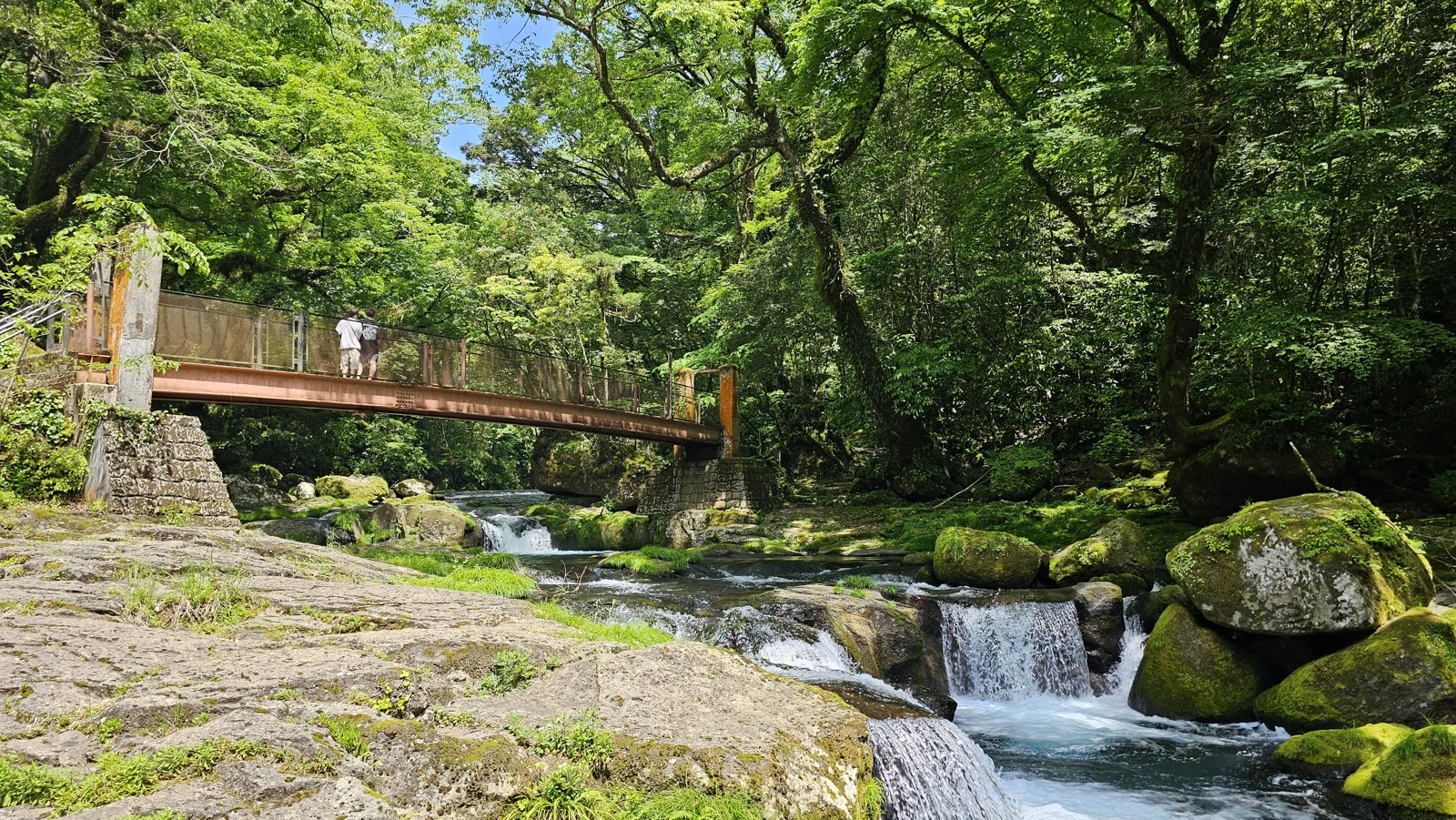
The short route passes Reimei Falls and Momijigase, crosses the bridge at Ryugabuchi, takes in Tengu Falls and returns toward the entrance. It combines waterfalls, a deep pool and shaded paths over a short distance. It works for visitors returning to Kumamoto that day, or using a shared taxi with limited time in the gorge.
The long route continues from Ryugabuchi to Yonjusanman Falls and Hirogawara. Cross the bridge to the viewpoint, turn back there, then follow the hillside path to rejoin the short route near Tengu Falls. Make Hirogawara your main goal for a more open river view. If light, weather or someone’s condition changes, turn back rather than rushing to complete the full route.
Do not estimate valley walking time as if it were a flat city street. Allow a buffer for slippery ground, children and photographs. With older companions, plan the short route first and decide near the junction whether to extend it. Parts of the longer route wind along the hillside. Shoes with grip matter more than light sandals.
The opening part of Kumamoto Prefecture’s northern-region experience video features a walk beside the forest and stream in Kikuchi Gorge. Later sections introduce other places in the Kikuchi River basin.
Choose the 1 km or 2 km trail at Kikuchi Gorge, with Ryugabuchi, Yonjusanman Falls and Hirogawara. Includes 2026 admission, driving and parking, and shared sightseeing taxi reservations.
Near the entrance: Kakemaku Falls and Reimei Falls
Before starting the trail, look at Kakemaku Falls from the bridge beside the entrance. The official guide identifies it as the gorge’s highest waterfall. It lies below the bridge, where you can look down at water falling along the rock face like a curtain. Keep space clear for people crossing and stay behind the railings when taking photographs.
There is also a stone weir built for hydroelectric power. Its curved form differs from the natural rock walls, and water flows down its face when levels are sufficient. Identify the built structure and natural riverbed from the path without entering the water.
Farther into the gorge, Reimei Falls is surrounded by water, moss and rock walls. The official explanation links its name to spray resembling morning mist. The Japan Tourism Agency’s trail guide identifies this as a bridge crossing on the short route. Watch the flow of people on the bridge and wait for space before stopping for photographs. Avoid setting up equipment that occupies a narrow path for a long time.
Momijigase lies upstream of Reimei Falls. Look beyond the canopy: in autumn, fallen leaves, green moss and water create contrasts at ground level. Foliage timing depends on that year’s weather; consult recent local reports around the time you book. In spring and summer, focus on fresh leaves and shade rather than seeking the same photographs in every season.
Tengu Falls, Ryugabuchi and Yonjusanman Falls
Ryugabuchi is the short route’s turning point. The official account tells of a dragon once living here; nearby Tengu Falls drops about 8 m. View the waterfall and pool from a safe place on the trail, then decide whether to return on the short route or continue upstream. If your group walks at different speeds, discuss the next stretch at this recognizable point instead of expecting everyone to commit to the whole route at the start.
Upstream, Yonjusanman Falls spreads across the stream in several forms rather than dropping as one tall, straight waterfall. The official guide gives two explanations for its name: 430,000 votes in a scenic-site poll, or an average daily water volume of 430,000 koku. Treat these as different accounts rather than selecting one as settled fact. Water levels change the view too. In March 2026, management reported low water upstream after unusually little rain, showing that the same spot can have different flows on different visits.
Upstream is Hōgantsuki, a tree whose roots, according to the official explanation, enclose a boulder left by an Aso eruption and exposed through erosion. Tsuki is another name for a zelkova tree. Unlike a waterfall, this sight rewards a slower look at the relationship between roots and rock. Observe from the existing path without climbing the roots. Seeing it before continuing to Hirogawara helps connect the forest and volcanic landforms instead of merely stopping for a photograph at each site.
Hirogawara is farther upstream. Its view is more open than the stretches enclosed by trees and rock walls, and it is a main stop on the long route. The Japan Tourism Agency identifies the viewpoint beyond the bridge as the long route’s turnaround. Allow photograph time here, but keep enough time to walk back and meet your transport. Waiting for the light must not make you miss a reserved return ride.
When to visit: staffed season and scenery
The official staffed season is April 1–November 30 each year, 8:30–17:00. Entry remains possible outside that period, but staff are not stationed there. A first visit, especially with children or when you need on-site information, is easier to support during the staffed season.
Spring brings fresh green leaves. In summer, walk under the trees beside the stream, but swimming is prohibited, so do not plan a dip to cool down. Autumn suits foliage and gorge views; keep dates flexible if leaves are your priority. Rime ice may appear in winter, but without staff on site, assess that day’s roads, weather and your walking ability. Winter entry needs a separate decision from an ordinary summer walk.
Heavy-rain warnings, strong winds, rockfalls, fallen trees or surrounding road closures can close the gorge. Management announced an entry ban in September 2026 and lifted it the following day. Read its current notices before leaving instead of relying solely on an older travel account. If closed, choose indoor attractions in Kumamoto or central Kikuchi. Do not cross a closure barrier.
Driving: entrance, parking and travel time
The management office is at 5026 Haru, Kikuchi, Kumamoto. The official site warns that some car navigation systems do not locate it accurately. Compare roads and the entrance using Kikuchi Gorge Management Office on Google Maps before leaving. Official driving estimates are about 1 hour 30 minutes from JR Kumamoto Station, 1 hour from Kumamoto Airport and 50 minutes from Ueki Interchange. Add time for rental collection and return, parking and breaks.
Parking is free. Parking Lot 1 has about 80 standard spaces and 7 large-vehicle spaces. Parking Lot 2 has about 45 spaces, and the central lot about 300; the latter two serve busy periods. The official FAQ marks the old path from the central lot to the gorge as impassable because earthquakes and heavy rain damaged its shoulders and wooden bridges. Follow staff directions when using a busy-period lot rather than assuming the old map’s path is open.
Management’s 2025 reopening announcement concerned paths inside the gorge. The old connecting path from the central parking lot remains listed as impassable.
For a driving day trip, leave Kumamoto, walk the short or long trail in the morning, rest at the entrance visitor center, then have lunch in central Kikuchi. If staying around Aso the previous night, fit the gorge into your transfer day to Kumamoto. Keep luggage out of sight in the car, and use actual road conditions to decide whether to add other sights.
The source of the Kikuchi River: water and rock
Kikuchi Gorge lies on the northwestern side of the outer Aso mountains. Small mountain streams join upstream to form the Kikuchi River, which flows toward the Kikuchi Plain and Ariake Sea. The Japan Tourism Agency’s geological explanation says the soft water passes through old volcanic rock layers and contains little magnesium or calcium. In some areas, pale bedrock and light reaching the bottom give the water a blue appearance.
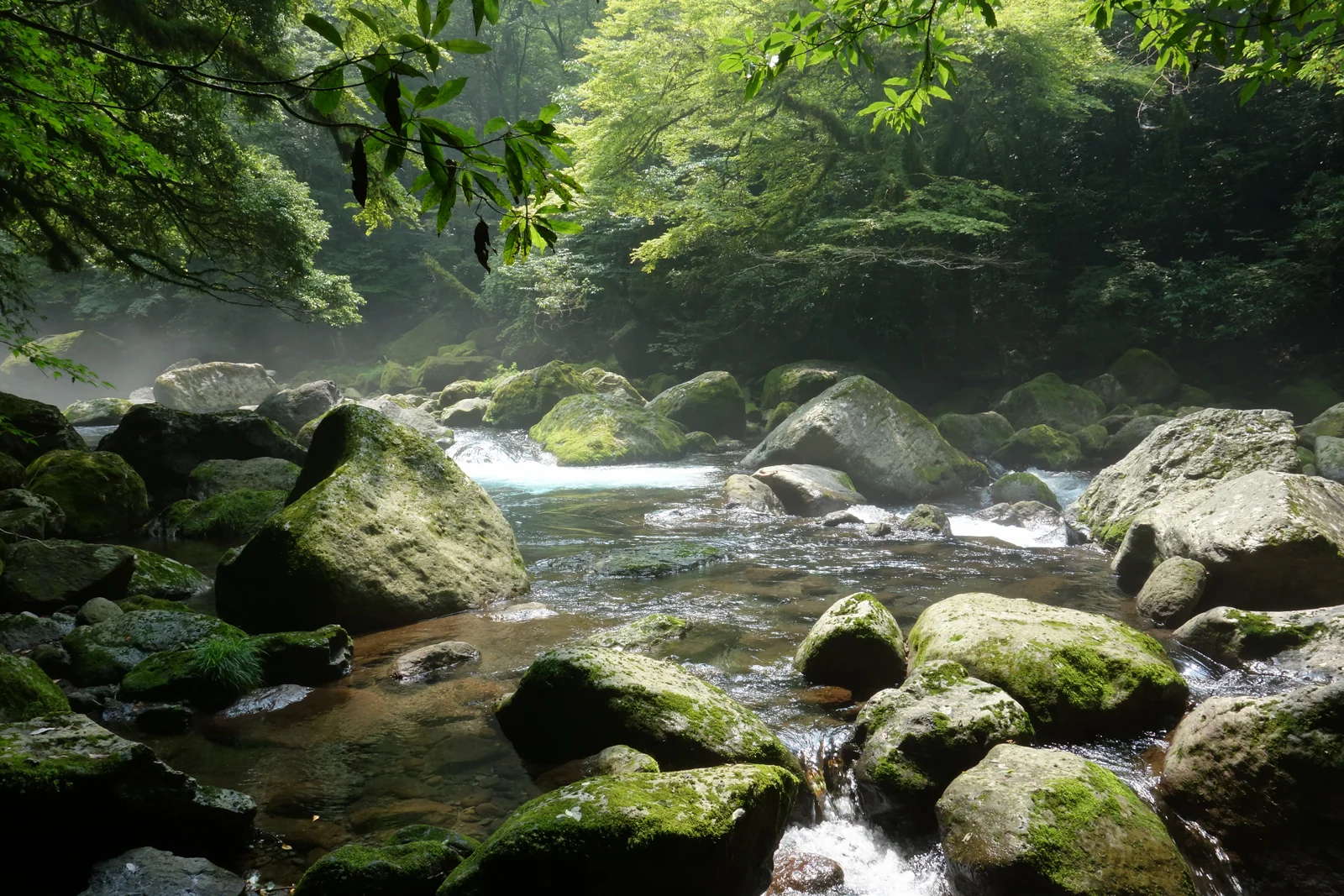
The rocks also explain the waterfalls. Volcanic material from Aso’s ancient major eruptions accumulated while hot and fused into welded tuff. Cooling and contraction created cracks. Water entered them, rocks fell away and long erosion formed cliffs and waterfalls. From the trail, look at large boulders and vertical cracks in the rock walls. You can see how landforms divide the flow without leaving the path to approach the rocks.
Elevation changes along the gorge, and so does the forest. The Japan Tourism Agency describes cool-climate woodland upstream and evergreen broadleaf forest downstream. The short route concentrates on pools and shallows near the entrance. The long route gives more time to observe changes in woodland, slopes and water. The Ministry of the Environment includes Kikuchi Suigen among its 100 selected waters. This recognizes the source environment; bring your own drinking water for the visit.
Slow down for leaves, moss and birds
The visitor center near the entrance is about 500 m above sea level, and the upper end of the gorge about 800 m. The Japan Tourism Agency describes vegetation rising from evergreen broadleaf trees to deciduous trees such as zelkova and maple, then beech forest in the colder upper reaches. On the visitor trails, notice differences in leaves and the light reaching the forest floor.
Damp rock faces and branches also reward attention. The agency describes threadlike moss growing on branches and rocks, and iwatabako, a plant of moist rock faces, with small pale-purple star-shaped flowers in summer. Observe possible examples from the trail. Do not step into water or vegetation for identification or close-up photographs, and do not pick flowers.
You often hear birds before seeing them. The agency records more than 60 species living in or visiting the gorge through the year. Late spring and summer bring migratory birds, including the blue-and-white flycatcher with its clear song. Activity changes with season and local conditions. With children, shift the aim from finding a named species to distinguishing water, birdsong and woodland sounds. Pause quietly where you will not obstruct others.
The Kikuchi Tourism Association lists reserved guided gorge walks: about 1 hour for the short tour and 2 hours for the long tour. These exceed the independent walking estimates because the guide stops to explain. Confirm the meeting place, language, fee and finish time before booking transport. With a shared taxi, match the tour’s duration to the last return service.
Another name on maps can cause confusion: the Kyushu Nature Trail. The Ministry of the Environment’s Kikuchi Gorge exploration route runs from the gorge entrance through Fukaba and Kabutoiwa to Uchinomaki, about 15.5 km one way. It differs from the 1 km and 2 km walks here, which return to the entrance. Ordinary day visitors should not follow signs toward Uchinomaki simply because they say “nature trail.” Near Hirogawara, use the gorge map to choose the return path to the entrance.
Without a car: shared sightseeing taxi from central Kikuchi
Kikuchi city’s Kikuchi Kanko Ainori Taxi has a gorge route that requires advance telephone reservation. The city’s published 2026 fare is ¥900 per person one way. It runs Saturdays, Sundays, national holidays, substitute holidays and Golden Week. There are New Year suspension dates; ask the reservation center about your specific date for early-year trips. Call 0968-26-5022 between 7:00 and 19:00.
First check buses from Kumamoto to central Kikuchi, then choose both outbound and return gorge services from the city timetable. Give the travel date, passenger count, designated boarding and alighting points, and return needs when reserving. Other passengers’ stops and traffic can affect travel time. To cancel, contact the center during reservation hours.
The sightseeing service and residents’ everyday transport have similar names but different operating days and reservation numbers. The same city page also lists weekday local transport; do not treat it as the weekend gorge sightseeing route. For a weekday visit, arrange an ordinary taxi in town and agree on the destination, return pickup and price before riding. Do not assume a taxi will be waiting at the gorge entrance.
From JR Kumamoto Station to central Kikuchi, find Kumamoto Dentetsu bus stop 2. Look for C1-2 or C3-2 toward Kikuchi Plaza, or C1-3 or C3-3 toward Kikuchi Onsen / Shimin Hiroba-mae. Compare your alighting stop with the reserved sightseeing taxi’s boarding point. Similar names do not mean they use the same platform. Kumamoto Dentetsu publishes stop timetables; use the weekday, Saturday or Sunday/holiday column for your date.
For example, in the shared-taxi timetable currently linked by the city, service 2 leaves Dentetsu Plaza at 10:30 and reaches the gorge at 11:00, with reservations closing at 9:00. Service 3 leaves the gorge at 14:00 and reaches Dentetsu Plaza at 14:30; return reservations close at 13:00. This gives about 3 hours in the gorge for the long walk and rests. The last return leaves at 15:30, with reservations closing at 14:30. Leave transfer time between the Kumamoto bus and shared taxi.
The shared taxi costs ¥1,800 per person round trip. Add ¥500 gorge admission for high-school students and older, totaling ¥2,300. This excludes the bus between Kumamoto and Kikuchi, meals and other spending. For several travelers, compare the combined cost with an ordinary taxi quote or total rental-car cost. Include fuel, road charges other than parking and insurance for a rental, and consider whether the driver wants to make the mountain-road journey both ways.
Example: arrive at 11:00 and leave at 14:00
Using weekend service 2 in and service 3 out gives 3 hours for the long route. At 11:00, read entry notices, use the facilities and take a trail map. Walk to Reimei Falls and Ryugabuchi, then continue to Yonjusanman Falls and Hirogawara if weather and everyone’s condition allow. The reference walking time is 1 hour 20 minutes. Divide the rest among photographs, rests, the visitor center and an early return to the pickup point. Adjust stops to your group’s pace.
For slower walkers or a short-route day, you do not need to fill all 3 hours with sights. Rest at the visitor center and read its displays afterward, or ask whether you can change to an earlier reserved service. Vehicles and seats remain subject to the reservation center’s arrangements; a requested change is not automatically confirmed. Check your agreed pickup location and be there on time.
For lunch or shopping in central Kikuchi, reserve a return drop-off at Onsen-gai Bussankan, then take a later bus to Kumamoto. If you have a Shinkansen, flight or dinner booking that evening, work backward from that fixed time. Allow for the trip to Kumamoto, the bus wait and the return from the mountains. If delayed earlier, cut free shopping first rather than shortening transfers.
The taxi reservation deadline is not the time your bus reaches Kikuchi. If connecting from a Kumamoto bus, complete the telephone booking before the stated deadline. Do not wait until getting off the bus to find the number. Explain both journeys and their boarding and alighting points on the call, and record the confirmed times. If some companions want the product hall and others Dentetsu Plaza, say so when reserving.
The city page states that congestion, disasters and weather can affect service. If the return changes, contact the reservation center about your booked service before adjusting onward travel from Kumamoto. Keep your phone charged and booking details available while waiting at the entrance. Store contact details for time-sensitive tickets or accommodation where you can find them easily.
Staying a night in Kikuchi
Stay in central Kikuchi if you prefer not to make the whole return trip from Kumamoto in one day. Visit Shimin Hiroba, the product hall or Kikuchi Shrine on the first afternoon, then go to the gorge the next day. Return to your hotel or town for luggage before leaving. If dinner is included at your lodging, check the final check-in and meal times before booking and place the gorge visit where it will not pressure your arrival.
Check the hotel’s position relative to shared-taxi stops and bus stops. Save the walking route to the boarding point and allow time when pulling luggage. Ask about luggage storage and transfers before deciding whether to leave bags in Kumamoto, bring them to Kikuchi or drive them to your lodging. For a transfer, ask about the return as well as the outbound journey.
The interval between arrival and your reserved return must cover the trail estimate, the walk to the pickup point and a suitable buffer. Choose the short Ryugabuchi route for a brief visit. For the Hirogawara route, include photographs and the walk back to the entrance. If you arrive later than planned, shorten the walk rather than rushing on mountain paths.
Admission, visitor center and preparation
Official 2026 admission is ¥500 per person for high-school students and older; parking is free. Kikuchi Gorge Visitor Center beside the entrance provides visitor information and sells local products, light meals and salt-grilled yamame trout. Check its opening information if planning to eat there. Do not rely on shops midway along the trail. Prepare drinking water and essential personal items before starting.
Some areas have fast water and slippery ground. Wear shoes with grip and covered toes, and slow down further after rain. Management prohibits swimming, pets, bringing in or collecting plants and animals, smoking, fires and camping. Drone use involves national authorization. Hold children’s hands and stay on the paths. Do not approach the water or cross railings for photographs.
The visitor center opens April–November, 8:30–17:00, and closes December–March. It describes a gorge-facing rest area, visitor information and a nature observation room. When no activity is taking place, the observation room can be used to rest or enjoy the view. If time is short, walk first and use the remaining time for information and shopping back at the entrance. If your group separates, agree to meet at the entrance or center and tell everyone the return transport time.
The center also describes an open space beneath the first floor where you can look down into the gorge and hear the stream from a different angle than the trail. Keep it as an entrance-area stop after your walk if you want another view of the water. The information and activity area has a Kikuchi sightseeing video and travel brochures, plus seasonal activity and natural-environment information. Find material here before deciding what plants to observe or which town attractions to visit on the return.
Rain, children and different walking speeds
Light rain at departure differs from an official entry ban following a heavy-rain warning. For light rain, assess slippery surfaces and your group’s footwear. For a ban, change the plan. Even when open, you can walk only as far as conditions allow on the short route, then retrace your steps and move lunch to a sheltered town location. If mountain visibility is poor or notices report rockfalls or road closures, address access roads and the return journey first. You need not reach the entrance before deciding.
Families with young children can use the short-route estimate, then add time for stops, drinks and care. Bridges and slippery surfaces mean the practical distance depends on the child’s walking ability and conditions. Ask the management office which sections a stroller or wheelchair can use: 0968-27-0210. Outside the staffed season, contact Kikuchi city’s Tourism Promotion Division instead at 0968-25-7223.
If some people want photographs and others a stroll, walk together to Ryugabuchi and plan the remaining time where you do not block the path. Those continuing can take the long route; others can rest in a safe place or return to the entrance. Set a clear meeting time. Everyone must know the return arrangement. Shared sightseeing taxis require reservation, so “we will call one later” cannot replace advance coordination.
Central Kikuchi afterward: local products, footbath and shrine
Without a car, use the shared taxi’s Onsen-gai Bussankan stop to spend more time in town. Kikuchi Tourism Product Hall is near Shimin Hiroba. The tourism association lists 9:00–17:30, closed on two or three Wednesdays each month and on December 31 and January 1. It sells Kikuchi rice, Matsukaze sweets, yuzubeshi and farm produce. Shopping here before the bus to Kumamoto is easier to arrange than squeezing it in immediately after the gorge walk.
Shimin Hiroba also has a free footbath, listed by the tourism association as open 10:00–18:00. Bring a small towel for a short rest after the gorge, then take the return bus from the Shimin Hiroba area. For a full hot-spring bath, choose a separate day-use facility and check its bathing hours and price.
For a cultural stop, visit Kikuchi Shrine. The tourism association dates it to 1870 and names Kikuchi Taketoki, Takeshige and Takemitsu as its principal deities. The history museum displays documents, Noh costumes and masks associated with the Kikuchi clan. Admission is charged: the association lists ¥500 for adults, ¥200 for high-school and university students, and ¥100 for elementary- and junior-high-school students. Ask at the shrine office to visit. In spring, consider the approach and Kikuchi Park’s cherry blossoms too. This town extension is optional and should not cost you your reserved return ride from the gorge.
Waifu Ichibankan displays information on Kikuchi place names, local history, culture, industry and the Kikuchi clan. It suits a town itinerary when the gorge is closed, or visitors interested in history after the short trail. The tourism association lists Monday closure, moving to the next day if Monday is a holiday, plus December 28–January 4. Check opening days for a rainy-day backup so it is usable when needed.
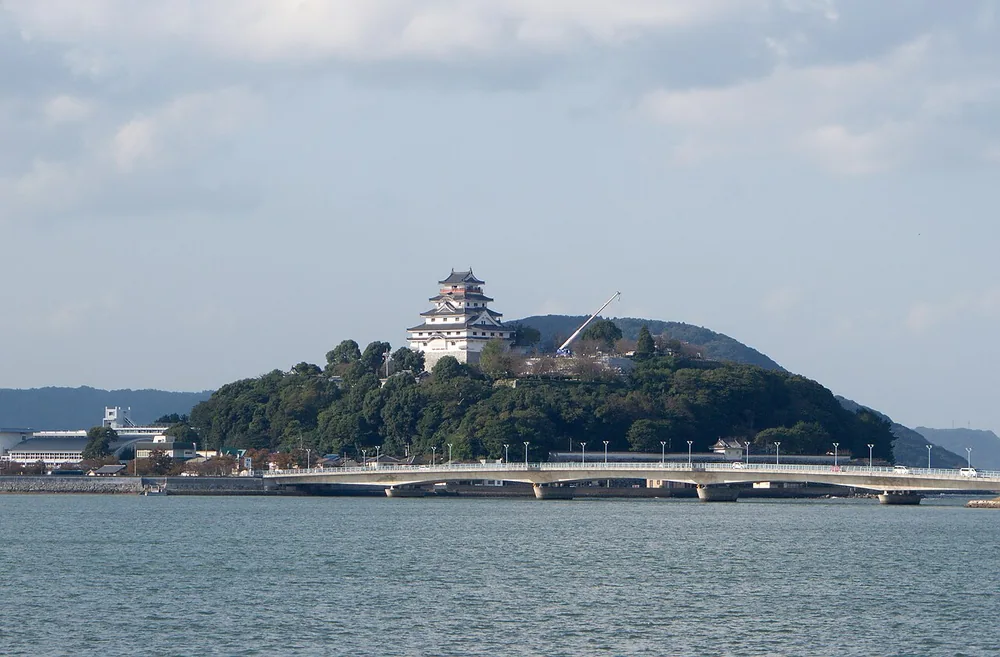
Drivers interested in ancient mountain fortresses can instead choose Kikuchi Castle Historical Park and Onko Soseikan in Yamaga. Models, excavated objects and videos explain the fortress’s period, structure and archaeological findings; the second floor overlooks the park. Entry is free. Hours are 9:30–17:15, last admission 16:45. It closes Mondays, or the next day after a Monday holiday, and December 25–January 4. Free volunteer guides require reservation two weeks before the planned visit.
Kikuchi Castle and the Kikuchi Shrine history museum differ in subject and location. The former covers an ancient mountain fortress and archaeology; the latter holds Kikuchi clan objects. With little time after the gorge, choose whichever fits the route, interests and departure time. Travelers without a car can check the city’s separate Kikuchi Castle sightseeing taxi line, but it needs its own reservation. Do not assume a direct connection between the two attractions.
Which locations should you save before leaving?
For driving, save Kikuchi Gorge Management Office. For food or shopping, also save Kikuchi Tourism Product Hall. The hall and Shimin Hiroba are in central Kikuchi; the management office is at the gorge entrance. They need separate map pins.
For public transport, save the Kumamoto Dentetsu timetable for Kikuchi Plaza and Kikuchi city shared-taxi information. The first gives route-bus directions and times; the second provides the sightseeing taxi’s booking number and timetable. Screenshots of your chosen services help with offline reference.
If visiting Kikuchi Shrine or Onko Soseikan, save them separately too. Their closures, admission and exhibitions differ: Kikuchi Shrine’s history museum is in Kikuchi, while Onko Soseikan is in Yamaga.
A few useful answers
How do I get to Kikuchi Gorge from Kumamoto without a car?
Take a bus from stop 2 at JR Kumamoto Station toward Kikuchi Plaza, then a shared taxi from Kikuchi. It runs on weekends, public holidays and their substitutes, and during Golden Week, at ¥900 a person each way in 2026. Call 0968-26-5022 to book both rides ahead and arrange pickup and drop-off.
How long is the drive to Kikuchi Gorge, and is parking free?
The drive takes about 90 minutes from JR Kumamoto Station, an hour from Kumamoto Airport, or 50 minutes from the Ueki interchange. For directions, look up the Kikuchi Gorge management office at 5026 Hara, Kikuchi. Parking is free.
How long do the short and long trails at Kikuchi Gorge take?
The short route is about 1 km and takes around 40 minutes, crossing the bridge at Ryugabuchi and returning via Tengu Falls. The long route is about 2 km and takes around 80 minutes, passing Yonjusanman Falls and turning back at the viewpoint across the bridge at Hirogawara. Allow time for photos and breaks.
When is Kikuchi Gorge open, and how much is admission?
The staffed season runs from April 1 to November 30, with opening hours from 8:30 a.m. to 5 p.m. In 2026, admission is ¥500 per person for visitors of high school age and up. You can still enter from December to March, when the gorge is unstaffed.
Official information and references
Sources used in this guide.
- Kikuchi Gorge official information and notices
- Official trail map
- Japan Tourism Agency trail explanation
- Kikuchi city shared sightseeing taxi
- Kumamoto Dentetsu bus boarding at Kumamoto Station
- Kikuchi Plaza timetable
- Ministry of the Environment: Kyushu Nature Trail
- Japan Tourism Agency: gorge geology
- Water in the gorge
- Japan Tourism Agency: plants
- Birds of the gorge
- Kikuchi Tourism Association guided walks
- Kikuchi Tourism Product Hall
- Town footbath
- Kikuchi Shrine
- Waifu Ichibankan
- Kikuchi Castle Onko Soseikan
- Kikuchi Gorge FAQ: old central parking path closure
- Kikuchi Gorge 2026 opening and admission announcement
- Kikuchi Gorge Visitor Center opening information