Shuri Castle’s Seiden opens at noon on November 23, 2026. Compare interior reservations and regular paid-area tickets, opening hours, cancellation deadlines, access from Shuri Station, free gates, reconstruction exhibits, accessibility, Tamaudun and the stone-paved road.
- Region & Focus
- Naha
- Reading Scope
- 35 min read · 16 chapters · 4 Q&As
- Official Verification
- 20 official sources checkedUpdated October 26, 2026
- Key Topics
- ItinerariesBookingNeighborhoods
Chapter Route Map (tap any stop)
- Choose your route by date: closed November 22, reopening at noon on November 23
- What the admission ticket covers, and what an interior reservation adds
- Booking on Webket: choose a slot, then check your group
- Changes and refunds: decide two days before an interior visit
- Opening, last entry and the final interior slot: four times to distinguish
- The first free-area stops: Shureimon, the stone gate and Kankaimon
- Uphill past a spring and clocks, then on to tickets and admission
- Connect the exterior views with the reconstruction exhibits
- Before entering the Seiden: reconstruction and the World Heritage remains
- By monorail: choosing Shuri or Gibo Station
- Driving to Suimuikan: rates, the three-hour request and no car reservations
- With children, wheelchairs or older relatives, start at Suimuikan
- Fit meals, tea and lockers around your Seiden slot
- Two half-day routes with time to stop
- Add Tamaudun: the royal tombs beyond the palace
- The stone-paved road and dusk: save your return route before descending
- Quick Q&A
Shuri Castle’s Seiden opens to the public at noon on November 23, 2026. Reserve a date and time to enter the interior. Before then, focus on the gates, walls and reconstruction exhibits. Plan the uphill walk from Shuri Station to Hoshinmon Gate, ticket-change deadlines and rest stops for your family to make a full half-day visit to Shuri.
Choose your route by date: closed November 22, reopening at noon on November 23
The Seiden opens to the public at 12:00 on November 23, 2026. For an October 2026 visit, the interior is still closed. Focus on the gates, castle walls, reconstruction exhibits and elevated viewing deck. From November 23, visitors who want to go inside must first secure a date and time slot.
The official temporary closure notice states that the entire park, including the paid area and all park facilities, will close for the whole day on November 22. On November 23, the free area within the castle walls opens at 11:15, and the paid area opens at 12:00, when public access to the Seiden interior also begins. If your flights fall on this weekend, visit other parts of Naha on the 22nd and keep Shuri for the afternoon of the 23rd. Do not arrive expecting the usual 8:00 opening.
After November 23, you can still visit only the free gates or buy a paid-area ticket without an interior reservation. Decide whether your priority is the building’s interior, the materials used in reconstruction, or a half-day introduction to the castle grounds. That choice will help you decide whether to change your date, pursue a particular time slot or add Tamaudun. If the Seiden interior comes first, arrange meals and nearby walks around the slot you have secured.
Shuri Castle’s Seiden opens at noon on November 23, 2026. Compare interior reservations and regular paid-area tickets, opening hours, cancellation deadlines, access from Shuri Station, free gates, reconstruction exhibits, accessibility, Tamaudun and the stone-paved road.
What the admission ticket covers, and what an interior reservation adds
Shuri Castle Park has free and paid areas. Shureimon Gate, Sonohyan Utaki Stone Gate and some paths toward the castle can be visited during free-area opening hours. You need a Shuri Castle admission ticket to pass the ticket check at Hoshinmon Gate and enter the paid area. A photo stop at Shureimon is free; entering the paid area requires a ticket. Tamaudun has a separate admission charge.
Individual admission through November 21, 2026 is ¥400 for adults, ¥300 for high school students and ¥160 for elementary and junior high school students. From November 23, it rises to ¥1,000, ¥760 and ¥370 respectively. Children under six enter free. The new price is the same with or without Seiden interior access; a reserved interior slot costs no extra. Calculate your family’s admission using your visit date. Under the new rates, two adults and one elementary school student pay ¥2,370 in total. An accompanying child under six pays no admission fee.
The two ticket products offered from November 23, 2026 have very similar names. The admission ticket with a Seiden interior reservation covers the paid area and the Seiden interior; you choose a date and a 30-minute time slot when buying it. The ticket without a Seiden interior reservation covers the paid area, exterior views and related exhibits, but does not grant interior access. Read the full description in parentheses on your mobile order. A heading that says only “Shuri Castle admission ticket” does not tell you whether an interior visit is booked.
The new standard annual pass costs ¥2,000 for adults, ¥1,520 for high school students and ¥740 for elementary and junior high school students. Okinawa residents have a separate annual-pass rate. Short-stay visitors making one visit can usually compare single-entry tickets. Annual-pass holders must still reserve an interior slot. Apart from preschool children, visitors eligible for free admission also need a reservation and the applicable official proof. Arrange this so your family can enter in the same slot and stay together at admission.
| Visit date | Adult | High school student | Elementary/junior high school student | Under six |
|---|---|---|---|---|
| Through November 21, 2026 | 400 | 300 | 160 | Free |
| From November 23, 2026 | 1,000 | 760 | 370 | Free |
Booking on Webket: choose a slot, then check your group
The official reservation guide links to Webket. Tickets with interior access are sold on a first-come, first-served basis. Admission from November 23 through December 31, 2026 went on sale in two releases, at 13:00 on September 1 and October 1. For admission from January 1, 2027 onward, sales open at 13:00 on the first day of the month two months before the visit month. For example, February 2027 visits go on sale at 13:00 on December 1, 2026. All release times are in Japan Standard Time (JST), so convert them to your local time zone.
List the dates and morning or afternoon windows your family can use, then choose an available slot on the calendar. If Shuri is a half-day stop in Naha, a nearby lunch is easier to move than an attraction in another city. If you have an evening flight, allow for airport travel after your reservation; do not put the last interior slot just before departure. After purchase, read the date, ticket type, visitor count and time slot on the order. Make sure the person leading the group knows the booking details too.
Tickets without an interior reservation go on sale one month before the visit date. You can also buy them online or at the ticket counter on the day. For a last-minute interior visit, same-day tickets are available online or at the Kofukumon ticket office until 15 minutes before the slot starts, only if spaces remain. Places may sell out while you queue. Plan around the ticket you have secured when you arrive. If interior slots are full, continue with the exterior and exhibits rather than spending the whole afternoon at the ticket office.
If you bought an official Webket ticket without interior access by mistake, the official process is to cancel it and book the product with an interior reservation again. Changes at the counter on the day also depend on availability. Check the new slot’s remaining places and the outcome of the old order’s cancellation before handling payment, so tickets for two different dates do not remain in your account. Keep the old and new order numbers separately so companions use the correct QR code.
Groups of ten or more use a dedicated application process; group admission rates apply only from 20 people. Advance group reservations for the Seiden interior are not accepted for November 23 through December 6, 2026. Applications for visits from December 7 are handled in stages. If you travel with friends, charter a bus or join a guided tour, obtain the specific interior arrangements from the organizer. Bus parking, group admission and Seiden interior access each have separate procedures. After arranging one, check the other two.
Changes and refunds: decide two days before an interior visit
Official Webket tickets with an interior reservation allow date and time changes through the day before use, but no changes on the visit day. The refund deadline is two days before use. Tickets without an interior reservation allow date changes and refunds through the visit day; requests stop the next day. This is a practical difference between the products: a fixed interior slot gives you less flexibility for a late itinerary change.
For example, for a November 30 interior reservation, request a refund by November 28, or change the date and time by November 29. If you already know on the 28th that your flight, health or accommodation plans have changed, deal with this ticket first, then adjust restaurants and neighborhood walks. By the visit day, the refund deadline for an interior ticket has passed. Under the official process, a ticket without interior access can be canceled until 23:59 that day. For orders from other sellers, use the procedure specified by that seller.
If companions bought tickets separately, find a new slot with space for everyone before changing the bookings. After adjusting lunch or other plans, recalculate the walk to Hoshinmon Gate and the Seiden waiting line.
Opening, last entry and the final interior slot: four times to distinguish
From July 2026, seasonal hours use two periods: April–November and December–March. From April through November, the free castle area opens 8:00–19:30 and the paid area 8:30–19:00, with ticket sales and admission ending at 18:30. From December through March, the free area opens 8:00–18:30 and the paid area 8:30–18:00, with ticket sales and admission ending at 17:30. The parking garage has its own closing time. If you want to photograph the walls after dark, include both leaving the park and collecting your car in the plan.
For the final interior visit from April through November, the official slot is 18:00–18:29. You must pass Hoshinmon Gate by 18:30 and enter the Seiden by 18:40. From December through March, the final slot is 17:00–17:29, with Hoshinmon entry by 17:30 and Seiden entry by 17:40. Follow any more specific meeting instructions on your order. Calculate arrival at the free area or parking garage separately from completing the ticket check and reaching the Seiden entrance.
An evening slot suits visitors already in central Naha who can reach Shuri early. An earlier afternoon slot gives you more time to study exhibits, stop for tea and see the evening light. If you only secure the final slot, visit the other paid-area exhibits first, then follow the interior route at your assigned time. Shops, the tea house and restaurants usually close before the castle area. Eat dinner in the city; the paid area’s 19:00 closing time does not mean you can still have a leisurely meal inside.
For November 22 and the morning of November 23, use the special notice discussed earlier. On arrival, read the signs at the entrance and ticket check, then follow the route for your ticket type. Allow time for temporary safety controls. Families with limited time can drop walks outside the castle and focus on the reserved interior visit and their preferred exhibits.
The first free-area stops: Shureimon, the stone gate and Kankaimon
Start from the Suimuikan side at Shureimon Gate, continue past Sonohyan Utaki Stone Gate, then head for Kankaimon Gate. The route connects royal welcomes, prayer and the castle entrance. There is no need to memorize every name. Children can compare the materials of the red wooden gate and the stone gate, then look up at the bends in the walls.
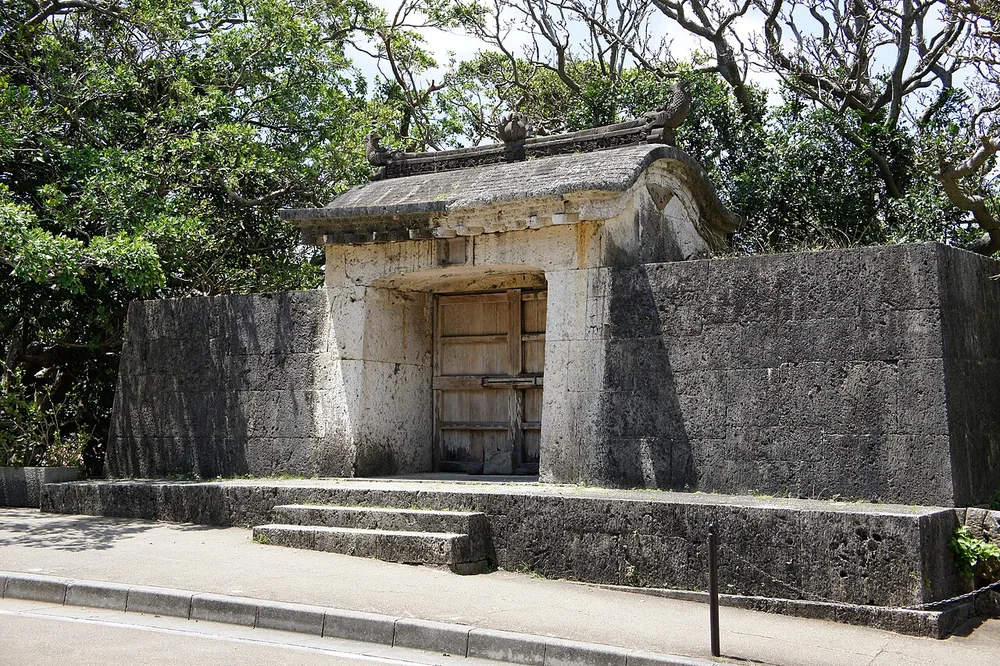
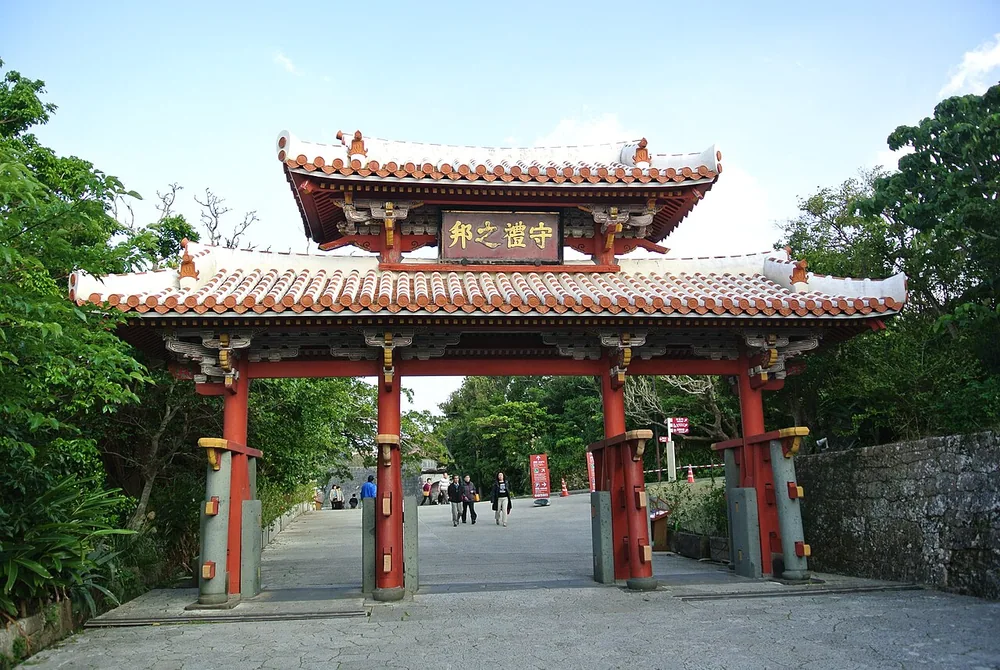
Shureimon’s plaque means “a land of propriety.” The gate takes the form of a Chinese-style ceremonial arch. The structure seen today was reconstructed in 1958 and appears on the ¥2,000 banknote. Include the roof, pillars and plaque in your photo. After taking a picture beneath it, move aside to keep the route clear.
Sonohyan Utaki Stone Gate stands between Shureimon and Kankaimon. It was built in 1519, and the king prayed here for safe travel before leaving. Although shaped like a gate, it serves as a place of worship. View it together with the grove behind it. Stone forms a roof and details resembling wooden architecture, so look closely at its outline. Read the sign from the public path and respect the sacred space.
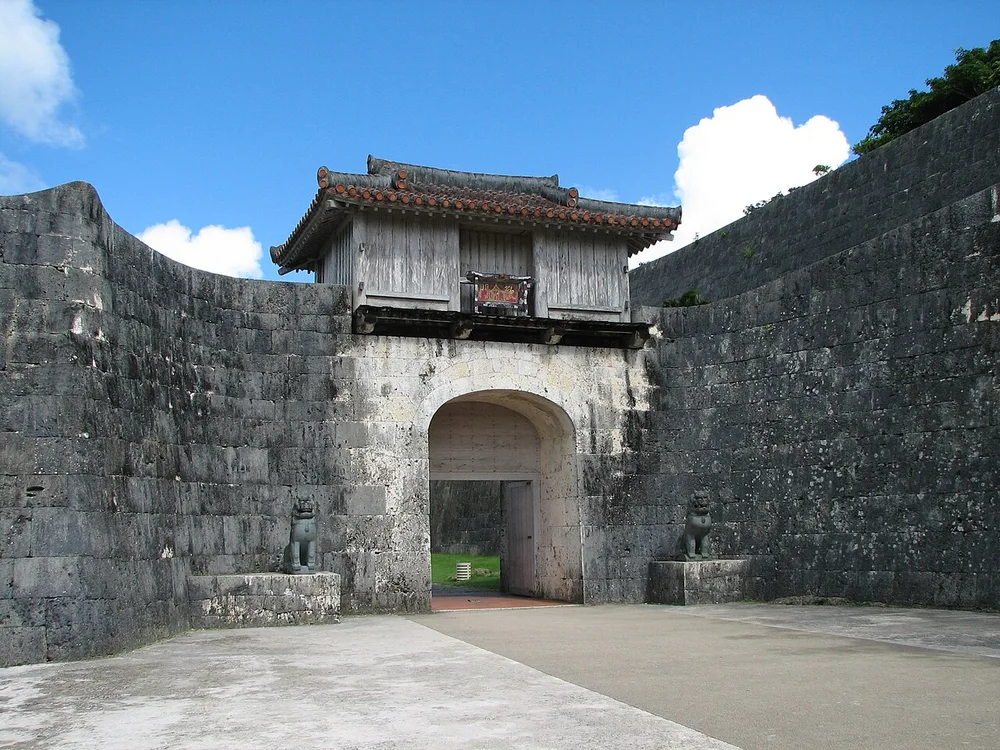
Kankaimon is the first main gate of the outer enclosure; its name expresses a welcome to visitors. A wooden gate tower stands above the stone arch. Look at the stone lions on either side and the lines of the walls. Steps lie ahead toward Zuisenmon. For fewer steps, collect a map at Suimuikan or use the park’s digital map and follow the accessible route toward Shicha-nu-Una. Visitors using mobility aids can take that route instead of the main stairway.
Uphill past a spring and clocks, then on to tickets and admission
At Ryuhi, look at the dragon-shaped water outlet, then up at Zuisenmon Gate. The gate’s name comes from this spring. The official account says its water supplied the palace and was carried to the lodgings of Chinese investiture envoys. Use the stop to understand how the palace obtained water. Bring your own bottled drinking water and replenish it at rest stops.
Farther up stands Rokokumon Gate, named for a water clock. Water levels once measured time, which drums and bells then announced inside and outside the castle. The nearby Nichieidai is a sundial. Seeing both helps explain the castle’s administration and daily operation better than hurrying through the gates. Children can look for the direction of the shadow, but must stay behind barriers and off the stone platform.
Around Kofukumon Gate, buy tickets and use the restrooms before looking around Shicha-nu-Una. Kofukumon once housed offices responsible for temples and shrines and for property disputes among the warrior class. It still provides visitor services. Along the castle route, ceremonial symbols sit alongside the needs of work and daily life; look at both as you walk.
Enter the paid area through the ticket check at Hoshinmon Gate. If you have an interior reservation, have your QR code ready. After the check, join the Seiden waiting line for your assigned slot. Hoshinmon was the last gate before the Una courtyard in front of the Seiden, and access through its central and side openings once depended on rank. Follow the route open on your visit day. Keep the ticket lane clear when reading signs or taking pictures.
Connect the exterior views with the reconstruction exhibits
From October 2026 until the Seiden opens, the official current-highlights page lists the elevated viewing deck as a place to see the reconstructed roof and decorations. Access to the construction viewing area inside the protective shelter ended in June 2025. Older travel reports showing the steel shelter help explain the construction process. For a current visit, connect the elevated deck with the exhibition rooms. Interior access begins November 23; an October route stays outside the building.
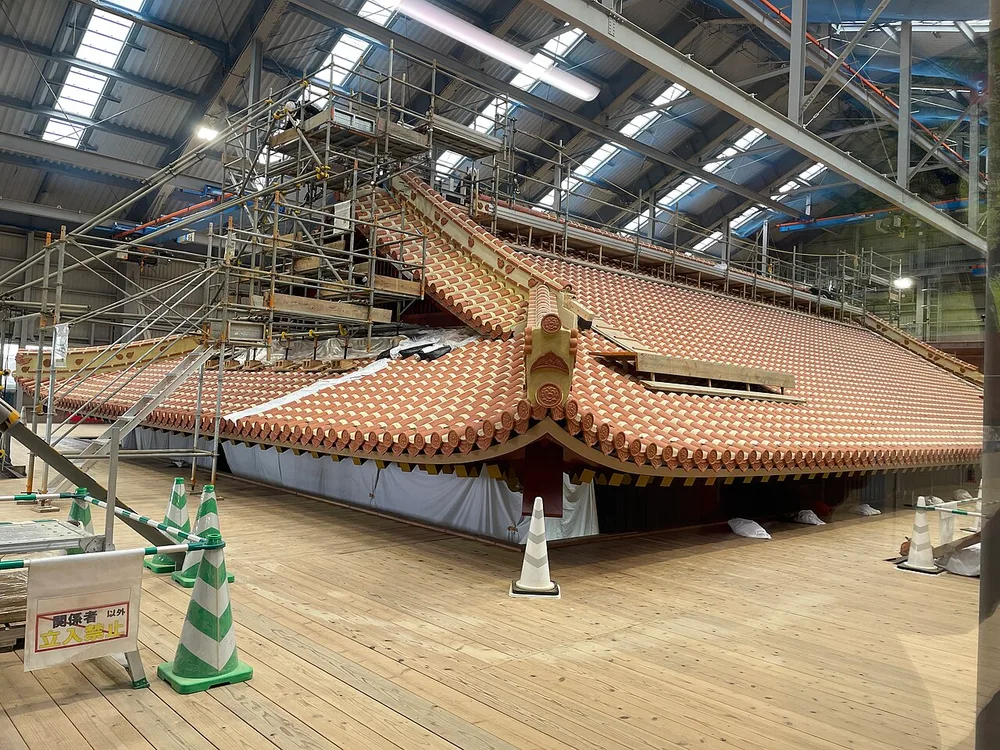
The Shuri Castle Reconstruction Exhibition Room displays lion roof tiles that survived the fire, reconstruction information panels and trial versions of decorative elements. Look at the roof and exterior from the deck first, then compare the explanations of tiles, pillars and carvings inside. This connects details seen at a distance with physical objects. If companions have different levels of interest in history, agree on an exhibit as a meeting point. Keen readers can stay longer while others rest without waiting in a passageway.
Yohokoriden is also in the paid area. The official introduction uses decorative prototypes and explanations to show differences between the Heisei and Reiwa reconstructions. Study the photographs and models, then look back at the building to see how reconstruction involves choices of materials and techniques. When displays discuss roof dragons, front porch pillars or lacquer colors, choose one or two details you understand and read closely. You do not need to read every panel word for word.
If time permits, continue to the Agari-no-Azana viewpoint to see the walls, Seiden and city together. For shopping or a break, visit Museum Shop Kyuyo inside the Nyokan Kyoshitsu. A ticket without an interior reservation also covers these open paid-area facilities. You can use your time here instead of waiting for a Seiden vacancy. With older relatives or small children, choose either the viewpoint or shopping and save some energy for leaving the park.
Before entering the Seiden: reconstruction and the World Heritage remains
The Shuri Castle Seiden was the kingdom’s central building for politics and ceremony. The sequence of gates helps explain its role: welcome at Shureimon, prayer at Sonohyan Utaki, access by rank at Hoshinmon, then the Seiden. Connecting these spaces in one walk shows how the castle served government, diplomacy and religious life.
The World Heritage inscription covers the Shuri Castle site. The Seiden foundation remains are an important cultural property within it. The park explains that the foundations reflect at least seven rebuilding phases. Those remains record changes across successive buildings, while the reconstruction before you represents restoration work from another period. The original buildings were damaged in the Battle of Okinawa, reconstructed in the Heisei era, then burned again in 2019 before the Reiwa reconstruction began. Read the dates on interpretation panels so photographs from different periods do not become confused with the present building.
The official estimate for the Seiden interior is about 15 minutes. Your overall visit also needs time for park entry, walking, waiting and other exhibits. Inside, look at the layout, lacquer colors and architectural details while following the prescribed route. Spend longer in the exhibition rooms before or afterward if you want to read about reconstruction. Architecture enthusiasts can visit the exhibits first to recognize components inside. For a first impression without background reading, visit the interior first and read about the materials afterward.
The park’s short video accompanies the introduction to the castle grounds and buildings. Use this guide’s ticket information to plan the date and route for a Seiden interior visit.
By monorail: choosing Shuri or Gibo Station
For most first visits, use Yui Rail Shuri Station as your starting point and follow the main roads to Shureimon. The monorail’s website presents it as an approach from the east side of Shuri Castle Park. The station has elevators and an accessible restroom. The Naha tourism association gives a walk of about 15 minutes from Shuri Station to Shureimon. That estimate ends at the gate. For an interior visit, the park’s recommended slot of 40–50 minutes after your expected arrival at Shuri Station better allows for the full route.
To shorten the walk, compare buses from Shuri Station to the Shurijo-mae or Shurijo Koen Iriguchi stops. The tourism association lists about a one-minute walk from Shurijo-mae to Shureimon and about five minutes from Shurijo Koen Iriguchi. These are different stops. Enter the full stop name and direction in your route planner. At the stop, check the bus number, destination and arrival information. If the wait is long, the weather is suitable and everyone can manage the walk, walking may be more predictable.
Yui Rail Gibo Station is on the north side of the park. The official introduction describes historic sites and long-established shops nearby, plus transfers to intercity buses coming from central and northern Okinawa. It suits a route that includes northern Shuri. For a first visit with a fixed interior slot, the approach from Shuri Station to Shureimon is easier to follow. If returning via Gibo, first check exits and usable roads on the park map. Allow for the walk to the station rather than estimating from a straight line across the walls.
From central Naha, you can take the monorail in one direction and a bus or taxi in the other, but choose your return pickup point first. For strollers and wheelchairs, station elevators solve access between platforms and street level; the castle slopes still require a separate route choice. To minimize walking throughout, plan both the final leg from the station and the accessible route inside. If eating before the interior visit, leave for Shuri when the meal ends. Avoid fitting bus waits, lunch and check-in into the same hour.
Driving to Suimuikan: rates, the three-hour request and no car reservations
Set your destination to the Suimuikan parking garage, which connects directly to Suimuikan. The official page says ordinary cars cannot reserve in advance and enter according to available spaces. P1 connects to basement level 1 and P2 to basement level 2; parking arrangements may also change with bus use. You can check current parking status on the official website before your visit. Follow staff directions on arrival and use a legal private lot nearby if the garage is full.
From April 1, 2026, small cars pay ¥500 for the first 60 minutes, then ¥250 for each additional 30 minutes, capped at ¥1,000. The park also asks visitors to limit parking to three hours. Visiting the castle, Tamaudun, lunch and the stone-paved road can easily exceed that period. For a longer neighborhood walk, finish the castle visit, collect your car and arrange parking for the next destination. The fee cap does not mean you can leave your car at Suimuikan all day.
The garage opens 8:30–19:30 from April through November and 8:30–18:30 from December through March. For an interior visit, the official recommendation is a slot 30–50 minutes after your expected arrival near the park. This allows for parking, walking from the car to the gate, tickets, admission checks and reaching the Seiden. Arrive earlier at Suimuikan if companions need more time to get out of the car or collect a wheelchair. Allow separate time for borrowing equipment and the uphill route.
Large buses, minibuses and vehicles with a Japanese number-2 registration, including Hiace Commuter models, use the bus parking reservation system. This differs from an ordinary rental car. For a charter, have the operator handle the vehicle application while you check the interior tickets. Families with luggage can leave it at their accommodation or use Suimuikan lockers, reducing the load carried uphill. Collect stored items before leaving in the afternoon, then return together to the correct parking level.
With children, wheelchairs or older relatives, start at Suimuikan
The general information counter on basement level 1 of Suimuikan is a useful starting point for routes, equipment loans and luggage storage. Here and at the Hoshinmon information counter, the park lends wheelchairs, walking sticks and strollers free, on a first-come basis on the day, without reservations. Electric wheelchairs are available only at Suimuikan. Arrive early if you need equipment. Ask about the paid area, your Seiden slot and the route with the fewest steps when collecting it.
The park has ramps, elevators, accessible restrooms and an accessible sightseeing route. Use the official low-step route with a stroller. At difficult stair sections, take an alternative route or have a caregiver carry the child; wheelchair users should follow usable ramps and elevators. Allowing more time to reach the ticket office is easier than folding a stroller and redistributing bags at a staircase. Anyone who wants less walking strain can use the same easier route without needing a wheelchair.
Baby-care rooms are in three locations: basement level 1 of Suimuikan and the Keizuza/Yomotsuza building in the free area, and Yohokoriden in the paid area. Feed and change your child in the free area before the reservation, then choose a rest stop based on your location afterward. If a child needs sleep, shorten the next exhibition stop or walk outside the castle. Parts of the route are outdoors. Keep water, sun protection and stroller rain covers within reach, and head to a suitable rest facility in heavy rain.
The park offers a Shuri Castle web app that requires no download. It includes a digital guide map, with audio explanations in Japanese, English, Chinese and Korean at some historic sites. Open the map at Suimuikan and locate yourself in relation to the paid-area entrance. Use headphones for audio. Letting a child choose just one site to listen to can give the next walk a purpose. If someone is hurt or unwell, ask staff at an information counter for help instead of continuing a photo detour before your reservation.
Fit meals, tea and lockers around your Seiden slot
For a full meal, use Restaurant Suimui on the first floor of Suimuikan. The current shop page lists 11:00–17:00, with last orders at 16:30. On the same floor, Cafe Ryuhi opens 9:00–17:00, with last food orders at 16:30. If lunch falls close to your interior slot, eat afterward or before heading uphill. Leave time to reach Hoshinmon and the waiting line.
For a break within the free area, Shuri Castle Tea House is inside Keizuza/Yomotsuza. It opens 9:30–17:30, with last orders at 17:00. The ¥800 tea set includes four kinds of seasonal Ryukyuan sweets and sanpin jasmine tea. It works as a short pause during a visit. Arrange a separate meal if you need lunch. The tea house does not accept reservations; complete your fixed interior visit first, then decide whether to stop based on available seating.
Lockers are on basement level 1 of Suimuikan, at the Kofukumon ticket office and in Keizuza/Yomotsuza. Suimuikan has several sizes, while the other locations offer fewer size choices. Leave large luggage at your hotel where practical and take a small bag into the castle. Consider your return exit when choosing a locker. If you store bags at Suimuikan, collect them there before going to the station or car, rather than reaching the far side of the park and having to backtrack.
Leave souvenir shopping until after sightseeing. Museum Shop Kyuyo is inside the Nyokan Kyoshitsu in the paid area, and Suimuikan also has a shop. When using a locker, keep your QR code, phone, water and children’s essentials with you. For Japan’s 100 Fine Castles stamp, the official FAQ lists the general information counter on Suimuikan’s basement level 1. Get the stamp before entering so you do not have to return to the counter after an evening slot.
Two half-day routes with time to stop
With an interior ticket for November 23 onward, choose a slot 40–50 minutes after your expected arrival at Shuri Station. From Suimuikan, the official total estimate for the interior and other paid-area sights is about 90–120 minutes. That already involves considerable walking. If you also want a meal, tea or close reading of exhibit panels, devote the half-day to Shuri Castle. Arrive at Suimuikan in the morning, store bags and prepare, then visit Shureimon, the stone gate and castle grounds. Complete your reserved interior visit before further exhibits or lunch.
For a 13:00 slot, reaching Shuri Station before 12:00 makes a more relaxed plan. First handle services at Suimuikan, then walk through the free area toward Hoshinmon. Join the Seiden line at the time on your order and leave the Reconstruction Exhibition Room and views for afterward. Choose only one additional stop outside the castle that day to retain time for reading and rest.
Without an interior reservation, or before the November opening, start at Shureimon and climb past Sonohyan Utaki Stone Gate, Kankaimon and Ryuhi. Buy a paid-area ticket if you want the elevated deck and reconstruction exhibits, then return to Suimuikan for a meal. If you visit only the free area, use the remaining time for Tamaudun. Choose between the two paid sites according to your interest in architectural reconstruction or royal tombs.
With small children or older relatives, use Suimuikan as your service base in both directions. Follow the accessible route into the paid area, visit the interior and exhibits, then return for a rest. Save the old road outside the castle for another outing. Photographers can spend a few extra minutes on gates and walls where they do not block passage, and skip a facility if time runs short. Count the whole journey from entering the park to reaching your transport point when planning a half-day in Shuri.
Add Tamaudun: the royal tombs beyond the palace
Tamaudun, at 1-3 Shuri Kinjocho, was built in 1501 by King Sho Shin to rebury the remains of his father, King Sho En. It later became the mausoleum of the Second Sho Dynasty. Shuri Castle explains government and ceremony; Tamaudun shows royal burial and remembrance. If Ryukyuan history interests you, visiting after the castle continues that subject more directly than another distant viewpoint.
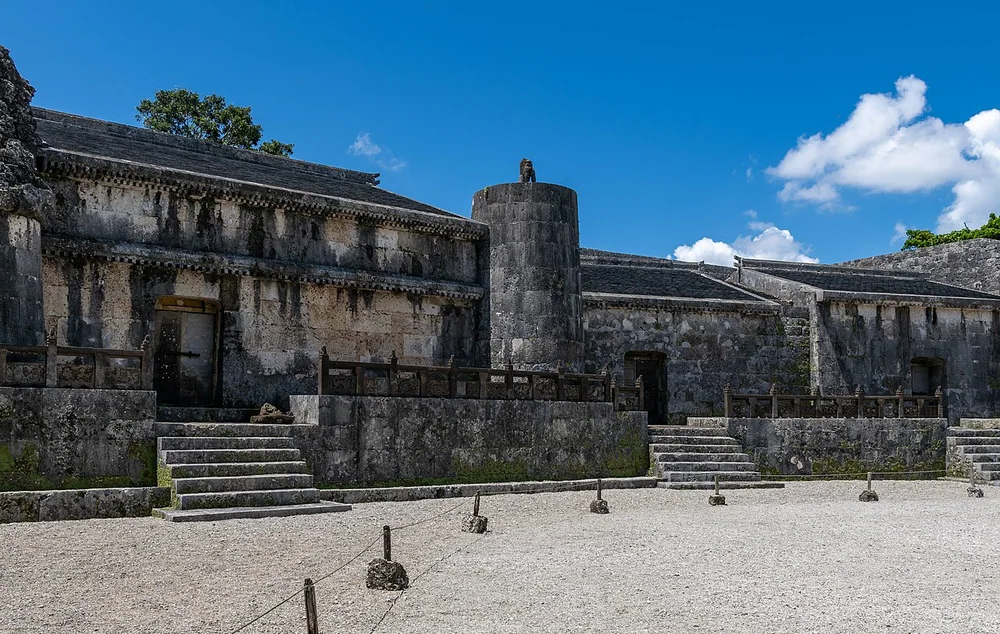
Naha City’s current visitor information lists hours of 9:00–18:00, with last admission at 17:30, open year-round. Individual admission is ¥300 for adults and ¥150 for junior high school students and younger. Preschool children accompanied by a guardian enter free. Tamaudun charges separately from Shuri Castle; buy the appropriate ticket at its entrance. Two adults and one elementary school student pay another ¥750. Keep this separate from the castle admission in your budget.
The stone buildings, front and rear gates and exhibits suit a quiet, unhurried visit. Treat the mausoleum respectfully. Read explanations from open visitor areas and allow time for anyone who wants to look closely. If children are already tired from the castle, explore one of the two sites in depth and leave the other for another visit, rather than rushing in just before the 17:30 admission deadline.
With a fixed interior slot, Tamaudun is easier to fit afterward. If visiting Tamaudun first, work backward from the walk needed to reach Hoshinmon to set your departure time. Drivers should also allow for Suimuikan’s three-hour parking request. If the plan will exceed it, collect the car after the castle and arrange parking for the next part.
The stone-paved road and dusk: save your return route before descending
The Shuri Kinjocho stone-paved road forms part of the Madama-michi route. The Naha tourism association records a surviving stretch of 238 meters. It is short, but the stones and slope affect walking speed. Approach its upper entrance from the castle and Tamaudun side. Walk only as far as you are willing to climb back, then return to the same entrance and your transport point. If you choose to descend the whole stretch, save the return transport from its lower end first so you do not have to search for a bus stop at the bottom.
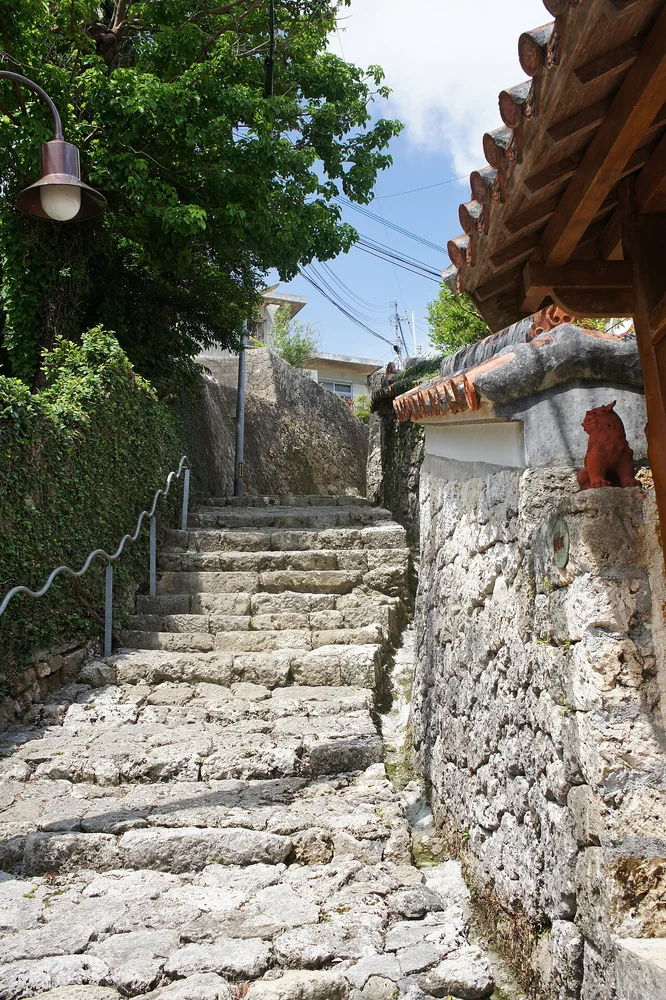
After rain, the stones become slippery. With a stroller or wheelchair, returning to the station along main roads is more practical. Children should not chase each other on the slope. Take photos without blocking residents. This is a lived-in neighborhood; keep doorways, gardens and spaces beside parked vehicles clear for households. A short walk is enough to see the streetscape. Leave pottery or large shopping bags at your accommodation or a storage point to keep your hands free.
If you are still in the park toward evening, choose the Iri-no-Azana viewpoint for views toward Naha. Wall lighting starts after sunset; check seasonal closing hours before walking back. If you plan dinner in the city after dusk, head directly to your chosen station or pickup point and leave the stone-paved road for daylight. Stay out of closed areas after dark and do not climb the walls for a photo angle.
Park rules prohibit entry to closed areas, damage to stonework and picking plants. Smoking, including electronic cigarettes, is prohibited outside designated smoking areas. Roller skates, skateboards and balance bikes may not be used to travel around the park. Take your time walking, while keeping entrances and passages clear. Finish by collecting bags at Suimuikan, checking that everyone is together and returning to Naha.
A few useful answers
Can I enter the Seiden in October 2026?
The interior opens to the public at 12:00 on November 23, 2026. In October, visit the castle areas, elevated viewing deck and reconstruction exhibits open at that time. The entire park is closed November 22.
Can I wait for Seiden access with a regular paid-area ticket?
A ticket without an interior reservation covers the paid area and exterior views. Interior access requires the product with an interior reservation. If spaces remain on the day, you can buy it online or at the Kofukumon counter until 15 minutes before the slot begins.
How much time should I allow after reaching Shuri Station?
The park recommends an interior slot 40–50 minutes after your expected arrival at Shuri Station. From Suimuikan, its total estimate for the Seiden interior and other paid-area sights is 90–120 minutes.
Do children who enter free need an interior reservation?
The official rule exempts preschool children from the reservation requirement. Other visitors eligible for free admission and annual-pass holders still need reservations. Check each companion’s eligibility and required proof when booking.
Official information and references
Sources used in this guide.
- Shuri Castle Park: Seiden reservations, prices, visit duration, changes and refunds
- Shuri Castle Park: temporary closure November 22 and the morning of November 23
- Shuri Castle Park: opening hours, young children, services and FAQs
- Shuri Castle Park: current seasonal opening hours
- Shuri Castle Park: current paid-area admission
- Shuri Castle Park: gates and spring before the Seiden
- Shuri Castle Park: Shicha-nu-Una, Hoshinmon and viewpoints
- Shuri Castle Park: reconstruction progress and recovery exhibits
- Shuri Castle Park: Yohokoriden and the Reconstruction Exhibition Room
- Shuri Castle Park: World Heritage status and foundation remains
- Shuri Castle Park: accessibility services
- Shuri Castle Park: baby-care rooms, luggage storage and digital map
- Shuri Castle Park: current shop and restaurant hours
- Shuri Castle Park: 2026 parking fees and rules
- Shuri Castle Park: park rules
- Yui Rail: Shuri Station
- Yui Rail: Gibo Station
- Naha City Tourism Association: Shuri Castle access and the final bus leg
- Naha City: Tamaudun hours and admission
- Naha City Tourism Association: Shuri Kinjocho stone-paved road