Wondering when to visit Showa Kinen Park and which gate to use? Here is how to get there via Tachikawa, Nishi-Tachikawa, and Sunagawa Gate, plan half-day routes for tulips, hydrangeas, cosmos, and winter plum blossoms, and choose between cycling, playgrounds, or lakeside walks.
- Region & Focus
- Tokyo
- Reading Scope
- 16 min read · 13 chapters · 6 Q&As
- Official Verification
- 23 official sources checkedUpdated November 22, 2026
- Key Topics
- SeasonsItinerariesRail travel
Chapter Route Map (tap any stop)
- Pick Your Month First, Then Pinpoint the Flower Fields
- Three Spring Waves: From Cherry Blossoms to Tulips and Flower Hill
- June in the Flower and Tree Garden, Plus Midsummer Around Nishi-Tachikawa
- Yellow Cosmos Slopes in September, Pink Cosmos and Kochia in October
- November Foliage Hunts and Quiet Winter Walks After December
- Coming From Shinjuku by JR: Match Your Station to Your Gate
- One-Way Half-Day Traverse vs. In-and-Out at One Gate
- Biking Between Zones: Fast Transfers, Parking Rules, and Return Deadlines
- Park Train and Step-Free Accessibility
- Toddlers by the South Lawn, School-Age Kids in Children's Forest
- Japanese Garden, Bonsai, and Musashino Farmhouses as Stand-Alone Highlights
- Tickets, Hours, and Lunch on One Timeline
- Ending in Downtown Tachikawa: Exit via Tachikawa Gate
- Quick Q&A
If you can pick your month for a first visit to Showa Kinen Park, early to mid-April lets you start with the tulips near Nishi-Tachikawa Gate before heading to the Open Field for a picnic. For hillside carpets of yellow blooms in September, entering from Sunagawa Gate on the north side puts you much closer to Flower Hill. If you are visiting with toddlers or older adults, Waterfowl Pond, the Flower and Tree Garden, and the playground on the south side of the Open Field easily fill half a day. Because paid gates separate the stations from the flower fields, be sure to factor in walking time inside the park.
Pick Your Month First, Then Pinpoint the Flower Fields
Spanning Tachikawa and Akishima on the grounds of the former Tachikawa Airfield, Showa Kinen Park covers roughly 180 hectares according to park figures. Entering from the Tachikawa side brings you straight to the Canal and fountains, while the Nishi-Tachikawa side opens onto Waterfowl Pond. Flower fields wrap three sides around the central Open Field (Minna no Harappa), and the northern end holds Flower Hill, the Japanese Garden, and Children's Forest. Picking one specific park zone for the day works far better than navigating to the park's main street address.
Use the seasonal bloom calendar to choose your travel month. During the week of your trip, check the park's Hanadayori bloom report and pick your gate based on the latest photo dates, tagged locations, and peak-bloom status. A status of "just starting" (saki-hajime) means it is best to wait for fresher photos before committing half a day, while "past peak" (migoro-sugi) is your cue to pivot to the next flower blooming nearby. If a single update features several species, check the location caption under each photo so you do not mistake shots from different zones for one continuous trail.
For a half-day visit, anchor your plan around one main sight and one nearby rest spot, then add another flower bed on the same side if time allows. For a full day, tackle the farthest or highest-priority zone in the morning, break around midday near the central Open Field, and work your way back toward your exit gate in the afternoon. The Flower and Tree Garden and Waterfowl Pond are easy to cut short and turn back from, whereas Flower Hill sits far to the north—walking there and back from Nishi-Tachikawa Gate takes over an hour gate-to-gate.
| Timing | What to See | Where to Check First |
|---|---|---|
| Late March to mid-April | Yoshino cherry blossoms followed by tulips | Sakura Garden, Old Sakura Garden, Stream Square |
| Mid-April to May | Nemophila or poppies, depending on annual planting | Open Field West Flower Field, Flower Hill |
| June to August | Japanese irises, hydrangeas, lotuses, or sunflowers | Flower and Tree Garden, Waterfowl Pond area, designated seasonal plots |
| September to October | Yellow cosmos, pink cosmos, and kochia | Flower Hill, Open Field East Flower Field, Herb Hill |
| November | Golden ginkgo avenues and red Japanese maples | Canal, Katarai Ginkgo Avenue, Japanese Garden |
| December to February | Wintersweet, plum blossoms, plus late-winter winter aconite and Amur adonis | Around Waterfowl Pond, Flower and Tree Garden Plum Grove, Komorebi no Sato |
Wondering when to visit Showa Kinen Park and which gate to use? Here is how to get there via Tachikawa, Nishi-Tachikawa, and Sunagawa Gate, plan half-day routes for tulips, hydrangeas, cosmos, and winter plum blossoms, and choose between cycling, playgrounds, or lakeside walks.
Three Spring Waves: From Cherry Blossoms to Tulips and Flower Hill
From late March to mid-April, the park's main cherry blossom spots are Sakura Garden and Old Sakura Garden. Sakura Garden sits beside the Open Field, where low-hanging branches on mature trees make it an easy place to pause, rest, and meet up. Old Sakura Garden lies near the Flower and Tree Garden—if you want a lakeside stroll as well, enter via Nishi-Tachikawa Gate and walk past Waterfowl Pond first. Families bringing just a picnic mat and kids who need space to run can head straight for Sakura Garden and use the Open Field.
If tulips are your priority, look for the Tulip Garden at Stream Square (Keiryu Hiroba). The 2026 Flower Festival listed bloom times from early to mid-April, featuring 260 cultivars. An April 9 bloom report noted that tulips were already at peak while Yoshino cherry blossoms in both sakura gardens were past peak, leaving late-blooming varieties as the main option for cherry-blossom hunters. Tulip beds wind along a curving stream, so standing on the opposite bank frames the flowers, water, and shoreline in one shot. Official walking estimates are about 10 minutes from Nishi-Tachikawa Gate and 25 minutes from Tachikawa Gate, counted after entering the park. Starting at Nishi-Tachikawa lets you reach Stream Square first, linger if the blooms look great, and move on to the Open Field for family photos or lunch.
In late April and May, shift your focus to the Open Field West Flower Field and Flower Hill to the north. The 2026 spring photos and bloom schedule placed nemophila (baby blue eyes) at the Open Field West Flower Field from mid-April to mid-May, with Shirley poppies and baby's breath blooming on Flower Hill in May. Always check that year's planting map once your dates are set. When nemophila is blooming, linking Nishi-Tachikawa Gate, Stream Square, and the Open Field flows naturally; when poppies cover the slope on Flower Hill, a half-day loop from Sunagawa Gate saves you from trekking across the entire park.
In early April, cherry blossoms and tulips can overlap. If you came specifically for one of them, make it your first stop right after entering so you can shorten the second stop if you linger over photos or on the lawn—looping the opposite end first eats into unhurried time along the stream. Paths near the stream can get slick in the rain, so wear shoes with good grip, stay on the walkways when framing shots, and leave room for others to pass when you stop.
June in the Flower and Tree Garden, Plus Midsummer Around Nishi-Tachikawa
Once the rainy season arrives, walking from Nishi-Tachikawa Gate into the Flower and Tree Garden brings you to waterside blooms. Japanese irises are listed for mid-May to mid-June in both the garden's iris field and the Japanese Garden. The hydrangea path stretches from the north slope of Fureai Square toward the Flower and Tree Garden Exhibition Hall, typically peaking from mid-June to mid-July. When the two overlap, use the Exhibition Hall as a midpoint: follow the hydrangeas toward Fureai Square, then loop back to Waterfowl Pond.
From mid-June to mid-July, visitors also come specifically for lotuses. Head to Komorebi no Sato to see pond-grown lotuses, or check Sazanami Square for potted displays; the iris field in the Flower and Tree Garden also grows water lilies, distinguishable by the V-shaped notch in their leaves. Since the park recommends viewing both lotuses and water lilies in the morning, put flowers first and look for shade or lunch outside the gate before noon if you are juggling kids' nap schedules.
For sunflowers, check the current year's plot notice before going. In 2026, large-headed sunflowers were planted in part of the Open Field South Flower Field and were already past peak by the August 6 report, whereas the multi-branching "Apollo" variety bloomed longer. Check that week's photos for the large varieties if you want classic tall blooms. For a quick summer stroll from late July onward, crape myrtles along the slope north of the Canal make an easy one-hour outing in and out of Tachikawa Gate.
The former Rainbow Pool and water play plaza have permanently closed, though the park is planning new water-play spaces near Akishima Gate. On hot summer days, build a family half-day around the lakeside, shaded playgrounds, and a sit-down lunch instead. Children's Forest has the Mist Forest and a spray plaza—when they are operating, pack a towel and spare clothes, and plan a separate swimming pool visit if your kids want actual swimming. In high heat, stick close to an exit: staying on the Nishi-Tachikawa side makes an early retreat to the train much easier than trying to cover Flower Hill, the lawn, and the playgrounds all at once.
Yellow Cosmos Slopes in September, Pink Cosmos and Kochia in October
The park's 2026 cosmos map splits autumn blooms across distinct fields. "Lemon Bright" yellow cosmos on Flower Hill—projected from mid-September to early October—offers the cleanest full-hillside sweep. It sits roughly four minutes from Sunagawa Gate: take in the width of the blooms from the base first, then climb the open paths if energy allows. If you have a stroller or limited time, you can still frame wide golden shots from the bottom, and Komorebi no Sato is right nearby for a change of scenery without crossing the Open Field.
Pink "Sensation" cosmos shared the Open Field East Flower Field with red buckwheat in 2026, slated for October in the autumn bloom schedule. In early October that year, the park also announced that prolonged rain and low sunlight slowed growth and shifted flower events to other plots—another reason to verify the current week's photos and notices before expecting pink fields. Meanwhile, the mixed autumn flower beds south of the Open Field ran from late August into October, making them handy to check when combining blooms with playground time.
Kochia (summer cypress) grows on Herb Hill, and timing your visit comes down to color preference. In 2026, the full viewing window ran from August through mid-October, with foliage starting to shift from green to crimson around mid-September. If recent photos only show patchy color, it is still worth visiting if you like the bright green mounds—otherwise wait for a fuller red update or focus on a field already at peak.
To see two autumn zones in one day, circle Flower Hill, Herb Hill, and the Open Field on your map first. When Flower Hill is peaking, start at Sunagawa Gate and walk south toward the center before choosing Nishi-Tachikawa or Tachikawa Gate to exit. If the East Flower Field and a lawn picnic are your main goals, enter via Nishi-Tachikawa Gate, cross to the eastern beds after lunch, and head back the same way. Photographers can linger at one field for better light while keeping the second spot optional if kids finish playing early.
November Foliage Hunts and Quiet Winter Walks After December
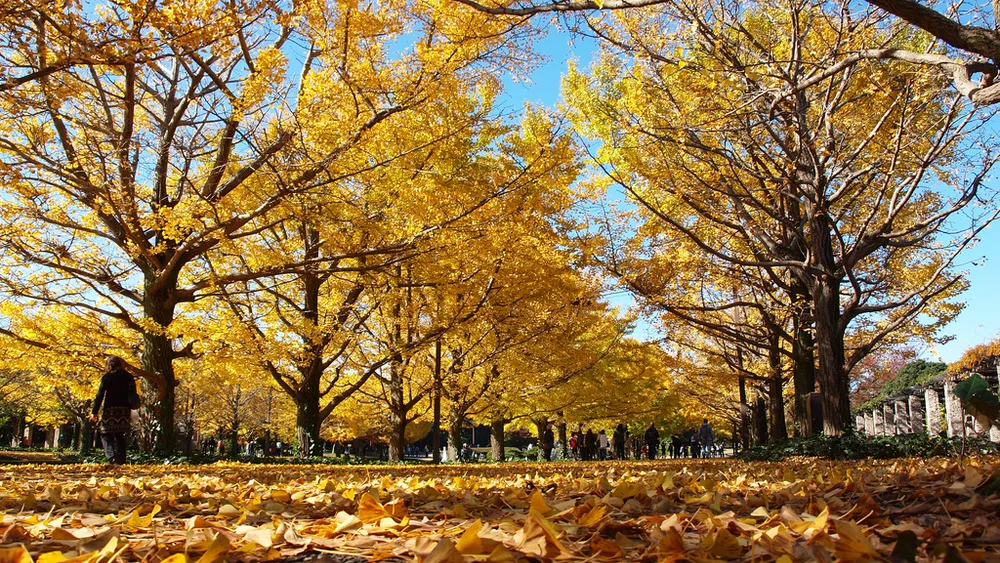
Checking ginkgo and maple foliage means tracking three separate spots: the Canal ginkgoes sit closest to Tachikawa Gate, Katarai Ginkgo Avenue is easier from Nishi-Tachikawa, and Japanese maples peak around the pond banks and wooden bridges of the Japanese Garden. On November 19, 2026, the bloom report noted that wind and rain had pushed both avenues past peak, while ginkgoes near the playground and maples in the Japanese Garden remained vibrant. Go earlier for golden canopies, or slightly later for yellow-carpeted paths and pond reflections.
The 2026 Autumn Night Walk ran from October 29 to November 29, with illuminations from 16:30 to 20:30 and park closing at 21:00. Only Tachikawa and Nishi-Tachikawa gates stay open after dark; standard admission covers both ginkgo illuminations, while evening entry to the Japanese Garden required a separate viewing ticket on all nights except October 29–31. If you are planning an evening visit, see our Showa Kinen Park Ginkgo and Autumn Night Walk Ticket Guide to sequence open gates, timed garden entry, and walking distances. If you enter via Sunagawa Gate by day and plan to stay for lights, route your exit toward the south gates.
From December through February, winter flowers make for short, low-key loops. Wintersweet (soshin robai) typically blooms from late December to mid-February near Komorebi Pond and south of the barbecue area. Plum blossoms in the Flower and Tree Garden run from mid-January to mid-March as early and late cultivars take turns, and in February you can spot low-growing yellow Amur adonis (fukujuso) beneath the plum trees. Tiny winter aconite (setsubunso) appears near the rest house in Komorebi no Sato—about a five-minute walk from Sunagawa Gate—where matching recent report photos helps locate the patches.
Winter itineraries work best when kept simple. Start at Nishi-Tachikawa Gate for Waterfowl Pond and the Plum Grove—if a cold wind picks up, stop at those two spots near the gate, or continue to the Japanese Garden if you want more miles. Alternatively, enter via Sunagawa Gate for winter aconite, rice paddies, woodland paths, and the restored farmhouses. From November to February, the park generally closes at 16:30, and the Japanese Garden and Bonsai Garden close 30 minutes earlier, so schedule the garden around midday and finish by the pond or Flower and Tree Garden near your exit.
Coming From Shinjuku by JR: Match Your Station to Your Gate
From Shinjuku, take the JR Chuo Line Rapid to Tachikawa; for the shortest station-to-gate walk, transfer to the JR Ome Line one stop to Nishi-Tachikawa Station (some Chuo Line trains run directly onto the Ome Line—check platform and onboard destination boards). Exiting Nishi-Tachikawa's Park Exit puts you at Nishi-Tachikawa Gate in about two minutes, making it the best choice for the lakeside, tulips, plum blossoms, the Open Field, and families eager to get inside fast. If anyone in your group is rolling luggage, use coin lockers before heading in, as walking inside the park far exceeds the walk from the train.
Get off at Tachikawa Station if you want to pick up bento lunches, eat dinner nearby afterward, or start directly at the Canal. Official walking times from the JR North Exit are about 10 minutes via Akebono Gate to the free Green Culture Zone, and about 18 minutes to the paid Tachikawa Gate. If map navigation drops you on the free eastern lawn, keep following signs for "Tachikawa Gate" to reach the ginkgo-lined Canal and the bike rental center.
When Flower Hill or Komorebi no Sato is your main target and you want to save steps, take a bus from Stand 2 at the Tachikawa Station North Exit bus rotary that stops at "Showa Kinen Park Sunagawa Gate" (about a two-minute walk from the bus stop to the gate). You can also take the Seibu Haijima Line to Musashi-Sunagawa Station, roughly a 20-minute walk from Sunagawa Gate. If anyone in your group struggles with standing in line for buses, save the return timetable and the Sunagawa Gate stop name beforehand—or weigh whether a steadier walk suits them better.
Drivers should pick their parking lot by destination too. Tachikawa, Nishi-Tachikawa, and Sunagawa gates all have lots at ¥900 per day for standard cars; none take reservations, so check live availability on the park homepage during spring and autumn weekends. Park at Sunagawa Gate for the northern zones instead of pushing a stroller across the park from the south, Tachikawa Gate for the free zone or Canal area, and Nishi-Tachikawa Gate for the lake and Flower and Tree Garden. If your plans shift mid-visit, showing your same-day receipt allows you to move between park lots or re-enter.
One-Way Half-Day Traverse vs. In-and-Out at One Gate
To minimize transfers and walking, enter and exit at Nishi-Tachikawa Gate and pick two stops from Waterfowl Pond, Stream Square, and the Flower and Tree Garden. Official estimates from the gate are about 3 minutes to the pond, 9 minutes to the Flower and Tree Garden, and 10 minutes to Stream Square. Because each figure is measured separately from the gate rather than between sights—and the pond itself is wide—circle exact destinations like the boathouse, cafe, or iris field on your map first.
If everyone is up for a steady walk in spring, enter via Nishi-Tachikawa Gate for the tulips, stop for lunch on the Open Field, and walk out through the Canal and Tachikawa Gate for dinner near Tachikawa Station. Each stop moves you closer to your train home, and lingering on the lawn simply turns the Canal into a relaxed exit stroll. If you also want seasonal blooms up north, check the clock after lunch—climbing to Flower Hill and walking back south eats up time better spent starting at Sunagawa Gate on another day.
A northern-sector day works well starting at Sunagawa Gate for Flower Hill and Komorebi no Sato in the morning, then continuing to the Japanese Garden or Children's Forest in the afternoon as energy permits. Before committing to exiting via Nishi-Tachikawa Gate on the far end, factor in the return leg: the park estimates about 33 minutes from Nishi-Tachikawa Gate to Flower Hill versus about 4 minutes from Sunagawa Gate. If the afternoon turns chilly or kids and older companions tire out, grabbing a snack in the north and returning via Sunagawa Gate beats forcing a full north-to-south crossing.
Even with morning plans in central Tokyo, three hours at the park is still workable. On peak bloom days, subtract gate-to-field walking, viewing time, and the walk back to the exit before budgeting stops for drinks and photos. If you plan to shoot until closing—especially in winter or with strollers and older relatives—work backward from your exit gate on the official map; skipping an extra crossing of the Open Field is the easiest way to save miles.
Biking Between Zones: Fast Transfers, Parking Rules, and Return Deadlines
Renting a bike makes sense if you want to link the western flower beds, the central Open Field, and the northern gardens. The park has roughly 14 kilometers of dedicated cycling paths, with numbered bike parking areas (marked "P") and pedestrian-only walkways shown on the map. Identify the two P-numbered racks near your stops before setting off, lock up at the designated racks when visiting the Japanese Garden, Tulip Garden, playgrounds, or lawn, and walk from there. If you miss a turn, backtrack to the nearest cycling path—never ride on pedestrian paths.
Bike rental centers operate at Tachikawa, Nishi-Tachikawa, and Sunagawa gates, and bikes must be returned to the exact center where you rented them. Standard three-hour rates are ¥600 for adults and ¥350 for junior high students and younger, with overtime charged at ¥100 and ¥50 per 30 minutes respectively. Rentals open at 9:30, with last rental one hour before closing and final return 30 minutes before closing—set an alarm for whichever comes earlier between your three-hour mark and closing cutoff (on a 16:30 closing day, last rental is 15:30 and bikes are due back by 16:00).
A smart way to use a three-hour rental is to ride straight to your farthest stop first and work back toward your rental gate. From Nishi-Tachikawa Gate, for instance, ride up to either the Japanese Garden or Flower Hill, explore on foot from the bike rack, then return to the Open Field for a picnic. If part of your group wants to stay longer after lunch, return all bikes together first and switch to walking by the pond. Keep in mind the rental clock starts at checkout and includes time spent parking, buying drinks, or waiting in food lines.
Child-seat bikes cap the front seat at 15 kg and the rear seat at 21 kg, while standalone kids' bikes start at 18 inches; tandems are also available for riders at least 140 cm tall. Rental centers can store strollers temporarily, though helmets are limited—bringing your own saves time. If your child still uses training wheels or is learning to ride, stick to walking and the playgrounds, as training wheels, practice riding, and pedestrians are prohibited on the bike paths. Check same-day fleet availability by gate on the homepage before heading over.
Park Train and Step-Free Accessibility
To cut down on walking, build the Park Train into your route after checking that day's schedule and stop map. Single rides cost ¥400 for adults and ¥200 for ages 4 through junior high, covering one loop from your boarding stop—getting off mid-loop and reboarding requires another ticket. Use single rides for one-way transfers between zones, or check whether day passes are being sold (sales may be suspended on busy days, and pass holders still queue in order). Carry cash for the daytime Park Train; shuttle buses run during Autumn Night Walk events follow separate fare rules.
Cars accommodate folded strollers and wheelchairs, plus one occupied wheelchair per train. When visiting with a wheelchair user, treat the train as a helpful option rather than a necessity and enter at the gate closest to your first stop—Nishi-Tachikawa Gate is about three minutes from Waterfowl Pond. The park's website provides slope gradient maps and accessible restroom locations; starting near the gate avoids long inclines and ensures you are never stranded if a train is full.
Free manual wheelchairs are lent first-come, first-served at the gates and must be returned to the same gate, so plan an in-and-out route when borrowing one. From Nishi-Tachikawa Gate, you can easily pace visits around the pond, rest areas, and Flower and Tree Garden; adding the Japanese Garden means roughly a 20-minute push north from the gate plus the loop around the garden pond. If the Japanese Garden is your primary destination, Sunagawa Gate is an estimated 15 minutes away—pair it with the park's slope map to pick the flattest path.
When traveling across generations, pick a sharper meeting point than "the Open Field." The lawn stretches roughly 400 meters across, so agree on the central Keyaki zelkova tree, the south concession stand, or a named Park Train stop, and set a regrouping time if splitting up. If half the group visits the Japanese Garden while others sit by the pond, reconvene near your shared exit gate so nobody has to trek back deep into the park for one person's photos.
Toddlers by the South Lawn, School-Age Kids in Children's Forest
For stroller-friendly play, start at Wanpaku Yugu playground next to the Open Field, about a 13-minute walk from Nishi-Tachikawa Gate. Slides, swings, and climbing structures sit in one compact area right beside the lawn for easy breaks. If a toddler falls asleep on arrival, stroll along Waterfowl Pond first and head to the lawn once they wake up. Small packs of diapers are sold at the Open Field south shop and select gates and service counters—check the park's family facilities map for the closest nursing and changing rooms.
School-age kids looking to climb and bounce should head straight to Children's Forest (about 25 minutes from Nishi-Tachikawa Gate, 23 minutes from Sunagawa Gate, or 35 minutes from Tachikawa Gate). The giant white Cloud Sea trampoline dome serves kids through junior high, while the Rainbow Hammock is limited to elementary schoolers and younger; note that the dome closes when surfaces are wet. Pair them with the Forest Fortress, slides, or Moon Hill, and use Mori no Ie for indoor family rest. If the forest playground is the highlight for your kids, tackle it first and save flower beds for later.
Children's Forest generally closes 30 minutes before the park, and the Cloud Sea dome closes 45 minutes before closing—if you arrive in the afternoon, count backward from those cutoffs. When rain keeps the dome closed, the Woodworking Studio offers a fallback for elementary and junior high students, with same-day walk-in registration on weekdays and volunteer-led craft sessions on weekends and holidays. Younger toddlers can still use Mori no Ie or head back to the Open Field playground instead of waiting around.
Keep your summer daypack light based on your route: water, hand towels, and spare clothes cover the pond and lawn, while spare shoes and socks only become essential if you linger in the Mist Forest. To rent boats on Waterfowl Pond, children age 9 and under must ride with someone 16 or older; rowboats seat three and pedal boats seat two, so a family of four will want to pair off ahead of time. If your kids are different ages, one adult can take the older child boating while the other rests lakeside, using the boathouse near Nishi-Tachikawa Gate as an easy rendezvous.
Japanese Garden, Bonsai, and Musashino Farmhouses as Stand-Alone Highlights
Between major flower seasons, make the 6-hectare Japanese Garden your centerpiece. Built as a strolling pond garden, its paths reveal changing views of bridges, teahouses, and tree reflections from every bank. While it is open during daylight hours, step into the adjacent Bonsai Garden to examine Japanese white pine trunks and root structures before returning to the wooden bridge. Picnic mats, tents, and pets are not permitted inside the garden; bring water for hydration and save meals for the Open Field or park restaurants outside.
For traditional Musashino countryside scenery, walk over to Komorebi no Sato beside Flower Hill. Its paddies, footpaths, thatched farmhouses, and homestead groves recreate local rural life circa 1955–1964, offering a sharp contrast to the park's manicured flower beds. The farmhouse compound is closed Mondays (or the next weekday if Monday is a national holiday) and runs from 10:00 to 16:00 March through October, and until 15:30 November through February—even if you arrive late, you can still stroll the paddy paths and gardens around the rest house.
If you prefer woodland trails, walk the gentle slopes of Komorebi Hill, a landscaped rise restored as a Musashino broadleaf forest, with wildflower exhibits at nearby Komorebi no Ie. Stepping under the canopy to spot forest-floor blooms makes a refreshing change from open-field photography. The hill is roughly a 10-minute walk from Sunagawa Gate, making it easy to end your visit at Flower Hill or Komorebi no Sato and catch the bus back to Tachikawa.
Tickets, Hours, and Lunch on One Timeline
Standard admission is ¥450 for high schoolers and adults, ¥210 for visitors 65 and older (ID may be required), and free for junior high students and younger. If you plan to visit two days in a row, a two-day pass costs ¥500 for adults and ¥250 for seniors—handy for splitting Children's Forest and flower viewing or chasing different blooms on day two. Need to step out for lunch and return? Ask gate staff for a same-day re-entry pass as you exit. Transit, parking, bike rentals, and the Park Train are all charged separately.
The paid zone generally opens at 9:30 and closes at 17:00 most days from March to October, extending to 18:00 on weekends and national holidays from April through September. From November to February, closing moves up to 16:30. The park closes December 31, January 1, and the third Monday through Friday of January. Because individual facilities close earlier and special events can alter gate hours, check the opening calendar and homepage notices on the day you buy tickets before locking in your last stop.
For an easy Open Field picnic, pick up shareable rice balls, bento boxes, and bottled drinks around Tachikawa Station, then spread your mat clear of footpaths. Taking the Ome Line one stop to Nishi-Tachikawa after grabbing lunch keeps you from hauling heavy bags all the way from Tachikawa Gate or up to Flower Hill. If you prefer to travel light, cafes and kiosks operate near Waterfowl Pond, the south side of the Open Field, and Stream Square, with additional shops at Children's Forest and Sunagawa Gate for northern afternoons.
On rainy days, pair an indoor visit to the Flower and Greenery Cultural Center in the free Tachikawa zone with a short walk near the gate, or anchor a paid-zone visit around a covered rest area and nearby trails. If skies clear, enter through Nishi-Tachikawa Gate for the lakeside and Flower and Tree Garden—if rain persists, save your picnic for a sunnier day.
Visitors bringing dogs must submit a pet agreement form at the gate and keep pets leashed; dogs are allowed along the pond and designated paths, but not inside the Japanese Garden. For shade on picnics, small pop-up dome tents under 2 meters are permitted in designated areas, while tarps and ground stakes are prohibited—otherwise, simply claim a spot under tree shade or at a park cafe.
Ending in Downtown Tachikawa: Exit via Tachikawa Gate
If you plan to shop or dine in Tachikawa afterward, enter via Nishi-Tachikawa Gate in the morning and exit through Tachikawa Gate around or after lunch. Once you finish near the Open Field, follow the Canal out past the paid gates and through the free Green Culture Zone, passing Yume Hiroba lawn and the Flower and Greenery Cultural Center along the way. Anyone heading back to the city early can walk straight out through Akebono Gate to Tachikawa Station's North Exit without re-entering the paid zone.
If you only have two or three hours for flowers, go in and out via Sunagawa Gate to cover Flower Hill and Komorebi no Sato before heading back to Tachikawa for a meal. Planning to visit Mount Takao on the same trip? Put it on a separate morning—flowers plus a picnic easily fill a day, and saving the mountain for its own morning lets you hike at your own pace.
Even between trains, it is a 10-minute walk from Tachikawa Station North Exit to Akebono Gate and two minutes more to Yume Hiroba. About five minutes past that entrance sits the Flower and Greenery Cultural Center (typically open until 17:00 March–October and 16:30 November–February), which offers Tachikawa tourist info and exhibition halls—handy as a rainy-day meetup spot before walking back to the station.
A few useful answers
Which gate should first-time visitors use at Showa Kinen Park?
For most half-day trips, use Nishi-Tachikawa Gate—a two-minute walk from JR Ome Line Nishi-Tachikawa Station. Choose Sunagawa Gate for Flower Hill, or Tachikawa Gate if you want to browse around Tachikawa Station or see the Canal ginkgoes first.
When is the best month to see tulips at Showa Kinen Park?
Aim for early to mid-April and verify current conditions on the park's Hanadayori bloom report. The Tulip Garden is at Stream Square, about a 10-minute walk from Nishi-Tachikawa Gate.
Do I need to rent a bicycle?
Walking is plenty if you are sticking to Waterfowl Pond, the Flower and Tree Garden, or the Open Field. If you want to combine those with northern spots like Flower Hill or the Japanese Garden, renting a bike saves significant transit time—just remember to return it to your original rental gate.
Is the Rainbow Pool at Showa Kinen Park still open?
No, both the Rainbow Pool and the water play plaza have permanently closed. For summer family outings, Children's Forest features the seasonal Mist Forest and spray features alongside lawns and playgrounds.
Are there winter illuminations at the park?
In 2026, the park's ginkgo and Japanese Garden illuminations ran during the Autumn Night Walk from October 29 to November 29. From December through February, plan daytime visits for plum blossoms, wintersweet, winter aconite, and the Bonsai Garden.
Do high school and junior high students pay the same admission?
No. Standard admission is ¥450 for high school students and adults, while junior high students and younger enter free. Bike rentals, boats, and the Park Train cost extra.
Official information and references
Sources used in this guide.
- Showa Kinen Park — Park Overview & Zones
- Showa Kinen Park — Access & Parking by Gate
- JR East — Tachikawa Station Chuo & Ome Line Timetables
- Showa Kinen Park — Official Park Map & Walking Guide
- Showa Kinen Park — Opening Hours & Closed Days
- Showa Kinen Park — Facility Closing Hours
- Showa Kinen Park — Admission, Bike, Park Train & Boat Fees
- Showa Kinen Park — Seasonal Flowers & Plants
- Showa Kinen Park — Recent Bloom & Foliage Updates (Hanadayori)
- Showa Kinen Park — 2026 Flower Festival Map
- Showa Kinen Park — April 9, 2026 Spring Bloom Report
- Showa Kinen Park — August 6, 2026 Sunflower Report
- Showa Kinen Park — 2026 Cosmos Schedule & Field Map
- Showa Kinen Park — 2026 Autumn Night Walk & Evening Japanese Garden Entry
- Showa Kinen Park — November 19, 2026 Ginkgo & Maple Report
- Showa Kinen Park — Bike Rentals & Cycling Paths
- Showa Kinen Park — Children's Forest
- Showa Kinen Park — Park Train Schedule & Route
- Showa Kinen Park — Closure of Water Play Plaza & Rainbow Pool
- Showa Kinen Park — Accessibility & Wheelchair Rentals
- Showa Kinen Park — Pets & Park Rules
- Showa Kinen Park — Komorebi no Sato Musashino Farmhouses
- Showa Kinen Park — Flower and Greenery Cultural Center