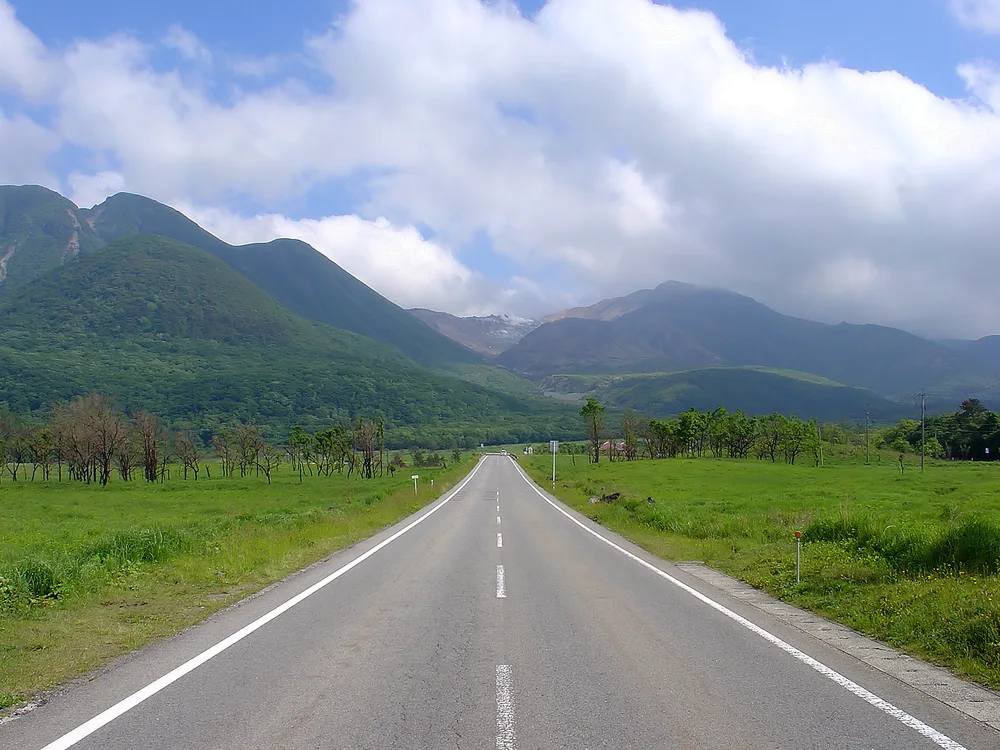
Plan half a day at Sengan-en from its new JR station. Compare the combined ticket, residence and Shoko Shuseikan, work around train gaps and glassworks breaks, and plan meals, luggage and a departure-day visit.
- Region & Focus
- Kagoshima and Sakurajima
- Reading Scope
- 28 min read · 18 chapters · 7 Q&As
- Official Verification
- 26 official sources checkedUpdated October 29, 2026
- Key Topics
- ItinerariesRail travelTravel budget
Chapter Route Map (tap any stop)
- Spend half a day in Iso, with gardens and Satsuma industrial history
- Choose two main stops, even with an inclusive ticket
- The ticket includes the residence and Shoko Shuseikan; student status determines the rate
- Using the new JR station: Kagoshima-Chuo, Kagoshima and Sengan-en are three separate stops
- Check the afternoon gaps before choosing your return train
- Choose a bus or car according to where you start
- Start with the furnace remains and interpretation center
- The Main Gate and Tin Gate served different periods
- See the borrowed scenery in front of the residence, then from under the eaves
- Inside the residence: rooms for receiving guests, working and resting
- Choose a side route to Bogakuro, Senjingan or the Kyokusui Garden
- Shoko Shuseikan: examine the stone walls before the factory displays
- Visit the Satsuma Kiriko glassworks outside its breaks
- Book separate time for hands-on glass cutting
- Meals and breaks: allow different amounts of time for a restaurant, cafe or mochi
- Sort out luggage, wheelchairs and strollers before entering
- An ordinary half-day: main stops in the morning, a flexible finish around noon
- On a departure day, choose the train back to Chuo before deciding to visit
- Quick Q&A
Half a day at Sengan-en gives you time for the garden, the residence and the history of modern industry in Satsuma. Choose your main interests first, then fit in lunch and a train back. On a departure day, choose the return train first: Sengan-en Station has some long gaps after noon.
Spend half a day in Iso, with gardens and Satsuma industrial history
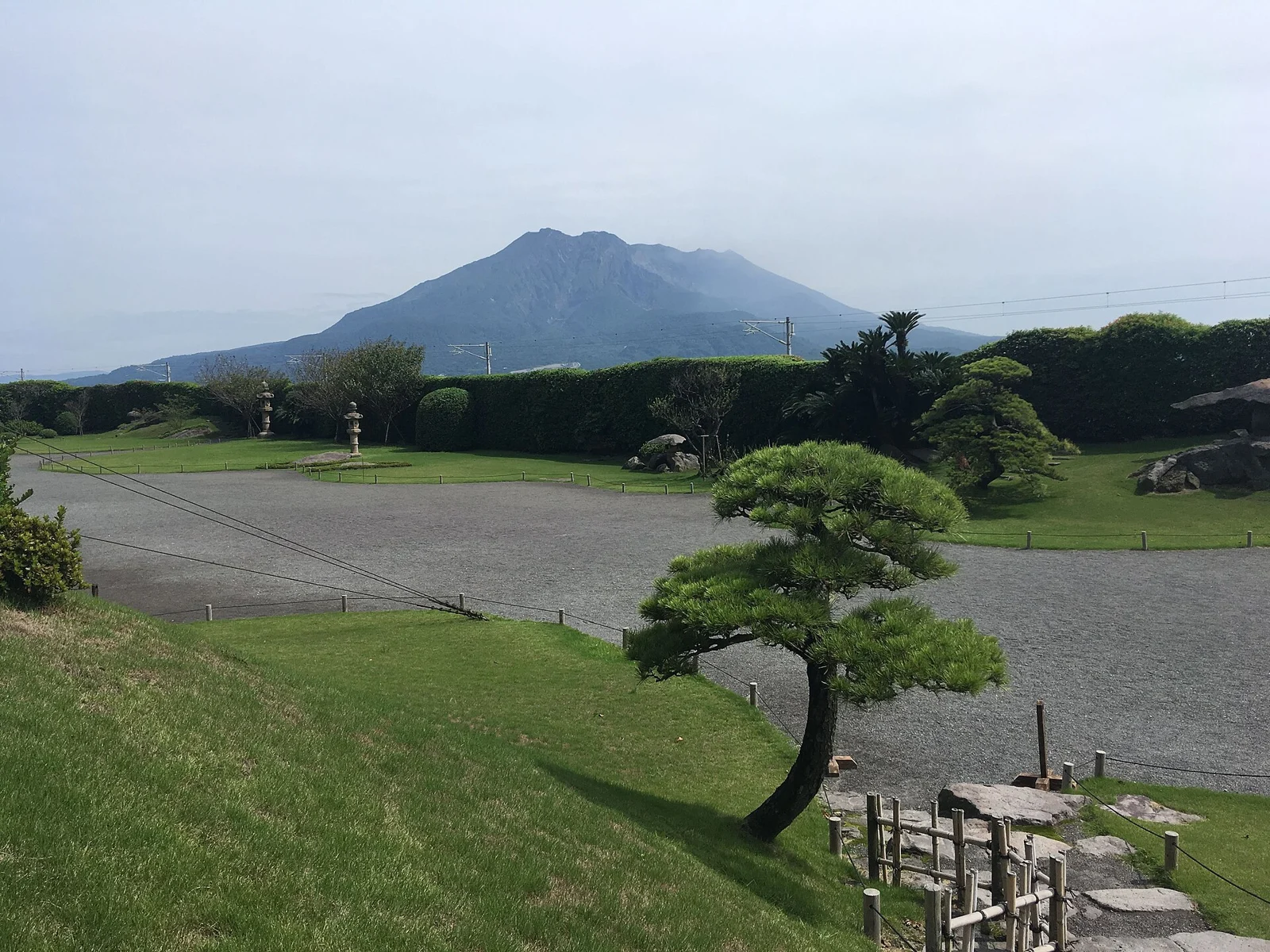
Sengan-en suits travelers who have a full half-day near central Kagoshima and do not plan to take the ferry to Sakurajima. Look across Kinko Bay toward Sakurajima from the garden, enter the residence to see the Shimazu family's living spaces, then use Shoko Shuseikan to understand the nearby industrial remains. That is enough for a visit in its own right. If volcanic terrain and viewpoints on the island matter more that day, give the half-day to Sakurajima. Each offers a different viewpoint; fitting both into a short morning reduces the time you can stop and look.
Mitsuhisa, the 19th head of the Shimazu family, built this villa in 1658. The garden's history page explains its defining features: Sakurajima and Kinko Bay form part of its borrowed scenery, the villa received guests, and it became the family's main residence for a period after the Meiji Restoration. Look at the relationship between garden and bay outdoors, then again from inside the house. Pillars, eaves and the open garden give you different frames for the view.
The same Iso district was also the setting for the Shuseikan industrial project. The reverberatory furnace remains, stone machine factory and glass cutting still practiced today take the visit beyond a feudal lord's residence. If architecture interests you, spend longer at the house and Shoko Shuseikan's exterior. If you prefer crafts, visit the glassworks while production is running. For where to stay and how to divide your days among Kagoshima, Kirishima and Ibusuki, see Kagoshima itinerary and accommodation choices. Keep this half-day focused on Iso.
Plan half a day at Sengan-en from its new JR station. Compare the combined ticket, residence and Shoko Shuseikan, work around train gaps and glassworks breaks, and plan meals, luggage and a departure-day visit.
Choose two main stops, even with an inclusive ticket
For a first visit focused on scenery, choose the garden and residence. Read the signs near the furnace remains, continue past the Main Gate and Tin Gate to the front of the house, then go inside to see how the rooms relate to the garden. If industrial history appeals more, choose the garden and Shoko Shuseikan. Read about the modernization project beside the furnace, then see how the former machine factory became a museum. Both routes include outdoor time and one indoor stop worth taking slowly.
The garden's FAQ suggests about 40 minutes for the garden, 30 for the residence, 30 for Shoko Shuseikan and 20 for the glassworks. Together, that is 120 minutes before buying tickets, walking between buildings, restroom breaks, photographs or meals. Allow about three to four hours for an ordinary half-day at the grounds and adjacent facilities. If you want to read each display or join an activity, keep the afternoon free here too.
If your group has different interests, make the residence a shared stop and split time between the museum and shops as you prefer. Agree to meet at the entrance, a named cafe or a specific museum, rather than simply outside. A seated break can help older travelers and children enjoy the second half. Decide which stop you can drop before adding every side path; this gives everyone more time to enjoy the visit.
The ticket includes the residence and Shoko Shuseikan; student status determines the rate
As of October 28, 2026, Sengan-en's visitor information lists general admission at ¥1,600, admission for elementary, junior high and high school students at ¥800, and free admission for children below elementary school age. The general category is for ages 15 and over, excluding junior high and high school students, so high school students pay the student rate. Two adults and one elementary school student pay ¥4,000 at the gate. For younger children, first establish whether they have entered elementary school, rather than buying by age alone.
The ticket includes Sengan-en garden, the residence and Shoko Shuseikan. A combined ticket has applied since October 2024; there are no separate regular garden and museum tickets. You can visit only the garden, but budget for the combined ticket. The residence no longer needs the extra fee charged under the old system. You must show your admission ticket at Shoko Shuseikan, so keep it easy to reach.
Shoko Shuseikan's current visitor information also lists online prices of ¥1,500 general and ¥750 student, with a link to the official ticket outlet. Gate prices remain ¥1,600 and ¥800. Online tickets for two adults and one elementary school student total ¥3,750, saving ¥250 across the three tickets. The Asoview combined ticket linked by the official site states a 100% cancellation fee from 23:59 on the day before use and cannot be combined with other discounts. Show the QR ticket at reception. If your date is undecided, budget at gate prices and buy once you have chosen the day.
Using the new JR station: Kagoshima-Chuo, Kagoshima and Sengan-en are three separate stops
Sengan-en Station opened on March 15, 2025, to serve the Iso district. From Kagoshima-Chuo, take the Nippo Main Line through Kagoshima Station to Sengan-en. Kagoshima-Chuo is the Shinkansen hub and a common accommodation base; Kagoshima Station is a different station. Use full station names in accommodation bookings, map searches and meeting arrangements. If you need to collect luggage and transfer to an airport bus after the visit, set Kagoshima-Chuo as the return destination.
An actual service is more useful than a general journey estimate. JR Kyushu's train details for October 28, 2026 show local train 6930M leaving Kagoshima-Chuo at 09:00, arriving at Kagoshima at 09:03, departing at 09:04 and reaching Sengan-en at 09:07. That example is only seven minutes on the train. Add separate time for leaving your hotel, finding the platform and walking from the station to the garden.
The Nippo Main Line timetable at Chuo also includes local trains that terminate at Kagoshima and Kirishima limited express services. Open the stopping pattern for your chosen train and confirm Sengan-en and its arrival time before boarding. The garden's Iso access page also states that some trains do not stop at Sengan-en. Follow the signs toward the garden after arrival and use pedestrian crossings. If you have luggage or a slower walker, allow time for the walk and road crossing; train arrival is not garden entry.
Check the afternoon gaps before choosing your return train
On JR Kyushu's Sengan-en departures toward Kagoshima for Wednesday, October 28, and Saturday, October 31, morning trains toward Kagoshima-Chuo include 11:11 and 11:50. Afternoon services are listed at 13:09 and 13:40, then 15:07 and 15:46. The gap from 13:40 to 15:07 is 87 minutes. If you plan lunch only around the short train ride and reach the station afterward, you could spend a large part of your intended city time waiting.
The 13:40 local train 6947M reaches Kagoshima at 13:43 and Kagoshima-Chuo at 13:48. If you choose it, work back from 13:40 to allow for walking, collecting luggage and using the restroom before deciding whether to eat in the garden. The 15:07 service shows Sendai as its destination. Check its intermediate stops: a train heading back through the city may terminate beyond Chuo, so do not limit your search to trains displaying Kagoshima-Chuo as the final stop.
These are checked examples for two specific dates. For another travel day, change the date on the JR Sengan-en Station timetable and inspect your chosen service. Write down both your target train and the next one. Their gap shows your companions how much longer you can stay. If you want the freedom to extend the visit, make this an ordinary city half-day with another night in Kagoshima. For a flight connection, use the backward planning method below.
Choose a bus or car according to where you start
JR is straightforward if you stay near Chuo and Sengan-en is your only destination. From Tenmonkan, or for a day with several city stops, follow the garden's access page to the Kagoshima City View timetable from the city transport bureau and get off at Sengan-en-mae. This sightseeing bus takes time at stops and on its circuit. Assess it as part of your whole city route, rather than comparing fares alone. Read the direction at each stop separately for the outbound and return trips; a loop does not necessarily retrace its route.
Drivers can use Sengan-en's parking lot at ¥500 per day for a standard car. The access page gives about 20 minutes by car from Chuo as a road journey estimate. Add parking, walking to the ticket office and collecting the car. If your whole day is in the city and at Sengan-en, compare the available public transport first. A rental car's value usually depends on the day's other destinations too, rather than saving one short train ride.
The garden has no direct shuttle, and taxis are not stationed there. If you want a taxi back, book with a taxi company yourself and agree on the pickup time and location. Seeing a taxi on arrival only tells you one is there at that moment. On a departure day, use a chosen transport plan. Tell the company your passenger count and luggage needs so the pickup fits your group.
Start with the furnace remains and interpretation center
The reverberatory furnace remains make a useful first stop. Both the garden's 60-minute and 90-minute routes start here. The visible remains are stonework; the official account describes a chimney-like furnace structure about 16 meters high above it. Compare the surviving base with that original height before visiting the machine factory. It becomes easier to understand Shuseikan as a group of connected production facilities.
The neighboring World Heritage interpretation center explains Shimazu Nariakira's plans, the furnace structure and the background to the Sites of Japan's Meiji Industrial Revolution. If history interests you, slow down here to understand why Satsuma needed this equipment, then look for specific objects in the museum. If you mainly want scenery, read the key diagrams and continue to the garden, leaving detailed displays for Shoko Shuseikan.
Look at how the stonework supported the equipment above and compare it with the missing outline in the diagrams. If children lose patience with long text, ask them to find what is still visible, then look at the reconstruction together. They can begin to understand this industrial history on site without first memorizing Shimazu family dates.
The Main Gate and Tin Gate served different periods
Following the official walking route toward the garden brings you to the Main Gate and Tin Gate. Tadayoshi, the 29th family head, built the Main Gate in response to a new road in the Meiji period. The garden describes it as over seven meters high, made with camphor wood from the hill behind, with the cross-in-a-circle and paulownia crests above. Look at the roof, timber structure and crests, then turn toward the road to understand why the gate stands here.
The Tin Gate was the main entrance in the Edo period. Its name comes from its tin roof tiles. According to the official account, only the Shimazu family head and heir could pass through it at the time. Seeing the two gates together shows how the villa's entrances changed over time. Follow the route open to visitors today; the historical restriction helps explain the building's use, and the signs beside it are worth reading.
When photographing the whole gate, keep the main passage clear and wait for a gap in foot traffic. You can move through this part fairly quickly and save longer stops for the residence and garden views.
See the borrowed scenery in front of the residence, then from under the eaves
Sengan-en incorporates Sakurajima and Kinko Bay into its borrowed scenery. The space in front of the residence makes this easy to see. Look at the garden foreground, the bay and the volcano, then notice how trees and buildings frame the distance. The same mountain has a different sense of scale across the broad bay and between the house's pillars. Take your wide landscape photographs outdoors first so you have more time inside for the rooms themselves.
Visibility across the bay affects distant views. On a gray day, look closer: the Main Gate's timber work, garden stonework, interior decoration and Shoko Shuseikan building all offer details to study. You still need to walk outdoors in heavy rain, and the residence may operate with its storm shutters closed in rough weather. If a broad Sakurajima view is your main aim, put Sengan-en on a flexible day in the city rather than rushing there in your last hour.
You do not need to follow every garden branch to its end. Start with the main view before the residence, then decide whether you have the energy to continue toward Bogakuro Pavilion and the Kyokusui Garden. With a fixed return train, decide on the farthest extension before taking a break. This avoids retracing your steps after tea just to finish a list. A shorter route can still give you a complete visit to the garden and one building.
Inside the residence: rooms for receiving guests, working and resting
Give the residence its own time slot. The garden suggests about 30 minutes. Besides the garden view, key rooms include the audience chamber, living room, bedroom and bathroom. The audience chamber received visitors and consists of two connected rooms, with tatami even in the corridor. Tadayoshi used the living room for documents, lunch and daily life. Compare these uses and their connections to see how official duties and home life were arranged.
A layer of rice husks beneath the bedroom floor provided insulation. Water for the bath was heated elsewhere and carried in. These details explain how the house worked beyond the dimensions of its rooms. With children, start with questions the building can answer, such as how people kept warm in winter or where hot water came from, then return outside to the bay.
The house also has 11 types of decorative nail covers, including Sakurajima radish and bat designs. Looking for these gives visitors unfamiliar with Japanese history something concrete to follow. Compare a motif with the next room instead of writing down every name. The inner courtyard pond has an octagonal recess, which the garden explains through Chinese cultural and feng shui influences. This also connects with signs of Ryukyu exchange elsewhere in the grounds.
Remove your shoes before entering. Wheelchairs, strollers, large luggage and umbrellas cannot be brought inside. Eating, drinking and the use of selfie sticks, tripods and similar photographic equipment are prohibited. Families should give children water, put away rain gear and store bags before entering. Last admission is 16:50, only ten minutes before the 17:00 closing time. To spend about 30 minutes looking around, visit earlier.
The museum’s 2018 video introduces the residence, its 11 nail-cover designs, inner garden and garden views from the study.
Choose a side route to Bogakuro, Senjingan or the Kyokusui Garden
Bogakuro is a garden pavilion. The official introduction says it is traditionally believed to have been a gift from the Ryukyu king in the early Edo period. Its floor is laid with tiles called sen. After the residence, look at the floor materials and building form to continue the theme of Shimazu contacts with the wider world. The garden also records that guests including Katsu Kaishu were entertained here. Compare that setting with the formal rooms in the house.
Look toward the hill behind Bogakuro to find the Senjingan inscription on the rock face. The garden's 90-minute route describes three characters spanning about 11 meters, carved in the late Edo period by about 3,900 people over three months. This is a feature to view from the garden toward the cliff. Stay where you can read the characters, compare their scale with the trees and rock, then decide whether to take a closer side path.
The Kyokusui Garden shifts the focus from receiving guests to poetry gatherings. Built in the mid-Edo period for kyokusui banquets, its watercourse and layout are visible during a regular visit. Think about how the flowing water and seats served a gathering as you walk. To attend an event, use that year's official announced dates. On an ordinary half-day, extend toward either Bogakuro or the Kyokusui Garden according to your interests for a change of pace among buildings, cliff and garden.
Shoko Shuseikan: examine the stone walls before the factory displays
Shoko Shuseikan's main building occupies the former Shuseikan machine factory, completed in 1865 and opened as a museum in 1923. The museum's architectural account explains how Satsuma craftsmen used local masonry skills to build a Western-style factory. Tuff forms the outer walls, while the wall base and roof framing retain Japanese methods. Study the stone, windows and roof at the entrance, then the beams inside. The building is itself an exhibit.
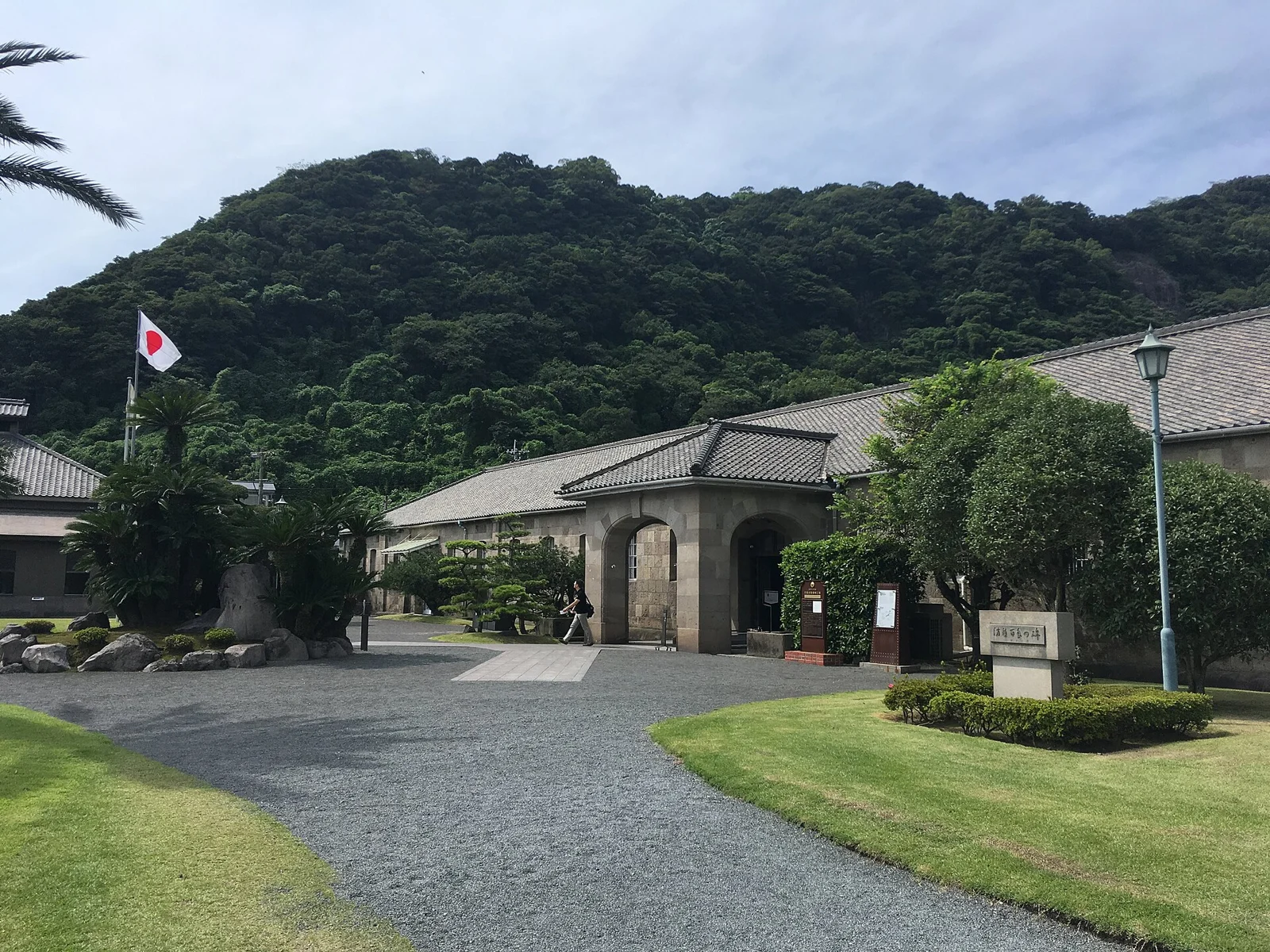
The factory once carried out metalworking. Today's permanent displays use replicas, models, images and actual large machines to explain Shimazu trade and modernization. The gallery introduction places the history of the trading lords in areas A to C, the Shimazu family and Japan's modernization in D to F, and temporary exhibitions in G. With limited time, read the area introductions and choose one machine or model closely related to the entrance furnace before exploring farther.
This order connects the grounds and buildings: the furnace remains show where production equipment stood, the museum explains the project and its technology, and the residence preserves the living and reception spaces of those behind it. History enthusiasts can visit Shoko Shuseikan before lunch while fresh enough to read. If your companions prefer gardens, make it a shorter stop for the architecture and main themes. Admission is included, but your interests should determine how long you stay.
Use the restroom before entry. There is none inside; use the restroom in the parking area behind the building. Wet rain gear cannot be brought in. Eating, drinking, video recording, flash and equipment such as tripods are prohibited, with further no-photography signs at individual exhibits. Sorting these needs out first is easier with children than leaving midway. Note gallery and object names if you want to continue reading the official explanations on the return journey.
Visit the Satsuma Kiriko glassworks outside its breaks
The garden's glassworks page lists free visits without reservations from 9:00 to 16:30, with breaks at 10:00–10:15, 12:00–13:00 and 15:00–15:15. It normally closes on Mondays and the third Sunday, with holiday-related shifts. If the glassworks is your main aim, read the month's factory closure notice on the Shimadzu Satsuma Kiriko website before choosing a day. Online shop closures and factory viewing closures are separate notices; check the title first.
You can see glassblowing, cutting and polishing areas. Blowing shapes molten glass, cutting grinds patterns into it, and polishing finishes the surface. While watching cutting, notice how varying cut depths create gradations in the colored layer. Comparing finished pieces at Iso Craft Museum afterward gives you more understanding than looking only at display prices. The garden suggests about 20 minutes here. Visit after the museum, or move it to the morning to avoid lunch break.
Iso Craft Museum is the adjacent Satsuma Kiriko showroom and shop. The garden FAQ says it is outside the paid grounds and can be used without Sengan-en admission. The glassworks can also be visited independently. If you only want crafts, with no garden or residence visit, choose this shorter version; drivers still pay for parking. With a combined ticket, treat the factory and shop as an extension and allow time to walk back to the station.
Book separate time for hands-on glass cutting
To cut glass yourself, go to the traditional culture experience facility inside the garden. Plan this separately from watching craftspeople at the factory. The current cutting activity is for ages 11 and over, with two machines and at most two participants working at once. If all three or four family members want a turn, allow time for separate groups. Agree on a waiting or rest spot for those not taking part so the whole group does not spend its half-day standing in the activity area.
As of the check date, official choices are a clear glass cup at ¥17,000 for about 60 minutes, a gold-ruby glass cup at ¥35,000 for about 60 minutes, and a key ring at ¥6,000 for about 30 minutes. The gold-ruby cup includes engraving and polishing. It ships about one month later, only within Japan, with a further ¥1,100 shipping fee. On a short Japan visit, arrange a delivery address and timing before choosing an available slot on the official booking page.
Adding an activity means reallocating the three to four hours otherwise used for the garden, residence, museum and lunch. If making something is the priority, keep the garden and activity and save the museum for another visit. If you only want to understand the Satsuma Kiriko process, the free factory visit already gives you something concrete to see. Decide before booking so each person's cost and waiting time fit the plan.
Meals and breaks: allow different amounts of time for a restaurant, cafe or mochi
Oukatei serves Satsuma regional food from 11:00 to 16:00, with last orders at 15:30. Sengan-en Matcha Cafe opens 9:00–17:00, with last orders at 16:30, for light meals, tea and sweets. The garden's dining page provides queue information for both, which you can check before deciding to sit down. Ordinary individual visitors should not treat Oukatei as a reserved, fixed lunch. The cafe and Jambo Mochi shop also do not take reservations, so keep the order of meal stops flexible.
The cafe currently lists matcha with a sweet at ¥1,000, with choices such as a sweet-potato confection, karukan or hiryozu. Limited-quantity lunch starts at 11:00, with chicken rice and soba each ¥1,750. For something simple and a seated break, look at the cafe first. For a full regional meal, choose Oukatei. With a fixed return train, check the queue before sitting down. If lunch would leave too little time to reach the station, eat near Chuo instead.
Jambo mochi are bite-sized rice cakes on two bamboo sticks. The garden explains that the pair resembles the long and short swords worn by a samurai. A serving to eat in currently costs ¥500; six pieces to take away cost ¥700 and should be eaten that day. For a short break, order one serving. If taking them to your hotel, finish them the same day. On a museum-and-glassworks half-day, a mochi break followed by a full meal in the city keeps the morning from being split by lunch.
Sort out luggage, wheelchairs and strollers before entering
Lockers near the entrance cost ¥500 large, ¥400 medium and ¥300 small. Large lockers measure about 35 cm wide, 64 cm deep and 86 cm high; the official site lists 12. Oversized bags can be stored at reception for ¥500 each, subject to space on arrival, without reservations. On a departure day, if your hotel is near Chuo and you will return there, leave bags at the hotel before visiting Sengan-en. This avoids carrying them through stations and crossings.
There are benches in the grounds. Wheelchair rental costs ¥500 each; WHILL short-distance electric mobility devices cost ¥2,000 each for use throughout the day. Numbers are limited and reservations are not accepted. Choose a main route from the accessible garden map, compare it with the residence restrictions and select sections everyone can complete. If someone needs a wheelchair throughout, arrange access to the garden and buildings at the entrance, including rest stops and help from companions.
A stroller reduces a young child's outdoor walking but cannot be used inside the residence. Wheelchairs can be used in dining facilities, and Oukatei is on the second floor with elevator access. The cultural activity facility has no elevator; reach its second floor by stairs or the outside slope. Match your intended rooms and dining stops to their access routes in advance, rather than treating every facility as one continuous route. This also avoids splitting the group unexpectedly at a doorway.
An ordinary half-day: main stops in the morning, a flexible finish around noon
For a morning half-day, use the example 09:00 departure from Chuo. Walk from Sengan-en Station, buy tickets, see the furnace and interpretation center, then pass the two gates into the garden and residence. Give the house about half an hour and adjust outdoor time to your pace. Near midday, visit Shoko Shuseikan for the building and the displays that interest you most. This order completes the garden and house first, leaving the depth of the history displays to the second half.
To see the glassworks, avoid its 12:00–13:00 break. Shorten the early stops and visit before noon, or go after lunch. Craft-focused visitors can reverse the order to glassworks, Shoko Shuseikan and garden, with the residence as the final choice. Leave meals, shops and side paths in the flexible final part, so the visit can end for your chosen 13:09, 13:40 or later train without promising every person every stop at the start.
The garden offers 60-, 90- and 120-minute recommended routes with different selections. The 60-minute route includes the front of the residence and Shoko Shuseikan; the 90-minute route includes the residence, Bogakuro and Kyokusui Garden; the 120-minute route connects the residence, Bogakuro, museum and glassworks, without Kyokusui Garden. Use them as maps of possible stops and combine them by interest rather than stacking all three. Lunch and hands-on activities take extra time. If staying in the city that night, you can extend the visit and look for dinner in Tenmonkan later.
On a departure day, choose the train back to Chuo before deciding to visit
Work backward from the time your airline requires you at the airport. Add the bus from Chuo and its waiting time, the trip to your hotel for bags, and walking inside and outside the station. Only then choose the train from Sengan-en to Chuo. The garden's public transport information also routes you through Chuo for the airport bus. Its driving estimate to the airport applies to a car journey and cannot be used for this JR-and-bus connection.
If you choose the 13:40 departure from Sengan-en, arriving at Chuo at 13:48, use 13:48 as the starting point for every later transfer and luggage stop. Missing 13:40 leaves a gap until 15:07 and changes the whole afternoon. Give lunch and the glassworks a clear order for dropping stops. On a departure day, keep just the garden and residence, or garden and Shoko Shuseikan, and eat back in the city. Book glass cutting on a day without a flight.
If only a short part of the morning is free, stay in the city for food, a walk and luggage collection rather than rushing out for the new station. Sengan-en normally opens 9:00–17:00, with last garden entry at 16:30. It closes on the first Sunday in March each year for the Kagoshima Marathon.
A few useful answers
Does the Sengan-en ticket include the residence and Shoko Shuseikan?
Yes. Gate admission is ¥1,600 general and ¥800 for elementary through high school students, with free entry below elementary school age. The residence and Shoko Shuseikan are included in the combined ticket.
How do I take JR from Kagoshima-Chuo to Sengan-en?
Take a Nippo Main Line train that stops at Sengan-en, passing through Kagoshima Station. On October 28, 2026, train 6930M leaves Chuo at 09:00 and reaches Sengan-en at 09:07. Walk to the garden after arrival.
Is half a day enough for Sengan-en?
Use the garden and residence, or garden and Shoko Shuseikan, as the main route. Official estimates for the four main visits total about 120 minutes. Allow extra for transport, walking and meals, making about three to four hours overall.
Are trains back to Kagoshima-Chuo frequent?
On October 28 and 31, 2026, the return timetable lists 13:09 and 13:40, followed by 15:07. Choose your return before lunch; for another date, switch the JR timetable to your travel day.
How does the glassworks visit differ from the glass-cutting activity?
The factory visit is free without reservations and shows blowing, cutting and polishing, outside breaks and closure days. The hands-on activity is inside the garden, costs extra, is for ages 11 and over, and allows at most two people at once.
Can luggage, strollers or wheelchairs enter the residence?
Wheelchairs and strollers cannot be used inside, and large luggage cannot be brought in. Lockers are at the entrance. Bags too large for them can be stored for ¥500 each, subject to space.
When does Sengan-en close?
Normal hours are 9:00–17:00, with last garden entry at 16:30 and last residence entry at 16:50. It closes on the first Sunday in March each year for the Kagoshima Marathon.
Official information and references
Sources used in this guide.
- Sengan-en | Current admission, hours and luggage storage
- Sengan-en | Visit duration, transport and facilities FAQ
- Sengan-en | History of the villa and Shuseikan project
- Sengan-en | Recommended 60-minute route
- Sengan-en | Recommended 90-minute route
- Sengan-en | Recommended 120-minute route
- Sengan-en | Residence rooms and entry rules
- Sengan-en | Access and official timetable links
- Sengan-en | Iso rail, bus and airport access
- Sengan-en | Glassworks viewing hours and closures
- Sengan-en | Glass-cutting ages, prices and duration
- Sengan-en | Dining and queues
- Sengan-en | Jambo Mochi shop menu
- Sengan-en | Matcha Cafe menu, lunch and last orders
- Shoko Shuseikan | Machine factory architecture and museum history
- Shoko Shuseikan | Permanent and temporary galleries
- Shoko Shuseikan | Online combined ticket prices and entry rules
- Kagoshima Prefecture | Sengan-en Station opening date
- JR Kyushu | Chuo Nippo Main Line, October 28, 2026
- JR Kyushu | Sengan-en return departures, October 28, 2026
- JR Kyushu | Sengan-en return departures, October 31, 2026
- JR Kyushu | 6930M, Chuo 09:00 to Sengan-en 09:07
- JR Kyushu | 6947M, Sengan-en 13:40 to Chuo 13:48
- Sengan-en | Garden and accessibility map
- Shimadzu Satsuma Kiriko | October 2026 factory closure notice
- Sengan-en official ticket outlet | Asoview combined ticket and cancellation terms