Walk from Sendai Station through Chuo-dori to Ichibancho. Learn to spot sets of five streamers and the seven decorations, choose a half-day or overnight route, and plan for rain. Includes 2026 information desk hours as an example and subway routes back.
- Region & Focus
- Sendai and Matsushima
- Reading Scope
- 30 min read · 16 chapters · 4 Q&As
- Official Verification
- 10 official sources checkedUpdated November 22, 2026
- Key Topics
- SeasonsItinerariesRail travel
Chapter Route Map (tap any stop)
- An afternoon arrival still leaves time for Chuo-dori
- August 6: hanging in the morning, award plaques in the afternoon
- Look at all five streamers in a set
- Start with paper strips and paper garments to recognize the seven decorations
- Cranes, purses, nets and baskets carry wishes in their shapes
- View the weaving threads and flower balls separately
- The shopping streets explain the festival’s revival
- From Chuo-dori to Ichibancho, choose one direction at the junction
- Half a day: Chuo-dori first, then return to a favorite work
- An overnight stay gives you two separate walks
- Rain covers and roofed arcades are separate issues
- The 2026 example: separate hours for information, first aid and police
- Subway return: Tozai Line in the south, Namboku Line in the north
- Photograph the whole set, then details, and check behind before stopping
- With family, put a rest point before the turn
- Let the final stretch lead back to Sendai Station
- Quick Q&A
Allow an afternoon to see the paper decorations from Chuo-dori to Ichibancho. Stay overnight if you want a closer look at the paper craft. Sendai Tanabata runs each year from August 6 to 8. Hanging starts at about 8 a.m. on the first day, and award plaques can be found in the afternoon. Shops put washi decorations in plastic bags when it rains. Eat first, ask at an information desk, then choose streets where decorations are still on display. End at Aoba-dori Ichibancho Station to the south, or Hirose-dori or Kotodai-koen Station to the north, for a clear route back.
An afternoon arrival still leaves time for Chuo-dori
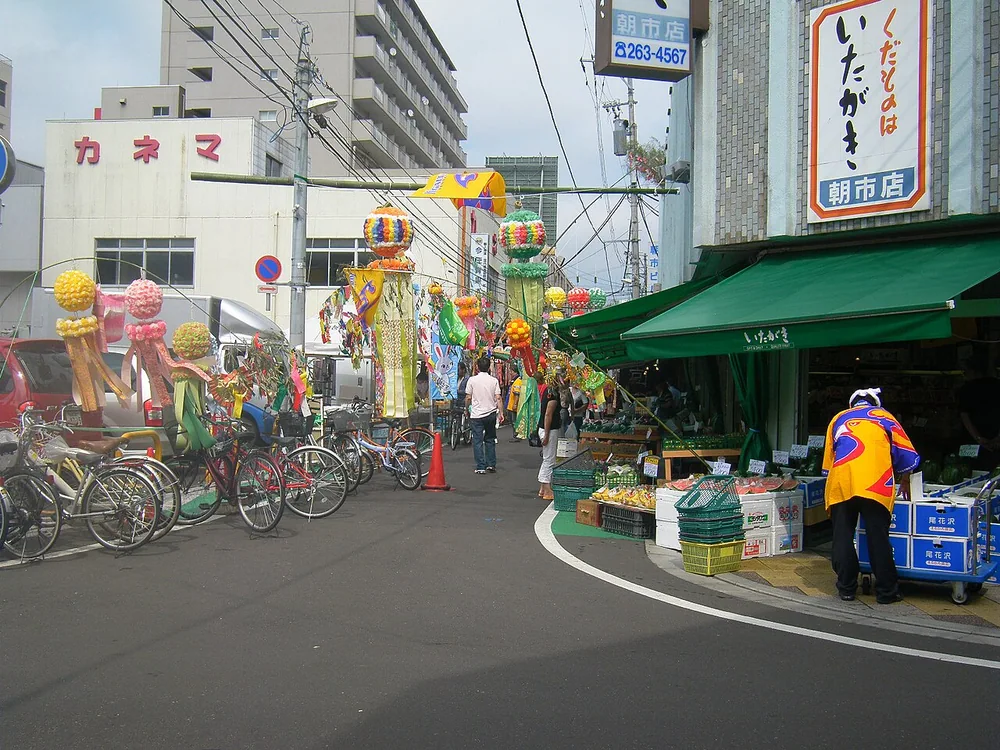
The main decoration route runs from the area in front of Sendai Station through Chuo-dori to the Ichibancho shopping streets. For a first visit focused on the festival, allow an afternoon for walking, close observation and a seated break. Stay a night if you enjoy photography or want to identify the decorations slowly, then see another stretch the next day. A half-day goal can be simple: walk through Chuo-dori, choose one direction at Ichibancho, study a favorite set, and return to the station from the point you selected.
The organizer’s festival outline gives the annual dates as August 6–8. Tanabata began as a custom for the seventh day of the seventh lunar month. Sendai uses a month-later calendar arrangement called chureki, so plan your visit for August. If your Tohoku trip passes through Sendai only once, identify the date when you can actually enter the city before booking intercity trains. With only a connection between trains, keep the visit close to the station and leave time to return.
The route passes through shopping streets that remain open for everyday business. Commuters, shoppers and people stopping to look at decorations share the space, so progress varies. Use the first part of the afternoon to reach Ichibancho and the second for a break and the return, with dinner or a train departure at a manageable point. For a separate day of food and architecture, use the Sendai food and neighborhood walks guide. Give this festival afternoon to the new paper decorations made each year.
Walk from Sendai Station through Chuo-dori to Ichibancho. Learn to spot sets of five streamers and the seven decorations, choose a half-day or overnight route, and plan for rain. Includes 2026 information desk hours as an example and subway routes back.
August 6: hanging in the morning, award plaques in the afternoon
The organizer’s decoration guide says setup starts at about 8 a.m. on August 6. Each shopping street judges its entries, then announces gold, silver and bronze awards in the afternoon. Plaques hang at the base of the decorations. To see finished displays with their awards, make the first afternoon your main visit. If you arrive early, store luggage and have breakfast before starting the decoration walk.
This sequence also affects an overnight stay. Staying on August 5 gives you a relaxed start the next morning, but stand outside the work area while setup is in progress. Workers carry and hang decorations below the bamboo supports; leave them a clear path. Staying on August 6 lets you see award-winning works that afternoon and another stretch the next day, with more time for detail. Compare arrival, checkout and your train out of Sendai before choosing which night to book.
Use award plaques as clues along the route. Look first at the overall combination of flowers and streamers, then find the plaque at the base and read any nearby explanation. Shopping streets judge the gold, silver and bronze awards. Pick a work you like and compare its colors and details with another on the same street. This offers more than hurrying through a list of winners. If plaques are not yet visible on the first afternoon, enjoy the works and look again when you pass later.
Look at all five streamers in a set
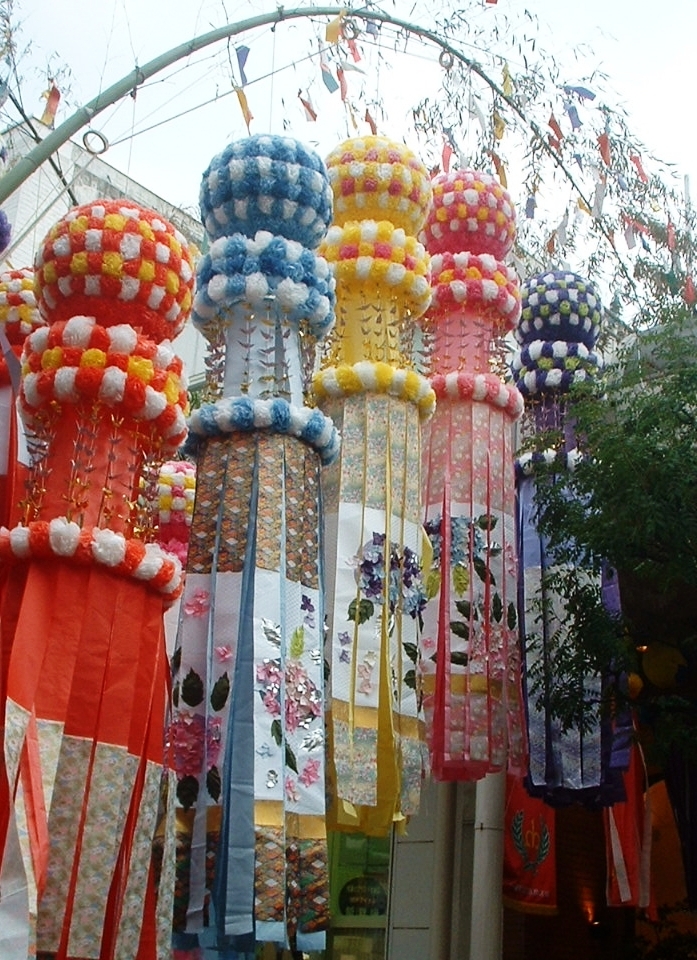
Sendai Tanabata traditionally groups five streamers together. Shops prepare them by hand months in advance and make new ones each year. Stand where you can see the whole set. Compare the five color schemes, the sizes of the flower balls and the lengths of the paper strips, then move closer to the folded paper. A photograph of only the nearest streamer can miss patterns behind it. Change your angle to see whether the set repeats a design or varies each piece.
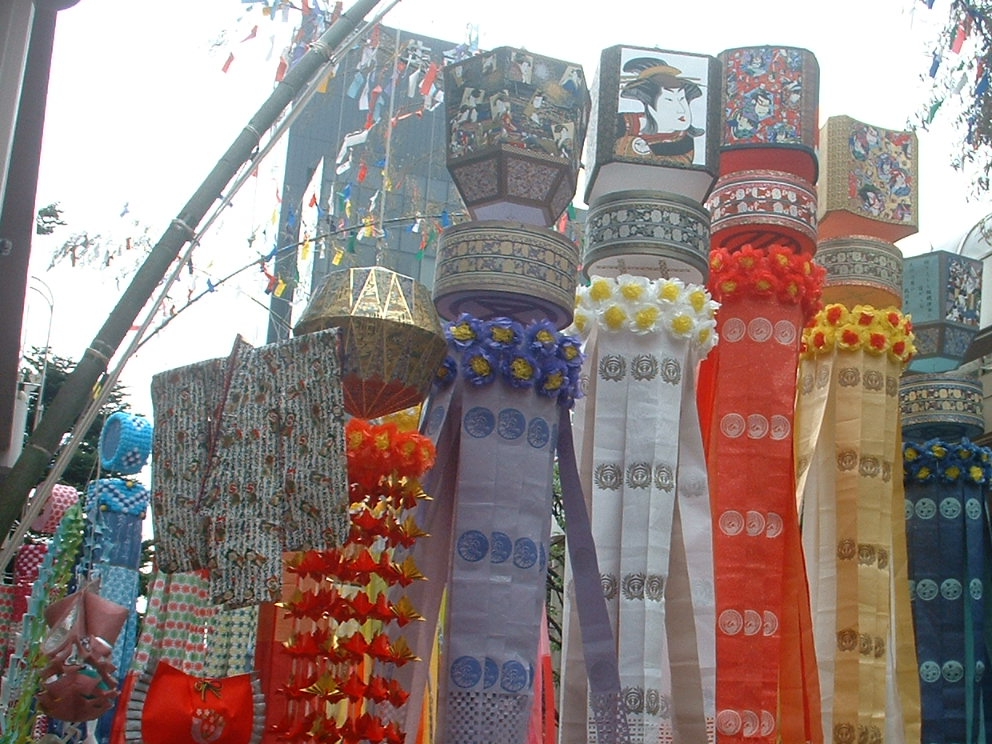
The round ball above is called a kusudama, or paper flower ball. The hanging fukinagashi streamers represent weaving threads. From a distance, blocks of color and vertical lines stand out. Close up, you can distinguish flowers, patterns and small attached ornaments. After viewing a set, consider what caught your eye: strong colors, fine paper work, or its relationship to the street. Taking one specific observation to the next set naturally slows the walk.
The two photographs from 2005 offer a way to practice. The main image shows how colored flower balls and hanging ornaments form a set. The body image lets you compare the positions of pictures, flower rings and long streamers. Your trip will show that year’s new works. Use the historical images to learn their structure, then look for different designs on site rather than expecting one photograph to be repeated.
Preparation takes far longer than the three festival days. The organizer explains that shops start months ahead. Early on August 4, shopping streets bring bamboo more than 10 meters long from the mountains and trim its small branches for hanging. The designs remain a secret until display day. Look first at how the bamboo supports several decorations, then at the paper craft, to understand both structure and ornament. If you see setup on the first morning, observe from outside the work area and return later to compare the bare supports with the completed set.
See Tanabata decorations hanging in the shopping streets, then take a close look at paper flowers being made by hand.
Start with paper strips and paper garments to recognize the seven decorations
The organizer groups tanzaku, kamigoromo, orizuru, kinchaku, toami, kuzukago and fukinagashi as the seven decorations. These small objects sit around the larger displays and carry wishes from daily life. Begin with the easy shapes of written paper strips and paper garments, then look for nets and small containers. With children, ask them to describe the shape before reading the name together. This makes the next example easier to find than memorizing seven Japanese names at the start.
Tanzaku are long paper strips with writing. The organizer connects them with wishes for learning and better calligraphy. In the past, morning dew from taro leaves was used to grind ink for writing waka poems; today people also write wishes. Read the words and look at how the writing fits the colors of the set. Script, paper color and hanging direction change the effect of the same long strip. Compare them with the bundles of streamers below to distinguish their uses.
Kamigoromo are garment-shaped washi ornaments. They carry wishes for better sewing, protection from illness and misfortune, and children’s healthy growth. Identify the outline through the collar and sleeves rather than guessing by color. Keep the garment and the written strip in mind side by side: one is identified by its clothing shape, the other by writing. Even without reading every explanation, you can recognize two small ornaments beside the large streamers.
To try making decorations before departure, the organizer offers guides and videos supervised by origami artist Ito (伊藤由麿). The official decoration page also has a tanzaku tutorial. See how the paper is folded and assembled, then look for the objects on the street. Make one with children at home and let them find the same type on the trip. For an on-site workshop, use that year’s event page for the venue and registration method.
Cranes, purses, nets and baskets carry wishes in their shapes
Orizuru, or folded cranes, express wishes for household safety, health and a long life. The organizer also describes a past custom of folding as many cranes as the age of the oldest family member to pray for longevity. Identify one crane by its pointed beak, wings and tail, then step back to see how the chain forms a field of color. Separate close viewing from the wider view to appreciate each folded unit and the whole display. In crowds, stand to one side so others can pass.
Kinchaku resemble drawstring purses. They express wishes for business success and plentiful money, with meanings of thrift and saving too. The organizer specifically says the mouth should be closed tightly, echoing the wish to avoid waste. Look for the gathered opening and the body of the bag. When its color resembles a flower ball, use the outline to tell them apart. You can appreciate it without reading Japanese. For craft enthusiasts, the three-dimensional paper bag shows a different skill from a flat tanzaku strip.
Toami represent fishing nets and wishes for plentiful coastal catches, good harvests and gathered good fortune. Kuzukago hold paper scraps left from making the decorations and express cleanliness, thrift and care for possessions. Both have a net-like appearance. Use their purpose and outline to distinguish them: think of a spread fishing net for toami, and a container with paper pieces inside for kuzukago. Seeing scraps included in the work shows how everyday habits enter the festival decorations.
You do not need to name all seven types at every set. Identify what you can in one, then look for missing types in the next. At a favorite work, spend longer on how small ornaments sit beside the streamers. By Ichibancho, your attention can shift from the quantity of decorations to the different methods in each set. It also becomes easier to remember which works deserve another look.
View the weaving threads and flower balls separately
The streamers symbolize the Weaver Girl’s threads and wishes for better craft and weaving skills. This meaning helps explain why long hanging washi strips became Sendai Tanabata’s most striking feature. Watch the strips separate and gather in the breeze, then see how they connect to the ball above. The upper and lower parts gain a clear relationship. Leave a little time to see the paper in space as well as photograph it.
Give the flower ball and streamers a separate look. First study the density, shapes and colors of the flowers above, then see whether the patterns below continue the theme. Some details need a closer view. Keep your distance as you move so the strips hang naturally. Step to the side for a fuller angle instead of moving the streamers with your hand. In a crowd, wait for the visitors ahead to leave before approaching.
You can choose just one subject. Compare related colors and strong contrasts if color interests you. Give time to cranes and small ornaments if you enjoy origami. To understand the overall design, start with the relationship between the five pieces and then their variations. Following your interest allows a detailed half-day visit without making every shopping street a required stop.
The shopping streets explain the festival’s revival
Sendai’s paper decorations are closely tied to its shopping streets. The organizer’s history records that in 1927, local merchants restored elaborate Tanabata decorations to revive streets affected by an economic downturn. The next year, the event moved to August 6–8 and included a decoration competition. On Chuo-dori and Ichibancho today, shops preparing their own works explain why a slow street walk suits the festival. Their separate craft and ideas form the whole street scene.
This history adds meaning to the award plaques. Sendai’s chamber of commerce and the Sendai Kyosankai jointly held the 1928 decoration contest. Participants included neighborhood associations from Higashi-Ichibancho, Nakakecho and Omachi-dori. Look beyond a single streamer to the street and compare neighboring sets. Comparing works on one stretch before moving on makes differences between shopping streets clearer than choosing only the most elaborate photograph.
The war once removed the paper decorations from the streets. The official history records 52 decorated bamboo poles returning in 1946 to the burned-out blocks of Ichibancho-dori. With this background in mind, pause longer at Ichibancho to see how decorations hang above streets still used in daily life. The festival and the city exist together, giving another reason to walk through the shopping streets.
The flower ball’s story also belongs to the postwar period. The official history describes how, around 1946, Mori (森権五郎) wanted to bring the beauty of garden dahlias into Tanabata. He combined light spherical bamboo baskets with paper flowers and promoted the kusudama now commonly seen. In photographs or on site, start with the round outline, then identify the flowers covering its surface. What first looks like one bright block of color becomes individual handmade units.
Connect the history with objects visible today. At Ichibancho, think of the bamboo decorations restored after the war. Gold, silver and bronze plaques recall the shopping streets’ contest. Look up at a flower ball and see how the flowers cover its surface. Linking the stories to the works leaves concrete memories of paper, bamboo and streets, and helps you choose where to spend more time.
From Chuo-dori to Ichibancho, choose one direction at the junction
Sendai’s central shopping street directory lists separate stretches including Hapina Nakakecho, Clis Road, Marble Road Omachi, Sun Mall Ichibancho, Vlandome Ichibancho and Ichibancho 4-chome. Walking west from Sendai Station along Chuo-dori, remember Nakakecho, Clis Road and Omachi as the route toward Ichibancho. Keep the full Japanese names on your phone to match signs and track your progress.
At Ichibancho, decide whether to go south or north. For a shorter route to a subway back to Sendai Station, head south toward Sun Mall and Aoba-dori Ichibancho Station. If you have energy to continue, choose Vlandome Ichibancho and Ichibancho 4-chome to the north, then return by subway from Hirose-dori or Kotodai-koen. Treat the turn as a real itinerary choice. Following every branch can leave you tired and rushing back.
Shopping street names help locate both you and your photographs. Photograph a street name or junction before the decorations on the next stretch, so you can identify them later. For a meeting point, give the full shopping street name and a named building. A description such as “the Ichibancho entrance” covers too much ground. A set time and fixed point let people browse separately at their own pace.
Half a day: Chuo-dori first, then return to a favorite work
For an afternoon focused on decorations, store luggage and eat after arrival. Walk from the station toward Chuo-dori, choose one set on the way to study the seven small ornaments, and decide north or south at Ichibancho. Plan a seated break, then use spare time to revisit your favorite set. Arrival, viewing, rest and the return fit along one route, so an afternoon arrival can still give a complete visit.
Where you eat changes the second half. If you arrive hungry, eat near the station before entering the shopping streets. If you have already eaten, walk to Ichibancho first and eat there before taking the subway. For different appetites and walking speeds, use the restaurant as a meeting point: some can add a nearby decoration walk while others sit down. With a reservation, work backward from the arrival time to set your walking range.
If you have only a few hours before a Shinkansen, keep luggage collection on the return route and finish viewing in the direction of the station. A map’s direct walking time estimates distance, while your visit also includes stops, crossings and movement inside the station. Turn back when you approach your planned return time. Save the location of another work for a future visit or an overnight version of the trip.
An overnight stay gives you two separate walks
The main benefit of a night in Sendai is splitting the viewing between two periods. Walk Chuo-dori to Ichibancho on the first afternoon to see the route and works. Return to a favorite stretch the next day for paper details or another branch. With your bearings established, the second walk can be shorter and focus on fewer works. If rain causes decorations to be covered on day one, the next day gives another chance to go out.
Stay near Sendai Station if you arrive late, leave early or have a suitcase. Collecting luggage after checkout and taking a train is straightforward there. Staying near Ichibancho places dinner and the next morning’s walk closer to the decorations. When comparing rooms, check the property entrance, luggage storage hours and cancellation terms, and mark the two walks you will actually need. Put any booking cancellation deadline in your calendar so a weather-related change has a clear decision date.
Before returning to the streets after dinner, ask a nearby information desk or shop about that evening’s displays and decide how far to walk. Shops manage their own works, so follow the stretches still on display. With an early train the next day, eat near your accommodation and let the daytime viewing be the focus of the stay. Leave the next morning for luggage collection and the station rather than crossing town again after checkout.
Rain covers and roofed arcades are separate issues
The main effect of rain is that decorations may be put inside plastic bags. The organizer explains that shops protect them this way. Even under a shopping arcade roof, look at the actual display condition. If rain starts before arrival, eat, store luggage and organize your route inside the station. Ask an information desk which stretches can currently be viewed before deciding how far to follow Chuo-dori.
Give workers space while they cover decorations. Do not stand below bamboo supports to photograph the work or touch bags to get an angle. Move on from a covered set. If most displays are being packed away, take your break early and decide whether to continue after the rain and the work settle. Overnight visitors can move detailed viewing to the next day and use this day for finding their way around and eating.
Link a rainy day-trip plan to your return time. Set the latest time you can remain in the city, then decide whether to wait or shorten the walk. With children or older relatives, go directly to a restaurant with seats. Anyone who wants to continue can take a short walk and return there. Have rain gear for crossings and uncovered stretches, and put umbrellas away before entering dense crowds. Carrying one less wet item makes belongings easier to manage.
The 2026 example: separate hours for information, first aid and police
The official guide page retains the 2026 information, with temporary desks at Sendai Station, outside Fujisaki First Tower and outside Sendai Forus. In that year’s layout, the station desk works for arrival questions, while Fujisaki and Forus provide landmarks after reaching Ichibancho. When downloading the official guide, save the year and service locations together for reference while walking.
In 2026, the Tanabata information desk inside Sendai Station ran from 9 a.m. to 8 p.m., and first aid from 10 a.m. to 6 p.m. Outside Fujisaki First Tower on the Higashi-Nibancho-dori side, information also ran from 9 a.m. to 8 p.m., first aid from 10 a.m. to 6 p.m., and the temporary police post from 10 a.m. to 8 p.m. Outside Forus along Hirose-dori, information ran from 9 a.m. to 8 p.m. and the temporary police post from 10 a.m. to 8 p.m. For first aid, use its specific location and hours. The information desk closing time does not apply to every service.
Save two phone screens: a map of the stretch you are walking and that year’s service information. When asking directions, show your current location, destination station and group needs, such as an entrance with an elevator. This helps staff give specific guidance. Passing a service point before dinner also gives a chance to ask about the return route and rain-affected displays together, reducing repeated map checks at junctions.
Subway return: Tozai Line in the south, Namboku Line in the north
The Sendai Transportation Bureau map places Aoba-dori Ichibancho on the Tozai Line and Hirose-dori and Kotodai-koen on the Namboku Line. Both lines reach Sendai. After southern Ichibancho, take the Tozai Line from Aoba-dori Ichibancho toward Sendai. From the north, choose Hirose-dori or Kotodai-koen according to where you finish. Inside the station, check the platform information for Sendai rather than following a crowd on the strength of a familiar-sounding station name.
Save possible return routes before departure, then choose according to where you finish viewing. Walk back through Chuo-dori for a second look. If you have seen enough, it rains or your feet hurt, use the nearest subway. For a walking visit with one ride back, budget for the actual ride. Compare passes only if you have other city journeys, using all planned rides; this avoids detours made just to use a pass.
With a stroller, wheelchair or walking aid, find elevators on official station plans and mark both the street entrance and destination. The exit you choose changes the actual walk. Shinkansen passengers arriving at subway Sendai Station still need to reach the JR area, collect luggage and pass the gates. On a first visit, remember your luggage storage point and Shinkansen entrance when you arrive, then follow the same familiar station route on return.
Photograph the whole set, then details, and check behind before stopping
First record the whole set in its street setting, then photograph your favorite small ornaments. Portrait framing suits the structure from flower ball to streamer; landscape framing compares neighboring works or includes bamboo supports and street space. Check where you are standing, move to the edge and keep your bag in front of you rather than in the passage. Take turns within your group. While one person photographs, the others can wait to the side so passersby need not walk around the whole group.
Paper strips move in the wind. Wait for them to separate naturally before photographing details. To read words above, lower your phone and look first, then decide what to frame. Overlapping layers may be clearer from the side. Move yourself rather than arranging the work by hand. Stand aside while focusing or reviewing photographs too, so stopping does not block the main passage.
The historical photographs show two approaches: one uses colored flower balls and fine folded paper, while the other places pictures above long streamers. In your own photographs, record the overall color scheme and how upper patterns connect to the lower part. These details will help explain the images at home. Add the date and street stretch beside the photographs to connect the works to your trip.
With family, put a rest point before the turn
Start with shapes children recognize: garments, purse-like bags and cranes with wings. Move on after one set rather than asking children to find all seven types every time. Stop the search when they tire and eat or rest. Watch the tanzaku-making video together before departure; recognizing an ornament on site then connects with that preparation.
If a group walks at very different speeds, regroup after Chuo-dori and before turning into Ichibancho. Decide who will continue north and who will eat or return to the accommodation. Splitting the second half is easier than moving everyone onward with different needs. Agree on a named place and time, and give caregivers the luggage and water. Those adding a walk should keep their own return route and rejoin for dinner.
Strollers and large luggage need turning space. Store cases you do not need before entering the route. Keep water, rain gear and children’s supplies within reach instead of opening all your luggage beside a decoration. Treat seated rest as part of the itinerary and remove a later branch if needed. You can walk north and south Ichibancho on separate visits. End where the whole family can return comfortably.
Let the final stretch lead back to Sendai Station
Before the last viewing stop, anyone with a fixed train should check their current location, luggage storage point and station entrance. If you have not eaten dinner, choose somewhere on the return route or eat at the station. With dinner booked in Ichibancho, keep the journey to the station after the meal in your plan. Save decoration locations alongside luggage collection details and tickets so the return steps are ready in order.
If your group has split up, meet before collecting luggage and check bags, rain gear and onward tickets together. For souvenirs near the station, collect luggage first and establish when you need to pass the gates, then shop with the remaining time. Choose a final decoration set along the return route. After the photograph, put away your phone and follow the familiar path to Sendai Station.
A few useful answers
When is the Sendai Tanabata Festival, and when can I see the winning decorations?
The Sendai Tanabata Festival runs August 6–8 each year, and you can see the award winners on the afternoon of August 6. Shops start hanging decorations around 8 a.m. that day. Gold, silver, and bronze award tags are hung where the winning displays are attached.
What's the best half-day Sendai Tanabata walking route from Sendai Station?
Start on the west side of Sendai Station and follow Chuo-dori through Nakakecho, Clis Road, and Omachi to Ichibancho. Turn south for Sun Mall Ichibancho, or head north through Vlandome Ichibancho and Ichibancho 4-chome for a longer walk.
Can you still see the Sendai Tanabata decorations if it rains?
Shops put the paper decorations in plastic bags when it rains, so even the covered shopping streets may have wrapped displays. Ask at an information desk which streets still have decorations on show. If most are being packed away, take a break for a meal.
How do I take the subway back to Sendai Station from Ichibancho?
From the south end of Ichibancho, take the Tozai Line from Aoba-dori Ichibancho Station. At the north end, take the Namboku Line from Hirose-dori or Kotodai-koen, whichever is closer. Both lines go to Sendai Station.
Official information and references
Sources used in this guide.
- Sendai Tanabata Festival: a tradition since the time of Date Masamune
- Festival outline — Sendai Tanabata Festival
- About the Tanabata decorations — Sendai Tanabata Festival
- Guidebook — Sendai Tanabata Festival
- Transport and access — Sendai Tanabata Festival
- Sendai City: central shopping street directory
- Sendai Transportation Bureau: subway map and station information
- Sendai Tanabata organizer: history and shopping street revival
- Sendai Tanabata organizer: making the paper decorations (released in 2019)
- Official: The making of SENDAI TANABATA FESTIVAL — Sendai Tanabata Festival Association