Compare winter cherry blossoms, stairs, mountain roads and transport at Nakijin Castle, Nago Castle Park and Mount Yae. Plan with or without a car, choose a northern base and use the announced 2027 Nago festival dates.
- Region & Focus
- Okinawa Main Island
- Reading Scope
- 32 min read · 12 chapters · 6 Q&As
- Official Verification
- 19 official sources checkedUpdated October 30, 2026
- Key Topics
- SeasonsItinerariesBooking
Chapter Route Map (tap any stop)
- Choose your scenery, then one site or two
- Kanhizakura season and the announced 2027 dates
- Nakijin Castle: stone walls and sea views beyond the blossoms
- Nakijin admission, stairs and the walk after the bus
- Nago Castle Park: southern stairs or the north entrance to flowering trees
- Mount Yae: separate the uphill road, mid-slope park and summit
- Without a car: separate long-distance buses, local buses and the final walk
- Stay in Nago without a car: one site a day, two different landscapes
- Nago festival days: separate the park from street events
- A driving day: two blossom sites with lunch between
- Nago, Motobu or Nakijin: choose by dinner and transport
- Shorten for rain and walking ability; keep the most manageable section
- Quick Q&A
One cherry-blossom stop is enough for a winter Okinawa trip. Choose Nakijin Castle for kanhizakura blossoms, curved stone walls and sea views; Nago Castle Park for a half-day with city walks while staying in Nago; or Mount Yae for a slow drive past flowers on mountain roads. The biggest practical differences are the walk after you get out of your vehicle and how easily you can return to your accommodation.
Choose your scenery, then one site or two
For a first blossom-focused visit to northern Okinawa, I would put Nakijin Castle first. Even with stops beside only a few trees, the visit has gates, stone walls, open courtyards and changing views. History enthusiasts can add the history and culture center. It suits visitors who can manage stone steps and give a castle site time. If stairs burden your companions, prioritize Nago’s flowering-tree area or the mid-slope Mount Yae park and shorten the walk through pickup arrangements.
Nago Castle Park works well as a half-day with Nago city. Staying downtown means no extra hotel move just for flowers. Return to town for food and leave the afternoon for rest. The park spreads over a mountain: southern stairs toward the castle ruins and the upper flowering-tree area are different approaches. Searching only “Nago Castle Park” does not bring everyone to the same entrance. Decide how much walking you want before choosing where to get out.
Mount Yae suits travelers who want driving to form part of blossom viewing. The road from the foot upward offers a continuous sequence of views. Mid-slope Yaedake Sakura no Mori Park provides parking, toilets, a walk and rest. For a single photograph, you need not continue to the summit. For forest scenery and several stops, allow more than a quick parking break. Without a car, solve both ascent and return transport before making it your main stop.
For contrasting scenery, combine Mount Yae and Nakijin: mountain road at one, castle ruins at the other. If staying in Nago and enjoying walking, combine Nago Castle Park and Nakijin. All three in one day suits drivers already staying in the north and making short stops. To read castle explanations, take photographs or slow down with children, keep two sites. From Naha on a day return, one main site is easier.
| Site | Main scenery | Walking and arrival | Best fit |
|---|---|---|---|
| Nakijin Castle | Kanhizakura, stone walls and sea views inside the castle | Continuous stone steps; about 15 minutes on foot from the entrance bus stop | Visitors who can climb stairs and want a historic site |
| Nago Castle Park | Blossom paths, Nago city and sea views | Southern castle approach has stairs; drive through the north entrance for the upper park | A Nago half-day walk, or a ride to one selected area |
| Mount Yae | Roadside blossoms and mountain forest | About 4 km of uphill road; Sakura no Mori Park is midway | Drivers stopping in stages; arrange uphill transport first without a car |

Compare winter cherry blossoms, stairs, mountain roads and transport at Nakijin Castle, Nago Castle Park and Mount Yae. Plan with or without a car, choose a northern base and use the announced 2027 Nago festival dates.
Kanhizakura season and the announced 2027 dates
Northern Okinawa’s cherry-blossom season is winter. The Nakijin Castle guide gives mid-January to early February as the usual season inside the castle. The Nago Tourism Association describes deep-pink flowers around Nago Castle from late January to mid-February. The periods overlap, but the three sites need not share one day. Reserve a northern daytime block, then choose your main site from dated flowering reports after arrival.
As compiled on October 30, 2026, the 64th Nago Cherry Blossom Festival has been announced for January 30–31, 2027. Main venues include Nago Castle Park, the event stage at Sakura Park and Nago Jujiro Odori. The tourism association page still retains some previous-year programs and says the new stage schedule is undecided. Use the announced dates for accommodation, then add parades, performances and road restrictions when the new program is complete.
The same Nago association page, updated in October, lists the 2027 Nakijin and Mount Yae festival periods as undecided. Mount Yae’s complete previous-season record is January 17–February 8, 2026; the Motobu Tourism Association explicitly records an extension. An old poster giving January 17–February 1 shows that year’s original plan. Do not use it to book a 2027 festival or shuttle.
Choose flowers and festivals separately. For city performances and stalls, use Nago’s announced weekend. For walks and flower photographs, a weekday northern stay removes one event schedule. Decide whether you want one close-up tree or the relationship between blossoms, road and stone walls. Deep-pink flowers stand out against green mountain forest. You can frame branches flowering that day with the forest rather than seek a completely pink canopy.
Nakijin Castle: stone walls and sea views beyond the blossoms
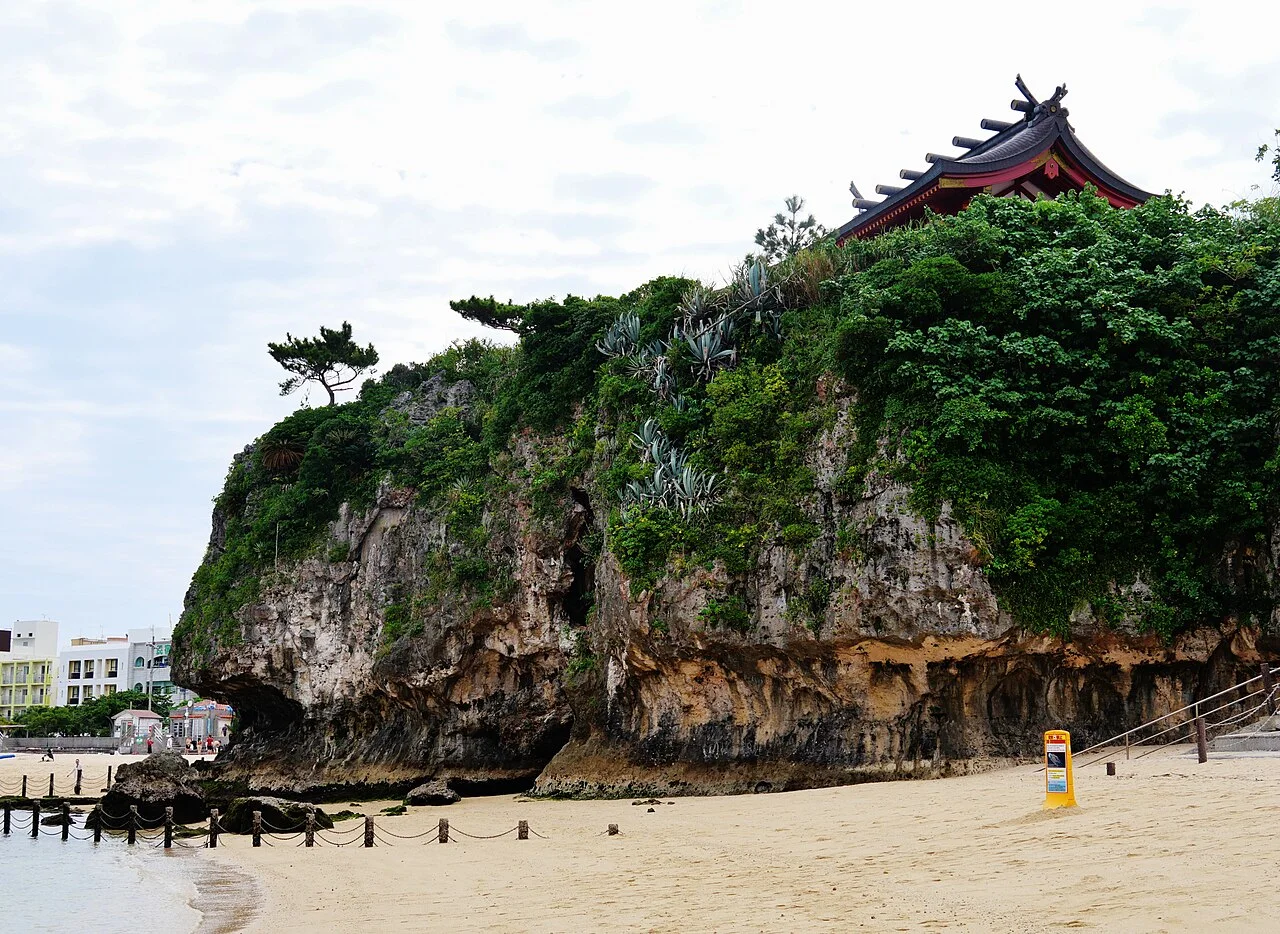
Nakijin combines blossom viewing with reading a castle site on the same walk. Check tickets and guide information at the exchange center, then enter through Heiro Gate and follow the main route toward the main courtyard and Uuchibaru. Study how the gate and walls define space before looking at blossoms and distant scenery from open areas. You need not stop with everyone immediately inside. Flowers and ruins reward different viewing distances; put the camera away for some explanations too.
The official guide says today’s Heiro Gate was restored in 1962. The main courtyard was an important ceremonial courtyard, surrounded by major buildings. Following these places helps explain the former uses of spaces now empty. You need not visit every listed feature on a blossom walk. Gate, central courtyard and viewpoint already turn the ruins from a photographic backdrop into a place you can understand.
Uuchibaru is traditionally associated with court women’s living quarters and is sacred space, with sea views to the north. Pause for the view while leaving room for worship and worshippers. Follow boundaries near sacred utaki sites rather than step into enclosed areas to frame a branch. If one companion wants flowers and another history, agree on a clear courtyard meeting point instead of searching among junctions and stairs.
The old path to the right of Heiro Gate uses a cleft in the bedrock. The official description calls it narrow and steeply uphill. It suits steady walkers interested in defensive terrain. With small children, someone needing support or slippery weather, the main route is easier to manage. Do not use the old path as a shortcut. Features occupy different levels, and the return also taxes knees, so choose a range everyone can complete at entry.
If blossoms are sparse, add the culture center. Exhibits include excavated ceramics and village life, customs and faith; its Chiyoganemaru sword is a replica. Objects seen after walls and courtyards connect outdoor spaces with former inhabitants. During a brief shower, move indoor reading into the wetter period, then allocate outdoors from the time left.
Nakijin admission, stairs and the walk after the bus
Current standard individual admission is ¥1,000 for adults, ¥500 for junior- and senior-high-school students, and free for elementary-school age and below. The history and culture center is free. In the regular period that includes winter, the castle opens 8:00–18:00, with last entry at 17:30. Allow about two hours for parking, tickets, the castle and photographs as this article’s suggested plan. Add more time for the culture center and account for its closing time on an afternoon arrival.
The culture center opens 9:00–17:00, with last admission at 16:30. It closes Mondays, or the following day if Monday is a national holiday or Okinawa Memorial Day, and December 29–January 3. Castle and center hours differ: a Monday castle walk may have no indoor exhibition. If some companions stay in the center while others climb, choose a day when both open to make waiting and meeting comfortable.
The castle has continuous stone steps, and management explicitly says wheelchairs and strollers have difficulty passing. The culture center has an elevator. Families should separate stroller needs from the castle walk. Enter only if adults can carry the child and everyone else can manage the steps. Wheelchair users mainly seeking blossoms should choose a park section with arranged vehicle access and a checked surface, using the culture center for an indoor Nakijin stop.
Drivers should follow the management notice effective September 1, 2026 and use parking lots 2, 3 and 4. Lot 1 is temporarily closed for surrounding works. After parking, buy tickets at the exchange center before entering. Food and drink are prohibited inside the castle but allowed in the rest area, so eat and drink outside before the stairs. Bus travelers must distinguish “Nakijin Castle Ruins” from “Nakijin Castle Ruins Entrance.” The latter still requires walking; bus arrival is not castle entry time.
Nago Castle Park: southern stairs or the north entrance to flowering trees
Nago Castle Park, also called Nago Central Park, spreads around Mount Nago. Despite sharing “castle” in the name with Nakijin, it works differently: this is a park of plazas, paths and natural areas. Choose one section, extending if you enjoy the walk. Decide between walking up from town and riding to the upper park before trying to cover it all.
For the castle ruins, the park access page directs visitors from the south parking lot or nearby parking to stairs on foot. This suits city-based visitors happy to make climbing part of the walk. At the ruins, decide how much farther to go. For a stroller throughout or knees unsuited to continuous steps, closeness to town does not mean an easy walk. Save energy for the descent too.
For the visitor center, management office and upper park by car, official guidance recommends the north entrance through Nago city for easier vehicle access. The southern road is narrower; large buses also use the north. If arriving in separate vehicles, name subaco Visitor Center or a specific plaza as the meeting point rather than “the park parking lot.” The two approaches have different parking and walking starts; a wrong meeting place adds unnecessary slopes.
In the flowering-tree viewing area, Sakura no Sono has a blossom path and a pavilion near its entrance overlooking Nago city and the East China Sea. Tenjo Plaza has parking, toilets, rest space and a viewing tower. Combine blossom paths and viewpoints if city and sea views interest you. For a light stop, walk around your chosen plaza and return to the same parking point without extending to a Mount Nago hike.
subaco Visitor Center offers rest space. Its cafe hours are listed as 10:00–17:00, last order 16:30, with irregular closing days. It works as a mid-walk stop and a regrouping point for companions moving at different speeds. On an early arrival, walk outdoors first and come later. Eat in town to keep cafe hours distinct from the whole park’s walking hours.
Mount Yae: separate the uphill road, mid-slope park and summit
The Motobu Tourism Association gives Mount Yae’s height as 453.4 m, with around 7,000 or more kanhizakura trees along roughly 4 km of uphill road to the summit. The practical point is to choose a section: road entrance, hillside park and summit are different places. Getting off at the foot still leaves an ascent. A short distance from Yaedake Iriguchi bus stop does not put you at the blossom venue.
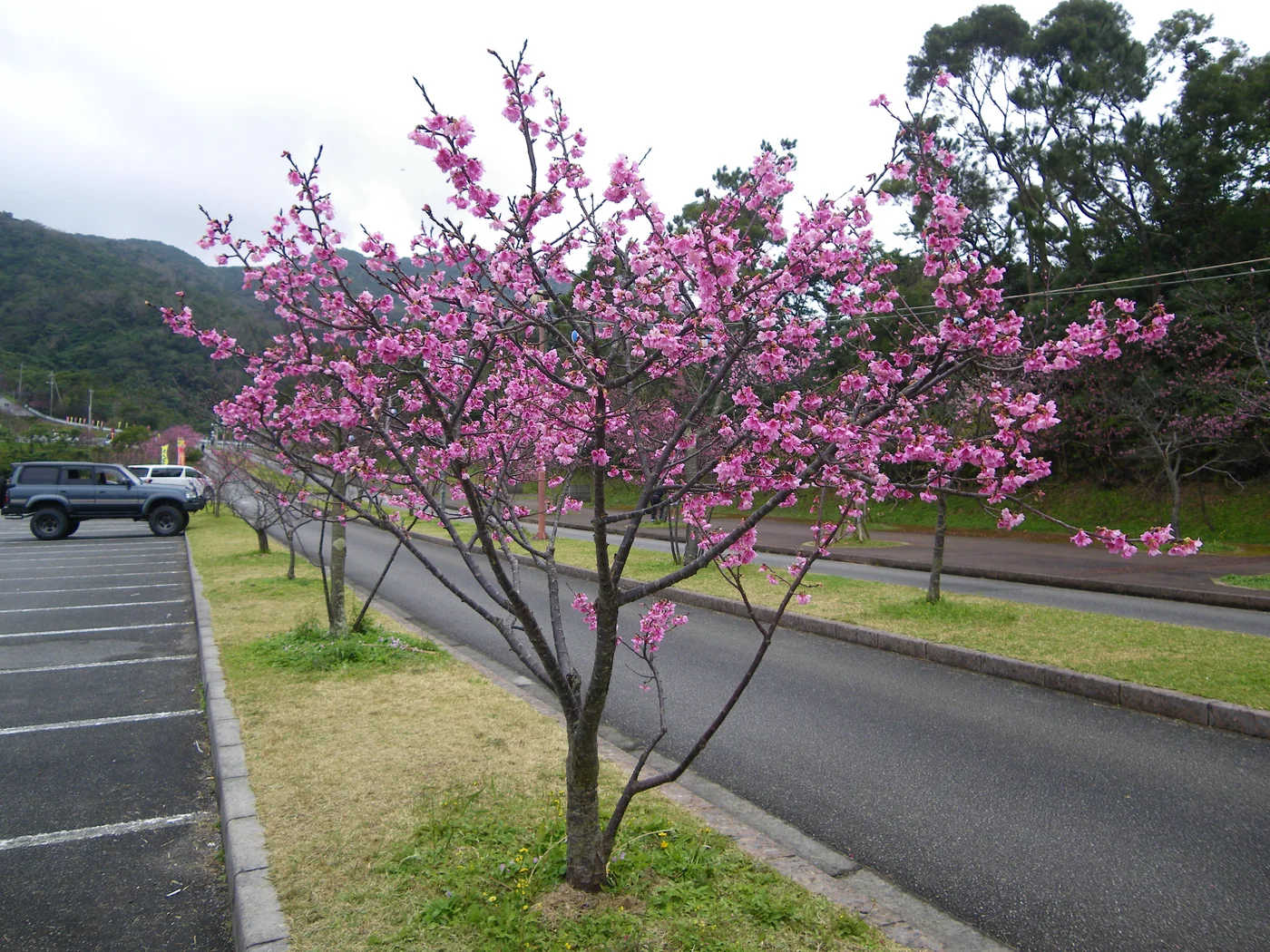
Yaedake Sakura no Mori Park is midway up, at 921 Namizato, Motobu, with playground equipment, rest facilities, toilets and a multipurpose plaza. For drivers with children or older relatives, I would make it the main stop: park, use the toilet, walk a section and decide together whether to continue. Park facilities do not mean the whole road suits parking and walking. Find a safe parking place before getting out for flowers.
If you enjoy roadside scenery, note where flowers are open on the ascent, then plan a short walk from a permitted parking place. Drivers and passengers see at different speeds. Do not ask the driver to find flowers and take photographs while turning. Save desired shots for after parking, and do not stop in the road where traffic meets while someone frames a photograph. If road conditions or staff require you to continue, see that section through the window and rest at the next permitted stop.
The summit is an extension, not everyone’s required destination. Forest lovers can give the road more time; families may find the mid-slope park enough. With only half a day, making the park your endpoint connects lunch and the return more easily.
Mount Yae blossom viewing spans a road and a park, so use the relevant year’s festival traffic guidance. The 2026 event was extended, but that year’s free blossom shuttle does not automatically apply next season. Motobu’s current touring-bus page describes its regular fiscal-2026 town sightseeing bus. Before finalizing a car-free ascent, obtain a stop or pickup arrangement explicitly naming Yaedake Sakura no Mori Park.
Okinawa Convention & Visitors Bureau’s Okinawa Story features this Mount Yae festival drone short, released March 26, 2021, introducing rows of kanhizakura in Motobu.
Without a car: separate long-distance buses, local buses and the final walk
Naha to the north is one leg; a northern town to the flowers is another. Route 111 express bus reaches Nago. Okinawa Bus’s current fare table lists adult one-way fares of ¥2,520 from Naha Airport Domestic Terminal to Nago Bus Terminal, or ¥2,420 from Asahibashi/Naha Bus Terminal. Two adults’ long-distance returns approach ¥10,000, before local transport. Compare that cost and daily travel time with a northern overnight stay.
For Nago Castle Park, reach Nago city and connect to the southern entrance or a taxi. Route 70 Bise Line’s operator fare table includes Nagojo Iriguchi, ¥190 for adults from Nago Bus Terminal. It serves the castle side, followed by stairs. For subaco or the flowering-tree area, give a taxi the specific destination and arrange return pickup at the same place to avoid the wrong mountain approach.
For Nakijin, take route 66 Motobu Peninsula Line toward Nakijin from Nago, or Yanbaru Express’s airport line from Naha, getting off at Nakijin Joseki Iriguchi. Castle management gives about 15 minutes on foot from that stop. The express-bus stop guide places the Unten Port-bound stop beside the road to the old castle approach, marked Imadomari Walking Path. The Naha-bound stop is approximately opposite. Identify the return stop on arrival.
For Mount Yae, the route 70 fare table lists ¥720 for adults from Nago Bus Terminal to Yaedake Iriguchi, covering only the foot-of-mountain stop. If using a taxi uphill, arrange the descent too and specify Sakura no Mori Park or a higher location. Use one clear pickup point. The current route 70 main-stop timetable has only a few morning and afternoon departures from Nago, with different outward and return routing. Do not treat it as a frequent city bus.
Motobu’s regular free sightseeing loop bus is currently announced through January 31, 2027. It serves ports, markets, some hotels and the Ocean Expo Park area, but its stop list excludes Yaedake Sakura no Mori Park. It can connect accommodation or markets, not replace the mountain leg. A charter or prearranged transfers make Mount Yae and Nakijin in one car-free day easier. Using ordinary local buses alone, I would make Nakijin the main trip and leave Mount Yae another day.
Stay in Nago without a car: one site a day, two different landscapes
On day one in central Nago, make Nago Castle Park a half-day. After breakfast, head toward the castle side and turn back according to your ability on the stairs. To avoid long stair sections, take a taxi to the flowering-tree area and agree a return pickup to town. Eat lunch in the city and leave the afternoon for laundry, supplies or rest. There is no need to rush to another mountain, leaving energy for Nakijin tomorrow.
Use route 66 for Nakijin on day two. The weekend timetable effective October 26, 2026 gives a 9:00 departure from Nago Bus Terminal and 9:41 arrival at Nakijin Joseki Iriguchi. Walk to the castle and spend the morning on gates, walls and blossoms. This is a current regular-weekend example. Use the 2027 festival’s traffic notices for diversions and temporary stops on the Nago festival weekend.
Return to Nago on route 65 in the opposite direction, also called Motobu Peninsula Line. The weekend timetable effective the same day lists Nakijin Joseki Iriguchi 13:48–Nago Terminal 14:32, then 14:58–15:42. Work backward from either for a morning castle visit and afternoon departure. Continuing on route 66 goes around the other side of the peninsula before Nago. The same terminus name does not mean the same journey. Check number and direction before boarding to meet lunch or onward buses.
The route 66 fare table gives ¥900 adult fare from Nago Terminal to Nakijin Joseki Iriguchi. Add adult castle admission for ¥1,900 per person for outward travel and entry; return fare is separate. Separate long-distance bus, local bus and castle budgets. Two travelers can then compare how much walking a taxi saves between stop and entrance, or choose a Nago half-day instead.
Give the castle one uninterrupted walk, then visit the culture center. Eat outside in the rest area or at a separate restaurant. Choose your Nago return first and include downhill walking, toilets and waiting at the stop in your departure time. With a long gap between buses, extend exhibition reading rather than carry luggage to an unfamiliar junction to add a stop.
For a Naha day return, keep one site. The direct express bus suits a complete Nakijin visit before returning to Naha. For Nago, combine flowers with city food. Mount Yae needs uphill transport, so connect both legs before choosing it. With a Naha dinner reservation, allow ample long-distance return time rather than finish flowers against the last usable bus.
Nago festival days: separate the park from street events
If choosing the Nago festival on January 30–31, 2027, decide whether flowers or events matter most. The officially listed Nago Castle Park, Sakura Park stage and Nago Jujiro Odori are different stops. After mountain blossoms, allow time to reach town, eat and wait for programs. Walkers can return to accommodation after a morning park visit; event visitors should reserve the afternoon for town rather than book a Mount Yae pickup at the same time.
If some companions want the stage and others flowers, make lunch the group meeting point. Stair walkers can go uphill while others explore town at their own pace, then decide together how long to stay after eating. Choose the booked restaurant or hotel lobby and write its full name, rather than “the cherry festival entrance,” so less mobile companions need not wait throughout the climb.
If driving to a central hotel, park there on arrival and walk to the event area. Ask the hotel about festival-day driveway access and parking, especially for afternoon check-in. Once parked, with later programs planned, eat nearby. Driving afterward across to Onna or Naha makes a long day for the driver. An extra night suits the event atmosphere; visitors mainly after flowers can use a separate weekday.
Before the full program appears, arrange confirmed accommodation, meals and travel and leave the afternoon open. Add preferred sessions when announced. If they conflict with the castle visit, keep the priority for this trip. Families with small children can choose one daytime event and return to their room rather than stay until the whole program ends.
A driving day: two blossom sites with lunch between
From a Nago or Motobu base, give Mount Yae and Nakijin one block each. This article suggests Mount Yae in the morning, using the mid-slope park as the main stop and permitted parking points along the road. Return to Motobu town for lunch, then Nakijin in the afternoon. Mountain road first and a site with a clear entry cutoff afterward is easy to schedule. From a Nakijin overnight base, reverse it: climb stone steps while fresh, then make a short Mount Yae stop.
Allow about two hours at each for walking and photographs, plus lunch, driving and parking between. These are this article’s planning suggestions. Seeking light or waiting for crowds to clear can use half a day at one site. For a detailed culture-center visit, keep only Nakijin that afternoon and move Mount Yae to another day. Dropping a short stop often works better than shortening everyone’s meal.
Between Nago and Motobu, the Motobu access guide lists coastal Routes 449 and 505 and inland Prefectural Route 84. Mount Yae lies in the mountain direction; Nakijin is on the peninsula’s north. Navigate to actual parking destinations, not just municipality names. After Mount Yae, avoid driving back to Nago for its park and then around to Nakijin. Link stops in your driving direction.
From Naha, count the drive north separately from travel between northern sites. For a same-day Naha return, choose one main morning site and assess a second after lunch. Return directly if parking queues, tired companions or worsening weather intervene. If both northern sites are priorities, stay in the north the previous night and save the early morning for flowers rather than climb stairs immediately after a long cross-island drive.
Nago, Motobu or Nakijin: choose by dinner and transport
Without a car, start with central Nago. Near Nago Bus Terminal is convenient for outside connections; downtown is convenient for food and streets. Compare these separately when choosing hotels. “Nago” does not mean the same walking area. Being near your actual stop makes departure and return easier. Leave large luggage at the hotel before flowers rather than take a suitcase onto mountain roads.
For Nago street events on the festival weekend, a central stay puts dinner and activities within walking range. Compare the hotel-to-venue route, traffic controls on the return and access to hotel parking. The 2027 festival has dates, so decide first whether to stay in its activity area that weekend. For quiet, view flowers on another day and stay away from that evening’s main event routes.
For drivers focusing on Mount Yae and Nakijin, Motobu can be a two-night base. Decide dinner first. In town within walking distance of restaurants, you can leave the car in the evening. At a coastal resort or separate property, arrange restaurant hours, reservations or an included dinner. Hotels near Churaumi suit another day’s plans, but Mount Yae still needs a drive uphill. Staying in the same town does not remove that final road.
Nakijin suits an early castle arrival if you will plan dinner and transport together. Drivers can complete the castle walk in the morning before moving elsewhere. Without a car, select accommodation with a clear arrival route and possible return pickup. Compare actual roads, slopes and bus stops rather than straight-line castle distance. For future evening events, settle the ride back after the event as part of choosing your room.
Changing hotels daily merely to add another blossom stop usually adds checkout, luggage and check-in waits. Two nights at one northern base allow a nearby park on one day and a different landscape on the next. For Onna, Chatan and Naha comparisons, see where to stay on Okinawa’s main island, then choose how many northern nights this trip needs.
Shorten for rain and walking ability; keep the most manageable section
All three sites are mainly outdoors. Grippy shoes, a backpack leaving both hands free and removable outerwear are more useful than several photographic outfits. Before Nakijin’s stairs, handle children’s water and snacks outside the castle. Include the descent in your effort budget on Nago’s southern steps. For walking uphill along Mount Yae’s road, know how to return to your original parking point. Turn back as planned if uncomfortable rather than shift the pickup location as well.
In rain, put Nakijin’s culture center first, subject to its closing days. In Nago, shorten to a flowering-area walk and rest in the visitor center when open. At Mount Yae, slippery roads, poor visibility or traffic limiting stops can justify only the mid-slope park. For other winter wet-weather options, see family activities in Okinawa on a rainy day and replace all-day outdoors with one outdoor and one indoor block.
A short walk still needs a clear endpoint. At Nakijin, return from your chosen courtyard; at Nago, stay within a selected blossom path or plaza; at Mount Yae, return to the park parking point. Agree who walks, who rests and where to meet. Photography and walking speeds differ. Those wanting longer photographs can stay, while those needing a seat return to the rest area rather than wait together at every tree.
A few useful answers
Which one blossom site should I choose in northern Okinawa?
Choose Nakijin Castle for kanhizakura, stone walls and sea views if you can manage steps; Nago Castle Park for a city-based half-day; or Mount Yae for roadside flowers with a car. With a stroller or limited walking ability, choose a park section with arranged vehicle access and avoid continuous stairs.
Have northern Okinawa’s 2027 blossom festival dates been announced?
As of October 30, 2026, Nago Tourism Association has announced the 64th Nago Cherry Blossom Festival for January 30–31, 2027, with some programs undecided. The same page lists Nakijin and Mount Yae’s 2027 festival periods as undecided. Mount Yae’s extension to February 8, 2026 is a previous-season record.
Which site is easiest without a rental car?
From Nago, make Nago Castle Park a half-day and arrange a taxi for its upper flowering-tree area. For Nakijin, take route 66 or Yanbaru Express to Nakijin Joseki Iriguchi, then walk about 15 minutes. Yaedake Iriguchi is at the mountain foot; arrange separate ascent and descent transport and preferably give it its own day.
What does Nakijin Castle cost, and can I use a stroller?
Standard individual entry is ¥1,000 for adults, ¥500 for junior- and senior-high-school students, and free for elementary-school age and below. Management says continuous stone steps make wheelchairs and strollers difficult. The free history and culture center has an elevator; plan around its opening hours and closing days.
Does Motobu’s free loop bus reach Yaedake Sakura no Mori Park?
The currently announced fiscal-2026 regular sightseeing bus runs through January 31, 2027, serving ports, markets, some hotels and Ocean Expo Park. Its stop list excludes Yaedake Sakura no Mori Park. A blossom-season temporary shuttle is a separate arrangement; use a route for the correct year that explicitly names Mount Yae.
Where should I stay for two days of blossoms?
Without a car, compare hotels near Nago Terminal and downtown Nago, visiting Nago’s park and Nakijin on separate days. With a car and a Mount Yae/Nakijin focus, stay two nights in Motobu. For an early castle arrival, stay in Nakijin with dinner and pickups arranged.
Official information and references
Sources used in this guide.
- Nakijin Castle: site guide, kanhizakura and history and culture center
- Nakijin Castle: hours, admission, access and FAQs
- Nakijin Castle: parking lot 1 works and food/drink notices
- Nago Tourism Association: 64th Nago Cherry Blossom Festival, updated October 6, 2026
- Nago Castle Park: north and south entrances and access
- Nago Castle Park: flowering-tree area, Sakura no Sono and subaco
- Motobu Tourism Association: Mount Yae and Sakura no Mori Park
- Motobu Tourism Association: extension record for the 48th Mount Yae festival in 2026
- Motobu Tourism Association: driving and buses
- Motobu Tourism Association: fiscal-2026 free town sightseeing bus
- Yanbaru Express: Nakijin Joseki Iriguchi stops in both directions
- Okinawa Bus: route 111 express fares
- Ryukyu Bus Kotsu: route 70 Bise Line fares toward Jana
- Okinawa Bus: currently published route 70 timetable
- Okinawa Bus: route 66 Motobu Peninsula Line, effective October 26, 2026
- Okinawa Bus: route 65 Motobu Peninsula Line, effective October 26, 2026
- Okinawa Bus: route 66 fares toward Nakijin
- Okinawa Convention & Visitors Bureau: Mount Yae festival drone video, released in 2021
- YouTube: Motobu Mount Yae Cherry Blossom Festival drone footage