Plan a half-day at Nagoya City Science Museum: regular shows or Family Hour, online seats and two QR codes, the 8:59 change deadline, short exhibition routes, family breaks and rainy-day access from Fushimi.
- Region & Focus
- Nagoya
- Reading Scope
- 30 min read · 17 chapters · 7 Q&As
- Official Verification
- 29 official sources checkedUpdated October 28, 2026
- Key Topics
- ItinerariesBookingTravel budget
Chapter Route Map (tap any stop)
- Choose between watching the stars and hands-on exploration
- Choose regular shows or Family Hour by content and date
- Six time columns do not mean six public shows every day
- Opening days and weather-related closure rules
- Permanent exhibitions plus planetarium: ¥1,000 for an adult
- Online seats open three months ahead: purchase deadlines
- Two QR codes: individual entry downstairs, group check upstairs
- Special-exhibition packages need paper tickets first
- Astronomy floor 5: connect the show with a space theme
- Younger children: start with water and shadows on Science floor 2
- Older children: waves and light on floor 4, or the human body
- Life floor 2: from fossils to rainbows
- Large experiments use different entry systems; protect your show time
- Rest, food, strollers and luggage
- Two half-day plans: a morning regular show or afternoon Family Hour
- From Fushimi to Shirakawa Park: five minutes outdoors even in rain
- Sold-out shows, date changes and missed starts
- Quick Q&A
For a half-day at Nagoya City Science Museum, choose one planetarium show, then place two nearby exhibition themes before or after it. Regular shows and family programs last about 50 minutes. Online booking opens three months ahead with seat selection. The permanent-exhibition and planetarium package issues an admission QR code for each person and one exchange QR code for the group, used at the first-floor gates and Astronomy Building floor 6 respectively.
Choose between watching the stars and hands-on exploration
The large silver sphere in Shirakawa Park is Nagoya City Science Museum’s planetarium. Its official site now uses the name FUJI Nagoya Science Museum. The museum has Life, Astronomy, and Science and Technology buildings. Planetarium shows take place on Astronomy floor 6, while other floors cover the body, Earth, space, light, water and physical principles. For a first visit, combine one show with a short exhibition route rather than trying to cover every floor from bottom to top.
The planetarium suits visitors willing to sit quietly in darkness and follow the changing sky. The museum gives about 50 minutes for a show and about an hour including entry and exit. Commentary is live in Japanese, without translation devices or simultaneous interpretation. If you enjoy astronomy but have limited Japanese, read the current theme and see the floor 5 space displays first to establish familiar subjects. Children who prefer moving, operating exhibits and asking questions can also have a full half-day in the permanent galleries alone.
This museum half-day can replace one city theme in the two-day Nagoya itinerary. The Toyota Commemorative Museum of Industry and Technology is elsewhere and focuses on textile machinery and vehicle manufacturing. This museum brings natural science and the stars into one complex. Choose what your family wants to spend time on before buying, and leave afternoon space for food or rest. Prices, program dates and procedures here are updated through October 28, 2026.
A 60-second film by Soranowa about Nagoya City Science Museum’s planetarium.
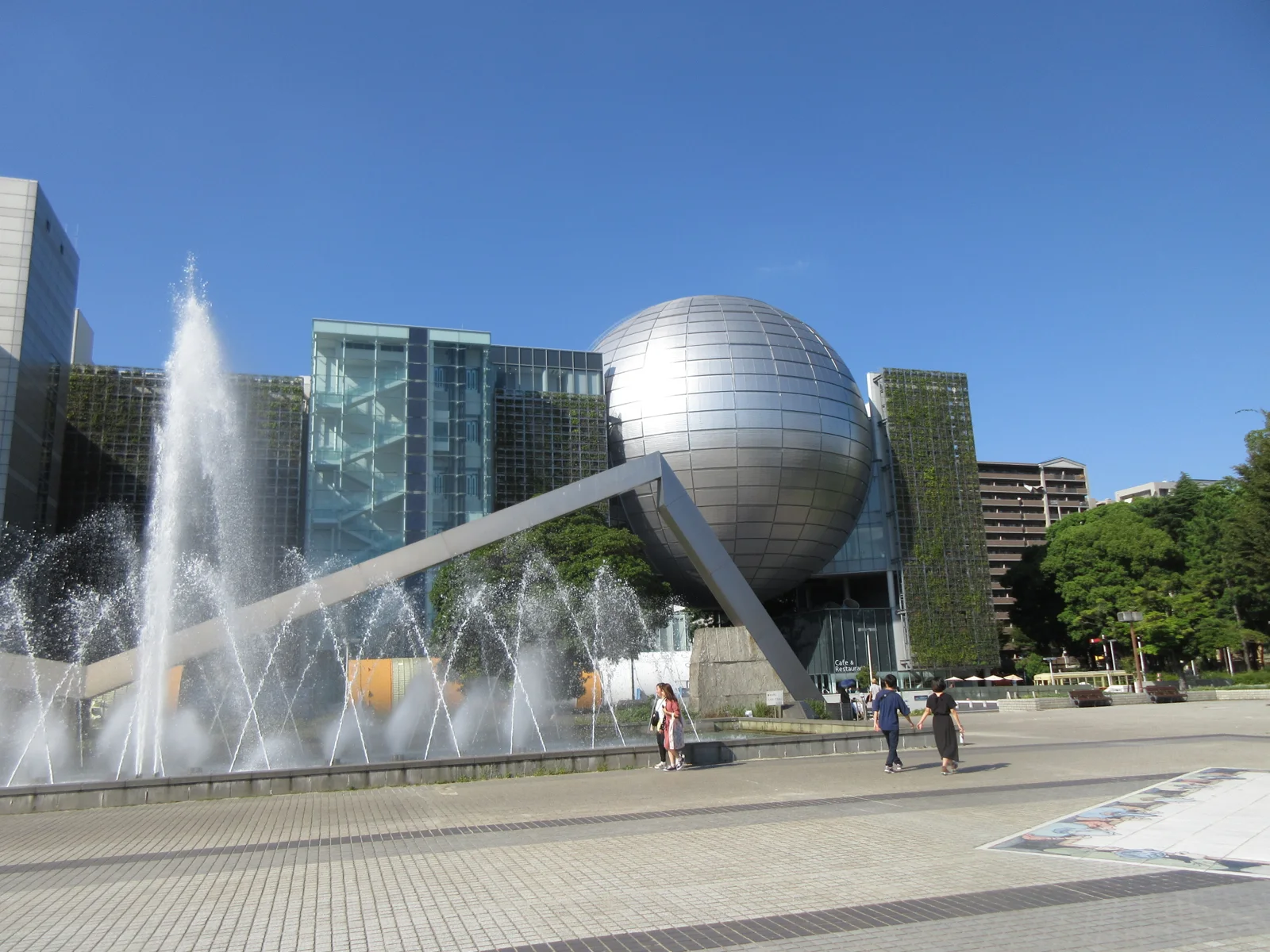
Plan a half-day at Nagoya City Science Museum: regular shows or Family Hour, online seats and two QR codes, the 8:59 change deadline, short exhibition routes, family breaks and rainy-day access from Fushimi.
Choose regular shows or Family Hour by content and date
Regular shows have live commentary by museum educators, covering the day’s sky, astronomical events and a monthly theme. Even the same theme can take a different approach with a different presenter or audience. Older children and adults can start with a question about galaxies, constellation stories or observation, then connect floor 5 displays before or after the show. The value is linking exhibit models with the sky overhead, rather than watching a fixed film.
The official regular-show page currently lists October’s “The Story of Andromeda” for October 1–30, 2026. November’s “Japan’s Observatories: 100 Years of Public Observatories” starts October 31 and runs through November 23. The last day of October already uses the new theme. Read the date range beside the title; October 31 does not offer the Andromeda program.
Family Hour mainly serves families with preschool and early-elementary children and first-time planetarium visitors, using play and adventure. “Solar System Adventure” runs August 7, 2026–January 6, 2027. “Surprise! Exploring Mars” begins January 9, 2027. A program name does not mean it runs at every session every day. Find the Family Hour cells on your date’s schedule. Separate preschool and school-learning shows have specific audiences and group arrangements; individual families should choose a public session available for purchase.
Six time columns do not mean six public shows every day
The monthly timetable uses columns such as 10:00, 11:20, 12:40, 14:00, 15:20 and 16:40, but each day labels them as regular shows, Family Hour, school shows, no show or museum closure. Read across the whole row for your travel date before buying. School sessions are not ordinary visitor slots. A canceled session means no projection in that cell, distinct from closure of the entire museum.
For Wednesday, October 28, 2026, the timetable lists regular shows at 11:20, 14:00 and 15:20, school shows at 10:00 and 12:40, and no 16:40 show. Saturday, October 31 has no 10:00 show, regular shows at 11:20 and 12:40, Family Hour at 14:00, and regular shows at 15:20 and 16:40. The same columns have different uses, so a weekend pattern cannot be applied to a weekday. October 28’s regular sessions still use Andromeda; October 31’s use Japan’s observatories.
After choosing a suitable program, check availability for the same date and session on the official ticket site. The timetable describes programming; the ticket page describes seats. Match both. If one sells out, choose another suitable regular show that day. If only unsuitable times remain for your children, buy permanent-exhibition admission. If the projection is the main purpose of the trip, fix it before restaurants and departure times so a lunch queue does not squeeze entry.
Opening days and weather-related closure rules
Normal hours are 9:30–17:00, with last admission at 16:30. Mondays are generally closed; if Monday is a national holiday or other holiday, it opens and closes on the next weekday. The third Friday of each month is also closed, shifted to the fourth Friday if it is a holiday. Year-end closure is December 29–January 3. For holiday periods, choose a date on the museum calendar before looking for a show in the monthly timetable.
Ordinary rain makes the museum an alternative to a long outdoor visit, but storms have a specific closure rule. If a storm, snowstorm or corresponding emergency warning remains in force for Nagoya at 7:30 that morning, the museum closes all day. Read the homepage announcement before leaving in such weather. Purchased tickets follow the announced temporary-closure process. Distinguish ordinary rain from warning-related closure. The usual 17:00 closing time also does not mean unrestricted admission to evening projections, which have separate tickets and programs.
Permanent exhibitions plus planetarium: ¥1,000 for an adult
The current official fees are ¥1,000 for an ordinary adult’s exhibitions-and-planetarium ticket or ¥500 for exhibitions only. High-school and university students pay ¥600 or ¥300 respectively and must show student ID. Junior-high age and younger enter free. Special exhibitions have their own prices. Choose the exhibition by name rather than treating ordinary permanent admission as a special-exhibition ticket.
For a first visit with no other admission entitlement and a wish to see a show, choose the permanent-exhibition and planetarium package. The planetarium-only add-on is for holders of valid permanent-exhibition, special-exhibition or eligible season admission. A planetarium-only ticket needs that underlying admission entitlement. If you only want interactive displays, buy permanent admission and save the difference for a meal. You can add a show later if seats remain and sales are still open.
Two ordinary adults and one elementary-school child pay ¥2,000 in adult fees for permanent exhibitions and a show, with the child free. Still include the child’s planetarium seat in the booking. For permanent exhibitions alone, the adult total is ¥1,000. These calculations exclude transport and food. The official FAQ says some discounts, including certain subway day-pass benefits, are unavailable online and require the applicable on-site procedure. Weigh that against session availability and seat selection before deciding.
Online seats open three months ahead: purchase deadlines
Official online planetarium tickets open three months before the visit and specify the date and session. Online sales normally end one hour before curtain time. The 10:00 session is an exception, ending 30 minutes before. A 14:00 show therefore closes online sales at 13:00; a 10:00 show at 9:30. These are purchase deadlines. Leave additional time to move through the museum and assemble. Paying by card while hurrying there risks both the sales cutoff and phone verification.
Online buyers can choose seats; the counter assigns them automatically. The museum says seats are arranged within good viewing ranges. Near the center, the view feels more like looking up at the real sky, though the central projector can block some angles. Outer seats have less obstruction but a different apparent scale between the front and rear sky. Families can compare adjacent positions across two rows instead of insisting on one row. First keep everyone close enough to assist one another, then compare direction.
Overseas visitors can buy through the official site by credit card. Use an email account that receives messages and a device able to complete the card issuer’s verification. EMV 3-D Secure may request a one-time password. Save the confirmation, application number and email address, which are also needed to display tickets and change dates. Each application covers at most ten people; larger groups use the group-reservation procedure.
Two QR codes: individual entry downstairs, group check upstairs
The permanent-exhibition and planetarium package issues two QR types. Each admission ticket has its own electronic-ticket QR code for scanning individually at the museum’s first-floor gates. The purchase also has one planetarium exchange QR code for staff at the Astronomy floor 6 entrance. Everyone in that purchase should assemble there together. Despite the word “exchange,” this package allows direct presentation on floor 6 without first collecting paper tickets.
For two adults and one child in one purchase, identify each admission QR on the ticket page and pass through the first-floor gates in turn. Then switch to that purchase’s planetarium exchange QR and go upstairs together. Passing the entrance gate does not complete planetarium entry; staff still check tickets and you must find your seats on floor 6. If one person manages all tickets, show another adult where the exchange QR is before entry so a restroom trip does not separate the group from its ticket holder.
The official ticket page lets you distribute unused admission tickets by email or LINE, allowing separate museum entry. The purchaser should retain the whole-order display link in the confirmation email. Show a QR directly on a phone or print it from the official page if you lack a suitable device. If a phone battery dies or tickets will not display, seek help at the first-floor counter and provide the saved application number. Resolve this early rather than using the floor 6 assembly time to search email.
Special-exhibition packages need paper tickets first
For a special-exhibition and planetarium package, the official system issues a special-exhibition exchange QR. Use it at the first-floor entrance-area KIOSK to print the purchased number of paper tickets. Scan each paper ticket’s QR at the first-floor gate, then show the paper ticket to staff at the special exhibition and Astronomy floor 6. Online special-exhibition-only tickets also require KIOSK exchange first. The exhibition, price and dates determine whether this branch belongs in your visit.
If your family half-day already has a show and two permanent themes, keep that scope first. A special exhibition you particularly want can replace one permanent-gallery segment. Budget time for both the exhibition and paper-ticket exchange. With an extra exchange step, do not arrive only fifteen minutes before the projection. Those fifteen minutes refer to assembly on floor 6, not starting a first-floor queue.
Astronomy floor 5: connect the show with a space theme
Astronomy floor 5’s “Our Universe” fits before or after a floor 6 projection. Displays run from ancient cosmology, geocentric and heliocentric models and telescopes to Moon phases, the solar system, planetary exploration, stars and galaxies. With limited time, choose Moon and solar system or telescopes and planetarium equipment, without reading every panel. A clear subject makes it easier to find what interests you under the dome.
The Moon-phase exhibit uses a rotating lunar globe and linked Earth–Moon models to show how the Moon’s appearance changes from Earth. Let children describe the lit portion, then compare model positions rather than memorizing every phase name. Continue to solar-system and planetary-motion displays to place the Moon seen during your trip into a model. This also suits visitors using objects and interaction to build understanding with limited Japanese.
For equipment, choose the planetarium history area. The museum index lists Zeiss IV, pinhole, fiber-optic and digital systems. Floor 6 uses optical and digital projection together; floor 5 shows different ways to bring the stars indoors. From October 31, 2026, the regular theme is Japanese observatories, so telescope principles, size comparisons and observation at different wavelengths also connect with it. Finish floor 5 and go directly to floor 6 assembly instead of repeatedly crossing buildings.
Younger children: start with water and shadows on Science floor 2
Science and Technology floor 2’s “Wonders of Science” has sound, light, movement and shape exhibits, including colored shadows, mirrors, echo tubes, ball tracks and patterns made by swinging sand. Start with a device whose change is easy to see, then try a different action. Asking what changed helps adults understand what a child notices better than explaining the entire principle at once.
The three-color shadow exhibit uses red, green and blue light to produce colored shadows. The explanation distinguishes additive light from pigment mixing: combining light makes it brighter, unlike mixing pigments into a dark color. Observe which light your body blocks and which colors remain on the wall, then think about screens at home. Clear comparisons let adults and children take turns without first learning a full set of Japanese terms.
The Water Plaza on the same floor connects clouds, rain, rivers and sea in a cycle. Water returns from the sea area to clouds and flows through rivers to the sea, with drops, flow, vortices and pumps. Follow its movement around, then let a child choose one place to try repeatedly. Arriving from rain gives a connection to the model’s water route. With little time before a show, stay on this floor instead of adding a distant one, and keep time for restrooms and the ascent.
Older children: waves and light on floor 4, or the human body
Science and Technology floor 4’s “Discovering Scientific Principles” covers water waves, sound vibration, polarization, refraction, electromagnets and digital imagery. Compared with floor 2’s intuitive activities, it suits those ready to ask another question. The water-wave exhibit shows changes around obstacles and at different depths, connecting diffraction, interference and refraction with sound and light. Choose one phenomenon and nearby sound or optics displays rather than treating the floor as a textbook contents list.
Watch waves passing an opening, two sets meeting, and waves entering shallower water separately. A travel visit need not teach every physics definition. Let children identify where the wave pattern changes, then read further or return to another exhibit if interest develops. Adults interested in mathematics or information can choose binary numbers, character encoding and digital imagery on the same floor. The family need not stay at one device throughout.
Life floor 4’s human-body area covers muscles, bones, nerves, circulation and digestion. Start with a skeleton puzzle, your own blood vessels, heartbeat or reaction speed. The reaction-speed exhibit compares visual and auditory stimuli, then explains signals through nerves. When taking turns, focus on differences between stimuli and results rather than only who is fastest.
Life floor 2: from fossils to rainbows
Life floor 2’s Earth area joins history, rocks and fossils with surface shapes and phenomena. Its index lists stromatolites, coral fossils, petrified wood, footprint fossils, Kiso cypress and dinosaurs. Another part has water-flow patterns, convection, cloud rings, sunsets, rainbows and earthquake apparatus. Specimen enthusiasts can start with Earth history; hands-on visitors can choose light and flow. These approaches often move at different speeds.
The rainbow-making device uses light and small plastic beads to create a rainbow in a compact space. The explanation compares this with sunlight and water droplets in nature. Change viewing position, then read how the light and beads are arranged. Young children need not stop at every number, but can notice that the observer’s position is part of the effect.
If your half-day includes water flow on Science floor 2, this floor’s flow patterns and environment extend the theme. If you chose Astronomy floor 5 and a projection, leave Earth for another visit or spare energy. Both short routes stand on their own. Families particularly keen on fossils can replace an experiment queue with Earth displays and spend time with the specimens they want, rather than abandoning their interests for a prominent large-experiment name.
Large experiments use different entry systems; protect your show time
The museum lists four large exhibits: Water Plaza, Tornado Lab, Electric Discharge Lab and Deep Freezing Lab. The tornado display shows an air vortex about nine meters high. The discharge lab has two Tesla coils and sparks. The freezing lab combines a minus-30-degree environment with polar and aurora content. Unlike freely explored galleries, these require attention to entry procedures, starts and physical tolerance. Leave travel time between timed activities if you have a projection booked.
The current experiment schedule and participation guide lists fifty places for Electric Discharge Lab, first come first served by queuing at the entrance before the start. Deep Freezing Lab has fifteen places and numbered tickets. A general large-exhibit mention of numbered tickets does not make their procedures identical. Life Lab also has small-group limits. If the stars are your main purpose, choose just one experiment of interest.
On weekends and holidays, Deep Freezing Lab distributes tickets beside the lab at opening, 12:30 and 14:30, covering morning, early-afternoon and late-afternoon sessions. Weekdays generally distribute at opening and 13:00. Read the lab notice after arrival for your date’s sessions. Exclude your projection time first, then collect a suitable ticket. If full, return to your chosen free-flow displays rather than sacrifice the projection while waiting for another release.
Rest, food, strollers and luggage
Rest areas are on Life floor 1 and Science and Technology floors 3 and 7. Eat brought food in designated rest areas and put it away in galleries. The museum asks visitors not to reserve seats with bags. A seated drink between themes is easier than finding food when a child becomes hungry at the floor 6 door. For the restaurant and shop, exit from the first-floor entrance area and re-enter with your admission ticket, allowing for that route.
For projections, children aged four and under sit on a parent’s lap, with one child per parent. The museum does not accept arrangements with more young children than parents. Darkness can frighten children; staff guide families out temporarily if a child makes noise during the show. Family Hour suits younger families, but consider tolerance for darkness and quiet sitting. Treat age, free admission and separate seating according to the actual people in the booking.
Strollers cannot enter the dome and are temporarily held in the planetarium lobby. The general museum services page says there is no stroller rental or general storage. These rules cover different situations: there is handling at the dome entrance for a show, while general museum touring uses your own stroller. Science floor 3 has a women-only baby room for feeding and changes. Men needing hot water for formula can ask the General Affairs office on Science floor 1. Use floor restrooms before heading to floor 6 so you can focus on finding seats.
Free coin-return lockers are on Science floor 1 for small items and Life floor 1 for medium and large items. Store coats or small bags to free your hands across floors. Families with large luggage can leave it at their accommodation and bring essentials. Ask the counter about limited same-day wheelchair loans. The planetarium has wheelchair viewing spaces and hearing-assistance equipment; explain seating and support needs directly. If a rest leaves no energy for more galleries, finish the half-day at the first-floor exit.
Two half-day plans: a morning regular show or afternoon Family Hour
For an astronomy focus, use the October 28, 2026, 11:20 regular show as an example. Enter at 9:30, choose Moon phases and solar system or telescope displays on Astronomy floor 5, and assemble on floor 6 around 11:05. The projection ends around 12:10; add exit time, then lunch and rest. To stay longer, choose one Earth or physics floor afterward. The 9:30–11:05 allocation is a suggestion and can shrink with children’s interests. The fixed points are the 11:20 start and no entry afterward.
For hands-on family time, use the October 31, 2026, 14:00 Family Hour. Eat lunch first, enter around 12:15, and start with colored shadows and water on Science floor 2. Assemble on Astronomy floor 6 at 13:45 for “Solar System Adventure,” ending around 14:50 plus exit time. Rest afterward or find one celestial object from the show on floor 5. This route omits the 12:30 freezing-lab ticket release because flexible displays fit better before the projection.
Both examples put the fifteen-minute buffer on floor 6. Travel up from the first-floor entrance is additional. The museum explicitly prohibits entry after the start, so ticket holders must be seated beforehand. Arrive earlier if restrooms, strollers or luggage take your family longer. If you reach Shirakawa Park only minutes before the start, seek ticket help at the counter or from staff instead of running inside.
From Fushimi to Shirakawa Park: five minutes outdoors even in rain
The museum is at 2-17-1 Sakae, Naka-ku, Nagoya, inside Shirakawa Park. Official access uses Fushimi Station Exits 4 and 5 on the Higashiyama and Tsurumai lines, about five minutes south on foot. From Nagoya, take the Higashiyama Line toward Fujigaoka for one stop. Bring rain gear for the surface walk and allow time to close umbrellas, put away wet coats and prepare tickets. Families needing elevators should use the station’s accessible exit route and then approach the museum rather than force a stairway exit.
The official access page also lists about five minutes south from city-bus Hirokoji-Fushimi, five minutes north from Meitetsu-bus Shirakawa Koen-mae, and nine minutes south from SRT Hirokoji-Honmachi. Compare these with your accommodation’s route. From Nagoya Station, one subway stop and a walk make the meeting place easy to explain. Use the silver sphere to identify the museum in the park; the art museum entrance is a different destination.
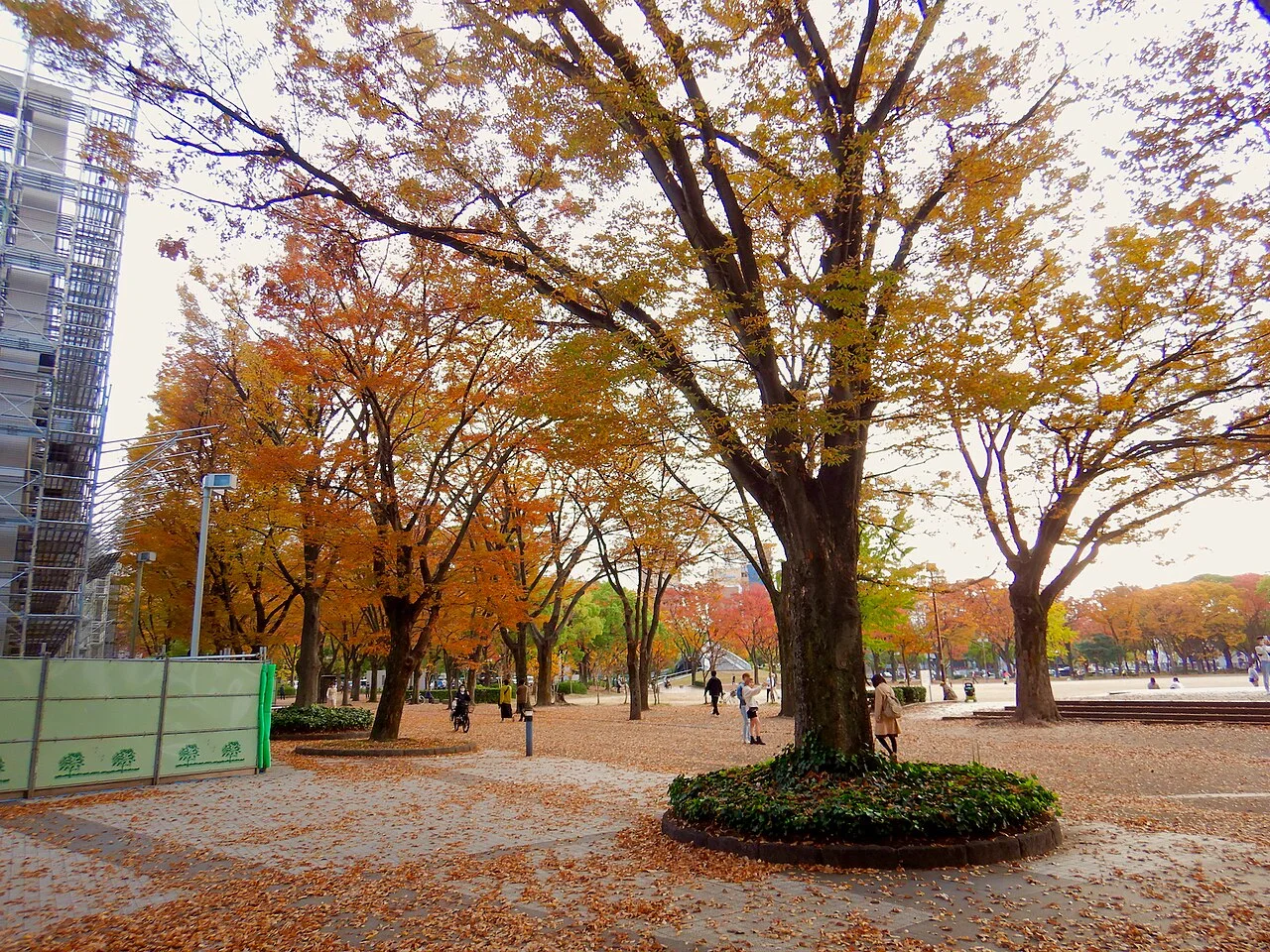
Leave a Shirakawa Park walk until after the museum and suitable weather. In continued rain, return to the station without circling for exterior photographs. In better weather, the park makes a slower end to the exhibitions. If Nagoya Castle or the Toyota museum is also planned, keep one as the other half-day’s focus and count travel and food. Do not squeeze this museum’s projection, experiments and all permanent displays between them.
Sold-out shows, date changes and missed starts
The museum has no cancellation waiting list or telephone reservations for a full show. Check other acceptable sessions, or buy permanent admission and follow your short gallery route. Before arrival, keeping the original city itinerary is another option. If online sales have ended but seats remain, counter sales normally continue until five minutes before the show, or ten minutes before the 16:40 session. Queuing, purchase and the trip to floor 6 still take time. The final sales time is not an arrival target at the station.
Online planetarium purchases allow one change of date and session. The ticket terms require completion by 8:59 on the original visit date. In Ticket Confirmation, enter the application number and email, open the list, select tickets and choose the date/time-change option, then an available date, session and seats. Cancel any distribution to companions first and redistribute after the change. Read the new confirmation and update the family schedule and meeting time.
Personal plans, lateness and public-transport disruption do not qualify for cancellation refunds, and entry after the start is prohibited. If you miss the show, stop rushing and use any permanent-admission entitlement still valid. Buying another session depends on seats, time and the family’s wishes. If the museum cancels or suspends a show, it refunds by the specified procedure. Refunds cover ticket prices only, excluding transport and accommodation.
A few useful answers
Can a planetarium-only ticket admit me to the museum?
It needs valid permanent-exhibition, special-exhibition or eligible season admission. For a first visit without another entitlement, choose the permanent-exhibition and planetarium package, ¥1,000 for an ordinary adult.
Do free elementary-school children still need a planetarium reservation?
Yes. Junior-high age and younger pay no admission fee, but their projection seats must be handled in the booking. Children aged four and under sit on a parent’s lap, one young child per parent.
Are regular shows explained in English or Chinese?
Commentary is live in Japanese, without translation devices or simultaneous interpretation. A show lasts about fifty minutes, or about an hour including entry and exit.
Where do I use the package’s two QR codes?
Scan each person’s electronic admission QR at the first-floor gate. Show the purchase’s exchange QR to staff on Astronomy floor 6 and enter together. Special-exhibition packages first require paper tickets from the KIOSK.
Can I change or cancel a planetarium ticket?
Online tickets allow one date/session change completed by 8:59 on the original visit date, subject to seats. Personal cancellation, lateness and transport disruption are not refundable. Entry after the start is prohibited.
Which station is simplest in rain?
From Fushimi Exits 4 and 5, walk south for about five minutes to the museum. From Nagoya, take the Higashiyama Line toward Fujigaoka one stop. The approach is outdoors; bring rain gear and allow entry and travel to floor 6.
Do I need a full day for the planetarium?
One show and two exhibition themes fit a half-day. Add time for a special exhibition or several experiments. The museum’s permanent-gallery estimate is one hour to half a day.
Official information and references
Sources used in this guide.
- Nagoya City Science Museum | Hours, fees and entry rules
- Nagoya City Science Museum | Official ticket FAQ: categories, QR codes, seats and refunds
- Nagoya City Science Museum | Ticket terms: one change before 8:59
- Nagoya City Science Museum | Online ticket guide and free child seats
- Nagoya City Science Museum | Monthly projection schedules, October 2026–January 2027
- Nagoya City Science Museum | Opening calendar
- Nagoya City Science Museum | Regular-show themes and dates
- Nagoya City Science Museum | Family Hour programs and dates
- Nagoya City Science Museum | Projection commentary language
- Nagoya City Science Museum | Show and entry/exit duration
- Nagoya City Science Museum | Permanent-exhibition visit duration
- Nagoya City Science Museum | Three-building floor index
- Nagoya City Science Museum | Astronomy floor 5: space
- Nagoya City Science Museum | Science floor 2: Wonders of Science
- Nagoya City Science Museum | Science floor 4: scientific principles
- Nagoya City Science Museum | Life floor 2: Earth
- Nagoya City Science Museum | Life floor 4: the human body
- Nagoya City Science Museum | Large exhibits
- Nagoya City Science Museum | Experiment times and admission procedures
- Nagoya City Science Museum | Rest rooms, restaurant, lockers and family facilities
- Nagoya City Science Museum | Planetarium equipment and services
- Nagoya City Science Museum | Planetarium children, strollers and assistance
- Nagoya City Science Museum | Address and access
- Nagoya City Science Museum | Moon-phase exhibit explanation
- Nagoya City Science Museum | Colored-shadow exhibit explanation
- Nagoya City Science Museum | Water-wave exhibit explanation
- Nagoya City Science Museum | Reaction-speed exhibit explanation
- Nagoya City Science Museum | Rainbow exhibit explanation
- Nagoya City Science Museum | Soranowa: Nagoya City Science Museum planetarium short film