Plan a half-day at Nagoya City Science Museum: standard shows or Family Hour, online booking, two QR codes, the 8:59 change deadline and short exhibition routes, with family breaks, rainy-day access from Fushimi and missed shows.
- Region & Focus
- Nagoya
- Reading Scope
- 30 min read · 17 chapters · 7 Q&As
- Official Verification
- 29 official sources checkedUpdated 28 October 2026
- Key Topics
- ItinerariesBookingTravel budget
Chapter Route Map (tap any stop)
- Decide between the stars and hands-on exploration
- Choose standard shows or Family Hour by both content and date
- Six time columns do not mean six public shows every day
- Opening, closures and severe-weather rules
- ¥1,000 for permanent exhibitions plus planetarium: buy the right admission
- Online seat selection opens three months ahead: purchase deadlines
- Two QR codes: individual scans on 1F, one group code on 6F
- Special-exhibition combinations require paper tickets first
- Astronomy 5F: a shared space theme before and after the show
- Younger pupils: start with water and shadows on Science and Technology 2F
- Older pupils: waves and light on 4F, or observe your own body
- Life 2F: Earth, from fossils to rainbows
- Large experiments use different entry procedures; protect the fixed show time
- Family breaks, food, pushchairs and luggage
- Two half-day plans: a morning standard show or afternoon Family Hour
- Fushimi to Shirakawa Park: five minutes outside even in rain
- Sold out, changed dates and missed shows need different responses
- Quick Q&A
For half a day at Nagoya City Science Museum, choose one planetarium show, then place two nearby exhibition themes around it. Standard shows and family programmes last about 50 minutes; online booking lets you choose a show and seats three months ahead. The permanent-exhibition and planetarium combination issues individual admission QR codes and one exchange QR for the whole booking, used at the first-floor gates and Astronomy Building's sixth floor respectively.
Decide between the stars and hands-on exploration
The large silver sphere in Shirakawa Park is Nagoya City Science Museum's planetarium. The official website now presents information under the name FUJI Nagoya Science Museum. The complex has Life, Astronomy and Science and Technology buildings. Planetarium shows take place on Astronomy 6F; permanent displays elsewhere cover the body, Earth, space, light, water and physics. For a first visit, combine one show with a short exhibition route instead of trying to cover every floor.
The planetarium suits visitors willing to sit quietly in darkness and watch the changing sky. The museum gives about 50 minutes for a show, or an hour including entry and exit. Commentary is live in Japanese, without translation equipment or simultaneous interpretation. Astronomy enthusiasts with limited Japanese can read the current theme and explore the fifth-floor space displays beforehand. If children prefer moving, operating exhibits and asking questions, the permanent galleries alone make a full half-day.
This museum can replace one city theme in the two-day Nagoya itinerary. Toyota Commemorative Museum of Industry and Technology is elsewhere and focuses on textile machinery and vehicle manufacturing. Here, natural science and the stars share a complex. Choose content the family wants before booking, leaving room for food or rest. Prices, programme validity and procedures are current to 28 October 2026.
A 60-second film by Soranowa about Nagoya City Science Museum's planetarium.
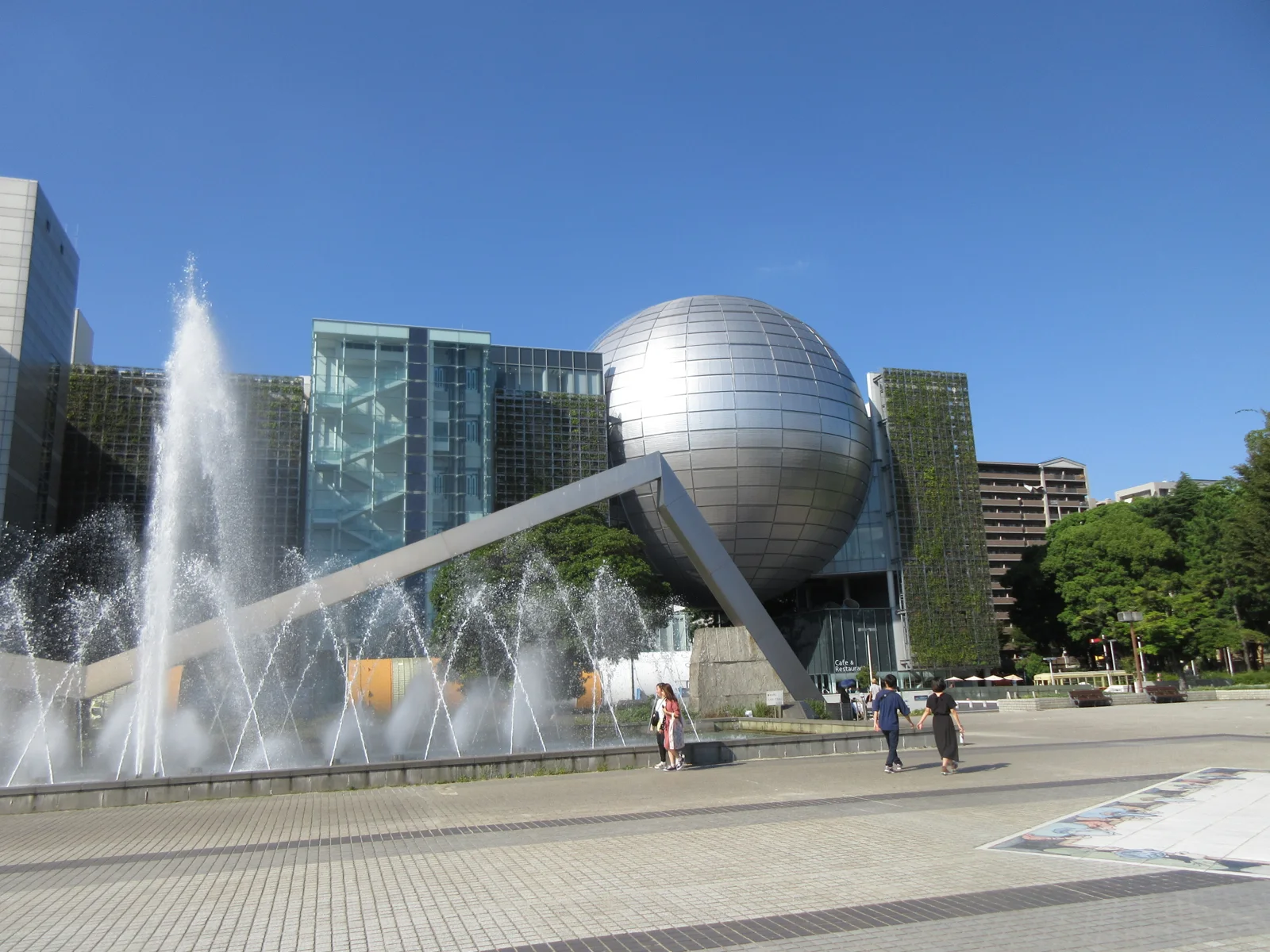
Plan a half-day at Nagoya City Science Museum: standard shows or Family Hour, online booking, two QR codes, the 8:59 change deadline and short exhibition routes, with family breaks, rainy-day access from Fushimi and missed shows.
Choose standard shows or Family Hour by both content and date
Standard shows have live curator commentary on that day's sky, astronomical phenomena and a monthly theme. Different presenters and audiences can produce different approaches to the same theme. Older children and adults can start with a question about galaxies, constellation stories or observation, then connect the fifth-floor displays before or after. The value lies in linking gallery models to the sky overhead, rather than watching a fixed film.
The official standard-show page lists October's Andromeda Story for 1–30 October 2026. November's Japanese Observatories: 100 Years of Public Observatories starts on 31 October and runs to 23 November. The last day of October already uses the new theme. Read the date range beside the title; 31 October does not suit a visit specifically for Andromeda.
Family Hour mainly serves families with preschool or younger primary-school children and first-time planetarium visitors, with more play and adventure. Solar System Adventure runs from 7 August 2026 to 6 January 2027; Surprise! Exploring Mars starts on 9 January 2027. A programme title does not mean it runs every day or at every time. Find Family Hour in the date schedule. Separate preschool and school-learning shows have their own target groups and group arrangements; independent families should choose public bookable performances.
Six time columns do not mean six public shows every day
The monthly schedule uses columns such as 10:00, 11:20, 12:40, 14:00, 15:20 and 16:40. Each date separately marks standard shows, Family Hour, school shows, no performance or museum closure. Read the whole row for your travel date before booking. School slots are not public visitor options. A slot with no show differs from closure of the whole museum.
For Wednesday 28 October 2026, the table lists standard shows at 11:20, 14:00 and 15:20, school shows at 10:00 and 12:40, and no 16:40 show. Saturday 31 October has no 10:00 show, standard shows at 11:20 and 12:40, Family Hour at 14:00, then standard shows at 15:20 and 16:40. Identical columns have different uses; do not apply a weekend pattern to a weekday. The first date still has Andromeda, while the second has the Japanese observatory theme.
After choosing an appropriate programme, check seats for the same date and show on the official ticket site. The schedule establishes programming; ticketing establishes availability. If one sells out, choose another suitable standard show that day. If only unsuitable times remain for children, buy permanent-exhibition admission instead. If the planetarium is the trip's main purpose, fix the show before restaurants and departure time so lunch queues do not squeeze admission.
Opening, closures and severe-weather rules
Normal hours are 9:30–17:00, last admission 16:30. The museum generally closes Mondays, opening when Monday is a public holiday or holiday and closing the next weekday. It also closes on the third Friday monthly, or the fourth if the third is a holiday, and from 29 December to 3 January. For holiday travel, choose a date on the opening calendar before finding a show in the monthly table.
Rain makes the museum a useful replacement for a long outdoor visit, but severe weather has a specific closure rule. If a storm or snowstorm warning, or either corresponding emergency warning, remains in force for Nagoya at 7:30, the museum closes for the day. Read the homepage notice before setting out and follow temporary-closure instructions for purchased tickets. Distinguish ordinary rain from these warnings. Normal 17:00 closing also does not imply free access to evening shows; night events have separate tickets and programmes.
¥1,000 for permanent exhibitions plus planetarium: buy the right admission
The current official fees are ¥1,000 for adult exhibition-and-planetarium admission or ¥500 for exhibitions only. Upper-secondary and university students pay ¥600 or ¥300 respectively and must show student identification. Lower-secondary pupils and younger children enter free. Special exhibitions have their own prices: choose the exhibition first rather than using an ordinary permanent-gallery ticket for it.
For a first visit without another admission entitlement, choose the permanent-exhibitions and planetarium combination. Planetarium-only tickets are an add-on for holders of valid permanent, special-exhibition or eligible season admission. They need an accompanying admission entitlement. For hands-on galleries alone, buy permanent admission and retain the difference for food. A planetarium add-on is possible on arrival while seats remain and sales are open.
Two ordinary adults and one primary-school child pay ¥2,000 in adult fees for permanent galleries plus a show. The child is free, but their planetarium seat must be included in the booking. Permanent galleries alone cost the two adults ¥1,000. These are admission sums, excluding transport and food. For subway day-pass or other discounts, the FAQ says some are unavailable online and require the eligible on-site procedure. Weigh this against the show and seat selection you want.
Online seat selection opens three months ahead: purchase deadlines
Official online planetarium sales open three months before the visit and are tied to a date and show. Most close one hour before the start; the 10:00 show closes 30 minutes before. For 14:00, buy by 13:00; for 10:00, by 9:30. These are purchase deadlines, not arrival times. Allow internal travel and assembly time. Paying by card while rushing can expose you to both a sales cutoff and phone verification.
Online buyers can select seats; the counter assigns them automatically. The museum says seating is arranged within a good viewing range. Near the centre feels closer to looking up at a real sky, although the central projector obstructs some angles. Outer seats have less obstruction but different front-and-back viewing angles. Families can compare nearby positions across two rows rather than insisting on one row. Prioritise staying within easy reach of each other, then direction.
Overseas visitors can buy on the official site by credit card, using a working email and a device capable of the card issuer's verification. EMV 3-D Secure may require a one-time password. Keep the completion email, application number and email address used; they also retrieve tickets and support date changes. One application covers up to ten people. Larger groups should use the group-reservation procedure.
Two QR codes: individual scans on 1F, one group code on 6F
The permanent-exhibition and planetarium combination issues two types of QR. Each admission ticket has its own electronic-ticket QR to scan at the museum's first-floor gates. The whole purchase has one planetarium exchange QR to show staff at the Astronomy 6F entrance. Everyone in the booking should assemble there together. Despite the name exchange QR, this combination lets you show it directly on 6F without first queueing for paper tickets.
For two adults and a child booked together, identify each admission QR on the confirmation page and scan them one at a time on 1F. Then switch to that booking's planetarium exchange QR and go upstairs together. Passing the entrance gate does not complete planetarium admission: staff checks and finding seats remain on 6F. If one adult manages all tickets, show another adult where the exchange QR is before entry, avoiding a search for the ticket holder after a child's toilet trip.
The official confirmation page lets you distribute unused admission tickets by email or LINE so companions can enter separately. The purchaser should retain the whole-booking display link in the completion email. Show QR codes directly on a suitable phone or print them from the official page. For a flat battery or display problem, ask the first-floor counter for help and provide the saved application number. Resolve this before it consumes sixth-floor assembly time.
Special-exhibition combinations require paper tickets first
A special-exhibition and planetarium combination issues a special-exhibition exchange QR. Use the KIOSK in the first-floor entrance area to exchange it for the purchased number of paper tickets. Scan each paper ticket's QR at the first-floor gate, then show paper tickets to staff at the special exhibition and Astronomy 6F. Online special-exhibition-only tickets also use KIOSK exchange. The exhibition's availability, dates and price determine whether to add this branch.
A family half-day with one show and two permanent themes usually works within that scope. A special exhibition you want can replace a permanent-gallery block. Include both visiting and paper-ticket exchange time. An extra exchange step means arrival only 15 minutes before the show is too late a planning target. That 15-minute reference is for assembly on 6F, not starting a queue on 1F.
Astronomy 5F: a shared space theme before and after the show
The Universe on Astronomy 5F connects well with the sixth-floor planetarium. Displays run from ancient cosmology, geocentric and heliocentric models and telescopes to lunar phases, the Solar System, probes, stars and galaxies. With one block, choose Moon and Solar System or telescopes and planetarium projectors rather than reading every label. A clear object helps you recognise what interests you under the dome.
The lunar-phase exhibit uses a rotating Moon globe and linked Earth–Moon model to show changing lunar shapes seen from Earth. Let children describe the illuminated part, then compare model positions instead of memorising every phase name. Continue to nearby Solar System and planetary-motion displays, placing the Moon seen during your trip in the model. Objects and operation also help visitors with limited Japanese build concepts.
For equipment, choose the fifth-floor planetarium history area, whose index lists Zeiss IV, pinhole, fibre-optic and digital systems. The current sixth-floor show combines optical and digital projection; 5F reveals different ways to bring the sky indoors. From 31 October 2026 the standard theme is Japanese observatories, so telescope principles, size comparisons and observations at different wavelengths connect to it. Finish on 5F and assemble on 6F without repeated cross-building travel.
Younger pupils: start with water and shadows on Science and Technology 2F
The second-floor Wonder Plaza has sound, light, movement and shape displays, including coloured shadows, mirrors, echo tubes, ball tracks and swinging sand patterns. For a child's first science-museum visit, find a device with an immediate visible change, then try another operation. Ask what changed rather than explaining the whole principle at once; this reveals what the child notices.
Three-colour Shadows uses red, green and blue light to produce different shadow colours. The explanation distinguishes additive light from pigment mixing: overlapping light grows brighter rather than becoming dark like mixed paints. Watch which light the body blocks and which colours remain on the wall, then think of screen colours at home. Children and adults can take turns comparing clear results without learning a whole Japanese vocabulary first.
The same floor's Water Plaza links clouds, rain, rivers and sea into a cycle. Water returns from the sea area to clouds, then flows through rivers to the sea. Areas cover drops, flow, vortices and pumps. Follow the movement once, then let a child repeat a favourite activity. Rain outside can connect to the model's waterways. With little time before the show, stay on this floor rather than adding a distant one, preserving time for toilets and going upstairs.
Older pupils: waves and light on 4F, or observe your own body
Science and Technology 4F covers water waves, sound vibration, polarisation, refraction, electromagnets and digital images. Compared with 2F's intuitive operation, it suits visitors ready to ask another question. Watching Water Waves shows changes around obstacles and depths; the explanation connects diffraction, interference and refraction to sound and light. Choose one phenomenon and nearby related displays for continuity rather than treating the floor as a textbook contents page.
Watch separately as waves pass an opening, meet other waves and enter shallower water. A travel visit need not memorise every definition. Let children point out where the wave pattern changes, then read explanations or compare another exhibit if interested. Adults drawn to mathematics or computing can choose binary numbers, character encoding and digital images on the same floor. The whole family need not remain at one device.
Life 4F's Wonders of the Human Body covers muscles, skeleton, nerves, circulation and digestion. Start with a skeleton puzzle, your blood vessels, heartbeat or reaction speed. The reaction exhibit compares visual and auditory stimuli, then explains nerve transmission. When taking turns, focus on stimulus and result differences rather than only who is fastest.
Life 2F: Earth, from fossils to rainbows
Life 2F's Earth displays combine history, rocks and fossils with surface forms and phenomena. The index includes stromatolites, coral fossils, petrified wood, footprints, Kiso cypress and dinosaurs. Elsewhere are water patterns, convection, cloud rings, sunsets, rainbows and earthquake experiments. Specimen enthusiasts can begin with history; hands-on visitors can choose light and flow. These routes often run at different speeds.
Making a Rainbow uses light and small plastic beads to show a rainbow in a compact space. The explanation compares it with sunlight and water drops in nature. Change position to observe it, then read how light and beads are arranged. Children need not stop at every number, but can notice that the viewer's position forms part of the phenomenon.
After water flow on Science and Technology 2F, Life 2F's patterns and environment extend the theme. After Astronomy 5F and a planetarium show, leave Earth for another visit or spare energy. Each short route stands alone. Fossil-loving families can replace an experiment queue with time at specimens they want, rather than abandoning their interest for a prominent large-experiment name.
Large experiments use different entry procedures; protect the fixed show time
The museum lists four large displays: Water Plaza, Tornado Lab, Electric Discharge Lab and Deep Freezing Lab. The tornado is an air vortex about nine metres high. Discharge uses two Tesla coils and sparks; freezing combines a −30°C environment with polar regions and auroras. Unlike freely explored galleries, these require attention to entry procedure, start time and physical tolerance. Leave travel time between timed programmes.
The current experiment timetable and entry guide gives Discharge a capacity of 50, first come by queueing at its entrance before the start. Freezing takes 15 and uses numbered tickets. A general large-display mention of tickets does not make their procedures identical. Life Lab also has small-group limits. If the stars are the main purpose, choose one experiment of interest.
At weekends and holidays, Freezing tickets are distributed beside the lab at opening, 12:30 and 14:30 for morning, early-afternoon and later-afternoon sessions. Weekdays generally distribute at opening and 13:00. Read the lab notice on arrival for your date. Remove planetarium times from possible experiments first, then collect a suitable ticket. If full, return to your chosen free-flowing galleries rather than sacrificing the show for another distribution.
Family breaks, food, pushchairs and luggage
For permanent-gallery breaks, use Life 1F or Science and Technology 3F or 7F rest areas. Eat packed food only in designated rest areas and put food away in galleries. Do not reserve seats with bags. A seated drink between themes is easier than finding food when a child becomes hungry at the sixth-floor door. For the restaurant or shop, exit from the first-floor entrance area and re-enter with your ticket, allowing for that route.
Children aged four or under must sit on a parent's lap, with one child per parent. The museum does not accept arrangements with more such children than parents. Darkness may frighten young children; staff guide families out temporarily if children make noise during projection. Family Hour suits younger families but still requires judging comfort with darkness and quiet sitting. Treat age, free admission and independent-seat needs separately for the actual people booked.
Pushchairs cannot enter the dome and are temporarily held in the planetarium lobby. General building services do not provide pushchair rental or ordinary storage. These are different scopes: dome-entry handling before a show, versus using your own pushchair around the museum. Science and Technology 3F has a women-only baby room for feeding and changing. Men needing hot water for feeds can ask the General Affairs office on 1F. Toilets are on each floor; use them before heading to 6F.
Free coin-return lockers are small on Science and Technology 1F and medium or large on Life 1F. Store coats or small bags to free your hands across floors. Families with large cases can leave them at accommodation. Ask the counter about limited same-day wheelchair loans. The planetarium has wheelchair viewing space and hearing assistance; explain seating and support needs to staff. If a break leaves no energy for more, exit on 1F to finish the half-day.
Two half-day plans: a morning standard show or afternoon Family Hour
For astronomy, use the 11:20 standard show on 28 October 2026 as an example. Enter after 9:30 opening, choose lunar phases and Solar System or telescopes on Astronomy 5F, and assemble on 6F around 11:05. Projection finishes about 12:10; add exit time before lunch and rest. For more afterwards, choose Earth or physics on one floor. The 9:30–11:05 block is a suggested allocation adjustable to children; 11:20 and no admission after the start are fixed.
For hands-on families, use 14:00 Family Hour on 31 October 2026. Eat lunch, enter around 12:15 and see coloured shadows and water on Science and Technology 2F. Assemble on Astronomy 6F at 13:45 for Solar System Adventure, ending about 14:50 plus exit time. Rest afterwards or find one featured celestial body on Astronomy 5F. This route omits 12:30 Freezing ticket collection because flexible exhibits fit better before the show.
Both examples place you on 6F 15 minutes before projection; travel from the first-floor entrance is additional. The museum explicitly prohibits entry after the start, so ticket holders must be seated beforehand. Arrive earlier if toilets, pushchairs or luggage take your family longer. If reaching Shirakawa Park only minutes before the start, ask counter or floor staff about tickets instead of running through the building.
Fushimi to Shirakawa Park: five minutes outside even in rain
The museum is at 2-17-1 Sakae, Naka-ku, Nagoya, inside Shirakawa Park. The main official route is about five minutes south from Fushimi Exits 4 or 5 on the Higashiyama and Tsurumai subway lines. From Nagoya Station, take the Higashiyama Line one stop towards Fujigaoka. Bring rainwear for the surface walk and allow umbrella closing, wet coats and ticket preparation. For lifts, follow the station's accessible exit route, then connect to the museum rather than using stairs.
The official access page also gives about five minutes south from city-bus Hirokoji Fushimi, five minutes north from Meitetsu-bus Shirakawa Koen-mae and nine minutes south from SRT Hirokoji Honmachi. Compare these if your existing route passes them. From Nagoya Station, one subway stop plus walking gives a straightforward meeting plan. Recognise the museum by its silver sphere; the city art museum has a different entrance.
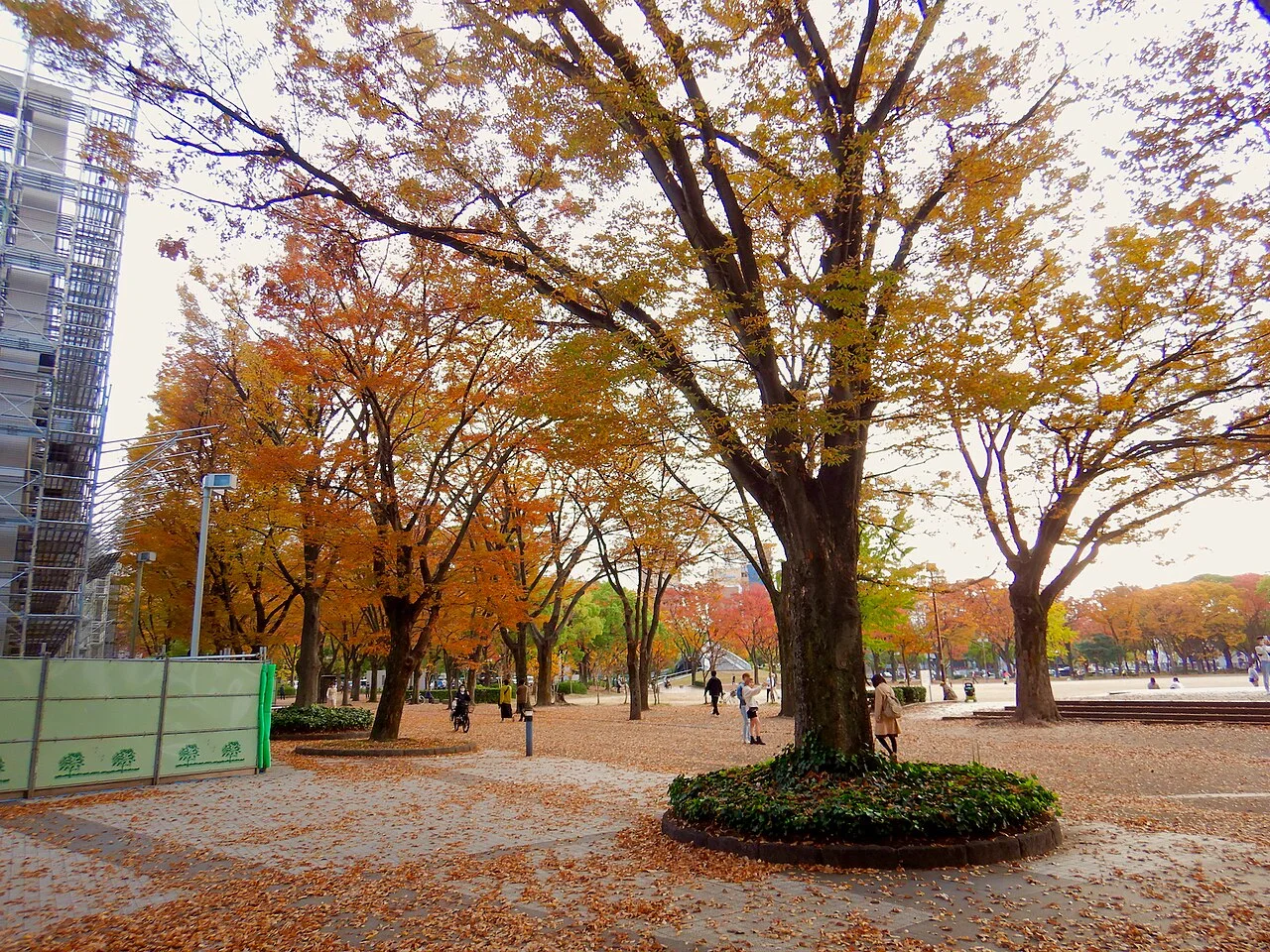
Walk through Shirakawa Park after leaving if weather suits. In persistent rain, return directly to the station rather than circling for exterior photographs. In better weather, the park offers a slower finish. If Nagoya Castle or Toyota's industry museum is also planned, keep one as the other half-day theme, including travel and food. Do not squeeze all projections, experiments and permanent galleries between them.
Sold out, changed dates and missed shows need different responses
For a full show, the museum offers neither a cancellation waiting list nor telephone reservations. Check other acceptable shows; if content and timing do not fit, buy permanent admission and follow the original gallery route. Before arrival, you can retain the original city itinerary. After online sales close, remaining seats are normally sold at the counter until five minutes before the show, or ten minutes before 16:40. Queueing, buying and reaching 6F still take time. The sales cutoff is not a station-arrival target.
Online planetarium tickets allow one date-and-show change. The ticket terms require completion by 8:59 on the original visit date. Open ticket confirmation, enter the application number and email, select tickets in the list and choose 日時変更する, meaning change date and time. Select an available date, show and seats. Cancel any distribution to companions first, then redistribute after changing. Read the new confirmation email and update family plans and meeting times.
Personal plans, lateness or public-transport disruption do not qualify for cancellation refunds, and entry after the start is prohibited. If you miss the show, stop rushing and use any still-valid permanent admission. A new show depends on seats, time and the family's wishes. Museum-cancelled or suspended performances are refunded by the specified method, limited to ticket value; transport and accommodation costs are excluded.
A few useful answers
Can I enter with a planetarium-only ticket?
It needs permanent, special-exhibition or eligible season admission alongside it. For a first visit without another entitlement, the permanent-exhibition and planetarium combination costs ¥1,000 per ordinary adult.
Does a free primary-school child still need a planetarium reservation?
Yes. Lower-secondary pupils and younger children pay no viewing fee, but their seats must be handled in the booking. Children aged four or under sit on a parent's lap, one per parent.
Are standard shows explained in English or Chinese?
Commentary is live in Japanese, without translation equipment or simultaneous interpretation. Projection lasts about 50 minutes, or an hour including entry and exit.
Where do I use the combination ticket's two QR codes?
Scan individual electronic-ticket QRs at the first-floor gates. Show the whole-booking exchange QR to staff on Astronomy 6F and enter together. Special-exhibition combinations require KIOSK paper-ticket exchange first.
Can I change dates or cancel?
Online tickets allow one date-and-show change completed by 8:59 on the original visit day, subject to seats. Personal cancellation, lateness and transport disruption are not refunded. No entry is allowed after the start.
Which station is most direct in rain?
Walk about five minutes south from Fushimi Exits 4 or 5. From Nagoya, take the Higashiyama Line one stop towards Fujigaoka. There is an outdoor section; bring rainwear and allow entry and travel to 6F.
Does a planetarium visit need a whole day?
One show and two exhibition themes fit half a day. Add time for a special exhibition or multiple experiments. The museum's reference for permanent galleries is one hour to half a day.
Official information and references
Sources used in this guide.
- Nagoya City Science Museum: hours, fees and entry rules
- Official ticket FAQ: categories, QR codes, seats and refunds
- Ticket terms: one change before 8:59
- Official online ticket guide and free children's seats
- Planetarium monthly schedule, October 2026–January 2027
- Opening calendar
- Standard-show themes and dates
- Family Hour programmes and validity
- Planetarium commentary language
- Projection, entry and exit duration
- Permanent-exhibition visiting time
- Floor index for the three buildings
- Astronomy 5F: space
- Science and Technology 2F: Wonder Plaza
- Science and Technology 4F: science principles
- Life 2F: Earth
- Life 4F: human body
- Large displays
- Experiment times and entry procedures
- Rest areas, restaurant, lockers and family facilities
- Planetarium equipment and services
- Planetarium: young children, pushchairs and assistance
- Access and address
- Lunar-phase exhibit explanation
- Coloured-shadow exhibit explanation
- Water-wave exhibit explanation
- Reaction-speed exhibit explanation
- Rainbow exhibit explanation
- Soranowa: Nagoya City Science Museum planetarium film