Compare 2026 Christmas markets across five Japanese cities. Check entry fees for Shin-Toyosu, Shiba Park, and Yokohama Red Brick Warehouse, free markets in Osaka, Nagoya, and Sapporo, and winter illuminations running past Christmas.
- Region & Focus
- TokyoWhen to visit
- Reading Scope
- 25 min read · 11 chapters · 5 Q&As
- Official Verification
- 31 official sources checkedUpdated November 22, 2026 at 08:00 AM GMT+8
- Key Topics
- SeasonsWinterItineraries
Chapter Route Map (tap any stop)
- Pick Your City Based on Your Arrival Date
- Tokyo's Major Ticketed Market Relocated: Shin-Toyosu on the Bay or Onarimon in Minato
- Picking a Free Tokyo Market: Roppongi for Lights, Marunouchi for Tokyo Station
- Yokohama Red Brick Warehouse: Browse the Free Zones First, Pay Only If You Enter the Main Venue
- Osaka Umeda: Shop for Gifts at Hankyu, See the Tree at Umeda Sky Building
- Osaka Tennoji for Daytime Visits, Nakanoshima for Evening River Walks
- Nagoya's Sakae Market Spans Two Plazas at the South End of Hisaya-odori Park
- Sapporo: Eat in West 2-chome, See the Tree and Stage in West 1-chome
- Tickets, Mugs, and Workshops Are Handled Separately
- Set a Cutoff Time for Dinner, Kids' Breaks, and the Ride Back
- From December 26 Onward, Plan Around Post-Christmas Illuminations
- Quick Q&A
If you want to catch Japan's Christmas markets in 2026, plan to arrive by December 25. Tokyo's major ticketed markets move to Shin-Toyosu and Shiba Park, while Roppongi runs a separate free market. Yokohama Red Brick Warehouse is worth half a day on the waterfront, Osaka has an indoor market in Umeda, and both Sakae in Nagoya and Odori Park in Sapporo offer free entry. Arriving December 26 or later? You can still catch winter illuminations in Tokyo's Marunouchi, along Yokohama's harbor, on Osaka's Midosuji, and in central Sapporo.
Pick Your City Based on Your Arrival Date
Arrive in late November and markets are already open in Tokyo's Shin-Toyosu and Roppongi, Yokohama Red Brick Warehouse, Osaka's Umeda and Tennoji, and Sapporo's Odori Park. Nagoya's Sakae market and Tokyo's Shiba Park hold off until December 4, and Nakanoshima Park's Christmas Commons in Osaka starts a week later. If you are in Osaka before December 5, pick an evening in either Umeda or Tennoji.
December 24 and 25 fall on Thursday and Friday in 2026, and Shin-Toyosu, Shiba Park, and Yokohama all raise their ticket prices for those two days. If your trip also covers December 21 to 23, schedule your ticketed markets then. December 18 is also a Friday, yet Yokohama designates it a special-rate day. When comparing cities, check the organizer's official calendar rather than guessing pricing from standard weekday-weekend patterns.
With a flexible itinerary, use your last open evening in a city as a buffer. With two nights in Tokyo, put free Roppongi or Marunouchi on arrival night when you might want to turn in early, and save ticketed Shin-Toyosu for the next day. If you only have one night in Nagoya, eat near Sakae after daytime sightseeing, or move the market to midday if you are there on a weekend. In Sapporo, if snow or icy winds hit on your Odori evening, shift indoors to the underground walkways for dinner and head back up to Odori if the weather clears.
When you only have one night for a market, pick the venue along the transit line back to your hotel. Taking the Yurikamome Line from Shimbashi to Shin-Toyosu, the Mita Line to Onarimon, and the Minatomirai Line to Bashamichi are three completely different routes. If you are traveling with a stroller or older relatives, choosing a venue with fewer transfers and a shorter outdoor walk on the way back makes the evening much easier.
| City & Venue | 2026 Dates | General Admission |
|---|---|---|
| Tokyo: Shin-Toyosu | 11/20-12/25 | ¥1,000-¥2,000 (junior high and up) |
| Tokyo: Shiba Park (Onarimon Station Square) | 12/4-12/25 | ¥1,000-¥2,000 (junior high and up) |
| Tokyo: Roppongi Hills Oyane Plaza | 11/21-12/25 | Free |
| Yokohama: Red Brick Warehouse Main Venue | 11/20-12/25 | ¥500 regular days, ¥1,000 special days |
| Osaka: Tennoji Park (Tenshiba) | 11/20-12/25 | Free |
| Osaka: Umeda Sky Building | 11/13-12/25 | Free for ground-floor market |
| Osaka: Nakanoshima Park Christmas Commons | 12/11-12/25 | Free, no reservation required |
| Nagoya: Sakae, Hisaya-odori Park South Plazas | 12/4-12/25 | Free |
| Sapporo: Odori Park West 1-chome & 2-chome | 11/20-12/25 | Free |
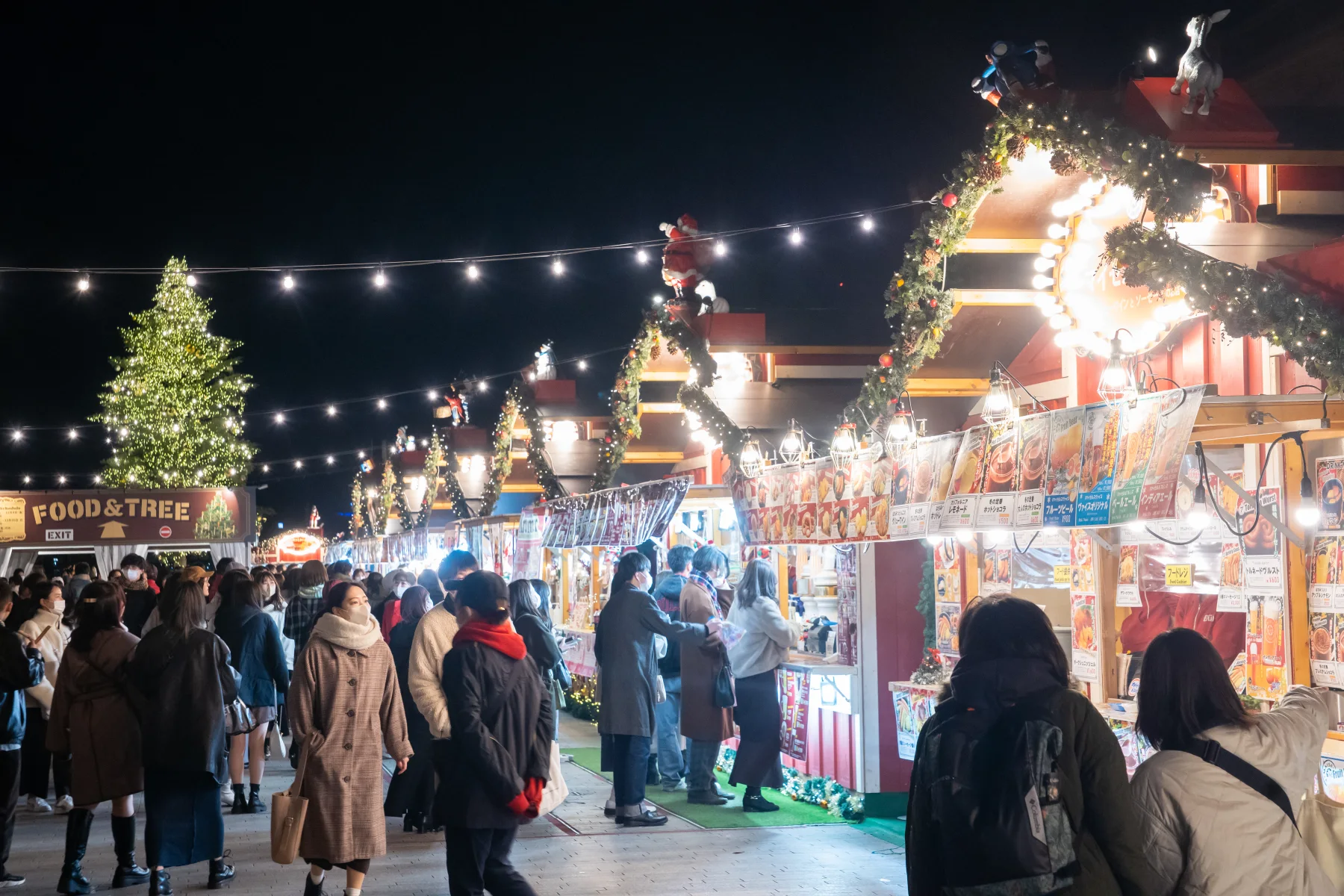
Compare 2026 Christmas markets across five Japanese cities. Check entry fees for Shin-Toyosu, Shiba Park, and Yokohama Red Brick Warehouse, free markets in Osaka, Nagoya, and Sapporo, and winter illuminations running past Christmas.
Tokyo's Major Ticketed Market Relocated: Shin-Toyosu on the Bay or Onarimon in Minato
Tokyo Christmas Market previously took place in Hibiya Park and Meiji Jingu Gaien. In 2026 it runs at two separate locations: Shin-Toyosu opens first with a sea theme, followed in early December by Shiba Park with a forest theme. Tickets and maps are separate for each venue. When booking with friends, double-check you are selecting the exact venue name -- "Shin-Toyosu" or "Shiba Park (Onarimon Ekimae Hiroba)". "Shiba Park" refers to both a subway station and a sprawling park, so Onarimon Station is the stop that puts you closest to the Shiba Park entrance.
The Shin-Toyosu venue sits in Toyosu 6-chome, Koto Ward. It is about a 2-minute walk from Shin-Toyosu Station on the Yurikamome Line, 3 minutes from Shijo-mae Station, or 15 minutes on foot from Toyosu Station on the Yurakucho Line. If you are visiting Toyosu Market earlier in the day, enter from Shijo-mae and leave via Shin-Toyosu. If your hotel is in Ginza and you are already on the Yurakucho Line, walking from Toyosu Station saves an extra transfer for what would only be a 2-minute walk. For the shortest time outdoors, use Shijo-mae or Shin-Toyosu.
The Shiba Park venue occupies Lot 4 of Tokyo Metropolitan Shiba Park, a 1-minute walk from Exit A6 of Onarimon Station on the Toei Mita Line. Official estimates put the walk at 10 minutes from either Exit 3 of Kamiyacho Station (Hibiya Line) or Exit A6 of Daimon Station (Oedo Line). If you want night views of Tokyo Tower afterward, walk into the park directly from the market. If you are with family or already tired from sightseeing, heading straight back to Onarimon gives you a short exit.
On regular days, Shin-Toyosu runs 11:00 to 21:30, with last entry at 20:30 and last order at 21:00. Shiba Park stays open half an hour later, from 11:00 to 22:00, with last entry at 21:00 and last order at 21:30. Both venues open at 16:00 on their respective opening days. If daytime plans run late, work backward from when you will actually reach the gate rather than checking your train times only against closing hour.
Through December 23, weekday admission for junior high students and older is ¥1,000. Weekends and Japanese public holidays at Shin-Toyosu, and weekends at Shiba Park, are ¥1,500, while elementary school students pay ¥500 at both. On December 24 and 25, both venues charge ¥2,000 for junior high students and older, ¥1,000 for elementary students, and free entry for preschoolers. Two adults and one elementary student pay ¥2,500 total on a weekday, jumping to ¥5,000 on Christmas Eve. Food, drinks, and transit cost extra.
Adult advance tickets include a venue-exclusive mug and cannot be canceled or modified for date or party size after purchase. Tickets are sold in 30-minute entry windows; if you miss your slot on the same day, you can still enter before last admission, though staff prioritize ticket holders arriving in their assigned window. Because arrival days involve baggage claim and getting into the city, booking advance tickets for your second day leaves more breathing room. For ticketing details and half-day itineraries at both venues, see our Tokyo Christmas market guide.
Picking a Free Tokyo Market: Roppongi for Lights, Marunouchi for Tokyo Station
Roppongi Hills hosts a free market from November 21 to December 25, open daily 11:00 to 21:00, with 10 stalls at Oyane Plaza. If German wooden ornaments, nutcrackers, or stollen are on your list, browse the stalls first. To keep your time outside brief, grab a hot drink and stroll over to Keyakizaka Street. Keyakizaka's 2026 lights turn on November 5, generally running 17:00 to 22:00 -- 16 days before the market opens.
The framing of Keyakizaka's illuminated trees with Tokyo Tower draws steady crowds for photos. If anyone in your group wants portraits, check out the trees in Mohri Garden or indoors at West Walk inside Roppongi Hills while others browse, then meet up on Keyakizaka. Mohri Garden lights up 17:00 to 23:00 from November 13 to December 25. If you plan to head up to Tokyo City View in Mori Tower, schedule the separate observation deck tickets and last-entry cutoff around dinner.
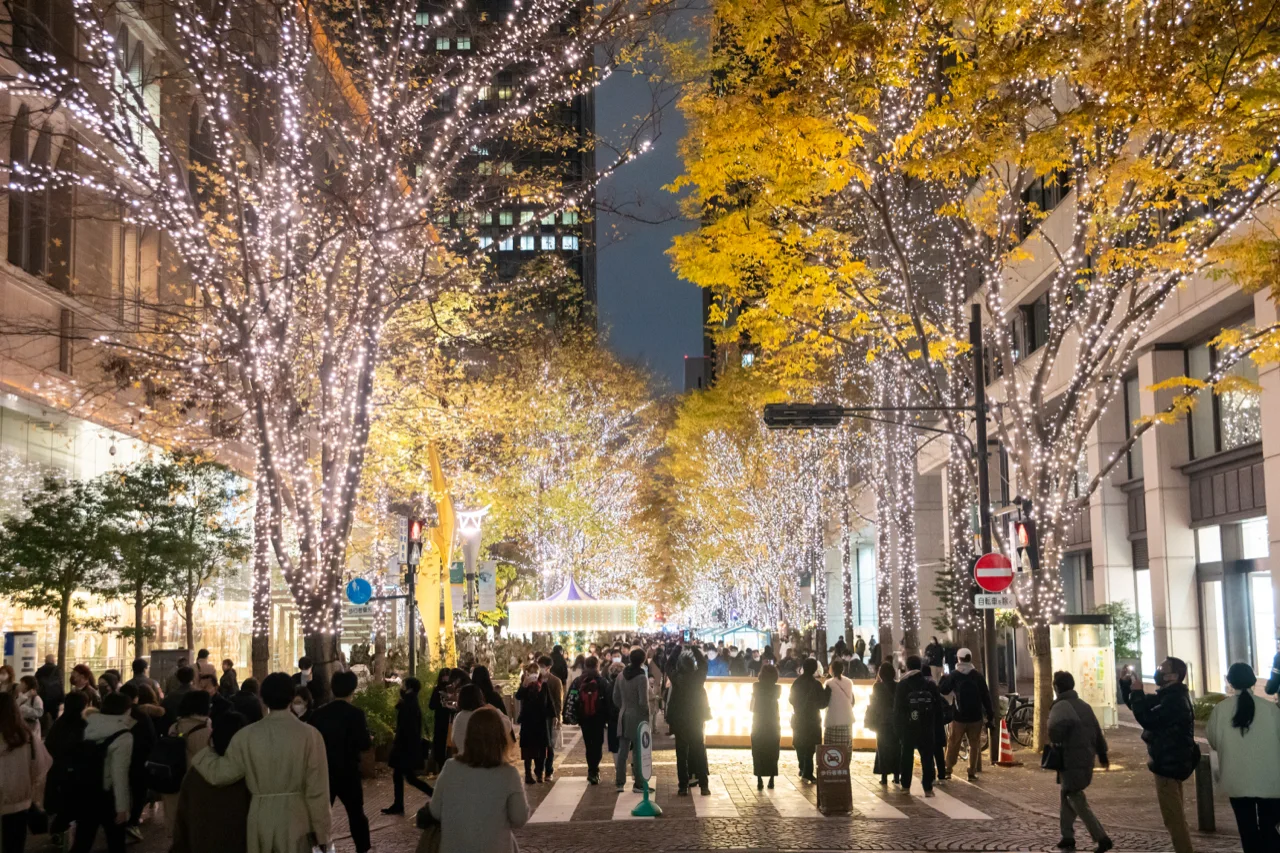
If your hotel is near Tokyo Station or you need to pick up luggage that evening, Marunouchi saves an extra train ride. Marunouchi Street Park runs its winter market along Marunouchi Naka-dori from November 12 to December 25, while the wooden food huts and featured tree on Gyoko-dori open November 27; both areas generally operate 11:00 to 22:00. Exiting Tokyo Station on the Marunouchi side, head toward Gyoko-dori for hot food or start along Naka-dori near the Marunouchi Building for gifts and goods.
Roppongi works well when small bites and stall browsing are the main event, whereas Tokyo Station connects cleanly with Shinkansen or Narita Express schedules. If you only have 40 or 50 minutes after stepping off a train, walk a short stretch of Marunouchi Naka-dori and save sit-down meals for inside the station complex. With rolling suitcases, leave them in station lockers first and re-enter through the same side at night to avoid navigating different floor levels.
Yokohama Red Brick Warehouse: Browse the Free Zones First, Pay Only If You Enter the Main Venue
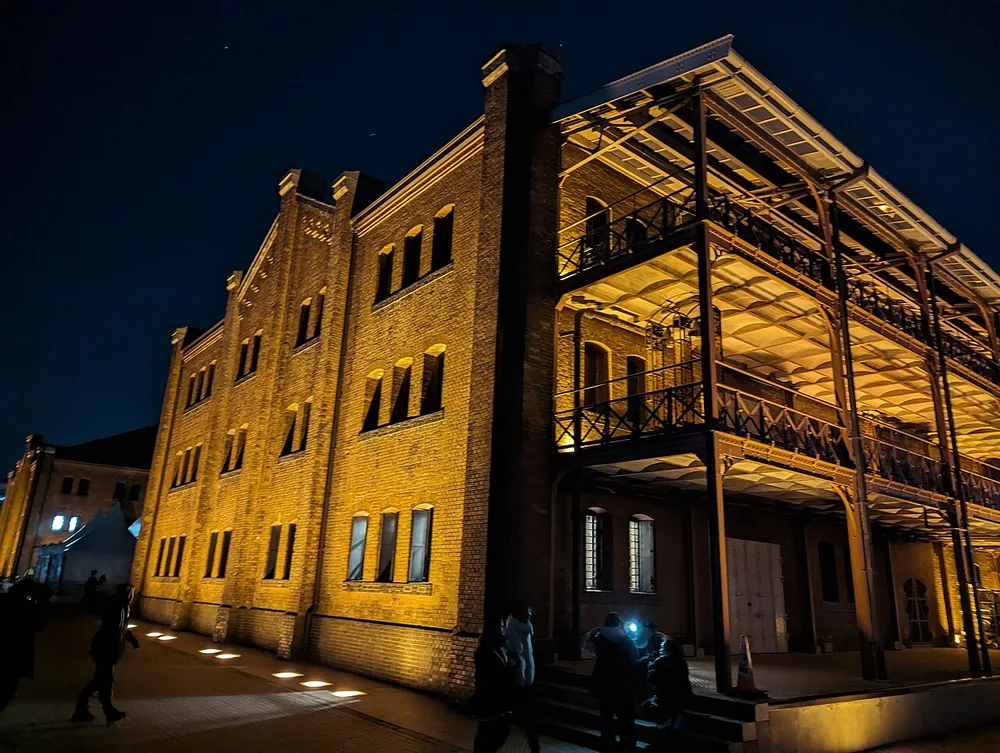
Yokohama Red Brick Warehouse holds its market between and around its two historic waterfront buildings from November 20 to December 25. It is about a 15-minute walk from JR or Municipal Subway Sakuragicho Station along the scenic Kishamichi Promenade. For a direct approach, walk about 6 minutes from Bashamichi or Nihon-odori Station on the Minatomirai Line. On a calm evening, walk in from Sakuragicho for the harbor views and exit toward Bashamichi for a shorter trip back.
Standard main-venue tickets cost ¥500 on regular days and ¥1,000 on special days. Special days fall on December 18 to 20 and December 24 to 25, while late-November weekends remain at the regular rate. Priority entry tickets -- date-specific and limited in quantity via advance sale -- run ¥2,000 on regular days and ¥2,500 on special days. Which ticket to buy depends on whether you have fixed evening reservations; if you have the whole afternoon on the waterfront, standard tickets plus the free zones give plenty of flexibility.
Elementary school children and younger enter the main venue free when accompanied by a parent, and free admission extends to junior high students through December 4. Two adults with one junior high student pay ¥1,000 total at the regular rate on December 3, compared with ¥3,000 for all three on December 5, which is a special-rate day. Same-day regular tickets purchased on-site are cash-only, whereas stalls at Shinko Central Square's Christmas Gate are cashless-only, so bring both payment methods if visiting both areas.
If you just want to see a tree or grab one snack by the water, start at the free Christmas Gate in Shinko Central Square. Running through December 25 alongside the main venue, the 2026 edition features a live Christmas tree from Tokachi, a kids' wood-chip play area, and food and drink stalls. Walking from Sakuragicho along Kishamichi Promenade brings you right past Shinko Central Square first. If kids have already burned enough energy here or your group prefers a seated meal, you can peel off into nearby shopping malls.
A second free area, Christmas Village in Akarenga Park, runs Pokémon illuminations from November 25 to December 25. You can walk straight in to see the gift-box installation, but choosing a Pokémon for a photo at the interactive tree requires picking up an in-person numbered ticket (seiriken) and scanning its QR code. It opens at 20:00 on November 25 and at 11:00 on subsequent days. If you already have timed entry for the main venue or dinner reservations, stop by for the static displays and skip the photo queue if wait times clash.
From November 21 to December 4, the main venue stays open until 21:00 with last order at 20:30; from December 5 onward it extends to 22:00 with last order at 21:30. The main venue lights up at 16:00, and the main Christmas tree stays lit until 23:00 on regular days. Starting December 4, the main tree runs synchronized lighting shows with the waterfront YORUNOYO event at 17:00, 19:00, and 21:00. If you are tight on time and only want photos, arrive right before a show; if you plan to eat at the wooden stalls, order food before lining up for photos so you beat the last-order cutoff. For free-zone hours, priority tickets, and walking routes from each station, see our Yokohama Red Brick Warehouse market guide.
Osaka Umeda: Shop for Gifts at Hankyu, See the Tree at Umeda Sky Building
If you are staying around Osaka Station or Umeda, the easiest spot to fit into a changing schedule is the 9th floor of Hankyu Umeda Main Store. The 2026 event opens November 18, running through December 25 at the Festival Plaza and through December 20 in the Event Hall, generally open 10:00 to 20:00. Both areas close at 17:00 on their respective final days, and select sections close on December 1 for a merchandise changeover. If you are making a special trip for German ornaments or chocolates, check the official floor map first since some stalls wrap up earlier than the plaza tree.
Outside on the ground level, Wonder Square at Umeda Sky Building hosts a free market from November 13 to December 25, open 12:00 to 22:00 with last order at 21:30. The towering tree at street level stays lit daily from noon until 23:00, and in December musical light shows run on the hour and half-hour from 17:00, with the final show at 21:30. You can watch the show right from the ground floor; the Kuchu Teien Observatory upstairs requires a separate ticket. If you arrive late in the evening, decide which showtime you want to catch before joining a food line.
Try pairing department store shopping with the outdoor plaza in a single trip. Browse Hankyu's 9th floor in the afternoon -- and drop fragile glass ornaments or gifts back at your hotel if nearby -- before heading to Umeda Sky Building for an evening show. In light rain, eat dinner inside the Osaka Station complex to minimize walking outdoors. If a downpour starts before you leave Hankyu, the 9th floor already has indoor holiday decor and gift stalls to finish your evening right in Umeda.
Umeda also pairs well with a day trip to Kyoto or Kobe once your train pulls back into Osaka Station. If the department store has already closed by the time you return, the ground-floor outdoor market stays open later. Booking dinner near your hotel lets you keep the market visit short -- just one light show and a warm drink. To link multiple stops in the area, check our Osaka shopping neighborhoods guide for station-by-station routes.
Osaka Tennoji for Daytime Visits, Nakanoshima for Evening River Walks
Tennoji Park's Tenshiba and Tenshiba i:na areas host a single free market from November 20 to December 25. Hours run until 21:00 (last order 20:30) from November 21 to December 18, then extend to 21:30 (last order 21:00) from December 19 onward. Every day except opening day starts at 11:00. Families whose kids wind down early can browse stalls and grab snacks at midday and still get back to the hotel before dark.
Arriving by JR at Tennoji Station, exit the Central Gate, follow the Park Exit signs into the underground passage, and take Exit 21 to street level. Riders on the Osaka Metro Tanimachi Line can also use Exit 21, while those exiting the Midosuji Line West Gate should follow park signage from Exit 5 across the pedestrian bridge. Separate elevator routes are mapped on the park's access page. If you are already at Tennoji Zoo or nearby attractions, simply follow signs toward the park to cover both market zones in one loop.
Empty plates and cups from Tennoji food stalls go to the venue's designated recycling and trash stations. Parents should agree on a routine ahead of time -- restroom stop, seating, and food pickup -- so one adult waits with the kids at a table while the other orders. The market stays open in light rain and cancels only in severe weather. With malls right inside the Abeno and Tennoji station complex, you can eat indoors first and decide afterward whether to stroll through the park, especially before an early morning departure.
Nakanoshima's Christmas Commons opens later and for a shorter run, from December 11 to 25, 17:00 to 22:00, with free entry and no reservation required. Set around the lawn at Nakanoshima Park, it is accessible from Naniwabashi Station on the Keihan Nakanoshima Line or on foot from Kitahama or Yodoyabashi stations. Featuring a large Christmas tree installation by Japanese artist Tatsu Nishino alongside craft and apparel pop-ups, this waterfront venue works best as a relaxed evening walk for art and curated shopping.
If you want to see the projection mapping on Osaka City Central Public Hall the same night, walk east from Yodoyabashi toward the hall first, then continue to the Rose Garden and lawn. The projections loop between 17:30 and 21:30, with the final show starting at 21:20. If you visit the riverside craft market first, leave enough walking time to get back to the hall's east plaza. Staying late? Leave from nearby Naniwabashi or cross to Kitahama, or walk back to Yodoyabashi for a direct Midosuji Line ride if you are staying in Namba.
Nagoya's Sakae Market Spans Two Plazas at the South End of Hisaya-odori Park
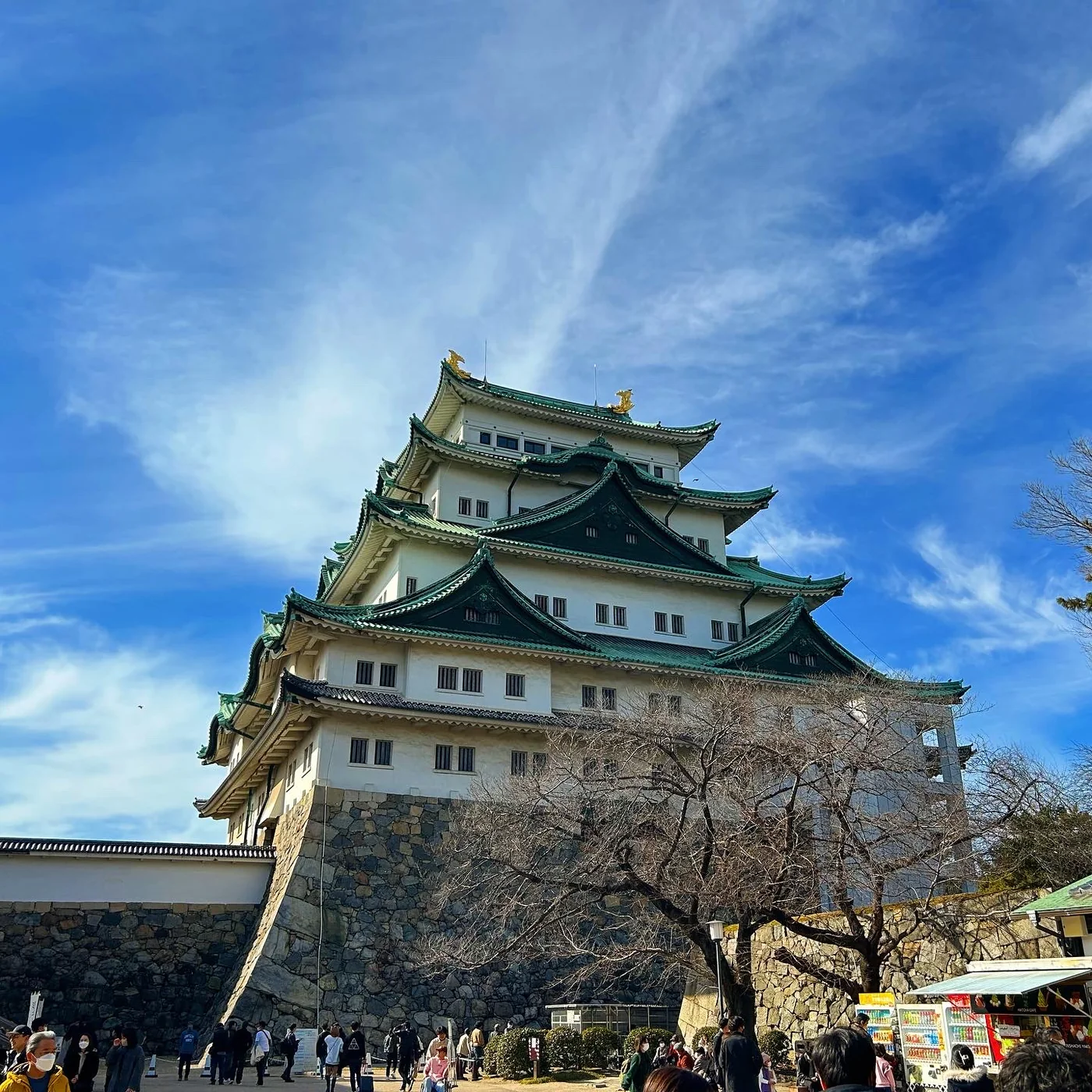
The Nagoya Christmas Market runs December 4 to 25 across Edion Hisaya Plaza and Angel Plaza in Hisaya-odori Park. Search for the individual plaza names on your map rather than the entire park stretch for accurate directions. If you end up under Chubu Electric Power MIRAI TOWER, you are too far north; for the closest arrival, take Exit 6 of Yabacho Station (about a 2-minute walk) or Exit 13 or 16 of Sakae Station (about 5 minutes).
Most weekdays are open only from 16:00 to 21:00, so if you pass through Sakae around Tuesday lunch, plan to return in the evening. Saturdays and Sundays open at 11:00, while December 24 and 25 run 14:00 to 21:00. If you are using Nagoya as a transit hub for central Japan on a weekend, drop your bags in a locker and stop by in the late morning rather than waiting half a day for a weekday opening. Entry is free; food, merchandise, and rides are pay-as-you-go.
Both plazas feature Christmas trees, with Edion Hisaya Plaza showcasing a large live tree -- head there first if you want night photos of the centerpiece. Angel Plaza hosts a merry-go-round, a pop-up Gogo no Kocha (Afternoon Tea) booth, and crepe stalls, making it the better first stop if kids need a snack before walking further. The two plazas connect easily on foot; instead of fixing separate meetup times at both ends, agree on which direction you will exit together.
Santa photo sessions are capped at the first 50 groups per slot. On December 5, 6, 12, 13, 19, and 20, five sessions run between 11:15 and 16:45; on December 24 and 25, only three sessions are scheduled at 14:15, 15:30, and 16:45. If a photo with Santa is a priority, build your market arrival around those times, line up first, and save the carousel for afterward. If you just want a casual family picture, either lit tree makes an easy backdrop.
Guests staying near Nagoya Station can ride the Higashiyama Line straight back from Sakae, or stay downtown for dinner in Sakae or Osu. If you are catching a Shinkansen to Kansai that evening, count backward from train departure to leave buffer time for walking to the station, riding back, and retrieving luggage. Spending the full day in Nagoya? Have miso katsu or hitsumabushi (grilled eel) earlier in the day, and stick to sweets and hot drinks at the market. For full-day pacing, see our two-day Nagoya itinerary.
Sapporo: Eat in West 2-chome, See the Tree and Stage in West 1-chome
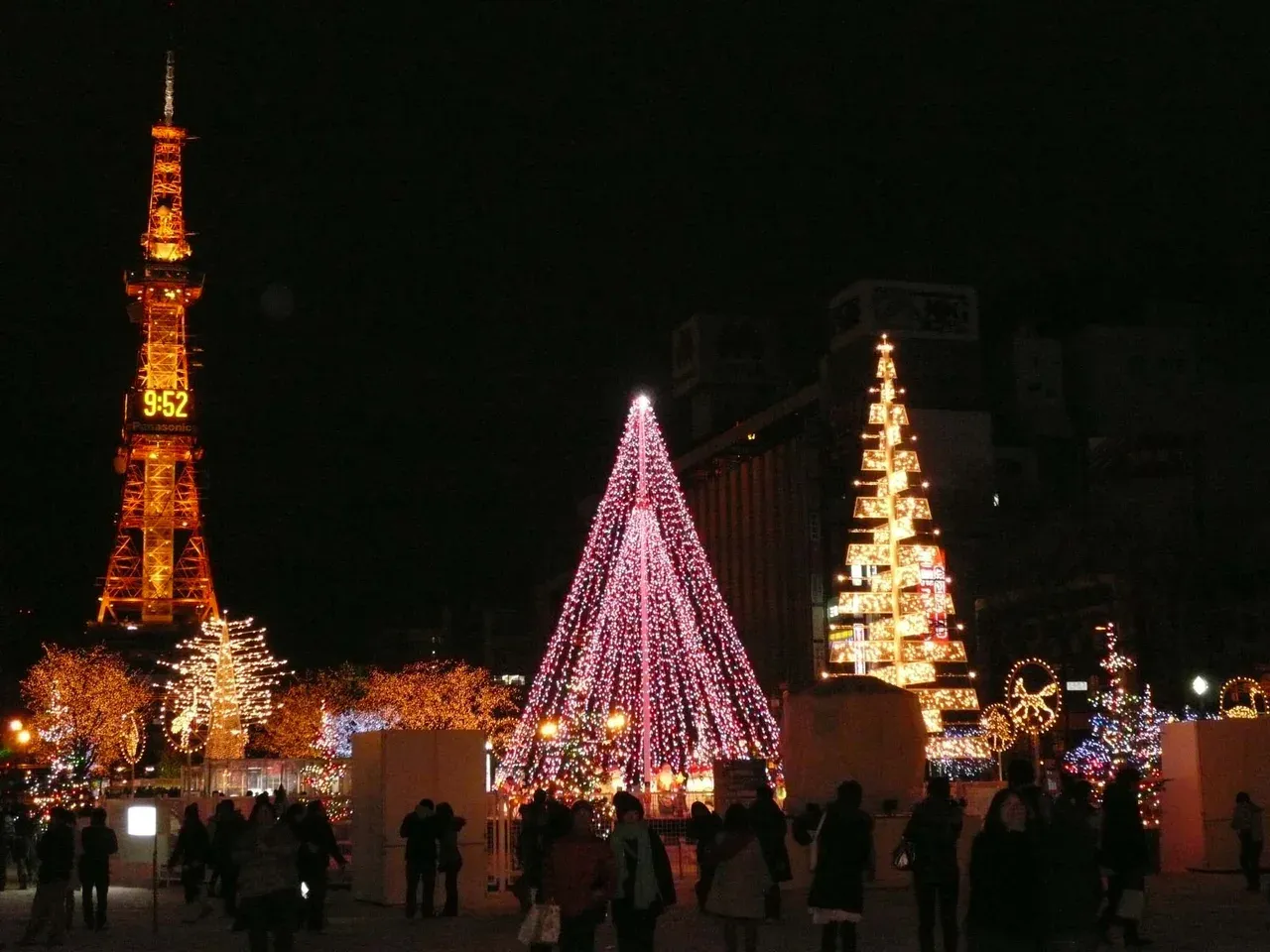
The Munich Christmas Market in Sapporo runs daily 11:00 to 21:00 (last order 20:45) from November 20 to December 25. Launched through Sapporo's sister-city ties with Munich, 2026 marks its 25th edition. The market fills Odori Park West 1-chome and West 2-chome on the park's east side near the Sapporo TV Tower. Visitors staying near Sapporo Station can walk underground to Odori before surfacing, and those coming from Susukino can connect via the underground shopping mall.
West 1-chome holds the live main tree, photo spots, stage, and select workshops. West 2-chome is the main hub for food and gifts, adding a new Twinkle Lounge seating area in the center for 2026. If you are after mulled wine, German pewterware, wooden crafts, or candles, head to West 2-chome first and decide from there whether to keep browsing. If your priority is photos by the TV Tower, Exit 27 at Odori Station brings you right up to West 1-chome; for elevator access, take Exit 8 to West 3-chome and walk one block east to West 2-chome.
The Odori Park White Illumination generally runs 16:30 to 22:00, staying lit an hour past market closing, and extends until midnight from December 23 to 25. Arriving around 16:30 lets you catch both dusk and the lights turning on. If you have already eaten near your hotel, start walking from West 1-chome, pick up a warm drink in West 2-chome, and continue west through the illuminations. When the cold bites, duck back underground at Odori Station after covering those two blocks.
Even a single winter block takes longer outdoors when you factor in snowpack, icy pavement, and standing in line for food. If you are with children or anyone who needs steady footing, watch for packed snow and slippery curbs at intersections. Have one person fetch hot drinks while the rest of your group waits at a rest area in the same block, saving everyone from carrying steaming cups through crowds. In heavy snow or wind, exit straight from West 2-chome into the Sapporo Ekimae-dori Underground Walkway (Chi-Ka-Ho) between Odori and Sapporo stations.
Returning to Sapporo from New Chitose Airport or a ski resort that evening? Check your arrival time into downtown before heading to the park. If pulling luggage to Odori puts you near the 20:45 last-order cutoff, eat near Sapporo Station, Susukino, or your hotel instead. You can also save the market for a day when you are staying in central Sapporo, sightseeing nearby before walking over in the afternoon. For New Year's or January 2027 lights, check dates and exits in our guide to all seven Sapporo White Illumination venues.
Tickets, Mugs, and Workshops Are Handled Separately
At Tokyo's two paid markets, adult advance tickets include color-coded mugs -- navy blue at Shin-Toyosu and crimson at Shiba Park. Rinse your complimentary mug at the venue sinks before taking it to a stall for drinks. If you buy a drink using a stall's own mug or glass, you will pay a cup deposit on top of the drink price; to take a used deposit mug home, leave the deposit with the vendor and drop the shop-number token into the return box. In Yokohama, standard tickets cover admission only. You can buy the ¥900 original mug separately at the info booth by the regular entrance gate or bundled with a drink at main-venue stalls, while premium Noritake mugs come with date-specific priority ticket sets.
Workshops at free markets use their own reservation slots. At Tennoji, for instance, organizers offer separate advance bookings for workshops and original mugs, though you can still buy food and drinks a la carte on-site. Nakanoshima requires no admission booking, with stage performances, stalls, and workshops scheduled day by day. If your family has a specific workshop in mind, lock in that time slot first and fill the rest of the evening with nearby illuminations; having a reservation lets you head straight to the activity booth without doubling back.
Use admission prices to estimate your baseline budget before adding dinner costs. If two adults each want a hot drink and a snack, Yokohama starts with two standard tickets plus food, whereas Odori in Sapporo or Sakae in Nagoya costs only what you order. Set aside extra if you plan to collect event mugs, glass ornaments, or wooden hangings. Before booking a ticketed venue, consider how long your group will want to stay outside -- if everyone will be ready for an indoor restaurant halfway through, don't plan your entire dinner around outdoor stalls.
For alcohol-free hot drinks, look for signs reading "non-alcohol" or "alcohol nashi" at the counter, or ask staff "Arukoru wa haitte imasu ka?" ("Does this contain alcohol?"). Glühwein on menus refers to spiced mulled wine. With kids along, scan stalls for hot cocoa, milk tea, or warm apple cider. If you buy ceramic mugs or glass ornaments, ask whether a box is included and save delicate purchases for the end of your market visit so you aren't carrying breakables from stall to stall.
Limited-edition food and drinks sometimes carry daily caps. Yokohama's official site lists items such as beef stew in a bread bowl capped at 100 servings a day and German white Glühwein capped at 30 cups a day. If you are making the trip for a specific item, check the venue map beforehand and make that stall your first stop inside. Groups just sampling German snacks can claim a spot in a seating area first and buy shareable sausages or stollen rather than queuing separately and hunting for each other while balancing trays.
Set a Cutoff Time for Dinner, Kids' Breaks, and the Ride Back
To dodge the dinner rush, choose a market with midday hours. Enter Tennoji or Sapporo for lunch, then decide later whether to come back for the evening lights. Nagoya opens at 16:00 on weekdays; if you want to browse more stalls before lines build, eat an early meal outside the park and arrive just for the trees and goods. At ticketed markets, book an entry slot ahead of any dinner reservation to leave cushion for entrance queues and restroom stops, and note last-order times if you plan to eat exclusively at the stalls.
If your main goal is catching the blue hour as the lights switch on, pick a venue with fixed lighting times where photos don't depend on grabbing a meal: 16:00 in Yokohama, 16:30 at Sapporo's Odori Park, and 17:00 on Roppongi's Keyakizaka Street. When sidewalks crowd up, follow the flow of foot traffic; whoever is holding hot drinks can wait in a wider open pocket while the photographer steps to a clear spot along the curb. Roppongi organizers prohibit step stools for photography, so visitors carrying bulky gear are better off enjoying a simple walk than hunting for a tripod setup.
If you have a stroller, need elevators, or expect to sit down mid-visit, check your indoor backup routes before picking a venue. In Nagoya, you can browse nearby department stores before walking out to the two plazas; in Osaka, Hankyu's indoor market keeps you dry in the rain. At Roppongi, step straight from Oyane Plaza into indoor West Walk if a shower passes through. In Sapporo, pin Odori Station Exit 8 and West 2-chome so you can drop underground if snow piles up. Set meetup spots at named shops, station exits, or info desks rather than under the main tree.
Markets in Yokohama, Tennoji, and Tokyo's paid venues generally stay open in light rain, though hours may adjust or close in severe weather. Tokyo offers limited tented seating, while most tables and chairs at Yokohama's main venue are open-air. Keep at least one indoor meal option in your plan, especially with young children, older travelers, or if you didn't pack windproof layers. If it rains on your Shin-Toyosu evening, shift dinner to nearby shopping malls or a transfer station hub; in Roppongi and Umeda, keep your outdoor time to a brief illumination stroll.
To combine two venues in one evening, stick to adjacent sites. Gyoko-dori and Marunouchi Naka-dori near Tokyo Station sit a short walk apart, as do Yokohama's main venue and its two free zones. While both Shin-Toyosu and Yokohama Red Brick Warehouse sit on Tokyo Bay, getting between them still takes multiple overland transit rides. With two evenings available, split Tokyo and Yokohama across separate nights; if you are staying in Tokyo, save the transfer route through Yokohama Station when heading back from Bashamichi or Nihon-odori.
From December 26 Onward, Plan Around Post-Christmas Illuminations
Around Tokyo Station, note the difference between Naka-dori and Gyoko-dori. The wooden huts and special lights on Gyoko-dori wrap up on December 25, while winter illuminations along Marunouchi Naka-dori continue through February 14, 2027 -- generally lit 16:00 to 23:00, and extended to midnight throughout December 2026. If you are staying near Tokyo Station over New Year's, simply exit on the Marunouchi side to walk the lit blocks, eat at nearby malls beforehand, and confirm holiday hours in advance for New Year's Eve.
Once Yokohama's Red Brick Warehouse market closes, the free YORUNOYO harbor light show continues for five more nights from December 26 to 30, running 17:00 to 21:05. Head straight for Osanbashi International Passenger Terminal or Yamashita Park -- Osanbashi offers sweeping harbor views and projections, while Yamashita Park features light installations. If your group plans to return to Tokyo immediately afterward, entering and exiting via Nihon-odori Station saves you the long waterfront walk from Sakuragicho.
Osaka's Midosuji Illumination runs through December 31, glowing from roughly 17:00 until 01:00 the next morning. The Osaka City Hall facade lighting and Nakanoshima Illumination Street also run through December 31. After December 25, walk south from Yodoyabashi down Midosuji and extend into Honmachi or Shinsaibashi for dinner. Travelers hoping for outdoor wooden market stalls should schedule Tennoji, Umeda Sky Building's ground plaza, or Nakanoshima's lawn by December 25, leaving New Year's Eve for an evening stroll.
Both the Odori site of the Sapporo White Illumination and the Munich Christmas Market close on December 25. Starting December 26, shift your evening walk to Sapporo Ekimae-dori, the Sapporo Station South Exit plaza, or Kita 3-jo Plaza (Akapla). Ekimae-dori stays lit through February 11, 2027, while the South Exit and Kita 3-jo Plaza run through March 14, plus a new Nakajima Park venue running January 9 to 28. Even travelers just changing trains in Sapporo can step out the South Exit for a quick look, while guests staying in Odori or Susukino can follow the lit Ekimae-dori avenue back to their hotel.
A few useful answers
Is the 2026 Tokyo Christmas Market still at Meiji Jingu Gaien?
No. In 2026, the Tokyo Christmas Market takes place at Shin-Toyosu and Shiba Park (Onarimon Station Square). Shin-Toyosu opens November 20 and Shiba Park opens December 4, both running through December 25. Roppongi Hills hosts a separate, free market.
What can you see around Yokohama Red Brick Warehouse without buying a ticket?
Both Christmas Gate at Shinko Central Square and Christmas Village at Akarenga Park are free to enter, with Pokémon illuminations at the Village starting November 25. Only the main venue requires a ticket: ¥500 on regular days and ¥1,000 on special days.
Where can you find a free indoor Christmas market in Osaka?
Head to the 9th floor of Hankyu Umeda Main Store. The Event Hall runs through December 20 and the Festival Plaza runs through December 25, with both areas closing at 17:00 on their respective final days.
Which Sapporo subway exit is best for reaching the Christmas market with a stroller?
Use Exit 8 at Odori Station, which has an elevator to street level at Odori Park West 3-chome, then walk one block east to West 2-chome. If everyone in your group can manage stairs, Exit 27 puts you right near West 1-chome.
Where can you still see winter illuminations in Japan after Christmas?
Marunouchi Naka-dori in Tokyo stays lit through February 14, 2027; Yokohama's YORUNOYO runs through December 30; and Osaka's Midosuji runs through December 31. In Sapporo, the Station South Exit, Kita 3-jo Plaza, and Minami 1-jo-dori run through March 14, 2027.
Official information and references
Sources used in this guide.
- Tokyo Christmas Market Executive Committee | 2026 Venue Changes
- Tokyo Christmas Market Shin-Toyosu Venue | Dates, Access & Ticket Prices
- Tokyo Christmas Market Shiba Park Venue | Dates, Access & Ticket Prices
- Tokyo Christmas Market FAQ | Tickets, Entry Slots & Weather
- Tokyo Christmas Market Organizers Announce Adult Advance Tickets
- Tokyo Christmas Market Two Advance Mugs & Change/Refund Restrictions
- Roppongi Hills | Oyane Plaza Christmas Market
- Roppongi Hills | Keyakizaka & Mohri Garden Illuminations
- Marunouchi Winter Street Events | Naka-dori & Gyoko-dori Markets
- Marunouchi Winter Events | 2026-2027 Illumination Dates
- Yokohama Red Brick Warehouse Christmas Market | Hours, Tickets, Stalls & Entry FAQ
- Yokohama Red Brick Warehouse | Nearest Stations & Walking Distances
- Yokohama Red Brick Warehouse | Christmas Gate Free Zone
- Yokohama Red Brick Warehouse | Christmas Village Pokémon Illuminations & Numbered Tickets
- Yokohama Red Brick Warehouse Main Tree Shows & Original Mug
- Yokohama City YORUNOYO Executive Committee | 2026 Harbor Winter Light Art
- Hankyu Umeda Main Store | 9F Christmas Market & Zone Hours
- Umeda Sky Building | 1F Market & Light Show
- Tennoji Tenshiba Christmas Market | Dates, Hours & Workshops
- Tennoji Park | Station Exits & Elevator Access Routes
- Osaka Prefecture & City Joint Event | Nakanoshima Christmas Commons
- Festival of the Lights in Osaka | Osaka Hikari-Renaissance
- Osaka Prefecture Notice on Year-End Illuminations at City Hall Facade & Nakanoshima
- Festival of the Lights in Osaka | Midosuji Illumination Dates
- Tokai TV | Nagoya Christmas Market & Access
- Tokai TV Organizer Announcement | Nagoya Venue Events & Photo Sessions
- Sapporo Tourist Association | Munich Christmas Market Zones & Stalls
- Sapporo White Illumination Executive Committee | Odori Hours & Free Entry
- Sapporo White Illumination | Odori Station Exits
- Sapporo White Illumination | 2026-2027 Dates by Venue
- Sapporo Ekimae-dori Underground Walkway | Hours & Routes