Ikaho Onsen centers on a 400-year-old, 365-step stone street and two distinct hot springs: iron-rich Kogane no Yu and clear Shirogane no Yu. Day-trippers can soak at the municipal Ishidan no Yu (¥800) and the free-flowing Ikaho Rotenburo (¥600, with the town's only drinking spring), just 30 minutes by bus from Shibukawa Station.
- Region & Focus
- KantoSide trips
- Reading Scope
- 13 min read · 6 chapters · 4 Q&As
- Official Verification
- 10 official sources checkedUpdated November 20, 2026
- Key Topics
- Hot springsItinerariesTokyo & Kanto
Chapter Route Map (tap any stop)
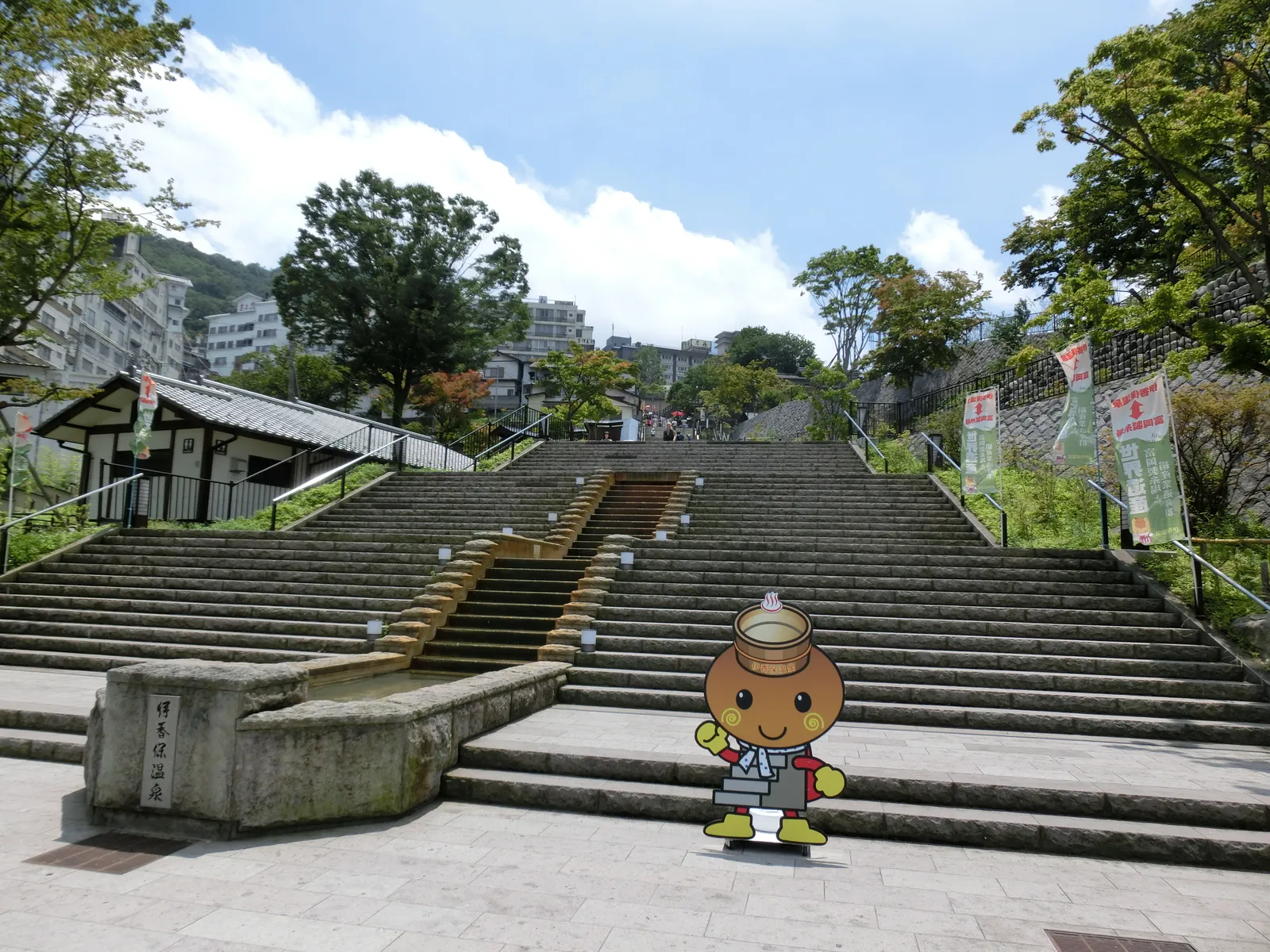
Everything in Ikaho Onsen revolves around Ishidan-gai, its 365-step stone main street. First laid out over 400 years ago in 1576, the granite staircase as it stands today took shape during a five-year overhaul starting in 1980 and was extended north to 365 steps in 2010—a wish for the hot-spring town to stay bustling 365 days a year. Ikaho draws on two very different thermal waters: Kogane no Yu (Gold Spring), which contains iron that turns rich reddish-brown upon hitting the air, and Shirogane no Yu (Silver Spring), which is clear and colorless. Day-trippers without an overnight booking can get the full experience at two public baths: the municipal Ishidan no Yu (¥800) and the tourism-association-run Ikaho Rotenburo (¥600), which pours free-flowing Gold Spring water and houses the town's only drinkable spring tap. Take the Kan-etsu Kotsu bus 30 minutes uphill from JR Shibukawa Station, and you have an effortless single-day loop built around the steps and both baths.
Ishidan-gai: How to Tackle the 365 Steps
Before you start climbing Ikaho's Ishidan-gai, it helps to know what you are walking on. The 365-step granite staircase dates back to 1576, underwent a full five-year renovation starting in 1980, and gained its northern extension with the Yutaki cascade and plaza in 2010 to reach an even 365 steps, symbolizing lively business every day of the year. Unlike purely scenic stairways at other sightseeing spots, Ishidan-gai is a working main street whose wide landings double as rest stops and front entrances to ryokan inns and souvenir shops. Plenty of visitors haul suitcases up the steps, though you can easily skip the workout by using ryokan pickup shuttles or the hands-free luggage delivery desk outside Shibukawa Station, saving your legs for strolling.
Four landmarks stand out along the 365 steps. Just above the midpoint, Yutaki sends steaming thermal water cascading down a stone trough at the visual heart of the street. Near the top toward Yumoto, four stone Komaguchi sluice gates still divide the source water among individual inns—a living remnant of Ikaho's historical spring-allocation system. Embedded in the steps are 12 zodiac stone plaques rooted in the Edo-period crests of the town's 12 founding inns, turning the climb into a quick treasure hunt for your birth sign. Mid-slope, look for Akiko Yosano's poem "Ikaho no Machi" carved directly into the stone. Literature fans can pair that engraving with sites tied to Meiji-era novelist Roka Tokutomi, who set his famed novel Hototogisu in Ikaho.
Whether you walk uphill or downhill comes down to your bus stop. Riding the Kan-etsu Kotsu bus to the Ikaho Onsen terminal drops you near the upper end by Yumoto, making for an easy downhill stroll that is far kinder to older travelers, larger groups, or anyone carrying bags. Starting at the bottom by the municipal Ishidan no Yu—or aiming to finish your walk with a soak at the open-air bath up at Yumoto—means climbing all 365 steps first and resting on the landings along the way. The street is broken up by broad terraces and takes about 30 to 45 minutes at an unhurried pace with snack stops; there is no official fixed route time, so give yourself at least half an hour not to rush past the poem stone, Yutaki, and side shops.
Historic ryokan, gift shops, and retro shateki cork-gun shooting galleries line both sides of the staircase. Ikaho is also the birthplace of Japan's onsen manju, and its signature Yunohana Manju—steamed brown-sugar buns once presented as gifts to the imperial household—are best eaten hot out of the steamer as you walk. For clean, crowd-free photos of the empty granite steps, head out around 7:00 AM before storefronts open.
Most shops, snack counters, and shooting galleries slide open their wooden doors after 10:00 AM, with fresh batches of onsen manju peaking around midday. Early morning is all about shop curtains, timber silhouettes, and rising steam; afternoon brings a lively market buzz. Most ryokan along the steps offer station or bus-stop pickups—give your arrival stop when booking, and the majority will send a van to the Ikaho Onsen bus terminal so you never have to wrestle luggage up the stairs.
If you are walking the 365 steps with kids, turn the four official highlights—the poem carving, Yutaki cascade, zodiac plaques, and Komaguchi gates—into a mini scavenger hunt. Walking from the bottom up, you hit Akiko Yosano's poem mid-slope, reach the steaming Yutaki a few flights higher, spot all twelve zodiac stones underfoot along the way, and finish at Yumoto inspecting the four spring-splitting sluices, neatly pacing young legs between landings. After dusk, the Showa-era air-gun shooting galleries light up and let adults and kids play for a few hundred yen. Steam, stone steps, cork guns, and hot buns capture Ikaho's street character in a nutshell.
Official town records read like a compact history of Japan's hot springs. In 1576, the year after the Battle of Nagashino, warlord Katsuyori Takeda ordered Masayuki Sanada to build a recuperation spa here, laying the groundwork for the stepped town. In 1590, the spa village shifted from Yumoto to its present slope. In 1743, the 12 founding inns (Oya Juniken) were formally paired with the 12 earthly branches—the origin of today's zodiac stones. The tourism association's open-air bath opened in 1950, the staircase hit 365 steps in 2010, and the Rinzai Zen temple Hosui-ji (Fo Guang Shan) was completed in 2016. Looking even further back, 9 of the 25 Kozuke Province Azumauta poems in Japan's oldest anthology, the Man'yoshu, mention Ikaho, while local lore traces the waters nearly 1,900 years back to Emperor Suinin's era and volcanic activity on Mount Haruna's Futatsudake.
Literary history runs just as deep along the steps. Roka Tokutomi visited Ikaho in 1898, went on to publish Hototogisu, and returned to spend his final days here in 1927. Linking Tokutomi landmarks with Yosano's carved poem turns the dates on town plaques into a tangible walk.
Deciding between a day trip and an overnight stay comes down to seeing Ikaho's night street and morning bath. By day, storefronts pull in steady foot traffic; once shops close for the night, the entire staircase empties out to warm inn lanterns and drifting steam—a sharper contrast than in most Japanese spa towns. After dark, you can photograph the illuminated steps and Yutaki vapor without fighting for space, and setting up a tripod is generally fine as long as you keep ryokan entrances clear.
Ikaho Onsen centers on a 400-year-old, 365-step stone street and two distinct hot springs: iron-rich Kogane no Yu and clear Shirogane no Yu. Day-trippers can soak at the municipal Ishidan no Yu (¥800) and the free-flowing Ikaho Rotenburo (¥600, with the town's only drinking spring), just 30 minutes by bus from Shibukawa Station.
Gold and Silver Springs: Two Waters for Different Soakers
Ikaho relies on two completely different natural springs. The first, Kogane no Yu (Gold Spring), is an iron-rich sulfate spring—officially classified by Shibukawa City as a calcium-sodium sulfate, bicarbonate, and chloride spring. It emerges colorless and oxidizes on contact with air into a deep reddish-brown, warming the body from the core and traditionally recommended for poor circulation and wound recovery. The second, Shirogane no Yu (Silver Spring), is a crystal-clear, colorless cold mineral spring rich in metasilicic acid, prized for easing fatigue and supporting general wellness; mild and non-irritating, it is officially recommended for older adults and people recovering from illness. Edo-period fame dubbed Ikaho "Kodakara no Yu" (Fertility Spring), a title rooted in the source waters around the Yumoto open-air bath.
Let your travel companions' physical condition decide which water you prioritize. Want Ikaho's signature rusty-brown soak and deep winter warmth? Target Kogane no Yu. Traveling with aging parents, someone in recovery, or anyone who prefers a gentle, longer soak? Unscented, clear Shirogane no Yu is far easier on the body. Day visitors can soak in Kogane no Yu at both Ikaho Rotenburo and the municipal Ishidan no Yu; Shirogane no Yu is mostly piped into private ryokan baths, so check an inn's official spring listing before booking a day-use plan. Pace yourself in Kogane no Yu—its heat and metallic bite are strong, so skip soaking on an empty stomach or after drinking. Shirogane no Yu is heated cold mineral water; even though it feels mild, keep drinking water during long sessions.
Ikaho Rotenburo also holds an experience you cannot get anywhere else in town: the Kogane no Yu drinking-spring tap. One sip of the freshly drawn water leaves an unmistakable iron tang that explains exactly where that reddish-brown color comes from—a slight astringency on the first taste is completely normal. Follow the posted rules on dosage and health precautions, taking just a few small sips rather than gulping it like plain water. Also note that the open-air bath has no washing stations, so shower thoroughly at your hotel or at Ishidan no Yu beforehand.
In the tub, the two springs feel worlds apart. Steaming Kogane no Yu in the outdoor pool carries a distinct mineral scent and holds heat remarkably well—in winter, you will still feel toasty walking back to your room. Shirogane no Yu feels light and silky, letting you linger through multiple rounds without overheating, which makes it ideal for onsen beginners. If you plan to try both in one day, warm up in mild Shirogane no Yu first before stepping into intense Kogane no Yu; if you do them in reverse order, keep each dip in the Gold Spring brief and break it into shorter intervals.
The Kodakara no Yu heritage clusters around the Yumoto open-air bath, and the town still highlights that Edo-period lineage today. For ¥600, one admission gets you free-flowing reddish-brown Kogane no Yu, the historical Fertility Spring setting, and Ikaho's sole drinking spring—remarkable value among Kanto hot-spring towns.
When browsing Ikaho ryokan websites, look immediately for the "Kogane no Yu" and "Shirogane no Yu" labels on room and bath pages. Larger inns sometimes pipe in both springs across separate baths, which takes the guesswork out of booking if you want both in a single stay. If you are traveling with elderly relatives or anyone convalescing, put inns with Shirogane no Yu at the top of your shortlist—comfort in the tub matters more than chasing bronze water. Filter by spring type first, then compare rates, location, and meals so you do not end up saving a little on a room only to miss the water you came for. Day-trippers, meanwhile, can get a full dose of Kogane no Yu at Ishidan no Yu and Ikaho Rotenburo for ¥1,400 total, though sampling Shirogane no Yu without an overnight stay requires hunting down a ryokan offering day-use bath access.
Notice the white steam rising from grates along Ishidan-gai? Beneath your feet runs the distribution network feeding thermal water down from Yumoto and the Komaguchi sluices, alongside the mid-slope Yutaki channel displaying the water's heat. Because spring water constantly trickles over stone surfaces, parts of the staircase stay damp year-round and can glaze over with thin ice on winter mornings. Wear shoes with reliable traction—leave slick-soled fashion flats off your packing list.
Two Public Bathhouses: Fees, Hours, and Closed Days
Near the foot of the stone steps, the municipal Ishidan no Yu operates from 10:00 AM to 8:00 PM (last entry 7:30 PM). Admission is ¥800 for adults and ¥400 for children, visitors with disabilities, and seniors, with extra discounts for Shibukawa residents; it closes on the second and fourth Tuesday of each month (or the following Wednesday when that Tuesday is a national holiday). The entrance ticket machine takes cash as well as Suica, PayPay, and other e-payments. True to its name, the bath itself is lined with salvaged granite slabs removed during the Ishidan-gai restoration. With full indoor washing stations and a spacious main pool, it works seamlessly either as your first stop to wash off the train ride or as an easy family bath with kids.
At the very top of the steps in Yumoto sits Ikaho Rotenburo, run directly by the tourism association. It feeds free-flowing Kogane no Yu source water for ¥600 (adults) and ¥300 (elementary school students and younger). Hours run 10:00 AM to 6:00 PM from October through March, opening an hour earlier at 9:00 AM from April through September, with last entry fixed at 5:30 PM year-round. It closes on the first and third Thursday of each month—unless it is a national holiday, when it stays open, and it operates daily throughout August. You can buy a small face towel for ¥400 or a bath towel for ¥1,200 at the counter if you arrive empty-handed. Drivers can park free at the Kajika Bridge lot (about 20 spaces), a five-minute walk away. Opened in 1950, it remains Ikaho's flagship heritage bath.
A third public bath often listed in older three-bath itineraries, Kogane no Yu-kan, is currently closed indefinitely per an official notice on the tourism association's hot-spring page. Leave it off your itinerary for now and build your day around Ishidan no Yu and Ikaho Rotenburo. Fortunately, the two active public baths stagger their closed days cleanly—Ishidan no Yu closes on the second and fourth Tuesdays (shifted to Wednesday on holidays), while Ikaho Rotenburo closes on the first and third Thursdays (open on holidays and all of August). No matter which day of the week you arrive, at least one public bath is guaranteed open, and an overnight stay clears any scheduling conflict as long as you check which bath might be dark on a given weekday.
If you want to visit both bathhouses in one day, order matters. Start at full-service Ishidan no Yu to scrub down properly and take your first soak, walk up Ishidan-gai at leisure to Yumoto, and finish at Ikaho Rotenburo—which lacks washing stations—to focus purely on the free-flowing outdoor Gold Spring and sample the drinking tap. That sequence keeps your walk one-way without backtracking and avoids the awkwardness of trying to wash your hair where no showers exist.
Timing your entry makes a noticeable difference in crowd levels. Ishidan no Yu opens at 10:00 AM, and Ikaho Rotenburo opens at 9:00 AM or 10:00 AM depending on the season; the quietest windows are the first hour after opening and the final hour before closing, whereas weekend afternoons bring heavy tour-group and day-tripper traffic. Keep a close eye on last entry (7:30 PM at Ishidan no Yu, 5:30 PM at Ikaho Rotenburo) and work backward to catch your downhill bus to Shibukawa Station.
Packing for the baths is straightforward. Both facilities let you bring your own towels, or buy a small towel on-site for ¥400 or a bath towel for ¥1,200 to keep as a souvenir. Ishidan no Yu offers the full municipal wash-and-soak setup, whereas Ikaho Rotenburo keeps facilities minimal around its outdoor pools and drinking tap—travelers with long hair or anyone needing full toiletries and blow-dryers should handle showering at Ishidan no Yu or their ryokan.
Side by side, the two baths sum up both halves of Ikaho's onsen culture: Ishidan no Yu serves locals and everyday visitors with resident discounts as a practical neighborhood bathhouse, while Ikaho Rotenburo delivers classic sightseeing appeal with its Fertility Spring history and drinking tap. At ¥1,400 combined, you can experience both sides in a single day—steaming outdoor pools feel especially rewarding in crisp winter air, while the 9:00 AM summer opening from April to September lets early risers soak before the midday heat.
Getting There and Handling Luggage Without a Car
Without a rental car, the main route from Tokyo runs by Shinkansen or JR conventional line to Shibukawa Station, followed by a 30-minute ride on the Kan-etsu Kotsu bus bound for Ikaho Onsen; coming from Takasaki Station, the Gunma Bus takes about 1 hour 10 minutes. Prefer zero transfers? Catch the direct Joshu Yumeguri-go highway bus from Shinjuku, which runs via Shibukawa Station in roughly two hours. Train-plus-bus from Tokyo takes a little over an hour in total, so the time gap is slim—choose between frequent rail departures and keeping your luggage in one cargo hold. International visitors can also buy the Shibukawa-Ikaho Area Pass at the Shibukawa Regional Specialties Center (¥1,500 adults, ¥750 children) for unlimited local bus rides within the zone. Note that the pass is sold at the specialties center rather than inside the station ticket gates, so allow a few extra minutes to pick it up; it only pays off if you ride at least three bus segments in a day, meaning a simple round-trip from Shibukawa Station is easier paid per ride.
Ikaho runs an exceptionally handy hands-free luggage service (tebura kanko) for car-free visitors: right at the Shibukawa Station plaza, you can drop off bags up to 25 kg for ¥500 per piece and have them delivered directly to your Ikaho inn. That lets you ride the bus uphill unencumbered, explore the stone steps, and soak before your bags beat you to check-in—and day-trippers can stash bags by the station to climb the 365 steps hands-free. If you want your luggage sent back to the station on departure day, ask your ryokan front desk at check-in whether they participate in the return service.
Watch the stop names closely when boarding or transferring. The Kan-etsu Kotsu main line terminates at the "Ikaho Onsen" stop near the upper stretch of Ishidan-gai, roughly an 18-minute walk from Ikaho Rotenburo. By contrast, Ikaho Town Bus Route 1 stops at "Yumoto," putting you just a three-minute walk from the open-air bath. Because the main trunk line runs far more frequently than Town Bus Route 1, check the Route 1 timetable in advance; if you want both the steps and the open-air bath without doubling back, get off at Ikaho Onsen and work your way down, or walk one-way from the upper steps out via Yumoto so you only climb the 365-step grade once.
Just five minutes on foot from the Ikaho Rotenburo parking lot near Yumoto, Kajika Bridge is a seasonal highlight not to miss. This vermilion arched bridge turns into one of Gunma's premier autumn-foliage spots from late October to mid-November, and glows with fresh green maples from mid-May to mid-June. Visiting in spring or fall, always pair Kajika Bridge with your stop at the open-air bath.
Winter (December through March) offers the most atmospheric soaking, though Ikaho sits partway up a mountain slope where snowfall can delay or thin out bus departures. Pad your winter bus transfers with extra buffer time and check Kan-etsu Kotsu service updates the morning you travel; drivers must confirm their rental has snow tires and winter gear. Picking among the three car-free routes is simple: take the direct Joshu Yumeguri-go bus from Shinjuku if you are traveling light and want zero transfers; take the Shinkansen or JR train from Tokyo or Ueno to Shibukawa Station for the 30-minute Kan-etsu Kotsu bus if you plan to use the ¥500 station luggage delivery; or board the 70-minute Gunma Bus from Takasaki Station if you are already based around Takasaki.
Fitting Ikaho Into a Gunma Itinerary
Ikaho pairs naturally with fellow Gunma heavyweight Kusatsu Onsen for a two-town hot-spring trip. There is no direct bus between the two, so every transfer routes through JR Shibukawa Station. Our Kusatsu Onsen stays guide breaks down lodging in Kusatsu and how to weigh Tokyo-area spa towns—read both together for a complete Gunma loop. Rather than cramming two major onsen towns into one rushed day, split them across an overnight stay: arrive at Shibukawa Station on day one, send your bags to your Ikaho inn for ¥500, walk Ishidan-gai unburdened, and soak in both baths before spending the night; on day two, take a morning soak or ride the Ikaho Ropeway, head back down to Shibukawa Station, and follow the transit instructions in the Kusatsu stays guide north to Kusatsu. Just remember that Shibukawa Station's luggage delivery only serves Ikaho accommodations, so you will carry your own bags onward to Kusatsu.
When booking an overnight stay in Ikaho, narrow your hotel search with two criteria first: spring water (Gold Spring, Silver Spring, or a property with both) and location (along lively Ishidan-gai for snacking and strolling, high up in quiet Yumoto near the source, or right around Ikaho Rotenburo and its Fertility Spring heritage). Lock in those two decisions before comparing room rates and dinner menus, and choosing a ryokan becomes effortless.
For peak seasonal scenery, circle two standout windows: late October to mid-November for autumn leaves at Kajika Bridge, and mid-May to mid-June for bright green maple canopies over the same gorge. Ishidan-gai and both public baths run year-round in the off-season, while the valley around Kajika Bridge shifts dramatically with the calendar.
Mount Haruna's Futatsudake peak directly behind town is the geothermal engine feeding Ikaho's waters. Drivers can easily add Lake Haruna or Haruna Shrine to the same day and use the free 20-space Kajika Bridge lot (five minutes from Ikaho Rotenburo and the bridge), provided your vehicle carries snow tires from December through March. Car-free travelers still get plenty of mountain scenery: operating since 1962, the Ikaho Ropeway climbs from Hototogisu Station to the summit for sweeping ridge views on clear days, tying neatly into Kan-etsu Kotsu trunk buses, Town Bus Route 1, and Shibukawa Station's hands-free luggage desk—just check the ropeway's official website for wind or snow suspensions before heading up.
Check off six quick items before you leave, and your trip boils down to walking and soaking: match your dates against Ishidan no Yu's closed days (2nd and 4th Tuesdays) and Ikaho Rotenburo's (1st and 3rd Thursdays); choose whether to step off at the Ikaho Onsen or Yumoto bus stop to avoid backtracking; take advantage of the ¥500-per-bag Shibukawa Station luggage delivery; pick Gold or Silver Spring based on who is in your group and each inn's water label; bundle Kajika Bridge with Yumoto in spring or autumn; and verify whether Kogane no Yu-kan has announced a reopening date.
Two Ways to Pace Your Ikaho Trip
For a tight Tokyo day trip, catch an early train via Shibukawa and bus uphill in time for Ishidan no Yu's 10:00 AM opening to wash off the trip and warm up. At 11:00 AM, climb all 365 steps of Ishidan-gai, stopping for Yosano's poem, Yutaki, the zodiac stones, and the Komaguchi sluices, then grab lunch at 12:30 PM along the street with hot Yunohana Manju for dessert. Catch a 2:00 PM bus up to Yumoto for free-flowing Kogane no Yu and a sip from the drinking tap at Ikaho Rotenburo, step out at 4:30 PM, and board the 5:00 PM downhill bus to Shibukawa to meet your Shinkansen back to Tokyo. At ¥1,400 total for both bath admissions (plus ¥400 or ¥1,200 if you buy towels on-site) and transit, you cover four centuries of hot-spring heritage in one day. To avoid retracing your steps between Ishidan-gai and Yumoto, either get off at Ikaho Onsen and stroll downhill before catching Town Bus Route 1 from Yumoto back to the main line, or start at Ishidan no Yu at the bottom and climb steadily up to Ikaho Rotenburo.
For a slower two-day, one-night pace built around lantern-lit evenings and morning soaks, reach Shibukawa before noon on day one, send large suitcases ahead to your ryokan for ¥500, and spend the afternoon strolling Ishidan-gai and bathing at Ishidan no Yu. Check in by dusk for your inn's dinner-and-breakfast plan and a soak in its house spring (Gold or Silver), then throw on a jacket after dark to wander the hushed, illuminated stone steps and try a round at the shateki booths. The next morning, arrive right at Ikaho Rotenburo's 10:00 AM opening (9:00 AM from April to September) for a crisp open-air soak—steaming reddish-brown water hits hardest against winter air—then stroll past Kajika Bridge for autumn foliage or spring greenery after checkout before catching an unhurried afternoon ride back to Shibukawa.
Families with young kids do best at a slightly gentler tempo. Anchor the walk around retro shateki shooting games, spotting zodiac stones underfoot, and eating fresh-steamed onsen manju, pausing on the broad step landings every few flights for snacks. Stick to Ishidan no Yu for bathing—its full indoor washing stations and indoor pool make bathing toddlers vastly easier than shower-free Ikaho Rotenburo. Above all, use the hands-free luggage delivery at Shibukawa Station so your hands stay free for strollers, kids, bus steps, and granite stairs.
A few useful answers
Can you bathe in Ikaho's hot springs without staying overnight?
Yes. The municipal Ishidan no Yu charges ¥800 for adults (open 10:00 AM–8:00 PM; closed the 2nd and 4th Tuesday of each month), and the tourism-association-run Ikaho Rotenburo charges ¥600 for adults for free-flowing Kogane no Yu (open 10:00 AM–6:00 PM October–March and from 9:00 AM April–September; closed the 1st and 3rd Thursday of each month, open daily in August). Kogane no Yu-kan is currently temporarily closed pending an official reopening announcement.
What is the difference between Gold Spring (Kogane no Yu) and Silver Spring (Shirogane no Yu)?
Kogane no Yu (Gold Spring) is an iron-rich sulfate spring that emerges clear and turns reddish-brown on contact with air, delivering deep, warming heat. Shirogane no Yu (Silver Spring) is a colorless, transparent cold mineral spring containing metasilicic acid that gently aids fatigue recovery and suits older adults or anyone recovering from illness. Both Ikaho Rotenburo and Ishidan no Yu use Kogane no Yu, while Shirogane no Yu is primarily piped into individual ryokan—check each inn's spring label before booking.
How long does it take to climb the Ishidan-gai stone steps?
There is no official fixed walk time, though strolling the 365 granite steps with pauses at the landings and shops takes roughly 30 to 45 minutes. Yutaki and the central plaza sit mid-slope, with plenty of broad terraces to catch your breath. Starting from the upper Yumoto end and walking downhill takes the least effort, so your bus stop determines the direction.
How do you get to Ikaho Onsen from Tokyo?
Take a Shinkansen or JR train to Shibukawa Station, then transfer to a Kan-etsu Kotsu bus bound for Ikaho Onsen (about 30 minutes), or ride the direct Joshu Yumeguri-go highway bus from Shinjuku. International visitors can buy the Shibukawa-Ikaho Area Pass (¥1,500 adults) at the Shibukawa Regional Specialties Center, and anyone with heavy bags can drop luggage up to 25 kg at the Shibukawa Station plaza for ¥500 per piece to be delivered straight to their Ikaho lodging.
Official information and references
Sources used in this guide.
- Shibukawa Ikaho Onsen Tourism Association | Home (Gold & Silver Springs Overview)
- Shibukawa Ikaho Onsen Tourism Association | Ishidan-gai (365 Steps, Yutaki, and Zodiac Stones)
- Shibukawa Ikaho Onsen Tourism Association | Spring Qualities and Health Benefits (Kogane no Yu & Shirogane no Yu)
- Shibukawa Ikaho Onsen Tourism Association | Ikaho Rotenburo (Free-Flowing Kogane no Yu, Drinking Spring, Fees)
- Shibukawa Ikaho Onsen Tourism Association | Day-Trip Onsen Guide and Kogane no Yu-kan Closure Notice
- Shibukawa Ikaho Onsen Tourism Association | Ikaho Timeline (1576 Steps, 1950 Rotenburo, 2010 Extension to 365 Steps)
- Shibukawa City | Ishidan-gai (1576 Origins and Hototogisu Setting)
- Shibukawa City | Spring Chemistry (Classifications of Kogane no Yu and Shirogane no Yu)
- Shibukawa City | Ishidan no Yu (Hours, Closed Days, Admission Fees)
- Shibukawa City | Access to Ikaho Rotenburo, Hands-Free Luggage Service, and Area Pass