Saraku is the easiest stop for a first-time Ibusuki sand bath. Compare regular and New Year fares, December closure alternatives, Tamatebako reservations, and Yamakawa bus transfers.
- Region & Focus
- Ibusuki
- Reading Scope
- 21 min read · 10 chapters · 6 Q&As
- Official Verification
- 28 official sources checkedUpdated November 22, 2026
- Key Topics
- First tripItinerariesRail travel
Chapter Route Map (tap any stop)
- Choosing Between Saraku and Sayuri Based on Your Route
- Saraku Fares, Year-End Closures, and Walk-In Queues
- Before Entering the Sand Pit: Changing Rooms and Towels
- Families, Accessibility, and Photography Rules
- Booking the Ibusuki no Tamatebako from Kagoshima-Chuo
- Planning a Day Trip: Lock In Your Return Train, Then Add Stops
- The Yamakawa Route: Sand Bath at Sayuri, Then Open-Air Soaking
- Adding Cape Nagasakibana or Saving Mt. Kaimon for the Next Morning
- Rainy Days and Winter Adjustments for a Half-Day in Ibusuki
- Staying Overnight: Walkable Yunohama vs. On-Site Hotel Sand Baths
- Quick Q&A
From Kagoshima-Chuo Station, first-time visitors to Ibusuki's sand baths can catch the 9:56 Ibusuki no Tamatebako limited express, visit Saraku Sand Bath Hall in Yunohama in the morning, and return to Kagoshima in the afternoon. Saraku's standard adult ticket is ¥1,500, including a yukata robe and access to the main indoor baths. If you want to pair a sand bath with an open-air hot spring overlooking Mt. Kaimon, head south to Sayuri in Yamakawa. Saraku will close for renovations from December 14 to 18, 2026, and Ibusuki City has arranged for Sayuri to stay open daily during those five days. If your train tickets fall within that window, pivot your itinerary straight to Yamakawa.
Choosing Between Saraku and Sayuri Based on Your Route
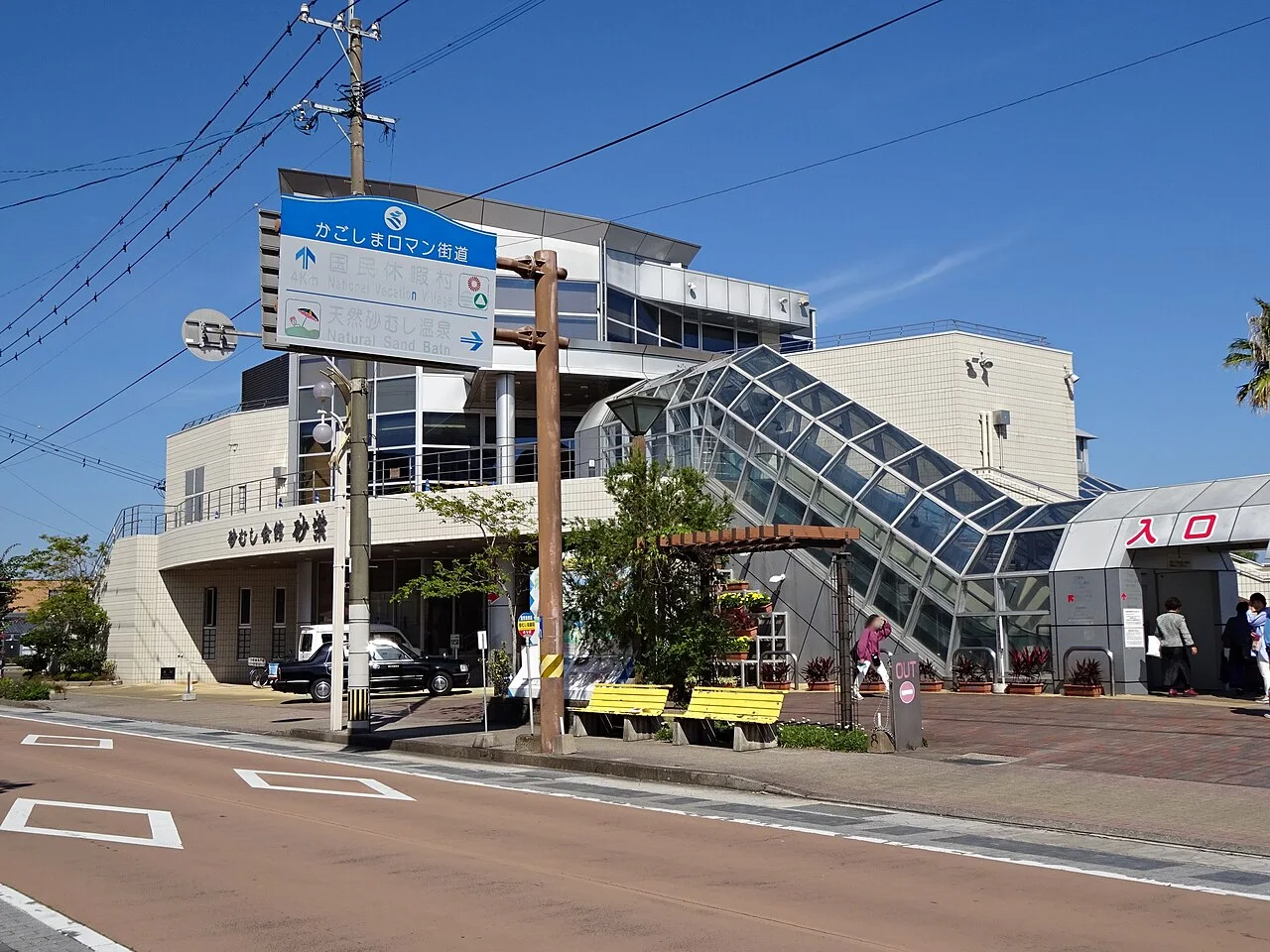
Ibusuki's two municipal sand bath facilities sit on different stretches of coast. Saraku (officially Sunamushi Kaikan Saraku) is in Yunohama on the south side of town. From JR Ibusuki Station, it is about a 20-minute walk, a 5-minute taxi ride, or a short ride on a Kagoshima Kotsu bus that stops right outside the hall. Both facilities provide a dedicated yukata robe before staff bury you in sand heated by natural hot springs. At Saraku, you can shower and soak in the main indoor bathhouse in the same building afterward, making it ideal if you are arriving and departing via Ibusuki Station on a day trip back to Kagoshima.
Yamakawa Sand Bath Sayuri sits along Fushime Beach in Yamakawa Fukumoto, about a 10-minute drive from JR Yamakawa Station, facing the East China Sea with views of Mt. Kaimon in clear weather. The sand pit has both a seaside area and a section beside the building. Sayuri has an indoor bath afterward, though facility rules prohibit using soap and shampoo in the washing area. Travelers who want a proper hair wash before boarding a train will find Saraku's bathing setup easier. If you want coastal views and already plan to visit Yamakawa Port or Cape Nagasakibana, Sayuri saves you a detour back into central Ibusuki.
Two neighboring spots in Yamakawa often get conflated under the same name, though each has its own entrance. Sayuri handles the sand baths, while Tamatebako Onsen at the other end of the coastal walking path is Healthy Land's open-air bathhouse. The sightseeing train also shares the Tamatebako name, but that limited express turns around at Ibusuki Station, so reaching the hot springs still requires a bus or car. When setting up your map navigation, drop separate pins for Yamakawa Sunamushi Onsen Sayuri and Healthy Land Open-Air Bath Tamatebako Onsen, and save the outbound and return bus stops separately.
The ¥400 difference in admission is only part of the cost. Two adults walking from Ibusuki Station to Saraku pay ¥3,000 total for standard entry. Heading to Yamakawa brings Sayuri admission for two to ¥2,200, plus round-trip transit. That ¥400 savings per person only really matters if you are already pairing Cape Nagasakibana and lunch in Yamakawa in the same area. If someone in your group only wants to soak without the sand bath, each person can buy a different ticket at the same counter and agree on where to meet after leaving the changing rooms.
| Facility | Standard Adult / Child Sand Bath Ticket | Regular Hours | Best Access Route |
|---|---|---|---|
| Saraku Sand Bath Hall (Yunohama) | Regular: ¥1,500 / ¥800; Year-End & New Year: ¥2,000 / ¥1,000 | 8:30–21:00 (last entry 20:00; weekday sand bath reception pauses 12:00–13:00) | About a 20-minute walk from JR Ibusuki Station, or take a bus or taxi to the entrance |
| Sayuri Sand Bath (Yamakawa) | Regular: ¥1,100 / ¥600; Year-End & New Year: ¥1,500 / ¥750 | 8:30–17:00 (last entry 16:30; usually closed Wednesdays) | Take the bus to Tamatebako Onsen, then walk about 5 minutes along the coastal path |
Saraku is the easiest stop for a first-time Ibusuki sand bath. Compare regular and New Year fares, December closure alternatives, Tamatebako reservations, and Yamakawa bus transfers.
Saraku Fares, Year-End Closures, and Walk-In Queues
Saraku's basic sand bath ticket covers the sand bath, the main indoor baths, and a yukata rental. Age tiers follow the Japanese school system: middle school age and older pay the adult rate, while elementary school age and younger pay the child rate. Bath-only admission without the sand bath is ¥800 for adults and ¥400 for children. If you only need a small souvenir towel to keep sand off your face and neck, get the set ticket for ¥1,800 (adult) or ¥1,100 (child). If you also need a full bath towel, choose the ¥2,100 (adult) or ¥1,400 (child) bundle, which includes both towels. Visitors who bring their own towels only need the basic ticket.
Bought individually, the small souvenir towel is ¥300 and a bath towel rental is also ¥300. If you want an extra layer under the yukata, dedicated undergarments are available to rent for ¥500. When companions buy different ticket combinations at the counter, sort out beforehand which towel goes out to the sand pit and which stays in your locker. Two adults paying ¥1,500 each plus individual small and bath towels spend ¥4,200 total, the exact same price as two full bundle tickets. Credit cards and major e-payment methods are accepted at the counter, while train and bus fares should be planned separately.
Saraku will close completely for facility maintenance from December 14 to 18, 2026, with reopening scheduled for December 19. During the Year-End and New Year peak period from December 29, 2026 to January 3, 2027, basic sand bath tickets rise to ¥2,000 for adults and ¥1,000 for children, and bath-only entry becomes ¥1,000 / ¥500. Travelers who have already ridden the Tamatebako train and are returning just for a sand bath can avoid that week. If your Ibusuki hotel is already locked in for mid-December and cannot be shifted, budget for transit to Yamakawa plus Sayuri admission and aim to check in before the 16:30 cutoff.
Normal hours run from 8:30 to 21:00, with last entry at 20:00. On weekdays, sand bath reception pauses from 12:00 to 13:00, and individual guests are processed first-come, first-served. Arriving early helps you beat that midday pause and keeps lunch and your return train flexible. If you take the 11:56 limited express from Kagoshima-Chuo, arriving at Ibusuki at 12:48, you will reach Saraku just after 13:00 in time for the afternoon session. When lines grow long, staff may cut off entry early, so evening visitors should do the sand bath first and leave shopping or dinner for afterward.
Before Entering the Sand Pit: Changing Rooms and Towels
Take the escalator from the street-level entrance up to the second floor, where the counter issues a yukata sized to your build. Take off your shoes at the changing room entrance, place them in the bag provided, and lock both your shoes and clothes inside a locker. Wear only the facility yukata out to the sand pit, leaving your own underwear and swimwear in the locker; if you rented the dedicated undergarment, put it on under the yukata before heading out. Companions splitting into separate changing rooms should each bring their small face towel and locker key and meet in the outdoor slipper area rather than holding their yukatas while waiting by the changing room doors.
Once changed, you walk along a short outdoor walkway, turn right outside the door, and take the stairs on your left down to the sand pit. Saraku's guidelines ask guests who have difficulty walking or climbing stairs to let staff know in advance. Having the phrase "Kaidan no noboriori ga muzukashii desu" ("I have trouble with stairs") ready to show the counter staff makes the request clear immediately. Standard facility slippers work fine for most guests, though Saraku's FAQ notes you may bring your own well-fitting sandals if you need specific foot support. A roofed sand pit operates on rainy days, so take the wet outdoor walkway slowly in slippers.
The sand along the shore is heated by geothermal hot spring water. Attendants guide you to an open spot, have you lie flat on your back, and shovel warm sand over your body while your small towel shields your head and neck from the grit. Settle into a comfortable position before nodding to start, and speak up beforehand if you dislike heavy pressure or need one arm or leg kept free. The weight you feel comes from the damp, hot sand piled on top; listen to the attendants' cues on when to get up. Saraku lists roughly 10 minutes as a typical sand bath duration, though you should budget about an hour from changing to showering, plus extra wait time if tour groups arrive together.
Back inside the building, return your slippers to the rack, drop your used yukata and any rented undergarment into the collection bin along the bath corridor, and rinse off thoroughly under the showers. Sand tends to cling behind the ears, along the hairline, at the back of the neck, and between the toes, so rinse twice before stepping into the main soaking pool. Your personal bath towel and clothes stay in your locker, while the small sand-shield towel can be rinsed out and packed away in a waterproof pouch. Rest and rehydrate inside before heading out, and if you are walking back to the station, pack your rain gear, jacket, and water bottle where you can grab them easily.
Families, Accessibility, and Photography Rules
According to Saraku's FAQ, children from around age 2 or 3 can try the sand bath, subject to the facility's pediatric bathing rules. Be clear at the counter about your child's age and that an adult will stay right beside them. Explain to young kids before entering the changing room that staff will cover them with warm sand once they lie down, and that they can speak up anytime if it feels too hot or heavy. If a child is hesitant, one parent can stay inside while the first group goes out, then decide afterward. Bath-only tickets cost less and work well when one family member prefers to skip the sand altogether. With very young kids around midday, keep lunch and waiting flexible so no one gets stuck waiting until the afternoon session to eat.
Tell staff at reception about any health conditions before entering, as the facility applies specific rules for menstruation, chronic conditions, and other medical concerns. If you feel overheated, dizzy, or uncomfortable in the sand, signal an attendant right away to get up early—companions do not need to stay buried for the exact same length of time. If your group splits up, pick a meeting spot outside the main bathhouse so slower-moving guests never feel rushed. If you take a taxi from Ibusuki Station, plan your post-bath ride back or onward destination too, not just the trip there.
Leave phones and cameras in your locker: personal photography is banned in the sand pit, baths, and changing areas, including for companions watching from the sidelines. If you want a keepsake photo in the sand, ask staff about the paid photo service and let them know how many people are in your shot before they begin shoveling sand. Plenty of great photo ops await on the transit legs instead. The black-and-white Ibusuki no Tamatebako train and the matching two-tone mailbox outside Ibusuki Station are easy to snap during unhurried arrival or departure windows. Write down your train times and ticket details ahead of time so you never need your phone inside the changing area.
Booking the Ibusuki no Tamatebako from Kagoshima-Chuo
JR Kyushu's sightseeing limited express, the Ibusuki no Tamatebako, runs between Kagoshima-Chuo and Ibusuki. The official fare page lists a standard adult one-way total of ¥2,950—composed of the ¥1,170 base fare plus a ¥1,780 regular-season reserved-seat limited express surcharge—with the surcharge varying slightly by travel date season. Travelers who only want the special train experience one way can ride the Tamatebako outbound and return on a local or rapid train; at standard rates, that brings round-trip rail to ¥4,120 per person instead of ¥5,900 for reserved limited express both ways.
Every seat on the train is reserved, so you must secure a seat before boarding; tickets cannot be arranged onboard. Sales open one month prior to your travel date at 10:00 JST. Online booking via JR Kyushu requires registering a free account, and even where advance pre-requests are accepted, actual seat assignment only runs once official sales open. Unfamiliar ticket pickup machines can also slow down a transfer, so check your pickup code and payment card rules before departure, and build buffer time into your schedule if you are transferring at Kagoshima-Chuo straight off a Shinkansen.
Alongside standard two-seat rows, the train offers counter seats facing the window for sweeping views of Kinko Bay—decide when booking whether you prefer facing each other to chat or sitting side by side toward the water. For wheelchair users and companions, JR Kyushu directs accessible-seat bookings to a JR ticket office (Midori-no-Madoguchi) or telephone reservation line, excluding D-formation trainsets. Check the train formation calendar ("Ressha no Hensei Calendar") first to verify the car layout before arranging seats with station staff. Families wanting to sit together should book all seats in one transaction, choosing between four-person table bays and window-facing rows.
Following the March 14, 2026 timetable revision, departures from Kagoshima-Chuo to Ibusuki run at 9:56, 11:56, and 13:56, taking about 51 to 53 minutes. Return departures from Ibusuki to Kagoshima-Chuo leave at 10:56, 12:57, and 15:07. JR Kyushu has published operating dates through February 2027, with March 2027 onward slated for announcement in mid-January. Since 15:07 is the final scheduled Tamatebako back to Kagoshima-Chuo, plan to be back at Ibusuki Station around 14:45 with margin to cross platforms, pick up tickets, or use the restrooms.
| Direction | First Train | Second Train | Third Train |
|---|---|---|---|
| Kagoshima-Chuo to Ibusuki | No. 1: 9:56 to 10:47 | No. 3: 11:56 to 12:48 | No. 5: 13:56 to 14:49 |
| Ibusuki to Kagoshima-Chuo | No. 2: 10:56 to 11:48 | No. 4: 12:57 to 13:48 | No. 6: 15:07 to 16:00 |
Planning a Day Trip: Lock In Your Return Train, Then Add Stops
Taking the 9:56 Tamatebako No. 1 gets you to Ibusuki at 10:47. On regular days, you can walk from the station to Saraku, or catch the 11:12 Kagoshima Kotsu bus bound for Lake Ikeda from Ibusuki Ekimae stop 3, getting off at Sunamushi Kaikan at 11:16. After your sand bath, shower, and lunch, you still have roughly two hours in the afternoon to explore central Ibusuki. If you are aiming for Tamatebako No. 6 back, stick to the waterfront promenade and Yunohama side streets, and start walking toward the station around 14:20. If you arrive on a weekday close to 12:00 and find a queue, eat lunch first and return to Saraku when reception reopens at 13:00.
Riding the 11:56 Tamatebako No. 3 allows a slower morning in Kagoshima and works especially well if you only buy a one-way limited express ticket. By the time you walk to Saraku, the weekday 12:00–13:00 pause will already be over, leaving plenty of time to bathe, eat a late lunch in town, and ride a local or rapid train back. If you do book the 15:07 return limited express after arriving at 12:48, you only have 2 hours and 19 minutes between trains, and walking both ways eats up about 40 minutes. Either switch to taxis and grab a quick bite, or skip the 15:07 express in favor of a later local train so you can linger over lunch and a coastal walk afterward.
Both local trains and select Nanohana rapid services operate along the Ibusuki-Makurazaki Line. Outbound from Kagoshima-Chuo, check the train's final destination—services marked for Kiire terminate partway. Returning north, check the timetable bound for Kagoshima-Chuo and note whether a train terminates at Kagoshima-Chuo or continues to Kagoshima Station; travelers staying near the Shinkansen hub should get off at Kagoshima-Chuo. On the November 22, 2026 station schedule, departures after the 15:07 limited express include a 15:53 local, 16:39 rapid, and 17:26 local; always check the timetable for your exact travel date when picking a backup train.
The standard one-way adult fare between Kagoshima-Chuo and Ibusuki is ¥1,170. Because Ibusuki lies outside the Kagoshima SUGOCA IC card zone, buy a paper ticket to Ibusuki before boarding. Ibusuki Station has coin lockers and a JR ticket office (Midori-no-Madoguchi) open 8:00–11:30 and 12:30–15:45—use those same hours if you need to collect online reservations in person. If you are taking the 15:07 express back, pick up tickets and retrieve luggage before heading to the sand bath, or pick up both outbound and return tickets together in Kagoshima-Chuo.
Beyond train tickets, local bus passes can pay off depending on your route. If you are only traveling between Ibusuki Station and Saraku, mixing walking, taxis, and single-ride bus fares is simpler. The Nottari Oritari My Plan 1-day bus pass (¥1,500 adult, ¥750 child) makes sense when hopping on and off toward Yamakawa, Cape Nagasakibana, and Lake Ikeda, and is sold at the Ibusuki Station Tourist Information Center, participating hotels, and digitally. A 2-day pass (¥3,000 adult) extends coverage to select sections of Kiire, Chiran, and Kagoshima. Color-coded timetable blocks indicate valid zones, so check route and direction restrictions carefully if crossing through Chiran.
The Yamakawa Route: Sand Bath at Sayuri, Then Open-Air Soaking
Sayuri is open from 8:30 to 17:00, with last entry at 16:30. It normally closes on Wednesdays (or the following Thursday if Wednesday is a Japanese national holiday), while remaining open during announced Year-End/New Year, Golden Week, and Obon holidays. During Saraku's December 14–18, 2026 closure, the city has confirmed that Sayuri will stay open every day, including that Wednesday. Note that on December 16, JR track maintenance will cancel some daytime trains between Ibusuki/Yamakawa and Makurazaki—on that date, take the bus straight from Ibusuki Station to the Yamakawa coast instead of relying on a rail transfer at Yamakawa Station.
Under the October 2026 Kagoshima Kotsu timetable, buses bound for Lake Ikeda depart Ibusuki Ekimae stop 3 at 9:12, 11:12, 13:12, and 15:12, stopping at Tamatebako Onsen. According to Kagoshima Prefecture tourism guides, it is about a 5-minute walk along the coastal path from the bus stop to Sayuri. If boarding from Yamakawa Station in the same direction, wait at the Yamakawa Station (sea-side) stop; returning toward Yamakawa Station, get off at the stop marked "station-side" on the timetable. Connecting from the 9:56 Tamatebako puts you on the 11:12 bus, arriving at 11:38. Taking the 11:56 train means catching the 13:12 bus to arrive at 13:38, cutting substantially into your sand bath and soaking time.
Do the sand bath at Sayuri first, then walk back up the path to the open-air baths to line up with operating hours. Tamatebako Onsen normally opens 9:30–19:30 (last entry 19:00) and closes Thursdays (pushed to Friday if Thursday is a national holiday), staggering its closure day with Sayuri's Wednesday break. A regular-season adult combo ticket covering both facilities costs ¥2,000 and includes one medium drink at the open-air bath's cafe. Buying single adult tickets separately costs ¥1,100 plus ¥900—also ¥2,000—so base your choice on whether you want both baths and the drink. From December 29, 2026 to January 3, 2027, combo tickets are suspended and separate adult entry is ¥1,500 at each bath.
The open-air pools alternate daily by odd and even calendar dates between the Japanese-style bath facing Mt. Kaimon and the Western-style bath facing Mt. Takeyama. For an unobstructed view of Mt. Kaimon from the water, women get that side on odd-numbered days and men on even-numbered days, while the opposite side overlooks Mt. Takeyama and the sea. Visitors who only want a sand bath can buy a Sayuri-only ticket and save their coastal sightseeing for a walk around Cape Nagasakibana, which offers views of both the shoreline and Mt. Kaimon. If high winds or low clouds force Sayuri to close, fall back to Saraku's roofed sand pit in Yunohama or an indoor ryokan bath.
For the bus back, check the "Lake Ikeda – Cape Nagasakibana – Ibusuki / Chiringashima" timetable. The 13:32 bus from Tamatebako Onsen reaches Ibusuki Ekimae stop 1 at 13:58, connecting cleanly to the 15:07 Tamatebako train. The next bus leaves at 15:32 and arrives at 15:58, pairing better with a regular local train. If you arrive at 11:38 and want to enjoy Sayuri, the open-air bath, and a cafe break without rushing, the 15:32 bus is much more realistic. Leave any large luggage in a coin locker at Ibusuki Station so you can walk the coastal path between bus rides hands-free.
Adding Cape Nagasakibana or Saving Mt. Kaimon for the Next Morning
Cape Nagasakibana sits on the southern tip of the Satsuma Peninsula, with Ryugu Shrine standing along the approach to the lighthouse. The tourism association estimates a 4-minute walk from the Nagasakibana bus stop to the shrine. Walk a little farther toward the cape for sweeping views of the curving western sand beach and Mt. Kaimon. Catching the 11:12 bus from Ibusuki Station drops you at Nagasakibana stop 1 at 11:51, while the 13:19 return bus from the opposite Nagasakibana stop 2 gets you back to Ibusuki Station at 13:58. This pairing gives you unhurried time at the cape, followed by a sand bath back in town and a local train return to Kagoshima.
With a rental car, you can easily combine Sayuri and Cape Nagasakibana, letting your arrival time dictate the order. Arrive before noon and do Sayuri first, then head to the cape; arrive from another city in the afternoon and work backward from Sayuri's 16:30 cutoff, saving the lighthouse for the next morning. Between the two sits Roadside Station Iokaido at Yamakawa Port, whose restaurant serves seared bonito bowls topped with a soft-boiled hot spring egg from 11:00 to 15:00 (normally closed the third Wednesday of each month plus January 1 and 2)—a welcome indoor lunch stop when coastal winds pick up.
Climbing Mt. Kaimon takes most of a day. The tourism association estimates 4 to 6 hours round-trip to the 924-meter summit, with loose volcanic gravel making footing slippery higher up. In winter or right after rain, admiring the cone from the coast or lakeside and saving the climb for clear, stable weather still lets you take in the scenery. Hikers relying on public transit should verify bus times at the Kaimondake Ichigome trailhead stop beforehand, target a descent ahead of the next bus, and set a strict turnaround time—or pre-arrange a taxi back to Ibusuki or Yamakawa to avoid a long wait at the base.
Mt. Kaimon and Lake Ikeda offer two distinct detours. From late December through early February, prioritize Lake Ikeda for its yellow rapeseed blossoms; official bloom updates track conditions separately in front of Ikedako Paradise and around Epron House Ikeda. Note that the Ibusuki Nanohana Marathon takes place on January 10, 2027 along a loop passing both Lake Ikeda and Mt. Kaimon. If you are riding the train that day with a reserved return seat, stick to central Ibusuki and a sand bath to keep your schedule predictable, and save the flower fields for a clear morning or the day after an overnight stay.
Rainy Days and Winter Adjustments for a Half-Day in Ibusuki
On ordinary rainy days, Saraku switches to its roofed sand pit, though you still cross a short open-air walkway getting in and out. Beachside sand bathing right along the tide line depends on favorable low tides and weather, decided daily by staff. For travelers arriving on the Tamatebako, plan around the standard roofed sand pit and treat tide-line sessions as a bonus. During scheduled closures or severe weather, town-center indoor options are much easier to salvage than Yamakawa's exposed coastal baths—check both facilities' status notices before heading south in bad weather so you do not lose both stops at once.
About a 10-minute walk south of Ibusuki Station stands Jiyukan COCCO Hashimure, the municipal archaeological museum. Permanent exhibits showcase artifacts excavated from the Hashimuregawa site to trace ancient settlements—an especially rewarding stop if you want to understand how volcanic eruptions shaped local life beyond just admiring Mt. Kaimon's silhouette. General admission is ¥400 for adults, ¥330 for high school and university students, and ¥260 for elementary and middle school students. Hours are 9:00–17:00 (last entry 16:30); it closes Mondays (shifted to Tuesday on national holidays), the fourth Wednesday of each month, and December 29 through January 3.
If the archaeological museum is closed over the New Year holidays and you still want an indoor stop, consider Satsuma Denshokan to the north. Housed on the grounds of Ibusuki Hakusuikan, its schedule tracks the hotel's closure days and highlights Satsuma ware ceramics and regional crafts. Buses bound for Chiringashima from town stop at Hakusuikan Iriguchi. Pairing one indoor museum with a bite near Ibusuki Station easily rounds out a half-day. Save the exact location and direction of your bus stop near Saraku ahead of time so that on cold days with a long wait, you can linger inside over a drink until right before departure.
Staying Overnight: Walkable Yunohama vs. On-Site Hotel Sand Baths
For maximum flexibility around Saraku, staying within walking distance in Yunohama works best. Ibusuki Shusuien sits about a 5-minute walk from Saraku and offers room packages bundled with Saraku sand bath tickets, with Ginsyo and Ibusuki Kaijo Hotel also nearby. You can drop your bags at the hotel after getting off the train and walk over to Saraku; if the line is long, simply head back to your room until closer to dinner, provided it fits the hotel's meal window. For half-board stays, confirm your dinner slot at check-in and work backward from walking, bathing, showering, and wait times—on holiday weekends, going in the early afternoon is much safer than cutting it close to dinner.
If you prefer dinner, hot springs, and sand bathing all under one roof, look at Ibusuki Hakusuikan's indoor sand bath. About a 7-minute taxi ride from Ibusuki Station, Hakusuikan accepts sand bath guests at the Genroku-buro bathhouse entrance from 15:30 to 22:00 and 6:00 to 8:30 the next morning, first-come, first-served. Walk-in or add-on rates are typically ¥1,400 for adults and ¥1,000 for children (before tax), though the hotel's FAQ notes that adults booking directly on the official website receive one complimentary sand bath voucher per night, while children pay separately. When comparing room plans, factor in the total sand bath fees for all adults and kids; arriving after daytime hours also makes an evening or next-morning session inside the hotel far more efficient.
Hakusuikan's grounds are expansive. The Rikyu wing sits right above the basement Genroku-buro bathhouse and indoor sand bath, whereas Isokyakuden is closest to the separate Shoun-buro bathhouse. From Satsumakyakuden to Genroku-buro is roughly 300 meters, which the hotel estimates at a 6-minute walk. Opening hours differ between the two bathhouses as well—Genroku-buro opens at 15:00, half an hour before the sand bath starts—so check wing locations and bathroom setups when filtering room types. Guests wanting a private hot spring bath in their room can check designated upgraded suites in Isokyakuden or Hana-no-Mune listed by the hotel.
If you stay in Yunohama with a plan using external Saraku tickets, pin the exact entrances of both your hotel and Saraku on a map and check the bus schedule back to the station. If your half-board stay falls during Saraku's December renovation, visit Sayuri in Yamakawa earlier in the day before checking in for dinner, or book a hotel with its own sand bath. When some companions only want to drop bags and use the hotel's main baths, agree on a dinner meeting time so the sand-bath group handles changing and transit before meal service. If you save Saraku for check-out morning, skip the weekday midday pause by going right after check-out and taking an afternoon train back to Kagoshima.
For a one- or two-night trip in southern Kyushu arriving and departing by Shinkansen, basing yourself near Kagoshima-Chuo minimizes luggage transfers: dedicate one full day to Ibusuki and take the ferry from Kagoshima Port to Sakurajima the next day. If you specifically want a night by the sea, align your Ibusuki overnight with Yamakawa and Kaimon along the same southern corridor. If you are also fitting in Kirishima, compare Kagoshima, Kirishima, and Ibusuki base options before locking in hotels. Leaving large suitcases at your Kagoshima hotel and bringing only an overnight bag to Ibusuki lets you pick up your bags smoothly the next day—leaving energy for Lake Ikeda or a direct ride north.
A few useful answers
How much does a sand bath in Ibusuki cost per person?
Standard admission at Saraku is ¥1,500 for adults and ¥800 for children; at Yamakawa's Sayuri, standard admission is ¥1,100 for adults and ¥600 for children, with a yukata robe included at both. From December 29, 2026 to January 3, 2027, Saraku charges ¥2,000 / ¥1,000 and Sayuri charges ¥1,500 / ¥750.
Can I reserve an entry time at Saraku Sand Bath Hall in advance?
Individual visitors are admitted first-come, first-served without advance reservations. Saraku opens at 8:30 with last entry at 20:00, pauses sand bath reception on weekdays from 12:00 to 13:00, and may cut off entry early when lines are long. Groups should contact the facility ahead of time.
Which days is Saraku closed in December 2026?
Saraku is closed for facility maintenance from December 14 to 18, 2026. During those five days, Yamakawa's Sayuri remains open every day, with last entry at 16:30.
If I take the Ibusuki no Tamatebako train outbound, do I have to take it back too?
No, you can mix train types between outbound and return legs. The final Ibusuki no Tamatebako leaves Ibusuki at 15:07, after which local and rapid trains on the Ibusuki-Makurazaki Line continue running back to Kagoshima-Chuo.
If I visit Tamatebako Onsen in Yamakawa, is the sand bath in the same building?
No. The sand bath is at Yamakawa Sayuri, while the oceanfront open-air pools are at Tamatebako Onsen at the opposite end of the coastal path. A ¥2,000 combo ticket covers both during regular periods, though they are paid separately during the December 29, 2026 to January 3, 2027 holiday period.
Do I wear a swimsuit for the sand bath, and can I take my own photos?
Saraku provides a dedicated yukata robe, and you can rent facility undergarments at the counter. Swimsuits, personal belongings, and phones stay in your locker, as personal photography is prohibited; ask staff about their paid photo service before they shovel the sand.
Official information and references
Sources used in this guide.
- Saraku Sand Bath Hall Official Fares, Hours, Closures, and Access
- Saraku Sand Bath Hall Sand Bathing Process and Changing Rules
- Saraku Sand Bath Hall FAQ, Queues, and Bathing Conditions
- Saraku Sand Bath Hall Sand Pit, Tide Information, and Photo Rules
- Ibusuki Tourism Association: Saraku Regular and Special Period Fares
- Ibusuki City: Saraku Temporary Closure and Sayuri Alternative Operating Schedule
- Ibusuki Tourism Association: Yamakawa Sand Bath Sayuri Fares and Hours
- Kagoshima Prefecture Tourism Guide: Sayuri Bus Access and Coastal Path
- Ibusuki Tourism Association: Healthy Land Tamatebako Onsen Fares and Mt. Kaimon Bath Schedule
- JR Kyushu: Ibusuki no Tamatebako Seat Reservations, Fares, Timetable, and Operating Dates
- JR Kyushu: Advance Seat Requests and Online Booking Guide
- JR Kyushu: Ibusuki Station Facilities, Ticket Pickup, and Ticket Office Hours
- JR Kyushu: Ibusuki Station Departure Timetables by Direction
- JR Kyushu: SUGOCA IC Card Coverage Area
- JR Kyushu: Ibusuki-Makurazaki Line 2026–2027 Maintenance Suspension Notice
- Kagoshima Kotsu: Ibusuki Area Bus Timetable (October 2026 Edition)
- Ibusuki City: October 2026 Transit Guide and Standard Fares
- Ibusuki Tourism Association: Local Bus Passes and Stops
- Ibusuki Tourism Association: Cape Nagasakibana and Coastal Geography
- Ibusuki Tourism Association: Yamakawa Port Lunch Guide
- Ibusuki Tourism Association: Mt. Kaimon Hiking Information
- Ibusuki Tourism Association: Seasonal Flower Bloom Calendar
- Ibusuki Tourism Association: 2027 Nanohana Marathon Date and Course
- Ibusuki City: Jiyukan COCCO Hashimure Visitor Information
- Ibusuki Tourism Association: Satsuma Denshokan Museum
- Ibusuki Shusuien: Accommodation Plan with Saraku Sand Bath Ticket
- Ibusuki Hakusuikan: Official Accommodation, Indoor Sand Bath, and Fee FAQ
- Ibusuki Hakusuikan: Access and Transportation