Walk from Shimo- and Naka-senbon to Hanayagura and Oku-senbon. Plan the Yoshino ropeway, two spring bus operators and admission to Zaodo and Yoshimizu Shrine, with eight location photographs, maps and aerial blossom views.
- Region & Focus
- Nara and Yoshino
- Reading Scope
- 30 min read · 14 chapters · 7 Q&As
- Official Verification
- 17 official sources checkedUpdated 9 November 2026
- Key Topics
- ItinerariesSeasonsKyoto, Osaka & Kansai
Chapter Route Map (tap any stop)
- Choose lower and middle Yoshino, or devote the day to mountain paths
- Plan the railway and uphill transport separately from Osaka
- The ropeway reaches Shimo-senbon, with steps at both stations
- Take the spring bus to Naka-senbon, then change for Oku-senbon
- Visit Kinpusenji in the morning and choose the Zaodo admission period
- Combine Yoshimizu Shrine's Hitome-senbon view with its Shoin
- Allow an uphill stretch for Hanayagura's panorama
- Look closely at Yoshino Mikumari Shrine's roofs and corridors
- There is more walking from Oku-senbonguchi to Kinpu Shrine
- Saigyo-an is a mountain walk; save energy for both directions
- For half a day, finish at Yoshimizu Shrine and Naka-senbon
- With children and older relatives, allocate energy from the station steps
- Calculate mountain transport and admission for two route types
- Descend through the afternoon and buy souvenirs before the station
- Quick Q&A
Mount Yoshino's cherry blossom follows the slopes through Shimo-senbon, Naka-senbon, Kami-senbon and Oku-senbon. For a first visit, choose how far to walk. Kinpusenji, Yoshimizu Shrine and Naka-senbon provide a full day of flowers and worship; continue to Hanayagura and Mikumari Shrine for mountain views. Saigyo-an requires another mountain-path section and suits early arrivals who can devote the day to walking. From Kintetsu Yoshino Station, the ropeway and two spring bus services reach different heights. Choose your uphill transport to conserve energy for the afternoon.
Choose lower and middle Yoshino, or devote the day to mountain paths
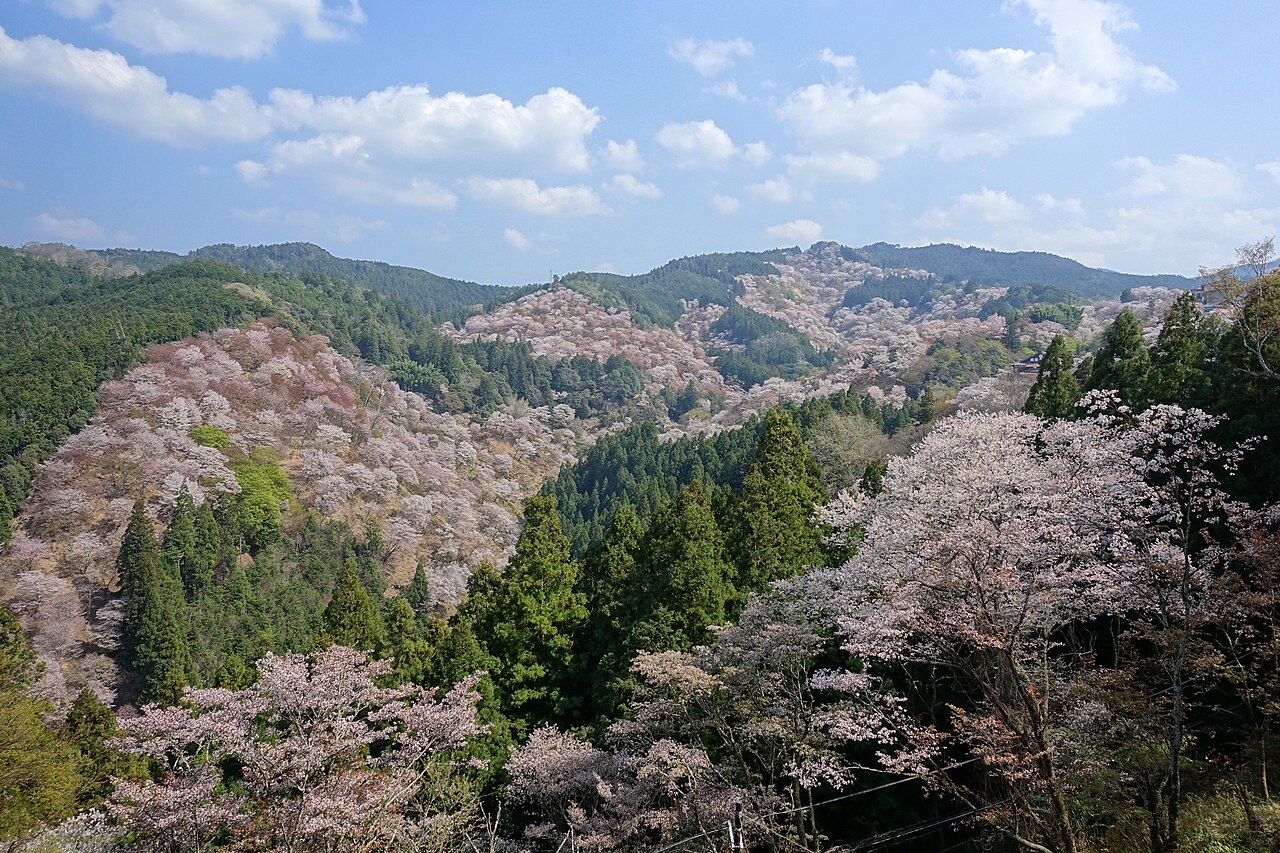
Mount Yoshino has around 30,000 cherry trees. Flowering progresses at different rates from the foot to the upper slopes, and viewing routes move uphill with it. Study individual trees or look across a valley at layers of blossom, forest and settlements. Flowering reports list Shimo-, Naka-, Kami- and Oku-senbon separately. Read the report for the area you intend to walk; a photograph of full bloom below helps choose a day for the lower slopes.
Shimo-senbon to Naka-senbon is a straightforward first itinerary. Walk from the upper ropeway station through the temple town, visit Kinpusenji, then turn towards Yoshimizu Shrine for the Hitome-senbon view. Shops, temples and flowers are close together, with places to sit for food and indoor visits for rainy weather. Use this as your main route if taking photographs slowly, travelling with children or returning to Osaka that day.
Hanayagura and Yoshino Mikumari Shrine in Kami-senbon require more uphill walking. The tourism association map gives about 50 minutes from Katte Shrine to Mikumari Shrine, before stops for views. Give Hanayagura a full afternoon. If the morning has already been busy, turn back around Chikurin-in and enjoy the flowers while you still have energy.
The official walking map also gives a 5 km short route and a 13.6 km long route. The latter extends deeper into the mountains and suits a hiking-focused day. You can walk only part: mark your preferred temples and one distant view, then connect them in one direction. Hanayagura already shows the relationship between Kami-senbon, Naka-senbon and Zaodo, making a clear endpoint.
Early-morning aerial views show cherry blossom, slopes and paths in Shimo-senbon on Mount Yoshino.
Walk from Shimo- and Naka-senbon to Hanayagura and Oku-senbon. Plan the Yoshino ropeway, two spring bus operators and admission to Zaodo and Yoshimizu Shrine, with eight location photographs, maps and aerial blossom views.
Plan the railway and uphill transport separately from Osaka
Without a car, start at Kintetsu Yoshino Station. The tourism association gives about 1 hour 15 minutes by limited express from Osaka-Abenobashi, or about 1 hour 40 minutes from Kyoto with a change at Kashiharajingu-mae. Use these to gauge the journey, then choose your actual departure station and train. Staying near Tennoji shortens the approach to Abenobashi; from Kyoto, include the interchange in your morning.
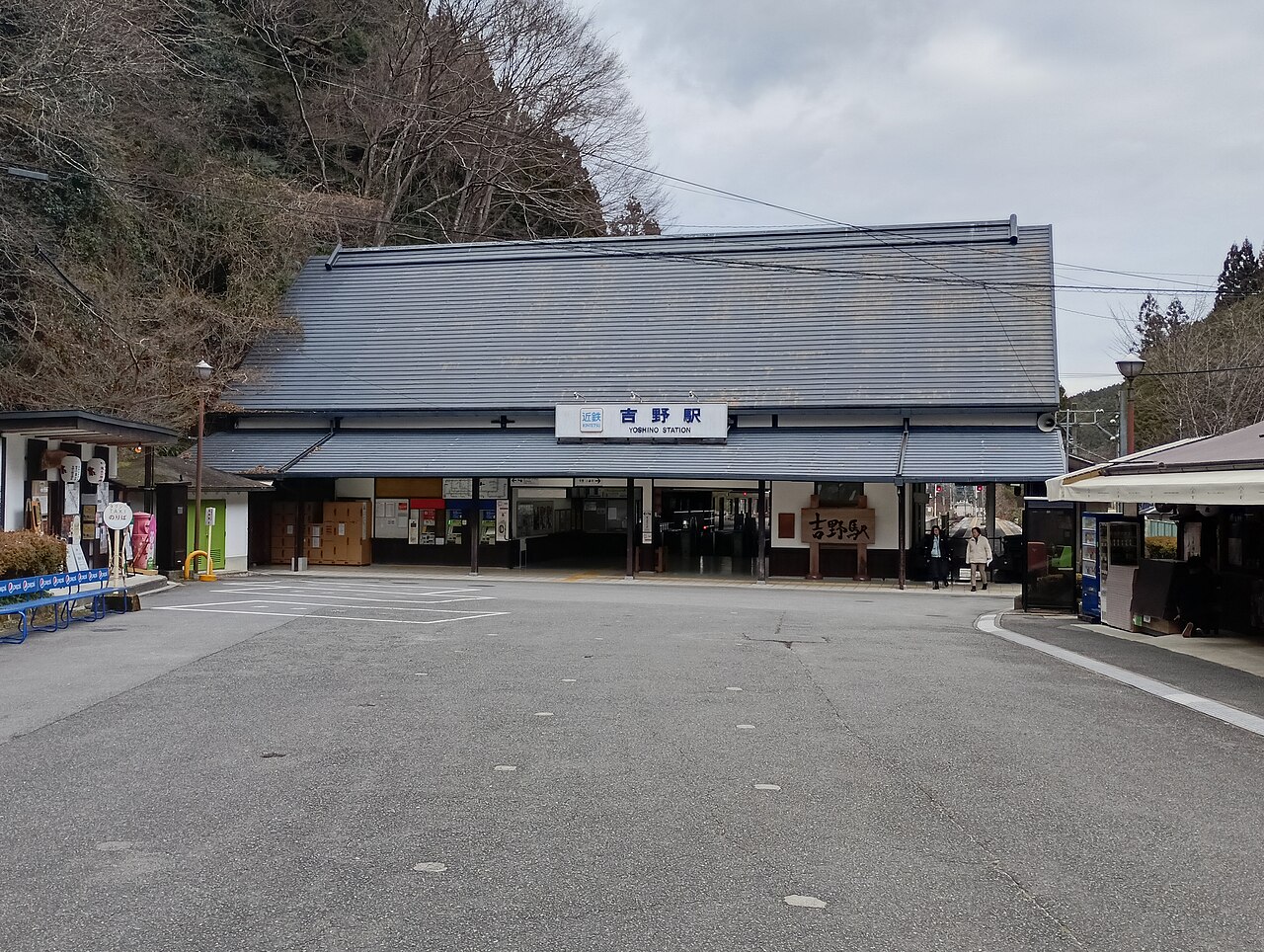
There is still an uphill journey after Yoshino Station. The Yoshino ropeway runs from Senbonguchi below to Yoshinoyama above. Nara Kotsu's spring buses run from Kintetsu Yoshino Station to Naka-senbon Park. Use full stop names for navigation and meeting arrangements. People taking the ropeway and seasonal bus reach different ends of the main street.
Choose your train back to Osaka or Kyoto alongside the mountain itinerary. For Zaodo, the temple town and Yoshimizu Shrine, take the ropeway up in the morning and finish along the main street. For Hanayagura or Oku-senbon, take uphill buses earlier, then descend. On arrival, locate the day's boarding points and return direction and photograph the signs to connect your walk with the right transport stop.
The ropeway reaches Shimo-senbon, with steps at both stations
The ropeway saves the initial climb from the foot of the mountain. The operator gives about three minutes between Senbonguchi and Yoshinoyama. At the upper station, see Shimo-senbon blossom and views downhill. The tourism association map gives about 15 minutes from there to Kinpusenji through the shop-lined temple town. Use the ropeway first if you want this street walk while saving energy on the climb.
The website lists single fares of ¥500 for adults and ¥250 for children aged four through primary school. Normal return fares are ¥900 and ¥450 respectively, but only singles are sold during blossom season. Budget two singles, ¥1,000 per adult, for both directions in spring. If returning by bus from Naka-senbon, budget one journey on each mode rather than buying transport back to the same boarding point.
Both Senbonguchi and Yoshinoyama stations have steps. Pushchairs and wheelchairs have no baggage charge, according to the operator, but station access and mountain walks have their own walking sections. Allocate carrying the child, folded pushchair and bags before entering. To reduce uphill walking for older relatives, finish the afternoon at Naka-senbon and take the seasonal bus downhill.
Suitcases incur a separate baggage charge of ¥250, starting at size S, and large hiking packs have their own rules. A small backpack is easiest for blossom day: carry camera, outer clothing, water and a little food, then shop on the main street before returning. Leave large luggage at your Osaka hotel if staying there again. If changing cities that evening, arrange luggage forwarding or storage before taking a small bag uphill.
Take the spring bus to Naka-senbon, then change for Oku-senbon
In the 2026 blossom season, Nara Kotsu's temporary service ran from Kintetsu Yoshino Station via Nyoirinji-mae to Yoshino Naka-senbon Park. The adult single fare was ¥500; the tourism association listed cash and transport IC card payment. This suits a walk starting higher up: descend through the temple town and leave Yoshimizu Shrine and Kinpusenji for the return, adjusting photographs and lunch to your time.
For Oku-senbon, find Chikurin-in-mae bus stop. Yoshino Omine's 2026 blossom-season service ran between Chikurin-in-mae and Oku-senbonguchi, with single fares of ¥400 for adults and ¥200 for children. The two operators form separate journeys with separate fares. The two uphill buses total ¥900 per adult. If walking all the way down afterwards, continue downhill towards the station.
Use Chikurin-in-mae as the interchange within the mountain area. The tourism association places the Oku-senbon boarding point near Chikurin-in's entrance, about 50 metres away. After getting off at Naka-senbon, locate the Oku-senbon side before choosing lunch or the next bus. If some stay on the main street while others go higher, meet at Chikurin-in-mae and record the exact waiting positions.
Nara Kotsu's 2026 notice excluded the Nara–Ikaruga–Yoshino version of the Nara World Heritage Free Pass from this temporary bus. Budget the additional ¥500 even with a railway or regional pass. List railway, ropeway, Nara Kotsu seasonal bus and Oku-senbon service separately to calculate your route.
Outside blossom season, the mountain bus serves Yoshinojingu and the upper ropeway station towards Oku-senbon. During blossom season, it is shortened to Chikurin-in-mae–Oku-senbonguchi. The operator's routes and seasonal timetables show both on one page. Use the blossom-season column for spring, including return stop names that match where you will walk.
Visit Kinpusenji in the morning and choose the Zaodo admission period
From the upper ropeway station, walk uphill along the main street past Kuromon and the copper torii to Kinpusenji's Zaodo Hall. This large wooden hall is a useful landmark; from distant viewpoints you can find it among the settlement. Seeing the building close up before the afternoon mountain panorama helps you remember Yoshino's layout.
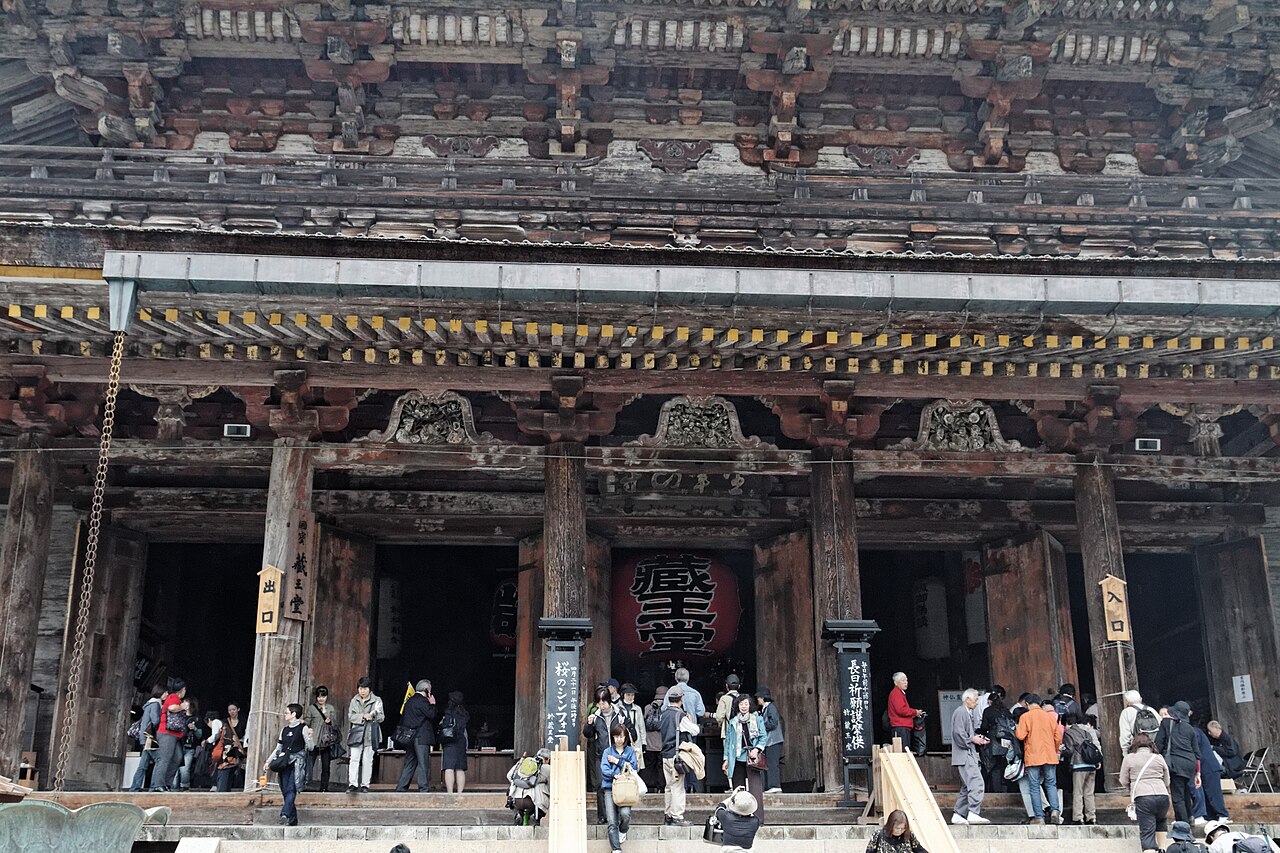
Kinpusenji's hours and admission page lists Zaodo as open 08:30–16:00. Ordinary admission is ¥800 for adults, ¥600 for secondary school pupils and ¥400 for primary pupils. During special openings of the normally hidden principal images, prices are ¥1,600, ¥1,200 and ¥800 respectively. Two adult tickets therefore total ¥1,600 normally or ¥3,200 during special openings. Your visit period changes this cost.
The special opening focuses on the blue Kongo Zao Gongen figures. Nara Kotsu's spring 2026 introduction described three figures over seven metres high, shown in support of repairs to Niomon Gate. Make this your main visit if you want to see them. If you prefer outdoor architecture and flowers, spend longer on the main street and outside the hall. Wooden pillars, eaves and worshippers also show the building's scale.
A morning Zaodo visit leaves more afternoon options uphill. If visiting Oku-senbon first, fit the return around the 16:00 closure, Yoshimizu Shrine and descent. Complete a particular indoor priority first. For blossom and hiking, follow the slope and save indoor visits for a day with more time.
Combine Yoshimizu Shrine's Hitome-senbon view with its Shoin
Yoshimizu Shrine is around Naka-senbon, about ten minutes from Kinpusenji on the tourism association map. Leave the shop-lined main street for the approach and the view opens across the valley. The torii entrance and approach have changes in level. Find stable footing before composing photographs and leave room for others to pass.
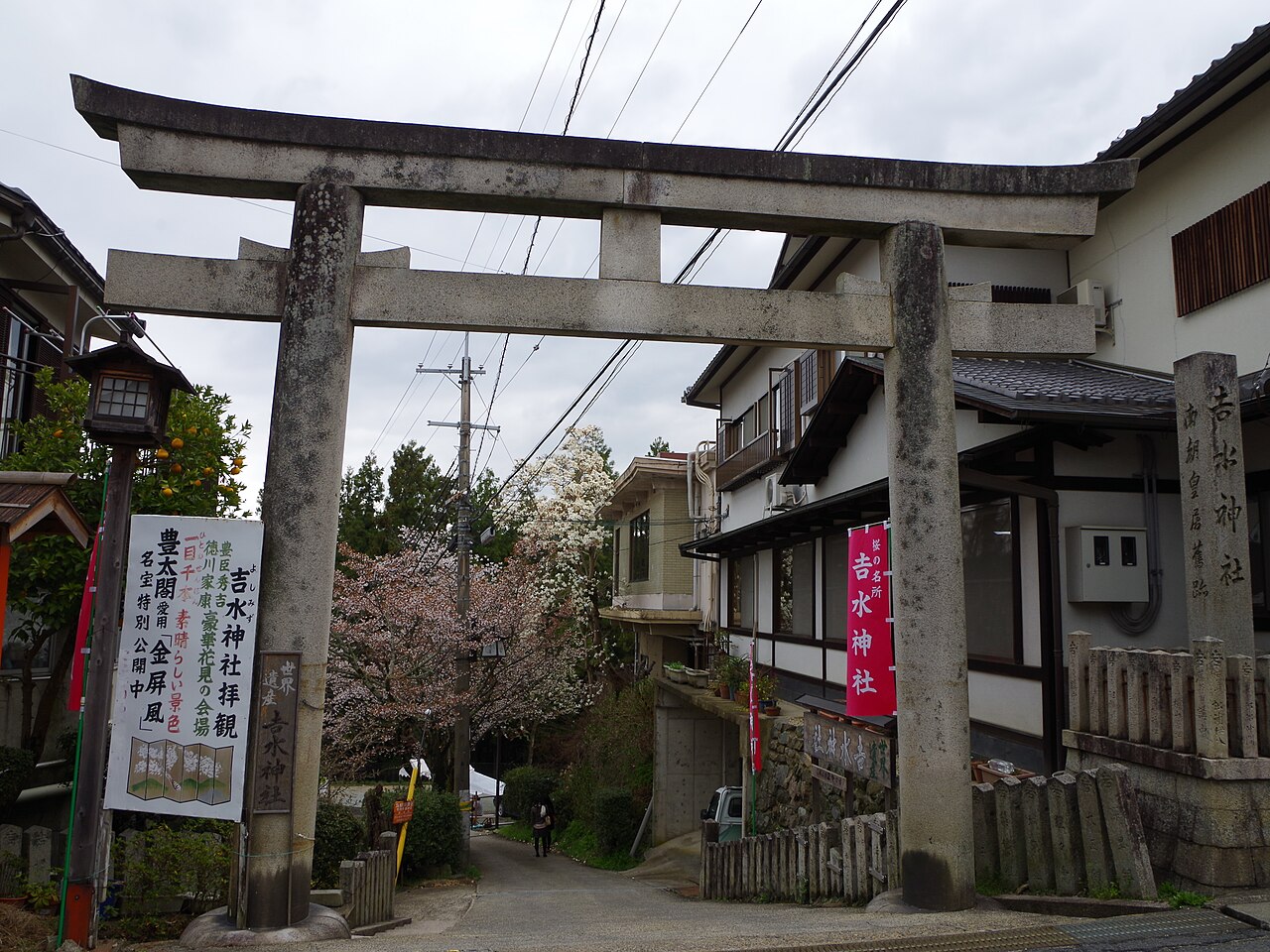
The shrine's Hitome-senbon viewpoint looks over blossom in Naka- and Kami-senbon. Take a wide view of trees, ridges and settlement before selecting a particular slope. If blossom is falling below while upper trees remain in full bloom, the same view shows the difference with altitude. In suitable conditions, this is a good half-day endpoint before returning to the main street for food.
The Shoin offers a different visit. The shrine describes relics and treasures associated with Minamoto no Yoshitsune, Emperor Go-Daigo and Toyotomi Hideyoshi. Hideyoshi used the site as his headquarters during his 1594 blossom-viewing visit. Formerly called Yoshimizuin, it connects blossom viewing with Southern Court history. See the mountains first, then the displays for people and dates behind the scenery.
The shrine currently lists Hitome-senbon access at 09:00–17:00, Shoin visits at 09:00–16:30, and amulet and goshuin services until 16:30. If returning after Hanayagura, put the Shoin and goshuin earlier in the afternoon. For outdoor views alone, allow longer uphill. If interests differ, agree a precise meeting time near the shrine.
Nara Prefecture's tourism information lists Shoin admission at ¥600 for adults and university students, ¥400 for secondary pupils and ¥300 for primary pupils. One adult visiting ordinary-period Zaodo and the Shoin pays ¥1,400 in total. Choose displays in advance to judge how much uphill walking fits afterwards.
Allow an uphill stretch for Hanayagura's panorama
Above Naka-senbon, Hanayagura Observatory makes a worthwhile endpoint. Nara's tourism information describes views over Kami- and Naka-senbon and Zaodo, with blossom, settlement and temple in one panorama. If you visited Zaodo that morning, find it from here to give the mountain view a recognisable sense of distance.
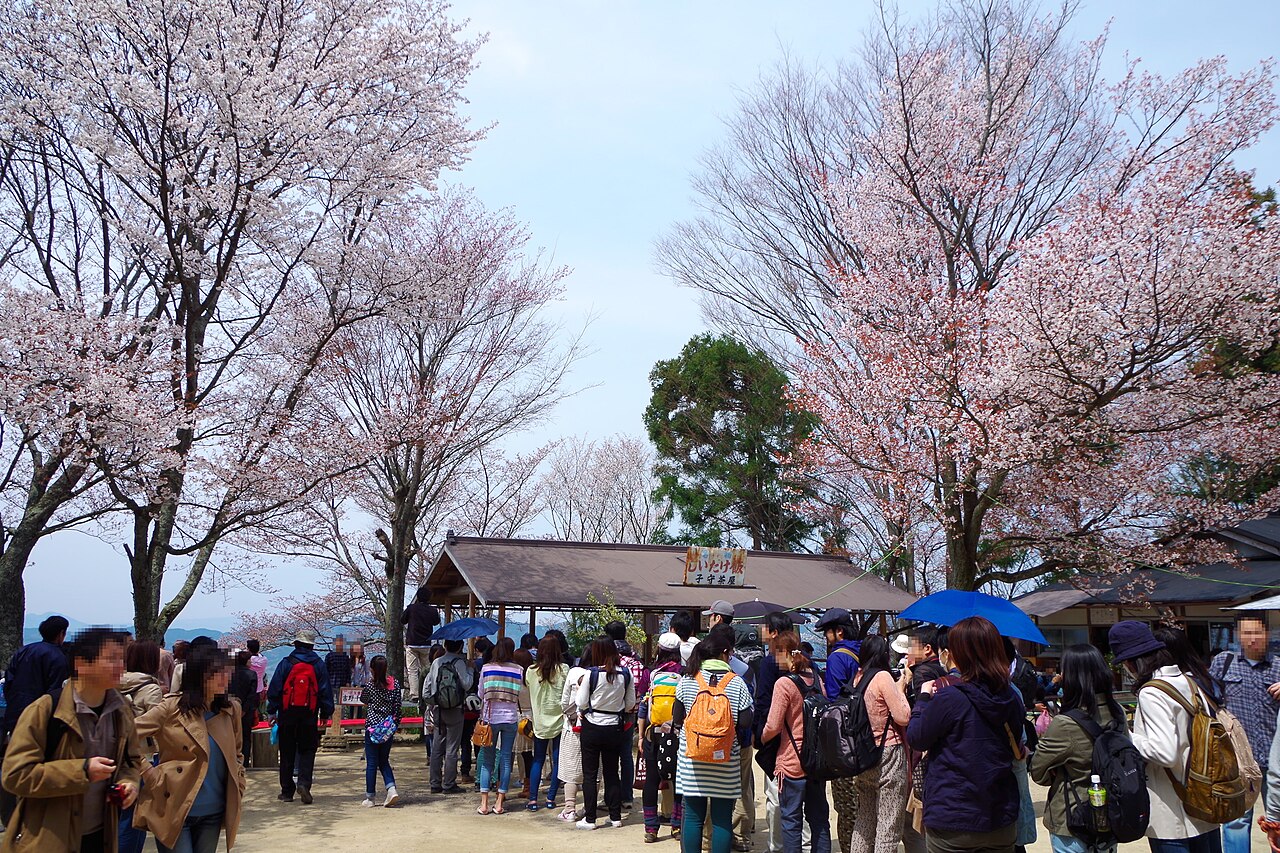
The approach has steep slopes and bends, narrow sections and passing vehicles. Separate walking from looking and photography. Put your phone away on bends and stop where there is room beside the route. Keep your group close enough to help one another while leaving space for vehicles and walkers. With children, treat this as an uphill walk and rest where footing is secure and you can step clear of traffic.
The official tourism page lists free access at any time and over an hour's walk from Kintetsu Yoshino Station. That represents the basic uphill journey; Zaodo, Yoshimizu Shrine and lunch extend the day. Walk the main street in the morning and add only Hanayagura and Mikumari Shrine in the afternoon, without another distant destination.
Seasonal shops and stopping areas stand near the viewpoint, with crowds at popular times. Set the camera first, then briefly take a position overlooking the valley. Others can rest nearby while photographs are taken. Treat reaching the viewpoint and continuing to Oku-senbon as two decisions. Hanayagura deserves a stop; turning downhill afterwards still makes a full day.
Look closely at Yoshino Mikumari Shrine's roofs and corridors
Near Hanayagura, Yoshino Mikumari Shrine is pronounced Yoshino Mikumari Jinja. Nara tourism information dates the surviving buildings to Toyotomi Hideyori's reconstruction in 1604. The main sanctuary, offering hall, worship hall, tower gate and corridors are Important Cultural Properties. After broad blossom views, slow down to examine curved roofs, timber structures and the courtyard layout.
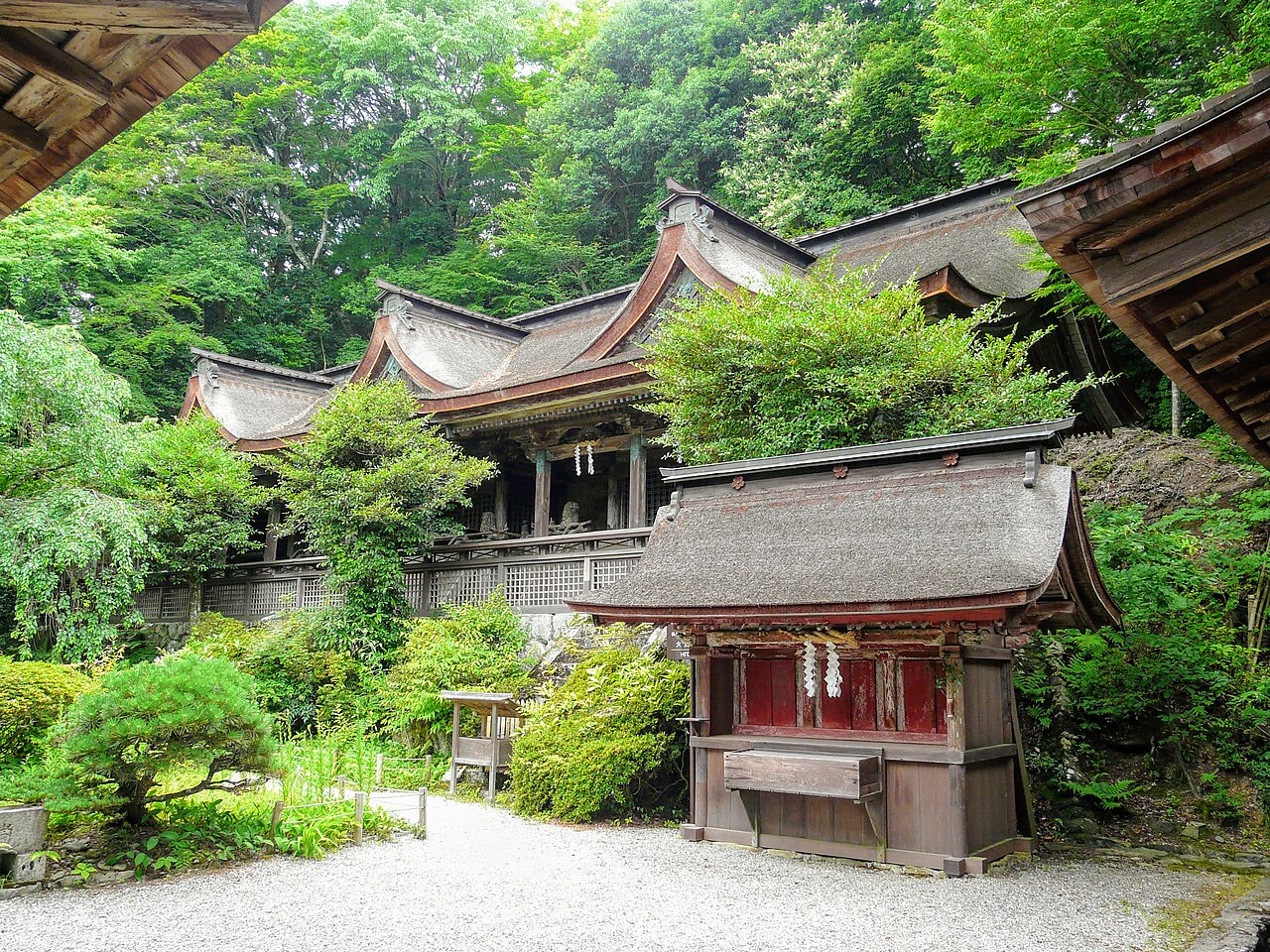
The shrine honours Ame-no-Mikumari-no-Okami, who governs water distribution. Also known as Komorigu, it attracts prayers for children, safe childbirth and children's protection. After worship, view the courtyard along the corridors, keeping the area before the halls clear. Visiting both Yoshimizu and this shrine connects Hideyoshi's blossom-viewing headquarters with Hideyori's rebuilt shrine, showing different Toyotomi links to Yoshino.
Nara's official page lists free admission, normally 08:00–16:00 and until 17:00 in April, about an hour and a half on foot from the upper ropeway station. The descent returns along the route to the main street. If you have walked enough, descend via Hanayagura and Naka-senbon. For Saigyo-an, continue with Kinpu Shrine and Oku-senbonguchi as the next route points.
There is more walking from Oku-senbonguchi to Kinpu Shrine
Kinpu Shrine and Kinpusenji on the main street are separate places. Kinpusenji centres on Zaodo; Kinpu Shrine is around Oku-senbon, amid forest and Shugendo training sites. Save their full names in your map to distinguish returning to the main street from continuing into the mountains.
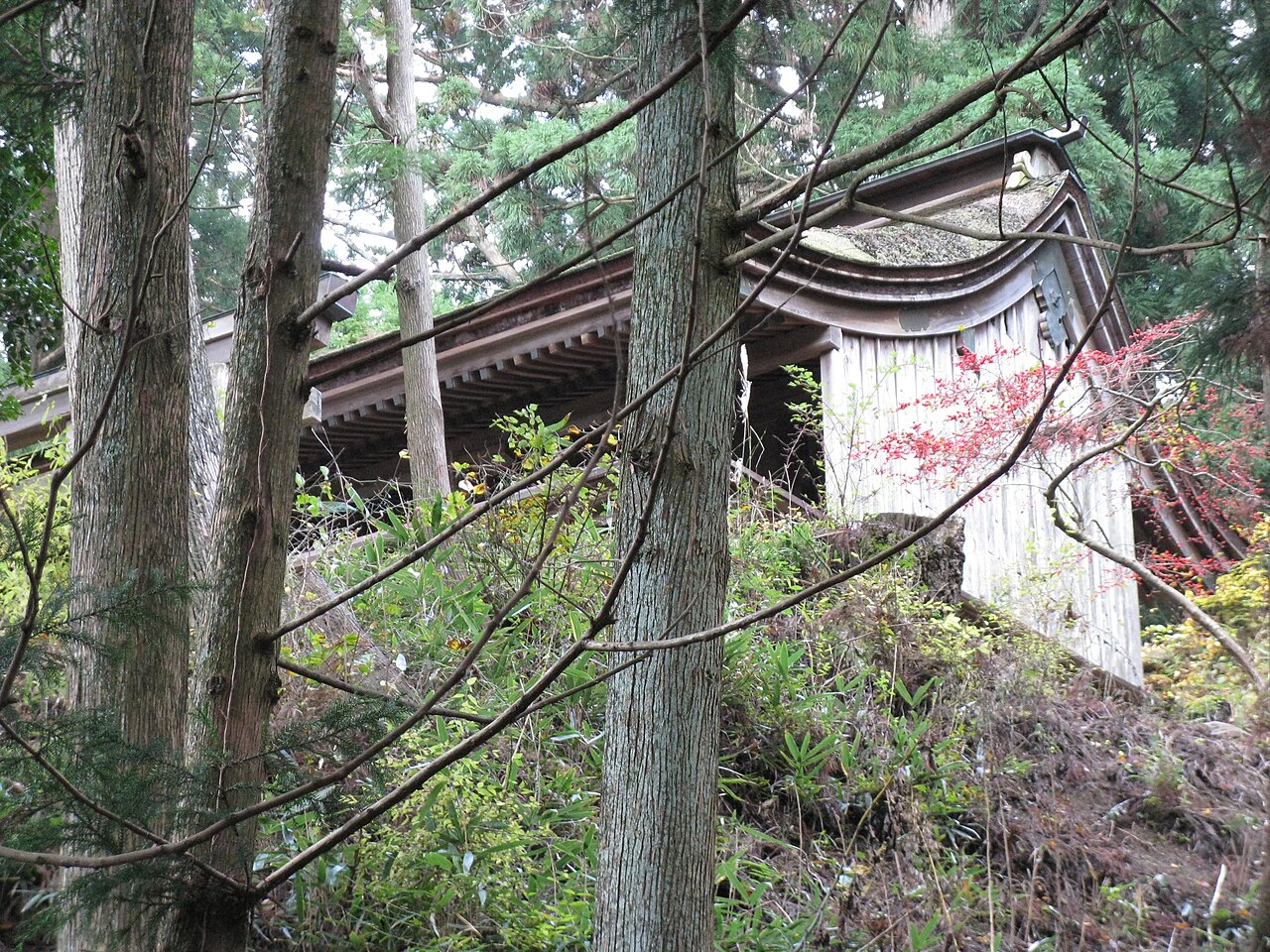
From the bus at Oku-senbonguchi, follow the approach towards Kinpu Shrine. The tourism association map gives about 30 minutes from Mikumari Shrine to Kinpu Shrine and 20 minutes from Kinpu Shrine to Saigyo-an. Kintetsu's walking guide gives about 25 minutes from Oku-senbonguchi to Saigyo-an. These start from different places. The bus still leaves a walk, and a return visit to Saigyo-an needs time back to the stop or onwards to the descent route.
The shrine honours Kanayamahiko-no-Mikoto, associated with gold mining. Nara tourism information connects it with mountain worship around Yoshino and Omine, with a nearby legend of Yoshitsune's hiding tower. For a blossom-focused trip, visiting the shrine, approach and forest gives a feel for Yoshino beyond the main street. If interested in history and Shugendo, explore nearby sites slowly rather than briefly stopping at every name.
For an Oku-senbon day, leave Naka-senbon early. Eat before the bus or bring compact food and stop at a suitable rest spot. Reserve afternoon time if you also want temples on the main street. Keep the mountain route simple: after Kinpu Shrine and Saigyo-an, devote the remaining day to descending rather than another hill.
Saigyo-an is a mountain walk; save energy for both directions
Saigyo-an lies in Oku-senbon's forest, where the poet Saigyo once lived in seclusion. Here, blossom viewing moves from roadside shops to mountain paths. Kintetsu specifically describes steep terrain. Wear shoes with grip and keep hands free for balance. Leave large shopping bags until you return to the main street.
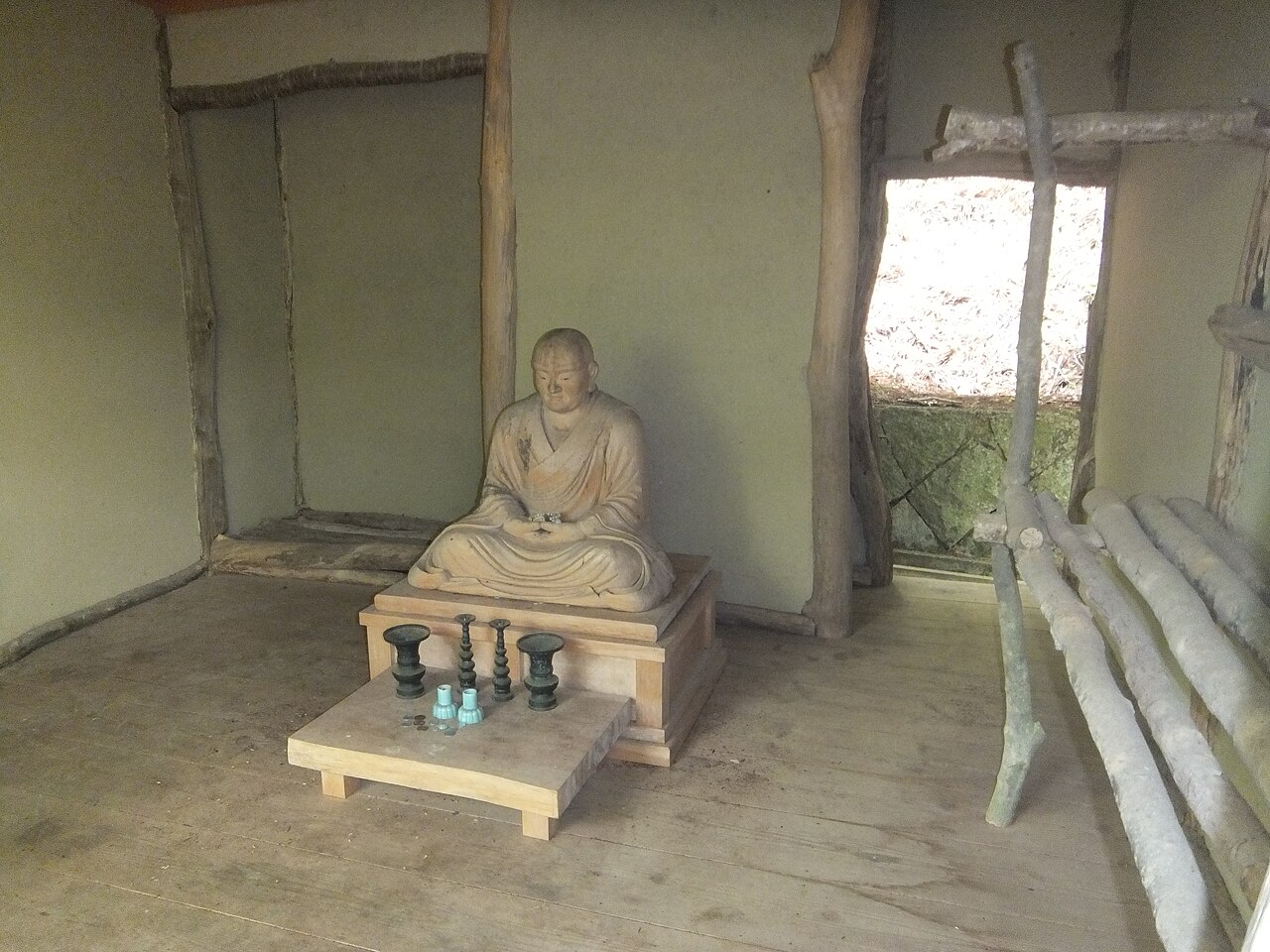
The hut is small; forest, uneven paths and quiet surroundings form much of this walk. Pause to see the timber building in its woodland setting, then rejoin your route. If most blossom is in Shimo- and Naka-senbon, focus here on forest and Saigyo's history. For broad blossom views, allow more time on slopes still flowering.
After reaching the hut, you must walk back to transport or the descent towards Naka-senbon. List outward and return stages separately rather than placing a single map marker. With children, rest at Kinpu Shrine and assess their pace before continuing. If someone only wants the shrine, agree for them to wait there while others continue.
After rain, mountain paths can be muddy and feel quite different from Shimo-senbon's paved street. Prepare outer clothing, water, phone battery and your departure time from the mountain area at Chikurin-in-mae. For a day trip, use Saigyo-an as your furthest turnaround point, descending through Mikumari Shrine and Hanayagura and leaving the shop-rich stretch until last.
For half a day, finish at Yoshimizu Shrine and Naka-senbon
With only half a day in Yoshino from Osaka, preserve one continuous walk. Take the ropeway to Shimo-senbon, follow the temple town to Zaodo, then see Hitome-senbon at Yoshimizu Shrine. Return to the main street for food or continue towards Naka-senbon Park for more blossom. This combines buildings, valley and streets and keeps return transport near more shops.
Have lunch on the street between Zaodo and Naka-senbon. The official area map lists restaurants, noodles, tofu dishes and kudzu confectioners, with local foods such as persimmon-leaf sushi. Allow a full seated break midway if you want a meal. For snacks, put food away before walking so both hands are free for photographs. Buy souvenirs before descending to carry heavy boxes uphill for less time.
If arriving in the afternoon, choose your main indoor visit first. Zaodo closes at 16:00 and the Shoin at 16:30; visiting both requires enough walking and viewing time. For more flowers, start at Hitome-senbon and descend slowly along the main street. For Zaodo's interior, start at the temple. Give a half-day's limited time to one or two places you want to examine properly.
Linger where you like the flowers. Yoshino's slopes bring blossom at different heights into the same view, so a short route still has depth. If extending beyond Naka-senbon, record your return stop first, then add a short uphill stretch. Save Hanayagura and Oku-senbon for another full day to enjoy them at length.
With children and older relatives, allocate energy from the station steps
For families, the ropeway saves a climb while buses provide a higher starting point. Both ropeway stations have steps, so include folding and carrying a pushchair in transfer time. A spring bus to Naka-senbon lets you start higher and descend gradually along the main street. Choose based on whether slopes, steps or standing in queues is hardest for your companions.
Ropeway child fares of ¥250 apply from age four through primary school. Ordinary Zaodo admission is ¥400 for primary pupils and ¥600 for secondary pupils; the Yoshimizu Shoin charges ¥300 and ¥400 respectively. Budget using each site's age categories. With preschool children, choose suitable outdoor stops and rest places. Planning tickets and route together leaves more attention for your family on arrival.
To limit mountain paths, make Hitome-senbon your furthest stop and add a seated meal midway. Add Hanayagura and Mikumari Shrine only for a family happy walking; continuing from Mikumari to Oku-senbon adds another substantial stretch. If children slow down or older relatives want more rest, descend through Naka-senbon and save energy for returning to the station.
If splitting up, meet at a specific entrance or sign, such as Yoshimizu Shrine's entrance or a particular side of Chikurin-in-mae stop. A busy viewpoint such as Hanayagura makes a vague meeting arrangement easy to miss. Send a photograph of the location and agree a time before separating, so hikers can continue and those on the main street can rest comfortably.
Calculate mountain transport and admission for two route types
For Shimo- and Naka-senbon, take the ropeway up, visit Zaodo and the Yoshimizu Shoin, then return by ropeway. Blossom-season adult singles total ¥1,000 for both directions. Ordinary Zaodo admission is ¥800 and the Shoin ¥600, making ¥2,400 together. During Zaodo's special opening, transport and the two visits total ¥3,200. Use the latter budget if you want to see the blue Zao Gongen figures.
For Oku-senbon, another spring 2026 route uses the ¥500 Nara Kotsu bus from Yoshino Station to Naka-senbon, then the ¥400 bus from Chikurin-in-mae to Oku-senbonguchi: ¥900 uphill. After Kinpu Shrine and Saigyo-an, descend via Mikumari Shrine and Hanayagura, visiting special-opening Zaodo and the Shoin on the return. Uphill buses and both admissions total ¥3,100 per adult. This route relies on a long downhill walk.
If taking buses both ways to Oku-senbon and the same seasonal operator between Naka-senbon and the station, four bus journeys total ¥1,800 at spring 2026 fares. Add special-opening Zaodo and the Shoin for ¥4,000. Buses cover changes in altitude; shrine entrances, viewpoints and Saigyo-an still need walking. For companions wanting fewer slopes, start with this transport plan and remove the furthest mountain-path section.
List long-distance rail, limited-express supplements, lunch and shopping separately. Divide cash between transport and spending. The tourism association's spring 2026 information lists cash for the ropeway and cash or IC cards for Nara Kotsu's seasonal bus. Record payment methods beside each stage rather than relying on a single daily total. Two travellers can each keep return fares when walking separately.
Descend through the afternoon and buy souvenirs before the station
For a full day, choose either going uphill or indoor visits first. For Oku-senbon, take both buses early and visit Kinpu Shrine and Saigyo-an while fresh. Return around midday to Chikurin-in and Katte Shrine, then follow the main street towards Yoshimizu Shrine and Zaodo. To enter temples first, start from Shimo-senbon, complete visits in the morning and add only Hanayagura and Mikumari Shrine after lunch. Each has a clear turnaround point before the afternoon descent.
Leave your final meal or shopping for the temple town. Persimmon-leaf sushi comes in takeaway boxes; choose kudzu sweets to taste. Consider box size, bag space and the remaining journey. Buy heavy or fragile items after mountain walking to avoid protecting paper bags all day. A tea stop also lets companions sort photographs and check trains.
Your accommodation determines the travel before and after Yoshino. Near Tennoji, Abenobashi is a direct morning departure; from Kyoto, include the Kashiharajingu-mae interchange both ways. Give Nara Park, Uji or central Osaka separate half-days or days elsewhere in your Kansai trip. Yoshino already involves slopes, queues and visits. Dinner in your accommodation city usually makes it easier for everyone to walk at their own pace.
Save two groups on your phone: Yoshino Station, Senbonguchi, Chikurin-in-mae and Oku-senbonguchi as transport points, then temples, shrines and viewpoints. After a visit, open the next transport point. If shortening the route, you can descend from Naka-senbon. For a first Yoshino visit, spending enough time with blossom and a few buildings, then returning with energy to spare, makes a rewarding day.
A few useful answers
How far should I walk on a first blossom visit?
For half a day, choose Shimo-senbon, Kinpusenji and Hitome-senbon at Yoshimizu Shrine. With a full day and willingness to climb, add Hanayagura and Yoshino Mikumari Shrine. Kinpu Shrine and Saigyo-an in Oku-senbon add mountain paths and can be your furthest turnaround.
What does the ropeway cost, and are return tickets sold in blossom season?
Singles cost ¥500 for adults and ¥250 for children aged four through primary school. Only singles are sold in blossom season, making ¥1,000 per adult for both directions. Normal return fares are ¥900 and ¥450. Both stations have steps.
How do buses connect Yoshino Station, Naka-senbon and Oku-senbon?
In spring 2026, take Nara Kotsu's temporary bus from Kintetsu Yoshino Station to Naka-senbon Park for ¥500 per adult. Change at Chikurin-in-mae to Yoshino Omine for Oku-senbonguchi, ¥400 for adults and ¥200 for children. The fares are separate.
Does the Nara World Heritage Free Pass cover the seasonal blossom bus?
Nara Kotsu's spring 2026 notice excludes the Nara–Ikaruga–Yoshino version from the temporary Yoshino Station–Naka-senbon Park bus. Pay separately for this journey.
What are the hours and prices for Zaodo and the Yoshimizu Shoin?
Zaodo opens 08:30–16:00. Ordinary admission is ¥800 for adults, ¥600 for secondary pupils and ¥400 for primary pupils; special-opening prices are ¥1,600, ¥1,200 and ¥800. The Shoin opens 09:00–16:30 and costs ¥600 for adults, ¥400 for secondary pupils and ¥300 for primary pupils.
Are Hanayagura and Mikumari Shrine suitable with a pushchair?
The Hanayagura approach has steep slopes, bends and passing vehicles, and both ropeway stations have steps. To reduce carrying and climbing, start at Naka-senbon and descend, combining Hitome-senbon, the main street and a meal. Add Hanayagura and Mikumari Shrine if willing to climb.
Are Kinpusenji and Kinpu Shrine the same place?
They stand at different heights. Kinpusenji's Zaodo is on the Shimo-senbon main street. Kinpu Shrine is around Oku-senbon, reached on foot from Oku-senbonguchi. The tourism association map gives another 20 minutes on mountain paths from Kinpu Shrine to Saigyo-an.
Official information and references
Sources used in this guide.
- Yoshinoyama Tourism Association: blossom and spring 2026 transport
- Yoshinoyama Tourism Association: rail and mountain transport
- Yoshinoyama Tourism Association: area walking maps
- Yoshino Omine: ropeway fares, baggage and steps
- Yoshino Omine: normal and blossom-season bus routes
- Nara Kotsu: spring 2026 temporary buses and pass validity
- Kinpusenji: Zaodo hours and admission
- Yoshimizu Shrine: hours and Shoin admission questions
- Yoshimizu Shrine: Hitome-senbon and Hideyoshi's blossom viewing
- Nara Prefecture tourism: Yoshimizu Shrine Shoin
- Nara Prefecture tourism: Hanayagura Observatory and walking approach
- Nara Prefecture tourism: Yoshino Mikumari Shrine
- Nara Prefecture tourism: Yoshino World Heritage route
- Kintetsu: Oku-senbon and Saigyo-an walk
- Yoshinoyama Tourism Association: Saigyo-an
- WindsPro / YoshinoWeb: Mount Yoshino aerial films
- YoshinoWeb: aerial blossom views, 4 April 2026