Use the official 2026 map to understand Yamagata Hanagasa Festival’s 800-metre parade, traditional and hat-spinning dances, two evening participation sessions and daytime lessons. Includes city stays, food and information points; choose intercity returns from the day’s services.
- Region & Focus
- Yamagata, Zao and Ginzan Onsen
- Reading Scope
- 30 min read · 19 chapters · 4 Q&As
- Official Verification
- 10 official sources checkedUpdated 22 November 2026
- Key Topics
- SeasonsItinerariesRail travel
Chapter Route Map (tap any stop)
- Choose your evening: watch, dance or stay for the finish
- The official 2026 map: Tokamachi to City Hall, beyond the dancers’ waiting area
- Tokamachi and Honcho: an early evening with time to return to the station
- Nanokamachi and City Hall: the opening dance is at the finish end
- Safflowers on the hats: look at the face, then the change of hands
- Kunpu Mogamigawa and Zao Gyoko: two ways of moving to one song
- Hat-spinning and creative dances: compare them from one place
- From work song to city parade: listen for the rhythm
- Daytime performance or practice: the two sessions on 7 August 2026 differed
- Early participation: the 18:10 City Hall circle dance
- Late participation: find the tobiiri sign; 20:30 is the rear’s departure
- For Sendai, fix the return service and stop before leaving the southern section
- Bus fares and payment: prepare for queues, IC cards and no toilet
- An overnight Yamagata evening: watch first, then decide whether to dance
- Food along the route: southern marché, northern food trucks and Kajo stalls
- Eat before the parade at Beni no Kura: Sanbyakubo closes at 20:00
- Mark toilets and first aid on the 2026 map when choosing a viewing spot
- When rain changes, read the announcement and shorten outdoor time
- Combine Sendai Tanabata with Hanagasa: leave time for a meal between them
- Quick Q&A
Stay one night in Yamagata city if you want to compare Hanagasa dance styles and join the late tobiiri session. From a station-area hotel, start watching around Tokamachi and Honcho. From Nanokamachi, head first to the opening circle dance outside City Hall. If you already have consecutive nights booked in Sendai, obtain the festival-day return timetable and boarding point, then choose the southern viewing section and work backwards to your departure. The organiser holds the festival annually on 5–7 August. The 64th edition in 2026 ended on 7 August. This guide uses that edition’s official map to review viewing locations and participation arrangements.
Choose your evening: watch, dance or stay for the finish
Watching from the pavement lets you control your time. Joining the opening circle dance means reaching City Hall at the northern end early. Joining tobiiri at the rear of the parade requires keeping the late evening and dispersal free. With just one night, choose the thing you most want to do, then arrange food and transport around it.
If you enjoy dance and want to watch different groups pass, stay in Yamagata and divide the evening between watching and joining in. If consecutive Sendai hotel nights are already booked and you have secured usable return arrangements for that day, consider the southern section. On arrival, identify Yamagata Station’s East Exit and the return direction, then find a permitted viewing spot in Tokamachi or Honcho. Watch for a while and return by the same route. The southern section shortens the walk back after leaving.
Station-area accommodation suits an early train or bus the following day. Nanokamachi makes the City Hall circle dance and northern viewing convenient later in the evening. Mark the hotel entrance, viewing spot and station on a map and choose the walk you prefer. Handle check-in hours, luggage storage and late arrival under your actual booking. Check in on arrival so you can head out with less to carry.
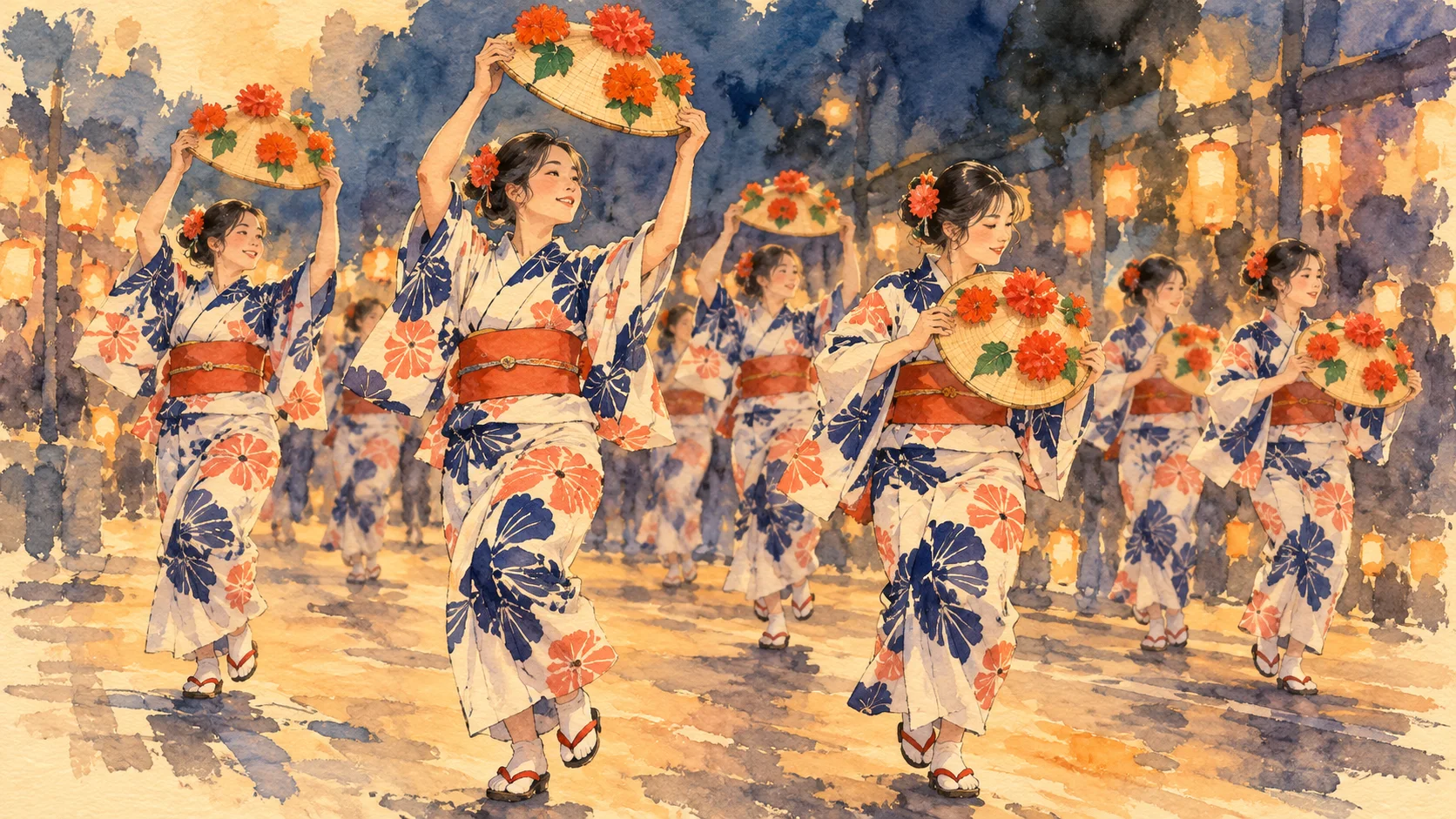
Use the official 2026 map to understand Yamagata Hanagasa Festival’s 800-metre parade, traditional and hat-spinning dances, two evening participation sessions and daytime lessons. Includes city stays, food and information points; choose intercity returns from the day’s services.
The official 2026 map: Tokamachi to City Hall, beyond the dancers’ waiting area
The organiser’s 2026 booklet marks 800 metres from the start to the finish at the Hanagasa Arch. Arrows run from Tokamachi and Honcho towards Nanokamachi and City Hall. Bunshokan stands farther north beyond the finish, a useful northern landmark. Remember south-to-north movement to understand why the opening circle dance is in the north while tobiiri follows the parade’s rear.
South of the official start, a blue area labelled “踊り手整列エリア” is explicitly for dancers waiting in formation, not dancing, and spectators cannot enter. Coming from the station’s East Exit, do not stop at the first crowd and decorated hats expecting a performance. Follow venue signs to pavement viewing along the official parade section. Beni no Kura and the central post office identify the southern end, but the start shown on that year’s map defines the viewing route.
The general FAQ describes a straight venue of about 1.2 kilometres, about ten minutes from the East Exit. The 2026 map separately gives an 800-metre parade section and about 15 minutes from the station to the start. Use those figures for that edition. The 15 minutes is only a walking guide to the start. Add time for City Hall, finding a spot, toilets and moving through crowds; it does not apply to every viewing location.
The 2026 map places Hanagasa information points at Yamagata Station’s tourist information centre, 9:00–17:30, and Beni no Kura, 10:00–18:00. Ask at the station before entering town, or at Beni no Kura once at the southern end. Both close before the evening parade finishes, so obtain directions and information during the afternoon.
Tokamachi and Honcho: an early evening with time to return to the station
For an earlier return to Sendai, limit viewing to the start–Honcho area. The 2026 map marks the central post office, Tohoku Electric Power and second headquarters near the start, then Shonai Bank, Yamagata Grand Hotel and Hachimonjiya farther north. Save the map and use named buildings for meeting points instead of “the festival entrance”. Check the station direction before leaving the pavement, so finding companions does not pull you farther along the parade.
Let one group pass completely, watching the same sequence from front to middle to rear before deciding whether to move. Hanagasa’s detail emerges over several steps: hats rise, hat faces turn, and rows of dancers change body direction together. Frequently moving ahead can leave you seeing only each group’s beginning while spending your viewing time crossing crowds.
For photographs, choose a place that keeps the way clear. Record the rows and street first, then wait for hat faces to turn towards you for detail. The 2026 map prohibits sitting on the road kerb to watch, entering or crossing the parade route, and unauthorised photography within it. Adjust angles from the pavement. Follow staff instructions to reach the other side rather than crossing independently through a gap between groups.
Nanokamachi and City Hall: the opening dance is at the finish end
For the 18:10 opening Hanagasa circle dance, head directly to Yamagata City Hall. It is near the parade finish, a different distance from the station than the southern start. On a first visit, eat early, identify the northern gathering area, then rest or refill water. Leaving the station at 18:00 can consume the whole opening session in finding your way.
Bunshokan and City Hall also help locate northern services. The 2026 map places first aid, toilets and the circle dance around the finish near Yamagata Chamber of Commerce and Industry, and the food festival in front of Bunshokan’s assembly hall. People eating, dancing and watching can separate here, but agree on the building and side entrance first. “Outside City Hall” is an area; a precise, recognisable meeting point helps amid music and crowds.
If staying towards Nanokamachi, make this the evening’s centre: join the circle dance, step back onto the pavement to watch, then decide whether to wait for the late session. For an intercity return from Yamagata Station, include the southward walk after the circle dance. Combining northern dancing, southern viewing and Sendai means accepting less viewing time. Reserve the station walk so you can still pause for a group you like.
Safflowers on the hats: look at the face, then the change of hands
The hanagasa hat is an easy starting point. The organiser’s dance guide describes sedge hats decorated with flowers modelled on safflowers, Yamagata’s flower. Styles use suitable hats, and some groups make their own. Look at shape, flower colours and differences between groups, then how the hat turns. Distinguishing its face from its underside helps you follow quick hand changes.
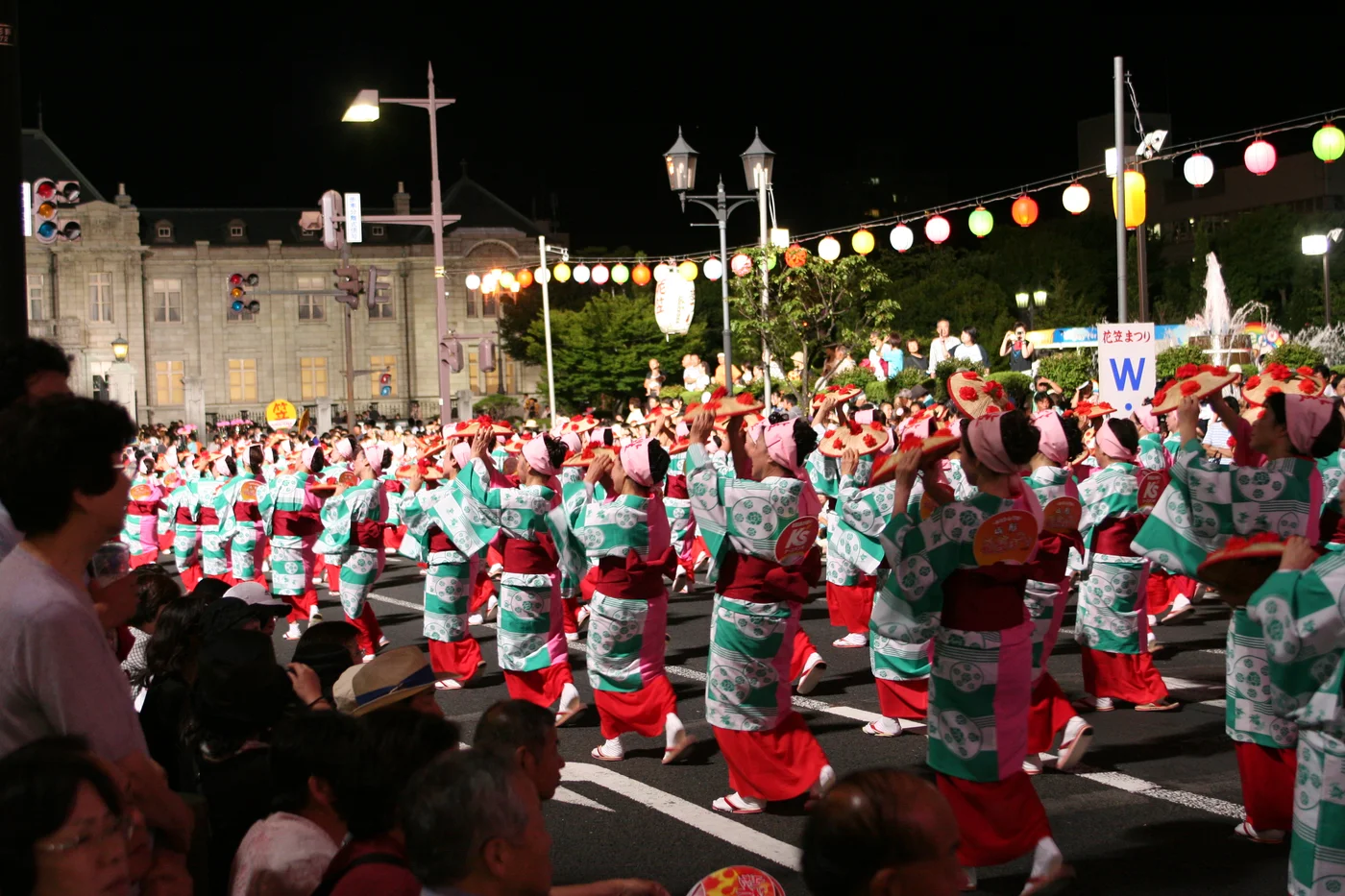
When a group raises its hats together, compare one row’s height and angle. Then follow one dancer’s movement from chest to side to overhead. At the next similar sequence, look back at the whole row to see how individual movement makes a group dance. Children need not learn the style names first: ask them to find safflowers or spot when hats turn together.
To dance, keep both hands free. Put water, phone and light rainwear in a small bag that closes, and deal with large luggage before leaving the hotel. Takeaway boxes, umbrellas and several shopping bags make hand changes awkward. Eat and shop before entering the participation area. Hats are dance equipment: leave space on both sides, follow the steps first and gradually add the hat movements.
Kunpu Mogamigawa and Zao Gyoko: two ways of moving to one song
The traditional women’s style, Kunpu Mogamigawa, has been used since the first parade in 1963. The organiser explains its imagery through breezes over the Mogami River and swaying rice. Official steps raise the hat overhead, lower it to the chest, sweep it left and right, and turn the body. Watch sideways arm movement together with forward travel to recognise the style, rather than following only the hat’s rise and fall.
The traditional men’s style, Zao Gyoko, was introduced in 1998, evoking dawn over the Zao range, firm steps on the earth and gratitude to nature. Official teaching includes broad hat rotations, a lower centre of gravity and upward thrusts. Both styles carry hats and move forward; their differences appear in continuous steps. Watch shoulders and knees, then the hat’s path, to see how one prop produces different effects.
“Women’s dance” and “men’s dance” are the organiser’s conventional style names; remember the full names when identifying them. The website illustrates both traditional dances step by step. Learn the basics beforehand, then follow the teachers at the opening circle dance. You need not complete every section on a first attempt. Knowing when to draw in the hat and when to step gives you movements to connect with the live demonstration.
Hat-spinning and creative dances: compare them from one place
Alongside the two traditional styles are Obanazawa-derived kasa-mawashi hat-spinning dances and creative dances devised by individual groups. The former feature broad swings and rotations; the latter add participants’ own ideas. Watch several groups from the same position and similar distance to compare hat movement, formation and body weight. You do not need a different street section for each style.
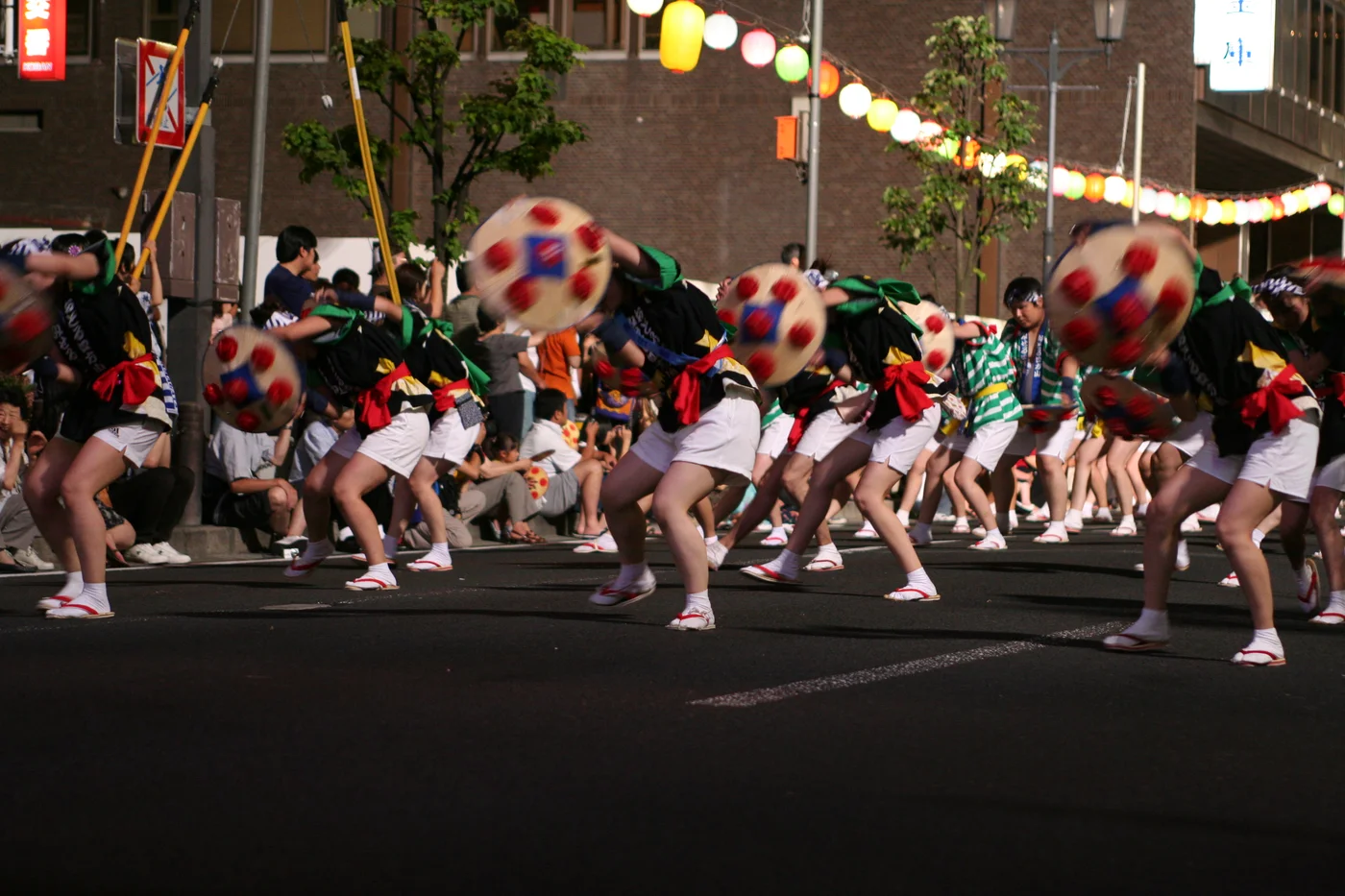
The organiser’s FAQ says some groups attend all three days while others differ by day. The order is published after details are finalised. If choosing only one night, start with accommodation and transport. If coming for a named group, use that edition’s order. The overall 18:10 start is not the time any particular group reaches you, so reserve a viewing window.
First-day record of the 59th Yamagata Hanagasa Festival in 2021 at Kirayaka Stadium. The programme lists two Hanagasa dance parts and a finale.
From work song to city parade: listen for the rhythm
The official Hanagasa Ondo account connects the song to earth-tamping songs in Murayama and singing that coordinated work on an irrigation reservoir in Obanazawa, while presenting different local origin traditions. The parade lyrics were selected before the first edition: thirteen verses from a public competition joined two existing verses to make fifteen, celebrating places and specialities along the Mogami River. Knowing this helps connect singing, walking and hat movements when you hear the repeated beat.
You can watch closely without understanding every Japanese word. Listen for how accompaniment and group calls match the movement. Watch when hats return to the chest and when everyone pushes them out. Once you recognise a movement, wait for the whole row to complete it when the music repeats. This also helps first-time circle dancers: remember the rhythm by ear, then follow the demonstration ahead, rather than relying only on written steps.
The festival began as part of the Zao Summer Festival in 1963 and became independent in 1965. Its official history records growing participation by schools and enthusiasts’ groups, widening citizen involvement. Connect that history with each group’s clothing, handmade hats and creative dances. It gives a useful question while watching: how does this group turn a shared rhythm into its own parade identity?
Daytime performance or practice: the two sessions on 7 August 2026 differed
To learn some steps before the evening tobiiri, include the daytime Hanagasa event. The organiser’s FAQ lists it as free and requiring no booking: watch the dance troupe perform, then try the steps with instructors. A stage performance differs from a moving street parade and helps you identify the movements first. The 2026 booklet originally listed 13:30 and 15:00 sessions at Q1, providing an afternoon entry point.
The 7 August 2026 change notice, responding to heat illness risk, moved the 13:30 session to Yamagata Bank’s head-office Nigiwai Plaza, 3-1-2 Nanokamachi, as performance only, without circle dancing. The 15:00 session remained at Q1, 1-5-19 Honcho. For that date, the bank plaza was for watching, not practice. Q1’s 15:00 session lay in the southern section and could connect with the evening route. Choose the session you want rather than travelling between both ends for the same daytime event.
Early participation: the 18:10 City Hall circle dance
The organiser’s FAQ lists two daily opportunities to join freely, with no booking or clothing requirement; the 2026 booklet also states that they are free. The first is the opening circle dance outside City Hall, about 18:10–18:30. Simple hat-shaped fans are provided, and participants can copy the teachers. Its fixed location and short duration suit people wanting to try dancing before watching from the pavement or returning to rest.
Eat first, leave unnecessary items in the room, then reach City Hall early and enter the circle area as directed. Afterwards, return to the pavement for a few groups before deciding whether to move south. If only one of two companions wants to dance, the other can wait at an agreed side position. Decide who carries bags and water, and where the waiting person stands, before the music begins.
With children, let them watch the teacher from the edge and join if willing. If the volume frightens them, they tire or do not want to dance, one adult can return with them to the viewing spot. Watching the circle, a section of parade and then returning to the hotel makes a complete evening. There is no need to wait until the end for a participation photograph. Choose the late session and a Yamagata stay if you want longer with the moving parade.
Late participation: find the tobiiri sign; 20:30 is the rear’s departure
The second opportunity follows the parade’s very rear. The FAQ gives about 20:30 and says people can join from points along the route when they see the “飛び入りコーナー” sign led by Miss Hanagasa. The 2026 booklet gives about 20:30–21:30. Treat 20:30 as the rear’s start; those waiting in the north must wait for it to arrive. Choose your viewing place and follow the actual sign and staff guidance.
The late session suits an overnight Yamagata stay better than the opening circle. Watch in the south, eat and drink, then pack the camera and bag as participation approaches. Wait for the open group to pass. If companions only want to watch, agree on a meeting point after dispersal rather than asking them to follow along the pavement taking photographs. For an early exit, ask staff where to leave safely, return to a usable pavement and head to your accommodation.
For an express bus back to Sendai that night, allow separately for leaving the viewing area, walking to the station and queuing. Tobiiiri starts only around 20:30, and waiting farther north means a longer walk back afterwards. If the late session is your priority, stay one night in Yamagata city.
A few friends or relatives can simply use the open participation sessions. Formal group applications in the FAQ cover 20–200 people, normally recruited from early to mid-June using a dedicated form. That differs from visitors joining the circle without a booking on the night. Two or three people wanting to try do not need to assemble a registered troupe.
For Sendai, fix the return service and stop before leaving the southern section
Obtain festival-day operating times and boarding/alighting points from Miyagi Kotsu or Yamagata Kotsu first, then put your departure from the viewing area into the plan. The 2026 map lists main traffic restrictions 17:50–22:00, some areas from 16:00 and the Bunshokan frontage from 18:30. It also marks a temporary local bus stop west of City Hall. Distinguish intercity express stops from city bus stops.
Watch mainly in Tokamachi and Honcho in the south, then leave towards Yamagata Station’s East Exit. The 2026 map gives about 15 minutes between station and parade start, but leaving also includes stepping out of the crowd, moving along the pavement, finding the stop and queuing. Sendai-based visitors joining the opening circle should reach northern City Hall first, then gradually finish southwards. Avoid waiting until the return deadline to walk the whole route from the finish.
Miyagi Kotsu’s Sendai–Yamagata route information says boarding is in queue order, full buses cannot take more passengers, and extra event services are not normally added. Reserve a separate waiting period after viewing. If connecting to a train in Sendai, include the walk from the bus stop to the platform.
Bus fares and payment: prepare for queues, IC cards and no toilet
The Sendai–Yamagata adult fare is ¥1,100 one way and ¥2,200 return, or ¥4,400 for two adults. This is intercity transport; food and Yamagata accommodation are separate. Multi-ride tickets stopped being sold on 30 June 2026. Short-stay visitors can calculate from single fares.
Buses accept cash and specified transport IC cards such as Suica and PASMO. Miyagi Kotsu explicitly limits icsca to its own departures. The weekday timetable identifies the operator in each column; check before queuing. Load enough value onto your transport IC card. Cash users take a numbered ticket on boarding and insert it with the fare when alighting. Prepare coins or ¥1,000 notes, as larger notes cannot be changed onboard.
These buses have no toilet and make no toilet rest stop. With children or older adults, use toilets after leaving the viewing area and before queuing. Avoid splitting up just before boarding. As queue position affects whether you can board, arrive together. A later scheduled arrival also reduces transfer time in Sendai. Save the hotel address and walk from the stop, and leave the night free of another activity requiring punctual check-in.
An overnight Yamagata evening: watch first, then decide whether to dance
An overnight plan connects afternoon check-in, a pre-festival meal, pavement viewing, late participation and the walk back. Deal with check-in and food around 16:00, then recognise dance styles in the south. Head to City Hall early for the opening circle, or remain south if tobiiri is the priority. Choose one main participation session and use the rest for different groups and breaks, without doing every activity.
From a station hotel, returning after southern viewing is straightforward. If following the parade to the north, you still have a city walk back towards the station. From Nanokamachi, start with the northern circle, watch nearby and return locally. Both work; the differences are the night’s final walk and next-day transport. Before booking, identify the entrance street and any restricted roads. Walk the return route during daytime check-in so it is recognisable at night.
To stay until the finish around 21:45, eat dinner early. On the 2026 map, the food festival outside Bunshokan’s assembly hall runs about 17:00–21:30 on 5 and 6 August, and until 21:00 on 7 August. Leaving a full meal until dispersal narrows the options. Eat, then watch, leaving only the walk back and washing for the end.
Food along the route: southern marché, northern food trucks and Kajo stalls
The 2026 map places Hanagasa Marché near the central post office at the southern end, 15:00–21:30. If reaching Tokamachi in the afternoon, treat it and Beni no Kura as two options: browsing food stalls or sitting down for soba. For southern viewing, eat here rather than walking all the way to Bunshokan for its food festival.
For the City Hall opening circle, the Hanagasa food truck zone west of City Hall is convenient. The 2026 map lists about 17:00–21:00. It is separate from the food festival outside Bunshokan’s assembly hall. Specify which one when meeting companions. The latter runs until about 21:30 on 5 and 6 August; that later finish does not apply to the food truck zone.
The map also lists Kajo Nigiwai Yatai beside Mogami Yoshiaki Historical Museum, 15:00–21:00, west of the parade line. It suits an afternoon already spent towards Kajo. From a Honcho viewing spot, reaching it means leaving the parade route. Choose food by your location so dinner and the groups you want to watch can have separate time.
Eat before the parade at Beni no Kura: Sanbyakubo closes at 20:00
For southern viewing, Yamagata Marugoto-kan Beni no Kura, 2-1-8 Tokamachi, is a useful meal stop and landmark. Its Sanbyakubo Beni no Kura soba restaurant lists 11:00–20:00, last orders 19:30, closed Mondays or Tuesday when Monday is a public holiday. Eat before the official parade start, then enter by the southern route instead of leaving the parade later to seek a table.
The Beni no Kura menu lists tax-inclusive mori soba at ¥900, ita soba at ¥1,250 and ita-ten soba at ¥2,250. Choose a simple portion or tempura according to appetite. Two ita soba cost ¥2,500; adding two adults’ express bus returns at ¥4,400 gives ¥6,900, excluding drinks and other spending. Separating transport and one meal shows which cost is added by switching to a Yamagata stay.
This is a seated meal before the festival. Its 20:00 closure cannot serve as dinner after the entire parade. Arrange family meetings within ordering hours. Tell staff directly before ordering about restrictions involving buckwheat, wheat, broth or tempura. Obtain the restaurant’s answer in advance for food requiring special handling. If queues exceed your meal allowance, shorten later viewing and keep time to finish eating and return.
Mark toilets and first aid on the 2026 map when choosing a viewing spot
The 2026 map distinguishes public toilets, wheelchair-accessible toilets and temporary toilets. A “W” does not mean identical facilities. Symbols appear around Q1 and Beni no Kura in the south, and City Hall and the chamber of commerce in the north. Check the relevant symbol beforehand for specific needs, then follow local opening instructions. Use toilets before circle dancing or viewing to keep more attention on the parade later.
First aid and AED locations on the map include Yamagata Chamber of Commerce and Industry, Tohoku Electric Power’s car park and AZ Nanokamachi. Identify one near your viewing area. If unwell, leave dense crowds and seek help. August evenings still require water; buy it before taking your place and keep it accessible. If someone feels dizzy or tired, end the evening with the section already seen and make rest and returning the next actions.
The organiser also offers free accessible seating for wheelchair users. The FAQ says space is limited, allocated in application order, with advance applications opening in early July each year. Arrange it while planning the trip, then use the accepted location to choose outward and return routes. For ordinary pavement viewing, preserve passage and do not hold space for long periods with unattended mats or tape, so residents, customers and other spectators can pass.
When rain changes, read the announcement and shorten outdoor time
The general rule is to proceed in light rain, while heavy rain or thunder and lightning can cause cancellation or changes. The FAQ says a cancellation decided by 15:00 is announced on the homepage; if discussions continue, updates follow. From Sendai, use that afternoon announcement in your decision. If already in Yamagata, complete an indoor meal and check-in first, then choose the evening route from the latest announcement.
Viewing is from exposed pavements. A raincoat and a bag that closes leave more room for your hands. If using an umbrella, respect others’ view and passage, and stow it as directed before joining. If rain grows heavier, leave junctions and dense viewing areas for an indoor place you already know. For a station return, keep your planned departure rather than waiting for the whole event to be declared finished.
Combine Sendai Tanabata with Hanagasa: leave time for a meal between them
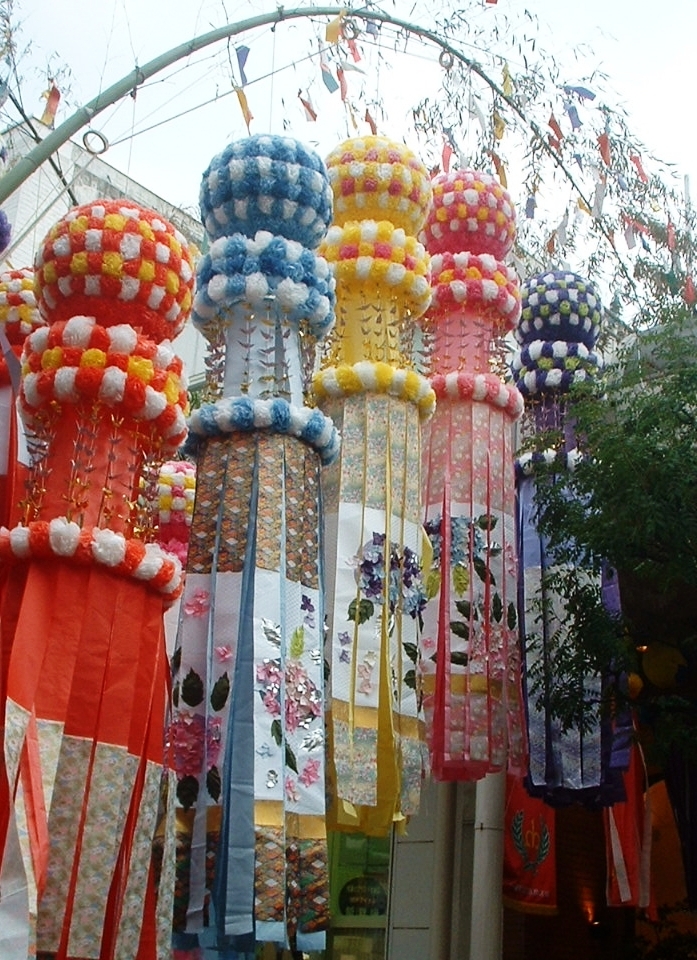
Sendai Tanabata centres on walking through shopping-street paper decorations; Hanagasa is a timed evening parade. Separate a Sendai daytime visit from a Yamagata night, keeping decoration viewing short on the intercity travel day. Alternatively, stay in Sendai the previous night, then move to Yamagata and keep the dance evening complete. The latter suits long, detailed decoration viewing and avoids spending the travel day rushing between positions.
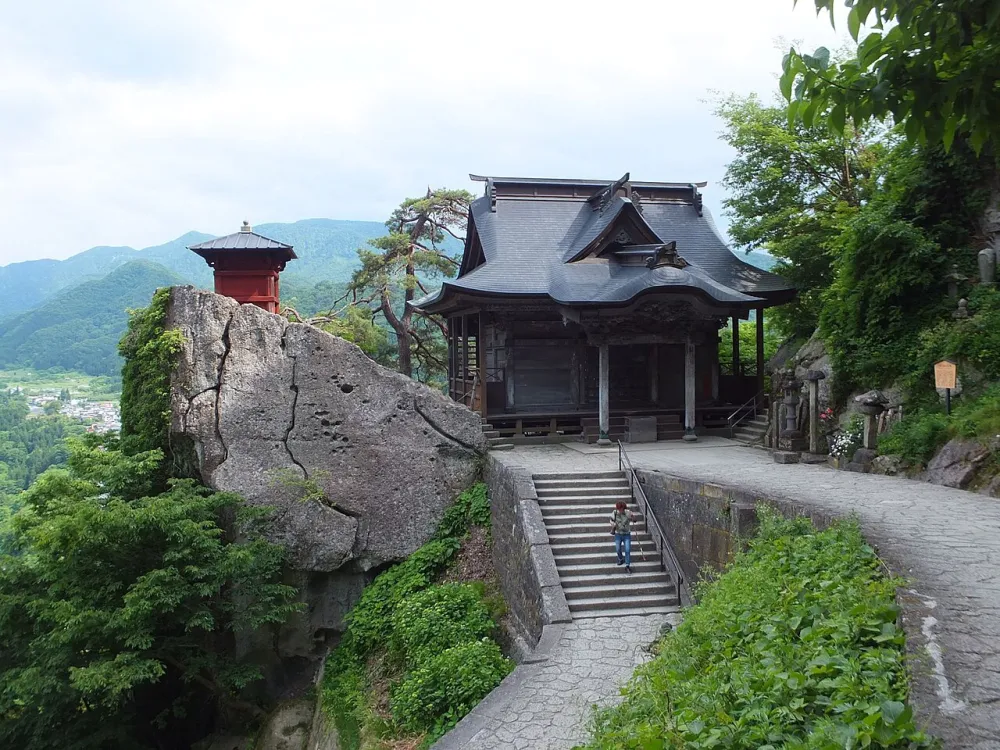
For both in one night, select one section of the Sendai Tanabata half-day route, finish walking after lunch, then travel across and eat before the festival. End Hanagasa viewing early under your return plan. Use the Yamadera Risshakuji guide for another daytime visit. Avoid combining its stairs, a long decoration walk and a whole evening holding a dance hat into one day, leaving energy only for the station return.
A few useful answers
Where does the Yamagata Hanagasa Festival parade start, and how long is the walk from the station?
In 2026, the 800-metre parade route ran north from Tokamachi through Honcho and Nanokamachi to the Hanagasa arch near City Hall. Allow about 15 minutes to walk from Yamagata Station’s east exit to the start.
Can visitors join in the dancing at the Yamagata Hanagasa Festival?
There are two free sessions each day with no need to book. In 2026, the opening circle dance ran from 18:10 to about 18:30 outside City Hall. The group at the back set off around 20:30 and visitors could join as its Tobiiri Corner sign went past.
Where should I stay if I want to see the Yamagata Hanagasa Festival through to the end?
If you want to join in with the late dance, spend the night in Yamagata. Stay near the station for an early train or a bus connection the next day, or near Nanokamachi for the circle dance at City Hall and a spot along the northern stretch.
How do I get back to Sendai by coach after the Yamagata Hanagasa Festival?
Check the coach timetable and boarding stop for the day of the festival. Watch from Tokamachi or Honcho for a shorter walk back to the east exit of Yamagata Station. Leave time to queue, as passengers board in order until all seats are taken.
Official information and references
Sources used in this guide.
- Hanagasa Council: end of the 64th festival in 2026 and event changes
- Hanagasa Council: festival overview and history
- Hanagasa Council: viewing and open participation FAQ
- Hanagasa Council: dance styles, hats and traditional steps
- Hanagasa Council: formation of Hanagasa Ondo
- Hanagasa Council: official 2026 booklet and venue map
- Miyagi Kotsu: Sendai–Yamagata route, April 2026 revision
- Beni no Kura: Sanbyakubo restaurant information
- Sanbyakubo: Beni no Kura menu
- Hanagasa Council: daytime venue and programme changes on 7 August 2026