Compare room layouts, baths, dinners and shuttle buses across Nonokaze, Manseikaku, Ko no Sumika, Hikari no Uta and Yutorelo Toyako, plus 2026–27 winter pool closures, illuminations and itinerary tips.
- Region & Focus
- Lake Toya
- Reading Scope
- 19 min read · 8 chapters · 6 Q&As
- Official Verification
- 30 official sources checkedUpdated 22 November 2026
- Key Topics
- Where to stayHot springsBooking
Chapter Route Map (tap any stop)
- Which Stretch of the Shore Fits Your Evening Plans
- Manseikaku and Nonokaze: Reading Lake Views and Baths from Room Names
- Ko no Sumika and Hikari no Uta: Picking Aspect and Floor for Terrace Rooms
- Families, Older Relatives and Friends: Lock In Beds and Dining First
- Weighing the Fireworks Room Supplement Against One Winter Night
- Getting There from Sapporo, New Chitose or Hakodate—and Booking Your Return
- Pacing One Winter Night in 2026–27
- Combine Every Separate Booking onto One Sheet Before Paying
- Quick Q&A
First-time visitors to Lake Toya without a car should start on the south-shore hot-spring strip with Nonokaze and Manseikaku. For a private open-air onsen on your own terrace, head to the eastern edge of town for Ko no Sumika; if you plan to spend an entire afternoon inside the resort, look up on the Sobetsu hillside at Hikari no Uta. The easiest winter booking mistakes are mistaking a standard lake-view room for one with a private onsen, or reserving a room without securing your return shuttle seat. In the 2026–27 winter season, Water Land also has two scheduled pool closures, so families heading to Ko no Sumika or Toya Sun Palace should match their check-in dates against the facility calendar first.
Which Stretch of the Shore Fits Your Evening Plans
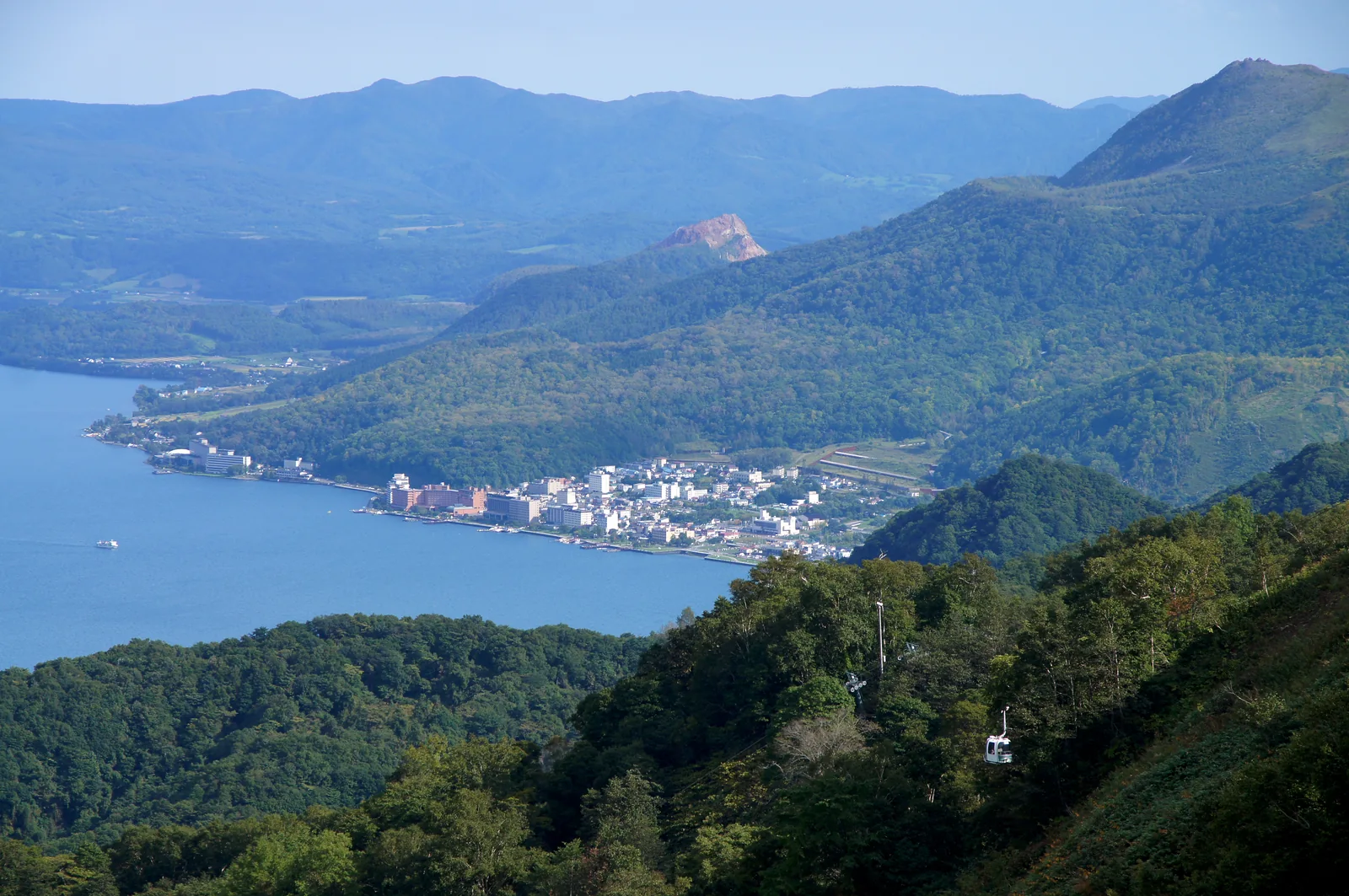
JR Toya Station sits on the south-western side of the lake, without the lakeside scenery of the hot-spring strip. If you are staying just one night before catching a limited express train to Hakodate or Noboribetsu the next morning, a hotel on the onsen strip still makes sense provided you factor in the bus between Toya Station and the lakeside. To drop your bags on arrival, wander down to the pier and stroll out for the evening illuminations, the stretch from the Toyako Onsen bus terminal through Sakuramachi and Chuo-dori works best. Dining and evening walks stay within one compact pocket, making it easy for anyone in your group who wants to head back to the room early.
Ko no Sumika and Toya Sun Palace sit further east along the strip—look for the Higashimachi bus stop. Distance from your room to the water is not the same as distance from the hotel to the shops. Booking a terrace room at the eastern end usually means taking your meals under an in-house dining plan. If you intend to walk to the central square after dinner each night, trace the route on a map from the hotel's main entrance to the square and back again. What looks like a short lakeside stroll in daylight feels quite different in snow when carrying bags or pushing a buggy.
Hikari no Uta sits on the hillside at Sobetsu Onsen and suits travellers happy to keep dinner, bathing and breakfast within the resort. Those touring Showa-shinzan and Mount Usu along the south-eastern shore can finish their mountain sightseeing during the day and check in to unwind, which is a very different rhythm from staying in the town centre and walking out repeatedly. Once you look beyond the main onsen strip, treat a rental car or a pre-booked shuttle as part of the room requirement. The Mount Usu hillside, Toya Mizu no Eki on the north shore and JR Toya Station all have separate stops, so when booking sites label multiple listings under "Lake Toya", check the street address and shuttle pick-up and drop-off points.
When room rates differ sharply, ask which difference you will actually use. If the hotel is merely an overnight stop between scattered sights—arriving just before dinner and rushing for the first morning shuttle—you may only spend fifteen minutes on a private terrace. Conversely, for older relatives who want to rest at the hotel all afternoon, a heated room with a wide lake view can be worth more than squeezing in another excursion. Writing down your real arrival and departure times makes choosing far easier than scrolling through the top gallery photos on a booking page.
| Style of Stay | Hotels to Compare | What to Check First |
|---|---|---|
| Walking to the lakeside, pier and winter lights | Nonokaze, Manseikaku, Yutorelo Toyako | Sakuramachi and Chuo-dori stops and each hotel's entrance |
| Soaking in an open-air onsen on your room terrace | Ko no Sumika | Higashimachi stop and terrace room capacity |
| Hillside resort stay paired with Mount Usu by day | Hikari no Uta | Sobetsu Onsen access or the JR Toya Station shuttle |
| Single-night stopover before a morning train | Onsen-strip hotels near bus stops | Check-out time against lakeside-to-Toya Station buses |
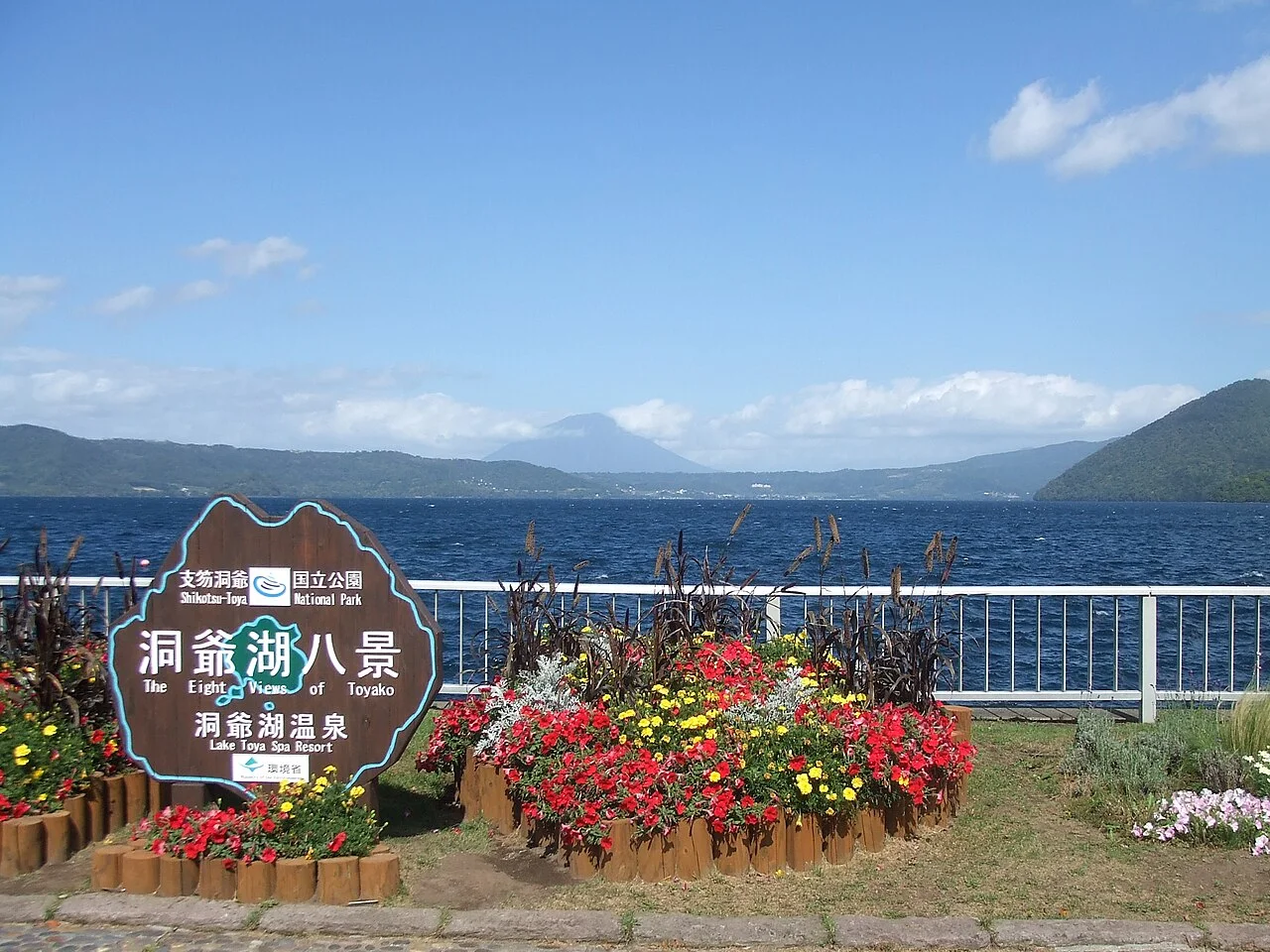
Compare room layouts, baths, dinners and shuttle buses across Nonokaze, Manseikaku, Ko no Sumika, Hikari no Uta and Yutorelo Toyako, plus 2026–27 winter pool closures, illuminations and itinerary tips.
Manseikaku and Nonokaze: Reading Lake Views and Baths from Room Names
Toyako Manseikaku splits its rooms across the East Wing, Central Wing and West Wing. For two guests, both the Central Wing Lake View Twin and the East Wing Lake-Side Western Room overlook the water, while the East Wing Mountain-Side Western Room faces inland. The Central Wing Lake View Twin comes with either a shower cubicle or a modular unit bath, and guests cannot select between the two. If older family members need a tub to soak in inside the room, compare the exact floor plan for the full room name rather than relying on general bathroom photos under the hotel listing. Groups of three can start with the Central Wing Superior Twin, listed by the hotel for up to three guests, or add Japanese-style and Japanese-Western rooms if you want tatami space.
Open-air views are a major draw at Manseikaku, though extra budget can go towards two quite different upgrades. Book a standard lake-view room and save your bathing for Hoshi no Yu on the eighth floor of the West Wing—you get lake views from your room by day and use the communal baths separately at night. If you want to step straight into hot-spring water inside your own room, check the individual layouts of the Manseikaku Special Rooms. Some feature an open-view onsen bath, while others highlight a private panoramic sauna. Before paying for an upgrade, verify whether the room amenities list an "open-view onsen bath" (tenbo onsenburo) or a "panoramic sauna", as similarly named suites deliver completely different experiences.
Staying at Manseikaku also means checking the date on the calendar. Hoshi no Yu's lakeside open-air bath is assigned to men on odd-numbered dates and women on even-numbered dates, while Tsuki no Yu in the Central Wing basement swaps the schedule. Posted guest bathing hours are 03:30–10:00 and 13:00–02:00 JST the next morning. Couples hoping to try Hoshi no Yu can usually split it between check-in afternoon and the following morning—except when the 31st rolls into the 1st of the next month, giving two odd-numbered days in a row, when booking a room with a private panoramic bath or sticking to that day's assigned communal bath makes more sense.
Nonokaze's signature facilities are its rooftop open-air bath TENQOO and the ninth-floor panoramic bath EZOFUJI, with daily cleaning from 01:30 to 04:00 JST. In freezing weather, you can warm up in the indoor pools before stepping outside when the sky clears. For a private hot-spring bath in your room, check the Nonokaze room directory for Executive Twin or Executive Suite categories explicitly labelled with a panoramic onsen bath ("tenbo onsenburo-tsuki"). The 112-square-metre DX Suite has only a shower booth, whereas the similarly sized Panoramic Onsen Executive Suite includes the in-room bath—two suites with near-identical floor area and occupancy that feel vastly different at night.
If companions simply want one private soak together, Nonokaze has two lake-view reservable baths (kashikiri) you can book separately, letting a standard room cover the rest of the stay. An in-room bath is better suited to travellers who want multiple soaks and the comfort of going straight to bed afterwards. When booking a kashikiri slot, keep it clear of your evening walk and dinner; if your first-choice slot is gone, bathe before dinner so you can stroll back to your room unhurriedly afterwards.
Ko no Sumika and Hikari no Uta: Picking Aspect and Floor for Terrace Rooms
Every guest room at Ko no Sumika faces the lake and has its own open-air onsen bath. Couples looking for easy footing should check the roughly 50-square-metre Universal Terrace Room (one per floor), listed as step-free inside with two single beds. Its purpose is straightforward: no raised tatami platform to navigate between the beds and the window, though families wanting one shared room will need a larger category. Because the bath sits on the terrace side, anyone assisting a relative into the tub should send the floor plan to the hotel and ask about rim height and grab rails—flat flooring between the door and the washroom is a separate matter from stepping into the bath itself.
Groups of three or four can look at the roughly 54.5-square-metre Terrace Room, listed with two single beds plus a daybed; if travelling with adult children, check how the fourth bed is made up. Corner Terrace Rooms add an extra window, a worthwhile upgrade if you want broader angles of the lake from indoors. Ground-floor Garden Terrace Rooms look across the immediate garden towards the water, offering a very different perspective from upper floors looking down over the lake. If you arrive late on one night and only have one morning window to enjoy the view, pick the depth of scenery you prefer. Note also that the accessible terrace room's bath is filled by guests after check-in, so leave extra time to run the water and change if you plan to soak before dinner.
Dining at Ko no Sumika spans two connected buildings: Japanese kaiseki is served in-house at The Toya, while half-buffet plans take guests next door to the main Toya Sun Palace building. Two rates may both say "half board", so read down to the restaurant name and service style. Choose kaiseki for a relaxed, seated course dinner; pick the half-buffet if children want to try small tastes of adult dishes or family members have varied appetites. For older relatives who dislike extra walking—or if someone might head back to the room midway—dining in the same building keeps the route simplest.
Families coming primarily for water play need to check Water Land in the adjacent main building first. Ko no Sumika's homepage lists closures for this heated pool from 2 November to 18 December 2026 and from 18 January to 28 February 2027, with reopening slated for 14:00 JST on 19 December and 1 March respectively. If your stay straddles a reopening day and you check out in the morning, schedule your swim for after 14:00 JST on the reopening afternoon, or shift your dates to get a full afternoon in the pool. Ko no Sumika also notes adjacent construction on the hot-spring-town side running until late December 2027, working Monday to Saturday 08:00–19:00 JST (closed on public holidays), with louder noise possible between 11:00 and 17:00 JST; for quiet afternoon naps on a multi-night stay, favour Sundays or plan outdoor outings during the noisiest window.
Up on the hillside, Hikari no Uta also offers open-air onsen rooms: the East Wing's 48-square-metre lake-side Japanese-Western room with open-air bath sleeps up to four, while the West Wing's 51-square-metre equivalent adds a wider terrace for up to four. Design Twin rooms split between lake-side and deck-side aspects, so match "lake-side" on the room page if a water view matters. Ko no Sumika suits travellers wanting close-up water views and easy walks into the onsen town; Hikari no Uta shines when you prefer elevated lake-and-mountain vistas and plan to stay on site from early afternoon onwards. Its shuttles depart from JR Toya Station or Sapporo, so match the route to your onward direction before deciding whether to drive to the lake.
Families, Older Relatives and Friends: Lock In Beds and Dining First
When searching for four guests, bed configuration immediately cuts the shortlist in half. A single Japanese-Western room typically pairs two fixed beds with two futons laid out on tatami, ideal for families happy with floor bedding who value shared daytime lounge space. If four adults each want a real bed and staggered bathroom access, two twin rooms are far more comfortable than chasing a single four-person lake-view suite—just remember to include the second room, dinner and shuttle fees when comparing totals. Requesting adjoining rooms is best handled by asking the hotel directly about same-floor availability and basing your final choice on their reply.
Groups of five or six should also check Yutorelo Toyako along Chuo-dori. Its 10-mat Japanese room takes up to five guests and its Japanese-Western room (two single beds plus a tatami area) takes up to six, making it easier to find single-room availability than standard searches calibrated for couples. Futons work well for guests happy to sit and chat on the floor, leaving the fixed beds for anyone who finds getting up difficult. If you want kaiseki dinner and everyone under one roof, the Japanese-Western room is a neat fit; if lake views from every window matter more, run the same headcount against two lake-side rooms at Manseikaku and compare the combined total.
Booking with young children requires entering each child's exact age plus meal and bedding preferences on the reservation form. Manseikaku's FAQ prices primary-school children at 70% of the adult rate, children aged 3 to pre-school at 50%, under-2s needing a futon at 30%, and under-2s needing neither meals nor bedding at a ¥1,100 facility fee. Compare final totals with ages entered rather than headline per-adult rates, as one school-age child and one toddler are priced differently across properties even with the same two-adult, two-child headcount. At Yutorelo, general guests dine in the restaurant, with in-room dining restricted to dog-friendly stays; if tired children need to eat in the room, book room-only with takeaway or pick a hotel offering private dining rooms or in-room meal plans.
On late-arrival nights, pick your dinner arrangement before locking in transport. Manseikaku's dinner buffet usually starts at 18:00 JST with last entry at 19:45 JST, assigned on meal vouchers issued at check-in, and guests arriving after 18:00 JST are asked to contact the hotel in advance. The 16:10 JST Donan Bus from Sapporo is scheduled to reach Toyako Onsen terminal at 19:00 JST; in winter snow, walking to the hotel and checking in leaves little time to dine. If you are committed to that bus, book a bed-and-breakfast plan and pick up dinner in Sapporo beforehand; if you want a full kaiseki or buffet dinner, catch an earlier coach and select your seating time at check-in.
Guests with food allergies booking kaiseki or banquet meals at Manseikaku can note restrictions when booking or contact the hotel at least three days prior to arrival. List each diner, the ingredients to avoid and your preferred meal plan so the kitchen can confirm what it can safely prepare. Buffets carry different risks, as even labelled dishes may share serving utensils. If dietary needs determine whether you can eat at the hotel at all, wait for written confirmation from the restaurant before switching from a flexible rate to a non-refundable room.
Weighing the Fireworks Room Supplement Against One Winter Night
"Lake-side" describes which way a window faces; "fireworks" is an evening event viewed from a specific angle. From spring through autumn, the Long Run Fireworks are launched from moving boats across the lake, and Manseikaku lists lake-side rooms, the garden and the lobby among viewing spots. Watching from a warm room suits toddlers, older relatives and early sleepers, whereas stepping outside to the shore lets you move a few paces if a window frame or neighbouring roof clips part of the display. The most practical approach is to give the hotel your dates, rate plan and whether you want to watch from inside or on a terrace, then pay for a higher-view room only after they confirm—and if mobility is limited, check specifically whether the display is visible seated by the window or from the bed rather than standing outside.
The 45th Long Run Fireworks for 2026 ended on 31 October, shifting Lake Toya to its winter evening programme from November. The tourist association runs the Illumination Tunnel at Nigiwai Hiroba in the town centre from 1 November 2026 to 27 April 2027, lit 17:00–22:00 JST until the end of February and 18:00–22:00 JST from March onwards. Because the Long Run Fireworks and winter displays are separate events, winter visitors should choose hotels primarily by walking distance unless specific fireworks dates have been announced for your stay. Even in fireworks season, gusty winds can cancel launches, so a pricier room still needs dinner, baths or daytime scenery to justify the supplement.
To photograph fireworks from behind glass after dark, switch off room lights and hold the lens close to the pane to cut reflections from lamps, the television and people moving behind you. Step onto a terrace only from your own room, leaving the communal baths purely for soaking. Families eager to get straight to bed afterwards should choose a lakeside viewing spot close to their hotel's entrance to avoid a cold walk back in the wind.
For a single night focused on strolling and bathing, a standard lake-side room paired with dinner, a walk to the illuminated square and a soak in the rooftop or indoor baths is plenty. When celebrating an elder relative's birthday, prioritise rooms with comfortable window seating and a private in-room bath so part of the group can head out while others stay cosy inside. If your budget covers only one upgrade in winter, put it towards in-room comforts rather than a view premium—when snow hides Nakajima Island outside, your soak and dinner still go ahead as planned.
Getting There from Sapporo, New Chitose or Hakodate—and Booking Your Return
The most flexible direct bus from Sapporo to the onsen strip is Donan Bus's Sapporo–Lake Toya line. An adult single costs ¥3,700 for a journey of around 2 hours 45 minutes; reservations are required and online booking stays open until two hours before departure. Coaches leave from Sapporo Ekimae Bus Stop 7, separate from the JR Sapporo Station North Exit group bus boarding area used by several resort shuttles. If you want time by the lake before checking in, the 11:30 JST departure reaches the Toyako Onsen terminal at 14:10 JST before continuing to Sakuramachi, Chuo-dori, Motomachi and Higashimachi—pick the stop closest to your hotel when booking so you are not hauling heavy suitcases back from the terminal.
Hotel guest shuttles run fewer departures than public coaches, usually at a lower fare. Nonokaze's Sapporo shuttle departs at 13:30 JST (arriving 16:00) and returns at 10:00 JST (arriving Sapporo 12:30), costing ¥1,000 one way or free if you book directly via the hotel's website or phone line. Its New Chitose Airport shuttle leaves the airport at 14:00 JST (arriving 16:20) and returns at 10:15 JST (arriving 13:00), at ¥1,500 one way or ¥1,000 for qualifying direct bookings. Both directions require separate seat reservations online up to three days ahead, groups of eight or more cannot use the service, and if you switch rate plans at the same hotel you must re-book the shuttle—replacing a room confirmation does not update the driver's manifest.
Manseikaku and Hikari no Uta share the Express Toya coach from the JR Sapporo Station North Exit group bus area at 13:15 JST for ¥1,100 one way per person. Return departures differ: 10:00 JST from Manseikaku and 09:35 JST from Hikari no Uta, both scheduled into Sapporo at 12:30 JST. Hikari no Uta requires Sapporo shuttle bookings by 20:00 JST seven days in advance, and also runs a free JR Toya Station shuttle for guests (outbound 14:30 JST, return arriving at Toya Station at 11:20 JST), with both the station shuttle and Donan Bus connection bookings closing at 20:00 JST the day before. If you are heading to Hakodate by train the next day, check your target train times against both shuttle schedules before committing.
Ko no Sumika's Sapporo shuttle is free, meeting at 12:45 JST for a 13:00 departure (arriving 15:30) and departing the hotel at 09:45 JST the next morning. Once your room is booked, call the hotel between 09:00 and 18:00 JST with your check-in date, booking name and reservation number. Outbound pick-up is outside the Kanamoto Hall car park at Odori Nishi 1-chome, a short walk from Odori Underground Station Exit 31, while the return drops off near the Hokuyo Building at Odori Nishi 3-chome; in winter, factor in transferring from JR Sapporo to the underground and waiting outdoors. Donan Bus offers multiple departure windows if you need to store bags in Sapporo, pick up JR passes or keep lunch plans flexible; on a two-night stay, taking a shuttle in and leaving via JR avoids backtracking to Sapporo.
If the hotel shuttle leaves too early on check-out morning, compare Donan Bus's afternoon departures. Buses back to Sapporo leave Toyako Onsen terminal at 12:50 and 17:10 JST, arriving at Sapporo Ekimae Kita 2 Nishi 3 at 15:30 and 19:50 JST respectively. The 12:50 JST coach buys you an extra lakeside walk before heading into the city for just the price of a bus ticket, while eastern-end hotels can board at Higashimachi at 12:40 or 17:00 JST. Leaving the 17:10 JST coach as your return lets you spend a relaxed afternoon in the onsen town rather than rushing down from Mount Usu just to collect luggage.
Rail travellers can ride the Limited Express Hokuto, which stops at Toya from both Sapporo and Hakodate; from New Chitose Airport, take a Sapporo-bound train one stop to Minami-Chitose and change to a Hakodate-bound Hokuto that calls at Toya. All Hokuto seats are reserved, and it pays to plan the last mile from the station at the same time. Donan Bus runs between Toya Ekimae and Toyako Onsen in 15–30 minutes depending on the service, though some buses terminate at the main terminal rather than continuing along the lake to Higashimachi. With bulky luggage, snow or an evening arrival at Toya Station, a pre-booked taxi drops you right at the door—and if coming from Hakodate, check whether your train connects smoothly with a hotel shuttle before leaving the city half an hour earlier.
For a one-night stay right before a flight, fewer transfers mean less risk. Nonokaze's 10:15 JST hotel bus is scheduled to reach New Chitose Airport at 13:00 JST, so afternoon flights still need margin for check-in, bag drop and peak-season security queues. For an earlier departure, spend your final night near Sapporo or the airport, or pair an early train with a pre-booked taxi to Toya Station. Journey times stretch when snow hits the roads, so pack checked suitcases the evening before and avoid squeezing in an extra sightseeing stop after check-out.
| Transport Option | Sapporo Boarding Point | One-Way Fare and Reservation |
|---|---|---|
| Donan Bus Sapporo–Lake Toya Line | Sapporo Ekimae Bus Stop 7 | ¥3,700 adult; online booking up to 2 hours before departure |
| Nonokaze Guest Shuttle | JR Sapporo Station North Exit group bus area | ¥1,000 (free for direct hotel bookings); separate seat booking required |
| Manseikaku / Hikari no Uta Express Toya | JR Sapporo Station North Exit group bus area | ¥1,100; Manseikaku via online form, Hikari no Uta by hotel deadline |
| Ko no Sumika Guest Shuttle | Outside Kanamoto Hall car park (Odori Station Exit 31) | Free; register by phone after booking your room |
Pacing One Winter Night in 2026–27
Without a car on a single winter night, aim to reach the onsen strip before midday or early afternoon. Drop your bags, walk along the water, then return for an onsen soak and dinner before stepping out for the evening lights. Guests arriving on a 13:00-ish JST Sapporo shuttle get in around 16:00, leaving too little winter daylight for clear mountain panoramas that same afternoon. Save Mount Usu for the following morning, and use an earlier afternoon arrival for the 45-minute lake sightseeing cruise—scheduled hourly from 09:00 to 16:00 JST from November to early April, sailing out without landing on Nakajima Island before looping back to the strip—arriving at the ticket office before the hour to allow time for the walk to the pier.
For volcano views or travelling with children, centre the next morning around the Usuzan Ropeway at the foot of Showa-shinzan. In December 2026, the ropeway runs its first ascent at 09:00 JST and final descent at 16:00 JST, with the last upward cabin 15 minutes earlier. The base station sits on the Showa-shinzan side, so make sure your bus actually continues to Showa-shinzan rather than stopping at Higashimachi. Give yourself two clear timing windows—head straight up on arrival, and leave an afternoon slot before boarding your Hokuto train—while noting that the summit crater rim trail closes in winter snow, so if the ropeway halts in high winds, shift your sightseeing back to the lakeshore instead of attempting closed trails.
For an indoor stop near the water before check-in, visit the Volcano Science Museum beside the bus terminal. From October to March it opens 10:00–16:00 JST, closing on Mondays (or the following weekday when a Monday is a Japanese public holiday) and over the New Year break. The Toya-Usu UNESCO Global Geopark Visitor Centre shares the same complex, pairing eruption exhibits in the museum with relief maps of the caldera terrain in the visitor centre. On closed days, lock in your fixed meal and bus times first and keep your lakeside walk close enough to turn back quickly; for day-use onsen and volcanic walking routes nearby, continue to the Lake Toya Onsen and Surrounding Sights Guide.
Drivers crossing over from Noboribetsu in winter need to double-check route timings. Sobetsu Town Tourist Association warns that the Orofure Pass on Hokkaido Prefectural Route 2 (Toyako–Noboribetsu Line) is scheduled for nightly closures from 17:00 to 09:00 JST between 13 November 2026 and 16 April 2027. If you plan an afternoon day-onsen in Noboribetsu before driving to Lake Toya in time for dinner, taking the Do-O Expressway is far safer than risking a locked mountain gate—approach the onsen strip via the Abuta-Toyako IC, or follow Hikari no Uta's directions from the Date IC. When a late arrival pushes past midnight, spend the first night near a major rail hub and pick up your rental car in daylight rather than racing dusk; more seasonal road trade-offs are covered in the Hokkaido Winter Driving Guide.
To actually enjoy a resort stay on a one-night trip, skip eating one meal off-site. With a 15:00 check-in and 10:00 check-out JST, take your first soak around 16:00 or 17:00, stroll after dinner and save a quiet lakeside walk for before breakfast. Adding a second night opens up a full day so you can save Mount Usu for whichever half-day has clearer visibility and retreat indoors to your room or the baths during heavy snow, without repacking bags halfway through. If you do split two nights across two hotels, choose one that makes luggage storage effortless and time the transfer so any sightseeing sits squarely along your route.
Combine Every Separate Booking onto One Sheet Before Paying
Compare hotels only after entering identical dates, children's ages and diner counts, then check cancellation cut-offs side by side. A steep rate gap between two hotels on the same night often reflects one including dinner while the other is room-only, or one charging extra for its shuttle. From April 2026, Hokkaido introduces a prefectural accommodation tax alongside Toyako Town's municipal tax; based on per-person, per-night lodging charges in Toyako Town, the combined tax is ¥300 under ¥20,000, ¥700 from ¥20,000 to under ¥50,000, and ¥1,500 at ¥50,000 or above. Note that Ko no Sumika and Hikari no Uta lie in Sobetsu Town, so whichever property you book, tally accommodation tax, bathing tax (nyutouzei), meals and shuttle fares on the final checkout screen and multiply across your whole party rather than budgeting from the headline single-guest rate.
Keep hotel confirmation numbers, outbound and return shuttle headcounts and exact room names on a single itinerary sheet. If bathing is your priority, add kashikiri start and end times; if dining comes first, place last dinner entry beside your expected arrival time. Before switching to a new room plan, check cancellation deadlines on every linked booking—Nonokaze's shuttle, for example, charges penalties starting six days before check-in, rising to 80% the day before and 100% on the day or for a no-show. Changes to other hotels' buses, taxis or Donan Bus tickets must each be updated through their own booking portals.
When emailing a hotel about rooms, meals or shuttles, open with your check-in date and exact room name—for instance: "Three adults and one six-year-old looking at a Lake-Side Japanese-Western Room: how many fixed beds does this plan include, and how do we reserve both the outbound Sapporo shuttle and the return shuttle to JR Toya Station?" Add practical access questions where needed, such as whether a folding wheelchair can travel step-free by lift from the drop-off point to the room door. Only with headcount, room name and dates can staff confirm what your specific plan provides; copy their reply into both your booking notes and shared itinerary so anyone travelling separately still meets at the right spot.
A few useful answers
Where is the most convenient place to stay on a first trip to Lake Toya without a car?
Prioritise hotels around the Toyako Onsen bus terminal, Sakuramachi or Chuo-dori. Ko no Sumika lies further east and can be reached on buses continuing to Higashimachi, while JR Toya Station requires a separate bus or taxi ride to the lakeside.
Which Lake Toya hotels have private open-air onsen baths in the room?
Every room at Ko no Sumika has a lake-facing open-air onsen bath, and Hikari no Uta offers designated open-air onsen room categories. At Nonokaze, TENQOO is a communal rooftop open-air bath, while select Executive rooms feature private panoramic onsen baths.
Is the swimming pool at Ko no Sumika open in February 2027?
Water Land, the heated pool in the neighbouring Toya Sun Palace main building, is scheduled to close from 18 January to 28 February 2027 and reopen at 14:00 JST on 1 March.
When is Lake Toya's winter Illumination Tunnel open?
It lights up at Nigiwai Hiroba from 1 November 2026 to 27 April 2027, running 17:00–22:00 JST until the end of February and 18:00–22:00 JST from March onwards.
Can you watch Lake Toya's fireworks from a lake-view room?
Because the Long Run Fireworks are launched from boats moving across the lake, ask the hotel which angles your chosen room category can see. If you want freedom to move for a clearer view, pick a hotel within walking distance of the shore and check the tourist association's seasonal schedule against your stay dates.
Do you have to go via Sapporo to reach Lake Toya from New Chitose Airport?
No—take a JR train to Minami-Chitose and change to a Limited Express Hokuto for Toya Station, then connect by Donan Bus or taxi. Guests staying at Nonokaze can also reserve the hotel's direct airport shuttle, departing at 14:00 JST.
Official information and references
Sources used in this guide.
- Toyako Onsen Tourist Association | 2026–27 Illumination Tunnel
- Toyako Onsen Tourist Association | Long Run Fireworks and Winter Events
- The Lake View Toya Nonokaze Resort | Rooms, Suites and Panoramic Baths
- The Lake View Toya Nonokaze Resort | Communal Baths, Private Baths and Dining FAQ
- The Lake View Toya Nonokaze Resort | Sapporo and New Chitose Shuttles
- Toyako Manseikaku Hotel Lakeside Terrace | Room Aspects and Capacities
- Toyako Manseikaku Hotel Lakeside Terrace | Special Rooms with Private Onsen and Sauna
- Toyako Manseikaku Hotel Lakeside Terrace | Hoshi no Yu, Tsuki no Yu and Footbath
- Toyako Manseikaku Hotel Lakeside Terrace | Child Rates, Dining, Rooms and Shuttle FAQ
- Toyako Manseikaku Hotel Lakeside Terrace | Express Toya Boarding and Reservations
- The Lake Suite Ko no Sumika | Rooms, Dining and Water Land Closure Dates
- The Lake Suite Ko no Sumika | Terrace Room Capacities and Layouts
- The Lake Suite Ko no Sumika | Adjacent Construction Notice
- The Lake Suite Ko no Sumika | Sapporo Shuttle and Hotel Address
- The Lake Suite Ko no Sumika | Step-Free Universal Terrace Room
- Toyako Tsuruga Resort Hikari no Uta | JR Toya Station and Sapporo Station Shuttles
- The Lake Suite Ko no Sumika | Sapporo Odori Shuttle Boarding Map
- Toyako Tsuruga Resort Hikari no Uta | Open-Air Onsen Guest Rooms
- Yutorelo Toyako | Room Capacities
- Yutorelo Toyako | Dining and Accommodation FAQ
- Donan Bus | Sapporo to Lake Toya Timetable and Fares
- Donan Bus | JR Toya Station to Toyako Onsen Route
- Donan Bus | Lake Toya to Sapporo Return Timetable
- JR Hokkaido | Limited Express Hokuto Train and Reserved Seating
- Toyako Kisen | Sightseeing Boat Seasonal Schedule
- Usuzan Ropeway | Operating Notices and Monthly Calendar
- Usuzan Ropeway | Winter Closure of the Summit Crater Rim Trail
- Toyako Onsen Tourist Association | Visitor Centre and Volcano Science Museum
- Sobetsu Town Tourist Association | 2026–27 Winter Road Information
- Hokkaido Government | Toyako Town Accommodation Tax Tiers from 2026