SHIBUYA SKY splits adult fares before and from 15:00. Check the two-week ticket release, overseas passport checks, 14F entrance, child tickets and rain refund rules.
- Region & Focus
- TokyoAttractions
- Reading Scope
- 18 min read · 9 chapters · 8 Q&As
- Official Verification
- 21 official sources checkedUpdated 22 November 2026
- Key Topics
- BookingFirst tripWinter
Chapter Route Map (tap any stop)
- How to Buy SHIBUYA SKY Tickets
- What Time to Book for Sunset
- Getting from Shibuya Station to the 14F
- Navigating the Rooftop and 46F
- Luggage, Pushchairs and Accessibility
- Rain, High Winds and Refunds
- Winter Illuminations, Rooftop Bar and New Year's Day
- Fitting the Deck into Half a Day in Shibuya
- Where to Go Instead if Tickets Sell Out or Weather Turns
- Quick Q&A
Standard adult tickets for SHIBUYA SKY are split into two price tiers on the official website: ¥2,700 for entry before 15:00 and ¥3,400 from 15:00 onwards, released daily at 00:00 JST two weeks ahead. For sunset views, pick an entry window roughly an hour before local sunset; if you simply want street-level views from the 229-metre rooftop, morning slots are better value. After arriving at Shibuya Station, follow signs for exit B6 towards Shibuya Scramble Square and take the dedicated 1F ground-level lift up to the 14F entrance. If the rooftop closes during your ticketed entry window, you can decide before scanning your ticket whether to head up to the 46F indoor gallery or cancel an eligible ticket via your booking platform.
How to Buy SHIBUYA SKY Tickets
A single general admission ticket grants access to both the open-air SKY STAGE rooftop and the 46F indoor observation gallery. Online adult fares depend on the ticketed entry window, with 15:00 as the cut-off. The 14F same-day ticket desk sells remaining adult slots at ¥3,000 before 15:00 and ¥3,700 from 15:00 onwards. No separate walk-up allocation is held back once an adult slot sells out online, so queueing on the day will not get you into a sold-out session. Returned tickets from other travellers do occasionally reappear on the booking calendar. If you only have one afternoon in Shibuya, secure an available slot first and then decide whether to wait around for sunset.
Child tickets cost ¥1,200 for children aged 11 and under, as well as 12-year-olds still in primary school, and must be bought in person at the 14F ticket desk. The child must be present and accompanied by a ticketed guardian. Children aged 5 and under, along with 6-year-olds who have not yet started primary school, enter free of charge. Even when adult slots are sold out, the desk still sells child tickets to families who already hold valid adult bookings. Families should secure the same entry window for every adult and older child first, then allow extra time to purchase child tickets on arrival. If a child sits right on the age boundary, bring their passport and keep a note in Japanese on your phone stating they are 12 and in primary school (12-sai no shogakusei) to speed up the desk check.
Use the overseas visitors portal on the official SHIBUYA SKY ticket page and switch the language to English. General admission tickets go on sale at 00:00 JST two weeks before the entry date. For a standard slot on 7 December 2026, for instance, sales open at 00:00 JST on 23 November. Convert midnight JST into your own time zone before setting a calendar alert, especially when booking from abroad. During peak holiday periods, if you are aiming for a specific sunset window, agree on a second-choice slot with everyone beforehand so you can switch straight away if your first pick sells out.
Tickets bought through the official overseas portal, as well as designated ticket types on Klook, KKday and Trip.com, require passport verification for every visitor under the official entry rules. Enter each traveller's details exactly as shown in their passport when booking, and take the physical passports out of your hotel safe before setting off. Even though confirmation emails include a QR code, these ticket types still require passport checks at the gate. Japanese domestic-site bookings use QR codes, while paper tickets bought at the desk are used directly at the 14F gates. For groups, whoever places the order should send the date, entry window and a note to meet on the 14F of Shibuya Scramble Square so people arriving on different lines know where to gather.
Entry is divided into 20-minute windows. A ticket reading 14:00–14:19 means checking in at the 14F gate during that interval; if you arrive early, you can wait inside the building. Latecomers may have to wait for staff to reassign a slot, risk being turned away when busy, or be asked to pay the difference if moved into a higher-priced tier. Regular hours run from 10:00 to 22:30, with last entry at 21:20. If one member of your party is coming straight from the airport while others are already in Tokyo, book around the latest arrival time and wait together before the gates—once your ticket is scanned, there is no re-entry after leaving the observation deck.
Visitors holding eligible disability certificates listed in the official FAQ should first purchase a standard ticket at full price and present both the ticket and certificate at the 14F desk before entering to receive a 50% refund. One accompanying companion per certificate holder also qualifies for the half-price refund. Because this requires stopping at the ticket desk first, allow slightly more time than heading straight to the gate with a passport. Accepted Japanese certificates listed by the venue include the Physical Disability Certificate, Rehabilitation Certificate and Mental Disability Health and Welfare Certificate.
| Entry Window & Ticket Type | Official Website | 14F Same-Day Desk |
|---|---|---|
| Adult (entry before 15:00) | ¥2,700 | ¥3,000 |
| Adult (entry from 15:00) | ¥3,400 | ¥3,700 |
| Child (11 & under, plus 12-year-old primary pupils) | Ticket desk only | ¥1,200 |
| Aged 5 & under (plus 6-year-olds not yet in primary school) | Free | Free |
SHIBUYA SKY splits adult fares before and from 15:00. Check the two-week ticket release, overseas passport checks, 14F entrance, child tickets and rain refund rules.
What Time to Book for Sunset
Check Tokyo's sunset time for your exact travel date, then build in time to take the lift up and stow your belongings. According to National Astronomical Observatory of Japan data, sunset in Tokyo on 7 December 2026 is at 16:28, leaving just eight minutes if you book the 16:20 window. To watch daylight fade into city lights, 15:20 is a stronger choice, and even 15:40 gives more breathing room than 16:20. By 31 January 2027, sunset shifts to 17:07, pushing dusk colours into later slots. Remember that you still have to ride up to the upper floors after scanning in—and winter sunsets sit to the south-west—so do not mistake your gate check-in time for the moment you reach the glass.
Early summer evenings follow a different rhythm. On 21 June 2027, Tokyo sunset is at 19:00, so entering around 18:00 still gives you plenty of daylight over the streets. On overcast days, sky colour may peak well before astronomical sunset; once on the roof, walk the west-facing wide edge first before looping round to look down at the station crossing. If your main goal is photographing Tokyo Tower lit up alongside street traffic, a standard post-sunset slot is simpler. For portraits, arrive earlier: once night falls completely, distant skyscraper lights alone will rarely illuminate both faces and the skyline cleanly.
Travellers hoping to save ¥700 while still catching dusk can try a 14:40 standard ticket in late autumn or winter. Against an early-December sunset at 16:28, that means waiting nearly two hours inside before darkness settles, plus extra time for the night view. For three adults, the saving totals ¥2,100, though the trade-off is fewer hours exploring neighbourhoods and a longer stint in chilly air. Splitting your time across the rooftop, indoor gallery and seating area helps pass the wait. If you only have a few hours left in your day, paying extra for a later slot to keep your afternoon free for lunch or shopping is usually the better call.
When prime sunset slots are sold out, decide whether your priority is watching the sun go down or getting the whole group onto the roof together. If it is the sunset, move your visit to another afternoon in your Tokyo itinerary or enter earlier in the day and linger until dusk. If keeping everyone together matters most, a morning slot works better: clear daylight reveals how rail lines and avenues cut through the blocks, and even cloudy skies are fine for close-up views. If you opt for a night slot instead, avoid rushing just before last entry—finish dinner, rail transfers and the walk from the station well ahead of your window.
If only scattered spaces remain on the booking calendar, search using your full group size to find shared availability. Larger parties can split across two consecutive 20-minute windows, with the first group waiting on the 46F until the next batch arrives. Anyone buying a child ticket at the desk should stick to the same window as their ticketed guardian. Staggering works best for daytime visits, when half an hour makes little difference to the view. If everyone wants a sunset group photo together, moving to another day when you can all enter on one slot beats squeezing into adjacent windows.
Getting from Shibuya Station to the 14F
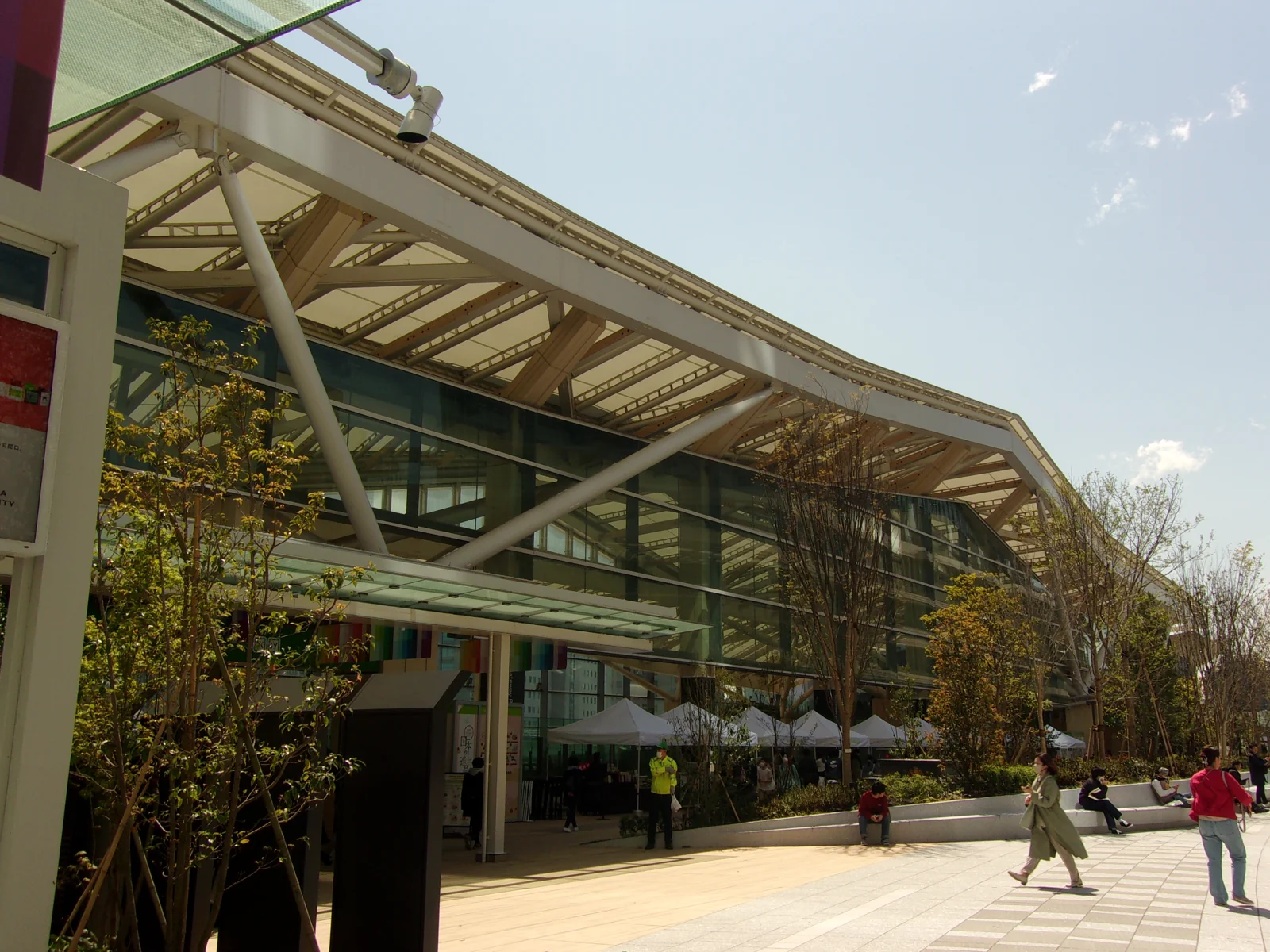
The observation deck sits atop Shibuya Scramble Square at 2-24-12 Shibuya. Follow underground station signs to exit B6, then look for the dedicated SHIBUYA SKY lift entrance on the outside of the building at ground level (1F), which runs express to the 14F ticketing and gate floor. You can also follow observatory signs from the 2F concourse bridge, though on weekends, public holidays and busy periods the express lift may skip the 2F stop. If lifts keep passing the 2F without stopping, head straight down to the 1F queue—especially with a buggy or when you still need to buy a child ticket—rather than weaving up through the department store escalators.
From JR lines, head through the Central Gate or South Gate towards the East Exit. Arriving on the Yamanote Line from Shinjuku, follow signs for the East Exit or Scramble Square instead of drifting with the crowd towards the Hachiko statue. On the Tokyo Metro Ginza Line, take the Scramble Square ticket gate and turn left. From the Miyamasuzaka Central Gate shared by the Hanzomon Line and Tokyu Den-en-toshi Line, also turn left after tapping out. Because platforms sit on different levels, friends arriving on separate lines will save time by meeting at the 1F lift lobby or on the 14F rather than at a vague East Exit.
On the Fukutoshin Line and Tokyu Toyoko Line, turn right out of the Shibuya Hikarie 1 ticket gate, or left out of the Shibuya Hikarie 2 ticket gate. The Keio Inokashira Line gates sit over in Mark City on the west side; tap out, follow signs towards Shibuya Hikarie, and continue to Scramble Square. Hikarie stands right next door and has its own 11F Sky Lobby, whereas SHIBUYA SKY ticket checks take place next door on the 14F of Scramble Square. Save the exact observation deck name in your maps app before boarding so you can spot the difference straight away if someone in your group messages from Hikarie's Sky Lobby.
If you hold a 15:20 ticket, aim to reach Shibuya Station by 15:00—especially on your first visit or when changing from the Inokashira Line. That buffer covers finding the right ticket gate, queueing for the 1F lift and buying any child tickets at the desk. Friends travelling separately can gather outside the 14F gates so the person holding the booking can scan everyone in together. Save ground-level photos of Shibuya Crossing and Hachiko until after your visit, rather than crossing to the west side mid-afternoon and rushing back to the east side to catch your slot.
Navigating the Rooftop and 46F
Once through the 14F SKY GATE, take the lift up to the 45F and follow the one-way signs into the observatory. The open-air rooftop is SKY STAGE, bordered by glass walls with nothing overhead; if it is open, do a full circuit first. One level below, the 46F SKY GALLERY houses an indoor panoramic corridor alongside Paradise Lounge and the souvenir shop. On evenings when you are chasing sunset light, leave the indoor exhibits and shop until after dark. On scorching summer afternoons or windy winter days, older travellers often find it easier to locate the key landmarks from the sheltered 46F windows first before stepping onto the roof for a short loop.
Looking out over Shibuya from above, orient yourself by spotting the station tracks and trains first, then the scramble crossing right beneath them. On clear days, one lap lets you sweep from Tokyo Tower across the wider skyline, while closer down you can watch avenues curve between the blocks. If you came specifically for a corner portrait, walk that edge first to gauge the queue before committing—daylight shifts fast while you wait. Small groups can split up to take in different sides and regroup by the indoor windows, as sticking to a single corner means missing either the railway lines on one side or the western sunset on the other.
An official photo service operates on the rooftop; check the queue, packages and photo spot on site if you want a printed or digital keepsake. For your own shots, use a handheld phone or compliant camera and step up to the glass as space opens—tripods, monopods and selfie sticks must stay in a locker. Shooting through indoor glass at night, hold your lens close to the pane and step towards a dimmer section away from ceiling lights to cut reflections before focusing on the streets. Use a wide lens for the skyline, and switch to your phone's built-in telephoto lens to pick out the crosswalk markings and pedestrians far below.
Standard tickets have no fixed time limit once you scan in, provided you exit before closing. An hour covers both the rooftop and the indoor floor comfortably, while sunset-to-night visits work best with around 90 minutes—add more if you plan to queue for photos, visit with children or stop for a drink. Book any strict dinner reservations after your final planned photo, leaving time for the exit lifts and walking to the restaurant. Anyone who stowed a backpack on the 46F should double-check their locker number and collect it before joining the down-lift queue.
SKY EDGE is the glass corner overlooking the scramble crossing and doubles as the backdrop for the official photo spot. If you see a queue forming there, ask staff whether it is for the paid photo service or general viewing before joining the back. For sweeping skyline vistas, head to GEO COMPASS to pick out distant Tokyo landmarks, and use CLOUD HAMMOCK to lie back and watch the sky while waiting for dusk. Cover your top-priority viewpoints first and leave lounging spots for your final half hour, so a sudden rooftop closure never catches you before you have seen the main views.
Luggage, Pushchairs and Accessibility
The 46F lockers are meant only for loose personal items before heading onto the roof, measuring roughly 32 cm high, 37.5 cm wide and 43 cm deep. Suitcases and oversized bags must be left in station lockers or luggage storage before you enter. SHIBUYA SKY's facilities page links to a station locker availability checker so you can pick an empty bank along your onward route. Arriving from the west side with suitcases, you can check storage options at the shibuya-san tourist information centre on the 1F of Shibuya Fukuras; on the east side, conference facilities on the 11F of Shibuya Hikarie also offer reservation-based luggage storage. If you are catching another train afterwards, stow bags on the side of the station you will leave from.
On the open rooftop, you may carry a phone, binoculars, or a camera that fits in a pocket or hangs from a neck strap. Handbags, bum bags, hats and earphones must stay in the 46F lockers. Outside food and drink are not permitted either, though you can order refreshments inside at Paradise Lounge. In winter, swap loose woolly hats for a jacket with a high collar you can zip up tightly. Store children's toys and any papers that could blow away in your locker too, keep a firm grip on phones and cameras inside the glass barriers, and ask the 46F counter for a loaner pouch if your outfit has no pockets.
You may bring your own pushchair into the building, though only venue-supplied buggies borrowed from the 46F counter are allowed onto the rooftop—available on the spot with ID for children who can sit upright unassisted and weigh up to 18 kg. Even with a loaner buggy, certain rooftop zones such as the helipad remain off-limits. Two adults travelling together can decide on the 46F who will stay with the pushchair and who will head out to specific corners first. For feeding or nappy changes, the 46F nursing room provides one private nursing booth, two changing tables and hot water for formula, so it is worth sorting everything indoors before going up.
Electric wheelchairs and walking frames are permitted inside. Parts of the rooftop have access restrictions, and staff may ask guests to transfer into an indoor venue wheelchair depending on chair dimensions. Because the route includes stairs and escalators, wheelchair users, pushchair users and anyone avoiding steps should ask staff to guide them to priority lifts. Carers do not need to keep pace with the main flow—meet near the 46F accessible toilets and service counter first, then pick one viewing direction together. If someone in your party needs to minimise standing, pair a meal in the same building with the 46F indoor windows and add only a brief rooftop loop if conditions and energy allow.
Rain, High Winds and Refunds
The official website displays live operating status separately for the rooftop, indoor gallery and rooftop bar. Rain, strong winds, nearby thunderclouds, snow or extreme heat can all close the roof, and staff will clear SKY STAGE at short notice if conditions turn—remember that sunny street level does not rule out fierce gusts 229 metres up. In light rain with decent visibility, you can still watch trains and the crossing from the 46F windows, whereas low cloud wrapping the upper floors can swallow an entire afternoon wait. If you already have plans in Shibuya, eat lunch at a nearby shopping complex and check the rooftop status right before your entry window.
Eligible online general admission tickets that include cancellation cover can be cancelled free of charge until the day before entry. To change your date or time slot, cancel and rebook through your original purchase channel. On the official website, orders paid in a single transaction can only be cancelled in full—you cannot refund one ticket out of six. When family plans are locked in but a friend might drop out, consider placing separate orders, bearing in mind that remaining spaces could sell out between checkouts. Mixing non-cancellable ticket types into the same basket also makes the entire order non-cancellable, so keep flexible general admission tickets on a separate booking from special event passes.
If the rooftop is closed during your ticketed entry window, eligible unused online tickets covered by the cancellation policy can be cancelled free of charge on the day of your visit. Cancel official-site tickets via your booking details page, or follow the cancellation flow of your third-party agent. Once you scan in—or once the visit date passes—no weather refund applies, and desk-bought paper tickets cannot be cancelled. If open-air photos are your sole reason for visiting, make the call before scanning at the 14F gates: keep the ticket if the 46F views and gallery appeal, or cancel an eligible unused ticket on the spot and pivot to Hikarie or the rest of your Shibuya plans.
When a worsening forecast threatens your hard-won sunset slot, check cloud ceiling and whether wind and rain peak during specific hours. If you have another clear day in Tokyo with availability, shift your booking before the free-cancellation deadline. On your final day, the 46F indoor glass still overlooks the streets, and brief showers sometimes pass quickly enough for the roof to reopen. If strong winds are forecast all evening, pair indoor shopping with street-level night views instead. Should staff evacuate the rooftop for approaching thunder, follow their lead straight back indoors rather than blocking stairwells for one last photo.
Winter Illuminations, Rooftop Bar and New Year's Day
In 2026, the Sparkling View winter programme runs from 5 November to 25 December. Daytime ticket holders can already see the mirrored-balloon corridor installed on the 46F, while the rooftop searchlights switch on from 19:00, accompanied by light, sound and bubble shows every half hour until the final show at 22:00. Outdoor performances do not run when the roof is closed, and bubbles can also be paused in poor weather even if the roof stays open. To catch only the evening show, aim for an entry slot like 18:20 so you have time to stow bags and reach the roof; if you book a 15:00-range winter sunset slot, remember there is a gap of over two hours before 19:00 and you cannot leave for dinner and re-enter.
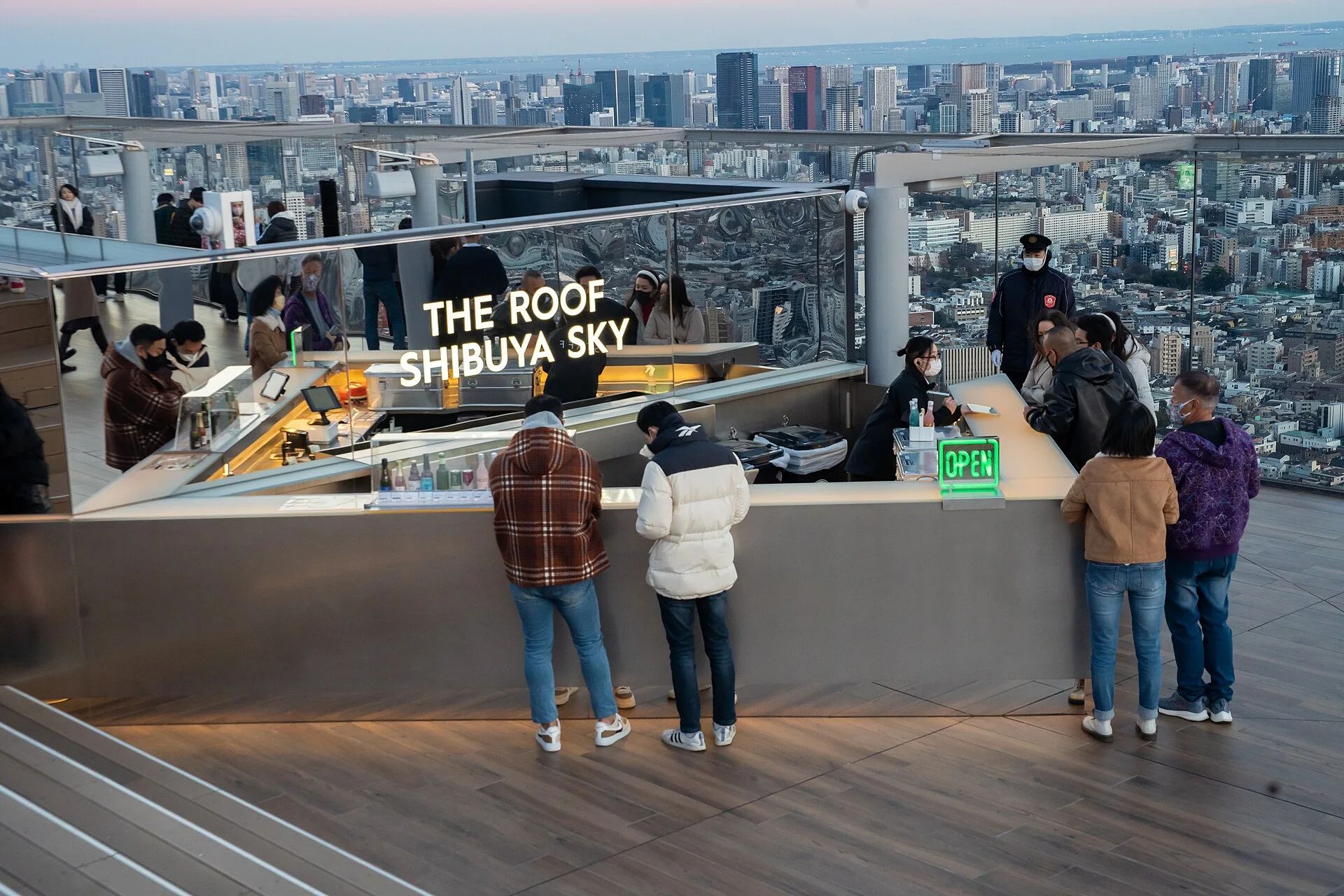
THE ROOF SHIBUYA SKY operates through 25 December in 2026, opening 15:00–21:00 in November and December with last orders at 20:30. Sofa seating packages including admission cost ¥7,000 per person for the standard set or ¥8,000 per person for the champagne set, with a minimum booking of two guests and no entry for under-20s. Sofa slots run for 50 minutes starting on the hour. Before booking, separate whether you actually want seated drinks or just panoramic photos: families or visitors happy to stroll along the glass only need standard admission to reach the public rooftop deck, whereas groups wanting an unhurried drink can plan around the hourly sofa sessions.
The official event calendar lists a special New Year's Day sunrise and hatsumode session on 1 January 2027 from 05:30 to 08:30 (last entry 06:30), with regular daytime operation suspended all day. National Astronomical Observatory data puts Tokyo sunrise at 06:50 on 1 January, meaning even arriving at 06:40 would miss last entry. If you want first light from the rooftop, book the dedicated event ticket and plan your transport to reach the 14F before 06:30. Visitors who simply want crisp winter daytime views are better off picking another date with standard entry slots that pair easily with lunch and shopping.
Daylight reflections play across the 46F mirrored balloons, making earlier slots rewarding for families with children. An afternoon ticket bridges daytime views and street-level sunset in one visit, whereas photographers targeting the 19:00 rooftop light beams should eat before entering and spend the afternoon around nearby shops or Miyashita Park. If your year-end trip spans 25 December, schedule SHIBUYA SKY before Christmas to catch the illuminations; from 26 December onwards, choose your slot purely around the view you want.
Fitting the Deck into Half a Day in Shibuya
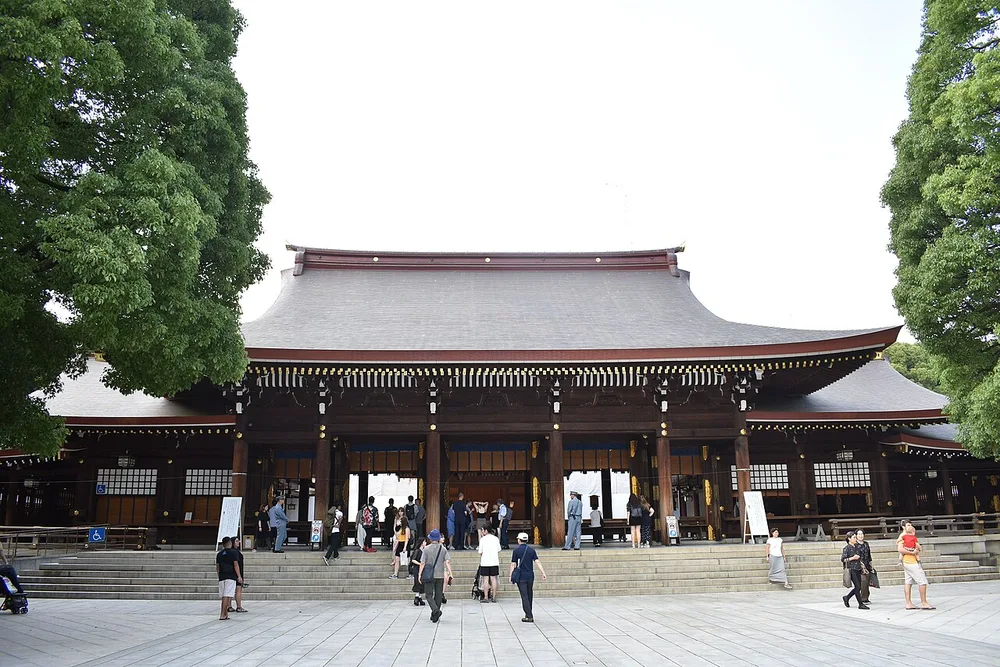
When walking down from Harajuku or Omotesando, map your entry slot alongside your route through the neighbourhood. With a mid-afternoon ticket, book lunch around northern Shibuya or Miyamasuzaka, walk towards Scramble Square afterwards, and browse the building's shops if you have time to spare before check-in. For a late slot, spend the day heading south from Harajuku and return to the station by dusk. If you are including Meiji Jingu beforehand, consult our Meiji Jingu and Harajuku walking route to work backwards from shrine and shopping times—and if your first-choice lunch spot has a long queue, eat right by the station and save neighbourhood browsing for afterwards.
On the east side of the station, Hikarie's ShinQs makes an easy indoor backup via direct exit B5, especially if you arrive on the Toyoko, Den-en-toshi or Metro lines. Its 6F and 7F restaurant floors sit steps away from the 14F Scramble Square entrance. For dinner without crossing overhead walkways, Shibuya Stream lies on the south side via exit C2 for the Toyoko, Den-en-toshi, Hanzomon and Fukutoshin lines, or direct access from the JR New South Gate. Even if rain closes the rooftop, keeping lunch or dinner right beside the station preserves your group meeting time and gives guests staying in Shinjuku or Ginza straightforward lines back.
If you plan to visit the Hachiko statue, Shibuya Crossing and Center-gai after coming down from the deck, follow station concourse signs across to the north-west side. Watching pedestrians surge across the junction as the lights change offers a completely different perspective from looking straight down from 229 metres. Leave generous margin on dinner bookings in Dogenzaka or Center-gai, and if your group is already loaded down with shopping bags, drop them off at your hotel after dinner rather than hauling them up to the 46F lockers. With only a 90-minute gap, stick to a café or restaurant inside Scramble Square itself and skip crossing the station twice.
Travellers staying overnight nearby can plan around whichever side of the station their hotel sits on. Shibuya Stream Hotel on the south side connects directly to the JR New South Gate and exit C2, making it easy to drop bags in the 4F lobby after a JR arrival before walking north to the deck. On the west side inside Mark City, Shibuya Excel Hotel Tokyu sits right above the Keio Inokashira Line central gate and exit A5, keeping west-side crossings, dinner and shopping steps from your room afterwards. That way you only carry your tickets, passports and a small pouch up to the deck—and early risers heading to the New Year's Day sunrise slot can walk straight over without worrying about first trains.
Where to Go Instead if Tickets Sell Out or Weather Turns
Keep SHIBUYA SKY for the most flexible weather window in your itinerary if standing on an open-air roof above the crossing is high on your list. If your priority is seeing Tokyo Tower—or if you are travelling with a pushchair—Tokyo City View on the 52F of Roppongi Hills Mori Tower is completely indoors and publishes clear floor-wide access details for wheelchairs and buggies. On windy days with crisp visibility, an indoor deck is far easier for older relatives than an exposed rooftop. If your plans are already anchored on the east side around Asakusa and Oshiage, combining Tokyo Skytree and Tokyo Solamachi handles views, dining and rail links without trekking across town to Shibuya.
When you only have one free afternoon in Tokyo, decide first whether you care most about the broad skyline, the streets directly underfoot, or pairing the view with an exhibition, then pick a single observatory. If you are already spending the day in Shibuya, a pre-15:00 standard ticket plus a walk around the crossing saves travel time. If dinner is booked in eastern Tokyo, move your skyline stop to Oshiage instead of riding the Hanzomon Line back and forth just for a sunset shot. To see how other decks, galleries and boat rides fit into a full day, compare options in our guide to Tokyo views, art and cruises.
If low cloud or steady rain rolls in, staying on Shibuya's east side for an indoor exhibition avoids unnecessary transfers. On the 8F of Shibuya Hikarie, d47 MUSEUM presents 47 FASHION 2027 from 4 December 2026 to 28 February 2027, exploring clothing and craft across Japan's prefectures. The museum opens 12:00–20:00 (last entry 19:30), closes on 1 and 2 January, requires no booking, and invites voluntary donations on exit. Part of your group can browse the exhibition while others shop on lower floors, then meet back up in the same building for a meal.
A few useful answers
When do SHIBUYA SKY tickets go on sale?
General admission tickets release at 00:00 JST two weeks before the visit date. Select the overseas visitor option on the official ticket page and switch the language to English.
Can I buy SHIBUYA SKY tickets on the day?
The 14F ticket desk sells same-day adult tickets only while online slots remain—once an adult session sells out online, it is also sold out at the desk. Child tickets (¥1,200) are bought in person at the 14F desk with the child present and accompanied by a ticketed guardian.
Do overseas visitors use a QR code or a passport after booking online?
Designated ticket types sold via the official overseas portal and partners such as Klook, KKday and Trip.com require every visitor to present the physical passport registered at booking. The QR code in the confirmation email cannot replace passport verification.
What can I do if sunset slots are sold out?
Standard tickets have no fixed exit time until closing, so you can enter on an earlier slot and wait for dusk, or book an evening slot if you only want night lights. Sold-out slots also occasionally reopen when other visitors cancel.
Can I get a refund if the SHIBUYA SKY rooftop closes?
If the rooftop is closed during your designated entry window, eligible unused online tickets with cancellation cover can be cancelled free of charge on the day via your booking channel. The 46F indoor observation gallery remains open as usual.
Which exit should I use at Shibuya Station?
Follow underground signs to exit B6 for Shibuya Scramble Square, then take the dedicated 1F exterior SHIBUYA SKY lift up to the 14F. From JR lines, use the Central or South Gate towards the East Exit.
Can I bring a suitcase or my own pushchair onto the rooftop?
Suitcases must be stored in lockers or luggage facilities around the station before entering. You may bring your own pushchair into the building, but only venue-loaned buggies from the 46F counter are permitted on the rooftop, with some restricted areas.
Are standard tickets valid on New Year's Day 2027?
Regular operation is suspended on 1 January 2027. A separate sunrise and hatsumode event runs from 05:30 to 08:30 with last entry at 06:30.
Official information and references
Sources used in this guide.
- SHIBUYA SKY Official Website | Opening Hours & Rooftop Status
- SHIBUYA SKY Official Website | General Ticket Prices, Booking Portal & Rooftop Rules
- SHIBUYA SKY Official FAQ | Release Times, Passports, Child Tickets & Gate Checks
- SHIBUYA SKY Official Cancellation Policy
- SHIBUYA SKY Official Access Guide | Shibuya Station Gates & 14F Entrance
- SHIBUYA SKY Official Observation Deck Guide
- SHIBUYA SKY Facilities Information | Lockers, Nursing Room & Rooftop Pushchairs
- SHIBUYA SKY Event Calendar | 2027 New Year's Day Special Session
- Sparkling View 2026 Official Event Page
- THE ROOF SHIBUYA SKY Official Page | 2026 Hours & Seating Packages
- National Astronomical Observatory of Japan | 2026 Tokyo Sunrise & Sunset Times
- National Astronomical Observatory of Japan | January 2027 Tokyo Sunrise & Sunset Times
- National Astronomical Observatory of Japan | June 2027 Tokyo Sunrise & Sunset Times
- Shibuya Hikarie Official Access & Facilities
- d47 MUSEUM Official Page | 47 FASHION 2027
- Shibuya Stream Official Access
- Tokyu Hotels | SHIBUYA STREAM HOTEL Access
- Tokyu Hotels | Shibuya Excel Hotel Tokyu Access
- Roppongi Hills Official Facilities Information | 52F Indoor Observation Deck
- Tokyo Solamachi Official Access | Oshiage Station & Tokyo Skytree
- Shibuya Hikarie Official Floors & Facilities