Sapporo Kokusai Ski Resort opens its 2026–27 season on 22 November. Check Sapporo Station bus timetables, six transfer options, the ¥9,800 bus-and-lift-pass bundle, rental rates and English lesson fees for a day trip or an overnight hot-spring stay in Jozankei.
- Reading Scope
- 23 min read · 9 chapters · 5 Q&As
- Official Verification
- 17 official sources checkedUpdated 22 November 2026
- Key Topics
- WinterBookingFirst trip
Chapter Route Map (tap any stop)
- Check which runs are open before picking your ski day
- Booking the bus from Sapporo: secure your return seat first
- Hotel shuttles, Jozankei guest coaches and the Otaru Liner
- Driving, taxis and the overnight closure over Asari Pass
- Lift passes: when a ¥500 gap favours the full-day ticket
- Renting skis, snowboards, outerwear and storing luggage
- Linking the seven runs and checking gradients before riding to the top
- English lessons, snow play for children and non-skiers
- Day trips back to Sapporo or an overnight stay in Jozankei
- Quick Q&A
If you are taking the bus from Sapporo to Sapporo Kokusai Ski Resort, book your return seat first. Outbound services depart from Sapporo Station's North Exit and drop off at the South Exit on the way back. For a full day on the snow, the adult return bus and lift-pass bundle from Sapporo Station costs ¥9,800. Pick an early bus if you need time to get fitted for rental gear before a morning English lesson, or step off at Jozankei on the descent if you fancy an onsen soak before dinner at your ryokan.
Check which runs are open before picking your ski day
Sapporo Kokusai Ski Resort sits in the mountains above Jozankei in Sapporo's Minami Ward. According to Hokkaido Chuo Bus, the journey takes around 1 hour 37 minutes from Sapporo Station and about 30 minutes from Jozankei Jinja-mae. Factor that travel time into your day if you want first lifts, have a lesson booked, or are bringing your own skis or snowboard aboard. Staying near Sapporo Station keeps transfers simple with a short walk to the North Exit boarding stop. If you plan to ski two days in a row and want an evening soak, stay overnight in Jozankei and head up from the hot-spring town the next morning.
Originally scheduled for 20 November, the 2026–27 season opened on 22 November at 09:00. The opening notice listed the Forest Course, Woody Course and upper Swing section as open, served by the eight-seater Sky Cabin gondola and Echo quad chairlift, while warning that bushes or small stones could still show through in places. Opening-day hours on the official site were 09:00–15:20, shorter than the regular schedule. Early-season visitors hoping to ski the full 3.6 km beginner link from top to bottom should wait until both the Forest Course and Märchen Course are open before booking buses and passes.
Regular operating hours run 09:00–17:00 until 31 March, shortening to 15:00 on 31 December and 1 January. From 1 April 2027 to the scheduled closing day on 5 May, hours shift to 09:00–16:00. Use the season calendar to choose your month, but rely on the daily slopes and lifts page to time your last descent. Before setting off, check that day's operating hours, active lifts and open trails, then inspect the live webcams for visibility. On the resort homepage, "snowfall" and "snow depth" are separate readings: the former tracks fresh snow, while the latter measures accumulated base depth, so read both alongside the open-run list.
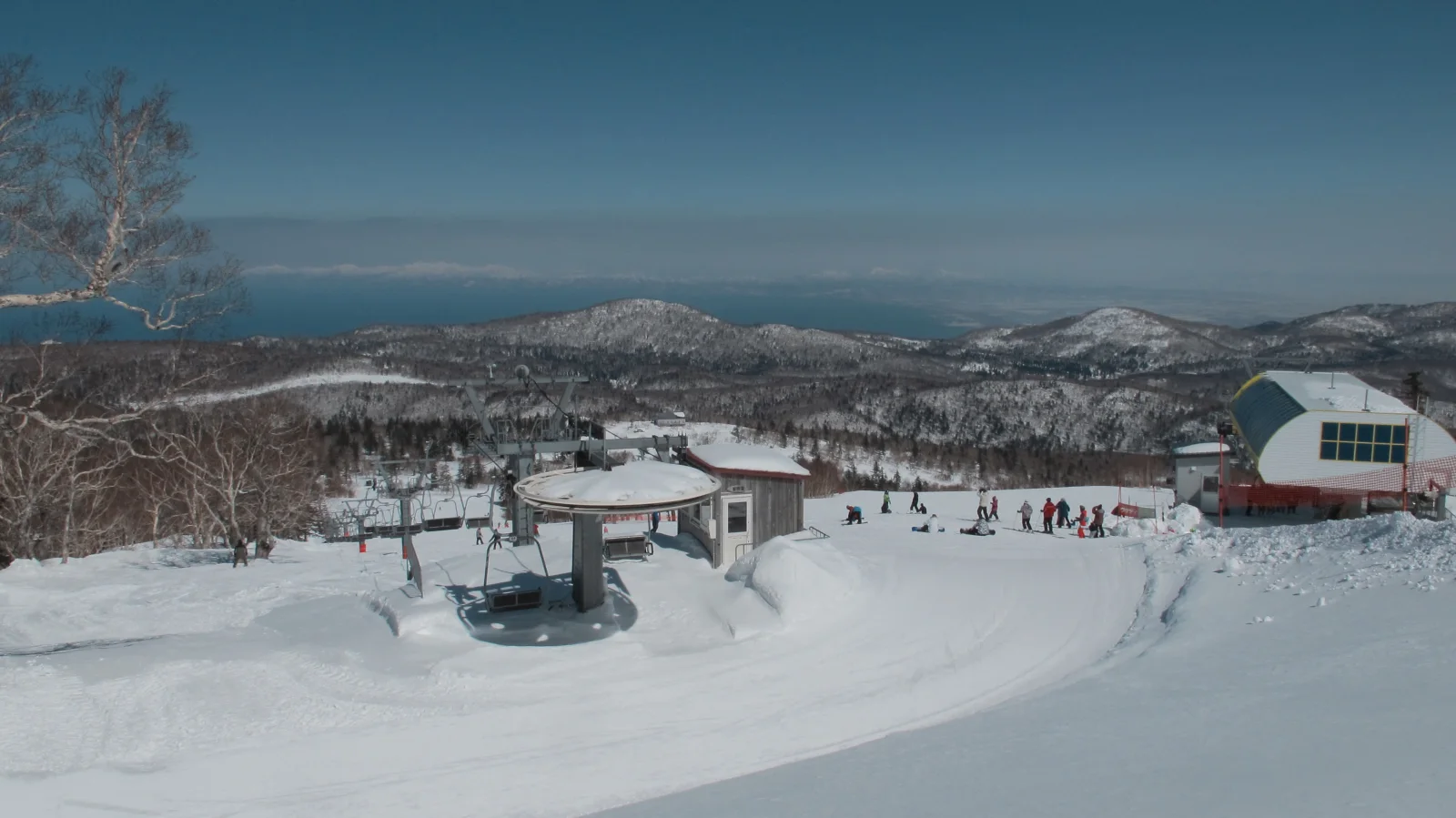
Sapporo Kokusai Ski Resort opens its 2026–27 season on 22 November. Check Sapporo Station bus timetables, six transfer options, the ¥9,800 bus-and-lift-pass bundle, rental rates and English lesson fees for a day trip or an overnight hot-spring stay in Jozankei.
Booking the bus from Sapporo: secure your return seat first
The Kokusai Ski Resort Line operated jointly by Hokkaido Chuo Bus and Jotetsu Bus runs on a seat-limited reservation system. On Chuo Bus's 2026–27 winter booking page, you can reserve single journeys or buy a return bus and one-day lift-pass bundle. Single tickets must be booked separately for each direction. When afternoon buses back to town sell out, walk-up passengers may be turned away at the resort, and calling a taxi on the spot is often unreliable. Once you spot an outbound seat, lock in your return coach straight away. Buses from Sapporo pass through Jozankei, but outbound services do not drop off along the way and inbound services do not pick up there, so you cannot use them as a shuttle between central Sapporo and the hot-spring town.
At Sapporo Station, outbound coaches board beside the North Exit taxi rank, while inbound buses set down at the South Exit. Around Odori Park, outbound pick-ups use Odori Nishi 1-chome and inbound drop-offs use Odori Nishi 3-chome. Keio Plaza Hotel Sapporo, Sapporo Tokyu REI Hotel and Makomanai underground station are also on the main stop list. Guests staying in Susukino can walk directly to Sapporo Tokyu REI Hotel rather than backtracking to Sapporo Station. Check both the Japanese stop names on your ticket and a map for each direction; if you are meeting friends after skiing, make sure you share the South Exit or Odori Nishi 3-chome drop-off point. At the resort, coaches drop off and pick up just outside the B1F rental area of the Ski Centre — note the stop sign and queue area on arrival so you can head straight out once you have changed your boots.
On the main timetable from 1 December to 31 March, daily departures from Sapporo Station North Exit leave at 07:30, 08:00, 08:30 and 09:00, arriving at 09:07, 09:37, 10:07 and 10:37 respectively. Daily return departures from the resort leave at 15:50, 16:30, 17:10 and 17:40, with extra services on weekends, Japanese public holidays and selected year-end dates. On 31 December and 1 January, check the separate early-return timetable. During the November opening period and in April and May, frequencies drop to two return pairs, with the earlier pair operating only on listed dates. Always switch the timetable tab to your exact travel date before comparing first and last buses, and never plan a spring ski day around February's last departure.
Online bookings close at 17:00 JST the day before travel, and telephone reservations close at 18:00 JST. Standard online reservations with Chuo Bus require card payment upfront and cancel automatically if unpaid past the deadline. For telephone bookings, call the Chuo Bus Sapporo Terminal on 0570-200-600 and pay cash on board; depending on system availability, day-before online bookings may also offer a pay-on-board cash option. Pre-paid online bundles are collected on the bus, as Chuo Bus ticket counters do not handle sales or reservations for this route. Save screenshots of your outbound and return dates, directions, stop names and payment status, and if your group booked separately, double-check that everyone is on the same return coach. Seating is unreserved, so families with young children should queue together early at the stop. When heavy-snow alerts are issued, check Chuo Bus service updates separately from the resort's slope status.
Also check when booking windows open before assuming a date is sold out. For the 2026–27 season, Chuo Bus scheduled reservations to open on 24 November for travel between 21 January and the end of March, on 1 December for April departures, and on 6 December for 1–5 May. If the booking page only shows the first half of the winter, verify the release schedule before switching hotels or hiring a car. When travelling with your own equipment on this line, skis and snowboards must be packed in dedicated bags, and ski or snowboard boots are not permitted on board. Keep your regular shoes easily accessible so you can change boots, pack your board and walk straight to the B1F bus stop in one go.
Hotel shuttles, Jozankei guest coaches and the Otaru Liner
The resort's access page also lists five alternative pre-booked transfer options. Travellers staying near Nishi-11-chome or Nakajima Park can check nearby hotel pick-up points to avoid a long walk through snowy streets. If you are based in Otaru, check the Otaru Liner operating dates first: boarding from central Otaru, Otaru-Chikko or Asarigawa Onsen avoids doubling back via Sapporo. Where outbound and return legs are run by different operators, each company's payment and amendment rules apply separately, and you will need to arrange a return service that drops off near your accommodation.
Hokkaido Resort Liner's Sapporo Kokusai route runs from 2 December 2026 to 31 March 2027, calling at six central Sapporo hotels with bookings closing at 18:00 JST the evening before and optional lift-pass or lunch packages. Sapporo Ski Shuttle operates from 19 December to 28 February from central Sapporo hotels and Jozankei, with online bookings closing at 07:00 JST on the day of travel. A separate direct shuttle from ANA Crowne Plaza Sapporo takes roughly 80 minutes according to the resort site, runs from late December to early March, and also closes at 07:00 JST on the morning of travel. The Otaru Liner is listed for 18 December to 14 March, though as of 22 November the resort's access page still showed both the Otaru Liner booking details and the ANA Crowne Plaza reservation link as pending. If you want to lock in Sapporo transport right away, start with the dates already open on Chuo Bus.
For guests staying in Jozankei Onsen, the dedicated Jozankei Ski Liner runs on scheduled dates from 23 December to 22 March 2027. According to the Jozankei Tourist Association's winter page, return fares are ¥2,800 for adults and ¥1,400 for children, exclusively for guests of association-member accommodations, with online booking and card payment required by 21:00 JST the day before travel. Outbound coaches leave the hot-spring town at 09:00 or 10:30, arriving around 09:45 or 11:15, and return from the resort at 15:15 or 16:45 (shifting to 14:15 and 15:30 on 31 December and 1 January). Enter your accommodation name when booking to see the nearest pick-up stop; guests in Koganeyu are only served by the first outbound and final inbound coaches, so plan your day around those two departures.
If you have a 10:30 lesson and need to hire equipment, taking the regular Kokusai Ski Resort Line from Jozankei gets you to the mountain earlier than the first guest coach, which arrives around 09:45. A single adult fare from Jozankei Jinja-mae on the regular bus is ¥1,400 — meaning ¥2,800 return, identical to the Jozankei Ski Liner — so you can compare arrival times and walking distance to your hotel on equal footing. If you plan to travel up from central Sapporo in the morning and check into Jozankei after skiing, buying two single tickets on the regular bus is the cleanest setup. Ask your hotel in advance about early luggage drop-off, or store bags in the resort lockers or cloakroom so your check-in and ski schedule fit together smoothly.
Driving, taxis and the overnight closure over Asari Pass
Official driving estimates put the resort around 60 minutes from central Sapporo, 40 minutes from central Otaru, 100 minutes from New Chitose Airport and 20 minutes from the Asari Interchange, with roughly 1,850 free parking spaces on site. Driving gives you control over departure times and space to keep spare gear in the boot. If anyone in your party needs to check in for a lesson at 09:30, allow more than a bare hour from central Sapporo to account for mountain road conditions, parking and the walk into the Ski Centre. When travelling with older relatives or young children, note the car park layout relative to the entrance and pack spare shoes, socks and gloves in a separate bag so you do not have to unpack every ski bag in the car park.
The easiest pitfall when driving is the winter night closure on Hokkaido Prefectural Route 1 between Otaru and Jozankei. Sapporo City's Minami Ward road notice states that from 2 November 2026 to 20 April 2027, the stretch between the Asari Loop Bridge and Jozankei Asahi Bridge is closed nightly from 19:00 to 07:00 JST. If you intend to linger over food near the resort after the lifts close, or cross between Otaru and Jozankei on the same evening, time your drive before the curfew. Check road notices on the morning of travel and allow extra time in heavy snow or icy conditions. Hire cars must be fitted with winter tyres; anyone unfamiliar with driving on snow and ice is far better off taking the bus from Sapporo or Jozankei.
Indicative taxi fares published by the resort for the return trip are roughly ¥10,500 to Jozankei Onsen, ¥18,500 to Makomanai underground station and ¥12,500 to JR Otaru Station. Larger groups can split the fare, though you should tell the taxi firm in advance how many people and ski bags you have. If you plan to ride the bus up and take a taxi down, book the cab ahead with an agreed pick-up spot and time, or simply reserve a return bus seat from the start. Connecting straight from the slopes to a flight at New Chitose Airport leaves very little margin for weather delays; airport travellers are safer dedicating a full day to skiing, staying in Sapporo or Jozankei on arrival and leaving airport transfers for departure day.
Lift passes: when a ¥500 gap favours the full-day ticket
For the 2026–27 regular season, Sapporo Kokusai lists an adult one-day pass at ¥6,700 online or ¥7,000 at the ticket window, and a four-hour pass at ¥6,200 online or ¥6,500 at the window. From April onwards, spring adult rates drop to ¥6,200 online (¥6,500 at the window) for a full day and ¥5,700 online (¥6,000 at the window) for four hours. The four-hour clock runs continuously from your first pass through the lift gate. Handle boot fitting and group meet-ups before scanning in, as lunch breaks and lessons count towards the four hours. If you plan a morning session plus a few extra runs after lunch, upgrading to a full-day pass costs only ¥500 more; the four-hour pass mainly makes sense if you start in the afternoon with a fixed return bus.
Junior and senior high school day passes cost ¥3,700 online or ¥4,000 at the window (bring student ID), while primary school children pay ¥2,500 online or ¥2,800 at the window. Senior rates apply from age 60 at ¥5,700 online (¥6,000 at the window) and from age 65 at ¥5,400 online (¥5,700 at the window), both requiring proof of age. Pre-school children ride lifts free of charge, though an IC card deposit still applies. All passes require a ¥500 IC card deposit, refunded when you return the card. First-time online buyers save their QR code and print their IC card at the dedicated machine at the 1F Ski Centre service desk; if you already hold a reloadable IC card, choose the top-up option online to load the pass directly onto it. Bus-bundle holders exchange their voucher for a lift pass on site, so bring ¥500 in cash for the card deposit.
On Chuo Bus's Kokusai Ski Resort Line, the adult bundle (ages 18–59, excluding high school students) costs ¥9,800 for a return coach ticket and one-day lift pass. Compared with buying two single Sapporo Station bus tickets (¥4,400) plus an online regular-season day pass (¥6,700) for ¥11,100 total, the bundle saves ¥1,300. From Jozankei Jinja-mae, however, two single bus tickets (¥2,800) plus the ¥6,700 online day pass come to ¥9,500 — ¥300 cheaper than the bundle. If you board at one stop and alight at another, add up the actual single fares before deciding. Bundles for junior/senior high school students and primary school children cost ¥7,500 and ¥4,500 respectively. From Makomanai station, separate adult tickets total ¥10,500, so the bundle saves ¥700; for a primary school child from Makomanai, return bus tickets plus an online day pass total ¥4,400, saving ¥100 over the bundle.
If you have booked an instructor for complete beginners, ask where the lesson will take place before buying a full-mountain pass. The resort sells a separate Beginner Area ticket with access to the magic carpet for ¥2,800 (primary school age and above), or ¥2,800 combined for a pre-school child and one accompanying adult. These tickets are sold on site, and the magic carpet is scheduled to open in late December. Non-skiers who just want mountain views can buy a Sky Cabin sightseeing return ticket for ¥3,200 (adults) or ¥2,500 (primary school children). Mixed groups can purchase different pass types and matching bus tickets individually.
Renting skis, snowboards, outerwear and storing luggage
The resort rental shop stocks skis, snowboards and snowsuits. A ski set includes skis, boots and poles, while a snowboard set includes the board, bindings and boots; both cost ¥7,000 for adults and ¥5,000 for children aged 12 and under. Jacket-and-trousers outerwear sets cost ¥6,000 for adults and ¥4,500 for children aged 12 and under. Renting both hardware and outerwear as an adult totals ¥13,000 — bringing the combined cost with a Sapporo bus-and-lift-pass bundle to ¥22,800 before refundable deposits, meals, small accessories and lessons. Packing your own ski jacket and trousers saves ¥6,000 and cuts out one round of changing.
Hats and gloves are sold on site rather than rented, while goggles can be hired for ¥1,000 and helmets for ¥2,500 outside the clothing package. Waterproof gloves, proper ski socks, a neck gaiter and thermal base layers are the most worthwhile items to bring from home, along with a dry pair of socks for the bus ride back. If your whole group is hiring gear, note everyone's height, shoe size and rental items separately beforehand so nobody grabs the wrong pair of identical boots. Walk a few paces when trying on boots and ask staff to check heel hold; if your toes pinch or your heel lifts as you walk, swap sizes before heading out onto the snow.
On the resort's online rental page, you select your date, quantities and sizes and pay by card to receive a QR code by email. Scan the QR code at the rental area to print your slip, then collect and fit your gear at the counter — or check in with the ski school first if you have an English lesson booked. Walk-in rentals are also available by filling out a form and showing photo ID. Putting on your moisture-wicking base and mid-layers back at your Sapporo hotel speeds up changing on arrival, and anyone heading straight to Jozankei after skiing can pack an overnight bag separately. The resort FAQ lists coin lockers at ¥300 (small), ¥400 (medium) and ¥500 (large), while oversized luggage and suitcases can be left at the B1F cloakroom from ¥500.
Guests staying at Jozankei Tourist Association member hotels can apply through their accommodation desk for the resort's Premium Gate rental counter by 22:00 JST the evening before skiing; even if you paid online, you must still submit the application at your hotel to use that counter. If you are skiing two consecutive days with your own equipment, the B1F cloakroom also offers overnight storage at ¥500 for skis with poles or a snowboard, and ¥300 for boots. Leaving your board bag on the mountain saves hauling it back and forth on the bus when staying in either Sapporo or Jozankei.
Linking the seven runs and checking gradients before riding to the top
The piste map lists seven main runs. On the beginner side, the 1.2 km Forest Course and 2.4 km Märchen Course both average 8 degrees with a maximum gradient of 12 degrees, linking into a 3.6 km top-to-bottom beginner run when both are open. That full descent suits skiers and riders who can already link turns and stop reliably. After a first lesson on the lower nursery slope, consolidate your braking before riding all the way up. Agree with friends to regroup at clear signposts or well to the side of the piste, keeping sightlines clear at corners and trail junctions — the Forest Course winds through trees with blind bends, so avoid stopping just below crests or around corners.
The intermediate Woody Course runs 1.2 km with a maximum pitch of 16 degrees and can be lapped via the Woody pair lift when open. Family Course, stretching 1.6 km up to 20 degrees, is also graded intermediate and offers wide terrain for practising speed control. Swing Course is rated intermediate too, yet reaches a steep 28 degrees despite a 10-degree average that can catch first-timers off guard. Step up from the Forest Course to Woody before tackling Swing, and when trails fork, double-check the run name and base-area direction on the piste map and follow open-slope markers.
Advanced runs are the 1 km Echo Course (up to 22 degrees) and the 2.2 km Downhill Course (up to 30 degrees). Even when powder near the summit looks inviting, weigh visibility and snow conditions lower down before committing. Taking a familiar open run for your first lap lets you gauge groomed corduroy, deep snow and firmer patches, making it easier to judge timing for your afternoon descent. Stay strictly inside roped, patrolled boundaries: the resort states that anyone entering closed areas or skiing out of bounds is liable for search-and-rescue costs. In the event of an injury, alert ski patrol with the run name and nearest signpost or lift tower.
The eight-person Sky Cabin gondola serves as the primary lift to the summit, alongside the Märchen and Echo quad chairlifts and the Woody pair lift. Daily lift status is posted individually. In high winds, even when some chairlifts remain running, check which lift serves your chosen run and whether you can ski back to the base on the same side. If the gondola is suspended and only an intermediate pitch remains open, beginners are better off staying at the base, taking a break or heading back to town early. Apply the same check during early season rather than heading up on a headline snow-depth figure alone.
English lessons, snow play for children and non-skiers
Private English ski and snowboard lessons cost ¥31,000 for one person, ¥42,000 for two or ¥53,000 for three for a two-hour session, rising to ¥42,000, ¥56,000 and ¥70,000 respectively for four hours. Fees are per group and exclude lift passes and equipment rental. Mixed ski-and-snowboard requests must be booked separately with different instructors. Grouping riders of similar ability works best; note in the booking form whether you have never worn ski boots or can already link turns on green runs so your instructor can pick the right terrain. The school's English lesson FAQ lists instruction in English or Japanese, while the dedicated kids' school page covers separate programmes for pre-school and primary school children — check the age brackets and teaching language carefully when booking.
English lesson slots run 10:30–12:30 in the morning and 13:30–15:30 in the afternoon. Anyone renting equipment is asked to check in on 1F by 09:30 for morning lessons or 12:30 for afternoon sessions, while students with their own gear should arrive at least 30 minutes early. The ski school FAQ recommends catching a bus arriving at 09:07 or 09:37 for morning lessons, favouring the 09:07 arrival if you need time for rentals and fitting. Because outbound Chuo Bus services from Sapporo only run in the morning, you cannot have lunch in town before an afternoon lesson. You can add rental items and sizes directly on the private lesson booking form for collection at the school counter, while family members not taking lessons use the main rental desk. After an afternoon lesson finishes at 15:30, a 15:50 bus leaves just 20 minutes to change and return gear; aim for the 16:30 coach or later, noting that school rentals are due back by 16:00 per the FAQ.
When only part of the family is taking lessons, plan to meet for lunch on 2F of the Ski Centre or regroup once classes end. The Rabbit family restaurant on 2F serves curry ramen, udon and rice dishes, while Woodpecker on the same floor specialises in pizza, with different seasonal opening dates — check the resort restaurant page for operating calendars and last-order times. If you are catching an earlier coach back to Sapporo, eat before returning rental gear and bring your bags down from 2F straight to the B1F bus stop. Indoor seating gives children a warm place to rest between sessions before deciding whether to head back out.
Scheduled to open in late December, the paid Snow Playground is tailored for non-skiers aged five and over from 10:00–15:00 at ¥6,000 for a day pass, including play equipment and magic-carpet access. Activities include steerable sledges, snowshoes and handle-equipped snowboards. Note that the piste map also marks a separate beginner and sledging zone, which is distinct from this paid park. Families visiting mainly for half a day of snow play should wait until the Snow Playground opens and pack waterproof gloves, snow boots and a dry change of clothes and socks. In early December when only limited slopes are open, non-skiers can check whether the sightseeing gondola is operating or spend the afternoon in Jozankei instead.
Day trips back to Sapporo or an overnight stay in Jozankei
For a standard day trip from Sapporo during regular season, take the 07:30 North Exit bus arriving at 09:07. Visitors with their own gear can check lift status straight away, while lesson students head to 1F registration. Spend the morning on the base practice slope or Forest Course according to ability and meet your group at the Ski Centre for lunch. If you are booked on the 16:30 return coach, build gear return, changing into dry clothes and reclaiming your IC card deposit into your final run timing. Leave dinner reservations near Sapporo Station or Odori flexible until you are back in town so a delayed or missed bus does not cost you your table.
To stay overnight in Jozankei after skiing, ride the regular bus up from Sapporo and book your descent ticket to a Jozankei stop instead. Check which stop lies closest to your hotel and note any dinner cut-off time required by your half-board plan. On the regular daily timetable, the 15:50 departure from the resort reaches Jozankei Jinja-mae around 16:20; if you stay on the slopes until the 17:10 coach, you will arrive around 17:40 before walking through snow to check in. Choose your target arrival time in the hot-spring town first, then count backwards for packing up gear and checking in. For ryokans close to bus stops or offering half-board packages, see our Jozankei Onsen accommodation guide.
If you plan to ski a second day, staying in Jozankei cuts out two long round trips to central Sapporo. Decide ahead whether night two will be back in the hot-spring town, in Sapporo or onwards to Otaru. Because the Jozankei Ski Liner only sells return tickets, skiers starting in Jozankei and returning straight to Sapporo in the afternoon should buy two single legs on the regular Kokusai Ski Resort Line. If some family members want a second day in the baths while others ski solo, additional departures from the hot-spring town are listed on Jozankei's local transport page so everyone can match baths, stops and departure times. And if high winds close the gondola, you can simply enjoy the onsen town rather than sitting out the day at the base with your ski gear.
If you only have half a day to spare, the return bus journey from Sapporo Station alone eats up more than three hours. Swapping that evening ride back into town for a night in Jozankei lets you trade transit time for an onsen soak. Visitors staying fixed in central Sapporo who only want two or three hours on the snow can compare closer options such as Mount Moiwa for night skiing or resorts reachable via Teine Station by day — see our comparison of ski resorts near Sapporo for session times and stations.
A few useful answers
Is night skiing available at Sapporo Kokusai Ski Resort in 2026–27?
Only daytime hours are published. The resort normally closes at 17:00 until 31 March, at 15:00 on 31 December and 1 January, and at 16:00 from 1 April through the scheduled closing day on 5 May. Individual lifts and runs may close earlier on certain dates.
Which Sapporo Station stop does the resort bus use, and can I book a single journey?
The regular Kokusai Ski Resort Line boards beside the Sapporo Station North Exit taxi rank outbound and drops off at the South Exit on return. Single tickets can be bought separately by direction, but book your return seat at the same time as sold-out coaches cannot accommodate walk-up passengers.
Should adults and primary school children buy the same bus-and-pass bundle?
Compare fares by age group. From Sapporo Station, buying two single bus tickets plus an online regular-season adult day pass totals ¥11,100, whereas the adult bundle is ¥9,800. For a primary school child, return bus fares (¥2,200) plus an online day pass come to ¥4,700 versus ¥4,500 for the child bundle; from Makomanai station, separate tickets for a primary school child total ¥4,400, saving ¥100 over the bundle.
Are ski equipment and lift passes included in private English lessons?
No, tuition, equipment rental and lift passes are charged separately. You can request rental gear on the private English lesson form for collection at the school counter. If your first lesson stays on the magic carpet or base practice slope, ask your instructor which lift ticket you actually need.
Can Jozankei hotel guests take the guest-only Ski Liner up and a bus back to Sapporo?
No, the Jozankei Ski Liner is sold strictly as a return ticket. If you want to travel up from Jozankei and head straight into Sapporo afterwards, book two separate single legs on the regular Kokusai Ski Resort Line.
Official information and references
Sources used in this guide.
- Sapporo Kokusai Ski Resort | 22 November 2026 Season Opening Notice
- Sapporo Kokusai Ski Resort | Live Operations, Snow Conditions and Webcams
- Sapporo Kokusai Ski Resort | Piste Map, Lift Status and Operating Hours
- Sapporo Kokusai Ski Resort | Six Bus Routes, Driving Access and Taxis
- Hokkaido Chuo Bus | Kokusai Ski Resort Line Bookings, Fares and Timetables
- Hokkaido Chuo Bus | Service Suspensions and Weather Updates
- Sapporo City Minami Ward | Winter Night Closure on Otaru–Jozankei Route
- Jozankei Tourist Association | Jozankei Ski Liner and Premium Gate
- Jozankei Tourist Association | Access and Local Bus Routes
- Sapporo Kokusai Ski Resort | 2026–27 Lift Pass Rates and IC Card Deposit
- Sapporo Kokusai Ski Resort | Equipment and Outerwear Rental Rates and Pick-Up
- Sapporo Kokusai Ski Resort | Bus Stop Locations and Luggage Storage FAQ
- Sapporo Kokusai Ski Resort | Private English Ski and Snowboard Lesson Bookings and Rates
- Sapporo Kokusai Ski Resort | Private English Lesson Check-In, Times and Gear FAQ (PDF)
- Sapporo Kokusai Ski Resort | Pre-School and Kids Ski Lessons
- Sapporo Kokusai Ski Resort | Restaurant Locations and Opening Dates
- Sapporo Kokusai Ski Resort | Snow Playground Tickets and Age Requirements