Plan Sankyo Warehouses, Minato Market, Sanno Club and Hiyoriyama Park with the 2026 buses in both directions. Includes the new information centre, Kasafuku admission, Wednesday lunch and the return after sunset.
- Region & Focus
- Tohoku
- Reading Scope
- 28 min read · 9 chapters · 8 Q&As
- Official Verification
- 12 official sources checkedUpdated 9 November 2026
- Key Topics
- ItinerariesFoodTravel budget
Chapter Route Map (tap any stop)
- Fix lunch, the free centre’s closing time and the return to the station
- 2026 buses: directions, adult and child fares, and walking alternatives
- Twelve warehouse exteriors and the new centre in No. 12
- Zelkova care and warehouse façades: what to look for
- Harbour lunch and the Wednesday alternative
- Sanno Club: Kasafuku, former dining rooms and a paid rain alternative
- Hiyoriyama: lighthouse, direction stone, steps and slopes
- Change the order for sunset or cherry blossom
- Half-day and full-day routes with return time allowed
- Quick Q&A
Fix market lunch, the Sankyo information centre’s 16:30 closure and a return bus that actually stops at Hiyoriyama. With settled weather and a morning arrival, visit the warehouses, eat by the harbour, then explore Sanno Club and Hiyoriyama. On Wednesdays, replace Minato Market lunch. Arrange transport from the park before staying for sunset.
Fix lunch, the free centre’s closing time and the return to the station
Sakata lies in Shonai on Yamagata’s Sea of Japan coast. Starting and ending at JR Sakata Station, this route links rice warehouses, the harbour market and Hiyoriyama’s maritime remains. Arrange rail or bus travel to Sakata Station before planning the city day. For accommodation and transport at Yamadera, Ginzan and Zao, see the Sendai and Yamagata itinerary, allowing separate time to reach Sakata.
Choose lunch first. Minato no Tsuki at Minato Market closes at 15:00; Komatsu Maguro Senmonten serves meals until 15:30. Both close Wednesdays. For either, arrive in the morning and work towards the harbour, keeping lunch before the middle of the route. With an afternoon arrival, eat before sightseeing. Dropping one stop is better than reaching a closing market hungry.
The warehouse exteriors can be viewed throughout the day. The new information centre opens 09:00–16:30. On a first visit, read the rice-distribution and building explanations before looking at the zelkova trees and roofs outside. At night the visit focuses on façades and illumination; allow another daytime slot for displays. The two visits have quite different content.
Hiyoriyama Park is free and always accessible; return transport sets the deadline. The April 2026 timetable lists afternoon park departures towards Sakata Station at 14:14 and 15:29, then none until 19:49. For an early-evening hotel return, leave the park earlier and board at Kotobukicho. For sunset, include walking to the station or a prearranged taxi in the main plan before darkness falls.
Give the warehouses and harbour lunch a full morning, then divide the afternoon between Sanno Club and Hiyoriyama. An editorial allowance of five to six hours covers walking, lunch and bus waits. Extend it for a Kasafuku workshop or sunset. With about three hours, keep the warehouses and park, eat beforehand and save paid museums for another visit. Adjust these planning allowances for walking pace and meal queues.
| Stop | Hours or conditions | Effect on order |
|---|---|---|
| Minato Market lunch | Minato no Tsuki until 15:00; Komatsu meals until 15:30; closed Wednesdays | Eat around midday; use town restaurants on Wednesdays |
| Sankyo information centre | 09:00–16:30; closed 29 December–3 January | Read displays by day |
| Sanno Club | 09:00–17:00; last entry 16:30 | Check closing days for a rainy-day alternative |
| Return from Hiyoriyama | 14:14 and 15:29, then 19:49 | Arrange transport separately for sunset |
Plan Sankyo Warehouses, Minato Market, Sanno Club and Hiyoriyama Park with the 2026 buses in both directions. Includes the new information centre, Kasafuku admission, Wednesday lunch and the return after sunset.
2026 buses: directions, adult and child fares, and walking alternatives
Take the municipal Run Run Bus Sakata Station–University Line towards Nihonkai General Hospital from Sakata Ekimae stop ①. Return buses arrive at stop ②. The official timetable effective from 1 April 2026 separates directions into two tables. Check direction, then read down the same column to your stop. Some services detour through the park and market; others go directly towards the warehouses. The line name alone is insufficient.
Useful morning park services leave Sakata Station at 09:40 and 10:40, arriving at Hiyoriyama Park at 09:45 and 10:45. Later services leave at 13:30 and 17:50, arriving at 13:35 and 17:55. They continue to Hiyoriyama Koen-shita and Sakata Kaisen Ichiba-mae, then the warehouses. Use these for the park first; for the warehouses, stay aboard. The 09:40 departure reaches Sankyo Soko-mae at 09:57.
Other warehouse services include 08:10–08:20, 12:15–12:27, 15:10–15:22 and 16:10–16:22. At 08:20, view the exterior before the centre opens at 09:00. At 16:22, only eight minutes remain before closing, so focus outdoors. The outbound 19:00 service is weekdays only. The entire line is suspended on 31 December and 1 January.
Park-to-station services include 12:54–13:00, 14:14–14:20 and 15:29–15:35, with a later 19:49–19:55 service. No bus calls at the park in the 17:00 hour. Walk to Kotobukicho (Maiko-zaka-mae) and use the stop towards Sakata Ekimae ②: departures 17:21 and 17:25 arrive at 17:25 and 17:29. The next listed return departure there is 19:51. The official park-to-Kotobukicho walking guide is about five minutes; add slopes, crossings and finding the stop, especially with older companions. The two services in the 17:00 hour go directly from Hiyoshicho 2-chome (Kaisen Ichiba-guchi) to Kotobukicho, bypassing the park and Sanno Kurabu-mae (north side). Club departures connecting with the park’s 15:29 and 19:49 services are 15:30 and 19:50. In the 17:00 hour, walk to Kotobukicho instead of waiting at the club.
From Sankyo Soko-mae, return services include 14:04–14:20, 15:19–15:35, 17:15–17:25 and 17:19–17:29. The 15:19 detours through the market and park; the two in the 17:00 hour take shorter routes. Journey times differ. Walking between the warehouses, park and market usually leaves just two bus legs, into and out of the sightseeing area, with short local sections on foot.
Each ride costs ¥200 for adults, ¥100 for primary, junior-high and senior-high pupils and students showing student ID; preschool children ride free. Two adult rides cost ¥400 and three ¥600; two rides for a primary-school child cost ¥200. Ten ¥200 tickets cost ¥1,500. For only two rides in a day, start with single fares. A ¥100 passenger using one ¥200 ticket receives no difference back, and two people cannot share it. Budget each person’s actual rides; the booklet is not an unlimited day pass.
Walking also links the harbour area, but count the whole day’s distance. The city gives about 30 minutes from Sakata Station to Minato Market, useful if no morning bus connects. That is only one leg, before warehouses, museums and park. Store luggage at your accommodation first. With limited stamina, use transport for the long station approach and save walking for the sights.
Prepare coins for each person. The city bus FAQ says the farebox gives no change for overpayment. The driver can change money for fares, but high-value notes may not be exchangeable. For two adults riding twice each, separate four ¥200 fares and budget lunch and admissions separately. If the bus is late, use the vehicle-location system linked from the city timetable to check its position and delay. Confirm the line and station-bound direction before moving to another stop and missing your intended bus.
| Direction and departure | Intermediate stop/time | Arrival |
|---|---|---|
| Station ① 09:40 | Hiyoriyama 09:45; seafood market 09:49 | Sankyo Soko-mae 09:57 |
| Station ① 10:40 | Hiyoriyama 10:45; seafood market 10:49 | Sankyo Soko-mae 10:57 |
| Station ① 12:15 | Bypasses Hiyoriyama Park | Sankyo Soko-mae 12:27 |
| Station ① 13:30 | Hiyoriyama 13:35; seafood market 13:39 | Sankyo Soko-mae 13:47 |
| Sankyo Soko-mae 15:19 | Seafood market 15:25; Hiyoriyama 15:29 | Station ② 15:35 |
| Kotobukicho 17:21 | Bypasses park stop | Station ② 17:25 |
| Kotobukicho 17:25 | Bypasses park stop | Station ② 17:29 |
| Hiyoriyama Park 19:49 | Kotobukicho 19:51 | Station ② 19:55 |
Twelve warehouse exteriors and the new centre in No. 12
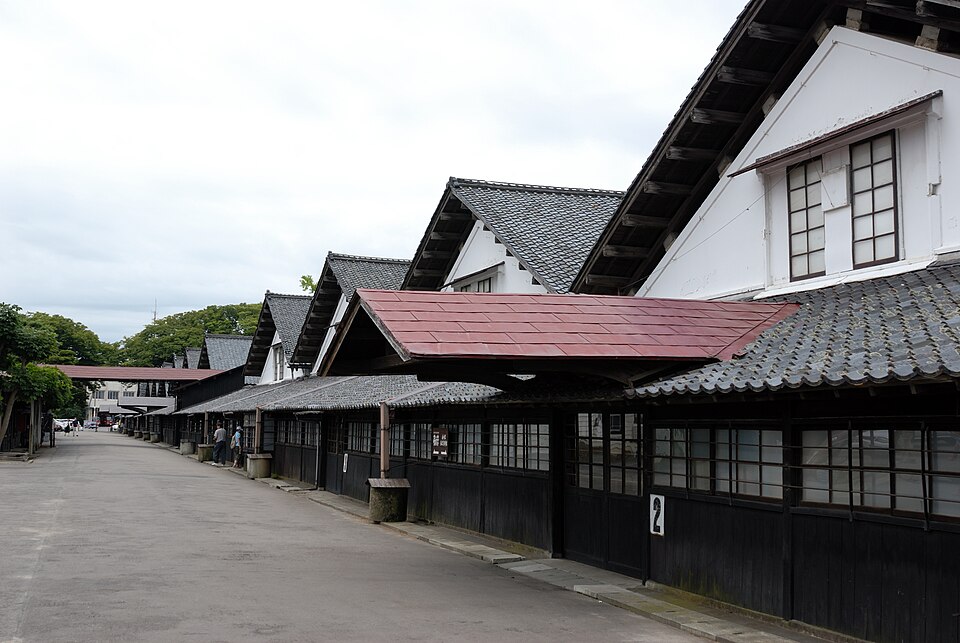
Built in 1893, Sankyo Warehouses has twelve white-walled storehouses for Shonai rice. Nine remained in use until 2022; the site became a National Historic Site in 2021. Look beyond the repeated roofs to how the buildings preserved rice. Their long working life gives façades, entrances and grounds more meaning than a single photograph on the tree-lined path.
Sakata City’s current description states that the information centre opened on 14 April 2025 in part of No. 12, formerly Sakata Yume no Kura. Panels explain rice distribution, architecture and the historic site’s value. If an older guide suggests shopping at the former souvenir hall, devote this stop to displays and the exterior walk, buying gifts at the market or in town instead.
The centre and exterior visit are free. The centre opens 09:00–16:30 and closes 29 December–3 January. Enter No. 12 by day to understand the warehouses; for an evening façade visit, follow open outdoor areas. Exteriors remain accessible when the centre closes for holidays, so a New Year visit can include buildings, with indoor closures and bus suspension dates planned separately.
The No. 12 centre and toilets are open. Other warehouse, office and research-room interiors are closed. After the centre, walk outside without trying every door or following people into working areas. For a substantial indoor historical visit, keep Sanno Club in the day. Here the main activity is understanding the buildings, then viewing them outdoors.
With children, look in the displays for what damages stored rice, then compare outside: zelkova trees reduce summer heat and double roofs help control moisture. Locate roofs and trees before memorising dates. Architecture enthusiasts can study the roof repetition and compare front façades with the trees behind, giving each side a purpose.
Illumination runs from sunset to 22:00, suitable for a walk after dinner when staying in Sakata. After the centre closes, the visit is to lit exterior buildings. For displays and night photographs, visit the centre in the morning and return briefly in the evening. If leaving Sakata that day, finish according to your train rather than adding a harbour return just for lights.
A Sakata maiko shows the warehouse walls, roofs and zelkova row in this video released in 2021.
Zelkova care and warehouse façades: what to look for
The zelkova row behind the warehouses provides shade. The official page in 2026 still announces tree-recovery care beside part of Nos. 1–2, with barriers on site. Follow open paths and return to the façades by another side at barriers. You can still compare the buildings and trees without relying on one photographic angle.
At the front, find white-wall and black-board boundaries, eaves and warehouse numbers. Behind, see how trees and buildings stand together. The front shows the continuous row; the rear connects the centre’s cooling explanation to the actual location. If views are blocked, shorten the rear section and return to the wider façade path.
Compare the centre’s storage figures outdoors. The city records capacity of 10,800 tonnes, or 180,000 rice bales. Against the twelve buildings, this explains the scale of port storage. Roofs, trees and building size connect with Hiyoriyama’s cargo ship later: first a place to preserve large amounts of rice, then ships to carry it out.
In strong winds or an approaching typhoon, the city may close the tree row because branches could fall. Use permitted warehouse exterior paths and the centre. If wind and rain continue, shorten the outdoor visit and move to Sanno Club when open. Conservation and closure signs determine the available side of this cultural-property site.
Pets are prohibited on walks through the grounds, including when carried or in a pushchair. Assistance dogs for people with disabilities are exempt. Smoking and open flames are prohibited throughout. With a pet, choose somewhere everyone can visit together or arrange care before departure. Resolve this before parking so the family does not have to split up at the entrance.
Harbour lunch and the Wednesday alternative
Distinguish two map names. Lunch here means Minato Market at 2-5-56 Funabacho, beside the separate Sakata Kaisen Ichiba. The bus stop is Sakata Kaisen Ichiba-mae, so you still walk to your chosen shop. Use Minato Market’s full name and address rather than searching the neighbouring building with the wrong timetable.
The city’s shop-by-shop information lists Komatsu Maguro Senmonten for tuna, fresh fish and set meals: shop 09:00–17:00, meals 09:00–15:30. Minato no Tsuki opens 09:00–15:00 for wonton noodles, chuka soba and mini rice bowls. Choose tuna at the former or hot noodles at the latter, without fitting both into one meal. For later fish shopping, distinguish the 17:00 retail closure from the 15:30 end of food service.
The market overview gives 09:00–18:00, not a dinner schedule. Shops close separately: Kikawaya sake shop at 17:00, Oizumi souvenirs 10:00–16:00 and Hama no Kaachan no Mise at 16:00. Buy sake or gifts after lunch before leaving. Many shops will be closed if you climb to the park and return in the evening.
Using the 09:40 station bus to the warehouses, make lunch the morning’s end before Hiyoriyama. If you alight at the park at 09:45, descend for lunch before warehouse displays. Both directions work; the climb comes before or after food. With companions needing fixed meals, prefer warehouses then lunch.
On Wednesdays, remove Minato Market meals and shopping. The city lists Wednesday and New Year’s Day closures for its businesses. Eat at the station or in town before Sanno Club, park and warehouses. For a packed meal, plan a place to sit first. Neighbouring seafood-market shops have separate rules; check the chosen shop’s information for the day instead of applying Minato Market’s list to the whole harbour.
The market has toilets, Wi-Fi and parking including accessible spaces. Families can use toilets before the next walk. There is no general telephone number. Call Komatsu Maguro Senmonten on 0234-26-0190 or Minato no Tsuki on 0234-25-0870 for meals and closing days. Ask the serving shop directly about tuna, noodle broth or side-dish ingredients rather than asking for the whole market.
Sanno Club: Kasafuku, former dining rooms and a paid rain alternative
Sanno Club is a former ryotei dining establishment built in 1895, at 2-2-25 Hiyoshicho. It suits interest in interiors, Sakata merchants and Kasafuku hanging ornaments, and offers a longer indoor visit in rain. For warehouses and harbour views alone, keep your budget for lunch and follow the park route. Buy admission if you want to study rooms and displays.
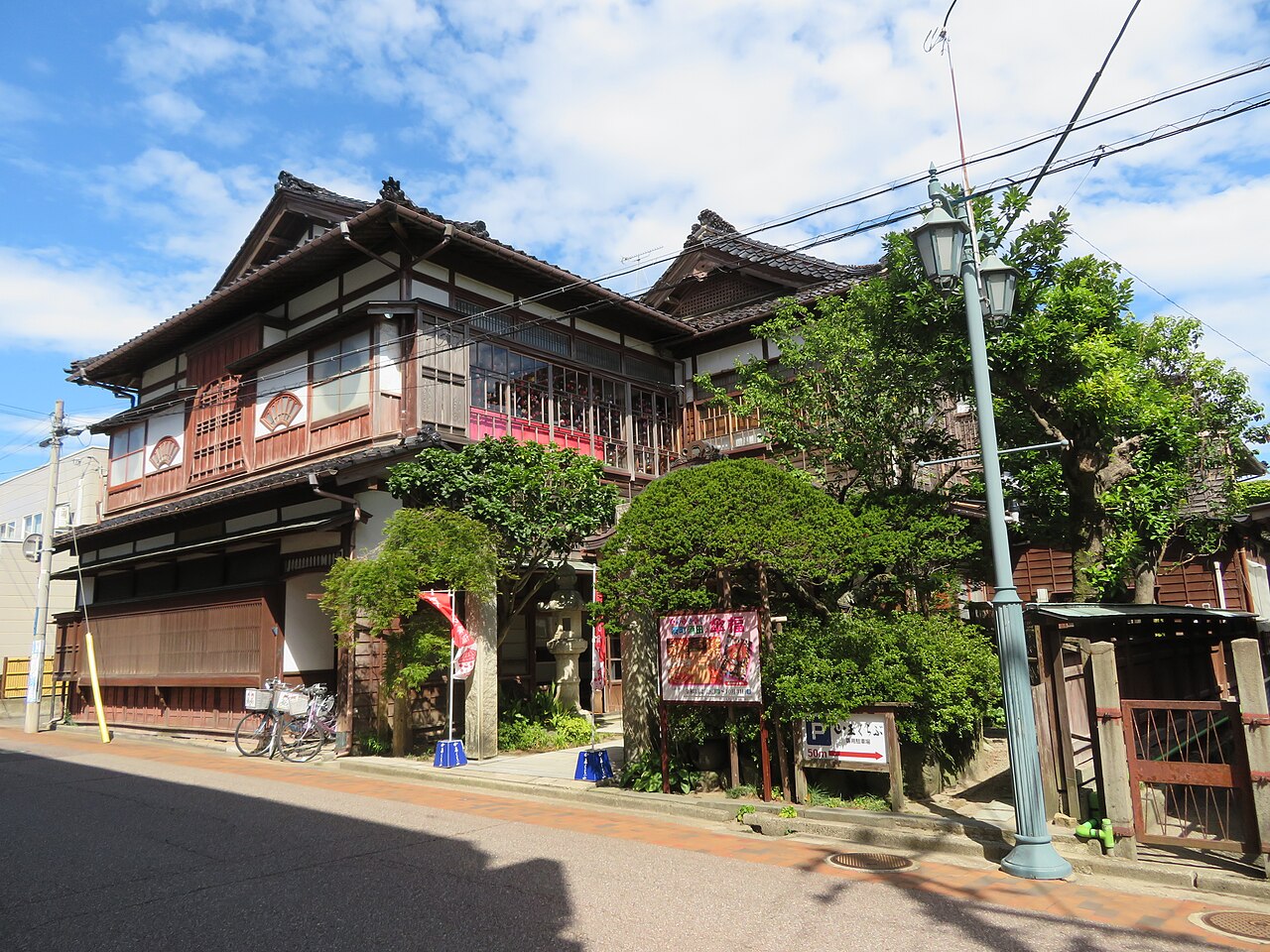
The operator’s current visitor information lists the Kasafuku exhibition from 27 February to 14 November 2026. Individual general admission is ¥1,000, senior-high pupils ¥240, primary and junior-high pupils ¥140. Ordinary general admission of ¥490 applies outside special exhibitions. Budget ¥1,000 in autumn rather than relying on the city’s ordinary ¥490 listing and finding an extra ¥510 per person at entry.
Hours are 09:00–17:00, last entry 16:30. It opens daily March–November. December–February it closes Tuesdays, or the following day when Tuesday is a public holiday, plus 29 December–3 January. Check the date for a rain alternative. On a closed winter Tuesday, use the warehouse centre and a town meal, choosing the park according to weather. Decide before the group reaches the door.
Look at rooms before exhibits. The venue introduction describes different alcoves, kumiko lattice fittings and sliding-door handles in each room. Upstairs on the east side is a raised coffered ceiling; removing partitions creates a 106-tatami hall. Seeing linked rooms open into a large space explains reception and banquets. Kitamaebune shipping, merchants and dining culture then connect with the rice warehouses.
Kasafuku is upstairs; dolls by Jusaburo Tsujimura are also displayed. With children, choose one ornament, study its shape and explained meaning, then view the whole arrangement. Craft enthusiasts can stay with fabric and interior details. For anyone avoiding stairs, discuss the upstairs exhibition and mobility needs before buying admission, then choose a visit according to available help.
The workshop page lists Kasafuku making at ¥1,650 per person plus admission, by reservation. During the 2026 special exhibition, one general adult admission and workshop costs ¥1,000 + ¥1,650 = ¥2,650; two participants cost ¥5,300. Agree the session and duration before lunch and return buses. Entry availability or an admission ticket alone does not reserve a workshop.
Two adults each riding twice and entering the special exhibition cost ¥200 × 2 × 2 + ¥1,000 × 2 = ¥2,800, plus food, shopping and other travel. With ordinary ¥490 admission, the same combination is ¥1,780. Adding one primary-school child, two bus rides each and special exhibition entry cost (¥200 × 2 + ¥100) × 2 + ¥1,000 × 2 + ¥140 = ¥3,140. Separate party size, date and workshop participation when adjusting the budget.
Hiyoriyama: lighthouse, direction stone, steps and slopes
Hiyoriyama Park is at Minamishinmachi 1-chome, with free access at all times according to the city. From the harbour, attention shifts from markets and storage to port views, sailing direction and wind. Find the wooden hexagonal lighthouse, direction stone and sengokubune model, pausing at your interests. A short circuit can link rice storage with shipping.
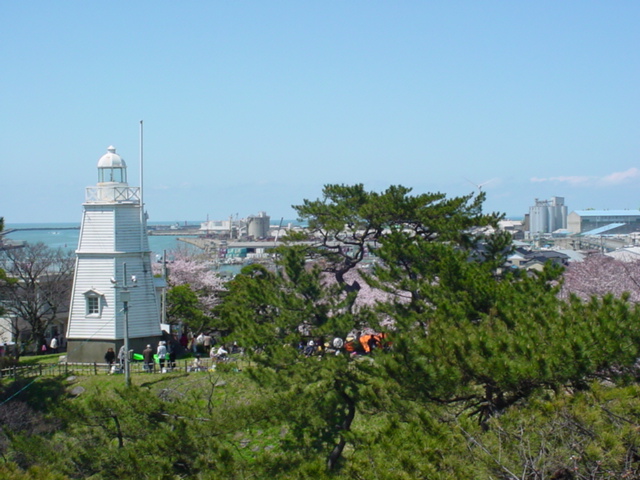
The city park introduction says the wooden hexagonal lighthouse was built at Miyanoura in 1895 and later moved. A modern lighthouse was completed in 1958; the old one lost its original role and was preserved here. Identify its six-sided body and lantern room, then look towards the port to understand night markers. View this historic building mainly from outside. It is 12.8 metres high, first used oil, changed to acetylene in 1919, moved to Ohama in 1923 and changed to electric light two years later. Those changes explain night navigation more specifically than “old lighthouse”; compare them with the body and lantern room.
The direction stone bears the twelve zodiac signs and cardinal directions to help captains assess wind and weather. Locate yourself and the harbour before reading it. A nearby half-scale sengokubune recreates a Shonai rice carrier in a pond representing the Sea of Japan coast. It turns warehouse quantities into a visible transport scale.
At the west end, a monument marks Kawamura Zuiken’s storehouse site. The city explains it through a shogunate rice storage area established in 1672. Follow storehouse site, direction stone and lighthouse to consider storage, departure decisions and night guidance. For a simple walk, rest at an appealing viewpoint rather than finding every literary monument.
Shinmeizaka climbs from Funabacho at the south on old stone steps towards Shinmei Shrine. It shows the port town’s height difference. Avoid it as a park shortcut with pushchairs, wheelchairs or painful knees. Arrive at Hiyoriyama Park stop and use the park-side entrance to avoid the harbour climb. After harbour lunch, transport can also take you to the park side before a manageable walk.
The city lists partial slopes and toilets for accessibility. Arrange the bus vehicle too for wheelchair travel: the city bus FAQ says some vehicles accept wheelchairs and others do not. Drivers set ramps, fold seats and secure wheelchairs on suitable vehicles. Capacity and roadside shape affect boarding. Give the date, service and boarding/alighting stops to the Urban Design Division’s Regional Public Transport Section, 0234-26-5756, before travel. Confirm suitable vehicles and stops, then choose manageable park routes. Return through the usable entrance rather than Shinmeizaka steps.
Change the order for sunset or cherry blossom
For a Sea of Japan sunset, put Hiyoriyama late. First finish the warehouse centre, closing 16:30, and Sanno Club, last entry 16:30. Eat during normal lunch service and rest before climbing to the park. Do not push both display visits into their final minutes while waiting for sunset.
Decide how to leave before choosing a viewing spot. Park returns jump from 15:29 to 19:49. If light, wind or next-day plans make that wait unsuitable, use your arranged taxi or walk to the station according to stamina. For Kotobukicho’s 17:21 or 17:25 service, leave earlier; whether you see the full sunset depends on that day’s sunset time. Keep the two goals flexible.
For an evening train, work backwards through bus arrival, platform finding and waiting to your park departure. The 19:49 bus is scheduled to arrive 19:55. If that misses the train, leave earlier or change transport. For a taxi, specify the park entrance and keep companions together there. In worsening weather, shorten the park stay and eat in town, retaining the daytime visits completed.
In spring, make the cherry blossom the focus. Take the direct 09:40 or 10:40 park service, view flowers, eat by the harbour and visit the warehouses last. This puts the main outdoor interest earlier with more energy and indoor reading later. For a short stay, end with the 15:29 return rather than adding an evening wait.
Plan flower viewing separately from festival attendance. Ordinary access is free and always open; use the year’s flowering conditions for blossoms. Evening events, stalls and traffic controls require that year’s festival announcement.
Warehouse illumination offers another ending: park in the afternoon, Sankyo exteriors afterwards, then accommodation. It suits an overnight stay and extra walking. If leaving for another city after a 15:29 return, keep that earlier finish. Choose the evening stop that matters so museums, lunch and travel retain some spare time.
Half-day and full-day routes with return time allowed
A full day can start at Sakata Ekimae ① at 09:40, reaching Sankyo Soko-mae at 09:57. Visit the centre, façades and trees along open paths, then walk to Minato Market for lunch. See Kasafuku and rooms at Sanno Club, then Hiyoriyama. For the 15:29 park return, keep part of the club or park visit flexible and omit the workshop.
With half a day and lunch already eaten, leave the station 12:15 and reach the warehouses 12:27. Read displays, view exteriors and continue to the park, skipping Sanno Club. The 15:29 park departure arrives 15:35. If warehouse viewing takes longer or walking is slower, end outdoors earlier and arrange return transport. Preserve time to find the stop rather than photographing every landmark.
Another short version starts with the 10:40 station departure and 10:45 park arrival, followed by harbour lunch and warehouses. For a return around 13:00, shorten visits substantially or keep only park and lunch. Finishing warehouse interiors and exteriors before the 15:19 return, arriving 15:35, gives fuller visits. Choose the starting end by your interest in warehouse displays or park time.
Wednesday still allows free warehouses and park. Eat near the station or in town, then choose Sanno Club by weather. It opens daily March–November, including Wednesdays; December–February also requires avoiding Tuesdays or substituted closures. Without Minato Market shopping, lunch need not take you down to the harbour. Concentrate walking between warehouses, Hiyoshicho and park.
In rain, assess wind first. If short walks are manageable, focus on the warehouse centre and Sanno Club, eating within restaurant hours. In strong winds or difficult surfaces, omit park and tree row and return early. On a closed winter Tuesday, only the warehouse centre remains indoors. It also closes 29 December–3 January: use short outdoor visits and town meals rather than a full day of indoor venues.
Leave time for walking from park to stop, crossings, luggage collection and platform finding. For the 15:29 return, an editorial suggestion is to head towards the stop around 15:15, earlier for a slower pace. Arrival at 15:35 still requires your own connection allowance. For sunset, replace the early-finish schedule with chosen evening transport and agree a meeting point with everyone.
A few useful answers
Which parts of Sankyo Warehouses are open?
The centre and toilets in No. 12 are open; other warehouse, office and research-room interiors are closed. The free centre opens 09:00–16:30, closed 29 December–3 January. Exteriors can be viewed throughout the day.
Is Sanno Club ¥490 or ¥1,000 in 2026?
General individual admission is ¥1,000 during the Kasafuku exhibition, 27 February–14 November 2026. Ordinary ¥490 admission applies outside special exhibitions. Senior-high pupils pay ¥240; primary and junior-high pupils ¥140.
Can I eat at Minato Market on Wednesday?
The city lists Wednesday closure for its food and retail shops. Eat and shop near the station or in town. Check neighbouring Sakata Kaisen Ichiba businesses separately; do not mix the buildings’ schedules.
Does every bus stop at Hiyoriyama Park?
No. The April 2026 outbound timetable lists park stops for station departures 09:40, 10:40, 13:30 and 17:50. Otherwise walk from Kotobukicho, officially about five minutes plus crossings and navigation.
Is there a station bus after sunset?
The April 2026 timetable lists park 19:49, station 19:55; this is the next park service after 15:29. For an earlier return, use Kotobukicho 17:21 or 17:25, walk or arrange a taxi. Match sunset and train times.
Can a pushchair use Shinmeizaka?
Shinmeizaka has stone steps. With a pushchair or difficulty climbing, use the park-side entrance. The city lists partial slopes and toilets. Avoid the steps as a harbour shortcut.
Does admission include Kasafuku making?
The workshop costs ¥1,650 per person plus admission, by reservation. During the 2026 exhibition, one general adult admission and workshop costs ¥2,650.
Should I buy a bus booklet for two rides?
Two adult rides cost ¥400, or ¥200 for a primary-school child. Ten ¥200 tickets cost ¥1,500. Compare your confirmed rides. A ¥100 passenger gets no difference back from one ticket, and two people cannot share it.
Official information and references
Sources used in this guide.
- Sakata City: Sankyo Warehouses
- Sakata City: Hiyoriyama Park
- Sakata City: timetables from April 2026
- Sakata City: Minato Market
- Sakata City: Sanno Club
- Sakata City: April 2026 bus towards Nihonkai General Hospital
- Sakata City: April 2026 bus towards Sakata Station
- Sanno Club: 2026 Kasafuku prices and opening days
- Sanno Club: rooms and permanent displays
- Sanno Club: Kasafuku workshop
- Sakata City: wheelchair boarding, change and delays
- Sakata City official: Sankyo Warehouses walk (2021)