Choose where to eat in Osaka around the meals and snacks you want. Compare Dotonbori, Kuromon Market, Umeda, Shinsekai and Tenma, with ordering tips for okonomiyaki, takoyaki and kushikatsu, Ajinoya FastPass rules, family seating, vegetarian food and meal budgets.
- Region & Focus
- Osaka
- Reading Scope
- 32 min read · 16 chapters · 5 Q&As
- Official Verification
- 17 official sources checkedUpdated 26 October 2026
- Key Topics
- FoodNeighbourhoodsBooking
Chapter Route Map (tap any stop)
- Decide what you need from the meal, then choose the neighbourhood
- Takoyaki, okonomiyaki and kushikatsu: leave enough appetite for each
- Dotonbori and Sennichimae: build an evening walk around one main meal
- Wanaka Sennichimae Main Shop: start small when trying the flavours
- Ajinoya Main Shop FastPass: paying for priority in the queue
- Dotonbori Imai Main Shop: save noodle soup for a meal when you need a seat
- Kuromon Market: browse by day and find somewhere to eat before buying
- Eating in Umeda on a rainy day: stand at Snack Park or choose a restaurant floor for seats
- Kushikatsu in Shinsekai: two Daruma branches with very different seating and booking rules
- Tenma and Tenjinbashisuji: allow time to choose a restaurant
- For yakiniku and Korean food, choose the streets around Tsuruhashi Station
- Solo diners, children and older relatives: decide on seating first
- Vegetarian diets, avoiding pork and allergies: ask about stock, batter and oil
- From arrival to payment: ask about portions, eating arrangements and charges first
- Budget for the main meal first, then snacks and drinks
- One day or two evenings: divide the food and journeys this way
- Quick Q&A
With only two or three nights in Osaka, meals can be the hardest part to get right. You spend the afternoon eating takoyaki and market seafood, then remember you have already paid for priority entry to an okonomiyaki restaurant that evening. Or you join a queue in Shinsekai, only to find that an older relative needs a seat and the children are hungry. For a first visit, set aside one main meal for okonomiyaki or kushikatsu and have takoyaki as a snack. Use udon, set meals or department-store restaurants for the meals when comfort matters most. Start with Dotonbori and Sennichimae if you are staying in Namba; in Umeda, keep Hanshin Umeda Main Store as a rainy-day option. Visit Kuromon Market during the day, fit Shinsekai around time in the Tennoji area, and save Tenma for a meal that gives you a reason to explore another neighbourhood. Putting meals in the right place matters more than the number of famous restaurants you tick off.
Decide what you need from the meal, then choose the neighbourhood
Be specific about what your group needs from this meal. Do you want to sit down for a full lunch, eat quickly before the next train, or spend the whole evening browsing shops and choosing a restaurant? If seats, air conditioning and toilets are the immediate priority, start with a department store’s restaurant floor. If you want illuminated signs and waterfront views after dark, Dotonbori lets you combine dinner with a walk. If you have already eaten and just want an Osaka snack, pick one shop in the same area, eat, then carry on.
If the two of you like different food, agree on a main meal you both want, then add a small dish that one person particularly wants to try. At a market, someone who wants seafood and someone who prefers cooked food can buy separately, but you still need time to sit down together. If someone finds fried food heavy, avoid following kushikatsu with another meal cooked on a griddle. These choices affect how much you will want to eat that evening and whether a detour to a famous restaurant is worthwhile.
Use the table below to remove unnecessary stops. If the day already includes sights in two different areas, eat in one of them. Make a restaurant the day’s destination only when you are travelling specifically for a dish. For transport, see the three-day Osaka itinerary; for places to shop, use the Osaka shopping neighbourhood guide. Dinner need not mean another journey across the city.
| What you need | First-choice area or venue | How to plan it |
|---|---|---|
| Snacks and night views together | Dotonbori and Sennichimae | Choose one main meal and start the rest with a single snack |
| Browse ingredients and buy small amounts | Kuromon Market | Visit during the day; find somewhere to eat before buying |
| Rainy weather or different food preferences | Hanshin Umeda Main Store | Choose a restaurant floor for seats or Snack Park for standing dining |
| Kushikatsu as a main meal | Shinsekai | Choose between queuing at the main shop and booking a branch with tables |
| Shopping streets and everyday restaurants | Tenjinbashisuji Shopping Street and Tenma | Choose one stretch for a main meal and a short walk |
Choose where to eat in Osaka around the meals and snacks you want. Compare Dotonbori, Kuromon Market, Umeda, Shinsekai and Tenma, with ordering tips for okonomiyaki, takoyaki and kushikatsu, Ajinoya FastPass rules, family seating, vegetarian food and meal budgets.
Takoyaki, okonomiyaki and kushikatsu: leave enough appetite for each
Takoyaki works well as a snack between meals. If you have a dinner booking, buy one portion to share, then decide whether to order more. This leaves more room than buying a portion each. The filling is very hot when freshly cooked: stop, separate the pieces and let them cool a little before eating. Secure the tray before taking photographs, rather than walking through a crowd with a skewer while looking for an angle. When travelling with children, an adult should carry the hot food and use the eating area provided by the shop.
Okonomiyaki is better treated as a main meal. Read the basic ingredients first, then the extras: pork, seafood, mixed fillings and versions with noodles differ in size. For a first meal for two, check the minimum order per person, then consider one okonomiyaki with another main dish or something else from the griddle. If the restaurant requires one dish per person, order accordingly; sharing does not let you order less at every restaurant. Where staff cook the food at the table, let them finish before you start.
You can order kushikatsu, deep-fried skewers, one at a time or choose a set. If you have a small appetite, check how many skewers and side dishes the set includes. If it already comes with a simmered side dish, there is no need to order another just because it is a local speciality. For variety, alternate vegetables, meat and seafood. If you only want a few skewers as a snack, find a restaurant that accepts that type of order before booking a plan that requires a set per person.
Udon or a rice bowl makes a useful meal between these richer dishes. If you want an early return to your accommodation, have just eaten at a market, or have a child who wants familiar rice or noodles, replace the second snack stop with a restaurant where you can sit down. You do not need to fill every meal in Osaka with signature snacks. A simple rice or noodle meal leaves more room to choose something you really want at the next meal.
Dotonbori and Sennichimae: build an evening walk around one main meal
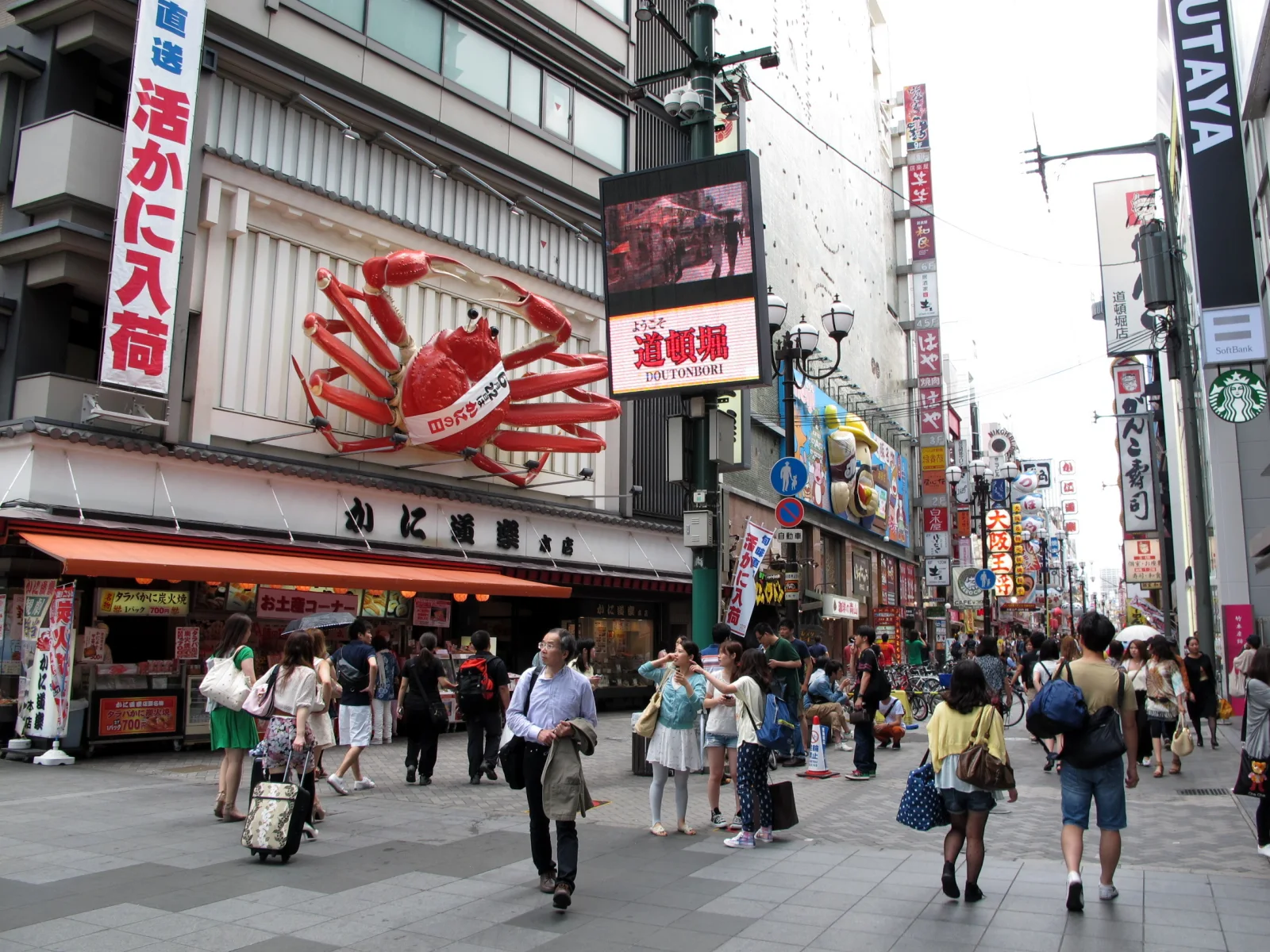
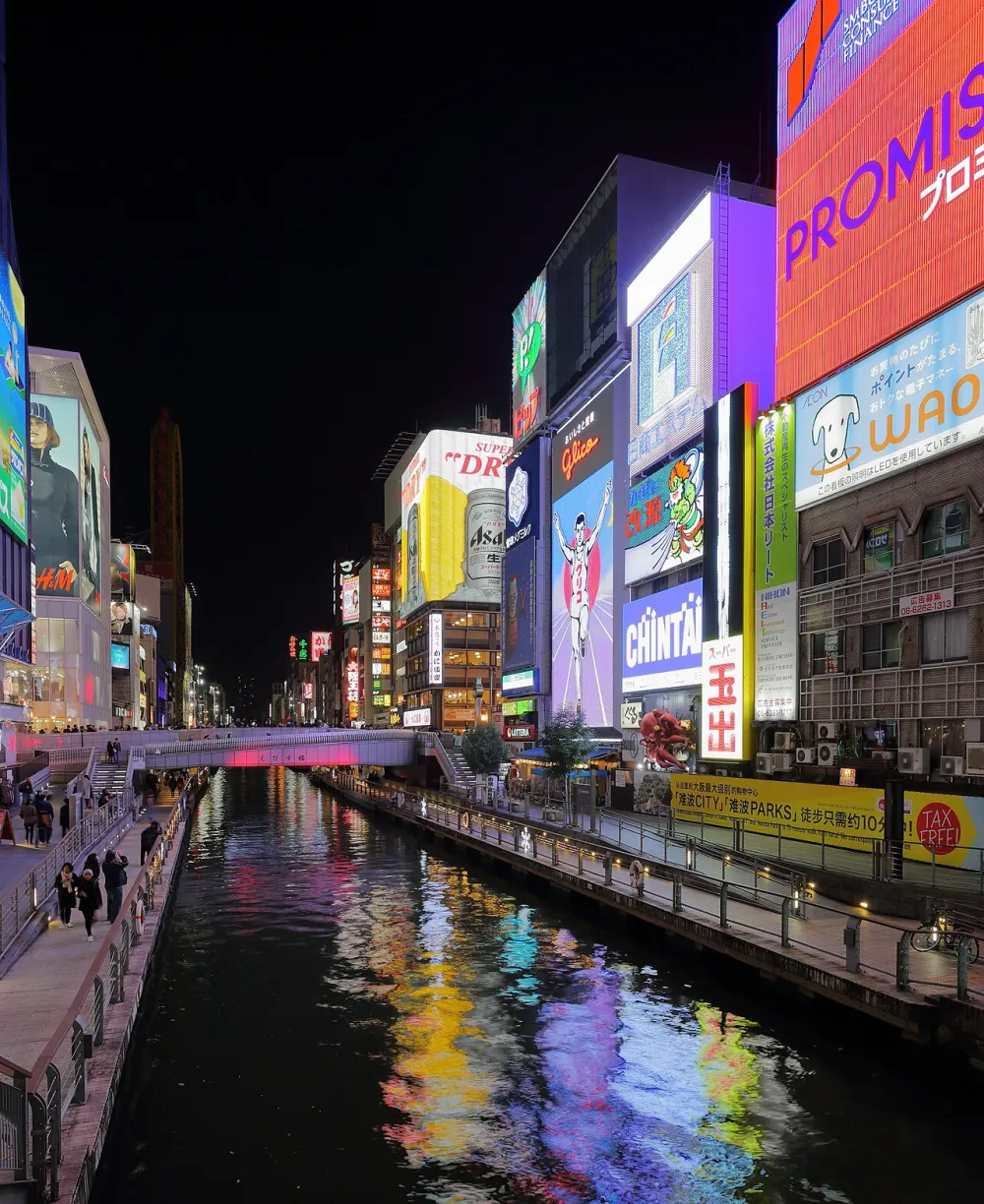
Dotonbori suits a first visit if you want riverside views and giant signs straight after dinner. The Osaka Convention & Tourism Bureau’s Dotonbori guide covers the restaurant streets and Tombori Riverwalk in the same area. Fix the location of your main meal first, then decide whether to walk beside the river before or after it. Avoid treating Namba Station, the restaurant, Ebisu Bridge and the shops as separate starting points that each require a return journey.
You can combine Sennichimae and Dotonbori in one evening, but decide the order of the food stops first. If okonomiyaki is the main meal, have just one portion of takoyaki in the afternoon. If you want udon for dinner, save the griddle dishes for another day. Divide your saved restaurants into those you really want to try and those you might try if passing. Leave the second group on the map without assigning fixed times. Then you can leave an overlong queue without one missed dish disrupting the whole evening.
If you need to meet your companions before eating, specify the restaurant and entrance rather than simply saying “meet in Dotonbori”. The same street can have upstairs restaurants, takeaway counters and several branches. Send the full name, address and floor in advance. The restaurant decides whether part of a group can be seated before a late arrival. If you have bought priority entry that requires the whole party to be present, meet first and arrive together.
Do shopping that needs fitting rooms or price comparisons before dinner, then walk by the river afterwards. If you have only one evening in the Minami area, concentrate on one meal and one walk.
Wanaka Sennichimae Main Shop: start small when trying the flavours
The Takoyaki Doraku Wanaka website lists the Sennichimae Main Shop and explains that its takoyaki contains wheat flour, dashi stock, spring onion, salted ginger and tempura batter scraps. Seasoning options include its special sauce, kettle-cooked salt and dashi soy sauce. Start with the standard sauce if that is the flavour you like; choose a simpler seasoning if you want to compare the batter and stock.
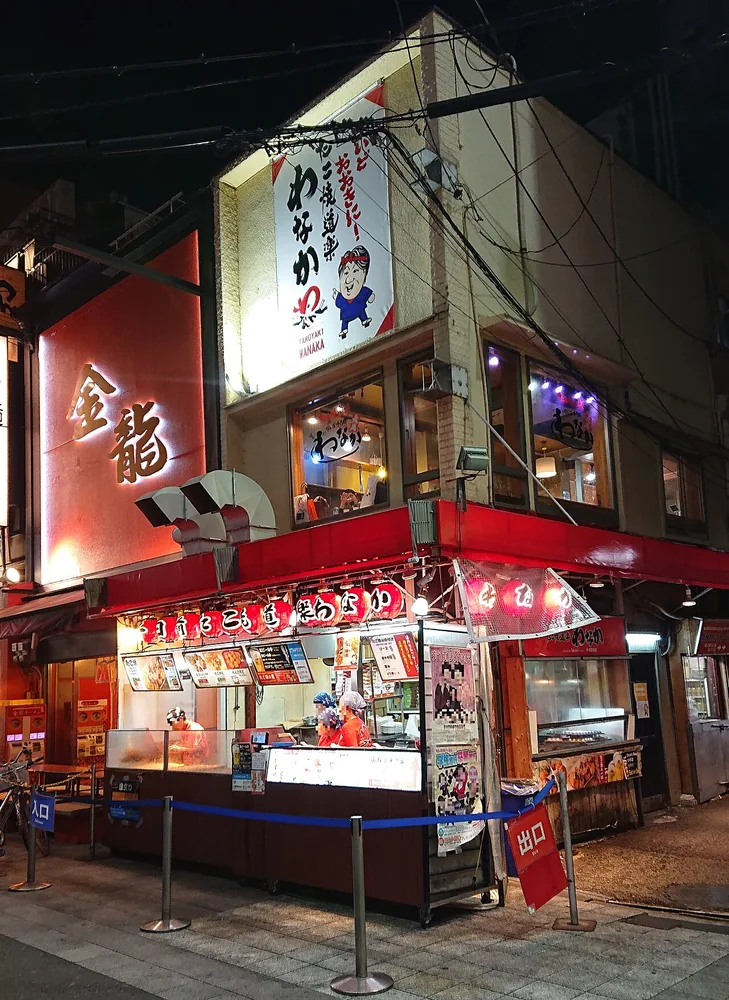
If two of you plan to eat okonomiyaki afterwards, share one portion first. Sort out any shopping bags before taking the hot food.
If you are elsewhere and simply want takoyaki, use the brand’s official shop information to find a branch along your route. Choose the main shop for a Minami dinner plan if you also want to see the Sennichimae streets. The website has previously warned of queues at particular branches during limited collaborations, showing how events can affect the wait. When you see a queue, ask how it works and roughly how long it will take before deciding whether to stay or try somewhere else.
Wanaka’s official introduction to its Sennichimae Main Shop accompanies the advice here on flavours and meal planning in Minami.
Ajinoya Main Shop FastPass: paying for priority in the queue
If okonomiyaki will be one of your trip’s main meals, look at the Ajinoya Main Shop website and the TableCheck FastPass page it links to directly. As of 26 October 2026, the page lists a fee of ¥660 per person, with food paid for separately at the restaurant. At the specified time, you can move towards the front of the queue, then enter when seats become available. Leave a buffer if you have an event afterwards that starts at a fixed time.
One FastPass purchase covers one to four people, including children and infants. Once purchased, the date, time and party size cannot be changed directly; the fee is also non-refundable if you cancel. Arriving more than 15 minutes after the specified time invalidates the pass. Two adults with two children must buy for four people; a party of five needs a restaurant or arrangement that accepts five. Agree on these conditions before purchasing, particularly if flights are not yet booked or you have a long journey that day. At busy times, meals are limited to 90 minutes, with last orders 60 minutes after entry. If you want to eat slowly, keep the next part of your itinerary flexible.
Joining the regular queue remains an option if you are willing to wait and have no other fixed plans that evening. Agree on a maximum wait with your companions, ask staff when you arrive, then decide whether to stay. Avoid having one person queue while everyone else shops separately, leaving you to find them when your turn comes. To buy priority entry, use the link from the official website, which states that AutoReserve is not accepted.
The main shop is at 1-7-16 Namba, on 2F. The FastPass page also requires suitcases to be stored elsewhere and the whole party to be present. It fits an evening after you have left your luggage at the hotel better than a direct visit with suitcases after landing. The fee makes sense if you specifically want this restaurant and accept its time limits and restrictions on party size. If you simply want okonomiyaki, a nearby restaurant with seats available may fit the day better.
Dotonbori Imai Main Shop: save noodle soup for a meal when you need a seat
For a break from consecutive meals of fried food and rich sauces, consider Dotonbori Imai Main Shop for rice or noodles in Minami. It is at 1-7-22 Dotonbori. The website lists regular dishes including kitsune udon, topped with fried tofu, nabeyaki udon served in a hot pot, and oyakodon, a chicken-and-egg rice bowl. As of 26 October 2026, kitsune udon costs ¥930 including tax, and oyakodon with clear soup costs ¥1,500 including tax. Two bowls of kitsune udon cost ¥1,860 before any additional dishes or drinks.
The main shop’s usual hours are 11:30–21:30, with last orders at 21:00. It closes on Wednesdays, except public holidays, and on the fourth Tuesday of the month except in December. Last orders for hot-pot dishes are at 19:30. Plan an earlier dinner for hot pot, or use the relevant ordering times for rice and noodles. The restaurant accepts cash, electronic payments and credit cards; contact the branch directly for telephone reservations. These specific conditions are more useful than assuming every Dotonbori restaurant serves late into the night.
The tofu topping on kitsune udon is only part of the ingredient list: look at the broth too. Imai’s dashi explanation lists natural ma-kombu kelp, mackerel flakes and round herring flakes, while its production process also uses soda bonito flakes. Vegans, people avoiding fish and anyone with a fish allergy should choose other dishes and restaurants that meet their needs. If you enjoy dashi and want a proper meal between shops, eat here before the riverside walk, then decide where to go according to how much energy you have left.
Kuromon Market: browse by day and find somewhere to eat before buying
Kuromon Market suits visitors interested in fresh fish, prepared food and ingredient stalls. The official shop directory separates fresh fish, meat, fruit and vegetables, dining and sweets, and lets you filter for places with eat-in facilities. Each shop sets its own hours. If you want a meal here, choose a few shops from the directory first and visit during the day. Setting out specifically for dinner can mean missing the ingredient stalls you wanted to see.
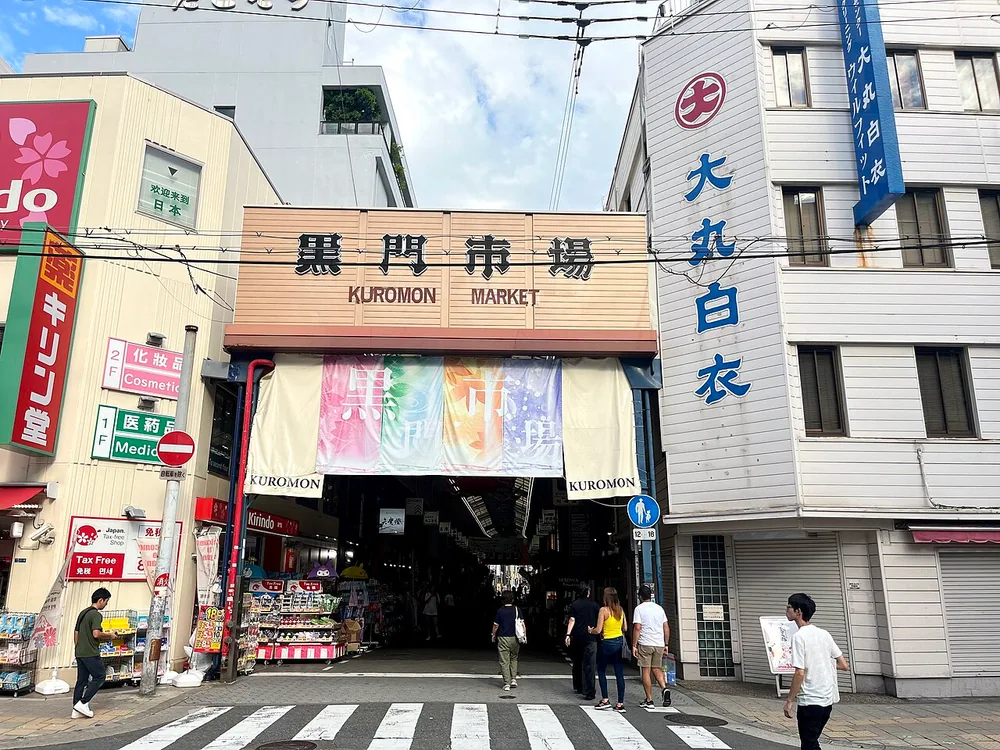
Browse a short stretch to compare, then return for the item you most want. Check whether a price is per piece, skewer, tray or unit of weight. If you want the shop to grill it, cut it up or add toppings, ask for the final price first. When sharing expensive seafood, agree whether it is a tasting or lunch, rather than discovering afterwards that you still need a full meal. Choosing one main purchase usually makes the budget easier to manage than buying the smallest portion at every stall.
Ask where you can eat before choosing takeaway or eat-in food. Use the eating space provided by the shop you buy from, then return containers and skewers to its designated disposal point. Keep the passage in front of shops clear and leave other seats for their customers. Browse, choose, buy, stop to finish the food, then browse again. You will spend less time carrying broth and rubbish.
With a young child or pushchair, find a meal where everyone can sit comfortably before deciding on snacks. If one adult is carrying food and the other is looking after the child, buying from several stalls soon becomes hard work. Keep the market visit to browsing ingredients and trying one food, then have lunch in a restaurant with tables. The same approach works when an older relative is tired.
Plan food shopping separately from eating seafood on the spot. Carry chilled purchases as directed by the shop and packaging, and avoid a full afternoon of shopping before returning to your accommodation. If you cannot keep an item at the required temperature, eat it there or choose something that can be stored at room temperature. For food gifts, check the destination’s import rules too. Buying ingredients just for a photograph, with nowhere to prepare or store them, takes up luggage space and complicates an otherwise easy meal.
If you are going to Dotonbori the same day, keep the Kuromon meal from taking away your appetite for dinner. Focus on one or two market foods, shop or rest indoors in the afternoon, then have a main meal in the evening. If the market leaves you very full, change dinner to udon or a simple meal near the hotel. Keeping that flexibility is easier before you have paid for a dining arrangement that cannot be changed.
Eating in Umeda on a rainy day: stand at Snack Park or choose a restaurant floor for seats
Consider Hanshin Umeda Main Store if you are staying in Umeda, changing trains or escaping the rain. Snack Park on B1 is a standing dining area. Its official shop list includes noodles, rice bowls, okonomiyaki, takoyaki and the Hanshin speciality ikayaki, a squid pancake. It is convenient for two people who want different food and a short stop. After a full day on your feet, head straight to a restaurant floor if you need a seat.
Ikayaki can be one of the day’s snacks. On your first order, look at photographs of the food and the flavour choices before adding anything else. Check the eat-in and takeaway options and tell staff how you intend to eat. To try several things, one person can start with a main dish and the other with a small portion, then add more afterwards. Filling a tray each at the start often leaves the later shops as places you merely looked at.
The same building has other dining areas, including Hanshin Daishokudo on 9F. Use the official dining guide to search by floor. If someone needs table seating, a longer rest or a children’s meal, look at the restaurant’s menu and seating first. Buying food and then trying to use another business’s tables is harder to arrange. Department stores also have set closing times. If you arrive late, check the dining area and individual restaurant’s last orders rather than calculating from the retail floors’ opening hours.
On a rainy day, combine a Umeda meal with shopping in the same area. If your only reason for going to Dotonbori was a portion of takoyaki, eating it in Umeda saves a return journey and a walk in the rain. If you particularly want the Dotonbori night views, keep lunch in Umeda simple and go on an evening when the weather and your energy allow. Change areas for something you want to do, rather than for another tick on a list.
Kushikatsu in Shinsekai: two Daruma branches with very different seating and booking rules
For a meal built around kushikatsu and the Shinsekai streets, go for lunch or an early dinner after visiting the Tennoji area. Choose the restaurant first, then decide how long to walk around. If everyone is very hungry, eat before photographing the streets around Tsutenkaku. If you simply want the same brand’s kushikatsu and all your plans are in Namba, a branch along your route will take less effort.
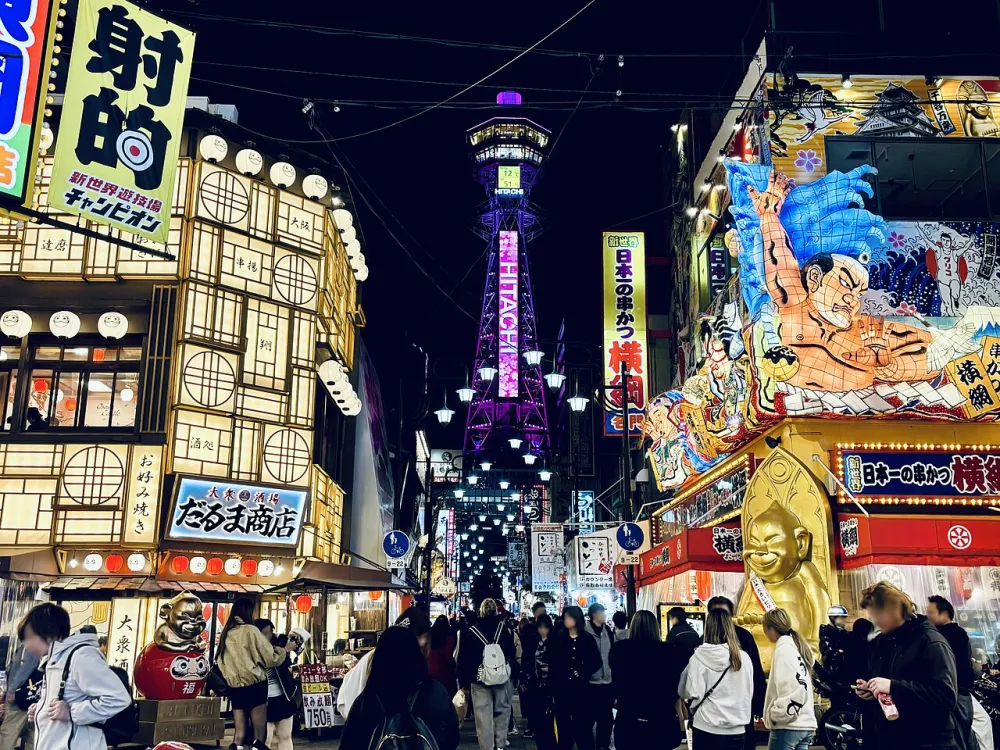
Kushikatsu Daruma Shinsekai Main Shop is at 2-3-9 Ebisuhigashi. The official listing gives 12 counter seats, no reservations and cash payment only. Each person must order at least one drink, except primary-school pupils and younger children. It suits a small group that wants counter dining and accepts a walk-in wait. If you need a table for four or want firmer meal timings, compare branches that offer tables and reservations.
The Janjan branch, at 3-4-4 Ebisuhigashi, lists 49 seats, including 36 at tables, and accepts reservations for two or more people. Each person on a reservation must order a set menu, and the 90-minute dining limit runs from the reservation time. Reservations are not accepted during busy periods such as the year-end and New Year period, Golden Week and Obon. Book only if the set-per-person requirement and time limit suit you. If you want to share just a few skewers, use a walk-in arrangement that follows the branch’s rules. Provide a telephone number where you can be reached. If the restaurant cannot contact you the day before, or you fail to arrive as booked, it may charge a cancellation fee equal to the set-menu price for the whole party.
Compare food, drinks and booking conditions together. If you choose a set with many skewers, eat fewer snacks beforehand. A 90-minute reservation may not suit a long evening of conversation and drinks. Looking only at the brand name can lead you to assume that the main shop also takes online bookings. Save the full branch name on your map and tell everyone the actual meeting address.
Follow the restaurant’s current instructions for sauces and serving. Put skewers, empty plates and shared utensils in the designated places. Let hot food cool before giving it to children, have an adult help serve it, and keep children out of the serving aisles. If you have a train later that evening, allow time to pay, walk back to the station and find the platform. The restaurant’s last-order time is not your latest practical arrival time.
Tenma and Tenjinbashisuji: allow time to choose a restaurant
If you already have market snacks and famous restaurants covered and want to see another side of everyday Osaka, try Tenma and Tenjinbashisuji Shopping Street. The Osaka Convention & Tourism Bureau’s shopping street guide lists access from JR Temma Station, Ogimachi, Minamimorimachi and Tenjimbashisuji 6-chome stations. This is a long shopping street: for a meal, choose one stretch rather than walking its full length. Use the station nearest your restaurant and save your legs for the evening walk.
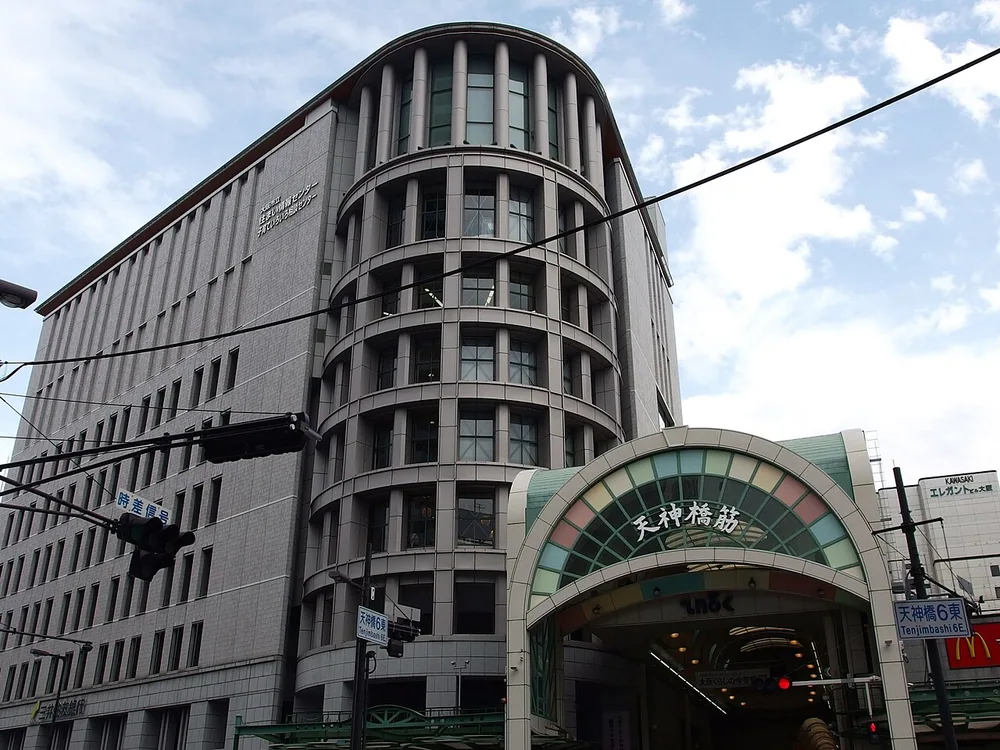
Decide whether you want a full meal or drinks before choosing a restaurant. For dinner, look for clear information on main dishes, set meals and non-smoking arrangements. For drinks, check table seating, minimum spending per person, drink prices and charges for small dishes. If you encounter “otoshi” for the first time, ask whether there is a fixed charge for the small starter. A dish brought to the table without an order may not be complimentary. It is easier to ask before going in than to dispute the bill after eating.
This area suits people who enjoy choosing a restaurant as part of the visit. If you already have three sights that day and just want dinner on time, choose somewhere near your accommodation whose menu you have already checked. If you want to browse shopfronts and the shopping street, one main meal and a walk are enough. If the restaurant you want is full, find an alternative along your chosen short stretch rather than walking ever farther and ending up hungry on a train back to Umeda.
For yakiniku and Korean food, choose the streets around Tsuruhashi Station
If your companions are less interested in takoyaki and okonomiyaki and would prefer grilled meat, consider Tsuruhashi for dinner. The Osaka Convention & Tourism Bureau’s Tsuruhashi Market guide lists yakiniku restaurants, Korean food shops and dried-goods shops beside the station. The JR Osaka Loop Line, Kintetsu and Osaka Metro Sennichimae Line all serve Tsuruhashi Station. Choose a restaurant near the station, then decide whether to browse the market. Let yakiniku replace that evening’s planned kushikatsu.
Compare à la carte and all-you-can-eat yakiniku according to your appetite. For à la carte, check the size of each meat portion and whether rice and soup cost extra. For all-you-can-eat plans, check the included cuts, drinks, dining limit and last-order time. À la carte can be easier to control if two of you only want a few types of meat. Choose all-you-can-eat if you have a large appetite and want the cuts included in the plan. Compare the total menu price rather than assuming every cut shown in promotional photographs is included at one price.
Browsing the market by day and eating yakiniku in the evening can be separate plans. Each Tsuruhashi business sets its own hours and days off. If Korean food shopping is the main purpose, visit the shops you want during the day and stay nearby for dinner. If you only want yakiniku, arrive for the restaurant’s hours and skip an unnecessary market walk. If you buy kimchi or fresh food that needs chilling, return to your accommodation after the meal to store it instead of continuing with a long shopping trip.
Solo diners, children and older relatives: decide on seating first
When travelling alone, be clear about portion sizes. Buy the smallest takoyaki portion available, treat okonomiyaki as a full main meal, and check whether the kushikatsu restaurant accepts individual skewer orders. Spread different flavours over two or three days rather than eating at several places in one evening. Join the queue as a party of one under the restaurant’s rules; an empty counter seat does not let you pass people ahead. For a quick meal, choose straightforward main dishes and payment rather than a set menu you need to study after arrival.
With children, ask first whether the restaurant can seat your whole party together, where the pushchair can go and whether suitable food is available. Reputation comes afterwards. Griddle dishes have a heat source at the table, and freshly served kushikatsu and takoyaki are hot. An adult should portion the food and keep hot dishes clear of the children’s space. If a child is unfamiliar with sauces, seafood or fried food, give them rice or noodles they will eat before adults add their preferred snacks. When everyone is hungry, a meal with seats is the priority.
For older relatives, assess waiting, standing to eat and climbing stairs separately. Snack Park is convenient but has standing dining, Ajinoya Main Shop is on 2F, and Daruma’s Shinsekai Main Shop has counter seats. Look at entrances, floor numbers and chair types in photographs and restaurant information. For specific step-free or wheelchair access needs, ask the restaurant about the route from entrance to seat and make a booking once you have a workable arrangement.
The group does not have to share every snack stop. Eat a main meal together, then those who want takoyaki can buy a portion while the others rest nearby. Agree on a meeting place and departure time so everyone need not queue at every shop. If a child becomes sleepy or an older relative is tired, drop the extra snack. The main meal and route back to your accommodation still work.
Vegetarian diets, avoiding pork and allergies: ask about stock, batter and oil
Osaka snacks have several ingredients worth asking about individually. Wanaka states that its batter contains wheat flour and dashi, while Imai’s stock contains fish flakes. Daruma’s allergen information lists wheat, yam and soya in the coating, and lists beef under frying oil. If you are vegetarian, are avoiding beef or have a relevant allergy, ask about these ingredients rather than judging a dish by its vegetables or tofu topping.
Write your requirements in terms of ingredients so staff can answer clearly. If vegan, specify no meat, fish, eggs or dairy, including fish stock and animal fat. If avoiding pork, include lard, meat stock and processed meat. Make clear whether avoiding an ingredient is a preference or an allergy. Asking only for the bonito flakes on top to be left off can leave the original batter, sauce and stock unchanged.
For a food allergy, ask the person responsible at the restaurant about the ingredients you cannot eat, shared frying oil and utensils, then choose a meal once the answers are clear. Japan’s Consumer Affairs Agency allergy information and eating-out materials distinguish packaged-food labelling from information for restaurant meals. Allow enough time for these questions. If a busy snack counter can do little more than take shouted orders and cannot explain its ingredients, choose a restaurant you can contact in advance.
Kuromon Market’s official directory has vegetarian, vegan and halal filters. Use them to narrow the search, then look at each shop’s suitable dishes and how they are served. If someone in your group has strict dietary requirements, book a main meal they can eat first and arrange everyone else’s snacks in the same area. Avoid waiting until everyone has bought food before starting to find something for that person.
From arrival to payment: ask about portions, eating arrangements and charges first
If you cannot read the menu, point to a photograph of the dish and ask whether it is for one person, how many pieces or skewers it contains, and whether rice, soup or a drink is included. Side dishes in a photograph may belong to a different set; match the name to the contents before ordering. To ask about sharing, say “シェアしてもいいですか” and follow the restaurant’s answer. If each person must order a main dish, set or drink, decide those individual orders before adding shared sides.
Use “持ち帰り” for takeaway and “店内で” for eating in. If carrying hot food while walking will be awkward, ask whether there is a designated place to eat. To take food back to your accommodation, check whether takeaway is offered and how long preparation takes. Fresh okonomiyaki, noodle soup and kushikatsu need different packaging. Let the shop pack them properly, then keep the food level. If you will continue shopping with it, choose something that will not spill and that you can store as required.
Some shops take payment at a ticket machine or counter before serving; others take orders at the table and present a bill at the end. Follow staff directions on arrival and prepare coins if a machine takes cash only. Card acceptance at another branch does not establish this branch’s payment options. If separate payment matters, ask before ordering. When sharing many dishes, it is often easier for one person to pay and for the group to divide the cost after leaving.
If you want to photograph the interior or food preparation, ask staff and stay out of serving routes. Start eating once you have photographed the food on your table; everyone need not wait until all the photographs are finished. If a dish differs from what you expected, check its name and the order, then ask staff to explain. Keeping the restaurant, branch, dish and portion clear also makes it easier to record your travel spending later, rather than ending up with an unidentified payment.
Budget for the main meal first, then snacks and drinks
The easiest Osaka food costs to miss are accumulated snacks and booking fees. List the meal you most want each day, then add the other main meals, drinks and snacks. Include paid priority entry, a drink per person or a required set menu in the relevant meal’s total. The budget need not be divided evenly: keep lunch simple if an evening is set aside for okonomiyaki, or have fewer other snacks on a day when you want expensive market seafood.
Two of the options above show the difference. At the prices on Imai Main Shop’s page on 26 October 2026, two bowls of kitsune udon total ¥1,860. Two people using Ajinoya FastPass pay ¥1,320 in fees alone, with food extra. One is a main meal whose price you can calculate directly; the other buys priority entry. If you have no particular preference for that restaurant, the fee could go towards another meal. If that meal is a highlight of the trip, include it in the total budget from the start.
Before entering a market, decide how much you are comfortable spending and deduct each purchase once you know the final price. Avoid comparing price tags that use different units, or feeling obliged to buy something on every stretch simply because you came to the market. If two of you share a budget, have one person record the food already bought. Otherwise, both may buy a portion while each assumes the other is only taking photographs.
Choose drinks, extras and portion sizes before working out how much cash you need. Payment options vary between branches; the main shop’s cash-only rule is one specific example. An IC card used for transport is useful only if the restaurant accepts it. Keep receipts together after eating and adjust the next day to your actual appetite. That is easier than imposing the same daily food budget on plans that differ.
One day or two evenings: divide the food and journeys this way
If you have only one Osaka evening and are staying in Namba, stay in Minami. Finish shopping and store luggage in the afternoon, then have a snack or go straight to okonomiyaki in the early evening before walking by the Dotonbori waterfront. If you have chosen Ajinoya FastPass, work backwards from its time to arrange your meeting, and skip a large Kuromon seafood meal beforehand. If you are staying in Umeda and need an early start the next day, eat in Umeda, then decide whether you have the energy to travel to Minami for the night views.
With one full day and two evenings, save the first evening for Dotonbori, choose Kuromon Market or the Tennoji area during the day, then spend the second evening in Umeda or Tenma according to where you are staying. Choosing between Kuromon and Shinsekai makes portions easier to manage: the former is for browsing ingredients and buying small amounts; the latter combines a kushikatsu main meal with the streets around it. If you really want both, choose just one market food during the day and have kushikatsu as an early dinner, without adding another okonomiyaki meal.
For a three-day Osaka stay, you can vary the evenings between okonomiyaki in Minami, kushikatsu around Tennoji, and rice or noodles in Umeda or Tenma, rather than repeating the same snack list nightly. If you eat more than expected one day, make the next meal a simple main dish. After a late start, visit Kuromon closer to lunchtime and skip a later snack. After a late flight, eat near your accommodation and save the market for daylight.
In heavy rain, replace grazing around Minami with one restaurant where you can sit, or choose a floor of indoor dining in Umeda. Store luggage before visiting a restaurant that restricts suitcases. If a queue exceeds the wait you agreed on, use a saved alternative in the same area. For your last Osaka meal, choose rice, noodles or a set meal whose timing you can judge. Leave enough time afterwards to collect luggage and catch transport, rather than testing your flight margin against a queue you have not asked about.
A few useful answers
Where should I eat on a first visit to Osaka?
If you are staying in Namba and want dinner followed by night views, start with Dotonbori and Sennichimae. If you are staying in Umeda, it is raining or you want to eat locally, consider the dining areas at Hanshin Umeda Main Store. Choose a restaurant floor if you need seats; Snack Park has standing dining.
Is Kuromon Market suitable for dinner?
Visit during the day for fresh fish, meat, fruit and vegetable stalls, when the shops you want are more likely to be open. Each shop sets its own hours, so choose from the official directory before deciding when to go. Have your evening main meal in Dotonbori or near your accommodation.
Does Ajinoya Main Shop FastPass include food?
As of 26 October 2026, the TableCheck page linked from the official website lists a ¥660 fee per person, with food paid for separately at the restaurant. It gives priority in the entry queue. Each purchase covers one to four people, including children and infants.
With children, should I choose Daruma’s Shinsekai Main Shop or Janjan branch?
The main shop has 12 counter seats, takes no reservations and accepts cash only. Janjan has table seating and accepts reservations for two or more people. Each person on a reservation must order a set menu, and the 90-minute limit runs from the reservation time. If you need a table together and a fixed meal slot, check Janjan’s available reservation dates first.
Are kitsune udon and vegetable kushikatsu suitable for vegans?
Check the stock, coating and oil first. Imai’s dashi uses fish flakes. Daruma’s published information lists wheat, yam and soya in the coating, and beef under frying oil. Vegans should choose suitable dishes from a restaurant that can clearly explain its ingredients and preparation.
Official information and references
Sources used in this guide.
- Osaka Convention & Tourism Bureau: Dotonbori and the riverwalk
- Takoyaki Doraku Wanaka: official shops, takoyaki ingredients and seasonings
- Ajinoya: main shop and official FastPass link
- Ajinoya Main Shop: shop information
- Official link from Ajinoya Main Shop: TableCheck FastPass terms
- Dotonbori Imai Main Shop: dishes, prices, hours and payment methods
- Dotonbori Imai: dashi ingredients and production
- Kuromon Market: official shop directory, eat-in and dietary filters
- Hanshin Umeda Main Store: Snack Park shops and standing dining
- Hanshin Umeda Main Store: Hanshin speciality ikayaki
- Hanshin Umeda Main Store: restaurant and café guide
- Kushikatsu Daruma Shinsekai Main Shop: seating, reservations, payment and drink rules
- Kushikatsu Daruma Janjan branch: seating, set-menu reservations and time limit
- Kushikatsu Daruma: ingredients and allergen information
- Osaka Convention & Tourism Bureau: Tenjinbashisuji Shopping Street and access
- Osaka Convention & Tourism Bureau: Tsuruhashi Market, food, yakiniku and access
- Consumer Affairs Agency, Japan: food allergy information and eating-out materials