Autumn colour in Nasu sweeps down from Mount Chausudake towards Omaru, Yumoto, and Komadome Falls. Plan ropeway fares, the Ubagadaira trail, bus connections from Tokyo, Minamigaoka Dairy, and Shiobara's Momijidani Suspension Bridge.
- Region & Focus
- Nasu
- Reading Scope
- 23 min read · 12 chapters · 6 Q&As
- Official Verification
- 34 official sources checkedUpdated 22 November 2026
- Key Topics
- SeasonsItinerariesHot springs
Chapter Route Map (tap any stop)
- Autumn Colour Sweeps Down from Mount Chausudake
- Nasu Ropeway Summit Station, Mount Chausudake & Ubagadaira
- Ropeway Fares & the Two Last Departures to Watch
- Car-Free from Tokyo: Check Buses Before Booking the Shinkansen
- Where the Nasu Highland Two-Day Pass Pays Off
- Sessho-seki, Nasu Onsen Shrine & Shikanoyu
- Yawata's Tsutsuji Suspension Bridge & Komadome Falls in Heisei-no-Mori
- Driving in Autumn: Which Expressway Exit & Car Park to Pick
- Family Stops: Minamigaoka Dairy & Senbonmatsu Farm on the Shiobara Line
- Getting to Momijidani Suspension Bridge & Where to Hop Off in November
- Only a Brief Clear Window? Where to Go First
- Day Trip from Tokyo vs Staying Overnight in Yumoto
- Quick Q&A
For autumn foliage from the Nasu Ropeway, aim for early to mid-October. To hike into Ubagadaira on the western flank of Mount Chausudake, look at late September to early October and set aside half a day on the mountain. By mid-to-late October, shift your base down to Nasu-Yumoto or Nasu Heisei-no-Mori. On a day trip from Tokyo, combining the ropeway with Yumoto is the easiest route along a single bus line. If your target is the Momijidani Suspension Bridge, which peaks in early November, take a bus bound for Shiobara Onsen.
Autumn Colour Sweeps Down from Mount Chausudake
Nasu Town's sightseeing map lists peak foliage around Ubagadaira and Mount Asahidake for late September to early October, Omaru for early to mid-October, and Yumoto and Komadome Falls mainly for mid-to-late October. Tochigi Prefecture's tourism portal separately lists the area around the Nasu Ropeway for early to mid-October. When booking accommodation, pick the scenery you want first, then match your weekend to it. Earlier in the season brings exposed volcanic slopes and low alpine shrubs on Mount Chausudake; later brings strolls through Yumoto and wooded gorge views at Komadome Falls.
On 12 October 2026, the Nasu Town Tourist Association noted over the three-day holiday weekend that Ubagadaira was at its peak, while foliage around Mount Asahidake had turned roughly 70 per cent. A week later, on 19 October, staff at Nasu Heisei-no-Mori recorded that sumac vines climbing through the woodland and azaleas around Komadome Falls had turned vivid red, whereas trees near the forest entrance still needed more time. Even within the same forest, trees beside the field centre and those flanking the waterfall can show different stages of colour on the exact same day.
If you need to book tickets well in advance, save weekdays for heading up the mountain. Travellers aiming for early October can bookmark both Ubagadaira and Omaru, checking both the date and exact location on any foliage photos they find. The tourist association updates its seasonal nature reports spot by spot. By late October, compare recent photos of Yumoto and Komadome Falls: head to Nasu Heisei-no-Mori for layered woodland reflected in water and beside the falls, or leave time for Yumoto and Yawata if you want to hop between stops along the bus route.
If you can only visit in November, compare current photos of Shiobara Gorge and Nasu Highland directly. Nasushiobara City lists parts of Shiobara Gorge for late October to mid-November, and the Momijidani Suspension Bridge for early to mid-November. Both suit an autumn trip centred on valley scenery. If riding the ropeway is still high on your list, remember that even when it operates in November, the draw shifts towards mountain vistas, wide views, and volcanic terrain.
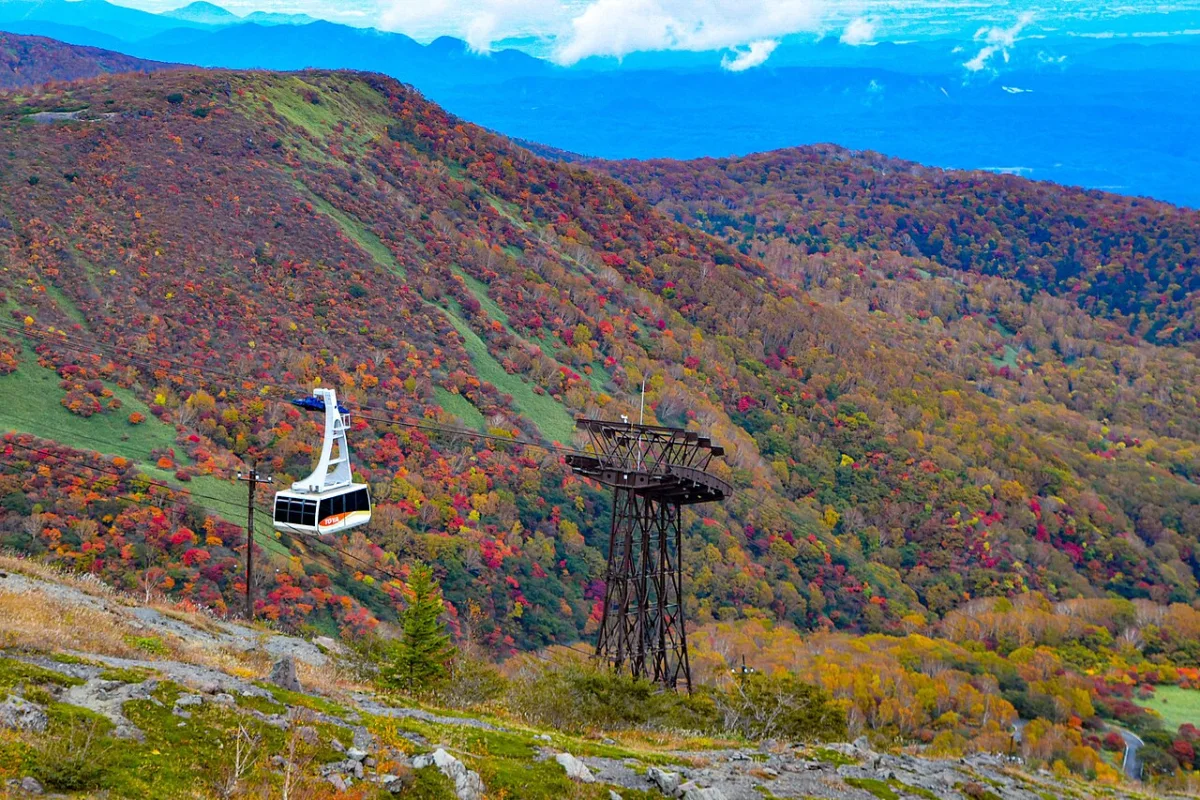
Autumn colour in Nasu sweeps down from Mount Chausudake towards Omaru, Yumoto, and Komadome Falls. Plan ropeway fares, the Ubagadaira trail, bus connections from Tokyo, Minamigaoka Dairy, and Shiobara's Momijidani Suspension Bridge.
Nasu Ropeway Summit Station, Mount Chausudake & Ubagadaira
The bus stop for the Nasu Ropeway sits right at the lower base station (Sanroku Station). The ride takes roughly four minutes up to Summit Station (Sancho Station) at the ninth station of Mount Chausudake; reaching the 1,915-metre summit requires continuing on foot. Companions who only want mountain views can buy a return ticket and stay around the upper station. Through the cabin windows you can look down over the slopes beneath the line, then step out to see if the weather allows distant views. Wheelchair users can remain in their chair all the way from the base station to the Summit Station observation deck, and both stations have accessible toilets.
To reach the summit, follow the Mount Chausudake Summit signs from the upper station. The ropeway operator estimates 40 to 60 minutes uphill and 30 to 45 minutes downhill, or 2 to 2.5 hours including breaks and photos. Although the distance is short, expect loose rocks, steep gradients, and strong wind. According to Ministry of the Environment trail notes, clear days reveal the craggy faces of Mount Asahidake and Mount Sanbonyari-dake, with views stretching as far as the Aizu region beyond.
Ubagadaira lies on the opposite flank of Mount Chausudake, reached from the upper station via Ushigakubi down to Ubagadaira and Hyotan Pond. Nasu Town's hiking map lists the standard return route at 3.2 km, taking about 2 hours and 13 minutes including the ropeway ride. Note that the descent from Ushigakubi to Ubagadaira becomes a climb on the way back. Anyone planning to photograph the mountain reflected in the pond should build extra time into their schedule, along with buffer time for ropeway and bus queues. Stopping briefly at the upper station, summiting Chausudake, and hiking out to Ubagadaira each run on a very different timetable.
If it is your first time hiking in Nasu, choose either the summit or Ubagadaira for the day rather than forcing both. When part of a group wants to summit while others just want to admire the autumn foliage, the easiest place to reunite is the base station, allowing plenty of time for different return trails. If a subgroup decides to take the longer route, agree on a meeting time and a fallback plan in case someone misses a bus before setting off, rather than splitting up on the spot at a trail junction.
Mount Chausudake is an active volcano, so check the Japan Meteorological Agency's Mount Nasudake advisories and trail notices before setting out. Wear sturdy boots with good grip and pack windproof and waterproof layers, water, a head torch, and an offline map. Use the toilets at Summit Station before leaving the building, as there are none along the mountain trails. If low cloud shrouds the ridge, wind gusts make it hard to keep your footing, or thunderstorms approach, switch to a lower-altitude plan instead. Much of the mountain is exposed to wind, and the ropeway suspends service in high winds or lightning; those hiking further out should calculate their turnaround time by their own walking pace.
Ropeway Fares & the Two Last Departures to Watch
For 2026, the Nasu Ropeway's published operating season runs from 20 March to 13 December, normally from 8:30 to 16:30, with the last uphill cabin at 16:00 and the last downhill cabin at 16:20. Standard departures run roughly every 20 minutes, though the operator adjusts frequency according to crowd levels and may suspend service in poor weather. If you are catching a bus after coming down, work backwards from the final bus departure to find the latest downhill cabin you can afford to take. The 16:20 departure on the ropeway timetable is only the last cable car; buses from the base station run to their own separate schedule.
Standard individual fares are ¥2,000 return and ¥1,500 single for junior high school students and adults, and ¥1,000 return and ¥750 single for children aged 3 to primary school age; children under 3 ride free. Strolling around Summit Station, making the return summit hike, or hiking out to Ubagadaira and doubling back via Ushigakubi all require two rides on the ropeway. If you buy a single ticket only, pinpoint your exact trailhead exit on a hiking map beforehand and confirm how you will get back to a station or car park from there.
If you are planning an autumn trip for 2027, use typical historical foliage windows to pick accommodation dates first, then wait for that year's ropeway calendar and bus timetables before locking in connections. For late November and early December 2026, keep in mind that the sightseeing loop bus summer timetable ends on 30 November, whereas the ropeway operates through 13 December. Because those dates do not match, anyone heading up for late-season photos must plan both uphill and downhill access to the base station carefully.
Even if you have no plans to hike, pack an outer layer that is easy to put on and take off. The ropeway operator notes that the mountain is noticeably cooler than the lowlands, with autumn mornings and evenings occasionally dropping into single digits Celsius. If it is windy at Summit Station, put on your jacket and gloves before getting your camera out. To frame both the autumn slope and a passing cabin in one shot, compose with the opposite ridge in view and wait for the cabin to clear the pylon; if mist swallows the hillside, keep your stay at the upper station brief.
Car-Free from Tokyo: Check Buses Before Booking the Shinkansen
Taking the Tohoku Shinkansen Nasuno from Tokyo to Nasu-Shiobara takes around 75 minutes according to the tourist association. Exit the Shinkansen ticket gates, head towards the West Exit, and go to Stand 3 for the Kanto Jidosha Nasu Line. Nasu Town Tourist Association lists the bus ride from Nasu-Shiobara Station to the ropeway at roughly 80 minutes. Combined, the journey already exceeds two and a half hours before factoring in transfers and mountain traffic. Travellers coming from Tokyo who want an early start on the trails can stay the night before in Yumoto.
The easiest mistake heading uphill is boarding the wrong termination at the same bus stand. Services signed for Nasu-Yumoto Onsen turn back in the hot-spring town; only buses signed for Nasu Ropeway continue all the way up. On the timetable, check the day-of-week column first, then read straight down to the destination row—only services showing a departure time in the ropeway row actually go up to the base station. On the April 2026 weekday timetable, for example, a bus leaves the West Exit at 7:50 and reaches the ropeway at 9:07, illustrating the gap between an early Shinkansen transfer and the ropeway's 8:30 opening.
For the return leg, decide where you plan to board before setting off. Catching a bus from the ropeway base station and catching one after a soak in Yumoto mean reading two different departure sections. If you plan to hop off in Yumoto in the afternoon, note two return buses from Yumoto to Nasu-Shiobara Station: your target bus and a backup. The route also serves Kuroiso Station. Travellers staying in Utsunomiya or already travelling on JR conventional lines can board from Kuroiso Station's West Exit and skip a detour via the Shinkansen station.
Long bus rides hit weekend traffic during peak season, so leave a comfortable buffer at the station for a meal or souvenir shopping before a fixed Shinkansen departure. If you only have the scheduled departure time from the ropeway base station, budget ahead for walking down to Summit Station, queueing for the downhill cabin, and walking out to the bus stop. If you hold a reserved Shinkansen seat, that extra cushion doubles as breathing room for dinner or a short rest once you reach the station.
Where the Nasu Highland Two-Day Pass Pays Off
Kanto Jidosha's Nasu Kogen Free Pass costs ¥3,000 for adults and ¥1,500 for children, valid for two consecutive days. It covers the Nasu Line, the Itamuro Line, and the Nasu Kogen Sightseeing Loop Bus. Official sales points include the tourist information desk inside Nasu-Shiobara Station, the commuter pass counter outside Kuroiso Station, and onboard the bus itself. If you want to head straight up the mountain upon arrival, save the pass name in Japanese on your phone to show ticket staff or the driver.
The sightseeing loop bus also offers a 1-Day Pass at ¥1,500 per person for unlimited loop-bus rides on that day. Under the 2026 summer timetable, single loop-bus rides cost ¥800 for adults and ¥400 for children aged 12 and under. An adult taking two loop-bus rides in a day saves ¥100 with the ¥1,500 day pass compared with ¥1,600 for two singles; for a child, two single rides total ¥800, making individual tickets cheaper. Calculate adults and children separately based on how many segments each will actually ride, bearing in mind that the Nasu Line bus up from the JR station is priced separately.
If your itinerary spans two days on the Nasu Line, stops in Yumoto, and adds loop-bus rides to places like Minamigaoka Dairy, add up the individual single fares and compare the total against the two-day pass. If you are only stopping at Yumoto for a hot spring and riding straight back down the same route, paying point-to-point fares is usually enough. Also check whether buses actually serve every stop you have in mind: the loop bus connects multiple routes at Michi-no-Eki Nasu Kogen Yuai-no-Mori, meaning the pass covers a wider network than any single direct bus can reach without changing.
If your second day shifts to Senbonmatsu Farm and the Momijidani Suspension Bridge in Shiobara, transport switches to JR Bus Kanto's Shiobara Line, which requires separate fares. Factor in ryokan shuttle buses as well: when booking, ask which station they serve, whether advance reservation is mandatory, and which return times are offered. If your inn provides both pickup and drop-off and you plan to explore Sessho-seki and the hot springs on foot, simply pay per ride for any remaining bus hops.
Sessho-seki, Nasu Onsen Shrine & Shikanoyu
Local buses stop at Nasu-Yumoto Onsen. Pairing Nasu Onsen Shrine, Sessho-seki, and Shikanoyu in one loop saves unnecessary backtracking between the upper mountain and the valley. Start along the shrine approach to enjoy autumn woodland in Yumoto. To reach Sessho-seki, walk up from the car park beside the Yukawa River; the boulder sits roughly 200 metres north of the main hall of Nasu Onsen Shrine. Closer to Sessho-seki, tree cover and buildings give way to bare volcanic slopes, boulders, and rows of Jizo statues. Keep to the marked boardwalks and restricted-zone signs, and leave space on the path when stopping for photos.
Nasu Town records note that the giant boulder split in two along an existing crack in March 2022, prompting a memorial and peace ceremony later that month. Local legend has long linked the site to the nine-tailed fox spirit Tamamo-no-Mae turning to stone, and the poet Matsuo Basho recorded a visit here in Oku no Hosomichi (The Narrow Road to the Deep North). Walking in from the car park takes you past the Thousand Jizo statues, with a Basho haiku monument on the opposite side. There is also a Basho stone inside the shrine grounds—Nasu Town's walking map marks both, so head to the river-gorge side near the Jizo statues if you want the verse tied directly to Sessho-seki.
Walking on towards Shikanoyu leads down the sloped lanes of the hot-spring quarter. Shikanoyu is Yumoto's historic public bathhouse, open from 8:00 to 18:00 with last admission at 17:30. Admission is ¥500 for adults, ¥300 for primary school children, and free for preschoolers, payable in cash at the entrance. Soap and shampoo are prohibited in the baths. If you visit in the afternoon, check both your last bus time and your inn's dinner schedule; after a full day outdoors, you can also rinse off at your accommodation first and walk over hands-free just for the soak.
The wooden baths are separated by temperature: the mildest pool sits at 41°C, while the men's section tops out at 48°C (the women's side does not have a 48°C pool). Anyone sensitive to hot water should check the temperature signs beside each tub before stepping in. If you only brought a change of clothes, souvenir towels are sold on site for ¥400 each. Nasu Town's walking map also marks the Konbairo Footbath near the shrine's main torii gate, a handy quick stop near the shrine entrance if you only have a short window before your next bus.
If you are aiming for a specific downhill bus, check which side of the road the stop is on before heading into the valley, leaving enough time for the steep walk back up and getting dressed. With only half an hour to spare, a relaxed stroll around the shrine and the rocks along the Yukawa River is far less rushed than squeezing in a bath. Staying overnight in Yumoto lets you split the two—walk on arrival, then bathe unhurriedly the next morning. Drivers can also park once and walk between sights rather than shuffling between adjacent car parks.
Yawata's Tsutsuji Suspension Bridge & Komadome Falls in Heisei-no-Mori
Partway up the Nasu Line sits the Tsutsuji-tsuribashi Iriguchi stop. Yawata's Tsutsuji Suspension Bridge stretches 130 metres across a wooded valley, linking directly to walking paths through the azalea groves. In autumn, the main draw is the sweep of foliage and open mountainside views. If you plan to continue by bus, save both northbound and southbound departure times for that stop before getting off, then decide at the bridge whether to linger. If the next bus is not far off, a brisk out-and-back walk fits easily into a half-day in Yumoto.
In Nasu Heisei-no-Mori, Komadome Falls is viewed from an observation deck across the gorge. If you only want to see the waterfall, set your satnav to the Komadome Falls Observation Deck and look for nearby parking; if you want visitor orientation and forest trails first, navigate to the Nasu Heisei-no-Mori Field Centre. The Ministry of the Environment map puts the return walk from the field centre to the observation deck at roughly 3 km, taking about 90 minutes. Keep it to a short stop if anyone in your group tires easily, and start from the field centre only if you want a longer walk under the canopy.
The Fureai-no-Mori zone around the field centre is free to explore at your own pace and includes sections suitable for wheelchairs; follow the posted trail map for routes leading to the falls. The deeper Manabi-no-Mori zone requires joining a guided walk with a park interpreter, typically lasting at least two hours, so budget extra time. Standard opening hours listed by the park are 9:00 to 16:30, extended to 17:00 in May, July, and August, with regular closures on Wednesdays (moved to the next day when Wednesday falls on a public holiday, alongside occasional holiday exceptions).
No scheduled public buses enter Nasu Heisei-no-Mori. The park advises riding the bus to Nasu-Yumoto and taking a taxi from there, while cautioning that local taxis are scarce. If you book a cab, arrange your return pickup at the same time—and if you need to catch a bus from Yumoto back to Nasu-Shiobara, tell the taxi company your connection time. Travellers sticking strictly to the single bus line can instead hop off at the Visitor Centre Entrance stop for the Nasu Highland Visitor Centre, which offers national park maps and nature exhibits, and continue towards Yawata if time allows.
Driving in Autumn: Which Expressway Exit & Car Park to Pick
The most direct motorway exit for Yumoto and the ropeway is the Nasu Interchange on the Tohoku Expressway. Nasu Town warns that weekends from late September to late October bring severe congestion around Mount Nasudake and the Nasu Interchange. Vehicles fitted with ETC can use the town's detour map to evaluate the Nasu Kogen Smart IC instead. If your first stop is Yawata or Nasu Heisei-no-Mori, compare the approach roads from both exits before setting off. Leaving later in the day works fine if you are only visiting Summit Station, the visitor centre, or Yumoto, whereas trail hikers need to plan around daylight and descent times.
There are three free parking areas around the ropeway base station with space for roughly 150 standard cars, according to the operator. On peak autumn weekends, car parks stay locked until opening time, so early arrivals should check gate opening schedules first. About one kilometre uphill from the base station sits Toge-no-Chaya Car Park, while roughly one kilometre downhill lies the prefectural Omaru Car Park. The operator estimates walking back to the base station via the footpath takes under 10 minutes from Toge-no-Chaya and around 20 minutes from Omaru. Remember you will walk that same stretch back to your car in the afternoon, which matters if travelling with toddlers, pushchairs, or anyone sensitive to slopes.
Nasu Town's autumn traffic portal carries live camera feeds of Toge-no-Chaya Car Park and the Omaru approach road. If you are already crawling up the hill in morning traffic, have a passenger check those feeds to see whether switching car parks makes sense. The town directs long-stay hikers towards Omaru; if you end up parking at Omaru when you only planned to ride the ropeway for a few quick photos, pull up an offline walking route back to your car before deciding between the cable car and heading to the waterfall viewpoint instead.
For trips after New Year or in early spring, remember the prefectural road up to the ropeway closes for winter. Tochigi Prefecture closes the stretch between Omaru Onsen and the Toge-no-Chaya trailhead from 11:00 on 14 December 2026 until 11:00 on 26 March 2027, with the section leading to the ropeway base station scheduled to reopen earlier on 12 March 2027. Use those dates to gauge how far you can drive, and always cross-check against the ropeway's own operating calendar before planning a ride.
On holiday weekends, if you need to return a hire car or catch a Shinkansen, plan souvenir stops and breaks near your drop-off location. Driving down the mountain before stopping for a proper meal makes timing far more predictable than waiting for summit traffic to clear. Before setting your satnav directly from the mountain to the station, double-check which side of Nasu-Shiobara Station you need, the exact rental return address, and the last petrol station along the way.
Family Stops: Minamigaoka Dairy & Senbonmatsu Farm on the Shiobara Line
For a half-day family stop out of Yumoto, Minamigaoka Dairy is a natural pick. Admission and parking are both free; on the Kanto Jidosha Nasu Line, get off at Ikkenjaya and follow the farm's signs for roughly a 15-minute walk, while certain sightseeing loop buses stop directly at the main gate. Little legs may be tired after walking uphill once, so check onward bus departures from the farm gate before buying activity tickets rather than only checking how to get up from the JR station.
Minamigaoka Dairy keeps Guernsey cattle, which graze outdoors in fine weather, and offers paid interactions with rabbits, goats, and sheep. Let children watch from outside the pens first before buying activity tickets. The farm rotates its sheep so they get proper rest, and rabbit sessions are capped at 15 minutes; during the rabbit-walking activity, follow where the rabbit leads rather than pulling on the lead to steer it. If you are walking back out to Ikkenjaya afterwards, group animal activities and food stops around lunch and skip adding a second farm to the same day.
Senbonmatsu Farm in Senbonmatsu, Nasushiobara, also offers free admission and free parking. Ride JR Bus Kanto's Shiobara Onsen Line from Nishi-Nasuno Station and alight at Senbonmatsu—the farm lists the ride at about 15 minutes. To combine it with the Momijidani Suspension Bridge on the same day, stay on the same bus route further into the valley. By car, the farm lies roughly two minutes off the Nishinasuno-Shiobara Interchange and about 15 minutes' drive from the suspension bridge. For a first family day on this side of the region, focusing here is far easier than trying to squeeze both farms into one day.
If switching from Nasu-Yumoto to the Shiobara Line, check how the two bus schedules align at Nasu-Shiobara Station. Because many Shiobara-bound buses originate at Nishi-Nasuno, allow time for that short local rail hop as well. If travelling with a pushchair, decide whether your children would rather see farm animals up close or walk across a long bridge over the lake—doing just one keeps the pace manageable. On a weekend drive, a free-entry farm also works neatly as a flexible stop before or after the mountains that you can shorten at will.
Getting to Momijidani Suspension Bridge & Where to Hop Off in November
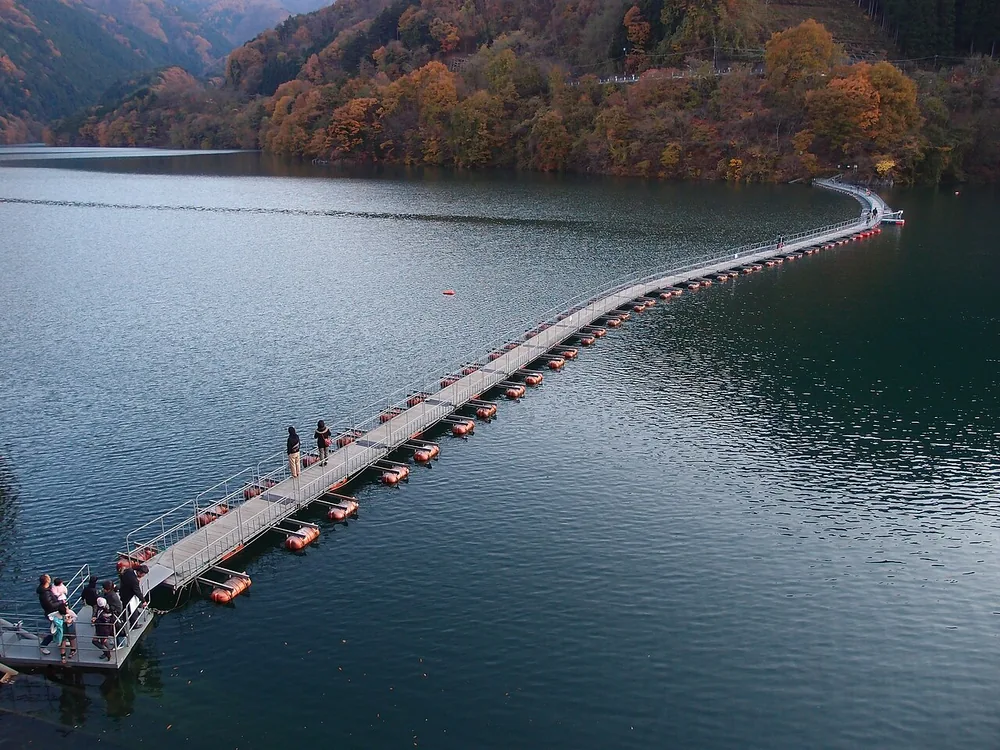
Enter Momijidani Otsuribashi or Mori-no-Eki into your satnav, or use the address 1425-60 Sekiya, Nasushiobara, Tochigi. The bridge spans Shiobara Dam with 320 metres between its main towers. Drivers take National Route 400 from the Nishinasuno-Shiobara Interchange, with free parking on both the Route 400 left bank (home to shops and restaurants) and the opposite shore. By JR Bus Kanto, alight directly at the Momijidani Otsuribashi bus stop right outside the site. If you meant Yawata's Tsutsuji Suspension Bridge instead, take the Nasu Line in Nasu Town and alight at Tsutsuji-tsuribashi Iriguchi.
Nasushiobara City lists the Momijidani Suspension Bridge's typical peak foliage for early to mid-November, coinciding with shorter winter hours. From 1 November to 31 March, the bridge opens from 8:30 to 16:00 (until 18:00 during the rest of the year). Under revised fares effective 1 October 2026, crossing costs ¥400 for adults and ¥300 for primary and junior high pupils, seniors aged 65 and over, and visitors with disabilities; preschool children enter free. With autumn dusk falling early, leave the late afternoon for the valley road or the ride back downriver, and arrive earlier in the afternoon if you want time to cross and explore the far shore.
From the deck, views open across the reservoir and surrounding slopes on both sides, leading to a small plaza on the far bank. The shops on the left bank make an easy meeting point for groups. With elderly companions, gauge wind strength and footpath footing at the entrance first; if your return bus is due soon, admire the bridge from the left bank and save the full crossing for a trip with more slack. Because autumn photos often tag the whole area as 'Shiobara Gorge', pay close attention to exact Japanese stop names when planning—the gorge also includes Mikaeri Suspension Bridge and other separate trailheads. Direct downhill departures from JR Nasu-Shiobara Station are fewer than from Nishi-Nasuno, so for an earlier morning arrival, ride one stop on the local line to Nishi-Nasuno and catch the Shiobara Onsen bus from there.
If you can visit in both October and November, save October for Mount Chausudake and Yumoto, and November for Shiobara Dam and the gorge. On a single two-day trip in late October, pairing later-turning Yumoto or Komadome Falls with Shiobara Gorge gives you much better odds and an easier schedule than trying to catch both the mountain summit and the suspension bridge at peak colour on fixed dates.
Only a Brief Clear Window? Where to Go First
When high winds shut the ropeway up top while Yumoto remains calm for walking, start in the hot-spring town: visit the shrine and Sessho-seki in the morning, then soak at Shikanoyu in the afternoon. Stop for lunch in between and watch to see if the cloud lifts before deciding whether to head higher. If the day only offers a short break in the weather, choose a photo spot within easy walking distance of a bus stop or car park. Travellers without a car should take a bus terminating at Yumoto rather than a ropeway-bound bus, avoiding an awkward wait at a mid-mountain stop on the way back.
If heavy rain sets in, begin indoors at the Nasu Highland Visitor Centre exhibits. Admission is free, and standard hours run 8:30 to 17:30 from April to November and 9:00 to 16:30 from December to March, closed Wednesdays (rolling to the next day on public holidays, with exceptions during the peak autumn foliage season). Bear in mind that the Nasu Highland Visitor Centre and the Nasu Heisei-no-Mori Field Centre are two completely different places. Bus riders should keep Visitor Centre Entrance and Field Centre clearly straight when planning their return.
When visibility on the mountain drifts in and out, ropeway passengers can focus on the lower slopes close to the cabin windows, while hikers should treat live visibility as a strict go/no-go check. If the ridge is already hidden from the base station, switch your afternoon to Omaru or Yumoto. Even where mobile signal holds up on the mountain, only push towards the next junction when markers and sightlines are unmistakable; cold weather, photography, and map checks drain phone batteries fast, so carry a paper map as backup.
If you want to visit a waterfall when the ground is slick, follow the observation deck signs and park notices, staying inside open visitor-centre exhibits whenever trails close. Wait for weather to ease before walking towards the water; even without sweeping mountain vistas, you can still catch bright autumn colour along the opposite bank. Gravel slopes, woodland paths, and paved trails behave very differently after rain, so pick your route to match everyone's footwear and walking confidence.
Day Trip from Tokyo vs Staying Overnight in Yumoto
A straightforward car-free day trip follows a simple spine: Nasu-Shiobara Station → Nasu Ropeway → Nasu-Yumoto Onsen → Nasu-Shiobara Station. Catch an early bus straight to the ropeway, buy a return ticket if you just want a stroll and views from Summit Station, and ride down around midday. Spend the afternoon over lunch in Yumoto and a walk to Sessho-seki. If adding Shikanoyu, pick your return bus time first so you can walk back up to the stop unhurriedly after your bath. Even on busy peak days, this route lets you drop a stop easily, and buses heading back down the same road are simple to spot.
For an adult using the Kanto Jidosha Two-Day Pass, a return ropeway ticket, and admission to Shikanoyu, those three items total ¥5,500 before counting train fares from Tokyo and meals. If you only plan an onsen stroll in Yumoto, compare single bus fares plus the bathhouse fee instead. Groups travelling with elderly relatives who need a taxi from Yumoto to Nasu Heisei-no-Mori should budget the cab separately, and avoid double-counting that leg inside a bus pass calculation if riding the bus back down.
The biggest perk of staying one night is starting uphill straight from Yumoto the next morning, saving one full bus leg from the JR station. Staying in central Yumoto puts evening walks along the Yukawa River and visits to Shikanoyu right on your doorstep. If you are carrying a large rucksack and plan to hike Ubagadaira, ask your inn to hold your main luggage so you can travel up and down from Yumoto light. Should the morning dawn too windy, pivot after breakfast to Yawata or indoor stops before heading back towards the Shinkansen later on. If aiming for the first morning bus, walk out the evening before to confirm the exact stop and direction.
Staying along the Nasu Highland road suits itineraries centred on the farms, museums, or Yuai-no-Mori on day two. When comparing accommodation, check which bus route stops outside, whether the walk involves steep hills, and whether dinner is included. Drivers heading on to Shiobara the next day can finish in Yumoto, stay overnight towards Shiobara, spend day two at Senbonmatsu Farm and the suspension bridge, and exit via the Nishinasuno-Shiobara Interchange. Those prioritising Mount Chausudake should spend their first night on the side with easiest mountain access to preserve flexibility around the weather.
If spending two nights at the same place and keen to avoid backtracking to the station to switch bus lines each day, keep one morning slow around your accommodation. Devote day one to the mountains in Nasu Town, and day two to Nasu Heisei-no-Mori before returning for dinner after a longer guided walk. Conversely, if Shiobara Gorge is your main goal, set aside at least half a day across your two days to approach from Nishi-Nasuno, plan lunch and a soak along the valley, and return to Tokyo via the local train from Nishi-Nasuno to connect with the Shinkansen at Nasu-Shiobara.
A few useful answers
When is the best time to ride the Nasu Ropeway for autumn foliage?
Foliage around the ropeway typically peaks from early to mid-October. Ubagadaira usually turns from late September to early October—in 2026, the tourist association recorded peak colour there over the October three-day weekend. By mid-to-late October, colour moves down to Yumoto and Komadome Falls.
Do I need proper hiking gear to walk from Summit Station to Ubagadaira?
Yes. Nasu Town's route from Summit Station via Ushigakubi to Ubagadaira and Hyotan Pond is 3.2 km return. Wear boots with good grip, carry water, waterproofs, and warm layers, and note that the return leg involves an uphill climb.
Can I mix and match the Kanto Jidosha Two-Day Pass and the Sightseeing Loop 1-Day Pass?
The ¥3,000 adult Two-Day Pass covers the Nasu Line, the Itamuro Line, and the Nasu Kogen Sightseeing Loop Bus. The ¥1,500 1-Day Pass is valid only on the Sightseeing Loop Bus. For JR Bus Kanto services to Shiobara, buy separate tickets.
Can I take a public bus straight to Nasu Heisei-no-Mori?
No scheduled public buses enter the park. Take a bus to Nasu-Yumoto Onsen and continue by taxi. Nearby, the separate Nasu Highland Visitor Centre is served directly by the Visitor Centre Entrance bus stop.
Does the Nasu Ropeway still run in December 2026?
According to the operator's 2026 schedule, the ropeway runs until 13 December. Tochigi Prefecture closes the road between Omaru Onsen and the Toge-no-Chaya trailhead from 11:00 the next day, 14 December. Car-free visitors in December should check winter bus timetables in advance.
What is the difference between Nasu's two suspension bridges?
The Tsutsuji Suspension Bridge is in Yawata, Nasu Town, connecting to highland walking trails. The Momijidani Suspension Bridge is in Sekiya, Nasushiobara City, spanning Shiobara Dam and reached from the Nishi-Nasuno side via JR Bus Kanto.
Official information and references
Sources used in this guide.
- Nasu Town Sightseeing Brochure / Elevation Zones and Typical Autumn Foliage
- Tochigi Prefectural Tourism Association / Mount Chausudake and Surrounding Viewing Periods
- Nasu Town Tourist Association / 2026 Autumn Foliage Updates
- Nasu Heisei-no-Mori / Komadome Falls Autumn Foliage Report (19 October 2026)
- Nasu Ropeway / Operating Hours, Season Dates, and Fares
- Nasu Ropeway / Mount Chausudake Climbing Times and Weather Guidance
- Nasu Ropeway / Car Parks and Footpath Connections
- Nasu Ropeway / Mountain Clothing and Boarding FAQs
- Ministry of the Environment / Mount Nasudake Ropeway Hiking Route
- Japan Meteorological Agency / Mount Nasudake Volcanic Monitoring Information
- Nasu Town Hiking Map / Ubagadaira Return Distance and Walking Time
- Nasu Town / Autumn Foliage Road Traffic and Parking Information
- Tochigi Prefecture / 2026–27 Winter Road Closure Notice
- Kanto Jidosha / 2026 Nasu Line Summer Weekday Timetable
- Kanto Jidosha / Nasu Kogen Two-Day Pass Fare Revision and Sales Locations
- Nasu Town Tourist Association / Rail, Bus Connections, and Discount Passes
- Nasu Onsen Ryokan Cooperative / 2026 Sightseeing Loop Bus Route Map
- Nasu Town / Sessho-seki and Nasu-Yumoto Walking Map
- Shikanoyu / Day-Visit Bathing Hours and Admission
- Shikanoyu / Bathhouse Rules and Payment Information
- Nasu Town Tourist Association / Yawata Tsutsuji Suspension Bridge
- Nasu Heisei-no-Mori / Opening Hours and Closed Days
- Nasu Heisei-no-Mori / Guide to the Two Forest Zones
- Nasu Heisei-no-Mori / Komadome Falls and Park Access
- Ministry of the Environment / Nasu Heisei-no-Mori Trail Map
- Nasu Highland Visitor Centre / Free Admission and Seasonal Hours
- Minamigaoka Dairy / Admission and Access
- Senbonmatsu Farm / Admission and Shiobara-Direction Access
- Nasushiobara City / Momijidani Suspension Bridge Opening Hours and Crossing Fees
- Nasushiobara City / Shiobara Gorge and Momijidani Suspension Bridge Foliage Periods
- JR Bus Kanto / Nasu-Shiobara, Nishi-Nasuno, and Shiobara Onsen Timetable
- Shikanoyu / Spring Water Properties and Pool Temperatures
- Minamigaoka Dairy / Animal Husbandry and Interaction Rules
- Tochigi Prefecture / Shiobara Dam and Momijidani Suspension Bridge