Take MY-Yu to Godaisan in the morning, walk the main and exhibition buildings, south garden and conservatory, then return for lunch at Hirome Market. Includes 2026 fares, bus examples, gate differences, recent stop changes, rain and wheelchair routes.
- Region & Focus
- Kochi City
- Reading Scope
- 29 min read · 14 chapters · 7 Q&As
- Official Verification
- 15 official sources checkedUpdated 9 November 2026
- Key Topics
- ItinerariesSeasonsFood
Chapter Route Map (tap any stop)
- Give the morning to the garden and have lunch back in town
- Hours and admission: normally ¥850, with separate orchid-show prices
- Take MY-Yu uphill and identify your pass area and boarding point
- Example buses: ascend at 09:00 and leave around 13:00
- From the main gate, see Tosa plants and choose a few seasonal targets
- At the memorial museum, study architecture in the main building and plants in the exhibition building
- Use the connecting path south; valley steps are an extra
- Allow half an hour in the conservatory, from the green tower to water plants
- Choose the Central or South Gate and check buses towards Kochi Station
- In rain, the northern architecture route is complete; the conservatory needs outdoor walking
- Pushchairs, wheelchairs and children: choose the connecting path and seated rest stops
- Choose a seasonal theme without scattering the half day after one flower
- Driving, taxis and bags: agree the return exit first
- After descending, go only to Hirome Market: find seats before ordering
- Quick Q&A
For half a day of plants and architecture in Kochi, take MY-Yu to Mount Godaisan in the morning. Walk from Makino Botanical Garden's main gate to the exhibition building and south conservatory, then return to town for food. The main garden sights need about two hours. Including travel, waiting and rest, allow four to five hours from Kochi Station. Choose your return bus and exit first: the main and Central Gates allow entry, while South Gate is exit-only, with a different route for each.
Give the morning to the garden and have lunch back in town
Makino Botanical Garden is on Mount Godaisan in Kochi City. Its roughly eight hectares use slopes, valleys and existing woodland for displays. The pleasure is seeing how plants grow, then connecting botanical drawings and specimen stories indoors with living plants outside. Going only for the conservatory exterior misses the space beneath the main building's roof, Tomitaro Makino's research material and the changing ground between north and south gardens.
For a first visit, allow two and a half to three hours inside. The official first-visit route is about 1.5 kilometres and two hours, already including the main grounds. Use extra time for panels, rest and the conservatory. Drawing plants, photographing leaf veins or reading closely can easily fill half a day. Finish around your return bus. Two hours in the garden does not mean a two-hour return trip from central Kochi.
Morning entry also lets you assess energy after the north garden before adding southern paths. Starting with only an hour forces choices between exhibition building and conservatory, or a rush to the exit. The garden offers a separate one-hour short route for clear priorities. A full exhibition visit, seated meal and bus wait need extra time.
This half day adds just one city food stop: Hirome Market. The complete Kochi Castle and Hirome Market day route already covers the castle and Sunday Market, so keep your energy here for the garden. For travel across prefectures, see Shikoku transport and accommodation bases. Morning on the mountain and afternoon food in the castle town give you a bus rest between sections and room to adapt to weather. View Makino Botanical Garden on Google Maps.
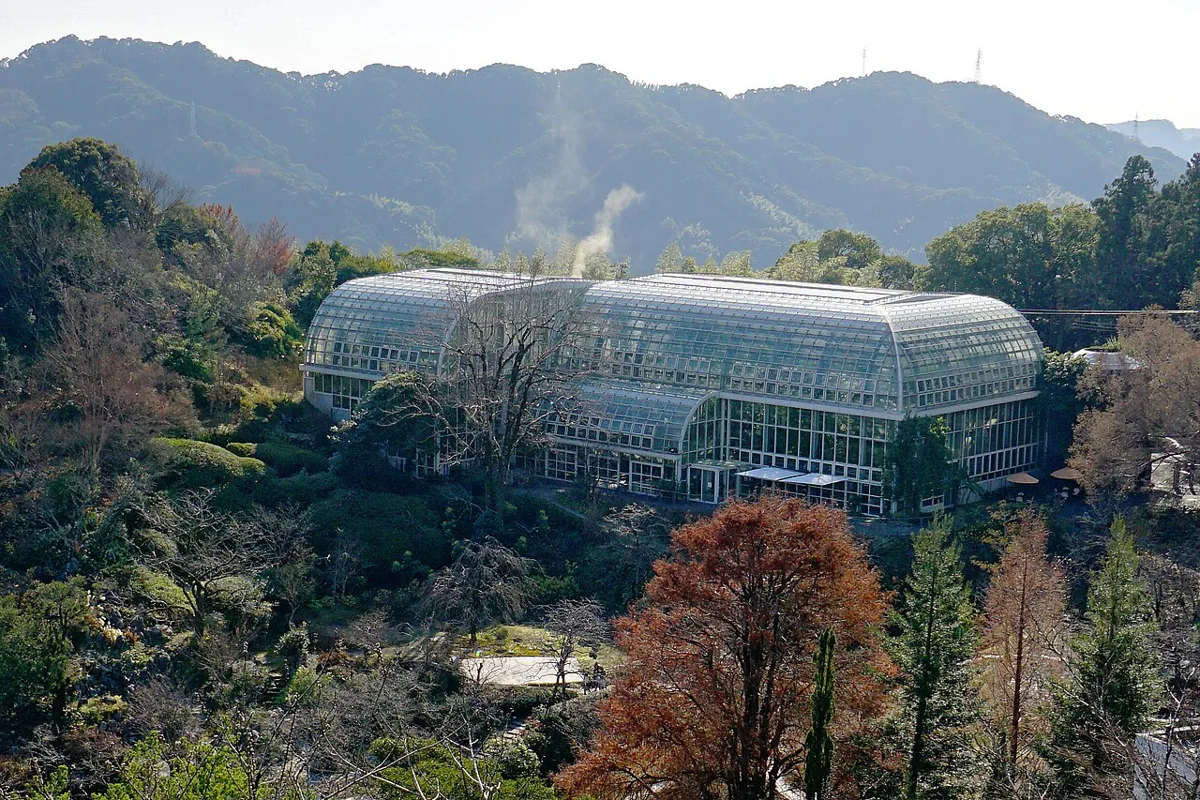
Take MY-Yu to Godaisan in the morning, walk the main and exhibition buildings, south garden and conservatory, then return for lunch at Hirome Market. Includes 2026 fares, bus examples, gate differences, recent stop changes, rain and wheelchair routes.
Hours and admission: normally ¥850, with separate orchid-show prices
The official visitor guide read on 27 October 2026 gives 09:00–17:00 opening and last entry at 16:30. Standard admission is ¥850; senior high school pupils and younger enter free. Groups of 20 or more pay ¥750 each, and an annual pass is ¥2,500. Individual visitors need no reservation and can buy at the main building or Central Gate. Free school-age admission differs from bus child-fare categories, so calculate family costs separately.
For the announced orchid show from 6 to 28 February 2027, standard admission rises to ¥1,700 and groups of 20 or more pay ¥1,500 each. Senior high school pupils and younger remain free. Budget this cost for a winter orchid visit rather than using the ordinary walking-day price. The annual pass remains ¥2,500, and holders can enter this orchid show directly, a condition also listed in Kochi Prefecture's garden introduction.
The garden closes from 27 December to 1 January and on maintenance days. Upcoming announced closures are 30 November 2026 and 25 January 2027. The weekday alone does not determine opening. After booking Kochi accommodation, avoid maintenance dates before choosing buses. For typhoon risk or recovery work, the garden announces temporary closures; move the entire mountain visit out of that day.
Counters accept several credit cards and electronic payments, including VISA, Mastercard, JCB, Suica and PASMO. Keep your ticket for same-day re-entry after leaving. For the MY-Yu bus discount to the garden's group rate, show a valid bus ticket when buying admission and pay the discounted price; you do not need 20 people. During the 2027 orchid show, its admission price applies even if you do not enter the conservatory. Ordinary advance tickets and complimentary tickets cannot be used, topped up for the difference or refunded.
Take MY-Yu uphill and identify your pass area and boarding point
The MY-Yu bus provides direct public transport from JR Kochi Station to the garden. Normally board in the Kochi Tabi Hiroba car park outside the south exit. The journey is about 30 minutes to Makino Shokubutsuen Seimon-mae, the main-gate stop. This is a sightseeing loop, not any city bus in front of the station. Find the southern tourism plaza and MY-Yu signs first.
From April 2026, the Godaisan one-day pass costs ¥1,000 for adults and ¥500 for primary school pupils, covering as far as Chikurinji-mae. It is enough for a garden return. The Katsurahama one-day pass costs ¥1,500 and ¥750 respectively, for those actually continuing there that day. Adult bus fares start at junior high school, while garden entry is free through senior high school. Junior and senior high pupils therefore enter free but still need adult bus tickets.
The Godaisan pass includes trams within Kochi's flat-fare city zone. The Katsurahama pass additionally includes a one-way ride on the designated Katsurahama route bus. With only Godaisan, return on MY-Yu and exclude the Katsurahama-line benefit. If you decide to continue to Katsurahama after boarding, you can pay the difference on MY-Yu to exchange passes. This half-day route uses Godaisan, saving payment for unused sections without rushing to the coast to fill the pass.
Buy paper tickets beforehand at officially listed outlets such as Tosaterasu in Kochi Tabi Hiroba, or use a mobile ticket in Jorudan's transit app. Some benefits differ between paper and mobile versions. Seats are unreserved; if a popular bus is full, wait for the next. Do not leave purchase, reaching the stop and boarding to the same minute. Paper tickets can be refunded at the original outlet only while valid and before scratching off the usage date. Expired tickets cannot be refunded or exchanged.
There is a recent change: from 9 to 16 November 2026, MY-Yu boarding and alighting at Kochi Station move to stand 5 in the north-side bus terminal. The official notice takes priority over the usual south-exit instructions. Save the station and stand 5 on your phone for these dates and use the correct exit instead of circling from south to north. 11月19日至24日公告.
Example buses: ascend at 09:00 and leave around 13:00
The current official April 2026–March 2027 timetable has a 09:00 Kochi Station departure reaching the garden main gate at 09:27 on weekdays and weekends/public holidays alike. Start walking around 09:30, see the exhibition building, south garden and conservatory, rest, then take a return around 13:00 for a fuller visit.
From the main gate, weekday returns include 12:59 and 14:09. Weekends and public holidays include 13:59 and more frequent afternoon services. If leaving through the South Gate beside the conservatory, use Chikurinji-mae instead: the corresponding weekday departures are 13:01 or 14:11, and weekend/public-holiday departures 13:01 or 14:01. These minutes reflect the bus's sequence of mountain stops. Do not swap times between stops. Once you choose an exit, save the Kochi-bound departure for that stop.
Arriving at 09:27 and leaving Chikurinji-mae at 13:01 gives about three and a half hours on the mountain, including admission, visiting and waiting. Have lunch after returning to town. For an earlier meal, the 11:51 return from Chikurinji-mae after 09:27 entry requires a focused garden visit; you cannot include the exhibition film, shopping and rest all together. For a slower visit, bring a snack to eat inside and choose the 13:00 version.
MY-Yu runs daily, with separate weekday and weekend/public-holiday timetables. Spring holidays, Golden Week and Obon follow the official operating calendar's categories. Near departure, open the current official timetable to choose the column for your date, then check notices for stop changes. For a limited express or flight afterwards, descend on an earlier bus to allow bags and transfers. Arrival in the city starts the next travel stage.
| Route / stop | Weekday | Weekend/public holiday | Choose for |
|---|---|---|---|
| Kochi Station → garden main gate | 09:00 → 09:27 | 09:00 → 09:27 | A full morning visit |
| Main gate → Kochi Station direction | 12:59, 14:09 | 12:59, 13:59 | Collecting items at the main building or a northern rain route |
| Chikurinji-mae → Kochi Station direction | 13:01, 14:11 | 13:01, 14:01 | Leaving South Gate beside the conservatory |
| Godaisan pass | Adult ¥1,000; primary pupil ¥500 | Same | Garden return and city flat-fare trams |
| Katsurahama pass | Adult ¥1,500; primary pupil ¥750 | Same | Only if actually continuing to Katsurahama that day |
From the main gate, see Tosa plants and choose a few seasonal targets
From the main gate, pass through the Tosa ecology garden before reaching the main-building ticket counter. Entrance planting gathers representative Kochi plants from different habitats: mountains, hills, settlements and coast. The short distance shows links between plants and terrain. Choose a familiar plant from the labels and see which growing environment it occupies. This makes a clearer observation than photographing every name along the way.
At the counter, collect the Plants at Their Best map, marking worthwhile plants at the time. Choose two or three close to the main route and fit them around the main building, exhibition building and conservatory. If a target lies deep along a side route, exchange another detour for it. Seasonal plants then become part of the walk, rather than every sign adding a new excursion until you rush for a bus in the south garden.
The map also helps divide interests. Photographers can stop at a flowering plant while exhibition enthusiasts go ahead, then meet in the exhibition building's rest area. For different walking speeds, a named building entrance is clearer than 'beside those flowers earlier'. Before leaving the main building, use toilets and arrange rain gear before continuing deeper into the north garden.
The Makino QR Guide gives plant and exhibition explanations in Japanese, English, Chinese and Korean, with a map function. For unfamiliar Japanese plant names, compare Latin names and QR information rather than translating every sign word by word on a slope. Keep some phone battery for return tickets and timetables, especially with a mobile pass.
At the memorial museum, study architecture in the main building and plants in the exhibition building
The Tomitaro Makino Memorial Museum has a main building and an exhibition building connected by a covered corridor. Designed by Hiroshi Naito and completed in 1999, the main building's roof, timber and courtyard keep it low among surrounding trees. For architecture, see how the eaves reach towards the paths and how courtyard planting relates to views inside, rather than detouring for a single complete exterior photograph.
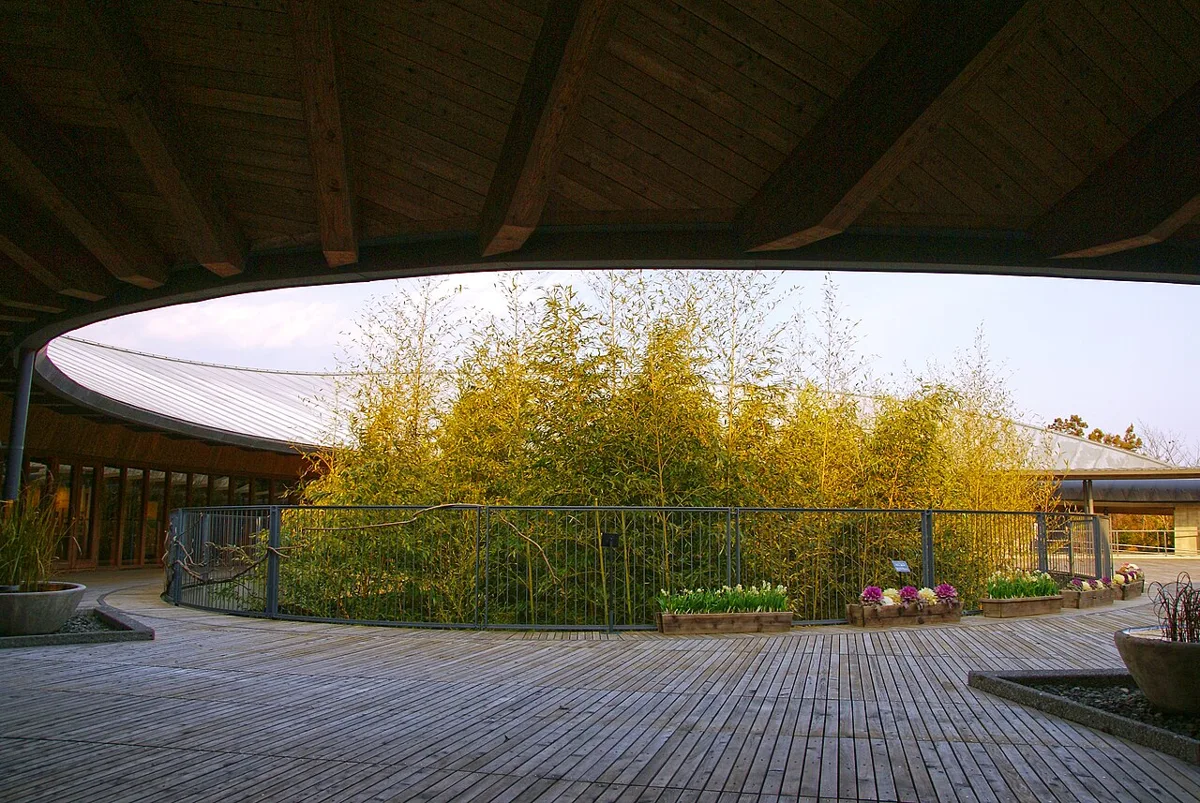
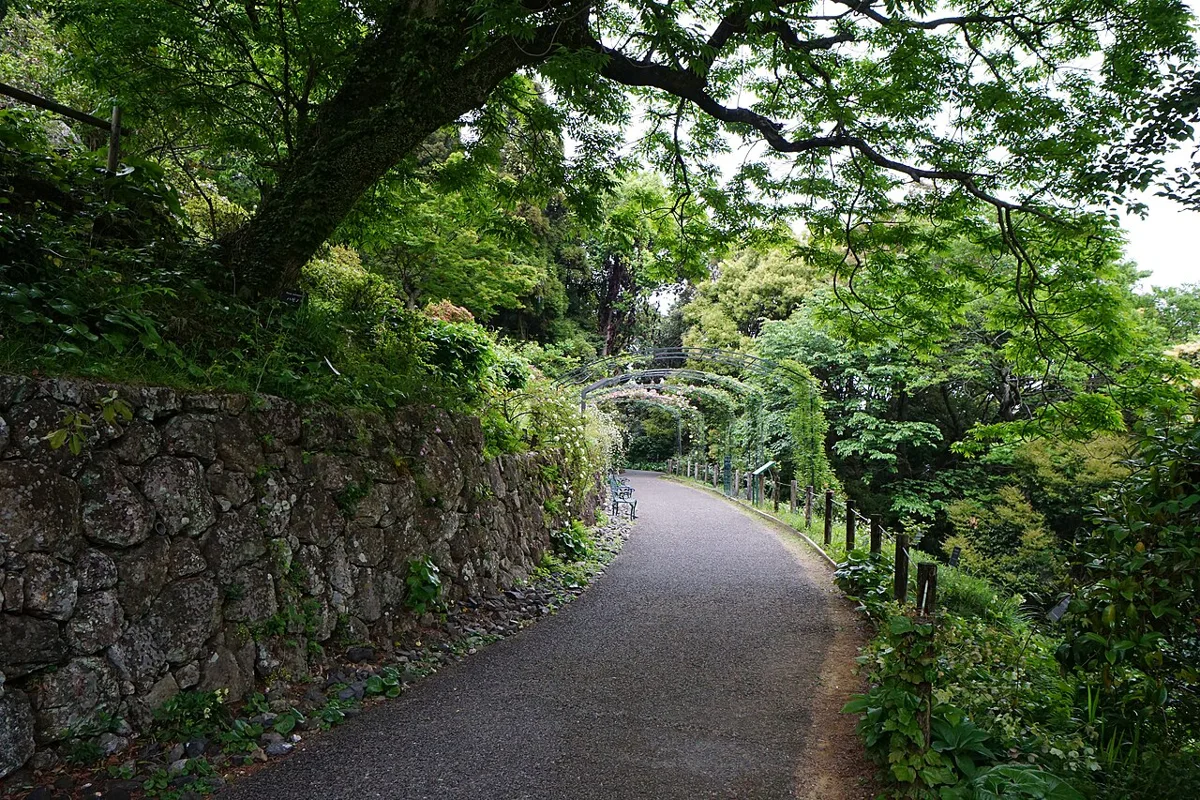
There are plants along the corridor too. On the gently descending route, notice ferns and seasonal flowers by the stone walls and path. Its roof allows slow stops in rain. At the exhibition building, the pace changes from identifying outdoor plants to seeing how research leaves records: reproductions of notes, diaries and botanical illustrations, plus life-history displays, offer another way to understand the plants outside.
The permanent exhibition recreates Makino's late-life study, Yojo Shooku (繇條書屋). Look at how it held many books and records, then read the research stories nearby. This explains classification work more readily than memorising a full chronology. In botanical drawings, notice how one sheet arranges leaf, flower and fruit details. Compare a courtyard plant after leaving: a whole-plant view and close structural study give different information.
The exhibition courtyard contains plants linked to Makino, connecting names you have read with living examples. The courtyard library in one corner offers seats and plant books, and an air-conditioned rest. Theatre films last about 13 minutes each. If interested, read the day's schedule and include both waiting and screening time, removing a later garden detour if needed.
Use the connecting path south; valley steps are an extra
A 335-metre connecting path leads from the exhibition building towards the south garden. Check time here. With more than an hour before departure, see southern gardens before the conservatory. With only half an hour, follow the main route towards conservatory and exit. The official first-visit route from main to Central Gate generally descends with the slope, but still has junctions and local steps. Adjacent areas on the map may sit at different heights.
The Tomitaro Makino statue and 50th Anniversary Garden branch off the connecting path, partly by stone steps. Include them for water features and terrain. For fewer steps, pushchairs or limited time, stay on the connecting path to the conservatory and Plant Research and Exchange Center. The energy-saving decision is at the junction: choose the main route before descending into the valley and needing to climb back.
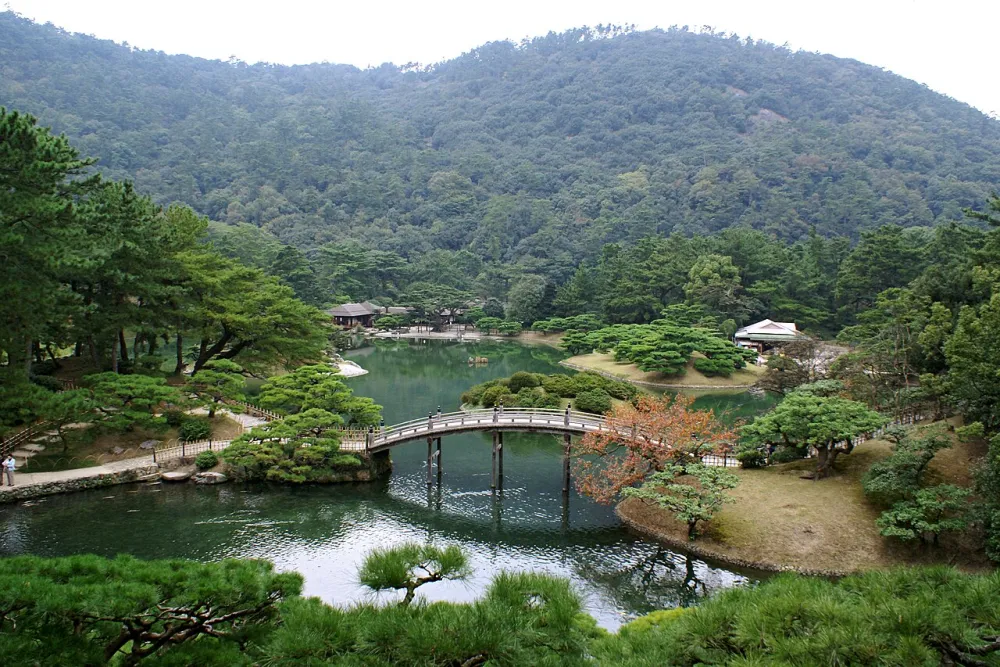
The 50th Anniversary Garden uses a pond and stream in the valley, with mountain scenery behind. It offers a different view from the north's ecology displays. Start with layers of water and planting, then walk slowly along part of the pond. Plants change through spring, early summer and autumn. Let the counter's seasonal map guide what you see while keeping the conservatory as the next clear landmark.
If some want the garden and others need rest, meet near the conservatory entrance at an agreed time. 'Keep going south and we will meet' is too vague: trees and bends block sightlines on valley paths. Stay on garden paths for photographs. Use phone zoom instead of reaching into flower beds and leave planted areas for plants.
Allow half an hour in the conservatory, from the green tower to water plants
The Green Tower at the south conservatory entrance is about nine metres high, evoking a hollow inside a large tree. Look for fig aerial roots and ferns on its walls. First look up at how plants occupy vertical surfaces, then enter the main area to understand the scale. People often linger for entrance photographs. Move forward afterwards to let visitors behind pass.
Look by habitat: fleshy stems, leaves, spines and water storage in the dryland area; waterside and pond plants in the water area; leaf sizes, epiphytes and layers in the jungle. Comparing just two very different forms shows how much tropical plants' survival methods vary. For children, ask for the thickest stem or a plant growing on another plant, rather than expecting them to memorise names.
The garden lists everyday food-source plants including bananas, cacao and vanilla. Compare living plants with the part normally eaten. Slow down to examine leaf arrangement, roots and branches, starting labels from familiar experience. Flowers and fruit depend on each plant and season. Observe visible parts first, then read, without repeated circuits to collect every food plant.
The viewing platform offers higher views of canopies and leaves, and the conservatory has lift routes. For a gentler visit, follow main passages and lift signs. With energy, use the platform for another angle on the same plants. Allow about 30 minutes in the half-day version. Toilets, collecting belongings and reaching the bus stop still follow before the mountain visit is complete.
The garden filmed an aquatic plant flowering, with petals gradually opening in one frame. At the conservatory water area, take time to notice leaf and flower shapes too.
Choose the Central or South Gate and check buses towards Kochi Station
The official general first-visit route finishes at the Central Gate. From the conservatory, walk about five minutes to the Plant Research and Exchange Center and take the lift to level 3, where the gate has a shop, toilets and seating. The official one-hour route gives about five minutes from this gate to the car park, on a gentle uphill route with vehicles. This is easier for drivers, collecting stored items or returning to the main-gate stop.
If you have no bags left at the main building and nothing borrowed to return, use the exit-only South Gate beside the conservatory for Chikurinji-mae. South and Central Gates are separate exits. Do not confuse them on first entering the 'south garden'. Chikurinji-mae is outside the South Gate. A Kochi-bound bus here saves doubling back through the garden to the north.
Around Godaisan, MY-Yu calls at the viewpoint, garden main gate and Chikurinji-mae in sequence. Even if its next movement appears to head towards another point uphill, use the destination display and timetable to identify a JR Kochi Station service. For a city meal, choose JR Kochi Station direction. Seeing MY-Yu branding alone is insufficient: do not mistake a Katsurahama-bound service for the return to town.
According to the garden FAQ, umbrellas, wheelchairs and pushchairs borrowed earlier can be returned at either main-building or Central Gate counter. This affects your final exit. If equipment is still with you, go through Central Gate rather than straight out of South Gate. Collect locker bags from their original location too. Decide where bags stay and where you leave before walking, rather than turning back close to departure.
In rain, the northern architecture route is complete; the conservatory needs outdoor walking
In light rain, use the garden's roughly 90-minute rain route around main building, corridor, exhibition building and courtyard library. A roof between buildings allows sheltered plant and architecture viewing. Corridor sides remain open, so shoes and bags must handle damp when wind blows rain sideways. The walk from stop or car park to counter also needs rain gear.
Return to the main building after seeing the north garden and wait at the main-gate stop. This suits anyone avoiding an umbrella walk across the whole grounds. The permanent exhibition and theatre, plus courtyard views from under the eaves, provide enough for a morning stretch. When rain increases, finish the indoor displays before moving rather than continually walking towards the more distant valley while checking the weather.
The conservatory is in the south garden and requires the outdoor connecting path from the north. To see it, take an umbrella along the main route and omit slippery steps and garden detours. For an indoor-only visit, stay north. These versions differ in actual outdoor walking. Change the exit stop with the chosen route to connect the return properly.
Counters lend umbrellas and parasols free, in limited numbers without reservations. Bring a folding umbrella to reduce waiting on arrival. The Plant Research and Exchange Center's ground-floor exchange area also has air-conditioned seats for a southern rest. If a typhoon or strong wind closes the garden, eat in town that day and visit the mountain after reopening.
Pushchairs, wheelchairs and children: choose the connecting path and seated rest stops
Main routes and the conservatory accommodate wheelchairs and pushchairs. The main building, conservatory and Plant Research and Exchange Center have lifts. There are still slopes, steps, narrow points and steeper sections. Wheelchair users should get a map at the counter and plan along main routes, initially skipping stepped branches to the statue and garden. A building's lift between floors and the effort across a hillside garden are separate considerations.
Free wheelchairs, pushchairs, walking frames and sticks cannot be reserved and are available only while supplies last. Bring aids you need every day; familiar dimensions and handling also help planning. A companion can check the next bend or slope before helping push. Agree the return stop and assistance arrangements before ascending the mountain.
For wheelchair travel on MY-Yu, call 0120-013-017 by 17:00 the day before; bookings are taken 09:00–17:00. Official information lists unavailable dates and some unsuitable vehicles or wheelchair shapes. Give your date, service, stops and wheelchair details. Garden facilities and the uphill bus are separate arrangements. Settle transport first, then choose the garden's lower-step route.
With toddlers, make the exhibition building rest area and the research centre ground floor fixed breaks. Nursing rooms are in Godaisan Hall on the main building's level 2 and in the Plant Research and Exchange Center. Use nappy-changing facilities at the relevant accessible toilets. A complete visit need not cover every outdoor area: see part of the ecology garden, one exhibition and the conservatory, returning to seats for a snack when children tire to preserve afternoon energy.
Eat your own food in marked picnic areas, benches where eating is allowed and designated rest spaces. General indoor exhibition areas prohibit food and drink. Use picnic mats where the map has a rice-ball symbol and take rubbish away. If children want fallen fruit or seeds, photograph colour and shape instead. Collecting plants, branches, leaves or insects is prohibited. Touch only in marked experience areas according to instructions.
Choose a seasonal theme without scattering the half day after one flower
In spring, use the annual plant calendar for cherry blossom, azaleas and other seasonal subjects. In early summer, look for corridor hydrangeas, garden water scenes and current blooms. For a particular flower, read the latest Plants at Their Best update before departure and mark it along the main route. Wild plants, horticultural planting and a tropical conservatory offer different scales in one day. One theme is more practical than searching everywhere for the same flower.
In autumn, focus on chrysanthemums, fruit and changing leaf colour along the connecting path. In winter, outdoor plant forms, exhibition building and conservatory suit a shorter walk. For orchids, use the announced 6–28 February 2027 dates and special admission. Choose other events from current official notices rather than transferring last year's evening-opening dates into next year's calendar.
In hot seasons, walk outdoors first and use air-conditioned seats in the exhibition building and research centre around midday. A hat, water and good walking shoes are more useful than another sight. Drinks machines and shops let you replenish at planned stops. If descending around 13:00, eat breakfast and bring a small snack for designated areas rather than rushing hungry through the last hour.
Photographers can alternate broad scenes and plant details: roof and courtyard at the main building, water and terrain in the south garden, aerial roots and canopy in the conservatory. Some displays prohibit photographs or flash; follow signs. Commercial photography needs separate application and fees. For ordinary travel pictures, keep paths clear, stop securely before looking at your screen and watch the ground while moving on slopes.
Driving, taxis and bags: agree the return exit first
The garden gives driving references of about 20 minutes from Harimayabashi, 20 minutes from near Kochi Interchange and 25 minutes from Kochi Ryoma Airport. The free car park has 225 ordinary-car spaces shared with Chikurin-ji. The garden suggests setting navigation to Chikurin-ji because some systems end garden directions too early. Follow garden and parking signs as you approach.
If parking at the starting point, a group of two or more can enter at the main gate, leave through Central Gate and walk back to the car. Avoid discovering outside South Gate that the car is on the other side or retracing every exhibit. For less walking, begin around Central Gate with south garden and conservatory, reducing the long north-to-south route. Use the main gate for a fuller visit.
City taxi companies can collect from the garden. Specify main gate or Central Gate, the two names listed in the FAQ. Allow a wait. Plan the time you want to board after leaving rather than starting to call at the printed closing time. If someone cannot wait long, rest on indoor seats and approach the agreed gate nearer the pickup time.
Lockers use a refundable ¥100 coin. Listed dimensions are about 75 centimetres high, 30 wide and 45 deep, with limited numbers. Leave large luggage at accommodation or arranged city storage and carry only day essentials. If using lockers beside the main-building counter, return from the main-gate stop or allow time to collect bags after leaving Central Gate. Matching luggage and exit locations preserves the benefit of a one-way walk.
After descending, go only to Hirome Market: find seats before ordering
Returning on MY-Yu, you can get off at Harimayabashi Tourist Bus Terminal and continue towards Ohashidori. To use the Godaisan pass's city-tram benefit, take an Ino-bound tram from Harimayabashi to Ohashidori, then walk about two minutes using Hirome Market's access guide. The return tourist bus terminal differs from the outbound Harimayabashi boarding point; the outbound stop need not be on your return route.
Hirome Market generally opens 10:00–23:00 Monday to Saturday and 09:00–23:00 Sunday, with individual shop hours varying. After about three hours in the garden, you return in time for a late lunch. Look at shared seating and food choices near the entrance, secure seats, then split up to buy. Carrying hot food through crowds is harder. If no one has found seats, slow down ordering.
Food from different stalls is eaten at shared tables, letting companions choose their own quantities. Someone wanting seared bonito can order the main dish while others add hot food and rice. Everyone need not buy the same set. This meal is for sitting and recovering energy; order enough to eat. Outside food is prohibited, so pack away remaining mountain snacks and buy food and drinks from market stalls.
If leaving Kochi that day, save the final stretch for the station and bag collection. If staying overnight, return to the hotel slowly. To make market shops and Kochi Castle another full city day, use the castle-town guide. This day's main walking is already complete on the mountain. Rest your feet in the afternoon for the next journey. View Hirome Market on Google Maps.
A few useful answers
Do I need to reserve Makino Botanical Garden?
Individual visitors need no reservation and can buy at the main-building or Central Gate counter. Ordinary MY-Yu seats are unreserved. Wheelchair travel must be booked by telephone by 17:00 the previous day.
Is half a day enough from Kochi Station and back?
Allow four to five hours from the city and two and a half to three hours in the garden. The 09:00 Kochi Station departure, 09:27 arrival at the main gate and 13:01 return from Chikurinji-mae form one option in the current timetable.
Can I enter through South Gate?
South Gate is exit-only. Entry counters are at the main building on the main-gate side and at Central Gate. Use Central Gate to enter near the conservatory.
Do I need a Katsurahama pass just for the garden?
The Godaisan pass is enough: ¥1,000 for adults and ¥500 for primary school pupils, covering as far as Chikurinji-mae with the city flat-fare tram benefit. It does not include the Katsurahama route bus.
Is the garden suitable in rain?
In light rain, the main building, covered corridor, exhibition building and courtyard library make about a 90-minute route. The south conservatory still requires an outdoor connecting walk. To reduce exposure, see the northern displays and leave via the main building.
What are the 2027 orchid-show prices?
The announced 6–28 February 2027 admission is ¥1,700 standard or ¥1,500 for groups of 20 or more, with senior high school pupils and younger free. Ordinary admission is ¥850. An annual pass is ¥2,500 and holders can enter this orchid show directly.
Can I borrow a pushchair at the main gate and leave by South Gate?
Return borrowed items first at the main-building or Central Gate counter. Use Central Gate on the research centre's level 3 to return them before leaving. If bags are in main-building lockers, also arrange collection there.
Official information and references
Sources used in this guide.
- Makino Botanical Garden: hours, admission, transport and accessibility
- Makino Botanical Garden: entrances, loans, storage and re-entry FAQ
- Makino Botanical Garden: official grounds map
- Makino Botanical Garden: two-hour first-visit route
- Makino Botanical Garden: one-hour route and Central Gate to parking
- Makino Botanical Garden: architecture and exhibition route for rain
- Makino Botanical Garden: conservatory habitats and viewing platform
- Kochi tourism association: MY-Yu passes, wheelchair bookings and refunds
- Kochi tourism association: April 2026–March 2027 MY-Yu timetable
- Kochi tourism association: Kochi Station stop change, 9–16 November 2026
- Hirome Market: food and shared seating rules
- Hirome Market: walk from Ohashidori and opening hours
- Makino Botanical Garden: 2027 orchid-show admission and advance-ticket restrictions
- Kochi Prefecture: annual-pass use during the orchid show
- Kochi Visitors & Convention Association | Kochi Station bus stop change (19–24 November 2026)