Your practical guide to the Kagoshima Kinkowan Summer Night Fireworks Festival, covering the 24th edition dates and fares, North Pier and Waterfront Park seating, free zones, road closures, and walking routes from Tenmonkan.
- Region & Focus
- Kagoshima and Sakurajima
- Reading Scope
- 20 min read · 9 chapters · 6 Q&As
- Official Verification
- 19 official sources checkedUpdated 22 November 2026
- Key Topics
- SeasonsItinerariesBooking
Chapter Route Map (tap any stop)
- Start with Kagoshima Port Honko Area, then check the latest date
- Choosing between North Pier chairs, Waterfront Park boxes, and unreserved zones
- Check children's seating rules and exit routes before you buy
- Reading the free-zone map legend and the panoramic view from Shiroyama
- Trams and JR trains use different stations: which way to walk to the port
- Pick your exit direction first, then check extra late-night services
- Sakurajima side, viewing cruises, and camera positions
- Staying in Tenmonkan vs Kagoshima-Chuo Station, and what to do the next day
- If the weather turns, half a day in the city still works smoothly
- Quick Q&A
For a first visit to the Kagoshima Kinkowan Summer Night Fireworks Festival, base yourself in Tenmonkan, have an early dinner, and walk down to the Kagoshima Port Honko Area. If anyone in your group needs a proper seat, book reserved chair seating at North Pier or Waterfront Park. If you prefer a free viewing area, check the official map for permitted zones before heading in once the gates open. The 24th edition took place on 29 August 2026, with fireworks launching from 19:30 JST. When planning for the next edition, wait for the official date announcement before locking in non-refundable rooms or train tickets for that night.
Start with Kagoshima Port Honko Area, then check the latest date
On Japanese websites, look up the Kagoshima Kinkowan Summer Night Fireworks Festival (Kagoshima Kinkowan Summer Night Daihanabi Taikai), which corresponds to the Kagoshima Port Honko Area (Kagoshima-ko Honko-ku) venue. In 2026, paid zones opened at 16:30 JST, the opening ceremony was scheduled for 19:20 JST, the first volley launched at 19:30 JST, and the display wrapped up at 20:30 JST. Organisers listed around 15,000 fireworks in total, featuring simultaneous twin nishakudama (two-shaku giant shells), performances by Kyushu pyrotechnicians, and musical synchronisation. That year, the twin nishakudama were scheduled for 20:00 JST; families with children can pick their must-see segments from the programme and time their arrival and early exit accordingly.
Organisers state that the festival is traditionally held in August. For 2026, the 29 August date was announced at the end of April, ticket sales details followed in late May, and reserved seating went on sale on 15 June at 10:00 JST. If you are travelling from overseas, use the window between the April date announcement and June ticket release to book cancellable accommodation first, then decide whether you want close-range chair seating. As of 22 November 2026, the official festival site and news feed still display details from the 24th edition; 2027 dates await the next official announcement.
Kagoshima Port covers a wide stretch of waterfront, so enter Waterfront Park into your navigation app to pinpoint the venue. Fireworks launch off the sea-facing edge of Waterfront Park: North Pier sits at the end nearest the aquarium, while the former Dolphin Port site marks one of the inland-side entrances to the park. When walking from Tenmonkan toward the harbour, check which specific zone you are heading for beforehand. A map pin on the park itself only gets you as far as the Honko Area; you still need to locate the ticket gate matching the zone name on your pass.
Sakurajima also appears in the names of several local events. Kagoshima Port Honko Area is the main venue for this Kinkowan Summer Night Fireworks Festival, whereas the City Ships Bureau's Kinkowan night viewing cruise operates on its own boarding schedule. If one person in your group is booking hotels under Japanese place names while another handles tickets, share the exact same official event page across the whole group. Note down the full festival name and Kagoshima Port Honko Area in your calendar so port locations, dates, and tickets are easy to cross-check.
If a family needs two or more hotel rooms, add the cancellation deadlines to your calendar at the same time. Tally per-room cancellation fees, prepaid-only plans, and maximum occupancy per room before booking. Also check the latest check-in time held on festival night and match it against your arrival schedule. Travellers heading south from Fukuoka or Kumamoto that afternoon should check whether an earlier train is feasible, leaving enough buffer to drop bags, change shoes, hydrate, and walk out to the fireworks.
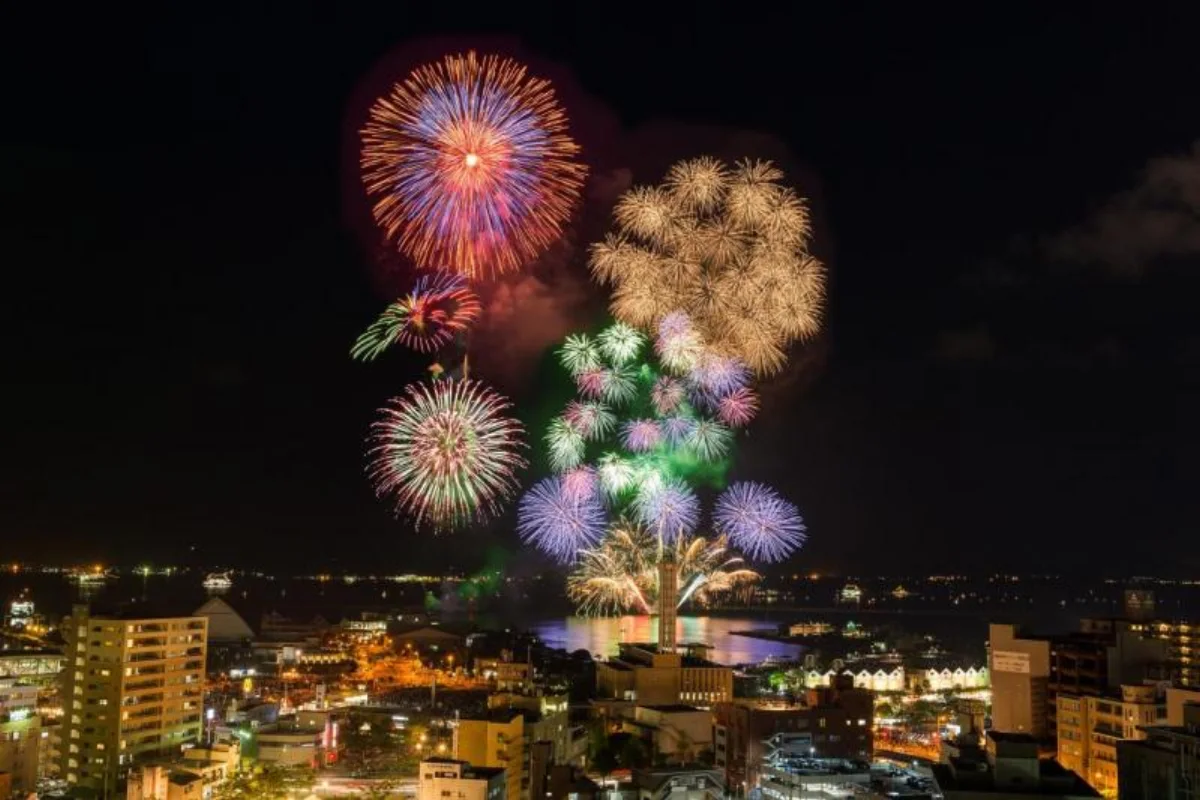
Your practical guide to the Kagoshima Kinkowan Summer Night Fireworks Festival, covering the 24th edition dates and fares, North Pier and Waterfront Park seating, free zones, road closures, and walking routes from Tenmonkan.
Choosing between North Pier chairs, Waterfront Park boxes, and unreserved zones
If you want a guaranteed seat for the whole display, start with the North Pier chair seating or Waterfront Park Zones C1 and C2. Taking the 24th edition as a reference, North Pier sits closest to the launch site, while in Waterfront Park, Zone C1 is on grass and Zone C2 is in the circular plaza, both equipped with chairs. If children or older travellers will need to get up frequently, check which side of the seating block faces the aisle and exit before selecting seats. If part of your group plans to watch only the first half, two aisle seats are far easier to manage than being wedged in the middle of a row.
Four adults travelling together can weigh four Zone C chairs against a single masu box plot. In 2026, Box Zones A and B each offered a demarcated square plot measuring roughly 1.8 metres by 1.8 metres for up to four people. Box A used stepped seating and Box B was on grass, with spectators bringing their own mats or cushions for both. Box A cost ¥14,000 per plot – the same face value as four Zone C chairs – while Box B was ¥10,000, making sense only if everyone can sit comfortably on the ground. If anyone in your group usually needs a backrest or arm support to stand up, keep chair seating as your first choice. Even with four people, if two are carrying large shoulder bags and picnic gear, pack lighter so four pairs of legs still fit comfortably inside the plot.
Zones D and E are paid unreserved areas: your ticket grants entry to the zone, and you claim your spot once inside. In 2026, Zone D occupied the grass lawn at Waterfront Park at ¥2,000 per person, while Zone E was on the asphalt at the former Dolphin Port site at ¥1,500 per person, entered via a separate gate. Both allowed ground mats within the marked area, and the ticket vendor listed an allowance of roughly one metre square per person. Because each zone has fixed boundaries, a Zone E ticket limits you to the Zone E sightline. Bring a thin insulated mat rather than a flimsy picnic sheet on Zone E to block residual heat from the tarmac.
For the 24th edition, reserved chair seating cost ¥4,000 per person at North Pier, ¥3,500 each in Waterfront Park Zones C1 and C2, and ¥4,000 each across Photography Zones A to D. In 2026, every ticket carried an additional ¥165 issuing fee. Including the issuing fee, two North Pier chair tickets totalled ¥8,330, compared with ¥7,330 for two Zone C seats. Factor in that difference first, then compare the seating map to see which gate is easier to reach from your starting point.
When it is your turn to select seats, inspect CN Playguide's seating map and site photos before zooming in on individual seat numbers. For 2026, the ticket seller listed row-to-row pitch at roughly 60 cm for North Pier and roughly 70 cm for Zones C1 and C2. Anyone holding a child on their lap or stowing a daypack at their feet can gauge legroom directly from those dimensions. Decide based on the seating style and ground surface first, then check which exit gate sits closest to your chosen block.
Check children's seating rules and exit routes before you buy
In 2026, children of primary-school age and older required their own ticket. Pre-school children could sit on an adult's lap free of charge at North Pier and in Zone C, though any young child needing their own chair required a paid ticket. The four-person cap on Box Zones A and B excluded pre-school children, so you could count the adult seats toward the limit and then judge how many small children would fit comfortably. For four adults plus one pre-schooler, check both the ticketing rule and physical space separately, especially to leave room for little legs to stretch or shift.
Tickets are sold through CN Playguide. In Japan, the 2026 edition could also be purchased via FamilyMart convenience store multimedia kiosks by searching for Samanaito (the festival's katakana title), alongside a listed telephone booking channel. If you are booking from abroad, open the official festival website's ticketing page for the current edition and check payment deadlines and ticket collection methods before placing an order. If your group plans to enter separately, distribute each person's ticket and zone number well in advance. On site in 2026, some zones required your ticket stub for re-entry while parts of Waterfront Park switched to wristbands or lanyards, so keep them safe once checked at the gate.
Under the official FAQ rules, refunds are not granted for personal schedule changes. If the event is cancelled due to severe weather, organisers issue separate instructions for ticket holders. Save your order confirmation and payment receipt after purchase, and hold onto paper ticket stubs until your trip is over. Keep hotel free-cancellation deadlines and train or flight change fees in a separate column, as any fireworks refund notice covers admission tickets only. Once your room and viewing passes for that night are secured, daytime sightseeing and dinner timings are the easiest parts to adjust.
For the 24th edition, organisers also arranged a pre-booked viewing area for wheelchair users and eligible visitors at the Kagoshima National Highway Office car park, capped at 150 spectators and up to 50 vehicles until full. Eligible groups included wheelchair users, visitors with disabilities, and their carers, with each wheelchair user generally permitted up to two accompanying carers. Within the paid zones, 2026 North Pier chair seating also included wheelchair spaces, though accompanying companions required paid tickets. Booking procedures and check-in points for the two options are completely separate.
Before clicking buy, confirm how far each member of your party can walk and who needs a proper chair, then inspect the toilets and entrances on the venue map. The official FAQ notes temporary portable toilets on site and permits personal pushchairs, though there is no pram rental or left-luggage service. Anyone bringing a pushchair should test the step-free route from the hotel beforehand to see which streets detour around stairs. If a slower walker in your group mainly wants to catch the giant nishakudama shells, you can watch that segment and leave together afterwards – pick a block with straightforward exit access when booking.
Reading the free-zone map legend and the panoramic view from Shiroyama
To watch for free, start with the official festival traffic and access map. The 24th edition marked free viewing areas in pink, spanning several pockets around North Pier, the aquarium, and NHK Kagoshima beside the paid zones and food stalls. Paid areas were marked in red, with pedestrian-only roads shown in separate colours along with their active hours. Once roads open to foot traffic, follow marshal directions into the viewing areas. In 2026, organisers issued a map revision the day before the festival, so if someone sends you a screenshot, open the latest official announcement directly to verify the full version.
Official rules prohibit reserving space before the venue opens. During the day, you can orient yourself around the aquarium, Asahi-dori, and the piers, or scout toilets and routes back to your hotel, then pick a spot once the viewing areas open. The front row right by the water is not ideal for everyone. If anyone needs to sit and rest, check the height of standing spectators in front and ensure a clear walkway remains behind you. If a child would have to be held up on your shoulders from the start, move before the show begins to a spot with a cleaner sightline and an easy exit.
Trees, lampposts, and railings along the waterfront all affect your view. Once you pick a general spot, scan from the waterline upward to check whether rows of trees or pier structures block the lower horizon. Narrower gaps are fine if you only care about high-altitude bursts. If you want low-level fireworks, reflections on the bay, and the full harbour sweep, find a stretch with an unobstructed view of the water. As the crowd edges forward, stay within the designated boundaries and follow steward guidance.
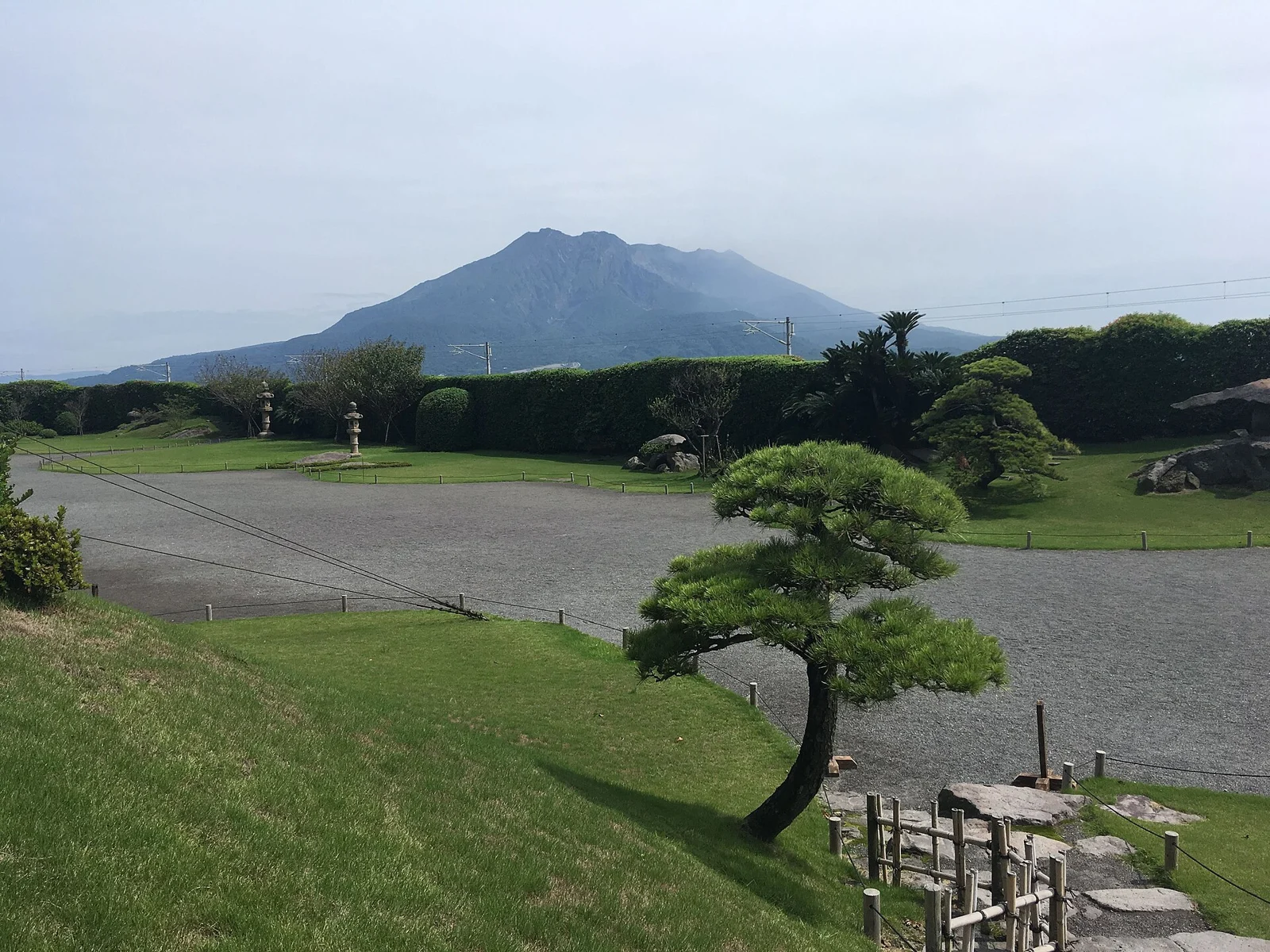
For a wider perspective over the bay, head up to Shiroyama Observatory. Kagoshima City tourism listings put Shiroyama Observatory at roughly 107 metres above sea level, looking out across the city rooftops toward Kinkowan Bay. The official FAQ notes that the observatory stays open on festival day with security staff directing crowds, though heavy congestion is expected. Walk the uphill footpath in daylight first to learn the route for your descent after dark. Shiroyama suits visitors who want the cityscape and fireworks in one frame; if you want to feel the music and the chest-thumping boom of the large shells in the crowd, stay down at the waterfront.
If you are taking older relatives up to Shiroyama, factor both the climb and the walk back down into your plan. Kagoshima City Transportation Bureau's sightseeing bus (Kagoshima City View) stops at Shiroyama during the day and normally runs a night-view service, which the bureau explicitly suspends on the night of the Kinkowan Fireworks Festival. Ride the sightseeing bus up in daylight, and make sure you recognise the trailhead exit and the neighbourhood streets you will emerge onto when walking down at night. If only one person in your group is keen on a wide panoramic shot, you can split up for the display and meet back at the hotel.
Trams and JR trains use different stations: which way to walk to the port
Shinkansen services arrive at JR Kagoshima-Chuo Station, whereas the festival recommends JR Kagoshima Station for the post-show dispersal. The tram stop beside JR Kagoshima Station is called Kagoshima-Ekimae, and the Sakurajima Ferry Terminal sits over by the aquarium. When riding JR into town, check which station you need; when transferring to the city tram, check the destination board on the front. Simply texting 'Kagoshima Station' in a group chat can easily confuse anyone just arriving, so always specify JR or tram.
Under normal conditions, the official access time from Kagoshima-Chuo Station to the venue is around 5 minutes by JR train to Kagoshima Station plus a 15-minute walk, or around 10 minutes by city tram to Asahi-dori followed by a 10-minute walk. Buses also run toward Kinseicho. Those figures are for finding your bearings once you step off at the station; add extra buffer for ticket checks, queues, and temporary diversions. Stepping off the tram at Asahi-dori points you straight toward the port, while guests staying in Tenmonkan can walk straight down from their hotel and skip an extra boarding altogether.
On Kagoshima's city trams, board through the centre door and alight at the front. As of November 2026, the Transportation Bureau's published tram fare is ¥200 for adults and ¥100 for primary-school children, paid in exact cash into the farebox when getting off. City trams and city buses accept the local Rapica card only; nationwide transport IC cards such as Suica and SUGOCA do not work. Keep exact coins in an accessible pocket so you can pay smoothly at the front door without rummaging for change while holding a child's hand.
From Kagoshima Airport, take the airport shuttle bus directly to Tenmonkan. The official FAQ estimates roughly 50 minutes from the airport to Tenmonkan, then about a 15-minute walk to the venue. If you land that afternoon, allow buffer time for deplaning, terminal exit, queuing for the airport bus, and dropping bags at your hotel. Leaving luggage in lockers at Kagoshima-Chuo Station forces a detour back there after the fireworks. If your Tenmonkan hotel can store bags at reception, you only need one straight transfer from airport bus to hotel. For timetables, stops, and boarding bays, check our Kagoshima Airport to city transport guide.
In 2026, vehicle access to North Pier and South Pier was restricted from 15:00 JST, and City Hall did not open the municipal car park for the festival. There is no dedicated festival car parking near the venue – including on the Sakurajima side – and the FAQ confirms there is no designated bicycle parking area either. Drivers arriving from Kirishima or Ibusuki should park at their hotel first and continue on foot or by tram. If you still have to drive out late that evening, check ahead whether one-way restrictions or turn bans around the venue will trap your exit.
Eating dinner outside the venue saves an extra round trip. If you are coming from Kagoshima-Chuo Station and eat near the station, head straight to your JR train or tram afterwards. Families based in Tenmonkan can dine near their hotel and bring drinking water into the venue. Organisers do not set up dedicated sit-down dining areas, though food stalls were planned around North Pier and parts of the venue in 2026. If you want to watch the entire opening volley without missing a beat, eat beforehand rather than queuing for hot food right before launch – and take all your litter and packaging back out with you.
Pick your exit direction first, then check extra late-night services
If you are staying in Tenmonkan, simply follow the main pedestrian flow back into the city streets after the finale. If you need a JR connection toward Kagoshima-Chuo Station or are staying near the station, head toward the organiser-recommended JR Kagoshima Station, then choose between JR trains and the tram. The 24th edition access map specifically directed crowds to JR Kagoshima Station, the Kagoshima-Ekimae tram stop, and nearby bus stops. Extra services are laid on to clear crowds, though queues still form outside the stations. If anyone in your group needs to sit while waiting, step outside the crowd-control cordon first so they can rest where walking space is still open before you join the station queue together.
Several 2026 road closures were tailored specifically for the dispersal rush. The access map designated sections of Prefectural Route Asahi-dori and Miami-dori as pedestrian-only zones from 20:00 to 21:30 JST, and marked that buses would skip the stop outside the aquarium between 18:00 and 21:30 JST. Standard weekday journey planners may route you to the bus stop closest to the pier by default. For festival night, use the official access map first to identify which stations remain open for boarding, then check operator timetables for your direction of travel.
Wheelchair users should verify tram stop accessibility on the Transportation Bureau's boarding guide. Both Kagoshima-Chuo-Ekimae and Kagoshima-Ekimae appear on the bureau's list of step-free, barrier-free tram stops. If you plan to board at another stop, open the wheelchair accessibility table for each tram platform first, then cross-check the exit path from your viewing zone on the festival map. Agree on accessible boarding stops with your group before buying tickets so you do not reach a platform after dark only to find it unsuitable and have to backtrack through the crowd.
If you are heading to Ibusuki or Kirishima the same night, plan your schedule backward from the last train you intend to catch. Which station it departs from, when you need to be on the platform, and whether you can walk or must take a tram to get there matter far more than the ride time itself. Walking to a station only to wait for a crowded relief train can burn through your buffer and leave you squeezed onto the final departure. If missing your return train leaves no backup option, consider whether you need to stay until the very end – or save the hot-spring ryokan check-in for the following day.
Anyone staying through the finale should agree on a meeting point outside the venue exits. Pick a landmark everyone walked past in daylight and can spot easily at night, such as a clear junction or corner building. Save a screenshot of the exact pin on every phone and specify which side of the street to wait on if separated. If someone needs the toilets, move clear of the main exit stream before calling the others. Groups of four to six waiting inside the exit gates for everyone to regroup tend to block the lanes right when crowds move fastest.
Seating zones and dispersal routes do not have to lock everyone together. If children sitting near the front are ready to leave early and an aisle is right next to your seats, follow steward directions out ahead of the rush. A photographer staying for the final sequence can pack up their gear separately and meet everyone back at the hotel. For any group splitting up, make sure each person saves the hotel address, a ticket screenshot, and the name of their return station on their phone before entering.
Sakurajima side, viewing cruises, and camera positions
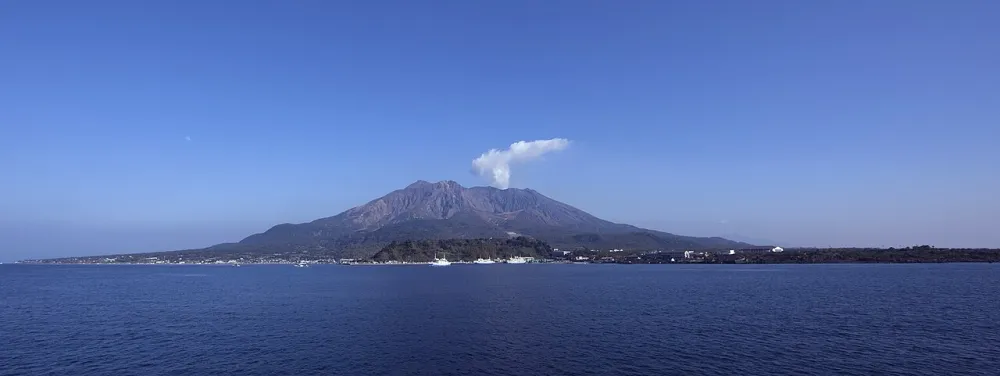
Shooting from the Kagoshima city side puts Sakurajima across the water, though the angle between the launch barges and the volcano ridge shifts considerably even along the same stretch of shore. If you want both in one shot, line up the approximate launch direction against Sakurajima during daylight. Where the two sit too far apart for one frame, compose around the fireworks, the harbour foreground, and water reflections instead. The mountain ridge that looks crisp by day fades fast into darkness at night, so anchoring your foreground with city lights or port illumination gives a stronger frame than waiting for the volcanic silhouette to appear on its own.
If photography is a priority, treat tripod permission as part of the ticket value. In 2026, tripods were allowed in the dedicated Photography Zones, while stepladders were banned everywhere. Zone A sat on a gentle waterfront slope, Zone C offered a slightly higher angle able to include silhouettes of the crowd, and the newly added Zone D by the fountain offered water-reflection angles right from your seat. Guests in standard chair or unreserved zones can shoot handheld with a smartphone or camera. Start with a slightly wider framing to capture the harbour, see how high the opening bursts rise, and crop tighter afterwards. Once smoke begins to obscure the lower sky, keep within safe boundaries and tilt up for higher aerial shells while keeping walkways clear.
Watching from the Sakurajima side flips the backdrop to Kagoshima's city lights, though you will need the ferry back into town at night. The official FAQ states that ferries operate on festival day; live crossings are listed on the Ships Bureau's Sakurajima Ferry routes and timetable. Check your intended sailing direction and build in time to walk from your viewing spot to Sakurajima Port Terminal, queue for the boat, and cross town after landing. Wheelchair users travelling with a group can check accessible ferry sailings on the same page.
In 2026, the Ships Bureau also ran the 'Ferry de Summer Night' viewing cruise from 19:00 to 21:00 JST, departing from and returning to the Sakurajima Ferry Terminal at Kagoshima Port. Adult tickets cost ¥4,500, with boarding opening around 18:30 JST. Watching the city skyline and fireworks from offshore suits travellers who want an open-water view, though you are committed to the boat from boarding until docking. If young children might tire early or someone needs frequent shore breaks, land-based chair seating is the safer pick. At the terminal, check the signage for your specific cruise name and meeting time, as regular commuter ferry passengers also use the pier that evening.
Sakurajima itself works better as a standalone trip the next morning. Head across with our Sakurajima half-day guide to walk the lava trail and try the footbath without racing back to the pier straight after the finale. Visitors staying overnight on Sakurajima should plan luggage and evening transport in reverse; if half your group is sleeping in the city and the other half on Sakurajima, map out your separate dispersal routes from the start.
Staying in Tenmonkan vs Kagoshima-Chuo Station, and what to do the next day
If the fireworks night is your priority, Tenmonkan is the easiest base. Drop your daypacks in the room during the day, pick dinner along the covered shopping arcades, and walk down toward Asahi-dori; afterwards, if tram queues look long, you can simply walk back along open streets. Save both your hotel pin and your exact festival gate name together – when map pins only mark the district or park, write the entrance name right alongside them. For first-time visitors, using the hotel lobby as a fixed meeting point works far better than trying to reunite outside a crowded harbour exit in the dark.
The area around Kagoshima-Chuo Station suits travellers dragging suitcases onto an early-morning Shinkansen or JR train the next day. You add one extra station transfer after the fireworks, in exchange for stepping straight onto your departure platform in the morning. Scout your boarding platform and tram stop in daylight, and if you plan to transfer via JR Kagoshima Station at night, ride that short leg out by JR beforehand so you also clock where the tram and bus stops sit outside the station.
If you book a waterfront hotel near the piers, measure the walking route along actual open roads from the lobby door, not as the crow flies. A few dozen metres on a map can turn into a long detour around paid-zone fences and crowd barriers. If you hope to watch from your room, ask the hotel before booking which pier the sea-view windows face, how the floor height clears nearby buildings, and whether you can see the launch area cleanly from the glass. If the front desk can only confirm 'ocean facing', compare the room premium against buying paid-zone tickets – guaranteed seats on the ground usually deliver a clearer view than gambling on a hotel window.
For a low-walking afternoon, visit Kagoshima City Aquarium right in the port district after dropping bags at your hotel around midday, then have an early dinner nearby. According to the festival's 27 August 2026 announcement, the aquarium closed temporarily at 19:00 JST on festival night and reopened from 20:30 to 23:00 JST, with same-day ticket stubs valid for re-entry and evening tickets available separately. Because the city tourism event page listed a different reopening time that year, always follow the organiser's latest notice. Pin your hotel, the aquarium, and the fireworks gate on one map so you can see whether a post-show revisit clashes with your last train or tram.
Sengan-en pairs neatly with the following morning by rail up the northern edge of the city, or you can tour the garden earlier in the day and return to the port in good time. The 2026 road closure map also flagged traffic restrictions along the Iso-kaido road near Sengan-en Station, leaving little slack if you stack other afternoon sights before the fireworks. If you want to follow a half-day Sengan-en itinerary by JR train, set aside a separate morning for the garden and head back into town for lunch.
To combine Kagoshima city with Ibusuki sand baths or Kirishima hot springs, spend festival night in town and relocate to your onsen hotel the next day. Trying to reach a hot-spring inn after the finale means juggling dinner cut-offs, final check-in times, and dispersal crowds all at once. On the morning after, there is no rush: linger over breakfast in Tenmonkan before picking up stored bags. If you have an extra day, check our Kagoshima, Kirishima, and Ibusuki accommodation and itinerary comparison to decide between heading into the mountains or south down the Satsuma Peninsula.
If the weather turns, half a day in the city still works smoothly
On festival morning, check the organiser's latest updates first, then look up any temporary rail or ferry notices from the transport operators. In 2026, organisers issued a same-day confirmation that the display would go ahead as planned, along with reminders to stay hydrated and wear a hat. If rain or strong wind hits, follow the edition's official go-ahead, cancellation, and refund notices. If the show is called off, switch straight to an indoor evening plan in town; only compare next-night room and train changes if an official postponement date is announced.
Keep wet-weather backups on the same side of town as your hotel. Near Kagoshima-Chuo Station, the Museum of the Meiji Restoration (Ishin Furusato-kan) along the Kotsuki River covers late-Edo Satsuma history and the Meiji Restoration. City Hall listings note an 8-minute walk from JR Kagoshima-Chuo Station, with regular hours until 17:00 JST and last entry at 16:30 JST. Guests staying in Tenmonkan can visit the Kagoshima City Museum of Art instead – just check its opening calendar and last-entry time for that day. Because the aquarium adjusts its hours for festival operations, read its daily notice before walking to the port. In heavy rain during waterfront road closures, dine near your hotel rather than crossing a closed cordon twice.
If only a short indoor window remains, decide on dinner first. Once the Museum of the Meiji Restoration closes, it is an easy walk back to the shopping complex at Kagoshima-Chuo Station for restaurants; from the City Museum of Art in Tenmonkan, stroll past Terukuni Shrine back into the covered arcades. If the city issues a storm-closure list for public facilities during a typhoon or torrential downpour, stay close to your accommodation until conditions ease. Travellers whose fireworks night is postponed to the following evening can move distant day-two sights into the morning and keep city-centre transport flexible at night.
City-based wet-weather plans also handle different energy levels within a group. Tired toddlers can head back to the room for a nap while adults still grab dinner under the covered arcades. Photographers waiting for a break in the clouds can keep screenshots of the programme and access map handy and decide from the hotel once an official update lands. If skies clear the next morning, take the ferry across to Sakurajima first, tailor your stops to the ferry timetable and onward trains, and still leave time for a stroll around the Honko waterfront in the afternoon.
Waiting in late-August heat and humidity takes a toll, so note nearby drink and shade points around your seats early. Pack drinking water, a light waterproof mac, any seat cushion you need, and a power bank in your daypack. Use a sun hat during the afternoon wait – tents and parasols that block sightlines are banned inside the venue. If anyone in your group is sensitive to loud bangs, weigh the distance from the launch barges and the direction of the nearest exit when picking seats, and bring familiar ear defenders.
A few useful answers
Have the 2027 Kinkowan Summer Night Fireworks dates been announced?
As of 22 November 2026, the official website still shows details for the 24th edition held on 29 August 2026. Watch the organiser's event announcement first for the next edition; ticket sales dates and traffic maps are normally published in separate updates.
Can you lay down a mat early to save a spot in the free viewing areas?
No. Organisers prohibit saving spaces before the viewing areas open. Use daylight hours to check the free-zone boundaries, toilets, and return routes on the current map, then claim your spot inside the permitted area once it opens.
For older travellers, should we pick North Pier or a Box plot?
If you want proper chairs, pick reserved chair seating at North Pier or Waterfront Park Zone C. In 2026, Box A used stepped seating and Box B was on grass, both requiring your own mats. Travellers with limited mobility should also check the edition's dedicated wheelchair viewing area.
Which is more convenient: Kagoshima-Chuo Station or Kagoshima Station?
Shinkansen passengers arrive at Kagoshima-Chuo Station; from there, take the city tram to Asahi-dori and walk to the port. For leaving the North Pier side after the show, organisers direct crowds toward JR Kagoshima Station or the neighbouring Kagoshima-Ekimae tram stop.
Can I use a tripod with a standard ticket?
In 2026, tripods were permitted only inside the designated Photography Zones, and stepladders were prohibited throughout. Spectators in standard chair or unreserved areas can shoot handheld with a phone or camera.
What happens to paid tickets if the fireworks are cancelled due to weather?
Once a cancellation is announced, organisers issue separate instructions for ticket holders on how passes will be handled. Keep your booking confirmation and tickets safe; transport and hotel bookings remain subject to their own cancellation policies.
Official information and references
Sources used in this guide.
- Festival Organiser | Event Details, Programme, Venue Rules, Tickets & 29 August 2026 Confirmation
- Festival Organiser | 24th Edition Date Announcement (30 April 2026)
- Festival Organiser | Paid Seating On-Sale Date & Seat Selection Notice (27 May 2026)
- Festival Organiser | Latest News & Past Announcements
- Festival Organiser | FAQ: Child Tickets, Wheelchairs & Refunds
- Festival Organiser | Venue Access & Road Closure Map
- Festival Organiser | 24th Edition Free Viewing Areas & Traffic Map Revision
- Festival Organiser | 24th Edition Wheelchair Viewing Area Booking Notice
- Festival Organiser | 24th Edition Kagoshima City Aquarium Night Reopening & Admission
- Official Kagoshima City Tourism Guide | 24th Edition Date, Venue & Nearby Sights
- Official Kagoshima City Tourism Guide | Shiroyama Viewing Spot & Venue Rules
- Official Ticket Agency CN Playguide | 2026 Seating Map, Site Photos & Equipment Rules
- Kagoshima City Transportation Bureau | City Tram Boarding, Fares, Payment & Barrier-Free Stops
- Kagoshima City Transportation Bureau | Kagoshima City View Shiroyama Route & Night-View Bus Suspension
- City of Kagoshima | Museum of the Meiji Restoration Exhibits, Access & Opening Hours
- Kagoshima City Museum of Art | Opening Calendar & Current Exhibitions
- City of Kagoshima | Facility Closures During Heavy Rain & Typhoons
- Kagoshima City Ships Bureau | Sakurajima Ferry Routes & Timetable
- Kagoshima City Ships Bureau | 2026 Kinkowan Night Viewing Cruise