Compare airport transport to Kagoshima-Chuo, Tenmonkan, the port and Kirishima, with return bus stops.
- Region & Focus
- Kagoshima and Sakurajima
- Reading Scope
- 25 min read · 18 chapters · 4 Q&As
- Official Verification
- 22 official sources checkedUpdated 30 October 2026
- Key Topics
- Airport transfersKyushu
Chapter Route Map (tap any stop)
- Planning your journey
- Finding the city bus at the airport
- Kagoshima-Chuo: Shinkansen connections and station hotels
- Tenmonkan: check that your bus stops there
- High-speed ferry terminal: match bus and boat times separately
- Fares, tickets and payment
- Reading the timetable: late flights and full buses
- Practise using actual timetable times
- Before leaving your hotel for the return
- Returning from Kagoshima-Chuo: find the correct stop
- Wheelchairs, luggage and travelling together
- Kirishima first, or Kagoshima city first?
- Waiting at the airport and onward arrangements
- JR and island ferries: connect the two timetables
- Three arrival-day plans
- Maps and information to save before boarding
- Count transfers, fare sections and group arrangements together
- International arrivals: reaching the buses and storing luggage
- Quick Q&A
The direct airport bus from Kagoshima Airport to Kagoshima-Chuo Station takes about 38 minutes and costs ¥1,500 one way for an adult. Services via Yoshino take about 55 minutes. Board at stop 8 outside the terminal; no advance reservation is needed. For a hotel near Chuo Station or a Shinkansen connection, choose a service that calls there. For Tenmonkan, check that your bus has a Tenmonkan time in the timetable, then choose your stop by the hotel’s location.
Planning your journey
The airport is in Kirishima City. If your first night is in Kirishima Onsen or you are heading to Kirishima Jingu Shrine, travel directly from the airport without first entering Kagoshima city. City-route fares and timetables dated 27 October 2026 are on Nangoku Kotsu’s current timetable page.
| Destination | How to travel | What to check first |
|---|---|---|
| Kagoshima-Chuo and Shinkansen | City bus from airport stop 8; get off at Chuo | About 38 minutes direct or 55 minutes via Yoshino |
| Tenmonkan hotels | City bus with a Tenmonkan time in the timetable | Hotel address and Tenmonkan bus-stop position |
| High-speed ferry connection | Find a service calling at the high-speed ferry terminal | Check bus and ferry times and boarding points separately |
| Kirishima Onsen or Kirishima Jingu Shrine | Kirishima bus from airport stop 9 | Fewer departures; match flights, buses and hotel transfers |
| Taniyama or Ibusuki | Check the relevant route at airport stop 7 | Use that route’s fare, route and payment notices |
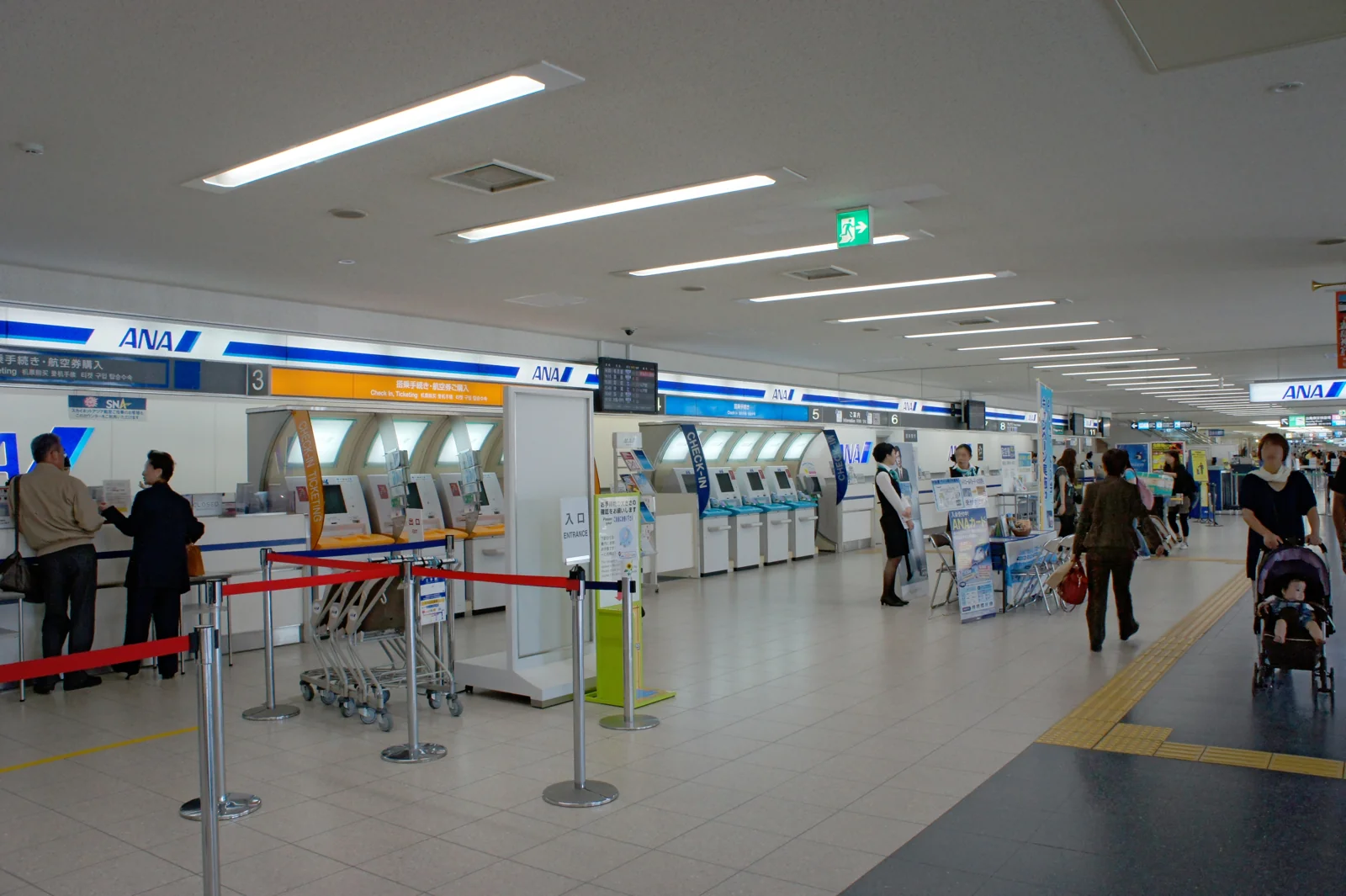
Compare airport transport to Kagoshima-Chuo, Tenmonkan, the port and Kirishima, with return bus stops.
Finding the city bus at the airport
After collecting bags and completing international immigration where needed, follow bus signs outside to the boarding area. The airport bus-stop list assigns Kagoshima city services to stop 8. Nearby, stop 7 serves Taniyama and Ibusuki, and stop 9 serves Kirishima. Check the destination on the stop sign and then on the bus. If your group splits up to buy tickets, agree to meet at stop 8.
Use the airport map to locate the terminal and the airport’s official stop diagram for the bus position. The airport page links to operators’ timetables for each direction. Nangoku Kotsu and Kagoshima Kotsu jointly operate the city route, so either company’s buses may appear in the timetable. Look for the destination and departure time rather than relying only on the bus colour.
Keep your ticket ready after buying it and confirm your destination with the driver before boarding. If large luggage goes in the hold, keep valuables and fragile items with you and collect your own case on arrival. Nangoku Kotsu’s boarding guide explains luggage handling and seat belts. Follow crew instructions on where to load bags.
Kagoshima-Chuo: Shinkansen connections and station hotels
Nangoku Kotsu gives about 38 minutes from the airport to Kagoshima-Chuo direct, or about 55 minutes via Yoshino. The direct return from Chuo to the airport takes about 40 minutes. These are times aboard the bus. Add immigration, waiting, road conditions and finding your platform after arrival.
For a Kyushu Shinkansen connection, do not simply add 38 minutes to the flight’s landing time. Estimate when you can leave the terminal, choose a later bus, then add the walk into the station and ticket purchase. Leave flexibility when booking reserved seats. After a late landing, a later train is often more practical than an itinerary that depends on rushing.
Kagoshima-Chuo Station has east and west exits, with bus stops on different streets. When booking a hotel, use its actual entrance address rather than “near Kagoshima-Chuo Station” and check the walk from the bus drop-off. Shinkansen passengers can save the Japanese name 鹿児島中央 and distinguish it from the city’s separate Kagoshima Station.
Tenmonkan: check that your bus stops there
Tenmonkan is a central shopping, dining and hotel district, useful if those activities fill your first evening. It appears in the city-route timetable, but not every column necessarily has a time for it. After choosing an airport departure, follow the same column down to Tenmonkan. Only plan to get off there if a time is shown. If the service ends at Chuo, change to city transport there or find the next bus that calls at Tenmonkan.
Use the Tenmonkan map to understand the district, and the operator’s Tenmonkan stop diagram for the actual arrival and return stops. The tram stop and airport bus stop are separate facilities. Do not search only “Tenmonkan” before leaving for the airport. After reaching your hotel on the first night, save the correct return stop on your map. If departing early, identifying it the day before makes the morning easier.
High-speed ferry terminal: match bus and boat times separately
Nangoku Kotsu’s timetable also lists the high-speed ferry terminal, but fewer services call there than at Chuo. For an island journey, first check the terminal name on your booking, boarding-procedure time and sailing date. Then find an airport bus with a time at that stop. Compare the bus arrival with the ferry company’s check-in requirement. If the interval is too short, change your onward sailing or city accommodation plans.
Reaching Chuo Station is not reaching the port. If you get off at Chuo and change transport, include carrying luggage, waiting for the next journey and entering the correct passenger terminal. The city-route page has the high-speed ferry terminal stop diagram and timetable.
Fares, tickets and payment
The city-route single fare is ¥1,500 for an adult and ¥750 for a child. Two adults each making a return journey pay ¥6,000; two adults and one child each making a return journey pay ¥7,500. These examples cover only the airport city route, excluding trams, JR and port transport. The operator’s current fare information also states that Rapica and contactless payment no longer receive the previous discounts. Do not budget using discounted fares in old articles.
The official Kagoshima tourism page lists cash, Rapica and contactless credit-card payment, supporting Visa, JCB, Mastercard, American Express, Diners Club and Discover. Nangoku Kotsu says contactless credit-card users on the airport–Kagoshima city route tap once when boarding; payment is completed then. Some other airport routes require tapping on and off. Do not apply the city-route method to every destination. See the contactless payment guide.
The city route uses advance payment: pay when boarding. Nangoku Kotsu’s boarding guide distinguishes this from its pay-on-exit routes. Show a pre-purchased ticket as you board. If paying directly, follow the driver’s and on-site instructions. For children, concession tickets or payment for several people, tell the driver the passenger numbers and ticket categories before tapping so any separate processing can be arranged.
If paying cash, check your note denominations. Nangoku Kotsu’s on-board change instructions list ¥1,000 notes and ¥500, ¥100 and ¥50 coins as exchangeable. The machine cannot change ¥2,000, ¥5,000 or ¥10,000 notes. As you pay on boarding on the city route, buy a ticket before queuing or prepare an accepted contactless credit card if you have only large notes. If using the on-board change machine, wait until the bus has stopped.
Contactless credit cards and transport IC cards are different payment methods. Kagoshima Kotsu’s official FAQs say its buses do not accept nationally interoperable transport IC cards such as Suica and PASMO. If those are your usual cards, prepare cash or a listed contactless credit card for the airport city route. Check each operator’s rules separately when changing to other routes.
Reading the timetable: late flights and full buses
Open the city-route timetable effective from 1 April 2026. Choose airport → Kagoshima city or city → airport first. Each column is one service. Read from its departure stop to your destination; a blank does not mean it stops. The timetable also identifies operators and wheelchair-lift vehicles. Check each column carefully, especially for destinations beyond Chuo.
Ordinary passengers do not reserve this route. The operator says passengers take the next service if a bus is full. Treat your chosen departure as a target rather than the only bus you can take after arrival. For an early flight, work backwards from the check-in deadline to the bus arrival, then add the hotel-to-stop journey and waiting. Consider whether the following bus would still be early enough. Roads and weather can affect actual arrival times.
For a late arrival, estimate landing, leaving the aircraft, immigration, baggage collection and walking to the stop separately. Timetable notes say starred airport departures after 20:45 may leave later to account for arriving flights, with linked flights scheduled to arrive as late as 22:10. This does not mean every bus waits indefinitely. For a delayed flight, consult airport flight information and operator service notices, then tell your accommodation when you may arrive.
If concerned about missing the day’s buses, research accommodation near the airport or in the city and save the taxi-rank location and contact number. Kagoshima City information, using May 2026 data, estimates a taxi to Chuo Station at about 40 minutes and ¥14,590. This is an estimate; the route and road conditions affect the actual fare. Before sharing a vehicle, tell the driver your destination and luggage count.
Practise using actual timetable times
In the April 2026 timetable, the 08:40 airport city-route departure reaches Chuo at 09:18, Tenmonkan at 09:26 and the high-speed ferry terminal at 09:32. Use 09:18 for Chuo or 09:26 for Tenmonkan; these are different arrival times for the same bus. If it is already 08:40 when you reach the terminal, choose the next departure you can actually reach at the stop instead.
For the return, the first listed Chuo departure is 05:35, arriving at the airport at 06:13. The final Chuo departure in that table is 19:00, arriving at 19:40. These figures help assess early and late flights, but they are not airline check-in deadlines. For an early flight, check the airline’s required airport arrival time, then whether enough time remains after 06:13. If not, arrange other transport.
The final airport-to-city service in the table leaves at 21:30, reaching Chuo at 22:08 and Tenmonkan at 22:16. It is part of the evening timetable; actual flights and bus operations may change. If aiming for the final few services, prepare operator contact details, your accommodation address and a budget for alternative transport rather than saving only “last bus 21:30”. An onward train or ferry may finish operating earlier.
Services marked Yoshino run via Kamihanadana, Yoshino and Inaricho. For Chuo, use that particular service’s Chuo arrival time rather than applying the 38 minutes from another bus. The same stop name can also appear twice along different routes in the table. Follow one column throughout instead of combining apparently close times from neighbouring rows.
Before leaving your hotel for the return
Work backwards from your airline’s check-in deadline and choose a bus scheduled to reach the airport early. Note its departure time and stop at Chuo or Tenmonkan, then estimate the hotel-to-stop journey. If you first need a tram or taxi, include this separate leg, waiting and the walk after getting off. Finally, look at the preceding bus and assess alternatives if roads or your first journey are delayed.
For example, three people staying near Chuo’s west exit may need to board opposite the east exit in the morning. Although the hotel map shows a station location, they must cross the station, find the exit and reach the bus building. If one person walks more slowly, plan for the whole group rather than the fastest walker. For a wheelchair lift, choose a marked service and reserve by the previous day. This differs from the no-reservation rule for ordinary seats.
Returning from Kagoshima-Chuo: find the correct stop
Return buses leave from Kagoshima Chuo Terminal Building opposite the station’s east exit. Airport services use stop 1. This is a bus facility across from the station, separate from the JR platforms. The Kagoshima tourism website’s illustrated guide shows underground and street-level routes with photographs.
Follow east-exit signs inside the JR station. From that side, use the illustrated underground route to Chuo Terminal Building, then go up to the boarding level. The street route crosses the road in front of the station to the building opposite. With luggage, check actual lift locations rather than treating a straight-line map distance as walking time. From a west-exit hotel, you must also cross the station or go round to the east side.
At the stop, check the Kagoshima Airport direction, departure time and boarding position again. The area has many local and highway buses, and the building serves more than airport buses. If arriving at Chuo from elsewhere in the city, check the walk from your drop-off to the airport stop. From a Shinkansen, also allow for walking from the ticket gates to the east exit.
If boarding at Tenmonkan, consult Nangoku Kotsu’s city-route stop map and timetable. The side where you arrived is not necessarily the return boarding side. Find the airport-bound stop and time. If your chosen service does not stop at Tenmonkan, board at one it serves or choose another bus with a Tenmonkan time.
Use this walking guide from Kagoshima-Chuo Station through the underground passage to the airport bus terminal to identify exits and turns. With luggage, include this final walk in your departure time.
Wheelchairs, luggage and travelling together
A wheelchair symbol in the timetable marks vehicles with lifts. According to the operator’s timetable, passengers remaining in their wheelchairs must reserve by the previous day. Each bus can accommodate one wheelchair, and maintenance may require a different vehicle. Contact Nangoku Kotsu Airport Motor Office on 0995-58-2341, 09:00–17:00, with your date, direction, service and requirements.
For families and groups, agree on the destination stop, payment method and luggage count, and make sure everyone knows the meeting point. A full city bus may mean taking the next departure. If your group must travel together, choose a service with spare time in your plan and queue early. Keep medicines, passports and overnight essentials in hand luggage so you do not need to search through cases at the hold.
For lost property, record the date, departure time, boarding and alighting stops, and operator before contacting that company. The timetable lists Nangoku Kotsu Airport Office on 0995-58-2341 and Kagoshima Kotsu Airport Limousine on 099-247-2341. Tickets or credit-card payment records may help identify your service, but do not share personal payment details publicly.
Kirishima first, or Kagoshima city first?
For a first night near Kagoshima-Chuo or Tenmonkan, the city bus at airport stop 8 takes you directly to the main hotel districts. For a ryokan in Kirishima Onsen, travelling to Chuo first and back adds distance. Kirishima services use airport stop 9; check the stop or shuttle meeting point nearest your hotel first.
The Kirishima City official shrine shuttle links Kagoshima Airport, Maruo, Kirishima Jingu Shrine and Kirishimajingu Station. The official page lists daily airport departures at 09:30, 12:30 and 14:30, with 17:20 on weekends and public holidays. The journey to Maruo takes about 30 minutes. Other regular Kirishima routes are available; these four departures are not every bus to Kirishima.
For example, after an afternoon flight, you must finish disembarking, immigration, baggage collection and the walk before 14:30 to catch that shrine shuttle. If you miss it, check other Kirishima routes or hotel transfers. Ask your hotel for the nearest stop name and shuttle conditions, then consult that stop’s times. Use the return columns for the airport journey rather than working backwards from outbound times.
Waiting at the airport and onward arrangements
If you have time between buses, change money, use an ATM and contact your accommodation before going to the stop. The airport international facilities page lists level 1 tourist and general information, currency-exchange machines, lockers, SIM cards and Wi-Fi rental. The domestic level 1 also has ATMs and luggage storage. Check the terminal and opening information for the facilities you actually need; do not miss your bus to complete every possible preparation.
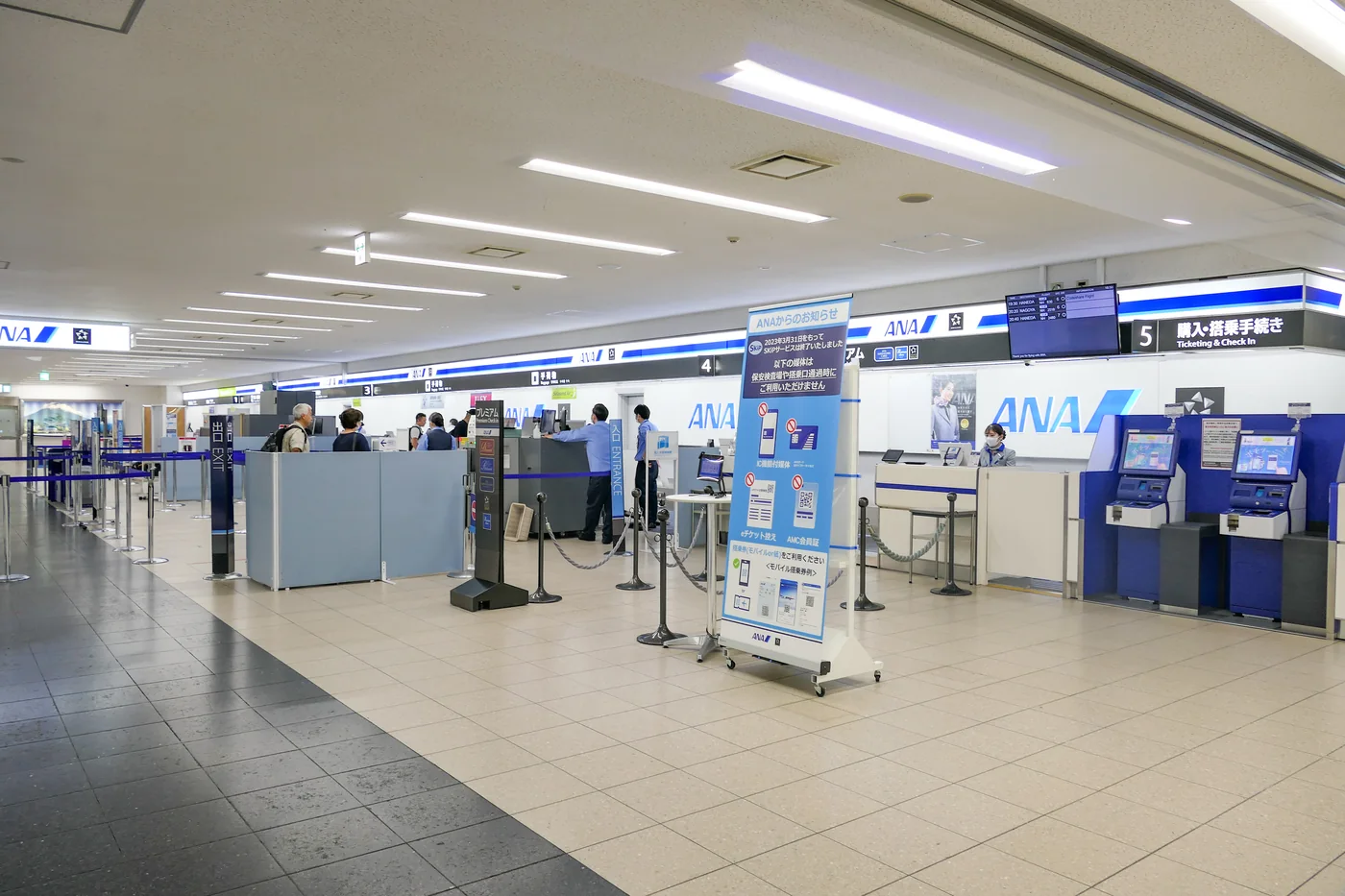
For a longer wait, the natural hot-spring footbath Oyattosa beside the domestic terminal’s level 1 is free. Official hours are 09:00–19:30. Towels cost ¥350 each from the nearby vending machine, which accepts cashless payment only. Bringing a small towel is useful too. A dedicated lifting wheelchair is available for the footbath; ask the domestic level 1 tourist and general information counter. See airport footbath information.
Make the bus departure your priority. The footbath is by the domestic building, so after international arrivals add the return walk and time to put shoes and socks back on. Check whether the next bus stops at your destination before leaving the stop. With only a few minutes between connections, staying at the boarding area is usually more practical.
If you reach the airport early on your return, use the spare time for airline procedures, food or arranging checked bags. The airport’s FAQs give domestic terminal opening at 06:00 and closure 30 minutes after the last arriving flight. International terminal hours depend on flight departures and arrivals. Shops have separate hours; do not assume every facility operates throughout the day for an early flight. Plan checked baggage and international check-in around your airline’s deadlines.
JR and island ferries: connect the two timetables
At Chuo after the airport bus, Shinkansen and conventional trains have separate gates. The JR Kyushu station map shows the east exit, both sets of gates, ticket offices and lifts. Enter the station after leaving the bus and find the correct entrance for your ticket or booking. Include collection time if you still need tickets.
JR Kyushu’s Kagoshima-Chuo information lists the staffed ticket office as open 07:00–21:00 and machine collection for online bookings as 04:45–23:20. If transferring outside office hours, check your product’s collection method and machine hours before finding that you need staff assistance on arrival. The station has lockers, but add time to regroup if companions split up to store bags and buy tickets.
For high-speed ferries from Kagoshima to Tanegashima or Yakushima, distinguish bus arrival from completion of boarding procedures. Follow ferry-company information for the boarding point and check-in time. If you find a direct bus to the high-speed ferry terminal, compare its stop arrival time with the ferry check-in deadline. A gap of only a few minutes leaves no room for ordinary variation at the airport or on the road.
When booking Yakushima ferries, also check the island arrival port. The Yakushima Tourism Association’s island transport page lists high-speed boats and ferries at Miyanoura Port, and high-speed boats at Anbo Port. Match the arrival port on your ticket with your accommodation address and island pick-up point before arranging onward travel.
Three arrival-day plans
First night at Chuo, Shinkansen next day: Collect bags and take the city route from stop 8 to Chuo. Save the JR station and hotel entrance on your map. If you have reserved next-day seats, check ticket collection methods and hours. If time allows that evening, locate the Shinkansen gates so you do not have to find them while wheeling bags next morning.
First night at Tenmonkan, return from Chuo: Choose an outbound service that stops at Tenmonkan and check the distance between the stop and hotel entrance on arrival. If your final-day sightseeing takes you back to Chuo, board the airport bus at Chuo Terminal Building. With lots of luggage, include the hotel-to-Chuo city journey in your schedule. If a suitable service calls near the hotel, board at Tenmonkan to avoid a transfer.
Straight to a Kirishima hot-spring stay: Check the hotel’s nearest stop and shuttle, then the Kirishima route at stop 9. The shrine shuttle has fixed departures. If your flight arrives between them, compare regular buses and hotel transfers, waiting times and walking distances. If continuing to Kagoshima city next day, list Kirishima-to-city transport separately rather than doubling the airport city-route fare as your total cost.
Each plan has a different easily missed step: collecting tickets inside Chuo for a Shinkansen, checking whether a bus stops at Tenmonkan, or confirming the hotel-shuttle stop in Kirishima. Settle the point that changes your route first, then the payment and luggage details.
Maps and information to save before boarding
Save Kagoshima Airport, Kagoshima-Chuo Station, Kagoshima Chuo Terminal Building and your hotel entrance on your map before travelling. Map links locate buildings. For airport stop 8 and Chuo stop 1, compare operator diagrams with signs on site. For the airport bus from Chuo’s east exit, the official illustrated guide also has underground-route pictures to save.
Each traveller should save the hotel’s Japanese address and that evening’s meeting point. If one person buys tickets while another watches bags, both know where to return. Before leaving the bus, check the next-stop display for Chuo or Tenmonkan and follow crew instructions. Count bags after unloading, then open directions to the hotel. For a ferry connection, also save the Tanegashima–Yakushima high-speed passenger terminal rather than only the wider “Kagoshima Port” area.
If your trip includes both city hotels and Kirishima Onsen, mark each night’s hotel first, then decide your arrival-day direction. Bus information separates Kagoshima city and Kirishima routes. Although they leave the same airport, stops, services and payment rules can differ. Record each leg as departure point, destination stop and operator; this makes finding the right timetable easier than simply searching “Kagoshima transport”.
Download the operator’s PDF to your phone and keep the online timetable link too. The offline copy helps identify stop names with a poor signal, while the online version shows whether a newer timetable exists. Check the destination display at the stop as well. Share screenshots with companions, especially those using separate transfers or hotels, so everyone knows their own stop.
Count transfers, fare sections and group arrangements together
Nangoku Kotsu’s city timetable lists Chuo, Tenmonkan and the high-speed ferry terminal together, but not every bus serves every stop. Follow one column down from its Kagoshima Airport departure to your destination. Include that bus only if the destination has a time. For Kirishima or Ibusuki, consult the separate route rather than using city-route stops, fares or payment procedures.
On the airport return, Kagoshima-Chuo and Kagoshima are different stations. The Chuo airport stop is at Chuo Terminal Building opposite the east exit, separate from JR platforms. From a west-exit hotel, include crossing the station and finding the east exit. If staying in Tenmonkan, first check nearby airport-bound stops and whether your bus calls, then decide whether you need to go to Chuo.
For an island high-speed ferry, read the actual boarding point and check-in requirements on the ticket first. Some city buses call at the high-speed ferry terminal. If a service does not connect with your flight and ferry, compare going to Chuo and changing to city transport. List immigration and baggage collection, waiting for a bus, the bus journey, the walk from stop to terminal and ferry procedures separately. If you cannot connect that day, ask the ferry company about later usable services.
The city timetable also marks wheelchair-lift services. Passengers remaining in wheelchairs should call the operator in advance using the listed number and give their date, direction and assistance needs. Ordinary seats do not require reservations. With much luggage, allocate tickets, pushchair care and bag counting before departure. At Chuo, follow the route to your hotel entrance or JR connection.
For a first night in Kirishima, ask your accommodation for the nearest bus-stop name and transfer meeting point. The shrine shuttle leaves airport stop 9, passes Kareigawa, Maruo and Kirishima Jingu Shrine, and ends at Kirishimajingu Station. A hot-spring hotel and accommodation near the railway station may need different stops. Match the hotel’s specified stop to the timetable before planning when to reach the airport boarding area.
If companions have different city-route destinations, note each person’s stop and hotel address beforehand. Chuo suits Shinkansen connections. For Tenmonkan, choose a bus that calls there. For the port, check the ferry company’s terminal. Count bags before getting off and keep passports, medicines and the day’s essentials in hand luggage so you do not have to reopen every case during a transfer.
The shrine shuttle’s 2026 information lists daily airport departures at 09:30, 12:30 and 14:30, with 17:20 on weekends and public holidays only. The 09:30 service is scheduled at Maruo at 10:00 and Kirishima Jingu Shrine at 10:15. For a hot-spring ryokan, check the nearby stop rather than using the shrine arrival time as your accommodation drop-off time.
International arrivals: reaching the buses and storing luggage
Stay on level 1 for the walk from international arrivals to the buses. The official terminal map marks the domestic-terminal direction beside international entrance 3. City-route stop 8 is in front of the domestic terminal, in the group of stops 6–10. Outside international arrivals, stop 2 is for taxis and stop 3 for accessible vehicles. If companions split up to exchange money or arrange mobile data, meet at the bus information office in front of the domestic terminal before queuing together at stop 8. This avoids waiting outside different terminals.
As of 30 October 2026, the lockers on the international level 1 have ¥300 and ¥500 sizes. Both are 36 cm wide and 57.5 cm deep; heights are 55 cm and 113.2 cm respectively. Measure the outside of your case, including wheels, handles and side pockets, and compare width, depth and height individually before choosing a locker.
A new storage day is charged at midnight. Leaving a bag in the evening and collecting it next morning crosses a charging-day boundary. If you only want a meal or footbath while waiting and collect it the same day, it stays within one day. The official maximum is seven days including the deposit day. If leaving for Kirishima or an island before collecting bags on your return, count the deposit date as day one on a calendar. For more than seven days, contact the management company, Kagoshima Airport Sangyo, in advance on 0570-015-255, weekdays 08:45–12:00 and 13:00–17:00. It is closed from 31 December to 3 January.
Lockers cannot be accessed while the terminal is closed. The official airport FAQs say that for arriving international flights, the terminal opens two hours before arrival and closes one hour afterwards. For departures, it opens three hours before departure and closes one hour afterwards. If bags are in the international terminal but you return for an early domestic flight, compare both buildings’ opening hours. The international terminal may still be closed when the domestic terminal opens at 06:00. In that case, collect bags the previous day and take them to your accommodation so you can go straight to domestic check-in next morning.
A few useful answers
Can I take JR directly from Kagoshima Airport to Chuo?
The main city transport option is the airport bus. For JR or a Shinkansen, take the city bus to Kagoshima-Chuo, then enter the station to change. Check your rail pass’s coverage for onward trains; the airport bus fare is separate.
Must I reserve a bus seat?
Ordinary city-route passengers do not reserve; take the next bus if it is full. Passengers remaining in a wheelchair must reserve by the previous day. Contact the operator using the number above.
Can I use Suica or a credit card?
Kagoshima Kotsu’s official FAQs say its buses do not accept nationwide transport IC cards such as Suica and PASMO. Official tourism information lists contactless credit cards for the city airport bus. Nangoku Kotsu says to tap once on boarding on this route. Cash and Rapica are also listed.
Will the bus always wait for a late flight?
The timetable says starred departures after 20:45 may leave later to account for flight arrivals and lists the latest scheduled arrivals for linked flights. Check the notes for your flight and intended bus, then include immigration, luggage and walking in your plan.
Official information and references
Sources used in this guide.
- Nangoku Kotsu current timetable
- Airport bus-stop list
- Nangoku Kotsu boarding guide
- Official Kagoshima tourism page
- Contactless payment guide
- Official operator FAQs
- City timetable effective from 1 April 2026
- Airport flight information
- Operator service notices
- Kagoshima City access information
- Kirishima City official shrine shuttle
- International terminal facilities
- Airport footbath information
- Airport FAQs
- JR Kyushu station map
- JR Kyushu Kagoshima-Chuo information
- Official Kagoshima Airport bus illustrated guide
- Hero image source and photographer
- Hero image licence
- Yakushima Tourism Association: island transport
- Official airport terminal and bus-area map
- International terminal lockers: sizes, charges and storage limits