Take a direct bus from Shin-Yamaguchi to Hagi Meirin Centre. Plan a day or overnight around the Kikuya and former Kubota residences, with October 2026 example buses, Hagi pottery shopping, rain options and transport costs.
- Region & Focus
- Hagi
- Reading Scope
- 30 min read · 13 chapters · 4 Q&As
- Official Verification
- 11 official sources checkedUpdated 29 October 2026
Chapter Route Map (tap any stop)
- Get off at Hagi Meirin Centre; use Higashi-Hagi Station when it suits your plans
- The 30 October 2026 example arrives at 11:15
- Settle luggage and the return stop before walking
- Give Kikuya 50 minutes to see how a merchant hosted domain guests
- Across the road, the former Kubota house offers a different comparison
- Walk Kikuya Yokochō slowly: these streets still contain homes
- Shop for Hagi pottery: Jozan workshops ended in June 2026
- See castle walls and moat; reserve separate time for the hill
- Day route: houses first, then turn back towards Meirin at 16:15
- With only four hours, take the 15:47 return
- Stay near Hagi Bus Centre and walk west the following morning
- In rain, stay with the houses and lanes; pay local buses per ride
- With children or older companions, give one house a complete visit
- Quick Q&A
Hagi castle town works as a day trip from Shin-Yamaguchi. Get off at Hagi Meirin Centre, visit the Kikuya Residence and the former Kubota Residence opposite, then walk the lanes after lunch and continue towards the castle for pottery as energy allows. Stay near Hagi Bus Centre for a slower look at ceramics or a climb up Mount Shizuki. Senshunraku Jozan’s pottery workshops ended in June 2026, so this route focuses on the kiln and finished pieces. The two houses cost ¥750 per adult together. The October 2026 example uses the direct 10:15 bus from Shin-Yamaguchi and 17:17 return from Meirin.
Get off at Hagi Meirin Centre; use Higashi-Hagi Station when it suits your plans
The direct Super Hagi bus from Shin-Yamaguchi first stops in town at Hagi Meirin Centre, before Hagi Bus Centre and Higashi-Hagi Station. For the castle town, two merchant houses and castle direction, get off at Meirin. It places you south-east of the old town, ready to walk towards Gofukumachi. Continuing to the terminus at Higashi-Hagi and doubling back adds a local journey.
At Shin-Yamaguchi, use stop 2 outside the North Exit, also the conventional-line exit. Shinkansen passengers should follow the North Exit signs through the station before finding the outdoor stop. Aim to arrive 20 minutes before departure for the station crossing, toilets and queue; allow longer with large cases or a group. For the 10:15 bus, look for a Shinkansen arriving by 09:55, go straight to the stop, then organise your belongings with the remaining time.
Hagi and Higashi-Hagi are different stations on the Sanin Main Line. The tourism association lists Higashi-Hagi as the main rail gateway, with a tourist information office. Hagi Station has no information office, lockers or waiting taxis. Enter the full station name when finding your return route. Searching only “Hagi” and following a railway symbol can turn your direct-bus plan into a different journey.
Higashi-Hagi is useful if arriving on the Sanin Main Line, staying beside the station or using its information office. The office opens 09:00–17:00 and the tourism association lists free hand-luggage storage. There are no coin lockers in the station. Rail payment differs from the bus: JR travel at Higashi-Hagi does not use transport IC cards.
Take a direct bus from Shin-Yamaguchi to Hagi Meirin Centre. Plan a day or overnight around the Kikuya and former Kubota residences, with October 2026 example buses, Hagi pottery shopping, rain options and transport costs.
The 30 October 2026 example arrives at 11:15
This Friday, 30 October 2026 example uses Bocho Bus’s timetable listed on 29 October: leave Shin-Yamaguchi at 10:15 and reach Hagi Meirin Centre at 11:15. Return from the opposite-direction stop of the same name at 17:17, arriving at Shin-Yamaguchi at 18:20. About six hours allow two houses, lunch and a pottery walk. For a lengthy workshop, choose an overnight visit instead.
If you miss 10:15, the next direct bus leaves at 10:50 and reaches Meirin at 11:50. The following 12:50 departure arrives at 13:50, leaving much less daylight. Keep one house and the castle town rather than shortening every visit. Remove sights first: lunch and the walk back still take time.
Other returns from Meirin leave at 14:47 and 15:47, reaching Shin-Yamaguchi at 15:50 and 16:50. The 15:47 gives more margin for a long Shinkansen journey that evening. The 18:20 arrival suits staying at Shin-Yamaguchi. For a specific train, add time to get off the bus, enter the station and find the platform; arriving at 18:20 does not mean boarding a Shinkansen then.
This service takes no reservations and you may be unable to board when full. Queue after reaching the departure stop and allow 15 minutes before the return. Choose an earlier bus if an onward connection is essential. Wear the seat belt and pay by cash or IC card when alighting. Single tickets are also sold at machines at the Shin-Yamaguchi information office and Hagi Bus Centre, valid only on the purchase date. For a paper-ticket refund, return to the information office responsible for the selling machine.
Settle luggage and the return stop before walking
The Hagi tourist information office outside Meirin opens 09:00–17:30 and is useful for a castle-town map. Locate the Kikuya Residence, former Kubota Residence and return boarding point for Shin-Yamaguchi before leaving. Outbound and return buses travel in different directions: identify the return stop on arrival and save its position rather than hunting for it after shopping.
Meirin has ¥100 lockers available 24 hours, though the tourism association says they are small. The information office also stores luggage for ¥200 per item. Tell staff your suitcase size and collection time, then schedule collection before the return bus. Carry only water, rainwear, a wallet and essentials for easier visits to houses and pottery shops.
Hagi Bus Centre has accommodation, food, supermarkets and souvenir shops nearby but no coin lockers. Overnight visitors can consider luggage storage alongside evening food when choosing accommodation. Day visitors without another storage arrangement can start directly after leaving luggage at Meirin. Travelling to the bus centre just to seek lockers creates an unnecessary detour.
Allow 20 minutes from Meirin to the two Gofukumachi houses. This is the itinerary’s planning time, including navigation and crossings. With older companions, allow 30 minutes and rest before the first house. Even a short map distance includes junctions, photographs and pauses at buildings. Treat it as part of the walk rather than starting with a timetable already too tight.
Give Kikuya 50 minutes to see how a merchant hosted domain guests
If entering only one house, choose Kikuya first. This merchant serving the Hagi domain hosted shogunate inspectors as their headquarters and received domain guests. Look at the relationship between everyday rooms and reception spaces. Five buildings—the main house, main storehouse, treasury, rice storehouse and cooking building—are nationally designated Important Cultural Properties. About one-third of the grounds is normally open, with art, everyday objects and old books.
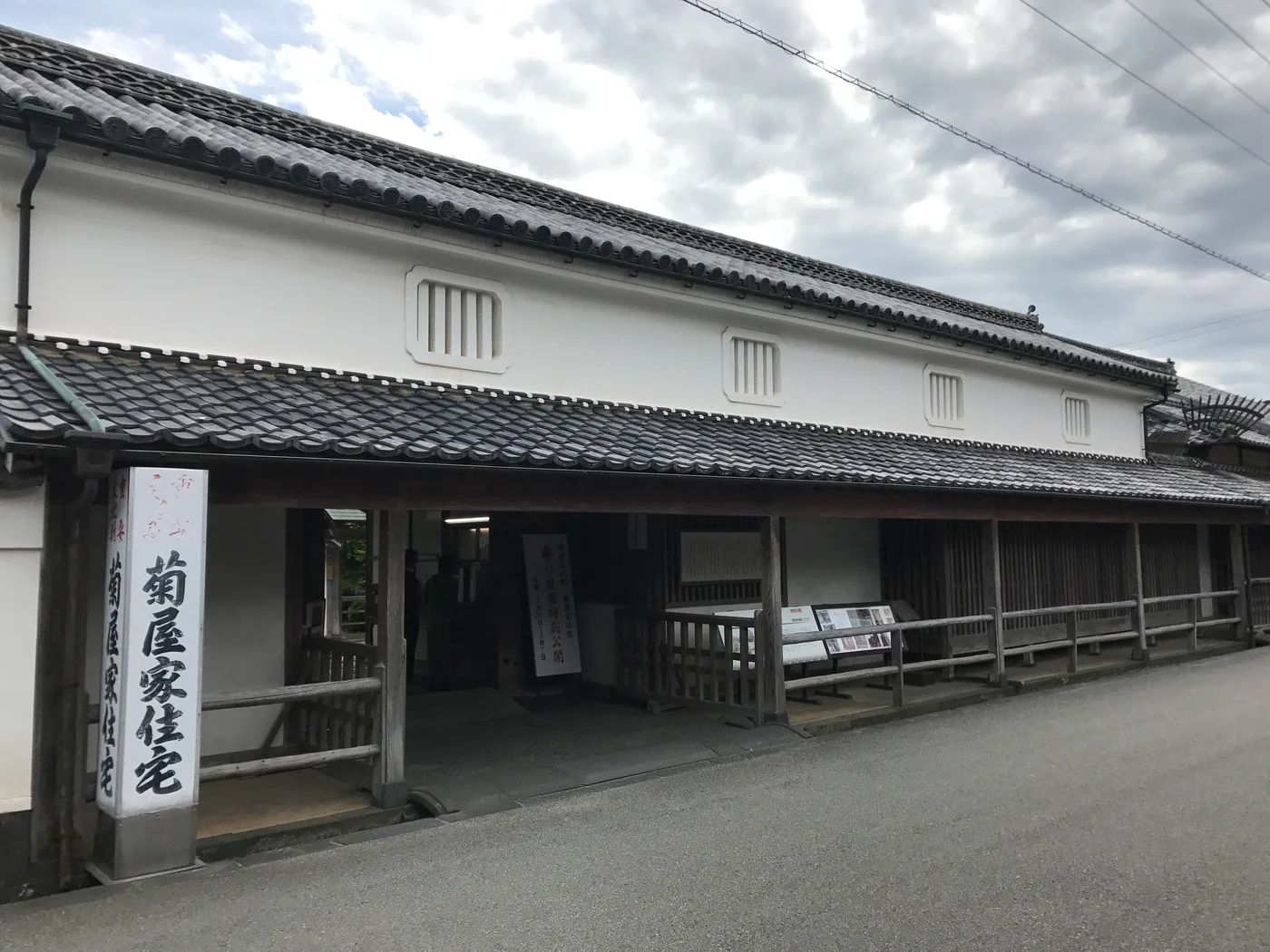
Inside, look at how rooms face the garden and how the household stored goods and received guests. Start with the main house, then follow the open route through displays and garden views. Allow about 50 minutes, or an hour to read labels closely. This deserves the day’s most substantial indoor stop rather than a photograph of the entrance sign. Companions less interested in architecture can enjoy the garden without following every label.
Individual admission is ¥650 for adults, ¥350 for lower- and upper-secondary pupils, and ¥250 for primary pupils. Opening is 09:00–17:00, last entry 16:45, closed on 31 December with additional temporary closures. The example visits around midday, hours before last entry. Arriving at 16:45 leaves only 15 minutes until closing, too little for the planned 50-minute visit.
The new garden opens seasonally in spring and autumn, separately from the usual garden views. The spring 2026 announcement gave 28 March to late June, a period already past. The 30 October route uses the normal open areas. If the autumn new garden is your main aim, choose an announced opening date before booking accommodation. Normal daytime admission and separately reserved night events each use their own ticket arrangements.
Across the road, the former Kubota house offers a different comparison
The former Kubota Residence faces Kikuya across Onarimichi. Compare their heights from the street before entering: this makes the second house more distinct than simply seeing two gardens. The Kubota family moved from textiles into sake brewing. The surviving buildings date from the late Edo to early Meiji periods. Main house, gate, wall and detached reception rooms line the street, while the main house has a low “tsushi-nikai” upper space used for storage and servants’ sleeping quarters.
Spend about 30 minutes looking at the main house’s height and the relationship between living and shop spaces. Different working and reception needs explain the houses’ different scales. You need no memorised chronology: step back onto Onarimichi afterwards and connect the rooms with the street. Two neighbouring houses give a useful comparison of merchant life, easy to revisit outside.
Kubota opens 09:00–17:00; its website lists year-round opening. Admission is ¥100, free below primary-school age. It accepts the ¥310 Hagi cultural-property facilities day pass, but this route enters only one eligible facility, so buy the ¥100 single ticket. Kikuya charges separately. Together the two cost ¥750 per adult.
If arriving in the afternoon, enter Kikuya and see Kubota’s façade from outside. If a companion especially likes brewing-house history, choose Kubota instead and spend longer inside. They are only a road apart, so switching is easy. Buying both tickets is no reason to rush the house you actually want to see.
Walk Kikuya Yokochō slowly: these streets still contain homes
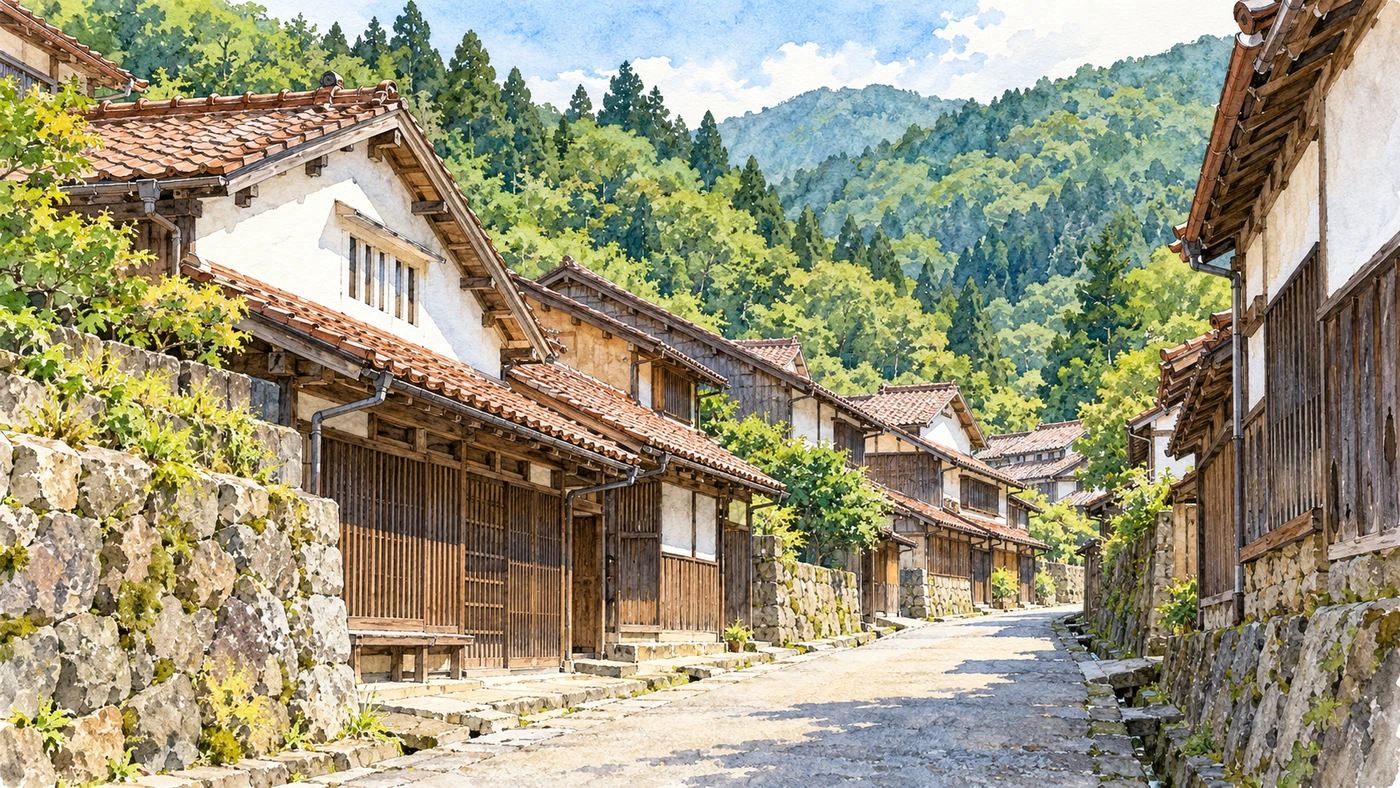
Kikuya, Edoya and Iseya Yokochō take their names from merchants on Onarimichi. The lanes retain the castle-town street pattern, connecting former middle- and lower-ranking samurai plots with the commercial street. After the houses, make a short circuit along Kikuya Yokochō for white walls, entrances and corners. The scale is close: a gate and adjoining wall can justify a pause without another list of sights.
Allow 20–30 minutes after lunch before moving towards the castle. Add no third museum here. Photograph the doors, walls and streets you like, then return to an identifiable main road. Stand in usable public space, do not open closed gates, and keep tripods and bags off vehicle routes. Give residents room to pass; the photograph can wait.
If interests differ, agree a shared visit length outside the houses. Architecture enthusiasts can study layouts while others photograph walls and roofs outside, meeting at the same junction half an hour later. Save a photograph of the meeting point and its full name before splitting up. “In the castle town” covers too much ground; different lanes can mean extra time finding each other.
Allow about an hour for lunch after the houses and before the castle direction. Choose somewhere with seats that can serve within that time. If the only choice has a long queue, eat nearby first and view pottery later. Eat and drink before heading west so you can adjust before energy drops.
The Yamaguchi Tourism Federation’s 30-second film introduces Hagi castle town’s earthen walls, stone walls, right-angled kagimagari turns and samurai residences as a preview of the lane walk.
Shop for Hagi pottery: Jozan workshops ended in June 2026
On the way towards Mount Shizuki, Senshunraku Jozan makes a pottery stop. The tourism association’s current information lists a climbing kiln, views of craftspeople at work, displays and a souvenir shop, at 31-15 Horiuchi. Hours are 08:00–17:00 with irregular closures. Its location towards the castle suits extending the street walk into kiln viewing and choosing a piece.
The same official page states that pottery experiences and bicycle hire ended in June 2026. The October route therefore uses finished pieces and areas open for viewing. If an old leaflet still lists wheel throwing, hand building or painting, remove those classes from the day. Do not delay the return to the last bus while waiting for a class.
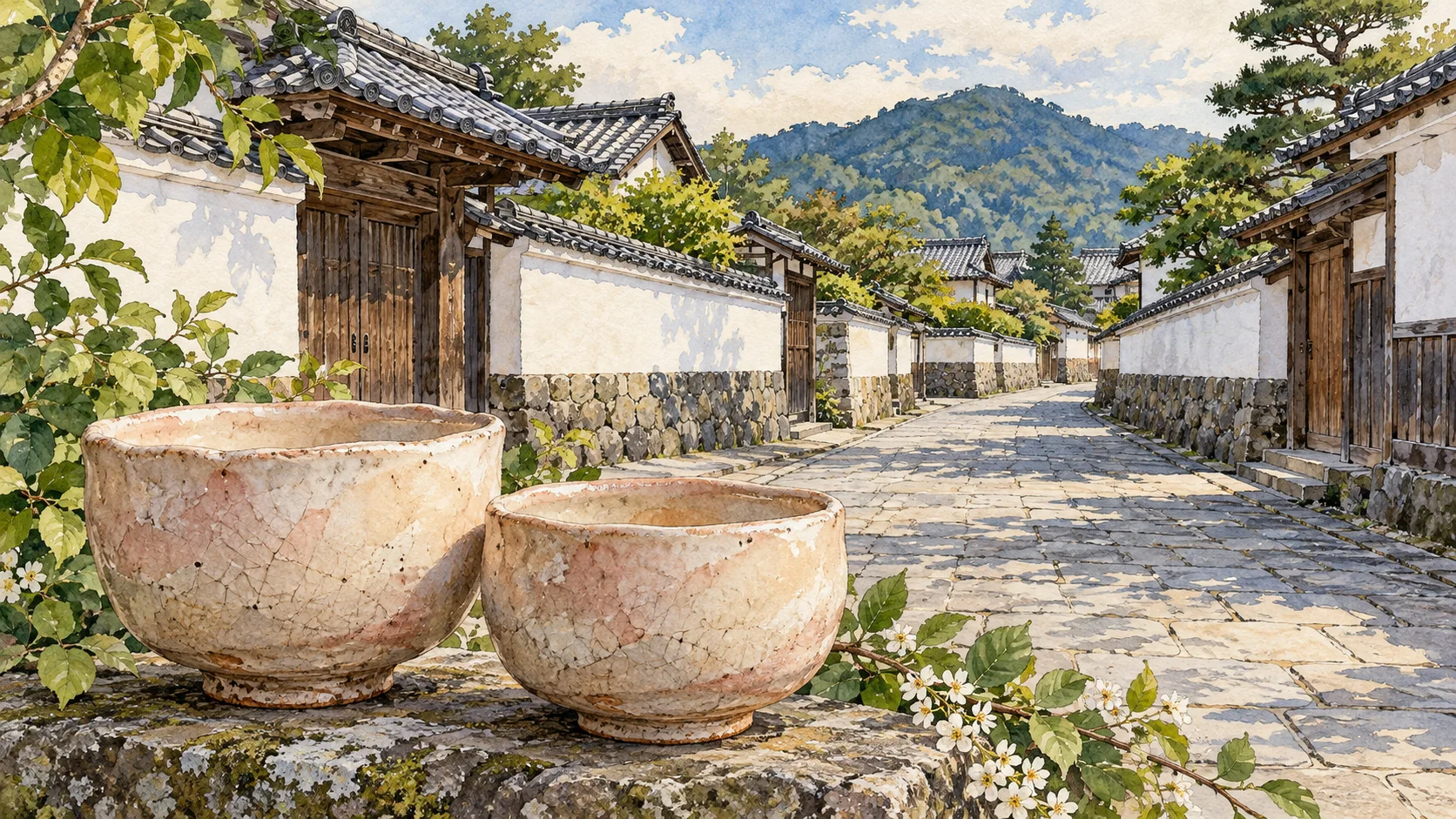
The fine lines often seen in Hagi glaze are called crazing. The tourism association explains that the pottery absorbs water; tea gradually enters the lines and changes the colour, known as Hagi’s “seven transformations”. Look at the colour and texture, then ask how to prepare that piece for use. Give care instructions with a gift so the recipient understands how it may change.
Allow 40 minutes. Look at the display first, then choose a form you want to take home. For your own tea, start with one cup: its weight, rim and capacity in your hand can be easier to judge than a full set on a shelf. Ask before handling, put down umbrellas and large bags, and compare pieces near a safe tabletop.
Explain the intended use when asking prices—hot tea, coffee or a gift for a relative—and ask about that piece’s cleaning and use. For international delivery, ask whether the shop serves your destination and obtain the total postage before choosing how to buy. For hand carriage, have pieces wrapped separately and placed in a sturdy bag. Shorten the remaining walk to reduce handling.
The shopping route gives time to displays and finished work you can take away, with no later collection after firing. If making your own Hagi pottery is the trip’s aim, first find a workshop taking bookings and obtain its time slot, child age limits, teaching language, firing wait and total delivery cost. Put it into the second day of an overnight visit. The confirmation should state the date, party size and any participating children.
See castle walls and moat; reserve separate time for the hill
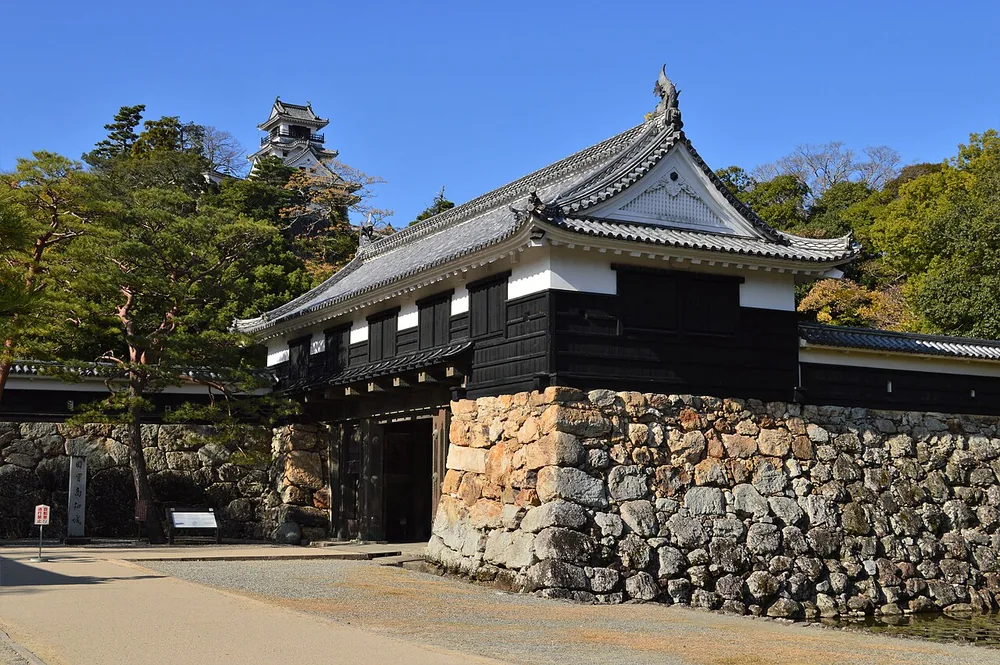
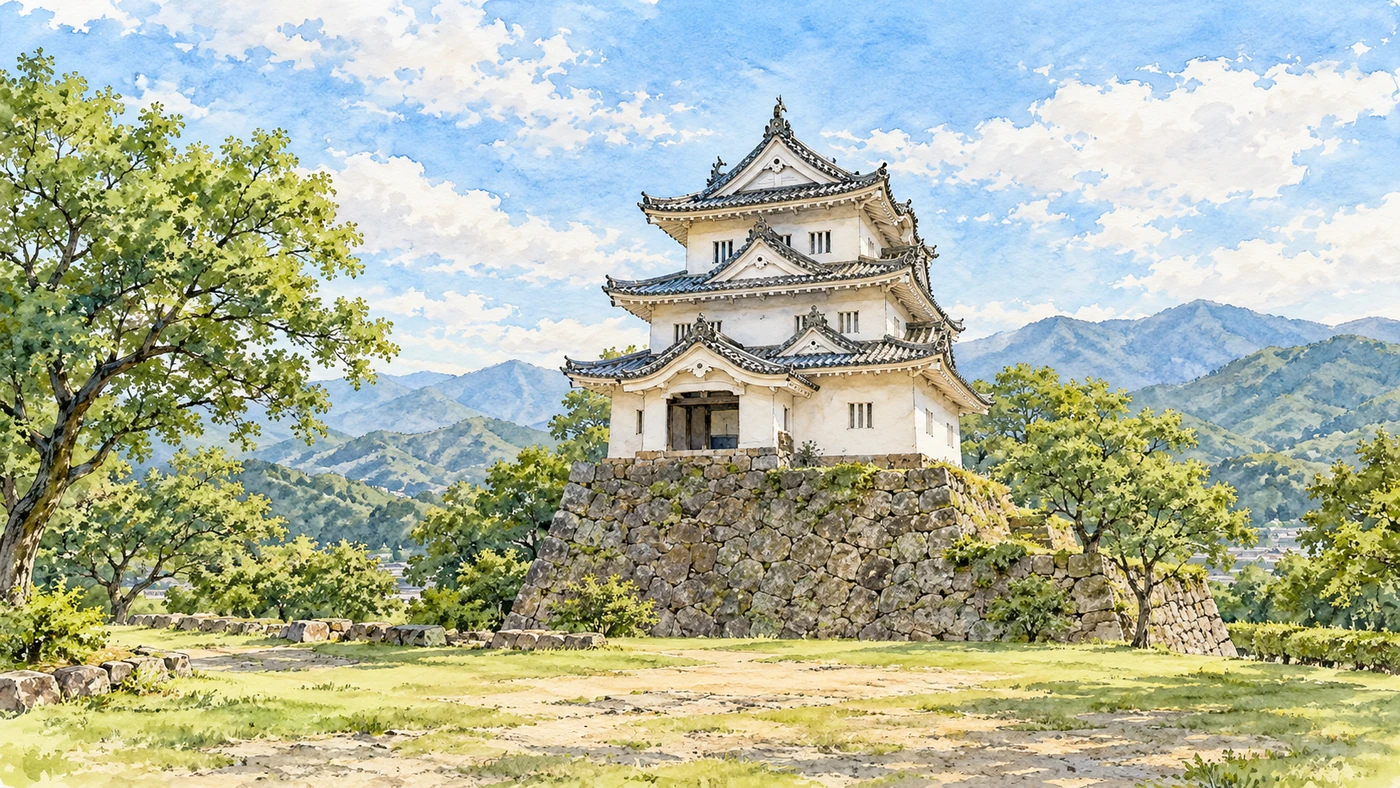
Hagi Castle’s keep, turrets and gates were dismantled in 1874. Today you see the ruins, stone walls and part of the moat. At the foot of Mount Shizuki, read the relationship between castle and coast; the keep platform helps locate the former building. Expect surviving remains rather than entering a multi-storey keep, and choose your afternoon stop accordingly.
The day route covers only the entrance area and an outer walk. Its budget excludes Shizuki Park admission. If time remains and you want more remains inside, shorten pottery shopping and pay the day’s admission. Set a departure time before extending the walk. Without entering, the castle entrance and hill foot still make a useful western turnaround.
The summit has the tsume-no-maru inner stronghold ruins. The official reference climb is about 30 minutes one way. Allow a separate block for ascent, descent, summit time and returning to town. A day trip arriving near noon loses its return margin easily if you add a climb after shopping. Castle-landscape enthusiasts can climb on the second morning of an overnight stay and leave after lunch.
Rain can make stone steps, earth paths and soles slippery. Turn back after seeing enough of the hill foot to understand the site. With children, stop before photographing near moat edges and walls; do not step backwards while framing. One family photograph can mark the end of the afternoon walk before returning for water, without covering every wall.
Day route: houses first, then turn back towards Meirin at 16:15
The full day begins at Meirin at 11:15. Enter Kikuya around 11:40, leave around 12:30 for Kubota opposite, then eat at 13:00. Both interiors are completed while energy is higher, leaving the afternoon adjustable for weather and shopping. If the first house takes longer, choose pottery after lunch and drop the outer castle walk.
After lunch, walk the lanes, then allow 30–40 minutes towards Jozan and the castle. This is an itinerary estimate; extra photograph stops add time. After about an hour combined for pottery and the castle exterior, turn towards Meirin at 16:15. Allow 45 minutes to walk, collect luggage and find the stop. Once returning, change the phone destination to the return stop rather than continuing to the next shop.
Reach Meirin before 17:00, collect stored bags and wait for the 17:17 bus. If still near Kikuya at 15:30, or lunch ran late, cancel the western stage and shop for pottery or rest in the castle town. You still keep the main houses and street layout, with room for rain, a child’s toilet stop or an older companion’s longer rest.
Budget ¥3,200 for the adult direct-bus return and ¥750 for the houses: ¥3,950 total. Add lunch, pottery, storage and extra local transport. Bocho’s ¥1,600 one-way discount is announced until 31 March 2027 and applies to this October example. For travel after next spring, recalculate both journeys from the operator’s new fare.
| Time | Plan |
|---|---|
| 10:15–11:15 | Shin-Yamaguchi North Exit stop 2 → Hagi Meirin Centre |
| 11:15–11:40 | Store luggage, identify return stop, walk to Gofukumachi |
| 11:40–13:00 | About 50 minutes at Kikuya and 30 at former Kubota |
| 13:00–14:00 | Lunch |
| 14:00–16:15 | Lanes, westward walk, pottery at Jozan and castle entrance exterior; cancel westward stage if short of time |
| 16:15–17:00 | Return to Meirin, collect bags and wait |
| 17:17–18:20 | Hagi Meirin Centre → Shin-Yamaguchi |
With only four hours, take the 15:47 return
For an 11:50 arrival and 15:47 return, use the one-house route. Store bags, enter Kikuya around 12:15, eat around 13:10, walk Kikuya Yokochō at 14:10, then choose pottery or a seated break in town. Return to Meirin at 15:20 for bags and queue around 15:32. Do not extend towards Mount Shizuki.
An arrival at 13:50 and return at 15:47 gives under two hours. Choose about 30 minutes in Kubota, Kikuya’s façade and a short walk; eat before arrival or after returning to Shin-Yamaguchi. If Kikuya is the sole aim, give it the indoor time and return directly afterwards. Two hours at one desired place make a fuller visit than a rush to the western end.
If deciding to leave early, remove stops based on your current location. Still in Gofukumachi, cancel castle and Jozan. Already at Jozan, stop browsing and find transport back. Call a taxi company: Hagi has no cruising taxis to hail. The tourism association lists Hagi Kintetsu Taxi on 0838-22-0924 and Daiichi Kotsu Hagi on 0838-25-5050. Give the full shop or entrance, not just “Hagi Castle”.
To retain both houses in a half-day, stay in their adjoining area. Two interiors, lunch and a short walk make a clear afternoon theme; choose pottery slowly another day. Cancelling one whole stage makes the revised timetable easier to explain to everyone.
Stay near Hagi Bus Centre and walk west the following morning
For a slower castle-town and pottery visit, base yourself near Hagi Bus Centre. Super Hagi stops there, with accommodation, food, supermarkets and gifts nearby, so you can leave from the same transport point next day. Check the walking route from the actual accommodation address to Hagi Bus Centre and keep luggage-carrying distance comfortable.
Choose a plan with breakfast or one clearly excluding meals. For dinner at the accommodation, book a meal plan and return at its specified time. With a room-only booking, ask at first-day check-in which nearby places open that evening, then eat before returning. The bus-centre area is the suggested base; choose a property for your party and meal needs without changing to a seaside hotel just for this route.
On 30 October, keep the first day to the houses, lanes and lunch, then return to the accommodation to leave bags or check in. Rest and shop nearby before dinner. Move the western ruins and pottery to 31 October so you can choose pieces without calculating the latest shop departure. The overnight stay adds daylight free from the intercity bus deadline.
After breakfast on day two, leave around 09:00 and allow an hour to walk west. See the castle’s hill foot, then Jozan, starting back towards the bus centre around 11:30. Agree luggage storage and collection at checkout; collect by 12:40, reach the stop around 12:57 and take the 13:12 direct bus, arriving at Shin-Yamaguchi at 14:20. This Saturday example uses the operator’s timetable saved on 29 October, which does not separate weekdays and weekends. The bus starts at Higashi-Hagi at 13:05, calls at the bus centre, then Meirin at 13:17. The overnight route boards at the bus centre; the day route at Meirin. Record the correct return stop for each.
To enter Shizuki Park or climb the hill, use the 14:42 departure from Hagi Bus Centre, reaching Shin-Yamaguchi at 15:50. Leave room for lunch and returning. Climb first in the morning and shorten pottery shopping; companions not climbing can wait near the foot at an agreed place and time. You still need to collect luggage before leaving, so return to the original accommodation base.
In rain, stay with the houses and lanes; pay local buses per ride
In light rain, keep the house order, shorten the lanes and choose a seated break after lunch. In heavier rain, cancel the western stage. The houses face each other across the road, making umbrella handling manageable between short walks. Shake water off before entering, store umbrellas as directed and walk slowly with wet soles to keep water off wooden floors and tatami.
To reduce walking, check Hagi’s Maaru circular buses. The western Shinsaku-kun and eastern Shoin-sensei routes each run about every 45 minutes and take around 80 minutes per circuit. First and last departures from City Hall are 07:00 and 17:30. These are starting-point times: check the timetable for your intermediate stop. A circular route does not mean both directions go directly to the same stop.
A ride costs ¥100 from lower-secondary-school age and ¥50 for primary-school age and younger. Under-ones are free. For children aged one to under six, up to three per accompanying person ride free. ICOCA and nationwide interoperable transport IC cards are accepted. For cash, bring coins or ¥1,000 notes; notes of ¥2,000 or more cannot be changed on board. Paying individually keeps one or two rides simple.
A day pass is ¥500 and a two-day pass ¥700. At the adult ¥100 fare, five rides equal the day pass and seven across two days equal the two-day pass. This walking route needs no extra rides to justify a pass. Super Hagi cannot be used solely between Meirin and Higashi-Hagi; use the circular buses, another eligible local route or a taxi.
With children or older companions, give one house a complete visit
Families can compare the houses’ height, windows and doors outside, then find those positions indoors. When attention drops in the first house, change pace with lunch and walking. Kubota’s low ¥100 price is no reason to add it forcibly. One adult can finish inside while another waits with children at an agreed public place.
For older companions, include taking shoes off, putting them on and seated breaks in visit time. Choose supportive shoes that are easy to remove and a light essentials bag. Use toilets before the houses and follow staff directions inside. For wheelchairs or step-free entry, ask about each house’s exact entrance route before choosing. Meirin’s information office also offers wheelchair hire.
Estimate walking and shopping effort separately. After buying fragile pottery, use a called taxi or shorten the western stop if a long walk remains. Families with pushchairs should give ceramics a secure place rather than hanging heavy bags that can upset the pushchair on paving or at crossings.
Before returning to Shin-Yamaguchi, organise everyone’s tickets, bags and seating needs together. On Super Hagi, an under-six using a seat pays the child fare, ¥800 one way during this applicable period. Queue in your travelling order, fasten seat belts on board and stow pottery and bags securely. Take out onward train tickets after arrival.
A few useful answers
Should I get off at Higashi-Hagi or Meirin from Shin-Yamaguchi?
For the castle town and two houses, Hagi Meirin Centre is more direct. Higashi-Hagi suits Sanin Main Line connections, station-side accommodation or its information office. Hagi Station is a separate station.
Do Kikuya and former Kubota share a ticket?
Buy separately: ¥650 plus ¥100 per adult, totalling ¥750. For these two alone, use Kubota’s single-site ticket.
Can I make Hagi pottery at Senshunraku Jozan to take home?
The tourism association says workshops there ended in June 2026. This route uses displays, kiln viewing and finished pieces. For making pottery, choose another workshop taking bookings with clear firing and delivery terms.
Can I climb a keep at Hagi Castle?
The keep, turrets and gates were dismantled in 1874. Today you see ruins, walls and moat. The hilltop has inner-stronghold remains, with a reference climb of about 30 minutes one way.
Official information and references
Sources used in this guide.
- Bocho Bus: Super Hagi timetable, fares and boarding conditions
- Hagi Tourism Association: gateways, storage and local travel
- Hagi Tourism Association: Kikuya Residence
- Hagi Tourism Association: Former Kubota Residence
- Hagi Tourism Association: castle-town streets
- Hagi Tourism Association: Senshunraku Jozan and workshop closure
- Hagi Tourism Association: Hagi Castle ruins
- Hagi City: circular buses and fares
- Hagi Tourism Association: crazing and Hagi’s seven transformations
- Hagi City: video list and castle-town introduction
- Yamaguchi Tourism Federation: Hagi castle town (Yamaguchi Video Encyclopaedia No. 017)