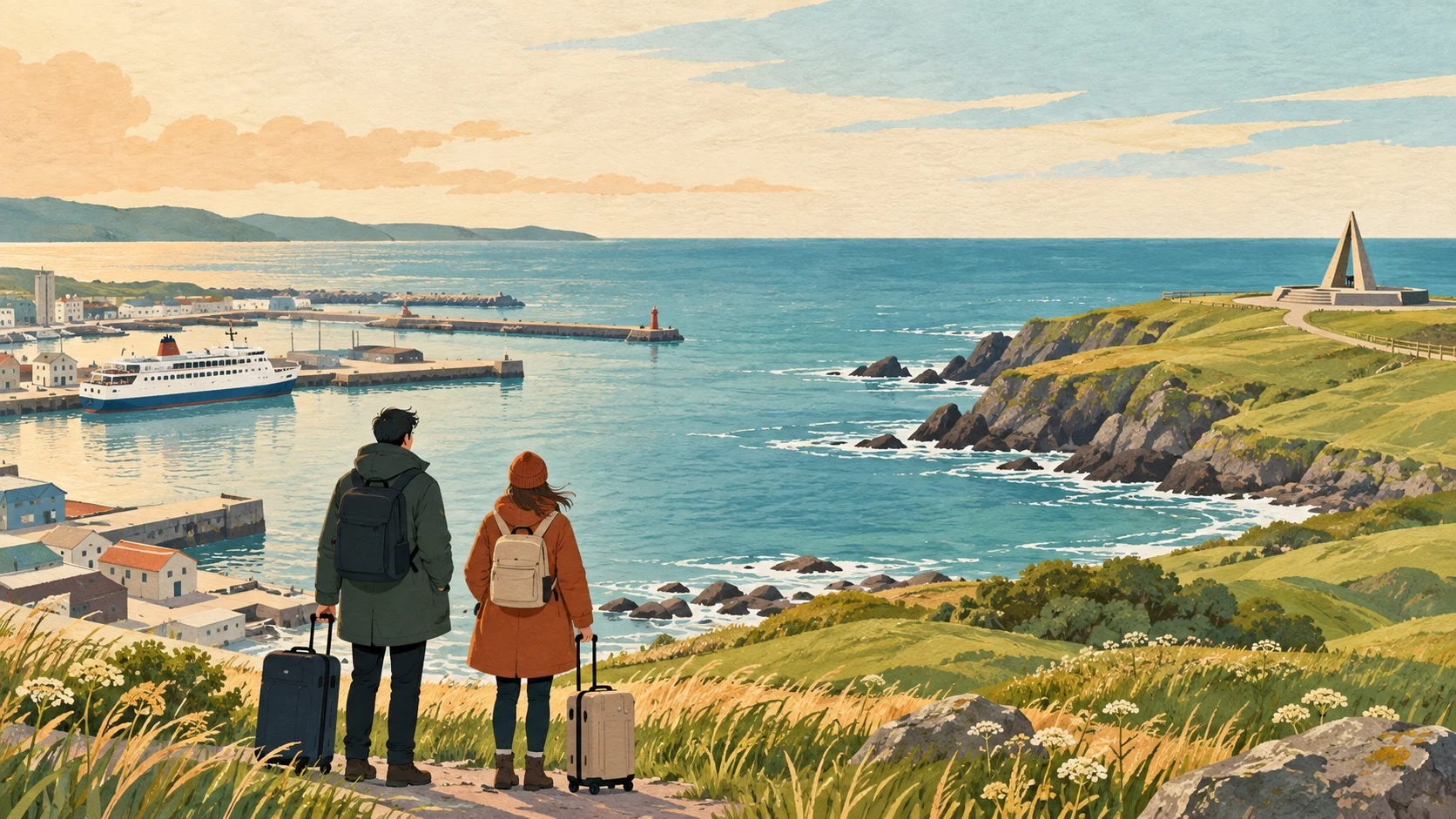
Choose which night needs a bus, ferry, or dinner at the cape before choosing Wakkanai accommodation. Staying near the station for a Cape Soya round trip has a different rhythm from sleeping in Koetoi or at the cape. Put room layouts, timetables, seasons, and cancellation terms together to make two northern nights genuinely usable.
Choose a Wakkanai base before combining Cape Soya and the islands
For a first visit to Wakkanai, consider two nights: use arrival day for luggage and a walk near the station, give a full day to Cape Soya, then leave or take a ferry to an island on the final day. With one night, choose the thing that matters most instead of squeezing the distant cape, hill walking, and sunset into one afternoon, and leave time to rest and prepare for the next morning's early ferry. These are independently assembled itinerary examples, not hotel packages with guaranteed connections, and they do not imply that every road opens year-round.
When choosing where to stay in Wakkanai, ask where you need to start the next morning. Compare JR Wakkanai Station and the harbor area for Cape Soya buses, trains, and early island ferries; compare Minami-Wakkanai and Koetoi for a particular hot spring, larger Japanese-style room, or driving and parking arrangement. A night at Cape Soya means choosing to dine and sleep there and fitting your onward travel around it. A hotel's northernmost address does not remove the transfers: one city on the map can contain quite different overnight bases.
This guide uses official information available on October 22, 2026, distinguishing the finished 2026 summer sightseeing buses, current regular services, and the announced 2026–2027 winter airport bus. Summer 2027 departures that have not been announced are not assigned the previous year's dates. If you are extending a Sapporo and Otaru city itinerary northward, allow a day for the long journey before fitting Wakkanai accommodation into the next stage. That gives you more room than a same-day trip from Sapporo with time only for a photograph at the monument.
| Base | Needs it may suit | Check first |
|---|---|---|
| Wakkanai Station and harbor | Trains, Cape Soya buses, and early island ferries | Walking and check-in time remain between station and ship |
| Minami-Wakkanai | Larger rooms, families, and public baths | Allow separately for the main terminal and port |
| Koetoi | Hot springs, space, driving, or a confirmed bus | Book dinner and the return when there is no shuttle |
| Cape Soya | Dinner and a night at the cape | Operating season, cash, and next-day return; early ferries are a difficult fit |
Arriving by JR: both Soya and Sarobetsu require reserved-seat arrangements
JR Hokkaido's Wakkanai train guide lists Soya between Sapporo and Wakkanai and Sarobetsu between Asahikawa and Wakkanai; both are entirely reserved seating. In addition to the basic fare ticket, a limited-express journey requires the appropriate reserved-seat limited-express ticket. Old accounts mentioning unreserved cars do not establish that you can turn up today and find a seat. Check trains, transfers, and seat availability for your own date before deciding whether arrival day has room for a distant attraction.
The official Ekinet product comparison lists a regular Sapporo City–Wakkanai price of ¥11,420 and a displayed Limited Express Tokudane 1 range of ¥6,270–¥10,270. Those figures belong to the listed products and their conditions; the lowest amount is not available on every departure. Read the sales deadline, discounted-seat availability, and change or refund rules together, and check what the regular comparison price covers. Otherwise a budget built on the lowest fare can fail when the same product is unavailable at checkout.
If connecting at Asahikawa, treat the transfer as its own task: allow for the incoming train, changing platforms, food, and the position of large bags. For a rail pass, compare tickets against the journeys you will actually take rather than assuming the northernmost destination automatically makes a pass worthwhile. After arriving, you still need to collect luggage, reach the hotel, and eat, so avoid a distant transfer that cannot be moved that evening. Check the departure journey too; a hotel's checkout time does not create a matching train.
Wakkanai's airport bus follows flights, not guaranteed ferry connections
Wakkanai Airport's access information lists the connecting bus at ¥800 for adults and ¥400 for children, specifically warning that ferry connections are not guaranteed. Around 30 minutes to Wakkanai Station and 35 minutes to the ferry terminal are transportation estimates, not the entire process of collecting bags and completing ferry formalities. Even when the destination sign says ferry terminal, do not build a flight-and-ferry connection without a buffer.
The operator's airport-line boarding rules say no reservation is needed and payment on alighting is cash or PayPay; credit cards, contactless card payments, transit IC cards, and other methods are excluded. The airport website still says electronic payments cannot be used. Carrying cash is the simplest way to avoid a problem, rather than treating the conflicting wording as a promise that any phone will work. A canceled flight can also cancel its corresponding bus; a delayed arrival may lead to a revised bus departure, but onward transportation is not thereby guaranteed to wait.
The announced airport timetable for October 25, 2026–January 31, 2027 includes an 11:25 airport departure, reaching the station at 11:55 and the ferry terminal at 12:00. It covers that period's airport service, not a guaranteed connection to Cape Soya or a ferry. Airport-bound buses do not allow intermediate drop-offs, and city-bound airport buses do not allow intermediate boarding. If staying in Koetoi, establish which direction you need instead of assuming that a stop shown on the map permits boarding and alighting both ways.
Cape Soya is an intermediate bus stop: find the return before leaving
Soya Bus's cape travel guide directs passengers to the Tenpoku Soya Misaki Line, boarding at platform 1 of Wakkanai Station's bus terminal toward Onishibetsu or Hamatonbetsu. Alight at Soya Misaki after roughly 50 minutes; the cape is not the terminus. Rejecting a bus because Cape Soya is not its destination sign, or staying aboard to the end, can both upset your plan. Save the direction, alighting stop, and return boarding point beforehand, and ask the operator when uncertain.
The currently linked regular bus timetable revised April 5, 2026 lists a 9:30 station departure arriving at the cape at 10:20, followed by an 11:04 return reaching the station at 12:04. That pairing leaves only 44 minutes on site, suitable for prioritizing the waterfront monument rather than walking the hills and White Road in full. Separating travel time from time at the cape is more useful for deciding whether to stay longer than looking only at the roughly 50-minute outward journey.
Another pairing leaves at 13:30, arrives at 14:20, returns at 15:20, and reaches the station at 16:18, allowing around 60 minutes at the cape. An evening outward bus does not prove there is a same-day return; the last departure in each direction is not necessarily a usable round trip. Wait near the return bus stop rather than deep inside the waiting room, where the driver may not see you. These are examples from this timetable version: check revisions, temporary suspensions, and notices again before traveling.
Recalculate the return ticket and day pass for your actual rides
Cape Soya costs ¥1,600 one way for an adult and ¥800 for a child; the commemorative return ticket sold at the station counter is ¥2,880. Two ordinary adult singles total ¥3,200, so the return ticket saves ¥320. If you will stay at the cape and leave by different transportation the next day, do not buy a return merely for its discount. Ask the counter about any children's commemorative-ticket conditions rather than halving an adult discount product and inventing its sale price.
The Wakkanai local-bus day-pass conditions list ¥3,300 for adults and ¥1,700 for children, sold at the station terminal counter. It is for one person on the written travel date, permits repeated rides on city routes, and covers the Tenpoku Soya Misaki Line only as far as Cape Soya. Scheduled sightseeing, intercity, and limited-period services are excluded, and stopping use does not entitle you to a refund. It is a calendar-day ticket, not 24 hours from activation; do not count the next day's airport journey or a summer-only service as included rides.
If you also visit Noshappu by city bus that day, the city-line triangular fare chart lists an ordinary fare of ¥250 between the station and Noshappu. If ¥250 is the fare applicable to you, the ¥2,880 commemorative return plus two such city singles would total ¥3,380, numerically ¥80 above the ¥3,300 adult day pass. The chart does not specify the passenger category for ¥250; confirm it before using this as an adult saving comparison. That small difference exists only if you actually take both additional rides, and is not a reason to add an attraction you do not want. For children, calculate separately using the operator's published child fares and ticket conditions; do not infer a family total from these figures.
The 2026 sightseeing-bus season has ended; winter needs a different plan
Soya Bus's 2026 sightseeing-coach page marks the year's operation as finished, listing seasonal services on May 3–5 and May 20–September 30. Reservations were required and opened two months ahead. The product suits visitors who want one coach to handle the city, Noshappu, and Cape Soya without driving, but the summer service cannot be treated as bookable in late October or winter. Wait for the official 2027 announcement rather than simply changing the year on the dates or fares.
As an example of that finished season, the 2026 Wakkanai A course cost ¥3,600 for adults and ¥1,900 for children, running 8:00–11:50 back to the terminal, around 3 hours 50 minutes. Passengers could alight at the airport, but the operator said flight connections were not considered. The B course cost ¥3,900/¥2,000, running 14:00–18:15 in the summer period and 13:45–18:00 in September. Seeing a place from the window and stopping there are different: not every dot on the route map is an opportunity to get off and take a long walk.
Northern Hokkaido tourism's transportation FAQ still gives May 6 as the short May period's end, unlike the operator's May 5; choose according to the operator's seasonal sale and confirmation. Its June–September direct airport-to-Cape Soya bus is seasonal too. Rishiri and Rebun sightseeing coaches assemble on the islands, not in Wakkanai with ferry tickets automatically bundled in. Book city sightseeing, the ferry, and an island tour as separate parts of the journey.
At Cape Soya, start at the waterfront before deciding on the hill
The official Cape Soya visitor information identifies it as the northernmost point of Hokkaido's main island, with a monument inspired by one point of the North Star and a nearby statue of Mamiya Rinzo. Reaching the monument is the focus here; visibility over the sea still depends on weather and is not purchased with your transportation ticket. If you want the elevated park and hills, allow separately for the climb and return instead of basing the entire area on a brief stop at the monument.
With 44 or 60 minutes between buses, first complete a waterfront walk you can safely finish, then assess the uphill park and memorials. There are gradients, steps, and exposed sections that a flat map does not convey; children, strollers, and slower walkers need more than a photo-based checklist. The Tower of Prayer, watchtower, and hills require a longer stay. Having reached the Cape Soya bus stop does not mean everything nearby is only a few steps away.
The Hokkaido travel film adopted by the official cape page helps introduce the coast and monument's setting. Its sky, visibility, and visitors do not describe your date; bus notices still determine transportation. An arrival certificate or souvenir is a separate purchase: check the shop's opening before deciding, rather than treating paid paper as admission required for a walk. If the shop is closed, visit public places only where open and safe, and return to your bus stop on time.
White Road needs a closure and works check, not an improvised cape walk
The official White Road introduction describes an approximately 3-kilometer route surfaced with crushed scallop shells in the Soya Hills, normally closed from mid-November to late April. The white path through green slopes is seasonal, not another name for a winter snow road; white ground in winter does not establish access to the same route. The roughly 10-minute drive from Cape Soya is already a warning that this is not a small lane you can fully explore immediately after stepping off the bus.
The 2026 wind-farm removal works notice also warns that work around May–October may temporarily restrict access around White Road and on parts of the Soya Hills footpath. A normal opening season and access on your date are different questions. Read the latest notice before leaving and follow instructions on arrival; do not bypass work vehicles or barriers or enter pastures to recreate a photograph. Treating White Road as something you can remove for weather is more practical than promising a complete traverse in advance.
The tourism association's walking film, adopted on the official attraction page, can help you decide whether this open landscape appeals. It cannot replace a current closure check. Without a car, ask a guide or taxi provider about its service area and return arrangements rather than attempting the route within a 60-minute gap in Cape Soya buses. An independent walk still needs confirmed entrances, exits, wind conditions, equipment, and transportation; the 3-kilometer road length is separate from getting there and back, so do not reach the end before discovering there is no transfer.
Noshappu is a different cape, and its aquarium closes in December and January
Noshappu Cape's tourism information focuses on sunsets and views toward Mount Rishiri and Rebun Island; it is not Cape Soya. For sunset, check the date's actual sunset and your return transportation, rather than carrying summer's late light into winter. Clouds and wind can change how long you want to stay, so keep a coastal visit flexible. If a child is cold or anyone is tired, prioritize food and the hotel instead of waiting until complete darkness to leave.
The city's Noshappu Cold Current Aquarium visitor guide lists a combined individual aquarium-and-science-museum ticket at ¥500 for high-school students and older and ¥100 for elementary and junior-high students. April 29–October 31 opening is 9:00–17:00, last entry 16:40; November and February–March are 10:00–16:00, last entry 15:40. Maintenance closures run April 1–28 and December 1–January 31 each year. A winter opening schedule therefore does not mean admission is available in December or January.
When combining the cape and aquarium, work backward from opening days and last admission instead of seeking indoor shelter only after sunset. Two adults and one elementary-school child pay ¥1,100 for those general combined tickets, before transportation and food; that is not a half-day package including every program and a meal. If bringing a stroller or hoping for a particular feeding or science-museum program, check arrangements separately. A performance appearing in a short video is not a promise that it runs whenever you arrive.
Separate a flat harbor walk from the climb to Wakkanai Park
The city's North Breakwater Dome history gives construction from 1931 to 1936, a length of 427 meters, height of 13.6 meters, and 70 columns. This port-related historic structure fits a city walk after you have stored your luggage; there is no need to pull a large suitcase toward the most exposed waterfront simply to photograph the whole arcade. Having a roof does not make it an indoor visitor center suitable for every wind or sea condition.
The official Wakkanai Park opening information places the park on hills above the city and records closure from mid-November to mid-April. The Gate of Ice and Snow, other memorials, and harbor outlook involve a separate uphill outing: a flat walk by the station does not automatically include the park. Assess the available time, road condition, and your companions' walking ability before climbing or choosing somewhere else. A website's night-view photograph is not a promise of unrestricted winter-night access.
If you have only a short window on arrival day, confirming onward tickets, storing bags, eating, and seeing the port can be a complete afternoon. At monuments connected with history and remembrance, read the on-site explanation and leave space for other visitors and through traffic. Add the real transportation before adding the park or a more distant shore. A Wakkanai visit does not need every landmark: accommodation becomes useful when it lets tonight and the following morning fit together.
Before an early Rishiri ferry, add ticket formalities to the hotel-to-port journey
Heartland Ferry's Wakkanai terminal information gives around 15 minutes on foot or two minutes by taxi from JR Wakkanai Station. That is a station-to-terminal estimate, not the complete journey from the hotel door to completed boarding formalities. With large bags, children, or strong winds, establish the walking route and available vehicles the night before. Do not wait until checkout to request a car, or assume that a harbor-view hotel sits directly beside the ticket counter.
The 2026 full-year ferry timetable separates the Wakkanai–Oshidomari, Rishiri route by date: its early-morning sailing in October is 6:45–8:25, changing to 6:55–8:35 in November–December, both about 1 hour 40 minutes. These examples apply to that route and those periods. Rebun's Kafuka port has different sailings, and neither Rishiri's early departure nor a 2026 timetable should be copied into 2027. Choose the island, port, and date before the preceding night's hotel; do not guess a sailing from breakfast time.
The ferry operator's check-in FAQ says formalities begin around one hour before departure. Vehicle users and second-class passengers must complete them 40 minutes before departure; passengers booked in first class, special cabins, or second-class reserved seating have a 20-minute deadline. For an October 6:45 ordinary second-class sailing, that means completion by 6:05, not starting to wheel a suitcase from the station at 6:30. This calculates the deadline, rather than recommending arrival at the last moment; add time for lines, finding the counter, and walking.
Price the correct ferry route and class, including ordinary second-class sales rules
The 2026 Rishiri and Rebun fare table lists adult ordinary second-class singles at ¥3,590 from Wakkanai to Rishiri's Oshidomari, ¥3,950 to Rebun's Kafuka, and ¥1,800 between the islands. The figures apply January 1–December 31, 2026, and include the listed adjustment charge; consult a new table for 2027. Reserved seating, first class, and special baggage have separate conditions. The lowest second-class fare is not the price of every cabin and does not automatically include a vehicle and all companions.
Elementary-school passenger fares are half the adult fare, rounded to a ¥10 unit: a remainder of ¥5 or more rounds up, and less than ¥5 rounds down. Up to two children aged at least one but not yet in elementary school, per accompanying adult, may travel without the general passenger charge, with exceptions such as reserved seats. For Rishiri, half of ¥3,590 is ¥1,795, rounded to ¥1,800, not ¥1,790. Check your product for a separate seat, baggage, or vehicle rather than ending the family calculation at “children free.”
The official reservation instructions for the Rishiri and Rebun routes state that ordinary unreserved second class can be booked online for sailings departing on or after December 1, 2024. The FAQ still says reservations are not accepted, so check your chosen route and the current official booking process. Vehicles and other reservable products follow their own booking rules. Its FAQ's no-fee reservation cancellation does not establish free refunds for every issued ticket, package, or hotel. Wind and waves can cancel sailings or change ports at short notice, and a canceled reservation may require a new arrangement. Check current operation, then contact onward accommodation and transportation instead of waiting for a personal cancellation notice that is not promised.
Station area, Minami-Wakkanai, Koetoi, and Cape Soya suit different nights
The station area suits short stays built around trains, the Cape Soya bus, and the port. Leave luggage only with a hotel that has actually agreed to accept it that day, then travel light. Minami-Wakkanai requires a separate allowance for reaching Wakkanai Station or the ferry terminal, and suits travelers choosing a particular larger room, public bath, or parking arrangement. Both places being near a JR station does not make their walking routes or early-morning transfers interchangeable. Saving on a room can be undone by choosing the wrong station and moving luggage again.
Koetoi better suits driving or a confirmed bus plan: arrange dinner, supplies, and the return first, and do not assume an airport-area hotel provides transfers. Cape Soya suits making dinner and the evening part of the journey, rather than rushing away within a short bus gap; the trade-off is a harder fit with the next morning's city return and early ferries. If combining two bases, leave genuine moving time on the changeover day. An afternoon spent wheeling bags cannot also be a full afternoon of hill walking or coastal sightseeing.
The following six named choices are compared by room and purpose. Seek a quote for the same date, meals, children's ages, and cancellation terms. An undated lowest price is neither an available family total nor a firsthand rating or best-hotel ranking. If Japanese rooms or public bathing are new to you, read the practical process for a ryokan-style stay and shared bathing and match sleeping arrangements, bathrooms, meals, and luggage storage to your needs. Then decide which night merits paying more for a room.
| Property and room | Listed size and occupancy | Difference for the itinerary |
|---|---|---|
| Dormy Inn Wakkanai Twin | 20.5 m²; two people | Rooftop communal natural hot spring, not a private room onsen |
| Surfeel Standard Twin | 21–27 m²; two to three people | Different from the 27 m², two-person high-floor sea-view Deluxe |
| Grand Hotel New Building Modern Twin | 24–29 m²; one to three people | Minami-Wakkanai base; add transportation to the port |
| Meguma 声花 Japanese-Western room | 53 m²; one to five people | Separate bath/toilet; no shuttle; reserve dinner |
| THE STAY Twin private room | Two single beds; up to two people | Shared shower/toilet; first check-in by 20:00 |
| Tom Soya Western-style Twin | Two people only | Room bathroom; cash payment; arrive by 18:00 with dinner |
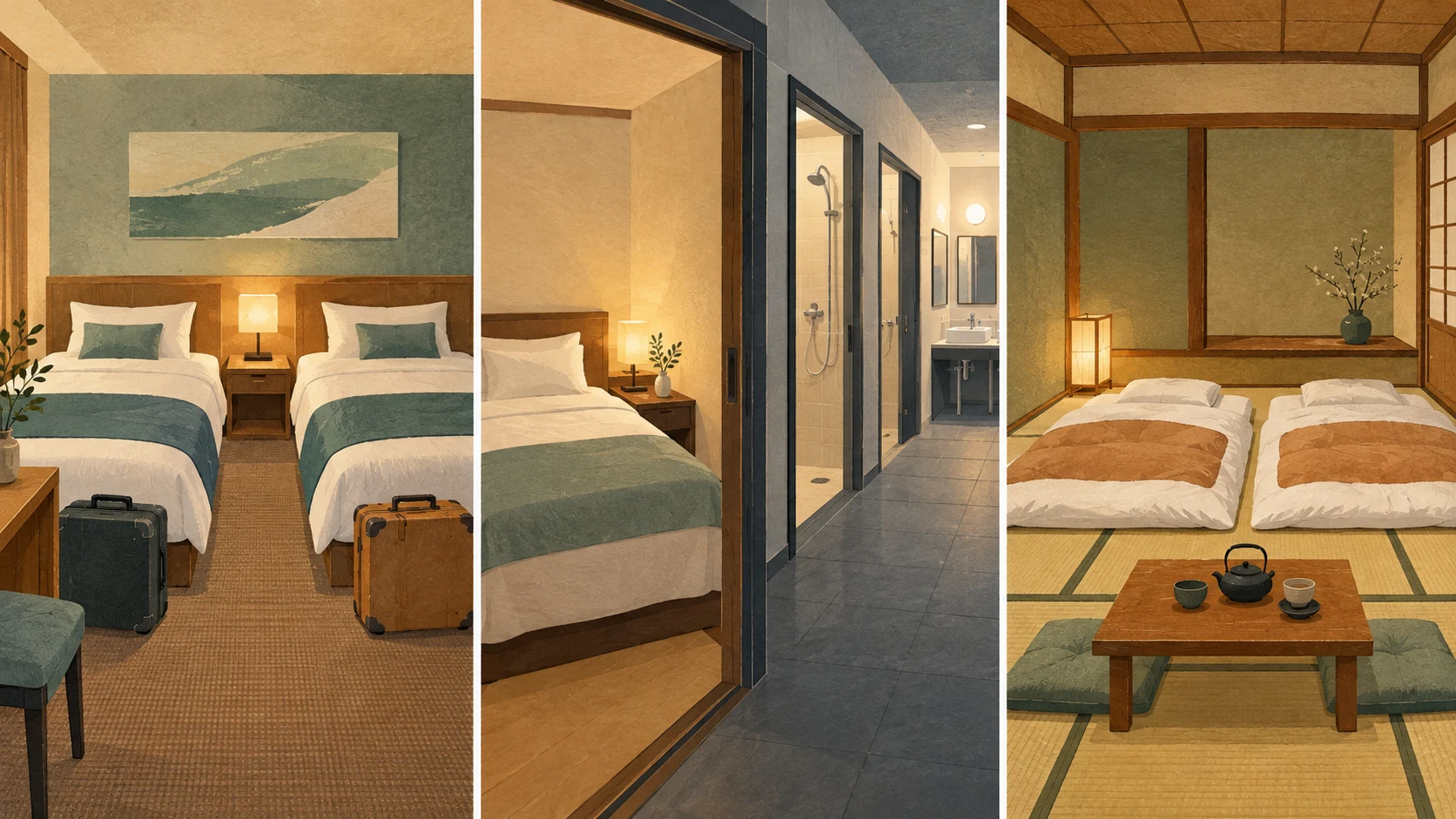
Dormy Inn Wakkanai: check total family occupancy in a compact twin room
Dormy Inn Wakkanai's room page lists a 16.5-square-meter Double and 20.5-square-meter Twin, both with a stated occupancy of two. Two people who each want a bed can start with the Twin, while still considering circulation space with luggage open. A two-person room is not a guaranteed four-person room with two extra beds. Confirm whether a child may share an existing bed and at what charge alongside the room's accepted occupancy; do not book adults only and add people on arrival.
The hotel's main introduction gives a roughly three-minute walk from JR Wakkanai Station and gender-separated communal natural-hot-spring baths on the tenth floor. The convenience is a station-area base with a shared bath to return to in the evening. It does not mean each Double or Twin has a private hot spring, or that room views match the rooftop-bath photographs. If you need to avoid communal bathing, ask for the actual bathroom arrangement that meets your needs rather than leaving an unconfirmed request in the booking notes.
The official common FAQ's child policy allows one child aged 0–2 per bed to share the existing bed free; one child aged three through elementary-school age per bed pays ¥3,000. Junior-high students and older pay the adult rate, as does a child requiring separate bedding or a bed. Room-specific restrictions still apply: “one child per bed” does not establish four-person capacity in any room. Confirm breakfast by property and plan; a bed-sharing charge does not necessarily include it. Put age, bed arrangements, meals, and the total in the same booking confirmation.
Dormy Inn luggage storage requires agreement, including a later return stay
As a reference, the common FAQ's general rules for one to five guests specify a charge of 50% of the basic accommodation price for cancellation the day before, and 100% on the day or for an unannounced no-show. Property-specific or special-plan conditions take precedence where set. Nonrefundable prepaid plans, groups, and ordinary individual reservations are not interchangeable. If still waiting on ferry and weather decisions, compare the cancellation deadline and charge before the room rate; do not transfer another Wakkanai hotel's 20% threshold to this one.
Luggage storage needs the hotel's prior agreement, and fragile or valuable items are excluded from general storage. The FAQ permits storage when checking out and returning for another stay several days later, but postponing or canceling that return can result in the bags being shipped back at the recipient's expense. Island travelers should confirm both stays, collection date, item types, and space before leaving a large case. Without a return booking, do not assume the same free arrangement; reception is not an unlimited island-luggage warehouse.
For delivery in advance, label the stay date, lead guest's name, contact information, and contents; notify the hotel first and prepay shipping. Refrigerated or frozen items may be refused for lack of space. Keep essential medicine, identification, charging equipment, and first-night clothes in your hand luggage rather than shipping away everything needed for the next morning's ferry. That morning still needs time to change, collect cases, and reach the port. Separating those tasks shows whether the station hotel really makes departure convenient or merely looks close on paper.
Surfeel: distinguish standard twins from high-floor sea views, and read the works notice
Surfeel Hotel Wakkanai's room catalog lists Standard Twin rooms at 21–27 square meters for two to three people, with 110-centimeter-wide beds. Deluxe Twin rooms are 27 square meters for two, with 122-centimeter-wide beds on floors nine and ten and a stated sea view. Confirm the sleeping setup for a third guest in your particular plan rather than treating the standard and high-floor sea-view products as identical. “Twin” alone does not guarantee a floor, window direction, or the third person's bed arrangement.
The hotel's June 2026 hot-spring equipment drilling notice gives planned work from June 6, 2026, to March 31, 2027, with possible effects on some room views and working noise. Work toward installing equipment is not proof that it is complete or that guests can already use a new hot spring. If paying extra for quiet or a harbor view, ask about the selected floor, room direction, and actual work before judging the premium. The planned completion date is not an unchangeable commitment either.
Surfeel's accommodation-terms table lists, for ordinary bookings of up to 14 people, 20% the previous day, 80% on the day, and 100% for a no-show, based on the basic accommodation price. Check special contracts, groups, and the actual plan separately. With children, obtain an age, extra-bed, and breakfast quote instead of reading maximum occupancy as free admission. A harbor-area address still does not place the ferry counter downstairs: confirm walking or a car, checkout, and the ticketing deadline, not just the fact that ships are visible from a window.
Wakkanai Grand Hotel: a larger room in Minami-Wakkanai is not closer to the port
Wakkanai Grand Hotel's named room list gives the Main Building Twin as 18 square meters for one or two people, with 110-centimeter-wide beds; the New Building Modern Twin is 24–29 square meters for one to three and can be configured for three. If you need more space or three sleeping places, confirm the occupancy and layout you are actually booking instead of assigning the largest example to every new-building room. Japanese-style rooms also vary by building and size, with differing bathroom facilities; one tatami photograph cannot represent the entire hotel.
The hotel's family-stay information says the beds in some refurbished Western-style rooms can be pushed together, and describes children's yukata, slippers, and items in the bath and restaurant. These are facilities, not proof of free accommodation at every age or a guarantee that every room's beds can be joined. Give the hotel the child's age, sleeping and meal requirements, and obtain any additional child charges and the selected plan's cancellation deadline. Adjacent rooms are another request to confirm, not something secured merely by typing it into notes.
The hotel gives a roughly three-minute walk from Minami-Wakkanai Station, with usual check-in at 14:00 and checkout at 10:00. That is not the same base as Wakkanai Station's bus terminal. For the Cape Soya departure point or a ferry, separately confirm the service, travel time, and whether early checkout is needed. A driving family may value space and parking more than a few minutes near the main station; for a one-night stay before an early ferry, an additional dawn transfer may change the choice. Compare your actual route rather than declaring a winner by room size.
Hotel Meguma in Koetoi: book dinner and transportation before choosing the hot spring
Hotel Meguma's room introduction lists the Japanese-Western room on the 声花 floor at 53 square meters for one to five guests, on the Mount Rishiri side, with separate bath and toilet; the Modern Twin is 32 square meters for two on the Soya Hills side. The Soya and Noshappu wings have other equipment. A room bathroom or sauna does not establish a private natural-hot-spring supply. Confirm the exact room and occupancy you need and ask about children's sleeping arrangements and meal-inclusive prices when booking.
The hotel's current FAQ explicitly says there is no shuttle and no restaurant within walking distance. Dinner is strictly by reservation; the café operates irregularly at 11:30–15:00 and does not open in the evening. Koetoi therefore suits a stay with dinner already arranged, not a plan to eat late in the city and find a free hotel car afterward. For public transportation, consult the Koetoi Line and Tenpoku Soya Misaki Line stop instructions; each still involves walking. Decide whether winter luggage transfers are practical from your actual bags and road conditions.
Meguma's official day-bathing conditions give ¥2,000 for adults, ¥1,000 for elementary-school children, and free entry for younger children, with a guardian accompanying small children. The listed towels are included, Tuesday is closed, and seasonal hours must be checked on official social media. It is an alternative for guests not staying at the hotel, but a bath ticket does not provide a transfer. Ask for your accommodation cancellation and meal charges where no single table applies to every plan; do not reverse-engineer free-stay ages from a day-bath child ticket.
THE STAY WAKKANAI: a private room does not necessarily have a private bathroom
THE STAY's room and check-in rules distinguish mixed and female dormitories from private rooms. A Twin private room has two single beds for up to two people, but showers, toilets, and washbasins are shared. A Triple has a double bed and a sofa bed for up to three, also with shared bathroom facilities. For a budget stay, consider your own sleeping and nighttime routine: “private room” does not automatically mean an ordinary hotel en suite, and facilities in a different family-room category should not be transferred to it.
The website gives check-in as 15:00–20:00, a 17:00 cutoff for same-day bookings, and checkout at 10:00 the next day. There is no curfew after checking in, but that does not mean a first arrival can be at any late-night hour. Luggage storage starts at 9:00 on check-in day, which can help with a half-day city visit. If a flight or train prevents arrival by 20:00, obtain an acceptable arrangement before paying, not an argument about post-check-in access after reaching the station.
Families and groups should confirm how dormitories, private rooms, and shared spaces accommodate them. Groups of 20 or more have different cancellation rules; individual guests must also read their own order instead of inventing a free-cancellation deadline where none is provided. Compare towels, amenities, parking, and bathroom convenience with the quoted price; a displayed “from” rate is not guaranteed on your date. Before an early ferry, organize essentials the previous evening and be considerate of other guests and shared passageways when packing before dawn.
Pension Tom Soya: confirm room bathrooms together with the dinner arrival deadline
Pension Tom Soya's official accommodation page limits Western-style Singles to one guest and Twins to two; 7.5- and 8-tatami rooms take two, while a 10-tatami room takes three. Every room has a bathroom and a washlet toilet. There is also a communal bath, which does not establish a natural hot spring inside the room. Its example for two people in a Twin is ¥9,000 per person without meals, plus ¥1,500 per person for breakfast: ¥21,000 for two with breakfast, subject to accommodation tax and the actual date's plan. Seasonal, occupancy, and meal differences mean the example is not a year-round guaranteed rate.
Usual check-in is 15:00–20:00, but guests with dinner must arrive by 18:00. The hearth dinner starts at 18:30, the octopus-shabu seafood meal at 18:00 or 18:30, breakfast is 7:00–8:00, and curfew is 23:00. Payment is cash only, with no credit cards. Telephone inquiries for the 2026 season opened April 11; that does not make 2027 bookable or establish year-round operation. Junior-high students and older pay adult rates, while infants under one are free; report the number and ages of other young children rather than extending this to all preschoolers.
Cancellation is 30% of the accommodation amount two to five days before, 50% the previous day, and 100% on the day or for a no-show; retain your own meal selection and confirmation too. This stay suits guests who want dinner at the cape and a city return the next day. An early Wakkanai island ferry is difficult to combine with the unchanged breakfast and return journey. Decide whether you really want to sleep at the cape, and confirm operating season, arrival, and departure arrangements. Being close to the monument does not mean being close to every connection.
Dinner, children, and luggage can determine whether the route works at all
Seafood, octopus shabu-shabu, and Soya black beef can guide dining choices, but the actual menu depends on the establishment, meal plan, and season. Tom Soya's hearth and octopus meals have fixed starts, Meguma dinner needs booking, and Dormy Inn breakfast depends on the plan. If staying late at Cape Soya, first check whether the return bus gets you to dinner. A meal missed through your own late arrival should not be assumed refundable in cash, and a fixed dinner cannot be turned into anytime service by requesting it after arrival.
Children's accommodation, breakfasts, and transportation each have their own categories. Dormy Inn charges for existing-bed sharing from age three; Tom Soya explicitly makes only infants under one free; ferries depend on school stage and reserved-seat use. Do not spread one rule across the entire trip. Write down every child's age on the stay date, school stage, need for a separate bed, and meals. Fitting physically into a room and being accepted by the booked plan both need confirmation; “children are allowed” on the phone does not complete a family budget.
Before changing hotels or visiting an island, confirm which counter has agreed to store bags, when collection is allowed, and whether a return stay is required. Pack island clothes and medicine separately, leaving a large case only under the actual agreement; collecting it should not make you miss the bus. Keep restaurant, bus, and hotel confirmations separately and recheck dates and names before departure. If the family would constantly be running with suitcases, removing a distant attraction usually helps energy and mealtimes more than pursuing a different room every night.
A car-free Wakkanai day starts with a workable Cape Soya round trip
One independently calculable example uses the current 9:30 station departure, 10:20 arrival at Cape Soya, 11:04 departure back, and 12:04 station arrival, concentrating on the waterfront monument and a short walk you can safely retrace. From 9:30 to 12:04 is 2 hours 34 minutes: 50 minutes outward, 44 on site, and 60 returning. The timetable pairing excludes breakfast, ticket purchase, finding the platform, weather delays, and the long journey into Wakkanai. It is best approached after sleeping in the city the previous night.
Have lunch after returning, then consider Noshappu according to aquarium opening, return transportation, and weather. The 13:30 outward and 15:20 return pairing is another option, with city lunch and morning activities first, but it leaves around one hour at the cape. That is not enough for the 3-kilometer White Road and a leisurely lunch too. You are choosing an executable return journey, not buying a ticket that solves every desired stop length. For companions prone to motion sickness or cold, restore indoor breaks and proper meals to the plan.
If changing trains in Wakkanai with only a few hours, this Cape Soya half-day may not fit. Find the formalities deadline for your essential onward train or ship first, then test the complete round trip. The proximity of train and bus stations does not erase more than two hours outside the city. For an evening departure, also establish the hotel's luggage-collection limit and dinner, avoiding a final trip back to another station. If weather or how you feel has already delayed the outward plan, keeping the visit in the city can still make a worthwhile, unhurried stop.
Two green-season nights leave a day for the cape and time for the city or islands
A two-night plan can use day one to reach Wakkanai, store luggage or check in, and choose a walk around the station and port. Make Cape Soya day two's focus: without a car use a checked bus round trip; add White Road only as an option with driving or a separately arranged guide. Return for a break, then check sunset and buses if you want Noshappu later. This is an independently planned rhythm, not a promise of matching weather, open roads, and businesses. Leave time for dinner and bathing rather than filling every gap with movement.
If day three leads to Rishiri or Rebun, buy and check in for the correct port and date before beginning a separate island itinerary. Two nights in Wakkanai provide a northern base, not a substitute for an in-depth visit to both islands. Island buses, rental cars, and accommodation need their own research. Avoid connecting an island return tightly to a long-distance flight you cannot miss; decide on an extra night according to the changes and costs you can accept. In a weather cancellation, check operation and existing bookings before choosing a city alternative.
With one night and White Road as the priority, establish the season and transportation first, then decide whether to drop the early ferry next morning. Choose a city hot-spring hotel if communal bathing matters; choose Cape Soya accommodation and a daytime return if a slow dinner at the cape matters more. Neither version is automatically better, but their best time slots cannot all be combined into one night. Protect the day's main wish, and add or remove other stops around the return and everyone's energy, rather than chasing every Wakkanai sight.
In winter, remove White Road and closed facilities before assessing Cape Soya
Winter Wakkanai needs more than a change of clothes on a green-season schedule. White Road is normally closed, the sightseeing-bus season has finished, Wakkanai Park has a winter closure, and the aquarium is closed for maintenance in December and January. Remove those assumptions from the must-do list first, then assess Cape Soya buses and weather. Use season-by-season itinerary choices for Japan to compare snow, walking, or coastal priorities. A recent month in a search result does not establish that the activities inside operate in winter.
Without a car, sleep the previous night at a base with clear transportation, then ask about roads, the return, and buses on departure day. Bring a hat, gloves, a wind-resistant outer layer, and suitable walking shoes, and allow a shorter monument visit if that makes a safe return easier. With strong winds, snow, or a service suspension, prioritize the accommodation and city rather than substituting an improvised long walk for a bus. A photograph beside the waves need not be compulsory. A visit can be shortened; its return journey cannot be omitted.
Around New Year, read the notice's year too. Soya Bus retains a 2025 year-end city timetable and exceptions, which do not establish identical service at the end of 2026 or on January 1, 2027. An airport timetable through January 31, 2027, likewise does not prove the same departures in February. Check the current announcement for the line you actually need. Leave unpublished dates for confirmation instead of using a vague “year-round service” to answer whether a bus runs on your day.
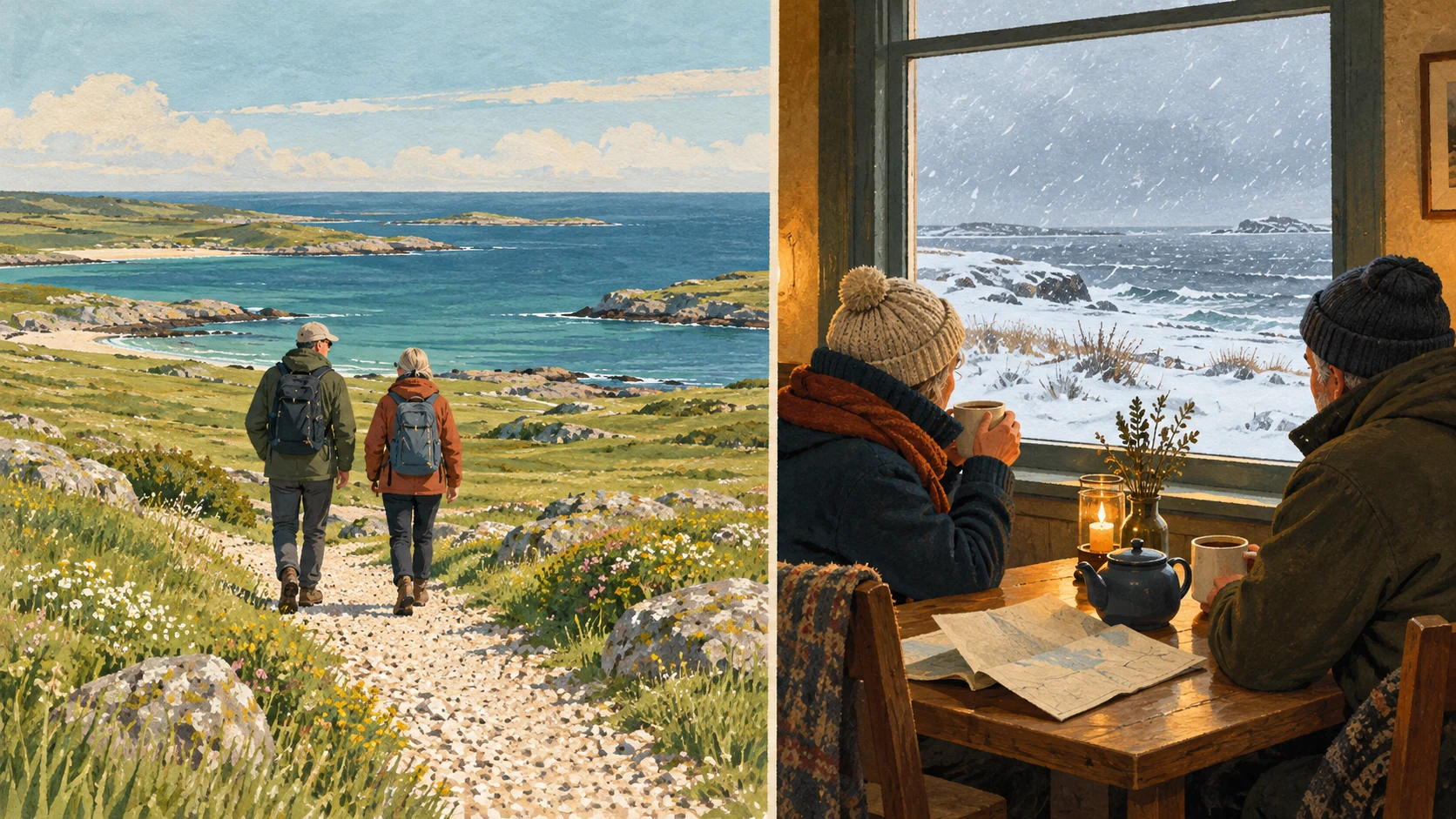
Driving still needs luggage, parking, and the right White Road access plan
A car's value is flexibility around weather in the Soya Hills and on the coast, not unlimited extra attractions each day. Confirm the rental handover point, return time, insurance, and winter-use conditions; an airport return still involves formalities and reaching the terminal. Many parking spaces do not permit arbitrary roadside parking. Follow local directions around works, walkers, and vehicles on White Road rather than treating the scenic road as a space reserved for visitor photographs.
For accommodation, include the space driving actually requires: can large bags be placed when the third bed is made, how will wet gear be moved from outdoor parking, and what needs cleaning or organizing before departure? The absence of nearby restaurants or an evening café can affect whether to eat in the city first. With dinner included, calculate your cape departure from the latest hotel arrival instead of letting a useful car become the reason you are late. For extra stops, consult trip length and booking priorities for independent Japan travel and put fixed onward transportation first.
If a companion dislikes long drives, two nights in Wakkanai with a bus day may suit better than driving more coastline. Conversely, assess self-driving only after confirming winter experience and the actual day's roads. These are route choices, not assumptions that a car guarantees safety or lower cost. Avoid turning the early ferry, dinner deadline, and next day's vehicle return into three conflicting fixed points. Choose a main base, then write down the real travel and rest time for each stage.
Budget for usable products, not an adult average applied to children
First confirm that the ¥250 city-bus fare applies to the adult in this example. For one adult visiting Cape Soya and Noshappu and using the aquarium/science-museum combined ticket the same day, the ¥2,880 commemorative return plus two ¥250 city rides and ¥500 admission totals ¥3,880. Where the day pass's conditions fit, ¥3,300 plus ¥500 is ¥3,800, a difference of ¥80. Two adults using the latter pay ¥7,600; an elementary-school child's ¥1,700 pass plus ¥100 admission adds ¥1,800, making ¥9,400 for the family. This adds specified products only, excluding accommodation, travel into Wakkanai, meals, and other costs.
For Rishiri instead, two adults and one elementary-school child on a 2026 ordinary second-class single pay ¥3,590 + ¥3,590 + ¥1,800 = ¥8,980. The return and island transportation are extra, so this is not an all-inclusive two-day island budget. Tom Soya's stated room-only Twin example for two, at ¥9,000 each plus ¥1,500 breakfast each, totals ¥21,000, with the date and separately charged accommodation tax still to confirm. Naming units, people, and products makes these examples more useful than an average answer to “what does one day in Wakkanai cost?”
When comparing long-distance travel, do not combine JR's lowest discount, a temporary cheap airfare, and the cheapest dorm bed into a total presumed available. Quote products actually bookable on the same date, including luggage and cancellation needs, then identify optional activities. Use an item-by-item Japan travel budget to separate transportation, accommodation, meals, admission, and contingency. If the total is too high, first reduce hotel changes or unwanted attractions rather than planning payment around an unconfirmed discount.
| Assumption | Calculation | Listed total |
|---|---|---|
| One adult: Cape Soya, Noshappu, and aquarium | Day pass ¥3,300 + combined admission ¥500 | ¥3,800 |
| Two adults and one elementary-school child: same visit | Adults ¥7,600 + child pass ¥1,700 + admission ¥100 | ¥9,400 |
| Two adults and one elementary-school child: 2026 Rishiri ordinary second-class single | ¥3,590 + ¥3,590 + child ¥1,800 | ¥8,980 |
| Two adults: Tom Soya Twin without meals plus breakfast example | Two at ¥9,000 + two breakfasts at ¥1,500 | ¥21,000; confirm tax and sale dates |
Wakkanai's city accommodation tax begins March 1, 2027, separately from Hokkaido's
Wakkanai City's accommodation-tax outline states that a new ¥200 municipal charge per person per night starts March 1, 2027, in addition to Hokkaido's accommodation tax. For the taxable accommodation amount per person per night, the combined charge is ¥300 below ¥20,000, ¥400 from ¥20,000 to below ¥50,000, and ¥700 from ¥50,000. Those are banded totals, not a 3% room-price system. Do not add the city portion early to a 2026 stay or one before March 2027 and describe it as a hotel's fixed charge.
For an example in which the hotel confirms taxable accommodation of ¥15,000 per person per night for two adults, the Hokkaido component before the municipal start is ¥100 each, totaling ¥200. From March 1, each pays ¥100 plus ¥200, totaling ¥600 for two. The difference is ¥400 for that night, not ¥200 per room. Across the end of February and start of March, calculate each night separately: those two nights total ¥800. This illustrates the tax method, not an available ¥15,000 room, and does not treat a meal-inclusive invoice as a confirmed taxable room base.
The same municipal page retains an older heading giving an April start, but its later passage records a July 10 rule setting tax commencement at March 1, 2027; hotel notices also use March. Ask the hotel to separate prefectural tax, city tax, bathing tax, and other charges, especially for children with no separate room charge, packages, and meal-inclusive plans, using your actual order. A tax-extra notice means the website's starting rate is not the final payment. Keep the full quote and payment explanation when crossing the changeover date.
Before paying, check that this night supports the journey you actually want
Arrange your bookings on one timeline: the Wakkanai arrival date, area and room, cape departure and return, and the next train, bus, or ferry. If the return, a child's bed, or dinner is unconfirmed, resolve that before adding an activity with another early assembly. White Road visitors need access on the date, a way to reach it, and a way back, rather than a longer hotel list; early-ferry passengers need ticket formalities and dawn transportation to work first.
Where an official announcement gives dates, select that dated product. Keep flexibility for an unannounced season, weather changes, or construction. Official films introduce scenery and concept illustrations compare rooms and travel rhythms; neither establishes a particular room's real view, road access, or normal bus operation. Save official pages and your own confirmations somewhere readable on your phone. Rechecking operating information before departure is more useful than memorizing an old timetable.
Wakkanai can be a two-night northern break or a stop before and after Rishiri and Rebun. The station area, Minami-Wakkanai, Koetoi, and Cape Soya each suit particular nights; you do not need to keep changing rooms to collect all four. Another night has value when companions can eat, rest, organize luggage, and leave on time at their own pace. Protect the place you most want to visit and keep removable options beside it, leaving a day you can actually use in the itinerary.
A few useful answers
Can I visit Wakkanai and Cape Soya on a day trip from Sapporo?
Check trains and the cape return for your date, not only the outward duration. Two nights separate the long journey from a full cape day. If a transfer leaves only a few hours, the city may fit better; no complete set of connections is guaranteed.
How do I reach Cape Soya without driving?
Take the Tenpoku Soya Misaki Line from station-terminal platform 1 toward Onishibetsu or Hamatonbetsu and alight at Soya Misaki, around 50 minutes away. It is not the terminus. Choose a same-day return pairing beforehand and wait near the bus stop, not deep inside the waiting room.
Is the Cape Soya return ticket or bus day pass better value?
The adult commemorative return is ¥2,880 and the day pass ¥3,300. First confirm that the ¥250 city-bus fare applies to this adult. Adding two ¥250 Noshappu city rides to the former makes ¥3,380, only ¥80 more. Choose for actual rides; the pass excludes sightseeing, intercity, and limited-period services and is not refunded if you stop using it.
How much time does the 9:30 Cape Soya bus leave on site?
The April 5, 2026 revision lists 9:30 departure, 10:20 arrival, 11:04 return, and 12:04 station arrival, leaving 44 minutes. Plan a short waterfront visit, not White Road, the hills, and a leisurely lunch together. Check for subsequent revisions before traveling.
Can I visit White Road in winter?
Official information gives a normal closure from mid-November to late April. Do not treat it as an unrestricted winter snow road. Wind-farm works from 2026 may also restrict green-season access temporarily; read current notices rather than relying on films or old photographs.
Can Noshappu Aquarium provide an indoor break in December or January?
No. The city lists maintenance closure December 1–January 31 and April 1–28. November and February–March have separate winter opening hours, which do not mean the entire winter is open.
Should I stay near Wakkanai Station or Minami-Wakkanai before an early ferry?
Make terminal formalities workable first. The station-to-terminal walk is estimated at 15 minutes; vehicle and second-class passengers must finish formalities 40 minutes before departure. Minami-Wakkanai adds a separate port transfer. Compare rooms, breakfast, luggage collection, and actual vehicles; no free hotel transfer is guaranteed.
Do all children share beds free at Dormy Inn Wakkanai?
No. The common FAQ gives one child aged 0–2 per bed free, one child aged three through elementary-school age per bed at ¥3,000, and adult rates from junior high. A separate bed or bedding also costs the adult rate. Confirm room acceptance and breakfast, rather than treating a two-person room as free accommodation for four.
Has Surfeel already opened a new natural hot spring?
The verified notice concerns equipment drilling planned June 6, 2026–March 31, 2027, with possible noise and view impacts. It does not establish a newly opened bath; ask the hotel about current facilities and room direction.
Does THE STAY's Twin private room have its own shower?
The website lists two single beds for up to two people, with shared showers, toilets, and washbasins. Other family rooms have different facilities. “Private room” alone does not establish an en suite; first check-in must also follow the 15:00–20:00 reception window.
Can I reserve ordinary second class for Rishiri online in advance?
Yes. The official reservation instructions allow online booking of ordinary unreserved second class on the Rishiri and Rebun routes for sailings departing on or after December 1, 2024. The FAQ still gives conflicting information, so check your chosen route and the official booking process when reserving. Ordinary second class still follows its own check-in rules. Do not apply the 20-minute check-in deadline for reserved accommodation in other classes to ordinary second class.
When does Wakkanai's city accommodation tax begin?
From March 1, 2027, it adds ¥200 per person per night alongside the Hokkaido component. Combined prefectural and city charges are ¥300, ¥400, or ¥700 by taxable room-price band; do not add city tax early. Calculate each night across February/March separately and confirm children and meal plans with the hotel.
Check with the source
Schedules, availability and rules can change. These official sources are the place to confirm details before you book.
- JR Hokkaido | Wakkanai limited expresses and all-reserved seating
- JR Hokkaido | Ekinet products and Sapporo–Wakkanai price comparison
- Wakkanai Airport | Bus fare and ferry-connection limitations
- Soya Bus | Airport-line payment and boarding restrictions
- Soya Bus | October 25, 2026–January 31, 2027 airport timetable
- Soya Bus | Cape Soya direction and commemorative return ticket
- Soya Bus | Regular timetable revised April 5, 2026
- Soya Bus | Wakkanai routes and day-pass coverage
- Soya Bus | Station–Noshappu city-line fare chart
- Soya Bus | Finished 2026 sightseeing-coach season
- Northern Hokkaido tourism | Transportation and city-visit FAQ
- Northern Hokkaido tourism | Cape Soya and adopted film
- Northern Hokkaido tourism | White Road season and walking film
- Northern Hokkaido tourism | 2026 wind-farm removal and temporary access restrictions
- Northern Hokkaido tourism | Noshappu Cape and sunset outlook
- Wakkanai City | Cold Current Aquarium opening days and combined admission
- Wakkanai City | North Breakwater Dome history and dimensions
- Northern Hokkaido tourism | Wakkanai Park winter closure
- Heartland Ferry | Wakkanai terminal location and station access
- Heartland Ferry | Date-specific 2026 sailing timetable
- Heartland Ferry | Booking, cancellation, operation, and check-in FAQ
- Heartland Ferry | 2026 Rishiri/Rebun fares and child rules
- Dormy Inn Wakkanai | Double and Twin size and occupancy
- Dormy Inn Wakkanai | Station location and tenth-floor natural hot spring
- Dormy Inn | Common child, cancellation, and luggage-storage FAQ
- Surfeel Hotel Wakkanai | Standard and high-floor sea-view rooms
- Surfeel Hotel Wakkanai | 2026–2027 hot-spring equipment drilling notice
- Surfeel Hotel Wakkanai | Accommodation terms and cancellation table
- Wakkanai Grand Hotel | Named rooms in the main and new buildings
- Wakkanai Grand Hotel | Family amenities and check-in conditions
- Hotel Meguma | 声花 Japanese-Western room and Modern Twin
- Hotel Meguma | No shuttle, dinner, and café FAQ
- Hotel Meguma | Bus stops and final walking sections
- Hotel Meguma | Day bathing, towels, and weekly closure
- THE STAY WAKKANAI | Rooms, shared bathrooms, and check-in rules
- Pension Tom Soya | Rooms, meals, children, and cancellation
- Wakkanai City | Accommodation tax starting March 1, 2027
- Heartland Ferry | Official reservation and boarding instructions