Take the bus from Sakurai’s South Exit to Tanzan Shrine for its thirteen-story pagoda, worship hall and East Hall. Or choose Hasedera for half a day, with its 399-step corridor, special Kannon viewing, autumn 2026 events and return transport.
- Region & Focus
- KansaiShrines and temples
- Reading Scope
- 32 min read · 17 chapters · 6 Q&As
- Official Verification
- 20 official sources checkedUpdated October 27, 2026
- Key Topics
- ItinerariesRail travelSeasons
Chapter Route Map (tap any stop)
- Choose the setting first: a pagoda in woodland, or covered steps and a Kannon hall
- At Sakurai, find the South Exit and the bus destination Tanzan Jinja
- Choose the return bus before deciding how much more to see
- Tanzan admission is now ¥700; last entry and closing are separate
- Use the Ashiraku approach and keep the front 140 steps optional
- At the thirteen-story pagoda, study the eaves, then turn toward the former lecture hall
- Inside the worship hall, look at the vermilion stage, turning corridors and slope
- End with the East Hall and Love Path; assess rear mountain trails separately
- The Tanzan name and kemari festival explain the place through tradition
- Tanzan’s 2026 autumn festival and lights: arrange the night descent first
- On a Tanzan day, give lunch a complete gap before the return bus
- Choosing Hasedera instead: walk from Kintetsu Hasedera Station into Hatsuse
- The covered stairway has 399 steps in three parts; rest before exhaustion
- Hasedera’s main hall and Eleven-faced Kannon: entry and special viewing are separate
- For Hasedera’s autumn 2026 special viewing, allow another ¥1,000 and reception time
- With wheelchairs, strollers or rain, change the main route to what is accessible
- Give the day to one site, then assess spare time back in Sakurai
- Quick Q&A
Tanzan Shrine rewards half a day among its thirteen-story pagoda, vermilion worship hall and woodland. Hasedera offers another half-day route through a covered stairway, main hall and Hatsuse temple town. Both are in Sakurai, but access differs: a bus from Sakurai Station for Tanzan, a walk from Kintetsu Hasedera Station for Hasedera. On a first visit, choose one and take your time, leaving room for a proper meal before returning. For autumn special openings, match viewing hours with transport down the mountain. Prices and events below follow official information dated October 27, 2026.
Choose the setting first: a pagoda in woodland, or covered steps and a Kannon hall
Choose Tanzan Shrine for a wooden pagoda, vermilion shrine buildings along a slope and views where architecture and trees frame each other. Its main sights share one mountainside, allowing time around the pagoda and worship hall, with the East Hall added according to energy. Bus times frame the day. It suits an early start with the afternoon return settled first. After several urban temples elsewhere in Kansai, the mountain setting makes a distinct change.
Choose Hasedera for roofed steps, a large wooden Kannon statue and the main hall’s stage. The covered stairway makes the ascent part of worship, while the temple town suits lunch and a final walk. There is still a walk from the railway station: train arrival is not temple-entry time. If stairs are a concern, read the temple’s internal shuttle conditions before deciding whether everyone will ascend to the main hall.
Allow three to four hours for either, including access, worship, rest and a simple meal. With only half a day, give it all to one. With a full day, examine Tanzan in more detail or add special viewing or a treasure exhibition at Hasedera. For Nara’s city park, hotels and Great Buddha route, read Nara in one day or an overnight stay and use another travel day.
| Site | Access | Main walking | Best focus |
|---|---|---|---|
| Tanzan Shrine | Nara Kotsu bus from Sakurai Station South Exit | Slopes and stone steps; rear trails optional | Pagoda, shrine buildings, woodland and festivals |
| Hasedera | About 15 minutes on foot from Kintetsu Hasedera Station | 399-step covered stairway and return to station | Main hall, Kannon and temple town |
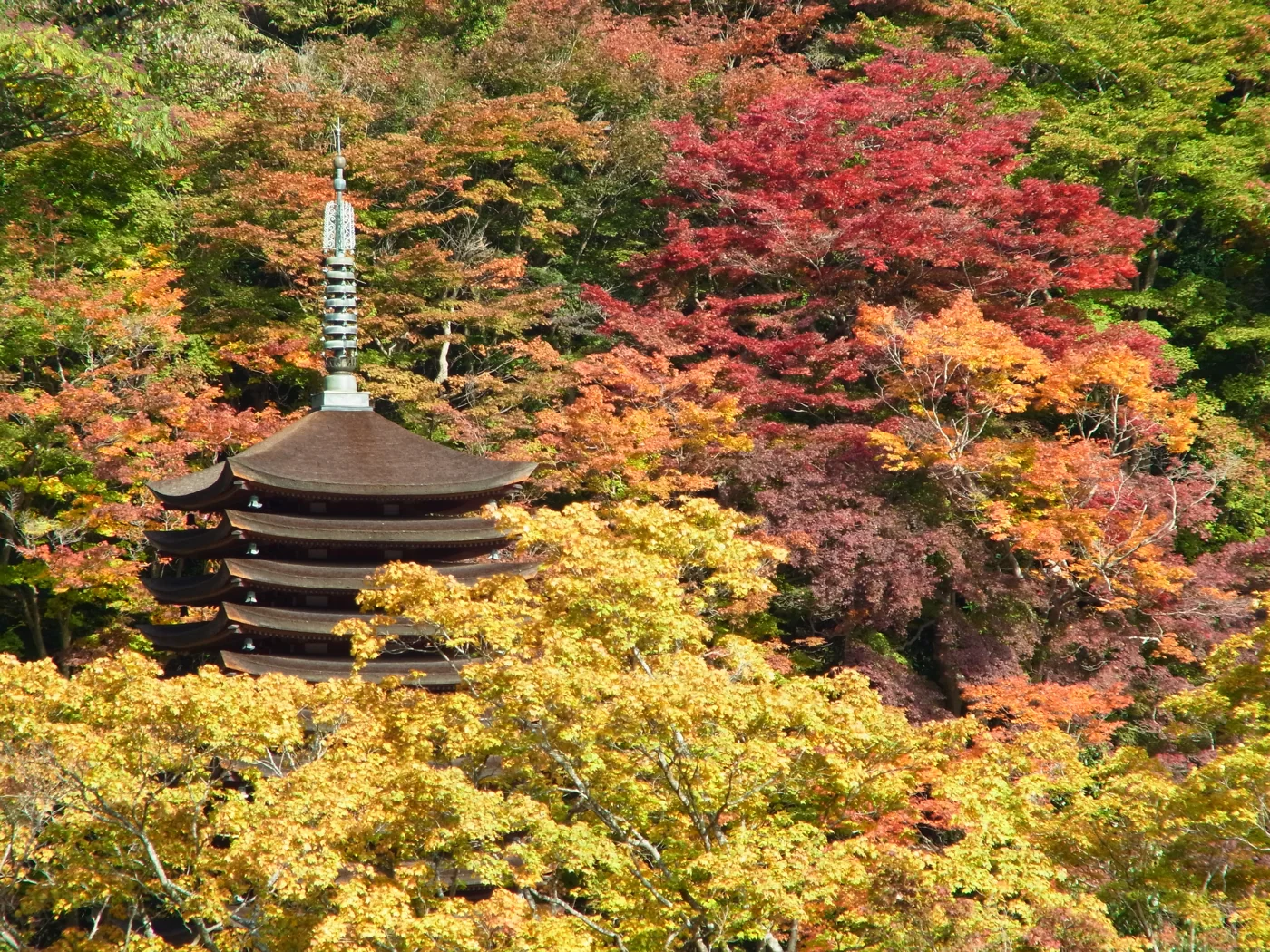
Take the bus from Sakurai’s South Exit to Tanzan Shrine for its thirteen-story pagoda, worship hall and East Hall. Or choose Hasedera for half a day, with its 399-step corridor, special Kannon viewing, autumn 2026 events and return transport.
At Sakurai, find the South Exit and the bus destination Tanzan Jinja
For Tanzan Shrine, change at JR or Kintetsu Sakurai Station and take Nara Kotsu from the South Exit toward Tanzan Jinja. The stop name is “桜井駅南口”; use this Japanese text on your phone and the stop sign. JR and Kintetsu exits differ. On a first transfer, allow time to reach the South Exit, find the stop and check the bus display. Search from your accommodation to Sakurai Station’s South Exit first, then examine the mountain leg separately.
Nara Kotsu’s current autumn page lists about 25 minutes from Sakurai’s South Exit to Tanzan Shrine, with an adult one-way fare of ¥570. Tonomine, written “多武峯,” and the Tanzan Jinja terminus are different stops; the former costs ¥500. Pay for the stop used. During autumn congestion, the operator may terminate at Tonomine; follow that day’s directions to the shrine. Check the destination before boarding and locate the return boarding point after alighting. Similar mountain place names are no reason to get off early.
Leave large luggage at your original accommodation and carry water, an outer layer, rain gear and day essentials. After the bus, there is still a walk to admission and stone steps inside. A suitcase adds to both bus and worship effort. From Osaka or Kyoto, calculate rail to Sakurai, waiting and the mountain leg separately. Let the morning bus determine breakfast and departure time.
Choose the return bus before deciding how much more to see
At the checking date, Nara Kotsu’s normal timetable was marked revised April 1, 2025, with the final Tanzan Jinja departure for Sakurai’s South Exit at 17:52. Read the separate weekday and weekend/holiday columns. This identifies the day’s transport limit; choose an earlier service in practice so a missed bus, longer visit or mountain-road traffic leaves room to adjust. Nara Kotsu’s official website provides date-specific route and temporary-service information.
For example, start with a 9:45 departure from Sakurai’s South Exit and a 13:17 departure down from Tanzan. At roughly 25 minutes each way, this gives about three hours on the mountain for the main buildings and a rest. For an unhurried lunch there, use the 14:28 return and shorten the East Hall or another branch according to actual waiting. Allow separately for reaching the stop and congestion, dropping extras if delayed.
Other daytime returns include 15:32 and 16:37, with the final service at 17:52. For a morning start, choose 13:17 or 14:28 and keep later buses as backups. Taking the 10:50 outward bus instead of 9:45 removes about an hour of visiting time. Drop the rear mountain trails before the East Hall rather than compressing food and jogging back. Sakurai Tourism Association explicitly says the revised 2025 timetable continues unchanged in 2026.
Save the intended return and the following bus before departure, including stop, direction, operating day and revision date in screenshots. Recheck the sign on arrival and shorten the visit if on-site notices announce rerouting or suspension. For a dinner reservation, work backward from the trip between Sakurai and your accommodation. Do not leave the bus wait at the final point with no room to recover.
Make another decision when leaving the worship hall. Visit the East Hall or rest only if the main worship visit is complete and time remains before your bus. Adding a rear mountain trail requires deducting the round-trip path and return to the stop again. You do not have to cover every corner to justify the visit. Time at a building you like is usually more satisfying than rushing to collect two final map pins.
| Leg | Available departures | Use in this example |
|---|---|---|
| Sakurai South Exit → Tanzan Jinja | 9:45, 10:50 | Choose one morning ascent |
| Tanzan Jinja → Sakurai South Exit | 13:17, 14:28 | Planned return for the half-day route |
| Tanzan Jinja → Sakurai South Exit | 15:32, 16:37 | Later departures for an extended visit |
| Tanzan Jinja → Sakurai South Exit | 17:52 | Normal final service; distinct from the 20:30 illumination finish |
Tanzan admission is now ¥700; last entry and closing are separate
The Tanzan Shrine admission guide lists ¥700 for general adult admission, ¥300 for elementary-school children and free entry for preschool children, effective April 1, 2026. Normal admission runs 8:30–16:00, with visits ending at 16:30. The 16:00 cutoff is for entering. With an afternoon arrival, consider the time left before paying for a full visit.
For eligible visitors with disabilities, the official rate is ¥350 for the visitor and the same for one companion, with the required documentation at admission. Discounts cannot be combined. Budget at normal individual rates first, then adjust for confirmed eligibility. Group, school-study and previous-year discounts do not apply to every traveler. Two adults and one elementary-school child pay ¥1,700 in normal admission, a fixed daily cost you can enter directly.
For daytime worship only, use the fuller morning for the buildings and put a removable route after lunch. Near last admission, prioritize the pagoda and worship hall, leaving the East Hall and rear trails behind. This also works if autumn photography takes longer: waiting for the light uses time from later walking; it does not add time to the day.
Use the Ashiraku approach and keep the front 140 steps optional
The shrine’s recommended viewing route starts at front admission, follows the “足楽コース” (Ashiraku route) toward Haraedo Shrine and the west entrance, then visits the Soja Main Hall, Soja Worship Hall and Akaiya well house. The grounds map distinguishes this lateral path, the front 140 stone steps and upper buildings. On a first visit, climb gradually in this order and decide your exit later instead of leading the whole family straight up the long front stairway.
The smaller buildings on this side let you pause to identify roofs and positions. The Soja Main Hall is a relocated former main hall. The Soja Worship Hall has curved karahafu gables front and back, and Akaiya preserves a well linked to the site’s temple history. Continuing toward Shinbyo Haisho and the pagoda makes it easier to understand why one shrine contains a pagoda, remains of a lecture hall and a well, rather than treating them as unrelated photo stops.
The Ashiraku route is still on a slope, with changes in level on paths and at entrances. For fewer steps, choose an accessible section using the map and ask admission staff to direct you. The buildings page also says the front stairs may close outside peak cherry-blossom and autumn-color periods. Follow the open entrance for the season. Do not use closed steps or return downhill merely to recreate a photograph.
At the thirteen-story pagoda, study the eaves, then turn toward the former lecture hall
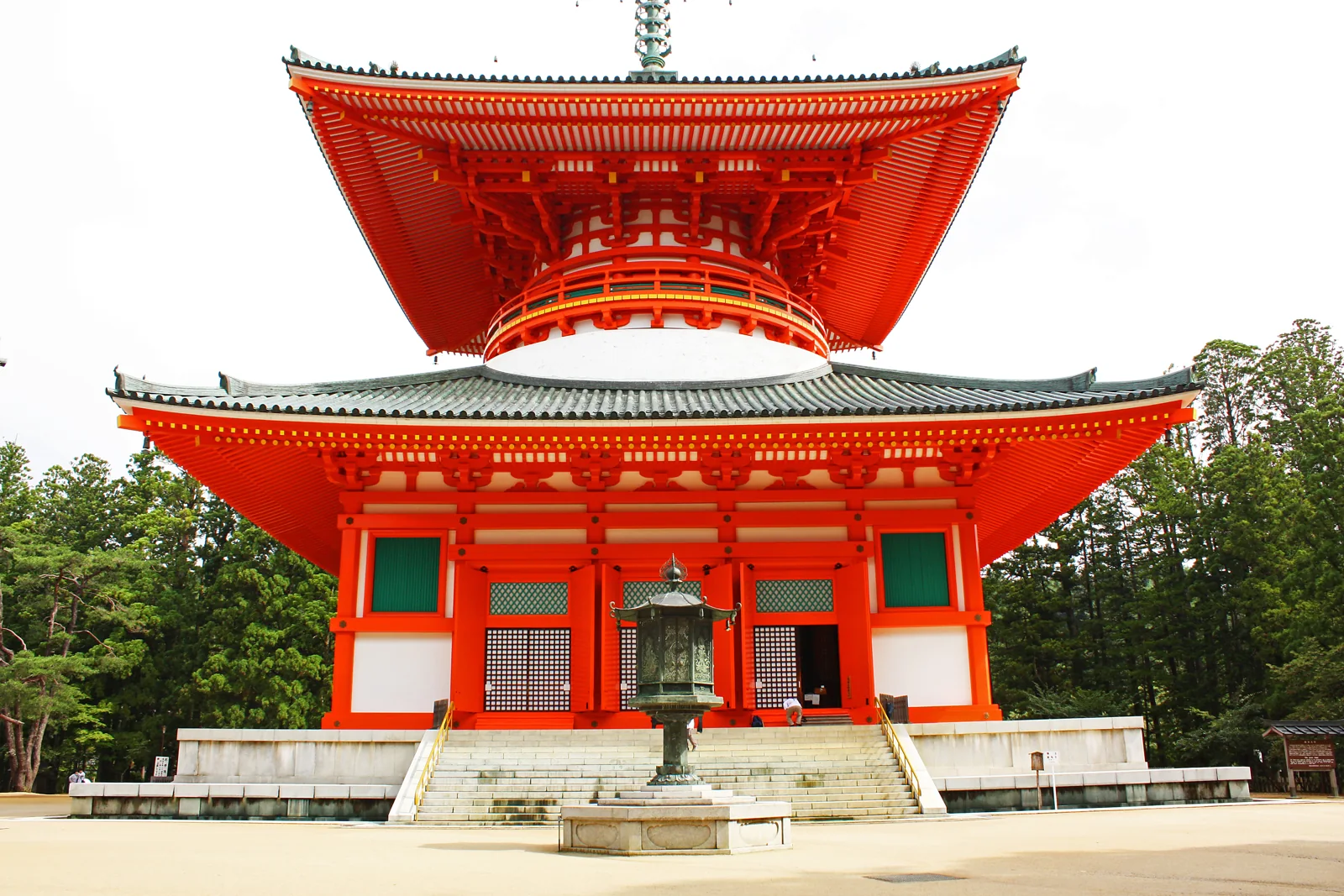
The pagoda was founded by Fujiwara no Kamatari’s son Jōe to commemorate his father. The shrine dates its origin to 678; the surviving wooden pagoda was rebuilt in 1532. The official buildings guide lists it as the only surviving wooden thirteen-story pagoda and an Important Cultural Property. Looking at the progressively smaller eaves reveals the outline better than simply counting thirteen levels. For the whole structure, step back without blocking the path and include the woodland.
Facing the pagoda is Shinbyo Haisho, formerly Myorakuji’s lecture hall. The relationship of tower and hall preserves the earlier temple layout. The shrine history connects Kamatari’s commemoration, reburial and Myorakuji’s foundation, with a hall for the sacred image added later. After looking at the pagoda, turn toward the former lecture hall to see Buddhist memorial practice and worship of Kamatari meet in the same grounds.
Take this part slowly instead of assigning every building a fixed number of minutes. Cloudy weather reveals eave outlines; sunshine shows light through leaves. Both offer details. If autumn crowds gather at the pagoda, visit nearby Gonden and Hie Shrine first and return while keeping the original bus. This group plus the worship hall already reveals Tanzan’s distinctive architectural relationships.
Inside the worship hall, look at the vermilion stage, turning corridors and slope
The official route’s middle section leads from the pagoda via the West Treasure House and tower gate to the worship hall. Built in 1520, the vermilion hall has a projecting stage, with open corridors turning around the main hall and cypress-bark roofs. From a place where stopping is allowed, look at how rows of columns frame the woods beyond the slope, then how corridors join along the terrain. In autumn, the relationship between architecture and colored leaves is the main view.
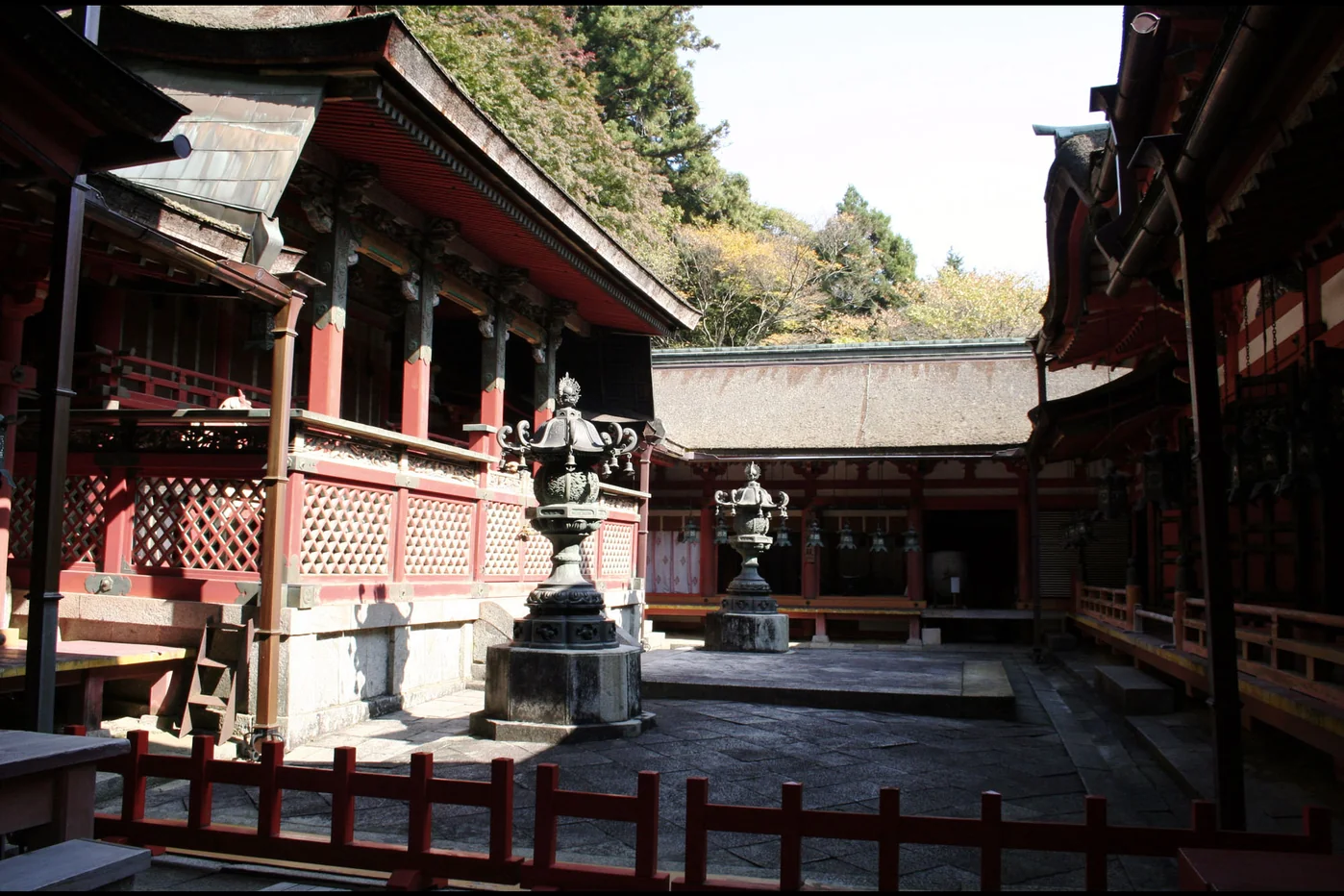
The main hall enshrines Fujiwara no Kamatari. Its present building dates to 1850, unlike the worship hall. Both are Important Cultural Properties. Notice how the main hall’s vermilion and colored decoration relate to the more open stage of the worship hall. Finish worship first, then observe from the side without blocking the main route so others can approach quietly. Follow photography signs indoors and in displays; keep phones out of prohibited areas.
The East and West Treasure Houses use raised log-storehouse construction. Official information says some historic treasures are entrusted to museums. For a special treasure exhibition, read the current notice. The building name does not mean every collection is displayed inside daily. Architecture-focused visitors can spend time on the gate, roofs and corridors; those interested in paintings, calligraphy or history can choose a current display topic.
End with the East Hall and Love Path; assess rear mountain trails separately
From the worship hall, continue toward the East Treasure House and Kannon Hall, then the East Hall and Love Path for a later walk. The East Hall, also called the Love Shrine, enshrines Kagami no Okimi, Jōe and Fujiwara no Fuhito. It is a relocated former main hall and an Important Cultural Property. Follow on-site practice for prayers. For architecture, compare its relocation with the Soja Main Hall: former halls serve different purposes in new positions.
Tanzan and Goharetsuzan behind the main hall are additional mountain paths. From the trail entrance, the buildings page lists Tanzan as 290 meters, about 10 minutes, and Goharetsuzan as 510 meters, about 20 minutes. These are one-way figures; add the return, stops and slower walking on wet ground. The admission guide separately limits starting ascents to Goharetsuzan and Santen Inari to 15:00, with mountain closure at 16:00. Normal shrine-building closing times do not apply.
If descents hurt your knees, shoes are unsuitable, you entered late or want to sit down, finish after the East Hall. With a strong interest in Kamatari traditions, good weather and enough time, choose one rear destination; neither branch needs to be compulsory. Before the final exit, use the toilet and arrange outer layers, then reach the bus stop. Do not leave the last building only moments before departure.
The Tanzan name and kemari festival explain the place through tradition
According to the shrine history, Prince Naka no Oe and Nakatomi no Kamatari held discussions on this mountain, giving rise to the name Tanzan. Their meeting is linked to a kemari gathering at Hokoji in Asuka. Read this as historical memory preserved by the shrine. The focus then moves beyond maple trees to why the pagoda, sacred image and Kamatari worship share this mountain. Reading the history adds a layer beyond photography.
The annual calendar lists the autumn kemari festival at 11:00 on November 3 and the main annual festival at 10:30 on November 17. Kemari perpetuates the traditional meeting through ritual; the annual festival relates to Kamatari’s death anniversary. If traveling for a festival, include watching, movement and crowds in mountain time and make one event the day’s center. If you encounter a ritual during an ordinary visit, use the designated routes and keep ceremonial and staff passages clear.
On festival days, buildings and transport may take longer. Visit your main interest first, then decide whether to wait for the ceremony. This is easier than covering many branches in the morning and finding viewing areas full later. If companions are uninterested, agree on a clear entrance or rest area and a meeting time worked backward from the return bus. Do not split up impulsively at a mountain-path junction.
Tanzan’s 2026 autumn festival and lights: arrange the night descent first
Tanzan Shrine’s 2026 autumn-color festival runs October 1–December 6. Illuminations run November 14–December 6, from after sunset until 20:30. These are different date ranges. An October visit cannot include the November evening lights. Leaf color develops over time; use current official photographs and weather when choosing dates. Keep architecture and worship as the daytime focus so the whole day does not depend on one shade of foliage.
The normal final bus at 17:52 does not connect with the 20:30 end of the lights. To stay for the full evening, arrange an accommodation transfer, confirmed taxi or your own car before deciding to remain. With normal buses only, focus on daylight. Calling a mountain taxi at the last minute still requires an available driver and arrival time. A prearranged descent can support the night plan. If extra services are announced, adjust for the specified date and direction.
Drivers should match parking with the entrance, allowing for mountain-road visibility changing at dusk. With children or older visitors, eat and rest before going up or staying for the lights rather than walking continuously from morning to night. Follow event instructions for night access. Daytime rear trails do not become evening walks. If already tired, descend on the original bus and save night viewing for a prepared visit while keeping the full daytime experience.
On a Tanzan day, give lunch a complete gap before the return bus
The buildings page lists Katarai no Mori at 11:00–14:00, until 15:00 on weekends and national holidays, with irregular closing days and reservations required for groups. For mountain lunch, finish the pagoda and main buildings in the morning, then eat. If starting worship in the afternoon, eating in Sakurai first is more relaxed. With irregular restaurant closures, carry an appropriate snack and water, using only permitted rest areas. Worship spaces and through paths are not dining areas.
Count restaurant waiting and the walk back to the stop as part of lunch. If there is no complete meal gap left, descend and eat near the station rather than missing the selected bus to sit down. With family members needing fixed meal or medicine times, reserve that period before the East Hall or rear trails. This gives them confidence to continue and avoids looking for food at the point of greatest fatigue.
For one adult making the Sakurai–Tanzan return with general admission, ¥570 × 2 + ¥700 gives fixed costs of ¥1,840. Meals, travel from the starting city to Sakurai, shrine items and possible taxis are separate. For two adults and one elementary-school child, admission is ¥1,700; calculate the bus portion using Nara Kotsu’s child fares. Knowing fixed spending leaves the rest for a meal or shrine item you actually want.
Choosing Hasedera instead: walk from Kintetsu Hasedera Station into Hatsuse
Hasedera’s rail entrance is Hasedera Station on the Kintetsu Osaka Line. The temple gives about 15 minutes on foot afterward. This temple is in Hatsuse, Sakurai, Nara, distinct from its namesake in Kamakura. Check the address “初瀬731-1.” From Osaka or Kyoto, search Kintetsu transfers from your accommodation rather than detouring via Nara Park. Separate the station walk from the covered stairs; station arrival is only the start of the lower approach.
Walk through the streets toward the temple town and temple; the return is also on foot. Leave shopping until the descent rather than breaking the morning entry with snack queues. After a late family breakfast, visit the main hall first and find lunch along the street later. If a meal is needed first, eat below before climbing. Choose the order according to entry time, special-viewing reception and appetites.
Ordinary-car parking costs ¥500, separate from admission. Follow the temple’s driving directions to the actual car park, not pedestrian lanes through the temple town. The 2026 1,300th-anniversary notices warn of crowded roads and parking on event days. Rail reduces the parking uncertainty. Store large luggage first as well. Pleasant though the temple town is, it is no place to drag a case between the station and mountain steps.
The covered stairway has 399 steps in three parts; rest before exhaustion
The Hasedera covered-stairway guide divides the 399 steps into lower, middle and upper sections, becoming steeper higher up. The roof and hanging lanterns create a continuous perspective. Look at turns, beams, columns and light while climbing. For photographs, stand securely and let others pass. The roof covers part of the journey, but station access and temple movement include outdoor stretches. In rain, wear shoes with grip and put away a dripping umbrella before proceeding.
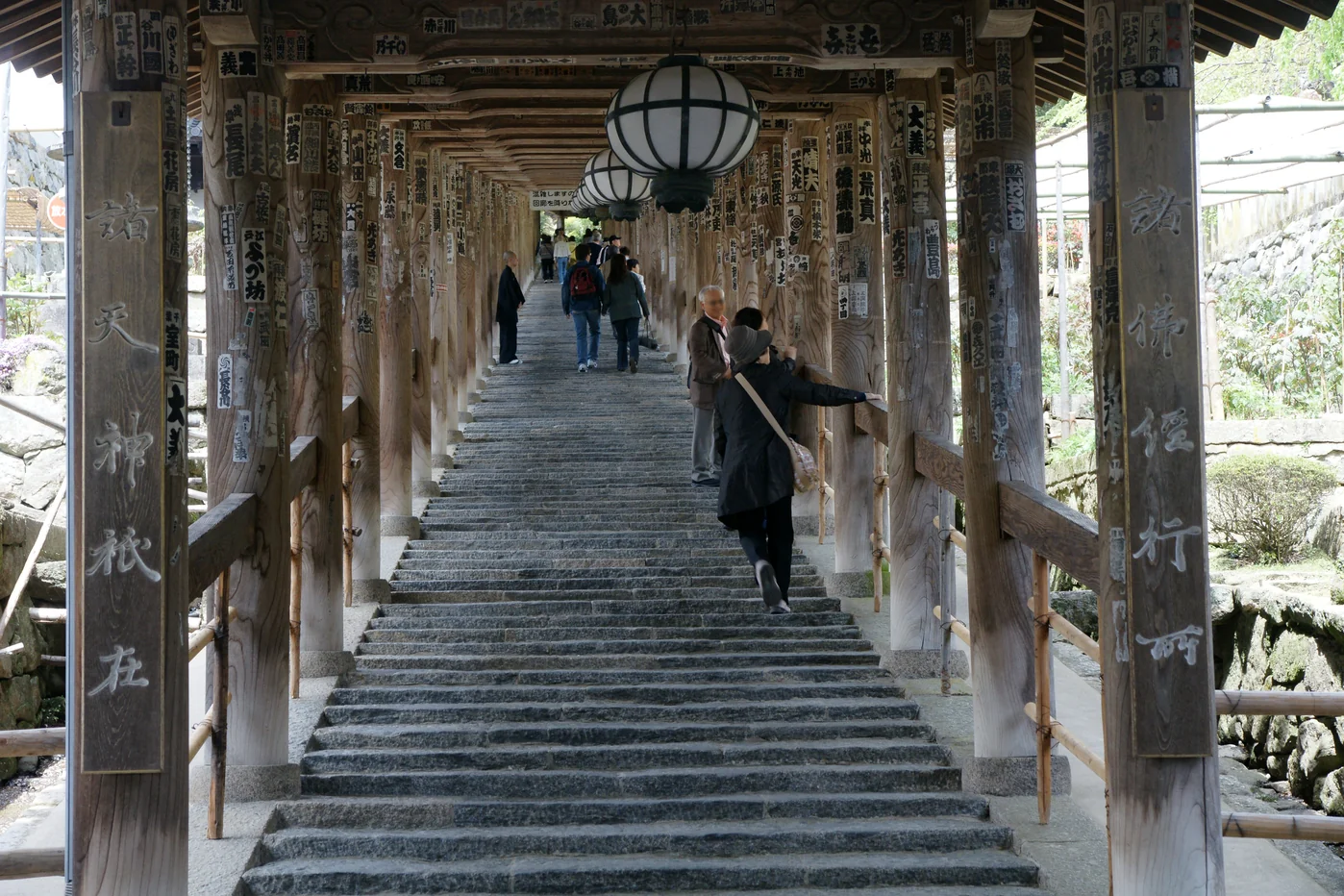
The official grounds map colors routes via Kaisando and Okunoin differently and marks rest areas, toilets and the West Approach. Illustrated routes of around 30 or 40 minutes help establish direction. Add fuller time for queues, worship, exhibitions and photography. On a first visit, take Niomon Gate, the covered stairs and main hall first, then choose one return route according to energy. Do not treat all dashed lines as a single required route.
With different walking speeds, wait in broad places without blocking traffic. Do not let children rush upward and adults chase. Rest while energy remains instead of seeking space only at the steepest upper section. The walk back to Hasedera Station still follows the descent, so preserve strength, especially with knee discomfort. Removing the pagoda or other branches after the main hall still leaves enough for half a day.
Hasedera’s main hall and Eleven-faced Kannon: entry and special viewing are separate
Normal individual admission is ¥500 for adults and junior- and senior-high students, and ¥250 for elementary-school children. Hours are 8:30–17:00 from April through September, 9:00–17:00 in October, November and March, and 9:00–16:30 from December through February. These are normal entry hours. For special viewing of the principal statue, use that event’s reception hours rather than queuing just before ordinary closing. If special viewing is the aim, enter in the morning, ascend to the main hall and eat below afterward.
The main hall projects from the slope on a supporting stage, with a stone-paved worship space between the inner hall and worship hall. The official description calls this a paired-hall layout. It became a National Treasure in 2004. Notice how the slope supports the building and how interior worship joins outward viewing. The stage reveals the grounds’ changes in level. Stand securely inside the railing; do not reach out with your phone or body to photograph distant roofs.
The principal Eleven-faced Kannon is 10.18 meters tall. The present statue was made in 1538, holds a staff in the right hand and a water vessel in the left, and stands on a large rock pedestal. These features identify the Hasedera-style Kannon. The temple prohibits photographing Buddhist statues and monks. Focus on the figure and ritual; use official treasure descriptions to revisit details at home. Paid special viewing brings worshippers close to the statue’s feet. Choose it according to your interest.
| Item | General adult cost | Time conditions |
|---|---|---|
| General admission | ¥500 | October–November 9:00–17:00 |
| Autumn principal-statue special viewing | Additional ¥1,000 | October 10–December 6, 2026; 9:30–16:00 |
| Admission + special viewing | ¥1,500 total | Allow for reception and ascent first |
| Ordinary-car parking | Additional ¥500 | Use the official vehicle entrance |
For Hasedera’s autumn 2026 special viewing, allow another ¥1,000 and reception time
The 2026 autumn festival notice lists October 10–December 6, with principal-statue special viewing from 9:30–16:00 for an additional ¥1,000. General admission is separate and there is no group discount for the special viewing. An adult pays ¥1,500 for both. If approaching the Kannon is your aim, make this fee and queue part of the main plan, leaving lunch and shopping later.
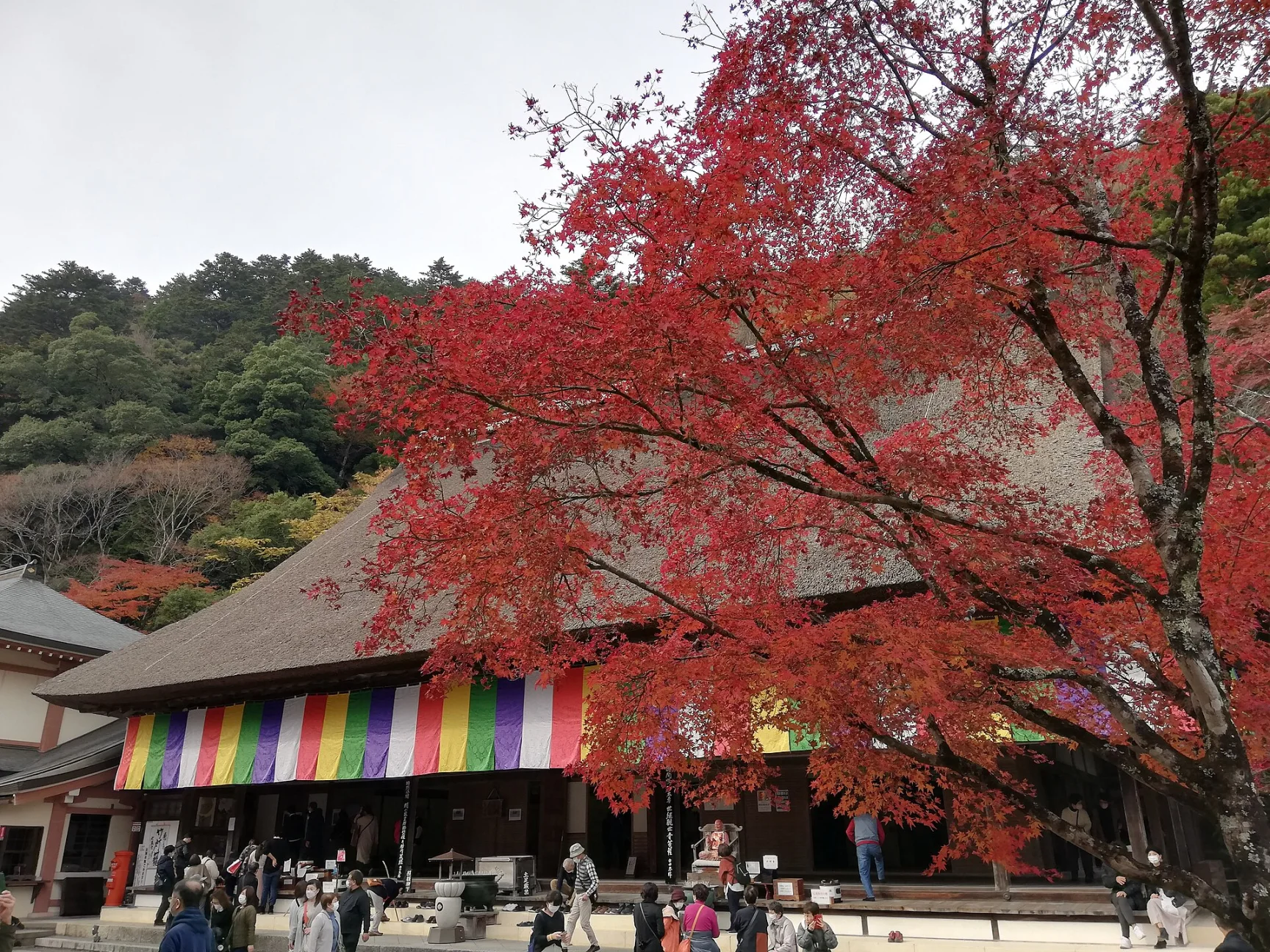
During the same period, the Kinshu Kiku Kairo chrysanthemum display is on Arashi-no-saka, 9:00–16:30, with no extra charge after admission. Potted chrysanthemums line the steps. Flower enthusiasts can add it after the main hall; for only the covered stairs and worship, use ordinary admission. Autumn offers more than peak foliage. Flowers, architecture and the statue each provide a focus worth extra time.
The 1,300th-anniversary program separately lists events including the November 7 ceremony marking completion of the five-story pagoda restoration. Read the specific notice before travel because events can affect roads and parking. For a quiet main-hall visit, avoid concentrated major-event times. The temple’s official autumn short film shows 2018 foliage and the stage, useful for understanding space. Use the 2026 announcements for that year’s events.
The temple’s 2018 autumn short film shows foliage in the grounds, the main-hall stage and walking spaces.
With wheelchairs, strollers or rain, change the main route to what is accessible
Tanzan Shrine provides priority parking at the west entrance for older visitors and those with limited mobility. The shrine office has a nursing room and loan wheelchairs. A drop-off at the appropriate entrance reduces access effort. If someone cannot climb stairs, ask reception to mark reachable routes and select a few main sights. Borrowing a wheelchair still requires help on slopes. Do not combine front steps, interior level changes and rear trails into one route for everyone.
Hasedera’s home page says visitors who have difficulty ascending or descending to the main hall can request an internal shuttle at parking or admission. There may be a wait when demand is high, and temple events may prevent service. This assists movement inside the temple; station access is separate. Explain wheelchair transport, boarding help or group needs directly in advance. If the shuttle cannot meet them, keep the lower temple town and accessible areas or use an already planned city half-day.
In light rain with normal transport, cut branches at both sites: pagoda and main buildings at Tanzan, covered stairs and main hall at Hasedera. In strong wind, heavy rain, road disruption or unsteady walking, cancel the mountain day and stay near your accommodation or visit Naramachi and city museums; rest is also an option. Hasedera prohibits tripods, monopods, ladders and drone operation. Handheld equipment is enough, without adding luggage and stair effort for one angle.
Give the day to one site, then assess spare time back in Sakurai
For a Tanzan day, change buses in Sakurai in the morning, then follow the Ashiraku route to the pagoda and worship hall. Eat or rest at midday, add only the East Hall in the afternoon and take the preselected bus down. If time remains in Sakurai, eat near the station or return to your accommodation. Give the mountain walk a comfortable ending instead of adding a distant temple on impulse.
For Hasedera, arrive before noon, walk through the temple town and ascend the covered stairs to the main hall. Complete special-viewing reception first if wanted, then have lunch and browse slowly below. With an after-lunch arrival, shorten shopping and branches while keeping the main hall and return walk. Either route can end in the afternoon for dinner in Osaka or Kyoto. Calculate rail from the actual station to your accommodation and book dinner for a time you can reach.
To do both in one day, complete all connections: Tanzan’s descent bus, Sakurai to Kintetsu Hasedera Station, the station walk in both directions and the covered-stairway visit. Make the second site optional and recalculate before leaving Tanzan in the morning. For night foliage, a ceremony, children needing naps or difficulty with steps, choose one directly. Shoryakuji is in another transport direction and belongs on another day. Keeping the Sakurai return secure lets you linger at the pagoda or main hall.
A few useful answers
Should Tanzan Shrine and Hasedera be visited on the same day?
Choose one for a first visit. Tanzan depends on buses to and from Sakurai. Hasedera adds rail, station walking and a 399-step covered stairway. For festivals, night foliage or small children, half a day to a day each is easier.
Is Tanzan Shrine admission still ¥600 in 2026?
From April 1, 2026, general adult admission is ¥700, elementary-school admission ¥300 and preschool entry free. Normal last admission is 16:00, with visits ending at 16:30.
How much is the Sakurai–Tanzan Shrine bus?
Nara Kotsu’s current autumn page lists about 25 minutes from the South Exit to Tanzan Shrine and ¥570 one way for adults. Tonomine costs ¥500. Services may end there in congestion; follow that day’s directions to the shrine.
Can I take the normal final bus after the full 2026 Tanzan illuminations?
Illuminations run November 14–December 6 from after sunset until 20:30. The normal final descent bus is 17:52. To stay until the end, arrange a transfer, reserved vehicle or your own car first.
How many steps are in Hasedera’s covered stairway, and is there a vehicle to the main hall?
There are 399 steps in three sections, becoming steeper higher up. Visitors with difficulty ascending or descending can request an internal shuttle at parking or admission. High demand means waiting, and temple events may suspend it. Arrange station-to-temple access separately.
Does Hasedera’s autumn 2026 special viewing include general admission?
They are separate. General adult admission is ¥500; the principal-statue special viewing from October 10–December 6 adds ¥1,000, for ¥1,500 total. Special viewing runs 9:30–16:00.
Official information and references
Sources used in this guide.
- Tanzan Shrine | 2026 admission, reception and assistance facilities
- Tanzan Shrine | Kamatari and the history of Tanzan
- Tanzan Shrine | grounds map
- Tanzan Shrine | pagoda, buildings, mountain paths and dining
- Tanzan Shrine | Ashiraku route and visit order
- Hasedera | internal shuttle and photography rules
- Hasedera | admission, seasonal hours and parking
- Hasedera | three sections of the 399-step covered stairway
- Hasedera | grounds map and return routes
- Hasedera | National Treasure main hall and paired-hall structure
- Hasedera | Eleven-faced Kannon date and attributes
- Hasedera | 2026 autumn festival and principal-statue special viewing
- Hasedera | 2026 1,300th-anniversary events
- Nara Kotsu | Tanzan Shrine autumn transport and current fares
- Sakurai Tourism Association | timetable continued in 2026
- Nara Kotsu | Tanzan Jinja to Sakurai South Exit timetable
- Nara Kotsu | Sakurai South Exit to Tanzan timetable
- Tanzan Shrine | 2026 autumn festival and illuminations
- Hasedera | Kintetsu access and walking route
- Tanzan Shrine | kemari and annual festivals