Choose a LEGOLAND Japan day ticket or SEA LIFE Combo. Compare fares for ages 3–18, ride supervision rules, plans for siblings and toddlers, Aonami Line fares, meals, strollers and November 2026 maintenance.
- Region & Focus
- Nagoya
- Reading Scope
- 25 min read · 18 chapters · 3 Q&As
- Official Verification
- 21 official sources checkedUpdated October 27, 2026
- Key Topics
- ItinerariesBookingRail travel
Chapter Route Map (tap any stop)
- Choose what the children want to do before choosing a day ticket or Combo
- Ticket ages: children are aged 3–18
- After buying online, keep the entry barcodes ready
- Combo also includes one return to the park
- From Nagoya Station: 24 minutes on the Aonami Line
- Driving: navigate to the Kinjo-futo parking facility
- Calculate rail child fares separately
- At 120 cm, children still need supervision on some rides
- One adult with two children: remove difficult ride combinations first
- Do the main activity in the morning and protect building time
- A toddler’s day: DUPLO and a proper midday rest
- Take time in MINILAND and reserve a full block for the factory tour
- Visit SEA LIFE in the afternoon instead of rushing after park closing
- Eat lunch inside; baby food and allergy meals have specific exceptions
- Plan strollers, feeding and luggage around your stops
- For sensitivity to sound and effects, read the sensory guide first
- Change the plan for rain and account for November maintenance
- Date changes, cancellations and a calmer journey home
- Quick Q&A
Before choosing tickets for LEGOLAND Japan in Nagoya, measure your children and note their ages on the visit date. Child tickets start at age three and still apply at 18. Riding alone depends on each attraction’s height and supervision rules. For SEA LIFE Nagoya on the same day, buy a Combo and set aside a full part of the afternoon. If the family mainly wants to drive the cars and build with bricks, a park-only day ticket leaves more time to repeat favorite activities. Ticket and attraction information is current to October 27, 2026.
Choose what the children want to do before choosing a day ticket or Combo
Start with what your children want to do, rather than the number of attractions. Show them the official ride photos and let them choose two priorities: driving a car, seeing a brick city, riding a submarine or trying a roller coaster. Make one the morning priority and the other the afternoon priority. Then check age and height limits. Remove attractions they cannot use before deciding which queues are worth your time.
Children aged three to five who like cars can make Junior Driving School the center of their day, with building and play areas before and after it. Ages six to 13 can use Driving School, where learning to drive is different from simply sitting on a ride. Siblings cannot combine the two age groups. With a four-year-old and an eight-year-old, decide who takes each child, or let them take turns while the other waits. Both official attraction pages state that there is no height limit, but each has its own age range. See Junior Driving School and Driving School.
Add SEA LIFE if fish, tanks and marine life interest your children more than bricks. Buying admission to both places reduces free time in the park. Replace one afternoon ride block with a full aquarium visit so the plan fits. For preschoolers who nap every afternoon, put sleep and meals into the plan first, then consider the extra attraction.
Choose a LEGOLAND Japan day ticket or SEA LIFE Combo. Compare fares for ages 3–18, ride supervision rules, plans for siblings and toddlers, Aonami Line fares, meals, strollers and November 2026 maintenance.
Ticket ages: children are aged 3–18
The official online starting prices are ¥4,900 for an adult park 1DAY ticket and ¥3,700 for a child. Combo 1DAY starts at ¥5,700 for adults and ¥4,500 for children. Adult prices apply from age 19; child prices cover ages 3–18. Children under three enter free. Prices vary by visit date, so use these figures as a budget floor. Once you choose a date, record the actual cart total for the family before comparing it with other plans. See official day and Combo tickets.
For example, two adults with children aged eight and 15 pay a total starting price of ¥17,200 for park tickets or ¥20,400 for Combo tickets, a difference of ¥3,200. Counting the 15-year-old as an adult would overestimate the total by the adult–child price difference for one ticket. For two adults with a four-year-old and a two-year-old, the starting totals are ¥13,500 for the park and ¥15,900 for Combo; the two-year-old needs no paid ticket. Replace the starting prices with the prices for your chosen date.
Use one row per person in your ticket list, with age on the visit date, ticket type, quantity and price. If a birthday falls during the trip, use the age on the actual park date. When a hotel package includes admission, check how many adult and child tickets it provides, then buy only those missing. An extra ticket for the same person adds nothing to the day.
After buying online, keep the entry barcodes ready
After you buy an official e-ticket, a confirmation goes to the email address you entered. Show its barcode on your phone or print it. E-ticket holders go straight to the entrance for scanning and do not need to exchange tickets at a counter. Check the barcode, date and ticket type for each paying visitor, then keep the email easy to find. A credit card payment notification alone lacks the information needed for entry. See official ticket collection instructions. The night before, make sure both adults know where the tickets are. If the buyer goes to the restroom, the other adult can prepare the children for entry. A printout also helps when a phone battery is low. Photos, waiting times and maps all use your phone; organizing admission details removes one task from the entrance queue.
The official payment system uses 3D Secure credit card authentication. If payment fails, first check authentication settings with your card issuer and whether an order or confirmation email already exists. If the email has not arrived, check spam and the address entered, then contact the park for a search or resend. The official FAQ also lists a ¥500 issuance fee per ticket at the same-day counter. Four tickets add ¥2,000, so buying in advance saves both morning time and that expense.
Combo also includes one return to the park
A regular 1DAY ticket does not allow re-entry after you leave. A Combo allows one return to the park on the same day: up to two park entries and one SEA LIFE entry, with both venues used on that day. This determines whether you can go out during the visit and return after the aquarium. On a park–aquarium–park route, the second park entry uses your one return. Leaving again ends your park visit. See the official online ticket terms.
Treat the aquarium as a real part of the itinerary when comparing park-only and Combo tickets. For four paying visitors, the extra cost should buy time all four want to spend there. If only one person wants to see fish while the others want another drive, splitting up also requires meeting and childcare arrangements. For a first visit lasting into the afternoon, I would protect park time first and choose Combo only when marine life is clearly on the children’s wish list.
Tickets also affect naps. If a child can sleep in a stroller, adults can rest in turns inside the park. If the child needs a bed, plan around the hotel distance and re-entry entitlement. Read the ticket rules before deciding to return to the hotel. LEGOLAND Hotel guests have separate entry and exit rules for their specified ticket dates. For packages, see the LEGOLAND Japan family accommodation comparison.
From Nagoya Station: 24 minutes on the Aonami Line
Take the Aonami Line (あおなみ線) to its terminus, Kinjo-futo Station. The operator lists 24 minutes from Nagoya Station, with one-way fares of ¥360 for adults and ¥180 for children. When transferring from the Shinkansen or another city line, add time for walking through the station, finding the platform, restrooms and waiting. The 24 minutes covers only the train journey. See the Aonami Line Kinjo-futo fare table.
At Nagoya Station, follow the “Aonami Line / あおなみ線” signs, then check for Kinjo-futo. Fill water bottles and use restrooms before going to the platform so nobody needs to split off as the doors close. With a stroller and luggage, elevator routes may be longer than stairs. Work backward from when you must leave the hotel, rather than simply subtracting 24 minutes from a train time.
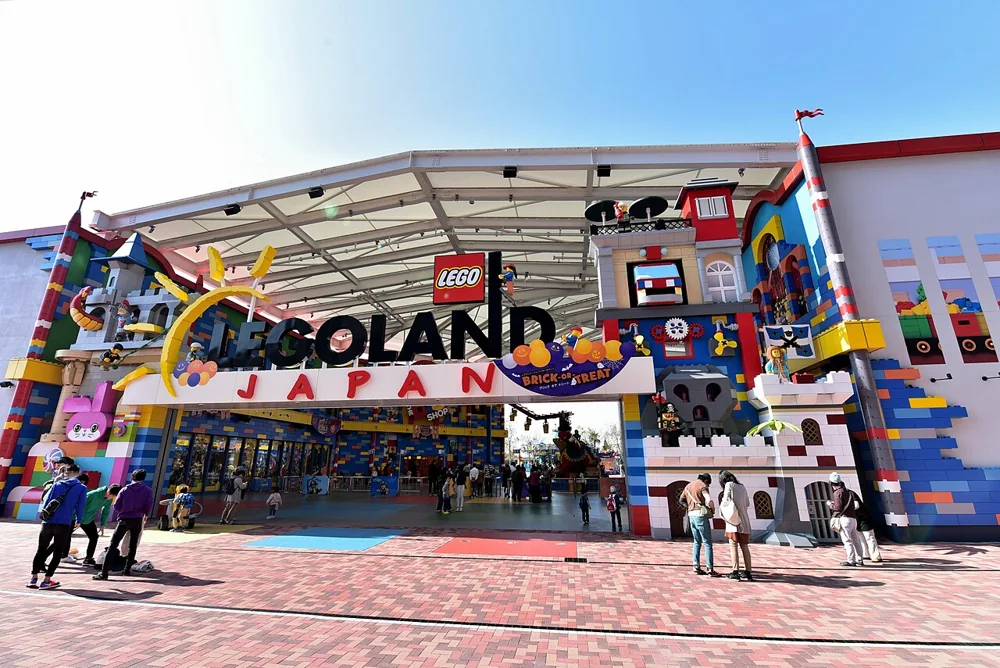
After leaving the station, follow the walking route to the resort on the official park access map. The Google Maps park search identifies the park at 2-2-1 Kinjo-futo, Minato-ku, Nagoya. The aquarium, hotel and park have separate entrances. On a first visit, go to the park entrance and check your tickets; find the hotel or restaurant in the evening instead of taking the whole family around every entrance for photos.
Driving: navigate to the Kinjo-futo parking facility
The park and hotel have no parking facilities of their own. The official access page directs drivers to Nagoya City Kinjo-futo Parking at 2-7-2 Kinjo-futo, Minato-ku, Nagoya, separate from the park at 2-2-1. Set navigation to the parking facility, enter at the correct entrance and walk to the resort. A connecting walkway leads from the parking facility’s third floor. See official driving directions.
With young children and a stroller, sort what to carry after parking: spare clothes, diapers, water, rain gear and phones go in your day bag; lock excess luggage in the car. A regular 1DAY ticket has no re-entry, so going back to the car for a coat changes the rest of your day. If the forecast turns cool toward evening, bring coats in at the start. Store them inside if needed instead of leaving them in the parking facility until the children are cold.
For families spending one day at the park and the rest of their stay near Nagoya Station, I would choose the Aonami Line. Driving fits better when you already have a rental car, continue to another region, or have someone who cannot manage station transfers. Compare parking charges, rental days and child seat needs together. There is still a walk after parking; the end of the drive is not the entrance gate.
Calculate rail child fares separately
The park’s child category through age 18 does not apply to the Aonami Line. Rail adult fares generally start at 12, although 12-year-olds who have not started junior high school remain children. Child fares generally cover ages six to under 12, but six-year-olds who have not started elementary school remain young children. The operator also states that each adult or fare-paying child may bring four young children free; a young child traveling alone pays the child fare. See Aonami Line ordinary tickets and age rules.
For two adults and two elementary school children eligible for child fares, the return trip from Nagoya Station totals ¥2,160. If one child is already in junior high school, count three rail adults and one child, for ¥2,520 return. The same family may still count as two adults and two children at the park. Write these two sets of passenger categories separately to avoid carrying the wrong classification into the transport budget.
Decide roles for the return journey too: who pushes the stroller, who takes a child to the restroom, and who holds tickets and phones. When everyone is tired, avoid leaving one adult to watch two wandering children while finding the route. Dinner need not follow a particular train precisely. Leave a gap and choose a restaurant after reaching Nagoya Station; that is usually easier than rushing to a reservation after closing.
At 120 cm, children still need supervision on some rides
Check the minimum height first, then the accompanied height range. The Dragon has a 105 cm minimum, with accompaniment required from 105 cm to under 120 cm. Submarine Adventure requires accompaniment below 130 cm. A child at 120 cm may be able to ride the first alone but still needs a companion on the second. That difference is more useful for planning than memorizing every threshold. See The Dragon official page and Submarine Adventure official page.
A qualifying companion must be at least 16 years old and 130 cm tall. A 15-year-old brother cannot serve as the required companion even if he is taller than his mother and holds a child ticket. A 17-year-old sister must meet both the age and height conditions. Park admission has another rule: children aged 12 or younger must enter with someone aged 16 or older. Getting the whole family through the gate and arranging seats on each ride are separate tasks. See the ride use criteria and park admission rules.
Measuring at home helps narrow your list; staff make the on-site decision. When needed, staff issue and fit children’s height wristbands at attractions. If a child is just short of a threshold, prepare another nearby activity they would enjoy. Then you can change plans directly instead of looking for an alternative after a full queue.
One adult with two children: remove difficult ride combinations first
If both children fall within a ride’s accompanied height range, “allowed with an adult” is not enough information. Read the seating and use conditions on its official page, then ask staff how to arrange your group. Do not assume one adult can accompany both children at once or that one child can wait alone at the exit. Settle this before joining the queue. See the official height and other restrictions.
The same family can build the day around walk-through displays, free-form building and age-appropriate driving schools, keeping rides that require separate supervision as alternatives. This reduces the number of queues you have to leave at the entrance and protects time for activities the children can do. With two adults, agree that each takes one child and meet after the longer activity. That is clearer than trying to find each other after splitting up.
Do not make the taller child wait all day. Start with that child’s priority, then move to an area the younger child can enjoy. In the afternoon, let the younger child lead while the other adult takes the older one to an activity. Choose a specific attraction entrance as the meeting point. Agree on a time and on staying there if the others have not come out yet. This reduces confusion when a phone dies or someone misses a message.
Do the main activity in the morning and protect building time
On arrival, open the official app for the day’s openings, waiting times and show schedule. Check the two priorities you selected, then start walking. The app provides a park map, routes and planning tools. Install it before departure so the family only needs to adjust plans at the entrance, rather than wait for a download. See the official app guide.
If Driving School is the school-age child’s priority, go to LEGO City and group activities in that area together. Afterward, choose another nearby activity or take a break, then follow your planned direction to the second main area after lunch. If a toddler mainly wants the slow cars, make Junior Driving School the priority and leave free play time afterward instead of immediately joining another queue. The half-hour when a child has learned how something works and wants another try is often worth protecting.
Agree on one or two photos before an activity: before setting off, afterward, and a family picture. Put the camera away for the rest and let children try steering and explore the bricks. When photographing the driving activity, follow the designated adult route. Do not block other families or entrances and exits to get a front-facing shot.
The park’s Driving School video shows children driving small cars. Compare it with Junior Driving School when choosing the morning’s main activity.
A toddler’s day: DUPLO and a proper midday rest
DUPLO Play is roofed and has no height limit; the official recommendation is ages three to six. In Bricktopia, it gives preschoolers a place to slow down. Unlike timed-entry attractions, it suits free play after the morning priority. Water play is seasonal. For an autumn or winter visit, use what is open that day rather than making spray features from summer photos a must-do. See the DUPLO Play official page.
One workable day is a morning priority chosen by the child, followed by free play, an early lunch, a nap or quiet rest, MINILAND after waking, then one activity they still have energy for. If the nap runs late, reduce afternoon rides but keep the planned departure time so there is room for dinner and a bath at the hotel. When a toddler refuses a queue, work out whether they are hungry, tired, need the restroom or fear the ride. The first needs call for a break; for fear, watch how the attraction works before deciding. If the child clearly does not want to ride, move to a walking or building area. A two-year-old entering free also needs activities of their own, rather than spending the whole day in a stroller following older siblings.
Take time in MINILAND and reserve a full block for the factory tour
MINILAND recreates Japanese cities and landmarks in bricks. The official page describes it as a walk-through display for all ages with no height limit. Children can choose how long to look, unlike on a ride. Find Nagoya Castle, roads or familiar city scenes together and stop at models that interest them. Adults can photograph the panorama while children study a small stretch of road in the same area. See the MINILAND official page.
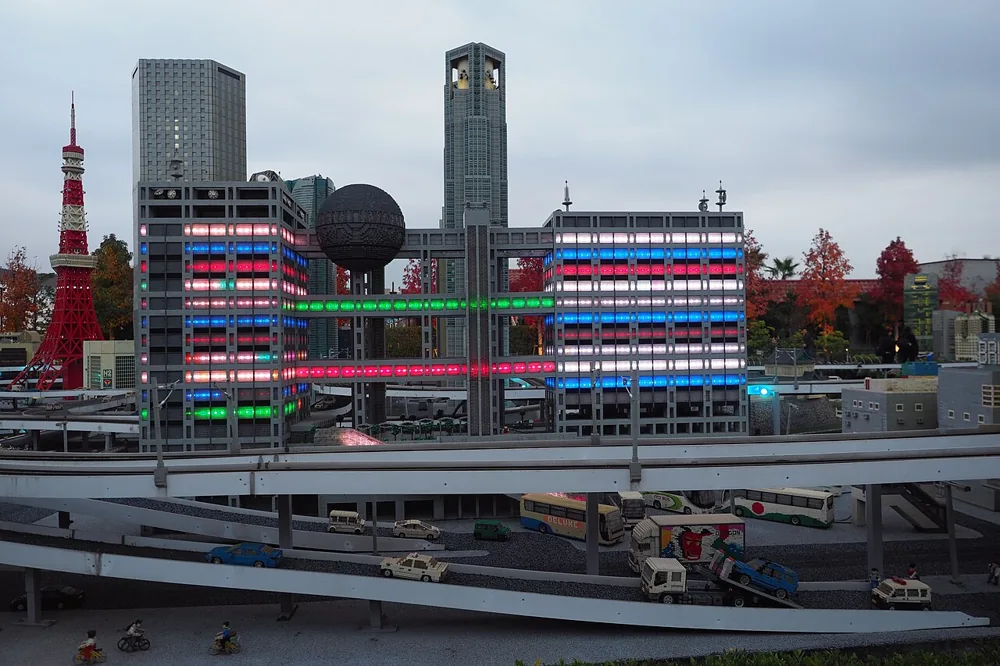
Use this area for a change of pace in the afternoon instead of a shortcut between rides. Older children can examine the shapes used in a building and consider a simpler version to make at home; toddlers can identify cars, boats and houses. It need not become a quiz. Where a child stops shows what they want to see at that moment.
LEGO Factory Tour is an indoor walk-through attraction about brick-making machinery and history. Children under 100 cm need accompaniment. If your child wants to know how bricks are made, reserve a separate visit block instead of squeezing it in before departure because it is near the entrance. Families avoiding intense rides can make it a priority. See the official factory tour page.
Visit SEA LIFE in the afternoon instead of rushing after park closing
Check the official calendar separately for the park and SEA LIFE, and note opening and closing times for each. For November 1, 2026, for example, it lists the park at 09:00–18:00 and SEA LIFE at 10:00–18:30. For November 4, the hours are 10:00–17:00 and 11:00–18:00 respectively. Their hours are published separately, so do not use park hours to plan the final aquarium slot. Move to the aquarium while there is still time in the afternoon. If everyone has energy afterward, use the Combo’s one return to the park; if the children are tired, go for dinner or back to your accommodation. See the official opening hours and calendar.
If you want about an hour in the aquarium, reserve that full period plus walking, restroom and stroller preparation time. Allow longer for children who want to look slowly. An earlier transition especially helps children who spend a long time at a favorite tank, and reduces the need to keep hurrying them.
You can choose either Submarine Adventure inside the park or SEA LIFE outside it as the main marine activity. The first is a ride with real fish and brick scenes viewed through submarine windows; the second is a walk-through visit. If the child’s main wish is to ride a submarine, protect ride time. If they want to look at fish freely, take photos and linger, reserve a full aquarium block. This makes Combo fit the family’s interests better than deciding solely by the extra cost per person.
Eat lunch inside; baby food and allergy meals have specific exceptions
The park generally prohibits bringing in food such as boxed lunches, rice balls and snacks, as well as drinks in glass bottles or cans and alcohol. Exceptions include a flask or plastic bottle small enough to fit in a bag, baby food and meals for visitors with food allergies. Most families should therefore budget for lunch inside rather than buying convenience-store rice balls before reaching the gate. See the food and drink FAQ.
Choose restaurants first by what the children will eat, then by whether they fit your morning route. Eating earlier or later can suit their normal mealtime. If they are already tired, sit down for food instead of delaying for one more ride. With two adults, one can stay with the children while the other orders, then swap once the food arrives. This is usually quicker than having the whole family discuss the menu while standing.
For allergies, read the restaurant allergen information before deciding between park meals and your own meal under the exception. Pack the food actually needed separately from family snacks so the explanation at entry is clear. Baby care services can help with supplies such as baby food and diapers. Keep the general snack budget for purchases inside instead of arriving with a whole bag that cannot enter.
Plan strollers, feeding and luggage around your stops
You can bring your own stroller. Rentals cost ¥1,000 each at Corner Shop and are for children from one month to four years old weighing no more than 18 kg. If your child needs a nap, choose your own stroller or a rental before departure and prepare a rain cover and essentials. For a child outside the rental age or weight range, plan walking with breaks rather than relying on a rental to solve tiredness on the return trip. See official family and convenience services.
DUPLO Baby Care is beside Brick House Burgers in LEGO City, with nursing and diaper-changing spaces. Combine it with the driving schools or a nearby meal to reduce cross-park walks while carrying a child. If the other adult takes older siblings to keep playing, agree to meet at the same named place so the person caring for the baby need not move while feeding.
Leave large luggage at your accommodation. Park rules prohibit rolling luggage and outdoor wagons. If you travel with luggage on the park day, arrange storage first. Lockers and paid baggage storage inside are useful for excess coats after entry, but should not underpin a plan that combines large bags, intercity travel and a rush for opening. Decide which bag stays with you and which stays at the hotel; this also makes ride entrances and exits easier.
For sensitivity to sound and effects, read the sensory guide first
Meeting a height requirement does not mean a child likes darkness, spinning or sudden sounds. The official services page offers attraction sensory guides (感覚ガイド). Read them before departure and choose activities based on reactions you already know. If dark spaces have caused anxiety before, start with walk-through displays where you can stop freely. Read about special-effects theaters before entering so the child knows what comes next. See the official services and sensory guide page.
The park offers ear defenders, calming items to borrow and a Cool Down Room. Ask Guest Service how to use them. Locate this service when entering so you can go straight there when a child becomes tired or uneasy, rather than search after distress builds. With siblings, agree who stays for the break and who takes the other children, then decide whether to continue after meeting. These families can choose just one timed activity and link it with activities they can leave at any point. A lighter schedule still lets a child spend a long time somewhere they enjoy. A request for another turn can deserve more time than the last unchecked item on a parent’s list.
Change the plan for rain and account for November maintenance
On rainy days, focus on the factory tour, indoor rides your children qualify for, and building activities. Allow more time for outdoor movement. A roofed play area feels different from a fully indoor attraction. In heavy rain and cold wind, changing wet clothes matters more than doing one more activity. Workshops require a separate check of reservation methods. The official restrictions table marks LEGO Creative Workshop and Robotic Play Centre as reservation-only, so they are not walk-in spaces you can rely on.
The official November 2026 maintenance notice lists Rebuild the World Center as closed November 4–19, Lost Kingdom Adventure November 9–13, and Anchors Away! November 30–December 11. On affected dates, the first two should not be fixed indoor backup activities. Choose the factory tour or another indoor attraction open that day instead. See the attraction closure notice.
Two rain options are enough: in light rain, keep the route but shorten outdoor stops; in sustained heavy rain, concentrate on the main indoor activities and return to your accommodation early. Both use the same ticket on the same day. There is no need to add city attractions just to increase the count. If you move the visit date, include the change costs in the next section.
Date changes, cancellations and a calmer journey home
Official dated tickets allow one date change. The new date must fall between the purchase date and the same calendar date three months after the original visit date. Make the change at the ticket counter on the desired visit day for ¥500 per ticket. Pay the difference if the new date is more expensive; a cheaper date gives no refund of the difference. Official tickets cannot be canceled for a refund. For travel agency purchases, arrange changes with the original seller. If you also bought a Skip Pass or birthday package, contact the park first. See the ticket date-change and cancellation FAQ.
Changing four paid tickets costs ¥2,000 in fees alone, plus any price difference. Compare that with booked accommodation when changing plans for weather. If your flight arrives late, put the park on the following day so the dated ticket matches a full daytime visit. Even after an early arrival, children who slept poorly need not stay until closing simply because the tickets are paid for.
Leave a short period before departure for coats, restrooms and souvenirs. If a child has chosen something to buy, agree to return to that shop at the end so you do not carry boxed bricks between rides all day. Ask staff about shopping collection services too. Gather the whole family before entering Kinjo-futo Station. Dinner, baths and repacking still lie ahead at the hotel; a settled end to the park day leaves energy for tomorrow.
A few useful answers
Does an 18-year-old need an adult LEGOLAND ticket?
Official child tickets cover ages 3–18. Adult tickets start at 19. Ride companion eligibility has separate age and height conditions.
Can we leave for lunch and return on a regular day ticket?
A regular 1DAY ticket does not allow re-entry. Combo allows one return to the park on the same day, for up to two park entries and one SEA LIFE entry.
Do we need a rental car from Nagoya Station?
The Aonami Line reaches Kinjo-futo Station in about 24 minutes. One-way fares are ¥360 for adults and ¥180 for children. Then follow the official access map on foot to the park.
Official information and references
Sources used in this guide.
- Junior Driving School
- Driving School
- Official day and Combo tickets
- Ticket date-change and cancellation FAQ
- Official online ticket terms
- Aonami Line Kinjo-futo fare table
- Official driving directions
- Aonami Line ordinary tickets and age rules
- The Dragon official page
- Submarine Adventure official page
- Ride use criteria
- Park admission rules
- Official height and other restrictions
- Official app guide
- DUPLO Play official page
- MINILAND official page
- Official factory tour page
- Official opening hours and calendar
- Food and drink FAQ
- Official services and sensory guide page
- Attraction closure notice