Start a Ghibli Park day with the interiors you want to see and the walking your group can manage, rather than a requirement to finish all five areas. The park in Nagakute, Aichi, is separate from the museum in Mitaka, Tokyo. Overseas passes, Japanese domestic area tickets and limited on-site extras cover different things. Using official information checked on October 21, 2026, this guide compares Standard and Premium before fitting the representative’s admission checks, Premium wristbands by noon, the Grand Warehouse window, transport from Nagoya, children and mobility needs into a workable day. Current prices and announced 2027 advance sales are distinguished; available dates and slots still depend on the booking page.
Know the destination first: leave a full day for Nagakute in Aichi
Ghibli Park is inside Expo 2005 Aichi Commemorative Park in Nagakute, Aichi Prefecture, with Nagoya a common accommodation and transport base. Ghibli Museum in Mitaka, Tokyo, is a separate facility. The park’s overseas admission information explicitly distinguishes them; their tickets are not interchangeable. Write “Nagakute, Aichi” into the itinerary before arranging Nagoya accommodation and transport, rather than filling an empty Tokyo afternoon. If your companion means the Mitaka museum, settle that destination question before paying instead of rearranging a Shinkansen journey afterward.
The focus here is entering buildings, exhibitions and landscapes associated with animation, rather than using one ticket for a succession of major thrill rides. Five paid areas sit across a large public park; paths, rest stops and finding the next entrance take daylight too. Wanting to inspect the house and small objects from Whisper of the Heart is different from wanting only a photograph of Howl’s Castle outside. Each person can choose two essentials before comparing passes. Companions unfamiliar with every film can still enjoy architecture, craft details and woodland without treating an entire film list as homework.
For a first visit, protect a complete opening day and put other Nagoya sights on the day before or after. With only an afternoon, work backward from a slot you can actually buy and choose fewer areas; the highest-priced ticket does not create enough time to see everything. The routes below suggest how to allocate time, with queues and your group determining adjustments. Connect the city portion through the base and sightseeing choices in a two-day Nagoya stay. Leaving one day for Nagakute is more comfortable than also trying to reach Nagoya Castle that afternoon.
Overseas tickets: compare the access included in Standard and Premium
As of October 21, 2026, the overseas official site mainly lists O-Sanpo Day Pass Standard and Premium. Standard covers Ghibli’s Grand Warehouse, Mononoke Village and Valley of Witches. Premium covers all five areas and specified interiors, including World Emporium in Hill of Youth, Satsuki and Mei’s House in Dondoko Forest, and Okino Residence, Howl’s Castle and The House of Witches in Valley of Witches. Keep the English product names when checking, since translated names vary. Admission to Valley of Witches is different from admission inside those particular buildings.
The table uses the overseas site’s currently published tax-inclusive base prices, rather than a package including meals, activities and transport. The overseas page also says a service fee applies when tickets are issued. Check the selected seller’s checkout breakdown; do not import the domestic Japanese page’s ¥110 system charge per ticket. Children ages three and under enter free and do not count toward the booking limit. The overseas child column is ages four to twelve. Near an age or schooling boundary, compare passport age with that booking page’s category instead of applying railway child-fare rules.
Standard suits a day centered on the Grand Warehouse and the streets of Valley of Witches, with the other two areas willingly omitted. Premium adds the particular interiors you want and more choice of areas, rather than making every activity free or eliminating queues. A family focused on Satsuki and Mei’s House cannot gain that access simply by walking to its entrance after buying Standard to save money. Conversely, visitors wanting the Warehouse and one stretch of streetscape need not pay more just because this might be their only visit.
| Pass | Weekday: adult / ages 4–12 | Weekend and holiday: adult / ages 4–12 | Main access |
|---|---|---|---|
| Standard | 3,300 / 1,650 | 3,800 / 1,900 | Grand Warehouse, Mononoke Village, Valley of Witches; specified interiors have additional conditions |
| Premium | 7,300 / 3,650 | 7,800 / 3,900 | Five areas and specified interiors; some experiences and rides cost extra |
A longer ticket list may be domestic: check the sales channel before comparing prices
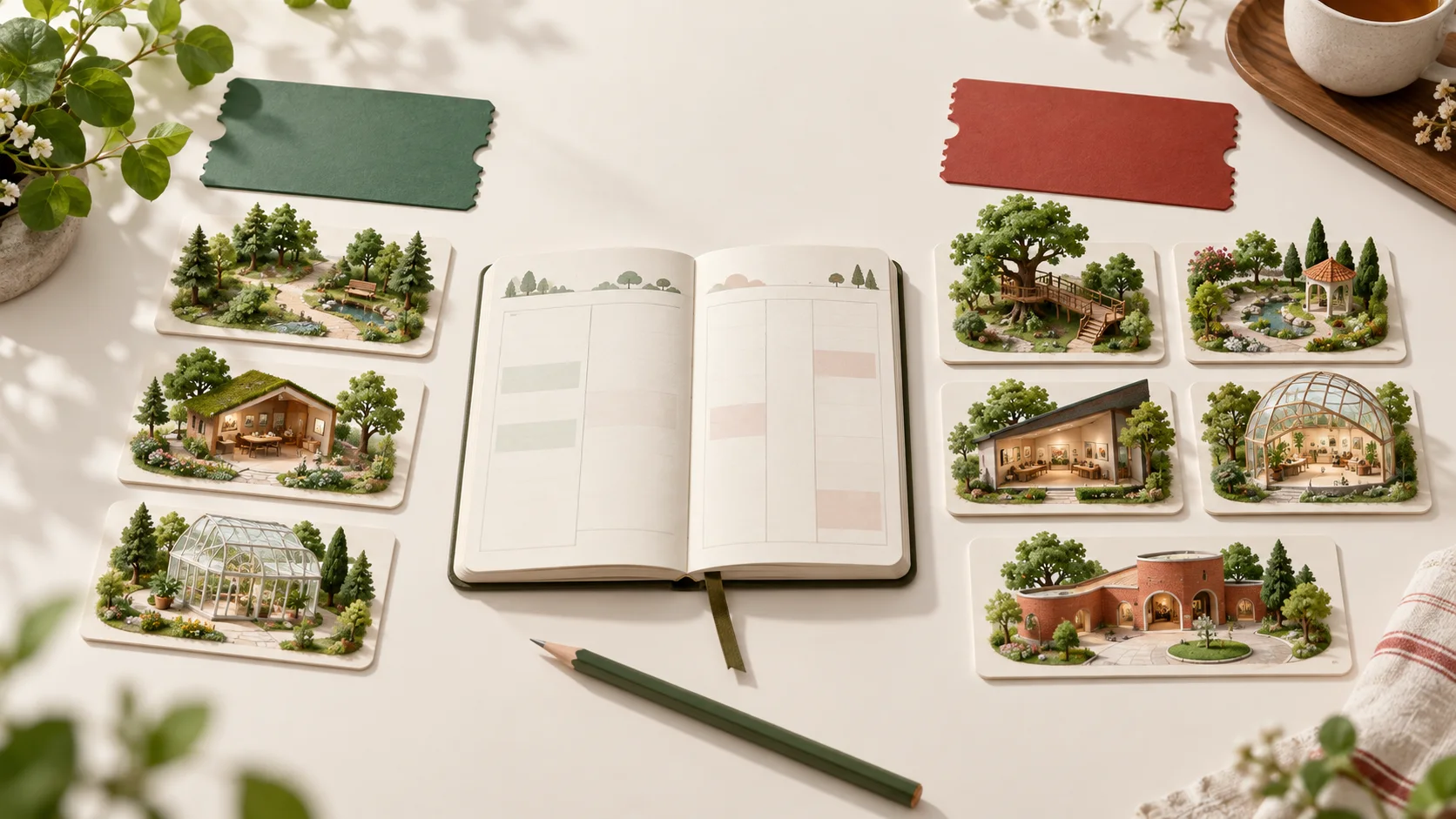
Searching for Ghibli Park ticket differences can produce a list longer than two passes. The Japanese domestic ticket list and access chart effective from July 2026 also include the Satoyama Stroll Pass, a Valley of Witches and Mononoke Village combination, and separate Grand Warehouse, Hill of Youth and Dondoko Forest tickets. They are not all ordinary options in the overseas interface. Travelers ordering from abroad, including from Taiwan, should check the actual products available through the overseas entrance rather than assume the cheapest item on the Japanese page can be bought by every foreign visitor in the same interface.
The domestic page defines children as ages four through elementary school, while the overseas column says four to twelve. Check your own booking page near that boundary. In the domestic list, Satoyama Stroll costs ¥1,000 for adults and ¥500 for children on weekdays, or ¥1,500 and ¥750 on weekends and holidays. It includes the forest hilltop, Mononoke Village and Valley of Witches in the afternoon, but neither the Grand Warehouse nor the interior of Satsuki and Mei’s House. A Grand Warehouse single-area ticket is ¥2,000 for adults and ¥1,000 for children throughout the day; Hill of Youth and Dondoko Forest single-area tickets are each ¥1,000 and ¥500. These prices explain narrower products, rather than supporting a claim that admission to everything costs only a thousand yen.
The domestic Valley of Witches and Mononoke Village combination costs ¥3,300 for adults and ¥1,650 for children on weekdays, or ¥3,800 and ¥1,900 on weekends and Japanese national holidays. It includes specified Valley interiors, with a separate assigned time for Howl’s Castle, but no Grand Warehouse. The same ¥3,300 can therefore buy quite different access: read the scope before comparing the number. The priority lottery for Aichi Residents’ Day also has a residence requirement. It is not an alternative overseas booking channel; a hotel night or use of the Japanese interface does not make someone an Aichi resident. Eligible visitors should follow the current notice.
When booking opens: confirm Japan time, the representative and the group size
The general advance-sale rule is the tenth day two months before the admission month, from 14:00 Japan time. The current specific notice says January 2027 tickets go on sale on November 10, 2026 at 14:00 in Japan, equivalent to 13:00 that day in Taiwan. This is a sales opening, not an admission slot or a promise of success. Recheck the park’s current overseas sales announcement for later months rather than carrying one countdown into another year. Two acceptable dates and one area you can omit give more room to choose than a single indispensable afternoon slot.
The overseas page currently links directly to LAWSON TICKET and Klook. Identifying the appropriate product from the park’s own entrance is safer than relying on a search position or a similar-looking site name. Purchases are limited to once per ticket type per month, with up to six tickets in one purchase; children three and under do not count toward those six. Groups of seven or more need smaller groups of six or fewer, each with an applicant representative who will actually attend. A group is not a set of electronic tickets to distribute freely later. Decide who looks after children and carries the phone, and how the groups will enter together; do not nominate an absent representative to buy everything.
Before paying, check the date, product, assigned Warehouse time, representative’s passport name, paying visitors and charges. Save the complete confirmation email and the original platform’s order page, and verify that usable admission documentation has been issued rather than only a credit-card authorization notice. Use a device that can receive email and connect in Japan, with a power bank. If mobile connectivity is still undecided, continue with booking order and arrival preparation for a first Japan trip, keeping the connection, passport and itinerary in the same departure check.
Changes, proxy purchases and lateness: accept the fixed date before paying
The overseas purchase conditions state that completed reservations cannot be refunded or changed in date, time, ticket type or quantity. Lost, damaged or stolen tickets are not reissued. The applicant representative must attend; identity may be checked, and overseas visitors should carry passports. A person who will not enter cannot buy on behalf of the family and simply hand over tickets. Purchases for transfer, gifts or resale are prohibited too. For searches about a ticket-buying agent, resolve the name, representative’s attendance and official channel first, rather than assuming finding a willing paid seller completes the task.
For Standard and Premium, the whole group must enter the Grand Warehouse within one hour from the assigned time, with no early entry. That window is not permission to arrive at any time before closing. Delayed trains, a full bus or the wrong public-park entrance can consume it. Aim to reach the park earlier and locate the Warehouse entrance first. For a real transport problem, follow the original seller and park’s guidance. Do not assume staff will move your admission to the next hour free of charge, or place another order without establishing that it can be used.
Rain and closure of the entire commemorative park are different events. The park’s cancellation and weather answers say changes and refunds are generally unavailable. If the commemorative park closes for weather or similar reasons, refund measures will be considered and announced on the official site; every shower or stopped ride does not automatically trigger repayment. If only sunshine is acceptable, weigh that risk before purchase. A flexible hotel or transport booking does not make the park ticket flexible; read the three orders separately.
Collect a Premium wristband by noon, even with an afternoon Warehouse slot
Premium holders currently receive a wristband after their QR is checked at the first area entered that day, with collection ending at 12:00. The representative and entire group must enter both the first area and the Warehouse together. At the Warehouse, show the original ticket QR as well; a wristband alone is insufficient. Other areas allow individual entry on presentation of the wristband. This detail in the current Premium admission and wristband arrangements matters even with a 14:00 Warehouse booking: collect the band before noon instead of leaving Nagoya after a late start.
Premium permits area reentry, but reentry to the Grand Warehouse starts only after 15:00. Other passes generally allow reentry only to Valley of Witches. Do not extend one ticket’s convenience into a claim that everyone can leave the Warehouse for lunch and return. With Standard, eat before entering or plan to use its café. With Premium, allow for the walk back and remaining opening time too. Wear the wristband as instructed; a photograph or another visitor’s band does not establish your own rights.
Areas without assigned slots still require entry between opening and 16:30, and may have queues or restrictions. The park particularly warns that Hill of Youth and Dondoko Forest become busy after 16:00 toward the 17:00 closing time. Do not reserve their interiors for the last ten minutes. One companion can inspect displays while another rests in the same area, but regroup for every checkpoint requiring everyone together. Separating is a choice within the ticket rules, not a waiver of the representative’s attendance.
Choose Warehouse exhibits before turning the whole visit into a photo queue
The Grand Warehouse combines indoor exhibitions, animated worlds, children’s play, shopping and food. The current official exhibition introduction includes famous scenes, the central tiled staircase, Minami-machi and Hayao Miyazaki’s Panorama Boxes. It is more than a single staged photograph. If companions want to examine layered images and handmade detail, put that before a photography queue. Set aside a separate shop visit before leaving for models, books or souvenirs, rather than spending everyone’s energy in the shop immediately after entry.
Cinema Orion currently lists the park’s original short film A Night in the Valley of Witches, screened from July 8, 2026 and expected, according to the official description, to continue until around June 2027. That is a tentative run; check the current program before traveling. The film lasts approximately fourteen minutes, plus waiting and entry and exit. A Warehouse screening does not grant separate access to Valley interiors, and a story set at night does not mean the park opens at night. Recheck the program and adjust the remaining visit if you miss a screening, rather than rushing back to repeat the whole entrance queue.
An exhibition, one priority photo scene and a short film you are willing to wait for make a useful order of priorities, with more added if time allows. This is an editorial allocation, not an official visit length. It helps prevent the group from chasing different queues. Photography is restricted in much of the Warehouse, with rules even in permitted areas. Before a child heads for the Cat Bus room, check age and the current wait. With Valley of Witches still ahead, set a shopping cutoff so outdoor areas have not stopped accepting visitors by the time you leave.
Hill of Youth and Dondoko Forest: distinguish houses, the hilltop and outdoor access
Hill of Youth suits visitors drawn to the lived-in spaces of Whisper of the Heart. The official World Emporium introduction describes antique furniture, clocks, the violin workshop and a terrace facing the commemorative park, with the small-scale Cat Bureau and roundabout nearby. If inspecting objects and writing a postcard matter, treat this as a theme in its own right rather than an extra to rush through after buying Premium. The North Entrance’s Elevator Tower is usable without an area ticket; World Emporium is not therefore free. Distinguish an entrance landmark from a paid interior before selecting a pass.
Break Dondoko Forest into Satsuki and Mei’s House, hilltop Dondoko-do and the woodland journey. The forest and hilltop ticket information currently lists limited local hilltop tickets at ¥400 for adults and ¥200 for children four to twelve, free for ages three and under, ending when sold out. This covers the hilltop, not the house interior. Forest access in the Satoyama Stroll Pass similarly does not establish entry inside the house. To see its kitchen, rooms and household spaces, select a ticket that includes them rather than treating a Totoro-shaped landmark as proof that every part connects freely.
Dondoko-go is a slope vehicle for traveling up and down the hilltop, with priority for wheelchairs, strollers and people who need it. It is not another ride for repeated queuing. A young child’s interest in Dondoko-do and an adult’s wish to inspect the house may need different pacing. Agree where resting companions will meet, then choose which adult accompanies the child instead of repeatedly searching woodland routes for each other. Follow staff diversions when weather closes a path; a hilltop ticket does not prove all trails are open.
Valley of Witches: choose interiors or streetscape before relying on limited extras
Valley of Witches places spaces from Kiki’s Delivery Service, Howl’s Moving Castle and Earwig and the Witch in European-style streets. Use the official building introduction to identify Okino Residence, Howl’s Castle, The House of Witches, the bakery and hat shop, rather than treating every house as the same indoor exhibition. Standard admits you to the area, but the three specified interiors need additional same-day tickets; Premium includes those interiors. If Howl’s rooms matter most, make that decision before paying rather than arriving at the castle and only then wondering about an extra ticket.
Current adult same-day extras cost ¥400 for Okino Residence, ¥1,000 for Howl’s Castle and ¥400 for The House of Witches; corresponding child prices are ¥200, ¥500 and ¥200. From 10:00 on weekdays or 9:00 on weekends and Japanese national holidays, numbered tickets carrying a sales start time are distributed near the designated sales point inside the area. Buy at the assigned time before 16:30. Quantities are limited, distribution ends when full and crowds can suspend it. Only visitors with valid Valley admission that day can buy; someone without any area ticket cannot buy a Howl ticket outside to gain entry. Locations can change operationally, so follow the three-building same-day and numbered-ticket instructions and staff.
Adding all three adult extras to Standard costs ¥1,800 but does not turn it into Premium. Hill of Youth, the house in Dondoko Forest, wristbands and reentry rights still differ, and obtaining all three extras is not guaranteed. Without numbered tickets, keep the streets, gardens, bakery and accessible shops rather than spending the whole afternoon awaiting a miracle at the counter. Agree beforehand how you would still enjoy the area without extras, so one person’s queue does not leave the rest hungry and exhausted or make everyone miss the Warehouse window.
Guchokipanya Bakery sells bread, while the hat shop’s ground floor and upstairs bookshop offer different things. An official Tokai TV program linked from the park homepage interviews a landscaper about connecting plants and scent to the imagined life of The House of Witches. That perspective can help you choose a courtyard worth stopping in. The footage concerns creation and spatial detail, not a promise of flowers in bloom that day, merchandise stock or purchasing eligibility.
Mononoke Village: gohei-mochi is a paid activity with its own age rules
Mononoke Village has the thatched-roof Tatara-ba, a Lord Okkoto-shaped slide and mountain-village imagery, offering open air after the Warehouse. The current Tatara-ba activity is charcoal-grilled gohei-mochi at ¥1,500 per participant, including one skewer and one jar of the chosen sauce, with a ¥100 reduction for sauce in a paper cup. The estimated activity takes around twenty minutes; waiting, washing hands and eating take additional time. It is not a free meal included in a pass. A page retaining another old activity does not establish that both are available that day.
Participants must be at least ten. Children nine and under may enter Tatara-ba but cannot take part in the operation; participants twelve and under need an accompanying adult. Current reception is 10:00–16:00 on weekdays or 9:00–16:00 on weekends and Japanese national holidays, without reservations and with on-site application, subject to crowd adjustments. With a seven-year-old and eleven-year-old, arrange another adult to look after the nonparticipant before signing up instead of placing both children by the charcoal after paying. For peanut, walnut or other allergies, check the actual sauces and ask staff.
The official page marks the stone-ground kinako and warabi-mochi activity as currently unavailable. Its old price or photograph does not guarantee participation. Rain may close the Lord Okkoto slide too. With the Warehouse and Valley as priorities, Mononoke Village can be a shorter landscape walk. If the activity is what your child wants, move it earlier and drop a shopping queue instead. Admission to three areas need not mean equal time in each; allocate time to the actual experiences rather than arriving everywhere with only enough time to watch other people.
Children: admission, dedicated play spaces and paid rides use different categories
Free admission for ages three and under does not make every ride free or permit every adult to play alongside a child. The park uses “小学生(12歳)以下” to describe who may use the Cat Bus in the Grand Warehouse’s Cat Bus Room, Children’s Town and forest Dondoko-do. If you are unsure whether your child’s age or school stage meets the park’s published eligibility, confirm with the park before booking. Parents must follow the on-site care arrangements. Preschool children need a guardian when entering, regardless of a zero ticket price. Put age, height, ability to sit independently and patience for waiting on the same activity-selection sheet.
The Valley Carousel currently costs ¥500 for ages three to twelve and ¥1,000 for ages thirteen and over, with ages two and under free. Children six and under need accompaniment by someone sixteen or older. A companion who also sits must buy a ticket; nonseated accompaniment has its own conditions. Ages two and under must use a box seat and cannot ride on an adult’s lap. Some seats cannot be used independently below 120 cm. A three-year-old can therefore enter the park free and still need a ¥500 Carousel ticket. An accompanying adult’s role does not automatically grant a free ride.
The Flying Machine has separate rules: riders must be at least three and no shorter than 90 cm. Below 120 cm, a companion thirteen or older must accompany them and also buy a ticket. Independent riding requires both age seven or over and at least 120 cm. Two visitors ages thirteen and over cannot sit side by side, and each individual cabin has a 125 kg limit. Each ride costs ¥500. Read the full individual restrictions for both rides before buying, including restraints, health and weather rules; a purchased ride ticket is no reason to make a child use an arrangement they do not meet.
Strollers, wheelchairs and rest: area entry does not mean access to every interior
The official FAQ says wheelchair users can enter all five areas, but some buildings, including the house in Dondoko Forest, have structural restrictions. A general “fully accessible” label cannot replace an actual route. Use the current wheelchair and family-facility answers and the guide to list buildings, then ask about transfers, alternative access and assistance. The Warehouse cinema lists four wheelchair spaces. This is not a reservation promise of adjacent places for the entire group; follow staff arrangements.
Strollers can be used around the large public park but generally must be left in designated places when entering area buildings. Umbrellas often cannot go indoors either. A carrier can matter more for a child who still needs holding than assuming a stroller will fit into every room. The Warehouse and Valley have nursing rooms, baby spaces and changing facilities, with corresponding restrooms across the areas. If someone needs to feed a baby, agree where others can rest and how to regroup at checkpoints requiring everyone, instead of treating a phone call as a guarantee of reception.
The paid areas have no ordinary lockers or cloakroom service, and large suitcases cannot enter. Storage at the commemorative park’s North Entrance Information Center, Global Citizen Exchange Center and West Entrance rest and information facility is limited. Usually the easier option is to leave main luggage at accommodation with confirmed storage and carry a small bag, water and essentials. Check actual stroller or wheelchair loan services at the north and west entrances too; equipment is not guaranteed to be available. If two areas are your group’s comfortable limit, choose them now rather than pulling everyone toward the forest late in the day.
Rail from Nagoya: Higashiyama Line to Fujigaoka, then Linimo
The usual rail route takes Nagoya’s Higashiyama subway line to Fujigaoka, then Linimo’s Tobu Kyuryo Line to Ai-Chikyuhaku Kinen Koen. This is Nagakute in Aichi; similarly named Koen-nishi is a different station, not another exit from the same station. The park’s access page specifies the former as the nearest station. Add the interchange, gates and walk to your own first area. From Tokyo or Osaka, arrange the intercity journey to Nagoya first, then this suburban connection. Fast trains do not eliminate the final walk.
Linimo’s current ordinary fare table lists ¥400 for adults and ¥200 for children one way from Fujigaoka to the commemorative park station, with Nagoya subway travel charged separately. Older ¥360 tables may still appear in searches and should not be reused. Acceptance of a transport IC card is different from coverage by a particular pass. In particular, do not treat JR PASS, a subway ticket or a park pass as a shared ticket for this maglev line. Apply the method of comparing Japan rail products against actual sections traveled and pay for the sections needed that day.
The park guide gives approximate distances from the station of 400 meters to the Warehouse, 300 to Hill of Youth, 800 each to Valley of Witches and Mononoke Village, and 1,000 or 1,300 to the forest depending on the route. These are distance references, not arrival guarantees obtained by dividing by a standard walking speed. With a 10:00 Warehouse booking, work backward from that area entrance through gates, navigation and admission checks; a subway app’s arrival is not the admission time. The return needs another interchange at Fujigaoka. Saving patience for station navigation can help more than forcing in one final shop.
The direct Nagoya bus: no reservation means no guaranteed seat, and some trips are cashless
To avoid changing at Fujigaoka, compare the park bus from bay 24 on level 4F of Meitetsu Bus Center, using Japanese floor numbering. The operator’s current route, timetable and fares list ¥1,200 for adults and ¥600 for children one way from Nagoya, with roughly forty minutes for a direct journey; some weekday trips taking a longer route need more time. This is a nonreserved highway bus using available seats. Full buses cannot take additional passengers, and standing is not allowed. Check the departure at bay 24 and allow for another bus or rail instead of comparing only seat comfort.
The current cashless trial applies to departures from Nagoya at 8:20 on weekdays and 7:55 on weekends and Japanese national holidays, and the 16:45 return departure from the park. Check the current notice for available payment choices. Meitetsu’s notice extending the cashless trial in 2026 concerns specified services; other trips and accepted cards need individual checks. A CentX electronic ticket neither selects a departure nor guarantees a seat. If your phone cannot display it, you may still need to pay another one-way fare. For refunds, use the original platform; do not treat it as a freely exchangeable paper ticket on board.
The direct service runs only on Ghibli Park opening days and can stop when weather or other reasons close the park. Traffic delay does not automatically extend your admission window. Even an early bus is risky if the Warehouse booking is close to predicted arrival, because queuing and walking remain. There is also a bus from Chubu airport to the park, with current ordinary one-way fares of ¥2,000 for adults and ¥1,000 for children. Those fares do not guarantee the time needed for landing, immigration, luggage and waiting. On a first arrival in Japan, place fixed park admission after an overnight stay instead of using a scheduled landing to meet a ticket that cannot change dates.
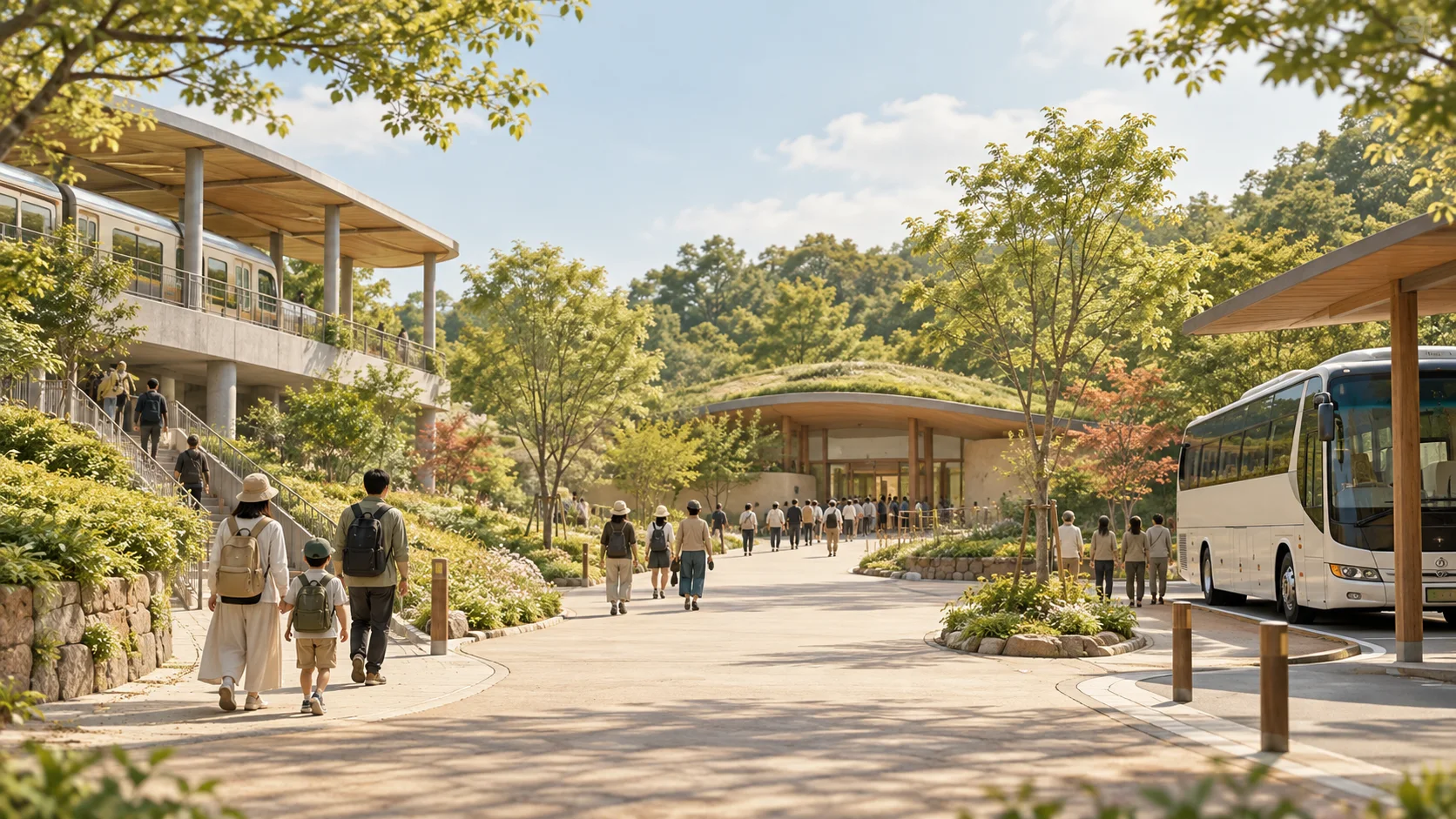
APM Cat Bus: buy on site and distinguish it from park tickets and the playroom
A search for a Ghibli Park Cat Bus reservation often means the separately operated APM Cat Bus in the commemorative park, not the children’s play space inside the Warehouse. Hoei Kotsu’s current APM information describes an approximately ten-minute one-way journey between dedicated stops near Mononoke Village and Dondoko Forest, through woodland normally closed to visitors. Adults pay ¥1,000, children from four through elementary school ¥500, and ages three and under ride free on an adult’s lap. Premium does not make it free, and it is not a shuttle from Nagoya Station.
APM tickets are currently sold only at dedicated park vending machines, without online advance sales. Boarding windows are thirty minutes long, with available slots selectable up to three hours ahead, ending when the day’s quantity sells out. Sales start at 9:15 on weekdays or 8:15 on weekends, ending at 16:30 on the Mononoke side and 17:00 on the forest side. Distinguish operation from sales hours. Do not buy an unknown seller’s “guaranteed reservation” before arrival, or assume afternoon seats will replace the walk between areas. If this is a main reason for coming, check machines and available windows that day, then adjust optional activities.
Elementary-school children and younger need a companion of at least junior-high-school age. Actual boarding can be later than the purchased window, and groups may share with other visitors. Personal cancellation is nonrefundable; severe weather may suspend service. Staff can assist wheelchair users, but large electric wheelchairs or those with particular shapes may be excluded for safety, so check first. Photos and video are not allowed while riding. The lap rule for ages three and under cannot be applied to Valley rides. Treat this as an additional paid experience rather than equating a ticket, wheelchair eligibility and certainty of meeting your next fixed slot.
Stay near Nagoya Station or on the Higashiyama Line: compare luggage and the next departure
For Shinkansen connections, large luggage or only two nights in Nagoya, the station area makes storage and intercity travel convenient. With more nights and daily visits to Sakae or Fushimi, a Higashiyama Line base also works, traveling toward Fujigaoka in the morning. Straight-line hotel-to-park distance does not identify the best accommodation: actual exits, transfers and dinner options can matter more to a family. If the park is the main purpose, establish the ticket date before choosing a room with acceptable change and cancellation terms, rather than rebuilding every connection around one apparently cheap night.
One named candidate is Nagoya JR Gate Tower Hotel and its station connection. It connects to Nagoya Station, but reception is on the fifteenth floor of JR Gate Tower, reached by shuttle elevator from Japan’s 1F (ground level) or 2F (one level above); being beside the station does not put the room door beside the platform. The connection can be useful before a luggage-heavy Shinkansen departure. Still compare rooms along the Higashiyama Line for the same dates, occupancy and cancellation conditions rather than assume a station hotel is automatically fastest for your route. This guide offers no live lowest-price or availability guarantee.
The hotel’s family and luggage FAQ also demonstrates how to read room details. Three visitors needing beds can compare the sofa-bed arrangements in the specified Deluxe Corner Twin and bathroom-view version; not every twin accepts an extra bed. Current bed-sharing rules use children of elementary-school age or younger (twelve and under), regular beds and adult-count limits, with meals charged separately. Three people who all need beds cannot be priced as though one shares a bed simply to lower the quote. After checkout, storage at the fifteenth-floor reception is for that day only; valuables, fragile, refrigerated, frozen and fresh items are excluded. Allow time to return to reception after the park.
Hotel packages: check the admission day and where the actual voucher is collected
The overseas park page also links to JTB Sunrise Tours’ park accommodation and transport plans. A hotel package is therefore a real product to compare, but not a promise that every Nagoya hotel stay includes admission. The same index contains Aichi park and Tokyo Mitaka museum products, plus transport-only, half-day and accommodation plans. Match the location and English admission product first. An option to submit a request does not confirm a room and ticket for your date; rely on the operator’s response and final documents.
For example, the linked 2027 two-person accommodation and Premium plan names Kuretake Inn Nagoya Hisaya-Odori. Day one involves making your own way to the hotel and collecting the voucher at check-in; day two is independent travel to the park, without hotel-to-park transport included. The page specifies Warehouse admission at 10:00–10:59 and says the booking-site confirmation is not an admission ticket: carry the hotel-issued voucher and passport. This particular product page both requires the whole group to enter every area together and, in its wristband section, allows individual entry to areas other than the first area and Ghibli's Grand Warehouse. Confirm this discrepancy with the original seller; until it is clarified, plan for the whole group to enter each area together and do not treat individual entry as guaranteed. Photocopied vouchers are not accepted. These are conditions of that 2027 product, not all 2026 packages, and an independent plan does not imply a guide throughout the day.
Compare occupancy, bed sharing, breakfast, the second day’s pass, assigned slot, collection and cancellation charges in separate cells. This product lists cancellation charges beginning twenty days before departure, while other platforms and plans have their own terms, distinct from standalone park tickets that cannot be freely changed or refunded. Its two-person title conflicts with the Studio Triple room listed in the accommodation section. Confirm the actual room and occupancy with the operator and obtain consistent documents before paying. Only if independent transport and a fixed Warehouse window suit you is its total comparable with booking a room and tickets separately.
A Standard day: fix the Warehouse first and leave room to shorten outdoor areas
The example assumes an ordinary weekday opening at 10:00 and an 11:00 Warehouse reservation, showing how three areas might fit rather than guaranteeing durations. Reach the commemorative park before opening, identify entrances and toilets, then enter Valley streets. Do not queue simultaneously for three limited interiors while expecting to be at the Warehouse at 11:00. If you seek same-day numbered tickets, reassess their actual sales start against the original Warehouse window. The three-area day remains complete if you abandon the extras.
Give the Warehouse a substantial visit, deciding before entry whether lunch is inside or beforehand. Mononoke Village can provide the next outdoor change. Eligible visitors interested in participating should check Tatara-ba reception first; otherwise, keep it to a short scenic walk and save energy for Valley of Witches. Returning to Valley is within Standard’s reentry rights, but queues, food and shops retain their own cutoffs. The aim is to reduce repeated journeys, not use reentry to double an afternoon’s length.
With a 14:00 Warehouse entry, move outdoor areas to the morning and before lunch rather than copying the table’s order. With a toddler needing a nap, omit an activity or shopping and keep the Warehouse plus one area. This pass excludes World Emporium and the forest house: walking to both entrances merely because they look close can consume everyone’s rest. After comparing season, daylight and outdoor planning, moving midday indoors in summer or shortening cold, wet walks usually serves the trip better than continually counting remaining areas.
| Time allocation | Main task | What to omit or adjust |
|---|---|---|
| Before opening to before 11:00 | Arrive and identify entrances; Valley streets or brunch preparation | Do not assume all three interior-extra queues can be completed |
| Within the assigned window into the afternoon | Enter the Warehouse together; prioritize displays, film and food | Omit duplicate photo queues or some shopping first |
| Afternoon | Mononoke landscape or a current activity you qualify for | Shorten the stop if not participating |
| Before leaving | Valley reentry or an earlier return to the station | Check final food and area reception; omit extra stops when tired |
A Premium day: prioritize two interiors without treating all five areas as compulsory
Choose a pair of themes such as Satsuki and Mei’s House with the Warehouse, or World Emporium with Howl’s Castle. For the former, visit the forest in the morning and rest on the way back to the Warehouse. For the latter, start at Hill of Youth nearer the North Entrance, continue to the assigned Warehouse slot and then Valley. Noon wristband collection and entering the Warehouse together are fixed conditions; other areas have room to adjust. With different walking abilities, complete required checks at the same entrance first, then use the wristband rules and a clear meeting point for individual pacing.
Do not estimate the day by assigning an hour to each of five areas. In an illustrative seven-hour weekday opening, reserving one hour for a meal and seated rest and another for checks, area transfers and navigation leaves around five hours for exhibitions, buildings, shops and waiting. These two one-hour allocations are your own time budget, not official averages. To inspect two houses, photograph scenes and help a child with the charcoal activity, shorten other stops rather than turn a necessary meal into something swallowed on the run.
Avoid leaving Hill of Youth and the forest until after 16:00, when the park warns of crowds. If you missed them in the morning, choose earlier in the afternoon which to add instead of pushing both back. Premium allows Warehouse reentry after 15:00, but the round-trip distance remains. Return for an exhibition you truly like, or do not return at all. The higher-priced pass buys choices that fit you, not a requirement to run through every entrance before closing.
Lunch, bread and souvenirs: access rights and last orders shape the choice
Inside the Warehouse, Transcontinental Flight Café and the other current food information list a BLT sandwich at ¥920, square Margherita pizza at ¥920 and hot coffee at ¥550, including tax. Opening is 11:00 on weekdays or 10:30 on weekends and Japanese national holidays, with last orders at 16:30. This is inside an area needing a Warehouse ticket, not a lunch-only entrance without one, and a seat without waiting is not guaranteed. Before combining a screening and lunch inside, consider whether your companions want that length of stay, then allocate later activities.
Flying OVEN in the Valley offers a fuller table-service meal. Current examples are Cottage Pie at ¥1,950, roast pork at ¥1,850 and the dark-night curry at ¥1,600. The main-meal menu runs from 11:00 to last orders at 16:00; a later closing time does not mean the same meal is still available. Guchokipanya Bakery is another option, but bread, a seated meal and street-photo queues meet different needs. An item in the official introduction does not guarantee stock every afternoon. Both require the corresponding Valley admission, so choose the area in relation to your route.
Without an area ticket, or for food outside the paid areas, compare Rotunda Kazegaoka at the North Entrance. The current listed hours are 10:00–18:00, with food last orders at 17:00. Its café and restaurant menu includes miso pork-cutlet curry at ¥1,500. Leaving the Warehouse with Standard to eat here does not establish a right to return. Ticket rights matter more than restaurant distance. The menu warns allergy-sensitive diners of possible cross-contact in a shared kitchen; a photograph without an apparent ingredient is no safety guarantee. For shopping too, identify which shops are inside paid areas and buy fragile goods and food nearer the return.
Rain, heat or closures: keep the chosen theme rather than assuming a free date change
Outdoor areas across a large park still involve walking in rain. An indoor Warehouse does not make a pass an all-day indoor itinerary. The park identifies bad-weather effects on forest trails, the Lord Okkoto slide, Carousel and Flying Machine, while APM has separate suspension rules. Read current usage and facility restrictions before leaving, then follow actual operations on site. One closed ride does not close everything else or grant a new Warehouse slot.
A wet-weather version can keep the Warehouse, drop a long woodland path and a ride, and limit Valley to safely reachable buildings and streets. Umbrellas often stay at building entrances; a light raincoat and small bag reduce repeated packing, without allowing wet umbrellas into prohibited spaces. End an activity when lightning, strong wind or a clear closure requires it. Only an announced closure of the whole commemorative park sends you to the park’s refund or follow-up notice; ordinary rain and complete closure have different rules.
In summer, make space for water, hats, towels and breaks from the outset. Avoid the least comfortable outdoor period where ticket slots permit. Winter and evenings can be quieter yet colder, shortening comfortable walking. If someone is clearly tired, omit the next area instead of adding unnecessary distance to justify the price. Prepare a shorter complete version before departure: the core interior, one nearby area and a meal before returning. Deciding to shorten on the day then still leaves a coherent alternative.
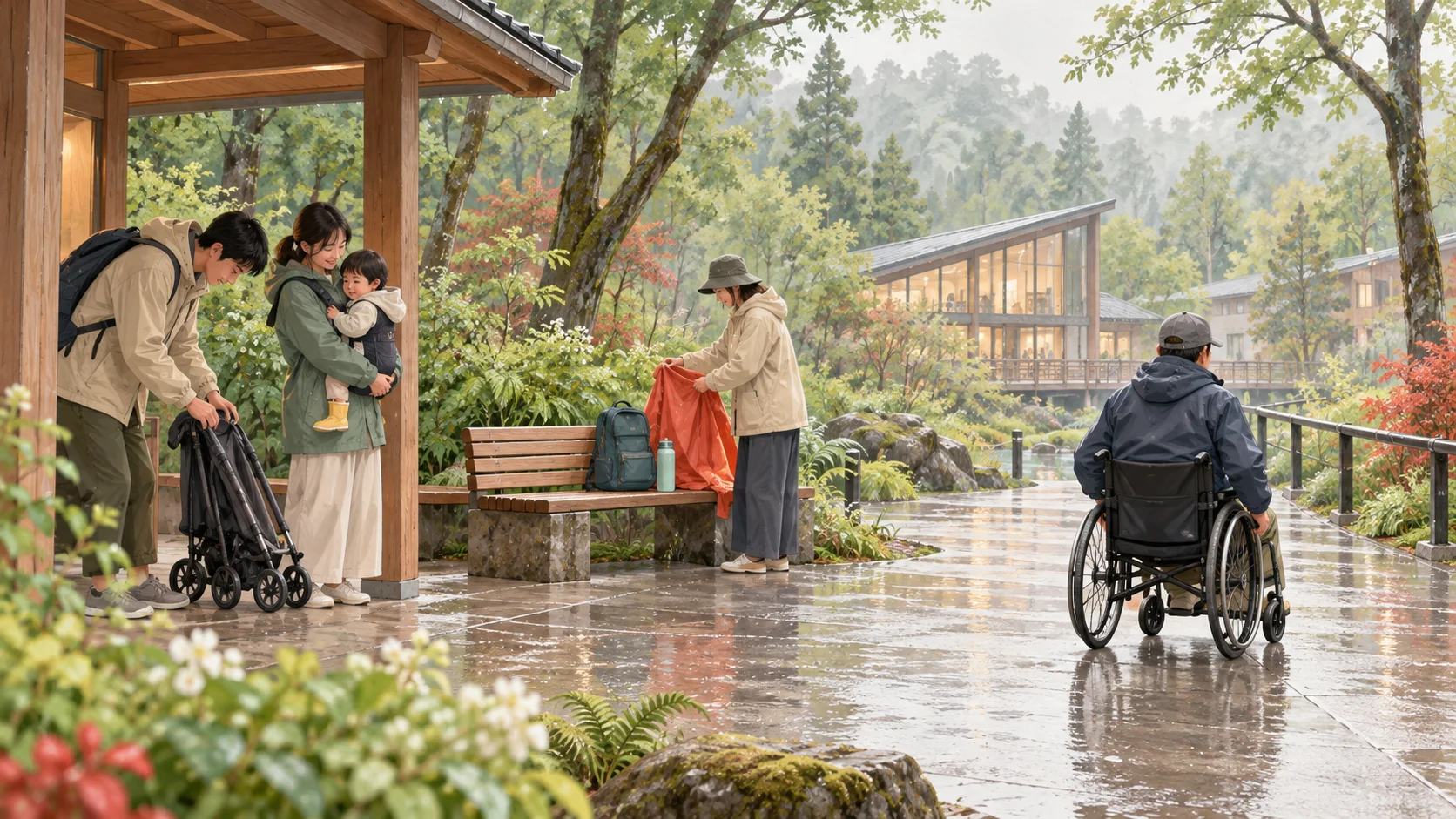
Without a ticket: assess the public park, viewpoint and city alternatives separately
Ordinary admission is not sold at area entrances, and shops or cafés inside paid areas do not admit visitors just to buy something. The commemorative park’s North Entrance Elevator Tower and Rotunda can offer another walk, but free surroundings do not replace specified house interiors. Limited local forest hilltop tickets and Valley interior extras have distinct prerequisites too. If the Warehouse is the purpose, change dates or choose another Nagoya theme rather than spend a day waiting at an entrance for ordinary on-site sales that do not exist.
A search for the Valley of Witches observation deck refers to a commemorative-park facility overlooking the Valley, not an included floor of Valley admission. Its official page requires separate numbered tickets on weekends, holidays, Golden Week and long school holidays; a Ghibli Park ticket does not substitute. Temporary works, lightning, snow and special evening events have additional arrangements. One homepage notice of free access on a particular date does not make every day free, nor does a view of the castle establish permission to cross the boundary into it.
For an enjoyable day together, return to Nagoya’s indoor museums, neighborhoods and meals and choose a complete theme rather than respond to lost admission with more transfers. Visitors already planning Tokyo or Kansai need not add repeated major city moves to fill a park gap. Compare hotel cancellation terms, intercity tickets and paid activities before deciding whether an extra night is worthwhile. An alternative reduces loss and preserves the trip’s content; it does not promise last-minute admission to every popular facility.
A family budget: separate base admission, transport, lunch and paid experiences
Take an explicit example of two adults and a ten-year-old paying the child rate on an ordinary weekday. Standard base admission is ¥3,300 times two plus ¥1,650, totaling ¥8,250. Premium is ¥7,300 times two plus ¥3,650, totaling ¥18,250, a ¥10,000 difference. That difference buys the access and rights described above, not meals or every ride. Compare it with the family’s two priorities to decide whether it is worthwhile or better kept for another night’s accommodation.
Allowing ¥1,500 per person for lunch adds ¥4,500. Counting only return Linimo travel between Fujigaoka and the park adds ¥800 for each adult and ¥400 for the ten-year-old, totaling ¥2,000. Those items bring Standard to ¥14,750 and Premium to ¥24,750. The ¥1,500 lunch figure is your own allowance, not a claim that every restaurant sells a meal at that price. This subtotal excludes Nagoya subway travel, overseas ticket-issuance fees, other transport, accommodation, drinks and souvenirs. For a bus-family comparison, recalculate return fares for each actual age; do not add two alternative routes as though both were compulsory.
List extras only for people who will actually participate. Gohei-mochi has age rules, a seated Carousel companion may pay, and APM charges separately in each direction. Separate essentials from activities you will do only with time and availability, then check the remaining budget after each one. A pass does not make every paid activity in its areas necessary. Separating fixed and flexible Japan travel costs extends this approach. With a spending ceiling, secure tickets and suitably flexible accommodation first, then limit shopping and extras before card notifications arrive after the visit.
Before departure and at closing: decide the return before one last shop
For the bus back to Nagoya, read that day’s departures from the park, not the opposite-direction column used in the morning. The current table includes late services such as 17:00, 17:15 and 17:30, but weekday, weekend, Japanese national-holiday and opening-day distinctions still need checking; your chosen bus is not guaranteed to have space. To collect Nagoya luggage, catch a Shinkansen or reach the airport that night, work backward through waiting, traffic or a rail alternative and the walk to storage. Park closing at 17:00 does not mean you are already seated in a Nagoya Station restaurant at 17:00.
Make the final shop fit the actual exit route. Staying late in the Warehouse shop can reduce time to another area or the bus stop. Confirm large-item packaging, food storage and carrying needs early instead of reorganizing paper bags at the vehicle door. Food taken abroad is subject to destination quarantine and import rules; a shop selling it does not establish permission to take it home. Follow permitted photography areas too: a final picture does not create an exception for prohibited interiors, nonpublic buildings or commercial photography. Tripods and selfie sticks also face restrictions.
Before leaving, recheck five linked matters: the actual opening day, your product and assigned window, the representative and passport, available transport and companions’ care and food needs. Ordinary hours are 10:00–17:00 on weekdays and 9:00–17:00 on weekends and holidays, usually closed Tuesdays, moving to the next weekday when Tuesday is a holiday. Still use the current official calendar and specified closure dates. Protect the one thing you cannot miss and let other stops be optional. Sitting down to eat and entering the house you really wanted usually serves the trip better than putting every place name on a checklist.
A few useful answers
Is Ghibli Park in Tokyo, and can I use a Mitaka museum ticket?
The park is in Expo 2005 Aichi Commemorative Park in Nagakute, Aichi, commonly visited from Nagoya. Ghibli Museum in Mitaka, Tokyo, is separate and the tickets are not interchangeable. Confirm the destination before booking tickets and accommodation.
What is the key difference between Standard and Premium?
Overseas Standard includes the Warehouse, Mononoke Village and Valley of Witches. Premium includes five areas and specified interiors. Standard needs limited same-day extras for the three specified Valley buildings, without gaining Hill of Youth, the forest house or Premium wristband rights. Food, some activities and rides still cost extra.
When do January 2027 tickets go on sale, and what is that in Taiwan?
The notice checked October 21, 2026 says January 2027 sales begin November 10, 2026 at 14:00 Japan time, or 13:00 that day in Taiwan. Availability is not guaranteed; recheck the current release notice for other months.
Can Premium visitors arrive after noon with an afternoon Warehouse booking?
Do not judge only by the Warehouse time. Current Premium wristbands must be collected at the first area by 12:00. The representative and whole group must enter both the first area and the Warehouse together, and the assigned Warehouse window still applies.
Can I buy a Howl’s Castle ticket on site without ordinary park admission?
Same-day tickets for specified Valley interiors are only for visitors with valid Valley admission that day, following numbered-ticket and quantity limits. Ordinary area admission is not sold at entrances. The limited forest hilltop ticket is a different, narrower product and excludes the house interior.
If a three-year-old enters free, is the Carousel free too?
Admission and rides differ. Park admission is free for ages three and under, but the Carousel currently costs ¥500 for ages three to twelve, with accompaniment by someone sixteen or older for ages six and under. Ages two and under ride free subject to box-seat and other restrictions, and cannot ride on a lap.
Does the Nagoya direct bus need a reservation, and does an electronic ticket secure a seat?
It is currently a nonreserved highway bus. A full bus cannot take extra or standing passengers. CentX tickets do not select a service or guarantee a seat; specified trial trips are cashless, so check current departures and payment choices.
Can I reserve the APM Cat Bus online, and is it included in a pass?
APM currently sells limited one-way tickets only at dedicated commemorative-park machines, without online sales. Boarding windows are thirty minutes, with available slots up to three hours ahead. Adults pay ¥1,000 and children four through elementary school ¥500; it is not included in a Ghibli pass.
Does rain mean a refund or a free change of day?
Ordinary rain or a stopped ride does not grant free changes or refunds. Purchases generally cannot be changed or canceled. Only a commemorative-park closure for weather or similar reasons leads to the operator’s later notice about possible refund measures.
Can strollers or wheelchairs reach every interior?
Wheelchair entry to the areas does not mean full access inside every building; the house in the forest and others have structural restrictions. Strollers usually stay outside buildings, so a carrier can help with young children. Check routes, loans and assistance for the specific buildings you want.
Is a hotel package booking confirmation the admission ticket?
Read the actual product. The 2027 JTB two-person plan described here requires voucher collection at the hotel on day one and the voucher and passport for entry on day two. The booking confirmation does not substitute, and hotel-to-park transport is extra. Other plans need their own checks.
Do I need an area ticket only to visit a shop or restaurant?
Businesses inside paid areas need the corresponding admission; you cannot enter without a ticket just to shop or eat. Outer facilities such as North Entrance Rotunda Kazegaoka are alternatives, while the viewpoint and APM have separate rules. Warehouse reentry also depends on the pass.
Check with the source
Schedules, availability and rules can change. These official sources are the place to confirm details before you book.
- Ghibli Park | Overseas passes, base prices, releases and representative rules
- Ghibli Park | Domestic Japanese tickets and access chart from July 2026
- Ghibli Park | Cancellation, family facilities, luggage and free outer facilities FAQ
- Ghibli Park | Reentry, photography, facilities and walking distances
- Ghibli Park | Current opening calendar and exceptions
- Ghibli Park | Rail, buses and public-park entrances
- Ghibli’s Grand Warehouse | Current exhibitions and short-film schedule
- Hill of Youth | World Emporium and surrounding facilities
- Dondoko Forest | The house, hilltop tickets and slope vehicle
- Mononoke Village | Current gohei-mochi activity, ages and unavailable activities
- Valley of Witches | Buildings, shops and individual ride restrictions
- Ghibli Park | Food locations, example prices and service times
- Rotunda Kazegaoka | Current menu and shared-kitchen notice
- Linimo | Current ordinary fares from Fujigaoka and other stations
- Meitetsu Bus | Park timetable, fares and nonreservation conditions
- Meitetsu Bus | Extension of the cashless trial in 2026
- APM Cat Bus operator | Limited on-site sales, one-way travel and riding rules
- Nagoya JR Gate Tower Hotel | Station access and fifteenth-floor reception
- Nagoya JR Gate Tower Hotel | Rooms, bed sharing and same-day storage FAQ
- JTB Sunrise Tours | Officially referred park and Mitaka museum product index
- JTB | 2027 two-person Premium and Kuretake Inn accommodation conditions
- Commemorative park | Separate viewpoint admission and numbered-ticket rules
- Tokai TV | Official episode 75 and landscaper interview