Choose between LEGOLAND Japan 1DAY and SEA LIFE Combo tickets. Compare fares for ages 3–18, ride supervision, routes for siblings and toddlers, Aonami Line fares, food, pushchairs and November 2026 closures.
- Region & Focus
- Nagoya
- Reading Scope
- 25 min read · 18 chapters · 3 Q&As
- Official Verification
- 21 official sources checkedUpdated 27 October 2026
- Key Topics
- ItinerariesBookingRail travel
Chapter Route Map (tap any stop)
- Choose what the children want to do before choosing the ticket
- Ticket ages: children are aged 3–18
- Keep the admission barcodes after booking online
- Combo also gives you one return to the park
- From Nagoya Station: 24 minutes on the Aonami Line
- Driving: navigate to the Kinjo-futo car park
- Calculate railway child fares separately
- Being 120 cm tall does not allow every ride alone
- One adult with two children: remove difficult ride combinations first
- Do the priority activity in the morning and protect building time
- A toddler’s day: DUPLO and a proper midday rest
- Take time in MINILAND and give the Factory Tour its own slot
- Visit SEA LIFE in the afternoon, before the final admission rush
- Eat lunch inside; baby food and allergy meals have specific exceptions
- Plan pushchairs, feeding and luggage around your stops
- For sensitivity to sound and effects, read the sensory guide first
- Rain plans: avoid November maintenance closures
- Date changes, cancellation and leaving without a rush
- Quick Q&A
Measure each child’s height and note their age on the day of your visit before choosing LEGOLAND Japan tickets. Child admission starts at three and still applies at 18. Riding alone depends on each attraction’s height and supervision rules. Buy a Combo if you want to visit SEA LIFE Nagoya on the same day, and reserve a proper afternoon slot. If the family mainly wants driving and building time, a park-only ticket leaves more room to repeat favourite activities. Ticket and attraction information is dated 27 October 2026.
Choose what the children want to do before choosing the ticket
Do not start by counting attractions. Show the children the official ride photographs and let them choose two priorities: driving a car, exploring a brick city, riding a submarine or trying a roller coaster. Make one the morning priority and the other the afternoon priority. Check ages and heights next. Remove unsuitable rides before deciding which queues deserve your time.
Children aged three to five who like cars can build their day around Junior Driving School, with building and play areas before and after. Ages six to 13 can use Driving School, which offers a lesson-style driving experience rather than simply a ride. Siblings cannot combine these age groups. With a four-year-old and an eight-year-old, decide who accompanies whom, or let one wait while the other takes a turn. Both official pages state that there is no height restriction, alongside their separate age limits. Junior Driving School; Driving School.
Add SEA LIFE if fish, tanks and marine life interest the children more than bricks. Buying both venues reduces unstructured park time. Replace an afternoon ride slot with a complete aquarium visit so that it fits. For preschool children with a regular afternoon nap, put sleep and meals into the plan before adding another attraction.
Choose between LEGOLAND Japan 1DAY and SEA LIFE Combo tickets. Compare fares for ages 3–18, ride supervision, routes for siblings and toddlers, Aonami Line fares, food, pushchairs and November 2026 closures.
Ticket ages: children are aged 3–18
The official online starting prices are ¥4,900 per adult and ¥3,700 per child for park 1DAY tickets, or ¥5,700 and ¥4,500 for Combo 1DAY. Adults are aged 19 and over; children are aged 3–18. Under-threes enter free. Prices vary by visit date, so use these figures as a minimum budget. Once you select a date, record the actual basket total for your family before comparing other plans. Official one-day and Combo tickets.
For two adults and children aged eight and 15, the advertised starting prices total ¥17,200 for the park or ¥20,400 for Combo: a difference of ¥3,200. Counting the 15-year-old as an adult would overestimate the cost by one adult–child price difference. For two adults, a four-year-old and a two-year-old, the starting totals are ¥13,500 and ¥15,900. The two-year-old needs no paid ticket. Replace the starting prices with your date’s actual prices before buying.
Use one row per person in your ticket list: age on the visit date, ticket type, quantity and cost. If a birthday falls during the trip, use the age on the day you enter. For accommodation packages that include tickets, count the adult and child tickets already supplied before buying the shortfall. A duplicate ticket for the same person adds nothing to the day.
Keep the admission barcodes after booking online
After an official e-ticket purchase, the confirmation goes to the email address you supplied. Show its barcode on a phone or print it. E-ticket holders go straight to admission without exchanging tickets at the ticket window. Match every paying visitor’s barcode, date and ticket type, then keep the email easy to find. A card payment notification alone does not contain everything needed for admission. Official ticket collection information. The evening before, make sure both adults know where the tickets are. If the purchaser goes to the toilet, the other adult can prepare the children for entry. Paper copies also help when a phone battery runs low. Photos, queue times and maps all use the phone; organising admission beforehand saves searching through messages in the queue.
The official payment system uses 3D Secure card authentication. If payment fails, check the issuing bank’s authentication settings and whether an order and confirmation already exist. If the email has not arrived, check spam and the entered address before asking the park to trace or resend it. The official FAQ also lists a ¥500 issuing fee per ticket at the same-day window. Four tickets add ¥2,000, so advance purchase saves both morning time and money.
Combo also gives you one return to the park
A normal 1DAY ticket does not allow re-entry. Combo allows one return on the same day: up to two entries to LEGOLAND and one to SEA LIFE, with both used that day. This determines whether you can go out and return after the aquarium. On a park → aquarium → park route, the second park entry uses your return. Leaving again ends your park visit. Official online ticket terms.
Treat the aquarium as a real part of the itinerary when comparing tickets. For four paying visitors, the price difference should buy aquarium time that all four want. If only one person wants fish while the others want another drive, splitting up also requires care and meeting arrangements. For a first visit lasting into the afternoon, I would protect park time and choose Combo only if marine life is clearly on the children’s wish list.
Tickets also affect naps. Adults can take turns resting in the park while a child sleeps in a pushchair. A child who needs a bed requires a plan that includes hotel distance and re-entry rights. Read the ticket rules before planning a hotel return. LEGOLAND Hotel guests have separate entry rules for specified ticket dates. See the LEGOLAND Japan family accommodation comparison for package choices.
From Nagoya Station: 24 minutes on the Aonami Line
Take the Aonami Line to its terminus, Kinjo-futo. The operator lists a 24-minute journey from Nagoya, with a one-way adult fare of ¥360 and child fare of ¥180. Add time for walking through the station, finding the platform, toilets and waiting when transferring from the Shinkansen or another city line. The 24 minutes cover only the train journey. Aonami Line Kinjo-futo fare table.
At Nagoya Station, follow Aonami Line / あおなみ線 signs, then check for Kinjo-futo. Refill drinks and use the toilets before going to the platform, rather than separating as the doors close. Lifts may take a longer route than stairs when you have luggage and a pushchair. Work backwards from leaving your hotel, rather than subtracting just 24 minutes from a train arrival time.
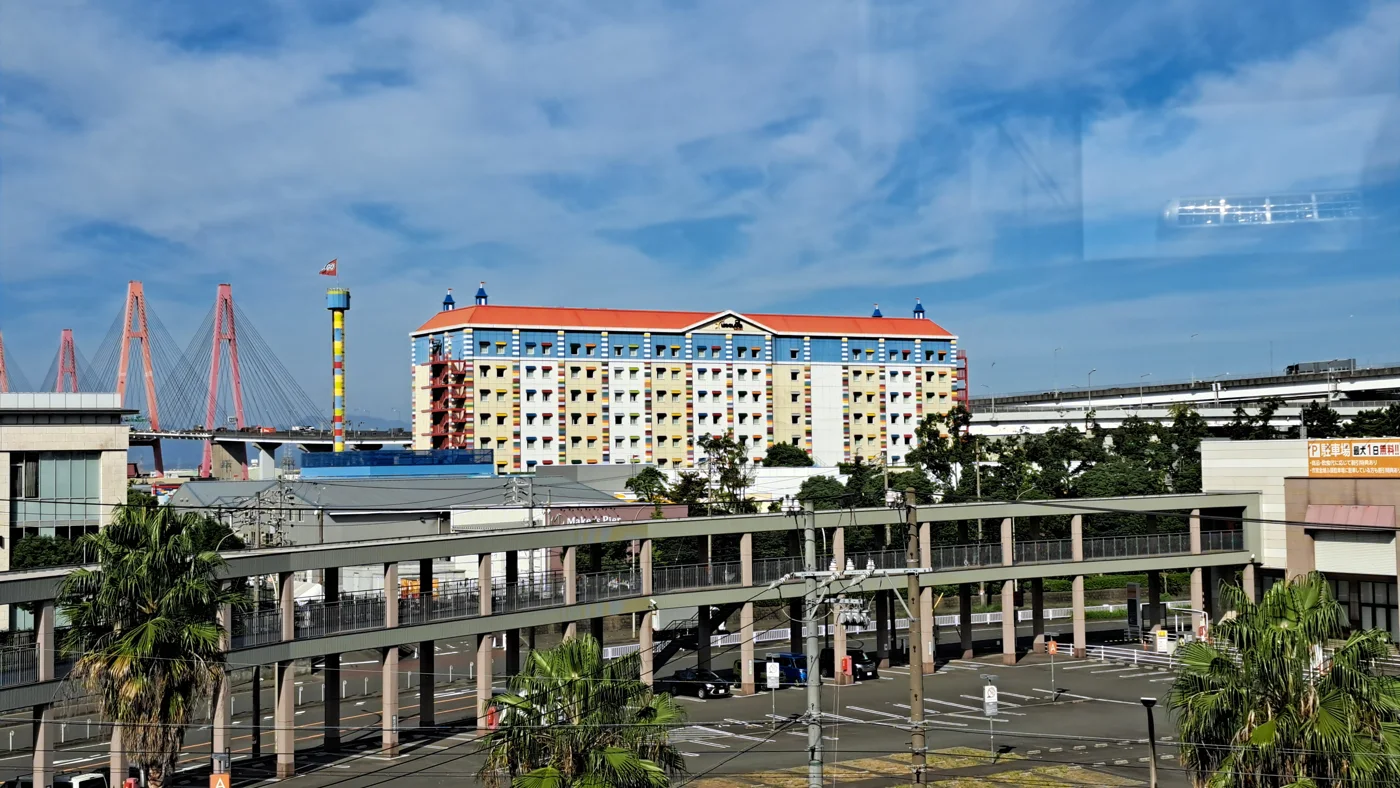
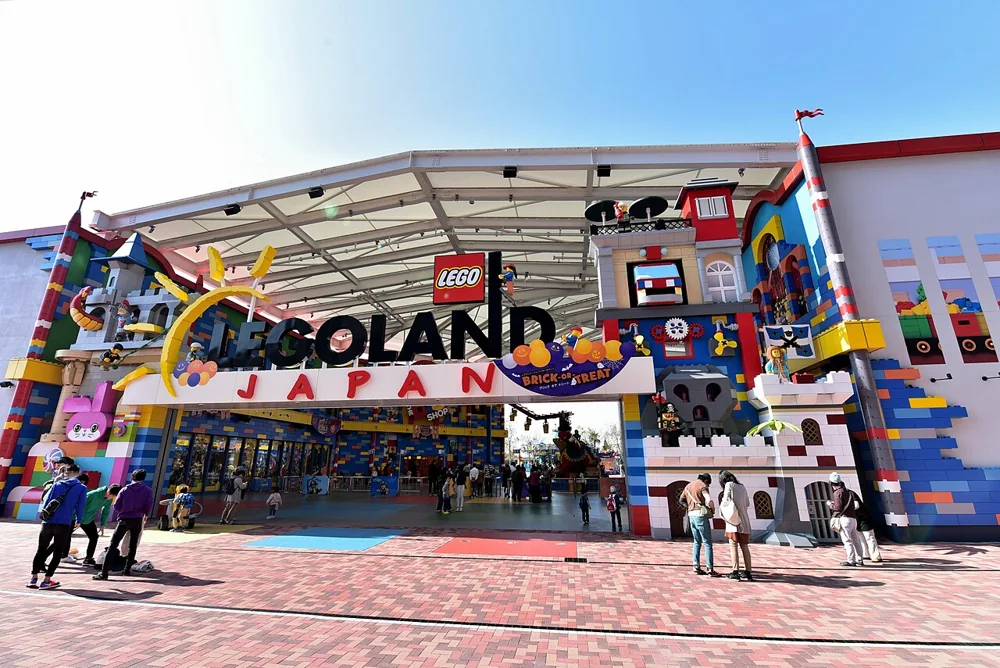
After leaving the station, use the official access map to find the walking route into the resort. The Google Maps park search identifies LEGOLAND at 2-2-1 Kinjo-futo, Minato-ku. The aquarium, hotel and park have separate entrances. On a first visit, go to the park entrance to check your tickets; find the hotel or restaurant later rather than taking the whole family around every entrance for photographs.
Driving: navigate to the Kinjo-futo car park
The park and hotel have no car park of their own. Official directions point to Nagoya Municipal Kinjo-futo Car Park at 2-7-2 Kinjo-futo, Minato-ku, separate from the park’s 2-2-1 address. Set navigation to the car park, enter there and walk to the resort. A connecting walkway runs from its third floor. Official driving directions.
Once parked, sort what you need for toddlers and pushchairs. Keep spare clothes, nappies, water, rain gear and phones in your day bag, and lock extra luggage in the car. A normal 1DAY ticket does not allow re-entry, so going back for a coat midway changes the rest of the day. If the forecast turns cool towards evening, bring coats in from the start. Storing them inside is easier than discovering they are in the car when a child is cold.
For a family staying near Nagoya Station with only one park day, I would use the Aonami Line. Driving fits better if you already have a hire car for other areas, or someone cannot manage station transfers. Include parking, hire duration and child seats in the cost comparison. There is still a walk after parking; finishing the drive does not put you at the admission gate.
Calculate railway child fares separately
LEGOLAND’s child category through age 18 does not apply to the Aonami Line. Railway adults are generally 12 and over, though a 12-year-old still in primary school pays the child fare. Children are generally six to under 12, while six-year-olds who have not started primary school count in the railway’s young-child category. Each adult or child passenger may bring four young children in this category free. A young child travelling alone pays a child fare. Aonami Line ordinary fares and age rules.
For two adults and two primary-school children eligible for child fares, the return journey from Nagoya costs ¥2,160. If one child is already at secondary school, count three railway adults and one child: ¥2,520 return. The same four people may still count as two adults and two children at LEGOLAND. Write the two sets of passenger categories separately so the transport budget uses the right rules.
Agree return roles beforehand: who pushes the buggy, who takes a child to the toilet, and who carries tickets and phones. When everyone is tired, avoid leaving one adult to watch two wandering children and find the way. Dinner need not follow a specific train precisely. Leave some space and choose a restaurant after reaching Nagoya Station; that is usually easier than rushing to a reservation after closing.
Being 120 cm tall does not allow every ride alone
Check the minimum height first, then the accompanied height range. The Dragon has a minimum of 105 cm; riders from 105 cm to under 120 cm need a companion. Submarine Adventure requires a companion below 130 cm. A 120 cm child may ride the first alone but still need someone on the second. This difference matters more than memorising every limit. The Dragon; Submarine Adventure.
A qualifying companion must be at least 16 years old and 130 cm tall. A 15-year-old brother cannot fill that role even if he is taller than his mother and holds a child ticket. A 17-year-old sister must meet both age and height conditions. Admission has a separate rule: children aged 12 and under need someone aged 16 or over with them. Entering together and arranging ride seats are separate tasks. Attraction use standards; Admission rules.
Measuring at home helps shortlist attractions; staff make the on-site decision. When needed, staff issue and fit children’s height wristbands at attractions. If a child is close to a threshold, choose another nearby activity they would enjoy. You can then change plans directly instead of searching for an alternative after a full queue.
One adult with two children: remove difficult ride combinations first
If both children fall within an attraction’s accompanied height range, “allowed with an adult” is only the first step. Read the individual official page for seating and use conditions, then ask staff how to arrange the ride. Do not assume one adult can accompany both children, or that one can wait alone at the exit. Settle this before joining the queue. Official height and other restrictions.
The same family can build its route around walk-through displays, free building and age-appropriate driving schools, keeping rides that split care duties as alternatives. This reduces queues abandoned at the entrance and leaves time for activities the children can use. With two adults, agree that each looks after one child and meet after longer activities, rather than trying to find one another after separating.
Do not make the taller child wait all day. Put their priority first in the morning, then move to an area the younger child can enjoy too. Let the younger child lead in the afternoon while the other parent takes the older one to an activity. Meet at a named attraction entrance. Agree a time and “stay here if we have not come out”, which works better than “message when finished” if batteries run flat or messages go unnoticed.
Do the priority activity in the morning and protect building time
On arrival, open the official app for the day’s openings, waits and show times. Check your two priorities before setting off. Its park map, routing and planning tools make it worth installing before the visit, so the family does not wait at the entrance for a download. Official app information.
If a primary-school child most wants Driving School, head to LEGO City and group activities there. Afterwards, choose something nearby or rest, then move towards the second main area after lunch. If a toddler wants the slower cars, make Junior Driving School the priority and leave free play afterwards instead of immediately joining another queue. The half-hour when a child has finally learnt how something works and wants another go is often worth protecting most.
For photographs, agree one or two moments before the activity: setting off, finishing or a family shot. Put the camera away for the rest and let children try steering and look at the bricks. Follow the designated route when photographing driving activities. Do not block other families or entrances for a front-facing shot.
The park’s Driving School video shows children driving small cars. Compare it with Junior Driving School when choosing the morning’s priority activity.
A toddler’s day: DUPLO and a proper midday rest
DUPLO Play is roofed, has no height limit and is officially recommended for ages three to six. In Bricktopia, it offers preschool children somewhere to slow down. Unlike timed-entry activities, it suits free play after a morning priority. Water play is seasonal. For autumn and winter, plan around what opens that day rather than treating sprays in summer photographs as essential. DUPLO Play.
Try one child-chosen priority in the morning, followed by free play, an early lunch and a nap or quiet rest. After waking, look around MINILAND and choose one activity that matches the child’s energy. If the nap runs late, reduce afternoon rides while keeping the planned departure time, leaving room for dinner and bathing at the hotel. When a toddler refuses a queue, distinguish hunger, tiredness and needing the toilet from fear of the attraction. Hunger, tiredness and toilet needs call for care or rest. For fear, watch how the attraction works before deciding. If the child clearly does not want it, move to walking or building. A two-year-old admitted free still needs activities of their own, rather than spending all day in a pushchair following older siblings.
Take time in MINILAND and give the Factory Tour its own slot
MINILAND recreates Japanese cities and landmarks in bricks. The official page lists it as a walk-through display for all ages with no height restriction. Children can choose how long to look. Find Nagoya Castle, roads or familiar city scenes together, and stop at models that catch their interest. Adults can take wide views while children inspect a short stretch of road in the same area. MINILAND.
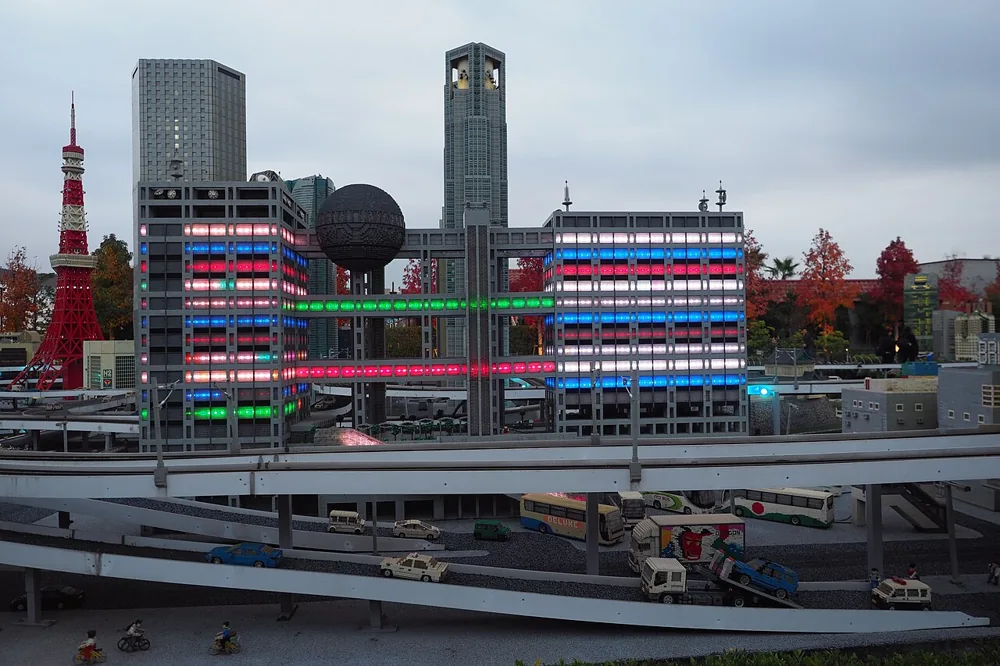
Use it as a change of pace in the afternoon rather than a shortcut between rides. Older children can examine the shapes used in a building and think about a simpler version to make at home. Toddlers can simply identify cars, boats and houses. It need not become a quiz: where a child stops tells you what interests them.
LEGO Factory Tour is an indoor walk-through about brick-making machinery and history. Children under 100 cm need a companion. If a child wants to know how bricks are made, reserve a separate visit rather than squeezing it in near departure just because it is close to the entrance. Families avoiding intense rides can make it a priority rather than a spare-time option. LEGO Factory Tour.
Visit SEA LIFE in the afternoon, before the final admission rush
Check the official calendars for LEGOLAND and SEA LIFE separately and note each opening and closing time. For example, on 1 November 2026 the calendar lists the park at 09:00–18:00 and SEA LIFE at 10:00–18:30. On 4 November these are 10:00–17:00 and 11:00–18:00. The venues publish separate hours; do not use the park’s hours to plan the aquarium’s final slot. Go while there is still afternoon time to spare. Afterwards, use Combo’s single park return if everyone has energy, or go straight to dinner or your accommodation if the children are tired. Official opening hours and calendars.
If you want roughly an hour inside the aquarium, allow the whole block plus walking, toilets and sorting the pushchair. Add time for children who like to look slowly. An earlier change of venue helps children who linger at favourite tanks and reduces the need to hurry them.
Choose either the park’s Submarine Adventure or the separate SEA LIFE as the main marine activity. The first is a ride past real fish and brick scenes viewed through submarine windows; the second is a walk-through visit. If the child chiefly wants to ride a submarine, protect that time. If they prefer looking freely at fish, taking pictures and lingering, give the aquarium a full slot. This makes the Combo decision fit the family better than comparing only the extra price per person.
Eat lunch inside; baby food and allergy meals have specific exceptions
The park generally prohibits packed lunches, rice balls, snacks, bottled or canned drinks and alcohol. Exceptions include a flask or plastic bottle small enough to fit in a bag, baby food and meals for people with food allergies. Budget for lunch inside rather than buying convenience-store rice balls before reaching admission. Food and drink FAQ.
Choose a restaurant by what the children eat, then by its position on the morning route. An earlier or later meal can fit their usual routine. If they are tiring, sit down to eat instead of delaying for another ride. With two adults, one can watch the children while the other orders, then swap when the food arrives. This is usually quicker than everyone debating at the menu.
For allergies, read the restaurant’s allergen information before choosing park food or an exempt meal brought from outside. Pack the actual meal separately from general family snacks so it is easy to explain at entry. Baby-care services can help with baby food, nappies and other supplies. Keep ordinary snack money for purchases inside rather than arriving with a bag that cannot enter.
Plan pushchairs, feeding and luggage around your stops
You can bring your own pushchair. Hire costs ¥1,000 per pushchair at Corner Shop, for children aged one month to four years and weighing no more than 18 kg. Decide before travelling whether to bring or hire one for naps, and prepare rain covers and daily supplies. Children beyond the hire age or weight range need a walking-and-rest plan; do not arrive relying on hire to solve the return journey. Official family and convenience services.
DUPLO Baby Care beside Brick House Burgers in LEGO City has feeding and nappy-changing spaces. Pair it with Driving School or a nearby meal to reduce trips across the park carrying a baby. If the other adult takes older siblings to play, agree to return to the same named place, so the person feeding the baby does not also have to move.
Leave large luggage at your accommodation. Park rules prohibit wheeled luggage and outdoor wagons. If travelling with luggage that day, arrange storage before coming. Lockers and paid storage inside suit spare coats after entry, but should not underpin a plan to cross cities with large cases and rush to opening. Decide which bag stays with you and which stays at the hotel; this also makes ride stops easier.
For sensitivity to sound and effects, read the sensory guide first
Meeting a height limit does not mean a child likes darkness, spinning or sudden sounds. The official service page offers attraction sensory guides (感覚ガイド). Read them before travelling and choose using the child’s known reactions. If dark spaces cause anxiety, begin with walk-through displays where they can stop freely. Read about special-effects theatres before entering so the child knows what comes next. Official services and sensory guides.
The park offers ear defenders, calming items to borrow and a Cool Down Room; ask Guest Service how to use them. Find the location on arrival so you can go directly when a child starts tiring or becoming unsettled, rather than searching after distress grows. With siblings, assign who rests and who takes the others, then decide whether to continue after meeting again. These families can choose just one fixed-time activity and link it with activities they can leave freely. A lighter schedule still lets children spend a long time where they are happy. Leave time when they ask for another go instead of prioritising the final item on an adult’s list.
Rain plans: avoid November maintenance closures
In rain, base the day on the Factory Tour, suitable indoor rides and building activities, with more time for outdoor transfers. A roofed play area feels different from a fully enclosed attraction. In heavy rain or cold wind, changing wet clothes matters more than another activity. Check workshop booking arrangements separately. The official restrictions list marks LEGO Creative Workshop and Robotic Play Centre as reservation-only; do not treat them as walk-in spare capacity.
The official November 2026 maintenance notice lists Rebuild the World Center closed on 4–19 November, Lost Kingdom Adventure on 9–13 November and Anchors Away! on 30 November–11 December. During those dates, the first two cannot serve as fixed indoor alternatives. Choose the Factory Tour or another indoor attraction open that day. Attraction closure notices.
Two rain options are enough: in light rain, follow the route with shorter outdoor stops; in persistent heavy rain, concentrate on indoor priorities and return to your accommodation early. Both use the same ticket and day. There is no need to add city attractions merely to fill a quota. If changing the date, include the cost described next.
Date changes, cancellation and leaving without a rush
Official dated tickets allow one date change, to a date between purchase and the corresponding date three months after the original visit date. Arrange it at the ticket counter on the new visit day. The fee is ¥500 per ticket. Pay any increase for a more expensive date; a cheaper date receives no difference back. Official tickets cannot be cancelled for a refund. For travel-agent purchases, arrange changes through the original seller. Contact the park first if you also bought a Skip Pass or birthday package. Ticket changes and cancellation FAQ.
Changing four paid tickets costs ¥2,000 in fees alone, plus any price increase. Compare this with booked accommodation when changing plans for weather. If your flight arrives late, put the park on the following day to match the ticket to a full day. An early arrival with poorly rested children is also no reason to stretch the visit until closing simply because tickets are paid for.
Leave a little time at the end for coats, toilets and souvenirs. If children have chosen something, agree to return to that shop last so you do not carry boxed bricks between rides all day. Ask staff about shopping collection services too. Gather everyone before entering Kinjo-futo Station. Dinner, bathing and repacking still await at the hotel. Finish the park day with enough energy for tomorrow’s trip.
A few useful answers
Does an 18-year-old need an adult ticket?
Official child tickets cover ages 3–18; adult tickets start at 19. Ride companion eligibility has separate age and height rules.
Can I leave for lunch and return with a normal one-day ticket?
Normal 1DAY tickets do not allow re-entry. Combo allows one return that day: up to two park entries and one SEA LIFE entry.
Do I need a hire car from Nagoya Station?
The Aonami Line reaches Kinjo-futo in about 24 minutes. One-way fares are ¥360 per adult and ¥180 per child. Follow the official access map on foot to the park.
Official information and references
Sources used in this guide.
- Junior Driving School
- Driving School
- Official one-day and Combo tickets
- Ticket changes and cancellation FAQ
- Official online ticket terms
- Aonami Line Kinjo-futo fare table
- Official driving directions
- Aonami Line ordinary fares and age rules
- The Dragon official page
- Submarine Adventure official page
- Attraction use standards
- Admission rules
- Official height and other restrictions
- Official app information
- DUPLO Play official page
- MINILAND official page
- LEGO Factory Tour official page
- Official opening hours and calendars
- Food and drink FAQ
- Official services and sensory guides
- Attraction closure notices