Plan two full days of flower viewing on regular Furano Line trains. Compare walks from Nakafurano and Bibaushi, stays in Furano or Asahikawa, and bloom periods around July, with the Blue Pond or a sightseeing bus as alternatives for day two.
- Region & Focus
- Furano and Biei
- Reading Scope
- 33 min read · 17 chapters · 4 Q&As
- Official Verification
- 25 official sources checkedUpdated October 26, 2026
- Key Topics
- ItinerariesSeasonsRail travel
Chapter Route Map (tap any stop)
- Allow two full days: Nakafurano first, Bibaushi second
- Choose the flower field first: early and late July are different
- Stay near Furano Station; choose Asahikawa if you also have city plans
- The Furano Line runs north–south; the Blue Pond needs a separate bus
- Day one: include both walks from Nakafurano in your half-day plan
- At Farm Tomita, enjoy two fields instead of chasing every spot on the map
- The old sightseeing train has retired; check the seasonal station separately
- Day two: walk from Bibaushi to Shikisai-no-oka, then continue north
- Shikisai-no-oka costs: choose admission, rides, and alpacas separately
- Lunch in the garden or near the station changes when you leave
- For the Blue Pond option, start day two again at Biei Station
- To combine the Blue Pond and flower hills, choose a tour that brings you back
- From Asahikawa Airport, connect to one accommodation base on arrival day
- June, August, and September work too: change the flowers and time allocation
- Choose your return trains first, with spare time you can give up
- Rain, strollers, and walking ability determine the final connection
- Leave luggage near the station and take photos from open paths
- Quick Q&A
To see the flower fields of Furano and Biei without renting a car, visit Farm Tomita and Shikisai-no-oka on separate days, with a night near Furano Station between them. Regular Furano Line trains cover the main journeys, with time left for lunch and the two walks from the stations. If the Blue Pond matters more to you, replace the second day’s flower garden with a separate route on the bus from Biei toward Shirogane.
Allow two full days: Nakafurano first, Bibaushi second
Without a car, give the first day to Farm Tomita in Nakafurano and the second to Shikisai-no-oka in Bibaushi, with a night near Furano Station between them. The Furano Line gets you close to both. From each station, you finish the trip on foot. With one main garden each day, you can fit flower viewing, lunch, and the return to the station into the same morning or afternoon. You won’t need to leave halfway through the flowers to catch your next ride. Continue to Asahikawa or Sapporo on the second afternoon, and the sightseeing portion ends when you reach the station.
This two-day, one-night plan assumes you can reach the Furano Line area on the first morning. If your flight lands at New Chitose Airport that day, use it as a travel day and move the flower visits back. Stay in Sapporo or Asahikawa that night and start the next morning. Treating the half day after a flight plus one full day as two days of flower viewing usually squeezes out lunch and the walk to and from Nakafurano Station first.
If you have only one full day, choose Farm Tomita for lavender or Shikisai-no-oka for broad slopes of colorful flowers. If you would rather see the Blue Pond than a second flower garden, keep Farm Tomita on day one and devote all of day two to the route from Biei Station toward Shirogane. The two gardens and the Blue Pond below are three interchangeable priorities. Use your two days for the first two, or the first and third, to keep the transportation straightforward.
Plan two full days of flower viewing on regular Furano Line trains. Compare walks from Nakafurano and Bibaushi, stays in Furano or Asahikawa, and bloom periods around July, with the Blue Pond or a sightseeing bus as alternatives for day two.
Choose the flower field first: early and late July are different
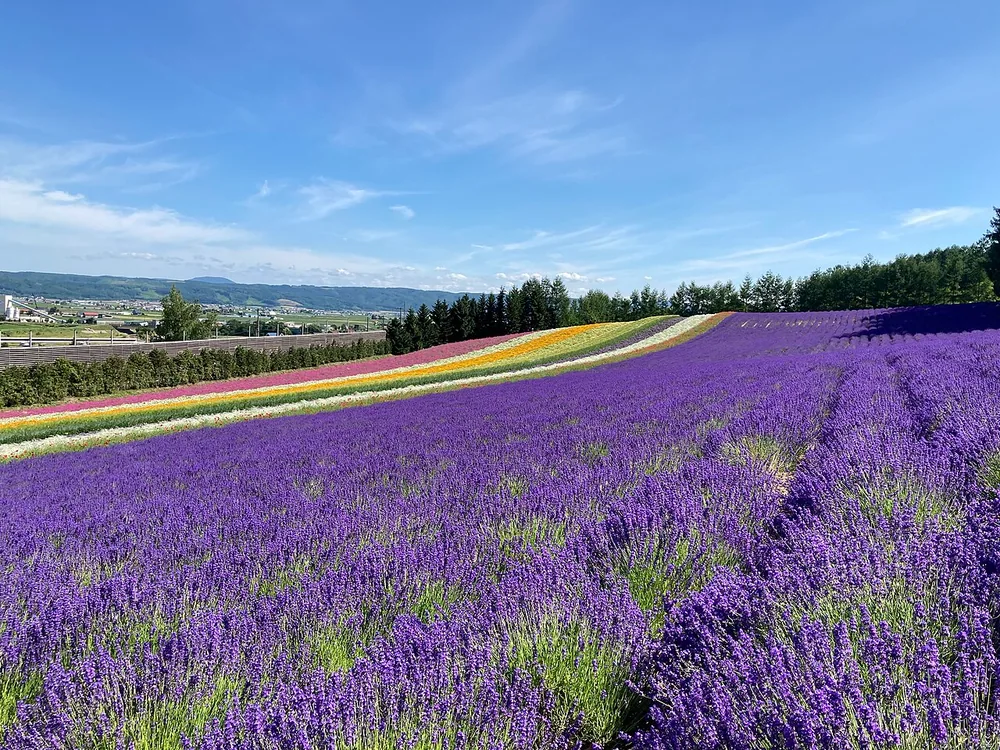
Farm Tomita’s purple fields and multicolored fields do not peak together. The official bloom guide for Sakiwai Field lists early to mid-July as the usual best period. Four lavender varieties grow here: Noshi Hayazaki (濃紫早咲), Okamurasaki, Yotei, and Hanamoiwa. If you want to compare different shades of purple, put this field in a plan for the first half of July, then adjust your time there to the flowers in bloom when you arrive.
For long bands of different colors, head to Irodori Field. The farm lists mid- to late July as the usual viewing period, with bands of lavender, baby’s breath, poppies, and other flowers. In late June, plan your main walk around the fields already in bloom rather than repeatedly circling the farm for color bands that have yet to fill out. Note the flower varieties, too. Even within July, early varieties may be past their peak while late varieties are only beginning to show color.
For purple flowers in early August, check the late-blooming Lavandin field first. The farm gives late July to early August as its usual best period. From mid- to late August, shift your attention to other summer flowers. “See lavender” is too broad a goal when booking your stay. Decide whether you want Sakiwai Field’s purple flowers, Irodori Field’s color bands, or the late Lavandin, then use the field map and farm diary to choose a useful walking route. The current diary is more helpful for tracking the harvest than a photo taken on the same date last year.
Stay near Furano Station; choose Asahikawa if you also have city plans
If both days focus on flowers and you want to avoid moving luggage between hotels, stay one night near Furano Station. Return from Nakafurano to Furano on day one, head north to Bibaushi on day two, then continue to Biei and Asahikawa. When choosing a room, map the actual walk from the property entrance to Furano Station. Start your search around the station rather than booking just because a hotel has “Furano” in its name. Kitanomine and more distant resort properties add another journey. For a single night followed by an early train, the station area serves this route more directly.
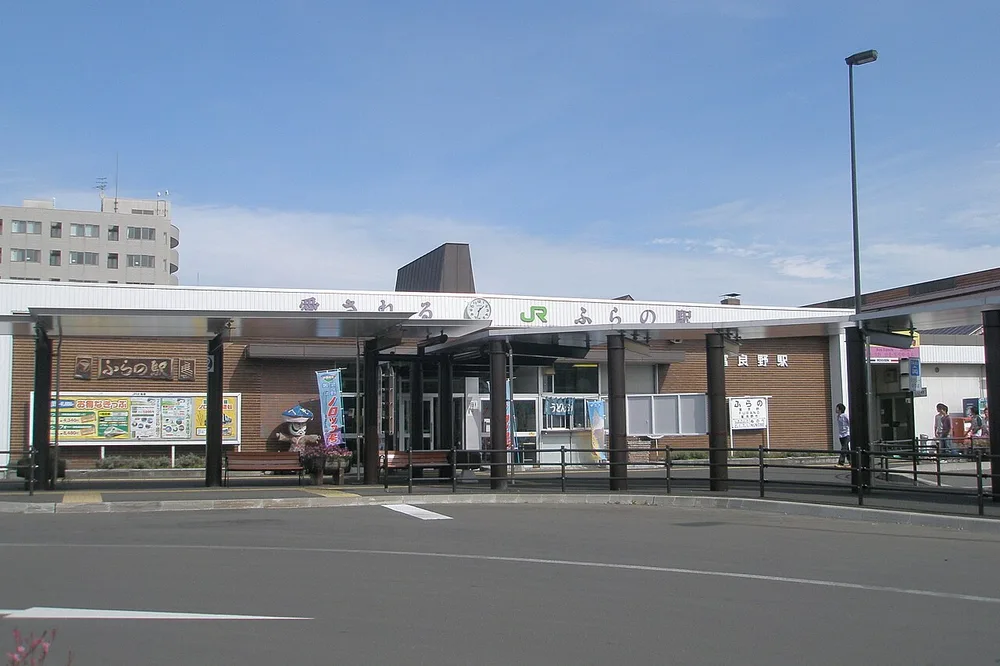
Use Asahikawa as your base if you arrive and leave through the city, have a lot of luggage, or also want to eat and sightsee there. Make separate round trips to Nakafurano and Bibaushi on the two days. You won’t have to take your luggage to a garden after checking out on day two, and you’ll pack and unpack one fewer time. The trade-off is traveling north on the Furano Line after the first day’s flowers, then south again the next morning. Compare both days’ complete round trips, not just the short stretch between Asahikawa and Biei.
The area near Biei Station works well if the Blue Pond is your definite choice for day two, or if you want a sightseeing tour that meets outside the station. After Farm Tomita on day one, return to Biei for the night so you won’t have to rush from Furano to the meeting point the next morning. With this version, make Shikisai-no-oka a stop on the tour rather than a separate walk, or leave it out. Use the time for the Blue Pond journey and the return from the Shirogane area.
Meals at your accommodation can also change the route. If you book a plan with dinner, work backward from a meal time you can make comfortably to choose your train from the farm. Leave sunset photography optional. If you want longer in the fields, choose a plan without a fixed dinner seating at the property. For room types, sleeping arrangements, and on-site hot springs, continue to the comparison of accommodation bases in Asahikawa and Furano. Choose the station for your overnight stay before comparing amenities.
The Furano Line runs north–south; the Blue Pond needs a separate bus
Write down the railway stations from north to south: Asahikawa, Biei, Bibaushi, Nakafurano, and Furano. Use this line to divide the flower visits between the two days. Nakafurano Station serves Farm Tomita; Bibaushi Station serves Shikisai-no-oka. Biei Station is the place for tourist information, luggage storage, and transfers toward Shirogane. Reaching Biei does not put you at the entrance to either Shikisai-no-oka or the Blue Pond.
The Biei Tourism Association’s transportation guide gives about 32 minutes for a local train from Asahikawa to Biei and about 36 minutes from Furano to Biei. These indicate the scale of the journey; allow separately for waiting and stops along the way. Enter your origin, destination, and travel date together when looking up JR trains. If a train terminates at Biei, include the complete onward connection in your search. An arrival time at Biei from Asahikawa is not an arrival time at Nakafurano.
For the Blue Pond, transfer at Biei Station to a Dohoku Bus service toward Shirogane. Shikisai-no-oka is within walking distance of Bibaushi Station. They use different final connections. If your budget is tight, decide which day needs paid transportation for that last stretch. If you can manage the walk, save the money for the Blue Pond round trip. If rural roads are unsuitable for your group, arrange the Bibaushi transfer first and move the Blue Pond to another day.
Day one: include both walks from Nakafurano in your half-day plan
Arrive at Nakafurano Station in the morning and use Farm Tomita’s official access map to walk to the main farm. The farm gives a walking time of about 25 minutes each way. If you return by the same route, allow at least about 50 minutes just to reach the farm and get back, plus time for navigation, road crossings, and water breaks. With children or older adults, you could arrange a taxi in advance for one direction and save your energy for the fields. Ask the operator for the fare for your actual route.
Once at the farm, allow an uninterrupted stretch for the flowers before lunch. Plan about four hours in total from leaving Nakafurano Station through the garden walk and lunch to returning to the station. Allow longer if you enjoy photography, or finish earlier if you simply want to see the flowers. Your return train sets the afternoon’s time frame. Save your preferred service and the next one before entering the farm so you won’t need to keep checking your phone while taking photos.
If you leave Sapporo on the first morning and are still on a long-distance service before noon, visit the farm in the afternoon and stay in Furano that night. Store your luggage when you reach the station, then take a train to Nakafurano. Make this your only garden that day. Leave the second flower garden for the next morning. The overnight stay gives you time to visit each without rushing from one to the other.
The Lavender-go bus also serves Nakafurano. The farm’s access page gives about 12 minutes from outside Furano Station to Nakafurano and about 48 minutes from Asahikawa Airport to Nakafurano. You still need to walk or take a taxi for the final stretch. If you use the bus, mark the Nakafurano bus stop and JR Nakafurano Station separately on your map. Return to the right place for your chosen service, rather than reaching the train station only to find that you saved a bus timetable.
At Farm Tomita, enjoy two fields instead of chasing every spot on the map
In the first half of July, start with Sakiwai Field in the center of the farm, then walk toward Irodori Field according to that day’s flowers. In the second half of July, start with the color bands and continue to the Lavandin field if you want late purple flowers. Hanabito Field has flowers from spring through fall, so include it as part of your walk into or out of the farm. With this order in mind, you won’t need to turn every named field into a required stop. When someone in your group needs a rest, spending longer beside the same flowers is usually more worthwhile than finding an almost identical view elsewhere.
If photography is the priority, decide whether you want a whole band of color, a close view of flower spikes, or mountains in the frame. Then find your angle from an open garden path. Stay out of the flower rows, even if fewer people are standing at the far end. For a photo without other visitors, wait for the group ahead to pass or use a tighter composition. Once you have your shot, move away from narrow stopping points so your companions and other visitors can pass.
The usual best period listed for Hanabito Field runs from early July to late September, and Autumn Irodori Field also has flowers that continue into fall. Put these fields first in August and September so purple lavender no longer determines your whole afternoon. This changes the focus of the walk inside the farm; you can still use the same route through Nakafurano.
If you have only an hour or two left after the main farm, return to the station area for a break or head to your accommodation early. Lavender East lies about four kilometers east of the main farm and has its own operating season. If you are tired after the main farm, avoid adding another flower field on foot. To visit East, make it a main priority for the day, book transportation both ways, and shorten your time at the main farm.
Farm Tomita’s seasonal highlights video, published in 2012, introduces lavender and other flowers through the seasons.
The old sightseeing train has retired; check the seasonal station separately
The Furano Tourism Association’s 2026 announcement and linked JR flyer record that the Furano–Biei Norokko train made its final run with the existing rolling stock on September 23, 2026. All seats required reservations that season. For the next flower season, first build a workable route using regular Furano Line trains and permanent Nakafurano Station. Once the new year’s sightseeing train information is announced, decide whether it is worth replacing part of the journey.
The farm’s access page gives about seven minutes on foot from Lavender Farm Station, which is a temporary seasonal station, and about 25 minutes from permanent Nakafurano Station. That 18-minute difference each way adds up to about 36 minutes for the round trip and affects how much time remains for lunch. Keeping only the shortest walking time from a search result can make the entire day too tight.
Even if Lavender Farm Station appears on a map, check that your train stops there on your travel date before using the shorter walk. If you want the sightseeing train experience, treat the ride as an activity with its own seat reservation and time allowance. If you simply want to see the flowers, a regular train to Nakafurano still completes day one of this itinerary.
Day two: walk from Bibaushi to Shikisai-no-oka, then continue north
After checking out in the morning, leave your luggage at a suitable storage point, then take the Furano Line to Bibaushi. The Shikisai-no-oka access page identifies Bibaushi as the nearest station, about a 25-minute walk away, and notes that it is unstaffed. Again, allow at least about 50 minutes for the round-trip walk, plus walking on the slopes inside the garden. Wear shoes suitable for sustained walking. If you are continuing north in the afternoon, use luggage storage in Biei first so you carry only what you need for the day.
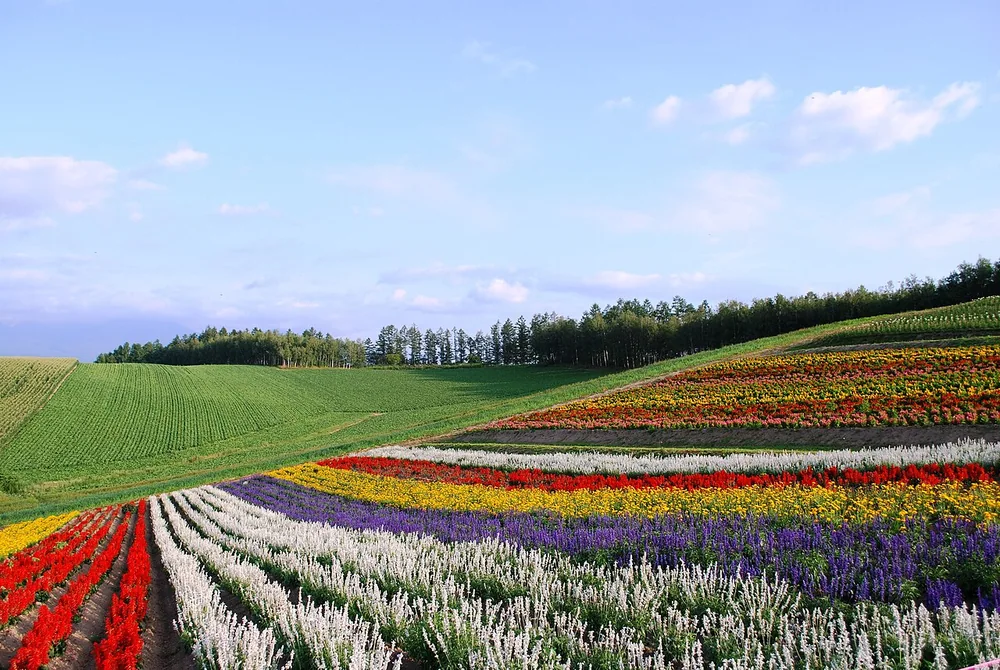
If you are heading north to Asahikawa in the afternoon, you can first travel to Biei Station to store your luggage, then double back to Bibaushi for the flowers and return to Biei to collect it. This adds a short round trip by rail but saves you from taking large bags into the fields. Decide according to your luggage size and that day’s gaps between trains. With a small backpack, get off at Bibaushi directly, walk back to Bibaushi Station after the garden, and take the Furano Line toward Biei. That avoids doubling back for luggage.
Allow about two to three hours inside the garden. Together with the walks from and back to the station, this gives the morning and midday a clear focus. Start with the broad color bands and views across the slopes, then decide whether to take the tractor bus or visit the alpaca farm. If you want time to photograph one spot slowly, skip the rides and keep the time for walking. If your companions are tired from the day before, reduce the walk to distant flower bands and combine a ride inside the garden with a shorter stroll.
Use the restroom and refill your water before starting the walk back to Bibaushi Station. Choose an afternoon train toward Biei and Asahikawa, with enough time before departure for the road and your group’s walking pace. If you eat a late lunch, do so near the garden instead of relying entirely on a short transfer window. If you also need to reach Sapporo or catch a flight that afternoon, leave the garden early and drop any extra stops added on the day.
Shikisai-no-oka’s green-season introduction shows the flower fields on Biei’s hills.
Shikisai-no-oka costs: choose admission, rides, and alpacas separately
Under the garden’s 2026 fee revision, standard admission from July through September is ¥800 for high school students and adults, ¥500 for elementary and junior high school students, and free for children not yet in elementary school. Record this flower-season price with the year of your trip. When admission becomes free in October, the flowers are already those of fall. If you choose your dates for July scenery, compare costs using July admission.
The Norokko tractor bus inside the garden is a different service from the JR sightseeing train. The garden guide lists a loop of about 15 minutes, costing ¥500 for high school students and adults and ¥300 for elementary and junior high school students. The alpaca farm charges the same ¥500 and ¥300 separately. For two adults and one elementary school student, admission alone is ¥2,100. The tractor bus for all three adds ¥1,300, for a total of ¥3,400. Adding the alpaca area for all three costs another ¥1,300, bringing the total to ¥4,700. Budget separately for meals and transportation outside the garden.
To reduce walking, take a ride and walk only the areas you most want to see. To save money, explore the flowers on foot. Rides cover distances after you enter the garden; you still need to arrange the journey from Bibaushi Station to the entrance and back. These are separate costs with different purposes. When comparing a taxi with a sightseeing bus, include admission and the final connection for the whole family. A fare for one person cannot be compared directly with a quote for an entire car.
Divide the flower-field budget into two columns. Put the rail travel, admission, and accommodation you will definitely use in one, and taxis, garden rides, and extra attractions in the other. If everyone can comfortably walk, keep the first column as your starting point. If someone tires easily, remove an optional activity first and put that money toward the station-to-entrance transfer. Two or three travelers can share the car fare, but each person’s admission and ride tickets still follow the applicable age category. If the total exceeds your budget, visit only Farm Tomita or only Shikisai-no-oka. Free up half a day for the city, then revise accommodation and transportation together.
Lunch in the garden or near the station changes when you leave
Lunch at Farm Tomita on day one suits visitors who want to stay there into the afternoon. Use the official food page to choose a possible main meal and locate the café that actually serves it before planning your walk. For example, seasonal vegetable curry is listed for lunchtime service from late April to late October, with outlets including Cafe René and Hanabito House René. Put lunch midway along your garden route, then visit another field afterward to avoid extra trips to the entrance in search of a restaurant.
For dishes named after vegetables, read the official ingredient and allergen information first. This seasonal vegetable curry, for example, lists milk, wheat, peanuts, beef, pork, and other ingredients. Its translated name alone does not establish whether it meets your dietary needs. If you have allergies or follow a vegetarian diet, find a main meal you can eat before deciding to have lunch at the farm. To eat near Nakafurano or Furano Station instead, finish your garden walk before or around noon and spend the afternoon where meal choices are easier to find.
On day two, the second-floor Phlox Hall restaurant at Shikisai-no-oka closes every Wednesday. The garden guide also lists last orders at 15:00. For a Wednesday visit, eat a substantial breakfast, shorten the garden visit, and return to Biei for lunch. On other days, have your main meal early in the afternoon if you want to eat inside the garden, rather than finishing your walk after lunch service has ended. If your group has very different tastes, choosing a meal together near the station is usually easier than eating separately and meeting back at the train station.
Carry drinking water and a small emergency snack on both days. They help if a child gets hungry on the walk back or there is too little time to eat between services. Still allow time to sit down for a proper lunch. Have ice cream during a break and finish it before setting off, instead of trying to eat while pushing a stroller and hurrying back to the station.
For the Blue Pond option, start day two again at Biei Station
For day two’s Blue Pond option, start at Biei Station. First visit Shiki-no-Johokan Tourist Information Center to store luggage and collect route information, then find the bus stop for Shirogane. The tourism association’s Blue Pond page includes Dohoku Bus stop locations and a video showing the walk. At the stop, check for the Shirogane / Blue Pond direction, displayed as “白金・青い池”; for the return, use the side toward Biei. Save both stop locations in advance. Before heading straight onto the path on arrival, identify where you will stand for the return bus.
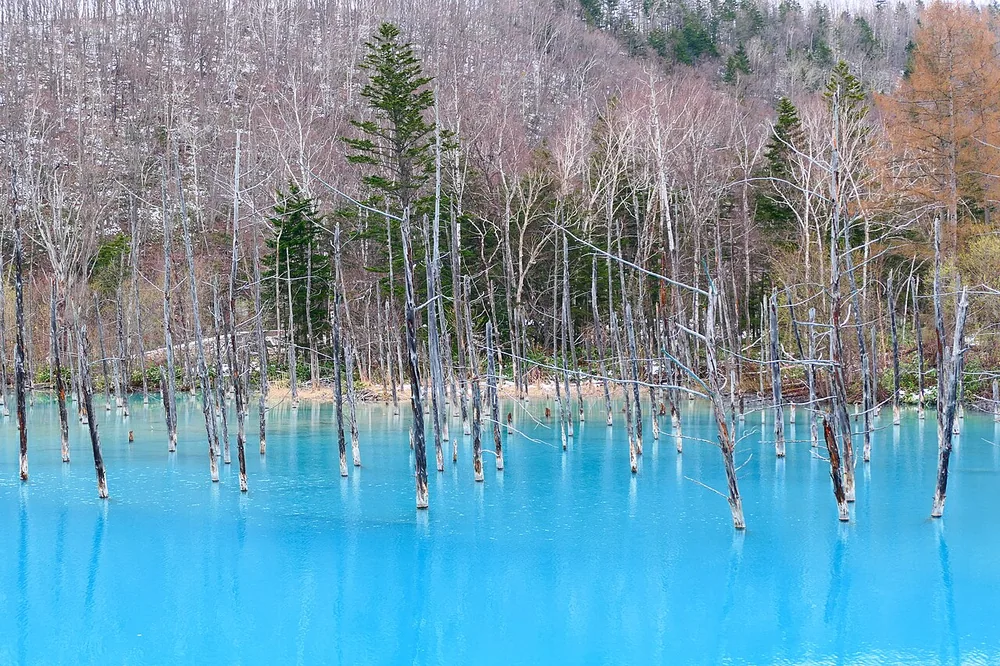
On a day trip by public bus, make the Blue Pond your main stop. To add Shirahige Falls, include the bus from the Blue Pond to Shirogane Onsen and the bus from Shirogane Onsen back to Biei in the same timetable. The pond and waterfall have separate entrances and bus stops. Walking along the road between them adds physical effort and a greater risk of a long bus wait. For a first visit without a car, especially with long-distance transportation later in the afternoon, visiting the pond and returning to the station is the more dependable option.
Dohoku Bus announced timetable changes to routes 39 and 42 from October 1, 2026. Read the operator’s change notice alongside the timetable for your travel date. Identify at least four times: departure from Biei, arrival at the Blue Pond entrance, return departure from the entrance, and arrival back in Biei. If the visit between them is too short, take an earlier outbound bus. If the gap is very long, plan lunch and a warm place to rest rather than spending all that time beside the bus stop.
The pond’s color changes with water conditions, weather, and season. Its surface in summer daylight is the focus of this extension to the flower-field route. Follow the open paths to view the water and standing dead trees, and stay out of the water. For winter illuminations, make a separate plan with nighttime transportation back. Book that apart from this two-day summer itinerary; a daytime flower trip does not need an added nighttime journey through the countryside.
To combine the Blue Pond and flower hills, choose a tour that brings you back
If you want to avoid the Bibaushi walk and also see the Blue Pond on day two, consider a sightseeing bus that both departs from and returns to Biei Station. The organizer handles travel between stops, while you follow the group’s allotted visiting times. For older companions or anyone who prefers not to wait for rural buses, the fare has a clear purpose. If you enjoy a whole morning among the flowers, an independent visit to Shikisai-no-oka is still a better fit.
The summer 2026 Biyu Bus season has ended. Its former route helps compare the two styles of travel. That year’s morning service left Shiki-no-Johokan at 9:40 and returned at 12:45, visiting the Blue Pond, Shirahige Falls, and Shikisai-no-oka. It allowed about 45 minutes at the flower hills; the afternoon service allowed about 40 minutes. Compared with the two to three hours for an independent visit in this guide, the tour concentrates transportation into one trip. You will have time to choose only part of the flower garden, and lunch needs to fall before or after the tour.
If a suitable route operates in the new flower season, compare how long you want at each stop and where the tour meets before paying. Once you choose a full sightseeing tour, remove the separate Bibaushi round trip from that day. Eat and collect your luggage after returning to Biei. Keeping one day for a long flower visit and the other for a varied sightseeing route suits a first visit better than chasing numerous stops on both days.
From Asahikawa Airport, connect to one accommodation base on arrival day
If you have a choice of flights, compare arrival and departure through Asahikawa Airport first, placing the flower area at the beginning or end of your trip. The airport transportation page lists buses for Asahikawa city separately from those for Biei and Furano. Furano Bus’s Lavender-go serves Nakafurano, Biei, and the airport. This can let you reach the town where you are staying directly without a car, avoiding an initial trip into Asahikawa followed by a journey back out.
After landing, allow time to collect your luggage and leave the terminal. Choose a bus based on when you can actually reach its stop. The Lavender-go is a regular local bus service that requires no reservation: take a numbered ticket when boarding and pay when leaving. The operator states that the service is not timed to connect with flights or JR trains. If you are delayed, focus on reaching your accommodation and drop the afternoon flower visit. If you arrive late, going into Asahikawa and starting on the Furano Line the next morning is also easier than taking your luggage to Nakafurano and then trying to find an onward ride at night.
For longer journeys through New Chitose Airport, allow at least a separate half day before or after the flower visits. You can stop in Sapporo first, then enter the area on the Furano Line via Asahikawa. When comparing other services between Sapporo and Furano, include the final connection to your accommodation. Once you have two full flower-viewing days set aside, stay in the flower-field area that night rather than returning to Sapporo. Avoiding that round trip also leaves room to swap the days if it rains.
June, August, and September work too: change the flowers and time allocation
In the first half of June, focus on early summer flowers and green scenery. Hanabito Field has pansies, bulb flowers, and other plants at different times, while the Noshi Hayazaki lavender in Sakiwai Field has its own flowering period. Read the current farm diary before deciding whether to allow half a day or a full afternoon. If the main fields have yet to fill out, combine one day at Farm Tomita with one at the Blue Pond. You do not need long flower-field visits on both days.
For more purple in the first half of July, give both gardens longer visits. For a mix including colorful bands in the second half, devote one day each to Farm Tomita’s Irodori Field and Shikisai-no-oka. During a run of hot, sunny weather, walk to the farm earlier, rest indoors over lunch, and use the afternoon only for views you most want to revisit. Hokkaido still has hot summer days. The Furano Tourism Association also warns that summer temperatures in the basin can exceed 30°C, so pack water and sun protection even this far north.
In August and September, shift the focus to summer and fall flowers and the rolling hills. Spend longer at one garden and shorten the other visit, leaving time for a meal near Biei Station. For flowers in October, read the gardens’ current diaries and end-of-season work updates first. Farm Tomita, for example, recorded winter preparation in the fields on October 25, 2026. At that point, two days built around July’s purple fields no longer fit. If you change the goal to cities, hot springs, or mountain fall colors, use the central Hokkaido guide to seasonal bases to choose another itinerary.
Choose your return trains first, with spare time you can give up
Before booking accommodation, look up two complete journeys: day one from your actual starting point to Nakafurano and then Furano; day two from your accommodation to Bibaushi and then the city where you will spend the next night. Place every arrival and departure side by side to calculate the time actually available in the fields. If you can fit in only an hour, move the outbound journey earlier or remove later activities. If one early train means leaving much sooner, compare staying the previous night in Asahikawa with staying in Furano. Accommodation prices become a useful comparison once you can see that difference.
Choose a return train that connects with your later long-distance service and has a backup after it. Save the walk back to the station together with your preferred train and the following service in a format you can read offline. You will still know when to leave the garden without a mobile signal. Set the departure reminder before you need to begin walking, rather than waiting until the train is about to leave. If the first half of the day runs late, drop the last round of photos or an optional activity first. Keep the time for lunch, the walk back, and luggage collection.
If you have a flight on day two, work backward from the airport’s required check-in time through your ground transportation before deciding how long to stay at the flower hills. If several transfers follow the garden, keep the morning walk close to the entrance and have lunch back in Asahikawa or at the airport. The earlier the flight, the better it is to visit the fields the day before. When services are infrequent, reach the station earlier to leave room to adjust the rest of the journey.
Rain, strollers, and walking ability determine the final connection
Light rain does not necessarily mean canceling the entire flower day. Shorten your garden walk, allow a longer lunch, or swap the days to use the better forecast. If wind and rain make the station-to-entrance walk uncomfortable for your group, stay near the station or at your accommodation first. A ride inside the garden cannot solve the walk outside it. Shoes with grip, packable rain gear, and a jacket are more useful than adding another photography activity at short notice.
If you walk from the train to both gardens, each round trip between station and entrance takes about 50 minutes. That is about 100 minutes across the two days, before any walking inside. Regular walkers may find this manageable, but families with strollers, older adults, and anyone with knee problems should choose a transfer for one garden early and spend the money on the stretch that needs it most. Use the same taxi operator to agree on pickup points, times, and passenger numbers in both directions. The trip out from the station may be easy to arrange; settle the return from the garden at the same time.
The Shikisai-no-oka guide says the tractor bus also runs in rain, while its carts require a regular driver’s license. These options have different requirements. If you use a wheelchair or stroller, ask the garden to help you choose a route based on slopes, boarding arrangements, and accessible areas before buying a ride. Reaching the entrance and completing a visit inside are separate parts of the journey to plan.
Leave luggage near the station and take photos from open paths
If you are heading north on day two without returning to your Furano accommodation, Shiki-no-Johokan beside Biei Station has coin lockers, and staff can store large bags at the counter. The center currently lists closing times of 18:00 from May through October and 17:00 from November through April. Put luggage collection directly into your return-to-station plan, and schedule dinner and extra stops afterward. Shikisai-no-oka has no coin lockers inside the garden, so store large suitcases before setting off.
Use only open roads and garden paths when walking from the station to the fields. Do not take shortcuts along field edges. Biei Town’s visitor rules explain that most hills are privately owned farmland, and microbes and agricultural pests carried on shoes can affect crops. Even beside an empty field or neat rows of yellow flowers, take photos only from places on the road where stopping is permitted. For close views of flowers, enter a garden with visitor paths.
On day two, collect your luggage after returning to the station, then eat and catch your onward service.
A few useful answers
Can I visit Farm Tomita, Shikisai-no-oka, and the Blue Pond in one day without a car?
For a first visit, split the trip into two days: Farm Tomita on day one, then either Shikisai-no-oka or the Blue Pond on day two. If a sightseeing bus from Biei Station operates for your dates, you can use it on day two, trading shorter stops for transportation arranged as one trip.
Should I get off at Lavender Farm Station or Nakafurano Station for Farm Tomita?
For a route using regular Furano Line trains, use permanent Nakafurano Station. The farm gives a walk of about 25 minutes. Seasonal Lavender Farm Station is about seven minutes away, but check that your train stops there on your travel date before using that option. In 2026, the Norokko train completed its final season with its existing rolling stock.
Is Asahikawa or Furano more convenient for a two-day, one-night trip?
If both days focus on flowers and you will continue north on day two, stay near Furano Station: Nakafurano on day one and Bibaushi on day two. If you arrive and depart through Asahikawa, have a lot of luggage, or also have city plans there, use Asahikawa as a base for separate round trips. Stay near Biei Station if day two focuses on the Blue Pond or a sightseeing bus.
Does this flower-field route still work in August?
Yes. Shift the focus to the summer and fall flowers in bloom. Check the late Lavandin in early August. From mid- to late August, prioritize colorful flower beds and the hills, and use the current farm diary to shorten visits to lavender fields that have already been harvested.
Official information and references
Sources used in this guide.
- Farm Tomita: walking routes and final connections by transport type
- Farm Tomita: Sakiwai Field varieties and usual bloom period
- Farm Tomita: Irodori Field color bands and usual bloom period
- Farm Tomita: late-blooming Lavandin field
- Farm Tomita: Hanabito Field
- Farm Tomita: Autumn Irodori Field
- Farm Tomita: field map and diary
- Farm Tomita: Lavender East location and operating season
- Farm Tomita: daily opening information and the October 25, 2026 winter-preparation diary entry
- Furano Tourism Association: 2026 sightseeing train announcement
- JR Hokkaido flyer for the final 2026 season, linked by the tourism association
- Shikisai-no-oka: walking access from Bibaushi Station
- Shikisai-no-oka: opening information, rides, and facility rules
- Shikisai-no-oka: 2026 admission fee revision
- Biei Tourism Association: rail and regional transportation
- Biei Tourism Association: Shirogane Blue Pond and bus stop guide
- Dohoku Bus: October 1, 2026 timetable changes to routes 39 and 42
- Biei Tourism Association: the completed summer 2026 Biyu Bus season
- Asahikawa Airport: bus access
- Furano Bus: Lavender-go route and boarding procedure
- Furano Tourism Association: seasonal clothing and climate FAQ
- Biei Tourism Association: Shiki-no-Johokan services and hours
- Biei Town: visitor rules and private farmland
- Farm Tomita: food service seasons, outlets, and allergens
- Shikisai-no-oka: Phlox Hall restaurant and weekly closing day