Plan market breakfast and one or two city meals: Aomori Gyosai Center’s nokkedon tickets, AUGA grilled fish and kaiyaki miso, miso curry milk ramen, Nagao niboshi noodles and Nishimura’s seasonal hours.
- Region & Focus
- Aomori and Oirase
- Reading Scope
- 32 min read · 16 chapters · 5 Q&As
- Official Verification
- 20 official sources checkedUpdated November 7, 2026
- Key Topics
- FoodNeighborhoodsTravel budget
Chapter Route Map (tap any stop)
- Give the market a morning, then choose a different second meal
- Buying nokkedon: collect rice, then exchange tickets for toppings
- Allocating ¥2,200 and calculating the meal total
- A complete market breakfast without raw fish
- Choose a seasonal ingredient you want to try first
- Eat before leaving: seating, takeaway and the group route
- A 7:00 opening does not guarantee a bowl until 16:00
- AUGA breakfast: grilled fish at Ichiba Shokudo, kaiyaki miso at Maru Ao
- Kiden’s early noodles offer a different market meal
- What kaiyaki miso contains, and how it differs from grilled scallops
- Onishi in Furukawa: miso, curry and milk in one bowl
- Nagao’s station branch: niboshi noodles from 7:00 or for dinner
- Nishimura by the harbor: a Tsugaru set or selected cooked dishes
- Nishimura’s seasonal dinner hours: winter last orders at 18:30
- Choose one or two meals around your arrival time
- Save names, last orders and payment in one meal plan
- Quick Q&A
For two meals near Aomori Station, give the morning to Aomori Gyosai Center or AUGA, then choose local ramen or a Tsugaru set meal by the harbor. Nokkedon tickets cost ¥2,200 for 12; regular rice takes one ticket. For grilled fish, kaiyaki miso or hot noodles, check each AUGA restaurant’s opening time and closing day. At Nishimura on ASPAM’s tenth floor, winter dinner orders close at 18:30, so eat before continuing your walk.
Give the market a morning, then choose a different second meal
A meal near Aomori Station can start at 7:00. For rice and toppings chosen stall by stall, head to Aomori Gyosai Center in Furukawa. For a seated breakfast of grilled fish or kaiyaki miso, start with AUGA’s basement Fresh Market. Follow breakfast with miso curry milk ramen or Tsugaru food by the harbor to taste more variety than two consecutive seafood bowls.
Save the two markets separately: Aomori Gyosai Center is at 1-11-16 Furukawa; AUGA is on basement level 1 at 1-3-7 Shinmachi. The former has its own nokkedon ticket system; the latter uses each restaurant’s menu. Gyosai Center lists about five minutes on foot from Aomori Station, while AUGA guides visitors with about seven. Save the address before choosing the meal, and allow extra walking time for lights and finding the entrance.
If Nebuta or Oirase is the main trip, fit this meal into the Aomori city, stream and lakeside accommodation plan. Eat at the market on a city-stay morning; on the day you head into the mountains, choose breakfast around booked transport. This walk starts at Aomori Station. Arriving at Shin-Aomori, first travel into the city and store your luggage.
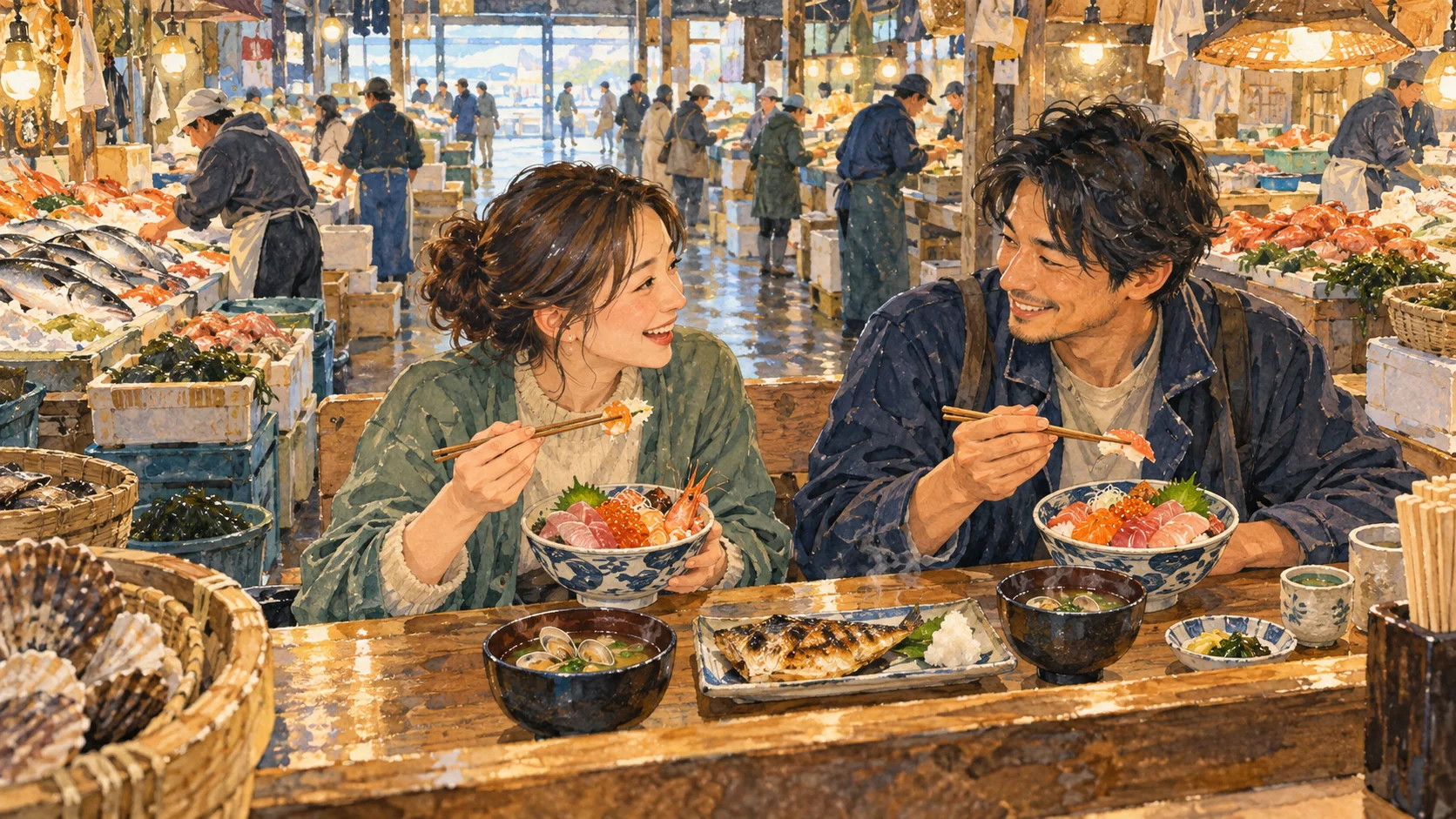
Plan market breakfast and one or two city meals: Aomori Gyosai Center’s nokkedon tickets, AUGA grilled fish and kaiyaki miso, miso curry milk ramen, Nagao niboshi noodles and Nishimura’s seasonal hours.
Buying nokkedon: collect rice, then exchange tickets for toppings
The operator’s ticket guide lists 12 tickets for ¥2,200 or singles at ¥190. Buy at the information desk, then exchange one ticket for regular rice or two for large rice at a red-sign rice stall. Start choosing toppings after collecting rice. Staff direct you to a suitable rice stall according to cooking progress and remaining rice.
About 30 shops line three aisles, with different toppings, cuts and portions. Read the ticket count for the plate or portion you want before asking staff to add it to the rice. The official example uses one ticket for lean tuna and three for fatty belly. Follow the signs in front of you. Use fewer high-ticket toppings for more variety, or reserve tickets first for a cut you especially want.
A set leaves 11 tickets after regular rice or ten after large rice. Soup, pickles and cooked dishes also take tickets. Reserve the stall’s required number for soup before spending everything on sashimi. In a small party, a tray can hold rice and later soup together. Choose toppings, then sit in the rest area rather than juggling a bowl and wallet.
You can buy extra single tickets at the information desk. Unused tickets cannot be refunded in cash. Make a first bowl you can finish, then buy only the extra tickets needed. If you came to try a few different fish, you do not need a second set just to pile the bowl high. Leave room for lunch or dinner.
Allocating ¥2,200 and calculating the meal total
The 12-ticket set saves ¥80 against singles: ¥190 × 12 is ¥2,280. Eight singles cost ¥1,520, ten ¥1,900 and eleven ¥2,090. The ¥2,200 set becomes cheaper than singles when you need 12. Estimate rice and topping tickets first to control the bill rather than automatically buying two sets.
Two adults using one 12-ticket set each spend ¥4,400. Adding two single tickets between them brings that to ¥4,780. Count drinks and separately purchased takeaway goods apart. Compare this with one set meal each: self-selected topping tickets on one side, a menu’s fixed main dish, rice and sides on the other. The color or variety of fish alone does not give the full comparison.
The same ticket count can produce very different meals. Fatty-tuna fans may use most tickets on a few portions; variety seekers can divide them among fish, grilled dishes and sides. Accept fewer varieties for the first approach, or leave bowl space for later discoveries with the second. Making separate bowls lets each person follow their tastes. Compare choices without having to duplicate the same bowl.
| Purchase | Tickets | Cost (yen) |
|---|---|---|
| Eight singles | 8 | 1,520 |
| Eleven singles | 11 | 2,090 |
| 12-ticket set | 12 | 2,200 |
| One set plus two singles | 14 | 2,580 |
| One set each for two people | 24 | 4,400 |
A complete market breakfast without raw fish
Include cooked dishes in your first round at Gyosai Center. Yamada Sozai lists charcoal-grilled fish, fried food and seasonal sides, with simmered dried cod and stir-fried bamboo shoots among its recommendations. Start here for the day’s grilled fish, choose a main portion and add a side. You need not circle every raw-fish stall first.
The market also introduces ika menchi, a fried patty made with chopped squid, as a specialty. Its texture and use with rice differ from a whole fried fish fillet. The operator identifies the morning as a time to find freshly fried batches. If this is your priority, visit in the morning, check the cooked-food stalls first and then collect rice.
Niku no Terayama offers freshly grilled Maesawa beef on rice and options such as long sausages. A raw-fish eater and a cooked-meat eater can build different bowls and sit together. Allow time for grilling. The guest whose seafood bowl is ready can go to the agreed seats rather than stand waiting at the meat stall.
Choose a seasonal ingredient you want to try first
The market’s seasonal chart separates spring–summer Mutsu Bay scallops and botan shrimp, summer–autumn flatfish and sea urchin, and autumn–winter saury, sardines, fresh salmon roe and tuna. Use it to recognize names at the stalls. Begin with one ingredient you most want, then add other fish or cooked foods. Try small amounts of unfamiliar sea squirt or roe before filling the bowl with them.
For a fish-focused autumn or winter meal, center it on tuna or oily fish you see that day, leaving tickets for grilled fish or soup. For scallops, compare raw, grilled and kaiyaki miso preparations. Gyosai Center lets you add a portion to rice; AUGA and Nishimura offer complete meals. Choose the cooking style before the market rather than searching only for “Aomori seafood.”
Eat before leaving: seating, takeaway and the group route
The market FAQ requires completed nokkedon bowls to be eaten in the indoor rest areas; they cannot be taken away. Before a train, leave enough time to sit and finish. For food on board, choose formally packaged cooked dishes or other takeaway goods rather than carrying a completed bowl to the station.
Separately purchased sashimi from fish stalls can be prepared for takeaway. Yamada Sozai also lists cooked dishes, grilled fish and fried food to go. Tell the stall when and where you plan to eat so it can package the product appropriately. Buy chilled food near the end of the walk, before returning to accommodation or departing, rather than carrying it around town.
There are several ground-floor rest areas and another 120 seats upstairs, reached by stairs from outside the market. With a stroller, wheelchair or difficulty carrying meals upstairs, select ground-floor seats first and divide buying duties. An accessible toilet is on the ground floor. Agree on the exact rest area so anyone needing a seat makes fewer trips.
The market generally does not accept reservations or hold rice. Groups of ten or more can coordinate rice-cooking times by phone at 017-763-0085. Two or three independent travelers can plan around opening time; groups should settle arrival and rice preparation before individual topping choices. Drivers use nearby paid lots, as Gyosai Center has no car park.
A 7:00 opening does not guarantee a bowl until 16:00
Gyosai Center’s usual hours are 7:00–16:00, closed Tuesdays, with early closure if rice sells out. The official calendar lists daily differences: October 28–31, 2026 is 7:00–16:00; November 2, 9, 16 and 30 is 7:00–15:00, while November 23 runs until 16:00. A later lunch fits November 23; move the meal earlier on the other Mondays listed.
November Tuesdays 3, 10, 17 and 24 are closed. If your only Aomori day is Tuesday, move nokkedon to the previous day or next morning and use an AUGA restaurant or station ramen that day. Consider this when choosing hotel breakfast. On a market morning, compare room rates without breakfast rather than eating a full hotel buffet before a second meal.
For an afternoon arrival, I would leave nokkedon until next morning. Choosing stalls, finding seats and eating take time. Closing is at 16:00, with rice availability already an issue after 15:00. Leaving your priority meal until near closing can squeeze both luggage storage and dinner. Use it as a late lunch only if you arrive early enough to finish comfortably, then walk afterward.
AUGA breakfast: grilled fish at Ichiba Shokudo, kaiyaki miso at Maru Ao
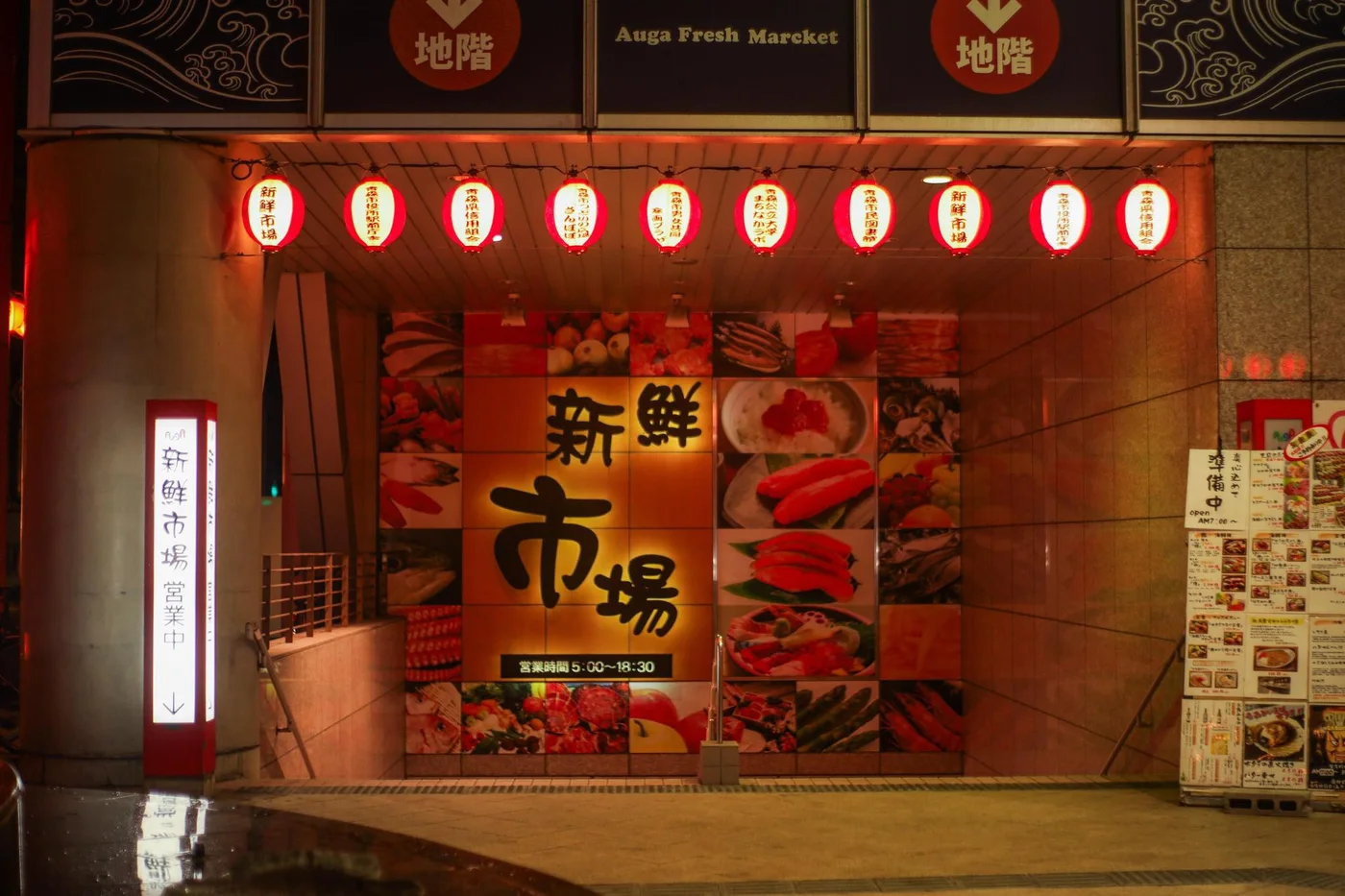
AUGA Fresh Market as a whole opens 5:00–18:30, but restaurants keep separate hours. Ichiba Shokudo opens 7:00–13:00 and closes Sundays, offering tuna scraped from the bones, seafood, grilled fish and selectable sides. For a cooked-fish breakfast, check grilled fish and handmade sides first, then add rice. This suits a seated meal rather than a topping-by-topping circuit.
Tuna nakaochi is promoted by the restaurant, but cooked dishes are the main practical difference from nokkedon. One guest can choose tuna and another grilled fish at the same restaurant. Its official description gives about ten counter seats. A small group wanting adjacent seats should allow for waiting. Before early transport, choose a meal with a manageable return to the station.
Maru Ao Shokudo lists 7:00–16:00, last orders 15:30, with market closing days; supply arrivals may change the day’s opening time. Alongside seafood bowls, sushi and set meals, its kaiyaki miso set suits a hot scallop meal. Read the menu outside and compare the whole meal before choosing rice with seafood or a cooked dish.
Maru Ao’s curry is limited to 50 servings daily and may sell out in the morning, according to the restaurant. Make it a morning target rather than an anytime afternoon backup. After hotel breakfast, use Maru Ao for an early lunch. If you only want to browse the market, eat elsewhere afterward without ordering at every restaurant you pass.
AUGA has dining rest areas and lockers, including ones for chilled goods. After breakfast, assess the shopping volume and storage needs before choosing a locker. The market website also says shops can arrange domestic Japanese delivery. For delivery to your next accommodation, give the shop the address and preferred arrival date when purchasing so it can arrange the product’s shipment. Separate breakfast from fresh-food shopping to make collection easier.
Kiden’s early noodles offer a different market meal
AUGA’s Kiden specializes in cooked food and ramen. Its official listing includes yakiboshi ramen, shijimi ramen using Lake Jusan Yamato clams and daily cooked-food bento. Start here for hot noodles without forcing yourself to eat raw fish at a market. Yakiboshi dried-fish broth and clam broth use different main ingredients; choose the soup you want.
Kiden opens at 7:30, takes last orders at 13:30 and closes Sundays and Wednesdays, while operating during Golden Week, Obon and year-end holidays. Ichiba Shokudo or Maru Ao opens earlier for a 7:00 breakfast. Choose Kiden if you can leave half an hour later. On Sundays outside those holidays, remove both Kiden and Ichiba Shokudo from the list and go to Maru Ao or another open shop.
Check AUGA’s own closing days too. November 11, 2026 is an announced market closure; the market has no December closing day, while individual stalls retain their own days off. Record building opening and restaurant service separately. A 5:00 shopping visit and a seated breakfast after 7:00 are different plans.
What kaiyaki miso contains, and how it differs from grilled scallops
Kaiyaki miso uses a large scallop shell as a pan for broth, miso and ingredients, with egg added at the end. The Ministry of Agriculture, Forestry and Fisheries regional-food page identifies Tsugaru and Shimokita as the main traditions. Tsugaru has simpler egg-and-miso versions; Shimokita often adds seaweed, sea urchin, squid or scallops. Read the restaurant’s ingredients to see which version you will eat.
Nishimura’s scallop kaiyaki miso explicitly uses cut scallops, local miso and bonito broth, currently ¥1,200 à la carte. Broth and egg inside the shell are central to it, unlike a whole scallop grilled with soy sauce or butter. To compare scallop preparations in one meal, choose one or two among sashimi, kaiyaki miso and fried scallops.
After Maru Ao’s kaiyaki miso breakfast set, choose fish soup, noodles or another main for dinner. After morning nokkedon, kaiyaki miso adds a hot dish in the evening. If you avoid egg, dairy, fish or shellfish, list the ingredients you cannot eat and ask the restaurant about the actual recipe. Kaiyaki miso contains egg and curry milk ramen contains dairy, so the names already help screen choices.
A regional-cooking demonstration published by the Ministry of Agriculture, Forestry and Fisheries in June 2021, introducing Aomori kaiyaki miso through preparation and cooking steps.
Onishi in Furukawa: miso, curry and milk in one bowl
Aji no Sapporo Onishi is on the first floor of the Onishi Create Building at 1-15-6 Furukawa, in the same neighborhood as Gyosai Center. The Showa-dori shopping-street listing gives 11:00–18:00, closed Tuesdays and Wednesdays, with PayPay accepted but no credit cards. Use it for lunch or an early meal; choose elsewhere for a 19:00 dinner.
Miso curry milk ramen combines miso broth, curry spices, milk and butter. Aomori Prefecture’s official introduction also lists bean sprouts, bamboo shoots and wakame. The broth combination distinguishes it from dried-fish-centered niboshi ramen. For a first taste, choose the full miso curry milk version; for fewer elements, look at options such as miso milk on the menu.
Sapporo in the name comes from the shop lineage; plan it as a local Aomori City noodle dish. After a market breakfast, leave time to walk and rest before a later bowl. With only one lunchtime in Aomori, choose either noodles or nokkedon. The latter suits stall-by-stall selection; the former a seated bowl of hot noodles.
Both Gyosai Center and Onishi close Tuesdays; Onishi also closes Wednesdays. To eat both, choose a day when both open, with the market early and Onishi later, leaving a real gap. Order noodles from the current in-store menu; budget the market tickets at ¥2,200 per person for one set. If the meals would be close together, leave one until the next day to keep an appetite for each.
Nagao’s station branch: niboshi noodles from 7:00 or for dinner
Nagao Chuka Soba’s Aomori Station branch is on the first floor of LOVINA’s parking facility at 1-2-3 Yanagawa. It opens 7:00–21:00, last orders 20:45, closes Wednesdays and may close early when soup runs out. Use it for a station breakfast instead of the market, or an evening bowl before returning to accommodation. Navigate to this branch rather than the west-bypass or central branch.
The shop divides soup bases into assari, rich, gogunibo and chicken-bone styles, then combines them into noodle dishes. For a lighter introduction to Tsugaru niboshi, start with assari. Choose a richer style if you already like strong dried-fish flavors. The city tourism association lists names such as assari (あっさり), akkoku-men (あっこく麺) and koku-niboshi (こく煮干し) for this branch. Keep the Japanese dish names when ordering.
The station branch recommends its limited dish called goguegi (ごぐえぎ) and lists free rice throughout the day. Start with a regular noodle portion if this meal is for noodles and soup; add rice if you want it. With dinner still ahead, there is no need to increase the portion simply because rice is free. Keep niboshi noodles as their own meal and compare Furukawa’s miso curry milk ramen another day.
Before eating ahead of a train, collect tickets and sort luggage first, then decide whether the remaining time allows entry. The location saves walking but queues, cooking and payment still take time. Move the bowl to arrival evening if time is short. For food on the coastal train, see Resort Shirakami food and arrival planning; handle seated city noodles and onboard meals separately.
Nishimura by the harbor: a Tsugaru set or selected cooked dishes
For a seated meal overlooking Mutsu Bay, choose Michinoku Ryori Nishimura on ASPAM’s tenth floor at 1-1-40 Yasukata. The restaurant lists about eight minutes on foot from Aomori Station. Sea-side chair seating and city-side tatami seating differ. Request chairs when booking for someone who cannot sit on the floor, and give any sea-view preference too.
The current regional menu lists the Tsugaru set at ¥2,350, with jappa-jiru, scallop kaiyaki miso, scallop sashimi, nishin no kirikomi and gakkura-zuke. It introduces more different Tsugaru preparations than another seafood bowl: hot soup, egg and miso, raw seafood and pickled sides. Two sets total ¥4,700.
Jappa-jiru uses cod head and backbone among other parts, currently ¥830 à la carte. Vegetable-based regional ke-no-shiru costs ¥690. For a smaller meal, start with a soup and the main you most want, then decide on rice or other dishes. Choose cooked à la carte dishes if you eat only fully cooked food; the fixed Tsugaru set includes scallop sashimi.
The regular menu also lists the ¥3,200 scallop selection set, with sashimi, grilled scallops and two fried preparations, and a chef-selected seafood-bowl set at ¥3,000. After carefully choosing market fish at breakfast, prioritize a Tsugaru set or hot soup. After a noodle breakfast, a scallop set offers several preparations for dinner. Compare the website’s tax-inclusive prices, with drinks extra.
Nishimura’s seasonal dinner hours: winter last orders at 18:30
Nishimura serves lunch 11:00–15:00, last orders 14:30. Dinner from April through October is 17:00–20:00, last orders 19:30. November through March is earlier: 16:30–19:00, last orders 18:30. ASPAM’s published November 1, 2026–March 31, 2027 hours give the same winter schedule. Eat before returning to accommodation after a winter afternoon in the city.
The winter building schedule lists the main entrance open 8:30–19:00 and the east, west and north entrances 8:30–18:00. After 18:00, use the main entrance and allow time for the lift to the tenth floor. Arrive before restaurant last orders, earlier than the building’s 19:00 closure. For slower walkers, a target around 17:00 leaves a full meal period.
The same winter notice lists building closures on December 31, 2026 and January 14–15, 2027. Nishimura also has irregular days off. Check its latest closure notice after fixing the itinerary, or book at 017-734-5353. Give the date, time, party size and seating needs for a set meal or chair seating, then fit the harbor walk before the confirmed arrangement.
A two-meal budget can start with one ¥2,200 nokkedon set and one ¥2,350 Tsugaru set per person: ¥4,550 each, or ¥9,100 for two. This splits market selection and Tsugaru dishes between morning and evening, leaving lunch for something light or a rest. Changing dinner to the scallop selection makes the two-person two-meal total ¥10,800. Add toppings, drinks and transport separately.
Choose one or two meals around your arrival time
For a morning arrival with time for one meal, go straight to Gyosai Center for the market experience. For a fully cooked set, compare grilled fish at AUGA’s Ichiba Shokudo and Maru Ao’s kaiyaki miso. Store luggage at a formal station or accommodation storage point and carry only a small bag. On Tuesday, start with an open AUGA restaurant or Nagao instead.
For morning and evening meals, a suggested plan is Gyosai Center around 8:00, city activities afterward, and Nishimura dinner at 16:30 or 17:00. After an AUGA cooked breakfast, choose Nishimura scallops or Nagao niboshi noodles later. Make the main dishes different and leave time for activity and digestion. The 8:00 arrival is a planning suggestion; opening remains 7:00.
Arriving at noon and leaving by evening, choose one among Onishi noodles, Nishimura lunch and a market bowl, then walk back toward the station. Near 14:30, Nishimura lunch orders are about to close. For a leisurely meal, choose another shop with enough service time left or wait for dinner. For an afternoon arrival with an overnight stay, store luggage and eat dinner first, then visit the market next morning.
On Wednesday, Nagao and Onishi both close, while Gyosai Center’s regular cycle is open; Maru Ao follows AUGA’s monthly closures. On Sunday, Ichiba Shokudo and Kiden close, so use Gyosai Center or Maru Ao for breakfast. Choose one main meal and one nearby alternative. Before switching, check its food and order deadline rather than walking through a list of closed shops.
In rain or winter, shorten the routes between meals. Start somewhere you can sit for a full meal, then decide how far to walk. AUGA’s basement market and ASPAM’s restaurant each provide indoor time, but the route between them is outdoors. With a fixed return train, keep the final meal convenient for luggage collection and the station.
Save names, last orders and payment in one meal plan
Record the Japanese shop name, address, intended dish, last orders and closing days. For Gyosai Center, note the information desk and Furukawa address; for AUGA, the basement and restaurant name; for Nagao, the Aomori Station branch; for Nishimura, ASPAM’s tenth floor. If the group splits up, everyone can meet using the same details.
Prepare enough small-denomination yen cash for your chosen meals. AUGA’s official pages currently mark cash as accepted at Ichiba Shokudo, Maru Ao and Kiden. Nagao’s city tourism page also lists cash. Onishi lists PayPay but no credit cards; Nishimura lists several credit cards in its own shop information. Prepare for the shops you choose rather than applying one restaurant’s payment methods to a whole market.
A few useful answers
How much are Aomori nokkedon tickets?
A set of 12 costs ¥2,200; singles are ¥190. Regular rice takes one ticket and large rice two. Exchange the posted number for each topping. Unused tickets cannot be refunded; extra singles are available at the information desk.
Can I take nokkedon away from Aomori Gyosai Center?
Completed nokkedon must be eaten inside. Separately purchased sashimi and cooked-stall goods can be packaged for takeaway according to the product.
Does AUGA serve breakfast when the market opens at 5:00?
Ichiba Shokudo and Maru Ao list a 7:00 start, Kiden 7:30, each with its own days off. Plan restaurant service separately from AUGA’s 5:00 opening.
What market breakfast can I eat without raw fish?
At Gyosai Center, choose Yamada Sozai grilled fish, fried food and sides or Niku no Terayama’s freshly grilled beef. At AUGA, compare Ichiba Shokudo grilled fish, Maru Ao’s kaiyaki miso set and Kiden’s hot noodles.
When should I arrive for winter dinner at Nishimura?
From November through March, dinner is 16:30–19:00 with last orders at 18:30. ASPAM’s winter main entrance closes at 19:00; other entrances at 18:00. Arrive early enough for a full meal.
Official information and references
Sources used in this guide.
- Market information | Original Aomori Nokkedon
- AUGA Fresh Market | AUGA
- About nokkedon | Original Aomori Nokkedon
- Yamada Sozai | Original Aomori Nokkedon
- Niku no Terayama | Original Aomori Nokkedon
- Aomori regional dishes | Michinoku Ryori Nishimura
- Maru Ao Shokudo | AUGA
- FAQ | Original Aomori Nokkedon
- Ichiba Shokudo | AUGA
- Kiden | AUGA
- Kaiyaki miso, Aomori | Our Regional Cuisines, Ministry of Agriculture, Forestry and Fisheries
- Miso curry milk ramen | Amazing AOMORI official prefectural tourism site
- Aji no Sapporo Onishi | Aomori Showa-dori shopping street official site
- Nagao Chuka Soba, Aomori Station branch | Nagachu
- Nagao Chuka Soba: approach | Nagachu
- Nagao Chuka Soba, Aomori Station branch | Aomori tourism guide
- Shop information | Michinoku Ryori Nishimura
- Regular menu | Michinoku Ryori Nishimura
- Michinoku Ryori Nishimura
- Store and facility hours November 1, 2026 – March 31, 2027 | Aomori Prefecture Tourist Center ASPAM (PDF)