Plan your first trip to Aomori from Aomori Station covering Nebuta Museum WA RASSE, the Hakkoda Ropeway, and Oirase Gorge—with 2026–27 winter bus bookings, ropeway fares, foliage windows, and 2- and 3-day itineraries.
- Region & Focus
- TohokuAttractions
- Reading Scope
- 21 min read · 9 chapters · 5 Q&As
- Official Verification
- 28 official sources checkedUpdated November 22, 2026
- Key Topics
- ItinerariesSeasonsWinter
Chapter Route Map (tap any stop)
- First Time in Aomori: Choosing Which Day to Stay in Town
- Nebuta Museum WA RASSE: Putting Full-Scale Festival Floats on Arrival Day
- Hakkoda Ropeway: Buying Tickets and Timing Your Ride for Snow Monsters
- Winter Buses from Aomori: Why the Last Bus Leaves Before the Last Ropeway
- Walking Oirase Gorge: Pick Your Section and Boarding Stop First
- Oirase Gorge and Lake Towada in Winter: Enter via Hachinohe or Shichinohe-Towada
- August Parades vs. Spring and Autumn: Catching the Timing Split Between Mountain and Gorge
- Doing the Math on the JR EAST PASS: Keep Reservation Fees and Attraction Tickets Separate
- Splitting Two Nights: Build In One Weather Buffer Day
- Quick Q&A
For a first trip to Aomori, save Nebuta Museum WA RASSE for your arrival day and dedicate one full daytime each to the Hakkoda Ropeway and Oirase Gorge. In winter, you have to split those two into separate legs: buses from Aomori turn back at Sukayu Onsen after stopping at the ropeway station, so reaching Oirase for frozen waterfalls means coming in from Hachinohe or Towada City instead. Staying near Aomori Station makes a three-day, two-night base easy, though once the gorge or Lake Towada becomes your main focus, it pays to move one night closer to the water.
First Time in Aomori: Choosing Which Day to Stay in Town
Aomori Station and Shin-Aomori Station sit one stop apart. Nebuta Museum WA RASSE, Aomori Port, and station-front restaurants cluster around Aomori Station, while the Tohoku Shinkansen stops at Shin-Aomori. The Hayabusa takes about 3 hours and 20 minutes from Tokyo; transfer to the Ou Main Line at Shin-Aomori for a ride of roughly 6 minutes once the train departs. JR East lists 8 minutes as the standard Shinkansen-to-local transfer time, though when booking you still need to check the actual gap to the next departure. If you arrive late, grab dinner near the station and save the museum exhibits for the next day rather than dragging bags in right before last entry.
On a one-night stay, visit Nebuta Museum WA RASSE on arrival day and pick either Mount Hakkoda or Oirase Gorge for the next day. For snow monsters (juhyo), aim for January through late February and give day two to Hakkoda. For forest trails, mid-May to mid-June brings fresh spring foliage, while mid-to-late October brings peak autumn color along the stream. Because the bus ride between Aomori and Oirase eats up much of the day, a two-day trip focused on the gorge leaves time for just one stop by the lake.
Two nights give you the breathing room to separate Mount Hakkoda and Oirase Gorge. That works best when seasonal buses are running on both sides and you can book a return train with comfortable transfer margins. If you are coming from Tokyo with only one full daytime, dedicate that day to Oirase, where transit takes longer, then see how much time remains on your arrival and departure days. Because WA RASSE sits steps from the station, you can easily slot it onto whichever day you catch your train.
Travelers flying into Aomori Airport can take the airport bus to Aomori Station; the museum's access page puts the ride at about 40 minutes. If you are carrying only a small daypack and want to head straight inside, you can walk right toward the waterfront. With larger luggage, use station lockers or drop your bags at your hotel first so your hands are free for exhibit guides and photos. In snowy weather, pad extra time for the airport-to-downtown leg—the landing time on your flight schedule is only the starting point for onward transit.
The main convenience of staying near Aomori Station is having the port area, museums, and suburban buses clustered outside the same exit. Shin-Aomori only makes sense if you have an early morning departure from there or just want a place to sleep near the Shinkansen platform on your final night. When booking for a Shinkansen return, check both the station name and the walking distance carefully. If you spend one night mid-route in Oirase Stream Onsen or Yasumiya, map out your morning walk, hotel shuttle, and next bus departure before you turn in.
Plan your first trip to Aomori from Aomori Station covering Nebuta Museum WA RASSE, the Hakkoda Ropeway, and Oirase Gorge—with 2026–27 winter bus bookings, ropeway fares, foliage windows, and 2- and 3-day itineraries.
Nebuta Museum WA RASSE: Putting Full-Scale Festival Floats on Arrival Day
Nebuta Museum WA RASSE is roughly a 1-minute walk from JR Aomori Station. The paid gallery displays massive floats that actually paraded in the festival, letting you examine them up close and compare expressions crafted by different artisans in the Nebuta Faces exhibit. On your first visit, step back inside the main hall to take in an entire float before moving closer to see how the ink lines and internal lights create depth across the paper. Whereas floats roll past one after another on summer streets, here you can linger over whatever detail catches your eye.
Individual admission is ¥620 for adults, ¥460 for high school students, and ¥260 for elementary and junior high students. The museum accepts several cashless payment methods on site; individual tickets are bought at the counter, while advance sales are reserved for groups. Older guides still mention two- or three-venue combo passes covering WA RASSE, the Hakkoda-maru ferry, and ASPAM, but those passes were discontinued at the end of March 2025. If you plan to visit two venues, schedule them separately and start with the one that closes earliest or matters most to you.
The museum and main hall are open 9:00–19:00 from May through August (last entry 18:30), and 9:00–18:00 from September through April (last entry 17:30). The entire building closes August 9 and 10 to swap out the parade floats, as well as December 31 and January 1 for New Year's. If you are staying in Aomori specifically to see the floats that just marched, stroll the waterfront on those two changeover days and plan your museum visit once it reopens.
The museum estimates about 30 minutes for browsing the exhibits alone, or roughly 60 minutes if you stay for the festival experience. Staff-led hayashi music sessions run for 20 minutes at 11:10, 13:10, 15:10, and 17:10; when guest hayashi troupes perform, sessions start 10 minutes earlier and last 30 minutes. Children need to be at least 100 cm tall to try beating the taiko drums. Families should pick the easiest performance slot to make first, then fit the floats, video displays, and gift shop around it.
If you just want to stretch your legs beside Aomori Station, walk out toward A-FACTORY for harbor views or head into town for a meal. Travelers who want both the museum experience and a market meal should do the market during the day and save the exhibits for an open window back near the station. To pair a seafood rice bowl at Aomori Gyosai Center with a waterfront stroll, follow our Aomori Station Markets and Local Food Walk.
Hakkoda Ropeway: Buying Tickets and Timing Your Ride for Snow Monsters
The Hakkoda Ropeway climbs from Sanroku (Base) Station to Sancho-Koen (Summit Park) Station in about 10 minutes. If you are only going up for the view and taking the bus back to Aomori from the base, buy a round-trip ticket straight away. Starting August 1, 2026, adult fares apply to Japanese junior high school age and older at ¥1,550 one way and ¥2,500 round trip; elementary students pay ¥450 one way and ¥700 round trip, while preschoolers ride free. The operator notes there is no direct hiking trail linking the summit and base stations, so confirm your descent route and onward transport before buying a one-way ticket.
Regular first departures start at 9:00. From March through early November, the last ascent leaves at 16:20 and the last descent at 16:40; from mid-November through late February, the last ascent is 15:40 and the last descent is 16:00. Cabins run roughly every 15 to 20 minutes, with an annual maintenance shutdown in early November. A separate scheduled inspection is already announced for May 25–31, 2027—if your spring trip falls during that week, dedicate the full day to the gorge or downtown instead.
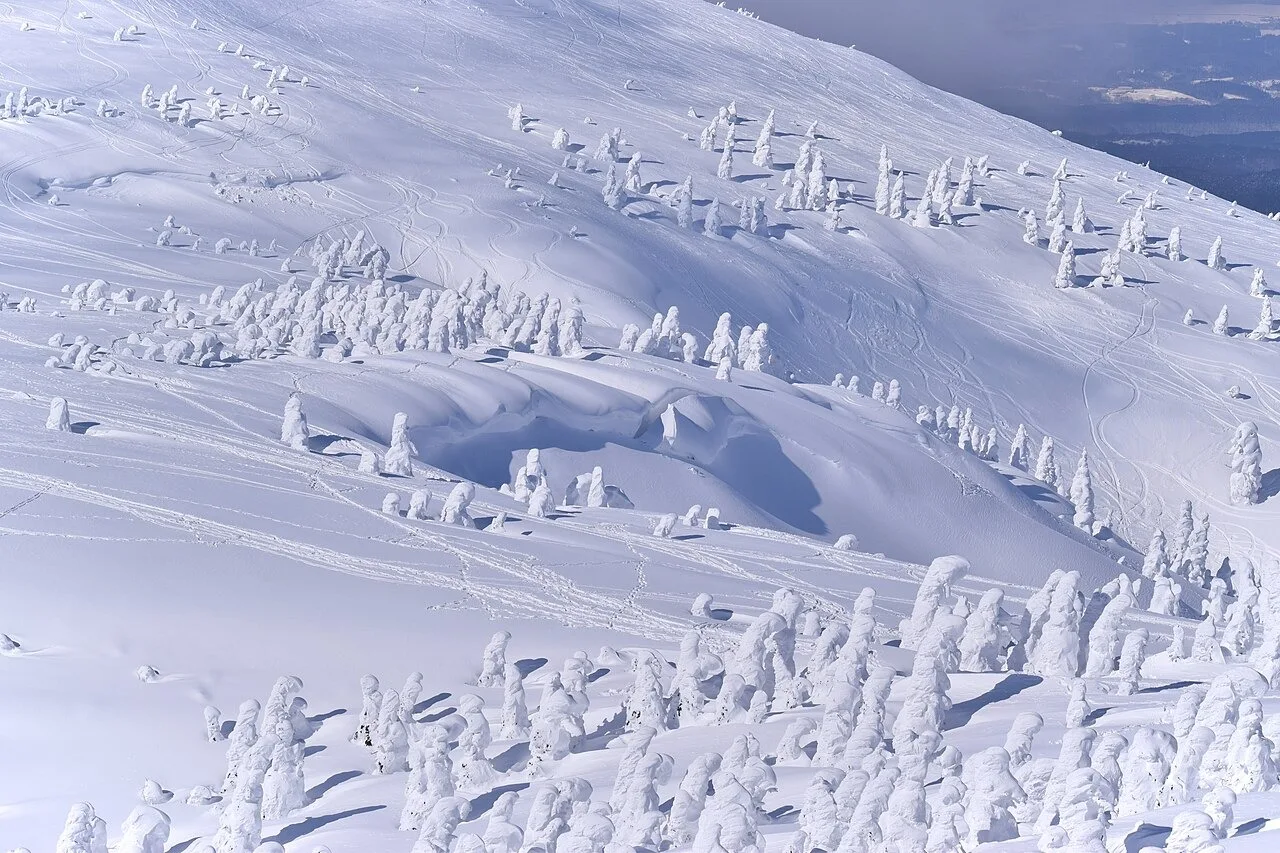
Snow monsters typically peak from January through late February. Operations suspend when summit winds hit 25 meters per second or weather turns severe, and the ropeway homepage posts live updates on running status, wind speed, temperature, and visibility. Skies can be clear outside Aomori Station while visibility at the summit drops to a few meters. If snow-monster photos are your priority, check the homepage visibility report alongside bus departure times that morning. Give yourself more time than the 10-minute ride suggests, since you also have to descend in time to catch the return bus outside the base station.
While snow covers the summit walking loop in winter, sightseeing stays within the open summit station zone. Venturing past the boardwalk onto neighboring peaks or into snow-covered woods demands proper backcountry gear and route judgment. Sightseers riding just for the view will be fine with a windproof outer layer, gloves, and grippy boots—you can step out to take in the scenery and duck back inside when your hands get cold. If anyone in your group is skiing while others are sightseeing, agree on a meetup spot at the base first so each person can choose when to head down. For ski terrain details, see our Hakkoda Ski Resort, Ropeway, and Snow Monsters Guide.
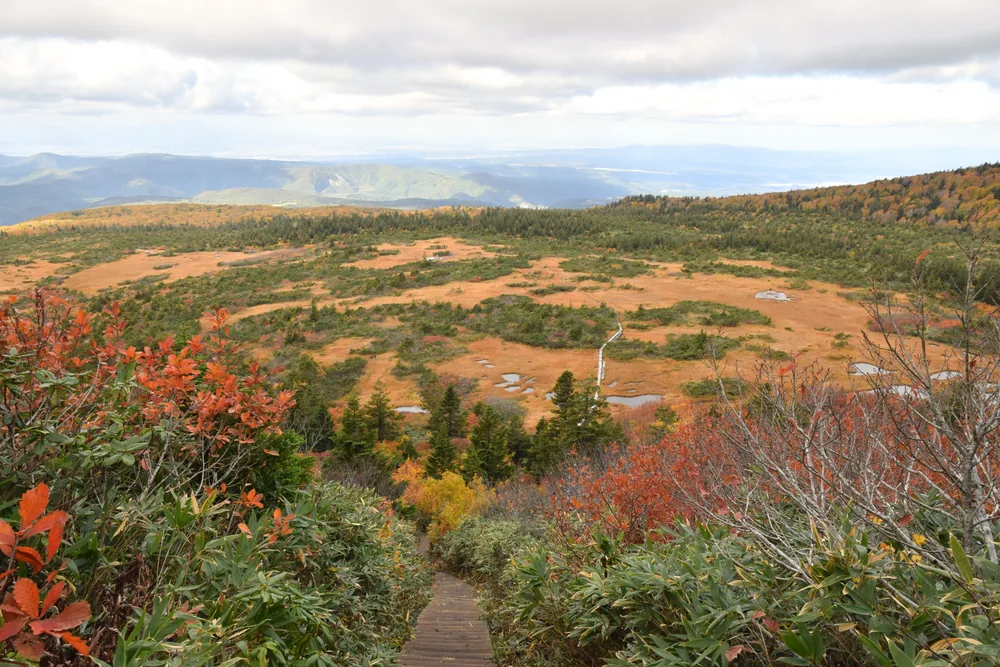
When the summit is snow-free and the boardwalk loop is open, the operator estimates 1 to 1.5 hours for a round-trip walk along the Hakkoda Summit Trail. Just riding the ropeway up and back takes far less time. In autumn, if you plan to catch the same return bus, subtract queuing and boarding time from your window before deciding how far to hike. The ropeway operator warns that peak mid-October crowds have seen waits of around 90 minutes, so catching an early morning bus gives you far better control than gambling on how long you can linger at two foliage spots.
Travelers with limited mobility can still use the ropeway: both the base and summit stations list elevators, accessible restrooms, and wheelchairs. In summer, keep your summit plans near the station area; if companions walk the trail, set a clear time to regroup before the next cabin down. In winter, check how much of the summit area is cleared before heading up. Taxis are not permanently stationed at the base, so if anyone in your party needs guaranteed seating or wants to avoid waiting in the snow, arrange round-trip transport ahead of time.
Winter Buses from Aomori: Why the Last Bus Leaves Before the Last Ropeway
From November 12, 2026 through March 31, 2027, JR Bus Tohoku's Hakkoda-go runs from Aomori via Hakkoda Ropeway Station and Jogakura Onsen to Sukayu Onsen. Boarding is at Aomori Station East Exit Stop 11, or Shin-Aomori Station East Exit Stop 1. This season, outbound departures from Aomori leave at 8:10, 9:20, and 10:50—the first bus skips Shin-Aomori, so the two stations show different available departures on the booking screen. Staying by Aomori Station saves you a morning transfer.
Boarding at Aomori Station or Shin-Aomori Station requires an advance online seat reservation at ¥300 per person; enter everyone in your party on the same booking. Seating onboard is open, so your place in line affects whether you sit together. The adult one-way fare from Aomori or Shin-Aomori to the ropeway station is ¥1,290, separate from the reservation fee and paid when getting off the bus. The operator's notice specifies that JR EAST PASS holders are also required to make advance reservations.
Return buses toward Aomori are currently scheduled to depart the ropeway station at 11:08, 13:43, and 15:03, with no reservation needed. Take the 8:10 bus up—scheduled to arrive at 9:10—and a quick summit view lets you catch the 11:08 bus back into town, or stay through lunch for the 13:43. If you leave Aomori at 10:50 and arrive at 12:15, treat 15:03 as your hard cutoff to be back at the base. Under standard winter hours, anyone taking the final 16:00 descent cabin has already missed the last bus back to Aomori.
You can fit Sukayu Onsen into the same day, though you will need to check the timetable separately for both the base-to-Sukayu and Sukayu-to-Aomori legs. One option is taking the earliest bus to the ropeway, returning to the base after sightseeing, catching a later bus onward to Sukayu, and riding back to Aomori from there. Boarding at the base depends on empty seats, so if you also have a Shinkansen to catch, choosing either the hot spring or a tighter return buffer keeps your transfer safer. Pack up and leave the summit station well before the final return bus, leaving extra margin to queue at the bus stop.
If you drive to the ropeway station in winter, rental operators require snow tires from November through April. Anyone planning to continue toward Yachi or Lake Towada needs to check which sections of National Route 103 are actually open—the base parking lot can be accessible while roads farther south remain closed. Plan your driving day as an out-and-back from downtown and keep indoor Aomori backups ready if snowfall worsens. When traveling in multiple cars, agree to meet somewhere vehicles can pull over safely instead of waiting on a narrow mountain shoulder.
Walking Oirase Gorge: Pick Your Section and Boarding Stop First
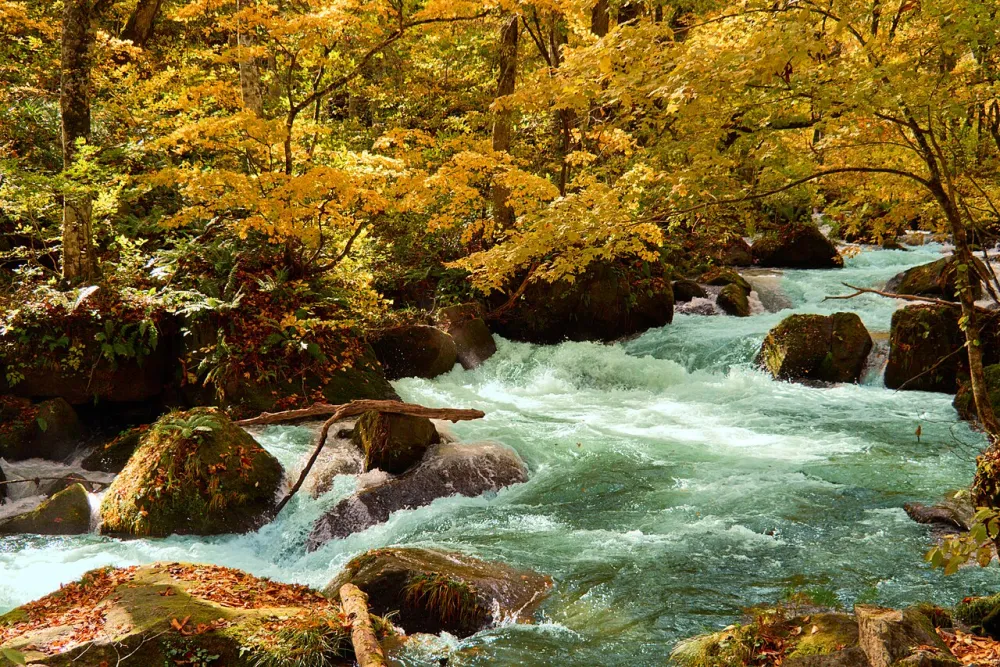
Oirase Gorge stretches roughly 14 km from Nenokuchi at Lake Towada down to Yakeyama. The prefectural tourism map estimates 4 to 5 hours for the full walk, or 3 to 4 hours for the roughly 9 km stretch from Ishigedo to Nenokuchi. Use those figures to gauge total walking effort, then add buffer time if you plan to stop often for photos and breaks. First-time visitors arriving by bus can use Ishigedo, Kumoi Falls, and Nenokuchi as landmarks to trim the walk to match the day's bus schedule.
If you want rushing water spilling over boulders, walk upstream from Ishigedo past Makado-iwa to the Ashura Current. The official map puts Ishigedo to Makado-iwa at about 1.3 km and another 400 meters to the Ashura Current. Turning back at the rapids for Ishigedo makes an easy 3.4 km round trip and lets you board from the same stop where you started. Skipping a second bus stop works especially well for mixed-pace groups where some want to linger and others prefer to sit and rest.
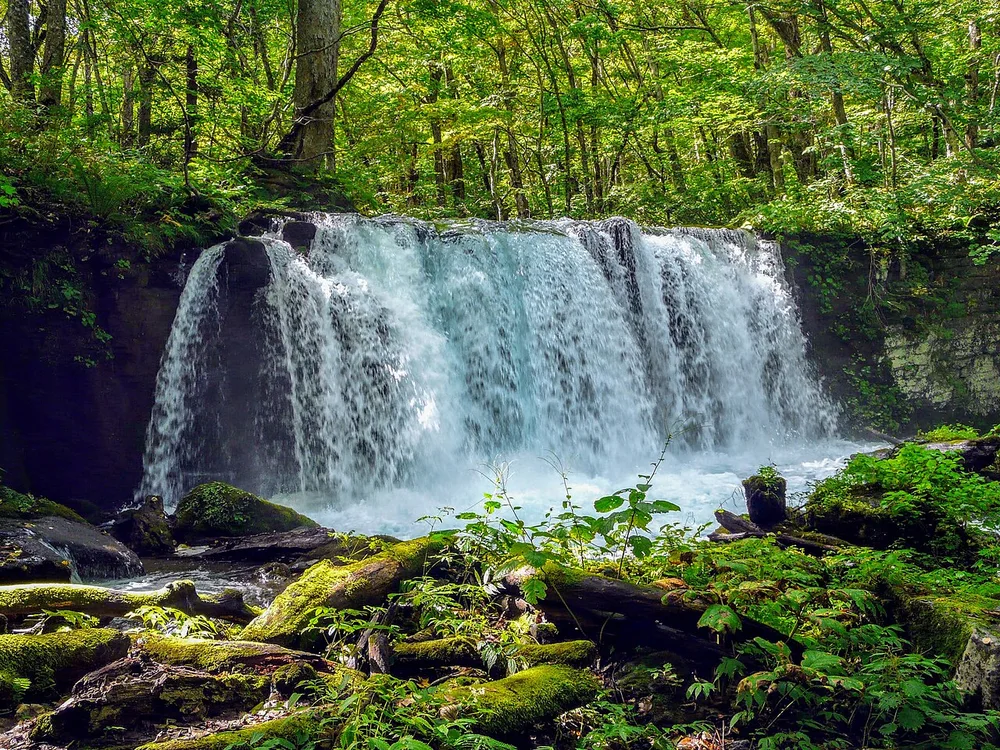
Continuing from Ishigedo all the way to Kumoi Falls covers about 2.8 km one way, estimated at 60 minutes on the map. The first stretch hugs river currents and mossy rocks before reaching the multi-tiered waterfall. When checking return buses, make sure you look at the row for Kumoi-no-Taki—Kumoi-no-Nagare is a different stop. If you rode outbound toward Lake Towada, mark the location of the opposite-direction bus stop on your map right away; discovering you are on the wrong side of the road at departure time can cost you the whole gap between walks.
If you are staying by the lake or walking downstream that day, the Choshi Otaki to Nenokuchi stretch is an easy pick. The walking map estimates about 1.5 km and 30 minutes, linking the wide cascade to the lake outlet—ideal when you only have one short walking window. Reaching Nenokuchi does not put you at the Statue of Maidens; you still need to continue to Yasumiya for that. When the gap between buses is tight, enjoy the lakeside view at Nenokuchi, head back, and save Yasumiya for travelers staying overnight at the lake.
The stream-side path crosses damp soil, tree roots, and wooden boardwalks, so good tread matters far more than pace after rain. Families with strollers should stick to short segments right next to a bus stop and bring a baby carrier in case kids get tired mid-trail. Restrooms sit at the Ishigedo Rest House and both ends of the gorge, with few options along the middle stretches. If young children are not ready for a full hour of walking, staying near the rest house still delivers great water views with easy access to snacks and toilets.
If you are taking the bus, screenshot the return timetable for both your planned end stop and a backup stop before setting out. Checking the blank cells on the full timetable grid beats relying on a simplified route map, because different buses on the same named line do not always serve every stop. For a full breakdown of stops, turnback points, and end-to-end pacing, read Oirase Gorge Walking Trails and Bus Guide.
Drivers traveling together can turn the walk into an out-and-back from one parking lot so nobody has to shuttle back for the car. Towada City marks parallel roadside bays along National Route 102, with 39 spaces beside Ishigedo Rest House and only 9 at Choshi Otaki. In peak season, settle at whichever side has legal parking first, or park at Oirase Stream Onsen or lakeside and use the seasonal traffic-control shuttles. If you pass a waterfall with no open spots, keep driving rather than stopping in the traffic lane to let passengers out for photos.
Oirase Gorge and Lake Towada in Winter: Enter via Hachinohe or Shichinohe-Towada
In green and autumn seasons, the Mizuumi-go bus leaves Aomori Station and runs through Mount Hakkoda and Oirase Gorge to Yasumiya. From November 12, 2026 onward, the Aomori–Oirase–Lake Towada section closes for winter. In winter, buses from Aomori terminate at Sukayu Onsen, so you must arrange separate transport for the rest of the route. If you plan to stay overnight by the lake, look at long-distance buses from Hachinohe; if you only want a daytime frozen-waterfall tour before returning to a rail line at night, connecting via Shichinohe-Towada Station is far easier.
The winter Oirase-go from Hachinohe to Lake Towada operates only on select dates from December 25, 2026 through February 28, 2027. Return service from the lake to Hachinohe runs on select dates from December 26 through March 1, 2027; both directions follow separate calendars and require reservations for all boarding and drop-off stops. The winter timetable departs Hachinohe at 13:20 and reaches the Lake Towada festival venue at 16:00, while the return from the lake starts at 10:00. Using both buses means staying overnight at the lake and booking two separate date-specific tickets in advance.
If frozen waterfalls are your sole focus, book the Frozen Waterfall Tour run by the Towada Oirase Tourism Organization. Running mainly on weekends from December 25, 2026 through February 28, 2027, it costs ¥3,300 to ¥4,400 for adults and requires advance booking and prepayment. Daytime tours offer pickup points at Shichinohe-Towada Station, downtown Towada, and Oirase Stream Onsen, making Shinkansen connections straightforward. For evening tours, pay close attention to whether the departure serves downtown/Oirase Stream Onsen or Lake Towada lakeside—choose your meetup point based on your hotel address, then check post-tour shuttles and dinner hours.
Travelers already staying in downtown Towada who want to visit Yasumiya can use the winter Lake Towada shuttle bus listed by Aomori Prefecture Tourism. Operating mainly on weekends and select dates from December 25, 2026 through February 28, 2027 via Oirase Stream Onsen, it runs at most one round trip per day and accepts one-way bookings. If you plan to arrive by one operator and leave by another, cross-check the exact operating dates and stop names on both websites before booking lakeside lodging. Shuttle tickets do not include the frozen-waterfall tour, which must be booked separately.
When you have daylight and return bus options at Lake Towada, spend your time in Yasumiya. Bus timetables list Towadako (Yasumiya) and Nenokuchi as two distinct stops, with the Statue of Maidens and Towada Shrine on the Yasumiya side. Hikers finishing a long gorge walk can grab lunch in Yasumiya and stroll the lakeshore before heading back to the bus terminal. If you want to ride the sightseeing boat, anchor your plan around the boat and bus schedules first; with only a short window, a lakeshore walk makes it much easier to protect your return connection. Staying overnight by the lake gives you the next morning as well, splitting lake views and gorge trails across two days.
In summer and autumn, placing Oirase on your departure day pairs neatly with heading south from Hachinohe to the Shinkansen or taking a direct bus back to Shin-Aomori. Hauling overnight bags along the river trail slows everyone down every time someone adjusts a pack. A much easier move is leaving large bags in lockers at a station along your route or checking them with your hotel. Once you decide to connect straight to Hachinohe for a long-distance departure, build your walk around Hachinohe-bound stops and schedules from the start instead of backtracking toward Aomori at the end.
August Parades vs. Spring and Autumn: Catching the Timing Split Between Mountain and Gorge
The Aomori Nebuta Festival runs every year from August 2 through August 7. Night parades take place August 2–6, while August 7 features a daytime parade followed by fireworks and a maritime float procession at Aomori Port that evening. If you only have one night, decide upfront between giant floats on the streets or illuminated floats on the water with fireworks. Wait for that year's reserved seating and traffic maps before picking seats, as street parades and port fireworks sell tickets separately. If your hotel sits across a road-closure zone, check the official map beforehand so you know which crossing gets you back at night.
Visitors who want to join as Haneto dancers are welcome to participate freely as long as they wear the full official costume. Changing clothes, storing bags, and getting back to your hotel eat into the day, so save the day you dance for downtown rather than pairing it with a daytime round trip to Oirase. For WA RASSE, go on the morning before an evening parade to study how the floats are built before seeing them roll down the street that night. If the festival is your main reason for visiting, read Aomori Nebuta Festival Seating and Summer-Autumn Routes to keep parade nights separate from daytime excursions.
If you are heading to Hakkoda in spring for snow walls, the Snow Corridor refers to the cleared stretch of National Route 103 between Sukayu and Yachi—riding the ropeway shows a completely different perspective from above. The Ministry of the Environment lists April to May as the viewing window for the snow walls, though your actual travel date depends on that year's road-opening announcement. From mid-May onward, Oirase shifts into fresh spring green. Travelers continuing toward Hirosaki can catch the Ou Main Line at Shin-Aomori and give one full day each to the Tsugaru side and the gorge.
Autumn color starts high on Mount Hakkoda first. The ropeway operator places typical peak foliage on the summit trail in early October, with peak color along the cable line around October 10. Oirase Gorge normally peaks in mid-to-late October. If your dates are flexible and you want both areas at their best, aim for the overlap between those windows and adjust based on live photos from the summit and mid-slope. Check which elevation on Hakkoda is turning before deciding whether to save a still-green gorge for another trip. For scenic driving stops, check our Hakkoda Autumn Foliage and Foothill Route Guide.
During foliage season on public transit, heading up to the mountain just for midday light often runs straight into lift queues and tight return buses. Take an early bus up Hakkoda and save Oirase for the next day, choosing your walking stretch around bus gaps. In heavy rain, shorten the gorge walk to an out-and-back near Ishigedo—wet rock walls and stream colors still stand out in overcast light, and slowing your pace keeps footing safer. If bus stops and seat bookings simply do not line up that day, stay in downtown Aomori and save the long gorge walk for a day when you are staying closer to the stream.
Doing the Math on the JR EAST PASS: Keep Reservation Fees and Attraction Tickets Separate
The former JR EAST PASS (Tohoku area) was discontinued on March 13, 2026. The current JR EAST PASS comes in consecutive 5-day or 10-day options for non-Japanese passport holders, priced at ¥35,000 and ¥50,000 for adults (¥17,500 and ¥25,000 for ages 6–11). Riding the Hayabusa between Tokyo and Aomori requires a reserved seat. Even with a rail pass, choose your train and book an ordinary reserved seat in advance—especially on your departure day when catching an airport connection, where only trains with available seats belong in your plan.
For a round trip between Tokyo and Aomori, compare the pass by adding up the round-trip reserved-seat fares for your exact travel dates plus the local JR trains and eligible buses you will ride across three days. The 5-day pass runs consecutively from activation, so check whether both your arrival flight/long-distance train and your return fall inside the same validity window. If you plan a few days in Sendai before heading north to Aomori and the full trip exceeds five days, either cluster your big rail legs together or see if the 10-day pass pays off.
JR Bus Tohoku notes that both the JR EAST PASS and the nationwide JAPAN RAIL PASS are valid on the routes above, while the two regional passes with South Hokkaido in their names are excluded. Always check the full pass name before boarding. Routes requiring advance reservations still charge the ¥300 seat fee separately, and both the Hakkoda Ropeway and Nebuta Museum WA RASSE require separate tickets. If you are only riding buses around Aomori without taking a long-distance Shinkansen, price out individual fares first rather than buying a 5-day rail pass for a few short local rides.
Take an adult staying near Aomori Station this winter: round-trip buses to the ropeway cost ¥2,580, plus ¥300 for the outbound reservation, ¥2,500 for the round-trip ropeway, and ¥620 for WA RASSE—¥6,000 total. If you already hold a rail pass covering that bus route, your extra out-of-pocket cost for those legs drops to ¥3,420. Lodging, long-distance trains, meals, hot springs, and frozen-waterfall tours are separate, and elementary-age children traveling with you pay different bus and ropeway rates.
Bus fares can be paid with cash or a transit IC card when stepping off, while reserved buses require paying the reservation fee beforehand. Starting October 2026, onboard fare boxes no longer break ¥5,000 or ¥10,000 bills, and IC card top-ups onboard require inserting the exact amount you want to load. If a family is sharing cash, grab small bills downtown in the morning—having everyone tap their own IC card makes hopping on and off at different trail stops much smoother.
Splitting Two Nights: Build In One Weather Buffer Day
For a winter trip focused on snow monsters, you can spend both nights near Aomori Station. On day one, let your arrival time and daylight decide between Nebuta Museum WA RASSE and the waterfront. Give day two priority for the ropeway—taking the first bus to the base leaves you both morning and afternoon return options. Spend day three around downtown before heading back to Shin-Aomori for an afternoon Shinkansen. If high winds shut down the ropeway on day two, swap in your city sights and catch the early bus up on day three instead, returning on the 11:08 bus while your hotel holds your bags.
To combine Mount Hakkoda and frozen waterfalls in a three-day winter trip, check first whether you can put your second night on the Hachinohe side or by the lake. Stay in Aomori first, take the morning ropeway back down, then ride the Ou Main Line and Shinkansen to Hachinohe if your waterfall tour runs later in the day or the next morning. If you need to catch Hachinohe's 13:20 winter bus, moving to Hachinohe early that morning makes the transfer far less rushed. With only two nights on dates when the seasonal buses do not line up, pick one outdoor goal and stay somewhere convenient for either your outbound or return train.
For a summer or autumn Oirase itinerary, spend night one near Aomori Station and night two in Oirase Stream Onsen or by the lake so you can enjoy morning water views before boarding your bus. Book Oirase Stream Onsen near your target trailhead if you want to hit the path before tour groups arrive; choose Yasumiya if you want dinner by the lake and calm morning water outside your door. When booking a hotel plan that includes dinner, work backward from the meal start time to plan your afternoon transit. If you leave Aomori around noon and still want to stop off at Mount Hakkoda along the way, shorten that day's gorge walk to the stretch closest to your hotel.
If high winds or heavy rain hit, both Aomori Station and Shin-Aomori have solid half-day backups. Around Aomori Station, pair WA RASSE with lunch or a quick walk along the port. From Shin-Aomori, take the Nebutan-go bus from East Exit Stop 3 for about 15 minutes to the Sannai-Maruyama Site, right next to the Aomori Museum of Art. When visibility collapses, stick to the indoor museum galleries; in light rain or snow, pair the outdoor archaeological grounds with Sannai-Maruyama's indoor Jomon Jiyukan exhibition hall. Both venues have separate closing days, so check open hours alongside your return bus to Shin-Aomori.
If you want to visit both the art museum and the archaeological site on the same day, tour the museum's collection gallery first and keep your ticket stub—it gets you discounted entry to Sannai-Maruyama (¥400 for adults or ¥200 for university students). Walking out to see Yoshitomo Nara's Aomori Dog outdoors involves a connecting passage with multiple flights of stairs and takes about 10 to 15 minutes each way. If you have a stroller or anyone with limited mobility, ask museum staff about accessible routes inside before deciding whether to stay indoors.
On your final leg from downtown Aomori to Shin-Aomori, pick an Ou Main Line train with comfortable margin ahead of your Shinkansen so you know exactly when to wrap up in town. Walking from Aomori Station to WA RASSE keeps distances short, and storing large luggage at the station or your hotel frees you up. If rain hits on a day planned for autumn foliage, having a good meal by Aomori Port and touring one indoor museum makes catching your train home with all your bags far easier than chasing stops up in the mountains.
A few useful answers
For a 2-day, 1-night Aomori trip, should I pick Mount Hakkoda or Oirase Gorge?
From January through late February, prioritize Mount Hakkoda for snow monsters. From mid-May to mid-June or mid-to-late October, pick Oirase Gorge for riverside walking, and fit Nebuta Museum WA RASSE into your arrival or departure day.
How much is the round-trip Hakkoda Ropeway ticket, and when is the last descent in winter?
Round-trip tickets are ¥2,500 for adults (junior high school age and up) and ¥700 for elementary school students. From mid-November through late February, the last descent cabin leaves at 16:00. In the 2026–27 winter season, however, the final scheduled bus from the ropeway station back to Aomori departs at 15:03, so you need to come down earlier.
Can I take a direct bus from Aomori Station to Oirase Gorge in winter?
No. The Mizuumi-go bus connecting Aomori, Oirase Gorge, and Lake Towada suspends service starting November 12, 2026. For the winter season, you can ride the seasonal Oirase-go from Hachinohe on select operating days—reservations are required for all stops, and it is best split across two days with an overnight stay.
Which section of Oirase Gorge is best if I only have one hour?
The official map estimates 60 minutes just for walking from Ishigedo to Kumoi Falls, so if your one-hour window includes photo stops, walk the 1.5 km stretch from Choshi Otaki to Nenokuchi instead—it takes about 30 minutes and leaves time to locate your bus stop and wait for your ride.
How should I plan around Nebuta Museum WA RASSE and the Aomori Nebuta Festival dates?
The Aomori Nebuta Festival runs August 2–7 every year, with fireworks and the maritime float procession on the night of August 7. Nebuta Museum WA RASSE adjusts its opening hours by season and closes completely on August 9–10 for float changeovers, as well as December 31 and January 1.
Official information and references
Sources used in this guide.
- Hakkoda Ropeway | Operating Hours and Fares
- Hakkoda Ropeway | Operating Status and Summit Weather
- Hakkoda Ropeway | FAQ, First/Last Departures, and Seasons
- Hakkoda Ropeway | 2027 Maintenance Closure Notice
- JR Bus Tohoku | Annual Routes, Winter Timetables, and Reservations
- JR Bus Tohoku | November–December 24, 2026 Schedule and Aomori-Side Winter Suspension
- JR Bus Tohoku | December 25, 2026–Late March 2027 Timetable and Fares
- Nebuta Museum WA RASSE | Admission Fees and Ticket Sales
- Nebuta Museum WA RASSE | Opening Hours and Closed Days
- Nebuta Museum WA RASSE | Access, Experiences, and Suggested Stay
- Nebuta Museum WA RASSE | Taiko Drum Experience Requirements and Schedule
- Nebuta Museum WA RASSE | Access from Aomori Station and Aomori Airport
- Aomori Nebuta Festival Executive Committee | Dates, Route, and Haneto Rules
- Aomori Prefecture Tourism | Oirase Gorge and Fresh Green / Autumn Foliage Seasons
- Aomori Prefecture Tourism | Oirase Gorge Section-by-Section Walking Map
- Aomori Prefecture Tourism | Lake Towada, Yasumiya, and Towada Shrine
- Ministry of the Environment | Lake Towada & Hakkoda Loop and Sukayu–Yachi Snow Corridor
- Towada Oirase Tourism Organization | 2026–27 Frozen Oirase Waterfall Tours
- JR East | JR EAST PASS Current Rules and Pricing
- JR East | March 2026 Rail Pass Revision Announcement
- JR East | Hayabusa Shinkansen and Shin-Aomori to Aomori Transfers
- JR East | Shin-Aomori Station Map and Standard Transfer Times
- Sannai-Maruyama Site | Access to and from Shin-Aomori Station
- Sannai-Maruyama Site | Permanent Exhibit Admission and Museum Ticket Stub Discount
- Aomori Museum of Art | Visitor Information and Aomori Dog Access Passage
- Towada City | Roadside Parking Bays Along National Route 102 in Oirase Gorge
- Aomori Prefecture Tourism | Winter Lake Towada Shuttle Bus
- Ministry of the Environment | Vehicle Management in Towada-Hachimantai National Park