How to choose dates, paid enbujo stages and seats for the Tokushima Awa Odori Festival. Plan your 2027 trip using 2026 official schedules, free street stages, Awa Odori Kaikan shows, station hotels and late returns to Takamatsu.
- Region & Focus
- Tokushima City
- Reading Scope
- 16 min read · 11 chapters · 5 Q&As
- Official Verification
- 21 official sources checkedUpdated 22 November 2026
- Key Topics
- SeasonsBookingItineraries
Chapter Route Map (tap any stop)
- Choosing your festival dates in August
- Choosing between the three paid venues: Aibahama, Minami-Uchimachi and Konyamachi
- Official tickets, reserved seating and children's fares
- Navigating the free stages without the crush
- Awa Odori Kaikan, Yume no Butai and August special shows
- What to watch for in the choreography and music
- Where to stay: Tokushima Station, Mount Bizan or Takamatsu
- Getting to Tokushima from Takamatsu, Kansai or Tokushima Airport
- Heat, rain and accessibility tips
- Visiting Awa Odori Kaikan and Mount Bizan outside August: a half-day plan
- Linking one night in Tokushima with Naruto and Takamatsu
- Quick Q&A
For a first visit to Tokushima to watch Awa Odori from a proper seat, start with Aibahama, the paid grandstand closest to Tokushima Station. If you want to see multiple troupes perform together in the grand finale (so-odori), the 2026 schedule placed it at the end of the late session at Minami-Uchimachi, which means leaving your journey home until after the 22:00 finish. Tokushima City traditionally holds the festival from 11 to 15 August; in 2026, day one was an indoor eve stage and outdoor street performances only began on the 12th. Use that sequence as your baseline when booking accommodation for 2027. Outside August, head to the Awa Odori Kaikan at the foot of Mount Bizan.
Choosing your festival dates in August
Tokushima City's official website lists the annual Awa Odori Festival as running from 11 to 15 August. In 2026, the opening day consisted of the indoor "Takumi no Butai" eve performance, while central outdoor paid and free stages only opened on 12 August. To watch lines of dancers processing through the streets, anchor your hotel nights around those final four days. The eve stage takes place at ASTY Tokushima in Yamashiro-cho, in a different district from the riverside venues near Tokushima Station. If you arrive a day early, treat it as a separate show and allow transfer time before and after.
When planning a 2027 trip, lock in refundable accommodation based on the city's traditional dates; the published stage times and ticket details currently available from the organisers are still for the 2026 edition. Tickets are sold for a specific date, venue and session, and the roster of performing troupes (ren) determines whether it is worth shifting your dates. Line-ups can vary markedly between stages on the same evening. If your group only plans to attend one session together, agree first on the window when everyone can arrive and leave, then pick your preferred troupes within that slot – it speeds up the decision considerably.
Visitors staying two nights can put their priority paid ticket on night one. That leaves night two free for wandering the free stages around Shinmachi Bridge or Ryogoku Bridge – and gives you a spare day to switch to an indoor performance or buy fresh tickets if outdoor staging changes on the first evening. Anyone arriving by long-distance bus or train on check-in day should factor in possible delays, bag drop and entry queues before booking the early evening session. On a one-night trip from Kansai, reaching Tokushima before noon gives far more breathing room than a tight afternoon arrival, leaving time for a proper meal even if your service runs late.
Awa Odori festivals take place across Tokushima Prefecture. In 2026, Naruto City held its event from 9 to 11 August, central Tokushima City ran outdoor stages from 12 to 15 August, and Ikeda-cho in Miyoshi City ran from 14 to 16 August. Always include "Tokushima City" when searching for train tickets, hotel packages or videos online. If you are combining the festival with a trip to see the Naruto whirlpools, double-check which city's extra festival services a timetable actually covers.
How to choose dates, paid enbujo stages and seats for the Tokushima Awa Odori Festival. Plan your 2027 trip using 2026 official schedules, free street stages, Awa Odori Kaikan shows, station hotels and late returns to Takamatsu.
Choosing between the three paid venues: Aibahama, Minami-Uchimachi and Konyamachi
Leave Tokushima Station by the main front exit and walk towards Motomachi and Shinmachi Bridge, and you reach the Aibahama stage alongside the Shinmachi River just before crossing the water. Official 2026 guidance estimates a walk of roughly 5 minutes from the station. It keeps walking distances manageable for first-timers, anyone watching the clock for a late train or companions who prefer less walking. Even with a ticket in hand, check your specific gate on the venue map beforehand: the stands come into view quickly along the riverbank, yet finding your ticket checkpoint and threading through the entry queues are the minutes most easily overlooked.
Pick Minami-Uchimachi if you want to see the "so-odori" mass dance featuring multiple troupes performing together. In 2026, organisers scheduled this finale at the end of the second session at Minami-Uchimachi, so the highlight comes right before the close. Official estimates put the walk from the station at around 12 minutes. Sort out your return transport before buying late-session seats, otherwise you risk having to leave just as the massed troupes enter. If you are following a specific troupe, consult the official troupe appearance schedule by date, venue and session – your ticket's session must match the listing, as a second-session ticket will not get you into the first.
Konyamachi sits in the restaurant district near the foot of Mount Bizan, about a 15-minute walk from Tokushima Station according to official figures. If you are staying around Odo or Akitamachi, or plan to eat locally after the dancing, the walk back from here feels natural. On 13 August 2026, the second session switched to an all-unreserved "wa-odori" circle-dance format, where each troupe formed its own ring rather than processing down a straight runway. Special sessions like this have separate programme notes and are well worth seeking out if you enjoy watching troupes interact up close.
In 2026, all three outdoor paid venues ran Session 1 from 18:00–19:40 and Session 2 from 20:20–22:00, clearing the stands completely between sessions. Street performances continue after the early session ends, making a free stage an easy stop after dinner or on the walk back to the station. If your chosen troupe only dances in the late session, eat dinner early and pass the wait at a free venue. Although the three grandstands look close on a map, crossing bridges, waiting at traffic lights and re-queuing during changeover stretches the transfer time – with only 40 minutes between sessions, skip sit-down restaurants along the way.
| Venue | Walk from Tokushima Station | Best suited for |
|---|---|---|
| Aibahama | Approx. 5 mins | First-time visitors, shorter walks or catching a train afterwards |
| Minami-Uchimachi | Approx. 12 mins | Staying for the Session 2 grand finale with return travel already arranged |
| Konyamachi | Approx. 15 mins | Hotels near Mount Bizan or dining nearby after the show |
Official tickets, reserved seating and children's fares
For 2026, Tokushima City announced that general ticket sales opened at 10:00 JST on 1 July, with dynamic pricing applying to most seats from 8 July onwards. Advance outdoor guide prices published by the organisers ranged from ¥1,000 for unreserved C seats, ¥2,000 for reserved B seats, ¥2,500 for A seats and ¥3,000 for S seats up to ¥6,000 for SS seats; Minami-Uchimachi also offered ¥15,000 special viewing seats, which were exempt from dynamic pricing. Compare seating blocks and final checkout totals within the same session. Securing late sessions with the grand finale or keeping family members together matters more than chasing the lowest fluctuating rate.
Having a numbered "reserved seat" is not the same as choosing an exact seat on a map at checkout. Tokushima City's 2026 ticketing guidelines explicitly stated that individual seat selection was not possible. Study the seating chart first to prioritise what matters to you: proximity to the dancers, easy aisle access for leaving, or a broad view of the full formation. Unreserved areas depend far more on queuing early. If you are travelling with young children, older relatives or anyone who struggles with prolonged standing, weigh the modest saving of an unreserved ticket against an extra wait in the queue. Count your total seats before opening the booking page – in 2026, standard purchases were capped at 12 tickets per person per session.
In 2026, tickets were sold through the organiser's official links, Ticket Pia, 7-Eleven in-store kiosks and an in-person counter at the Amico building in front of Tokushima Station. Amico normally uses the east-side Wide-Area Tourist Information Desk on the first floor, moving to a temporary fifth-floor counter from 12 to 15 August. If you plan to buy after arriving in Japan, check remaining stock on day one and shift your evening to free street stages or indoor shows if prime sessions have sold out. Before booking online, test account registration, email delivery and collection methods in advance, then save your booking reference, ticket issue details and payment receipt where everyone in your party can access them.
Children aged 3 and over required their own ticket for the 2026 festival sessions, while those under 3 entered free if seated on an adult's lap. Holding a small child on your knee for nearly 100 minutes is very different from watching a free stage for 20 minutes, where stepping out for a break is easy. For a first visit with toddlers, start with a daytime indoor performance; if choosing an outdoor grandstand, pick one with a straightforward walk back to your hotel and sort out dinner and toilets before the start. Visitors requiring wheelchair viewing spaces should contact the organisers directly via their dedicated accessibility channel regarding spaces, companion tickets and access gates, confirming step-free routes from the entrance to the stands before buying standard reserved seats.
Navigating the free stages without the crush
In 2026, the free Ryogoku-honmachi and Shinmachi Bridge street stages operated from 18:10–22:00, alongside two "Odori Hiroba" dance squares open from 18:00–22:00. To watch long processions march past, begin along the Ryogoku-honmachi shopping street closer to the station; to watch troupes execute stationary choreography and formations, head to Shinmachibashi Higashi Park at the south end of Shinmachi Bridge, or Ryogokubashi Nishi Park at the south end of Ryogoku Bridge. The north end of Ryogoku Bridge is where the Hyotan Island sightseeing boat normally docks, so look for the performance markers on the south bank of the festival map to reach the right side of the river.
Free venues let everyone stay only as long as their energy holds. If a bridge approach bottlenecks or the front row is packed, do not stand wedged in the middle of the bridge waiting for a gap – follow the pedestrian flow on to the next spot or loop back after one troupe passes. Agree on a clear, fixed meeting point along a main thoroughfare where you can safely stand if anyone gets separated, such as the edge of the plaza outside Tokushima Station's main exit. Keep stage entrances, bridge corners and food-stall queues clear for foot traffic, and save both your meeting point and your hotel's Japanese address onto every adult's phone before heading in with children.
If you want to pair the paid early session with a free venue afterwards, walk from Aibahama to either Shinmachi Bridge or Ryogoku-honmachi. Anyone catching a late Takamatsu-bound bus or train that evening should stick to viewing spots along the route back to the station where it is easy to slip out; companions with large suitcases are better off meeting by the station first and storing bags before crossing any bridges. If you are heading straight from dinner to Session 2, pin your ticket's designated gate on your phone map in advance and follow the evening's one-way crowd routes back out. Downloading the venue map and ticket details offline lets you check junctions the moment you step down off a bridge.
Awa Odori Kaikan, Yume no Butai and August special shows
During the 2026 festival, Awagin Hall hosted the indoor "Yume no Butai Matsuribi" performances from 12 to 15 August at 11:00, 13:30 and 16:00, each lasting roughly 70 minutes. Tickets for this indoor theatre stage are sold separately from the evening outdoor grandstands, with advance guide prices of ¥2,800 for A seats, ¥3,500 for S seats and ¥4,500 for SS seats. Set on a fixed stage, it highlights each troupe's choreography and set-piece transitions. Pick the 13:30 show if you want time to rest at your hotel before the 18:00 outdoor session; the 16:00 performance also leaves time to walk to the riverside for Session 2, though booking both on the same day means fitting dinner into the wider gap between them.
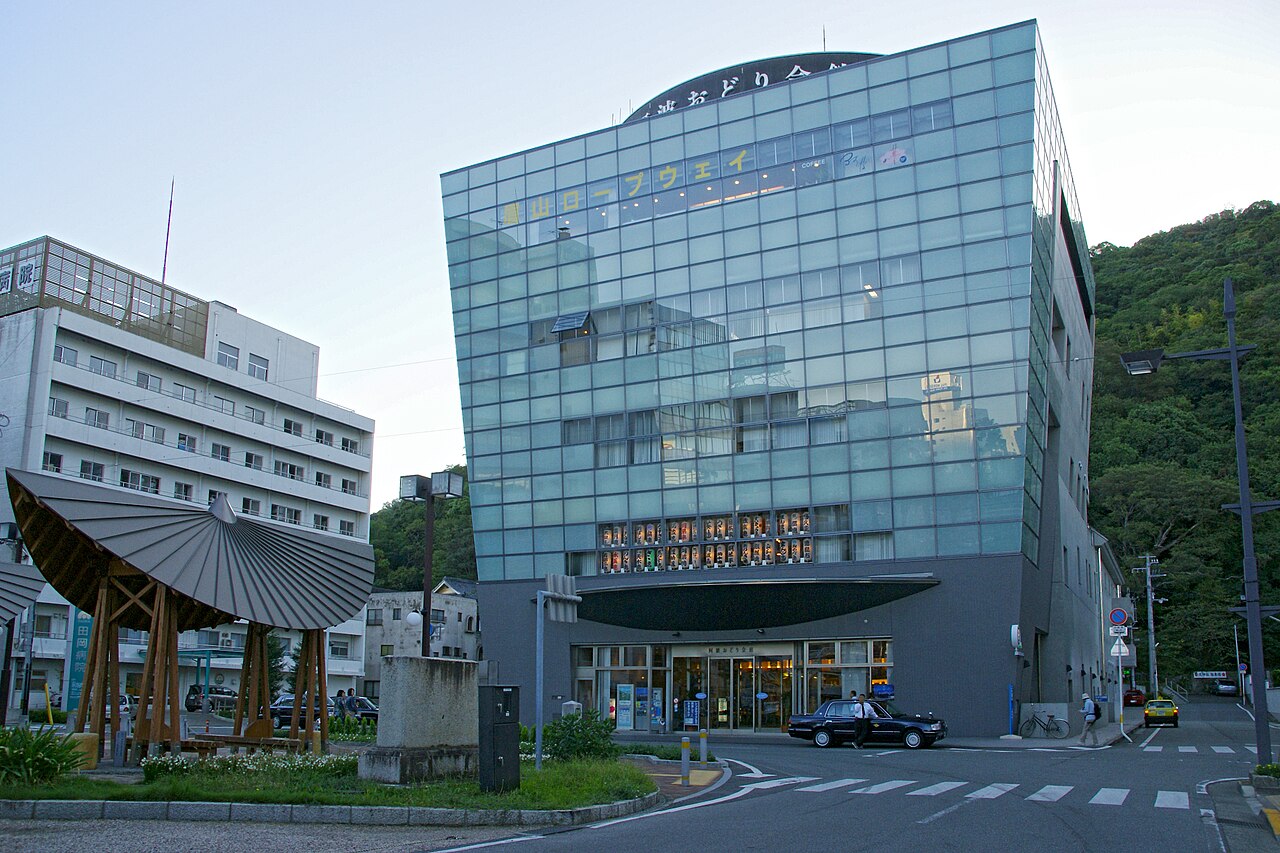
Awa Odori Kaikan sits in Shinmachibashi 2-chome at the base of Mount Bizan. Regular daily performances pause during the festival; in 2026, it held Obon Special Performances from 12 to 15 August instead, with second-floor shows at 11:00, 13:00 and 15:00, each lasting 50 minutes. Numbered-entry tickets went on sale only 90 minutes before curtain-up at ¥2,000 for high school students and adults and ¥1,000 for junior high pupils and younger (children aged 2 and under free on an adult's lap). Over those four days in 2026, Hazuki-ren, Honma-ren, Tensui-ren and Aoi-ren performed one day apiece. The regular 20:00 evening show does not run from 11 to 15 August, so look specifically for that year's "Obon Special Performances" if you want indoor shows during festival week.
Awagin Hall is in Aiba-cho 2-chome, whereas the similarly named outdoor "Awagin Minami-Uchimachi Enbujo" sits along a different stretch of the Shinmachi River. Searching only for "Awagin" in a map app makes it easy to head to the wrong venue. The theatre stage, outdoor street grandstands and Awa Odori Kaikan specials all operate under separate ticketing – particularly important in heavy rain when distinguishing between your original booking and newly bought indoor seats. Families who prefer seated comfort without a late night can watch an afternoon indoor show, catch one or two troupes at a free street stage at dusk, and head back to the hotel.
What to watch for in the choreography and music
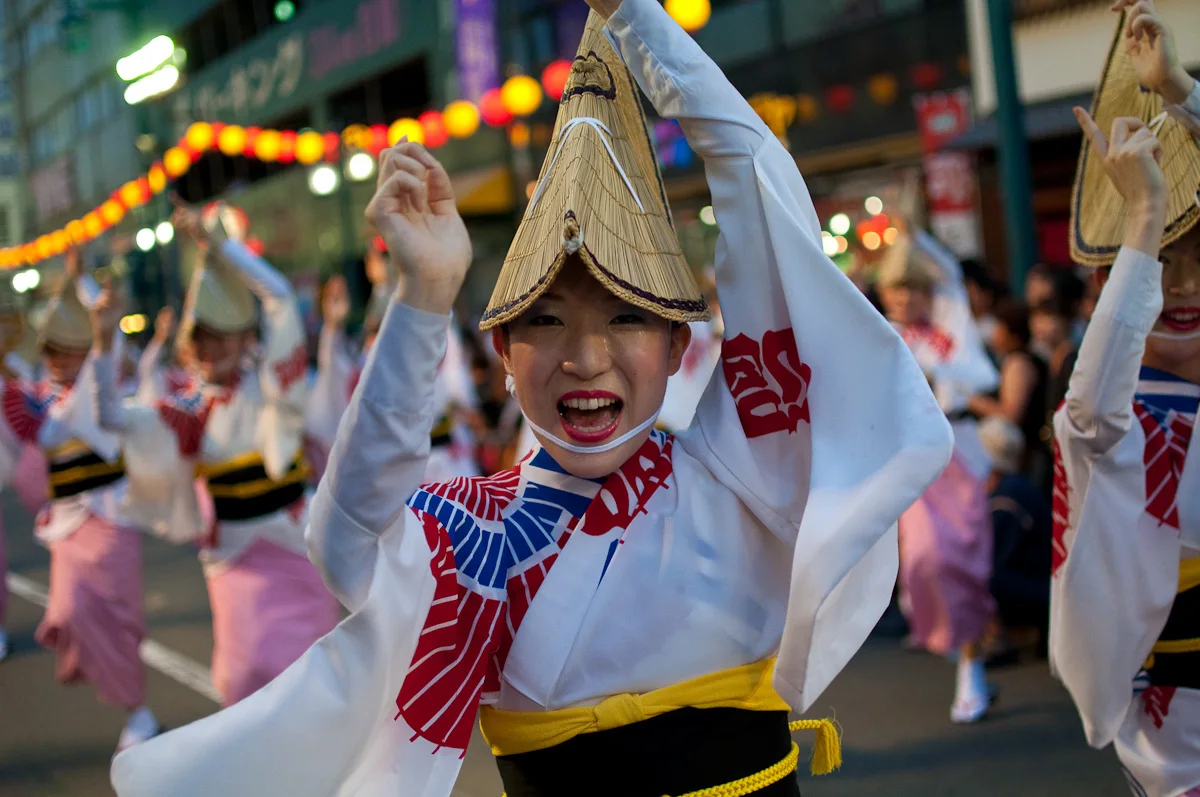
Each performing group is called a "ren", pairing dancers with their accompanying "narimono" musicians in one procession. As the first troupe enters, notice how the dancers divide into columns and hand over between front and rear sections; when the second arrives, listen for where the chants and drum accents land. Women's dance features tall geta wooden sandals, raised hands and woven amigasa hats whose brim angles immediately reveal the precision of the lines. Men's dance uses a lower centre of gravity, bent knees and props such as lanterns or round uchiwa fans. Even marching down the exact same stretch of street, different troupes vary their downbeats and pauses dramatically – it is well worth staying in one spot for at least two groups back to back.
The narimono ensemble combines taiko drums, kane gongs, bamboo flutes and shamisen. Listening while the musicians are still several blocks away picks out the steady underlying pulse; as the group draws level, you hear how the flute melody and dancers' calls layer over the percussion. Further back in an indoor theatre, the full geometric floor patterns stand out clearly, whereas standing kerbside outdoors lets you hear the snap of fans and the clack of wooden geta. If younger travellers start to feel every troupe looks the same, ask them to track one specific instrument or recurring hand gesture – within two or three groups, the differences jump out.
Festival organisers trace Awa Odori's roots to both celebrations marking the building of Tokushima Castle and older Buddhist memorial and Bon dances. To connect the castle town's layout with the festival, spend an hour or two at the Tokushima Castle Museum by day before walking along the Shinmachi River to orient yourself around the bridges and evening stage sites. When watching from the roadside at night, keep phones and cameras tucked close to your body so you never intrude on troupe entrances or musicians changing formation. Anyone keen to dance can look out for that year's "Niwaka-ren" drop-in troupe announcements – organisers publish separate assembly times and meeting points – and always leave generous room when passing groups rehearsing or performing on the street.
Where to stay: Tokushima Station, Mount Bizan or Takamatsu
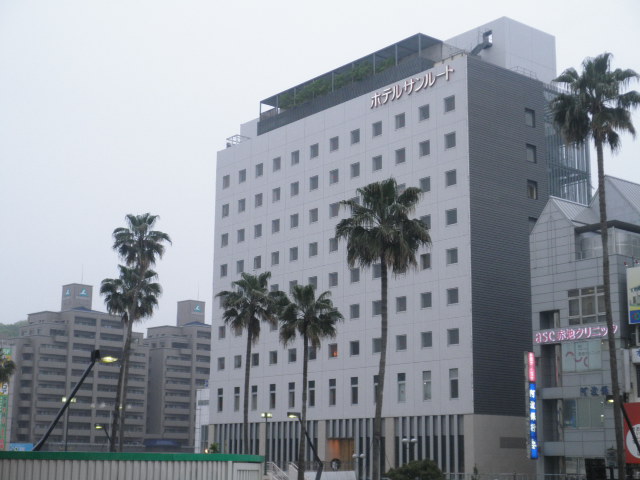
If you are arriving and leaving with luggage by JR train or highway bus, staying right outside Tokushima Station saves the most walking. Daiwa Roynet Hotel Tokushima Ekimae, for instance, is listed officially at around one minute from JR Tokushima Station and right beside the station bus terminal, making early airport or long-distance departures simple. Just southwest of the station, Agnes Hotel Tokushima is listed as a three-minute walk, shifts check-out to 10:00 during the 11–15 August festival period, and lets guests use the public bath next door at Agnes Hotel Plus. Weigh those festival-specific check-out times alongside room rates if you want an unhurried breakfast or morning train.
The Odo and Konyamachi area near the foot of Mount Bizan works well if you plan to watch Session 2 and stroll straight back to bed. Tokushima Washington Hotel Plaza in Odo 1-chome is about a 15-minute walk from Tokushima Station and roughly five minutes from Awa Odori Kaikan, making afternoon trips up Mount Bizan or late Konyamachi shows effortless, though hauling suitcases back to the station on check-out day takes slightly longer. Drivers should save the exact entrance to their hotel car park beforehand: festival road closures mean you need separate windows for dropping bags, parking and walking to the stands, rather than arriving right before curtain-up as streets shut to traffic.
If you base yourself in Takamatsu, plan the very last leg to your hotel first. Highway buses on the Kotoku Line depart from Stop 11 outside Tokushima Station to Takamatsu Station Highway Bus Terminal; Tokushima Bus publishes adult fares at ¥2,300 single and ¥4,200 return. Guests staying near Ritsurin Garden or Hyogomachi can also check intermediate drop-off stops along the bus route, while rail passengers should anchor their hotel search to Takamatsu or Ritsurin stations. If arriving in Takamatsu after midnight, verify late check-in procedures and factor in a taxi or walk if your accommodation lies far from the station.
Do not try to lock in restaurant tables and hotels at the same instant. Hold a refundable room and note its cancellation deadline first, then confirm your district once festival sessions, ticket confirmations and intercity transfers align. When prices in Tokushima and Takamatsu are close, factoring in return fares for a group and a midnight check-in makes Takamatsu worthwhile mainly if you already have plans there. For multi-generational groups booking two rooms, room occupancy limits, same-floor requests and when pushchairs can be left or collected matter more than straight-line distance on a map.
Day-trippers driving in should check the organisers' temporary car park and road-closure maps before setting off. In 2026, for example, the Municipal Shinmachi and Konyamachi underground car parks stayed open 24 hours, yet during festival road closures vehicles could only exit, not enter. Visitors aiming for Session 1 will save time by choosing one of that year's designated outer car parks and walking into the centre early rather than circling near the stages; anyone attending Session 2 must double-check closing times and allow enough margin after the 22:00 finish to clear the stands and walk back to the car.
Getting to Tokushima from Takamatsu, Kansai or Tokushima Airport
During the 2026 festival from 12 to 15 August, JR Shikoku ran extra Takamatsu-bound limited express trains from Tokushima Station: the Awa Odori No. 2 departing at 21:51 and arriving at 23:04, and the No. 4 departing at 22:47 and arriving at 00:01 the next day. Those times applied to the 2026 season, so treat them as a benchmark for what watching a full late session requires while waiting for JR Shikoku's next summer extra-train announcement. If you only secure the earlier departure, factor in the walk out, bridge crossings and station entry – if you stay until the 22:00 finish, a 21:51 train is impossible to catch even with a reserved seat.
When checking regular rail timetables from Tokushima to Takamatsu, look under JR Shikoku's Kotoku Line for the Uzushio limited express. Because both cities sit near the coast, double-check you are booking a Takamatsu-bound train rather than a service branching towards Naruto. You can mix bus and rail between your outbound and return journeys, as two single tickets give greater flexibility on arrival and departure times. On the standard Takamatsu highway bus timetable, the final coach leaves Tokushima Station at 19:50 and reaches Takamatsu Station Highway Bus Terminal at 21:21 – leaving just ten minutes from the 19:40 end of the 2026 early session, so count on leaving your seat early if you book it. Build rough plans on regular timetables first, then check JR and festival extra-transport pages once late-session tickets go on sale, always working backwards from the most conservative departure.
Highway buses link Tokushima with Umeda and Namba in Osaka (departing for Osaka from Highway Bus Stop 21 outside Tokushima Station) as well as Sannomiya and Shin-Kobe in Kobe (Stop 22). Because Sannomiya has several differently named bus terminals, check the exact boarding point printed on your ticket. For day-trippers from Kobe or Osaka, an afternoon indoor performance is easiest to fit in, adding Session 1 outdoors only if the final coach timing works. Highway coaches can hit delays across the bridge crossings and city-centre traffic, so book both outbound and return tickets before locking in fixed-time shows; if you have an early Shinkansen or flight the next morning, stay overnight in Tokushima after a late session and take a connecting morning service.
From Tokushima Awaodori Airport into the city, take the airport limousine bus from Stop 1 outside the ground floor; it reaches Tokushima Station in around 30 minutes, with return buses to the airport leaving from Stop 15 outside the station. Buses are timed to flight arrivals, so verify your connecting departure on the timetable beforehand. Tokushima Bus announced that from 1 December 2026, adult fares rise to ¥1,000 when paying by cash or at ticket machines, while tapping on board with a transit IC card or contactless bank card remains ¥800. If you are heading straight to Naruto instead, local buses towards Naruto depart from airport Stop 2 rather than Stop 1.
Heat, rain and accessibility tips
Outdoor sessions begin in early evening in August, often while the sun is still up as you queue to enter. Spend the midday heat indoors at Awa Odori Kaikan, a museum or your hotel, and eat and hydrate before walking to the stands. If someone in your group tires easily, let them rest near the station while others locate the exact gate and toilets beforehand. Night-time grandstands often involve climbing flights of steps from the exit back to street level, so weigh seating zones by ease of exit when booking. Children sensitive to loud taiko drumming may appreciate ear defenders – or test the volume from the outer edge of a street square first.
If heavy rain moves in, check the organisers' official status updates for that day first. Should a paid outdoor session be cancelled, keep your physical tickets and booking reference and follow the refund instructions of your original sales channel; Ticket Pia procedures vary depending on payment method and whether tickets have already been collected. Switching indoors requires buying separate tickets for "Yume no Butai Matsuribi" or Awa Odori Kaikan special performances, subject to availability. If you have already watched a daytime show and all outdoor sessions are rained off, Amico by the station offers dining and shelter while checking transport options – in foul weather, stay close to the station or your hotel rather than crossing bridges to wait by the river.
For an easy daytime indoor alternative, the Tokushima Castle Museum in Tokushima Central Park generally opens 09:30–17:00 (last entry 16:30). Permanent and thematic exhibitions cost ¥300 for adults, ¥200 for high school and university students, and are free for junior high school pupils and younger, including access to the Former Tokushima Castle Omote-Goten Garden; special exhibitions carry separate fees. It normally closes on Mondays (or the following weekday if Monday is a public holiday) and between temporary exhibitions. Walking over from Tokushima Station, pick a lunch spot along your route towards the evening stage so you avoid backtracking across busy bridges through the pre-festival crowds.
Visiting Awa Odori Kaikan and Mount Bizan outside August: a half-day plan
Outside the August festival, Awa Odori Kaikan stages daily daytime shows by its resident troupe, Awa no Kaze, at 11:00, 14:00, 15:00 and 16:00 (40 minutes each; ¥1,300 for adults, ¥700 for elementary and junior high school pupils). The regular evening show starts at 20:00 (50 minutes; ¥1,600 for adults, ¥800 for elementary and junior high school pupils) and rotates through renowned local troupes. Both daytime and evening shows include an audience participation segment where adults and children can learn the basic steps. Individual travellers and small groups simply buy tickets on site before showtime, as advance group reservations apply only to parties of 20 or more; if you want to catch a specific troupe, check the evening performance roster before choosing your date.
The third-floor museum normally opens 09:00–17:00 (last ticket sales 16:45; ¥500 for adults, ¥300 for elementary and junior high school pupils). Browse the dance history, costumes and instruments at your own pace, or buy a show-only ticket if you are short on time. For the 14:00 performance, arriving in the morning for lunch and visiting the museum beforehand is far less rushed than trying to squeeze it in after the 16:00 show. The complex closes on the second Wednesday of February, June, September and December (moving to the following day if a public holiday) and from 28 December to 1 January, though after 16:45 on normal days you can go straight up to the fifth-floor ropeway station. Over New Year, check the evening schedule before booking outgoing transport, as the stage, museum and ropeway follow separate holiday timetables.
The Bizan Ropeway lower station is on the fifth floor of Awa Odori Kaikan, taking roughly six minutes to reach the summit. Fares are ¥900 single / ¥1,500 return for junior high school pupils and older, and ¥500 single / ¥800 return for elementary school pupils. Standard hours are 09:00–21:00 from April to October and 09:00–17:30 from November to March, with occasional extensions to 19:30 on selected dates in November and December plus early sunrise openings on New Year's Day. In summer, save the summit for cooler late afternoon or early evening light; in winter, head up the mountain first, dine near Shinmachi Bridge and return for the 20:00 show, as the ropeway closes earlier. If high winds suspend service, linger in the museum or take an early dinner before returning for the performance.
Families fitting all three stops into half a day can follow a neat sequence: the 11:00 daytime show, the museum, lunch and then the ropeway. On clear days, the summit looks out over the Yoshino River, its estuary and towards Awaji Island; in overcast weather, spend longer downstairs in the exhibits. If someone in your group only wants to see the dance, others can easily ride up Mount Bizan the next day when return times are easier to control. For a breakdown of separate and combined exhibit and ropeway passes, read our Awa Odori Kaikan and Mount Bizan tickets guide.
Linking one night in Tokushima with Naruto and Takamatsu
On a single-night trip from Kansai, drop your bags near Tokushima Station as soon as you arrive. Spend the afternoon at an indoor show at Awagin Hall, or take a slower pace with lunch and a stroll round the castle park to save energy for the evening. Those booked for Session 1 can eat near their hotel first, then walk to Shinmachi Bridge for a free street troupe afterwards before heading back the way they came. Visitors holding Minami-Uchimachi Session 2 tickets should cross the river early to find their gate, watch a troupe at a nearby square, and return straight to bed after the grand finale rather than trying to hunt for late transport uphill. Check station locker locations, check-out times and ticket counters the night before if catching an early departure.
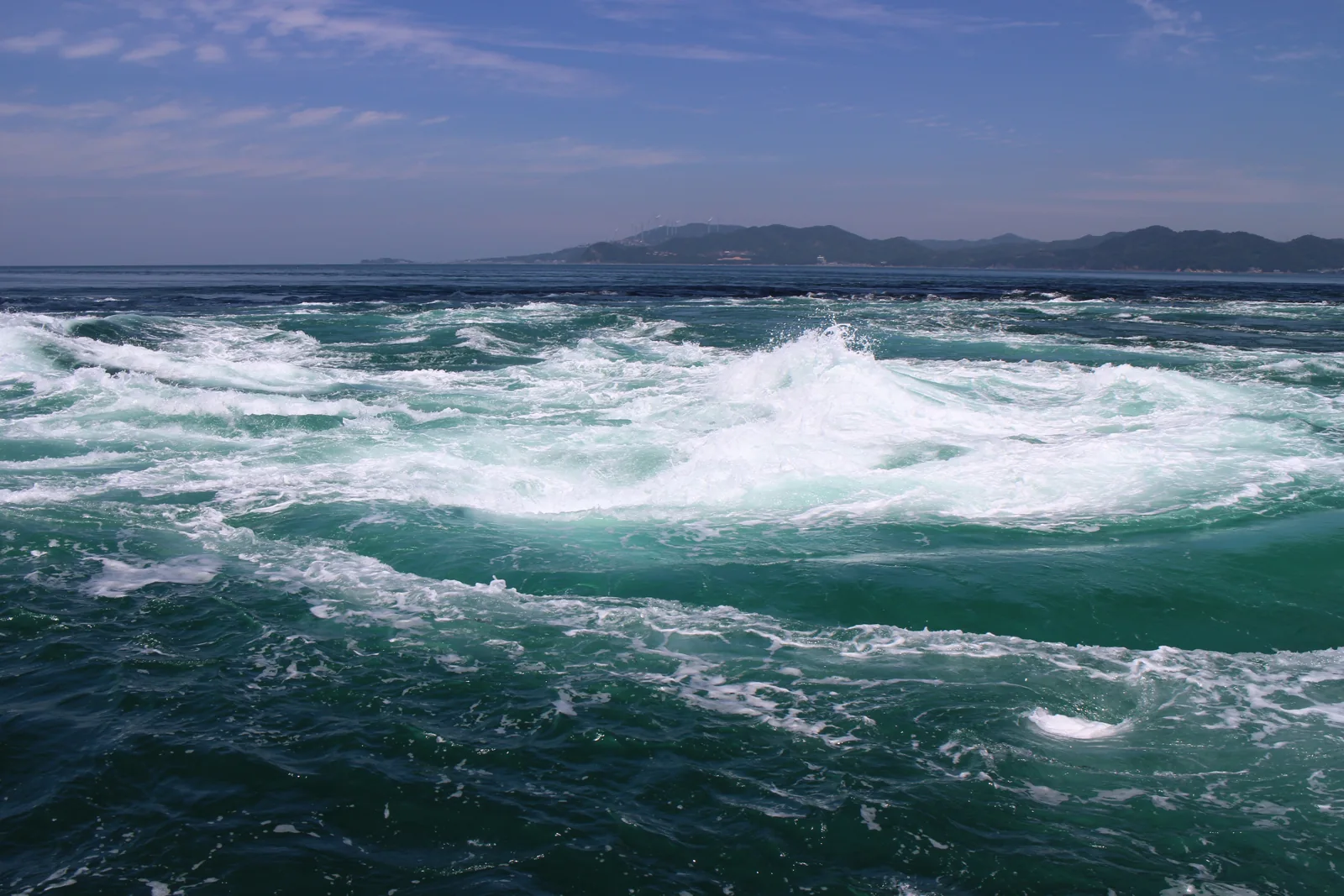
If you have two nights and want to see the Naruto whirlpools, put your priority paid Awa Odori session on night one and save the coast for day two when the tide suits. Catch a Naruto Park-bound bus from Tokushima Station, or check rail-to-bus connections via JR Naruto Station. Families can give Naruto half a day, return to Tokushima for an afternoon rest, and choose a flexible free stage that evening where you can leave whenever children tire. Tide peaks govern boat sailings, so consult our Naruto whirlpools guide when planning your timing; if peak tide clashes with Session 1, shift the coastal excursion to the next day or book Session 2 within walking distance of your hotel.
Travellers using Takamatsu as their sole base should arrive in Tokushima earlier in the day so there is time to eat, watch the dancing and get back to the station smoothly. Those catching an afternoon indoor show can dine back in Takamatsu, whereas anyone staying for Session 1 outdoors is better off eating dinner in Tokushima first. Leaving Takamatsu city sightseeing for the following day is far less punishing than rushing Ritsurin Garden at dawn, crossing to Tokushima for the afternoon and returning at midnight. On a night when you want to stay to the very end of the grand finale, compare the final departure time against your exit time before buying rail or bus tickets – if there is only a 10-to-15-minute margin, shift one hotel night from Takamatsu to Tokushima and stroll back along the Shinmachi River after the show.
A few useful answers
When is the 2027 Tokushima Awa Odori Festival held?
Tokushima City lists the festival's traditional annual dates as 11 to 15 August. In 2026, 11 August hosted an indoor eve stage and outdoor street dancing began on the 12th; exact 2027 programmes and ticket release dates will be announced separately by the organisers.
Can you watch Awa Odori in Tokushima without a ticket?
Yes. Free outdoor street stages and open dance squares operate throughout the festival. In 2026, free venues included the Ryogoku-honmachi and Shinmachi Bridge stages alongside the Shinmachi Bridge East and Ryogoku Bridge South dance plazas.
Can I stay in Takamatsu and still watch Tokushima's late session?
Only if that year's schedule includes a late service after the 22:00 finish. In 2026, JR Shikoku added a 22:47 limited express from Tokushima arriving in Takamatsu at 00:01, whereas the final regular Takamatsu-bound highway bus departs Tokushima Station at 19:50.
What is the difference between daytime and evening shows at Awa Odori Kaikan?
Regular daytime shows are performed by the resident troupe Awa no Kaze and run 40 minutes; the 20:00 evening show lasts 50 minutes and rotates through guest troupes. Both include audience participation. During the August festival week, special Obon performances replace the regular 20:00 show.
If it rains, can outdoor grandstand tickets be used for indoor performances instead?
No, indoor performances are ticketed separately. If an outdoor session is cancelled, follow your original ticket vendor's refund notice and purchase separate tickets for Awagin Hall or the Awa Odori Kaikan special shows if seats remain.
Official information and references
Sources used in this guide.
- Tokushima City – Awa Odori and Annual Festival Dates
- Awa Odori Executive Committee – Festival Updates, Origins and Visitor Information
- Awa Odori Executive Committee – 2026 Schedules, Venues and Seating Zones
- Tokushima City – 1 July 2026 Bulletin: Festival Ticket Sales and Dynamic Pricing
- Awa Odori Executive Committee – 2026 Car Parks and Traffic Restrictions
- Awa Odori Kaikan – Daytime & Evening Shows, Facilities and Bizan Ropeway
- Awa Odori Kaikan – Individual Tickets and Group Bookings
- Awa Odori Kaikan – Fares, Closures and Facility Opening Hours
- Awa Odori Kaikan – 2026 Obon Special Performances
- JR Shikoku – 2026 Summer Extra Train Announcements
- Tokushima Bus – Takamatsu Line Timetable, Stops and Fares
- Tokushima Bus – Osaka Highway Bus Route and Boarding Stops
- Tokushima Bus – Kobe Highway Bus Route and Boarding Stops
- Tokushima Awaodori Airport – Ground Floor Access and Bus Stops
- Tokushima Bus – Airport Limousine Bus Fare Revision (December 2026)
- Daiwa Roynet Hotel Tokushima Ekimae – Station and Bus Access
- Agnes Hotel Tokushima – Festival Check-out Times and Public Bath
- Tokushima Washington Hotel Plaza – Location and Guest Information
- Tokushima City – Tokushima Castle Museum Visitor Information
- Tourism Shikoku – Awa Odori Dance Styles and Narimono Instruments
- Ticket Pia – Cancellation and Postponement Refund Procedures