Book a shared taxi from Bitchu-Takahashi Station to Fuigo Pass, then walk to the surviving keep, Niju Yagura and inner bailey. Return at 13:20 for Raikyuji Garden. Includes autumn 2026 path closures, fares and separate transport to the sea-of-clouds viewpoint.
- Region & Focus
- Takahashi
- Reading Scope
- 28 min read · 11 chapters · 4 Q&As
- Official Verification
- 18 official sources checkedUpdated 22 November 2026
- Key Topics
- ItinerariesChugoku & Shikoku
Chapter Route Map (tap any stop)
- Book the return taxi before choosing your uphill departure
- Three drop-off points for three different trips
- Autumn 2026 logging closures: use the published walking diversion
- From Fuigo Pass to the inner bailey: make the climb part of the visit
- Inside the keep: the hearth, living chamber and upstairs shrine
- Beyond the keep: Niju Yagura’s rock base and reconstructed gates
- Kobori Enshu, the town garden and the castle’s preservation
- Calculate admission separately, then decide what to visit afterwards
- Return at 13:20 and spend the afternoon with Raikyuji’s borrowed scenery
- For the sea of clouds, book a separate morning return trip
- The castle visit ends when you reach Fuigo Pass again
- Quick Q&A
Book the 10:00 sightseeing shared taxi from JR Bitchu-Takahashi Station to Fuigo Pass. From there, the keep is still about 20 minutes away on a 700-metre mountain path. For a first visit, spend the morning at the castle, book the 13:20 taxi back from Fuigo Pass, then visit Raikyuji Garden after lunch. This secures transport in both directions and gives you time for the surviving timber keep, the Niju Yagura turret on its natural boulder base, and the dry landscape garden below. To photograph the castle above a sea of clouds, book a separate early-morning viewpoint trip: the viewpoint is on another peak.
Book the return taxi before choosing your uphill departure
Bitchu Matsuyama Castle stands on Mount Gagyu in Takahashi, Okayama Prefecture. Its keep is near the summit, at about 430 metres above sea level. Start at JR Bitchu-Takahashi Station. Vehicles can take you as far as Fuigo Pass at the eighth station; you must walk the final stretch. Save your energy for this path and the castle. The official estimate for walking all the way from the station to the keep on the usual route is about 90 minutes. That makes a substantial difference if you also want to explore the town that day.
Open the Takahashi City Tourism Association’s castle transport page for the 2026 operating year. Choose both departures before planning your arrival at the station. This timetable runs from 1 April 2026 to 31 March 2027. The shared taxi operates daily, leaving the station tourist information centre at 10:00, 11:30, 13:00 and 14:20. Return departures from Fuigo Pass to Bitchu-Takahashi Station are 11:50, 13:20, 14:40 and 16:10. The intervals vary. Remembering only that there are four services a day will not give you a taxi whenever you reach the stop.
For a first visit, choose 10:00 uphill and 13:20 back. The 3 hours 20 minutes between them cover the ride, both walks, the castle visit and waiting for the taxi. The castle allows about two hours for a visit starting and ending at Fuigo Pass. This pairing gives more time than returning at 11:50, so you can read the displays inside the keep and then see Niju Yagura. If you walk quickly, use the spare time to identify the reconstructed gates and low turrets in the inner bailey, then return early to the agreed pick-up point.
Book by 17:00 the previous day. Takahashi Tourist Information Centre is on 0866-22-8666, open 9:00–17:00. For this article’s 10:00 outward and 13:20 return plan, call to request a later return service. The operator’s published product description accepts such requests subject to the season and bookings. Give the date, party size and both departures. Obtain the booking result for both legs before fixing other plans, and keep the meeting instructions. The return pick-up is “ふいご峠” (Fuigo Pass), not the keep. Include children who occupy seats because the shared taxi charges per seat. The association’s linked Asoview return package pairs 10:00 outward with 11:50 back by default; 11:30 outward is paired with 13:20 back. That online product accepts credit card, PayPay or Paidy. Customer cancellation the day before, on the day, or a no-show incurs 100% of the booking amount, calculated before coupons and points are deducted.
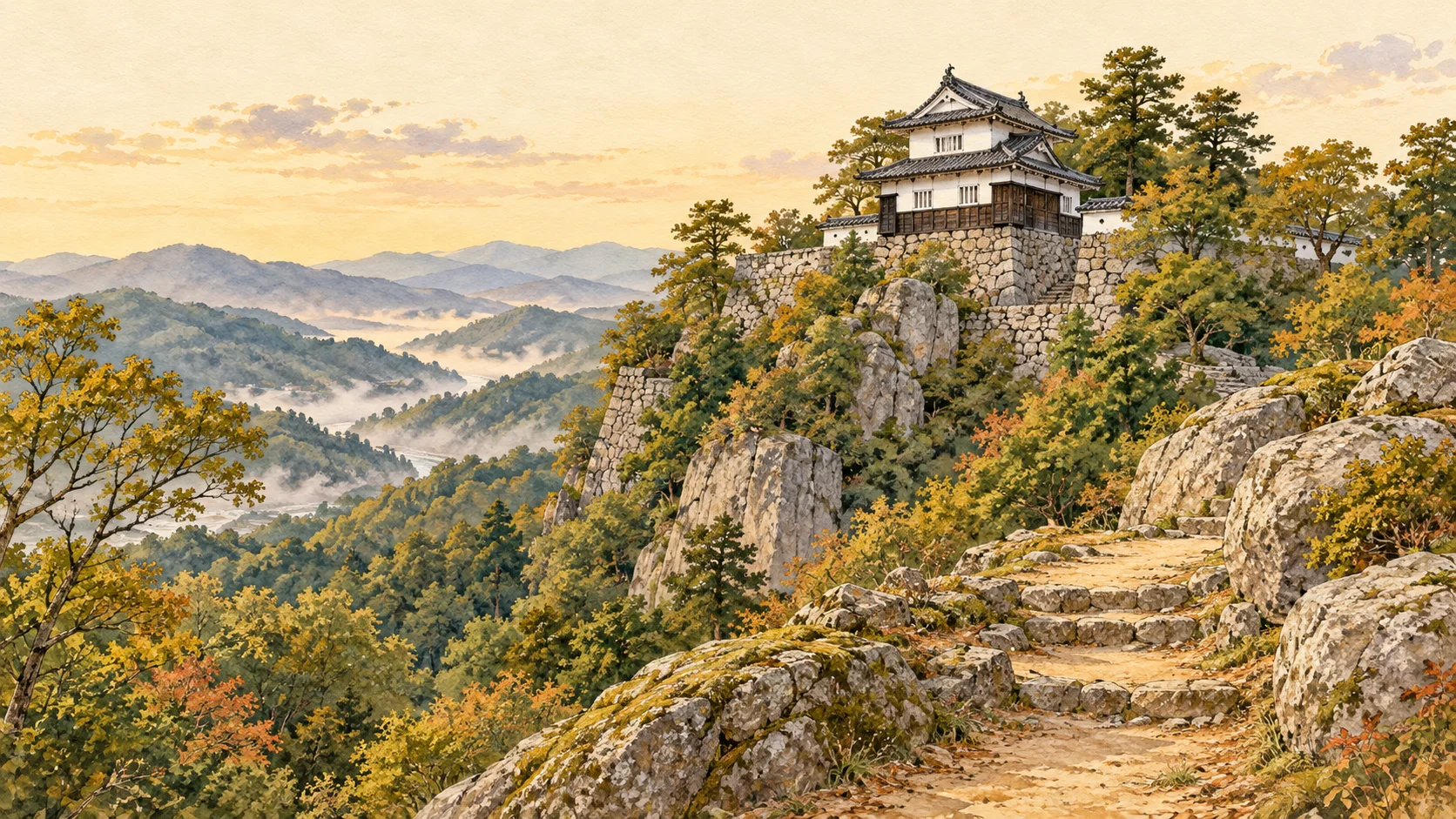
Book a shared taxi from Bitchu-Takahashi Station to Fuigo Pass, then walk to the surviving keep, Niju Yagura and inner bailey. Return at 13:20 for Raikyuji Garden. Includes autumn 2026 path closures, fares and separate transport to the sea-of-clouds viewpoint.
Three drop-off points for three different trips
Fuigo Pass is the end of the castle access ride. The 700 metres from here to the keep take about 20 minutes. It looks short on a map, but it is a mountain path. Save the Japanese name ふいご峠 on your phone as well as the castle name. This is where you return for collection, and you can show the name when arranging transport. Before climbing, note the drop-off point and the signs to the keep. On the way down, follow the approach back to the same place.
Shiromachi Station is at the fifth station and is the lower terminal of the castle access shuttle bus. Another association transport page calls it Shiromibashi Car Park. This bus links the fifth and eighth stations; the sightseeing shared taxi starts at the railway station. Their stops, fares and purposes are separate. If you have booked the shared taxi from the station to Fuigo Pass, use that booking and budget for that service. You do not need to add a transfer to the hillside bus.
The sea-of-clouds viewpoint is a separate destination again. The castle’s viewpoint access page states that it is on a different peak from the keep. From there, the castle appears across the valley in your photograph. At the keep itself, you see the buildings and castle spaces close up. Choose the view you want before booking transport. Putting both places into one walking route on your phone does not arrange an early-morning transfer or a mountain hike.
You can spend a day in Takahashi visiting only the castle, or only the viewpoint, with a walk through the town. Choose the Fuigo Pass approach if your party can manage a short mountain path and enjoys timber buildings, doors and windows. If the distant view is the priority, arrange the early-morning viewpoint transport first. Make this choice before reaching a car park and discovering that your booking serves the other peak.
Autumn 2026 logging closures: use the published walking diversion
The castle notice dated 23 September 2026 announces logging work on the path between the area above Takahashi High School and Fuigo Pass. It is closed all day on 12–16 October, 30 October, 16–19 November and 23–26 November 2026. The notice says that the keep remains open and marks the walking diversion in blue on its map. If visiting on one of these dates, save the map with the dates and follow the blue route.
The work affects the path above the high school up to Fuigo Pass. If walking all the way from the station, do not follow the closed path. The 90 minutes on the general access page refers to the usual route; allow extra time for the diversion. If you have booked a shared taxi to Fuigo Pass, follow its meeting, drop-off and collection arrangements, then walk from Fuigo Pass to the keep.
The castle visitor guide says that the disaster access road is for fire, ambulance, management and other authorised vehicles. General vehicles cannot use it, though pedestrians can. If driving or using an ordinary taxi, let the licensed operator and site staff direct you onto permitted roads. Do not treat the walking diversion as a vehicle shortcut. Keep Fuigo Pass as the mountain pick-up and drop-off point. The final approach to the castle remains on foot.
For an autumn day-trip example, 1 November 2026 is outside the logging closure dates in this notice. You can plan around the daily shared taxi, leaving at 10:00 and returning at 13:20, with the October–March castle opening hours. Change the date to 16 November and the path works must be addressed first. Change it to 30 December and the castle is closed. Set the date before buying train tickets or booking the shared taxi, because it determines where you can walk and whether you can enter.
From Fuigo Pass to the inner bailey: make the climb part of the visit
The castle access page gives about 20 minutes and 700 metres from Fuigo Pass to the keep. Allow for station arrival, waiting and photographs separately. Sort your belongings after leaving the taxi, then climb the approach. Start your keep visit once inside the castle. With children or slower-walking older adults, book a longer gap before the return ride so that rests fit naturally into the day, rather than trying to match the official 20-minute estimate throughout.
Wear shoes suitable for walking and carry a small rucksack that leaves both hands free. The tourism association describes the approach as an earth path. Takahashi City warns that although the mountain path from Fuigo Pass to the inner bailey is maintained, parts can be slippery. The city’s castle introduction also notes steps at Otemon leading to the third bailey. Everyone must be able to manage slopes and steps, with rests included in the descent time. The shuttle bus page advises preparing drinking water at the Shiromachi Station boarding point. If travelling directly from the railway station, bring water and simple provisions before leaving, and leave suitcases below.
On the approach, look at how the natural mountain meets the built defences. The castle introduction highlights the use of Mount Gagyu’s granite and timber in construction. The huge natural rocks beneath Niju Yagura make this clearer once you reach the inner bailey. Look at the ground, walls and buildings above, as well as the top of the keep. Their relative positions explain why the castle takes this form on the mountain.
For a guided visit, the association lists tours starting at Fuigo Pass at ¥500 per person, with a minimum of two people. Times are 10:10–11:30 or 13:10–14:30. Book at least a week ahead with the Takahashi branch on 0866-21-0461. Arrange this separately from the station transfer. If your party likes architecture, use the tour as the main visit and leave time afterwards for timber details or photographs in the inner bailey. The guide fee for two is ¥1,000; transport and admission are separate. Tell the booking contact your return taxi time.
The official visitor guide allows about two hours for the return walk from Fuigo Pass and sightseeing. Treat this as one complete mountain visit: climb, enter the keep, return to the inner bailey for gates and turrets, then descend to the pick-up point. If time is short, remove extra hiking branches first. The descent still takes time; do not wait until the taxi departure to leave the keep.
Inside the keep: the hearth, living chamber and upstairs shrine
Bitchu Matsuyama Castle is one of Japan’s twelve surviving castle keeps, and the only mountain castle among them. The castle history page links the present keep, Niju Yagura and the earthen wall east of the third low turret to Mizunoya Katsumune’s major works of 1681–1683. Keep these layers separate: the castle site is older, while the main surviving buildings belong to the Edo period. References to the Kamakura, Sengoku and Edo periods then become easier to place as either site history or the history of buildings still visible.
The official keep description identifies a timber building with a full tiled roof, two external tiers and two floors. Start with the ground-floor sunken hearth, about 180 centimetres long and 90 centimetres wide. The castle explains that it provided cooking and heating during a siege. Such a large hearth inside a timber building shows that the keep included the equipment needed to sustain a defence, as well as a high lookout.
Next find the Shozoku-no-ma. The official description identifies it as the chamber for the lord’s family when surrounded by enemies and defending the castle. Stones packed beneath the floor closed the gaps. Think of its position together with the hearth to understand life under siege. These explanations concern wartime use. The Onegoya residence below the mountain was a separate space for the lord’s everyday life; the rooms in the keep were not all normal living quarters.
Stop at the lattice windows too. Their square wooden bars are set with their corners facing outwards. This makes it harder to see inside from outside, while giving those inside a wider view out. They are also called warrior windows. Look at the bars’ shape and orientation, then stand beside a window to connect the explanation to the view. A photograph of the frame, bars and interior shadows can record more of this keep’s character than another distant view.
Upstairs is the shrine platform installed during Mizunoya Katsumune’s 1683 works as a place of worship for the domain’s protection. The official account lists three sacred swords and deities including Amaterasu Omikami and Haguro Daigongen. Moving from the hearth and chamber to the shrine changes the focus from sustaining a siege to prayers for wellbeing. Old timber also retains marks from adzes and spear planes. If you enjoy woodwork, leave time to examine the different lines these tools left on the surfaces.
Beyond the keep: Niju Yagura’s rock base and reconstructed gates
Outside, distinguish surviving structures from modern reconstructions. The inner bailey description lists the keep and Niju Yagura as surviving buildings. The fifth and sixth low turrets, South Gate, East Gate and some earthen walls were reconstructed in 1997. Look for age and repair marks on the surviving timber. The reconstructed parts help explain the original boundaries and how gates and buildings enclosed the inner bailey.
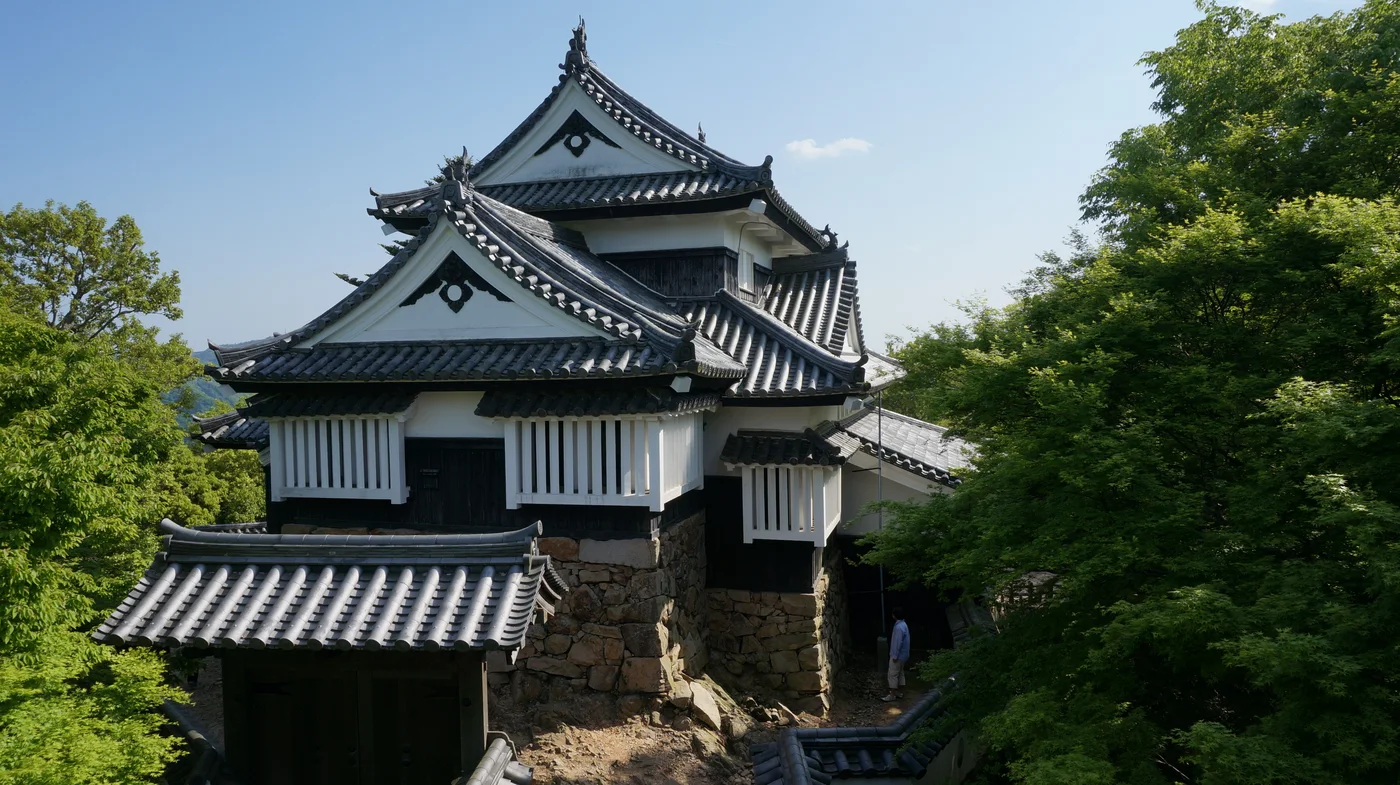
Niju Yagura is another nationally designated Important Cultural Property and, like the keep, a surviving building. It has two tiers and two floors on a base of huge natural rocks, defending the rear of the keep. View the rock and building together. The mountain was not entirely cut into a level platform; it became the foundation supporting the structure. The exposed rock on the climb connects directly with the architecture here.
The turret’s north and south entrances lead towards the back of the keep and the rear enclosure. The castle suggests that it may also have formed part of an escape route from the keep in an emergency. Compare both ends of the building with the keep’s rear to see how defence and movement could share one turret.
The Honmaru East Gate is east of the keep, a service entrance and the only sliding gate in the inner bailey. Udegi Gate stands beside the front of Niju Yagura as the bailey’s rear gate. Their different opening mechanisms and positions show how the enclosure had more than one entrance. Compare them with Roji Gate beside the sixth low turret: this small reconstructed gate is set into the earthen wall, with a scale and position unlike the main entrance. It helps explain the castle’s main and secondary passages.
Choose the 13:20 return if you want more time here. Arriving at 10:00 and leaving at 11:50 usually requires a choice between the keep and outdoor details. Check the time before leaving the inner bailey, keeping the descent and taxi wait within the final part of the visit.
Takahashi City Tourism Association introduces Bitchu Matsuyama Castle through a town map, location footage and the feline castle lord.
Kobori Enshu, the town garden and the castle’s preservation
The castle’s origins reach back to a Kamakura-period fort on Omatsuyama. Its centre later moved to Komatsuyama, the main area visited today. This explains the Omatsuyama Castle Ruins on the official hiking page: they extend the visit into the site’s earlier history. Fuigo Pass, the inner bailey and the keep already give a first visit a clear focus. To explore the earlier site, add hiking time and adjust the return booking.
Continue the story of Kobori Enshu after descending. The castle history page describes his work here and introduces Raikyuji’s dry landscape garden. The city dates the garden to about 1605, an early work by Enshu. The surviving keep, by contrast, is linked to the 1683 rebuilding. These separate dates give the afternoon garden its own purpose, beyond adding another historic site after the climb.
After the Mizunoya family, the Ako Asano side took responsibility for receiving the castle in 1694. Oishi Kuranosuke, known from the Chushingura story, took part in the handover. The castle history records his negotiations with Bitchu Matsuyama chief retainer Tsurumi Kuranosuke, the bloodless transfer and about a year as castle administrator afterwards. The mountain path also has a legendary “Oishi Kuranosuke sitting stone”. Place that name within his role in the handover.
In the late Edo period, Yamada Hokoku promoted domain reforms under Lord Itakura Katsukiyo. During the political upheaval of 1868, Yamada and others chose a bloodless surrender. Following the 1873 castle abolition order, the Onegoya residence below was demolished and its land became a school. The mountain keep and turrets survived because their location was inconvenient. The terrain that now requires a ride and a climb is also one factor the castle cites in explaining their survival.
Survival did not mean uninterrupted good condition. The castle history page describes how Takahashi Middle School history teacher Shinno Tomoharu repeatedly climbed to measure the keep, recorded its structure and dimensions, and published his research. This encouraged local groups to pursue repairs. In 1939 the keep was dismantled and repaired and the earthen walls restored; students carried many roof tiles up the mountain. Read this preservation story after looking at the timber to understand how survival, surveying and repair shaped what you see today.
Calculate admission separately, then decide what to visit afterwards
As of 29 October 2026, keep admission is ¥500 for adults and ¥200 for primary and junior high school pupils. The castle closes from 29 December to 3 January. April–September opening is 9:00–17:30, with last entry at 17:00. October–March opening is 9:00–16:30, with last entry at 16:00. A 14:20 uphill taxi in the winter half of the year leaves less time for walking, tickets, the interior and descent. Choose a morning departure if you want to read the keep and bailey displays carefully.
The shared taxi costs ¥1,000 per person each way, including children who occupy seats. One adult’s return ride and castle admission total ¥2,500; two adults total ¥5,000. For two adults and one primary school child occupying a seat, transport and castle admission total ¥7,200. Keep fares and admission separate in your budget so the ¥1,000 taxi fare is not mistaken for a ticket that includes entry.
The castle also sells the Bitchu Takahashi Exploration combined ticket. The ¥1,000 three-site version covers Bitchu Matsuyama Castle, the two samurai residences and Raikyuji Garden. The ¥1,500 five-site version adds the local history museum and Yamada Hokoku Memorial Museum. “Three sites” counts the two samurai residences as one group, so do not infer coverage from the number of buildings. Compare this ticket only if you plan to visit several interiors after descending.
For only the castle and Raikyuji Garden, separate adult tickets cost ¥500 plus ¥400, or ¥900, less than the ¥1,000 three-site ticket. If you take the morning shared taxi, have lunch below and leave the afternoon for one garden, individual tickets suit this short route. If adding the samurai residences, compare their opening hours with the time left. A combined ticket is useful only when you can actually visit the places it covers.
Free admission has specific eligibility. The castle lists Takahashi residents aged 65 or over, local primary and junior high school pupils on designated school holidays, and disability certificate holders with one assistant, among its conditions. Age alone does not give an overseas visitor Takahashi residency status. Calculate each family member’s ticket by their eligibility, and bring proof when using a disability concession. Raikyuji has its own adult, junior/senior high school and disability concession rates; apply those separately when buying garden admission.
Return at 13:20 and spend the afternoon with Raikyuji’s borrowed scenery
With the 10:00 uphill and 13:20 return from Fuigo Pass, have lunch after reaching town, then visit Raikyuji Garden. You will not need to interrupt the castle visit to find lunch on the mountain, and the meal provides a rest between the two sites. The afternoon shifts from climbing to sitting with a garden, an easier rhythm after earth paths and castle interiors. If especially tired on returning, lunch can be the end of a complete day; leave the garden for another visit.
Takahashi City’s Raikyuji introduction gives the address as 18 Raikyuji-cho, Takahashi. It opens daily, 9:00–17:00, about ten minutes on foot from Bitchu-Takahashi Station. Admission is ¥400 for adults and ¥200 for junior and senior high school students. Disability certificate holders and one assistant receive concession rates of ¥150 for adults and ¥100 for junior/senior high students. Allow around 40 minutes to view and rest in the garden as a suggested stay, with travel and ticket purchase added separately.
Start with distant Mount Atago, then bring your gaze into the garden. This Zen temple garden is a dry landscape in the Horai style. It borrows the mountain as a backdrop, uses white sand ripples for the sea, and places crane and tortoise island rock groups at its centre. Compare this with the natural rock foundations at the castle: here stones become islands and establish distance across sand. The same materials, stone and mountain, serve a different purpose at a different viewing distance.
The massed, clipped satsuki azaleas represent ocean waves and form the garden’s background. In autumn, look first at their trimmed outlines and the rock positions, then at the day’s leaf colours. The garden has substance beyond its flowering season. Find a view that includes the distant mountain, clipped shrubs and sand. Pause there, then look more closely at the sand patterns and island stones.
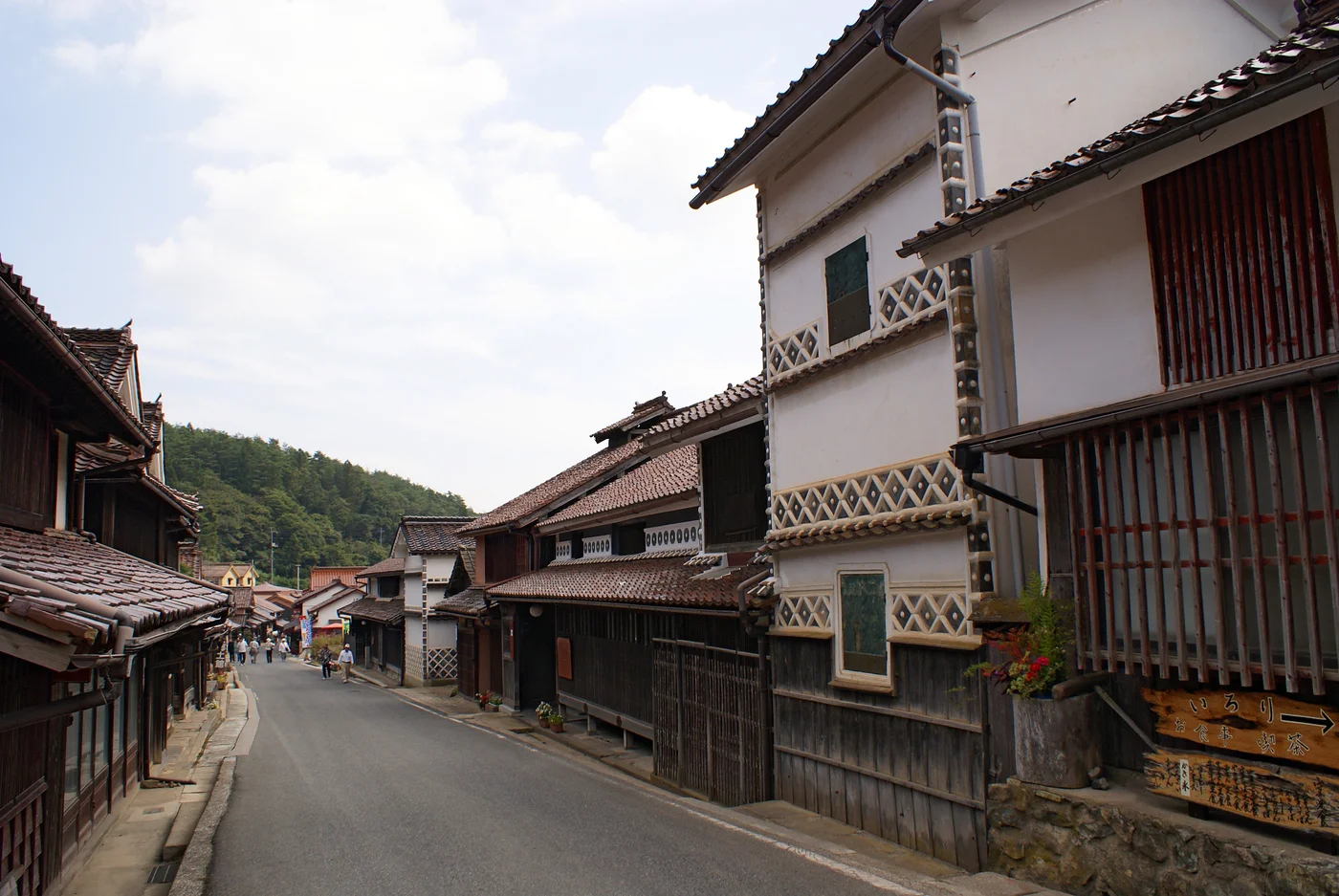
If you want another walk below the castle, choose either Ishibiyacho or the Konyagawa riverside. The castle’s town guide describes about 250 metres of samurai streetscape in Ishibiyacho, with white-walled longhouse gates, earthen walls and two residences open to visitors. The street itself can be the focus if you do not want more admission tickets. Konyagawa once served as an outer moat and has willows and cherry trees along its banks. Choose one route according to where lunch leaves you, without making a large circuit of every neighbourhood before returning to the station.
For the sea of clouds, book a separate morning return trip
The association’s 2026 operating-year transport page lists the viewpoint shared taxi from 1 October to 31 March. Two early services leave Bitchu-Takahashi Station: 7:30, returning about 8:40, or 8:00, returning about 9:10. Each trip takes about 70 minutes and costs ¥3,000 per person return, with the same fare for children occupying seats. Book by 17:00 the previous day. This package starts at the station, visits the viewpoint and returns to the station, suiting visitors who do not want to hike between peaks.
To visit the castle afterwards, choose accommodation and transport that get you to the station early. The 7:30 viewpoint trip can return in time for the 10:00 castle taxi, leaving time for meeting and supplies. The 8:00 trip, returning about 9:10, can be planned similarly, but book both services. Cloud formation depends on the weather. The purchase covers return transport and time at the viewpoint; the day may bring a clear outline of the mountain castle or fog that blocks the view.
The castle also lists a hiking route from the viewpoint to the keep, about 55 minutes, followed by about 20–30 minutes down to Fuigo Pass. This is a separate traverse for people making hiking the main activity and arranging a viewpoint drop-off and Fuigo Pass collection. The early shared viewpoint package explicitly returns to the station. Follow its return itinerary when buying it. For a one-way crossing between peaks, arrange separate transport rather than removing the driver’s scheduled return leg yourself.
For a first visit with only one day, the morning castle and afternoon Raikyuji already show two distinct sides of Takahashi. Add the viewpoint only if you want the early start and extra transport cost. For one adult, the viewpoint return at ¥3,000, castle taxi return at ¥2,000, castle entry at ¥500 and Raikyuji at ¥400 total ¥5,900. Food and travel to Takahashi are extra. Calculate this first, then decide whether both the distant photograph and close castle details belong in the same day.
The castle visit ends when you reach Fuigo Pass again
Work backwards from your booked return to decide when to leave. The 13:20 shared taxi departs from Fuigo Pass; you must still walk down from the keep. Allow for the descent, short rests and waiting, and pack away the camera after reaching the pick-up point. In a group, let the slowest walker determine the departure from the castle. Keeping everyone together at Fuigo Pass is easier than having some people downhill while others are still reading inside the keep.
If the shared taxi is unavailable, the castle access page lists ordinary taxis: Bihoku Taxi on 0866-22-2086 and Pione Kotsu on 0866-22-2755. Arrange both uphill and downhill collection when booking. The page gives indicative ordinary taxi fares of about ¥1,500 outward and ¥2,000 back. The actual charge follows the operator’s route, vehicle and collection arrangements. Groups can compare the whole-car fare with the shared taxi’s per-person price. Securing the return matters more than taking the first empty taxi you see at the station.
For the hillside castle access shuttle, fares from 1 September 2026 are ¥600 for adults and ¥300 for primary/junior high school pupils, with no one-way tickets. When operating, buses run about every 15 minutes. October–March last departures are 15:30 uphill and 16:45 downhill; April–September they are 16:30 uphill and 17:45 downhill. The descent ends around the fifth-station Shiromachi Station, so you still need transport to Bitchu-Takahashi Station. The station shared taxi’s 16:10 and the shuttle’s 16:45 are different final departures. Record the time for the service you actually choose.
After returning to the station, arrange luggage, food and your next train around it, whether continuing to the garden or taking a walk. A castle-only visit can end here. With an afternoon left, head towards Raikyuji-cho, then follow the town streets back to Bitchu-Takahashi Station.
A few useful answers
How do I get to Bitchu Matsuyama Castle from Bitchu-Takahashi Station?
Take a shared taxi from the tourist information centre in front of JR Bitchu-Takahashi Station to Fuigo Pass. It's then about 20 minutes on foot to the keep along a 700-metre mountain path. The single fare is ¥1,000 per person, including children who need a seat, and you need to book by 5 pm the day before.
How long should I allow for Bitchu Matsuyama Castle, and which taxi should I book?
Allow around two hours for the walk from Fuigo Pass to the keep and back, including the visit. For a first visit, ring 0866-22-8666 to book the 10 am taxi up and the 1.20 pm return from the pass. Back in town, you can have lunch before visiting Raikyuji Temple Garden in the afternoon.
How much does Bitchu Matsuyama Castle cost, and when is last admission?
Entry is ¥500 for adults and ¥200 for primary and lower secondary pupils. The castle opens 9 am to 5.30 pm from April to September (last entry 5 pm) and 9 am to 4.30 pm from October to March (last entry 4 pm). It closes from 29 December to 3 January.
How do I get to the Bitchu Matsuyama Castle sea-of-clouds viewpoint?
From 1 October 2026 to 31 March 2027, the shared taxi from Bitchu-Takahashi Station to the viewpoint costs ¥3,000 per person return. Book by 5 pm the day before for the 7.30 am departure (back around 8.40 am) or the 8 am departure (back around 9.10 am). Whether there’s a sea of clouds depends on the weather.
Official information and references
Sources used in this guide.
- Takahashi City Tourism Association: Bitchu Matsuyama Castle overview
- Bitchu Matsuyama Castle: access and taxis
- Bitchu Matsuyama Castle: autumn 2026 logging path closures
- Bitchu Matsuyama Castle: access shuttle bus
- Bitchu Matsuyama Castle: visitor guide
- Bitchu Matsuyama Castle: buildings and reconstruction dates
- Bitchu Matsuyama Castle: history and conservation
- Bitchu Matsuyama Castle: viewpoint access
- Bitchu Matsuyama Castle: walking and traverse routes
- Bitchu Matsuyama Castle: sights in the castle town
- Takahashi City Tourism Association: 2026 castle and viewpoint shared taxis
- Bitchu Matsuyama Castle: inside the keep
- Bitchu Matsuyama Castle: inner bailey, gates and Niju Yagura
- Takahashi City: Raikyuji Garden visitor information
- Takahashi City: mountain path and walking safety
- Takahashi City: castle approach and Otemon steps
- Bihoku Taxi Takahashi office: Fuigo Pass return package, pairings and cancellation
- Takahashi City Tourism Association: Bitchu Matsuyama Castle