Use weekday ferries and buses on 29–30 October 2026 to connect Ryotsu Port, Sado Gold Mine and a night in Aikawa, with alternatives for staying in Ryotsu, arriving half a day later and simplifying the return.
- Region & Focus
- Sado
- Reading Scope
- 25 min read · 13 chapters · 3 Q&As
- Official Verification
- 8 official sources checkedUpdated 29 October 2026
- Key Topics
- ItinerariesWhere to stayChubu & Hokuriku
Chapter Route Map (tap any stop)
- Put the gold mine in the first afternoon
- Choose the ferry before the accommodation
- Read the Sado Kinzan-mae column on the Honsen timetable
- A night in Aikawa: stay within walking distance of the Aikawa stop
- A night in Ryotsu: better for an early departure next day
- The basic mine ticket includes both tunnels
- Children and slower walkers need time for the linked route
- 29 October: disembark, lunch, mine—in that order
- 30 October: fix the port bus before planning the morning
- Arriving half a day later: move the mine to day two
- Rain or cancelled sailings: remove extra transfers first
- Start the budget with ticket types; link meals to the accommodation
- Keep tickets, luggage plans and stop names together before port arrival
- Quick Q&A
Arrive through Ryotsu Port and put the gold mine into the first afternoon, then decide whether to stay in Aikawa or return to Ryotsu. The most valuable parts of two days and one night are a complete tunnel visit, an evening in Aikawa and enough time to catch the ferry comfortably.
Put the gold mine in the first afternoon
For two days on Sado without a hire car, the useful choice is the mine on the first afternoon, a night in Aikawa and a return to Ryotsu around midday next day. You make the long outward bus journey once after arrival, then reach the port early on day two, keeping food, luggage collection and the ferry wait in one area. For a morning departure next day, stay in Ryotsu instead and return there after the mine rather than chasing a ferry from Aikawa at dawn.
For arrival on Thursday 29 October 2026 and departure on Friday 30 October, the 09:25 car ferry from Niigata reaches Ryotsu at 11:55. The Honsen bus leaves Ryotsu Port Sado Kisen at 12:50, reaches Aikawa at 13:56 and Sado Kinzan-mae at 14:05. This leaves disembarkation, finding the stop and a simple lunch in Ryotsu before travelling directly to the mine entrance. You need neither rush for a bus immediately on arrival nor change buses in Aikawa with luggage.
Make Historic Sado Gold Mine the only paid visit that afternoon. The Sotayu and Doyu tunnels form the basic route within the same site, showing the move from manual to mechanised mining and placing the split Doyu-no-Warito outcrop in its mining context. Aikawa guests can return to town for dinner and walk the following day. Leaving out another museum gives buses and food enough room.
Keep Ogi and Shukunegi in the south for another full day. The Ryotsu–Aikawa Honsen and southern Sado routes head in different directions; forcing both ends into two days gives much of the time to transfers. If wooden settlements or tub boats matter most, make southern Sado this trip’s theme instead. For the gold mine, give Aikawa a complete visit.
Sado Kisen’s short film of Sado Island, showing the coast, local performing arts and mining remains.
Use weekday ferries and buses on 29–30 October 2026 to connect Ryotsu Port, Sado Gold Mine and a night in Aikawa, with alternatives for staying in Ryotsu, arriving half a day later and simplifying the return.
Choose the ferry before the accommodation
The operator’s annual timetable for 13 October–31 December 2026 gives about two hours 30 minutes for the Niigata–Ryotsu car ferry and one hour seven minutes for the jetfoil. The 09:25–11:55 sailing is a ferry; 09:40–10:47 is a jetfoil. Departures differ by just 15 minutes but arrivals by over an hour. Check vessel type before time so you do not combine two tables into an imaginary sailing.
For an early start and more island time, take the 07:55–09:02 jetfoil and 09:15–10:30 Honsen to the mine. That leaves only 13 minutes from arrival to bus. With large cases, storage needs or slower walking, I would use the 10:00 Ryotsu departure reaching Aikawa at 11:06, pause there, then take the 13:11–13:20 Honsen uphill. A vessel docking does not mean you are already at the bus stop. For a first visit, I favour the 11:55 arrival and 12:50 direct mine bus.
The 09:40 jetfoil arrives at 10:47, apparently gaining 68 minutes over the ferry. But the 11:00 Honsen ends at Aikawa; the next direct mine bus leaves at 12:05 and arrives at 13:20. Without another transfer, you reach the mine only 45 minutes earlier than with the ferry and 12:50 bus. That can justify a higher fare if earlier viewing matters. If avoiding a rush is the aim, compare the total fares before choosing simply by crossing time.
Another early option is the 06:00–08:30 ferry with the 09:15–10:30 Honsen, leaving 45 minutes in port. It moves the mine to the morning but requires an earlier Niigata port arrival. After a late arrival in Niigata the previous night, repeated early starts may tire you more than an extra sight is worth. Keep the 09:25 sailing and one island theme in that case.
For the return, decide what follows in Niigata. The 30 October ferry from Ryotsu at 16:05 reaches Niigata at 18:35 and suits a relaxed return after an Aikawa night. For a long evening journey, include disembarkation and port-to-station travel that day. See Niigata city and accommodation before the ferry for the station, Bandaijima and port approaches. This route continues after landing at Ryotsu.
Read the Sado Kinzan-mae column on the Honsen timetable
The Honsen connects Ryotsu, Kanai, Sawata and Aikawa, but more buses reach Aikawa than continue to the mine. A time in the far-right Sado Kinzan-mae column means the service goes there; a dash means it does not. Treating every Aikawa-bound bus as mine-bound leaves a transfer at the last stage.
The weekday table gives Ryotsu departures at 09:15, 12:05 and 12:50, reaching the mine at 10:30, 13:20 and 14:05. By contrast, 11:00 reaches Aikawa at 12:06 with a dash for the mine, while 14:15 reaches only Aikawa at 15:21. Match the terminus when choosing the ferry to avoid route-finding on board.
For the return, both Honsen and Nanaura Kaigan routes show Aikawa and Sado Kinzan-mae, but their stop order and onward direction differ. This example’s 16:05 mine departure reaching Aikawa at 16:17 is the Nanaura Kaigan circular direction. Get off in Aikawa for accommodation. For Ryotsu, change to an Aikawa departure in the right-hand Honsen table. Show the driver both destination and time; asking only whether the bus reaches Aikawa leaves the direction unresolved.
The two halves of the table run opposite ways: left from Ryotsu to Aikawa and mine, right from mine and Aikawa to Ryotsu. The right-hand 13:25 mine departure reaches Aikawa at 13:33 but ends at Kirarium Sado; all later Ryotsu columns have dashes. For the port, change in Aikawa to the 13:58 Honsen, arriving at 15:06. This 25-minute transfer is clearer than staying aboard because the route says Honsen.
This itinerary uses the weekday table valid 1 April–30 November 2026. Open the separate version for Saturdays, Sundays and Japanese holidays, and a table covering your date from December. Save the heading, validity dates, direction and notes with the times; a cropped string of departures loses the information needed to interpret them.
The municipal Aikawa district circular bus introduced on 14 September 2026 runs alongside Honsen and Nanaura Kaigan. The city leaflet dated 28 August lists all three separately, with route-bus times valid to 30 November. Honsen still has Ryotsu 12:50 to mine 14:05; Nanaura still has mine 16:05 to Aikawa 16:17. Municipal buses have their own times and charge ¥100 per ride, free for lower-secondary pupils and younger. Do not insert their departures into Honsen. The leaflet uses Aikawa near the civic centre as the municipal transfer point; Honsen and Nanaura stops follow their own route listings. Check stop and route before waiting.
A night in Aikawa: stay within walking distance of the Aikawa stop
The base for this route is the town area where accommodation entrances are walkable from the Honsen Aikawa stop. Mark the stop first, then the actual entrance and streets. A property further along the coast road, or with Aikawa in its name but far from town, needs extra transport. For an easy evening meal, a town base is more useful than choosing only by sea-view photographs.
State the booking needs clearly: arrival in Aikawa around 16:17 on day one, then a walk to check in; departure on the 12:53 Ryotsu bus next day. For dinner included, choose a plan compatible with arrival and write the meal time into the itinerary. For room-only, choose dinner and the walk back first, avoiding a long bus journey for food after arrival.
With large luggage, arrange overnight storage and next-day collection before travelling, then take a one-night bag to the mine and Aikawa. Without storage arranged, take the case to Aikawa and arrange collection by the accommodation separately. Ryotsu storage fits the direct mine route because the bus reaches Aikawa before climbing: getting off to check in loses the through ride. If you must personally leave bags at the property, use an earlier island arrival and Aikawa-first version, separating storage from the uphill journey.
A night in Ryotsu: better for an early departure next day
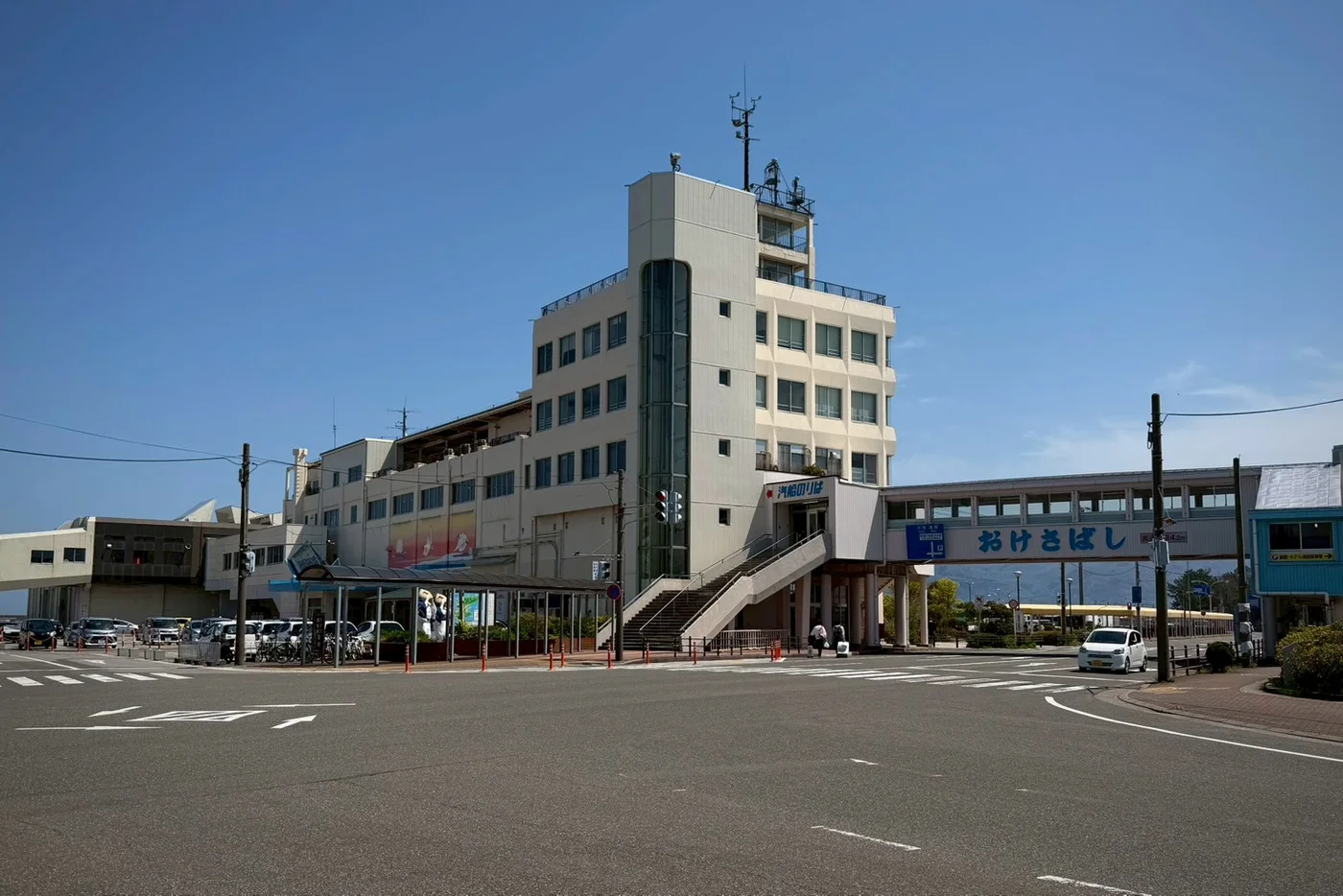
Use the Ryotsu Port Sado Kisen bus stop and passenger terminal as the base point, choosing accommodation genuinely walkable both ways. Lake Kamo, Ryotsu town and the waterfront have different distances. Compare the actual entrance-to-terminal route, especially with cases or after dark. If a property offers transfers, agree the port or stop time when booking and follow that meeting point.
After the mine, take Nanaura Kaigan at 16:05 to Aikawa at 16:17, then Honsen at 17:18 to Ryotsu at 18:23. The 61-minute gap allows bag sorting, a short rest or an early bite. A 16:28 service arrives at 17:30 but leaves only 11 minutes to transfer. If collecting a large case too, use 17:18 rather than fitting both tasks into that gap.
The cost of Ryotsu is another cross-island bus after the mine and later dinner than Aikawa. It suits a specific need: the 09:15 ferry next day, arriving in Niigata at 11:45, or a morning around the port instead of travelling from Aikawa. For dinner-included accommodation, allow the walk from the 18:23 port arrival when choosing the plan.
With the 16:05 ferry next day, Ryotsu gives longer around the port, but does not remove the first day’s transport effort. For the mine and Aikawa without an early ferry, I would choose Aikawa. Choose Ryotsu for boarding convenience and an early departure. With only one night, there is no need to move rooms to try both.
The basic mine ticket includes both tunnels
Historic Sado Gold Mine’s basic Sado Kinzan course includes Sotayu Tunnel, Doyu Tunnel and Doyu-no-Warito in one visiting area. The operator’s construction notice hosted by Niigata Prefecture lists the two-tunnel ticket at ¥1,500 for adults and ¥750 for primary pupils. From 1 April 2026 the linked route runs from Sotayu to Doyu, takes about 60–80 minutes and cannot be reduced to just one tunnel. The prefectural tourism association defines adults here as lower-secondary-school age and above. Plan energy and time for the complete route before adding experiences.
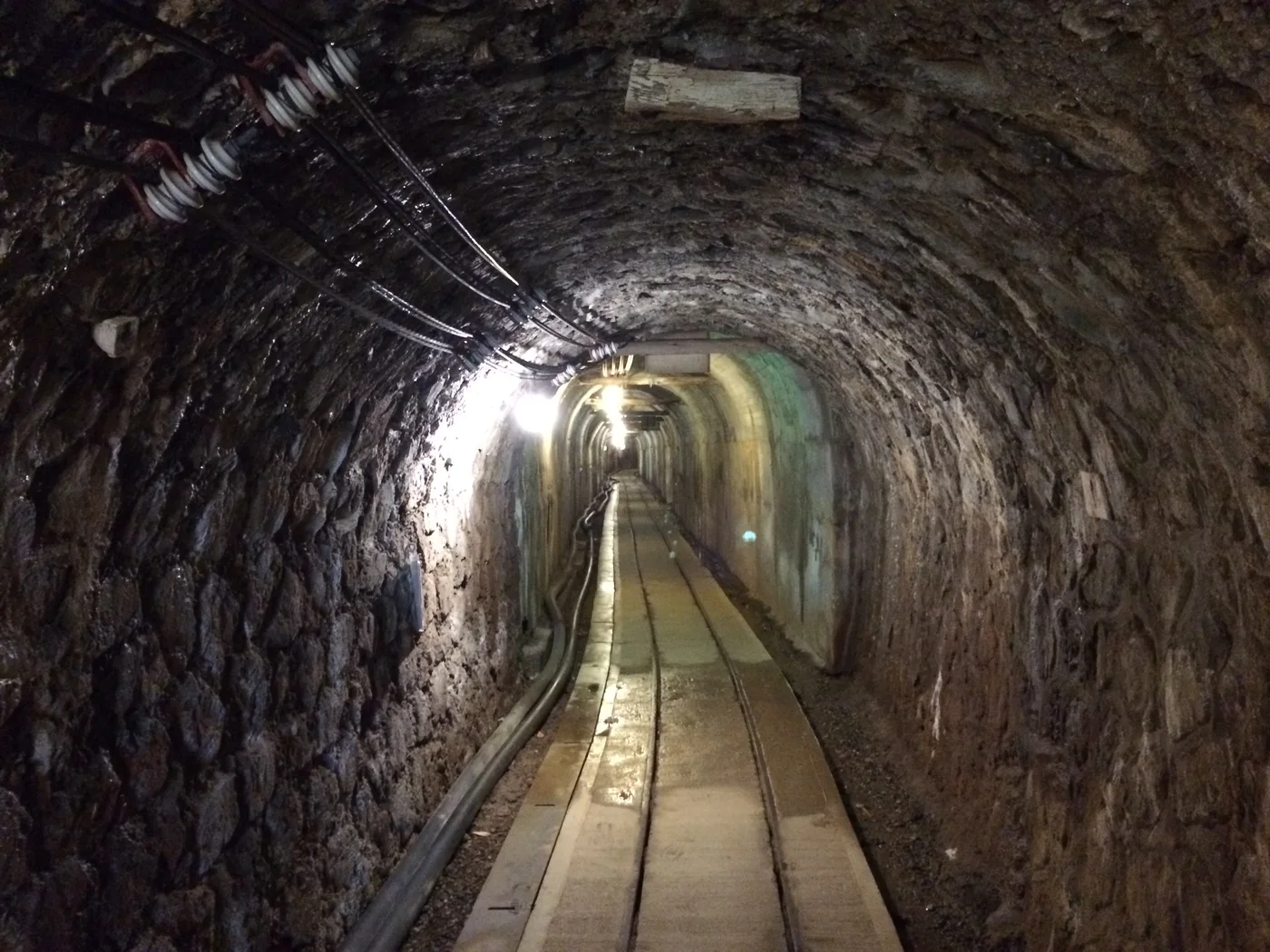
Sotayu focuses on Edo-period manual mining, with figures showing work underground. Doyu is the mechanised tunnel used from the Meiji period onwards. The notice’s diagram marks mine carts, machinery workshop and crushing plant, linking extraction below ground with surface transport. Together the tunnels answer how mining worked and how equipment changed the workplace. History and machinery enthusiasts already have a shared visit on the basic route.
Include Doyu-no-Warito within the same visiting time. From the 14:05 bus arrival to 16:05 departure is two hours. After alighting, tickets, toilets and returning to the stop, a 60–80-minute visit still fits. For close reading of displays, use the direct bus arriving at 13:20 to gain 45 minutes.
The operator’s construction notice gives opening at 08:00 and last admission at 16:00 from 1 April 2026, with no fixed closure days in this phase. The 29–30 October example follows that linked route. After a 14:05 arrival, the real deadline is the 16:05 bus to Aikawa: tickets, viewing and the return to the stop all fit within those two hours.
Children and slower walkers need time for the linked route
The prefectural tourism association’s visit report records a year-round tunnel temperature around 10°C. Bring a jacket even if short sleeves work outside. Choose grippy shoes stable on steps and carry little so you need not keep adjusting bags. Water, jacket and phone can go in a backpack; store umbrellas and large shopping bags beforehand where possible. Sorting equipment midway makes companions stop too.
The linked-route diagram shows steps in both Sotayu and Doyu. This is not a wholly level underground corridor. If a companion needs fewer steps, assess whether they can complete the entire route before buying, rather than deciding halfway inside to do only half. Include boarding, alighting and entrance approaches when choosing ferries, buses and accommodation. The 13:20 arrival gives slower walkers 45 minutes more than 14:05, better used for pauses than another paid activity.
Choose a few stopping points from the diagram. Sotayu’s water-lifting wheels, manual drainage and tunnel supports, and Doyu’s workshop and carts give concrete clues to the two mining methods. Children need not read every label: look for how ore moved and water was drained. Agree stopping places for different walking speeds rather than continually separating, and retain time for the final return to the entrance.
The tourism information also describes guided and MR spatial-performance options. This car-free route centres on the basic two tunnels. If someone books an extra experience, recalculate its meeting time against the bus and agree where to reunite. If everyone takes the basic route, use spare time for models, machinery and the outdoor mining landscape without each person buying another activity.
29 October: disembark, lunch, mine—in that order
After docking at 11:55, disembark and locate the 12:50 Honsen stop before lunch. The table also has a 12:05 Ryotsu departure reaching the mine at 13:20, but that is only ten minutes after docking. It suits people already at the port. For a first journey on this ferry, target 12:50. If docking finishes early and you are actually at the stop, decide on the earlier bus from conditions there rather than cancelling lunch and storage while still aboard.
The 55 minutes cover leaving the ship, finding the way, food and waiting. Keep lunch simple and nearby. Store large luggage first, then use the remaining time to decide between sitting down and taking food away. If a meal feels too tight, leave the substantial meal for Aikawa.
The 12:50 bus passes Kanai, Sawata and Aikawa before reaching the mine at 14:05. Use the 75-minute ride to rest and organise later plans. Keep bags within your space even when photographing outside. Do not follow other passengers off at Aikawa: this service continues to Sado Kinzan-mae. Save the Japanese destination for direct questions to the driver.
Use 14:05–16:05 for the linked tunnels. Check that day’s open route at the entrance, buy the ticket and start. The diagram’s start and finish are near the entrance. Afterwards, sort jackets and use toilets before returning to the stop. Agree a time to leave the exhibition, keeping the final ten or more minutes for preparation and waiting so nobody remains underground at 16:05.
Take the Nanaura Kaigan circular-direction bus at 16:05, reach Aikawa at 16:17 and go to your accommodation. The main visit is complete; follow your dinner plan without another distant journey. If energy remains, make a short local walk to learn tomorrow’s route. Stay in town at night and use daylight for streets and stops next day.
30 October: fix the port bus before planning the morning
For an Aikawa night, write in the 12:53 Honsen to Ryotsu Port at 14:01. The 16:05–18:35 ferry leaves two hours four minutes for lunch, luggage, onboard supplies and boarding. The gap has a purpose: a slightly late cross-island bus does not immediately threaten boarding.
Have breakfast and pack, then choose a walk near the accommodation. With the tunnels done, there is no need to return to the mine. Stay within a walk back, collect bags around midday and head directly to Aikawa stop. Slower companions can rest after breakfast until checkout; a night away also means not rushing to leave.
The 12:53 appears in the right-hand table, going through Sawata, Kanai and Yoshii to Ryotsu. At the port, check the sailing status and boarding floor before food. Collect large cases before shopping and organise heavy items first. There is still a ferry and bus to Niigata Station ahead, so choose port food that travels easily and can be stored as instructed.
To stay longer in Aikawa, use the 13:58–15:06 Honsen for the 16:05 ferry, leaving 59 minutes in port. This is an extension option, not the first choice. For ticket buyers following the operator’s advice to arrive 30–40 minutes ahead, little usable time remains. Keep 12:53 if collecting luggage, eating or needing boarding assistance.
Arriving half a day later: move the mine to day two
With the 12:35–15:05 ferry on day one, you miss the 12:50 direct mine bus. Go to the accommodation and visit the mine next morning rather than improvising uphill transport from Aikawa. For Aikawa, use Honsen at 16:10, arriving at 17:12, with 65 minutes in port. Consider 15:15–16:22 only once actually at the stop after disembarking: it is just ten minutes after scheduled docking.
Next day, take Honsen from Aikawa at 10:21 to the mine at 10:30. Return at 13:25 to Aikawa at 13:33, then change to 13:58 for Ryotsu at 15:06 and the 16:05 ferry. This keeps the mine in the morning and gives 25 minutes to transfer. Carry simple food or have the full meal after returning to port.
This shorter version removes the long Aikawa walk while preserving a complete basic tunnel visit. Nearly three hours from 10:30 to 13:25 let companions walk at their own speed without running to complete the plan. If accommodation luggage must be collected, the 25 minutes after 13:33 are tight: take it from the start or agree a separate handover, rather than adding a return to a distant property.
Ryotsu guests can take the 09:15 port bus to the mine at 10:30 and use the same visit and afternoon return. Day-two luggage stays in Ryotsu, making transfers easier. Both accommodation choices preserve the same visit; the difference is which day carries the long cross-island ride and where the cases remain.
Rain or cancelled sailings: remove extra transfers first
For ordinary rain, keep the basic mine route, but wear rain protection for entrances, stops and outdoor parts. In wind, a raincoat that allows easy movement is more convenient than an umbrella on narrow stretches. Cancel the longer Aikawa morning walk first, using the time for breakfast, packing and an early bus wait. There is no need for a distant indoor attraction just to fill rain time.
If the arriving ferry is late and misses the 12:50 direct bus, use the half-day-shorter version: stay overnight, then mine next morning. Let the delay remove the town walk before shortening the main visit, rather than reducing every stop to its doorway. If the next day’s ferry is very early, retain Ryotsu accommodation and departure, leave the mine for another trip and stay around the port.
For cancellations, read Sado Kisen’s sailing status for your own route and vessel type, assessing ferries and jetfoils separately. A cancelled jetfoil does not establish spare places on a ferry at a similar time. Secure an available replacement sailing before choosing island buses again. Before reaching Sado, preserve Niigata accommodation and onward transport; already on the island, arrange that night’s room and the return ticket first.
If only an earlier return sailing remains, work backwards from the operator’s port-arrival advice and choose a bus arriving before it. Remove the Aikawa walk or shopping. Do not gamble cross-island transport on the final minutes, especially with storage collection or ticket changes. Cancellation and change costs depend on your ticket, room plan and reason accepted. Contact the original seller and accommodation after a cancellation rather than buying another set and leaving the original bookings active.
Start the budget with ticket types; link meals to the accommodation
List the basic two-tunnel ticket at ¥1,500 per adult and ¥750 per primary pupil: two adults total ¥3,000. This covers only their basic visit. List extra booked activities separately and compare content and meeting times before adding them. The main variables over two car-free days are vessel type, accommodation meals and the number of cross-island bus trips.
Separate ferry from jetfoil, then choose the ferry class. Before payment, check date, route, vessel, passenger numbers and total. Enter each child’s actual age in the same booking rather than multiplying the adult fare by everyone. After choosing the sailing, recheck the island bus connection. A slightly cheaper but late arrival can move the whole mine visit to day two.
List bus stages first: Ryotsu to mine, mine to Aikawa, Aikawa to Ryotsu. An Aikawa stay normally uses these three. A Ryotsu stay moves the port return to day one; only another Aikawa return on day two adds cross-island travel. For packages or passes, check routes, validity days and eligibility against your actual services before calculating value. Extra riding is unnecessary just to use a pass.
For dinner-included accommodation, treat the meal as part of the arrival schedule. Otherwise list its cost and town dining time separately. The first day’s 11:55–12:50 gap suits a simple lunch, with a full dinner in Aikawa; for Ryotsu, plan from the 18:23 port arrival. Locating these meals avoids depending on a chance open shop.
Keep tickets, luggage plans and stop names together before port arrival
The operator advises foot passengers with digital tickets ready to arrive about 10–20 minutes before sailing, or about 30–40 minutes for counter or machine purchases. Ticket gates usually open 15–20 minutes before departure, followed by boarding. Add luggage collection and eating before these allowances; the advised port-arrival time is not a final shopping deadline.
Open the digital-ticket login or confirmation email in advance, keep enough battery and turn screen brightness to maximum at the gate as instructed. Check how companions’ tickets display before reaching the scanner; changing accounts there holds up the queue. Put medicines, water, a jacket and charging items in a small carry-on bag, organise cases and sit down while waiting.
Keep at least four Japanese names on your phone: 両津港佐渡汽船, 相川, 佐渡金山前 and the accommodation’s original name. Use the same names for directions, bus destinations and return stops rather than only “mine” or “port”. Save the full bus page with direction, date and dashes. For an Aikawa transfer, write the two bus times on separate lines.
Link the return ticket to luggage collection. With digital tickets ready and no stored bags, go straight to the gate area on arrival. If collecting cases from accommodation or storage, do that before entering the terminal. Collect before eating so you know how much time truly remains, rather than remembering a remote case when the meal arrives.
Once bags are collected and tickets open, use the remaining time for a meal and sit while waiting for the ferry.
A few useful answers
Should I stay in Aikawa or Ryotsu for two days without a car?
For the mine and Aikawa with an afternoon departure next day, stay near Aikawa stop. For a morning sailing, choose a Ryotsu base genuinely walkable to the passenger terminal.
Which Ryotsu buses go directly to Sado Gold Mine?
The weekday table valid 1 April–30 November 2026 gives departures from Ryotsu Port Sado Kisen at 09:15, 12:05 and 12:50, reaching Sado Kinzan-mae at 10:30, 13:20 and 14:05 respectively.
What does the basic mine ticket include?
The linked basic route includes Sotayu Tunnel, Doyu Tunnel and Doyu-no-Warito. The operator’s construction notice gives about 60–80 minutes, ¥1,500 for adults and ¥750 for primary pupils. You cannot choose just one tunnel.
Official information and references
Sources used in this guide.
- Sado Kisen 2026 annual timetable
- Sado Kisen boarding procedure without a car
- Niigata Kotsu Sado 2026 weekday timetable, hosted by Sado City
- Sado Gold Mine operator’s construction and linked-route notice, hosted by Niigata Prefecture (31 October 2025 version)
- Niigata Tourism Association: Historic Sado Gold Mine information
- Sado City Aikawa circular-bus official leaflet, 28 August 2026, including Honsen and Nanaura
- Niigata Tourism Association visit report: Historic Sado Gold Mine
- Sado Kisen official: Sado Island introduction film