Wondering where to stay in Naruko Onsen? Compare Genzo no Yu Naruko Kanko Hotel, Naruko Hotel and Yumoto Kissho near the station with Ryokan Onuma and Hatsune Ryokan in Higashi-Naruko, covering room types, private baths, dinner options, Naruko Gorge autumn foliage and 2026–27 winter shuttles.
- Region & Focus
- TohokuAccommodation
- Reading Scope
- 22 min read · 11 chapters · 6 Q&As
- Official Verification
- 47 official sources checkedUpdated 22 November 2026
- Key Topics
- Where to stayRyokanHot springs
Chapter Route Map (tap any stop)
- Naruko-Onsen and Naruko-Gotenyu: One Stop Apart, Two Ways to Stay
- Genzo no Yu Naruko Kanko Hotel: Top Pick for Family Soaks Together
- Naruko Hotel: Try the Other Main Bath the Next Morning
- Yumoto Kissho: Keep a Hot-Spring Bath Inside Your Room
- Ryokan Onuma in Higashi-Naruko: Half-Board vs Self-Catering Toji
- Hatsune Ryokan and Staying in Kawatabi, Nakayamadaira or Onikobe
- Autumn Foliage: Pre-Book Your Taxi to Nakayamadaira-guchi
- Sendai vs Shinjo Approaches: Different Transfer Points
- Rain or Snow: Pick a Room You Can Happily Spend Time In
- Confirm Dinner, Party Size and Shuttles Before Booking
- One Night for Foliage, or a Full Day in Higashi-Naruko
- Quick Q&A
If you are travelling by train for a single night—especially if you are heading to Naruko Gorge the next morning—start with a ryokan within walking distance of Naruko-Onsen Station. Genzo no Yu Naruko Kanko Hotel is around 2 minutes from the station and offers three private baths free for staying guests. Naruko Hotel is about a 5-minute walk away, ideal if you want to try a different large bath in the evening and the following morning and tuck into the Michinoku buffet. If you plan to stay two nights and cook some of your own meals, shift your search to Higashi-Naruko, looking at Ryokan Onuma or Hatsune Ryokan near Naruko-Gotenyu Station. From Shinjo in Yamagata, you will need to take a JR rail replacement bus; from Sendai, line up your Furukawa transfer and ryokan dinner time before booking.
Naruko-Onsen and Naruko-Gotenyu: One Stop Apart, Two Ways to Stay
Searching for 'Naruko Onsen' on booking sites can pull up rooms across the entire Naruko Onsenkyo area. The local tourist association divides accommodation into five districts—Naruko, Higashi-Naruko, Kawatabi, Nakayamadaira and Onikobe—while Naruko Gorge is a sightseeing spot. Heading into the mountains from Furukawa on the Rikuu East Line, trains stop first at Kawatabi-Onsen, then Naruko-Gotenyu, and finally Naruko-Onsen. Ryokan addresses in Higashi-Naruko often read 'Naruko Onsen Aza Akayu', so whenever you see 'Naruko Onsen' in an address, double-check which station the property lists as nearest. Nakayamadaira sits west of Naruko-Onsen Station, while Onikobe requires an onward road transfer.
For a one-night stay combining dinner, a soak and an early start the next day, staying by Naruko-Onsen Station saves effort. Arrive by train in the afternoon, drop your bags at the ryokan, and you can browse kokeshi doll shops or stroll towards Onsen Shrine. The next morning, your transport to the gorge leaves from the same station you use to return to Furukawa. If you plan to head out after checking out, ask when booking whether you can leave large luggage until midday so you can visit the gorge with just a daypack, then pick up your bags back by the station before catching a Furukawa-bound train.
In Higashi-Naruko, the afternoon is the best time to linger. Ryokan Onuma is roughly a 5-minute walk from Naruko-Gotenyu Station: once you leave your bags in the room, locate the shared kitchen, take a first soak, have dinner and bathe again later. Walking from Onuma to Naruko-Onsen Station takes around 26 minutes, or about 4 minutes by train. You can easily explore both areas during the day, though after dinner gaps between trains mean choosing between waiting for a service or walking back. If you want to dine around the station each evening or take children shop-browsing, staying right by Naruko-Onsen Station is far more straightforward.
Some travellers arrive eager to hop between several bathhouses straight away. If you are only staying one night and want to enjoy both ryokan meals unhurriedly, trim your daytime public bath visits down to one and leave space for your first soak after check-in. To compare water qualities, public bathhouses and inter-station routes district by district, see our Naruko Onsenkyo five-district guide.
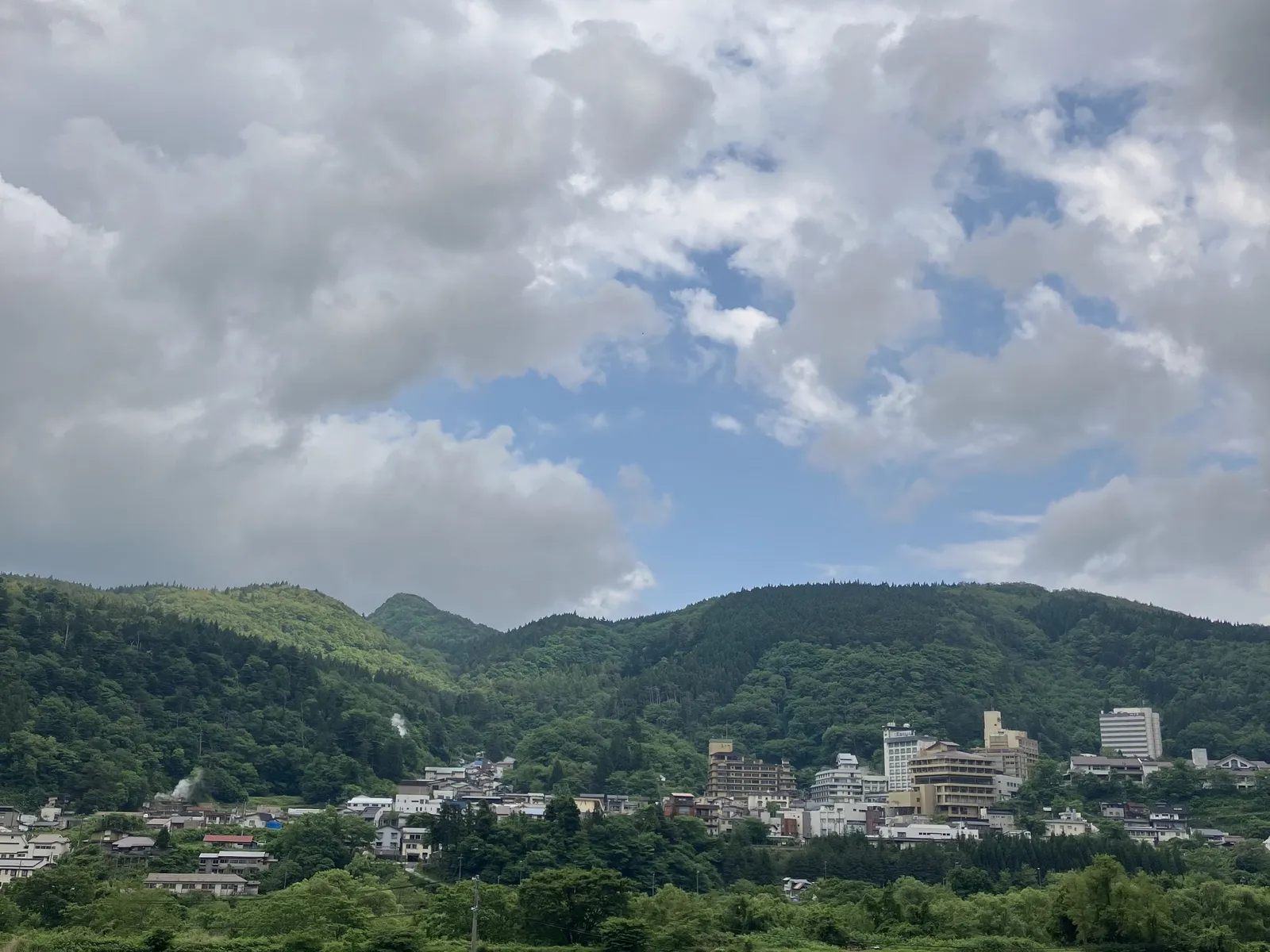
Wondering where to stay in Naruko Onsen? Compare Genzo no Yu Naruko Kanko Hotel, Naruko Hotel and Yumoto Kissho near the station with Ryokan Onuma and Hatsune Ryokan in Higashi-Naruko, covering room types, private baths, dinner options, Naruko Gorge autumn foliage and 2026–27 winter shuttles.
Genzo no Yu Naruko Kanko Hotel: Top Pick for Family Soaks Together
Look up the property under its full name, Genzo no Yu Naruko Kanko Hotel, at 41 Yumoto. The hotel has 102 rooms and lists a walk of roughly 2 minutes from Naruko-Onsen Station, alongside a pre-booked station shuttle. Even for a couple of minutes' walk, travellers pushing a buggy or pulling heavy suitcases are wise to arrange the shuttle in advance. Set on the hillside hot-spring street, that short stretch from the station feels very different in snow, on icy pavements, or when a family splits across two car doors.
Its three private baths, collectively called Yuon no Komichi, are free for staying guests. Kohaku fits roughly 5 to 6 people, features wheelchair-accessible entry, grab rails and two shower stations inside. Parties of two or three can pick Moegi with its round ceramic tub or the smaller wooden tub at Yamabuki, each fitted with one shower. Two-generation families wanting to bathe together, or parents helping children wash, can match their headcount directly to these three sizes. When booking, it is worth asking whether there are any steps between your room and Kohaku, as well as how bath registration works.
The main public baths feature granite indoor pools and hinoki cypress open-air baths, fed by a sulphur-bearing sodium sulphate and hydrogen carbonate spring. Because the source water runs hot, cold water is added to adjust the temperature, and the hotel notes that circulation, agitation and chlorination are used. From 17 October 2026, guest bathing hours in the main baths shift to 15:00–00:00 and 05:00–10:00 the next morning. If you want a leisurely kaiseki dinner, take a soak straight after check-in and fit in a second dip around breakfast and check-out. For anyone arriving late who still hopes to bathe after midnight, these hours matter more than the room view.
Compare room rates on a like-for-like basis using the hotel's official room pages. Half-board (one night with two meals) starts from ¥14,000 per adult before tax in a standard East Wing room, and from ¥16,000 before tax in a standard West Wing room. If you want extra comfort indoors overlooking the mountains and onsen street, the West Wing Komorebi room starts from ¥23,000 before tax, while Hidamari—aimed at families and small groups—starts from ¥28,500 before tax; both West Wing premium rooms have en-suite shower rooms rather than bathtubs. Guests spending the day at the gorge and returning simply to bathe, eat and sleep will find the standard East or West Wing rooms plenty. Only if rain is likely to keep you indoors all afternoon will you make full use of the sofa and picture windows.
When comparing prices for a family of four, enter the two children's ages, meal preferences and bedding separately on the booking page. In the East Wing example published by the hotel, upper-primary schoolchildren selecting adult meals and bedding pay 80% of the adult rate, while lower-primary children taking kids' meals and bedding pay 60%. Separate meal-free rates apply for young children needing only a futon and mattress. The official site highlights Sendai beef, Miyagi pork and Sanriku seafood; if a Sendai beef dinner is the point of your trip, pick a plan that names the dish so everyone's meals and arrival time sit on one reservation.
Naruko Hotel: Try the Other Main Bath the Next Morning
Naruko Hotel sits at 36 Yumoto, listed as roughly a 5-minute walk from Naruko-Onsen Station. What sets these two station hotels apart most is their bathing setup. Naruko Hotel's Basho no Yu features a main pool, sitting bath and semi-open-air bath, while Tama no Yu has wooden-barrel and stone open-air baths. The two bath complexes swap genders between evening and morning: to experience both, visit whichever is open to you around dinner, then try the other after waking up. The hotel also notes that outside air and humidity alter the water's hue, so the pools can shift between clear, milky white and greenish tones in a single night.
The distance between the hotel's two wings matters more in practice than room names. If you expect to go back and forth frequently between the baths and dining hall, choose the Momiji Wing; standard tatami rooms run about 8 to 12 mats and sleep 2 to 5 guests. If older relatives prefer twin beds while others sleep on tatami, check the Aoba Wing Japanese-Western rooms, listed on the official site at 50 sq m for up to 5 guests and 39.5 sq m for up to 4. The Aoba Wing also offers easy access to the lobby and shop, plus twin Western rooms suited to guests who want two beds and an early start after breakfast. Groups of five wanting one shared room should check the exact maximum occupancy field first to rule out the smaller Japanese-Western layout.
The Momiji Wing also offers a 40 sq m twin room with an open-air footbath for two guests, though the hotel suspends this footbath during winter. If you are visiting around New Year or in January and February, rely on the main open-air baths for a full-body outdoor soak and spend your room budget on bed layout and floor space instead. Families wanting to bathe together can book the private Konohana no Yu for 50-minute slots at ¥3,300 for 2 to 4 guests or ¥4,400 for 5 to 15 guests. It opens 16:00–22:50 and 06:00–08:50, and can be reserved ahead or requested at reception on arrival. If a single group soak is all you need, compare the total half-board price for your dates across both hotels with this fee added on.
Dinner options include the Michinoku buffet and kaiseki courses. If everyone wants to choose their own portions—or let children pick dishes they will eat straight away—book the buffet plan; if you prefer courses served sequentially at one table, go for kaiseki. The hotel's dining page states explicitly that it cannot accommodate food allergies, so anyone needing dietary adjustments from the kitchen should look elsewhere. Room listings specify check-in from 15:00 until 19:00 at the latest, with check-out at 10:00. If you realise after booking that your train into Naruko-Onsen arrives close to 19:00, switch to an earlier departure to leave breathing room for check-in and dinner.
Yumoto Kissho: Keep a Hot-Spring Bath Inside Your Room
If you want to soak the moment you shut your room door, consider Naruko Onsen Yumoto Kissho near the station. Set on higher ground, it is roughly a 7-minute walk from Naruko-Onsen Station and also runs a free pre-booked shuttle. Its hot-spring guest rooms include the roughly 75 sq m Special Japanese-Western Room, plus the annexe Kinsui and Shoun suites: the Special Japanese-Western Room and Kinsui feature indoor onsen baths, while Shoun has an open-air onsen bath. Main-building 10-tatami rooms and top-floor twins come with shower booths only. Match those three room names directly when booking so you can bathe on your own schedule before and after meals.
You can also book a standard room and use the four free private baths in the neighbouring building connected by a corridor. They operate on a first-come, first-served basis whenever vacant, with no booking required—a useful saving over upgrading to an in-room onsen if your soaking times are flexible. The hotel explicitly states that tattooed guests may use the private baths or in-room baths, whereas entry to the main communal baths is restricted. For a one-night stay where you want two unhurried family soaks, choosing an in-room onsen or a reservable private bath slot makes timing dinner far easier than waiting for a vacancy.
Ryokan Onuma in Higashi-Naruko: Half-Board vs Self-Catering Toji
Ryokan Onuma has 10 rooms in its Main Building and 10 in its Toji Wing. On a first trip to Higashi-Naruko, if you simply want several soaks without grocery shopping, book a half-board stay. To experience traditional self-catering hot-spring convalescence (toji), pick a room-only plan in the Toji Wing—staying two nights gives you a full day between meals to bathe at leisure. Standard check-in starts at 14:00 and check-out is at 10:00; let them know in advance if arriving after 18:00. Catch an earlier afternoon train from Furukawa and you will still have daylight for the supermarket or a wander down the street; on a later train, arrange dinner beforehand or bring ready-made food.
Self-catering toji rooms are mostly around 6 tatami mats with futon bedding, shared basins and shared toilets, in a building with no lift. The second-floor shared kitchen has induction hobs and the third floor has gas stoves, both stocked with basic cookware, microwaves and toasters. Small face towels and toothbrushes are provided, while yukata robes and bath towels carry a rental fee. Guests planning multiple morning and evening dips should pack a quick-drying bath towel and a small caddy for toiletries. If anyone in your group gets up often at night or needs help on stairs, compare station-front hotels with en-suite bathrooms first—floor access and night-time layout decide whether this style feels restful.
Room-only toji stays are booked by telephone: published tax-inclusive rates for 1 to 2 nights are ¥12,100 per night for a solo guest on weekdays and ¥14,300 on Saturdays and eves of public holidays; for two guests sharing, the per-person nightly rates are ¥8,800 and ¥10,100 respectively. Lower nightly rates apply for stays of 3 to 5 nights, so when comparing for two people, weigh the full room total plus groceries. For a short stay where you just want a few vegetables or a bento alongside rice, the ryokan sells portions of rice and miso soup for ¥550, and notes Super Maruka is roughly an 11-minute walk away. Alternatively, pick up hot deli food around Naruko-Onsen Station before changing trains so you avoid two trips after dark.
Four indoor private baths are free for guests whenever unoccupied—simply step inside and lock the door. Yakushi Sennin-buro is a large mixed-gender bath, alongside the women-only Tennyo-buro, so anyone wishing to avoid mixed bathing can stick to the women's bath or the lockable private rooms. Except during cleaning, the indoor baths stay open throughout your stay. On the fourth floor of the Toji Wing sit In no Yu and Yo no Yu; if you book corner room 401 upstairs, both baths are on your floor, though reaching it from the entrance means climbing stairs. Groups concerned about which room is free can agree to meet back in the room afterwards and let everyone choose whichever bath suits them.
The off-site private garden open-air bath, Mori no Yu, is exclusively for staying guests in 30-minute slots at ¥1,650 per adult, ¥550 per primary schoolchild, and free for pre-schoolers. It is about a 10-minute walk from the ryokan, or staff can shuttle you over. You can book a stay plan that includes admission or sign up at reception after arrival; for a one-night stay, build it into your plan beforehand and ask staff to schedule the shuttle around dinner. As it is a pure soaking garden bath, shampoo and soap are strictly prohibited—keep hair-washing for the indoor baths.
Hatsune Ryokan and Staying in Kawatabi, Nakayamadaira or Onikobe
For a compact self-catering toji inn, start by enquiring with Hatsune Ryokan in Higashi-Naruko. The Naruko Onsenkyo Tourist Association lists Hatsune with 12 rooms, self-catering toji options and two registered spring types. If you are only staying one night with takeaway food, ask whether they accept single-night, two-guests-per-room room-only bookings rather than looking only at long-stay tariffs. For two or three nights, spell out your exact meal plan—for example, self-catering on night one and requesting ryokan meals on the remaining nights—so they can quote matching packages. The association's directory also lists Kanshichi-yu in the same district, worth adding to your shortlist if you want Higashi-Naruko with an in-house lift.
Kawatabi is the first hot-spring district reached from Furukawa. Fujishima Ryokan has 20 rooms, lists 14:00 check-in and 11:00 check-out, and offers pickups from JR Kawatabi-Onsen Station on request. It suits travellers wanting to settle into their ryokan on the first afternoon and linger locally the next morning. Arrange the next day's station drop-off when booking your pickup, or slot Naruko-bound trains into your itinerary. However, if your sole plan next morning is catching transport from Naruko-Onsen Station to the gorge, staying near Naruko-Onsen Station avoids an extra rail hop from Kawatabi.
Nakayamadaira lies on the far side of Naruko Gorge. To spend a night near the valley and soak in its famously silky alkaline waters, browse the tourist association's Nakayamadaira listings. If you just want to sample the water, stay by Naruko-Onsen Station and visit Shintoro no Yu on a day trip: the bath opens until 20:30 (last entry 20:00), while its on-site canteen only serves 11:00–14:00, so time a soak for lunch if you plan to eat there. When travelling by rail or bus, distinguish Nakayamadaira-Onsen Station—the railway and JR replacement bus stop—from Naruko-kyo Nakayamadaira-guchi, the gorge entrance and seasonal autumn bus stop.
Onikobe works best if your itinerary is already built around the ski slopes or a rural resort. From 12 December 2026 to 22 March 2027, Resort Park Hotel Onikobe's free winter shuttle departs Naruko-Onsen Station at 11:10 and 19:00, requiring reservation at least three days ahead. The evening departure also connects with the 17:00 shuttle from Sendai Airport, letting you head straight to Onikobe without hauling ski gear into central Sendai. Whichever stop you board at, lock in both room and shuttle before booking flights or trains. If you only want gentle walks, craft shops and a warm bath after dinner, staying by Naruko-Onsen Station keeps travel far shorter.
Autumn Foliage: Pre-Book Your Taxi to Nakayamadaira-guchi
For a trip centred on Naruko Gorge, stay near Naruko-Onsen Station, check in during the first afternoon and head to the gorge on the earliest transport next morning. Osaki City gives the typical autumn foliage season as mid-October to mid-November. The 2026 seasonal Momiji-go bus to Naruko-kyo Nakayamadaira-guchi finished on 8 November, charging ¥450 each way in cash from Naruko-Onsen Station; 2027 seasonal timetables have not yet been announced. If your dates sit around the edges of peak foliage, ask your ryokan upon booking whether they can pre-arrange a return taxi for straight after breakfast.
Ask the driver for 'Naruko-kyo Resthouse' or 'Naruko-kyo Nakayamadaira-guchi'—to frame the classic view of Ofukazawa Bridge spanning the gorge, head to the observation deck there. That side also houses the resthouse and the trailhead for the Ofukazawa Walking Trail. A taxi from Naruko-Onsen Station takes around 10 minutes according to Osaki City, or roughly 13 minutes and ¥2,200 one way per the tourist association; walking takes 60 to 70 minutes. Both drivers and taxis use National Route 47, where weekend queues for the car park slow traffic down. Travellers catching a train onwards should fix their return taxi time first, then decide how far to walk in the remaining window.
If descending into the ravine, Osaki City's 2026 notice states that both ends of the Naruko Gorge Promenade are out-and-back routes only: roughly 350 metres from Nakayamadaira-guchi to Kaerimi Bridge, and around 230 metres inward from Otani Bridge on the Naruko side, both open 09:00–16:00. Early risers visiting the observation deck at dawn will need to wait until 09:00 to walk down towards Kaerimi Bridge. The Ofukazawa Walking Trail forms an approximately 2.2 km loop starting from the same resthouse. When travelling with older relatives or facing a train connection, take in the bridge and gorge views first, then choose between the Kaerimi Bridge spur or the full loop—and if paths are slick or closed by the city, stay on the upper open areas and shift spare time back to the onsen town.
In 2026, Osaki City kept both gorge trails open until late November, while the Nakayamadaira-side car park closes for winter. If driving, factor in extra time for traffic signals and car-park queues; during peak congestion, the city directs drivers to the free car park before Ofukazawa Bridge, around 700 metres (a 10-minute walk) from the gorge, which you pass first when driving from Furukawa towards Yamagata. If anyone in your party struggles with distance, taking a taxi directly to the resthouse cuts out that stretch. Even on busy weekends, a direct ride lets you trim a two-hour gorge visit if needed to protect your afternoon train connection.
If foliage weekends leave rooms available only in Higashi-Naruko, have a taxi collect you straight from the ryokan to avoid carrying bags between Naruko-Gotenyu and Naruko-Onsen in the morning. Following the Rikuu East Line sequence, if returning to Sendai via Furukawa, you can take a taxi directly from Higashi-Naruko to the gorge, collect your luggage afterwards, and board your train at Naruko-Gotenyu. If heading towards Shinjo instead, switch to Naruko-Onsen Station for the JR rail replacement bus.
Sendai vs Shinjo Approaches: Different Transfer Points
From Sendai, take the Tohoku Shinkansen to Furukawa and change to the JR Rikuu East Line for Naruko-Onsen. The tourist association estimates roughly 45 minutes by train from Furukawa to Naruko-Onsen, to which you should add transfer waiting time at Furukawa. Check which Rikuu East Line departures suit your ryokan arrival first, then work backwards to choose your Sendai train. If you leave the city early enough for afternoon check-in, you can stop for lunch during the Furukawa connection or pick up simple provisions in Sendai beforehand. Miyako Bus lists its direct Sendai–Naruko highway bus as suspended, so if you come across old timetables from Sendai Station to Kurumayu, plan via Furukawa instead.
Approaching from Yamagata, JR operates rail replacement buses between Naruko-Onsen and Shinjo, with a July 2026 restoration notice estimating full rail repairs within fiscal 2028. Guests staying near Naruko-Onsen Station simply step off the bus at Naruko-Onsen and walk to their ryokan. If staying in Higashi-Naruko, you will need either an onward Furukawa-bound train one stop to Naruko-Gotenyu or a pre-booked taxi straight to the inn. Treat the Yamagata-side bus and Miyagi-side train as two separate legs, picking connections that give your family ample time to disembark, claim bags and reach the platform.
At Shinjo Station, rail replacement buses usually depart from the West Exit side; once past the ticket gates, buy paper tickets inside the station before boarding. If continuing past Naruko-Onsen by train, buy a single through-ticket at Shinjo to your final station. JR's notice states that passengers boarding unstaffed stops without a ticket pay in cash on alighting—buses cannot give change and do not accept Suica or other IC cards. Look for vehicles signed 'Resha Daiko Bus' (Rail Replacement Bus). Yamagata's official rail guide also notes that under the winter timetable starting December 2026, all services pass through Sakaida Station without stopping, so split two-night trips around stops the bus actually serves.
If you reach Furukawa and realise you have missed your planned train, check the next arrival time straight away and call your ryokan about dinner or pickup. Taking JR East's December 2026 weekday timetable as an example, a train leaves Furukawa at 15:15, reaching Naruko-Gotenyu at 15:55 and Naruko-Onsen at 15:59. Genzo no Yu and Naruko Hotel sit at the latter stop, while Higashi-Naruko guests alight one stop earlier. If coming from Sendai Airport and a delayed city train sets you back, protect your ryokan dinner cut-off first and leave town shopping until the next morning.
Rain or Snow: Pick a Room You Can Happily Spend Time In
In winter, slim your stay down to a single night near Naruko-Onsen Station and dedicate the evening to indoor baths and dinner. Because the gorge trails and resthouse close for winter, building a snowy-day itinerary around nature walks leaves big gaps. For an indoor kokeshi fix, the Japan Kokeshi Museum opens April to December (closed January to March), with Osaki City listing hours of 09:00–16:00 (last entry 15:30) and a winter access route off National Route 47 near the Nakayamadaira-side tunnel entrance when snow piles up. In the new year (January to March), head instead to Sakurai Kokeshi Main Shop roughly 3 minutes from Naruko-Onsen Station: it houses displays and a workshop where you can paint your own kokeshi (book via their official website; groups of five or more should enquire directly). As the shop opens at 10:00 on weekdays and 09:30 at weekends and holidays, save it for the first afternoon if your train arrives earlier.
For a public soak near the station, Taki no Yu beside Onsen Shrine charges ¥300 for adults and ¥100 for children, open 07:30–21:00 (last entry 20:30). Capacity is limited, and visitors are asked to queue outside when busy. If anyone in your group wants to wash and blow-dry their hair and relax after dinner, take care of that back at the ryokan and drop into Taki no Yu the following day if there is no queue. According to an Osaki City update on 18 September 2026, Waseda Sajiki-yu is temporarily closed for spring equipment repairs, and the tourist association also suspended sales of Yumeguri bath-hopping passes at the end of April 2026—bring cash for single-entry visits.
If driving in winter, confirm four-wheel snow tyres or compliant anti-skid gear with your rental desk at pickup. Miyagi Prefecture's snow-and-ice road rules require tyre chains or approved winter tyres on all four wheels, and the MLIT Sendai Office of River and National Highway posts winter road conditions for Route 47—though using a ryokan shuttle saves you mountain driving altogether. For a station-front stay, car pickup, parking and return eat up time better spent on the JR train plus a station shuttle. Save comparisons across shuttles, buses and rental cars for trips going out to Onikobe or Nakayamadaira.
Guests hoping to bathe repeatedly on rainy days often focus solely on open-air tubs. Around the station, check the size and hours of indoor pools first; in Higashi-Naruko, check how many indoor baths are available and whether your room has space to sit comfortably. When walking around the station in winter, lay out non-slip boots, gloves and train tickets the night before for a smooth morning exit. Self-caterers who buy breakfast the previous evening can enjoy one last unhurried soak before check-out instead of trudging through snow just to find food.
Confirm Dinner, Party Size and Shuttles Before Booking
Match exact dates, room types and guest numbers before comparing totals. Genzo no Yu's room pages quote tax-exclusive starting prices per adult; Ryokan Onuma's self-catering chart lists tax-inclusive per-person rates split by weekdays and pre-holiday nights; and Naruko Hotel's room page notes an additional ¥150 bathing tax per person plus a ¥2,200 facility fee for children aged 2 to 5 without meals or bedding. Factor in children's meals and futons, private bath fees and taxis to see the true price gap. If your group is split between buffet fans and kaiseki lovers, settle on dining style before choosing the hotel—and if anyone needs help rising from floor futons, filter first for beds and en-suite toilets before checking meal plans.
When booking autumn foliage dates, put each property's cancellation-fee start date in your calendar. Naruko Hotel's standard terms charge 30% from 5 days before arrival, 50% the day before and 100% on the day, with specific dates or plans subject to separate rules. Ryokan Onuma's official site lists 30% from 7 to 3 days prior, 50% at 2 days and 1 day prior, and 100% on the day. If you might adjust plans for weather, pick a rate with a closer cancellation cut-off and align it with train ticket change deadlines. If everyone's holiday dates are fixed, treating a rainy day as time for extra ryokan soaks and a relaxed station stroll after breakfast beats stressing over leaf-drop or rain forecasts.
When travelling with children or older relatives and enquiring about rooms, state your exact train arrival time, the count of adults and children, any wheelchair use, and each person's bed and meal needs. If you risk arriving late, check the latest possible dinner seating; if you want a private bath, share your headcount so staff can confirm which bath fits. For self-catering in Higashi-Naruko, decide where your arrival-night meal is coming from before travelling—if your train lands after dark, buying dinner before boarding beats wandering around looking for open shops.
One Night for Foliage, or a Full Day in Higashi-Naruko
For an autumn-foliage overnighter, eat lunch in Sendai before catching the train, change to the Rikuu East Line at Furukawa, and drop your bags at a station-front ryokan in the afternoon. Enjoy half-board dinner that evening with plenty of time in the indoor baths. After breakfast the next morning, take your pre-booked taxi straight to Nakayamadaira-guchi, walk the observation deck and Kaerimi Bridge if conditions allow, then return to the station to collect your luggage and catch the train back to Furukawa. Anyone staying through the afternoon to finish the full Ofukazawa loop should check how late return trains run—or have lunch at the resthouse before setting off.
A two-night Higashi-Naruko stay works well without changing accommodation. On a self-catering plan, pick up ready-made dinner near Naruko-Onsen Station on day one, then walk to the supermarket on day two for vegetables and simple ingredients if you feel like cooking. Slot your visit to Mori no Yu into the middle day so it never clashes with arrival or check-out. Whenever you fancy heading out, hop on a train to Naruko-Onsen Station for kokeshi shops, then return to a home-cooked supper waiting back at the ryokan.
A few useful answers
Which station should first-time visitors choose for Naruko Onsen?
If you are arriving by train and visiting Naruko Gorge the next day, stay within walking distance of Naruko-Onsen Station. If you want to try a two-night self-catering toji stay and spend the daytime at the ryokan, choose Naruko-Gotenyu Station in Higashi-Naruko Onsen. Coming from Furukawa, trains reach Naruko-Gotenyu first, then Naruko-Onsen.
Are Genzo no Yu and Naruko Hotel the same property?
No. Genzo no Yu is Genzo no Yu Naruko Kanko Hotel at 41 Yumoto, where three private baths are free for staying guests. Naruko Hotel sits at 36 Yumoto, where the two main bath complexes swap genders morning and evening, and the 50-minute private Konohana no Yu costs extra.
Can you cook your own meals at Ryokan Onuma?
Yes—you can book a room-only self-catering toji plan in the Toji Wing by phone. There are induction hobs on the second floor and gas stoves on the third, equipped with basic cookware. Basins and toilets are shared, and floors are linked by stairs. If you prefer breakfast and dinner prepared by the inn, book a half-board plan instead.
If I stay by Naruko-Onsen Station, can I walk to Naruko Gorge the next morning?
Osaki City estimates the walk from the station to the Nakayamadaira-side entrance takes around 60 minutes, while the tourist association puts it at roughly 70 minutes. A taxi normally takes 10 to 13 minutes. For the observation deck, resthouse and Ofukazawa Walking Trail, ask for Naruko-kyo Resthouse or Naruko-kyo Nakayamadaira-guchi.
Can I take a train from Shinjo to Naruko-Onsen in winter 2026–27?
Rikuu East Line trains between Shinjo and Naruko-Onsen remain suspended and are replaced by JR rail replacement buses, which also serve Nakayamadaira-Onsen. On the Miyagi side, Rikuu East Line trains run normally between Furukawa and Naruko-Onsen.
Is Naruko Hotel's open-air footbath room worth booking in winter?
The hotel suspends in-room open-air footbaths during winter. If soaking is your main priority, book a standard Japanese-style or Japanese-Western room and use the main public baths—or reserve the private Konohana no Yu if you want to bathe together as a family.
Official information and references
Sources used in this guide.
- Naruko Onsenkyo Tourist Association | Five-District Accommodation Directory
- Naruko Onsenkyo Tourist Association | Higashi-Naruko Ryokan, Hatsune & Kanshichi-yu
- Naruko Onsenkyo Tourist Association | Furukawa Transfers & District Access
- Genzo no Yu Naruko Kanko Hotel | Access & Shuttle Service
- Genzo no Yu Naruko Kanko Hotel | Hot Springs & Private Baths
- Genzo no Yu Naruko Kanko Hotel | 2026 Main Bath Hours Change Notice
- Genzo no Yu Naruko Kanko Hotel | Guest Rooms & Rate Pages
- Genzo no Yu Naruko Kanko Hotel | East Wing Half-Board Starting Rates & Child Pricing
- Genzo no Yu Naruko Kanko Hotel | Standard West Wing Half-Board Starting Rates
- Genzo no Yu Naruko Kanko Hotel | West Wing Premium Room: Komorebi
- Genzo no Yu Naruko Kanko Hotel | West Wing Premium Room: Hidamari
- Genzo no Yu Naruko Kanko Hotel | Dining & Cuisine
- Naruko Hotel | Guest Rooms, Check-In Hours, Winter Footbath & Cancellations
- Naruko Hotel | Basho no Yu, Tama no Yu & Konohana no Yu
- Naruko Hotel | Access & Station Walking Time
- Naruko Hotel | Michinoku Buffet, Kaiseki & Allergy Policy
- Ryokan Onuma | Access & Walking Time from Naruko-Gotenyu Station
- Ryokan Onuma | Facilities, Room Count & Check-In Times
- Ryokan Onuma | Self-Catering Toji, Kitchen & Grocery Info
- Ryokan Onuma | Self-Catering Toji Rates & Reservations
- Ryokan Onuma | Indoor Private Baths & Cancellation Fees
- Ryokan Onuma | Mori no Yu Pricing & Usage Guide
- Fujishima Ryokan | Kawatabi-Onsen Station Shuttle & Room Details
- Nakayamadaira Onsen | Shintoro no Yu Bathhouse & Canteen
- Resort Park Hotel Onikobe | 2026–27 Winter Ski Shuttle
- Osaki City | Naruko Gorge Trails, Parking & Station Access
- Naruko Onsen Tourist Association | 2026 Naruko Gorge Map & Momiji-go Bus
- JR East | Naruko-Onsen Station Timetable
- JR East | Naruko-Gotenyu Station Timetable
- JR East | Naruko-Onsen to Shinjo Restoration Schedule
- JR East | Rikuu East Line Rail Replacement Bus Boarding Guide
- JR East | Shinjo Station West Exit Replacement Bus
- Yamagata Railway Info | Rikuu East Line Winter Replacement Bus
- Miyako Bus | Highway Bus Service Status
- Osaki City | Japan Kokeshi Museum Hours & Winter Access
- Osaki City | Taki no Yu Opening Hours & Admission
- Osaki City | Waseda Sajiki-yu Temporary Closure
- Naruko Onsen Tourist Association | Yumeguri Pass Sales Suspension
- MLIT Sendai Office of River and National Highway | Winter Roads & Anti-Skid Gear
- Yumoto Kissho | Booking, In-Room Onsen & Private Bath Rules
- Yumoto Kissho | Guest Rooms & Special Japanese-Western Room
- Yumoto Kissho | Station Walking Route & Free Pre-Booked Shuttle
- Ryokan Onuma | Guest Rooms & Toji Wing Room 401
- JR East | December 2026 Rikuu East Line Weekday Outbound Timetable
- Sakurai Kokeshi | Main Shop Location & Opening Hours
- Sakurai Kokeshi | Painting Workshop Reservations
- Yumoto Kissho | Location of the Four Free Private Baths