Walk from Narai Station through Shimomachi, Nakamachi and Kamimachi, reading eaves, doorways and the Kagi-no-te bend. Choose the comb merchant’s Nakamura Residence or Kamitoiya Museum, then compare Kiso Hirasawa’s lacquerware museum, polishing workshop and shops, with 2026 admission and winter schedules.
- Region & Focus
- Narai-juku
- Reading Scope
- 32 min read · 14 chapters · 7 Q&As
- Official Verification
- 10 official sources checkedUpdated 29 October 2026
Chapter Route Map (tap any stop)
- Half a day for Narai’s townhouses; a full day for the street or lacquerware
- The station is north: Shimomachi, Nakamachi and Kamimachi had different roles
- Step back for the projecting beams, then approach the doors and shutters
- Repairs help maintain the streetscape: read roofs alongside preservation rules
- Water points and Kagi-no-te return the street to everyday life
- Nakamura Residence: a comb merchant’s townhouse and the case for keeping it here
- Kamitoiya Museum: the toiya organised post-town horses and porters
- Compare admission and seasons: November is easy to misread
- A half-day on Narai’s main street: use the return as a second look
- Kiso Hirasawa is a lacquerworking town: workshops and stores behind the shops
- Kiso Lacquerware Museum: understand tools and processes before shopping
- Kiso Lacquerware Museum or Kiso Kurashi-no-Kogeikan: choose exhibits or hands-on work
- Choose lacquerware from a meal you intend to use it for
- Two full-day choices: stay in Narai or give the afternoon to Hirasawa
- Quick Q&A
Half a day in Narai-juku lets you follow the one-kilometre main street, examine projecting-beam townhouses, water points and bends, and visit one historic house. Nakamura Residence reveals a comb merchant’s townhouse; Kamitoiya explains the post town’s horse and porter dispatch. With a full day, choose between a closer look at the street and an afternoon of lacquerware in Kiso Hirasawa.
Half a day for Narai’s townhouses; a full day for the street or lacquerware
Enter Shimomachi beside Narai Station and follow Nakamachi to Kamimachi at the southern end. About one kilometre of main street connects artisans’ homes, post-town dispatch offices, a comb merchant’s house, water points and Shizume Shrine. On a first visit, allow half a day for the street and one house open to visitors. For architecture and local history, spend the full day in Narai, enter both museums and use the return walk to revisit doors and windows you passed earlier.
Add Kiso Hirasawa if you have a clear interest in lacquerware. Narai shows post-town hospitality and transport; Hirasawa shows a lacquerware production settlement. Their themes connect, but transport needs separate planning. For an afternoon at Kiso Lacquerware Museum and shopping, choose one Narai townhouse in the morning. For a polishing workshop, centre the plan on your confirmed booking and omit the other museum or some shopping time.
With only two hours, choose one house and the nearby street. Trying to complete the whole street return, both museums, lunch and Hirasawa fragments the most interesting viewing time. Admission and opening details below follow official information read on 29 October 2026. Half-day durations are itinerary allowances; food and rail costs depend on your choices.
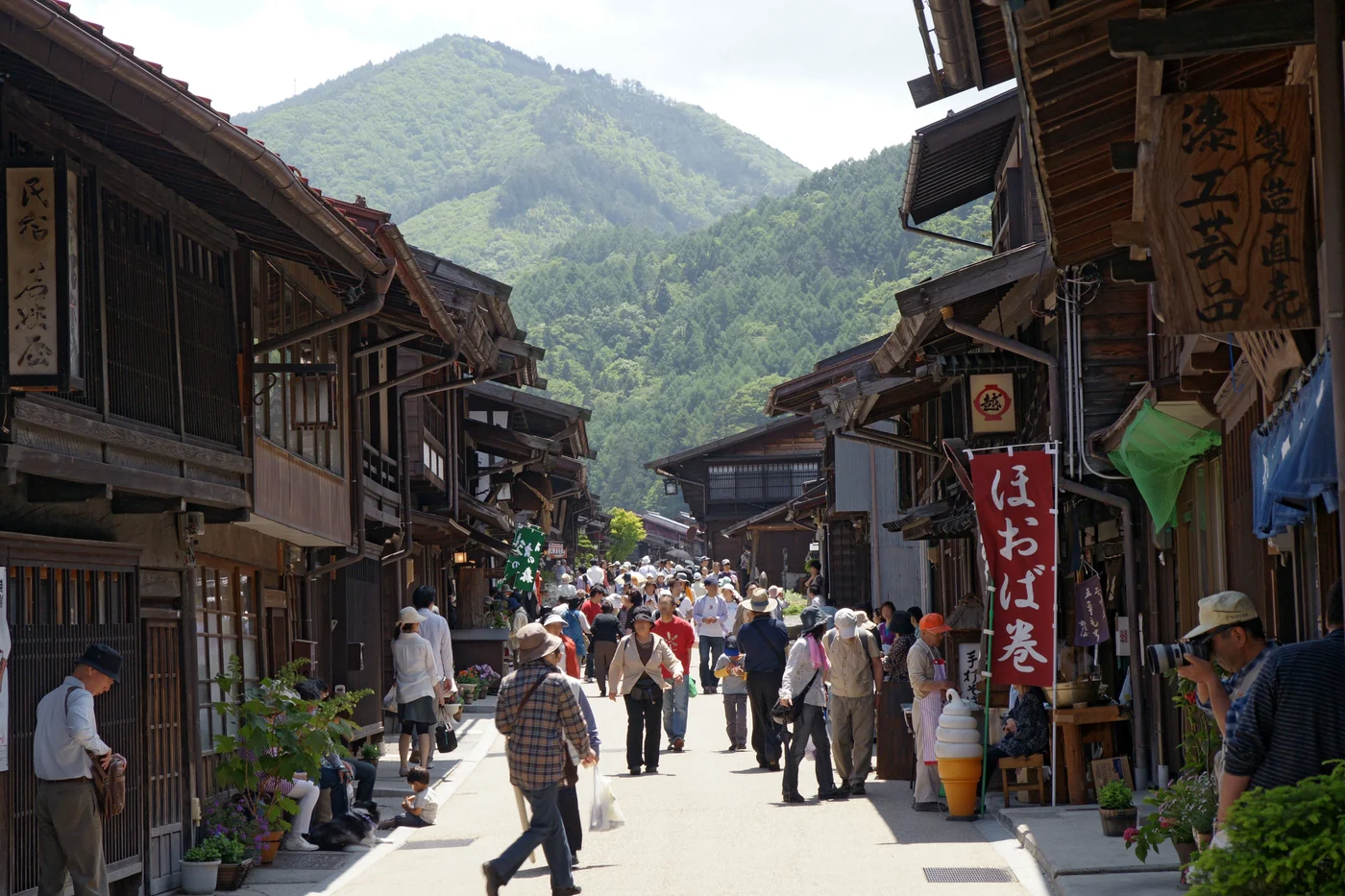
Walk from Narai Station through Shimomachi, Nakamachi and Kamimachi, reading eaves, doorways and the Kagi-no-te bend. Choose the comb merchant’s Nakamura Residence or Kamitoiya Museum, then compare Kiso Hirasawa’s lacquerware museum, polishing workshop and shops, with 2026 admission and winter schedules.
The station is north: Shimomachi, Nakamachi and Kamimachi had different roles
The official walking map places JR Narai Station at the northern end, with Shizume Shrine and the direction of Torii Pass at the southern end. From the station, walk through Shimomachi, Nakamachi and Kamimachi in that order. The map’s 中町 and the tourism association’s 仲町 refer to the same central neighbourhood. Find the station, Kamitoiya Museum, Nakamura Residence and Shizume Shrine first. These four points establish the main walking direction.
Shimomachi formerly housed woodworkers, lacquerers and other craftspeople, with narrower townhouse frontages. The centre had the honjin and wakihonjin official lodgings and dispatch offices, leaving larger townhouses with broad fronts. These distinctions come from Shiojiri City’s cultural property introduction. Compare the frontages of two neighbouring houses, then look at the Tezuka Residence in the centre to connect building scale with former functions.
The road is not straight throughout. Kagi-no-te between Kamimachi and Nakamachi is a bend; Yokomizu stream separates Nakamachi and Shimomachi, and Shimomachi also has a masugata dogleg. The tourism association explains Kagi-no-te and the masugata as defensive arrangements that prevent a straight approach and restrict sightlines. Pause in a wider space at a corner and watch the houses on the far side appear gradually. One turn reveals more about the post-town street than always seeking its longest central perspective.
Beyond the main street to the south, you approach the hiking direction for Torii Pass. For a half-day townhouse walk, turn back around Shizume Shrine and view the other shopfronts on the return. The station-to-southern-end return plus museum time forms a complete route. Crossing the pass needs a separate hiking day, with different equipment, walking time and departure station.
Step back for the projecting beams, then approach the doors and shutters
Narai’s most recognisable townhouse form is dashibari-zukuri: the upper floor projects slightly towards the street, with deep eaves below. Stand where passage remains open and compare the floor edge, eaves and posts before approaching the façade. A camera aimed only at signs misses how the rows of houses change between lower and upper levels.
The tourism association’s architectural guide also identifies the large entrance door, smaller everyday wicket door, shitomido shutters beside the entrance and upper-floor latticework. Compare large and small openings and lattice patterns. The large door handles larger movements in and out, while the small door gives daily use a different scale. Open and closed doors also create different views of the frontage.
Look up for white-plastered side udatsu walls on the upper floor and the small wooden “monkey-head” elements over the canopy. Deep eaves, lattice and white walls together show that timber colour is not the street’s only material. At a favourite house, study the whole front, then choose one doorway, lattice window or detail beneath the eaves. You need not use the same photographic sequence for every house.
Sheltering under eaves also shows how their depth changes the space before the door, but entrances still need to remain accessible. Stop where you can, let people pass, then look up. Homes and working shops remain in use. For a close interior study, choose Nakamura Residence or Kamitoiya, where visitor routes let you spend time inside.
Repairs help maintain the streetscape: read roofs alongside preservation rules
Narai was selected as an Important Preservation District for Groups of Traditional Buildings on 31 May 1978. The area extends about one kilometre north–south along the street and about 200 metres east–west. Building repairs and new-construction rules help sustain today’s continuous streetscape. The tourism association states that new construction, extensions, alterations, repairs and colour changes affecting appearance require permission. How one house is repaired affects the view of the whole neighbouring row.
The Narai district’s 2025 booklet Machinami ni Ikiru sets landscape standards for new construction, including timber construction with exposed framing and projecting beams, no more than two storeys, and gabled roofs with entrances on the long side. It also specifies eaves heights and projections. Roofing material is dark-brown sheet metal, while timber doors, windows and latticework connect façades to the street. Compare these rules on site: an orderly eaves line reflects shared decisions on height, material and colour.
Do not assume every roof surface is an Edo-period original. Look separately for historic form, current materials and alignment across the row. Read the museums’ repair and preservation information if interested. The walk then shifts from finding the oldest individual house to understanding how a neighbourhood still in use continues to survive.
Nakamura Residence once faced a proposal to move it to Kawasaki’s open-air folk house museum. The city describes this episode as a major impetus for Narai’s preservation movement. Look at its relationship with houses along the street before going inside. Preserving a whole street keeps more than building structure: it keeps connections with roads, neighbours, trade and residents’ lives.
A film produced by Shiojiri City and published on its official channel about preserving and passing on Narai-juku’s streetscape and local products.
Water points and Kagi-no-te return the street to everyday life
The tourism association explains that Narai’s water points served travellers crossing Torii Pass as well as residents. Six surviving points spread the supply through the post town. You need not collect them all. Choose one on your route and look at its side of the road and how the shelter and trough meet public space.
Trade at doorways, passing travellers and collecting water move at different speeds. Leave access clear and do not put containers into the trough to wash them. For drinking water, follow the signs at that point. For a close view, combine water, timber shelter and houses behind to see how a small space meets street life’s needs.
Look back along the main street at Kagi-no-te and the viewing direction changes. The long street visible before the bend disappears behind it: the road form creates this experience. Put it between the museums, looking first at restricted sightlines, then at who organised horses and porters in the dispatch office. Companions with different historical interests can choose street viewing, museum entry or a rest at an open business.
Nakamura Residence: a comb merchant’s townhouse and the case for keeping it here
Nakamura Residence is at 311 Narai, about 12 minutes’ walk from Narai Station according to city access information. It was the home of comb wholesaler Nakamura Rihei and is now open as a nationally designated Important Cultural Property. After the narrower artisan houses near the station, this comb-trade building places making, selling and domestic life within one townhouse context.
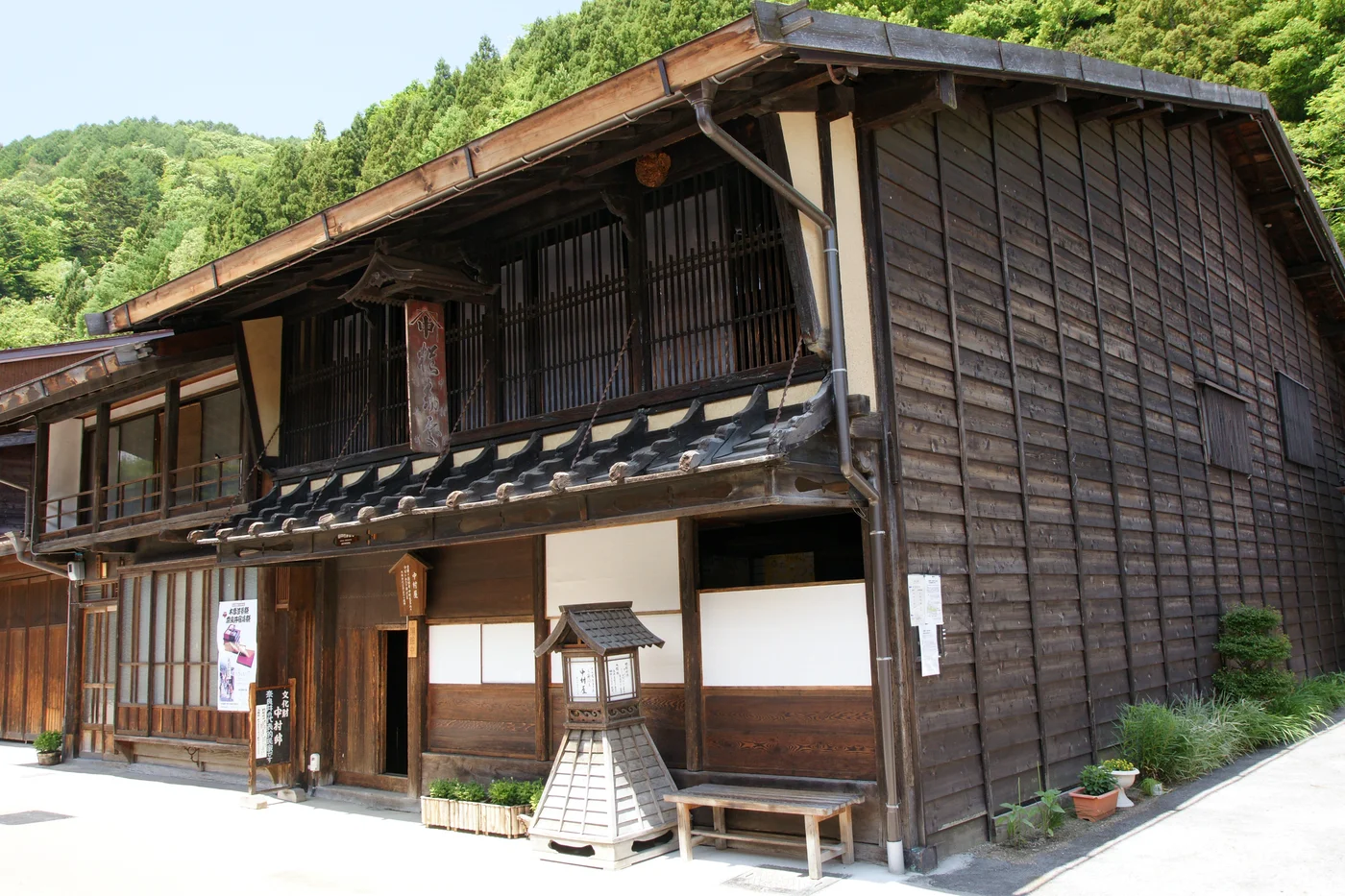
Before entry, compare the projecting beams, lattice and doorway you have learned to recognise. Inside, follow open routes and see how the street frontage meets the interior. Rather than looking only at furnishings room by room, ask how far you can see when entering from the street. Look back at the entrance from the next space to connect the effect of lattice, doors and eaves on light with the exterior façade.
Allow 35–50 minutes here for tickets, organising rainwear and reading explanations. This is a planning allowance. For architectural form alone, Nakamura Residence can be your one house. Add Kamitoiya if you want to explore how the post town functioned.
The residence information updated on 1 April 2026 lists individual adult admission at ¥500 and free entry for high school pupils and younger. People not in school also qualify free from birth until the first 31 March after turning 18. Two adults pay ¥1,000. Children visiting Kamitoiya pay according to that museum’s separate rules.
Nakamura Residence opens 09:00–17:00 from April to November, with last admission at 16:30 and no regular closure day in that period. From December to March, it opens 09:00–16:00, last admission 15:30, and closes Mondays, the day after national holidays and 29 December–3 January, with additional temporary winter closures. To retain an interior visit in winter, plan your Narai half-day around this house’s opening dates.
Kamitoiya Museum: the toiya organised post-town horses and porters
Kamitoiya Museum at 379 Narai opens the Tezuka Residence to visitors. Here, 問屋 is read toiya and refers to managing and deploying relay horses and porters assigned to the post town. Nakamura Residence’s comb wholesaler relates to trading goods. Distinguishing the terms gives each house its own question: one concerns a merchant townhouse; the other the organisation of transport services.
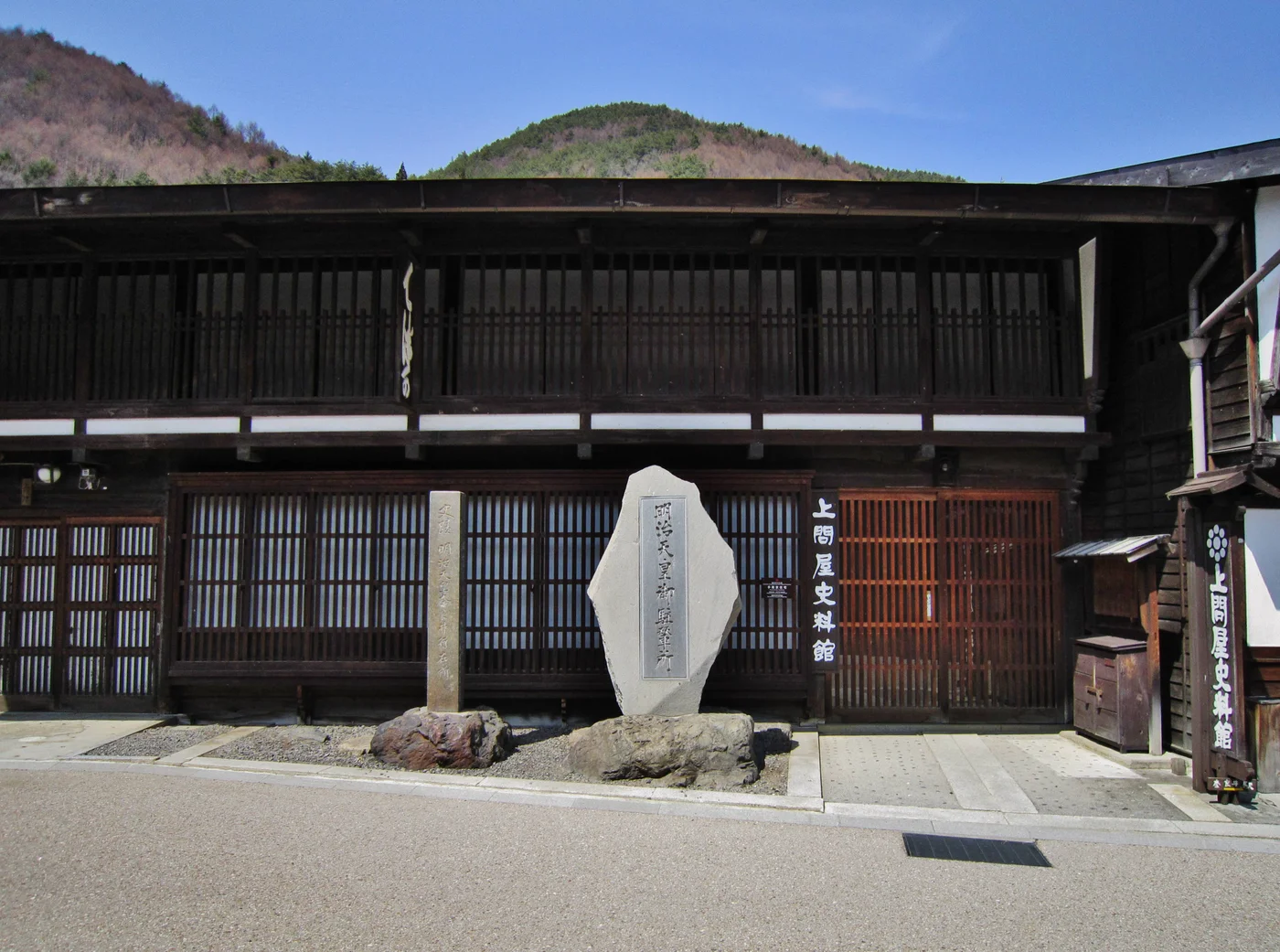
The Narai-juku tourism association explains that post stations prepared relay horses and porters for shogunate officials, feudal lords and travellers. Each of Kiso’s eleven post towns had 25 people and 25 horses allocated. Managers turned movement along the road into work that could be assigned. Inside Kamitoiya, consider who carried goods or arranged the next stage of labour after travellers arrived. The building then connects with the road’s function.
The Tezuka family served as toiya for about 270 years from 1602 to around the Meiji Restoration, sometimes also acting as village headman. More than 400 items include old documents, ceramics, lacquerware and household tools. Look for records of management and exchange in the documents, then domestic life in the objects, joining official duties and family home in one visit. For institutional history, spend longer here and skip a few similar souvenir shops.
Allow 40–60 minutes in this plan, then walk through Kagi-no-te to Nakamura Residence: horse and porter dispatch, street bend, then comb merchant’s house. If documents interest a companion less, start with the building and one group of objects, then return to the street façades. The number of exhibits is not a requirement to see every item.
The tourism association’s Japanese information updated on 31 March 2026 lists ¥400 for adults and ¥200 for children. Hours are 10:00–17:00 from April to October, closing at 16:00 in March and November. It closes for the entire December–February season and irregularly in other months. Arrive with a full viewing allowance before closing; remove this museum from the winter itinerary.
Compare admission and seasons: November is easy to misread
Both houses show townhouse architecture, but November closing times differ. Nakamura Residence stays open until 17:00, last admission 16:30; Kamitoiya closes at 16:00. For an afternoon arrival, visit Kamitoiya first, then Nakamura Residence. If time is short, choose one and save the other. Treating both as “old street museums closing at five” loses your final viewing time.
For an adult visiting only Narai’s two houses, ¥500 plus ¥400 totals ¥900. This matches the municipal three-museum combination ticket’s price, but the included sites differ. That ticket covers Nakamura Residence, Kiso Lacquerware Museum and Niekawa Checkpoint. Kamitoiya costs another ¥400. For Narai only, buy the two houses separately. For Hirasawa’s lacquerware museum too, compare the other combination.
Nakamura Residence at ¥500 plus Kiso Lacquerware Museum at ¥400 also totals ¥900, so the combination ticket gives no saving for these two alone. It additionally includes Niekawa Checkpoint, useful if Niekawa is already planned, but Niekawa needs another journey. Choose tickets for museums you actually want. Save Niekawa for a Nakasendo transport-history trip rather than adding a stop only because it is included.
From December to February, a two-townhouse Narai day becomes Nakamura Residence, the street, food and shopping. Kamitoiya returns to its opening season in March while Nakamura Residence still uses winter hours. Both move to longer opening arrangements in April. Write these seasonal boundaries into the day’s plan so museum choice is settled before departure.
| Museum | Adult / free eligibility | Seasons and closures |
|---|---|---|
| Nakamura Residence | 500; high school pupils and younger and other specified groups free | April–November 09:00–17:00, last 16:30; December–March to 16:00, last 15:30, with winter closures |
| Kamitoiya Museum | 400; children 200 | April–October 10:00–17:00; March and November to 16:00; closed December–February, otherwise irregular closures |
| Kiso Lacquerware Museum | 400; high school pupils and younger and other specified groups free | April–November 09:00–17:00, last 16:30; December–March to 16:00, last 15:30; closed Mondays, days after holidays and year-end/New Year |
A half-day on Narai’s main street: use the return as a second look
For a half-day example, start already at Narai Station at 10:00. Look at frontages and eaves through Shimomachi, reach Kamitoiya around 10:30 and stay until about 11:20. Continue via Kagi-no-te to Nakamura Residence for 11:30–12:15. These are walking-plan times for dates when both museums open. If arriving later or wanting more reading time, choose one house and give the rest to the southern street.
Allow 45–60 minutes for lunch, then walk towards Shizume Shrine and return north along the main street. On the outward walk, look at road form and houses; on the return, take the other side for woodwork, lacquerware or a snack. Do not leave the walk from the south end to the station for the final five minutes. A return near the station around 14:00 completes the half-day, with scope to extend according to your actual train.
Use the official walking map’s soba restaurants, dining venues and gohei-mochi shops to begin choosing lunch. For a seated meal, reserve time before the next museum. For gohei-mochi or oyaki, allow an unhurried light meal instead. The map shows business type and location; read shop notices for the day’s menu, opening and order times, and budget for what you choose.
On the return, ask a different question about familiar wooden doors: which is for daily entry, which lattice admits light, and which corner hides the long street? Before entry you saw an exterior; afterwards you have something to compare. For a shorter half-day, omit the southern return and concentrate on the two street stretches around your chosen museum.
Kiso Hirasawa is a lacquerworking town: workshops and stores behind the shops
Kiso Hirasawa, north of Narai, developed as a lacquerworking town as craftspeople gathered near timber sources including Kiso cypress. Shiojiri City Tourism Association’s Hirasawa route describes lacquerware shops facing the road, with workshops and storehouses behind. Moving from Narai’s post-town houses to Hirasawa shifts attention from travellers and roads to relationships between products, production and storage.
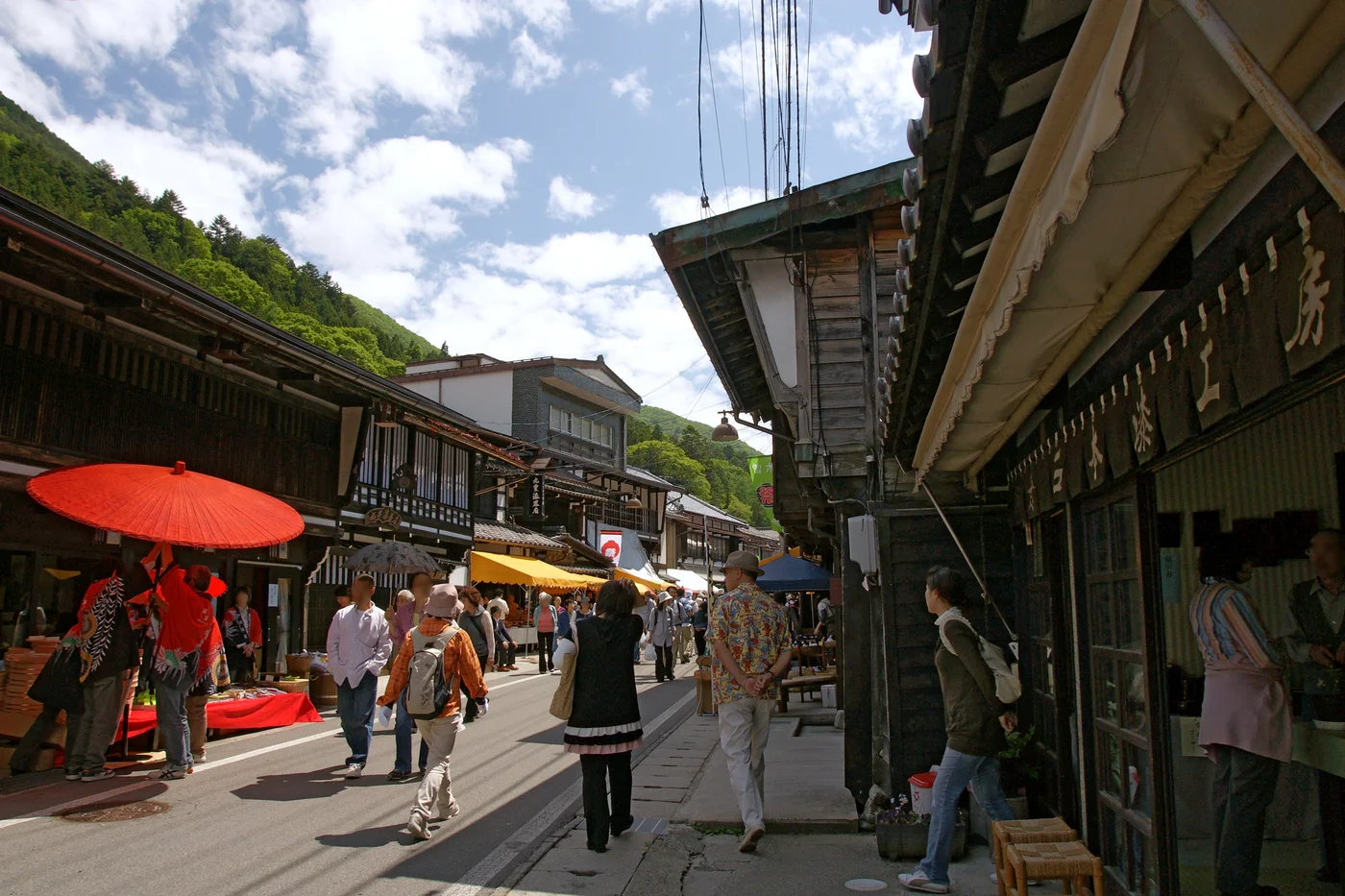
The official Narai walking map marks the Nakasendo link from Kiso Hirasawa to Narai-juku as 2.6 km. Walking it does not include exploring either district or visiting museums. By train, plan around Narai and Kiso-Hirasawa stations separately. Hirasawa is north of Narai. If leaving towards Shiojiri or Matsumoto, visiting Narai then Hirasawa lets you match sightseeing order with departure direction.
Hirasawa itself deserves half a day. The tourism association’s four-hour example starts at Kiso-Hirasawa Station and links the lacquerware museum, roadside-station workshop and shops: a complete route already. For an afternoon added from Narai, choose the museum and a short shopping stretch, or a booked workshop and shopping. Both Narai houses plus Hirasawa’s complete four-hour route work better over two days.
In Hirasawa shops, first identify the display and sales area. Arrange workshop visits with the business. The connection between shops, workshops and storehouses can be read in the settlement’s form; production has its own working schedule. For purchases, ask about size, finishing and care in the reception area. For processes, begin at Kiso Lacquerware Museum. Each aim has a suitable starting point.
Kiso Lacquerware Museum: understand tools and processes before shopping
Kiso Lacquerware Museum is at 2324-150 Kiso Hirasawa. The city gives about ten minutes on foot from Kiso-Hirasawa Station; the tourism association allows about 15 minutes with its route into the district. This plan allows 15–20 minutes for finding the way and entering, then 45–60 minutes for displays. Keep the same walking allowance for the return, especially with shopping and wrapping afterwards. The museum doorway is not the station platform.
The museum information describes a collection including 3,729 Kiso lacquer production tools and products designated as an Important Tangible Folk Cultural Property. Tools, works and documents present the process. Choose a group of tools, read its task and find a corresponding object to put scraping, coating and polishing back into the finished vessel.
The museum also lists works by Living National Treasures and prefectural equivalents. The current exhibition introduction includes document boxes, hot-water vessels, inkstone boxes, writing boxes, Chinese carved red lacquer and Thai and Burmese lacquerware on the first floor. Compare openings, lids and decoration positions before origins and techniques so everyday vessels and display works remain distinct. The figure above three thousand counts the designated cultural property group; view the objects in the current display.
The tourism association also describes a display on making the Nagano 1998 Winter Olympics medals, connecting lacquerwork with modern design. For companions less interested in old objects, start there and return to the tools. One topic that sparks curiosity can support the later shop visit.
Adult admission is ¥400, with high school pupils and younger and other specified eligible visitors free. Hours are 09:00–17:00, last admission 16:30, from April to November; 09:00–16:00, last admission 15:30, from December to March. It closes Mondays, the day after national holidays and 29 December–3 January, with additional temporary winter closures. On an ordinary Monday, use pre-arranged shops or a workshop instead. For production tools as the main aim, choose an open day.
A Kiso lacquerware introduction uploaded by Kiso Kurashi-no-Kogeikan and listed on Shiojiri City’s traditional crafts page, accompanying this section’s tools, works and production processes.
Kiso Lacquerware Museum or Kiso Kurashi-no-Kogeikan: choose exhibits or hands-on work
Kiso Lacquerware Museum focuses on historic tools, works and production displays. Kiso Kurashi-no-Kogeikan is at Roadside Station Kiso Narakawa, 2272-7 Kiso Hirasawa. The tourism association allows about 25 minutes on foot between museum and roadside station. Their similar names refer to separate locations and activities. Write the full names and addresses in your itinerary and book the workshop directly with the roadside-station organiser.
The roadside station’s Kiso tsuishu lacquer polishing workshop uses materials already coated with layers of different coloured lacquer. Participants sand them to reveal patterns. Polishing gradually exposes colour layers and surface contours; each person’s hand movements change the pattern. For a practical understanding of a lacquerware surface, it turns a museum process into hands-on work.
The tourism association currently lists coasters, chopsticks and spoons at ¥3,500 each. Coasters and spoons take about 40–60 minutes, chopsticks about 80 minutes. A minimum of two participants is required, with contact no later than two weeks ahead. Add the introduction, tidying and departure travel. For an afternoon coming from Narai, a shorter item more easily preserves shopping time.
An artisan completes the finishing work and sends it about three to four weeks later. On the workshop day you complete your own sanding stage. Overseas visitors should agree a delivery address, method and cost when booking, then include delivery in the budget. Materials contain lacquer, which can cause skin allergies. Anyone sensitive to lacquer can retain the craft theme through exhibits and shopping.
With a confirmed workshop booking, go to the correct venue first on reaching Hirasawa and fit the museum and shops into remaining time. Allow enough time to polish chopsticks well. You can omit a morning Narai museum or choose only one Hirasawa shop. The process you actually carry out gives the day substance without adding more museum names.
Choose lacquerware from a meal you intend to use it for
For a first Kiso lacquerware purchase, consider daily use at home: an everyday bowl, coffee cup or gift pair of chopsticks. Compare weight, rim and grip before decoration. For a gift, consider the box, carrying space and recipient’s habits. Ask about the wooden body or other base material, surface finish, washing, heat resistance and repair for that item. This connects an attractive object with actual use.
The tourism association introduces Maruka Kosaka Lacquerware Shop, combining lacquer with glass in wine glasses and other glassware. If you had only pictured traditional wooden bowls, compare transparent bases and lacquer here. Ito Kanji Shoten’s Kodai Akane-nuri uses a low-gloss vermilion finish, including Western-style coffee cups and saucers. One direction explores material changes, the other colour and vessel use. Choose what you want to bring home before entering.
Maruka Kosaka’s workshop and gallery have separate opening arrangements. The tourism association lists the gallery as opening irregularly; Ito Kanji Shoten also has irregular closures. If one is a main shopping aim, arrange a visiting time first. For a general walk, compare shops open that day. Have purchases wrapped before deciding how far to continue. Fragile glass and larger boxes change how you carry things that afternoon.
Narai’s main street also sells woodwork and lacquerware. With half a day, choose one item you will use there. Hirasawa better suits people with production tools, techniques or a named shop as their aim. The choice depends on the time you want to invest, rather than one place name being necessary for a correct purchase.
Two full-day choices: stay in Narai or give the afternoon to Hirasawa
For an architecture day, use the morning two-house plan, eat lunch and walk towards Shizume Shrine, then return north slowly. In the afternoon, choose a water point, shop and townhouse façade to revisit, comparing projecting beams, doors and bends. This suits rest stops, photography or avoiding another train. Adult admission totals ¥900; food and shopping are your choice.
For a craft day, visit only Nakamura Residence or Kamitoiya in Narai, then move to Kiso Hirasawa after lunch for the lacquerware museum and shops. Nakamura at ¥500 plus the museum at ¥400 gives adult admission of ¥900. Kamitoiya at ¥400 plus the museum gives ¥800. The ¥100 difference matters less than whether you want a comb merchant’s house or a transport dispatch office. Spend on the subject that interests you.
For a polishing day, make the afternoon a roadside-station booking rather than copying Hirasawa’s full four-hour route as well. Two adults each doing a ¥3,500 item pay ¥7,000. If both visit Nakamura Residence that morning, add ¥1,000 for a known total of ¥8,000 for those two activities. Food, transport, shopping and delivery depend on actual orders.
Shiojiri City’s 2026 free circular shuttle announcement lists 31 specified operating days across the year. Stops include Kiso Kurashi-no-Kogeikan, Kiso Hirasawa waterside park, Narai Kiso-no-Ohashi and Kiso Village Hall. Announced autumn dates include 31 October, 1–3 November and 21–23 November. Include it as an option on those dates; otherwise use regular transport such as rail. Distinguish the Kiso-no-Ohashi shuttle stop from JR Narai Station and add walking time.
The original stop notice on the same city page gives operation from 09:30 to 16:00, paused from 12:30 to 13:30, with one 27-passenger vehicle and a round trip of about 50 minutes. The 50 minutes describes the whole circuit. Base waiting on the vehicle’s current position and avoid the one-hour lunch pause. For an afternoon in Hirasawa, see only one Narai house, eat lunch and go to the Kiso-no-Ohashi stop, leaving time to wait and travel before the museum or booked activity.
The Hirasawa stop is Urushi-no-Sato Ekimae Mizube Park. For polishing, use the Kiso Kurashi-no-Kogeikan stop instead; they serve different activities. Use the Hirasawa park for the museum and shops, or go directly to Kogeikan for workshop check-in. To return to Narai on the same shuttle, include its 16:00 finish and midday pause. Before booking a workshop ending after the shuttle, arrange the walk from Kogeikan to Kiso-Hirasawa Station and an actual train connection.
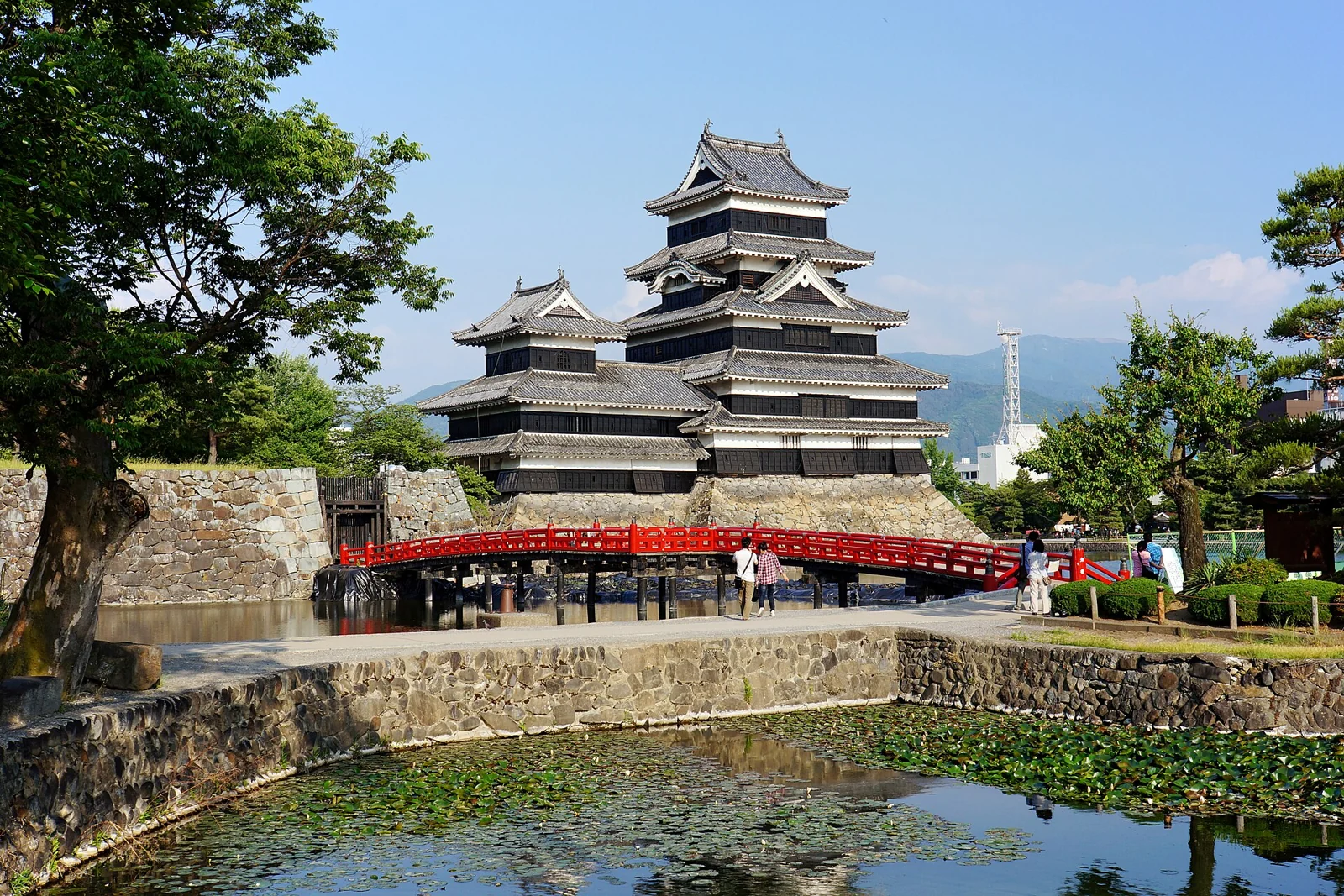
With another day after returning to Matsumoto, Matsumoto Castle, the City Museum and Nawate Street make a different urban architecture day. To the south in Kiso, reserve separate daylight for Tsumago, Magome and a Nakasendo hike.
A few useful answers
Is half a day enough for Narai-juku?
Half a day suits the main street and one townhouse. Allow about four hours for both houses, lunch and the southern return. Reserve another afternoon for Hirasawa’s museum and shopping; a polishing workshop should follow the booked time.
How do Nakamura Residence and Kamitoiya Museum differ?
Nakamura Residence is comb wholesaler Nakamura Rihei’s townhouse. Kamitoiya is the Tezuka Residence, displaying documents and household tools related to managing post-town relay horses and porters. Adult admission is ¥500 and ¥400 respectively.
Can I visit historic house interiors in Narai-juku in winter?
Nakamura Residence opens 09:00–16:00 from December to March, last admission 15:30. It closes Mondays, the day after national holidays, 29 December–3 January and temporary winter closure dates. Kamitoiya closes throughout December–February and closes at 16:00 in March.
Does the ¥900 combination ticket include Kamitoiya?
The municipal combination covers Nakamura Residence, Kiso Lacquerware Museum and Niekawa Checkpoint. Kamitoiya costs another ¥400. Nakamura plus the lacquerware museum also totals ¥900 separately.
Can I walk from Narai-juku to Kiso Hirasawa along the way?
The official map’s Nakasendo link is about 2.6 km, plus walking within both districts and museum visits. Treat Hirasawa as a separate craft branch and plan transport and stays around Narai and Kiso-Hirasawa stations.
Can I take my polished lacquerware home on the workshop day?
The tourism association says an artisan finishes the item after your polishing stage, then sends it about three to four weeks later. Minimum two participants; contact no later than two weeks ahead. Overseas visitors should arrange delivery address, method and cost when booking.
Does the free 2026 shuttle run every day?
Only on the city’s 31 announced dates. Autumn dates include 31 October, 1–3 November and 21–23 November. It runs 09:30–16:00, paused 12:30–13:30, with one 27-passenger vehicle and a round trip of about 50 minutes. Use different stops for Hirasawa’s streets and the roadside-station workshop.
Official information and references
Sources used in this guide.
- Shiojiri City | Nakamura Residence 2026 admission and opening
- Narai-juku Tourism Association | Kamitoiya Museum 2026 Japanese guide
- Shiojiri City cultural properties | Narai preservation district, artisan streets and large townhouses
- Narai-juku Tourism Association | Water points
- Narai-juku Tourism Association | Street and architectural elements
- Narai district, Machinami ni Ikiru (2025) | Preservation, landscape and living rules
- Shiojiri City | Kiso Lacquerware Museum 2026 admission and opening
- Shiojiri City Tourism Association | Hirasawa museum, polishing workshop and shops
- Official Narai-juku walking map | April 2025 edition
- Shiojiri City | Specified 2026 Narakawa–Kiso Village circular shuttle dates