Choose Hiroshima autumn foliage spots by timing. Compare night illuminations at Shukkeien and Miyajima, Taishakukyo pleasure boats and seasonal buses, plus Onbashi closures, ropeway booking, wet-weather backups and stays.
- Region & Focus
- Hiroshima
- Reading Scope
- 20 min read · 11 chapters · 6 Q&As
- Official Verification
- 35 official sources checkedUpdated 22 November 2026
- Key Topics
- SeasonsFirst tripItineraries
Chapter Route Map (tap any stop)
- Which November Weekend Is Worth Going?
- Half a Day at Shukkeien: Start from the West Side of the Pond
- Rain in the City: Save the Garden for a Dry Spell
- Taishakukyo Autumn Foliage: Start at Lake Shinryu
- Where Do Direct Buses to Taishakukyo Depart?
- With Onbashi Closed, How Should You Plan Kami-Taishaku?
- Miyajima Day Trip: Pick Your Ferry and Check the Tide First
- When Ropeway Reservations Apply, Is Mount Misen Worth Adding?
- Pairing Shukkeien and Miyajima Night Illuminations
- With Only One Day, or Room for an Overnight Stay
- Where to Stay: Hiroshima Station, Miyajimaguchi or Miyajima Island?
- Quick Q&A
With just one day in Hiroshima in mid-to-late November, you can visit Miyajima's Momijidani Park and Itsukushima Shrine in the morning and still return to the city for Shukkeien Garden in the afternoon. If you are making a dedicated trip to Taishakukyo for Lake Shinryu, set aside the entire day. Shukkeien turns later in the season, with the garden listing peak autumn foliage from late November to early December. In 2026, the night illuminations at Shukkeien and Momijidani Park overlap, so staying one night in Hiroshima city or on Miyajima lets you enjoy both evenings without rushing.
Which November Weekend Is Worth Going?
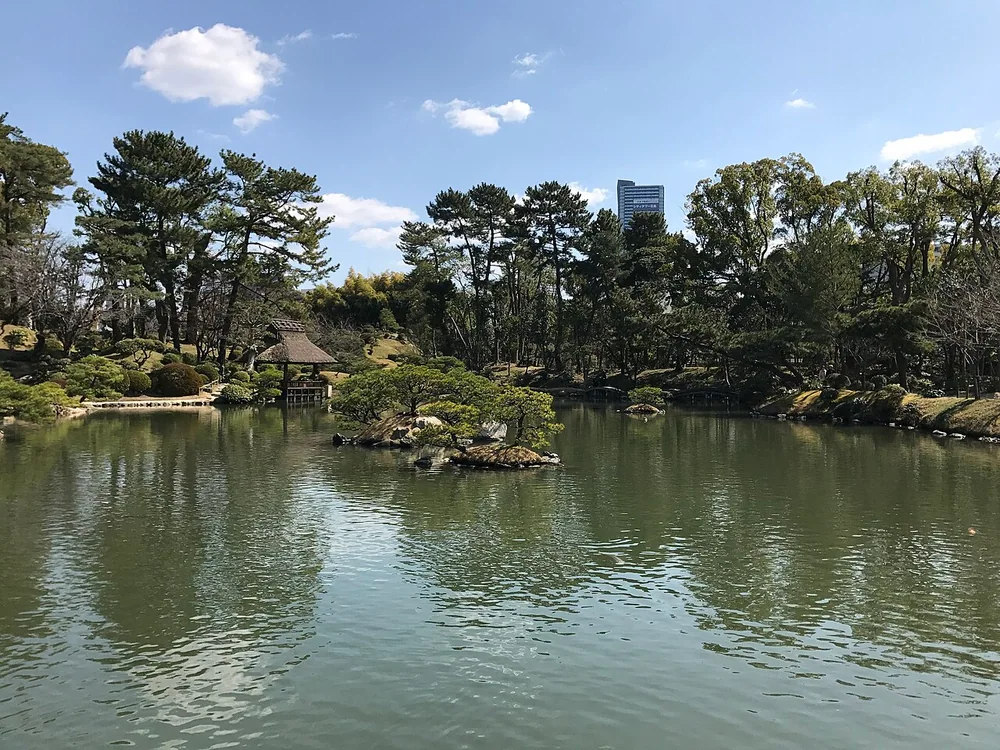
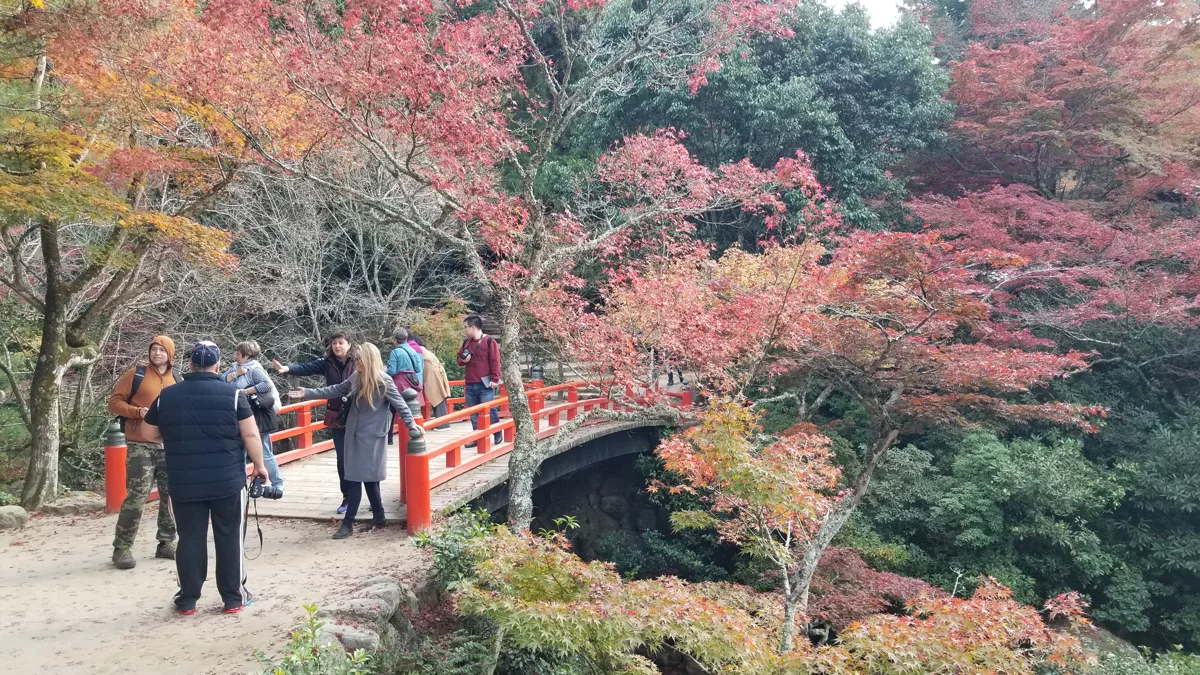
Start by choosing the kind of scenery you want to see. Lake Shinryu is framed by tree-lined cliffs that you take in alongside water reflections from a boat. Miyajima's Momijidani has maples growing along a mountain stream, putting foliage right in front of you as soon as you reach Momiji Bridge. Shukkeien condenses its autumn colour into a traditional landscape garden, where a single view from the opposite bank of Takuei-ike Pond captures maples, an arched bridge and their reflection in one frame, making it workable even with only two or three hours to spare.
To catch early-November colour in northern Hiroshima Prefecture, put Taishakukyo on your shortlist. The Shobara Tourism Promotion Organisation's foliage reports track Taishakukyo and Lake Shinryu as a dedicated entry, with dated photos you can compare against previous updates. On 7 November 2026, colour was still only starting to turn in patches, and the Lake Shinryu boat operator did not report peak foliage until 14 November. If you plan to head north in early November in another year, check the latest lakeside photos before buying tickets.
The Miyajima Tourist Association places Momijidani's autumn viewing season from mid-to-late November. On 20 November 2026, the association reported both Momijidani Park and Daisho-in at peak colour together. When both are vibrant and you only have half a day, walk Momiji Bridge first and add Daisho-in if you want temple maples above stone steps; if anyone in your group struggles with stairs, spend the second half along the flat coastline outside the shrine instead.
If you are choosing a single spot between late November and early December, Shukkeien is the easiest to plan. Even when the canopy turns unevenly, you can still find pockets of bright red leaves around the pond and step into the neighbouring art museum. A December visit to Taishakukyo requires separate transport and route planning: in 2026, pleasure boats ran until 30 November and seasonal direct buses ended even earlier, leaving December drivers with open lakeside trails only. If Taishakukyo photos already show heavy leaf fall, keep half a day in the city rather than driving north for the last few leaves.
| Spot | Best Timing | Main Highlights | Best-Suited Trip |
|---|---|---|---|
| Shukkeien Garden | Late November to early December | Takuei-ike Pond, Kokokyo Bridge and west-side maples | Half-day in Hiroshima city with afternoon train flexibility |
| Miyajima Momijidani | Mid-to-late November | Momiji Bridge, valley stream and walkable access to Itsukushima Shrine | Car-free day trip or overnight island stay for night illuminations |
| Taishakukyo Lake Shinryu | Check northern colour updates in November; boat operator reported peak on 14 November 2026 | Limestone gorge, lake views and pleasure boats | Full-day trip from Hiroshima |
Choose Hiroshima autumn foliage spots by timing. Compare night illuminations at Shukkeien and Miyajima, Taishakukyo pleasure boats and seasonal buses, plus Onbashi closures, ropeway booking, wet-weather backups and stays.
Half a Day at Shukkeien: Start from the West Side of the Pond
From JR Hiroshima Station's Shinkansen Exit, take the Hiroshima Sightseeing Loop Bus (Hiroshima Meipuru-pu) to Prefectural Art Museum-mae (Shukkeien-mae). From the South Exit, walk to bus stop 21 for Hiroshima Bus route 26 towards Hijiyamabashi and Asahimachi, getting off at Shukkeien Iriguchi. If you are already in Hatchobori, taking the Hakushima tram line to Shukkeien-mae is the quickest option. Riding the tram from Hiroshima Station requires a change at Hatchobori, so drop large bags at your accommodation before visiting the garden.
The garden's official map marks the standard pond circuit at roughly 50 minutes and the shorter western loop at about 30 minutes. If you are here primarily for maples, use the western loop as your core route: walk from the Seifukan side to the pond edge for Kokokyo Bridge, then follow the west and northwest garden paths. Stopping on either side of the pond gives cleaner framing of the arched bridge than trying to take photos while moving with crowds on the bridge itself. When wind ripples the water, spend time on the lakeside branches first and check the reflections again on your return.
Narrow paths and stone steps along the west side can slow a family group down. If travelling with a wheelchair or pushchair, stick to the green accessible route marked on the garden map and view the smaller slopes from the pond edge. When part of your group wants the short loop while photographers walk the full circuit, set a meeting point near Seifukan by the entrance. Bear in mind that the 30- and 50-minute map times are walking estimates only, so allow extra time for photography and waiting.
From 16 September to 15 March, regular hours are 09:00–17:00 with last entry at 16:30 (closed 29–31 December). Standard admission is ¥350 for adults and ¥150 for university students, while high school students and younger and seniors aged 65 and over enter free (seniors should bring official photo ID showing age). Admission is free on Culture Day, 3 November. A combined ticket with the Hiroshima Prefectural Art Museum costs ¥660 for adults and ¥350 for university students, though special exhibition tickets are priced separately.
There is a paid car park opposite the garden gate with 29 spaces listed by the garden. Rates are ¥400 for the first hour and ¥200 for each additional 30 minutes, and queuing on the street when full is prohibited. If you are returning from a drive to Taishakukyo, park at your hotel or drop off the rental car before visiting Shukkeien so you avoid city traffic and do not have to cut your garden walk short.
Rain in the City: Save the Garden for a Dry Spell
The Hiroshima Prefectural Art Museum sits right beside Shukkeien. If it rains in the morning, view the permanent collection indoors first and walk into the garden once the showers ease. Standard museum hours are 09:00–17:00 (last entry 30 minutes before closing), normally closed on Mondays and from 25 December to 1 January, with exceptions for special exhibitions and public holidays. On Fridays between 24 September 2026 and 31 March 2027, the museum stays open until 19:00—so during a brief Friday clearing, tour the garden first and leave the late-closing galleries for dusk.
If you still want a brief outdoor walk in the rain, keep to the entrance half of Takuei-ike Pond along flat paths and turn back if your soles start slipping. In particular, avoid steep routes just to cross Kokokyo Bridge. Head back to the entrance ticket area when you are ready to rest at the art museum. Keeping both sights in the same morning means you will not need to backtrack from Kamiyacho once the skies clear.
On a dry day, you can stroll from Shukkeien along the moat to Hiroshima Castle. The existing main keep permanently closed its interior to visitors on 22 March 2026, though you can still see its exterior from the castle grounds. To enter a castle structure, head to the reconstructed Ninomaru turrets, which offer free admission and stay open until 16:30 from October to March (last entry 16:00; shoes must be removed; closed 8 December and 29–31 December 2026). If some in your group want a rest while others explore the grounds, arrange to meet at the Sannomaru commercial area.
If you are planning for autumn 2027, the Hiroshima Castle Sannomaru History Museum has announced a preliminary opening on 1 June with exhibition rooms scheduled to open on 1 October, featuring artefacts from the former keep alongside scale models of the large and small keeps—making it a natural rainy-day pairing with Shukkeien. If steady rain falls on a Monday when the museum is closed, secure an indoor stop first and drop the open-air moat and Momiji Bridge from your itinerary.
Taishakukyo Autumn Foliage: Start at Lake Shinryu
Taishakukyo lies along the border between Tojo-cho in Shobara City and Jinsekikogen-cho. The Taishaku River valley features limestone formations upstream and the dammed Lake Shinryu downstream. Kami-Taishaku and Lake Shinryu have separate entrances and car parks, so enter "Taishakukyo Yuransen" (Taishakukyo Pleasure Boat) or "Misaka Parking" into your satnav. If the boat cruise is your main goal, keep lunch and lakeside walks in the same area rather than trying to squeeze in the upstream natural bridge before boarding.
Formed during the Taisho era, Lake Shinryu stretches narrowly through the gorge. The pleasure boat completes a roughly 40-minute loop and offers a tatami-floored cabin with audio commentary along the route, making it ideal when you want cliffside foliage views from the water or when companions cannot walk long distances. Step back inside when a cold breeze picks up, and hold your lens close to the window glass to reduce reflections. Visitors content with mountain views from shore can simply stroll a short stretch along the lake, saving both time and the boat fare.
In 2026, the Lake Shinryu pleasure boat season runs from 20 March to 30 November, operating 09:00–16:00, with the operator's autumn foliage page noting daily sailings with no closed days during the season. Fares are ¥1,800 for adults, ¥900 for primary school children and free for pre-schoolers (groups of 15 or more: ¥1,500 adults, ¥750 primary school children). Sailings can be suspended in poor weather, so travellers taking the seasonal bus should phone 0847-86-0131 on the morning of travel to confirm operations and available afternoon times, and avoid assuming 16:00 represents a guaranteed individual departure.
Driving from central Hiroshima via the Chugoku Expressway takes about 15 minutes from Tojo IC to Lake Shinryu. Misaka is one of the paid lakeside car parks, and the boat operator's address is 5034-7 Nagano, Jinsekikogen-cho. When the weather turns, assess water and trail conditions near the boat entrance first. If high winds or heavy rain halt sailings while you are still in Hiroshima city, switch to the art museum; if you have already reached the lake in light rain, stick to open paths near the entrance and head back early.
For a full-day visit, board the morning boat upon arriving at Lake Shinryu, then decide on a lakeside walk after lunch depending on the light. If one person wants a longer hike, they can walk along the lake and loop back to meet on the same side without needing two cars. Packing photos, lunch and a Kami-Taishaku detour into the afternoon leaves little margin before dark back at the car park. Keep gloves in an outer pocket if your hands chill easily, as stepping out for deck photos feels colder than sitting in a car, and stay by the water while daylight lasts before heading back to Tojo.
Where Do Direct Buses to Taishakukyo Depart?
In 2026, Bihoku Kotsu's Taishakukyo Liner serves Lake Shinryu only on Saturdays, Sundays and Japanese national holidays from 17 October to 23 November. Outbound buses leave Hiroshima Station North Exit (Shinkansen Exit) platform 3 at 09:30, call at Hiroshima Bus Centre bay 9 at 09:45, and arrive at Taishaku (Shinryu-ko) at 12:25. The return service departs the lakeside at 16:04, reaching Hiroshima Bus Centre at 18:50 and Hiroshima Station North Exit at 19:07.
The 2026 adult single fare between Hiroshima Station or the Bus Centre and Lake Shinryu is ¥2,770. If you are taking the return bus and definitely riding the boat, the ¥5,400 adult combo ticket covers return bus travel, a boat voucher and a souvenir—saving against ¥5,540 for two separate bus singles or ¥7,340 with the boat added. There is no child combo ticket; paper tickets are sold at the 3rd-floor counter of Hiroshima Bus Centre, and digital tickets are available via MOBIRY TRAVEL. Split bus and boat tickets if anyone in your family prefers to walk along the lake rather than sail.
You have roughly 3 hours and 40 minutes between arriving and catching the return coach. Take the boat cruise first, then use the remaining window for lunch and a short lakeside walk nearby. Spot the Hiroshima-bound bus stop as soon as you get off and leave enough time to walk back to it. Never set off on a long walk towards Kami-Taishaku right after lunch, as taking a wrong turn in the afternoon leaves no realistic way to recover in time for the return bus. Picking up onigiri or a bento at Hiroshima Station saves sit-down dining time, leaving a full block for the cruise, and returning to the Bus Centre puts you straight into Kamiyacho for dinner.
From 24 November 2026 onwards, this seasonal timetable no longer operates. For weekday visits or trips in future years without a car, plan your route backwards from Tojo by securing local return transfers between Tojo and the lake before buying tickets to Tojo—or switch that day to a JR train and ferry trip to Miyajima instead. On a two-day Hiroshima itinerary, the seasonal bus only makes sense if Lake Shinryu itself is your priority; with nearly six hours of road travel round-trip, do not try to tack on Miyajima night illuminations the same evening.
With Onbashi Closed, How Should You Plan Kami-Taishaku?
Official Hiroshima Prefecture and Shobara tourism pages list a rockfall closure from the north side of Onbashi to Shunutsu Bridge. When planning a walk in Kami-Taishaku, follow open trails only as far as the barrier and turn back rather than relying on older maps that link upstream and downstream into a single through-route. Onbashi is located in Kami-Taishaku, whereas the Lake Shinryu pleasure boat operates downstream on the lake—you see gorge cliffs and lakeside maples from the boat, not Onbashi.
On the northern side, start near Taishaku No. 1 Parking and focus on open sections around Oninokaramon and Hakuun-do Cave. Hakuun-do is a limestone cavern offering a completely different atmosphere from the lakeside. Shobara tourism lists the cave at about 200 metres long, with admission at ¥250 for adults, ¥200 for high school students and ¥150 for junior high and primary school students. Anyone who prefers to skip the damp passage can wait at the entrance, and grippy footwear is strongly recommended after autumn rain so slippery paths do not delay your return past dusk.
If staying overnight in northern Hiroshima to visit Kami-Taishaku the following morning, start your hotel search in the Tojo area. Only compare hotels in central Shobara if you already plan to visit Shobara town or Kokuei Bihoku Hillside Park the next day, matching your overnight base to the next morning's driving direction to avoid backtracking. If you need to get back to Hiroshima Station the same evening and have already taken the lake cruise, keep Kami-Taishaku as an optional second stop you can drop to leave early.
Miyajima Day Trip: Pick Your Ferry and Check the Tide First
From JR Hiroshima Station, take a westbound JR Sanyo Main Line train stopping at Miyajimaguchi, a roughly 25-minute journey according to Hiroshima City figures, followed by a 5-minute walk to Miyajimaguchi Ferry Terminal. From Hatchobori or Kamiyacho, you can also ride Hiroshima Electric Railway (Hiroden) Line 2 bound for Hiroden-Miyajimaguchi—check the destination display on the front, as services terminating at Hiroden-Nishi-Hiroshima require changing trams along the line. Choose JR when starting from Hiroshima Station or connecting to a Shinkansen.
JR West Miyajima Ferry and Miyajima Matsudai Kisen share the Miyajimaguchi terminal with separate boarding entrances, so if you buy a return ticket, remember which operator's pier to use for the crossing back. Both charge ¥200 one-way for adults and ¥100 for children, plus a ¥100 Miyajima Visitor Tax collected on entry (pre-schoolers exempt), bringing an adult return crossing to ¥500 before JR or tram fares. Free infant allowances differ: JR lets each fare-paying passenger bring two pre-schoolers free, whereas Matsudai allows one per paying passenger (children under one travel free).
JR West's Otorii Route normally runs on scheduled departures from Miyajimaguchi between 09:10 and 16:10 at no extra charge, taking about 10 minutes. Stand on the right-hand side facing forward to see the Great Torii gate and shrine from the water before docking. If you prefer an earlier ferry to reach a quieter Momijidani, save the torii view for dry land rather than waiting until 09:10; even when high tides alter the ferry path, the gate remains easy to view from shore.
After disembarking, walk along the coast towards Itsukushima Shrine and take the road past Iwaso up to Momijidani Park (search "Momijidani Park Entrance" and "Momiji-bashi" on maps). Without stops along the shopping street, the Ministry of the Environment walking map puts the walk from the pier to the Momijidani trailhead at around 25 minutes. Park entry is free; for a shorter visit, cross the bridge, follow the stream partway and loop back to the shrine. If the morning colour looks particularly good, linger in the valley and save Omotesando snacks and lunch for your walk back towards the pier.
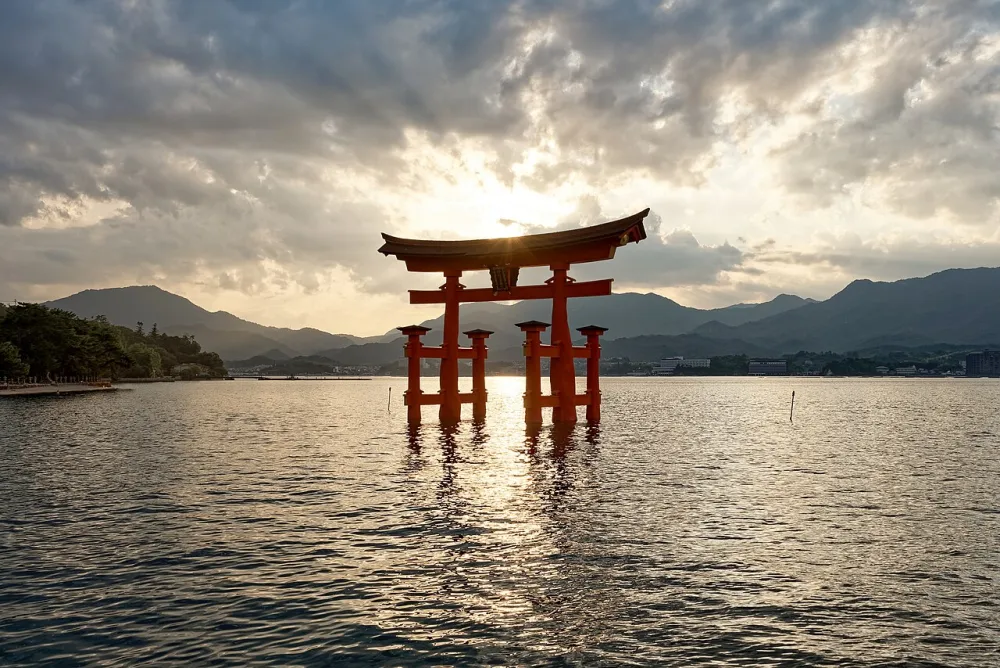
To walk Itsukushima Shrine's sea-level corridors, check the Miyajima Tourist Association monthly tide table first. Tide heights above 250 cm give the strongest impression of the shrine floating on the sea, while levels below 100 cm let you walk out across the tidal flats towards the torii. Early-morning high tides are simplest for guests staying on the island; late-morning peaks slot neatly either before or after Momijidani. From 15 October to 30 November, the shrine opens 06:30–17:30, closing earlier at 17:00 in December, with admission at ¥300 for adults, ¥200 for high school students and ¥100 for junior high and primary school students.
To visit the Treasure Hall as well, buy a combined ticket at the shrine entrance (¥500 adults, ¥300 high school students, ¥150 junior high and primary school students; Treasure Hall open until 17:00), which makes a good extra stop on the way back or indoor shelter if rain picks up. In December, if you want to return to the city for afternoon foliage, head straight for the pier after walking the shrine corridors so you can dedicate the final hour to Shukkeien—time the shrine to the tide and work backwards from the garden's 16:30 last entry.
When Ropeway Reservations Apply, Is Mount Misen Worth Adding?
Momijidani Park sits at the foot of the mountain, so you only need to walk to the bridge to see the valley maples. Riding the Miyajima Ropeway is for ascending to Shishiiwa for sweeping views across the Seto Inland Sea. You take the first leg from Momijidani Station to Kayatani Station and change there for Shishiiwa Station. Pure riding time is about 10 minutes plus 4 minutes, and the operator estimates roughly an hour return including lookout views, plus another hour to hike to the Mount Misen summit and back to Shishiiwa Station—making the summit climb the easiest part to drop on a half-day visit.
Return fares are ¥2,000 for adults and ¥1,000 for primary school children (single fares ¥1,100 and ¥550), with senior rates available for guests aged 65 and over with ID. Standard uphill hours are 09:00–16:00, with the last downhill departure from Shishiiwa Station at 16:30. On 22, 23, 28 and 29 November 2026, mandatory online reservations open three months in advance. Pair your shrine high-tide timing with your target ascent window, lock in the less flexible ropeway slot first, and then choose where to eat.
Ropeway buildings have no lifts, and passengers cannot remain seated in pushchairs or wheelchairs inside the circulating gondolas—staff at the Momijidani Station office can store equipment while you ride. If anyone in your group cannot climb stairs or transfer out of a wheelchair, keep activities around the mountain base and coastline along flat sections near the shrine entrance and bridge; for sea-level views of the torii, several JR ferries include barrier-free rooms on the first deck.
Carry cash if you plan to buy a downhill-only ticket, as the Shishiiwa Station counter does not accept cashless payment. In high afternoon winds or low visibility, stay in Momijidani and along the shore outside the shrine instead, spending that saved hour on anago-meshi (conger eel rice) or a relaxed coastal walk back to the pier rather than waiting out cloud at the transfer station. With an early slot, head straight to Momijidani Station and wander the lower park afterwards; you can also use our Miyajima autumn day route guide to budget walking time between Momijidani and Mount Misen.
Pairing Shukkeien and Miyajima Night Illuminations
In 2026, Shukkeien's Momiji Matsuri runs from 20 to 29 November, illuminating the garden from sunset around 17:00 until 21:00, with last entry at 20:30. To combine a daytime Miyajima visit with city illuminations, take an afternoon ferry to Miyajimaguchi and JR back into Hiroshima. You can go straight to the garden from Hiroshima Station or drop daytime shopping at a Kamiyacho hotel first. If you want dusk photos in natural light before the lamps come on, pick your return ferry time over lunch.
Hatsukaichi City's 2026 Momijidani Park illumination runs from 13 November to 6 December from sunset until 21:00 with free entry. Daisho-in stages a separate ticketed night viewing from 17 to 29 November between 17:30 and 19:00. If doing both, visit Daisho-in first before walking down to Momijidani Bridge. If sticking to the park alone, the trees are lit as soon as dusk falls, leaving time after your daytime shrine visit for dinner at an open restaurant beforehand.
Going back to the mainland after night illuminations means checking both island ferry departures and onward rail connections from Miyajimaguchi. JR lists its last Miyajima departure at 22:14 on both standard and peak-season timetables, so leave plenty of time to walk back to the pier, cross over and reach the JR station. Work backwards from a mainland train you are sure to catch and keep one spare ferry in reserve—never mistake the final Miyajimaguchi departure for the last ferry leaving the island. Anyone wanting to stay until lights-out and walk the island again at dawn is best off sleeping on Miyajima.
The walk back to the pier feels noticeably colder at night than during the day, so pack a windproof layer. Damp fallen leaves and uneven steps become harder to spot after dark—stick to lit routes and turn towards dining streets or the pier at well-illuminated junctions. If heavy evening rain hits while you are still in Hiroshima city, bring your daytime Shukkeien visit forward to the next morning and eat in town instead, saving the pond shore for clear daylight after the rain.
With Only One Day, or Room for an Overnight Stay
If you have only one day and it is your first visit to Hiroshima, use "Miyajima in the morning, city in the afternoon" as your baseline. Leave Hiroshima Station early to reach the island around 09:00, walk Momijidani first and slot Itsukushima Shrine around the tide. After lunch on Miyajima, take an early afternoon ferry back to reach Shukkeien before 15:30; that extra hour covers the bridge and pond shore while absorbing queues for directions or tickets. If you plan to ride the ropeway or hike Mount Misen, give the whole day to Miyajima and head straight to dinner in the evening.
When foliage conditions at Taishakukyo look right and you only have one day, dedicate the full day to Lake Shinryu—focusing on the boat and lakeside walks by bus, or adding Kami-Taishaku by car if daylight holds. It is well worth a full day if you have visited Miyajima before, prefer gorge autumn scenery to classic sights, or want shots of cliff faces and water reflections. If you only want a brief look at maples before an evening Shinkansen or early flight, the city garden is far easier on your schedule.
Staying two nights in Hiroshima city lets you assign the clearer day to either Taishakukyo or Miyajima. To cover northern Hiroshima plus Miyajima, take the morning seasonal bus or pick up a hire car at Hiroshima Station North Exit on Day 1, return to the same hotel, then take an early JR train to Miyajimaguchi on Day 2. To fit Shukkeien into Day 2 as well, stick to Momijidani and the shrine and skip the Mount Misen summit; if midday high tide is ideal for the floating shrine view, lock in your shrine arrival time first and count backwards from afternoon Shukkeien.
With two days in late November, spend Day 1 touring Shukkeien's pond by day, walking Hiroshima Castle's moat and returning to the garden for evening illuminations, then head to Miyajima's Momijidani on Day 2. If staying for Miyajima's night lights without an early train the next morning, move your Day 2 stay onto the island—drop bags in the afternoon and walk back to Momiji Bridge after dark. Travellers catching an early train the next day are better off near Hiroshima Station, enjoying city illuminations at night and Miyajima in daylight.
On the shorter car-free adult route, Momijidani Park is free, Shukkeien is ¥350 and the ferry plus visitor tax is ¥500, totalling ¥850 before rail or tram fares to Miyajimaguchi. Entering Itsukushima Shrine adds ¥300. Adding the ropeway after lunch costs another ¥2,000 return—more than the garden and ferry combined—and requires at least another hour. When travelling as a pair and only one person wants the summit view, agree to meet near Momijidani Station while the other spends that time taking photos or resting at the foot of the valley.
Where to Stay: Hiroshima Station, Miyajimaguchi or Miyajima Island?
If you are catching the morning Taishakukyo bus from the North Exit and taking JR to Miyajima the next morning, staying both nights near the Shinkansen Exit saves dragging bags around. Hotel Granvia Hiroshima connects directly to the Shinkansen Exit, making it easy to roll luggage in and find the North Exit bus platforms. If your trip centres on Shukkeien, Hiroshima Castle and Hondori, staying between Hatchobori and Kamiyacho is more convenient for dining and walking, and on Taishakukyo Liner operating days you can board at Hiroshima Bus Centre instead.
Miyajimaguchi works well if you want an early ferry or plan to continue onwards to Iwakuni with luggage. Properties like Miyajima Coral Hotel sit right next to Miyajimaguchi Ferry Terminal, letting you queue for the morning boat with just a daypack and step straight onto JR after checkout. Keep in mind that staying at Miyajimaguchi while seeing Momijidani night lights and walking outside the shrine at dawn adds two extra ferry crossings, so factor dinner timing and the walk back to the pier into your plan.
On the island itself, Iwaso is about a 3-minute walk from Itsukushima Shrine and 15 minutes from Miyajima Pier, letting you reach the shrine along the shore by day and stroll back to Momiji Bridge at night. The ryokan operates a pier shuttle from 08:00 to 20:00—once you know which ferry you are catching, call 0829-44-2233 to arrange pickup. Travellers with large suitcases should coordinate the shuttle with dinner seating so an overnight island stay maximises that evening and the following morning; for more locations and room details, see our Miyajima Island and Miyajimaguchi stays guide.
When shifting from the city to an overnight stay on the island, pack down to a single night's essentials. If you plan to stop for lunch at Miyajimaguchi on the way back to Hiroshima Station the next day, allow enough transfer time between the pier and station before locking in your onward Shinkansen. If keeping your final half-day in the city, take the ferry back to Hiroshima Station to store bags before visiting Shukkeien—that way, if the weather turns, you can switch the garden for station-side dining or shopping without making an extra trip back to Miyajima for luggage.
A few useful answers
When are the best dates for autumn leaves in Hiroshima?
Miyajima Momijidani usually peaks in mid-to-late November, while Shukkeien's official calendar lists late November to early December. For Taishakukyo, check Shobara's latest foliage updates and boat operator notices; in 2026, Lake Shinryu was reported at peak colour on 14 November.
Can you visit Shukkeien Garden and Miyajima on the same day?
Yes. Visit Momijidani Park and Itsukushima Shrine in the morning, then take the JR train back to Hiroshima for Shukkeien in the afternoon. Because autumn and winter last entry is 16:30, aim to arrive at the garden by 15:30 for a relaxed walk.
How much does the Taishakukyo pleasure boat cost?
In 2026, fares are ¥1,800 for adults, ¥900 for primary school students and free for pre-schoolers on a roughly 40-minute loop of Lake Shinryu. The 2026 season operates until 30 November.
Can you see Onbashi from the pleasure boat while the trail is closed?
No. Onbashi is upstream in Kami-Taishaku, whereas the pleasure boat cruises downstream on Lake Shinryu. Hiroshima Prefecture lists a rockfall closure from north of Onbashi to Shunutsu Bridge, so plan the lake cruise and Kami-Taishaku walks separately.
Do you need a ticket for Miyajima Momijidani night illuminations?
Momijidani Park's night illuminations from 13 November to 6 December 2026 are free, running from sunset until 21:00. Daisho-in runs a separate ticketed night viewing during overlapping dates.
Where is best in Hiroshima if it rains or you want less walking?
Shukkeien sits right next to the Hiroshima Prefectural Art Museum, letting you wait out showers indoors and follow the green wheelchair-accessible path on the garden map. Lake Shinryu's 40-minute seated boat cruise is another low-walking option, though sailings may be suspended in bad weather.
Official information and references
Sources used in this guide.
- Shukkeien Garden | Autumn Flowering Calendar
- Shukkeien Garden | Opening Hours and Admission
- Shukkeien Garden and Hiroshima Prefectural Art Museum | Park Map and Accessible Routes
- Shukkeien Garden | Tram, Bus and Parking Access
- Shukkeien Garden | Hiroshima Station South Exit Bus Route 26
- Shukkeien Garden | Car Park and Capacity
- Hiroshima City Culture Foundation | 2026 Shukkeien Momiji Matsuri
- Hiroshima Prefectural Art Museum | Access and Opening Hours
- Hiroshima Castle | Main Keep Closure Notice
- Hiroshima Castle | Ninomaru Opening Hours and Entry Rules
- Hiroshima Castle Sannomaru | 2027 History Museum Opening and Exhibition Schedule
- Shobara Tourism Promotion Organisation | Taishakukyo and Lake Shinryu Foliage Updates
- Shobara Tourism Promotion Organisation | Taishakukyo Quasi-National Park and Hakuun-do Cave
- Hiroshima Prefecture | Kami-Taishaku Onbashi Trail Closure
- Hiroshima Prefecture Official Tourism | Taishakukyo Areas and Parking
- Taishakukyo Pleasure Boat | 2026 Season, Operating Hours and Fares
- Taishakukyo Pleasure Boat | 14 November 2026 Foliage Report
- Bihoku Kotsu | 2026 Taishakukyo Liner Timetable, Stops and Combo Ticket
- City of Hiroshima | JR Access Between Hiroshima Station and Miyajimaguchi
- Hiroshima Electric Railway | Line 2 Timetable
- JR West Miyajima Ferry | One-Way Fares and Visitor Tax
- JR West Miyajima Ferry | Standard and Peak-Season Timetables
- JR West Miyajima Ferry | Otorii Route and Accessibility Facilities
- Miyajima Matsudai Kisen | One-Way, Return and Infant Fare Rules
- Miyajima Tourist Association | Momijidani Park and Autumn Foliage Season
- Miyajima Tourist Association | 20 November 2026 Foliage Update
- Miyajima Tourist Association | How to Read the Tide Tables
- Ministry of the Environment | Miyajima Walking Map and Pier-to-Momijidani Distance
- Itsukushima Shrine | Opening Hours, Admission Fees and Ticket Types
- Miyajima Ropeway | Designated-Day Reservations and Daily Operations
- Miyajima Ropeway | Fares, Intervals and Walking Times
- Hatsukaichi City | 2026 Miyajima Momijidani Park and Daisho-in Night Events
- Hotel Granvia Hiroshima | Access from Hiroshima Station Shinkansen Exit
- Miyajima Coral Hotel | Miyajimaguchi Access
- Miyajima Iwaso | Walking Times and Pier Shuttle Service