Mikuni Port's morning market has closed for winter. Plan auction visits, harbourside crab lunches, Echizen Railway fares, the Komatsu Airport bus, Awara Onsen and Kanazawa's Omicho Market kobako crab.
- Reading Scope
- 22 min read · 9 chapters · 6 Q&As
- Official Verification
- 29 official sources checkedUpdated 22 November 2026
- Key Topics
- FoodWinterItineraries
Chapter Route Map (tap any stop)
- Visiting Mikuni Port Market in Winter: Split Harbour Walks and Auction Viewing
- When to Go for Echizen Crab Season: Start with Which Crab You Want
- How to Read Yellow Tags, Blue Tags and the 'Kiwami' Label
- Getting from Kanazawa to Mikuni-Minato: Bus via Awara-Onsen or Train via Fukui
- Harbourside Lunch in Mikuni-Minato or an Overnight Onsen Crab Kaiseki
- Where to Start Looking for Kobako Crab in Kanazawa's Omicho Market
- Ordering Female vs Male Crab: What Changes on the Plate
- Turning Market Prices into Clear Comparisons
- A Three-Day, Two-Night Itinerary: Spacing Out Two Crab Meals
- Quick Q&A
Before heading to Mikuni-Minato for winter Echizen crab, decide whether you want a harbourside lunch or plan to stay for the 18:00 (JST) auction. Mikuni Port wholesale market's regular 2026 morning markets have ended, so anchoring your meal at a waterside restaurant or an Awara Onsen ryokan makes planning far easier. If Ishikawa's kobako crab at Kanazawa's Omicho Market is also on your list, travel between mid-November and mid-December. Kanazawa, Mikuni-Minato and Awara Onsen fit neatly into a three-day, two-night trip by train and bus.
Visiting Mikuni Port Market in Winter: Split Harbour Walks and Auction Viewing
Mikuni Port Market is where catches are landed, auctioned and wholesaled to retailers and restaurants. According to its operators, there is no outer retail section for casual visitor shopping. The regular 2026 Sunday morning markets ended on 8 November, so if you arrive in December for Echizen crab, look for independent eateries in town for breakfast and lunch rather than waiting outside the market gates at dawn.
To see how Echizen crab is sold to buyers, download the application form from Mikuni Port Market's tour page and submit it by email or fax. Crab-season auctions begin at 18:00 (JST) only when boats land a catch, and confirmation may not arrive until the day before. As a rule, tours are not accepted on Tuesdays, Saturdays, Sundays or national holidays, and the market closes from 30 December to 3 January. Auctions may still take place at weekends, yet tour bookings must fall on accepted days. Facility tours can be requested during other hours. If your ryokan dinner clashes with the 18:00 auction, move one to the next day, or book Echizen crab for lunch and dine on something else back in Fukui.
You can link the harbour and the historic quarter on a single train ride. Arriving from Fukui, alight first at Mikuni Station to walk past the Former Morita Bank Head Office and the merchant streets shaped by the Kitamaebune coastal trade, then walk down to the river mouth or ride one stop on for lunch near Mikuni-Minato Station. Conversely, if you have an 11:00 harbourside restaurant booking, ride straight to Mikuni-Minato Station and double back to Mikuni Station afterwards for the machiya townhouses. Save both stations separately in your itinerary, and use exact restaurant names for taxis and maps.
The Kuzuryu River meets the sea at Mikuni. During the heyday of the Kitamaebune shipping trade, cargo and commerce flowed through the estuary, and the Former Morita Bank Head Office offers a window into that port town era. Completed in 1920 with a classical Western facade, its interior preserves ornate plasterwork and the original banking hall. The operators list standard hours as 9:00–17:00 with free admission; it closes on Mondays (open if Monday is a national holiday) and from 29 December to 3 January. On rainy days, swapping a coastal walk for this building makes timing far easier than braving wet, cold conditions out at Tojinbo.
If you only have half a day, a harbourside lunch paired with a stroll along the estuary or old quarter is plenty. To include Tojinbo Cliffs, walk the clifftops in daylight before noon or catch an early afternoon bus straight after lunch. When winter gales lash the coast, pivot to indoor sights in town while keeping your lunch reservation. Take harbour photos from public roads and pedestrian paths, leaving room on the quayside for unloading lorries, fishing nets and slippery slipways.
When several windy days are forecast, save clear skies for the coast and fill wet weather with museums near Mikuni Station. The Sakai City Ryusho Museum displays maritime records and 'funadansu' sea chests, tying neatly back to the port you saw earlier. Standard permanent-exhibition admission is ¥400 (free for high-school students and younger), open 9:00–17:00 (last entry 16:30), closed Wednesdays (moving to the following day when a national holiday falls on Wednesday) and from 29 December to 3 January. Plan Ryusho Museum for Mondays, Former Morita Bank Head Office for Wednesdays, and trim the stop to lunch alone over the year-end period when both close.
For views of Tojinbo from the sea, Sakai City lists winter sightseeing boat hours as 9:00–15:30, with standard crossings taking about 30 minutes at ¥2,000 for junior-high students and adults, and ¥1,000 for primary-school children. Rough seas can shift boarding to Mikuni Sunset Beach or cancel sailings altogether. After a harbourside lunch, check the boat operator's daily sailing status before setting off. If you leave your ryokan or restaurant close to 15:30, it is easier to pick an indoor stop in the old quarter or hot-spring town instead.
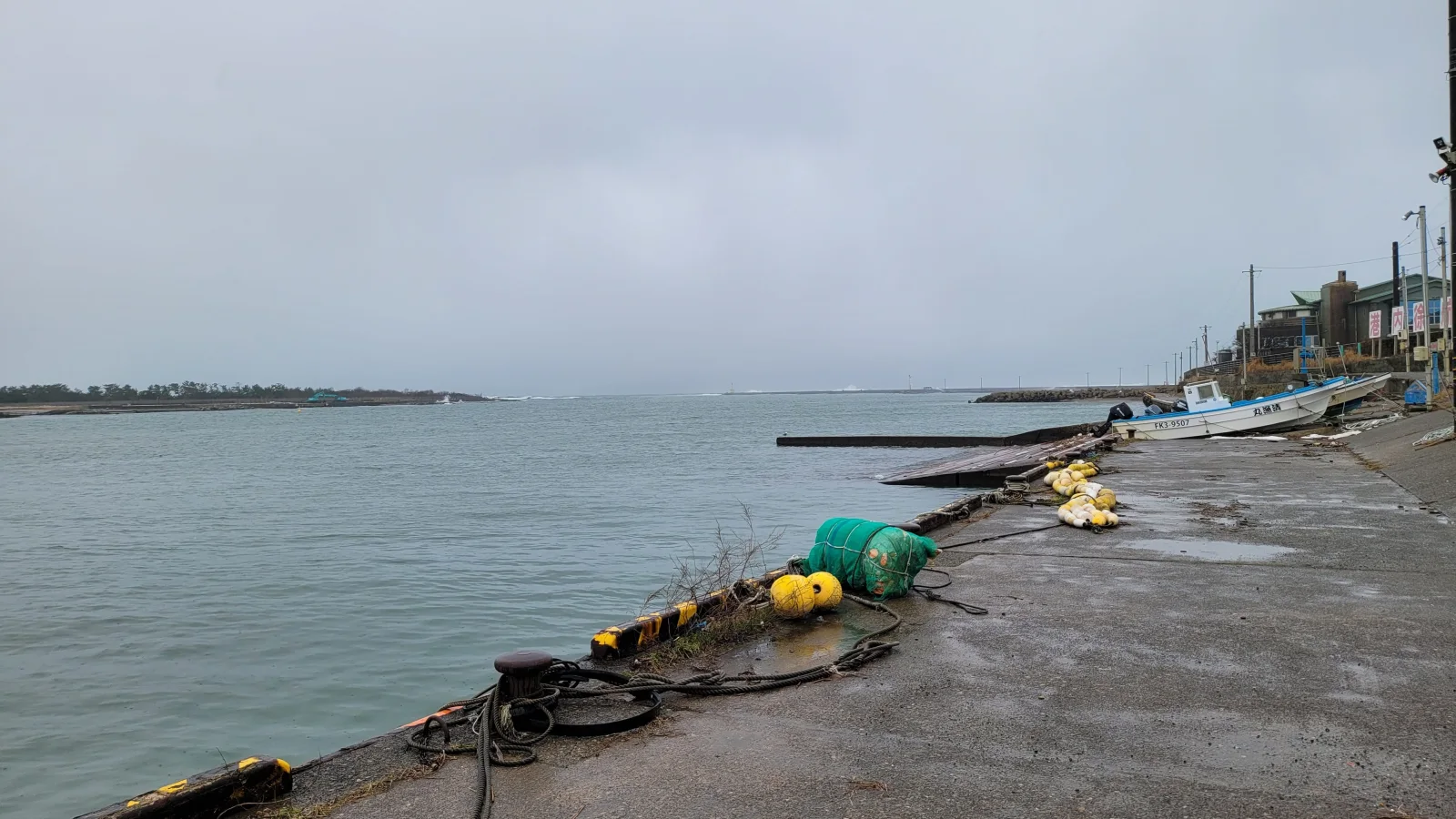
Mikuni Port's morning market has closed for winter. Plan auction visits, harbourside crab lunches, Echizen Railway fares, the Komatsu Airport bus, Awara Onsen and Kanazawa's Omicho Market kobako crab.
When to Go for Echizen Crab Season: Start with Which Crab You Want
Both Fukui and Ishikawa open their 2026 snow crab season on 6 November 2026. The male crab season runs until 20 March 2027 in both prefectures, whereas female crabs close earlier under separate rules: Ishikawa's kobako-gani until 29 December, and Fukui's female seiko-gani until 31 December. If a group of three or four is coordinating leave, dining bookings and hotels, circle mid-November to mid-December first. This window avoids opening-week sailing delays and saves you from gambling on the final kobako landings at year-end.
In 2026, Fukui's opening day and its first landings fell several days apart. According to Fukui City, rough seas after the 6 November opening delayed landings by Fukui City Fisheries Cooperative boats at Mikuni Port Market until 9 November, while the Echizen Town Tourism Association scheduled Echizen Town's first auction for 10 November. Anyone hoping to witness the opening auction must follow port announcements closely, whereas diners booking flights, hotels and a crab meal are better off aiming a little later once supply settles.
If your holiday only falls at the very end of the year, try to eat kobako crab by 28 December and save Fukui's male crab for the next leg. The final day of the season marks the cutoff for fishing boats, and any shop's stock depends on landings and orders from the preceding days. Fishmongers and eateries in Omicho Market also keep their own New Year schedules. When kobako crab is your priority, secure a seat at a restaurant that guarantees Ishikawa-landed kobako-gani and leave market browsing for a flexible half-day.
Travelling after the New Year lets you focus on male crabs from the start. Fukui also runs a 'mizu-gani' season from 19 February to 20 March for freshly moulted male snow crabs, prized for thin shells and easy-to-extract meat. For thick, dense flesh, look for in-season yellow-tagged Echizen crab on the menu and order a mizu-gani side dish to compare if you wish. If your late-March trip straddles the 20th, book your main crab feast for the earlier part of the itinerary.
| Landing Prefecture | Common Market and Menu Name | 2026–27 Fishing Season |
|---|---|---|
| Fukui Prefecture | Echizen-gani (male snow crab) | 6 Nov 2026 – 20 Mar 2027 |
| Fukui Prefecture | Seiko-gani (female snow crab) | 6 Nov 2026 – 31 Dec 2026 |
| Fukui Prefecture | Mizu-gani (freshly moulted male crab) | 19 Feb 2027 – 20 Mar 2027 |
| Ishikawa Prefecture | Kano-gani (male snow crab) | 6 Nov 2026 – 20 Mar 2027 |
| Ishikawa Prefecture | Kobako-gani (female snow crab) | 6 Nov 2026 – 29 Dec 2026 |
How to Read Yellow Tags, Blue Tags and the 'Kiwami' Label
When you see 'zuwai-gani' on a menu, that is the Japanese name for snow crab. Echizen-gani and Kano-gani are regional brands for male snow crab classified by landing port and grading. Fukui's Echizen crab carries a yellow origin tag showing the landing port name and GI mark, while Ishikawa's Kano crab wears a pale-blue tag stamped with its fishing port. To be sure a crab eaten in Mikuni was landed at Mikuni Port, check the port name printed on the yellow tag—where a restaurant is located and where its crab was landed are two different things.
Fukui Prefecture announced that from this season, intact male crabs weighing at least 1.1 kg at landing receive an IC tag alongside the yellow GI tag. Tapping a smartphone against the IC tag pulls up the crab's individual tracking number, fisheries cooperative, vessel name and catch area—read the printed label first when you spot both tags. Top-grade 'Echizen-gani Kiwami' also carries a dedicated tag; Fukui Prefecture's published thresholds require a minimum weight of 1.3 kg, a carapace width of at least 14.5 cm and a claw width of at least 3 cm, while the IC tag follows its own eligibility criteria.
At fishmongers you can see the whole crab with its tag attached, whereas sashimi or grilled crab at a table often arrives already portioned. If your budget is specifically for a Mikuni-landed crab, state in your reservation note that you would like Mikuni Port-landed Echizen-gani ('Mikuni-ko mizuage no Echizen-gani o kibo shite imasu') and ask whether the whole tagged crab can be shown before cooking. If you only want a taste of crab legs or grilled kani-miso, ordering one or two à la carte cuts keeps spending predictable and leaves budget for seasonal female crab.
Opening-auction headlines make news every autumn, so treat those record sums as auction curiosities. When comparing standard yellow-tagged crabs, check whether the price is for a whole or half crab, weighed live or priced cooked, whether any legs are missing, and whether preparation fees and tax are included. If two signs both read 'market price', ask the staff to bring out comparable crabs within your budget. Couples ordering a whole crab who also fancy sweet prawns or hotpot should discuss portion sizes before paying extra for a larger grade. Fukui's female crabs carry their own origin tag too; when buying female crabs in either prefecture, ask directly whether they were landed in Fukui or Ishikawa, as the yellow and blue brand tags apply strictly to males.
Travellers focused solely on season openings or the Mikuni-Minato Crab Festival can also check Echizen and Kobako Crab Regions and Seasonal Events.
Getting from Kanazawa to Mikuni-Minato: Bus via Awara-Onsen or Train via Fukui
From Kanazawa, there are two main routes. First, take the Hokuriku Shinkansen to Awara-Onsen Station and transfer to the Keifuku Bus Tojinbo Line (routes 85 or 97) towards Mikuni Station; take routes 84 or 96 in the opposite direction to return. The route passes Echizen Railway's Awara-Yunomachi Station and Tojinbo, making it ideal if you want to visit the cliffs before walking Mikuni's old quarter or staying in the onsen town. The two Awara stations are a drive apart, so confirm which station your ryokan shuttle serves.
The second option is riding the Shinkansen to Fukui Station and transferring to the Echizen Railway Mikuni-Awara Line for Mikuni-Minato, a journey of roughly 50 minutes. If you are simply coming by rail for a harbourside meal, ride to the terminus. On the April 2026 revised railway timetable, daytime trains from Mikuni-Minato back to Fukui run roughly every 30 minutes. If you are returning to Kanazawa the same evening, work backwards from the last Shinkansen at Fukui that still allows comfortable walking transfer time so you are not watching the clock during an auction or dinner.
Standard Echizen Railway fares between Fukui and Mikuni-Minato are ¥820 one way for adults and ¥410 for children. On Saturdays, Sundays, national holidays and from 29 December to 3 January, an Echizen Railway One-Day Pass costs ¥1,200 for adults and ¥600 for primary-school children. An adult round trip between Fukui and Mikuni-Minato saves ¥440 with the pass and pays off even more if you hop off at Mikuni or Awara-Yunomachi stations. If you enter via Awara-Onsen Station and exit via Fukui Station, count how many Echizen Railway legs you will actually ride before buying the pass; Shinkansen and Keifuku Bus fares are paid separately.
When changing buses at Awara-Onsen Station for Tojinbo, check the weekday, Saturday or Sunday/holiday schedule on Keifuku Bus's official timetable and fare page and save the return timetable as well. Buses from the cliffs to Mikuni Station and from Mikuni Station back to Awara-Onsen Station run in opposite directions. If you have large luggage before a lunch near Mikuni-Minato Station, leave suitcases at the Shinkansen station or your hotel and travel light with a small daypack for walking the machiya streets or touring the market.
Travellers flying into Komatsu Airport can also take a direct seasonal route into Mikuni. Sakai City's trial bus connecting Komatsu Airport, Tojinbo and Mikuni Station operates on weekends, national holidays and from 29 December to 3 January through 28 February 2027. Single fares are ¥1,000 for adults and ¥500 for primary-school children, paid in cash on board. Buses depart from stop 4 at Komatsu Airport and stop 3 on the roundabout outside Mikuni Station, with 33 seats per departure on a first-come, first-served basis.
Under Sakai City's timetable from 25 October, the 11:25 (JST) departure from Komatsu Airport reaches Mikuni Station at 12:35. If you take this coach for Echizen crab, book a later lunch slot with buffer time or leave your main crab meal until the next day—especially at venues that only take 11:00 bookings. Returning, the 8:35 bus from Mikuni Station reaches Komatsu Airport at 9:45, which can work for late-morning flights subject to your airline's check-in cutoff. On weekdays when the trial bus does not run, or if you visit in March, plan your rail transfer via Awara-Onsen or Fukui stations instead.
If your target is the Echizen Crab Museum on the Echizen Town coast, ride the Hapi-Line Fukui south from Fukui Station to Takefu Station, then take the Fukui Railway Bus Echizen Coast Line bound for Kareizaki and alight at Michi-no-Eki Echizen—official tourism guidance puts the bus ride at around 65 minutes. Mikuni Port sits in Sakai City, whereas the museum is down in Echizen Town; travellers using public transport should pick one as their main coastal base, leaving both coasts in one trip to drivers. In winter the museum opens 9:00–17:00 (last entry 16:30), normally closing on the second and fourth Tuesdays (shifted if a holiday falls on Tuesday). Admission is ¥500 for junior-high students and adults, and ¥300 for ages three through primary school. Check the return bus to Takefu before locking in a nearby meal.
Harbourside Lunch in Mikuni-Minato or an Overnight Onsen Crab Kaiseki
Day-trippers staying in Kanazawa or Fukui will find a whole-crab lunch easiest to schedule. At Echizen Kani-no-Bo near Mikuni-Minato Station, for instance, advance bookings are only taken for the 11:00 sitting with limited daily slots; remaining tables go to walk-ins who register on the tablet inside the entrance from 9:30 on the day. Weekday lunch runs until 15:00 (last order 14:30), weekend and holiday lunch until 15:30 (last order 15:00), and standard dinner 18:00–20:00 (last order 19:00), with lunch-only service on 30 and 31 December 2026. If this is your pick, check the restaurant's opening calendar before booking your trains.
Before reserving an onsen ryokan, check whether the room plan explicitly names 'Echizen-gani' and the portion size. If it only says 'kani kaiseki' (crab multi-course dinner) or 'kani ryori-tsuki' (with crab dishes), ask which region the crab comes from, whether each guest gets half or a whole crab, and which courses share that same crab. Two ryokans at similar room rates may differ sharply—one featuring a whole tagged Echizen crab as the centrepiece, the other serving only a single portion of legs. Alternatively, book bed-and-breakfast, spend your crab budget on a harbourside lunch, and keep dinner flexible. For half-board stays, confirm the latest dinner check-in time and shuttle pickup when booking.
Guests staying in Awara Onsen and riding the Echizen Railway across two days can compare the railway's partner-ryokan stay pass. Listed on the official site at ¥2,500, it covers rides on the day of purchase, refunds ¥1,000 when stamped at a participating ryokan at check-in, and grants unlimited line travel the following day once stamped. If you travel from Fukui to Mikuni and the onsen town on day one and return from Awara-Yunomachi to Fukui on day two, compare the pass against individual singles—picking a participating ryokan from the railway's list before buying. Those arriving and departing by bus from the Shinkansen station take fewer Echizen Railway rides, making single tickets simpler.
If you arrive in the onsen town before check-in, Ashiyu makes a handy meeting spot two minutes on foot from the station. Located on the plaza beside Echizen Railway's Awara-Yunomachi Station, this free footbath opens daily 7:00–23:00 according to the local tourism association. Having an earlier harbourside kaiseki and returning for a footbath lets you opt for a breakfast-only ryokan plan; if your crab feast is at the ryokan itself, head back from Mikuni in the afternoon and stay put rather than stacking two heavy multi-course meals.
When a group of four mixes keen crab pickers with lighter eaters, separate the number of crab courses from the seat count when booking and ask about minimum orders and sharing rules. Uniform per-person kaiseki courses keep pacing tidy. For two diners wanting to share one whole crab, choose a restaurant offering whole crabs à la carte, priced by weight, or alongside other mains. If anyone in your party has a crustacean allergy, ask at booking whether crab meat, crab stock and shared cookware can be avoided—if cross-contact cannot be prevented, pick another venue.
If you are hiring a car or driving, factor drinks into the meal plan. Diners wanting 'kora-zake'—hot sake poured into a grilled crab shell—should stick to trains or stay overnight in Mikuni, while tables with a designated driver can simply ask for the roasted shell and kani-miso to be served as a dish without alcohol. And if companions prefer grazing markets to formal courses, split up for lunch in Kanazawa and reunite in Fukui for a sit-down whole crab.
Where to Start Looking for Kobako Crab in Kanazawa's Omicho Market
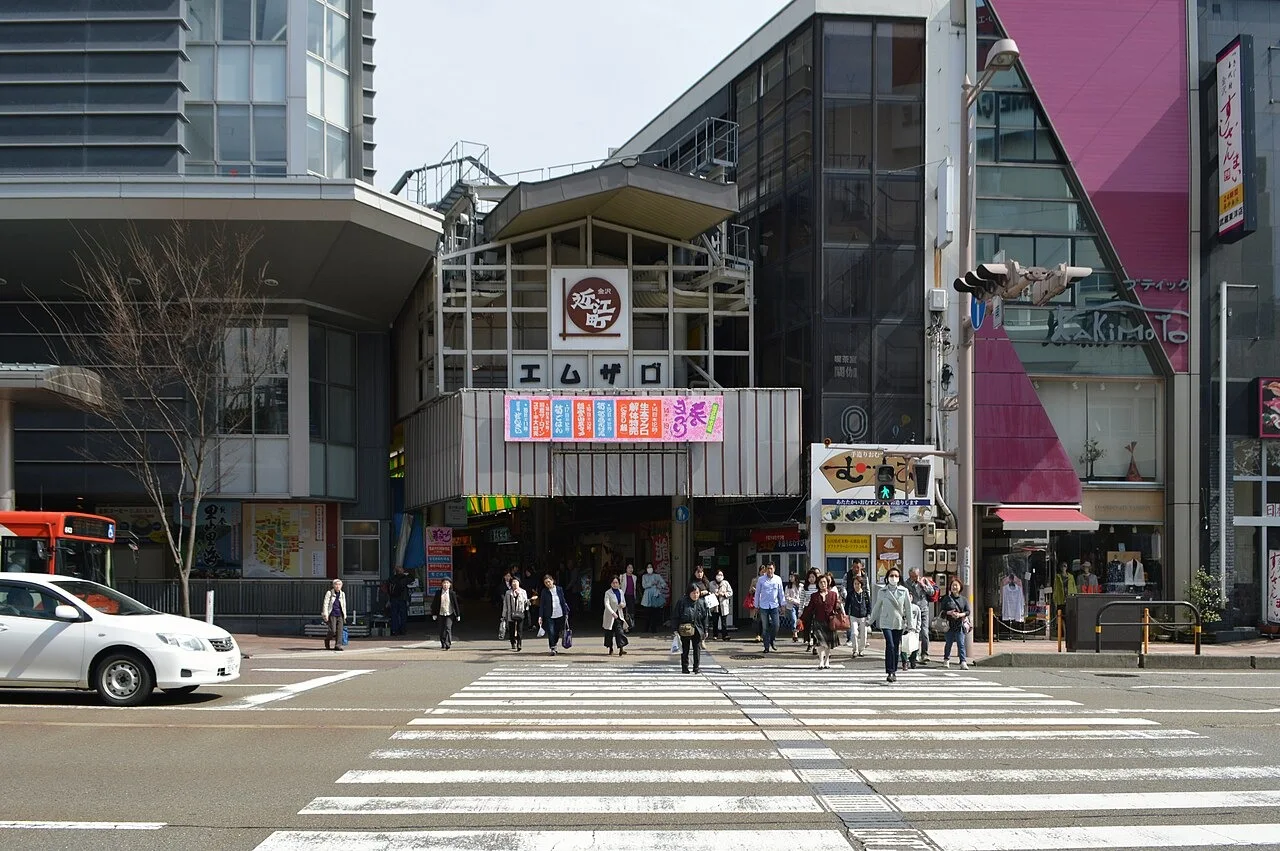
Omicho Market is roughly a 12-minute walk from Kanazawa Station's Kenrokuen (East) Exit, or closer still by local bus to the Musashigatsuji / Omicho Ichiba stop. Kanazawa City Tourism Association lists general market hours as roughly 9:00 to 16:00, though individual fishmongers and eateries keep their own closing days—Wednesdays see relatively more shutters down, and many stalls close from 1 to 4 January. For browsing stalls, picking a crab and sitting down to eat, aim for a weekday morning and target lunch around 11:00.
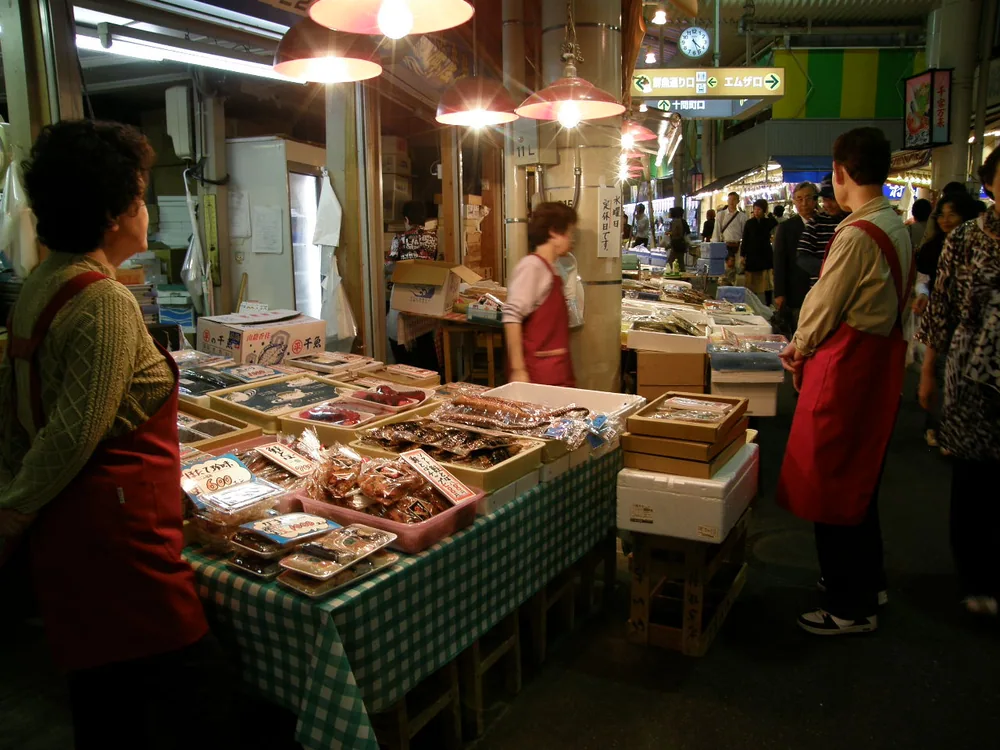
Start by checking price tags on cooked and live crabs. Before buying to eat on the spot, ask 'kokode taberaremasu ka?' ('Can I eat this here?'): some stalls only sell whole crabs to take away, while others prepare them or provide seating. Market rules ask visitors to eat only at each shop's designated storefront or indoor dining area, as eating while walking blocks the narrow lanes. If you are travelling with older relatives or young children, head straight for a seated diner or restaurant and order pre-picked kobako crab 'kora-mori' (stuffed back into its shell) to skip shelling, scissors and shell disposal.
On a first visit, keep separate shortlists for buying to take away and eating in. In the market's directory, Miyamura lists house-boiled Kano crab, Toyama Shinminato snow crab and seasonal kobako crab—good for buying cooked crab after confirming its origin; its listing notes no regular closing days in November and December, opening 9:00–17:00 (closing around midday on Sundays and Wednesdays). For eating on site, the same directory lists Omatsu Suisan's main-shop sashimi counter as serving seasonal seafood including kobako crab. Arriving in the morning gives you leeway across differing stall hours and time to switch to a backup.
When a menu offers 'kani-don' (crab rice bowl), ask whether it uses male snow crab, kobako crab or another species, and how much crab is served. To check for kobako crab, ask 'Ishikawa-ken-san no kobako-gani wa arimasu ka?' ('Do you have Ishikawa-landed kobako crab?'). If you want inner roe, outer roe and sweet flesh in one bite, a dish explicitly labelled as whole-shell kobako crab hits the mark better than judging a rice bowl purely on mound height. To save room for sushi, split one crab between two and order fish separately.
Near the market, look for Kanazawa oden featuring 'kanimen'—a kobako crab shell packed with picked meat and roe and simmered in oden dashi, ideal if you have already tried plain boiled crab at the market. For a relaxed seated meal, browse Kanazawa City Tourism Association's seasonal crab restaurant list by area—Kanazawa Station, Omicho or central city—and reserve a table rather than wandering from door to door. For more neighbourhoods and eateries in town, see Kanazawa Food: Omicho Market and Dining Neighbourhoods.
If you buy a whole cooked crab to eat elsewhere, sort out utensils and ice packs upfront. Where a stall offers preparation, ask them to keep the shell intact and pack the portions neatly, then refrigerate promptly at your hotel or eat nearby. If you still have Kenrokuen Garden and a train ride before check-in, eat first and buy near your final accommodation instead. For gifts, look for packaged items with clear storage temperatures and use-by dates, or ask about domestic delivery timed to your stay. Chilling fresh crab all day before catching a flight is rarely worth the hassle—eating it at the market is far simpler.
Ordering Female vs Male Crab: What Changes on the Plate
Kobako crab is small, so the pleasure concentrates on the carapace, apron and neatly picked legs. Deep-orange 'uchiko' is the rich, unlaid roe tucked inside the shell, while 'sotoko' are the granular eggs clinging to the outer abdomen. Together with sweet meat and savoury kani-miso, a single small crab delivers striking contrasts. On a first order, ask if it can be served unmixed so you can taste uchiko and sotoko separately before combining them with leg meat.
Kanazawa's 'kora-mori' packs the picked meat and both roes back into the shell so you can dive straight in with chopsticks. With 'kobako-don' rice bowls, check the toppings—if roe and kani-miso are what you are after, confirm they are included. Order 'kanimen' for kobako crab in oden broth, and to compare Fukui and Ishikawa females directly, ask for 'seiko-gani' in Mikuni and 'kobako-gani' in Kanazawa. Because portions are modest, each leaves room for a local side dish.
A whole male crab unfolds course by course. Multi-course kaiseki typically opens with sashimi or boiled crab before moving on to grilled cuts or hotpot. To judge pure flavour, start with steamed or salt-boiled crab: eat the thick mid-leg sections first and save the claws for their firmer bite. When hotpot is part of the meal, hold back a little meat to stir into the finishing 'zosui' rice porridge. Markets also sell red snow crab ('beni-zuwai-gani'), so if a crab meal looks notably cheaper, ask the species and origin before deciding whether to sample it or keep your budget for Echizen crab.
For 'kora-zake', warm sake is poured into the crab shell to mingle with the kani-miso clinging to the bottom—try a spoonful of kani-miso first, and if you enjoy its richness, ask staff to add sake (some places toast the shell beforehand). If you prefer cooked courses throughout, start with 'yude-gani' (boiled crab) or 'yaki-gani' (grilled crab) and ask for hotpot ingredients to be cooked through before serving. Travelling with children, ask for ready-to-eat dishes first so adults can tackle the crab legs at leisure.
Turning Market Prices into Clear Comparisons
The question diners most often skip is simple: how much crab does this price actually buy? Signs list whole crabs, halves or prices by weight, creating wide gaps. Ask directly 'kono ippai wa zeikomi de ikura desu ka?' ('How much is this whole crab including tax?'), note down the whole-crab quote, and check whether cooking or shelling incurs an extra charge. If you plan a kobako crab at the market and a male-crab course in Fukui, set a per-person budget for the market meal and separate kaiseki dinner quotes from room rates—only by adding transport and lunches to half-board accommodation can you see the true three-day cost.
A quick look at Echizen Kani-no-Bo's published menu shows how pricing structures work. An à la carte 500–700 g Echizen crab—prepared live using a crab with a missing leg—is listed at ¥19,800, with a set-meal add-on at ¥2,750. Meanwhile, the 'Minato Course' at ¥33,000 is priced per person for a minimum of two guests sharing one 700–800 g boiled crab alongside crab sashimi and other dishes; to compare sharing one crab between two, log the total as ¥66,000. These are the restaurant's published tax-inclusive guide prices, which fluctuate with catch supply—ask for a current total when booking.
On the same menu, a single Fukui female crab kora-mori is ¥4,290, while a 'Seiko-don Double' bowl is ¥9,020. For families with children or travellers already booked for an evening kaiseki, ordering a single kora-mori with plain rice is far easier to gauge than a rich double bowl. If you want to compare Ishikawa and Fukui female crabs on the same trip, order a kobako-gani in Kanazawa and a seiko-gani in Fukui in the same format—either plain boiled or kora-mori—so the flavour from day one stays fresh at your second stop.
Some restaurants split one crab into boiled and grilled preparations, whereas others serve fixed sets. When booking for two, check whether the order page specifies 'ichininmae' (for one person) or 'nimeisama-yo' (for two guests), then compare table charges, tax, service charges and drinks. To cap a market-price meal, state your tax-inclusive ceiling and ask staff to suggest the day's best size or alternative combination. If one diner wants far more crab than the other, ordering à la carte divides much better than two identical set courses.
It helps to keep a short phone note with your preferred species and preparation—for example, one Ishikawa kobako-gani, shelled to eat immediately, with a tax-inclusive quote—or in Mikuni, one yellow-tagged Mikuni Port-landed Echizen-gani to share between two, ideally prepared half boiled and half grilled. Showing the note lets staff confirm both the crab price and any cooking supplements upfront before you order.
A Three-Day, Two-Night Itinerary: Spacing Out Two Crab Meals
Spend day one in Kanazawa. Head to Omicho Market in the morning for kobako crab as your first meal, then walk through Owaricho towards the Asano River and Higashi Chaya District. If you arrive in the afternoon, drop bags at your hotel, book oden or kappo dining for the evening and save Omicho for the next morning. To fit in Kenrokuen Garden during your Kanazawa half-day, follow our Two Days in Kanazawa itinerary and swap in the market meal—starting light with kora-mori and a few pieces of sweet prawn or nigiri leaves room for dinner.
Move on to Mikuni on day two. Ride the Shinkansen from Kanazawa to Awara-Onsen Station, then take the bus to Mikuni Station for the old quarter or a taxi straight to a harbourside restaurant. With lunch booked near Mikuni-Minato, keep the afternoon for the merchant streets and river mouth, adding Tojinbo Cliffs only if weather and daylight cooperate. If you are attending the 18:00 auction, make lunch your main meal. Staying at Awara Onsen for a crab kaiseki, check in and drop bags first, soak or stroll in the afternoon, and return in good time for dinner.
Save day three for central Fukui, Tojinbo or an early departure. From the onsen town, take the Echizen Railway from Awara-Yunomachi to Fukui, or board the Shinkansen from Awara-Onsen Station towards Kanazawa or Tsuruga. If gale-force winds ruled out Tojinbo the day before, squeeze in an early-morning cliff walk during a calm spell before collecting luggage in Fukui. For an afternoon flight, lunch right by Fukui Station to leave generous slack for transfers or schedule changes.
With only two days and one night, base yourself in Kanazawa for a showcase meal at Omicho Market or a city specialist plus a morning neighbourhood walk, or stay in Fukui for a daytime trip to Mikuni Port and dinner near Fukui Station. After the New Year, scheduling whole male crabs at both stops can feel repetitive—make the harbourside lunch your centrepiece and switch Kanazawa to an à la carte Kano-gani dish, winter yellowtail ('kan-buri') or other seasonal specialities. Spacing out rich meals ensures you still have an appetite when something tempting catches your eye at the market.
A few useful answers
When does the 2026–27 Echizen crab season run?
Fukui's male Echizen crab season opens on 6 November 2026 and runs until 20 March 2027. Fukui's female seiko-gani season runs until 31 December 2026, while Ishikawa's kobako-gani closes on 29 December 2026.
What is the difference between Ishikawa's kobako-gani and Fukui's seiko-gani?
Both are regional names for female snow crab. Kobako-gani generally refers to female snow crab landed in Ishikawa, whereas Fukui calls it seiko-gani, and each prefecture sets its own closing date. Both offer both inner roe (uchiko) and outer roe (sotoko).
Can I visit Mikuni Port Market in winter for breakfast or to buy crab?
Mikuni Port Market is a landing and wholesale venue whose regular 2026 morning markets ended on 8 November. For winter dining near the port, book an independent restaurant nearby. To watch an auction, submit a tour application to the market; tours are normally not accepted on Tuesdays, Saturdays, Sundays or national holidays, and 18:00 (JST) crab auctions only take place when catches are landed.
How do I get from Fukui Station to Mikuni-Minato by train?
Take the Echizen Railway Mikuni-Awara Line to the Mikuni-Minato terminus; the adult single fare is ¥820 and the ride takes about 50 minutes. On weekends, national holidays and other eligible dates, an adult One-Day Pass costs ¥1,200. To explore the old merchant quarter first, alight one stop earlier at Mikuni Station.
Can I eat kobako crab while walking around Omicho Market?
The market asks visitors to eat in the designated storefront or indoor dining areas provided by each shop. Ask when ordering whether they shell the crab and where you may eat, or head to a seated diner or restaurant serving kobako crab kora-mori.
What is the difference between an Echizen crab's yellow tag and IC tag?
The yellow tag displays the landing port name and GI mark used to verify authentic Echizen crab. From 2026, Fukui also attaches an IC tag to intact male crabs weighing at least 1.1 kg at landing, allowing diners to scan vessel names, catch areas and tracking details.
Official information and references
Sources used in this guide.
- Fukui City | 2026 Echizen Crab Season Opening, Mikuni Port Landings and Fishing Dates
- Fukui Prefecture | Echizen Crab Yellow GI Tag, Kiwami Grade and 2026 IC Tag
- Echizen Town Tourism Association | 2026 First Auction Announcement
- Ishikawa Fisheries Cooperative | 2026 Kano-gani and Kobako-gani Season Opening Notice
- Kanazawa City Tourism Association | 2026 Kanazawa Fishing Season and Opening Schedule
- Mikuni Port Market | Wholesale Operations, Auction Times and Closed Dates
- Mikuni Port Market | Final Date of 2026 Regular Morning Market
- Mikuni Port Market | Auction Viewing Application
- Sakai City Official Tourism Guide | Mikuni-Minato Walking Sights and Kitamaebune History
- Mikunikaisyo | Former Morita Bank Head Office Facilities and Opening Hours
- Echizen Railway | Mikuni-Minato Station and Standard Fares
- Echizen Railway | Mikuni-Awara Line April 2026 Revised Timetable
- Echizen Railway | One-Day Pass Eligible Dates and Fares
- Keifuku Bus | Tojinbo Line Directions, Timetables and Fares
- Echizen Coast Facilities Operator | Echizen Crab Museum Winter Opening Hours
- Fukui City Official Tourism Guide | Echizen Crab Museum Admission and Bus Access
- Echizen Kani-no-Bo | Opening Days, Booking Slots and Access
- Kanazawa City Tourism Association | Omicho Market Access and General Hours
- Omicho Market Merchants Association | Opening Hours and On-Site Dining Guidelines
- Kanazawa City Tourism Association | Kobako Crab Cuts and Kanazawa Oden Kanimen
- Kanazawa City Tourism Association | 2026 Crab Restaurant Directory by Area
- Sakai City | Komatsu Airport, Tojinbo and Mikuni Station Trial Bus Timetable and Fares
- Sakai City | Tojinbo Sightseeing Boat Winter Hours, Fares and Cancellations
- Tojinbo Sightseeing Boat | Daily Sailings and Boarding Locations
- Sakai City | Ryusho Museum Opening Hours and Admission
- Awara City Tourism Association | Ashiyu Footbath Hours and Walking Access
- Echizen Kani-no-Bo | Seasonal Echizen Crab Dishes and Tax-Inclusive Prices
- Omicho Market | Miyamura Crab Selection, Hours and Closed Days
- Omicho Market | Omatsu Suisan Main Shop Sashimi Counter On-Site Dining