Dogo Onsen Honkan completed roughly six years of conservation repairs and reopened in full in July 2024. Across the Honkan, Annex Asuka-no-Yu and Tsubaki-no-Yu, day bathers can choose anything from a ¥700 ground-floor soak to private resting rooms, pair it with the ¥1,440 3-Bathhouse Tour Pass, or tour the imperial Yushinden. This guide covers current fares, opening hours, booking rules, Botchan Train timetables and the 1 December 2026 annual closure.
- Region & Focus
- Shikoku
- Reading Scope
- 15 min read · 7 chapters · 4 Q&As
- Official Verification
- 10 official sources checkedUpdated 20 November 2026
- Key Topics
- Hot springsItinerariesChugoku & Shikoku
Chapter Route Map (tap any stop)
- Distinguishing the Three Bathhouses: Honkan, Asuka-no-Yu and Tsubaki-no-Yu
- Choosing a Honkan Plan: From the ¥700 Ground Floor to Private Rooms
- Yushinden and Free Exhibition Areas: Visiting the Imperial Bathhouse
- Asuka-no-Yu: New Baths, Open-Air Pool and Traditional Yukatabira
- Tsubaki-no-Yu and the 3-Bathhouse Pass: Budget-Friendly Planning
- History and Architecture: 3,000 Years of Legend and the Heisei Restoration
- Getting There and Seasonal Notes: Botchan Train and 1 December Closure
- Quick Q&A
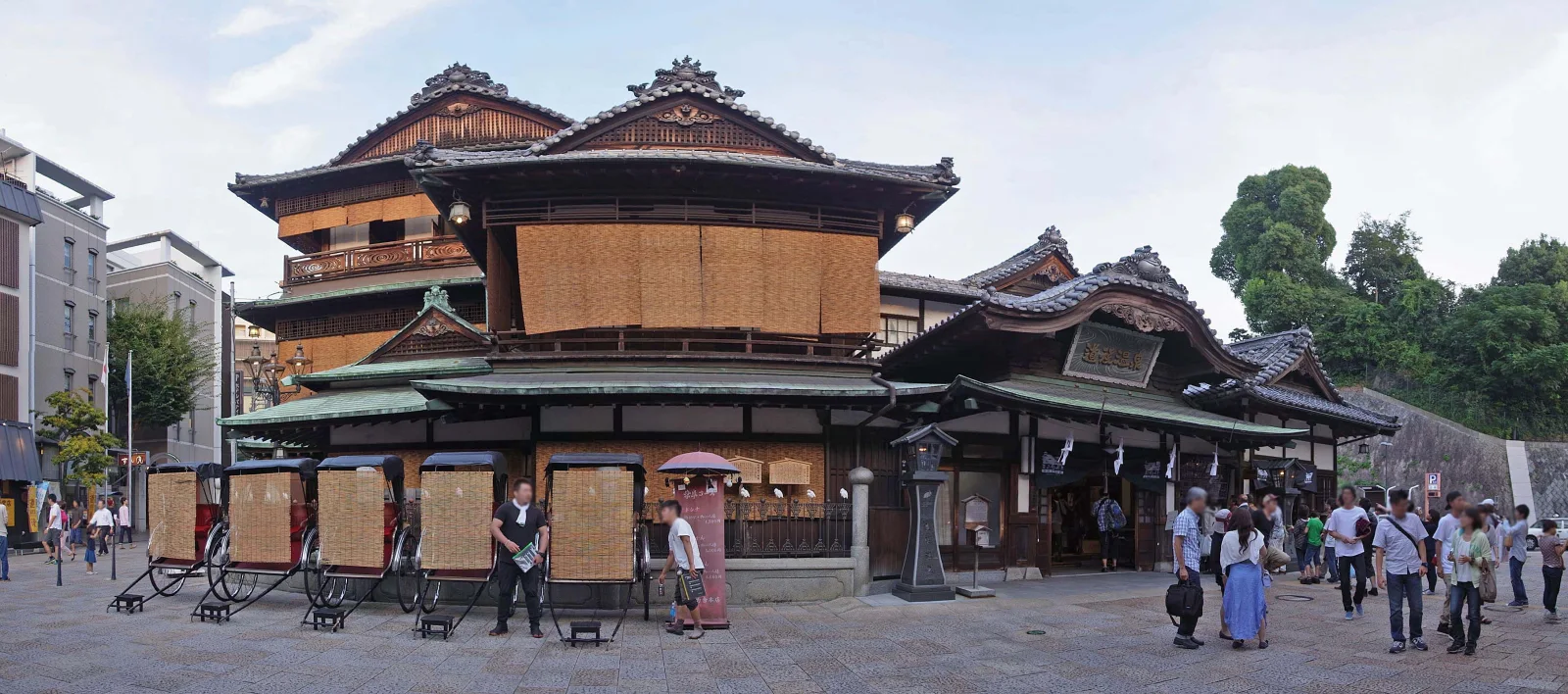
In July 2024, Dogo Onsen Honkan wrapped up roughly six years of conservation repairs and reopened its entire building to bathers, with the wider restoration finishing completely in December 2024. Rebuilt in 1894 as Japan's first public bathhouse designated a National Important Cultural Property, this landmark now greets visitors in full splendour once again. Day-trippers coming to Dogo can choose from three public bathhouses: the Honkan, Annex Asuka-no-Yu, and Tsubaki-no-Yu inside the shopping arcade. Tiers range from a brisk ¥700 bath-only entry on the Honkan's ground floor to private resting rooms starting from ¥6,000 per group, alongside paid guided tours of Yushinden, Japan's only imperial bathhouse—a far more nuanced menu than most hot-spring towns offer. This guide brings together current rates and booking rules across all three bathhouses, plus the 3-Bathhouse Tour Pass, the latest Botchan Train timetable, and the annual 1 December closure so you can match the right venue and tier to your trip.
Distinguishing the Three Bathhouses: Honkan, Asuka-no-Yu and Tsubaki-no-Yu
Matsuyama City officially groups Dogo's day-use public bathhouses as the "Three Sotoyu": Dogo Onsen Honkan (5-6 Dogo Yunomachi), Dogo Onsen Bekkan Asuka-no-Yu (19-22 Dogo Yunomachi), and Dogo Onsen Tsubaki-no-Yu in the middle of the Dogo Shopping Arcade. Both travellers and local residents frequent all three, each serving a clear role: the Honkan is the century-old centrepiece, Asuka-no-Yu is the modern annex opened in 2017, and Tsubaki-no-Yu is the best-value neighbourhood bathhouse.
Before researching further, clear up a common online mix-up: Tsubaki-no-Yu is not the "Annex". Whenever official announcements mention "Dogo Onsen Bekkan", they refer solely to Asuka-no-Yu. Tsubaki-no-Yu's official name is Dogo Onsen Tsubaki-no-Yu; first built in 1953 for Japan's National Sports Festival, it was rebuilt in 1984 and reopened after refurbishment in December 2017. Keep the word "Annex" reserved for Asuka-no-Yu when checking opening times and prices so you do not mix up the venues.
All three bathhouses draw from the exact same thermal network, supplying free-flowing natural spring water (kakenagashi) with no artificial heating or added tap water. Blended from 18 source springs ranging between 20°C and 55°C to sit at a comfortable 42°C, the alkaline simple spring water is officially nicknamed the "Bath of Beauty". In other words, the water quality does not differ from one bathhouse to the next: the gap between a ¥700 entry and a ¥2,000 tier buys the architecture, resting lounges, and overall atmosphere rather than different water.
Another frequent misunderstanding concerns overnight stays. Dogo Onsen Honkan is strictly a public bathhouse and offers no guest rooms—its official website puts it bluntly: overnight accommodation is not available. Neither Asuka-no-Yu nor Tsubaki-no-Yu has rooms either. If you want to stay the night in Dogo, book one of the surrounding ryokans under the Dogo Onsen Ryokan Cooperative (tel: 089-943-8342). Soaking in the historic public bathhouses by day and returning to your ryokan for the evening is the traditional Dogo rhythm.
For the latest official updates, rely only on two websites: dogo.jp, run by the designated manager Dogo Onsen Consortium, and dogo.or.jp, an area guide jointly operated by the Ryokan Cooperative and the Shopping Arcade Association. Old domains frequently cited in older blogs, such as dogo-onsen.or.jp and dogo-onsen.jp, have long since been retired. Incidentally, the counter shop beside the Honkan reception sells collectible goyuin bathhouse stamps at ¥400 (¥600 on deckle-edged handmade washi paper), bottled milk at ¥200, and Dogo Cider at ¥350—a cold cider after a hot soak makes an ideal finish.
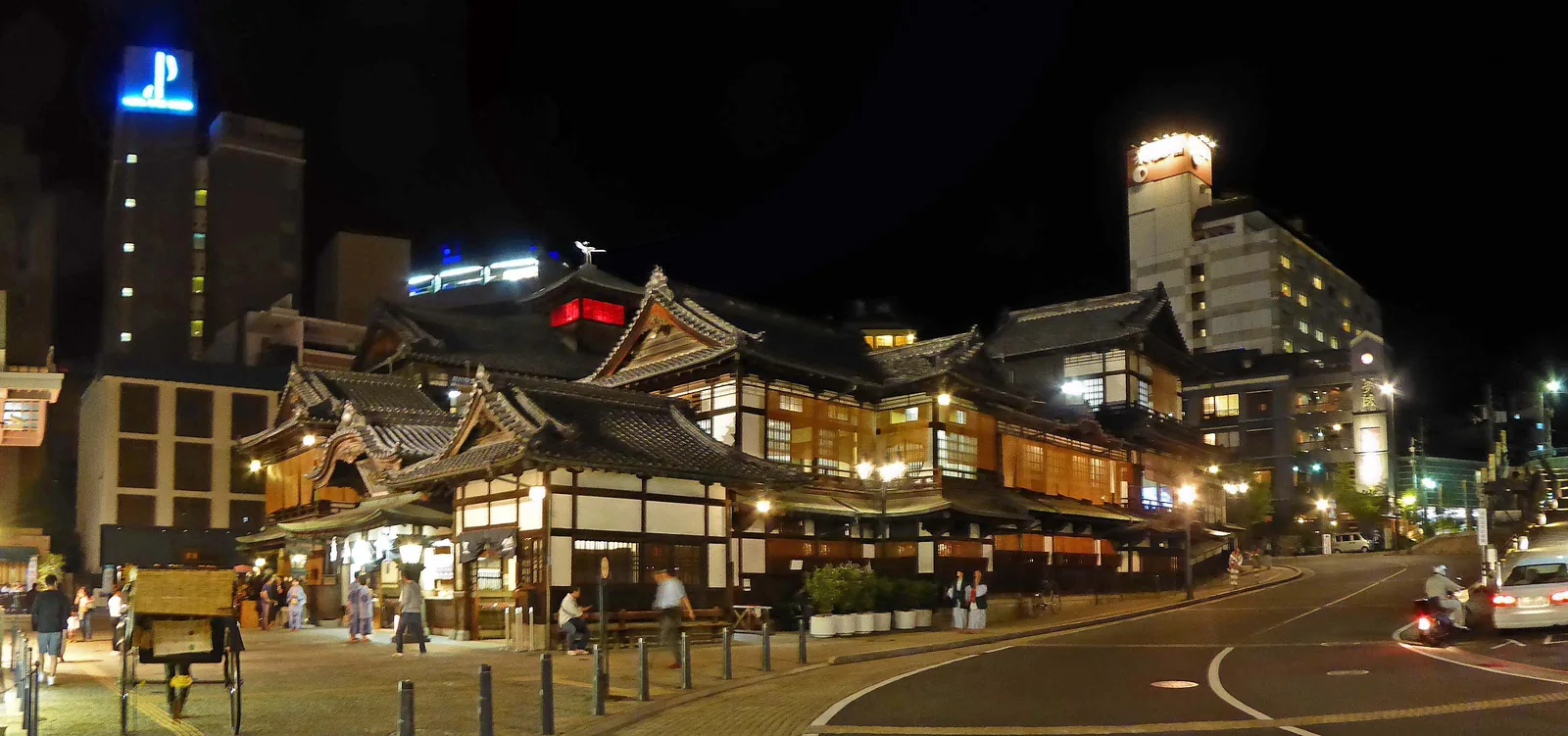
Dogo Onsen Honkan completed roughly six years of conservation repairs and reopened in full in July 2024. Across the Honkan, Annex Asuka-no-Yu and Tsubaki-no-Yu, day bathers can choose anything from a ¥700 ground-floor soak to private resting rooms, pair it with the ¥1,440 3-Bathhouse Tour Pass, or tour the imperial Yushinden. This guide covers current fares, opening hours, booking rules, Botchan Train timetables and the 1 December 2026 annual closure.
Choosing a Honkan Plan: From the ¥700 Ground Floor to Private Rooms
The Honkan offers seven day-use plans. At the entry level, Kami-no-Yu Ground Floor (¥700; 60-minute limit for adults; open 6:00–23:00, last entry 22:30) is a straightforward, bath-only sento experience. One step up, Kami-no-Yu Second-Floor Hall (¥1,300; 6:00–22:00, last entry 21:00) lets you relax afterwards in the upstairs communal tatami hall with a loan yukata, tea and sweets. Tama-no-Yu Second-Floor Hall (¥2,000) grants access to both the Kami-no-Yu and Tama-no-Yu baths, adds loan hand and bath towels, and includes free-roam viewing of Yushinden. At ¥2,500 (90 minutes), Tama-no-Yu Third-Floor Private Room preserves the historic "first-class" private-room format.
Since the full reopening in 2024, two new private resting rooms (kashikirishitsu) have joined the line-up. Shirasagi-no-Ma (White Heron Room) costs ¥6,000 per group plus ¥1,300 per person (¥650 for children) for up to 18 guests, running five 90-minute sessions daily at 6:30, 9:30, 12:30, 15:30 and 18:30. Hisho-no-Ma (Soaring Room) costs ¥3,000 per group plus ¥1,300 per person for up to 10 guests, with five daily sessions at 8:00, 11:00, 14:00, 17:00 and 20:00. Neither suite contains its own tub—guests still head downstairs to the communal baths, paying the surcharge for private seating before and after. Their names honour local heritage: Shirasagi-no-Ma recalls the legend of an injured white heron resting on the Shinrokaku pavilion, while Hisho-no-Ma echoes first mayor Isaniwa Yukiya's century-old ambition.
Choosing between them is straightforward. Short on time and only after a soak in the historic pools? The ¥700 Kami-no-Yu Ground Floor is crisp and efficient. Want to sip tea in a yukata beneath the lofty timber trusses? Pick a second-floor plan from ¥1,300 upwards (access to the upstairs tatami hall is reserved for paid tiers and closed to ground-floor ticket holders). If Yushinden is on your list, the ¥2,000 Tama-no-Yu Second-Floor Hall saves you queueing twice. Larger families wanting a closed door to chat behind can opt for a private resting room. Ground-floor and second-floor tiers do not take reservations—just queue and buy tickets on arrival—whereas the third-floor private rooms stand apart for their 90-minute allowance and seclusion. Ultimately, the extra fare buys that unhurried hour after leaving the water.
Do not be thrown by outdated trip reports written during the restoration years. For three years starting in July 2021, only Tama-no-Yu remained open and entry shifted to the east side, yet all seven plans returned to normal operation when the full building reopened on 11 July 2024.
Before stepping inside, observe standard Japanese public-bathhouse etiquette: bathing after drinking alcohol is prohibited, and photography, filming or mobile phone use are strictly banned in changing rooms and bath halls. Wash thoroughly before entering the pool, tie back long hair, never let your towel touch the bathwater, and never wear swimwear or wrap a towel around yourself in the tub. Staff at the Honkan enforce these rules more firmly than most tourist hotels, so keeping them in mind ensures a smooth soak.
The on-site flow is intuitive: buy your ticket at the entrance booth (fudaba), store your shoes in a free lockable shoe locker, and present your ticket at reception. All three bathhouses issue single-entry admission tickets rather than bath passbooks or wooden tokens. Upstairs, the high-ceilinged tatami hall seats roughly 70 people, with bamboo blinds hung during midsummer to keep the air cool—lounging in a yukata with tea while gazing up at the Meiji-era timber framing is a pleasure reserved strictly for the ¥1,300-and-above tiers.
Advance bookings are only needed for the two private resting rooms and standalone Yushinden tours, both handled through the official website (online bookings close at 22:00 JST the day before) or by telephone on 089-921-5141 for same-day gaps. Every bath area at the Honkan stocks shampoo, conditioner, body wash and hairdryers, while second-floor plans and above include free changing-room lockers and women's skincare essentials (lotion and hair oil), letting you turn up completely empty-handed.
Yushinden and Free Exhibition Areas: Visiting the Imperial Bathhouse
Built in 1899 by Isaniwa Yukiya and master carpenter Sakamoto Matahachiro, Yushinden is Japan's only bathhouse created exclusively for the imperial family. Beyond the east-facing Onarimon gate lie the Gyokuza-no-Ma (Throne Room), Oima (Drawing Room) and Oyudono (Imperial Bath), finished in knot-free Japanese hemlock with gold and silver leaf to showcase the pinnacle of Meiji craftsmanship; its name comes from the classical phrase "make it new day by day". Bathing here is not permitted, and viewing-only tickets cost ¥500 for adults and ¥250 for children, requiring advance booking for a 30-minute guided tour between 9:00 and 17:00 (last admission 16:30). Guests holding a Tama-no-Yu Second-Floor ticket or higher can wander through before or after their soak without booking separately.
If you skip the paid Yushinden ticket, there is also a free exhibition room on the second floor displaying historic bath tokens and tea utensils—handy while waiting for a spot in the communal hall. Beside reception, the counter shop sells commemorative goyuin bathhouse stamps (¥400; ¥600 on handmade washi). Note that the third-floor "Botchan-no-Ma"—a room used by novelist Natsume Soseki and poet Masaoka Shiki in October 1895 and named by Soseki's son-in-law Matsuoka Yuzuru in 1966—appears in official floor guides for its historical background, but has no listed paid viewing programme, so do not count on it as a guaranteed walk-in attraction.
Look up at the Honkan's roofline and you will spot the three-tiered Shinrokaku pavilion inset with red giyaman glass panes. Inside, the koku-daiko drum sounds three times a day—six beats at 6:00, twelve at noon, and six at 18:00—and is listed among Japan's 100 Soundscapes. Echoing across Dogo since the 1894 rebuild, it remains the town's finest timekeeper; strolling up from Dogo Onsen Station to arrive on the hour sets the mood effortlessly.
Management also notes that a portion of every bath and viewing ticket goes directly towards conserving and maintaining this Important Cultural Property. Seen that way, a ¥700 Kami-no-Yu ticket buys not just a hot soak, but admission into a living monument.
Asuka-no-Yu: New Baths, Open-Air Pool and Traditional Yukatabira
Opened in September 2017, Asuka-no-Yu is the only contemporary building among the three bathhouses. Its exterior draws on Asuka-period palace architecture, while the "Tsubaki-no-Mori" (Camellia Grove) courtyard landscaped by Shiseido (completed December 2017) evokes the ancient scene described in Prince Shotoku's Yunooka Inscription. Better still, it supplies the two features missing at the Honkan: a spacious open-air bath (rotenburo) and second-floor private family bathrooms modelled on Yushinden, where bathers can enter the water wearing a traditional yukatabira—the historical forerunner of today's yukata—an experience found nowhere else in Dogo.
Four plans are available: the Ground-Floor Bath at ¥610 (90-minute limit, with soap, shampoo and hairdryers); the Second-Floor Communal Hall at ¥1,280 (tea, sweets and loan yukata); five Second-Floor Private Rooms at ¥1,690 (adding loan towels); and the Special Bathhouse (private family bath) at ¥2,040 per group plus ¥1,690 per person (up to 5 guests, 5 groups daily, 90 minutes, advance booking required). By official calculation, two adults and one child using the Special Bathhouse pay ¥6,250 in total.
Booking rules for the Special Bathhouse are the strictest of the three venues. Reservations open 90 days ahead via the official website or on 089-932-1126 (answered 6:00–23:00), with remaining same-day slots bookable up to 2 hours before entry; arriving more than 30 minutes late without notice triggers automatic cancellation. Fresh water is drawn before each session, and staff telephone 2 hours beforehand to confirm (1 hour prior for the 7:00 and 8:00 slots). Soap and shampoo are banned inside the Special Bathhouse—guests must wash downstairs in the main bath first—and outside food or drink is prohibited; afterwards, Japanese tea and wagashi sweets are served, making it feel like an unhurried, hour-long heritage ritual. The bathhouse also hosts occasional seasonal treats, such as free yuzu-oil hand care in the foyer on "Bath Day", 26 November 2026 (open to same-day bathers)—worth a quick glance at the dogo.jp news page before you go.
The Honkan and Asuka-no-Yu complement each other neatly: Meiji timber heritage and imperial history at one, open-air pools and Asuka-era aesthetics at the other. Standing just steps apart, both can easily be paired in a single day. Their base fares are nearly identical too—¥700 vs ¥610 on the ground floor, and ¥1,300 vs ¥1,280 for the second-floor halls—so let architectural preference, not budget, decide which you visit first.
Tsubaki-no-Yu and the 3-Bathhouse Pass: Budget-Friendly Planning
The most approachable of the three sits midway along the Dogo Shopping Arcade: Tsubaki-no-Yu charges ¥500 for adults and ¥200 for children, opening daily from 6:30 to 23:00 (last entry 22:30) with a 1-hour limit per visit. Designed with an L-shaped kurayashiki storehouse facade, granite pools and Dogo's characteristic yugama spout, it pours the very same unheated, undiluted spring water. Originally built in 1953 for the 8th National Sports Festival, rebuilt in 1984 and renovated on 26 December 2017, it is a genuine local bathhouse with 70 years of community history. Bring your own toiletries or purchase them at the counter (shampoo and conditioner ¥50 each, hand towel rental ¥110, bath towel rental ¥320, bath wear ¥500); coin lockers cost ¥10 and hairdryers ¥10 for 3 minutes. Matsuyama seniors and disabled residents holding a municipal pass receive ¥250 off (¥100 off for children). Do not mistake it for a second-rate stand-in: this is authentic Dogo spring water for ¥500.
If you plan to try all three bathhouses, the 3-Bathhouse Tour Pass (Sankan Shuyu Ticket) offers the best value at ¥1,440 for adults and ¥680 for children—20% cheaper than separate admissions, valid across two consecutive days (purchase day and the next). It includes one fixed entry each to Honkan Kami-no-Yu Ground Floor, Tsubaki-no-Yu, and the Asuka-no-Yu Ground-Floor Bath. Upgrades to second-floor tiers by paying the price difference are not permitted, so buy single tickets instead if you want tea upstairs at the Honkan. Spreading three soaks across two days rather than rushing them in one afternoon makes the pass shine.
Payment options are remarkably friendly to international visitors. All three bathhouses accept seven major credit cards (VISA, Mastercard, JCB, AMEX, Diners, DISCOVER and UnionPay), 15 e-money/IC cards (including Suica, ICOCA, PASMO, iD, Rakuten Edy and WAON) and seven QR payment apps (such as Alipay, WeChat Pay, LINE Pay and au PAY). Just keep two small exceptions in mind: the Yushinden ticket window does not take LINE Pay, and you will still need small coins for shoe lockers, changing-room lockers and hairdryers.
Before setting off on a busy weekend afternoon, check the live "current waiting time" indicator on the dogo.jp homepage. Every venue enforces strict indoor capacity caps (Honkan Kami-no-Yu: 20 men, 40 women; Asuka-no-Yu: 85 each; Tsubaki-no-Yu: 60 each) using numbered entry tickets; once a day's allocation runs out, admission closes early. A quick look online saves waiting around unnecessarily.
History and Architecture: 3,000 Years of Legend and the Heisei Restoration
Widely celebrated as Japan's oldest hot spring, Dogo's lineage is anchored in early chronicles. Both the Kojiki and Nihon Shoki mention the waters, while surviving fragments of the Iyo-no-Kuni Fudoki recount how the deity Okuninushi-no-Mikoto revived a gravely ill Sukunahikona-no-Mikoto in Dogo's springs—the "Tama-no-Ishi" stone where Okuninushi danced for joy still sits north of the Honkan. The famous White Heron legend appears in the 1710 local gazetteer Yoyo Gunkyo Rigen-shu, telling of an injured heron healing its leg in the steaming rock crevices; its companion Heron Stone now stands in Hojoen Square outside Dogo Onsen Station. Imperial visits trace back to Prince Shotoku's 596 stay recorded on the Yunooka Inscription, while Nukata-no-Okimi's renowned Man'yoshu verse on awaiting the moon at Nikitazu ties to Empress Saimei's anchored fleet; later, Matsuyama lord Matsudaira Sadayuki repaired the baths after taking office in 1635.
Literary and religious heritage runs just as deep along these streets. The Heian folk song "Iyo-no-Yugeta" features in both Saibara court music and The Tale of Genji, while in 1288 the Kamakura monk Ippen Shonin carved the six-character chant "Namu Amida Butsu" onto a stone yugama finial that now rests at Yugama Yakushi in Dogo Park. Myth, classical poetry, song and faith have layered onto the same spring water—looking up at the Shinrokaku after a bath, you are standing before far more than a timber bathhouse.
It is worth clearing up another persistent myth: many travel blogs describe yukatabira bathing as a Honkan custom, when the reverse is true. The Honkan operates on straightforward admission tickets (booth ticket, shoe locker, counter check), whereas soaking in a yukatabira—the linen-like robe worn by nobles and ancestor of the modern yukata—exists exclusively in Asuka-no-Yu's second-floor Special Bathhouse. Knowing the difference saves confusion at the counter.
The Honkan's main structure standing today was completed in 1894. First mayor Isaniwa Yukiya pushed the rebuild through fierce local opposition camped at Hogon-ji Temple, famously declaring that they had to build something no rival could imitate even a hundred years later. The finished complex joins four three-storey wooden structures—the Kami-no-Yu Honkan wing, Yushinden, Tama-no-Yu wing, South wing and Entrance wing (the 1924 Entrance wing was relocated intact and joined in 1935). On its centenary in December 1994, it became Japan's first public bathhouse named a National Important Cultural Property, earned three stars in the Michelin Green Guide in 2009, and is often cited in official materials as an inspiration behind Studio Ghibli's Spirited Away.
The long-running Heisei conservation repairs are now completely finished. Work began in January 2019—the first time in Japan an Important Cultural Property underwent major restoration while staying open—narrowed to Tama-no-Yu only from July 2021, closed briefly in full from 18 June to 10 July 2024 for finishing touches, reopened completely on 11 July 2024, and reached full completion on 20 December 2024 to mark its 130th anniversary. Today you can explore every floor with zero scaffolding in sight.
Getting There and Seasonal Notes: Botchan Train and 1 December Closure
Public transport into Dogo Onsen is effortless. Iyotetsu trams reach Dogo Onsen Station in about 20 minutes from Matsuyama City Station and 25 minutes from JR Matsuyama Station—Routes 3, 5 and Loop Line 1 all terminate there, leaving a 5-minute walk through the shopping arcade to the Honkan. Limousine buses from Matsuyama Airport or Matsuyama Tourist Port take roughly 43 minutes. Drivers can park at Dogo Onsen Car Park on Kanmuri-yama just south of the Honkan (93 spaces, ¥100 per 30 minutes, open 5:30–23:30), receiving the first hour free with admission to any of the three bathhouses. Dedicated disabled parking bays at the Honkan's east plaza and Tsubaki-no-Yu are free for bathers, and cyclists can use the 24-hour Dogo Onsen Town Bicycle Park (around 75 spaces).
Autumn visitors can also join a digital stamp rally running from 23 October to 30 November 2026. Its five checkpoints—the Sora-no-Sanpomichi footbath, Enman-ji Temple, Isaniwa Shrine, Minakuchi Shuzo brewery, and Footbath Cafe Botchan—form a natural walking loop around the hot-spring quarter, rewarding the first 100 finishers with a souvenir and bringing you neatly back to Tsubaki-no-Yu for a final soak.
Check the latest Iyo Railway notices before riding the popular Botchan Train (Botchan Ressha), as operating rules have tightened. It now runs exclusively on weekends and public holidays with no advance reservations, costing ¥1,300 for adults and ¥650 for children (tickets sold onboard by the conductor; IC cards accepted), capped at 36 passengers per trip—with no extra weekday services even during Golden Week or Obon. Current departures between Dogo Onsen and Matsuyama City Station run outbound at 9:19, 13:19 and 14:59 and return at 10:04, 14:04 and 15:44; the Dogo Onsen–JR Matsuyama Station–Komachi line runs outbound at 10:48 and returns at 11:47, calling only at Okaido and JR Matsuyama Station. For departures from Dogo Onsen Station (9:19, 10:48, 13:19 and 14:59), numbered boarding tickets are handed out from 8:30 at the Dogo Ticket Counter. As an added perk, your train ticket lets you ride the Kururin Ferris wheel on Iyotetsu Takashimaya's roof (standard gondola) for ¥500.
This nostalgic little train carries a century of Matsuyama history. Steam locomotives served Iyo Railway for 67 years after opening in 1888—immortalised as the "matchbox" train in Natsume Soseki's novel Botchan. The original rolling stock is preserved as a Railway Monument (with the coaches designated Ehime Prefectural Cultural Properties), while the current fleet, introduced in October 2001, uses diesel power with simulated steam puffs—less a commuter service than a moving piece of theatre.
Mark two special dates at the end of the year. First, on Tuesday 1 December 2026, the Honkan closes all day for its annual deep clean (officially listed as open year-round except one closure day in December); that morning from 10:00 to 11:00, the bathhouse hosts a free public viewing for 20 guests to step inside the usually off-limits men's and women's bath halls (telephone registration runs 16–20 November 2026). Second, the Botchan Train suspends all services over New Year from 30 December to 3 January, so plan accordingly over the holidays.
Even if you are short on time for a full bath, free footbaths and hand baths are dotted across the neighbourhood—at Hojoen Square outside the station, Sora-no-Sanpomichi, the 4th Spring Distribution Station, and most participating surrounding ryokans (excluding Yamatoya Honten)—ideal for warming your feet while waiting for the train. Right outside the station, the Botchan Karakuri Clock, modelled on the Shinrokaku pavilion since the Honkan's 1994 centenary, chimes every hour from 8:00 to 22:00 (and every 30 minutes at weekends and on public holidays) as characters from Botchan emerge to music. Save your Honkan visit for dusk: emerging from the bath to gaze out from the second-floor tatami hall over the illuminated Shinrokaku and street lanterns makes an unforgettable finale.
A few useful answers
Can you stay overnight at Dogo Onsen Honkan?
No. The Honkan is strictly a public bathhouse, and its official site explicitly notes that overnight stays are not permitted. Annex Asuka-no-Yu and Tsubaki-no-Yu have no guest rooms either. To stay in Dogo overnight, book one of the surrounding ryokans affiliated with the Dogo Onsen Ryokan Cooperative (tel: 089-943-8342)—bathing in the public bathhouses by day and returning to a ryokan at night is the classic way to experience the town.
How much does it cost to bathe at Dogo Onsen Honkan?
Prices depend on the tier: Kami-no-Yu Ground Floor is ¥700 (60-minute limit, bath only); Kami-no-Yu Second-Floor Hall is ¥1,300 (includes communal tatami hall rest, loan yukata, tea and sweets); Tama-no-Yu Second-Floor Hall is ¥2,000 (access to both baths plus free-roam viewing of Yushinden); and Tama-no-Yu Third-Floor Private Room is ¥2,500 (90 minutes). The private resting rooms cost ¥6,000 per group plus ¥1,300 per person for Shirasagi-no-Ma, or ¥3,000 per group plus ¥1,300 per person for Hisho-no-Ma (advance booking required for both). A standalone guided viewing of Yushinden costs ¥500 and also requires booking.
Is the 3-Bathhouse Tour Pass good value for bath-hopping?
Yes, if you plan to visit all three bathhouses across two days. At ¥1,440 for adults and ¥680 for children, the pass saves 20% over buying individual tickets and remains valid on the day of purchase plus the following day. It covers one entry each to the Honkan Kami-no-Yu Ground Floor, Tsubaki-no-Yu, and the Asuka-no-Yu Ground-Floor Bath. However, you cannot pay the difference to upgrade to second-floor resting plans, so buy separate tickets if you want tea upstairs at the Honkan.
Is Tsubaki-no-Yu the Dogo Onsen Annex, and where can I try a yukatabira bath?
Both are common misconceptions. When official sources refer to the "Dogo Onsen Annex" (Bekkan), they mean Asuka-no-Yu, which opened in 2017; Tsubaki-no-Yu's official name is Dogo Onsen Tsubaki-no-Yu, a ¥500 neighbourhood public bathhouse in the shopping arcade. Meanwhile, bathing in a traditional yukatabira—the historical precursor to the modern yukata—is offered exclusively in the second-floor Special Bathhouse at Asuka-no-Yu (¥2,040 per group plus ¥1,690 per person, up to five guests, advance booking required).
Official information and references
Sources used in this guide.
- Dogo Onsen Official (dogo.jp) | Dogo Onsen Honkan (Plans, Fares, Opening Hours & Private Rooms)
- Dogo Onsen Official | Dogo Onsen Bekkan Asuka-no-Yu (Four Plans & Special Bathhouse Booking Rules)
- Dogo Onsen Official | Dogo Onsen Tsubaki-no-Yu (¥500/¥200, 6:30–23:00 & Counter Prices)
- Dogo Onsen Official | 3-Bathhouse Tour Pass (¥1,440/¥680, 2-Day Validity) & Payment Methods
- Dogo Onsen Official | Conservation & Restoration Project Report (January 2019–December 2024)
- Dogo Onsen Official | Yushinden (Japan's Only Imperial Bathhouse, ¥500 Viewing by Reservation)
- Dogo Onsen Ryokan Cooperative | Bathing Fares & Opening Hours (Three-Bathhouse Reference)
- Matsuyama City Official Sightseeing Guide | Dogo Onsen Honkan (5-Min Walk, Annual December Closure & Michelin 3-Star)
- Iyo Railway (Iyotetsu) | Botchan Train (Weekends & Public Holidays Only, ¥1,300/¥650 & Year-End Suspension)
- Dogo Onsen Official | News (1 December 2026 Annual Deep-Clean Closure & Free Bath Hall Viewing)