How to book tickets for Chiikawa Park in Ikebukuro, Tokyo: Asoview release times, adult and child fares, the Annex B1 entrance, in-park games, and 2026–2027 seasonal hours.
- Region & Focus
- TokyoAttractions
- Reading Scope
- 21 min read · 9 chapters · 6 Q&As
- Official Verification
- 26 official sources checkedUpdated 22 November 2026
- Key Topics
- BookingNeighbourhoodsFirst trip
Chapter Route Map (tap any stop)
- Choose Your Entry Slot Before Planning the Rest of Ikebukuro
- Child Tickets Depend on Age, With a Special Rule for 12-Year-Olds
- Christmas 2026 and New Year 2027 Opening Hours
- Ikebukuro Station Exit 35 vs Higashi-Ikebukuro Exits 6 and 7
- Lockers, Toilets and Pushchairs Before Entering
- From Chiikawa's House on B1 to the 1F Games Zone
- Buying Merchandise and Alternatives If Tickets Sell Out
- Which Side of Ikebukuro to Stay On for the Next Day
- Fitting a Timed Ticket Into a Half-Day Plan
- Quick Q&A
At Chiikawa Park in Ikebukuro, Tokyo, adult tickets cost ¥3,500 and must be booked for a timed entry slot via Asoview. The entrance is on B1 of the Sunshine City Annex. From Ikebukuro Station Exit 35, it is a walk along a ground-level shopping street; in wet weather, take the Yurakucho Line to Higashi-Ikebukuro Station and follow the underground passageway. Most days in December 2026 have extended hours until 20:00, with an early close on New Year's Eve and a closure on New Year's Day 2027.
Choose Your Entry Slot Before Planning the Rest of Ikebukuro
For a first visit to Chiikawa Park in Ikebukuro, set aside around 90 minutes for the manga-themed walk-through sets and character greeting area on B1 before heading up to 1F for the games and shop. If you are travelling with toddlers, planning family portraits, or browsing for souvenirs, push your next stop back to give yourself breathing room. Looking at a map alone, it is easy to mistake the park's entrance for that of the Aquarium or Observatory inside the same complex—once you have secured tickets, remember you are heading to B1 of the Annex.
Ticket releases follow Japan Standard Time (JST). As a rule, tickets for the entire month two months ahead go on sale on the 15th of each month at 12:00 JST, with each timed slot available until sold out. When the 15th falls on a Saturday, Sunday, or Japanese public holiday, the release moves forward to the preceding weekday. Under this schedule, February 2027 tickets open at 12:00 JST on 15 December 2026. Note the release time in JST and your preferred entry date on your calendar beforehand so you do not click into the wrong month when booking opens.
Open the Chiikawa Park ticket page and click the booking button to go through to Asoview. Decide on your first-choice slot and keep an earlier or later backup slot on the same day in mind. Morning and early-afternoon entries suit first-time visitors who want extra time in the games zone and shop, while late-afternoon slots work well if you are exploring another district earlier and staying in Ikebukuro for dinner. Work backwards from your previous stop, especially if you are changing trains at Shibuya or Shinjuku or dropping back at your hotel first.
Tickets must be bought by someone who will actually enter on the day. The official ticket page caps orders at five tickets per account, and the visitor guidelines stipulate that the purchaser must attend and the entire group must enter together. A party of six should split into two bookings placed by two attending members for the same slot—agree on your priority slot before sales open. If you end up with two different times, wait at a restaurant or elsewhere in the shopping centre rather than near the exit, and have each buyer lead their own group in. If the named purchaser cannot attend at the last minute, companions turning up with a screenshot of their booking will generally be turned away.
Entry requires the QR code shown on the Asoview website or app, found under "Purchase Details" in "Reservation Management". Log in on the designated phone before setting out and agree who is displaying the tickets. Guests without a smartphone may present a printed QR code together with the purchase summary showing the buyer's details—bring both, as staff may check ID at the entrance. Keep printouts tucked beside your passport or ID so you are not hunting for a printer near the underground exits.
For a spontaneous visit, check the same-day ticket status on the park homepage and then look for remaining slots on Asoview. The official FAQ confirms that tickets are sold solely through Asoview—neither the entrance counter nor convenience stores carry them. Once a slot shows as sold out on Asoview, no walk-up tickets exist, so switch to the shopping centre or neighbouring attractions instead. Resale and transfer are banned, including unpaid substitutions or name changes, and tickets cannot be rescheduled, cancelled, or refunded due to weather, transport delays, or personal changes of plan.
How to book tickets for Chiikawa Park in Ikebukuro, Tokyo: Asoview release times, adult and child fares, the Annex B1 entrance, in-park games, and 2026–2027 seasonal hours.
Child Tickets Depend on Age, With a Special Rule for 12-Year-Olds
Standard adult admission is ¥3,500, and child tickets for ages 4–11 are ¥1,800. Twelve-year-olds who are still attending primary school also qualify for the child fare. Any group containing primary school children or younger must be accompanied by at least one guest of junior high school age or older holding an adult or student ticket. Check each child's exact age and school status on your travel date—especially around birthdays or the end of the primary school term—as staff may ask to see proof of age.
Children under 4 enter free of charge without a ticket. However, each paying guest of junior high school age or older (holding an adult or student ticket) may bring only one eligible toddler. For example, two adults with a three-year-old and a six-year-old need two adult tickets and one child ticket, totalling ¥8,800. One parent arriving alone with two children under 4 will be refused entry under safety rules, so another eligible companion is required.
Student tickets are ¥2,800 for junior high school, high school, university, postgraduate, junior college, and vocational school students, subject to presenting a valid student ID at the entrance. If you forget your ID, you will need to pay the ¥700 difference against a standard adult ticket at the gate; conversely, if you buy an adult ticket and show a student ID on arrival, the ¥700 difference is not refunded. When one person books for a group, note everyone's name and ticket type in your group chat so students remember to bring their IDs.
Discounted disability tickets are ¥2,500 or ¥1,300 depending on age and cover the holder plus one companion. The visitor guidelines list Japanese disability handbooks such as the Physical Disability Certificate and Rehabilitation Handbook; you must present your document at entry or pay the standard fare difference. Visitors holding a disability certificate issued outside Japan should enquire via the park's contact form before purchasing to confirm accepted documentation and note any electric wheelchair or mobility aid requirements, settling both ticket type and step-free routing in advance.
Christmas 2026 and New Year 2027 Opening Hours
Standard opening hours are 10:00–19:00, with last entry at 17:40. From 1 to 30 December 2026, hours extend until 20:00 with a final entry slot at 18:20, subject to remaining ticket availability. On 31 December, the park closes early at 18:00 with last entry at 16:00. Anyone hoping to dine first on New Year's Eve will need to visit during the day, while travellers heading elsewhere for midnight countdowns can book an earlier slot and leave straight from Ikebukuro afterwards.
The park is closed on 1 January 2027. On 2, 3, and 30 January, it opens from 10:00 to 18:00 with last entry at 16:00, before resuming standard schedules on regular dates from 4 January onwards. If you are staying in Ikebukuro on New Year's Day, the Sunshine 60 Observatory opens from 11:00 to 18:00 (last entry 17:30). You can split your New Year itinerary across two days—Observatory on 1 January and the Annex the next day—or treat the Observatory as your New Year's Day outing if you only have one day in Tokyo.
From 20 November to 25 December 2026, characters in the greeting zone appear in Christmas outfits. The official notice states that character appearances are unannounced and random, with at most two characters out at once. Pick any convenient slot within those dates if you want the winter decor, but if your main goal is photographing Hachiware or Usagi, treat the regular set scenes as your guarantee and whoever appears in the greeting area as a bonus. From 26 to 30 December, the park still stays open until 20:00 even though the Christmas programme has finished—ideal if you simply want an evening entry.
Ikebukuro Station Exit 35 vs Higashi-Ikebukuro Exits 6 and 7
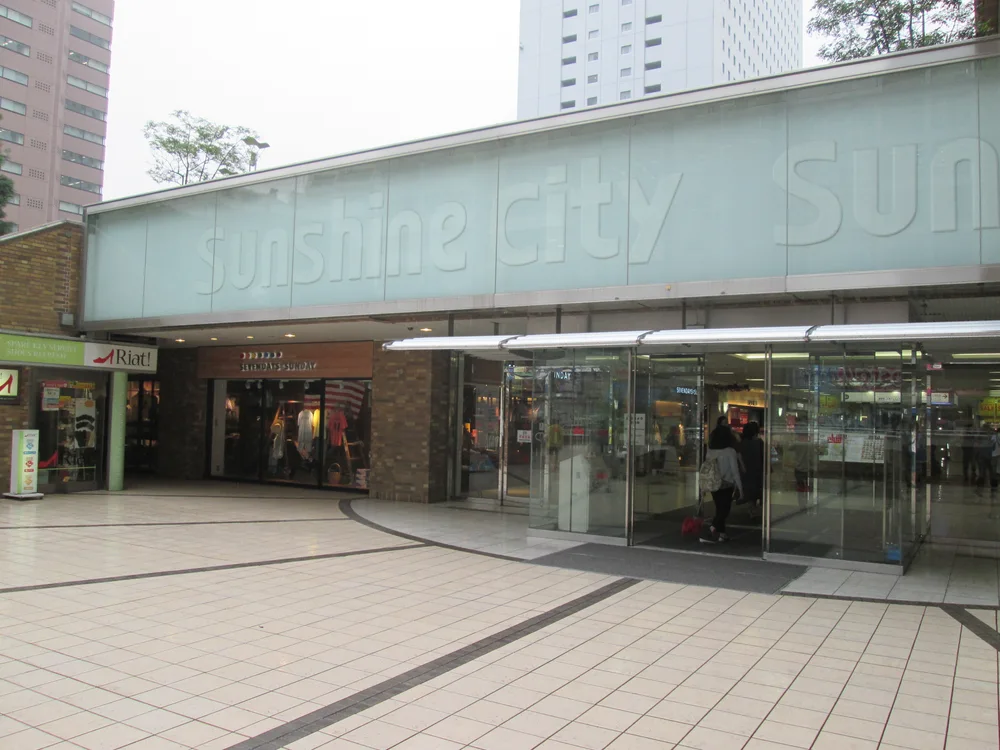
Set your map destination to "Chiikawa Park" or "Sunshine City Annex" at 3-3-5 Higashi-Ikebukuro, Toshima-ku, Tokyo. When someone in your party messages "I've arrived at Sunshine City", ask which building and floor they are on. The Aquarium, Observatory, Hotel, and Annex each have separate approaches, so glancing at a shared pin can mislead you into thinking everyone is in the same spot. Agree to meet right outside the Annex B1 park entrance, or outside a specific shop along the underground passageway before queuing together.
Arriving via JR lines, the Tokyo Metro Marunouchi or Fukutoshin lines, the Seibu Ikebukuro Line, or the Tobu Tojo Line, take East Exit 35 at Ikebukuro Station. Walk down the ground-level Sunshine 60 Dori shopping street, locate the Sunshine City underground entrance next to the Nitori Ikebukuro Sunshine 60 Dori store, ride the escalator down to B1, and follow the signage. Sunshine City's eight-minute estimate runs from Exit 35 to the complex edge; factor in extra time for platforms, ticket barriers, and weekend crowds. Do not stop at ground-floor shops expecting a door in—there is no direct park entry from 1F of the Annex.
Coming along the Tokyo Metro Yurakucho Line from stations such as Yurakucho, Ginza-itchome, or Iidabashi, alight at Higashi-Ikebukuro Station. Exit through the West Ticket Barrier towards Exits 6 and 7, join the signposted Sunshine City Underground Passageway, and follow B1 signs towards Ikebukuro Station for the Annex. The official walking estimate to the Sunshine City entrance is about three minutes, followed by an indoor corridor walk. This fully underground route is far easier with children, in rain or snow, or when avoiding crowded weekend streets. The Higashi-Ikebukuro passageway opens 7:00–23:00, while the Ikebukuro-side entrance next to Sunshine Vision opens 7:00–23:30.
Travellers already on the Toden Arakawa Line can alight at Higashi-Ikebukuro-yonchome Station, roughly a four-minute walk away. From Shibuya, anyone wanting less walking through major stations can ride Toei Bus route Ike 86 bound for Sunshine City and get off at the Ikebukuro Sunshine City stop. From the Bunka Kaikan side, follow floor maps down to B1 and continue towards the Ikebukuro-side Annex; large luggage is easiest to store in the 1F Bunka Kaikan Bus Terminal lockers. There is no dedicated park car park or parking fee discount, so public transport avoids hunting for spaces and navigating underground garages.
For a 14:00 booking, aim to reach Sunshine City by around 13:30 on a first visit—earlier if using lockers—then locate the B1 gate and follow your e-ticket assembly instructions. When companions travel from different parts of Tokyo, have JR passengers use Exit 35 and Yurakucho Line riders head straight to Higashi-Ikebukuro. If a train delay makes you late, notify the park via its website contact form with your booked time and situation; the park reserves the right to refuse latecomers and does not automatically move bookings to another slot.
Lockers, Toilets and Pushchairs Before Entering
Leaving suitcases at your hotel is usually the quickest option. If coming straight from the airport, coin lockers sit in the Sunshine City B1 underground passageway as well as alpa B1 Hirokoji and 1F Hirokoji. Standard rates are ¥400 for small, ¥700 for medium, and ¥1,000 for large lockers; most are accessible 8:00–22:00, while Bunka Kaikan 1F Bus Terminal lockers open from 5:00 until 1:00 the next morning. Large lockers measure 86.8 cm high, 35.5 cm wide, and 64.5 cm deep, so measure hard-shell cases including wheels first. The Sunshine City facilities and services page provides floor maps and a locker availability checker; note the building name, floor, and receipt details so you can find your bags smoothly if departing via Higashi-Ikebukuro.
There are no lockers inside Chiikawa Park itself. Before stowing larger bags, transfer your ticket-holding phone, student IDs, wallet, and children's essentials into a compact day bag. Inside on B1, standard and multipurpose toilets exist in limited numbers, so after lunch with children it is best to use the shopping centre toilets or nursing rooms before joining the queue. Re-entry is generally not permitted once inside; if an urgent situation arises or indoor toilet queues are long, speak directly to a member of staff.
For nappy changes before or after your slot, use the nursing rooms on alpa B1, 2F, or 3F. The B1 room near Kokumin sits on the same level as the underground entrance, making it the handiest stop prior to ticket check. Nursing rooms on B1 and 2F close at 20:00, whereas the one on the south side of 3F Hirokoji stays open until 22:30—useful if you need hot water for formula or a nappy change after a late December slot. Sunshine City also offers free pushchair loans for babies aged 1 month to 2 years from 10:00 to 20:00 without reservation; if you only want one for dining and shopping afterwards, borrow it once you leave the park to skip an extra drop-off stop.
If your child normally naps in a pushchair, try to avoid booking over their usual sleep window. Pushchairs are not allowed inside the exhibition area; the park can hold a limited number of folded pushchairs, provided all bags and loose items are removed first. Families who can switch to a baby carrier at the gate will find things smoother. If carrying a toddler while taking photos, decide in advance who wears the daypack and who holds the child so you are not rummaging for phones at QR-code checkpoints. In winter, dress toddlers in easy-to-remove coats and stow thick scarves and gloves in the shopping centre before heading into B1.
Wheelchair users are guided along a dedicated sequence, with access restrictions in certain narrow zones. The park sets reference dimensions at up to 70 cm wide and 115 cm long. Guests using larger wheelchairs, electric wheelchairs, stretchers, or other medical equipment should submit details in advance via the official contact form; visitor guidelines also specify safety rules requiring power to be switched off on electric wheelchairs in certain spaces. Ask about access to specific exhibits and the right entrance at the same time so companions can stay on the same route.
Staff conduct bag checks at the entrance, so unclip bags from pushchairs and organise your belongings before reaching the queue. Visitors hoping to take photos in themed outfits should note that the guidelines distinguish everyday licensed apparel from full cosplay, which is prohibited inside. Guests wearing masks or full character headpieces should take their photos outside the park and store those items in a locker before entering. No interpreter service is available on site; save key requests in Japanese on your phone to show staff if needed.
From Chiikawa's House on B1 to the 1F Games Zone
Past the Welcome Theatre, the walk-through exhibition turns scenes from the *Chiikawa* manga into spaces you can step inside. Even if someone in your group has never read the comic, the early photo spots—such as Chiikawa's house and the pit Hachiware tumbles into—are immediately clear, and adults can crouch or position children cleanly in frame. Fans will appreciate later details like Kurimanju enjoying a quiet drink in the forest or the Goblin prison cell featuring the towering character Ode. Companions who prefer not to queue at every single backdrop can pick one favourite set for a group photo.
Later sections grow notably darker: the official attractions page highlights a mirrored Nightmare Room and 3D visuals at the Forest Observatory. Visitor guidelines warn of bright lighting, flashing effects, lasers, sudden loud sound effects, and narrow or dimly lit passages. If you know a child dislikes sudden darkness, ask staff near the start which rooms can be shortened or walked through with guidance, and keep both lighting and corridor width in mind for children wearing ear defenders.
Selected experiences use QR-code tracking and are limited to one turn per person. If one phone holds tickets for the whole group, ask staff how to present them and keep the device easy to reach. Queue at photo spots as directed, and switch to your camera while the group ahead finishes if several people are sharing one phone. Monopods, tripods, and extendable selfie sticks are banned; some shows prohibit audio or video recording, and flash or fill lights are restricted in certain zones. Put your phone away wherever no-photography signs appear and wait for staff guidance before shooting again.
Check the official floor map beforehand so you do not miss key manga spots—dedicated fans may linger by Rakko's car or the Goblin cell, while parents with younger children might move straight on after Chiikawa's house. The floor map also marks the "Greeting" area, though you only discover which characters are appearing once you arrive; having already captured your favourite sets makes the end of the floor feel unhurried.
Heading up to 1F brings you to the paid games and the park shop. Under the 1 November operating notice, both Meatball Rolling (Meatball Korogashi) and Spiderweb Catcher (Kumonosu Catcher) cost ¥700 per play; repeat turns are allowed, though you must re-queue and pay each time. While general guidelines note play limits with event exceptions, the November notice sets the current format—if your tickets are for a later month, check the park's news page for that month's rules before budgeting. Games are charged separately from admission, and you are free to browse the shop without playing.
Under the 1 November rules, clearing a game wins a character cushion—choose between Chiikawa, Hachiware, or Usagi while stocks last—while participation prizes remain unchanged. Agree with children before queuing whether they are playing once or twice: four people having one go each totals ¥2,800, the same as two children playing twice. Check the queue length at the entrance if you have a dinner booking or timed ticket afterwards. Both games and the shop are cashless, accepting Visa, Mastercard, JCB, and transport IC cards such as Suica; bring a topped-up IC card if you want children to pay for their own items.
Buying Merchandise and Alternatives If Tickets Sell Out
The 1F shop is open exclusively to visitors who have entered the park. Since May 2026, selected park goods have also been sold online through the official Chiikawa Market store, with separate online and on-site inventory. Before browsing, decide whether you are looking for a particular character, packable souvenirs for your flight, or park-exclusive designs. Weigh whether your budget goes further on extra game tries, a practical keepsake, or the following day's plans; if companions are picking items separately, combine everything onto one list before queuing at the tills while respecting per-item purchase caps.
If you only want character shops—or someone in your group is less fussed about Chiikawa—head to 2F of Sunshine City's alpa wing, home to Pokémon Center Mega Tokyo (normally 10:00–20:00), the *One Piece* Mugiwara Store, and the Sylvanian Families shop. Meeting ticketed companions at an alpa restaurant is usually far easier than waiting outside the exhibition exit, and anyone skipping the park can rest near Fountain Square or browse B1. Our guide to Ikebukuro Sunshine City family attractions breaks down the complex's experiences by children's interests and available time.
If Chiikawa Park is sold out, follow B1 signs towards the Aquarium and take the lifts up the World Import Mart Building. Standard Aquarium tickets cost ¥2,600–3,200 for high schoolers and adults, ¥1,300 for primary and junior high students, and ¥800 for preschoolers aged 4 and over. Entry caps apply on weekends, public holidays, and selected peak dates, so check the official ticket page for availability rather than walking straight from one sold-out gate to another. The Aquarium mixes indoor galleries with the outdoor Marine Garden; in heavy rain or high winds, the open-air area featuring "Penguins in the Sky" may close, making alpa or a clear day better value.
For a short, unplanned gap with somewhere to sit, the Observatory works better than the Aquarium. Sunshine 60 Observatory is reached via dedicated lifts to 60F: weekday admission is ¥700 for high schoolers and adults and ¥500 for primary and junior high students, rising to ¥900 for adults on weekends, holidays, and busy days, and ¥1,200 on peak dates. Low cloud or mist limits the skyline view, so if your group simply wants indoor shelter, check the centre's public events or stop for refreshments instead. If booking timed slots for both the park and the Observatory on the same day, leave plenty of slack around the games zone and shop.
When steady rain sets in and children are old enough to sit quietly through a screening, Konica Minolta Planetarium Manten sits on the World Import Mart roof. Standard online regular seats are ¥1,600 for junior high age and above and ¥1,000 for children aged 4 and over. Most general screenings open online at 12:00 JST five days prior until 15 minutes before showtime, while "Healing Planetarium" sessions carry different pricing and exclude preschoolers. Match the screening type to your children's ages and buffer enough walking time from your park exit.
Which Side of Ikebukuro to Stay On for the Next Day
If you are simply making a day trip from another Tokyo neighbourhood, staying near the Yurakucho or Yamanote lines is enough—one visit to Chiikawa Park rarely justifies moving hotels. However, if you are pairing Sunshine City Aquarium with afternoon naps for a toddler, Sunshine City Prince Hotel in Higashi-Ikebukuro connects straight into the complex. Compare the room's bed layout and capacity, weighing the higher nightly rate against the walks it saves over the day; it is also handy when the Yurakucho Line is your main route, letting you pop back for a coat without crossing Ikebukuro Station.
If the rest of your itinerary leans heavily on Shinjuku, Shibuya, or JR trains, staying beside Ikebukuro Station makes more sense. Hotel Metropolitan in Nishi-Ikebukuro sits roughly a one-minute walk from the JR Metropolitan Ticket Barrier (open 7:00–23:00), or about three minutes from the Ikebukuro Station West Exit (South). On your Sunshine City day, cross the station to the East Exit and Exit 35; on checkout day, leave bags with the hotel and collect them hands-free after sightseeing. Choosing based on the following day's railway line is far more useful than picking between two hotel pages that both advertise "near Ikebukuro Station".
Fitting a Timed Ticket Into a Half-Day Plan
Morning slots work best if you want to enter as soon as you arrive in Ikebukuro. Two adults with a primary-school child can walk from Exit 35 to the Annex, finish the park, and head to alpa for lunch where adults and children each choose a spot. If you fancy the Aquarium afterwards, take the lifts in that building without doubling back towards the station; if a child needs a nap, leave the post-park hours open. Adults who end up buying oversized plush toys can drop them back at the hotel or into lockers before deciding whether to keep browsing.
For an afternoon entry, eat lunch in the shopping centre first, then handle toilets, lockers, and meeting up in one go. If a restaurant queue runs slow, it is far easier to switch to another place on the same floor than to rush in from across town. When companions are arriving from different directions after lunch, send a B1 floor map and a named shop rather than a vague department-store exit so you are not waiting outside the ticket check. Decide on extra game turns once inside, and leave dinner choices until after you come out.
On a wet evening, take the Yurakucho Line to Higashi-Ikebukuro Station and walk underground straight into the complex. Arriving early keeps you out of the rain while you stash bulky shopping bags in lockers and grab a bite in alpa. Once you leave the park, head out via Exit 35 for East Exit street dining if the rain clears, or stay inside Sunshine City for dinner and return via Higashi-Ikebukuro if the weather worsens. Keeping both the park and your meal along one B1 corridor spares families from folding wet umbrellas and coats at every stop.
On departure days, keep your luggage on the same side as your onward transport. Catching a JR or Seibu train next? Store large cases at Ikebukuro Station or a nearby hotel and walk back along Sunshine 60 Dori to collect them. Leaving on the Yurakucho Line? Use lockers in the shopping centre or on the Higashi-Ikebukuro side so you can head straight down into the underground passage afterwards. Passengers boarding an express bus at Ikebukuro Sunshine Bus Terminal simply follow "Bus Terminal" signs straight to 1F of Bunka Kaikan without dragging suitcases back to the JR station.
A few useful answers
When do Chiikawa Park tickets go on sale?
Tickets generally go on sale on the 15th of each month at 12:00 JST for the entire month two months ahead. If the 15th falls on a weekend or Japanese public holiday, sales move forward to the preceding weekday. Timed slots are sold via Asoview on a first-come, first-served basis.
At what age does a child need a ticket?
Children aged 4 and older require a ticket. Those aged 4–11, as well as 12-year-olds still attending primary school, qualify for the ¥1,800 child fare. One guest of junior high school age or older holding an adult or student ticket may bring one child under 4 free of charge.
Can I buy tickets at the door for a spontaneous visit to Ikebukuro?
Check the same-day ticket status on the official park homepage first; if slots remain, buy them online via Asoview. Neither the entrance counter nor convenience stores sell tickets.
Which station is easiest to use in rainy weather?
Take the Tokyo Metro Yurakucho Line to Higashi-Ikebukuro Station, leave via the West Ticket Barrier towards Exits 6 and 7, join the Sunshine City Underground Passageway, and follow signs to the Annex B1 entrance.
Can I enter the shop to buy merchandise without a park ticket?
No. The 1F shop is only open to visitors who have entered the park. Selected park items can be bought online through the official Chiikawa Market store.
Is Chiikawa Park open on 1 January 2027?
No, it is closed on New Year's Day. On 2, 3, and 30 January, it closes early at 18:00, with last entry at 16:00.
Official information and references
Sources used in this guide.
- Chiikawa Park Tickets and Concession Eligibility
- Chiikawa Park Visitor Guidelines
- Chiikawa Park FAQ
- Chiikawa Park Homepage and Same-Day Ticket Status
- Chiikawa Park Traditional Chinese Information
- Chiikawa Park Floor Guide and Attractions
- December 2026 Extended Hours and Christmas Event
- December 2026 to January 2027 Operating Hours Notice
- Christmas 2026 Character Greeting Announcement
- November 2026 Game Rules and Prize Announcement
- Chiikawa Park Merchandise Online Release Notice
- Sunshine City Chiikawa Park Entrance and Floor Guide
- Sunshine City Train Access
- Sunshine City Bus Access
- Sunshine City Coin Lockers and Visitor Services
- Sunshine City Nursing Rooms, Children's Toilets and Pushchairs
- Sunshine City alpa 2F Shops
- Pokémon Center Mega Tokyo Floor and Opening Hours
- Sunshine Aquarium Tickets and Opening Hours
- Sunshine Aquarium FAQ and Outdoor Areas
- Sunshine 60 Observatory Ticket Prices
- Sunshine 60 Observatory 2026–2027 Operating Hours
- Planetarium Manten Ikebukuro Ticket Prices
- Planetarium Manten Showtimes and Ticket Sales
- Sunshine City Prince Hotel Access and Shopping Centre Connection
- Hotel Metropolitan Ikebukuro Access