Plan a family visit to Spa Resort Hawaiians in Iwaki: diaper rules, the 120 cm slide requirement, afternoon and evening shows, day trips from Tokyo, three connected hotels, and free guest buses.
- Region & Focus
- Tohoku
- Reading Scope
- 32 min read · 13 chapters · 8 Q&As
- Official Verification
- 21 official sources checkedUpdated November 9, 2026
- Key Topics
- ItinerariesBookingHot springs
Chapter Route Map (tap any stop)
- Day trip or overnight: start with your children’s activities and evening plans
- Finding your way: swimsuit areas and baths without swimsuits need separate routes
- Diapers, height, and swimming ability: check before buying slide tickets
- Choosing shows: afternoon on a day trip or an overnight stay for the evening?
- A day trip from Tokyo: plan backward from the return journey
- What an overnight stay adds: early admission, room breaks, and a second day
- Three connected hotels: room access can matter more than style
- Rail and the Yumoto Station shuttle: for day trips and Tohoku stopovers
- Free hotel-guest buses from Tokyo: fewer transfers, fixed times
- Day tickets, food, and storage: separate the extra costs
- One parent or three generations: assign help for changing and breaks
- Yoichi construction and cancellation deadlines can change a booked plan
- Combining Tokyo, Mito, or Tohoku: put pool time beside lighter travel days
- Quick Q&A
For a family visit to Spa Resort Hawaiians in Iwaki, Fukushima, choose the water areas and shows first. Then decide between a day trip and an overnight stay. Children in diapers, children under 120 cm, and elementary-school children who can use the big slides independently need different schedules. Day-ticket re-entry rules, evening show times, and access to a hotel room for breaks also affect what fits into a day. This guide uses park and transport information published by October 30, 2026, including bus changes due in November.
Day trip or overnight: start with your children’s activities and evening plans
Hawaiians combines pools, hot-spring baths, and stage shows in one destination. If you are traveling from Tokyo, decide first whether to see the main evening show. It currently runs from 20:30 to 21:10, after the last free shuttle to Yumoto Station. Staying overnight moves the return journey to the next day. For pools and afternoon dancing, a day trip can be a full day out. Check show times and seating on the official show reservation page.
For children who still wear diapers, focus on shallow-water play and breaks. Children out of diapers but under 120 cm can make the children’s pools their main activity. Only children at least 120 cm tall who can swim independently need a separate budget for the big slides. Families with the same admission ticket can use the park very differently. Making the biggest slide a must for every age can leave much of the day’s plan unusable.
Arrival time matters even for a one-night stay. The regular Tokyo guest bus arrives at about 13:15, leaving the first day for afternoon admission, dinner, and the evening show. The early Tokyo service arrives at about 10:30 and adds some morning pool time. Families returning on the 15:30 bus can also use the daytime after checkout. Staying overnight spreads changing, breaks, and shows across the visit instead of putting every facility into one continuous pool session.
Adults who rarely swim need not spend the whole day in a pool. Make shows, meals, and baths without swimsuits shared activities, then split up for pool time. Assign adults to supervise young children first. Parents must accompany children even in areas with lifeguards. One adult queuing for a slide while the other watches two children in different pools is not a workable default.
| Family priority | Suggested plan | Arrange first |
|---|---|---|
| Shallow-water play and afternoon show | Day trip or overnight; include breaks out of the water | Diaper status, naps, and return travel |
| Big slides | Arrive early for a day trip; split across two days overnight | 120 cm, independent swimming, separate slide tickets |
| 20:30 main evening show | An overnight stay gives more time | Reserve paid seats; the free Yumoto shuttle has ended |
| Fewer transfers from Tokyo | Overnight stay with a reserved guest bus | Effective date, meeting point, and bus reservation |

Plan a family visit to Spa Resort Hawaiians in Iwaki: diaper rules, the 120 cm slide requirement, afternoon and evening shows, day trips from Tokyo, three connected hotels, and free guest buses.
Finding your way: swimsuit areas and baths without swimsuits need separate routes
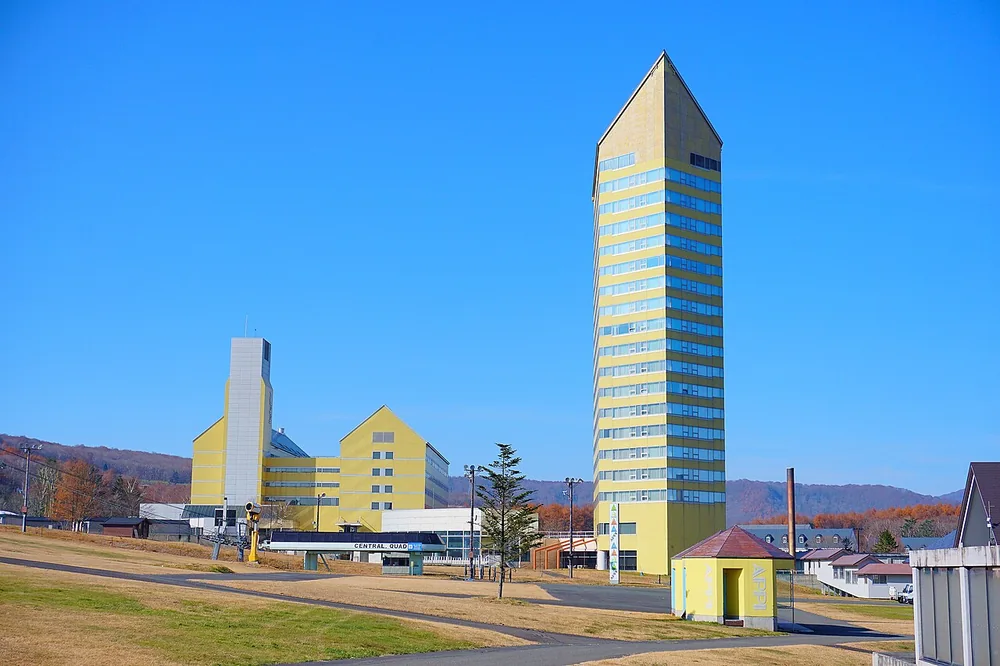
Start with Water Park on the map. The main pool, Waiwai Ohana children’s area, and Beach Theater are all here, so pool time and the afternoon show fit together easily. The main pool is 50 m long, with an official depth of 120 cm. Its size does not make it suitable for a toddler to stand in. Before a child moves from the children’s pool, the accompanying adult should check whether the child can stand firmly with shoulders above water, rather than follow other children of a similar age.

Waiwai Ohana has pools 50 cm and 80 cm deep. Its Tenshi no Mizuba baby pool is 10 cm deep. These depths help siblings find an area they can share: younger children can get used to shallow water while older children vary their activities within the children’s area. The official Waiwai Ohana page describes these pools. Whether a child normally wears diapers separately determines access to other pools.
Spring Town in Spring Park is a mixed-gender hot-spring area where swimsuits are required. It has indoor baths, whirlpools, and other facilities, with water about 105–110 cm deep. It can follow pool time so adults who want a soak and children who want to keep their swimsuits on can stay together. Smaller children need closer supervision here than in the children’s pools. The hot-spring name does not mean every bath is shallow enough for everyone to sit in.
Palace, also in Spring Park, has separate men’s and women’s baths used without swimsuits. Edo Jowa Yoichi is an outdoor bath used without swimsuits too. Leave these baths until last if you want to wash and change into dry clothes before going home. If you plan to return to the pools, allow time to take swimsuits off and put them on again. The outdoor Spa Garden Pareo is a hot-spring garden used in swimsuits and follows a different routine.
The main indoor areas work well for a rainy day, but the whole resort does not share one temperature or opening schedule. Outdoor hot springs may close in winter, and some indoor passageways are cooler. A dry cover-up and a towel are more useful than staying in a wet rash guard. Wear flip-flops or slippers between buildings, then remove them at pools and baths as each area requires.
The landscape-format summer 2026 video used on the Spa Resort Hawaiians homepage, published on June 22, 2026.
Diapers, height, and swimming ability: check before buying slide tickets
Children who normally wear diapers can play in Tenshi no Mizuba with a swim diaper. Even in a swim diaper, they cannot swim or soak in other pools or swimsuit hot springs. They may walk by the pool and dip their feet in shallow water. Baths used without swimsuits do not have this restriction for young children. Nursing and diaper-changing spaces are in Waiwai Ohana, so bring feeding and changing supplies there. The official FAQ clearly separates diaper status from permitted pool access. Use that access range to estimate how much your child can do on a day trip or overnight stay.
Children under 120 cm can still fill a day with children’s pools and shows. Do not buy a big-slide pass for them in advance. Mauna Black, Laki River, Kapuani Fall, and Big Aloha all require a height of at least 120 cm and the ability to swim without rings, arm bands, or other aids. Staff use the marked line on the height gauge. Shoes or standing on tiptoe cannot make up the difference.
The four big slides do not all allow a parent and child to ride together. Laki River, Kapuani Fall, and Big Aloha are single-rider slides. Mauna Black has additional weight and weight-difference limits for two riders: the tandem option cannot be used if either rider weighs over 80 kg or the difference between them is 55 kg or more. A child who meets the height rule but still needs a parent to catch them at the end should not make big slides the main activity.
The non-summer price list dated October 30, 2026 lists a one-day pass for three slides at ¥2,800, a four-slide pass including Big Aloha at ¥3,500, and one Big Aloha ride at ¥800. A four-ride ticket valid on all four slides costs ¥2,800, can be shared, and is valid only that day. A family trying one ride each needs a different ticket from one person riding repeatedly. Check who can ride and wants to ride, then choose by the number of rides.
Slides also take time for queues, stairs, and returning to your meeting point. If only one child wants to ride, adults can take turns accompanying them instead of moving the whole family and its bags each time. Pass wristbands are personal and become invalid when removed. They cannot be shared among family members. A single slide session is easier to manage than repeated visits when grandparents prefer to avoid stairs or young children need a nap.
Choosing shows: afternoon on a day trip or an overnight stay for the evening?
Hawaiians has shows of different lengths in different venues. Admission does not reserve a seat at every show. On October 30, 2026, the official reservation page lists the Polynesian Sunlight Carnival from 13:30 to 14:00 at Beach Theater in Water Park. Area C has free unreserved seating; other categories require paid reservations. Choose the afternoon show to keep extra costs low. Budget for paid seats if your family needs to sit together or wants a known seating area.
The afternoon program Ke Aloha began on July 4, 2026. It is separate from the evening Polynesian Grand Stage. The evening show currently runs from 20:30 to 21:10 and includes Haku Lei: Aloha no Kizuna and the Siva Ola fire-knife dance team. All evening seats are paid, including Area C. Hotel admission benefits do not reserve evening show seats. Arrange these separately after booking your room.
The Polynesian Twilight Show starts at 16:00, lasts about 20 minutes, and takes place at Plaza in Spring Park. It can follow afternoon pool time for families who want another show before dinner. The official page also lists paid reserved areas such as Himawari seating. Rather than fit in all three shows, consider how long your child can sit and whether dancing or fire-knife performances interest them more. Leave uninterrupted time for pools and rest.
The evening show often costs children some sleep. Preschool children who have spent the day in the water may be tired by 20:30. Keeping them awake for the main show can leave them unwilling to swim the next day, even with two-day admission. Such families can see the afternoon show and rest or bathe at the hotel that evening. Families with elementary-school children who can stay up later, or who especially want the fire-knife performance, can choose an overnight stay and evening show. An overnight itinerary does not have to include the whole evening show.
When booking dinner, allow time to be seated, eat, and walk to the theater. Do not finish dinner only minutes before the show. Nor should an afternoon show leave you discovering that your preferred slides are about to close. The October 30, 2026 operating schedule shows the difference: the resort closes at 21:30, big slides and Pareo at 17:00, and the main pool at 20:00. The final resort closing time does not apply to every facility.
A day trip from Tokyo: plan backward from the return journey
For a rail day trip from Tokyo, choose your train from Yumoto Station first. Then work backward through the shuttle, changing, and meals. To include the afternoon show, store your bags and change into swimsuits on arrival, then have a main pool session. Lunch and the 13:30 show can be the break in the middle. The afternoon can then return to the water area your children enjoy instead of rushing through every pool.
With preschool children, try a children’s pool session, lunch and a show, then a shorter afternoon swim. Use the first session to get used to the place, the second to rest out of the water, and the third to decide whether to return to the same pool or wash early. For children new to water play, a familiar pool is often easier than another building. A simple route also means less carrying wet towels while searching for somewhere to put your things.
If elementary-school children mainly want big slides, put the paid facilities they can use in the main daytime period, with either the afternoon show or ordinary pools between rides. Do not buy admission starting after 15:00 and expect to complete all four slides. Under the October 30 schedule, admission at 15:00 leaves only two hours before the slides close at 17:00, including entry, storage, changing, and walking. A cheaper admission ticket can remove the time you most wanted.
The last change of clothes is easy to underestimate. Rinsing, drying hair, putting children’s socks on, and collecting stored bags all happen after swimming stops. Leave a full finishing period before your chosen shuttle. Families with several young children, long hair, or feeding needs will need longer. Set an alarm for leaving the pool, rather than remember only the shuttle departure time.
The last station-bound shuttle listed on October 30, 2026 leaves the Hotel Hawaiians entrance at 18:40, calls at the park Bus Bay at 18:43, and reaches Yumoto Station at 18:55. If a free shuttle is full, passengers must wait for the next one. Do not plan a reserved limited express only minutes after the final shuttle arrives. Leaving one bus earlier gives children and train transfers a buffer. To stay for the 20:30 show, book accommodation or arrange another vehicle to the station.
What an overnight stay adds: early admission, room breaks, and a second day
The three connected hotels—Monolith Tower, Hotel Hawaiians, and Vir Port—normally have check-in at 14:00 and checkout at 10:00. Early arrivals can complete procedures at the hotel desk and enter the park before their room is ready. Bring or rent towels for this period. This helps families arriving by an early train, car, or early bus use the morning. Pack the swimsuits and towels needed for the first session in a separate carry bag.
Bookings through the official Hawaiians accommodation website include admission for the whole stay: two days for one night. Guest admission also allows repeated entry from the arrival day through checkout day. You can return to your room for a nap, change into dry clothes, eat at the hotel, and re-enter. Compared with a single-entry day ticket, this is particularly useful for children who nap. They have a room to rest in and do not need a new ticket that afternoon.
Whether to go to the room immediately after 14:00 depends on how you arrive. On the regular Tokyo guest bus, complete procedures, have lunch, and collect the room before the first afternoon swim. Families who arrive early may already have swum and can wash or rest after getting the room. Keeping children in swimsuits in the park all day misses one of the most useful parts of staying overnight. Beds or tatami suitable for rest can matter more than one additional pool.
Admission remains valid on checkout day, and hotels can store luggage. The FAQ also says towels, indoor clothing, and slippers can continue to be used after checkout. For the 15:30 guest bus, plan breakfast, checkout, a short swim, and lunch, then wash and collect bags. Do not wait until the 15:20 meeting time to leave the pool. Checking out does not load your luggage onto the bus or return and pack your equipment.
Another option is to reserve the second day for Tokyo or your next destination. After the evening show, have breakfast and use the hotel bath, then leave by train. The overnight stay provides the evening experience and sleep without requiring another swim simply because admission remains valid. For families with lots of luggage or an onward journey into inland Tohoku, this earlier finish may suit the whole trip better than two afternoons in the park.
Three connected hotels: room access can matter more than style
Vir Port is in the center of the resort. The official description calls it the closest hotel to the pools and gives about 30 seconds from reception to the pool. Guests can walk from their rooms in swimsuits. This suits children who tire easily and families returning to the room several times a day. The hotel lists a Welcome Baby Room. Choose that named room type for its family equipment instead of assuming every standard room has the same setup.

Hotel Hawaiians mainly has Japanese-style rooms, with Japanese-Western and larger rooms too. A connecting passage leads to the park, with about three minutes from reception to the pool. If toddlers need tatami for resting and grandparents want beds, compare the actual sleeping arrangements in Japanese-style and Japanese-Western rooms. The hotel has three large baths, so guests can bathe in their accommodation without returning to the day-use park. For a shared room, beds, futons, and occupancy limits affect comfort more directly than the hotel name.
Monolith Tower is about two minutes from reception to the pool. All rooms are non-smoking, with layouts including Japanese-Western, Family, and Loft rooms. Superior Family rooms have no beds: staff lay futons on a raised wooden floor in the evening. This differs from a Japanese-Western room. Choose a room with beds if an older relative finds getting up from the floor difficult. Its Nesia restaurant serves a French-Polynesian buffet, making this a useful starting point for families who want dinner to be part of the stay.
These official walking times run from reception to the pool. They are not the time from every guest-room door to the water. A stroller, elevators, connecting passages, and room location add differences. Consider how often you will return to the room. If it is mainly for sleep, prioritize room layout and dinner. If you expect naps, diaper changes, and dry-clothes breaks, prioritize the connection to the pools.
Mauna Village offers a different trip. It is on outdoor grounds, officially about five minutes from the pools by car, with check-in at 15:00 and checkout at 10:00. It is not a hotel reached by an indoor passage. Choose it for a deck, barbecue, and camping atmosphere. For repeated trips between the evening show, pools, and a toddler’s nap, the three connected hotels are more practical. The four official accommodation choices do not share the same routes.
Rail and the Yumoto Station shuttle: for day trips and Tohoku stopovers
By rail, choose Yumoto Station on the JR Joban Line, then the free resort shuttle, which takes about 15 minutes. This is separate from the Tokyo hotel-guest bus. Keep the Japanese station name 湯本駅 in your search. Iwaki Station in central Iwaki is a different station, as is Hakone-Yumoto. From Tokyo, search for Hitachi limited express trains toward the Joban Line and specify Yumoto as the destination when reserving, rather than choosing only by train name.
The Yumoto shuttle page dated October 30, 2026 lists departures at 8:30, 10:45, 11:40, 12:35, 13:30, 14:15, 16:15, and 17:15, including weekdays. The 9:30 and 15:20 services run only on Saturdays, Sundays, and Japanese national holidays. Reaching Yumoto early does not mean a bus leaves immediately. The date restriction on 9:30 affects morning pool time. Put train arrival and shuttle departure on the same schedule so waiting time is included.
The shuttle stops at the park Bus Bay, Hotel Hawaiians, and Monolith Tower. Day visitors need the entrance; hotel guests need their own hotel desk first. Do not get off simply because it is the first stop. Return buses also call at different stops in sequence. The official access page lists entrance and Bus Bay times separately. For example, the 16:45 departure from Hotel Hawaiians calls at Bus Bay at 16:48 and reaches Yumoto at 17:00.
The shuttle is free, and the operator says passengers must take the next service when it is full. It saves the fare between the station and park, but connections still need an alternative. A reserved train only minutes after the last shuttle is a poor fit. Large families, travelers with bags, or those with babies who choose a taxi should include that cost with their day-trip rail fares, rather than discover at the station that only a taxi will fit.
JR has separate child-fare age rules. Elementary-school children use child tickets, with ordinary-car base and limited express fares at half the adult rate. Preschool children and infants occupying their own reserved seat also need child base and limited express tickets. Include this cost from the start if you want each child to have a seat on the long journey. JR East’s child-fare rules are separate from hotel child rates and park admission.
If you are already traveling around Mito, Hitachi, or Iwaki, adding Hawaiians as a water-play day is usually simpler than a long day trip from a more distant Tohoku city. Travelers heading south from Sendai on the Joban Line can stay overnight to separate the long journey from park activities. Do not also plan a full morning of slides on arrival day. Train destinations, stops, and intervals differ. When reading the JR East Joban Line timetable for your travel date, read the operating-day column too.
Free hotel-guest buses from Tokyo: fewer transfers, fixed times
The free Hawaiians Express from the Tokyo metropolitan area is only for guests of Hotel Hawaiians, Vir Port, Monolith Tower, and Mauna Village. Reservations are required; day visitors cannot use it. It suits travelers who do not want to carry swim gear between trains and local buses. Large bags go in the luggage hold for the journey to the resort. Meeting points and return times are fixed, so you cannot simply choose another departure when ready.
The regular Tokyo service currently meets at 09:50, leaves at 10:00, and arrives at about 13:15. The early service meets at 07:00, leaves at 07:15, and arrives at about 10:30. The regular service gives you a slower first morning; the early one adds morning activity time. If your children cannot sleep on a bus, also consider your Tokyo hotel and the journey to the meeting point. A distant hotel the night before can offset the benefit with an early rush.
The meeting point changes in autumn 2026. Through October 31, both Tokyo services use Marunouchi Kajibashi Parking Lot. From November 1, they use Bus Terminal Tokyo Yaesu, Basement A. The new point is on the Yaesu side of Tokyo Station toward TOFROM YAESU TOWER. Do not follow old Kajibashi photographs. The official guest-bus page shows maps and instructions for both periods. Choose the correct map for trips on or after November 1.
For the regular Tokyo return, meet at the Hotel Hawaiians entrance at 15:20 for a 15:30 departure and an expected 19:00 arrival at the Nihombashi or Marunouchi exit of Tokyo Station, depending on the day’s road conditions. The early Tokyo service’s return page lists arrival at about 19:15. Departure meeting and return drop-off points differ. If collecting bags from a Tokyo hotel, plan the last leg from the day’s actual drop-off exit. Routes also serve Shinjuku, Yokohama, Saitama, and Nishi-Funabashi/Matsudo. Find a meeting point near your accommodation before deciding to change hotels for the bus.
A reservation-system change has also been announced. Accommodation reservations with free buses and guest add-on reservations pause from 22:00 on November 4 to 10:00 on November 5, 2026. For new official ICONIA accommodation bookings made from 10:00 on November 5, an email with a dedicated bus application page follows the room booking, taking up to about 30 minutes. Guests booking through other channels must apply for the bus by phone. Securing a bus seat is a separate step after booking the room.
Bus reservations completed before November 4 need no rebooking if unchanged. After the change, amend or cancel existing bus bookings by phone under the notice published on October 29, rather than cancel the room to obtain a seat. The bus page also says children under three receive no seat, and odd-numbered groups may share seating with other passengers. Notify the operator before giving up a reserved bus for rail travel. A no-show can cause the accommodation to be treated as canceled.
Day tickets, food, and storage: separate the extra costs
Hawaiians admission prices vary by date. General adult admission is ¥3,570 on October 30, 2026 and ¥4,120 on October 31. Adult means junior-high-school age and above. The calendar also lists advance-purchase GoTo Pass member rates, which are not a walk-up price available to every visitor. To compare a day trip and overnight stay, start with general admission for the actual date, then add transport, food, and facilities. Multiplying one low weekday rate by the family size misses date and ticket differences.
Admission covers pools and hot springs in Water Park, Spring Park, Edo Jowa Yoichi, and Spa Garden Pareo. Slides, paid show seats, lockers, meals, and rentals cost extra. Families skipping big slides may mainly pay for lunch, storage, and towels. Families with elementary-school children and an evening show may spend more on slide tickets and seats. Compare these costs too, rather than just a hotel room and one day ticket.
A general day ticket permits one entry only. Once you leave, you cannot re-enter on that ticket. Guest admission permits repeated entry during the stay. Plan day-trip lunch at dining facilities accessible inside the park, rather than going out and returning. Food, coolers, and insulated bags are prohibited in pools, as are eating and drinking. Leave the water for an indoor restaurant or dining area.
Purchased food can be eaten in the rest and dining area on the first floor of the Amusement building. Give up the seat when finished; bags cannot reserve it for the afternoon. This shared space works for meals and short breaks. It should not become a temporary bedroom across a row of seats when a child needs a quiet nap. Day visitors can shorten the visit or compare paid rest spaces. Hotel guests can return to their room. The available space and cost differ substantially.
Lockers come in single-opening and repeat-opening types. The October 2026 prices are ¥200–300 and ¥300–400 respectively, cash only. Repeat-opening lockers suit families who need bottles, dry towels, or more supplies during the day. Large bags can be stored at the Water Park desk for ¥600 each. Keep frequently needed items together to avoid opening and reorganizing everything each time.
Bring swimsuits and towels or rent them. The listed towel set, with a bath towel and small towel, costs ¥700. Swimsuit-set prices differ for men, women, and children. If you only need towels, do not add full swimsuit rental to everyone’s budget. Day-use parking for an ordinary car is free for up to two hours, then ¥1,000 until 24:00 that day. Hotel-guest parking is free until 24:00 on checkout day. Include parking from the start for a full-day visit.
One parent or three generations: assign help for changing and breaks
Families can use pools together, but baths without swimsuits and changing rooms have gender-specific routes. Children of the opposite sex may accompany a parent only if they are six or younger and have not started elementary school. Elementary-school children cannot enter the opposite-sex area. For one parent traveling with an opposite-sex school-age child, independent changing, lockers, and meeting again affect the whole visit. Agree on the process before buying tickets.
For three generations, use baths and shows as shared meeting points and let slide users separate for a session. While grandparents bathe, another adult must supervise children in the pools. Steps and stairs remain inside the resort, and strollers or slower walkers take more time. If grandparents rest while children keep playing, another adult must take over. Choose a clear place where everyone can find each other.
Bring swim rings and kickboards if needed. Free inflation and deflation equipment is available by the pools. Deflated rings are easier on trains than carrying a large inflated one. Large floats may be restricted when crowded, so choose familiar sizes that parents can handle. Water clothing must be a swimsuit or a rash guard made from swimwear material. An ordinary T-shirt cannot be used in the water, which may create a rental need for a last-minute visit.
Keep first-session swimsuits, towels, swim diapers, and small cash in a carry bag. Waterproof dry clothes and return-trip socks separately. If wet clothes mix with return clothes, even a final bath can leave children with only damp clothing. Large bags go in the guest bus hold. Take out items needed during travel and immediately on arrival before boarding, avoiding another unpacking at the hotel entrance.
The park prohibits entry for people with tattoos, tattoo stickers, or body paint. Apply this rule when deciding who will join. Photography also has area restrictions: no phone or camera use for photography in the water, and no selfie sticks may be brought in. Take children’s photos in permitted dry areas, without losing sight of them in the water or including changing and bathing scenes in the background.
Yoichi construction and cancellation deadlines can change a booked plan
From September 24 to December 21, 2026, Edo Jowa Yoichi alternates access between men and women during renovation. Day visitors may use it from opening to 21:00, and hotel guests from 07:00 to 23:00, but only one gender has access in each period. Examples are women 13:00–14:30, men 14:30–16:00, women 16:00–17:30, and men 17:30–19:00. Staff announce changeover ten minutes before each period ends. Afternoon plans for couples and children must follow these periods.
The evening show and baths also compete for time. During construction, women can use Yoichi from 19:00 to 20:00 and men from 20:00 to 21:00. The latter overlaps the 20:30 show. A family cannot simply plan Yoichi after dinner and then attend the show together. To bathe at the same time in separate men’s and women’s facilities, use Palace or hotel baths, and fit Yoichi into individual periods. See the Yoichi construction notice for the full rotation. Do not extend this construction schedule beyond its stated period.
For winter 2027, a full resort closure has been announced for January 25–28. It cannot serve as a rainy-day alternative then. Outdoor hot springs, individual pools, and slides can also have separate closures. Before booking, ask each person to choose one priority, then find that item in operating information for the actual travel and stay dates. If the main attraction is closed, changing dates is usually easier than finding a substitute after arrival.
Allow for cancellation costs too. The official general table for groups of 1–14 gives 20% from ten to four days before use, 50% from three days before through the previous day, 80% on the day, and 100% for a no-show. Some plans have separate terms. Changes to party size, dates, and show-seat category can also incur cancellation charges. Families who need flexibility should compare amendment and cancellation terms alongside price. Plan-specific conditions appear in the booking details; the general table is in the cancellation information.
Combining Tokyo, Mito, or Tohoku: put pool time beside lighter travel days
For a Tokyo-based family trip, a day visit avoids changing hotels and leaves bags in Tokyo before and after. An overnight stay adds two days of admission, the evening show, and room breaks in exchange for packing once. If the next night is also in Tokyo, consider whether all your luggage needs to move. Bring one night’s clothes and swim gear, and use the original hotel’s luggage-storage service for the rest. Two days in the pools do not require reorganizing the entire trip.
On a Mito or Joban Line itinerary, finish town walks first and make Hawaiians the next water-focused activity. Adults interested in cities and history and children wanting pools then each have something to anticipate. A long sightseeing route followed by afternoon admission compresses lunch, slides, and shows at once. Split the two activities across successive days instead of adding more stops.
For a Tohoku trip centered on Sendai, Yamagata, or Aizu, treat Hawaiians as a separate stop in Hamadori, the Pacific coastal part of Fukushima. It fits the north–south Joban Line side of the trip. A day return from an inland hot-spring stay adds substantial travel to a rest day. Families continuing inland can leave after checkout or allow another overnight stop along the route. This is usually easier than swimming until the second-day bus meeting time and then rushing across regions.
A few useful answers
Can day visitors from Tokyo use the free Hawaiians Express?
No. The metropolitan-area Hawaiians Express is reserved for guests of the four official accommodation facilities. Day visitors can take a train to Yumoto Station and the free resort shuttle.
Can children in diapers use the pools?
They can use the 10 cm-deep Tenshi no Mizuba in Waiwai Ohana with a swim diaper. They cannot swim or soak in other pools or swimsuit hot springs, but may walk at poolside and dip their feet in shallow water. Baths used without swimsuits do not have this young-child restriction.
Is height the only rule for big slides?
All four big slides require at least 120 cm and swimming without rings, arm bands, or other aids. Each facility also has single- or tandem-rider and weight conditions.
Does hotel admission include evening show seats?
Official bookings include park admission for the stay. All seats at the evening Polynesian Grand Stage are paid and must be arranged separately. The afternoon Sunlight Carnival has free unreserved Area C seating.
Can day visitors leave for lunch and return?
General day admission permits one entry only. The same ticket cannot be used again after leaving. Guest admission allows repeated entry from arrival through checkout day.
Can we keep swimming after checkout?
Yes, admission included for checkout day remains valid, and the hotel can store luggage. Finish washing, changing, and collecting bags before your own guest-bus meeting time.
How does one parent manage changing with an opposite-sex elementary-school child?
Elementary-school children cannot enter opposite-sex baths or changing rooms. Children must use their corresponding area. Plan changing, storage, and meeting again before travel. Opposite-sex children six or younger who have not started elementary school may accompany a parent.
Are there full resort closure days in early 2027?
The resort has announced closure from January 25 to 28, 2027. Do not schedule a visit on those dates. Other dates may still have individual facility maintenance.
Official information and references
Sources used in this guide.
- Hawaiians: FAQ, young-child pool access, and slide rules
- Hawaiians: October 2026 admission, slides, rentals, and storage
- Hawaiians: Waiwai Ohana children’s water area
- Hawaiians: Spring Town swimsuit hot springs
- Hawaiians: Edo Jowa Yoichi
- Hawaiians: facility and show schedule for October 30, 2026
- Hawaiians: show times, seating, and reservations
- Hawaiians: official accommodation comparison and hotel services
- Hawaiians: Hotel Hawaiians
- Hawaiians: Monolith Tower
- Hawaiians: Vir Port
- Hawaiians: free Yumoto Station shuttle and parking
- Hawaiians: Hawaiians Express guest-bus meeting points and schedules
- Hawaiians: bus reservation change notice dated October 29, 2026
- Hawaiians: alternating access at Yoichi, September 24–December 21, 2026
- Hawaiians: facility maintenance notices
- Hawaiians: general family cancellation charges and reservation information
- JR East: November 2026 Joban Line inbound timetable, including operating days
- JR East JRE Media: child and infant fares and reserved-seat rules, September 2026
- Spa Resort Hawaiians: 2026 summer video featured on the official homepage
- YouTube: SRH homepage summer 2026 video, desktop landscape version