Reach Iejima in 30 minutes from Motobu Port. Compare 9:00 and 11:00 day-trip departures, ¥1,390 adult round trips, vehicle transport and island rentals, with Mount Gusuku, Wajee Observatory, a cave and shopping before the return ferry.
- Region & Focus
- Ie Island
- Reading Scope
- 32 min read · 20 chapters · 4 Q&As
- Official Verification
- 12 official sources checkedUpdated October 31, 2026
- Key Topics
- ItinerariesTravel budgetOkinawa
Chapter Route Map (tap any stop)
- Leave Motobu at 9:00 for 6½ hours on the island
- With the 11:00 ferry, the port and Mount Gusuku make a full visit
- Adult round-trip tickets from Motobu cost ¥1,390
- Park at Motobu and rent on the island: calculate both costs
- Taking your car aboard: the transport fee includes one driver
- Bringing a bicycle costs ¥1,200 round trip, plus the passenger fare
- Set the route at Ie Port and buy local products before leaving
- Mount Gusuku rises 172 m above sea level, overlooking fields and the Motobu Peninsula
- Mount Gusuku is also a sacred place: follow the climbing route quietly
- Island car rental: a kei car starts at ¥3,980 for six hours in the regular season
- For coastal sightseeing by taxi, specify your stops
- At Wajee Observatory, frame the northwestern cliffs and sea together
- Nyatiya Cave is a worship site with memories of wartime shelter
- For six people, calculate ferry fares, vehicle class and stop lengths together
- The full-day route arriving at 9:30: climb, lunch and the western coast
- The shorter route arriving at 11:30: lunch, Mount Gusuku and a port walk
- For an afternoon arrival, stay overnight and return the next morning
- Mark the announced year-end and New Year extra timetable separately
- For sailing changes, check the day’s operating status on the homepage
- Back at Motobu, connect car collection with onward travel
- Quick Q&A
A 30-minute ferry from Motobu Port brings you to Iejima for Mount Gusuku, fields and coastal views. For a day trip, choose the 9:00 or 11:00 outward sailing first, then mark the 16:00 return. Take your time around the port and mountain, and arrange island transport for Wajee and the western cave. Start with ferry, parking and rental costs to choose a route that fits your group size and energy.
Leave Motobu at 9:00 for 6½ hours on the island
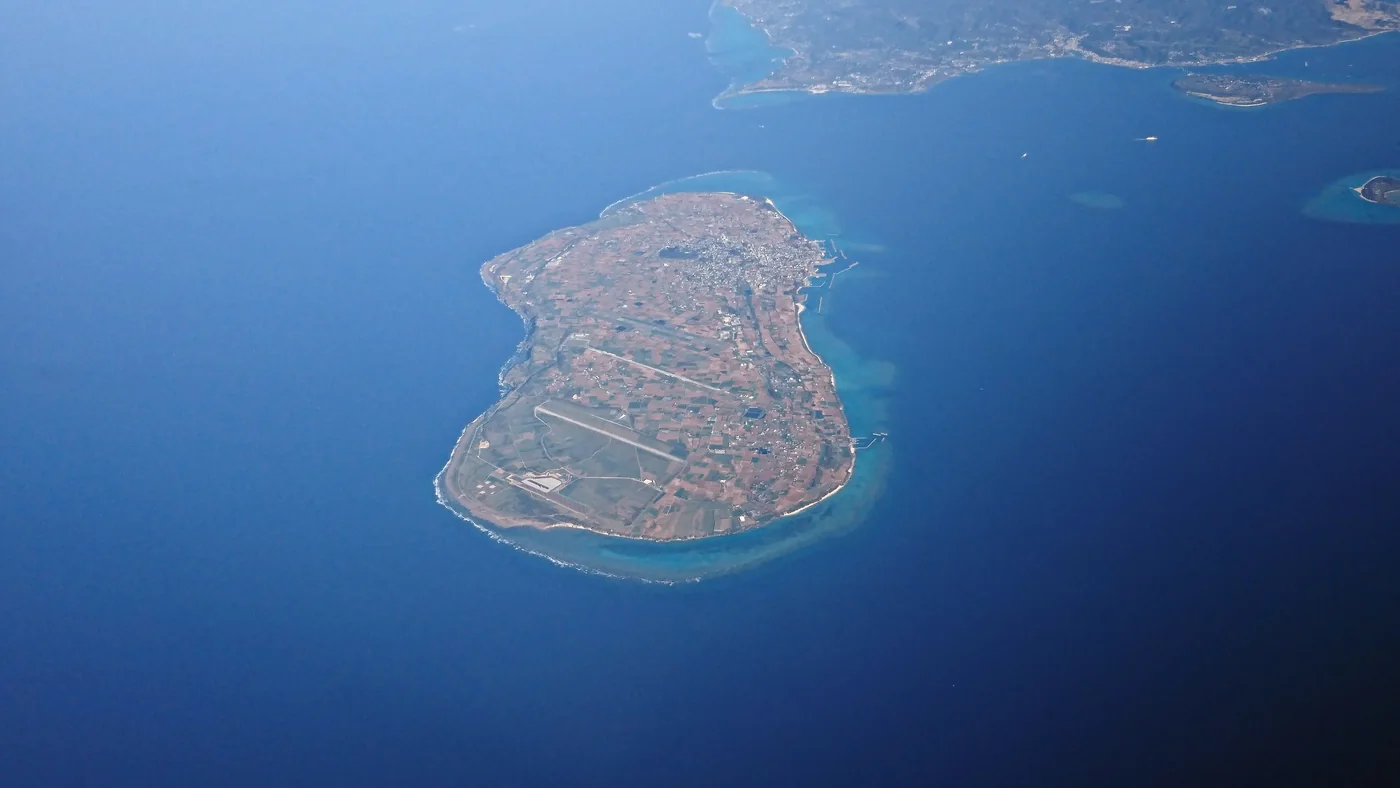
Iejima suits a full-day visit from Okinawa’s main island. The ferry from Motobu takes about 30 minutes. A 9:00 departure arrives at Ie Port at 9:30, and a 16:00 return gives you 6½ hours ashore. That time must include collecting transport, climbing Mount Gusuku, lunch and returning to the port. Start by choosing how to travel: stay on foot around the port and mountain, or add the western coast with a rental car or sightseeing taxi.
Staying around Motobu or Nago makes an early port arrival easier than starting from Naha. Stay in northern Okinawa the night before, visit Iejima and return to the same hotel after Motobu. Leave large bags at your accommodation and carry daily essentials. If you must also check out and move luggage south that day, choose fewer island stops and reserve a proper block for driving or public transport after returning to the main island.
The day can have one simple focus: recognize pointed Mount Gusuku from the ferry, climb it after arrival and look back across the sea you have just crossed. For coastal scenery, add Wajee Observatory and the western cave. Choose two priorities with your family so lunch and the return fit more easily. For northern accommodation and north–south travel, see Okinawa main island itineraries and areas to stay.
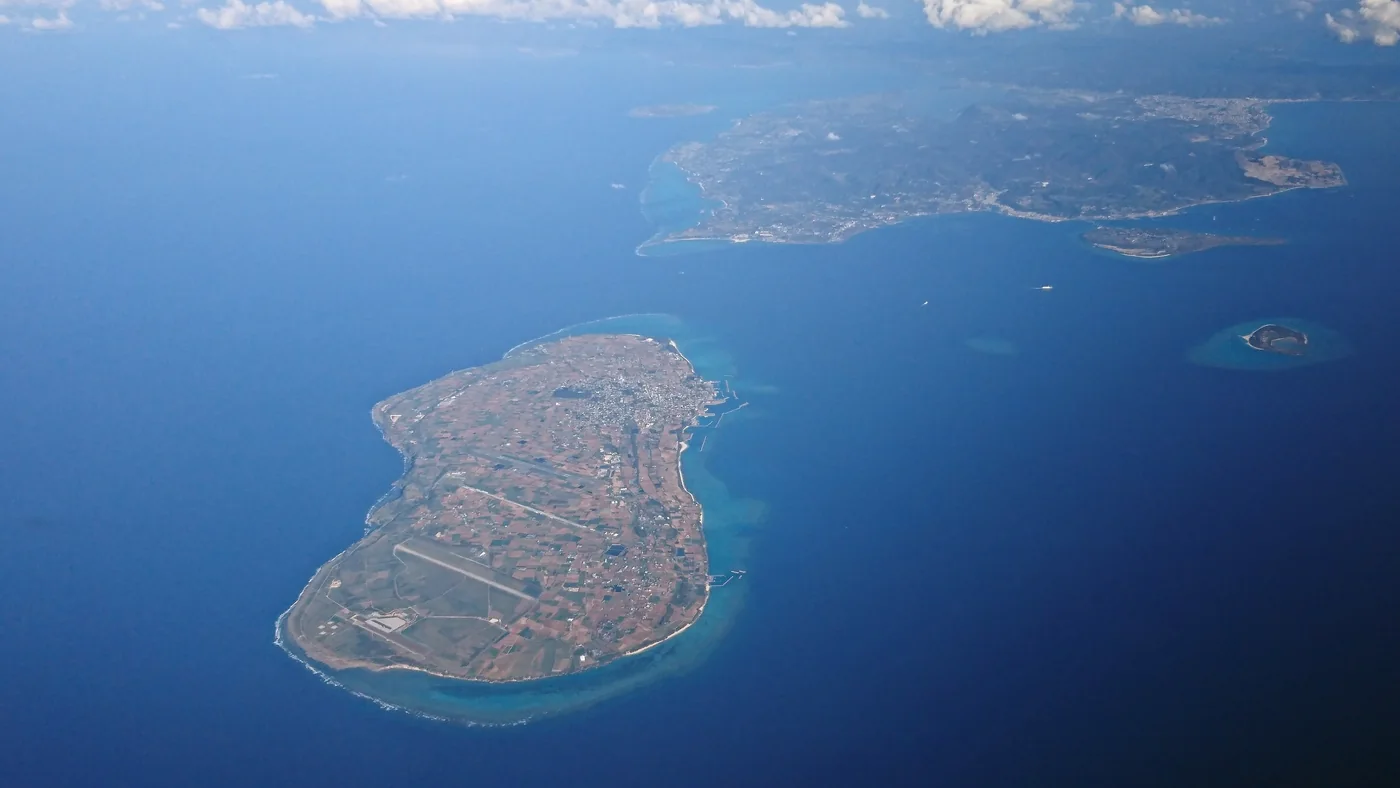
Reach Iejima in 30 minutes from Motobu Port. Compare 9:00 and 11:00 day-trip departures, ¥1,390 adult round trips, vehicle transport and island rentals, with Mount Gusuku, Wajee Observatory, a cave and shopping before the return ferry.
With the 11:00 ferry, the port and Mount Gusuku make a full visit
The ordinary timetable has Motobu departures at 9:00, 11:00, 15:00 and 17:00. Ie Port return departures are 8:00, 10:00, 13:00 and 16:00. Read the two ports’ columns separately: a day trip uses a Motobu outward sailing and an Ie Port return. The village ferry timetable places them side by side. Save the page while planning.
An 11:00 sailing arrives at 11:30, leaving 4½ hours before the 16:00 return. Lunch, Mount Gusuku and local-product shopping at the port form a clear plan. For a rental-car circuit, concentrate on only a few stops. Families who walk slowly or stop often for photos gain more room by keeping the afternoon to the mountain and port, with less travel across the island. The 15:00 sailing arrives at 15:30, only half an hour before the last ordinary return to Motobu. By the arrival of the 17:00 sailing, that day’s returns have ended. Afternoon outward sailings better suit visitors with island accommodation. Write outward and return journeys on separate lines beside your hotel dates to see clearly whether the trip is a day visit or an overnight stay.
Adult round-trip tickets from Motobu cost ¥1,390
For ordinary passengers departing Motobu, ages 12 and over pay ¥730 one way or ¥1,390 round trip. Children aged 6 to under 12 pay ¥370 one way or ¥710 round trip. Two adults and a 10-year-old pay ¥3,490 in round-trip passenger fares. At the ticket office, state that you depart Motobu, return the same day and how many passengers are traveling. Keep everyone’s return tickets together in an accessible place.
The fare table also has round trips starting from Ie and group fares. An ordinary day visitor starting at Motobu uses the ¥1,390 Motobu-origin round-trip column. Mark it first before combining fares with island rental, parking and lunch. If staying one night, include the return date in the transport plan so accommodation dates and sailing dates stay together.
The village homepage lists cash and credit cards for ticket machines. Edy, WAON and transit electronic-money payments ended in September 2023. If you usually use Suica, ICOCA or a phone transit card, switch to cash or a credit card here. Organize payment and tickets together before handling boarding at the port.
Park at Motobu and rent on the island: calculate both costs
The Ie Village homepage lists Motobu Port’s multistory parking at ¥100 per 60 minutes, capped at ¥700 per 24 hours. Parking within the port area is generally prohibited. Driving families can leave the car in the multistory facility and board as foot passengers. For two adults and a 10-year-old, ¥3,490 in ferry fares plus the ¥700 parking cap gives ¥4,190 for those two items.
Photograph the parking floor, entrance and space so you can find the car on return. Port arrival also needs time for bags, ticket purchase and walking to boarding. Do not plan only for the moment the car enters the garage. One adult can organize children and daily supplies while the other handles the car and tickets, then meet at the waiting area.
List island car rental separately if you will use it all day. The car driven to Motobu, passenger ferry tickets and the island rental are three distinct items. Add them before comparing with taking the original car aboard. If one person wants to drive and another wants a slow walk, agree on lunch and the return meeting point at Ie Port first for a more flexible day.
Taking your car aboard: the transport fee includes one driver
Vehicle transport is priced by vehicle length and includes one driver’s ferry fare. A car from 4 m to under 5 m costs ¥7,590 round trip. Add ¥1,390 for another adult and ¥710 for a 10-year-old, totaling ¥9,690 for three people and the car. Vehicles from 3 m to under 4 m cost ¥5,990 round trip. The length category uses the vehicle inspection certificate, which you must bring when buying vehicle transport tickets.
Vehicles need advance reservations. The village requires vehicle passengers to buy the transport ticket and reach the designated waiting position 30 minutes before departure. Return tickets must also be validated at the ticket office at least 30 minutes before sailing. For the 16:00 return, complete validation by 15:30, so choose a final afternoon stop with an easy route back to the port. Taking the same car lets families leave children’s supplies and jackets together and continue the planned route immediately on arrival. Island rental avoids one vehicle-boarding wait, with costs changing by rental duration. Write each option on its own line, including collection and return, return validation and passenger fares, for a clearer comparison than one advertised rental price.
Bringing a bicycle costs ¥1,200 round trip, plus the passenger fare
The village’s two-wheel fare table lists bicycles at ¥600 one way and ¥1,200 round trip, with passenger tickets extra. One adult taking a personal bicycle from Motobu pays ¥2,590 in total. This can suit travelers already cycling in Okinawa with equipment and routes prepared. A last-minute switch to cycling at Motobu also needs plans for equipment, water and luggage.
A bicycle connects the port with more distant stops, but the final climb up Mount Gusuku is on foot. Park properly at the trail entrance and carry the water and camera you need. Pack jackets, shopping bags and empty food packaging so you do not climb steps with too much hanging from your hands. With children, choose a short route near the port and mountain, leaving the farther western coast for a car or taxi version.
For island bicycle rentals, start with the village’s rental list. It lists TM.Planning at 310 Kawahira, with ordinary bicycles at ¥400 per hour or ¥1,000 per day. Compare this with ¥1,200 round-trip transport for your own bicycle. Fit rental collection and return between sailings, park securely for the climb and walk up Mount Gusuku.
Set the route at Ie Port and buy local products before leaving
After docking at Ie Port, travelers divide between walking, collecting a rental car and meeting a sightseeing taxi. The island’s local-products center is in the port terminal building, about one minute on foot from the port bus stop. Its operator lists 7:00–16:00 hours. Note the storefront and meeting place on arrival, then buy gifts before departure so you carry one less bag on the mountain and coast.
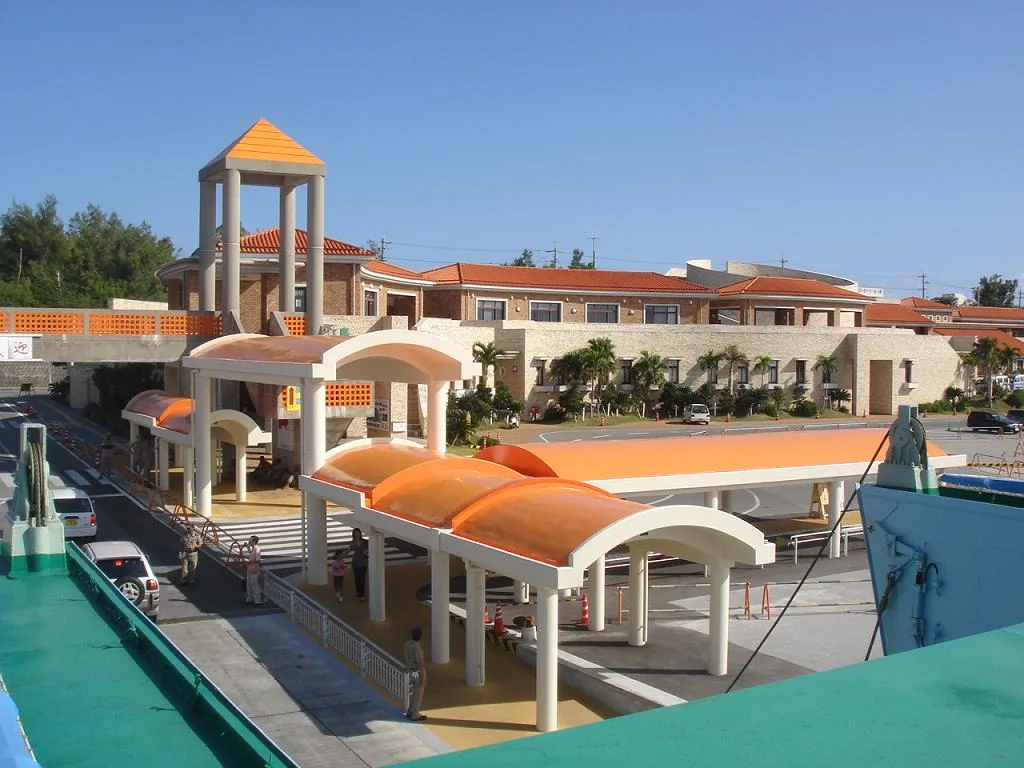
The port makes a shared starting point. If the group splits into climbers and non-climbers, agree on a facility and time to meet after lunch. Photograph its sign and save the Chinese or Japanese name on your phone; this is easier to find than “I’m at the port.” Organize rental information and return tickets here too. For local products, look for brown-sugar peanuts, soda made with local water and Ie Rum made from sugarcane. Let each person choose something they like, making shopping a rest before the return. For the 16:00 ferry, shop before boarding and go straight to the waiting area afterward.
Mount Gusuku rises 172 m above sea level, overlooking fields and the Motobu Peninsula
Mount Gusuku is a rocky peak slightly east of the island’s center, 172 m above sea level. Residents and visitors also call it “Iejima Tacchu.” The village’s Mount Gusuku guide notes that its distinctive shape has long served as a navigation landmark for nearby ships. Recognize it on the ferry from Motobu, then look back to sea after climbing to connect the crossing with your position on the island.
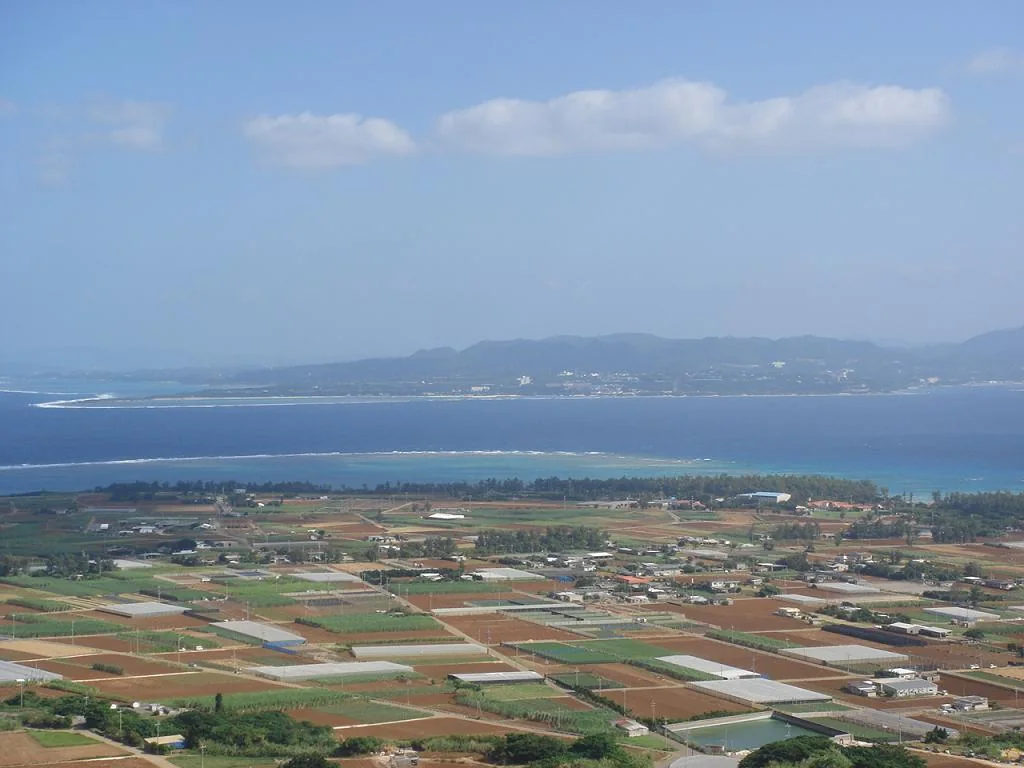
The village explains its formation through an off-scrape phenomenon: older bedrock detached during crustal movement and came to rest over newer bedrock. The pointed summit seen from the sea contrasts strongly with the broad fields below. Looking down over flat settlements and coastline helps explain why the peak became a navigational landmark. Include some foothills and fields in a photograph to show the terrain together.
Allow time for the steps up and down, views at the top and rests. Stop where you can stand firmly before taking photographs and leave room for people behind. If a child wants to see the sea, pause together to identify boats and the opposite shore, then continue after the photo. Shoes suited to steps, with water and a camera within reach, make the climb easier than carrying shopping bags uphill.
From above, you can see fields, settlements and the surrounding sea, with Okinawa’s main island in the distance. Take one broad coastal view, then frame the field lines and compare the port with streets you passed earlier. In good weather with an energetic group, stay longer. If someone is tired, have lunch after descending and reconsider the remaining coastal route afterward.
Mount Gusuku is also a sacred place: follow the climbing route quietly
The village’s Mount Gusuku introduction video describes it as an object of island faith and a sacred place. Gusuku Utaki carries prayers for safe navigation, health and good harvests. Follow open routes and keep the passage clear when looking at views or taking pictures. Give worshippers quiet space so visitors and local religious life can share the mountain.
With children, start from the shape seen on the ferry: how can a mountain help a boat know it is nearing the island? From above, ask them to find the port, fields and opposite shore, learning the terrain from visible objects. Adults can photograph at two scales, with one image of the island and another of field boundaries and roofs to identify the route later. Decide the next stop after descending. For a simple day, return to food and a port walk. With transport arranged, link lunch with western sights. Different interests can also become separate activities before meeting again at Ie Port.
Mount Gusuku and island scenery in Ie Village’s introduction video.
Island car rental: a kei car starts at ¥3,980 for six hours in the regular season
The Iejima Kanko Bus rental price list gives K-class kei cars a four-person capacity and a regular-season day-rental base price of ¥3,980 for up to six hours. In the April–August peak season, up to three hours costs ¥3,500 and up to six hours costs ¥5,000. Eight- and ten-seat vehicles have separate prices. Choose capacity for everyone and the day’s supplies, then the bracket matching your rental time.
For two adults and a 10-year-old traveling as foot passengers from Motobu, round-trip fares are ¥3,490. Add the ¥700 maximum for 24-hour Motobu parking and ¥3,980 for a regular-season six-hour K-class rental: the three base costs total ¥8,170. Replacing rental with the ¥5,000 peak-season base price gives ¥9,190. List meals separately to see where the day’s main costs lie.
The operator also notes island gas stations close on Sundays, with a vehicle-specific fuel surcharge. Its day-rental kei-car example adds ¥800. The telephone information warns that staff may be busy with collections and unable to answer around 9:30–9:40 and 11:30–11:40. Avoid those busy periods when calling, and put ferry arrival, car collection and return on the same timetable.
For coastal sightseeing by taxi, specify your stops
If you do not want to drive but want Mount Gusuku, the western cave and Wajee, consider a sightseeing taxi. The tourism association’s transport page lists Iejima Kanko Bus sightseeing taxis, whose drivers can arrange a route around your chosen places. List stops, whether you want to climb and whether lunch needs a seated meal. This makes the discussion clear. The association lists sightseeing taxi service until 18:00, so overnight visitors can include travel before dinner.
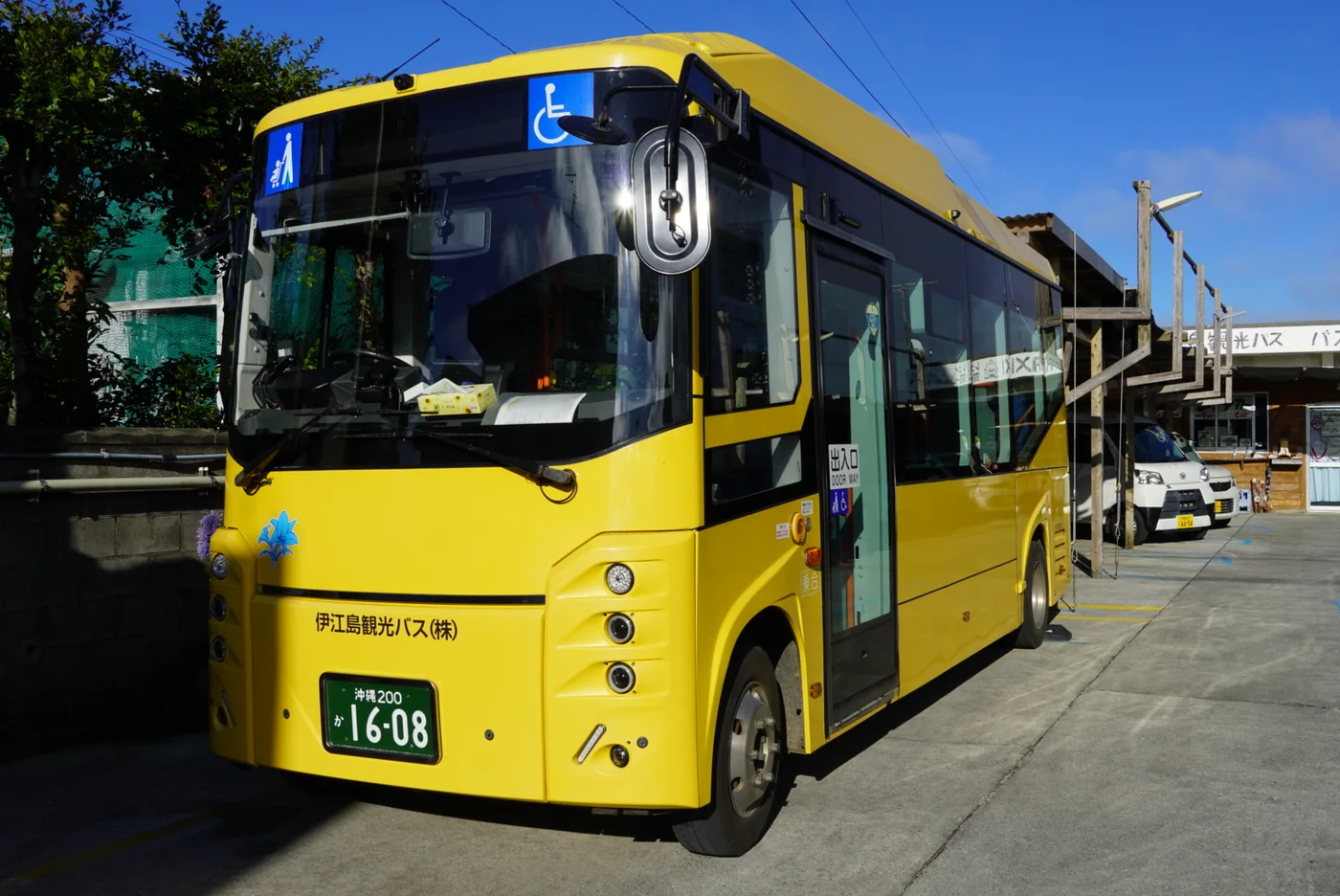
Climbing and sea views need different amounts of time. Mount Gusuku includes steps and a viewpoint; Wajee focuses on coastal views from an observation point. With children or older relatives, put the longer stop when energy is best. State the return-port time when arranging the car and keep the final stop in a direction that makes Ie Port easy to reach. This helps both driver and group follow the plan.
The operator also offers sightseeing buses for groups. The association describes about 2½ hours, reservation required and groups only. Families and small parties can compare rentals with sightseeing taxis first. Larger groups can discuss a bus using the same list of desired places. Match transport to group size and activities so each stop gets suitable time.
At Wajee Observatory, frame the northwestern cliffs and sea together
Wajee is on Iejima’s northwestern coast, named for spring water flowing toward the sea. The village describes cliffs over 60 m high and sea colors that change with tide and sky. Set your destination to Wajee Observatory and focus your stop on the viewpoint to see how sea and terrain meet from above.
Include a section of cliff, nearby plants and the outer sea in one frame. For a group photograph, stand somewhere stable, then let everyone enjoy the view. This stop can fit between the climb and lunch, or serve as the main western stop on a driving route. It lies in a different direction from the port, so include travel both ways when connecting to the ferry. Mount Gusuku and Wajee use energy differently: one involves steps, the other can be mainly a pause to look out. If the group wants only one high sea view, choose by how much walking everyone wants. Point out the ferry’s earlier direction with the children, then turn toward the open sea to make the island day’s geography easier to understand.
Nyatiya Cave is a worship site with memories of wartime shelter
The western Nyatiya Cave (ニャティヤ洞) is also called the “Thousand-Person Cave.” The village says residents used it as an air-raid shelter during the war. It is also a local worship site and sacred area, and camping is prohibited. The village cave guide explains the name, faith and shelter use. Read those contexts before focusing on the scenery.
Stay quiet in the cave and worship spaces, follow passable routes and leave offerings untouched. If children are curious, pause at the entrance before deciding whether to go farther together. Anyone waiting outside can agree to meet back at the same place. This stop suits slow observation, with a different pace from climbing for a distant landscape photograph.
For a day including Mount Gusuku, Wajee and the cave, combine the cave with the western coast before returning toward the port. Keep meals and breaks to suitable dining spaces and leave this area for a quiet visit. Agree in advance how long you want at each of the three places to give the day a clear focus.
For six people, calculate ferry fares, vehicle class and stop lengths together
With more travelers, list ages and driver numbers first. Four adults and two children aged 6 to under 12 pay ¥6,980 in Motobu-origin round-trip passenger fares. A regular-season six-hour WA-class eight-seat rental has a base price of ¥8,000. Add Motobu parking at the ¥700 cap per 24 hours, for ¥15,680 across these three items. Combining people, fares and vehicle class shows how the budget differs from a two- or three-person trip.
One car makes it easier for a family to move between sights, meals and breaks together. If some want to climb and others want to wait below, agree where to meet so the driver and group do not head in different directions. If children need rest, shorten the next section to stops near the port for an easier finish. Larger groups can also discuss a reserved sightseeing bus. Specify whether you will summit Mount Gusuku, need lunch seating and want the western coast. That is clearer than simply asking to “tour the island.” Those stops determine the length of the outing and the right vehicle.
The full-day route arriving at 9:30: climb, lunch and the western coast
With a 9:30 island arrival, put Mount Gusuku first. Collect the reserved car or meet the sightseeing taxi, then head to the trail entrance while everyone has energy for steps. Have lunch after descending, then visit Wajee and the western cave in the afternoon. Leave time for local-product shopping at the port before the 16:00 ferry. This is a sample order. Adjust mountain and coastal time to your group’s interests.
For an island rental, plan to return the car around 15:00, leaving room to hand it back, collect belongings and walk to the waiting area. If transporting your original car, complete return validation by 15:30 and leave the last sight earlier. Both options can cover the same coast but need different departure times from the sights.
For more photographs, choose fewer stops. Mount Gusuku gives fields and sea; Wajee gives cliff lines; the port gives ferries and piers. Those three scales already show variety. If your group likes only two, use the other stop’s time for a seated rest or favorite purchases, leaving comfortable gaps in the full day.
The shorter route arriving at 11:30: lunch, Mount Gusuku and a port walk
On the later arrival, lunch and Mount Gusuku make two clear main stops. After landing at 11:30, eat first, climb in the afternoon, then return for local products and organize your camera and belongings before the 16:00 ferry. Less travel across the island within 4½ hours suits families who walk slowly and need more rest.
With island transport arranged, choose one coastal stop beyond the mountain. Choose Wajee for high sea views or Nyatiya Cave for caves and local faith. A longer stop can be more memorable than one quick photo everywhere. If you prefer a shorter walk after arrival, stay around the port and town in the afternoon and decide again once everyone has eaten and rested.
This version suits travelers who need the morning for checkout or other plans on Okinawa’s main island. Leave large bags in the main-island car or planned storage and carry daily essentials for easier stairs and vehicle access. If heading south after Motobu, eat along the return route rather than detouring north again for dinner.
For an afternoon arrival, stay overnight and return the next morning
For an overnight Iejima visit, use a Motobu afternoon sailing and spend arrival day collecting transport, arranging luggage and taking a short walk. Choose Mount Gusuku or the coast the next day, with ordinary returns at 8:00, 10:00, 13:00 and 16:00. The rental list gives a K-class 24-hour base price of ¥6,000 to compare with day rental. Put collection and return times beside the sailings. A morning return connects with main-island lunch and onward travel; an afternoon return leaves a longer island visit.
Start accommodation searches with the Iejima Tourism Association lodging list. Map your accommodation, Ie Port and car collection and return together. Port-side lodging makes ferry connections easy. Farther away, arrange dinner and next-day transport back to port together. Once the return is chosen, decide whether to leave after breakfast or add a morning walk. Tell the operator both car-return and port-arrival times. With your original car aboard, keep the requirement for validation 30 minutes before sailing. Finish near the port so shopping, bags and waiting follow in order.
Mark the announced year-end and New Year extra timetable separately
The village has listed a year-end and New Year timetable for December 31, 2026 and January 1–3, 2027, with eight sailings daily from each port. Motobu departures are 9:00, 10:00, 11:00, 13:00, 14:00, 15:00, 16:00 and 17:00. Ie Port departures are 8:00, 9:00, 10:00, 11:00, 13:00, 14:00, 15:00 and 16:00. Mark those four dates separately in a New Year itinerary before choosing outward and return sailings.
Extra sailings give more morning options, but the last Ie Port return for day visitors remains 16:00. The 10:00 Motobu departure arrives at 10:30, allowing lunch, Mount Gusuku and one coastal stretch, between the ordinary 9:00 and 11:00 versions. Keep advance vehicle-ticket purchase and return validation requirements beside this timetable too.
The village also lists date-specific spring lily-festival and summer timetables. For a particular holiday, find the table covering the actual date on the same page, then copy both journeys to your route card so port names, dates and departure times stay together.
For sailing changes, check the day’s operating status on the homepage
The Ie Village homepage shows that day’s sailings and operating status, updating cancellations and altered services during typhoons or sudden weather changes. Open it before leaving your main-island accommodation, then check the date-specific timetable. Doing this before driving to Motobu makes it easier to decide whether to continue to the port.
For reduced or canceled services, the village states that existing vehicle reservations become invalid and must be rebooked. Tell island rental or sightseeing-taxi operators about sailing changes so collection, meetings and returns can change too. Keep accommodation and ferry dates together in the phone calendar. If you stay on Okinawa’s main island instead, connect your luggage location with the next accommodation. With more northern days available, move the island trip to another full block. If leaving Okinawa soon, handle fixed return transport and luggage first to give the port plan a clear ending.
Back at Motobu, connect car collection with onward travel
The ordinary 16:00 Ie Port sailing reaches Motobu around 16:30. Drivers can take the family back to the multistory garage, then organize purchases and luggage. Public-transport users should allow the walk from disembarkation to the next boarding point. If staying in the north, eat along the route back to the hotel, with time after the climb to change shoes and rest.
A few useful answers
Can I visit Iejima from Motobu and return the same day?
Yes. On the ordinary timetable, the 9:00 Motobu ferry arrives at 9:30 and the Ie Port return leaves at 16:00, giving 6½ hours ashore. The 11:00 departure gives 4½ hours. The 15:00 and 17:00 outward sailings better suit visitors with island accommodation.
How much are adult and child ferry tickets?
From Motobu, round trips cost ¥1,390 for ages 12 and over and ¥710 for ages 6 to under 12. One-way fares are ¥730 and ¥370 respectively. Two adults and a 10-year-old pay ¥3,490 round trip.
Does the driver need a separate passenger ticket when taking a car aboard?
The vehicle transport fee includes one driver. Other occupants need passenger tickets. Reserve the vehicle, buy its transport ticket and reach the designated waiting position 30 minutes before departure. Return validation is also required 30 minutes before sailing.
What is the base price for an island kei-car rental?
Iejima Kanko Bus lists regular-season K-class rentals up to six hours at ¥3,980. From April through August, up to three hours costs ¥3,500 and up to six hours ¥5,000. Island gas stations close on Sundays; the operator lists an extra ¥800 fuel charge for a day-rental kei car.
Official information and references
Sources used in this guide.
- Ie Village: daily sailings, operating status, payment and Motobu Port parking
- Ie Village: timetables, passenger fares, vehicles and two-wheel transport
- Iejima Tourism Association: ferry access and island transport
- Iejima Kanko Bus: island office, rental cars and sightseeing taxis
- Iejima Kanko Bus: rental price list and telephone information
- Ie Village: Mount Gusuku and local faith
- Ie Village official: Mount Gusuku introduction video
- Ie Village: Wajee Observatory
- Ie Village: Wajee coastal terrain
- Ie Village: Nyatiya Cave
- Iejima Tourism Association: lodging and island activities
- Ie Village: bicycle rental operators and listed prices